語彙集

英単語辞書 | 単語の意味、定義、例文

noun
/ˈrɒstrəm/
演壇 (endan)

A raised platform for speakers, performers, or leaders.

"The politician delivered a speech from the rostrum."

"政治家は演壇から演説を行いました。" (seijika wa endan kara enzetsu o okonaimashita.)
noun
/ˈrɑːstər/
リスト (risuto)

A list or plan showing people’s duties or times when they are scheduled.

"The manager updated the staff roster for next week."

"マネージャーは来週のスタッフリストを更新しました。" (Manējā wa raishū no sutaffu risuto o kōshin shimashita.)
adjective
/ˈroʊziət/
バラ色の、楽観的な (bara iro no, rakkan-teki na)

Having a pink color; optimistic or idealistic.

"She looked at the future with roseate optimism."

"彼女はローズ色の楽観主義で未来を見ました。" (Kanojo wa rozu iro no rakkan shugi de mirai o mimashita.)
noun
/ˈroʊz ˈwɔː.tər/
ローズウォーター (rōzu wōtā)

a flavored water made by steeping rose petals in water, used in cooking and cosmetics

"She added a few drops of rose-water to the dessert."

"彼女はデザートにローズウォーターを数滴加えました。" (Kanojo wa dezāto ni rōzu wōtā o sūteki kuwaemashita.)
noun
/roʊz ˈber.i/
ローズベリー (roozuberii)

a type of berry with rose-like characteristics or flavor

"The rose berry has a delicate floral taste that reminds me of roses."

"ローズベリーはバラのような繊細な花の風味があり、バラを思い出させます。" (roozuberii wa bara no you na sensaina hana no fuumi ga ari, bara o omoidasasemasu.)
noun
/roʊz/
バラの花 (bara no hana)

a type of flowering plant, known for its beautiful and fragrant blooms

"She gave me a rose on my birthday."
"彼女は私の誕生日にローズをくれました。" (Kanojo wa watashi no tanjōbi ni rōzu o kuremashita.)
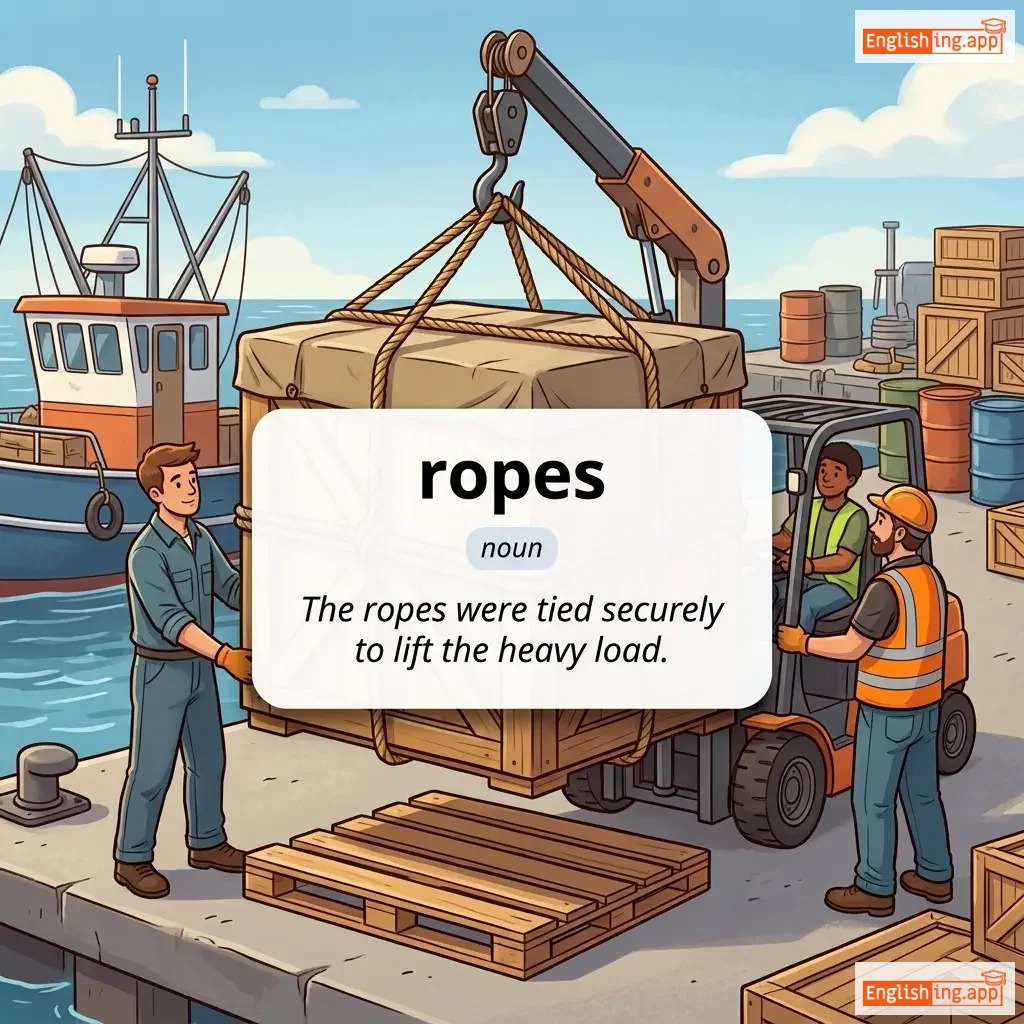
ropes definition card — visual illustration of the meaning
noun
roʊps
ロープ (roopu)

A length of thick strong cord made by twisting together strands of hemp, sisal, nylon, or similar material.

"The ropes were tied securely to lift the heavy load."

"ロープは重い荷物を持ち上げるためにしっかりと結ばれていました。" (Roopu wa omoi nimotsu wo mochiageru tame ni shikkari to musubarete imashita.)
noun
/roʊp/
ロープ (roopu)

a strong, thick cord made of twisted fibers or strands

"The climbers used a rope to scale the mountain."

"登山者は山を登るためにロープを使いました。" (Tozan-sha wa yama wo noboru tame ni roopu wo tsukaimashita.)
adjective
/ˈruː.tɪd/
根付いた (ruutiddo)

deeply established; firmly fixed

"His beliefs are deeply rooted in tradition."
"彼の信念は伝統に深く根ざしている。" (Kare no shinnen wa dentou ni fukaku nezashite iru.)
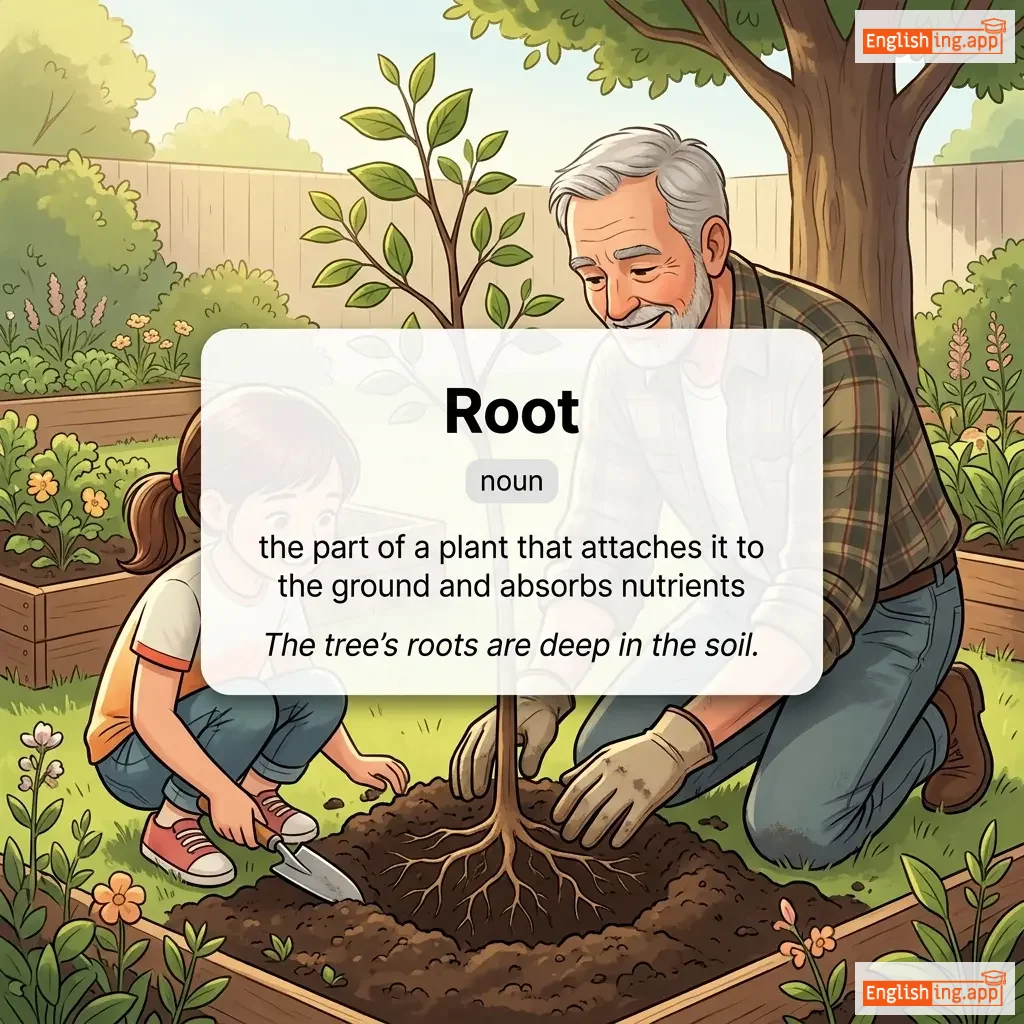
Root definition card — visual illustration of the meaning
noun
/ruːt/
(ne)

the part of a plant that attaches it to the ground and absorbs nutrients

"The tree's roots are deep in the soil."

"木の根は土の中に深く埋まっています。" (Ki no ne wa tsuchi no naka ni fukaku umatte imasu.)
noun
/ˈruːstər/
雄鶏 (ondori)

A male domestic chicken, especially one that crows.

"The rooster crowed at dawn, waking up the whole village."

"雄鶏は夜明けに鳴き、村全体を起こした。" (Ondori wa yoake ni naki, mura zentai o okoshita.)
adjective
/ˈruː.mi/
広々とした; 広いスペースのある (hirobito shita; hiroi supēsu no aru)

spacious; having a lot of room

"The apartment is very roomy with spacious bedrooms."

"アパートメントは広々としており、広いベッドルームがあります。" (Apātomento wa hirobito toshite ori, hiroi beddo rūmu ga arimasu.)
room definition card — visual illustration of the meaning
noun
/ruːm/
部屋 (heya)

A space within a building enclosed by walls, floor, and ceiling

"She decorated her room with bright colors."
"彼女は明るい色で自分の部屋を飾りました。" (kanojo wa akarui iro de jibun no heya o kazarimashita)
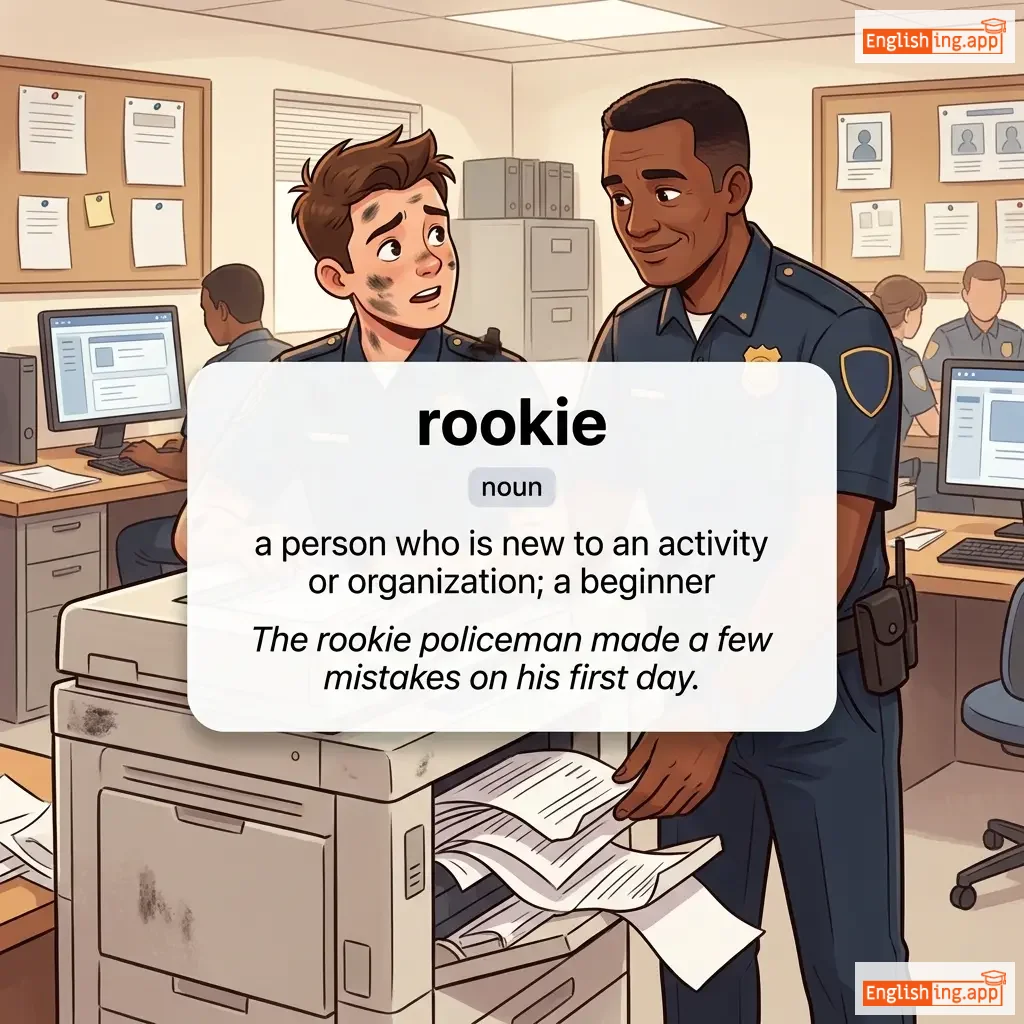
rookie definition card — visual illustration of the meaning
noun
/ˈrʊki/
初心者 (shoshinsha)

a person who is new to an activity or organization; a beginner

"The rookie policeman made a few mistakes on his first day."

"新米警官は初日にいくつかのミスを犯しました。" (Shinmai keikan wa shonichi ni ikutsu ka no misu o okashimashita.)
noun
/ˈrʊkəri/
鳥の巣 (tori no su)

a place where rooks or other birds breed and nest in colonies

"We saw a rookery full of noisy birds near the forest."
"森の近くで、騒がしい鳥たちでいっぱいの鳥の巣を見ました。" (Mori no chikaku de, sawagashii tori-tachi de ippai no tori no su o mimashita.)
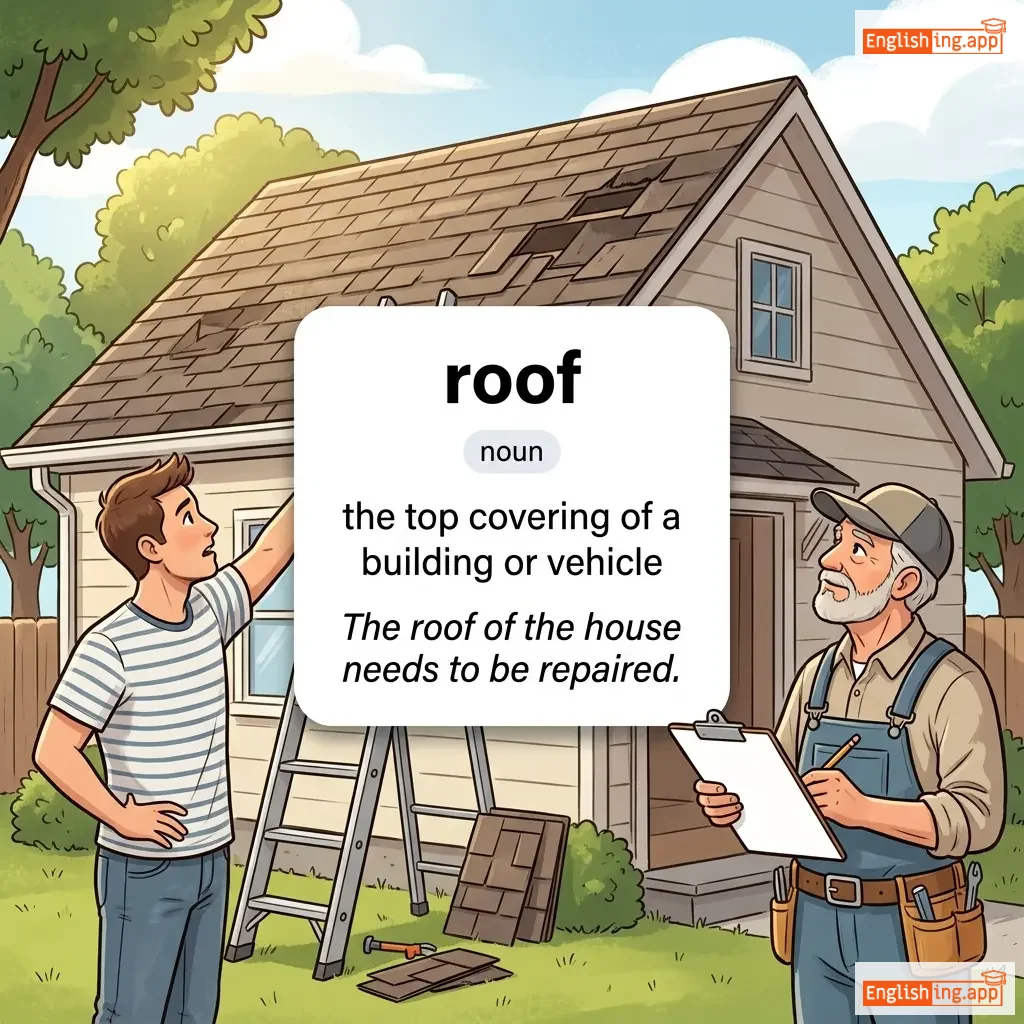
roof definition card — visual illustration of the meaning
noun
/ruːf/
屋根 (yane)

the top covering of a building or vehicle

"The roof of the house needs to be repaired."

"家の屋根は修理が必要です。" (Ie no yane wa shuuri ga hitsuyou desu.)
noun
/ruːd/
十字架 (juujika)

a crucifix, especially one positioned above the entrance to the chancel of a church

"The old church displayed a carved rood above the altar."

"古い教会は祭壇の上に彫られた十字架を展示していました。" (Furui kyoukai wa saidan no ue ni horareta juujika wo tenji shiteimashita.)
noun
/ˈrɒndoʊ/
音楽作品(繰り返しのテーマを持つ) (ongaku sakuhin (kurikaeshi no teema wo motsu))

a musical composition with a recurring leading theme

"The pianist ended the recital with a lively rondo."

"ピアニストは生き生きとしたロンドでリサイタルを終えました。" (Pianisuto wa ikigiki to shita rondo de risaitaru wo oemashita.)
verb
/rɒmp/
楽しく遊ぶ (tanoshiku asobu)

to play or move in a lively, carefree, and energetic way

"The children romped happily in the garden."

"子供たちは庭で楽しそうに遊んでいました。" (Kodomotachi wa niwa de tanoshisou ni asondeimashita.)
adjective
/rəʊˈmæntɪk/
ロマンチック (romanchikku)

related to or involving love or feelings of love

"He wrote her a romantic letter for their anniversary."

"彼は彼らの記念日のためにロマンチックな手紙を書きました。" (Kare wa karera no kinenbi no tame ni romanchikkuna tegami o kakimashita.)
noun
/roʊˈmæns/
ロマンス、愛 (romansh, ai)

a feeling of love, especially one that is exciting and mysterious

"Their romance began during a summer trip to Paris."

"彼らのロマンスはパリへの夏の旅行中に始まりました。" (Karera no romansh wa Pari e no natsu no ryokou-chuu ni hajimarimashita.)
adjective, noun
/ˈroʊmən/
ローマの / 古代ローマの市民 (roma no / kodai roma no shimin)

relating to Rome or its people; a citizen of ancient Rome

"The Roman Empire influenced much of modern civilization."

"ローマ帝国は現代文明に多大な影響を与えました。" (Roma teikoku wa gendai bunmei ni tadai na eikyo wo ataemashita.)
noun
/ˈroʊ.lɪŋ pɪn/
めん棒 (menbou)

a cylindrical tool used for rolling out dough or pastry

"Roll the dough flat with a rolling pin."

"めん棒で生地を広げてください。" (Menbō de kiji o hirogete kudasai.)
noun
/ˈroʊ.lɪŋ bɔːrd/
ローリングボード (rolling board)

a flat wooden or marble surface used for rolling out dough

"She placed the dough on the rolling board."

"彼女は生地をローリングボードに置きました。" (Kanojo wa kiji o rolling board ni okimashita.)
noun
/rɪˈdʒɪdəti/
剛性 (gōsei)

inability to bend or be forced out of shape; unwillingness to change or compromise

"The rigidity of the old system prevented any innovation."
"古いシステムの剛性は、どんな革新も妨げました。" (Furui shisutemu no gōsei wa, donna kakushin mo samatagemashita.)
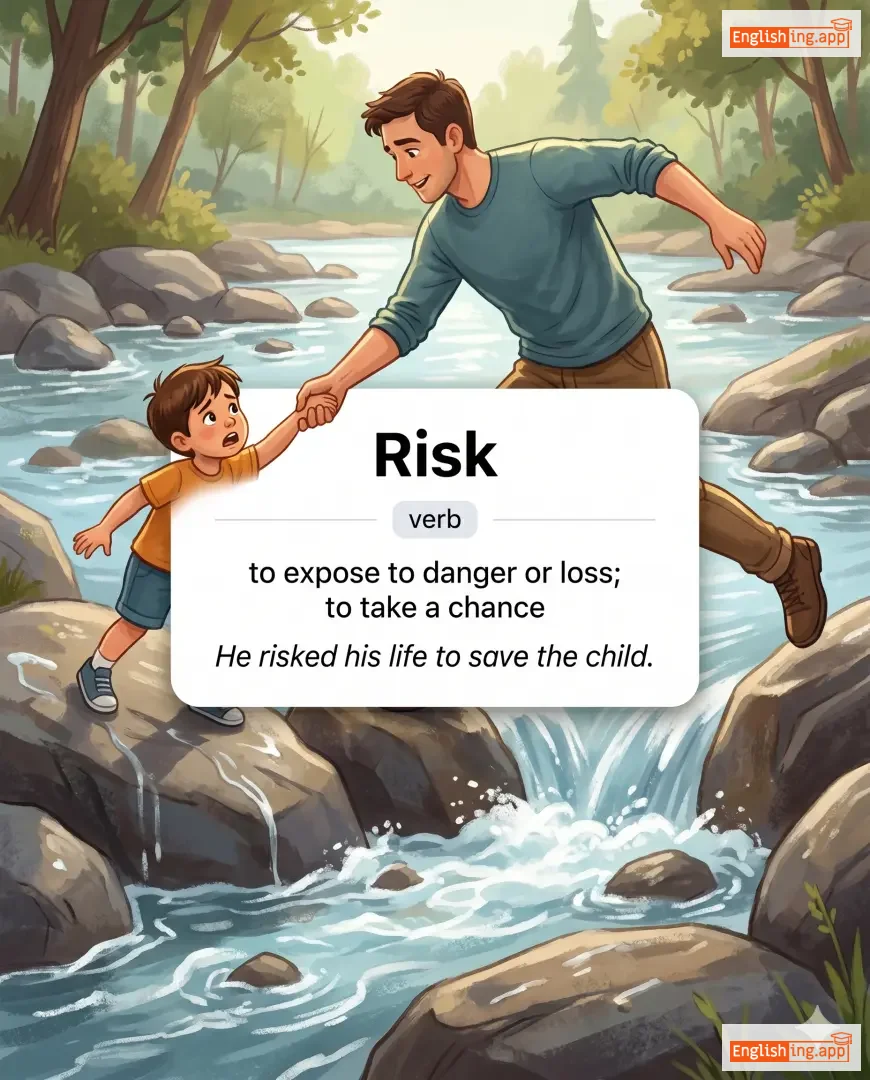
Risk definition card — visual illustration of the meaning
noun
/rɪsk/
リスク (risuku)

the possibility of harm, loss, or danger

"There is a risk of rain this afternoon."

"今日は午後に雨のリスクがあります。" (Kyou wa gogo ni ame no risuku ga arimasu.)
adjective
/ˈrɪz.ə.bəl/
滑稽な (kokkei na)

so absurd or ridiculous that it deserves to be laughed at

"The idea of flying pigs is completely risible."

"飛ぶ豚のアイデアは完全に滑稽です。" (Tobu buta no aidea wa kanzen ni kokkei desu.)
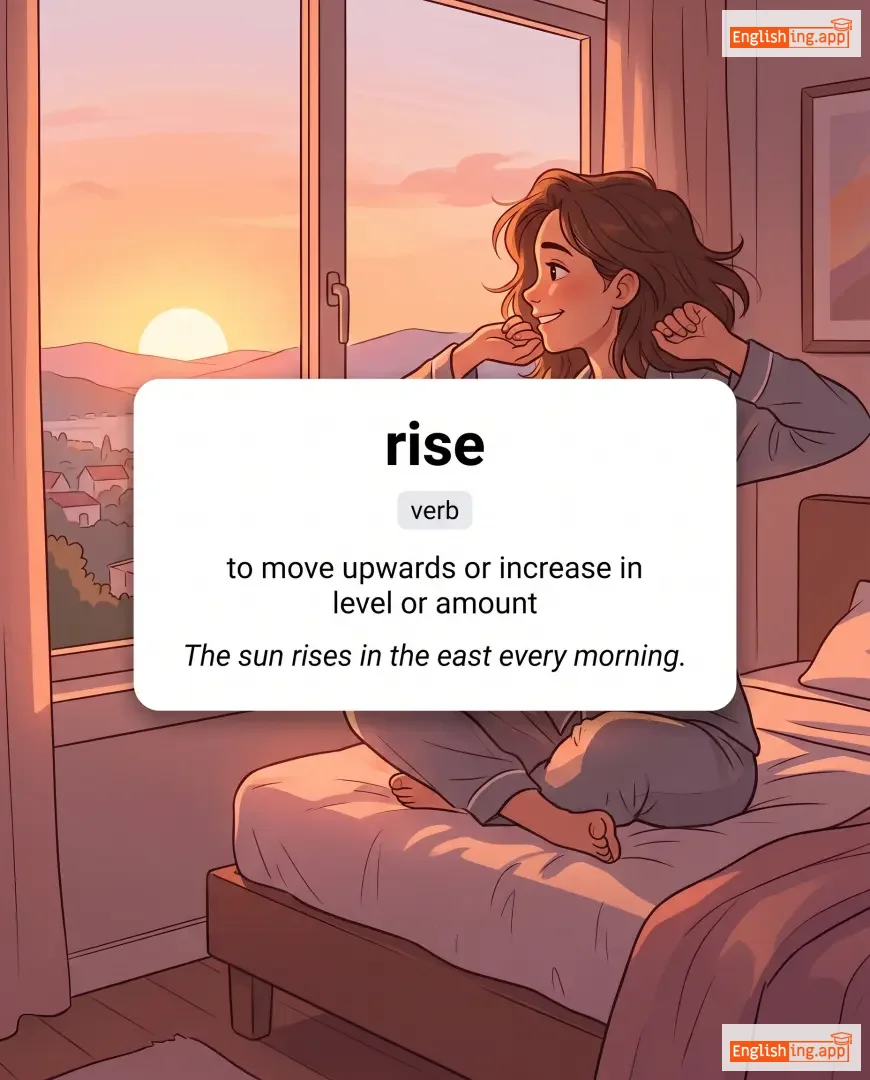
rise definition card — visual illustration of the meaning
🌅

rise

verb
/raɪz/

to move upwards or increase in level or amount

"The sun rises in the east every morning."

noun
/ˈrɪp.lɪt/
小さな波 (chiisana nami)

a small or tiny ripple

"Tiny ripplets appeared on the lake as the fish moved."

"魚が動くと湖に小さな波が現れました。" (Sakana ga ugoku to mizūmi ni chiisana nami ga arawaremashita.)
verb
/ˈrɪp.l̩/
波紋 (hamon)

to form or cause small waves on the surface of water or spread through like waves

"The wind rippled the surface of the pond."
"風は池の表面を波紋させた。" (Kaze wa ike no hyoumen wo hamon saseta.)
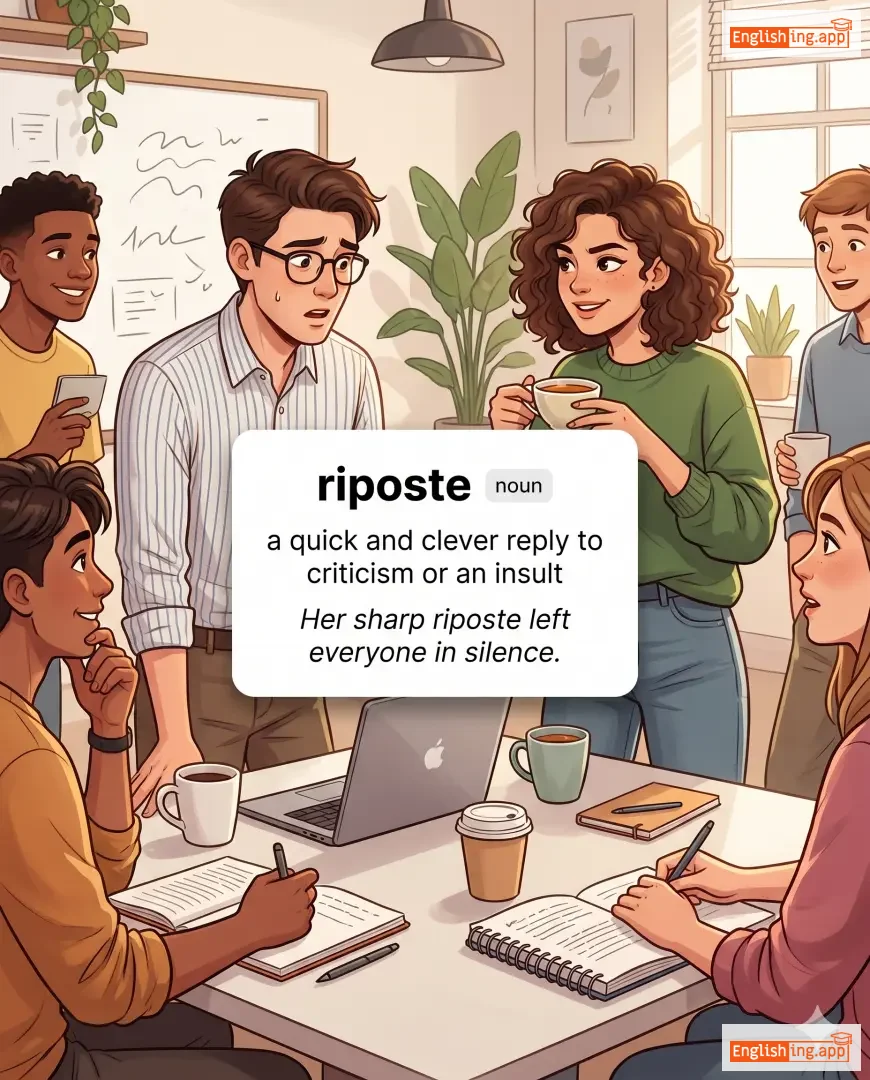
riposte definition card — visual illustration of the meaning
noun
/rɪˈpoʊst/
鋭い返答 (surudoi hentou)

a quick and clever reply to criticism or an insult

"Her sharp riposte left everyone in silence."

"彼女の鋭い返答は皆を黙らせた。" (Kanojo no surudoi hentou wa mina o damaraseta.)
verb
/ˈraɪpən/
幸せ (shiawase)

to become or make something ready to eat or fully developed

"The bananas ripened quickly in the warm weather."

"彼女は賞を受け取ったとき、幸せを隠せなかった。" (kanojo wa shō o uketotta toki, shiawase o kakusenakatta.)
adjective
/raɪp/
熟した; 食べる準備ができた (jukushita; taberu junbi ga dekita)

fully developed and ready to eat; mature; ready for action or use

"The bananas are ripe and ready to eat."
"バナナは熟して食べる準備ができています。" (banana wa jukushite taberu junbi ga dekiteimasu.)
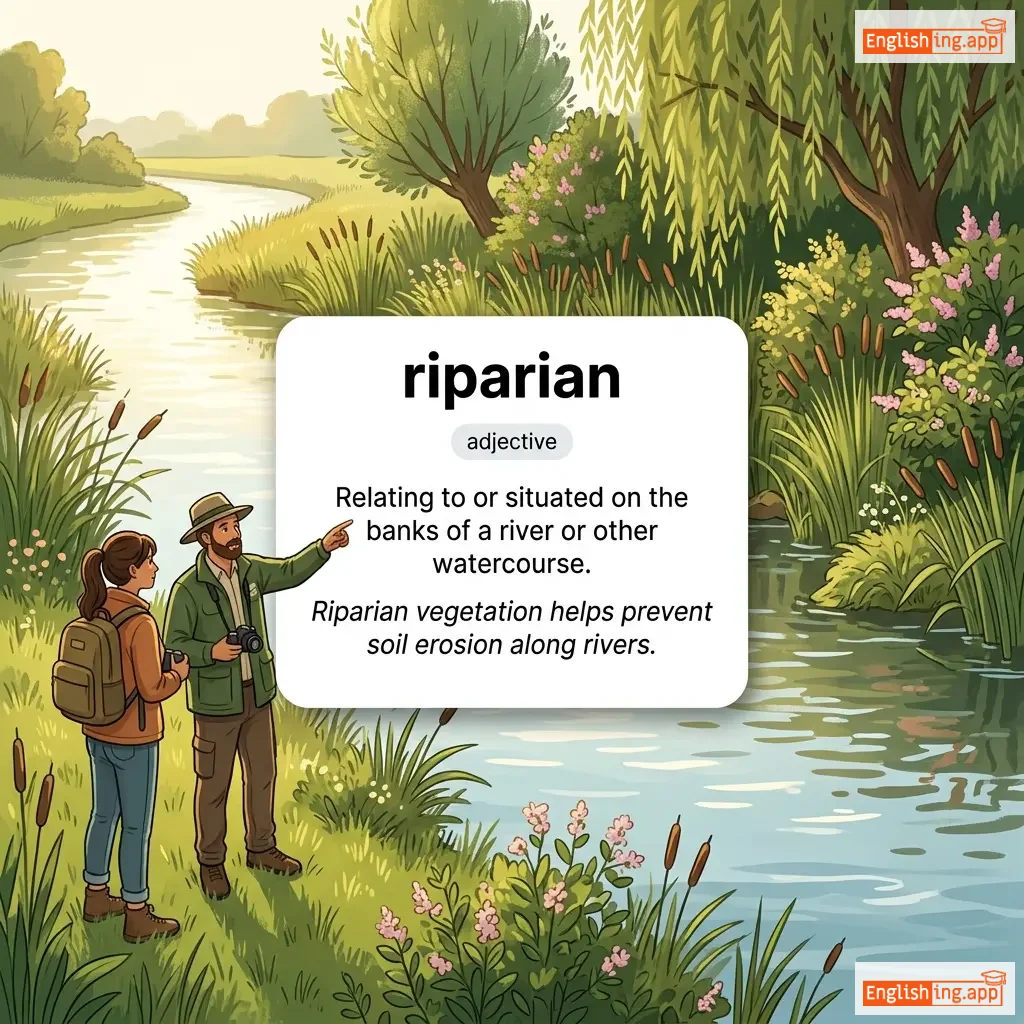
riparian definition card — visual illustration of the meaning
adjective
/raɪˈpɛə.ri.ən/
河川や他の水路の岸辺に関連する (kasen ya hoka no suiro no kishibe ni kanren suru)

Relating to or situated on the banks of a river or other watercourse.

"Riparian vegetation helps prevent soil erosion along rivers."

"河川沿いの植生は、河川沿いの土壌浸食を防ぐのに役立ちます。" (Kasen-zoi no shokusei wa, kasen-zoi no dojo shinsoku o fusegu no ni yakudachimasu.)
verb
/rɪp/
裂ける (sakeru)

to tear something quickly or violently

"He accidentally ripped his shirt on the fence."

"彼はフェンスでシャツをうっかり裂けてしまいました。" (Kare wa fensu de shatsu o ukkari sakete shimaimashita.)
noun
/ˈraɪət/
暴動 (boudou)

a violent disturbance by a crowd

"The protest turned into a violent riot."
"抗議は暴力的な暴動に変わった。" (Kougi wa bouryokuteki na boudou ni kawatta.)
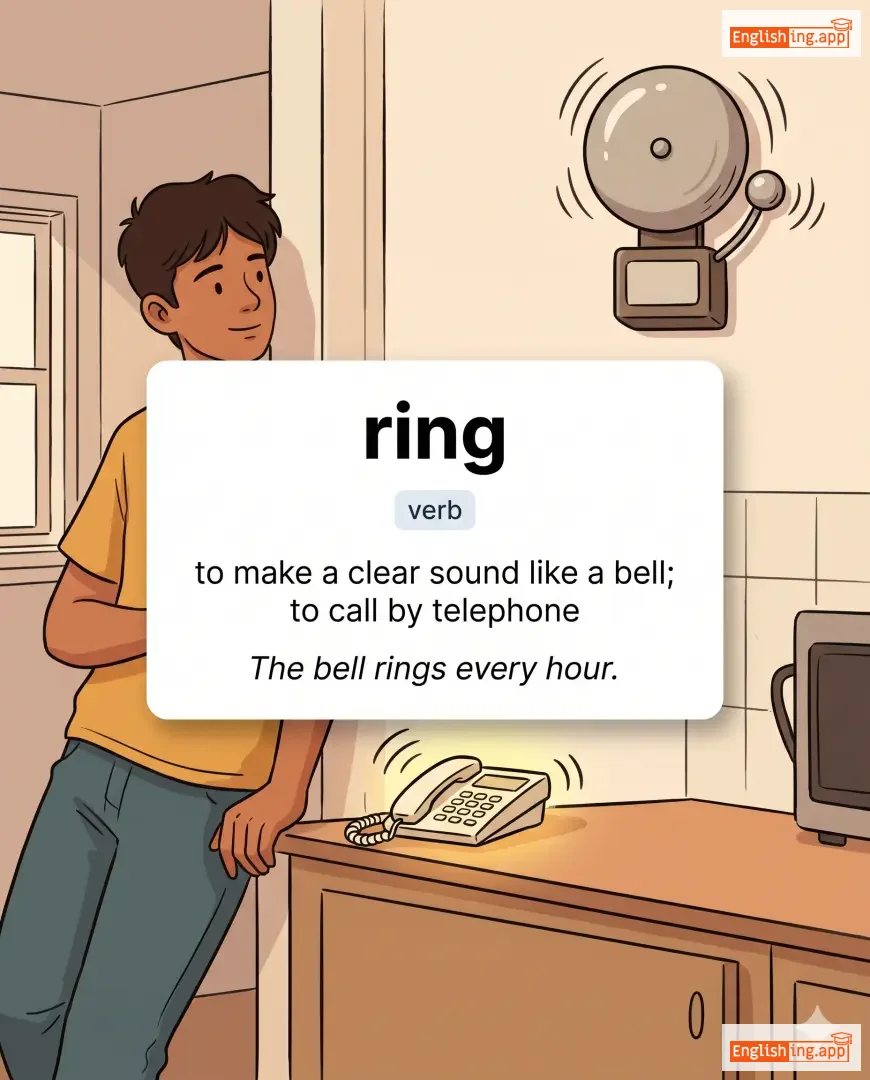
ring definition card — visual illustration of the meaning
noun
/rɪŋ/
指輪 (yubiwa)

a small circular band, typically worn on the finger as jewelry or a symbol

"She received a beautiful engagement ring."

"彼女は美しい婚約指輪を受け取りました。" (Kanojo wa utsukushii kon'yaku yubiwa wo uketorimashita.)
noun
/raɪm/
(shimo)

frost formed on cold surfaces by freezing water vapor

"The trees were covered with a white rime after the cold night."

"木々は冷たい夜の後、白い霜で覆われていました。" (Kigi wa tsumetai yoru no ato, shiroi shimo de ōwarete imashita.)
noun
/rɪm/
(fuchi)

the outer edge or border of a circular object

"The coffee cup had a chip on its rim."

"コーヒーカップの縁にひびが入っていました。" (Kōhī kappu no fuchi ni hibi ga haitte imashita.)
😠

rile

verb
/raɪl/

to irritate or annoy someone

"His careless comments really riled her."

noun
/ˈrɪɡər/
厳格さ (genkakusa)

strictness, severity, or demanding conditions

"The training was carried out with great rigor."

"訓練は大変厳格に行われました。" (Kunren wa taihen genkaku ni okonawaremashita.)
noun
/ˈrɪɡməˌroʊl/
面倒なこと (mendō na koto)

a long, complicated, and confusing process or story

"Getting a visa was such a rigmarole of paperwork and interviews."

"ビザを取得するのは、書類とインタビューの面倒なことだった。" (Biza o shūtoku suru no wa, shorui to intabyū no mendō na koto datta.)
adverb
/ˈrɪdʒɪdli/
厳格に; 柔軟性なしで (genkaku ni; jūnan-sei nashi de)

in a strict, inflexible manner; without compromise

"The rules are rigidly enforced in this institution."

"この機関ではルールは厳格に適用されます。" (Kono kikan de wa rūru wa genkaku ni tekiyō saremasu.)
noun
/rɪdʒ/
山の稜線または頂上 (yama no ryōsen mata wa chōjō)

a long, narrow hilltop, mountain range, or raised strip

"We walked along the mountain ridge."

"私たちは山脈の稜線に沿って歩きました。" (Watashitachi wa sanmyaku no ryōsen ni sotte arukimashita.)
🔫

Rifle

noun
/ˈraɪfəl/

a type of long-barreled gun designed for accurate shooting

"The hunter carried a rifle to catch game."

adjective
/raɪf/
蔓延している (manyen shite iru)

widespread or common, often in a negative sense

"Corruption was rife in the old government system."

"腐敗は古い政府制度に蔓延していた。" (Fuhai wa furui seifu seido ni manyen shite ita.)
adjective
/rɪˈdɪkjʊləs/
馬鹿げた (bakageta)

Deserving mockery; absurd or unreasonable.

"The idea of flying pigs is ridiculous."

"飛ぶ豚のアイデアは馬鹿げている。" (Tobu buta no aidea wa bakageteiru.)
verb
/ˈrɪdɪkjuːl/
嘲笑する (choushou suru)

To make fun of someone or something in a cruel or dismissive way.

"He was ridiculed for his strange ideas."
"彼は奇妙な考えのために嘲笑されました。" (Kare wa kimyou na kangae no tame ni choushou saremashita.)
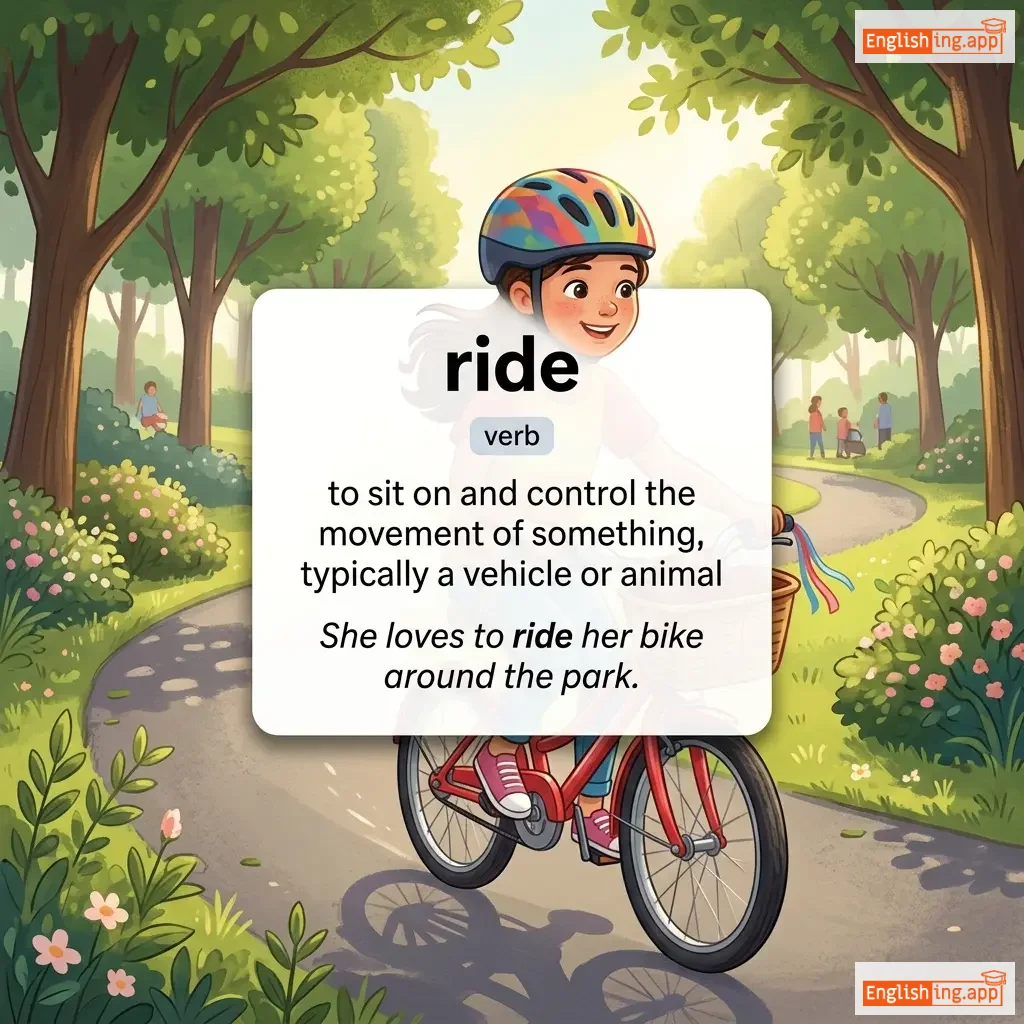
ride definition card — visual illustration of the meaning
verb
/raɪd/
乗る (noru)

to sit on and control the movement of something, typically a vehicle or animal

"She loves to ride her bike around the park."

"彼女は公園で自転車に乗るのが好きです。" (Kanojo wa kouen de jitensha ni noru no ga suki desu.)
adjective
/ˈroʊlɪŋ/
転がる (korogaru)

moving in gentle undulations; moving forward by turning over and over

"They drove through the rolling hills of the countryside."

"彼らは田舎の転がる丘を通り抜けました。" (Karera wa inaka no korogaru oka o toorinukemashita.)