词汇表

英语词汇词典 | 单词含义、定义和示例

noun
/ˈrɒstrəm/
讲台 (jiangtai)

A raised platform for speakers, performers, or leaders.

"The politician delivered a speech from the rostrum."

"政治家在讲台上发表了演讲。" (zhengzhijia zai jiangtai shang fabiao le yanjiang.)
noun
/ˈrɑːstər/
名单 (mingdan)

A list or plan showing people’s duties or times when they are scheduled.

"The manager updated the staff roster for next week."

"经理更新了下周的员工名单。" (Jīnglǐ gēngxīnle xià zhōu de yuángōng míngdān.)
adjective
/ˈroʊziət/
玫瑰色的,乐观的 (méiguī sè de, lèguān de)

Having a pink color; optimistic or idealistic.

"She looked at the future with roseate optimism."

"她以玫瑰色的乐观主义看待未来。" (Tā yǐ méiguī sè de lèguān zhǔyì kàn dài wèilái.)
noun
/ˈroʊz ˈwɔː.tər/
玫瑰水 (méiguī shuǐ)

a flavored water made by steeping rose petals in water, used in cooking and cosmetics

"She added a few drops of rose-water to the dessert."

"她在甜点中加入了几滴玫瑰水。" (tā zài tiándiǎn zhōng jiārùle jǐ dī méiguī shuǐ.)
noun
/roʊz ˈber.i/
玫瑰莓 (luo si bei rui)

a type of berry with rose-like characteristics or flavor

"The rose berry has a delicate floral taste that reminds me of roses."
"玫瑰莓具有细腻的花香口感,让我想起玫瑰花。" (mei gui mei ju you xi ni de hua xiang kou gan rang wo xiang qi mei gui hua)
noun
/roʊz/
玫瑰花 (méiguī huā)

a type of flowering plant, known for its beautiful and fragrant blooms

"She gave me a rose on my birthday."

"她在我的生日那天送了我一朵玫瑰。" (Tā zài wǒ de shēngrì nà tiān sòngle wǒ yī duǒ méiguī.)
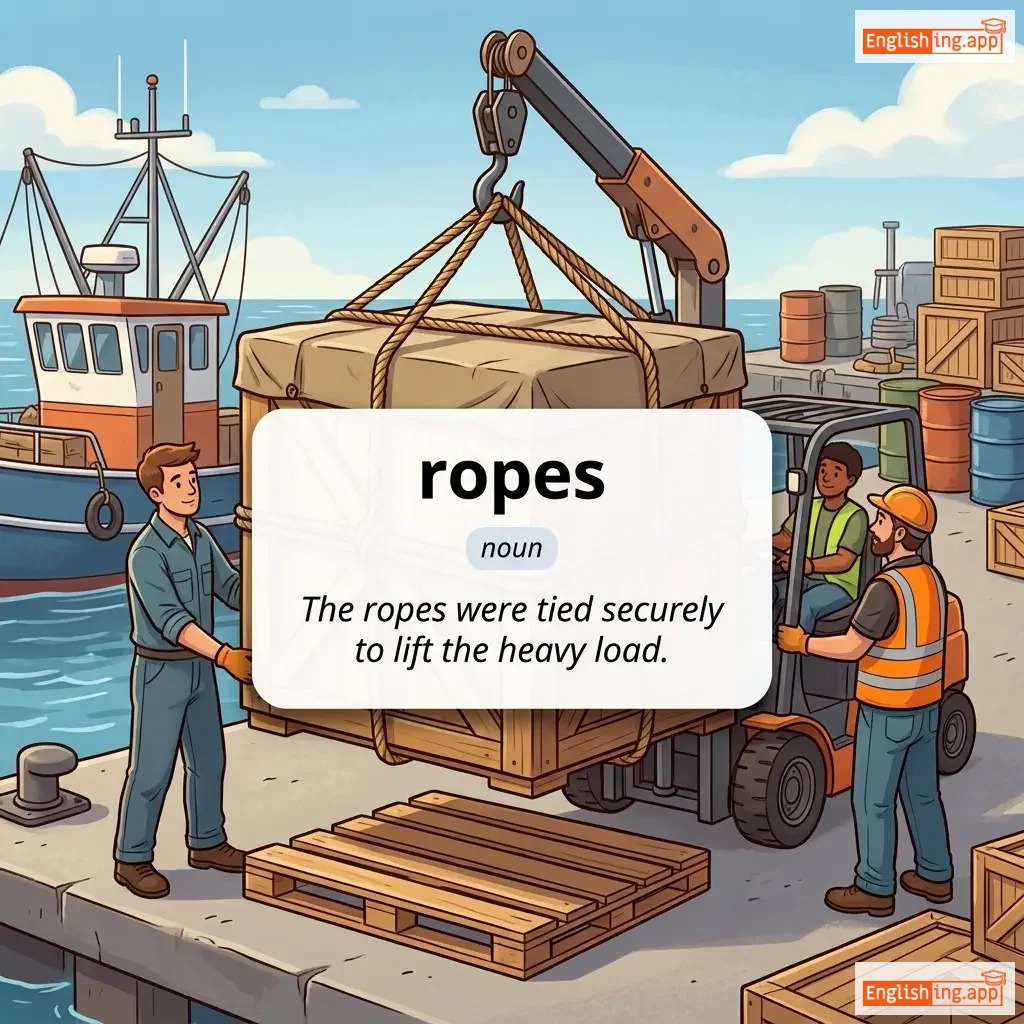
ropes definition card — visual illustration of the meaning
noun
roʊps
绳子 (shengzi)

A length of thick strong cord made by twisting together strands of hemp, sisal, nylon, or similar material.

"The ropes were tied securely to lift the heavy load."

"这些绳子被牢牢绑住以提升重物。" (Zhexie shengzi bei laolao bang zhu yi tizheng zhongwu.)
noun
/roʊp/
绳子 (shengzi)

a strong, thick cord made of twisted fibers or strands

"The climbers used a rope to scale the mountain."

"登山者用绳子攀登山峰。" (Dengshan zhe yong shengzi pandeng shanfeng.)
adjective
/ˈruː.tɪd/
根深蒂固的 (gen shen di gu de)

deeply established; firmly fixed

"His beliefs are deeply rooted in tradition."
"他的信念深深扎根于传统。" (ta de xin nian shen shen zha gen yu chuan tong)
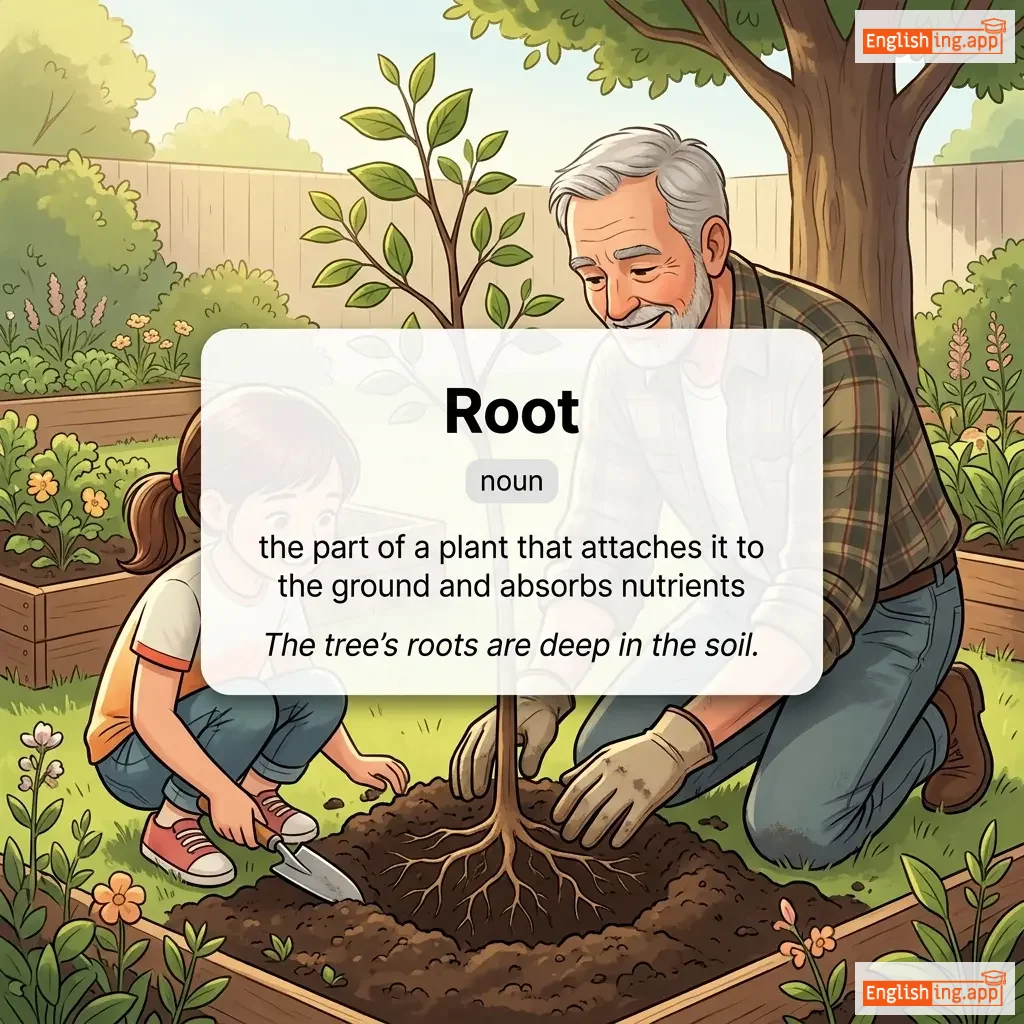
Root definition card — visual illustration of the meaning
noun
/ruːt/
(gen)

the part of a plant that attaches it to the ground and absorbs nutrients

"The tree's roots are deep in the soil."

"树根深深地扎根在土壤中。" (Shùgēn shēn shēn de zhágēn zài tǔrǎng zhōng.)
noun
/ˈruːstər/
公鸡 (gongji)

A male domestic chicken, especially one that crows.

"The rooster crowed at dawn, waking up the whole village."

"公鸡在黎明时分打鸣,唤醒了整个村庄。" (Gōngjī zài límíng shífēn dǎmíng, huànxǐngle zhěnggè cūnzhuāng.)
adjective
/ˈruː.mi/
宽敞的; 有很多空间的 (kuānchǎng de; yǒu hěn duō kōngjiān de)

spacious; having a lot of room

"The apartment is very roomy with spacious bedrooms."
"公寓非常宽敞,拥有宽大的卧室。" (Gōngyù fēicháng kuānchǎng, yǒngyǒu kuāndà de wòshì.)
room definition card — visual illustration of the meaning
noun
/ruːm/
房间 (fangjian)

A space within a building enclosed by walls, floor, and ceiling

"She decorated her room with bright colors."

"她用明亮的颜色装饰了她的房间。" (ta yong mingliang de yanse zhuangshi le ta de fangjian)
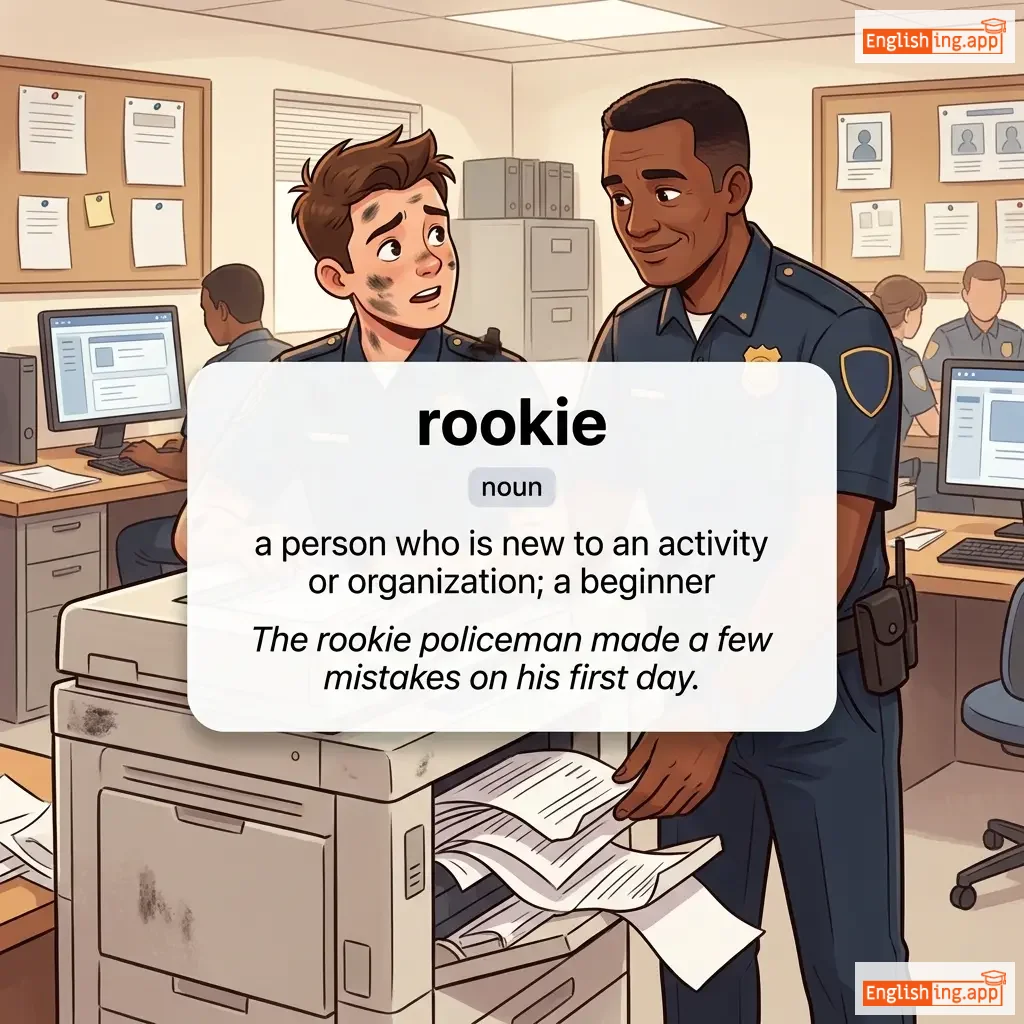
rookie definition card — visual illustration of the meaning
noun
/ˈrʊki/
菜鸟 (cainiao)

a person who is new to an activity or organization; a beginner

"The rookie policeman made a few mistakes on his first day."

"新警察在第一天犯了几次错误。" (Xin jingcha zai di yi tian fan le ji ci cuowu.)
noun
/ˈrʊkəri/
鸟类栖息地 (niao lei qi xi di)

a place where rooks or other birds breed and nest in colonies

"We saw a rookery full of noisy birds near the forest."
"我们看到一个充满吵闹鸟类的鸟类栖息地,靠近森林。" (Wo men kan dao yi ge chong man chao nao niao lei de niao lei qi xi di, kao jin sen lin.)
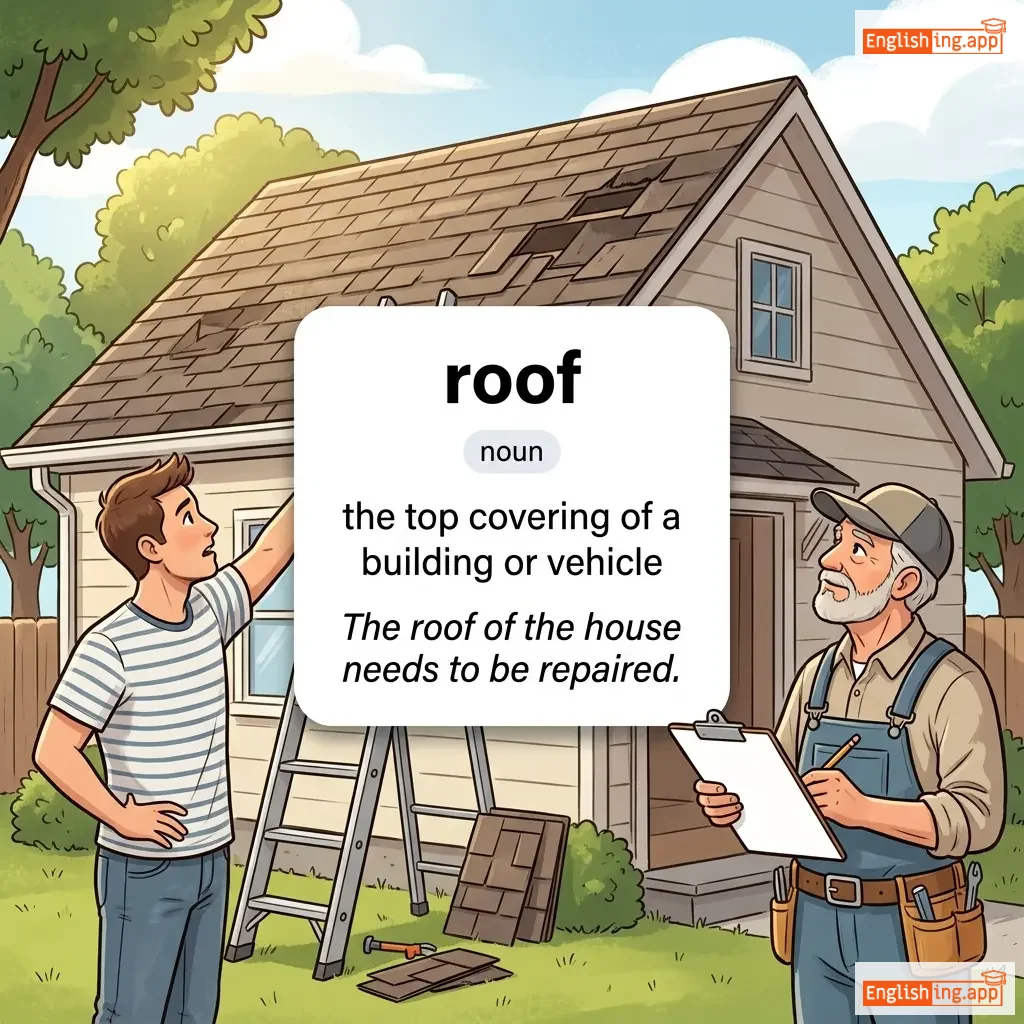
roof definition card — visual illustration of the meaning
noun
/ruːf/
屋顶 (wūdǐng)

the top covering of a building or vehicle

"The roof of the house needs to be repaired."

"房子的屋顶需要修理。" (Fángzi de wūdǐng xūyào xiūlǐ.)
noun
/ruːd/
十字架 (shízìjià)

a crucifix, especially one positioned above the entrance to the chancel of a church

"The old church displayed a carved rood above the altar."

"这座古老的教堂展示了一个雕刻的十字架在祭坛上方。" (Zhè zuò gǔlǎo de jiàotáng zhǎnshìle yīgè diāokè de shízìjià zài jìtán shàngfāng.)
noun
/ˈrɒndoʊ/
音乐作品(具有重复主题) (yinyue zuopin (juxu chongfu zhuti))

a musical composition with a recurring leading theme

"The pianist ended the recital with a lively rondo."

"钢琴家以一首生动的朗多结束了演奏。" (Gangqin jia yi yi shou shengdong de langdu jie shu le yanzou.)
verb
/rɒmp/
快乐地玩耍 (kuaile de wan shua)

to play or move in a lively, carefree, and energetic way

"The children romped happily in the garden."

"孩子们在花园里高兴地玩耍。" (Haizimen zai huayuan li gaoxing de wanshua.)
adjective
/rəʊˈmæntɪk/
浪漫 (langman)

related to or involving love or feelings of love

"He wrote her a romantic letter for their anniversary."

"他在他们的纪念日写了一封浪漫的信给她。" (Ta zai tamen de jinian ri xie le yi feng langman de xin gei ta.)
noun
/roʊˈmæns/
浪漫,爱情 (langman, aiqing)

a feeling of love, especially one that is exciting and mysterious

"Their romance began during a summer trip to Paris."

"他们的浪漫故事开始于一次夏天的巴黎旅行。" (Tamen de langman gushi kaishi yu yici xiatian de bāli lǚxíng.)
adjective, noun
/ˈroʊmən/
罗马的 / 古罗马公民 (luoma de / gu luoma gongmin)

relating to Rome or its people; a citizen of ancient Rome

"The Roman Empire influenced much of modern civilization."

"罗马帝国影响了现代文明的许多方面。" (Luoma diguo yingxiang le xiandai wenming de xu duo fangmian.)
noun
/ˈroʊ.lɪŋ pɪn/
擀面杖 (gǎn miàn zhàng)

a cylindrical tool used for rolling out dough or pastry

"Roll the dough flat with a rolling pin."

"用擀面杖把面团擀平。" (Yòng gǎn miàn zhàng bǎ miàn tuán gǎn píng.)
noun
/ˈroʊ.lɪŋ bɔːrd/
擀面板 (ganmianban)

a flat wooden or marble surface used for rolling out dough

"She placed the dough on the rolling board."

"她把面团放在了擀面板上。" (Tā bǎ miàntuán fàng zài le gǎn miànbǎn shàng.)
noun
/rɪˈdʒɪdəti/
刚性 (gangxing)

inability to bend or be forced out of shape; unwillingness to change or compromise

"The rigidity of the old system prevented any innovation."
"旧系统的刚性阻止了任何创新。" (Jiu xitong de gangxing zuzhi le renhe chuangxin.)
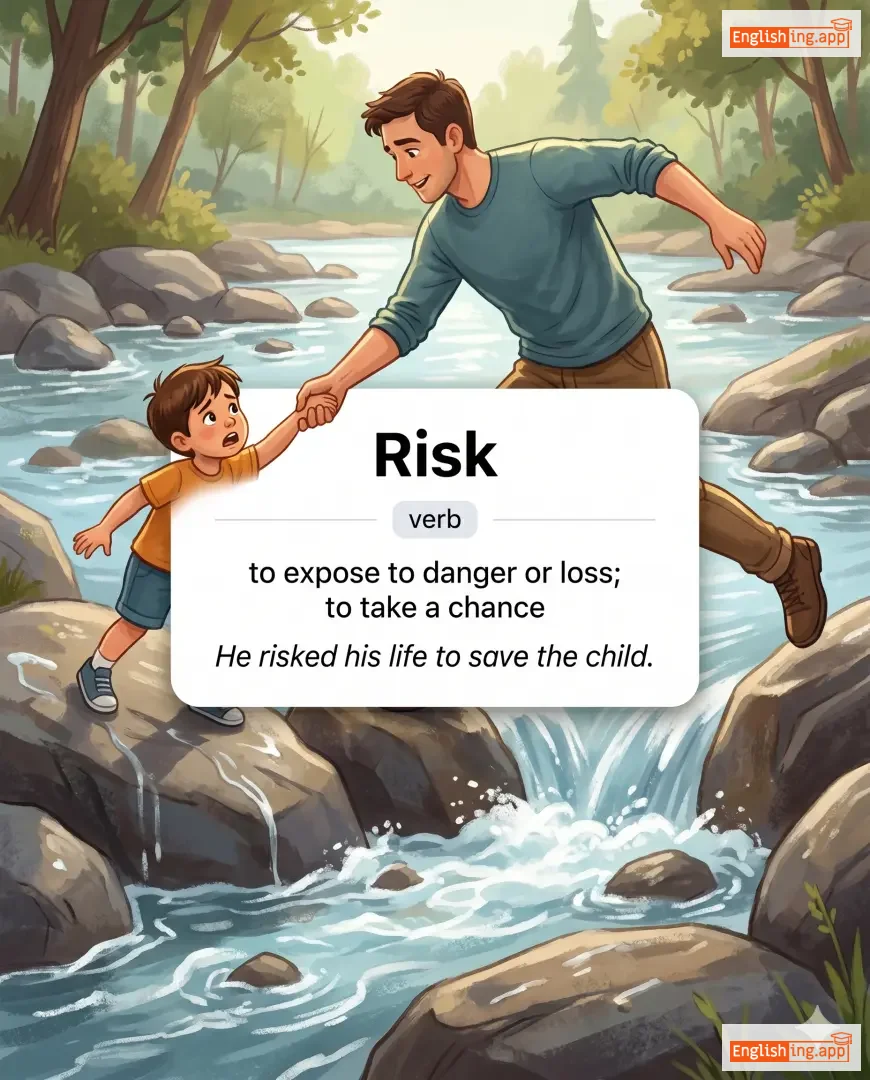
Risk definition card — visual illustration of the meaning
noun
/rɪsk/
风险 (fengxian)

the possibility of harm, loss, or danger

"There is a risk of rain this afternoon."

"今天下午有降雨的风险。" (Jintian xiawu you jiangyu de fengxian.)
adjective
/ˈrɪz.ə.bəl/
可笑的 (kěxiàode)

so absurd or ridiculous that it deserves to be laughed at

"The idea of flying pigs is completely risible."

"飞猪的想法完全是可笑的。" (Fēi zhū de xiǎngfǎ wánquán shì kěxiàode.)
rise definition card — visual illustration of the meaning
🌅

rise

verb
/raɪz/

to move upwards or increase in level or amount

"The sun rises in the east every morning."

noun
/ˈrɪp.lɪt/
微小波纹 (weixiao bowen)

a small or tiny ripple

"Tiny ripplets appeared on the lake as the fish moved."

"当鱼移动时,湖面上出现了微小波纹。" (Dang yu yidong shi, hu mian shang chuxian le weixiao bowen.)
verb
/ˈrɪp.l̩/
波纹 (bōwén)

to form or cause small waves on the surface of water or spread through like waves

"The wind rippled the surface of the pond."
"风在池塘表面引起了波纹。" (Fēng zài chí táng biǎo miàn yǐnqǐ le bōwén.)
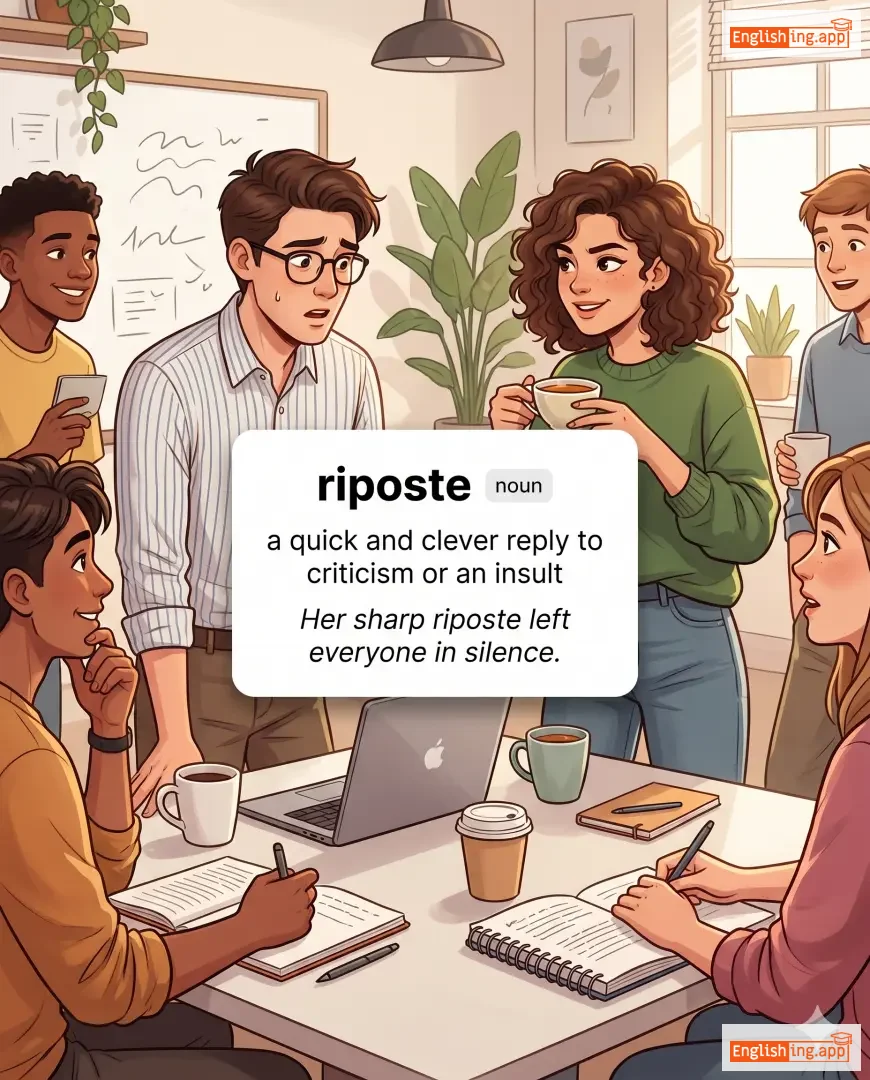
riposte definition card — visual illustration of the meaning
noun
/rɪˈpoʊst/
犀利的反应 (xīlì de fǎnyìng)

a quick and clever reply to criticism or an insult

"Her sharp riposte left everyone in silence."

"她尖锐的反应让所有人都安静了。" (Tā jiānruì de fǎnyìng ràng suǒyǒu rén dōu ānjìng le.)
verb
/ˈraɪpən/
幸福 (xìngfú)

to become or make something ready to eat or fully developed

"The bananas ripened quickly in the warm weather."

"当她收到奖项时,她无法隐藏自己的幸福。" (dāng tā shōu dào jiǎngxiàng shí, tā wúfǎ yǐncáng zìjǐ de xìngfú.)
adjective
/raɪp/
成熟的; 准备食用 (chéngshú de; zhǔnbèi shíyòng)

fully developed and ready to eat; mature; ready for action or use

"The bananas are ripe and ready to eat."
"香蕉已经成熟,准备食用。" (xiāngjiāo yǐjīng chéngshú, zhǔnbèi shíyòng.)
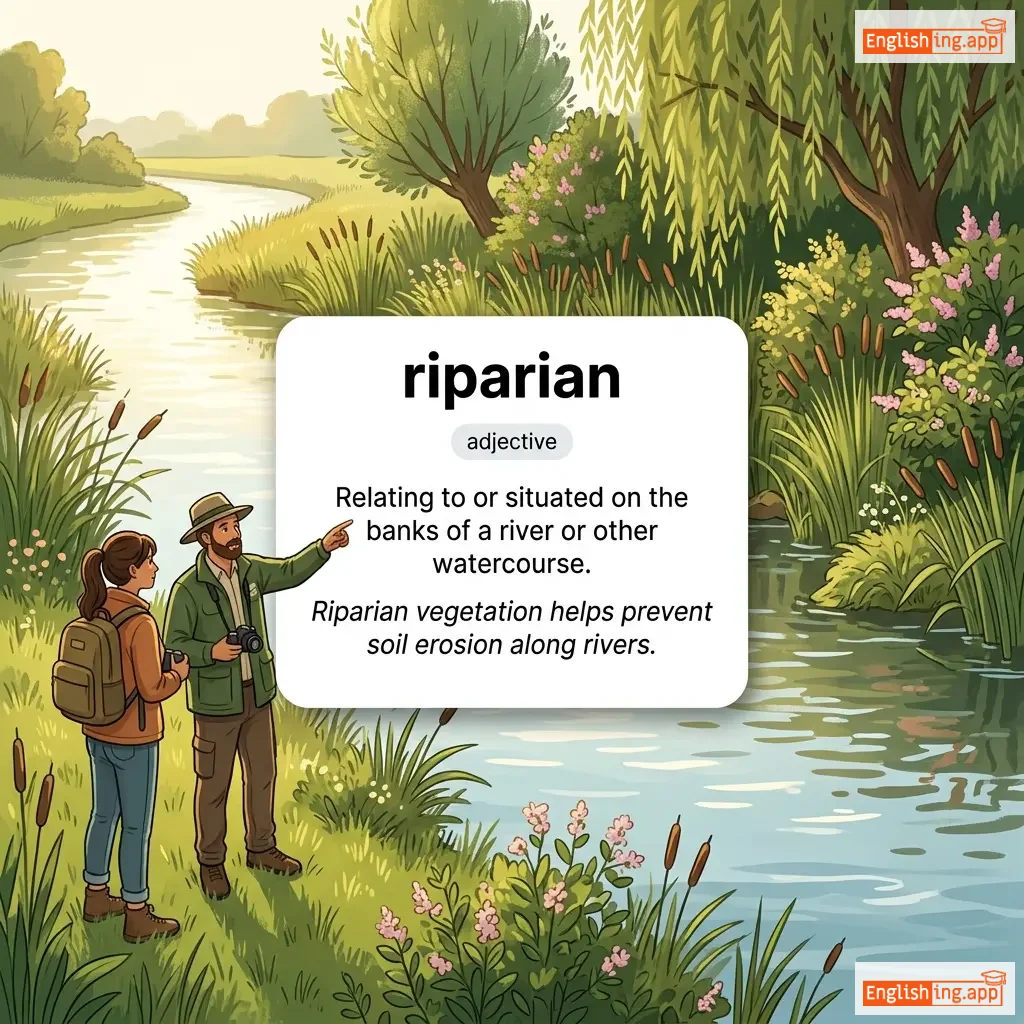
riparian definition card — visual illustration of the meaning
adjective
/raɪˈpɛə.ri.ən/
位于河流或其他水道的岸边或与之相关的 (wei yu heliu huo qita shuidao de anbian huo yu zhi xiangguan de)

Relating to or situated on the banks of a river or other watercourse.

"Riparian vegetation helps prevent soil erosion along rivers."

"河岸植被有助于防止河流沿岸的土壤侵蚀。" (Hé'àn zhíwù yǒuzhù yú fángzhǐ héliú yán'àn de tǔrǎng qīnshí.)
verb
/rɪp/
撕裂 (sī liè)

to tear something quickly or violently

"He accidentally ripped his shirt on the fence."

"他不小心在篱笆上撕破了衬衫。" (Tā bù xiǎoxīn zài líbā shàng sī pòle chènshān.)
noun
/ˈraɪət/
骚乱 (saoluan)

a violent disturbance by a crowd

"The protest turned into a violent riot."
"抗议变成了暴力骚乱。" (Kangyi biàn chéngle bàolì saoluan.)
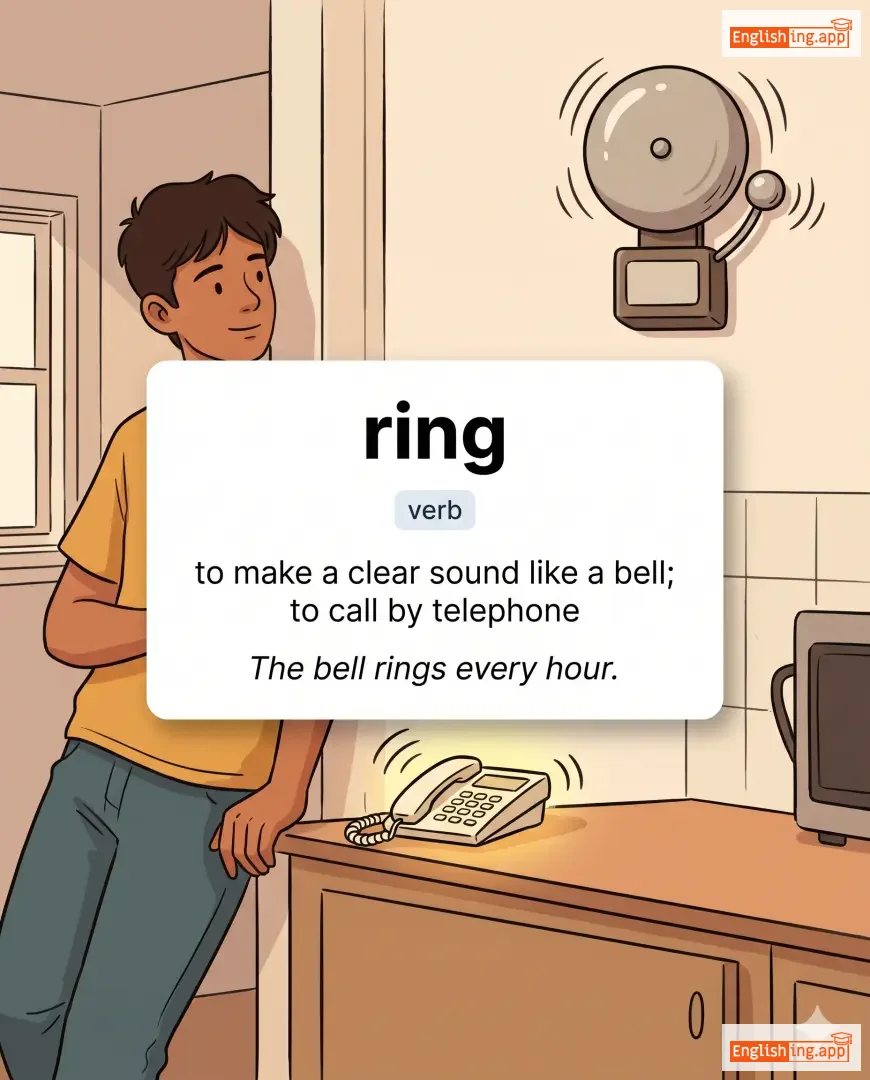
ring definition card — visual illustration of the meaning
noun
/rɪŋ/
戒指 (jie zhi)

a small circular band, typically worn on the finger as jewelry or a symbol

"She received a beautiful engagement ring."

"她收到了一个美丽的订婚戒指。" (Ta shou dao le yi ge mei li de ding hun jie zhi.)
noun
/raɪm/
(shuang)

frost formed on cold surfaces by freezing water vapor

"The trees were covered with a white rime after the cold night."

"树木在寒冷的夜晚后被白色霜覆盖。" (Shumu zai hanleng de yewan hou bei baise shuang fukai.)
noun
/rɪm/
边缘 (bianyuan)

the outer edge or border of a circular object

"The coffee cup had a chip on its rim."

"咖啡杯的边缘有个裂痕。" (Kāfēi bēi de bianyuan yǒu gè lièhén.)
😠

rile

verb
/raɪl/

to irritate or annoy someone

"His careless comments really riled her."

noun
/ˈrɪɡər/
严格 (yángé)

strictness, severity, or demanding conditions

"The training was carried out with great rigor."

"培训以极大的严格性进行。" (Péixùn yǐ jí dà de yángé xìng jìnxíng.)
noun
/ˈrɪɡməˌroʊl/
麻烦事 (máfan shì)

a long, complicated, and confusing process or story

"Getting a visa was such a rigmarole of paperwork and interviews."

"获得签证是一个繁琐的文书工作和面试过程。" (Huòdé qiānzhèng shì yīgè fánzuǒ de wénshū gōngzuò hé miànshì guòchéng.)
adverb
/ˈrɪdʒɪdli/
严格地; 不妥协地 (yángé de; bù tuǒxié de)

in a strict, inflexible manner; without compromise

"The rules are rigidly enforced in this institution."

"这些规则在这个机构中被严格执行。" (Zhèxiē guīzé zài zhège jīgòu zhōng bèi yángé zhíxíng.)
noun
/rɪdʒ/
山脊或山顶 (shan ji huo shan ding)

a long, narrow hilltop, mountain range, or raised strip

"We walked along the mountain ridge."

"我们沿着山脊走。" (Wo men yan zhe shan ji zou.)
🔫

Rifle

noun
/ˈraɪfəl/

a type of long-barreled gun designed for accurate shooting

"The hunter carried a rifle to catch game."

adjective
/raɪf/
普遍 (pǔbiàn)

widespread or common, often in a negative sense

"Corruption was rife in the old government system."

"腐败在旧政府体制中盛行。" (fǔbài zài jiù zhèngfǔ tǐzhì zhōng shèngxíng.)
adjective
/rɪˈdɪkjʊləs/
荒谬 (huangmiu)

Deserving mockery; absurd or unreasonable.

"The idea of flying pigs is ridiculous."

"飞猪的想法很荒谬。" (Fei zhu de xiangfa hen huangmiu.)
verb
/ˈrɪdɪkjuːl/
嘲笑 (chaoxiaoxiao)

To make fun of someone or something in a cruel or dismissive way.

"He was ridiculed for his strange ideas."

"他因奇怪的想法而被嘲笑。" (Ta yin qiguai de xiangfa er bei chaoxiaoxiao.)
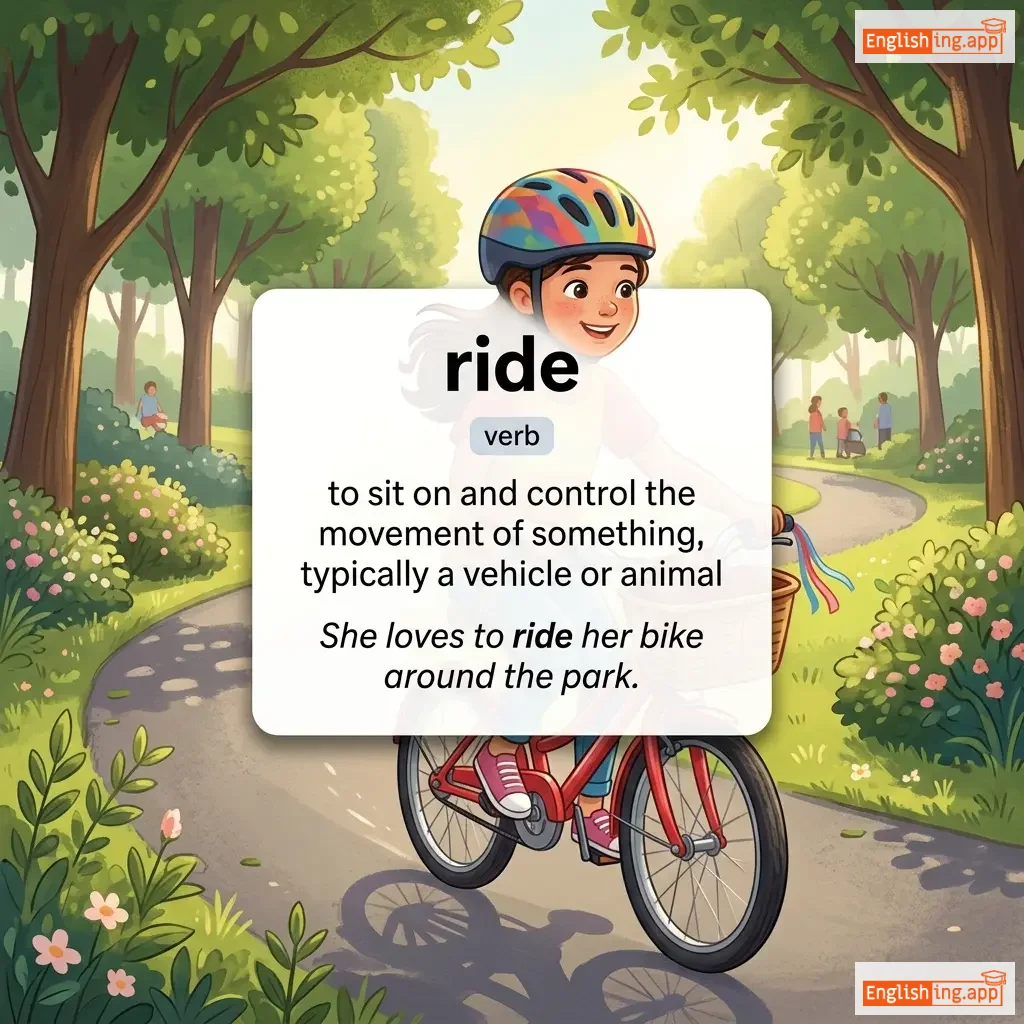
ride definition card — visual illustration of the meaning
verb
/raɪd/
(qi)

to sit on and control the movement of something, typically a vehicle or animal

"She loves to ride her bike around the park."

"她喜欢在公园骑自行车。" (Ta xihuan zai gongyuan qi zixingche.)
adjective
/ˈroʊlɪŋ/
滚动 (gundong)

moving in gentle undulations; moving forward by turning over and over

"They drove through the rolling hills of the countryside."

"他们开车穿过乡村的滚动山丘。" (Tamen kaiche chuanguo xiangcun de gundong shanqu.)