語彙集

英単語辞書 | 単語の意味、定義、例文

noun
/ˈroʊ.lɪŋ pɪn/
めん棒 (menbou)

a cylindrical tool used for rolling out dough or pastry

"Roll the dough flat with a rolling pin."

"めん棒で生地を広げてください。" (Menbō de kiji o hirogete kudasai.)
adjective, noun
/ˈroʊmən/
ローマの / 古代ローマの市民 (roma no / kodai roma no shimin)

relating to Rome or its people; a citizen of ancient Rome

"The Roman Empire influenced much of modern civilization."

"ローマ帝国は現代文明に多大な影響を与えました。" (Roma teikoku wa gendai bunmei ni tadai na eikyo wo ataemashita.)
noun
/roʊˈmæns/
ロマンス、愛 (romansh, ai)

a feeling of love, especially one that is exciting and mysterious

"Their romance began during a summer trip to Paris."

"彼らのロマンスはパリへの夏の旅行中に始まりました。" (Karera no romansh wa Pari e no natsu no ryokou-chuu ni hajimarimashita.)
adjective
/rəʊˈmæntɪk/
ロマンチック (romanchikku)

related to or involving love or feelings of love

"He wrote her a romantic letter for their anniversary."

"彼は彼らの記念日のためにロマンチックな手紙を書きました。" (Kare wa karera no kinenbi no tame ni romanchikkuna tegami o kakimashita.)
verb
/rɒmp/
楽しく遊ぶ (tanoshiku asobu)

to play or move in a lively, carefree, and energetic way

"The children romped happily in the garden."

"子供たちは庭で楽しそうに遊んでいました。" (Kodomotachi wa niwa de tanoshisou ni asondeimashita.)
noun
/ˈrɒndoʊ/
音楽作品(繰り返しのテーマを持つ) (ongaku sakuhin (kurikaeshi no teema wo motsu))

a musical composition with a recurring leading theme

"The pianist ended the recital with a lively rondo."

"ピアニストは生き生きとしたロンドでリサイタルを終えました。" (Pianisuto wa ikigiki to shita rondo de risaitaru wo oemashita.)
noun
/ruːd/
十字架 (juujika)

a crucifix, especially one positioned above the entrance to the chancel of a church

"The old church displayed a carved rood above the altar."
"古い教会は祭壇の上に彫られた十字架を展示していました。" (Furui kyoukai wa saidan no ue ni horareta juujika wo tenji shiteimashita.)
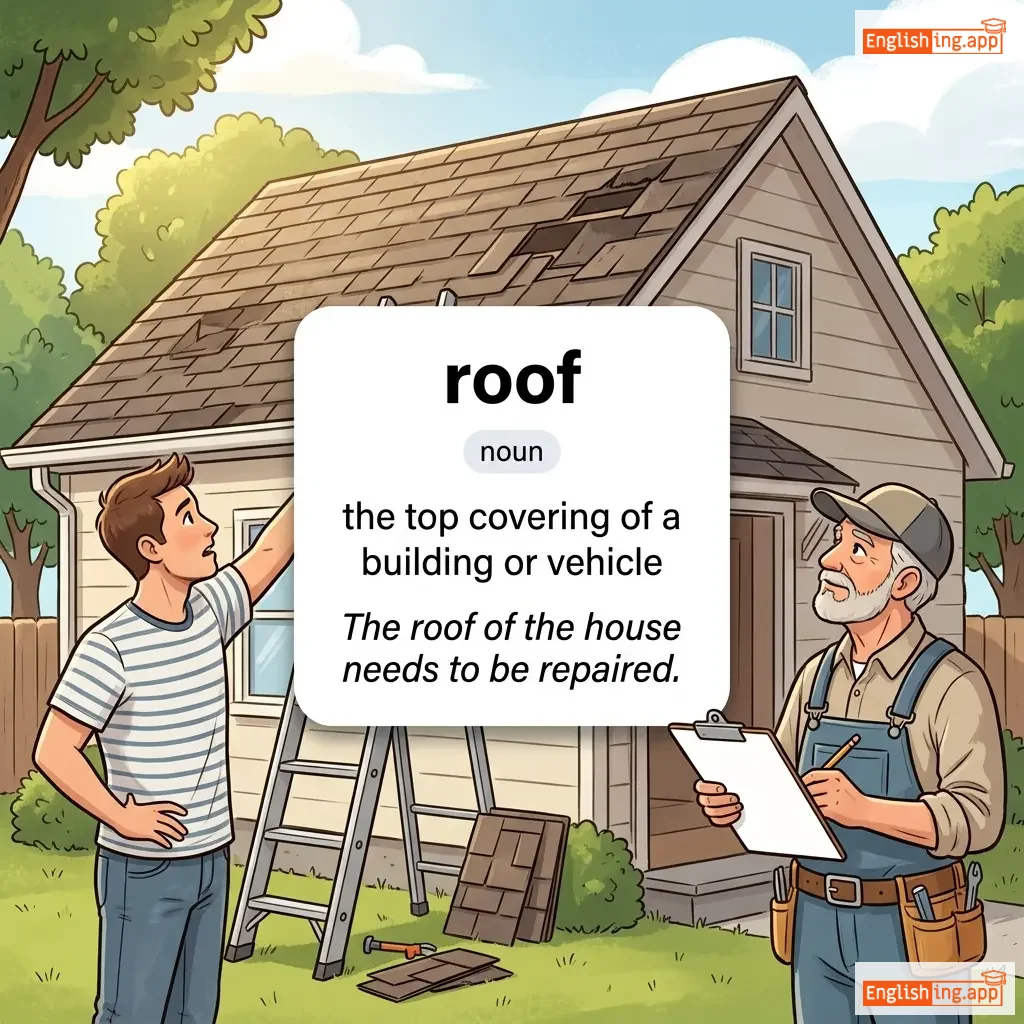
roof definition card — visual illustration of the meaning
noun
/ruːf/
屋根 (yane)

the top covering of a building or vehicle

"The roof of the house needs to be repaired."

"家の屋根は修理が必要です。" (Ie no yane wa shuuri ga hitsuyou desu.)
noun
/ˈrʊkəri/
鳥の巣 (tori no su)

a place where rooks or other birds breed and nest in colonies

"We saw a rookery full of noisy birds near the forest."
"森の近くで、騒がしい鳥たちでいっぱいの鳥の巣を見ました。" (Mori no chikaku de, sawagashii tori-tachi de ippai no tori no su o mimashita.)
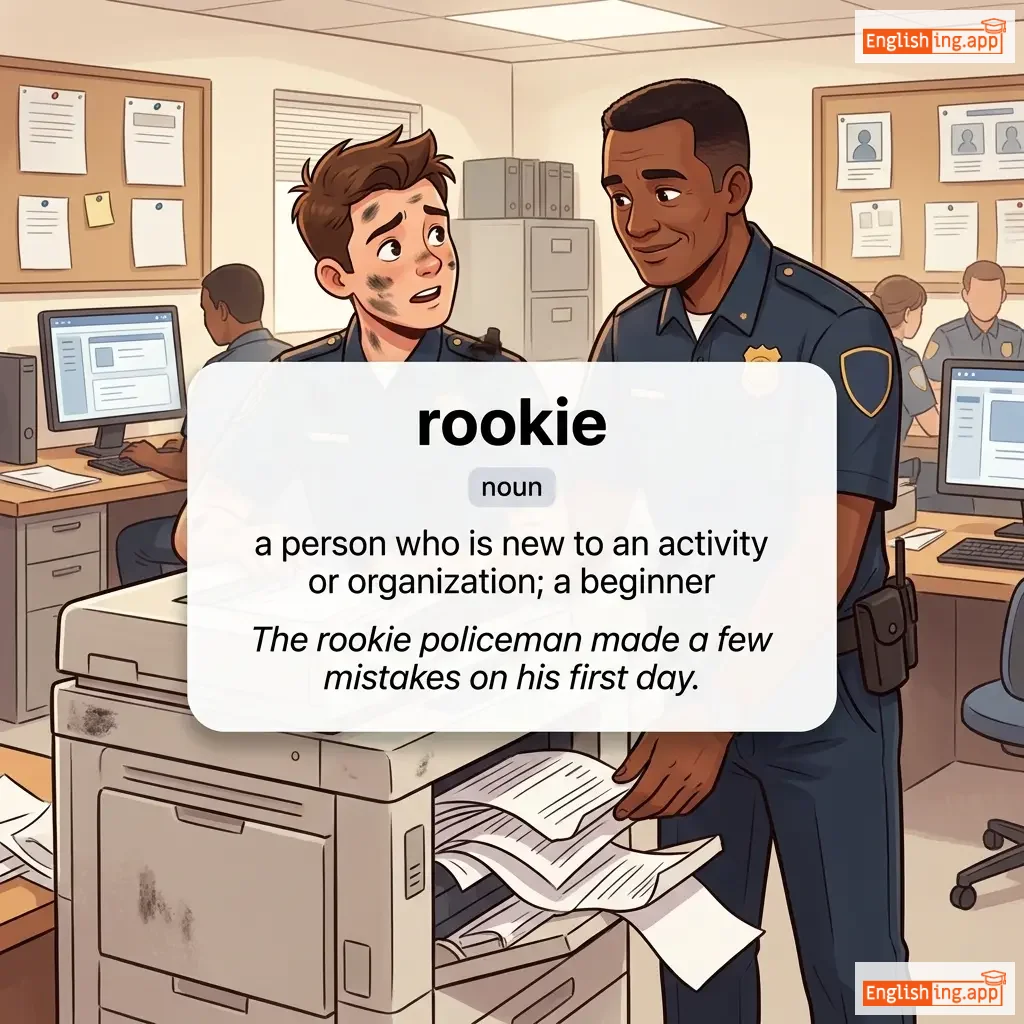
rookie definition card — visual illustration of the meaning
noun
/ˈrʊki/
初心者 (shoshinsha)

a person who is new to an activity or organization; a beginner

"The rookie policeman made a few mistakes on his first day."
"新米警官は初日にいくつかのミスを犯しました。" (Shinmai keikan wa shonichi ni ikutsu ka no misu o okashimashita.)
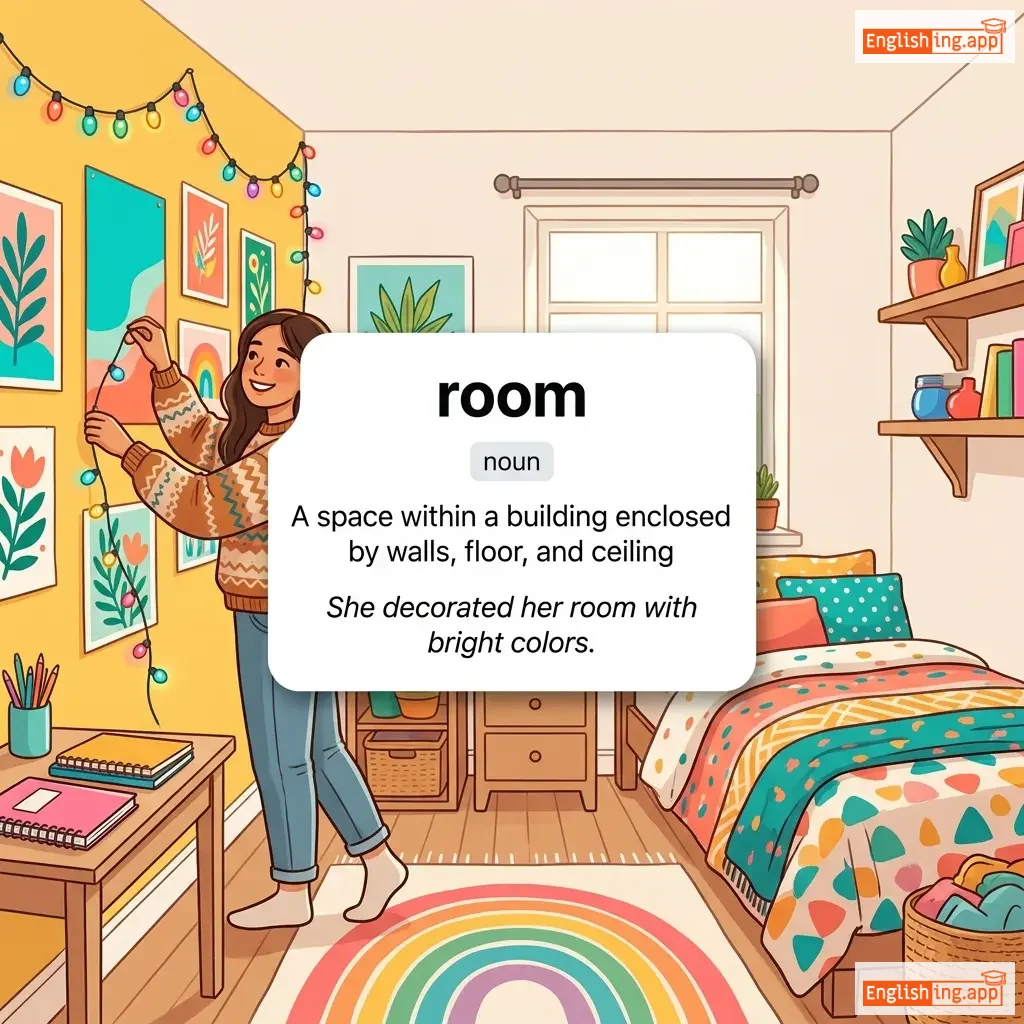
room definition card — visual illustration of the meaning
noun
/ruːm/
部屋 (heya)

A space within a building enclosed by walls, floor, and ceiling

"She decorated her room with bright colors."

"彼女は明るい色で自分の部屋を飾りました。" (kanojo wa akarui iro de jibun no heya o kazarimashita)
adjective
/ˈruː.mi/
広々とした; 広いスペースのある (hirobito shita; hiroi supēsu no aru)

spacious; having a lot of room

"The apartment is very roomy with spacious bedrooms."

"アパートメントは広々としており、広いベッドルームがあります。" (Apātomento wa hirobito toshite ori, hiroi beddo rūmu ga arimasu.)
noun
/ˈruːstər/
雄鶏 (ondori)

A male domestic chicken, especially one that crows.

"The rooster crowed at dawn, waking up the whole village."
"雄鶏は夜明けに鳴き、村全体を起こした。" (Ondori wa yoake ni naki, mura zentai o okoshita.)
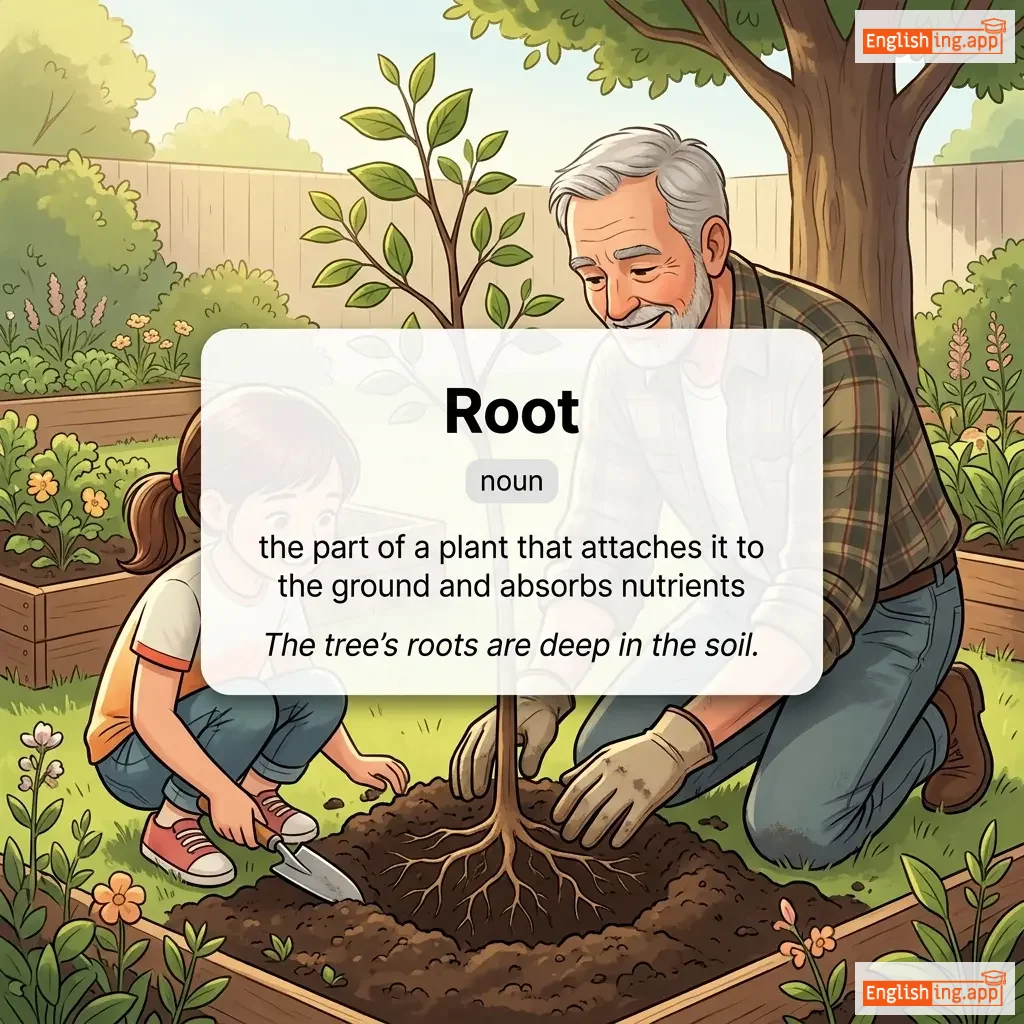
Root definition card — visual illustration of the meaning
noun
/ruːt/
(ne)

the part of a plant that attaches it to the ground and absorbs nutrients

"The tree's roots are deep in the soil."

"木の根は土の中に深く埋まっています。" (Ki no ne wa tsuchi no naka ni fukaku umatte imasu.)
adjective
/ˈruː.tɪd/
根付いた (ruutiddo)

deeply established; firmly fixed

"His beliefs are deeply rooted in tradition."

"彼の信念は伝統に深く根ざしている。" (Kare no shinnen wa dentou ni fukaku nezashite iru.)
noun
/roʊp/
ロープ (roopu)

a strong, thick cord made of twisted fibers or strands

"The climbers used a rope to scale the mountain."
"登山者は山を登るためにロープを使いました。" (Tozan-sha wa yama wo noboru tame ni roopu wo tsukaimashita.)
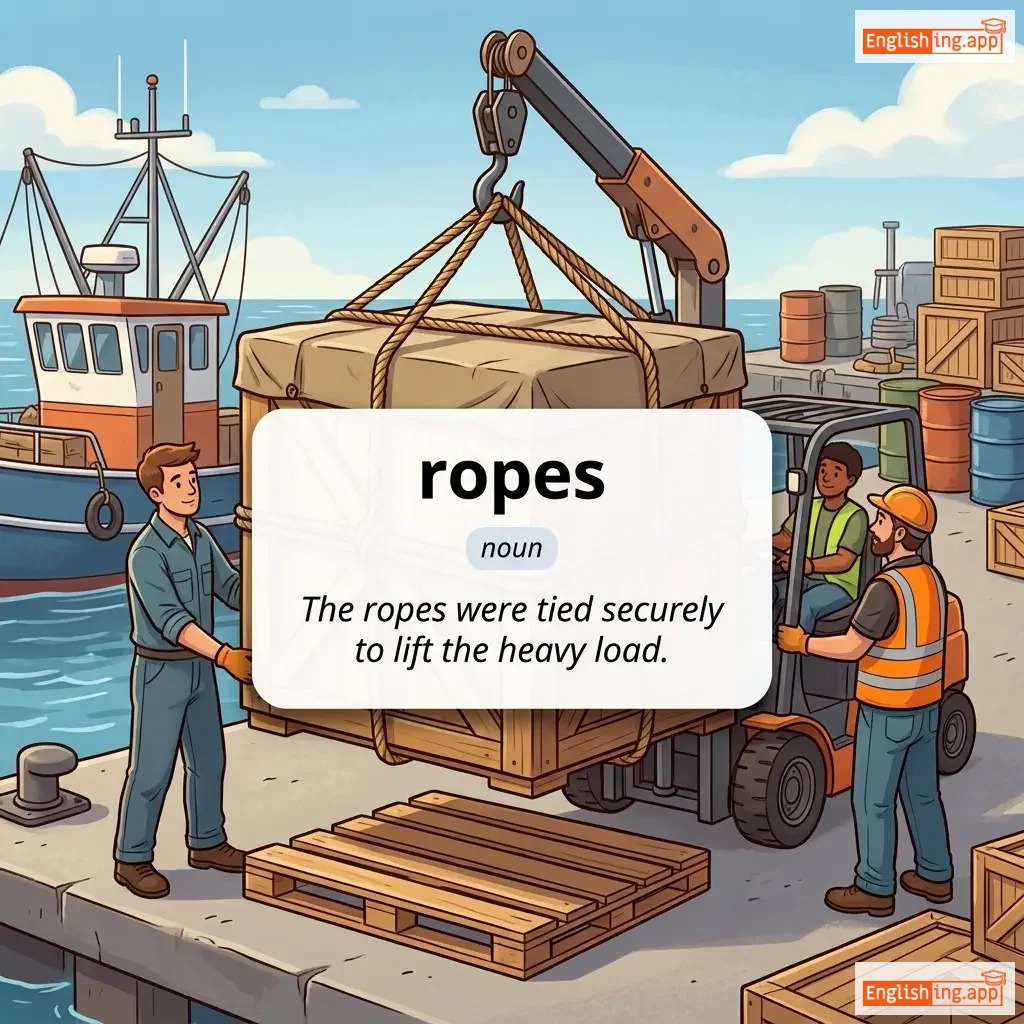
ropes definition card — visual illustration of the meaning
noun
roʊps
ロープ (roopu)

A length of thick strong cord made by twisting together strands of hemp, sisal, nylon, or similar material.

"The ropes were tied securely to lift the heavy load."

"ロープは重い荷物を持ち上げるためにしっかりと結ばれていました。" (Roopu wa omoi nimotsu wo mochiageru tame ni shikkari to musubarete imashita.)
noun
/roʊz/
バラの花 (bara no hana)

a type of flowering plant, known for its beautiful and fragrant blooms

"She gave me a rose on my birthday."

"彼女は私の誕生日にローズをくれました。" (Kanojo wa watashi no tanjōbi ni rōzu o kuremashita.)
noun
/roʊz ˈber.i/
ローズベリー (roozuberii)

a type of berry with rose-like characteristics or flavor

"The rose berry has a delicate floral taste that reminds me of roses."

"ローズベリーはバラのような繊細な花の風味があり、バラを思い出させます。" (roozuberii wa bara no you na sensaina hana no fuumi ga ari, bara o omoidasasemasu.)
noun
/ˈroʊz ˈwɔː.tər/
ローズウォーター (rōzu wōtā)

a flavored water made by steeping rose petals in water, used in cooking and cosmetics

"She added a few drops of rose-water to the dessert."

"彼女はデザートにローズウォーターを数滴加えました。" (Kanojo wa dezāto ni rōzu wōtā o sūteki kuwaemashita.)
adjective
/ˈroʊziət/
バラ色の、楽観的な (bara iro no, rakkan-teki na)

Having a pink color; optimistic or idealistic.

"She looked at the future with roseate optimism."

"彼女はローズ色の楽観主義で未来を見ました。" (Kanojo wa rozu iro no rakkan shugi de mirai o mimashita.)
noun
/ˈrɑːstər/
リスト (risuto)

A list or plan showing people’s duties or times when they are scheduled.

"The manager updated the staff roster for next week."

"マネージャーは来週のスタッフリストを更新しました。" (Manējā wa raishū no sutaffu risuto o kōshin shimashita.)
noun
/ˈrɒstrəm/
演壇 (endan)

A raised platform for speakers, performers, or leaders.

"The politician delivered a speech from the rostrum."

"政治家は演壇から演説を行いました。" (seijika wa endan kara enzetsu o okonaimashita.)
verb
/rɒt/
腐る (kuzuru)

to decay or decompose; to become corrupt

"The fruit will rot if left in the sun."

"果物は日光に当たると腐ります。" (Kudamono wa nikkou ni ataru to kusarimasu)
adjective
/ˈroʊtəri/
回転式 (kaitenshiki)

Relating to or characterized by rotation; revolving around an axis.

"The machine uses a rotary engine to function efficiently."

"その機械は効率的に動作するためにロータリーエンジンを使用しています。" (Sono kikai wa kōritsutekini dōsa suru tame ni rōtarī enjin o shiyō shiteimasu.)
verb
/ˈroʊ.teɪt/
回転する (kaiten suru)

to turn around a central point or axis

"The Earth rotates on its axis once every 24 hours."

"地球は24時間ごとに自転します。" (Chikyū wa 24 jikan goto ni jiten shimasu.)
noun
/rəʊˈteɪʃən/
回転 (kaiten)

the action of rotating or turning something around a center or axis

"The rotation of the earth around the sun causes seasons."

"地球の太陽の周りの回転は季節を引き起こします。" (Chikyū no taiyō no mawari no kaiten wa kisetsu o hikiokoshimasu.)
noun
/roʊt/
暗記 (anki)

mechanical or habitual repetition, often without understanding

"He learned the poem by rote without understanding its meaning."

"彼はその詩を意味を理解せずに暗記しました。" (Kare wa sono shi o imi o rikai sezu ni anki shimashita.)
adjective
/ˈrɒt.ən/
腐った; 悪い (kusatta; warui)

decayed; spoiled; bad

"The apple is rotten and should be thrown away."

"リンゴは腐っていて、捨てるべきです。" (Ringo wa kusatte ite, suteru beki desu.)
adjective
/roʊˈtʌnd/
丸い (marui)

round or plump in shape; full in sound

"The rotund cat struggled to climb the fence."

"丸い猫はフェンスを登るのに苦労していた。" (Marui neko wa fensu o noboru no ni kurō shite ita.)
noun
/roʊˈtʌn.də/
円形の建物 (enkei no tatemono)

a large circular building or hall, often with a dome

"Tourists gathered inside the grand rotunda of the capitol."

"観光客は議会堂の壮大なロタンダの中に集まりました。" (Kankōkyaku wa gikai-dō no sōdaina rotanda no naka ni atsumarimashita.)
noun
/roʊˈtʌn.də.ti/
円形 (enkei)

the quality of being round or plump

"The rotundity of the balloon made it float gracefully."

"風船の円形がそれを優雅に浮かせた。" (Fūsen no enkei ga sore o yūga ni ukaseta.)
noun
/ruːˈeɪ/
感覚的な楽しみを追い求める男 (kankakuteki na tanoshimi o oimotomeru otoko)

A man devoted to a life of sensual pleasure; a debauched man.

"The old roue squandered his fortune on gambling and women."

"年老いたルーエはギャンブルと女性に財産を浪費した。" (Toshi oita rūe wa gyanburu to josei ni zaisan o rōhi shita.)
adjective
/rʌf/
でこぼこ (dekoboko)

having an uneven or irregular surface; not smooth or level

"The road was rough and difficult to drive on."

"道路はでこぼこしていて運転が難しかった。" (Dōro wa dekoboko shiteite unten ga muzukashikatta.)
adverb
/ˈrʌfli/
おおよそ (ooyoso)

in a manner that is not precise or exact; approximately

"He roughly estimated the cost of the project."
"彼はプロジェクトの費用をおおよそ見積もった。" (Kare wa purojekuto no hiyou o ooyoso mitsumotta.)
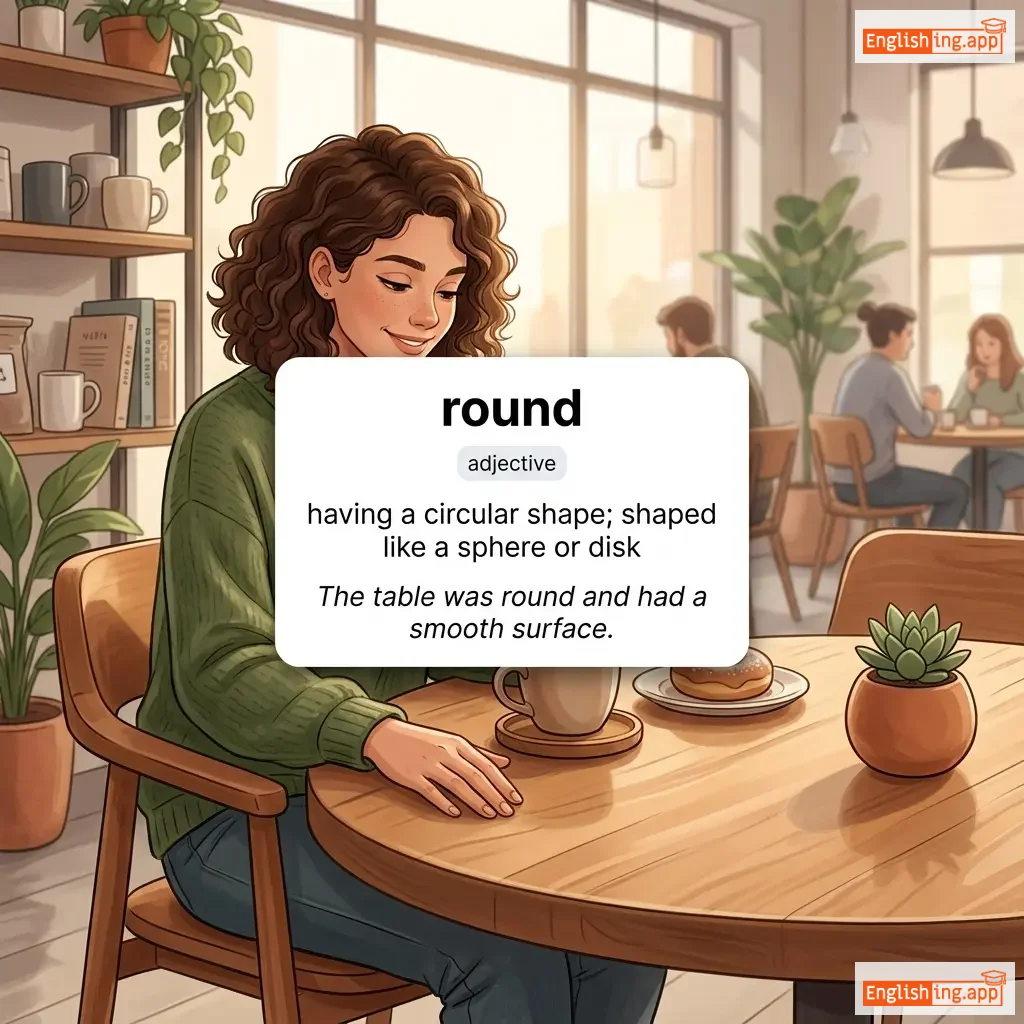
round definition card — visual illustration of the meaning
adjective
/raʊnd/
丸い (marui)

having a circular shape; shaped like a sphere or disk

"The table was round and had a smooth surface."

"テーブルは丸くて、滑らかな表面がありました。" (Tēburu wa marukute, namerakana hyōmen ga arimashita.)
verb
/ˈrʌf.l̩/

to disturb the smoothness of something; to annoy or upset someone

"The wind ruffled her hair."

adjective
/ˈrʌdi/
赤ら顔 (akarao)

Having a healthy red color in the face.

"She had a ruddy complexion from working outdoors."

"彼女は外で働いたため、赤ら顔でした。" (Kanojo wa soto de hataraita tame, akaragao deshita.)
adjective
/ruːd/
失礼 (shitsurei)

Not having or showing respect; impolite

"It was rude of him to interrupt the conversation."

"会話を遮るのは失礼です。" (kaigi o saegiru no wa shitsurei desu.)
adverb
/ˈruːdli/
失礼に (shitsurei ni)

in an impolite or discourteous manner

"He rudely interrupted the speaker during the presentation."

"彼はプレゼン中に話者を失礼に遮った。" (Kare wa purezen chuu ni washa o shitsurei ni saegitta.)
noun
/ˈruːdnəs/
無礼 (ru-do-nesu)

the quality of being impolite, discourteous, or offensive in behavior or speech

"His rudeness shocked everyone at the dinner party."

"彼の無礼さはディナーパーティーで皆を驚かせました。" (Kare no burei-sa wa dinā pāti de mina o odorokasemashita.)
noun
/ˈruːdɪmənt/
基本 (kihon)

A basic principle, element, or fundamental part of something.

"He learned the rudiments of music before joining the band."

"彼はバンドに参加する前に音楽の基礎を学びました。" (Kare wa bando ni sanka suru mae ni ongaku no kihon o manabimashita.)
adjective
/ˌruːdɪˈmɛntəri/
初歩的な (shohoteki na)

Involving or limited to basic principles; elementary or simple.

"The village school provided only a rudimentary education."

"その村の学校は初歩的な教育しか提供していませんでした。" (Sono mura no gakkou wa shohoteki na kyouiku shika teikyō shiteimasen deshita.)
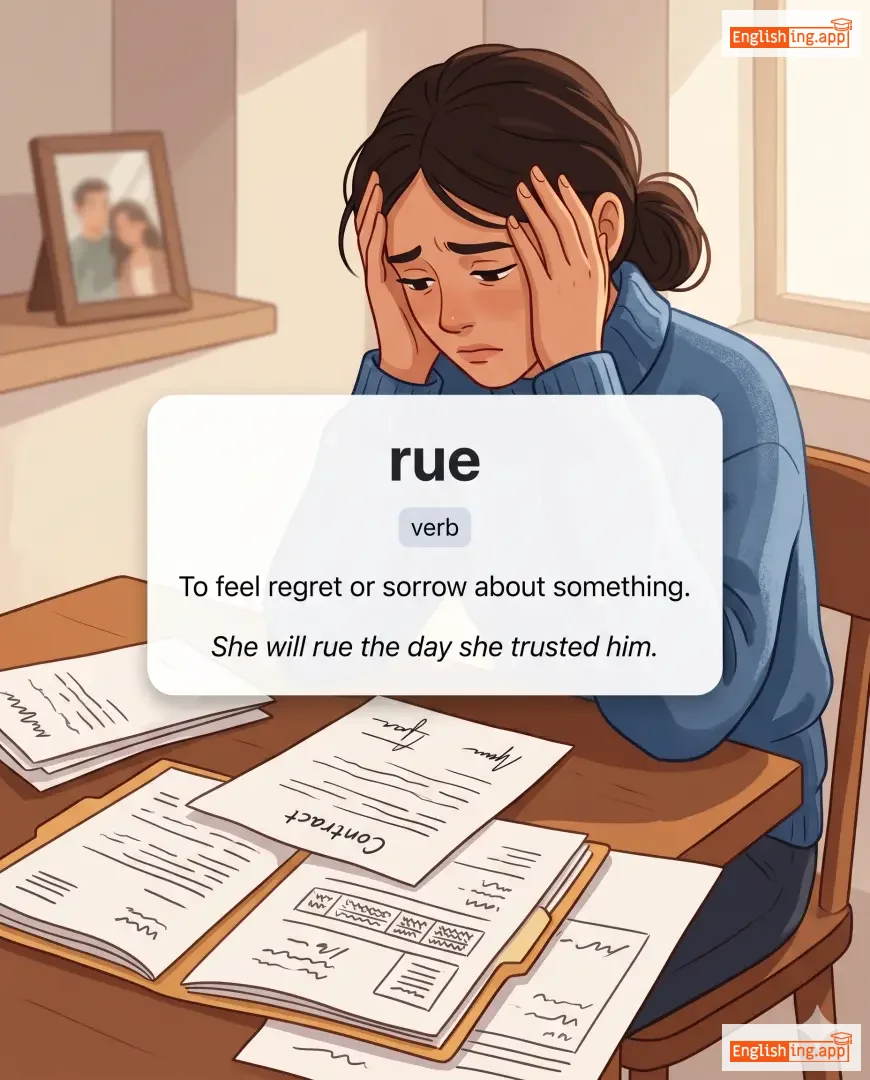
rue definition card — visual illustration of the meaning
verb
/ruː/
後悔する (koukaisuru)

To feel regret or sorrow about something.

"She will rue the day she trusted him."

"彼女は彼を信じたその日を後悔するだろう。" (Kanojo wa kare o shinjita sono hi o koukai suru darou.)
adjective
/ˈruːfəl/
後悔した (kōkai shita)

Expressing sorrow, regret, or pity.

"He gave a rueful smile after losing the match."

"試合に負けた後、彼は後悔の笑顔を見せた。" (Shiai ni maketa ato, kare wa kōkai no egao o miseta.)
noun
/ˈrʌfiən/
ごろつき (gorotsuki)

A violent or lawless person; a bully.

"The ruffians vandalized the shop late at night."

"ごろつきたちは夜遅くに店を破壊した。" (Gorotsukitachi wa yoru osoku ni mise o hakai shita.)
noun
/ˈruːlɪŋ/
判決 (hanketsu)

an official decision made by a judge or authority.

"The court’s ruling favored the defendant."

"裁判所の判決は被告に有利でした。" (Saibansho no hanketsu wa hikoku ni yūri deshita.)
noun
/ruːlz/
ルール (rūru)

explicit principles or regulations governing conduct or procedure within a particular area of activity

"The teacher reminded the students to follow the classroom rules."
"先生は生徒にクラスのルールに従うように注意しました。" (Sensei wa seito ni kurasu no rūru ni shitagau yō ni chūi shimashita.)
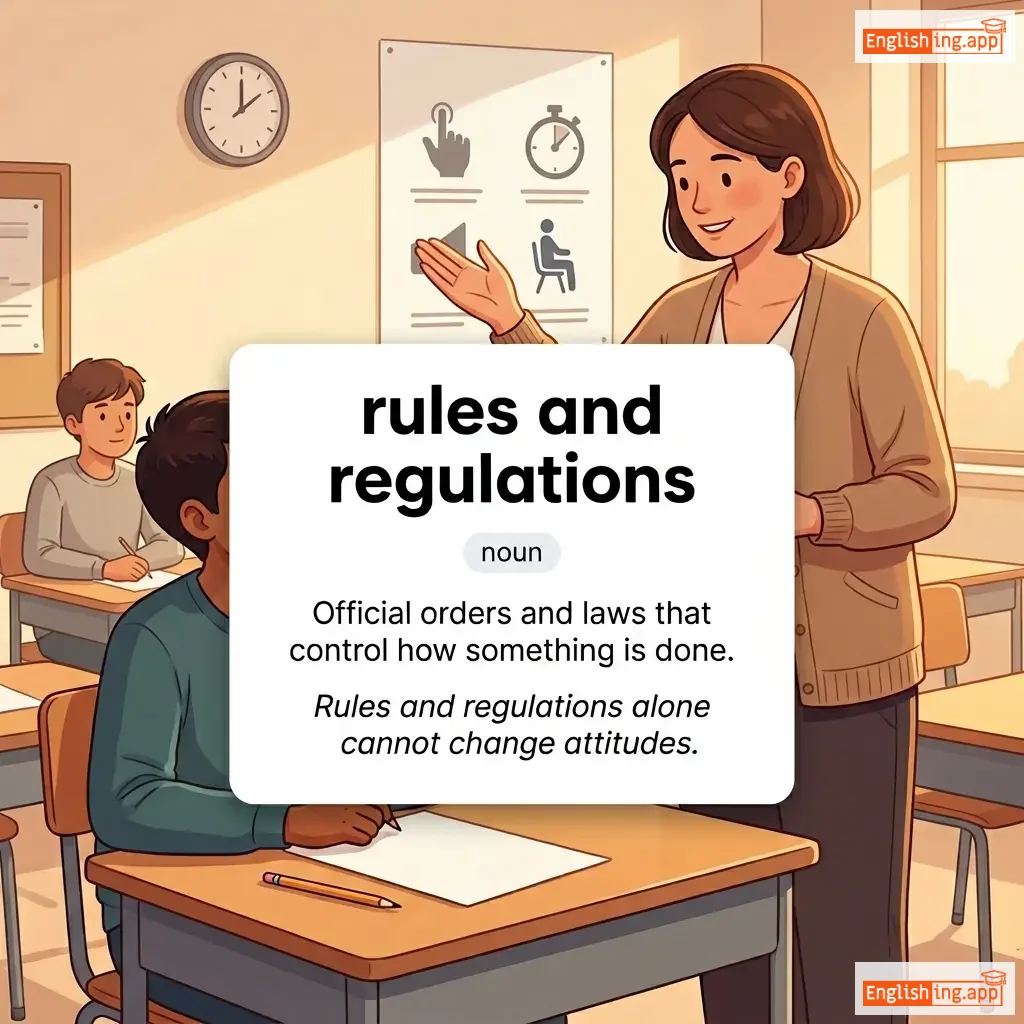
rules and regulations definition card — visual illustration of the meaning
noun
ruːlz ənd ˌrɛɡjʊˈleɪʃənz
規則と規定 (kisoku to kitei)

Official orders and laws that control how something is done.

"Rules and regulations alone cannot change attitudes."

"規則と規定だけでは態度を変えることはできません。" (Kisoku to kitei dake de wa taido o kaeru koto wa dekimasen.)
noun
/ˈruːlər/
支配者; 定規 (shihai sha; jougi)

A person who governs or controls a country; a straight-edged tool used for measuring or drawing lines

"The ruler drew a straight line on the paper while the king was a powerful ruler of his kingdom."

"ルーラーは紙にまっすぐな線を引き、王は自分の王国の強力な支配者でした。" (Ruraa wa kami ni massugu na sen wo hiki, ou wa jibun no oukoku no kyouryoku na shihaisha deshita.)