Словари

Словарь английского языка | Значения слов, определения и примеры

noun
/ˈroʊ.lɪŋ pɪn/
скалка (skalka)

a cylindrical tool used for rolling out dough or pastry

"Roll the dough flat with a rolling pin."

"Раскатайте тесто с помощью скалки." (Raskatayte testo s pomoshch'yu skalki.)
adjective, noun
/ˈroʊmən/
римский / римлянин (rimskij / rimljanin)

relating to Rome or its people; a citizen of ancient Rome

"The Roman Empire influenced much of modern civilization."

"Римская империя оказала влияние на многие аспекты современной цивилизации." (Rimskaya imperiya okazhda vliyanie na mnogiye aspekty sovremennoy tsivilizatsii.)
noun
/roʊˈmæns/
роман, любовь (romansh, lyubov)

a feeling of love, especially one that is exciting and mysterious

"Their romance began during a summer trip to Paris."

"Их роман начался во время летней поездки в Париж." (Ikh roman nachalsya vo vremya letney poyezdki v Parizh.)
adjective
/rəʊˈmæntɪk/
романтический (romanticheskiy)

related to or involving love or feelings of love

"He wrote her a romantic letter for their anniversary."

"Он написал ей романтическое письмо на годовщину." (On napisal yey romanticheskoe pis'mo na godovshchinu.)
verb
/rɒmp/
играть весело (igrat' veselo)

to play or move in a lively, carefree, and energetic way

"The children romped happily in the garden."

"Дети играли весело в саду." (Deti igrali veselo v sadu.)
noun
/ˈrɒndoʊ/
музыкальное произведение (с повторяющейся темой) (muzykalnoe proizvedenie (s povtoryayushcheysya temoy))

a musical composition with a recurring leading theme

"The pianist ended the recital with a lively rondo."

"Пианист завершил концерт живым рондо." (Pianist zavershil kontsert zhivym rondo.)
noun
/ruːd/
крест (krest)

a crucifix, especially one positioned above the entrance to the chancel of a church

"The old church displayed a carved rood above the altar."
"Старый храм показывал вырезанный крест над алтарем." (Staryy khram pokazyval vyrezannyy krest nad altaryom.)
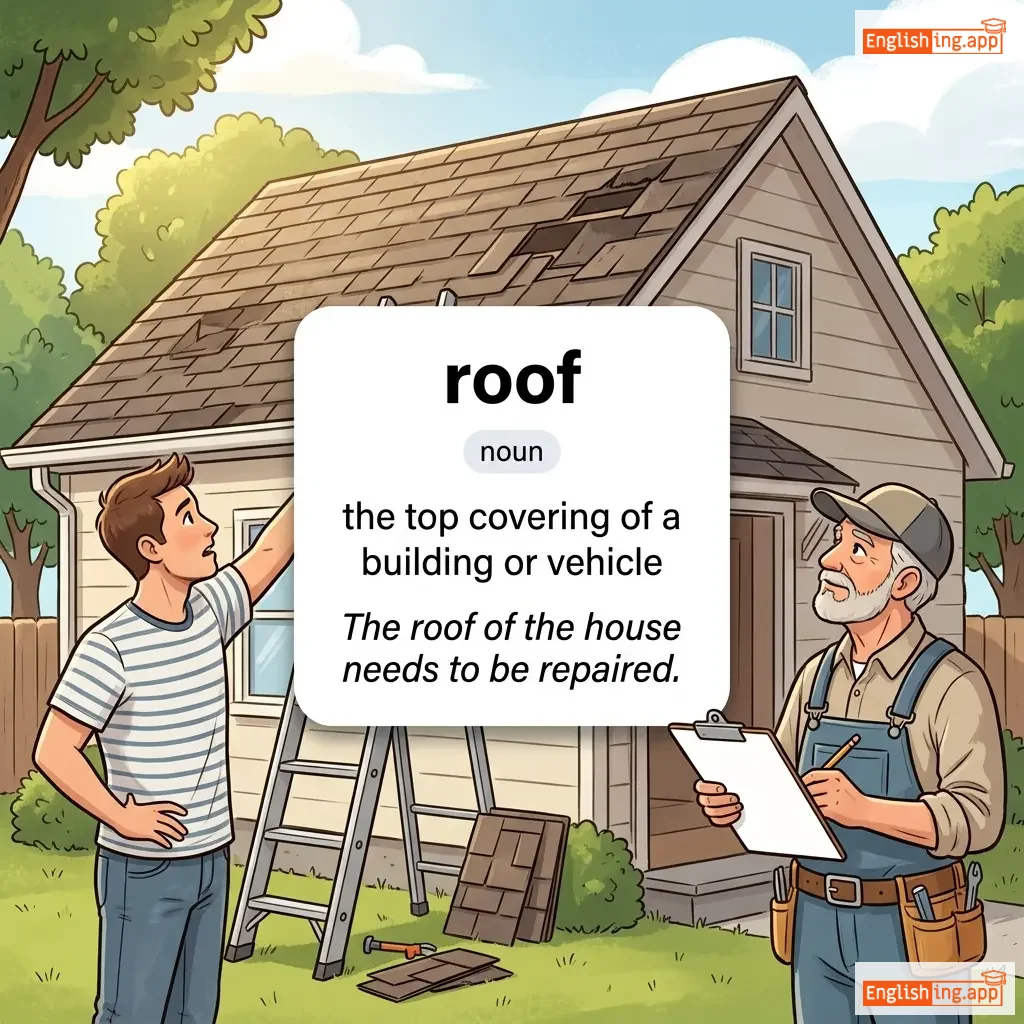
roof definition card — visual illustration of the meaning
noun
/ruːf/
крыша (krysha)

the top covering of a building or vehicle

"The roof of the house needs to be repaired."

"Крыша дома требует ремонта." (Krysha doma trebuyet remonta.)
noun
/ˈrʊkəri/
птичий питомник (ptichiy pitomnik)

a place where rooks or other birds breed and nest in colonies

"We saw a rookery full of noisy birds near the forest."
"Мы увидели птичий питомник, полный шумных птиц, рядом с лесом." (My uvideli ptichiy pitomnik, polnyy shumnykh ptits, ryadom s lesom.)
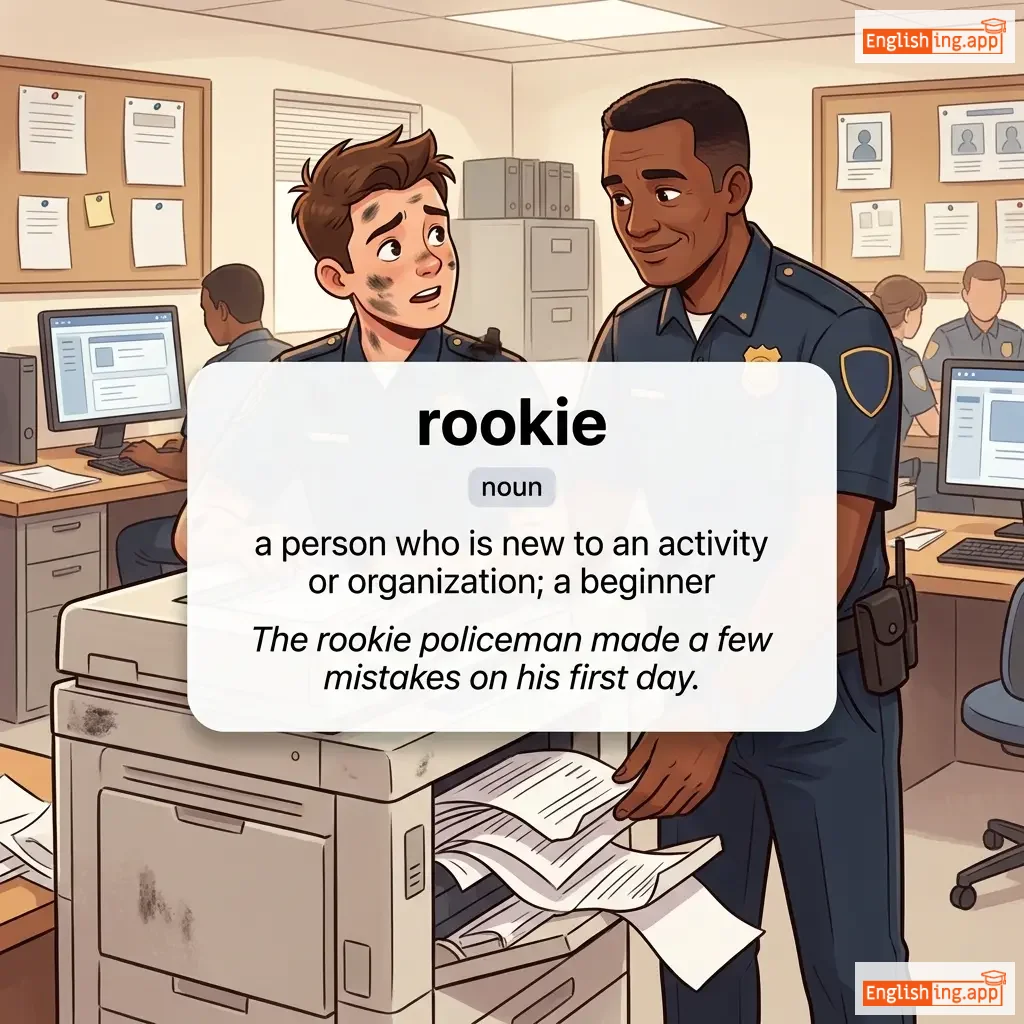
rookie definition card — visual illustration of the meaning
noun
/ˈrʊki/
новичок (novichok)

a person who is new to an activity or organization; a beginner

"The rookie policeman made a few mistakes on his first day."
"Новый полицейский совершил несколько ошибок в свой первый день." (Novyy politseyskiy sovershil neskol'ko oshibok v svoy pervyy den'.)
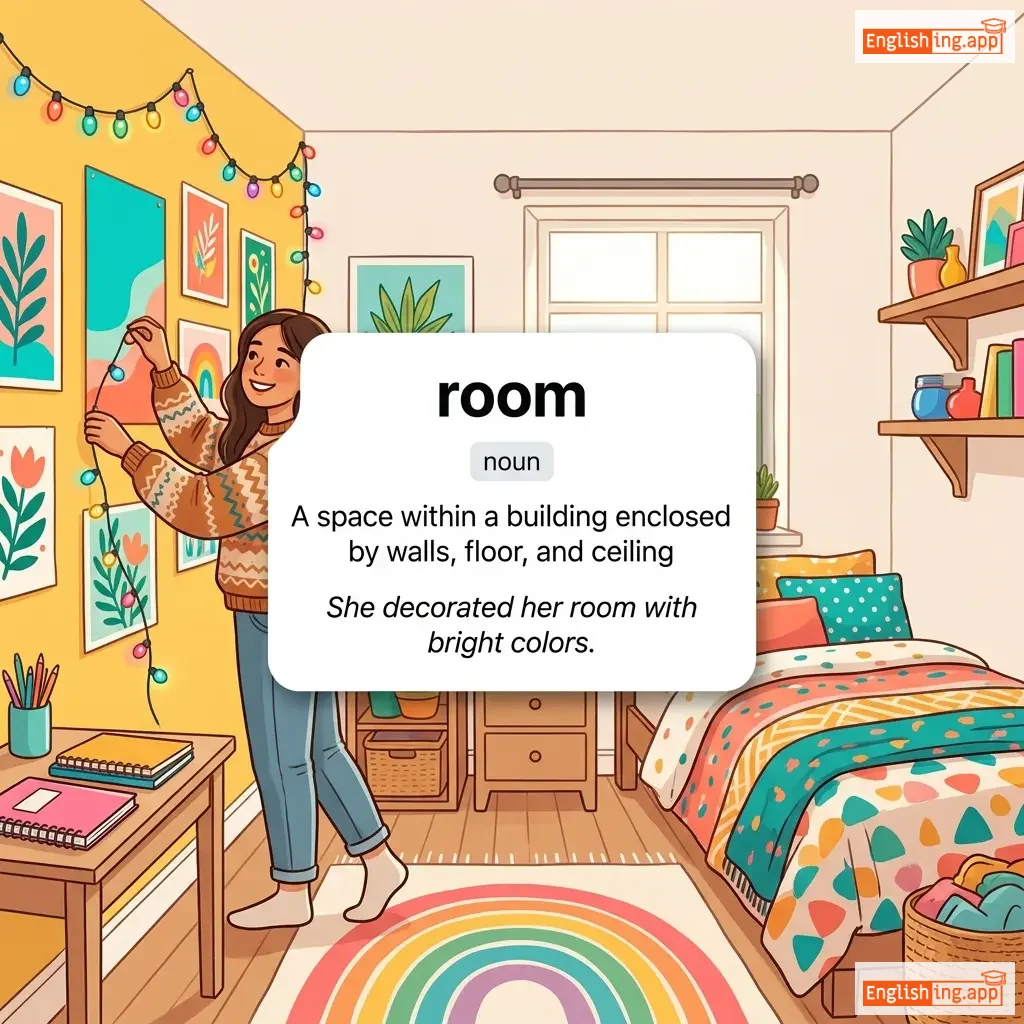
room definition card — visual illustration of the meaning
noun
/ruːm/
комната (komnata)

A space within a building enclosed by walls, floor, and ceiling

"She decorated her room with bright colors."

"Она украсила свою комнату яркими цветами." (ona ukrasila svoyu komnatu yarkimi tsvetami)
adjective
/ˈruː.mi/
просторный; с большим количеством места (prostornyy; s bol'shim kolichestvom mesta)

spacious; having a lot of room

"The apartment is very roomy with spacious bedrooms."

"Квартира очень просторная с большими спальнями." (Kvartira ochen' prostornaya s bol'shimi spal'nymi.)
noun
/ˈruːstər/
петух (petukh)

A male domestic chicken, especially one that crows.

"The rooster crowed at dawn, waking up the whole village."
"Петух пропел на рассвете, разбудив всю деревню." (Petukh propel na rassvete, razbudiv vsyu derevnyu.)
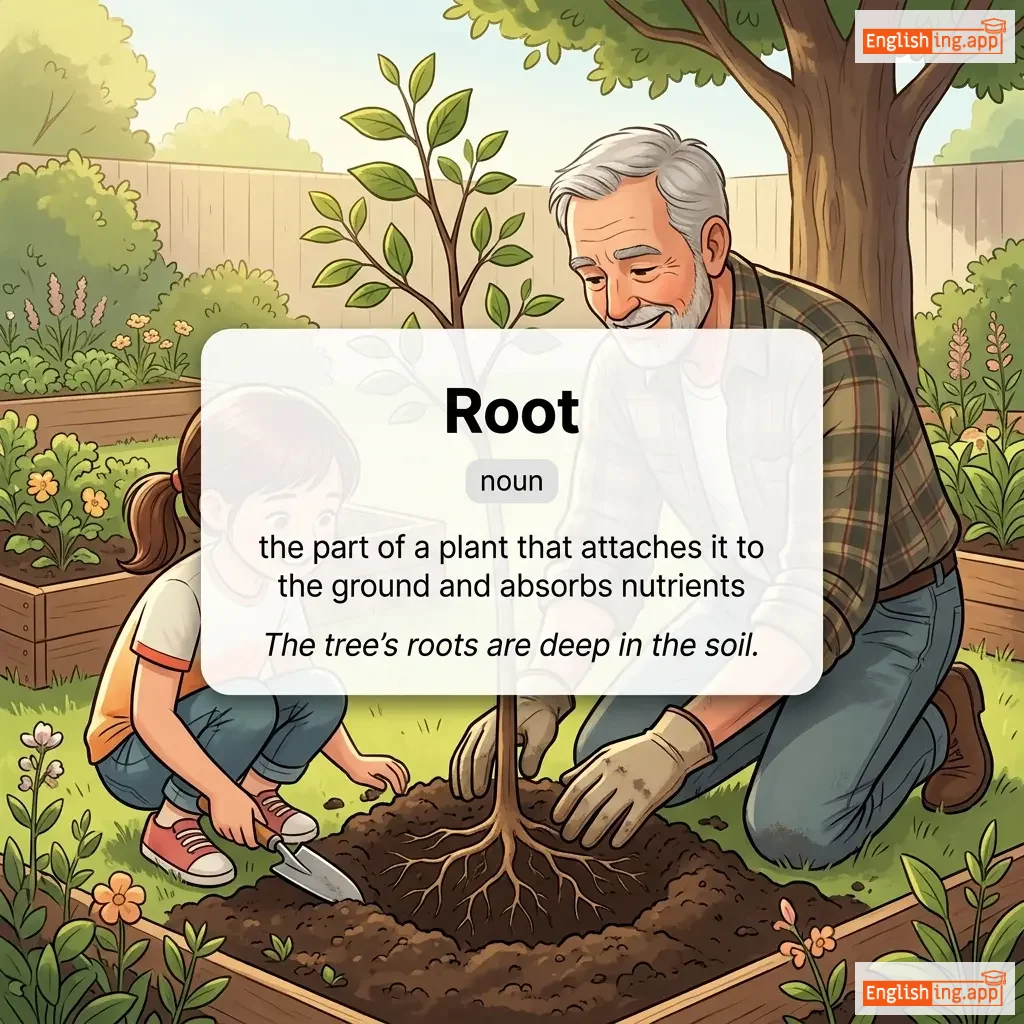
Root definition card — visual illustration of the meaning
noun
/ruːt/
корень (koren)

the part of a plant that attaches it to the ground and absorbs nutrients

"The tree's roots are deep in the soil."

"Корни дерева находятся глубоко в земле." (Korni dereva nakhodyatsya gluboko v zemle.)
adjective
/ˈruː.tɪd/
укоренённый (ukorenennyy)

deeply established; firmly fixed

"His beliefs are deeply rooted in tradition."

"Его убеждения глубоко укоренены в традициях." (Ego ubezhdeniya gluboko ukoreneny v traditsiyakh.)
noun
/roʊp/
веревка (verevka)

a strong, thick cord made of twisted fibers or strands

"The climbers used a rope to scale the mountain."
"Скалолазы использовали веревку для подъема на гору." (Skalolazy ispol'zovali verevku dlya pod'yoma na goru.)
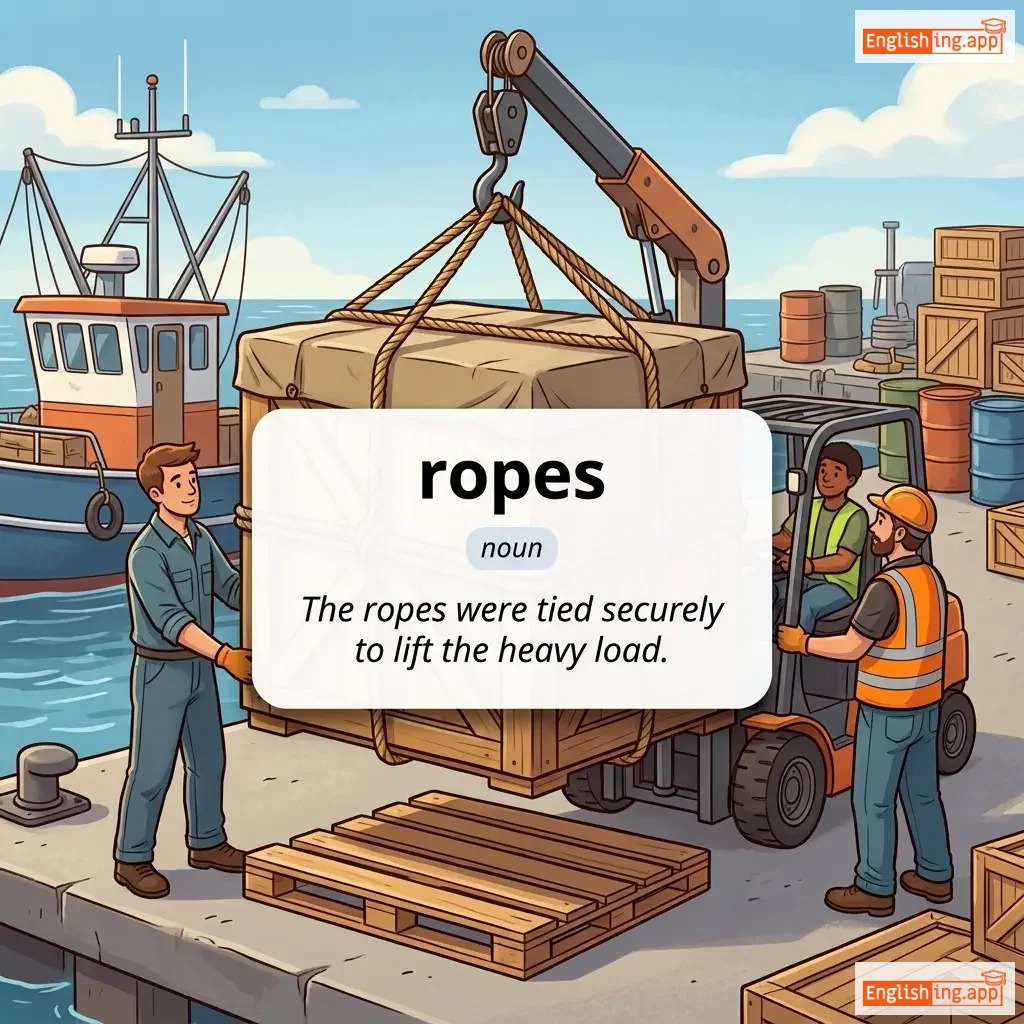
ropes definition card — visual illustration of the meaning
noun
roʊps
веревки (verevki)

A length of thick strong cord made by twisting together strands of hemp, sisal, nylon, or similar material.

"The ropes were tied securely to lift the heavy load."

"Веревки были надежно привязаны, чтобы поднять тяжелую нагрузку." (Verevki byli nadezhno privyazany, chtoby podnyat' tyazheluyu nagruzku.)
noun
/roʊz/
роза (roza)

a type of flowering plant, known for its beautiful and fragrant blooms

"She gave me a rose on my birthday."

"Она подарила мне розу на мой день рождения." (Ona podarila mne rozu na moy den' rozhdeniya.)
noun
/roʊz ˈber.i/
ягода розы (yagoda rozy)

a type of berry with rose-like characteristics or flavor

"The rose berry has a delicate floral taste that reminds me of roses."

"У ягоды розы нежный цветочный вкус, который напоминает мне розы." (u yagody rozy nezhnyj tsvetochnyj vkus kotoryj napominaet mne rozy)
noun
/ˈroʊz ˈwɔː.tər/
роза вода (roza voda)

a flavored water made by steeping rose petals in water, used in cooking and cosmetics

"She added a few drops of rose-water to the dessert."

"Она добавила несколько капель розовой воды в десерт." (Ona dobavila neskol'ko kapel' rozovoy vody v desert.)
adjective
/ˈroʊziət/
розовый, оптимистичный (rozovyi, optimistichnyi)

Having a pink color; optimistic or idealistic.

"She looked at the future with roseate optimism."

"Она посмотрела на будущее с розовым оптимизмом." (Ona posmotrela na budushchee s rozovym optimizmom.)
noun
/ˈrɑːstər/
список (spisok)

A list or plan showing people’s duties or times when they are scheduled.

"The manager updated the staff roster for next week."

"Менеджер обновил список сотрудников на следующую неделю." (Menedzher obnovil spisok sotrudnikov na sleduyushchuyu nedelyu.)
noun
/ˈrɒstrəm/
подиум (podium)

A raised platform for speakers, performers, or leaders.

"The politician delivered a speech from the rostrum."

"Политик произнес речь с подиума." (Politik proznes rech' s podiuma.)
verb
/rɒt/
гнить (gnit)

to decay or decompose; to become corrupt

"The fruit will rot if left in the sun."

"Фрукты сгниют, если их оставить на солнце." (Frukty sgniyut, esli ikh ostavit na solntse)
adjective
/ˈroʊtəri/
ротационный (rotatsionnyy)

Relating to or characterized by rotation; revolving around an axis.

"The machine uses a rotary engine to function efficiently."

"Машина использует роторный двигатель для эффективной работы." (Mashina ispol'zuyet rotornyy dvizhitel' dlya effektivnoy raboty.)
verb
/ˈroʊ.teɪt/
вращать (vrashchat)

to turn around a central point or axis

"The Earth rotates on its axis once every 24 hours."

"Земля вращается вокруг своей оси каждые 24 часа." (Zemlya vrashchayetsya vokrug svoey osi kazhdye 24 chasa.)
noun
/rəʊˈteɪʃən/
вращение (vraschhenie)

the action of rotating or turning something around a center or axis

"The rotation of the earth around the sun causes seasons."

"Вращение Земли вокруг Солнца вызывает сезоны." (Vrashcheniye Zemli vokrug Solntsa vyzyvayet sezony.)
noun
/roʊt/
наизусть (naizust)

mechanical or habitual repetition, often without understanding

"He learned the poem by rote without understanding its meaning."

"Он выучил стихотворение наизусть, не понимая его смысла." (On vyuchil stikhotvorenie naizust, ne ponimaya yego smysla.)
adjective
/ˈrɒt.ən/
гнилой; испорченный (gniloy; isporchenny)

decayed; spoiled; bad

"The apple is rotten and should be thrown away."

"Яблоко гнилое и должно быть выброшено." (Yabloko gniloje i dolzhno byt' vybrosheno.)
adjective
/roʊˈtʌnd/
круглый (krugly)

round or plump in shape; full in sound

"The rotund cat struggled to climb the fence."

"Круглый кот с трудом забрался на забор." (Krugly kot s trudom zabral'sya na zabor.)
noun
/roʊˈtʌn.də/
круглый зал (kruglyy zal)

a large circular building or hall, often with a dome

"Tourists gathered inside the grand rotunda of the capitol."

"Туристы собрались внутри большой ротонды Капитолия." (Turisty sobralis vnutri bol'shoy rotondy Kapitoliya.)
noun
/roʊˈtʌn.də.ti/
круглость (kruglost)

the quality of being round or plump

"The rotundity of the balloon made it float gracefully."

"Круглость шара заставила его плавно плавать." (Kruglost' shara zastavila ego plavno plavat'.)
noun
/ruːˈeɪ/
человек, посвятивший свою жизнь чувственным удовольствиям (chelovek, posvyativshiy svoyu zhizn' chuvstvennym udovol'stviyam)

A man devoted to a life of sensual pleasure; a debauched man.

"The old roue squandered his fortune on gambling and women."

"Старый руэ растратил свое состояние на азартные игры и женщин." (Staryy rue rastratil svoe sostoyanie na azartnye igry i zhenshchin.)
adjective
/rʌf/
шероховатый (sherokhvatyy)

having an uneven or irregular surface; not smooth or level

"The road was rough and difficult to drive on."

"Дорога была шероховатой и трудной для езды." (Doroga byla sherokhvatoy i trudnoy dlya ezdy.)
adverb
/ˈrʌfli/
приблизительно (priblizitelno)

in a manner that is not precise or exact; approximately

"He roughly estimated the cost of the project."
"Он приблизительно оценил стоимость проекта." (On priblizitelno otsenil stoimost' proekta.)
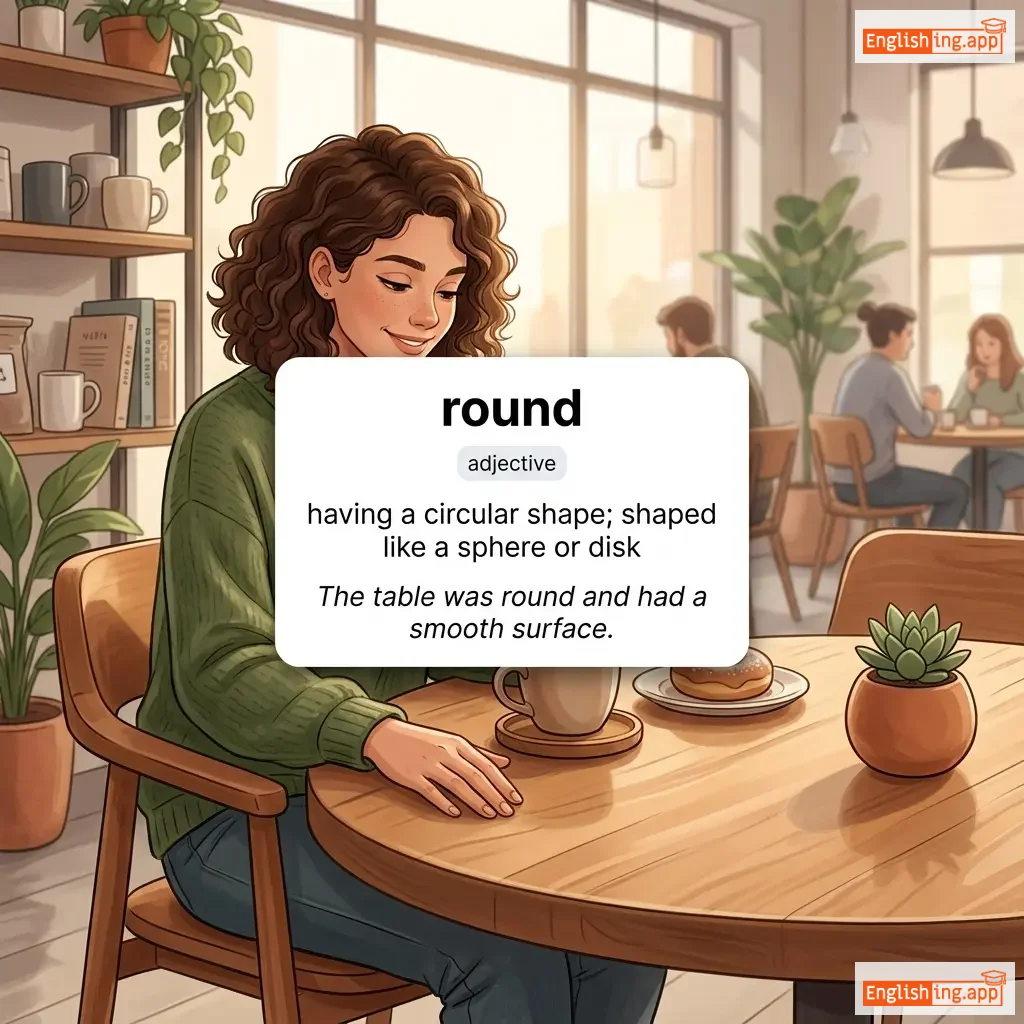
round definition card — visual illustration of the meaning
adjective
/raʊnd/
круглый (krugly)

having a circular shape; shaped like a sphere or disk

"The table was round and had a smooth surface."

"Стол был круглым и имел гладкую поверхность." (Stol byl kruglym i imel gladkuyu poverkhnost.)
verb
/ˈrʌf.l̩/

to disturb the smoothness of something; to annoy or upset someone

"The wind ruffled her hair."

adjective
/ˈrʌdi/
румяный (rumyany)

Having a healthy red color in the face.

"She had a ruddy complexion from working outdoors."

"У неё был румяный цвет лица от работы на улице." (U neyo byl rumyanyy tsvet litsa ot raboty na ulitse.)
adjective
/ruːd/
грубый (grubyy)

Not having or showing respect; impolite

"It was rude of him to interrupt the conversation."

"Он был груб, прерывая разговор." (on byl grub, preryvaya razgovor.)
adverb
/ˈruːdli/
грубо (grubo)

in an impolite or discourteous manner

"He rudely interrupted the speaker during the presentation."

"Он грубо перебил докладчика во время презентации." (On grubo perebil dokladchika vo vremya prezentatsii.)
noun
/ˈruːdnəs/
грубость (rud-nes)

the quality of being impolite, discourteous, or offensive in behavior or speech

"His rudeness shocked everyone at the dinner party."

"Его грубость потрясла всех на ужинной вечеринке." (Ego grubost' potryasla vsekh na uzhinnoy vecherinke.)
noun
/ˈruːdɪmənt/
основы (osnovy)

A basic principle, element, or fundamental part of something.

"He learned the rudiments of music before joining the band."

"Он изучил основы музыки перед тем, как присоединиться к группе." (On izuchil osnovy muzyki pered tem, kak prisoyedinit'sya k gruppe.)
adjective
/ˌruːdɪˈmɛntəri/
основной (osnovnoy)

Involving or limited to basic principles; elementary or simple.

"The village school provided only a rudimentary education."
"Сельская школа предоставляла только основное образование." (Selskaya shkola predostavlyala tol'ko osnovnoe obrazovanie.)
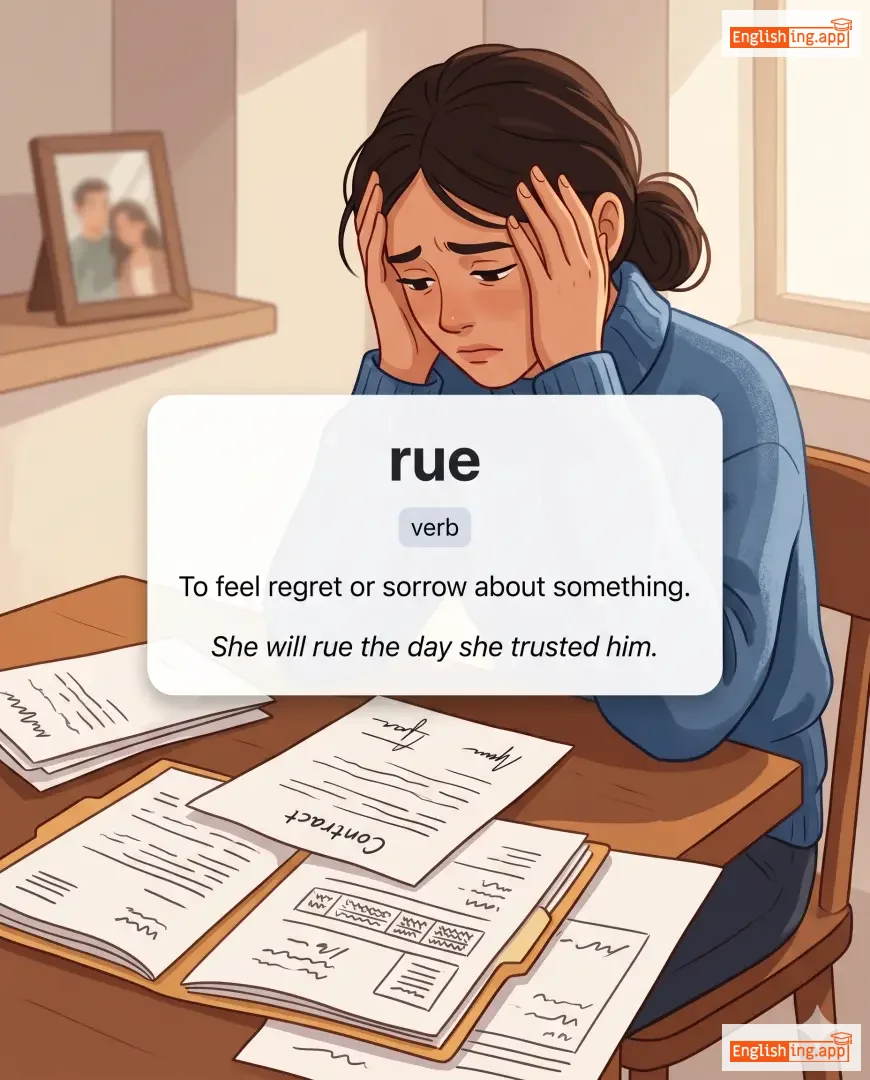
rue definition card — visual illustration of the meaning
verb
/ruː/
сожалеть (sozhalet')

To feel regret or sorrow about something.

"She will rue the day she trusted him."

"Она будет сожалеть о том дне, когда доверилась ему." (Ona budet sozhalet' o tom dne, kogda doverilas' yemu.)
adjective
/ˈruːfəl/
сожаление (sozhalenie)

Expressing sorrow, regret, or pity.

"He gave a rueful smile after losing the match."

"Он улыбнулся с сожалением после того, как проиграл матч." (On ulybnulsya s sozhaleniyem posle togo, kak proigral match.)
noun
/ˈrʌfiən/
отморозок (otmorozok)

A violent or lawless person; a bully.

"The ruffians vandalized the shop late at night."

"Отморозки вандализировали магазин поздно ночью." (Otmorozki vandalizirovali magazin pozdno noch'yu.)
noun
/ˈruːlɪŋ/
постановление (postanovlenie)

an official decision made by a judge or authority.

"The court’s ruling favored the defendant."

"Постановление суда было в пользу обвиняемого." (Postanovlenie suda bylo v pol'zu obvinyaemogo.)
noun
/ruːlz/
правила (pravila)

explicit principles or regulations governing conduct or procedure within a particular area of activity

"The teacher reminded the students to follow the classroom rules."
"Учитель напомнил студентам следовать правилам в классе." (Uchitel' napomnil studentam sleduyushchikh pravilam v klasse.)
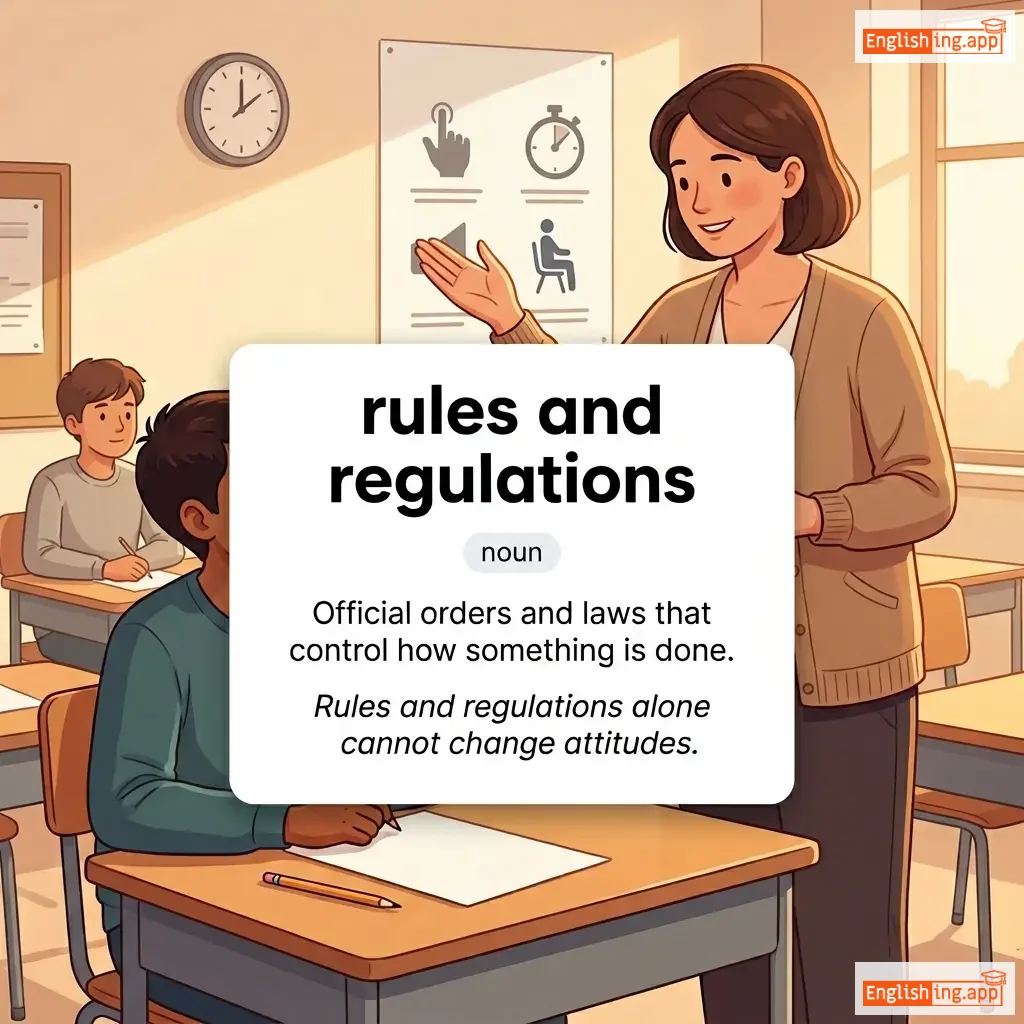
rules and regulations definition card — visual illustration of the meaning
noun
ruːlz ənd ˌrɛɡjʊˈleɪʃənz
правила и регламенты (pravila i reglamenty)

Official orders and laws that control how something is done.

"Rules and regulations alone cannot change attitudes."

"Правила и регламенты не могут изменить отношение сами по себе." (Pravila i reglamenty ne mogut izmenit' otnoshenie sami po sebe.)
noun
/ˈruːlər/
правитель; линейка (pravitel; lineyka)

A person who governs or controls a country; a straight-edged tool used for measuring or drawing lines

"The ruler drew a straight line on the paper while the king was a powerful ruler of his kingdom."

"Рулер провел прямую линию на бумаге, в то время как король был могущественным рулером своего королевства." (Ruler provel pryamuyu liniyu na bumage, v to vremya kak korol byl mogushchestvennym rulerom svoego korolevstva.)