Словари

Словарь английского языка | Значения слов, определения и примеры

noun
/ˈrɛvərəns/
почтение (pochtenie)

deep respect for someone or something

"The students showed reverence to their teacher."

"Студенты проявили почтение к своему учителю." (Studenty proyavili pochtenie k svoemu uchitelyu.)
noun, adjective
/ˈrɛvərənd/
реверенд, почтенный (reverend, pochtenniy)

A title of respect used for members of the clergy; deserving deep respect.

"The Reverend gave an inspiring sermon at the church."
"Реверенд произнес вдохновляющую проповедь в церкви." (Reverend proiznes vdokhnovlyayushchuyu propoved' v tserkvi.)
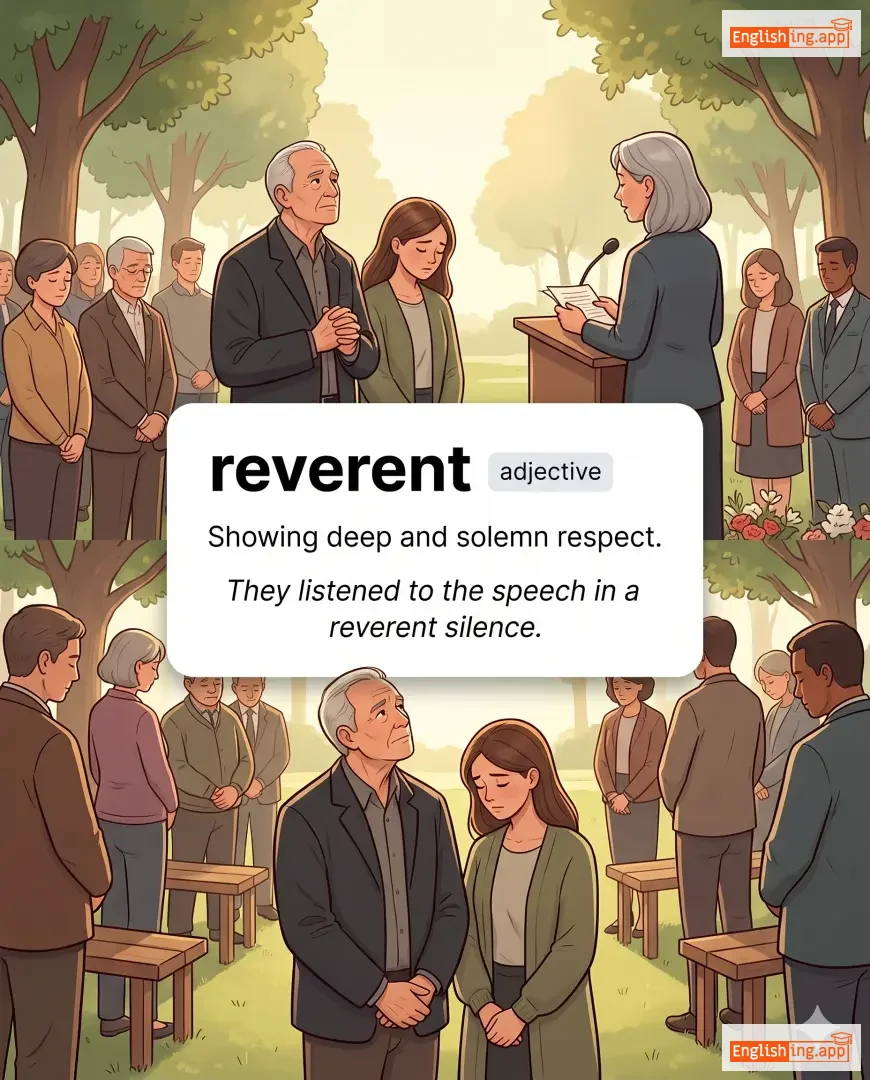
reverent definition card — visual illustration of the meaning
adjective
/ˈrɛvərənt/
благоговейный (blagoveynnyy)

Showing deep and solemn respect.

"They listened to the speech in a reverent silence."

"Они слушали речь в благоговейной тишине." (Oni slushali rech' v blagoveynoy tishine.)
reverie definition card — visual illustration of the meaning
noun
/ˈrɛvəri/
мечтания (mechtaniya)

a state of being pleasantly lost in one's thoughts; a daydream

"She drifted into a reverie while staring at the sunset."

"Она погрузилась в мечтания, наблюдая за закатом." (Ona pogruzilas v mechtaniya, nablyudaya za zakatom.)
verb
/rɪˈvɜːs/
развернуть (razvernut)

to change something to the opposite direction, position, or result

"She quickly reversed the car out of the driveway."

"Она быстро развернула машину с подъездной дорожки." (Ona bystro razvertnula mashinu s pod'yezdnoy dorozhki.)
adjective
/rɪˈvɜː.sə.bəl/
реверсивный (reversivny)

able to be turned the other way around; able to be undone or changed back

"This jacket is reversible and can be worn on both sides."

"Эта куртка реверсивная и её можно носить с обеих сторон." (Eta kurtka reversivnaya i eyo mozhno nosit s obeyikh storon)
noun
/rɪˈvɜːrʒən/
реверсия (reversiya)

the act of returning to a previous state or condition

"The new policy marked a reversion to traditional methods."

"Новая политика отметила реверсию к традиционным методам." (Novaya politika otmetila reversiyu k traditsionnym metodam.)
verb
/rɪˈvɜːrt/
вернуться (vernut'sya)

to return to a previous state, condition, or practice

"The system will revert to its original settings after the update."

"Система вернется к исходным настройкам после обновления." (Sistema vernyotsya k iskhodnym nastroykam posle obnovleniya.)
review definition card — visual illustration of the meaning
noun
/rɪˈvjuː/
рецензия (retsenziya)

an evaluation or assessment of something

"I wrote a review of the movie for the blog."

"Я написал рецензию на фильм для блога." (Ya napisal retsenziyu na film dlya bloga.)
verb
/rɪˈvaɪl/
презирать (prezirat)

to criticize in an abusive or angrily insulting manner

"The politician was reviled by the public for his corruption."

"Политик был презираем общественностью за свою коррупцию." (Politik byl prezirayem obshchestvennost'yu za svoju korruptsiyu.)
noun
/rɪˈvaɪlər/
оскорбитель (oskorbitel)

a person who criticizes or insults others abusively

"He was known as a reviler of all who opposed him."

"Он был известен как оскорбитель всех, кто ему противостоял." (On byl izvesten kak oskorbitel vsekh, kto emu protivostoyal.)
noun
/rɪˈvaɪ.zəl/
пересмотр (peresmotr)

The act of revising, reviewing, or making changes to something.

"The revisal of the contract took longer than expected."

"Пересмотр контракта занял больше времени, чем ожидалось." (Peresmotr kontrakta zanyal bolshe vremeni, chem ozhidalos.)
verb
/rɪˈvaɪz/
переработать (pererabotat)

To change, improve, or update something, especially a written work.

"She had to revise her essay before submission."

"Ей нужно было переработать свое эссе перед подачей." (Ej nuzhno bylo pererabotat' svoe esse pered podachej.)
noun
/rɪˈvɪʒən/
переработка (pererabotka)

the action of revising or updating something, typically in preparation for something else

"She made some last-minute revisions to her report before submitting it."
"Она сделала несколько последних изменений в своем отчете перед отправкой." (Ona sdelala neskol'ko poslednikh izmeneniy v svoem otchete pered otpravkoy.)
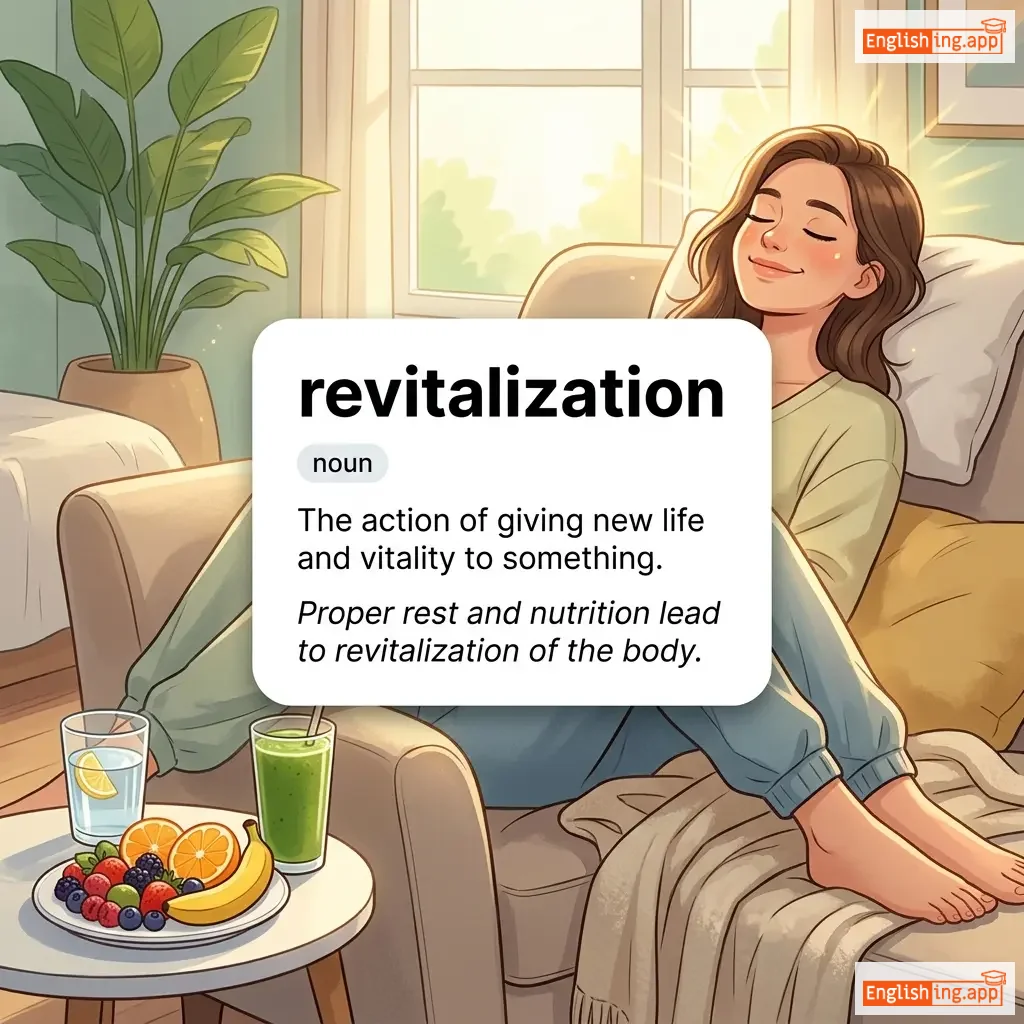
revitalization definition card — visual illustration of the meaning
noun
ˌriːˌvaɪ.təl.aɪˈzeɪ.ʃən
ревитализация (revitalizatsiya)

The action of giving new life and vitality to something.

"Proper rest and nutrition lead to revitalization of the body."
"Правильный отдых и питание ведут к ревитализации организма." (Pravil'nyy otdykh i pitaniye vedut k revitalizatsii organizma.)
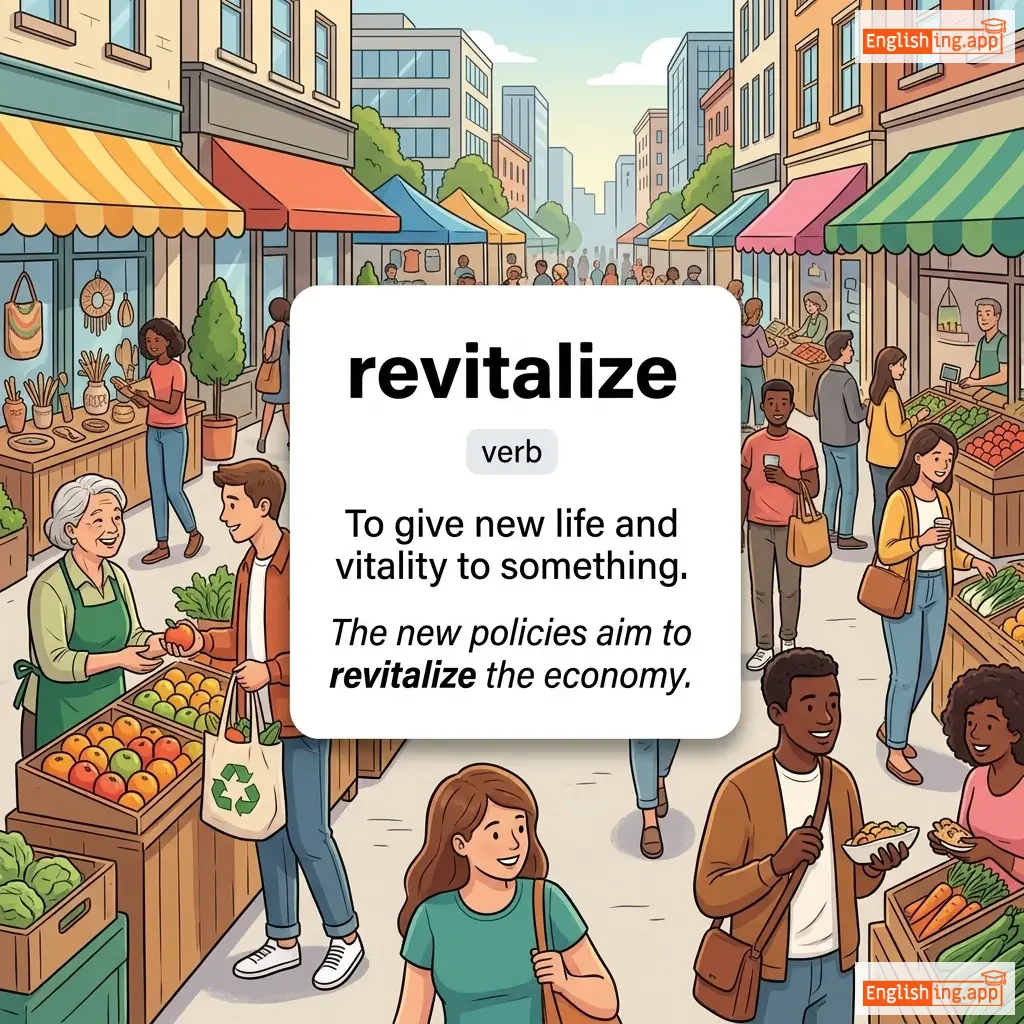
revitalize definition card — visual illustration of the meaning
verb
/ˌriːˈvaɪ.təl.aɪz/
ревитализировать (revitalizirovat)

To give new life and vitality to something.

"The new policies aim to revitalize the economy."

"Новые политики направлены на восстановление экономики." (Novye politiki napravleny na vosstanovleniye ekonomiki.)
noun
/rɪˈvaɪvəl/
возрождение (vozrozhdenie)

an improvement in the condition or strength of something

"The revival of the old traditions brought a sense of nostalgia."

"Возрождение старых традиций принесло чувство ностальгии." (Vozrozhdenie starykh traditsiy prineslo chuvstvo nostalgii.)
verb
/rɪˈvaɪv/
реанимировать (reanimirovat')

To bring back to life, consciousness, or activity.

"The paramedics managed to revive the unconscious man."

"Парамедики смогли реанимировать бессознательного мужчину." (Paramediki smogli reanimirovat' bessoznatel'nogo muzhchinu.)
noun
/ˌrɛv.əˈkeɪ.ʃən/
аннулирование (annulirovanie)

The act of officially canceling or withdrawing something.

"The court ordered the revocation of his license."

"Суд постановил аннулировать его лицензию." (Sud postanovil annulirovat' ego litsenziyu.)
verb
/rɪˈvoʊk/
аннулировать (annulirovat)

To officially cancel or withdraw a decision, privilege, or right.

"The government decided to revoke his passport."
"Правительство решило аннулировать его паспорт." (Pravitel'stvo reshilo annulirowat' ego pasport.)
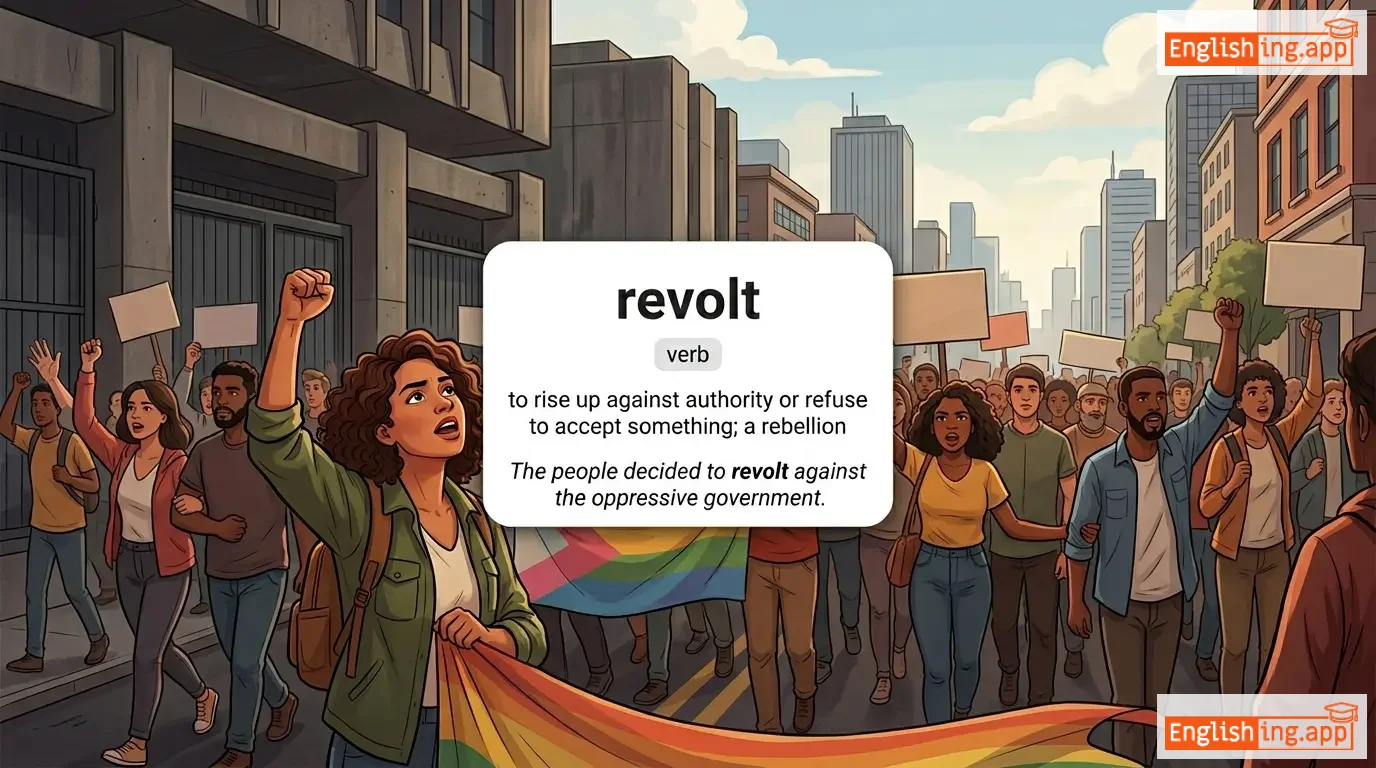
revolt definition card — visual illustration of the meaning
verb
/rɪˈvoʊlt/
восстание (vostanie)

to rise up against authority or refuse to accept something; a rebellion

"The people decided to revolt against the oppressive government."

"Люди решили восстать против угнетающего правительства." (Lyudi reshilis' vosstat' protiv ugnetayushchego pravitel'stva.)
adjective
/rɪˈvoʊltɪŋ/
отвратительный (otvratitelnyy)

extremely unpleasant or disgusting

"The smell of the garbage was revolting."
"Запах мусора был отвратительный." (zapakh musora byl otvratitelnyy)
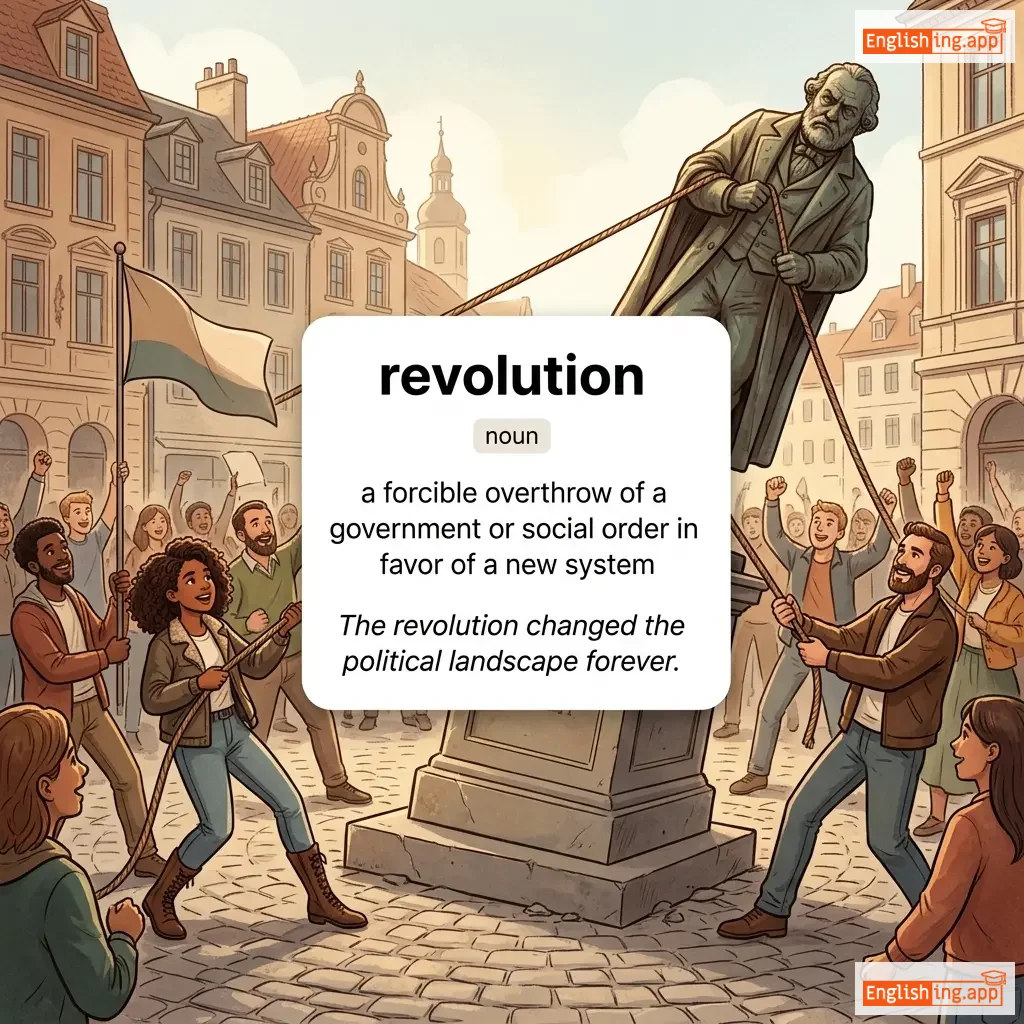
revolution definition card — visual illustration of the meaning
noun
/ˌrɛvəˈluːʃən/
революция (revolyutsiya)

a forcible overthrow of a government or social order in favor of a new system

"The revolution changed the political landscape forever."
"Революция изменила политический ландшафт навсегда." (Revolyutsiya izmenila politicheskiy landshaft navsegda.)
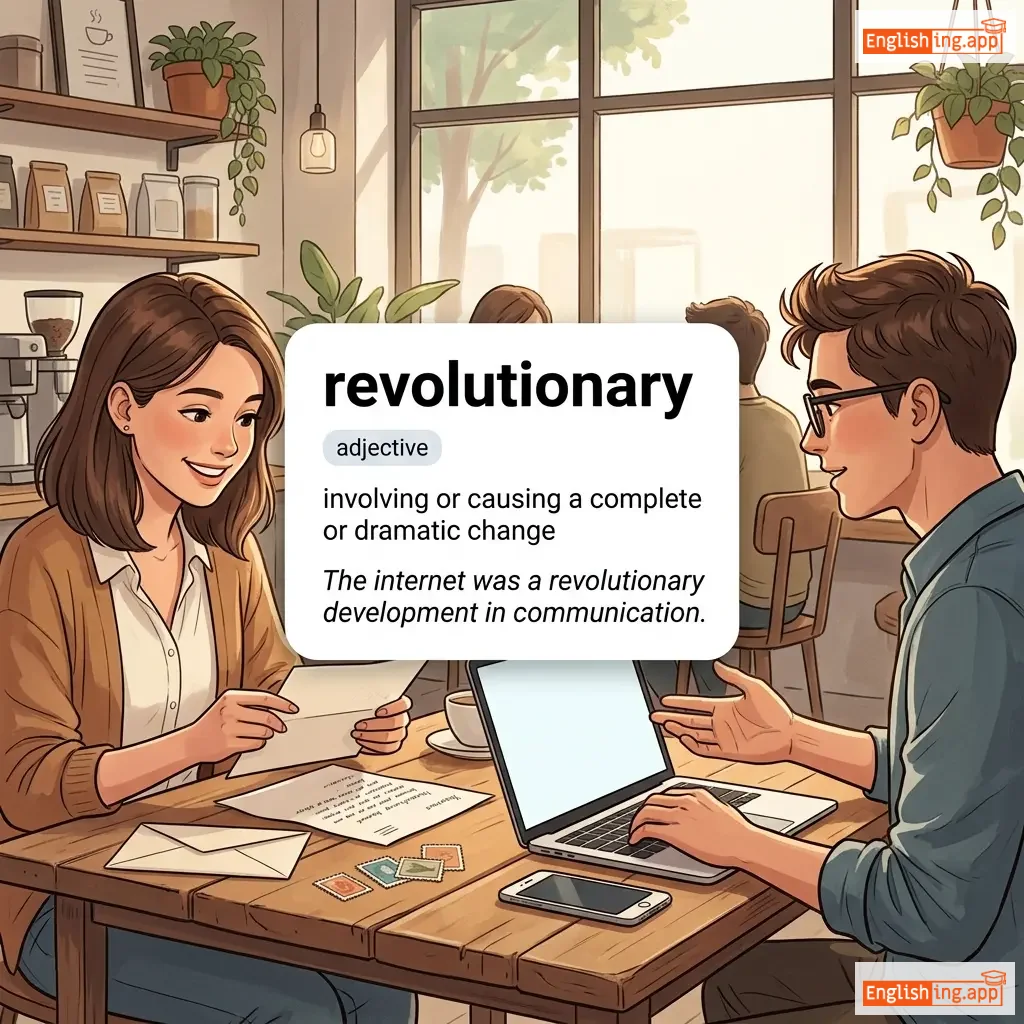
revolutionary definition card — visual illustration of the meaning
adjective
/ˌrɛvəˈluːʃəˌnɛri/
революционный (revolyutsionny)

involving or causing a complete or dramatic change

"The internet was a revolutionary development in communication."
"Интернет был революционным развитием в коммуникациях." (Internet byl revolyutsionnym razvitiem v kommunikatsiyakh.)
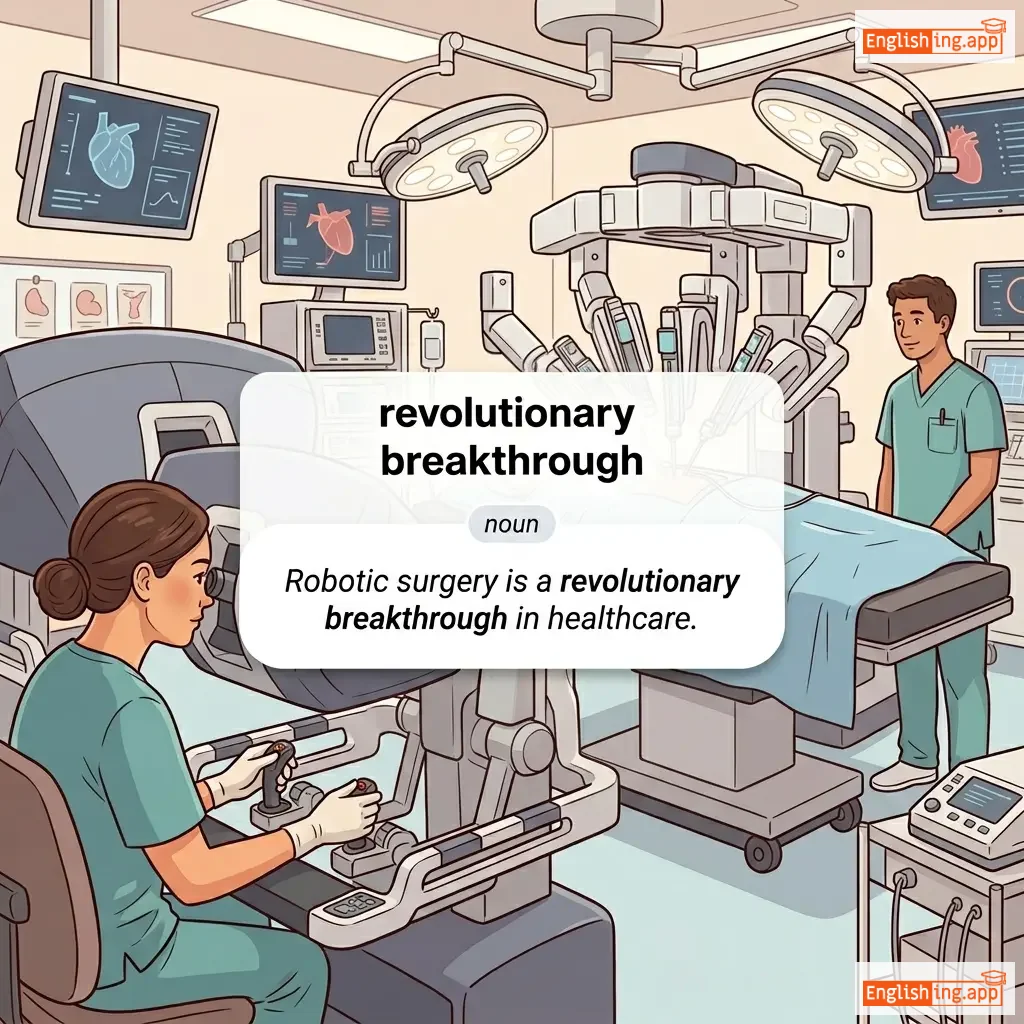
revolutionary breakthrough definition card — visual illustration of the meaning
noun
/ˌrev.əˈluː.ʃən.ər.i ˈbreɪk.θruː/
революционное открытие (revolyutsionnoe otkrytie)

A sudden, dramatic, and important discovery or development that changes everything.

"Robotic surgery is a revolutionary breakthrough in healthcare."
"Роботизированная хирургия — это революционное открытие в области здравоохранения." (Robotizirovannaya khirurgiya — eto revolyutsionnoe otkrytie v oblasti zdravookhraneniya.)
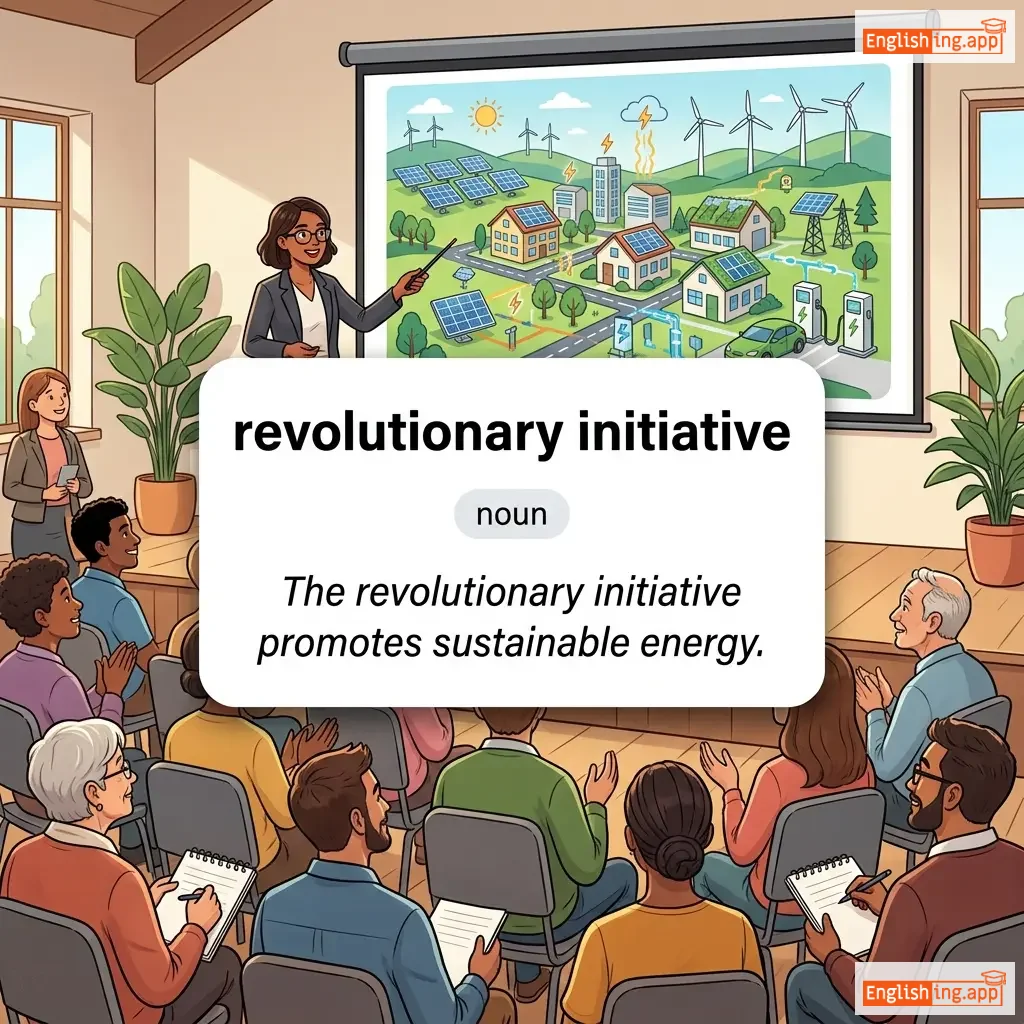
revolutionary initiative definition card — visual illustration of the meaning
noun
ˌrev.əˈluː.ʃən.ər.i ɪˈnɪʃ.ə.tɪv
революционная инициатива (revolyutsionnaya initsiativa)

A groundbreaking action or plan that brings about significant change or transformation.

"The revolutionary initiative promotes sustainable energy."

"Революционная инициатива способствует устойчивой энергии." (Revolyutsionnaya initsiativa sposobstvuyet ustoychivoy energii.)
revolutionize definition card — visual illustration of the meaning
verb
ˌrev.əˈluː.ʃən.aɪz
революционировать (revolyutsionirovat')

To completely change or transform something in a radical or fundamental way.

"AI is revolutionizing the medical industry."
"ИИ революционизирует медицинскую промышленность." (II revolyutsioniruet meditsinskuyu promyshlennost'.)
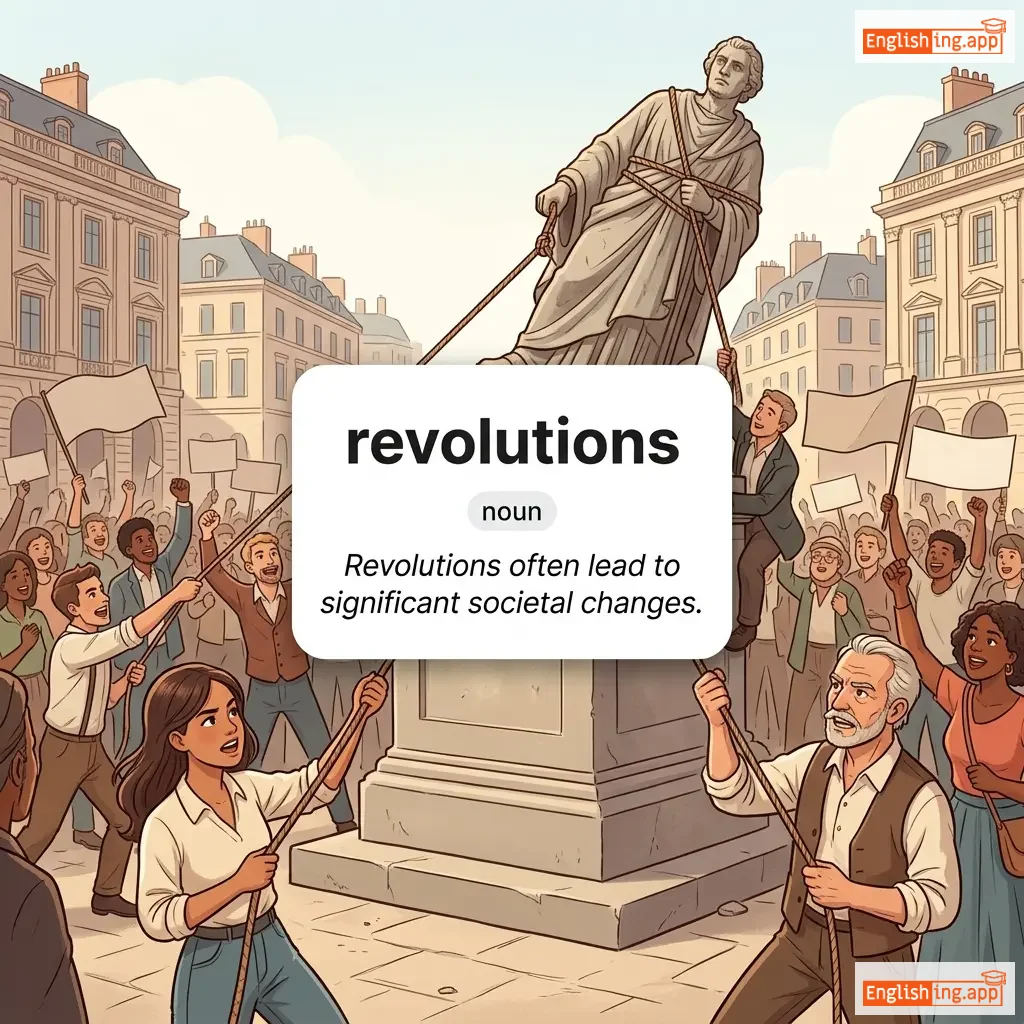
revolutions definition card — visual illustration of the meaning
noun
ˌrev.əˈluː.ʃənz
революции (revolyutsii)

Dramatic and wide-reaching changes in political, social, or economic systems, often involving the overthrow of a government or social order.

"Revolutions often lead to significant societal changes."

"Революции часто приводят к значительным социальным изменениям." (Revolyutsii chasto privodyat k znachitel'nym sotsial'nym izmeneniyam.)
noun
/rɪˈvɒl.vər/
револьвер (revolver)

a pistol with revolving chambers enabling several shots to be fired without reloading

"The detective drew his revolver from its holster."

"Детектив вытащил свой револьвер из кобуры." (Detektiv vytashchil svoy revolver iz kobury.)
noun
/rɪˈvʌlʃən/
отвращение (otvrashchenie)

a strong feeling of disgust or repulsion

"She felt revulsion at the sight of the cruel act."

"Она почувствовала отвращение при виде жестокого поступка." (Ona pochuvstvovala otvrashchenie pri vide zhestokogo postupka.)
reward definition card — visual illustration of the meaning
noun
/rɪˈwɔːd/
награда (nagrada)

something given in recognition of service, effort, or achievement

"He received a reward for returning the lost wallet."

"Он получил награду за возвращение потерянного кошелька." (On poluchil nagradu za vozvrashchenie poteryannogo koshelka.)
verb
/ˈræpsəˌdaɪz/
восторженно говорить (vostorzhyenno govorit')

to speak or write with great enthusiasm and admiration

"He would often rhapsodize about his travels to Europe."

"Он часто восторженно говорил о своих путешествиях по Европе." (On chasto vostorzhyenno govoril o svoikh puteshestviyakh po Yevrope.)
noun
/ˈræpsədi/
возвышенная песня/похвала (vozzvishennaya pesnya/pokhvala)

an expression of great enthusiasm or an epic musical composition

"The singer’s performance was a rhapsody of emotions."
"Выступление певца было рhapsody эмоций." (Vystuplenie pevtsa bylo rhapsody emotsiy.)
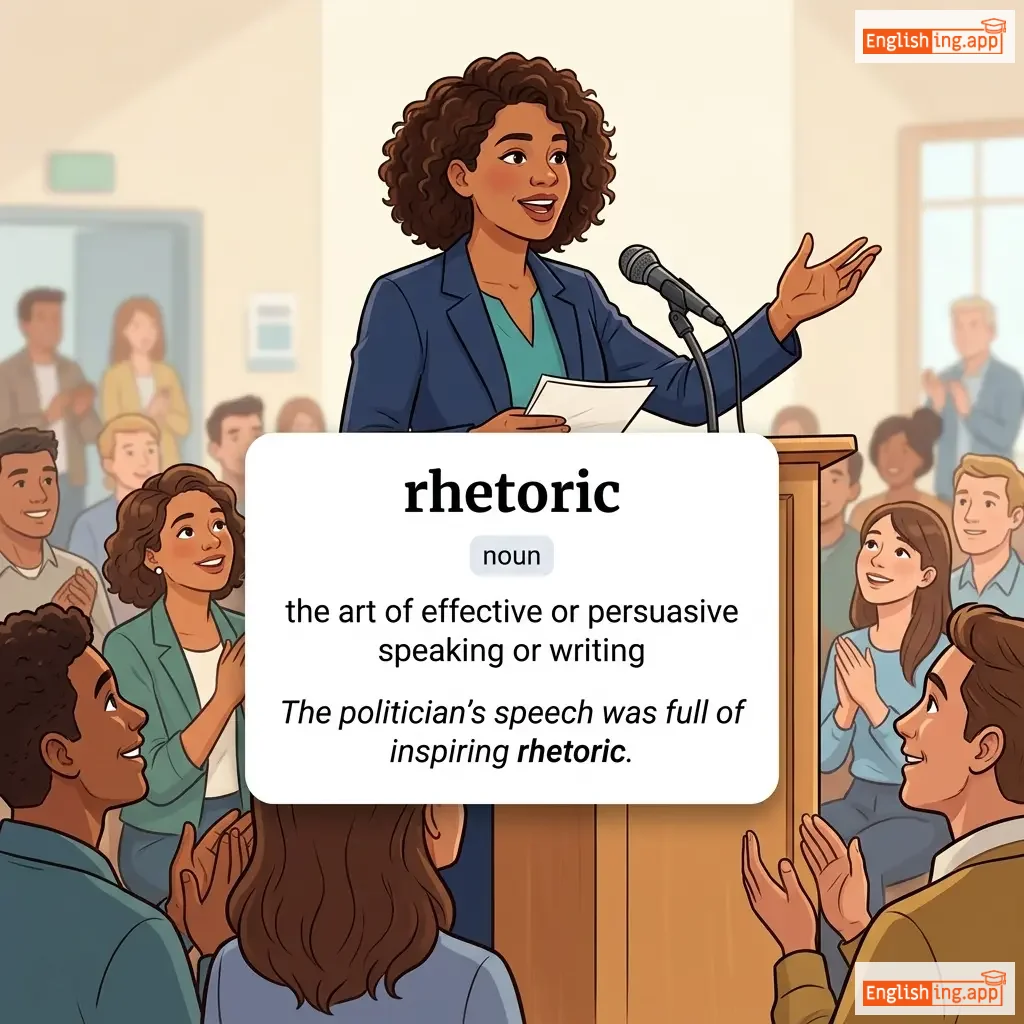
rhetoric definition card — visual illustration of the meaning
noun
/ˈrɛtərɪk/
риторика (ritorika)

the art of effective or persuasive speaking or writing

"The politician’s speech was full of inspiring rhetoric."

"Речь политика была полна вдохновляющей риторики." (Rech politika byla polna vdokhnovlyayushchey ritoriki.)
adjective
/rɪˈtɔːrɪkəl/
риторический (retoricheskiy)

relating to the art of effective or persuasive speaking or writing; often a question asked to make a point rather than get an answer

"He asked a rhetorical question during the debate."

"Он задал риторический вопрос во время дебатов." (On zadal ritoricheskiy vopros vo vremya debatov.)
noun
/ˌrɛtəˈrɪʃən/
оратор (orator)

A person who is skilled in the art of rhetoric or persuasive speaking/writing.

"The rhetorician captivated the audience with his eloquence."

"Оратор очаровал аудиторию своей красноречивостью." (Orator ocharoval auditoriyu svoey krasnorechivost'yu.)
adjective
/ˈruːmi/
слезящиеся (slezyashchiesya)

Watery, especially referring to the eyes.

"His rheumy eyes showed signs of age and fatigue."

"Его слезящиеся глаза показывали признаки старения и усталости." (Ego slezyashchiesya glaza pokazyvali priznaki stareniya i ustalosti.)
noun
/raɪˈnɒs.ər.əs/
носорог (nosorog)

a large, heavy animal with thick skin and one or two horns on its nose

"The rhinoceros charged through the grassland."
"Носорог мчался через степь." (Nosorog mchyalsya cherez stepy.)
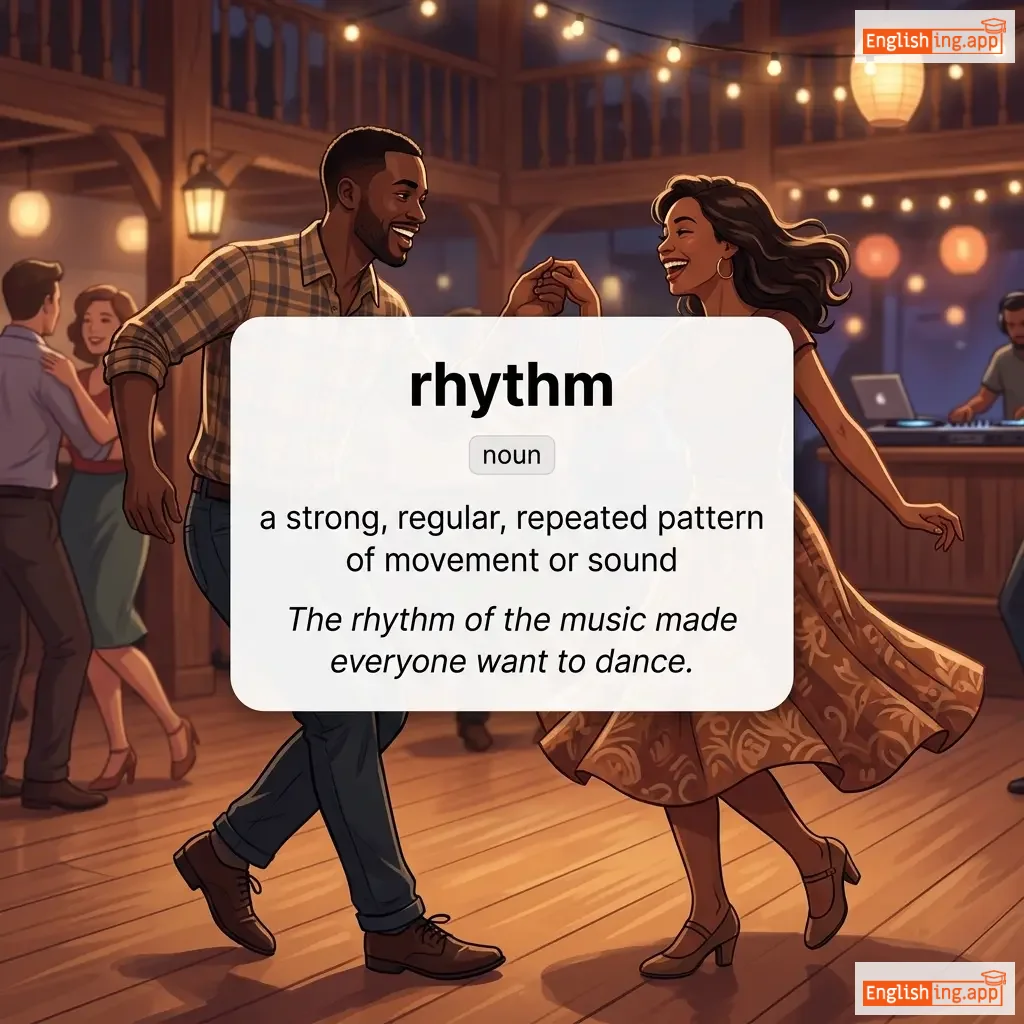
rhythm definition card — visual illustration of the meaning
noun
/ˈrɪðəm/
ритм (ritm)

a strong, regular, repeated pattern of movement or sound

"The rhythm of the music made everyone want to dance."

"Ритм музыки заставил всех хотеть танцевать." (Ritm muzyki zastavil vsekh khotet' tantsevat'.)
noun
/rɪb/
ребро (rebro)

one of the curved bones that form the rib cage in humans and animals, protecting the chest organs

"He broke a rib while playing football."

"Он сломал ребро, играя в футбол." (On slomal rebro, igraya v futbol)
adjective
/ˈrɪbɔːld/
непристойные шутки (nepristojnye shutki)

Referring to sexual matters in a humorous or vulgar way.

"The comedian’s ribald jokes made the audience laugh uncomfortably."

"Непристойные шутки комика заставили зрителей смеяться с неудобством." (Nepristojnye shutki komika zastavili zriteley smeyat'sya s neudobstvom.)
noun
/ˈrɪb.ən/
лента (lenta)

a long, narrow strip of fabric used for tying or decoration

"She tied her hair with a red ribbon."
"Она завязала свои волосы красной лентой." (Ona zavyazala svoi volosy krasnoy lentoy.)
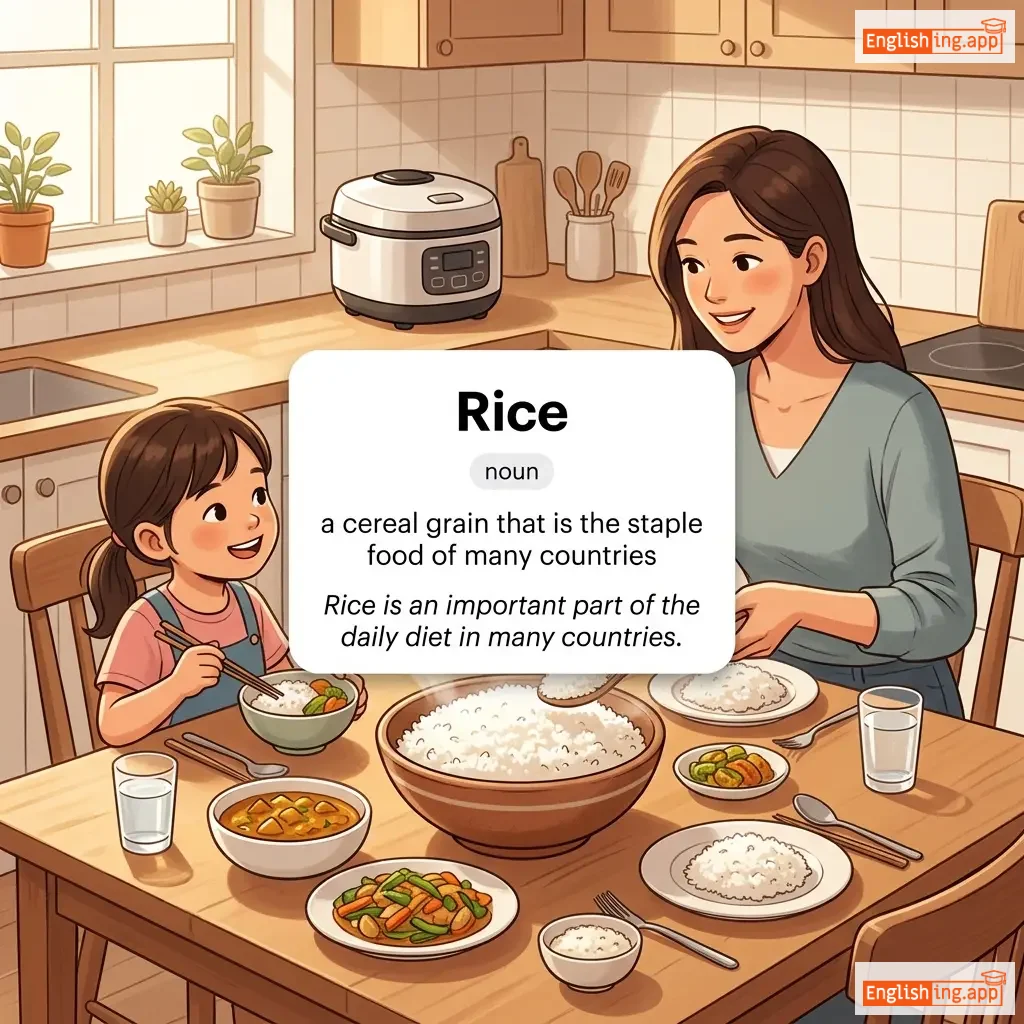
Rice definition card — visual illustration of the meaning
noun
/raɪs/
рис (ris)

a cereal grain that is the staple food of many countries

"Rice is an important part of the daily diet in many countries."

"Рис является важной частью ежедневного рациона в многих странах." (Ris yavyayetsya vazhnoy chastyu ezhednevnovo ratsiona v mnogikh stranakh.)
noun
/raɪs ˈkʊkər/
электрический рисоварка (elektricheskiy risovarka)

an electric appliance designed to cook rice automatically

"The rice cooker automatically switches off when the rice is perfectly cooked."

"Рисоварка автоматически выключается, когда рис идеально приготовлен." (Risovarka avtomaticheski vyklyuchayetsya, kogda ris ideal'no prigotovlen)
adjective
/rɪʧ/
богатый (bogatyy)

having a great deal of money or assets

"He became rich after his successful business venture."

"Он стал богатым после успешного бизнес-предприятия." (On stal bogatym posle uspeshnogo biznes-predpriyatiya.)
adjective
/ˈrɪkɪti/
шаткий (shatkij)

Poorly made and likely to collapse; shaky.

"They crossed a rickety wooden bridge over the river."

"Они перешли по шаткому деревянному мосту через реку." (Oni pereshli po shatkomu derevyannomu mostu cherez reku.)
noun
/ˈrɪk.ʃɔː/
рикша (riksha)

a light two-wheeled passenger vehicle drawn by one or more people

"We took a rickshaw to reach the busy marketplace."

"Мы взяли рикшу, чтобы добраться до оживленного рынка." (My vzyali rikshu, chtoby dobratsya do ozhivlennogo rynka.)
verb
/rɪd/
избавляться (izbavlyatsya)

to remove or get rid of something

"I need to rid the house of all the clutter."

"Мне нужно избавиться от всего беспорядка в доме." (Mne nuzhno izbavitsya ot vsego besporyadka v dome.)
verb
/ˈroʊ.teɪt/
вращать (vrashchat)

to turn around a central point or axis

"The Earth rotates on its axis once every 24 hours."

"Земля вращается вокруг своей оси каждые 24 часа." (Zemlya vrashchayetsya vokrug svoey osi kazhdye 24 chasa.)
verb
/rɒt/
гнить (gnit)

to decay or decompose; to become corrupt

"The fruit will rot if left in the sun."

"Фрукты сгниют, если их оставить на солнце." (Frukty sgniyut, esli ikh ostavit na solntse)