Словари

Словарь английского языка | Значения слов, определения и примеры

noun
/ˌrɛtrɪˈbjuːʃən/
месть, наказание (mest', nakazanie)

punishment inflicted as vengeance for a wrong or crime

"The villagers demanded retribution for the crime committed."

"Жители деревни потребовали мести за совершенное преступление." (Zhiteli derevni potrebovali mesti za sovershennoye prestupleniye.)
retrieval definition card — visual illustration of the meaning
noun
rɪˈtriː.vəl
восстановление (vosstanovlenie)

The process of getting or bringing something back; recovery of stored information.

"AI-based search engines ensure fast retrieval of data."

"ИИ-ориентированные поисковые системы обеспечивают быстрое восстановление данных." (II-orientirovannye poiskovye sistemy obespechivayut bystroe vosstanovlenie dannykh.)
verb
/rɪˈtriːv/
восстановить (vosstanovit)

to get something back that was lost or taken; to recover

"She managed to retrieve her lost phone from the taxi."

"Она смогла вернуть свой потерянный телефон из такси." (Ona smogla vernut' svoi poteryannyi telefon iz taksi.)
adjective
/ˌrɛtroʊˈæktɪv/
ретроактивный (retroaktivny)

applying to a period before it was enacted or established

"The new law was made retroactive to cover past cases."
"Новый закон был сделан ретроактивным, чтобы покрыть прошлые дела." (Novyy zakon byl sdelan retroaktivnym, chtoby pokryt' proshlye dela.)
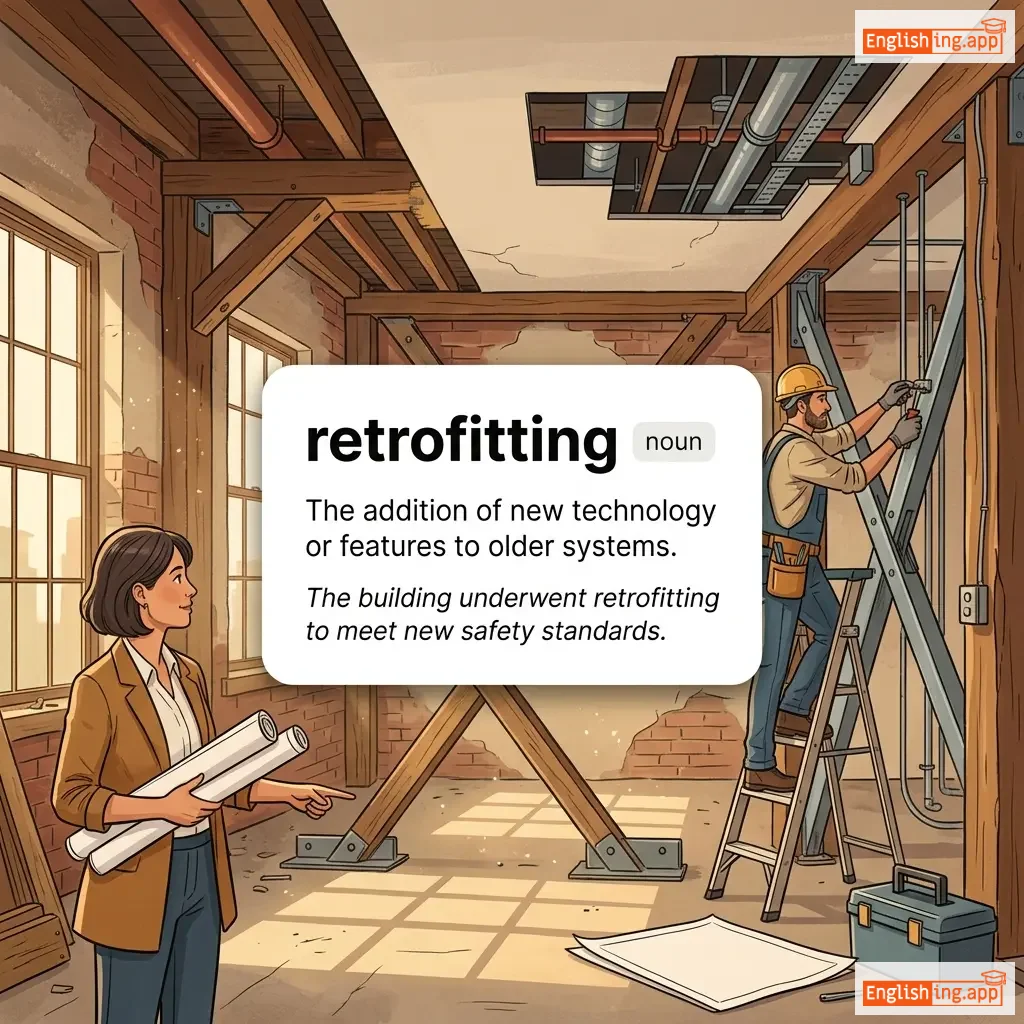
retrofitting definition card — visual illustration of the meaning
noun
/ˈrɛ.trəʊ.fɪt.ɪŋ/
добавление новой технологии в старые системы (dobavlenie novoy tekhnologii v starye sistemy)

The addition of new technology or features to older systems.

"The building underwent retrofitting to meet new safety standards."

"Здание было модернизировано с использованием ретрофитинга для соответствия новым стандартам безопасности." (Zdanie bylo modernizirovanno s ispol'zovaniem retrofitinga dlya sootvetstviya novym standartam bezopasnosti.)
adjective
/ˈrɛtroʊˌɡreɪd/
ретроградный (retrogradny)

moving backward or returning to a worse condition

"The policy was seen as a retrograde step for human rights."

"Политика была рассмотрена как шаг назад для прав человека." (Politika byla rassmotrena kak shag nazad dlya prav cheloveka.)
noun
/ˌrɛtroʊˈɡrɛʃən/
ретроградность (retrgradnost)

a return to a worse or less developed state

"The country experienced economic retrogression after the crisis."

"Страна пережила экономическую ретроградность после кризиса." (Strana perezhila ekonomicheskuyu retrogradnost posle krizisa.)
noun
/ˈrɛtrəsˌpɛkt/
ретроспекция (retropekciya)

the act of looking back on or reviewing past events

"In retrospect, the decision seemed unwise."

"В ретроспективе решение казалось непродуманным." (V retrospektive reshenie kazalos' neprodumannym.)
adjective
/ˌrɛtrəˈspɛktɪv/
ретроспективный (retrospektivny)

Looking back on or dealing with past events or situations.

"The museum held a retrospective exhibition of the artist's work."
"Музей провел ретроспективную выставку работ художника." (Muzey provel retrospektivnuyu vystavku rabot khudozhnika.)
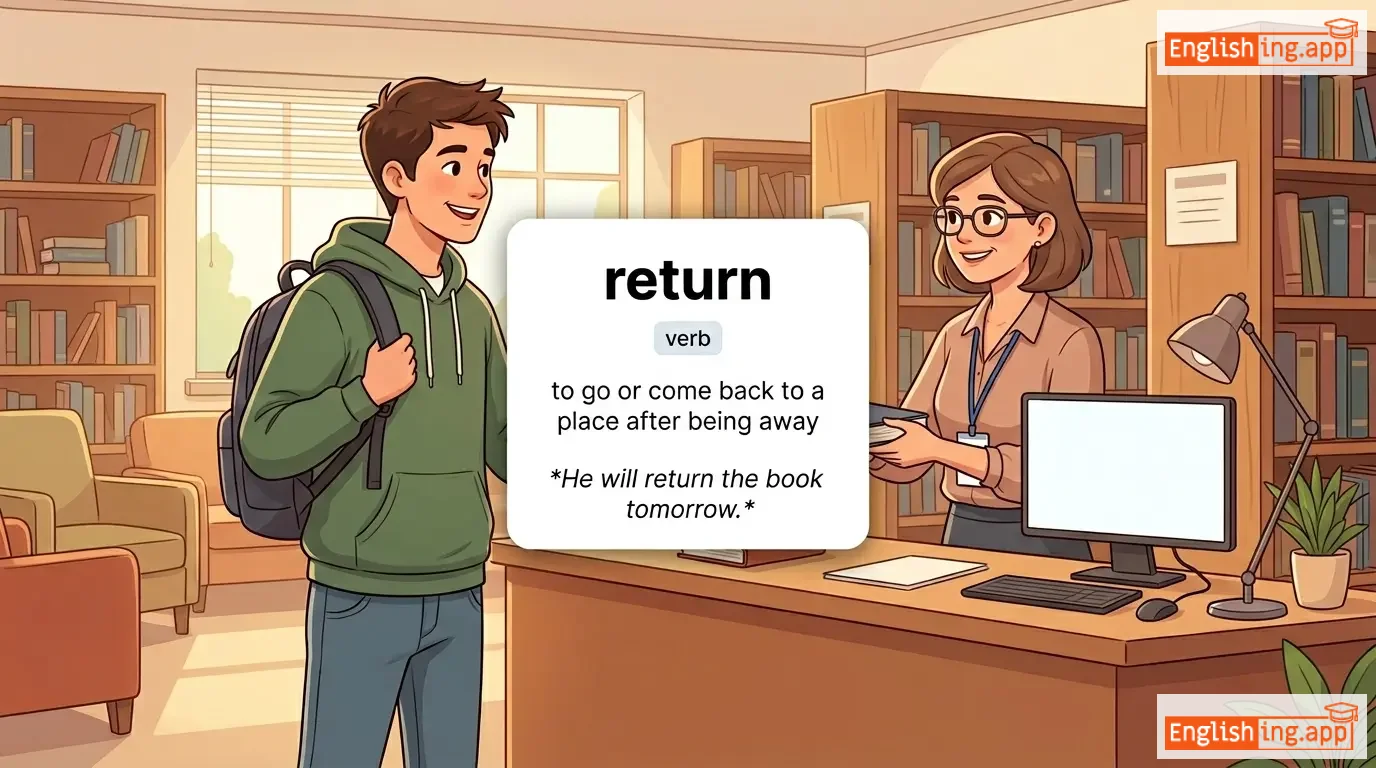
return definition card — visual illustration of the meaning
verb
/rɪˈtɜːn/
вернуть (vernut')

to go or come back to a place after being away

"He will return the book tomorrow."

"Он вернёт книгу завтра." (On vernyot knigu zavtra.)
adjective
/rɪˈtɜː.nə.bəl/
возвратный (vozvratny)

able to be returned or given back

"The bottle is returnable for a deposit refund."
"Бутылка возвратная для возврата депозита." (Butylka vozvratnaya dlya vozvrata depozita.)
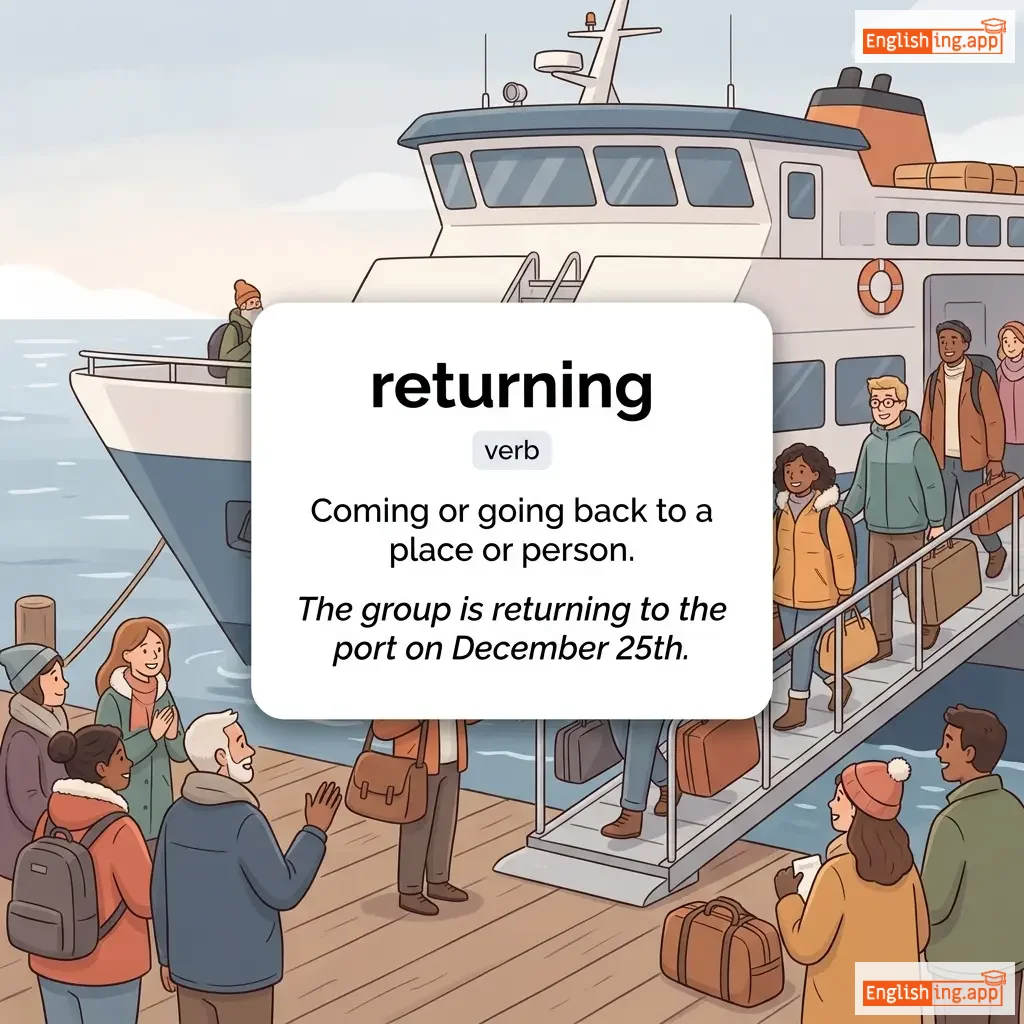
returning definition card — visual illustration of the meaning
verb
/rɪˈtɜrnɪŋ/
возвращение (vozvrashchenie)

Coming or going back to a place or person.

"The group is returning to the port on December 25th."
"Группа возвращается в порт 25 декабря." (Gruppa vozvrashchaetsya v port 25 dekabrya.)
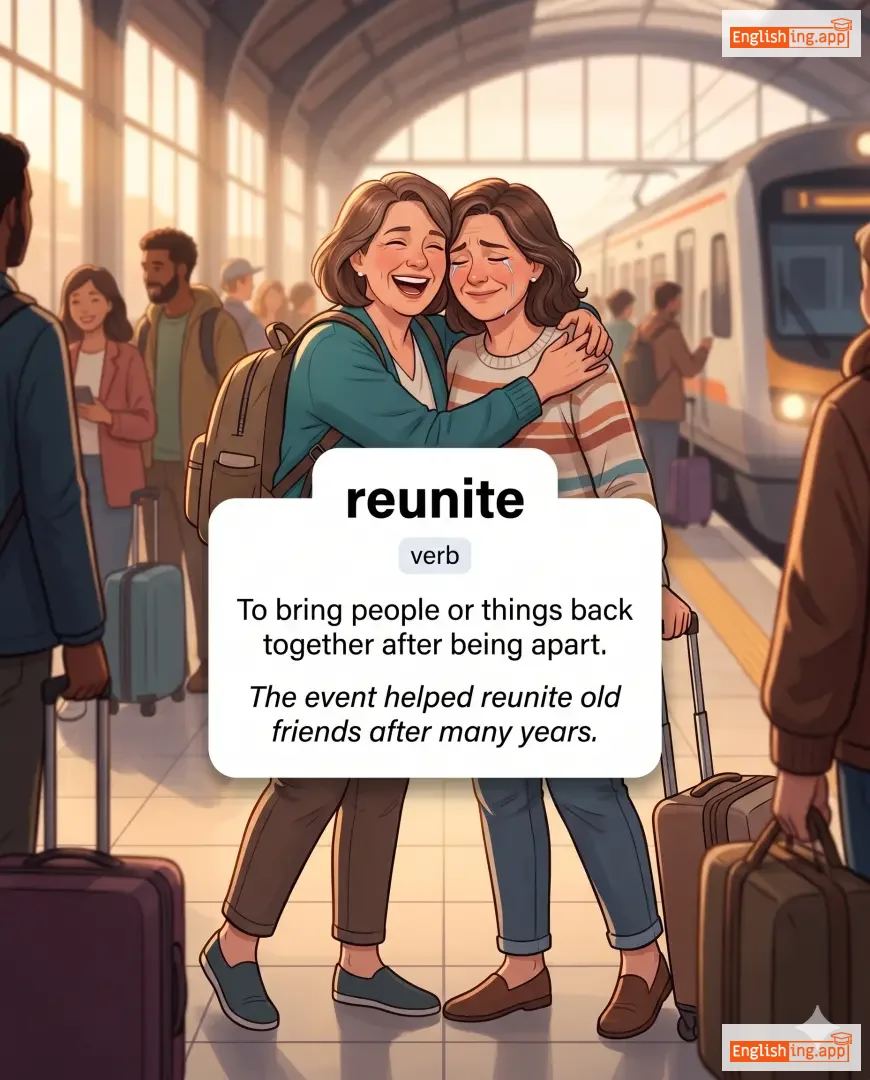
reunite definition card — visual illustration of the meaning
verb
/ˌriːjuːˈnaɪt/
воссоединить (vossoedinit)

To bring people or things back together after being apart.

"The event helped reunite old friends after many years."

"Событие помогло воссоединить старых друзей после многих лет." (Sobitie pomoglo vossoedinit' starykh druzey posle mnogikh let.)
verb
/ˌriːˈvæmp/
обновить (obnovit)

To give a new and improved form, structure, or appearance to something.

"The company decided to revamp its website for a modern look."

"Компания решила обновить свой сайт, чтобы придать ему современный вид." (Kompanija reshil obnovit' svoi sayt, chtoby pridat' emu sovremennyy vid.)
reveal definition card — visual illustration of the meaning
verb
/rɪˈviːl/
раскрывать (raskryvat)

to make something known that was previously hidden or secret

"The magician refused to reveal his secrets."

"Маг не захотел раскрывать свои секреты." (Mag ne zakhotel raskryvat svoi sekrety.)
revel definition card — visual illustration of the meaning
verb
/ˈrevəl/
наслаждаться (naslazhdat'sya)

to enjoy oneself in a lively and noisy way; to take great pleasure in

"They revel in their success."

"Они наслаждаются своим успехом." (Oni naslazhdayutsya svoim uspekhom.)
noun
/ˌrɛvəˈleɪʃən/
откровение (otkroveniye)

A surprising and previously unknown fact, especially one made known in a dramatic way.

"The book was full of shocking revelations about the politician."

"Книга была полна шокирующих откровений о политике." (Kniga byla polna shokiruyushchikh otkroveniy o politike.)
noun
/ˈrɛvəlri/
праздник (prazdnik)

Lively and noisy festivities, especially involving drinking and dancing.

"The sound of revelry could be heard throughout the night."

"Звук праздника был слышен всю ночь." (Zvuk prazdnika byl slyshen vsyu noch'.)
noun, verb
/rɪˈvɛndʒ/
месть (mest)

The action of inflicting harm on someone as punishment for a wrong suffered.

"She sought revenge for the betrayal of her trust."

"Она искала месть за предательство своего доверия." (Ona iskala mest' za predatel'stvo svoego doveriya.)
adjective
/rɪˈvenʒ.fəl/
мстительный (mstitel'nyy)

seeking or desiring revenge; vindictive

"He became revengeful after being betrayed by his friend."

"Он стал мстительным после того, как его предал друг." (On stal mstitel'nym posle togo, kak ego predal drug)
revenue definition card — visual illustration of the meaning
noun
/ˈrɛvənjuː/
доход (dokhod)

income generated from business activities, especially sales

"The company's revenue increased by 20% last year."

"Доход компании увеличился на 20% в прошлом году." (Dokhod kompanii uvelichilsya na 20% v proshlom godu.)
verb
/rɪˈvɜːrbəreɪt/
отдавать эхо (otdavat' eho)

To echo repeatedly or have continuing effects.

"The sound of the explosion reverberated through the valley."

"Звук взрыва ревербировал по долине." (Zvuk vzryva reverbiroval po doline.)
verb
/rɪˈvɪər/
почитать (pochitat)

To deeply respect or admire someone or something.

"The students revered their teacher for his wisdom."

"Студенты почитали своего учителя за его мудрость." (Studenty pochitali svoego uchitelya za yego mudrost'.)
noun
/ˈrɛvərəns/
почтение (pochtenie)

deep respect for someone or something

"The students showed reverence to their teacher."

"Студенты проявили почтение к своему учителю." (Studenty proyavili pochtenie k svoemu uchitelyu.)
noun, adjective
/ˈrɛvərənd/
реверенд, почтенный (reverend, pochtenniy)

A title of respect used for members of the clergy; deserving deep respect.

"The Reverend gave an inspiring sermon at the church."
"Реверенд произнес вдохновляющую проповедь в церкви." (Reverend proiznes vdokhnovlyayushchuyu propoved' v tserkvi.)
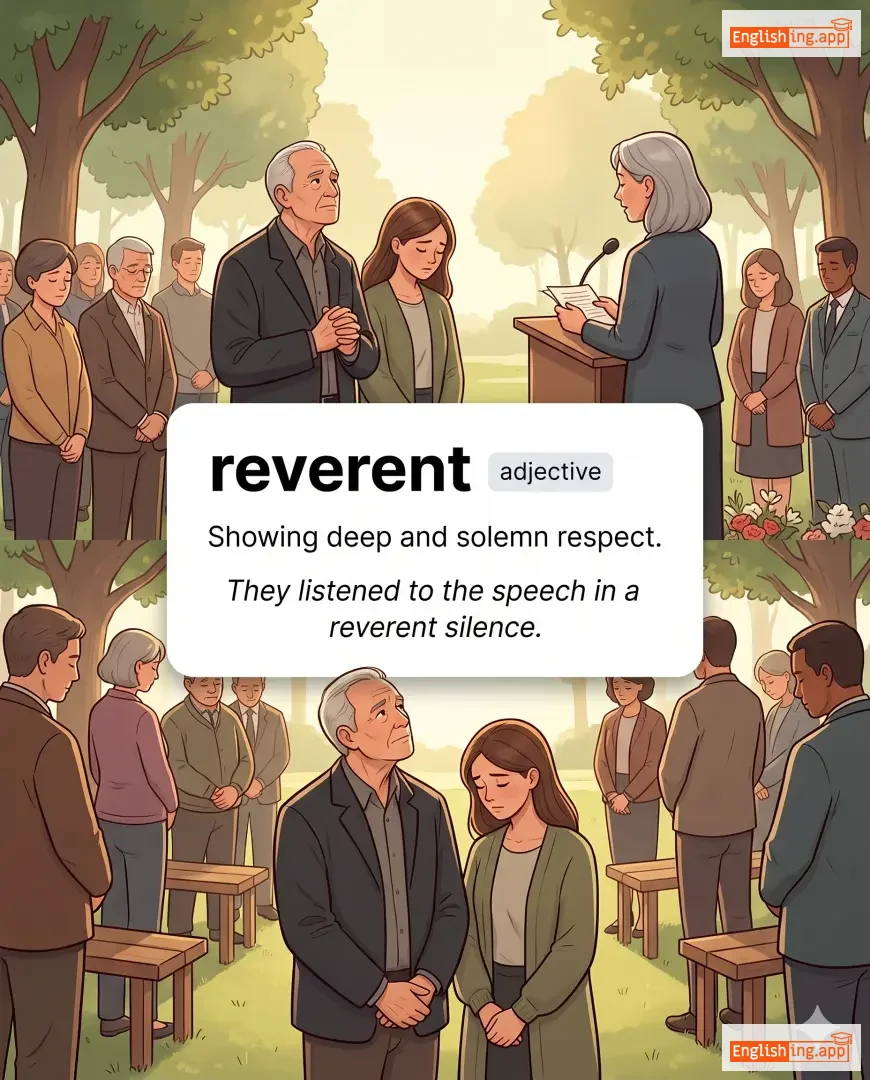
reverent definition card — visual illustration of the meaning
adjective
/ˈrɛvərənt/
благоговейный (blagoveynnyy)

Showing deep and solemn respect.

"They listened to the speech in a reverent silence."

"Они слушали речь в благоговейной тишине." (Oni slushali rech' v blagoveynoy tishine.)
reverie definition card — visual illustration of the meaning
noun
/ˈrɛvəri/
мечтания (mechtaniya)

a state of being pleasantly lost in one's thoughts; a daydream

"She drifted into a reverie while staring at the sunset."

"Она погрузилась в мечтания, наблюдая за закатом." (Ona pogruzilas v mechtaniya, nablyudaya za zakatom.)
verb
/rɪˈvɜːs/
развернуть (razvernut)

to change something to the opposite direction, position, or result

"She quickly reversed the car out of the driveway."

"Она быстро развернула машину с подъездной дорожки." (Ona bystro razvertnula mashinu s pod'yezdnoy dorozhki.)
adjective
/rɪˈvɜː.sə.bəl/
реверсивный (reversivny)

able to be turned the other way around; able to be undone or changed back

"This jacket is reversible and can be worn on both sides."

"Эта куртка реверсивная и её можно носить с обеих сторон." (Eta kurtka reversivnaya i eyo mozhno nosit s obeyikh storon)
noun
/rɪˈvɜːrʒən/
реверсия (reversiya)

the act of returning to a previous state or condition

"The new policy marked a reversion to traditional methods."

"Новая политика отметила реверсию к традиционным методам." (Novaya politika otmetila reversiyu k traditsionnym metodam.)
verb
/rɪˈvɜːrt/
вернуться (vernut'sya)

to return to a previous state, condition, or practice

"The system will revert to its original settings after the update."

"Система вернется к исходным настройкам после обновления." (Sistema vernyotsya k iskhodnym nastroykam posle obnovleniya.)
review definition card — visual illustration of the meaning
noun
/rɪˈvjuː/
рецензия (retsenziya)

an evaluation or assessment of something

"I wrote a review of the movie for the blog."

"Я написал рецензию на фильм для блога." (Ya napisal retsenziyu na film dlya bloga.)
verb
/rɪˈvaɪl/
презирать (prezirat)

to criticize in an abusive or angrily insulting manner

"The politician was reviled by the public for his corruption."

"Политик был презираем общественностью за свою коррупцию." (Politik byl prezirayem obshchestvennost'yu za svoju korruptsiyu.)
noun
/rɪˈvaɪlər/
оскорбитель (oskorbitel)

a person who criticizes or insults others abusively

"He was known as a reviler of all who opposed him."

"Он был известен как оскорбитель всех, кто ему противостоял." (On byl izvesten kak oskorbitel vsekh, kto emu protivostoyal.)
noun
/rɪb/
ребро (rebro)

one of the curved bones that form the rib cage in humans and animals, protecting the chest organs

"He broke a rib while playing football."
"Он сломал ребро, играя в футбол." (On slomal rebro, igraya v futbol)
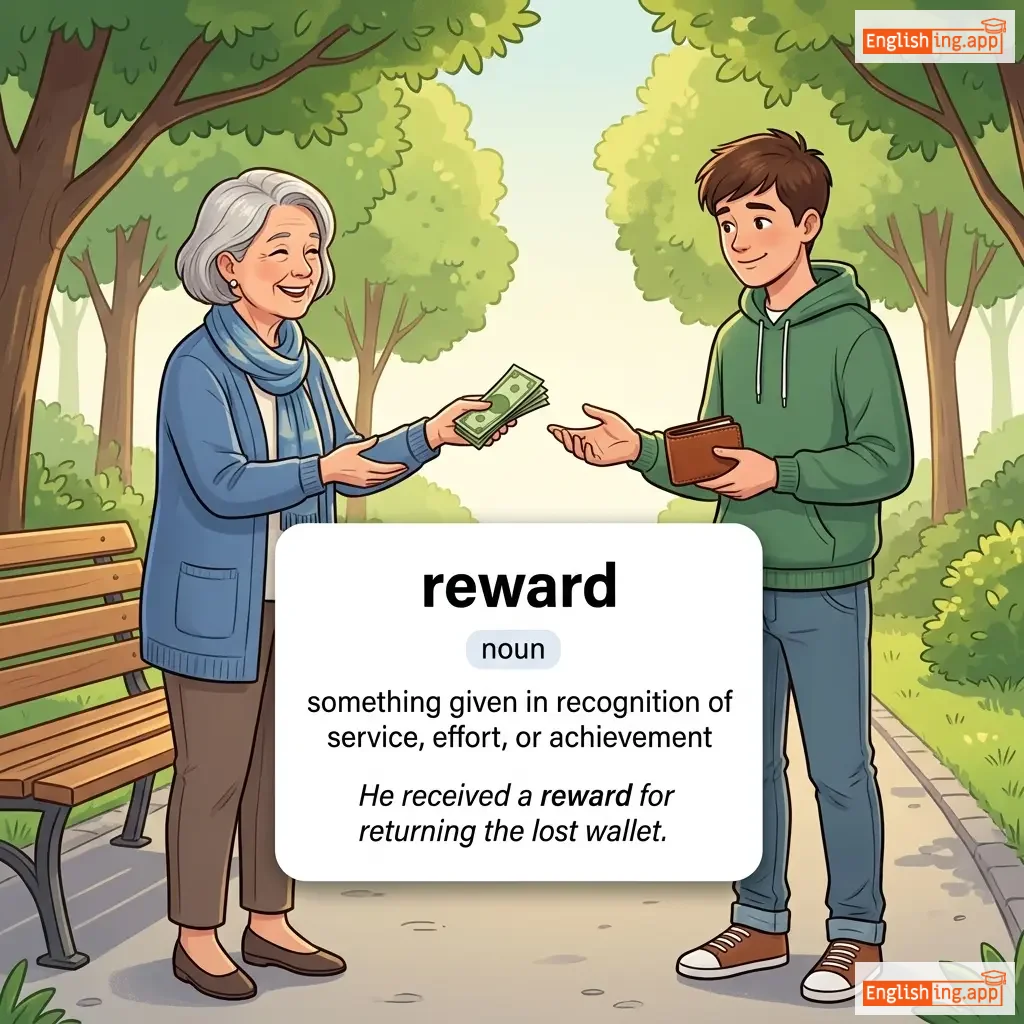
reward definition card — visual illustration of the meaning
noun
/rɪˈwɔːd/
награда (nagrada)

something given in recognition of service, effort, or achievement

"He received a reward for returning the lost wallet."

"Он получил награду за возвращение потерянного кошелька." (On poluchil nagradu za vozvrashchenie poteryannogo koshelka.)
verb
/ˈræpsəˌdaɪz/
восторженно говорить (vostorzhyenno govorit')

to speak or write with great enthusiasm and admiration

"He would often rhapsodize about his travels to Europe."

"Он часто восторженно говорил о своих путешествиях по Европе." (On chasto vostorzhyenno govoril o svoikh puteshestviyakh po Yevrope.)
noun
/ˈræpsədi/
возвышенная песня/похвала (vozzvishennaya pesnya/pokhvala)

an expression of great enthusiasm or an epic musical composition

"The singer’s performance was a rhapsody of emotions."
"Выступление певца было рhapsody эмоций." (Vystuplenie pevtsa bylo rhapsody emotsiy.)
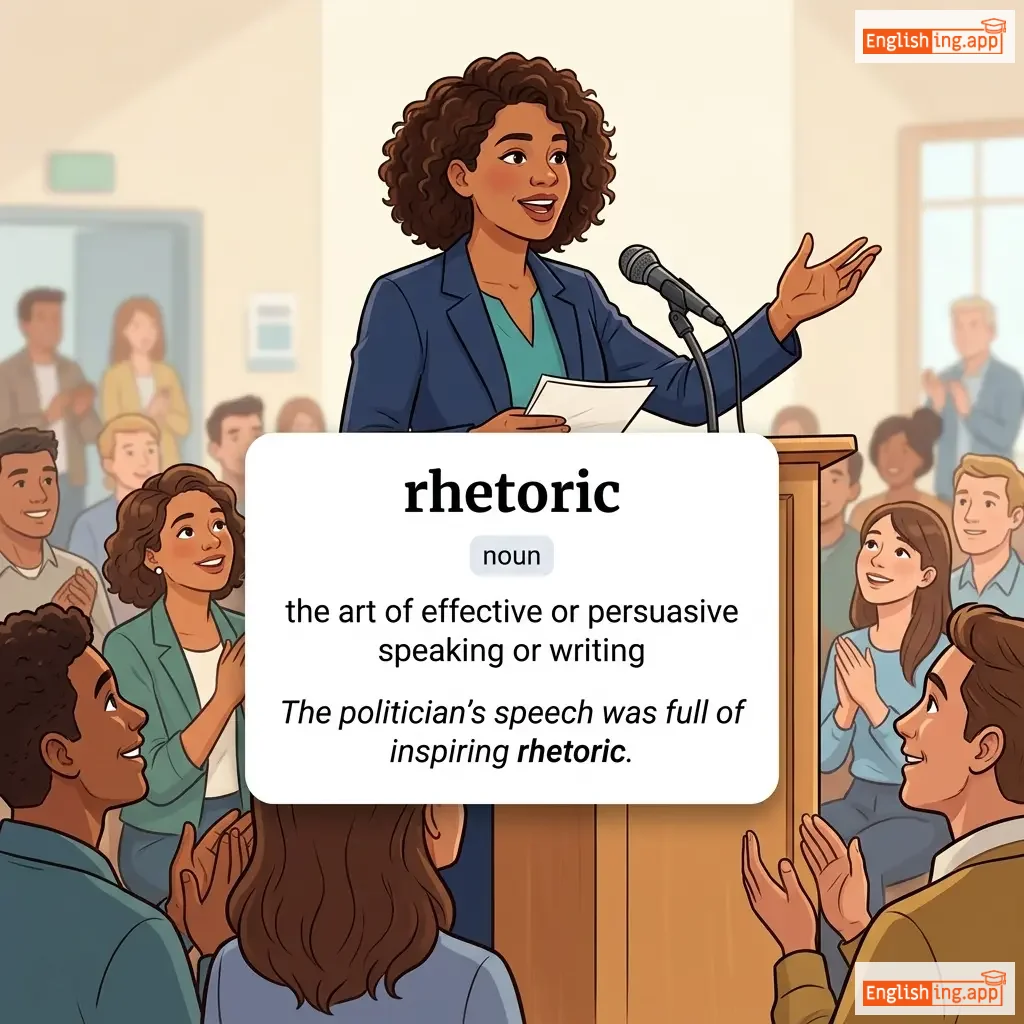
rhetoric definition card — visual illustration of the meaning
noun
/ˈrɛtərɪk/
риторика (ritorika)

the art of effective or persuasive speaking or writing

"The politician’s speech was full of inspiring rhetoric."

"Речь политика была полна вдохновляющей риторики." (Rech politika byla polna vdokhnovlyayushchey ritoriki.)
adjective
/rɪˈtɔːrɪkəl/
риторический (retoricheskiy)

relating to the art of effective or persuasive speaking or writing; often a question asked to make a point rather than get an answer

"He asked a rhetorical question during the debate."

"Он задал риторический вопрос во время дебатов." (On zadal ritoricheskiy vopros vo vremya debatov.)
noun
/ˌrɛtəˈrɪʃən/
оратор (orator)

A person who is skilled in the art of rhetoric or persuasive speaking/writing.

"The rhetorician captivated the audience with his eloquence."

"Оратор очаровал аудиторию своей красноречивостью." (Orator ocharoval auditoriyu svoey krasnorechivost'yu.)
adjective
/ˈruːmi/
слезящиеся (slezyashchiesya)

Watery, especially referring to the eyes.

"His rheumy eyes showed signs of age and fatigue."

"Его слезящиеся глаза показывали признаки старения и усталости." (Ego slezyashchiesya glaza pokazyvali priznaki stareniya i ustalosti.)
noun
/raɪˈnɒs.ər.əs/
носорог (nosorog)

a large, heavy animal with thick skin and one or two horns on its nose

"The rhinoceros charged through the grassland."
"Носорог мчался через степь." (Nosorog mchyalsya cherez stepy.)
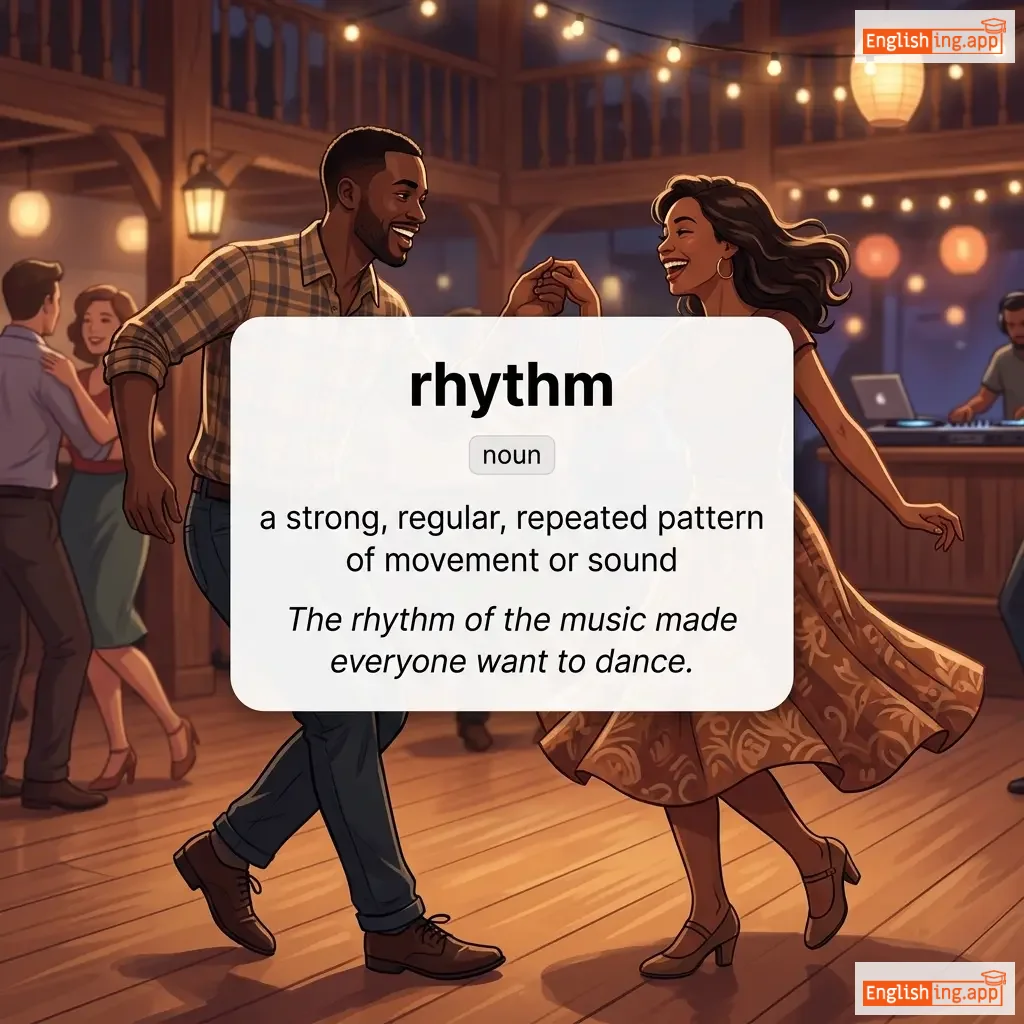
rhythm definition card — visual illustration of the meaning
noun
/ˈrɪðəm/
ритм (ritm)

a strong, regular, repeated pattern of movement or sound

"The rhythm of the music made everyone want to dance."

"Ритм музыки заставил всех хотеть танцевать." (Ritm muzyki zastavil vsekh khotet' tantsevat'.)
noun
/raɪs ˈkʊkər/
электрический рисоварка (elektricheskiy risovarka)

an electric appliance designed to cook rice automatically

"The rice cooker automatically switches off when the rice is perfectly cooked."

"Рисоварка автоматически выключается, когда рис идеально приготовлен." (Risovarka avtomaticheski vyklyuchayetsya, kogda ris ideal'no prigotovlen)
verb
/rɪd/
избавляться (izbavlyatsya)

to remove or get rid of something

"I need to rid the house of all the clutter."

"Мне нужно избавиться от всего беспорядка в доме." (Mne nuzhno izbavitsya ot vsego besporyadka v dome.)
noun
/ˈrɪk.ʃɔː/
рикша (riksha)

a light two-wheeled passenger vehicle drawn by one or more people

"We took a rickshaw to reach the busy marketplace."

"Мы взяли рикшу, чтобы добраться до оживленного рынка." (My vzyali rikshu, chtoby dobratsya do ozhivlennogo rynka.)
adjective
/ˈrɪkɪti/
шаткий (shatkij)

Poorly made and likely to collapse; shaky.

"They crossed a rickety wooden bridge over the river."

"Они перешли по шаткому деревянному мосту через реку." (Oni pereshli po shatkomu derevyannomu mostu cherez reku.)
adjective
/rɪʧ/
богатый (bogatyy)

having a great deal of money or assets

"He became rich after his successful business venture."

"Он стал богатым после успешного бизнес-предприятия." (On stal bogatym posle uspeshnogo biznes-predpriyatiya.)
noun
/ˈrɪb.ən/
лента (lenta)

a long, narrow strip of fabric used for tying or decoration

"She tied her hair with a red ribbon."

"Она завязала свои волосы красной лентой." (Ona zavyazala svoi volosy krasnoy lentoy.)