Vocabulaires

Découvrez, apprenez et maîtrisez le vocabulaire anglais

noun
/ˌrɛtrɪˈbjuːʃən/
vengeance, punition (vengeance, punition)

punishment inflicted as vengeance for a wrong or crime

"The villagers demanded retribution for the crime committed."

"Les villageois ont exigé une vengeance pour le crime commis." (Les villageois ont exigé une vengeance pour le crime commis.)
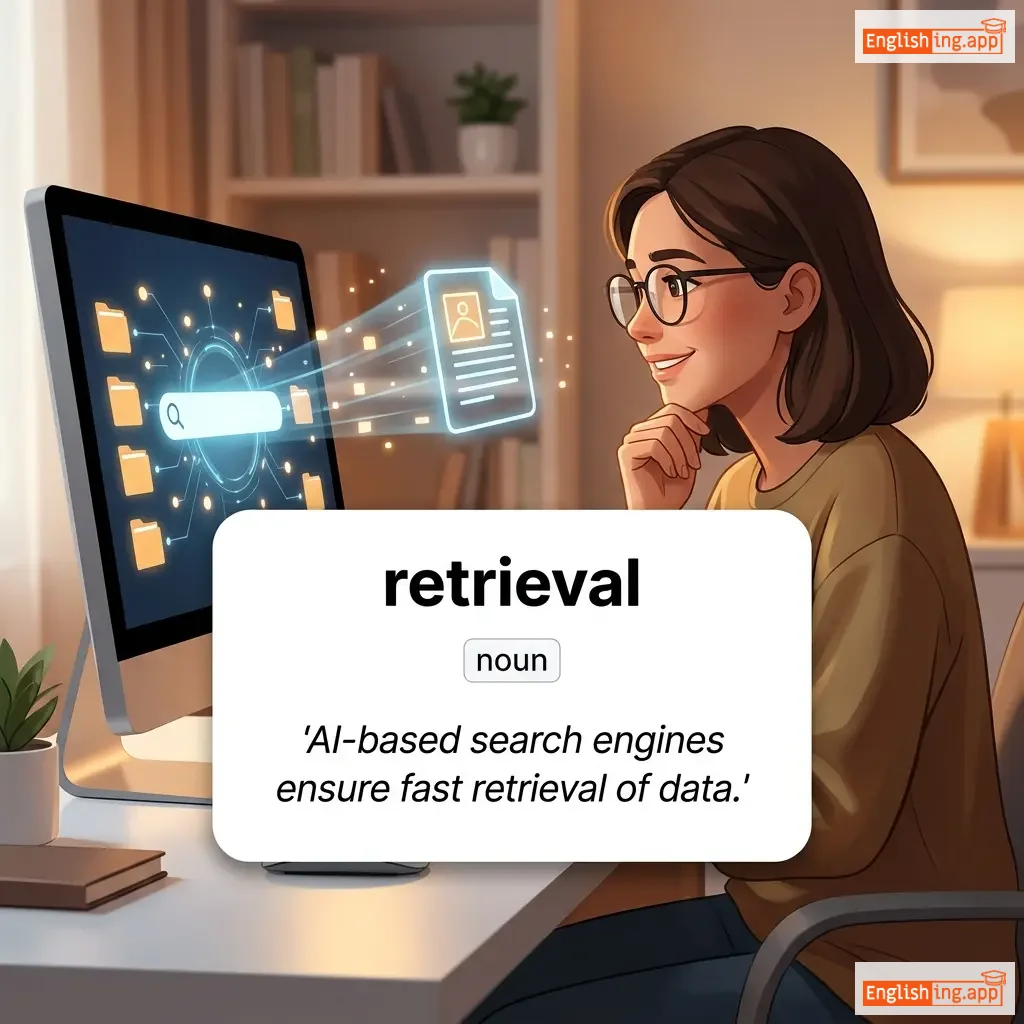
retrieval definition card — visual illustration of the meaning
noun
rɪˈtriː.vəl
récupération (recuperation)

The process of getting or bringing something back; recovery of stored information.

"AI-based search engines ensure fast retrieval of data."

"Les moteurs de recherche basés sur l'IA assurent une récupération rapide des données." (Les moteurs de recherche bases sur l'IA assurent une recuperation rapide des donnees.)
verb
/rɪˈtriːv/
récupérer (recuperer)

to get something back that was lost or taken; to recover

"She managed to retrieve her lost phone from the taxi."

"Elle a réussi à récupérer son téléphone perdu dans le taxi." (Elle a reussi a recuperer son telephone perdu dans le taxi.)
adjective
/ˌrɛtroʊˈæktɪv/
rétroactif (retroactif)

applying to a period before it was enacted or established

"The new law was made retroactive to cover past cases."

"La nouvelle loi a été rendue rétroactive pour couvrir les affaires passées." (La nouvelle loi a été rendue rétroactive pour couvrir les affaires passées.)
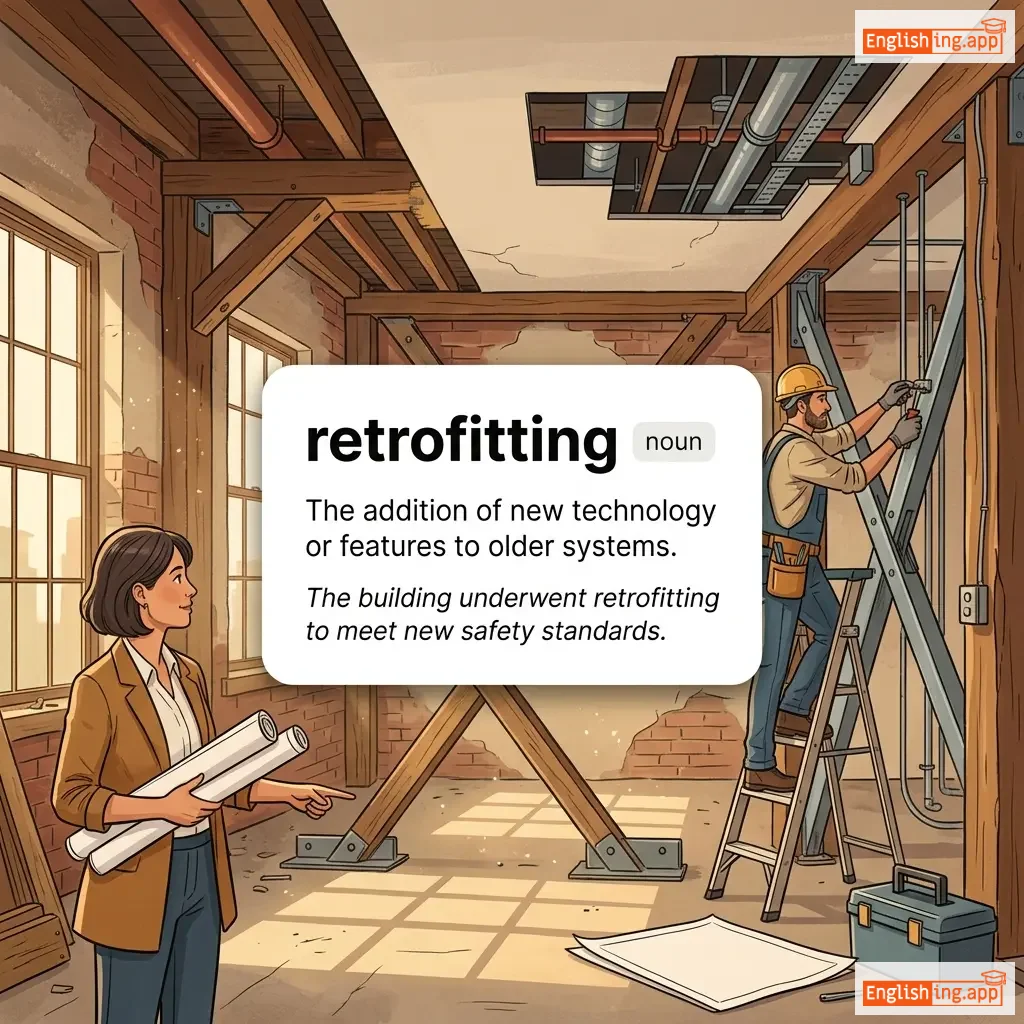
retrofitting definition card — visual illustration of the meaning
noun
/ˈrɛ.trəʊ.fɪt.ɪŋ/
ajout de nouvelles technologies ou fonctionnalités aux anciens systèmes (ajout de nouvelles technologies ou fonctionnalités aux anciens systèmes)

The addition of new technology or features to older systems.

"The building underwent retrofitting to meet new safety standards."

"Le bâtiment a subi un rétrofit pour répondre aux nouvelles normes de sécurité." (Le bâtiment a subi un rétrofit pour répondre aux nouvelles normes de sécurité.)
adjective
/ˈrɛtroʊˌɡreɪd/
rétrograde (retrograde)

moving backward or returning to a worse condition

"The policy was seen as a retrograde step for human rights."

"La politique a été vue comme un pas rétrograde pour les droits de l'homme." (La politique a été vue comme un pas rétrograde pour les droits de l'homme.)
noun
/ˌrɛtroʊˈɡrɛʃən/
rétrogradation (retrogradation)

a return to a worse or less developed state

"The country experienced economic retrogression after the crisis."

"Le pays a connu une rétrogradation économique après la crise." (Le pays a connu une retrogradation economique apres la crise.)
noun
/ˈrɛtrəsˌpɛkt/
rétrospection (rétrospection)

the act of looking back on or reviewing past events

"In retrospect, the decision seemed unwise."

"En rétrospective, la décision semblait imprudente." (En rétrospective, la décision semblait imprudente.)
adjective
/ˌrɛtrəˈspɛktɪv/
rétrospectif (retrospectif)

Looking back on or dealing with past events or situations.

"The museum held a retrospective exhibition of the artist's work."

"Le musée a organisé une exposition rétrospective du travail de l'artiste." (Le musee a organise une exposition retrospektive du travail de l'artiste.)
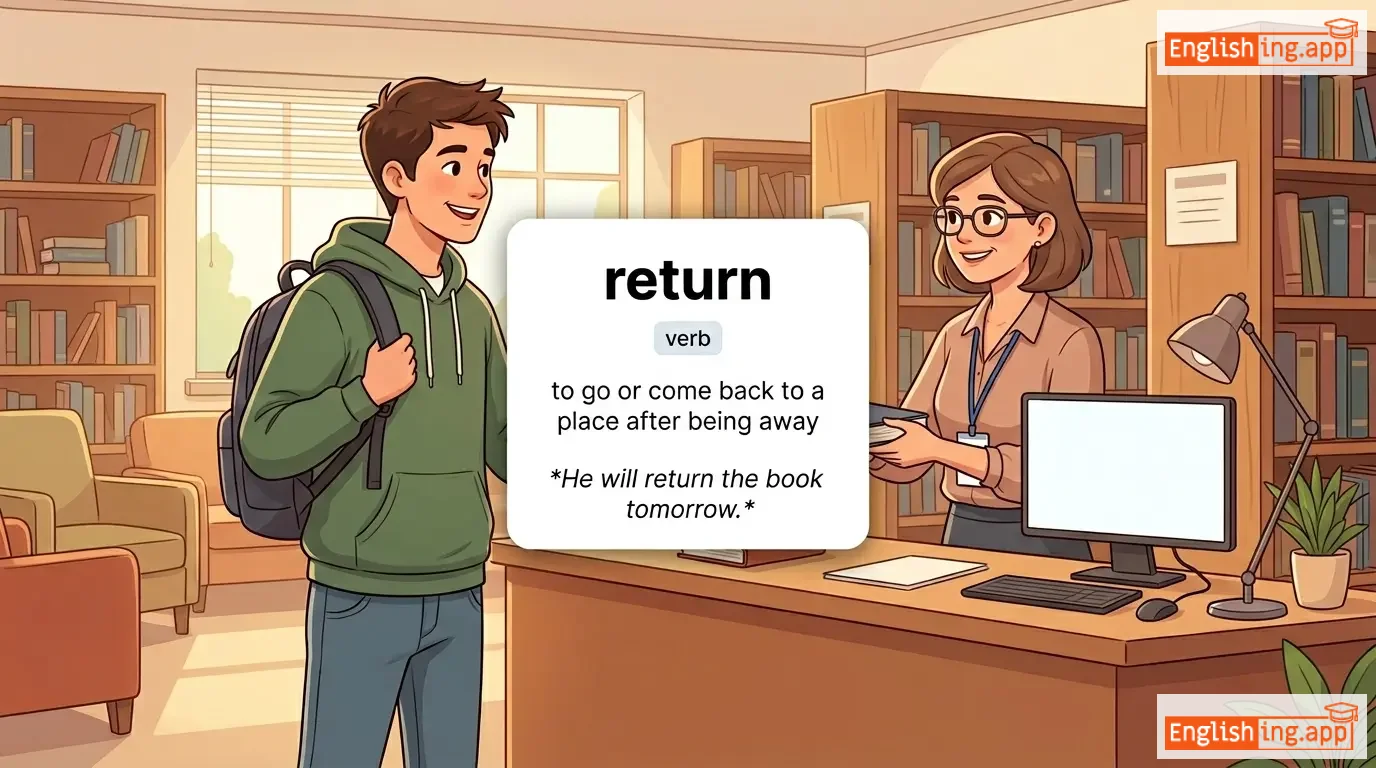
return definition card — visual illustration of the meaning
verb
/rɪˈtɜːn/
rendre (rendre)

to go or come back to a place after being away

"He will return the book tomorrow."

"Il rendra le livre demain." (Il rendra le livre demain.)
adjective
/rɪˈtɜː.nə.bəl/
retournable (retournable)

able to be returned or given back

"The bottle is returnable for a deposit refund."

"La bouteille est retournable pour un remboursement de dépôt." (La bouteille est retournable pour un remboursement de dépôt.)
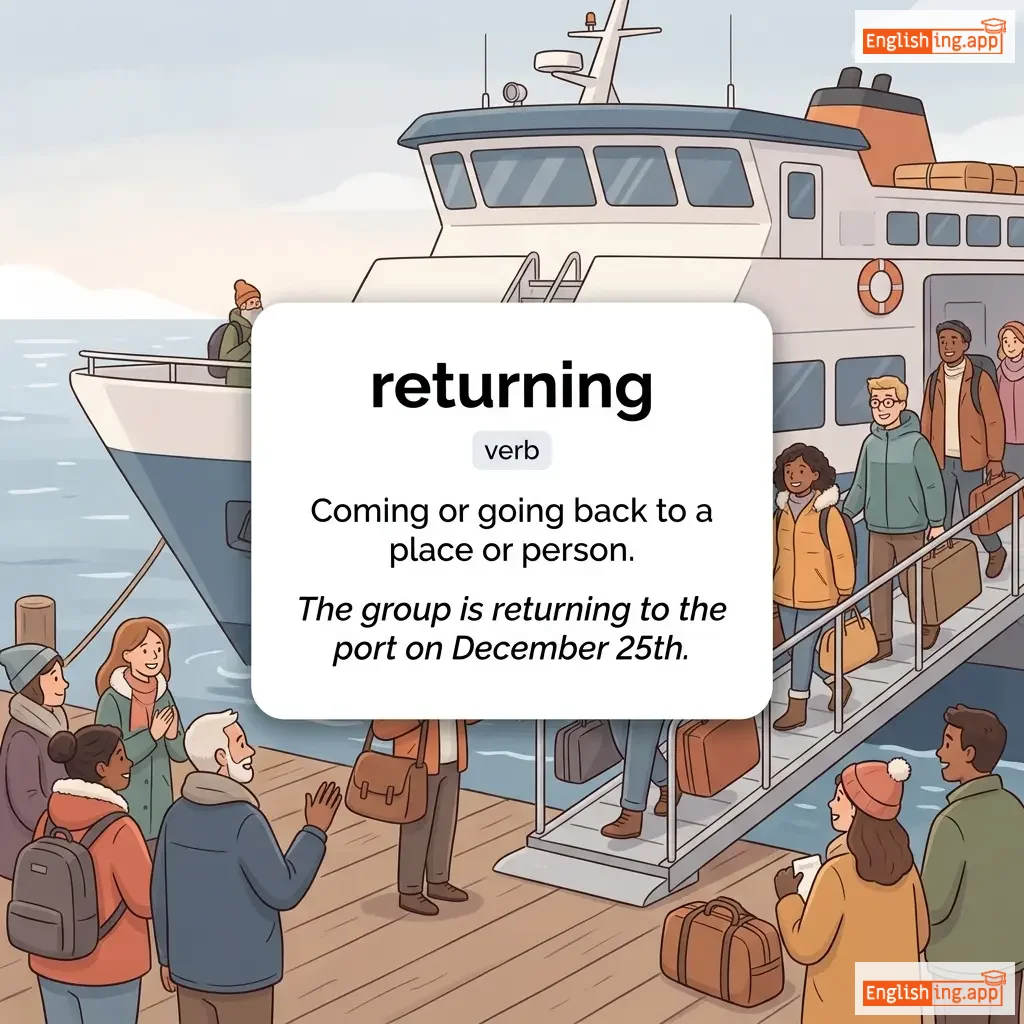
returning definition card — visual illustration of the meaning
verb
/rɪˈtɜrnɪŋ/
retour (retour)

Coming or going back to a place or person.

"The group is returning to the port on December 25th."

"Le groupe retourne au port le 25 décembre." (Le groupe retourne au port le 25 décembre.)
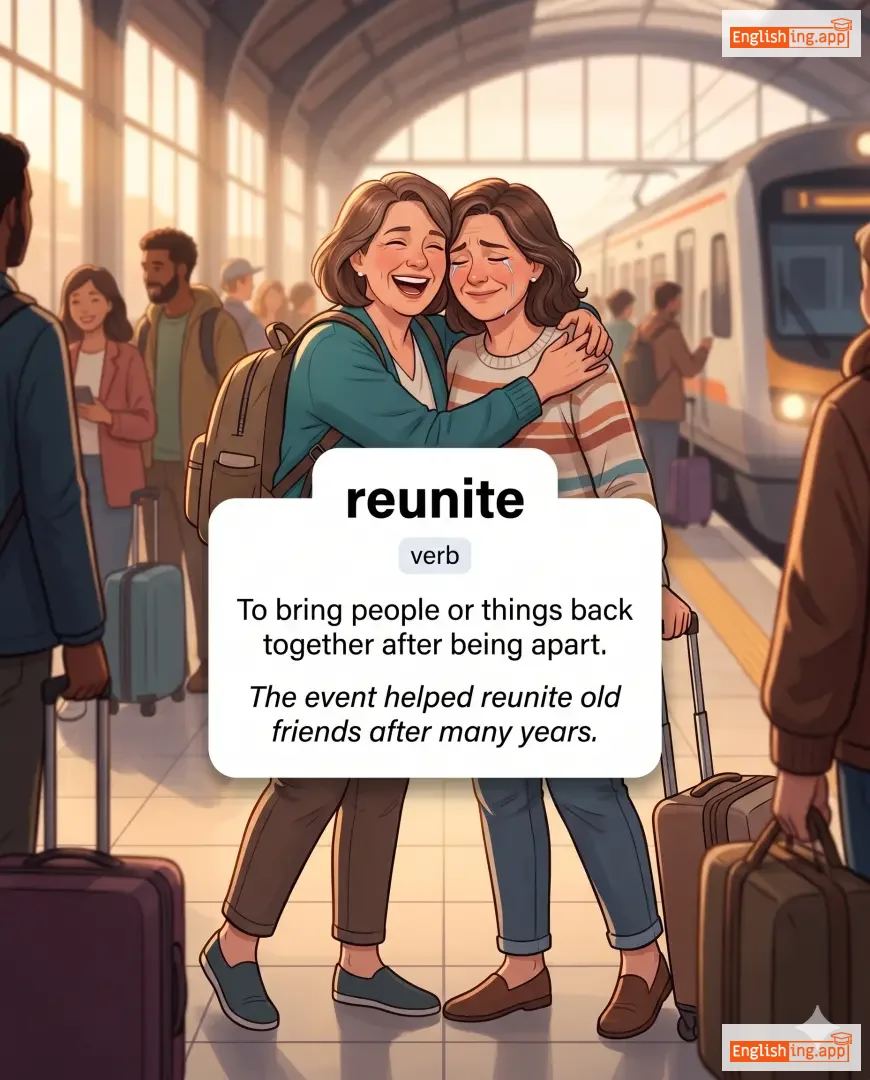
reunite definition card — visual illustration of the meaning
verb
/ˌriːjuːˈnaɪt/
réunir (reunir)

To bring people or things back together after being apart.

"The event helped reunite old friends after many years."

"L'événement a aidé à réunir de vieux amis après de nombreuses années." (L'evenement a aide a reunir de vieux amis apres de nombreuses annees.)
verb
/ˌriːˈvæmp/
rénover (renover)

To give a new and improved form, structure, or appearance to something.

"The company decided to revamp its website for a modern look."

"L'entreprise a décidé de rénover son site web pour lui donner un look moderne." (L'entreprise a décidé de rénover son site web pour lui donner un look moderne.)
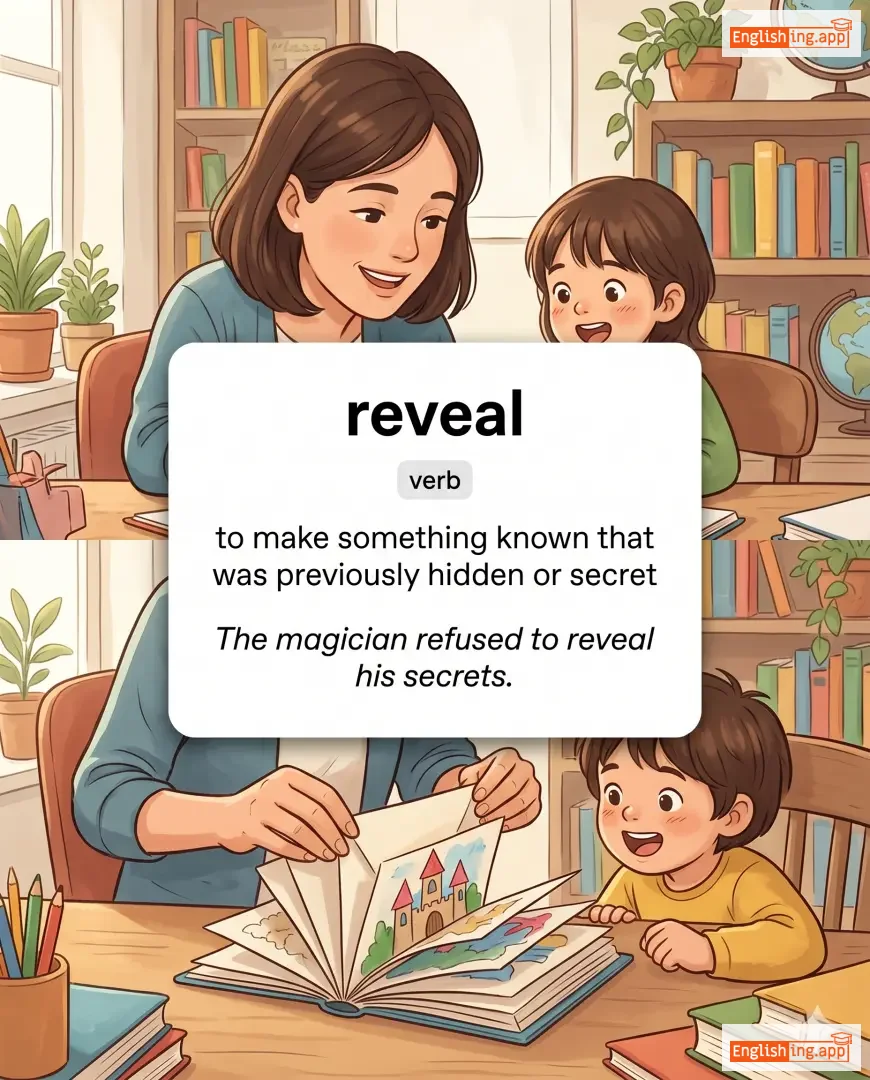
reveal definition card — visual illustration of the meaning
verb
/rɪˈviːl/
révéler (reveler)

to make something known that was previously hidden or secret

"The magician refused to reveal his secrets."

"Le magicien a refusé de révéler ses secrets." (Le magicien a refusé de révéler ses secrets.)
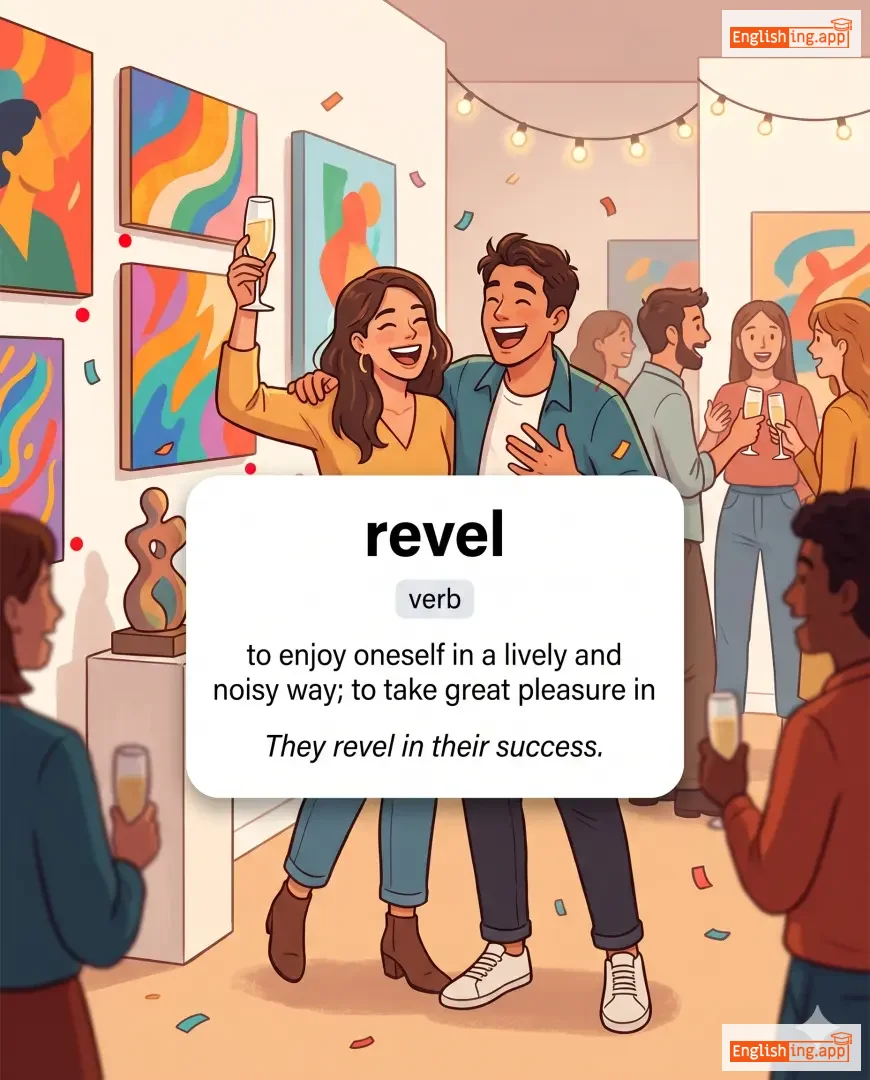
revel definition card — visual illustration of the meaning
verb
/ˈrevəl/
se réjouir (se rejouir)

to enjoy oneself in a lively and noisy way; to take great pleasure in

"They revel in their success."

"Ils se régalent de leur succès." (Ils se régalent de leur succès.)
noun
/ˌrɛvəˈleɪʃən/
révélation (revelation)

A surprising and previously unknown fact, especially one made known in a dramatic way.

"The book was full of shocking revelations about the politician."

"Le livre était plein de révélations choquantes sur le politicien." (Le livre était plein de révélations choquantes sur le politicien.)
noun
/ˈrɛvəlri/
fête (fete)

Lively and noisy festivities, especially involving drinking and dancing.

"The sound of revelry could be heard throughout the night."

"Le bruit de la fête se faisait entendre toute la nuit." (Le bruit de la fête se faisait entendre toute la nuit.)
noun, verb
/rɪˈvɛndʒ/
vengeance (vengeance)

The action of inflicting harm on someone as punishment for a wrong suffered.

"She sought revenge for the betrayal of her trust."

"Elle a cherché à se venger de la trahison de sa confiance." (Elle a cherche a se venger de la trahison de sa confiance.)
adjective
/rɪˈvenʒ.fəl/
vindicatif (vindicatif)

seeking or desiring revenge; vindictive

"He became revengeful after being betrayed by his friend."

"Il est devenu vindicatif après avoir été trahi par son ami." (Il est devenu vindicatif apres avoir ete trahi par son ami)
revenue definition card — visual illustration of the meaning
noun
/ˈrɛvənjuː/
revenu (revenu)

income generated from business activities, especially sales

"The company's revenue increased by 20% last year."

"Les revenus de l'entreprise ont augmenté de 20 % l'année dernière." (Les revenus de l'entreprise ont augmente de 20 % l'annee derniere.)
verb
/rɪˈvɜːrbəreɪt/
réverbérer (reverberer)

To echo repeatedly or have continuing effects.

"The sound of the explosion reverberated through the valley."

"Le son de l'explosion a réverbéré à travers la vallée." (Le son de l'explosion a réverbéré à travers la vallée.)
verb
/rɪˈvɪər/
vénérer (venerer)

To deeply respect or admire someone or something.

"The students revered their teacher for his wisdom."

"Les étudiants ont vénéré leur professeur pour sa sagesse." (Les étudiants ont vénéré leur professeur pour sa sagesse.)
noun
/ˈrɛvərəns/
révérence (reverans)

deep respect for someone or something

"The students showed reverence to their teacher."

"Les étudiants ont montré de la révérence envers leur professeur." (Les étudiants ont montré de la révérence envers leur professeur.)
noun, adjective
/ˈrɛvərənd/
révérend, honorable (reverend, honorable)

A title of respect used for members of the clergy; deserving deep respect.

"The Reverend gave an inspiring sermon at the church."

"Le révérend a prononcé un sermon inspirant à l'église." (Le reverend a prononce un sermon inspirant a l'eglise.)
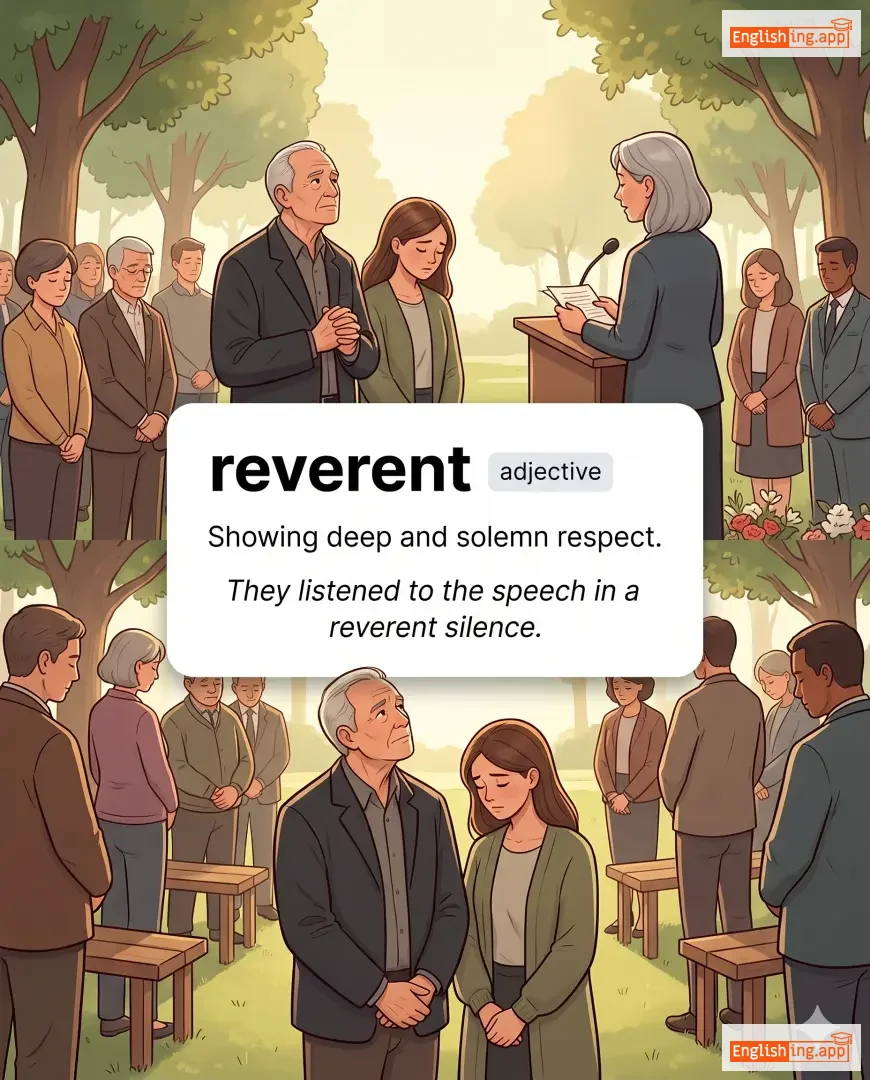
reverent definition card — visual illustration of the meaning
adjective
/ˈrɛvərənt/
révérencieux (reverencieux)

Showing deep and solemn respect.

"They listened to the speech in a reverent silence."

"Ils ont écouté le discours dans un silence révérencieux." (Ils ont écouté le discours dans un silence révérencieux.)
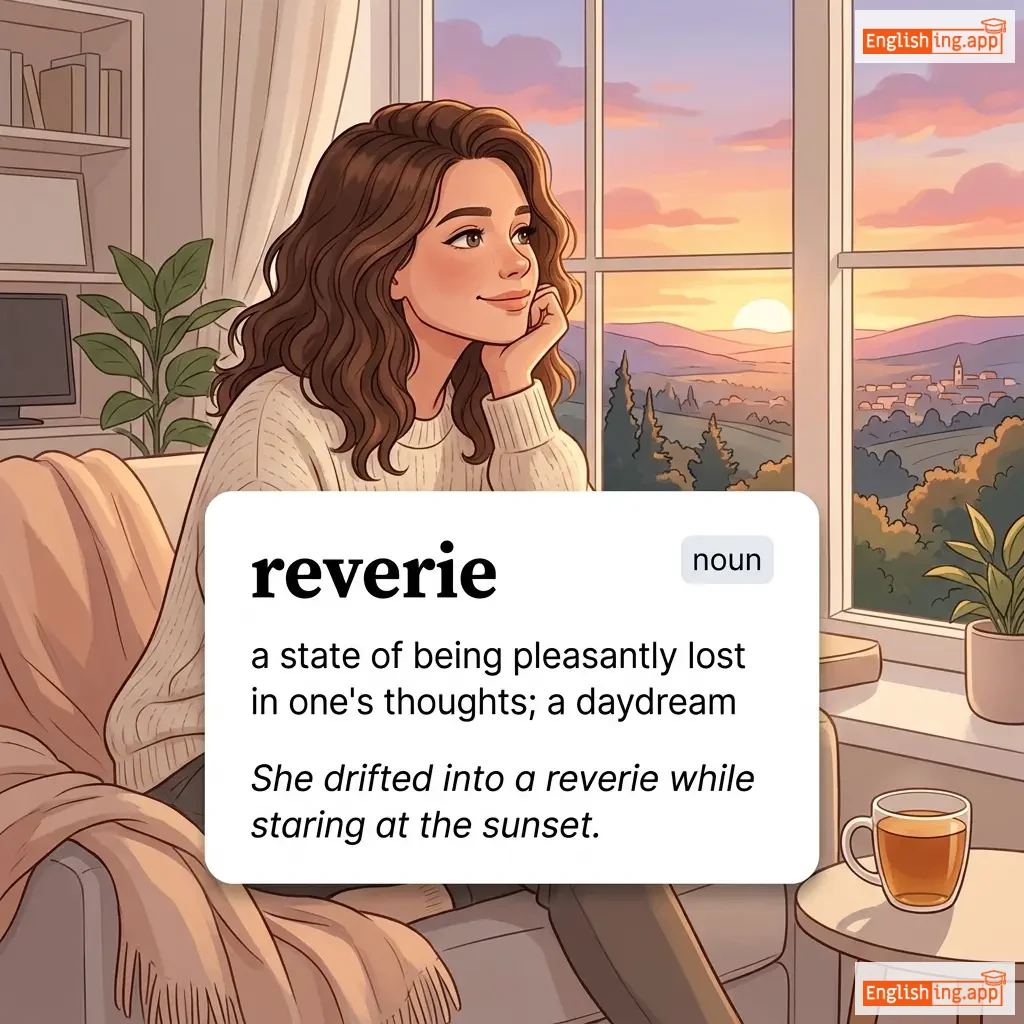
reverie definition card — visual illustration of the meaning
noun
/ˈrɛvəri/
rêverie (reverie)

a state of being pleasantly lost in one's thoughts; a daydream

"She drifted into a reverie while staring at the sunset."

"Elle s'est plongée dans une rêverie en regardant le coucher du soleil." (Elle s'est plongee dans une reverie en regardant le coucher du soleil.)
verb
/rɪˈvɜːs/
inverser (inverser)

to change something to the opposite direction, position, or result

"She quickly reversed the car out of the driveway."

"Elle a rapidement inversé la voiture hors de l'allée." (Elle a rapidement inversé la voiture hors de l'allée.)
adjective
/rɪˈvɜː.sə.bəl/
réversible (reversible)

able to be turned the other way around; able to be undone or changed back

"This jacket is reversible and can be worn on both sides."

"Cette veste est réversible et peut être portée des deux côtés." (Cette veste est reversible et peut etre portee des deux cotes.)
noun
/rɪˈvɜːrʒən/
réversion (reversion)

the act of returning to a previous state or condition

"The new policy marked a reversion to traditional methods."

"La nouvelle politique a marqué une réversion vers des méthodes traditionnelles." (La nouvelle politique a marqué une réversion vers des méthodes traditionnelles.)
verb
/rɪˈvɜːrt/
revenir (revenir)

to return to a previous state, condition, or practice

"The system will revert to its original settings after the update."

"Le système reviendra à ses paramètres d'origine après la mise à jour." (Le système reviendra à ses paramètres d'origine après la mise à jour.)
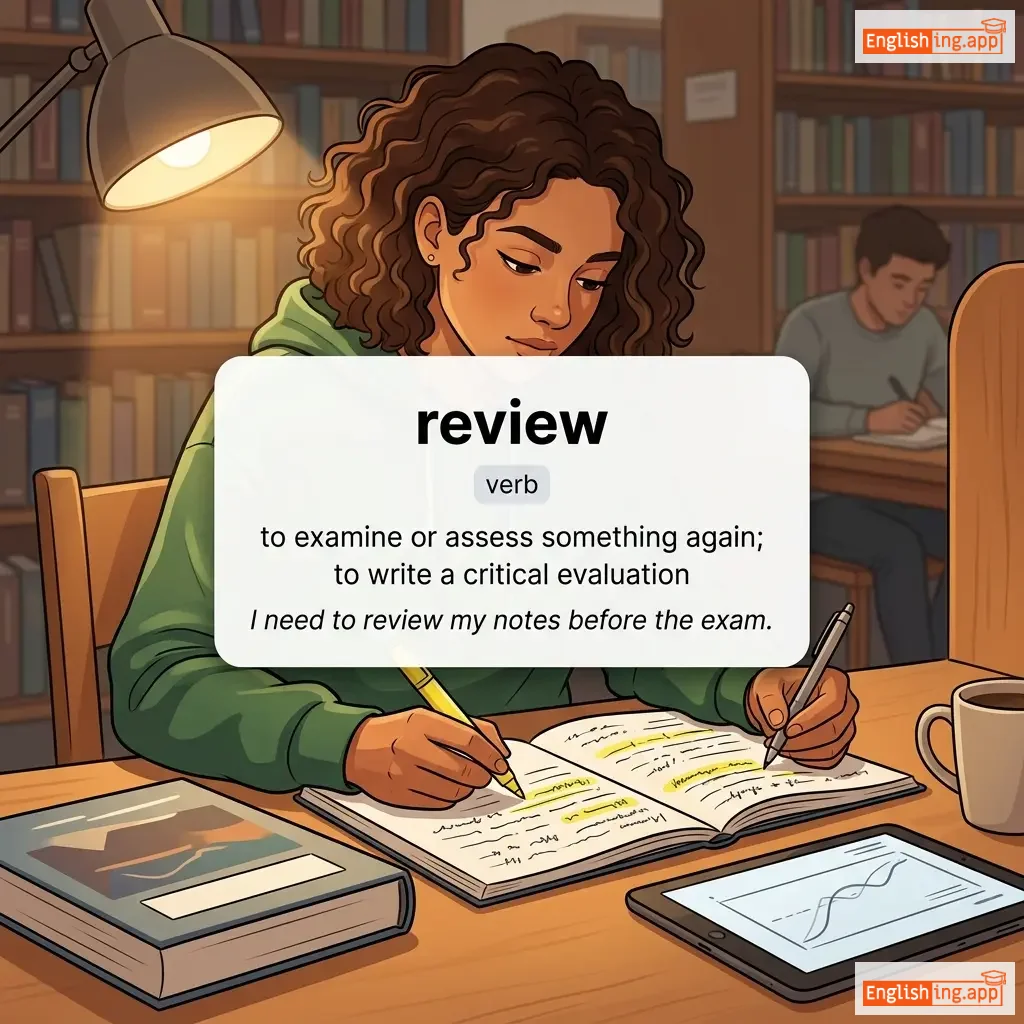
review definition card — visual illustration of the meaning
noun
/rɪˈvjuː/
critique (kritik)

an evaluation or assessment of something

"I wrote a review of the movie for the blog."

"J'ai écrit une critique du film pour le blog." (J'ai écrit une critique du film pour le blog.)
verb
/rɪˈvaɪl/
révérer (reverer)

to criticize in an abusive or angrily insulting manner

"The politician was reviled by the public for his corruption."

"Le politicien a été révéré par le public pour sa corruption." (Le politicien a été révéré par le public pour sa corruption.)
noun
/rɪˈvaɪlər/
insulteur (insulteur)

a person who criticizes or insults others abusively

"He was known as a reviler of all who opposed him."

"Il était connu comme un insulteur de tous ceux qui s'opposaient à lui." (Il était connu comme un insulteur de tous ceux qui s'opposaient à lui.)
noun
/rɪb/
côte (cote)

one of the curved bones that form the rib cage in humans and animals, protecting the chest organs

"He broke a rib while playing football."

"Il a cassé une côte en jouant au football." (Il a casse une cote en jouant au football)
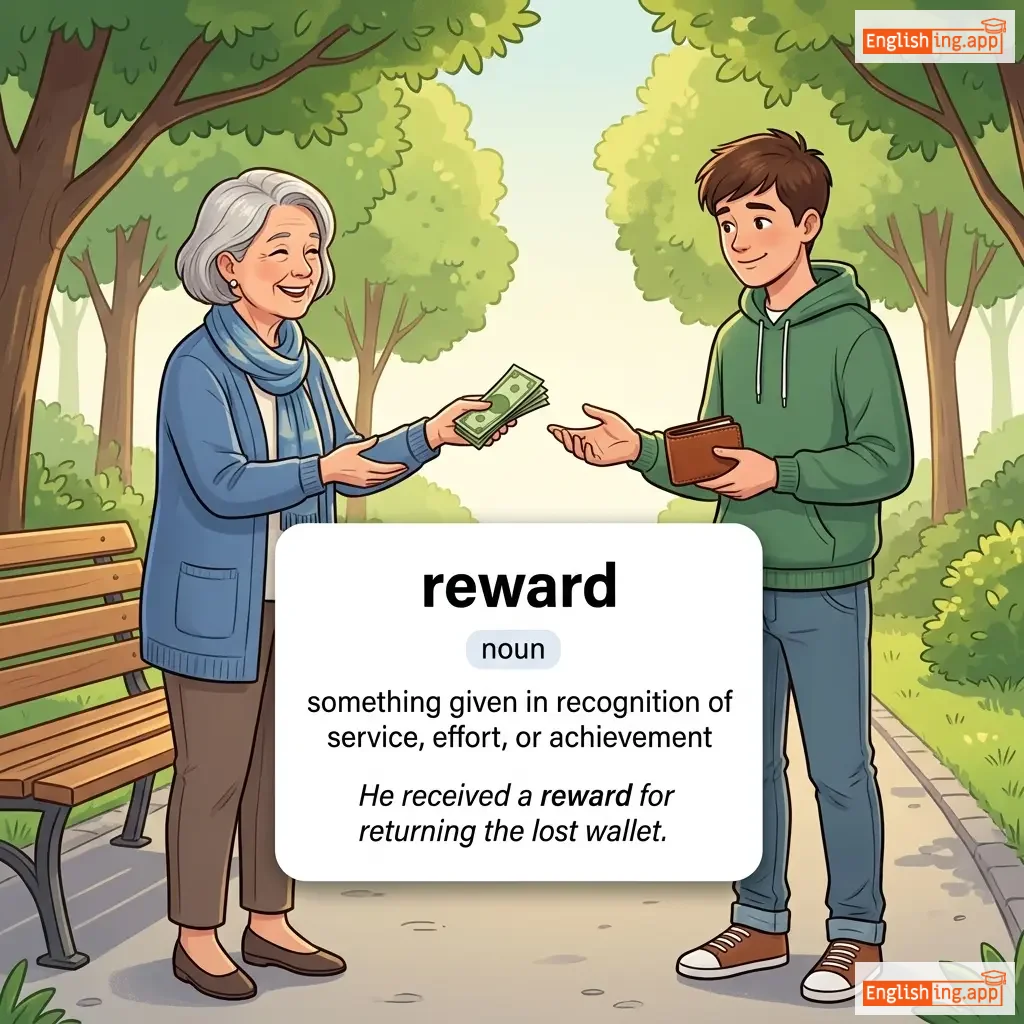
reward definition card — visual illustration of the meaning
noun
/rɪˈwɔːd/
récompense (recompense)

something given in recognition of service, effort, or achievement

"He received a reward for returning the lost wallet."

"Il a reçu une récompense pour avoir rendu le portefeuille perdu." (Il a reçu une récompense pour avoir rendu le portefeuille perdu.)
verb
/ˈræpsəˌdaɪz/
rhapsodier (rhapsodier)

to speak or write with great enthusiasm and admiration

"He would often rhapsodize about his travels to Europe."

"Il parlait souvent avec enthousiasme de ses voyages en Europe." (Il parlait souvent avec enthousiasme de ses voyages en Europe.)
noun
/ˈræpsədi/
chanson exaltée/éloge (chanson exaltee/elog)

an expression of great enthusiasm or an epic musical composition

"The singer’s performance was a rhapsody of emotions."

"La performance du chanteur était une rhapsodie d'émotions." (La performance du chanteur etait une rhapsodie d'emotions.)
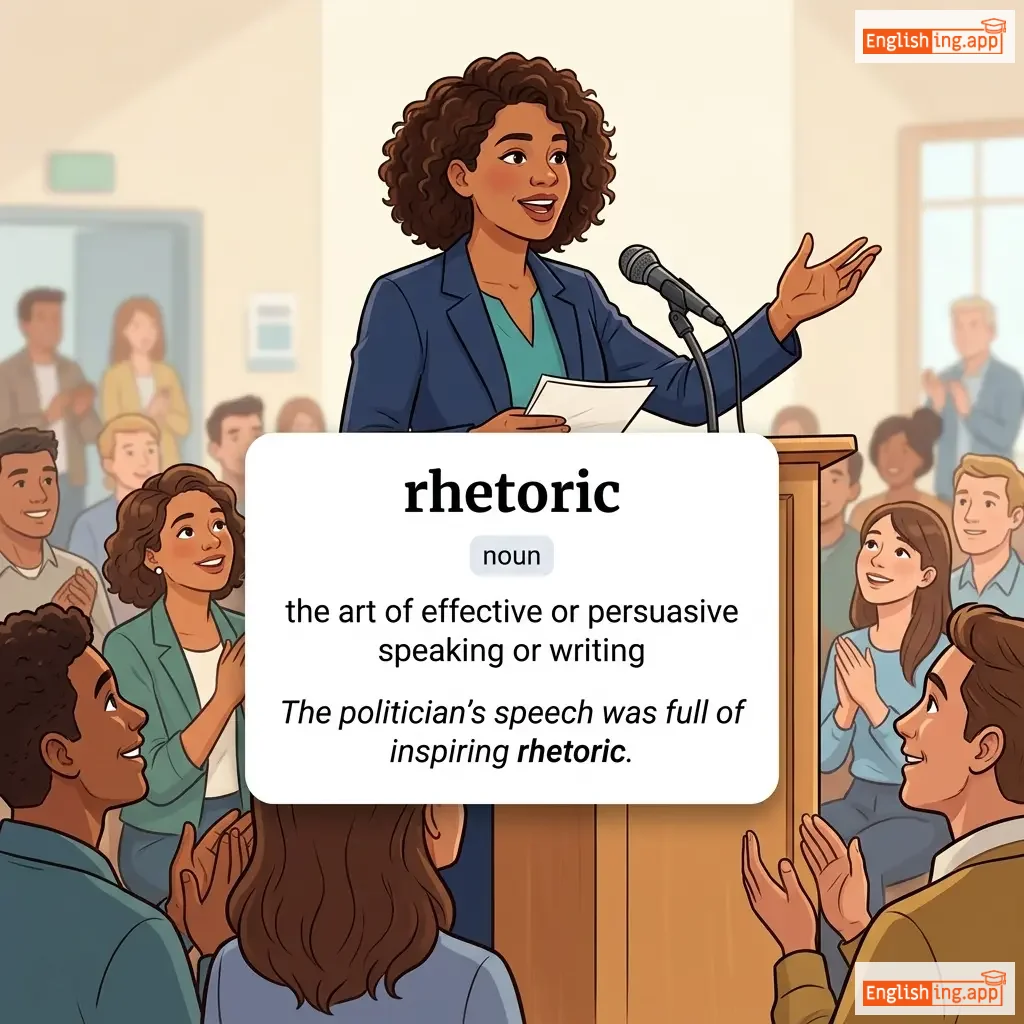
rhetoric definition card — visual illustration of the meaning
noun
/ˈrɛtərɪk/
rhétorique (rhetorique)

the art of effective or persuasive speaking or writing

"The politician’s speech was full of inspiring rhetoric."

"Le discours du politicien était plein de rhétorique inspirante." (Le discours du politicien était plein de rhétorique inspirante.)
adjective
/rɪˈtɔːrɪkəl/
rhétorique (rhetorique)

relating to the art of effective or persuasive speaking or writing; often a question asked to make a point rather than get an answer

"He asked a rhetorical question during the debate."

"Il a posé une question rhétorique pendant le débat." (Il a posé une question rhetorique pendant le debat.)
noun
/ˌrɛtəˈrɪʃən/
rhéteur (rheteur)

A person who is skilled in the art of rhetoric or persuasive speaking/writing.

"The rhetorician captivated the audience with his eloquence."

"Le rhéteur a captivé l'auditoire avec son éloquence." (Le rhetor a captive l'auditoire avec son eloquence.)
adjective
/ˈruːmi/
larmoyant (larmoyant)

Watery, especially referring to the eyes.

"His rheumy eyes showed signs of age and fatigue."

"Ses yeux larmoyants montraient des signes de vieillesse et de fatigue." (Ses yeux larmoyants montraient des signes de vieillesse et de fatigue.)
noun
/raɪˈnɒs.ər.əs/
rhinocéros (rhinocéros)

a large, heavy animal with thick skin and one or two horns on its nose

"The rhinoceros charged through the grassland."

"Le rhinocéros a chargé à travers la prairie." (Le rhinocéros a chargé à travers la prairie.)
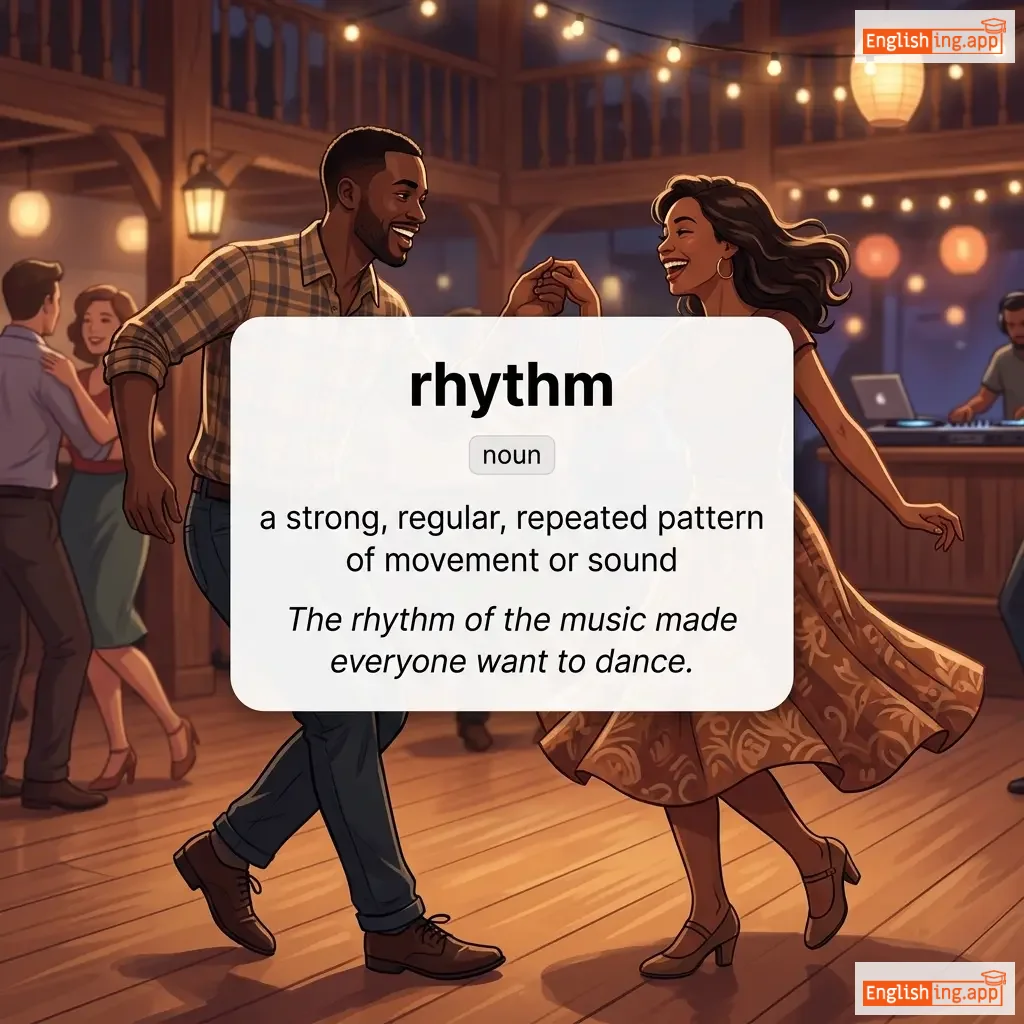
rhythm definition card — visual illustration of the meaning
noun
/ˈrɪðəm/
rythme (rythme)

a strong, regular, repeated pattern of movement or sound

"The rhythm of the music made everyone want to dance."

"Le rythme de la musique a poussé tout le monde à danser." (Le rythme de la musique a pousse tout le monde a danser.)
noun
/raɪs ˈkʊkər/
cuisinière à riz électrique (cuisiniere a riz electrique)

an electric appliance designed to cook rice automatically

"The rice cooker automatically switches off when the rice is perfectly cooked."

"Le cuiseur de riz s'éteint automatiquement lorsque le riz est parfaitement cuit." (Le cuiseur de riz s'eteint automatiquement lorsque le riz est parfaitement cuit)
verb
/rɪd/
se débarrasser (se debarasser)

to remove or get rid of something

"I need to rid the house of all the clutter."

"J'ai besoin de débarrasser la maison de tout le désordre." (J'ai besoin de debarasser la maison de tout le desordre.)
noun
/ˈrɪk.ʃɔː/
rickshaw (rickshaw)

a light two-wheeled passenger vehicle drawn by one or more people

"We took a rickshaw to reach the busy marketplace."

"Nous avons pris un rickshaw pour atteindre le marché animé." (Nous avons pris un rickshaw pour atteindre le marche anime.)
adjective
/ˈrɪkɪti/
fragile (fragile)

Poorly made and likely to collapse; shaky.

"They crossed a rickety wooden bridge over the river."

"Ils ont traversé un pont en bois fragile sur la rivière." (Ils ont traversé un pont en bois fragile sur la rivière.)
adjective
/rɪʧ/
riche (reesh)

having a great deal of money or assets

"He became rich after his successful business venture."

"Il est devenu riche après sa réussite dans les affaires." (Il est devenu riche apres sa reussite dans les affaires.)
noun
/ˈrɪb.ən/
ruban (ruban)

a long, narrow strip of fabric used for tying or decoration

"She tied her hair with a red ribbon."

"Elle a attaché ses cheveux avec un ruban rouge." (Elle a attache ses cheveux avec un ruban rouge.)