Vocabularios

Descubra, aprenda y domine el vocabulario en inglés

noun
/ˌrɛtrɪˈbjuːʃən/
venganza, castigo (venganza, castigo)

punishment inflicted as vengeance for a wrong or crime

"The villagers demanded retribution for the crime committed."

"Los aldeanos exigieron venganza por el crimen cometido." (Los aldeanos exigieron venganza por el crimen cometido.)
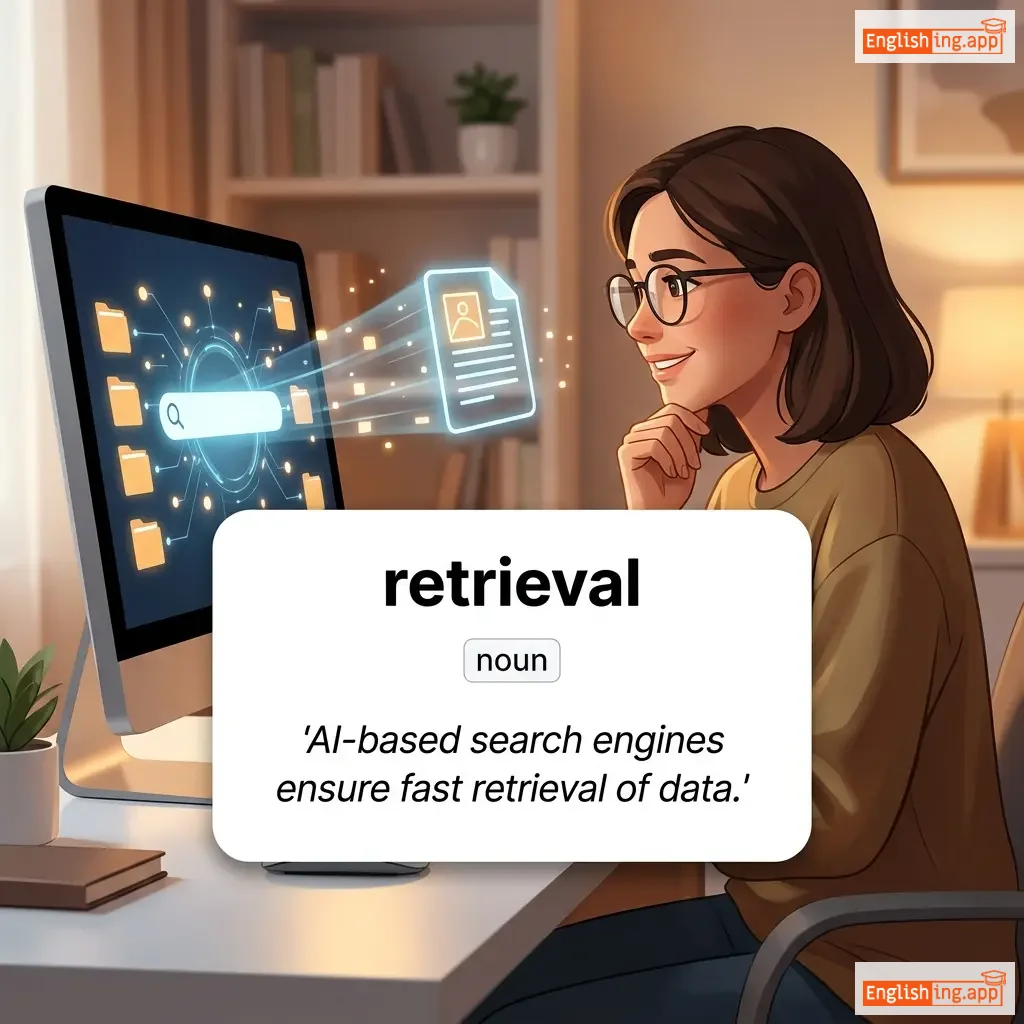
retrieval definition card — visual illustration of the meaning
noun
rɪˈtriː.vəl
recuperación (recuperacion)

The process of getting or bringing something back; recovery of stored information.

"AI-based search engines ensure fast retrieval of data."

"Los motores de búsqueda basados en IA aseguran una rápida recuperación de datos." (Los motores de busqueda basados en IA aseguran una rapida recuperacion de datos.)
verb
/rɪˈtriːv/
recuperar (recuperar)

to get something back that was lost or taken; to recover

"She managed to retrieve her lost phone from the taxi."

"Ella logró recuperar su teléfono perdido del taxi." (Ella logro recuperar su telefono perdido del taxi.)
adjective
/ˌrɛtroʊˈæktɪv/
retroactivo (retroactivo)

applying to a period before it was enacted or established

"The new law was made retroactive to cover past cases."

"La nueva ley se hizo retroactiva para cubrir los casos pasados." (La nueva ley se hizo retroactiva para cubrir los casos pasados.)
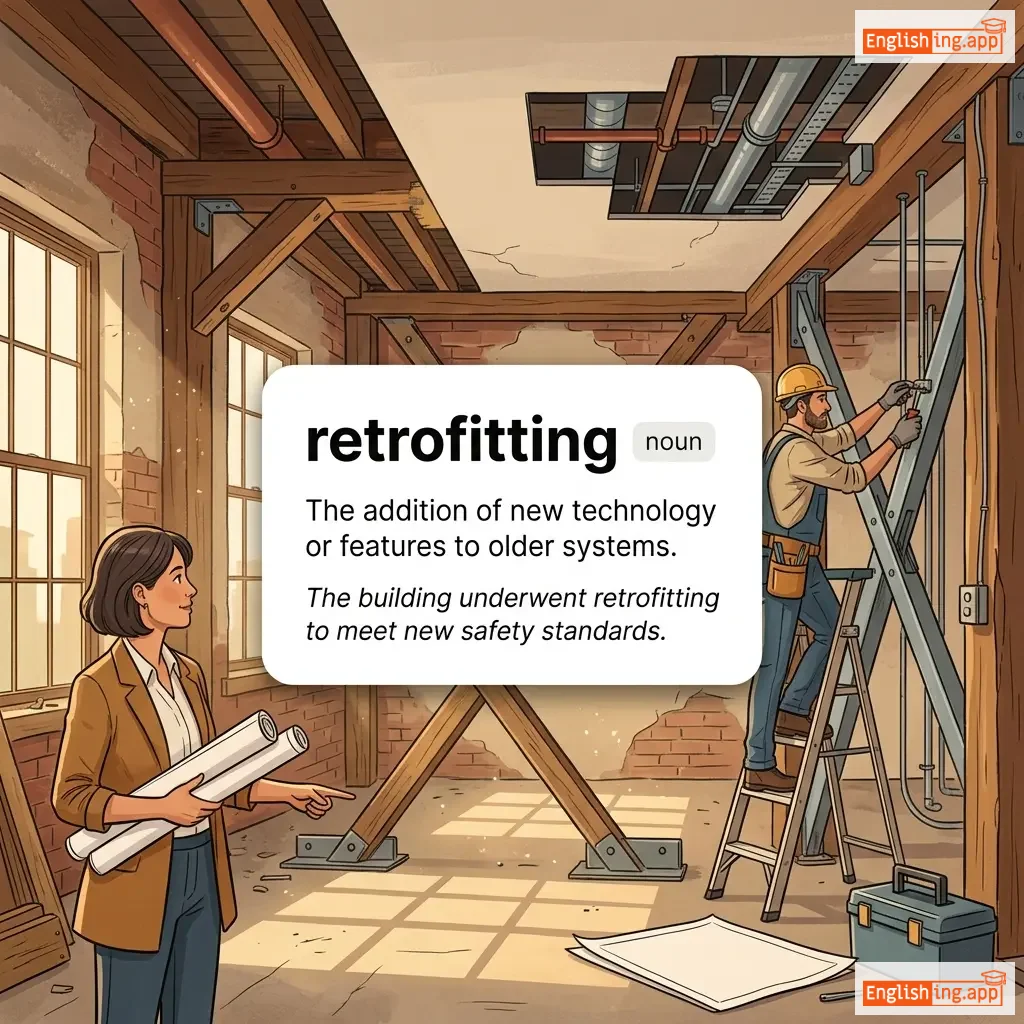
retrofitting definition card — visual illustration of the meaning
noun
/ˈrɛ.trəʊ.fɪt.ɪŋ/
la adición de nueva tecnología a sistemas antiguos (la adición de nueva tecnología a sistemas antiguos)

The addition of new technology or features to older systems.

"The building underwent retrofitting to meet new safety standards."

"El edificio fue sometido a retrofitting para cumplir con los nuevos estándares de seguridad." (El edificio fue sometido a retrofitting para cumplir con los nuevos estándares de seguridad.)
adjective
/ˈrɛtroʊˌɡreɪd/
retrógrado (retrogado)

moving backward or returning to a worse condition

"The policy was seen as a retrograde step for human rights."

"Se consideró que la política era un paso retrógrado para los derechos humanos." (Se consideró que la política era un paso retrógrado para los derechos humanos.)
noun
/ˌrɛtroʊˈɡrɛʃən/
retroceso (retroceso)

a return to a worse or less developed state

"The country experienced economic retrogression after the crisis."

"El país experimentó retroceso económico después de la crisis." (El pais experimento retroceso economico despues de la crisis.)
noun
/ˈrɛtrəsˌpɛkt/
retroceso (retroceso)

the act of looking back on or reviewing past events

"In retrospect, the decision seemed unwise."

"En retrospectiva, la decisión parecía imprudente." (En retrospectiva, la decisión parecía imprudente.)
adjective
/ˌrɛtrəˈspɛktɪv/
retropectivo (retropectivo)

Looking back on or dealing with past events or situations.

"The museum held a retrospective exhibition of the artist's work."

"El museo organizó una exposición retrospectiva del trabajo del artista." (El museo organizó una exposición retrospectiva del trabajo del artista.)
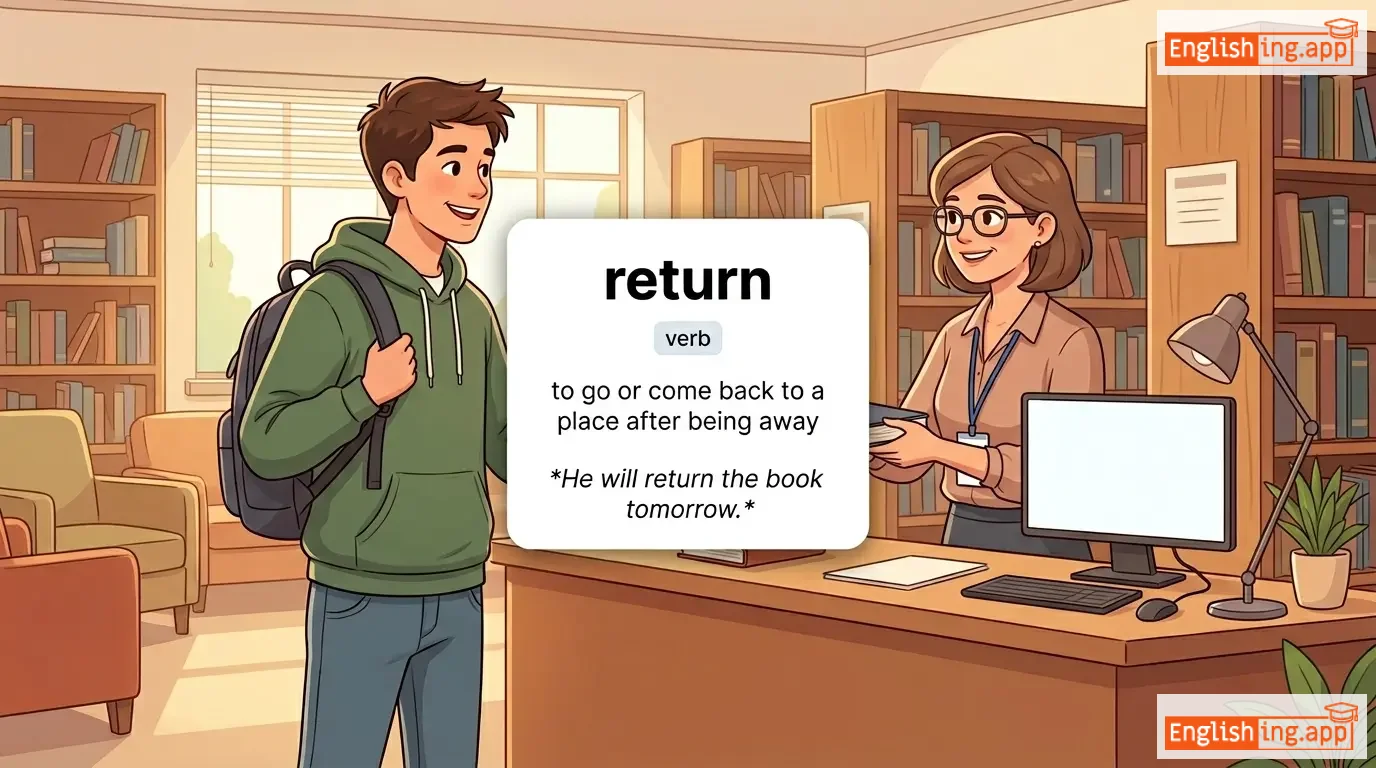
return definition card — visual illustration of the meaning
verb
/rɪˈtɜːn/
devolver (devolver)

to go or come back to a place after being away

"He will return the book tomorrow."

"Él devolverá el libro mañana." (El devolverá el libro mañana.)
adjective
/rɪˈtɜː.nə.bəl/
devolvible (devolvible)

able to be returned or given back

"The bottle is returnable for a deposit refund."

"La botella es devolvible para un reembolso del depósito." (La botella es devolvible para un reembolso del depósito.)
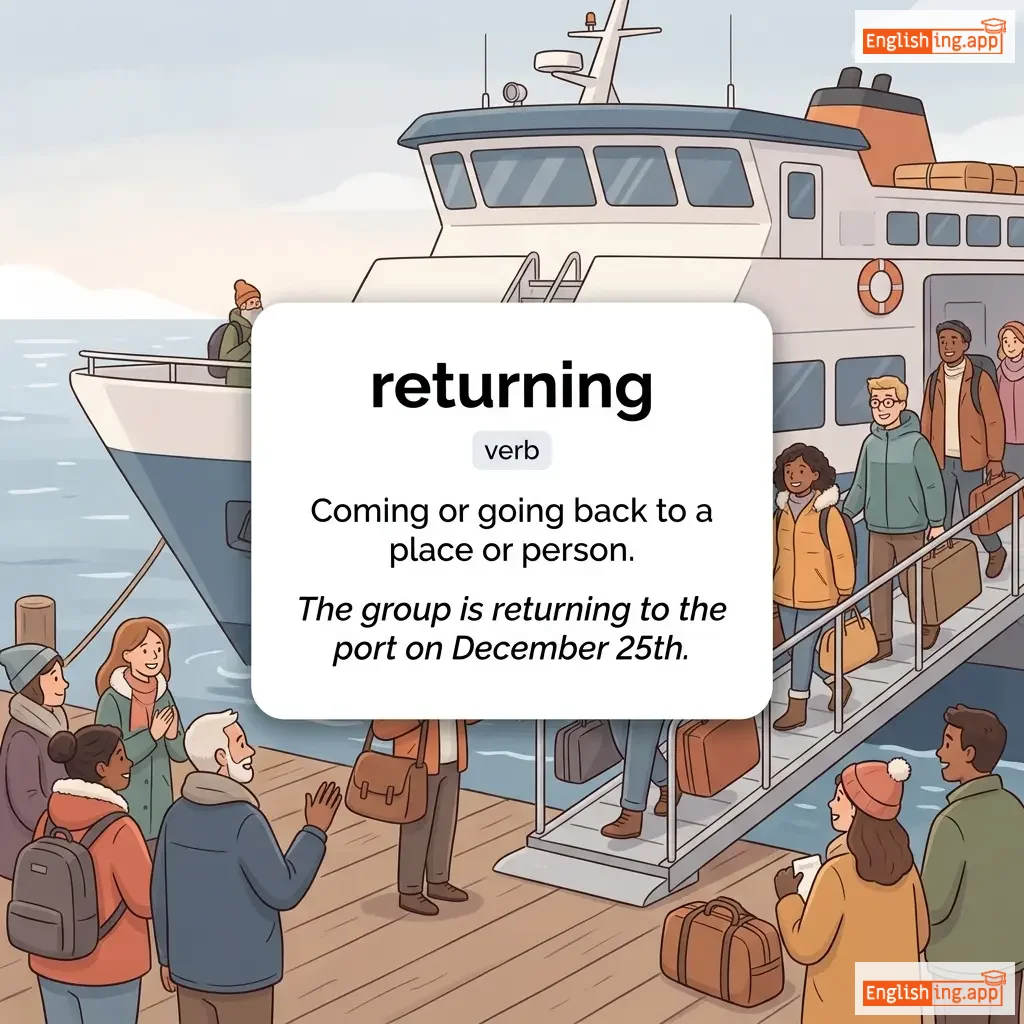
returning definition card — visual illustration of the meaning
verb
/rɪˈtɜrnɪŋ/
regreso (regreso)

Coming or going back to a place or person.

"The group is returning to the port on December 25th."

"El grupo está regresando al puerto el 25 de diciembre." (El grupo esta regresando al puerto el 25 de diciembre.)
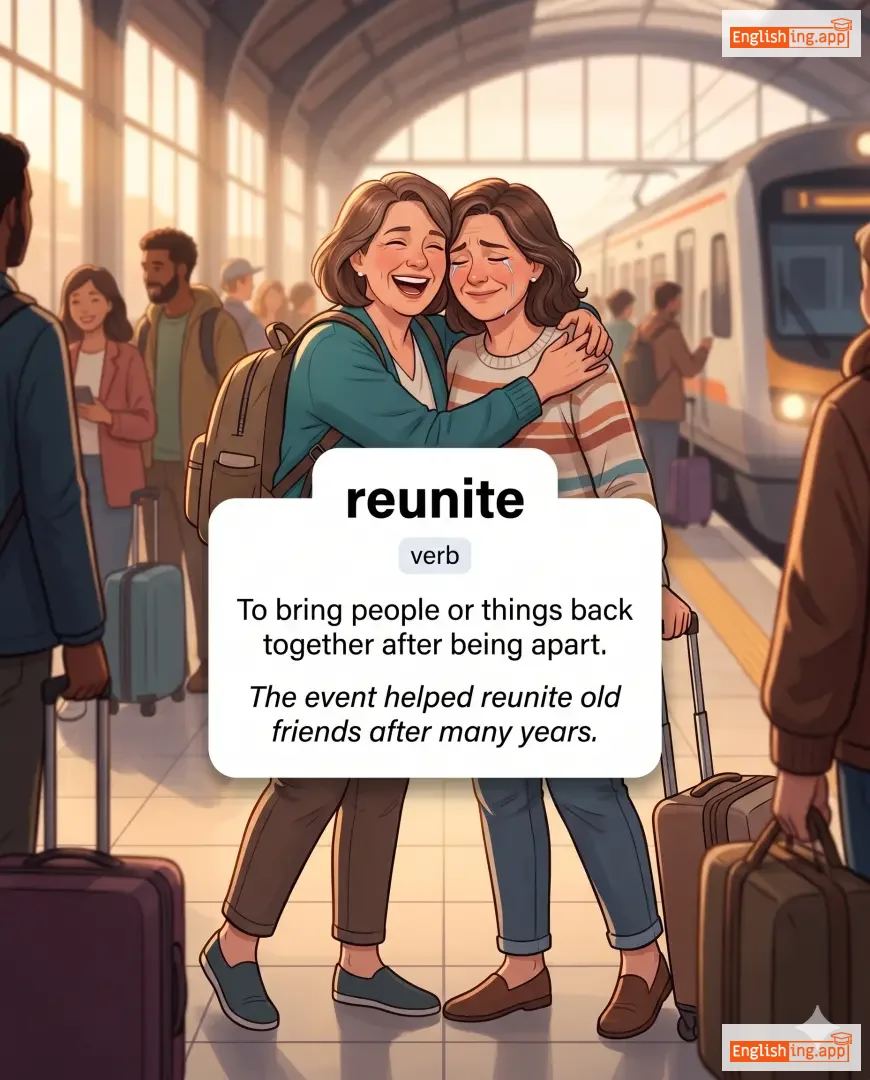
reunite definition card — visual illustration of the meaning
verb
/ˌriːjuːˈnaɪt/
reunir (reunir)

To bring people or things back together after being apart.

"The event helped reunite old friends after many years."

"El evento ayudó a reunir viejos amigos después de muchos años." (El evento ayudo a reunir viejos amigos despues de muchos años.)
verb
/ˌriːˈvæmp/
rehacer (rehacer)

To give a new and improved form, structure, or appearance to something.

"The company decided to revamp its website for a modern look."

"La empresa decidió renovar su sitio web para darle un aspecto moderno." (La empresa decidió renovar su sitio web para darle un aspecto moderno.)
reveal definition card — visual illustration of the meaning
verb
/rɪˈviːl/
revelar (revelar)

to make something known that was previously hidden or secret

"The magician refused to reveal his secrets."

"El mago se negó a revelar sus secretos." (El mago se negó a revelar sus secretos.)
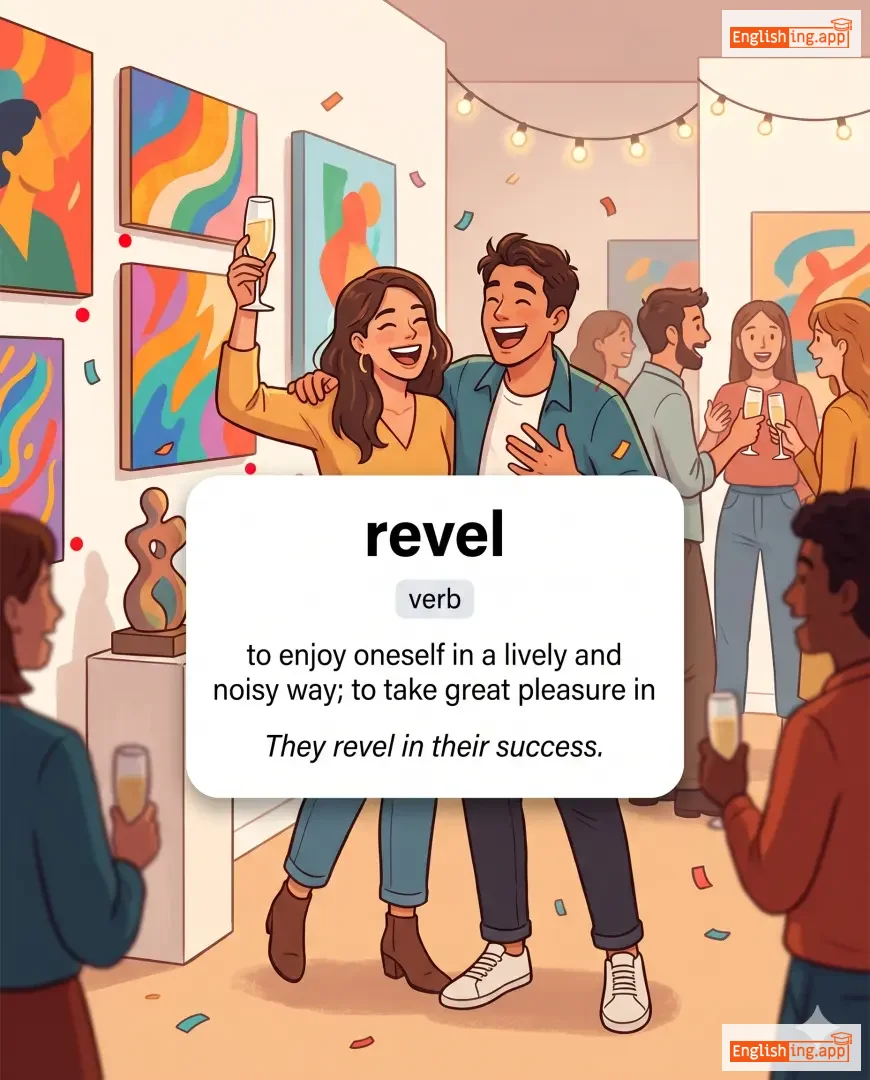
revel definition card — visual illustration of the meaning
verb
/ˈrevəl/
regocijarse (regocijarse)

to enjoy oneself in a lively and noisy way; to take great pleasure in

"They revel in their success."

"Ellos se regocijan en su éxito." (Ellos se regocijan en su éxito.)
noun
/ˌrɛvəˈleɪʃən/
revelación (revelacion)

A surprising and previously unknown fact, especially one made known in a dramatic way.

"The book was full of shocking revelations about the politician."

"El libro estaba lleno de revelaciones impactantes sobre el político." (El libro estaba lleno de revelaciones impactantes sobre el politico.)
noun
/ˈrɛvəlri/
fiesta (fiesta)

Lively and noisy festivities, especially involving drinking and dancing.

"The sound of revelry could be heard throughout the night."

"Se escuchaba el sonido de la fiesta durante toda la noche." (Se escuchaba el sonido de la fiesta durante toda la noche.)
noun, verb
/rɪˈvɛndʒ/
venganza (venganza)

The action of inflicting harm on someone as punishment for a wrong suffered.

"She sought revenge for the betrayal of her trust."

"Ella buscó venganza por la traición de su confianza." (Ella busco venganza por la traicion de su confianza.)
adjective
/rɪˈvenʒ.fəl/
vengativo (vengativo)

seeking or desiring revenge; vindictive

"He became revengeful after being betrayed by his friend."

"Se volvió vengativo después de ser traicionado por su amigo." (Se volvio vengativo despues de ser traicionado por su amigo)
revenue definition card — visual illustration of the meaning
noun
/ˈrɛvənjuː/
ingresos (ingresos)

income generated from business activities, especially sales

"The company's revenue increased by 20% last year."

"Los ingresos de la empresa aumentaron un 20% el año pasado." (Los ingresos de la empresa aumentaron un 20% el año pasado.)
verb
/rɪˈvɜːrbəreɪt/
reverberar (reverberar)

To echo repeatedly or have continuing effects.

"The sound of the explosion reverberated through the valley."

"El sonido de la explosión reverberó a través del valle." (El sonido de la explosión reverberó a través del valle.)
verb
/rɪˈvɪər/
reverenciar (reverenciar)

To deeply respect or admire someone or something.

"The students revered their teacher for his wisdom."

"Los estudiantes veneraron a su maestro por su sabiduría." (Los estudiantes veneraron a su maestro por su sabiduría.)
noun
/ˈrɛvərəns/
reverencia (reverensia)

deep respect for someone or something

"The students showed reverence to their teacher."

"Los estudiantes mostraron reverencia hacia su maestro." (Los estudiantes mostraron reverencia hacia su maestro.)
noun, adjective
/ˈrɛvərənd/
reverendo, honorable (reverendo, honorable)

A title of respect used for members of the clergy; deserving deep respect.

"The Reverend gave an inspiring sermon at the church."

"El reverendo dio un sermón inspirador en la iglesia." (El reverendo dio un sermon inspirador en la iglesia.)
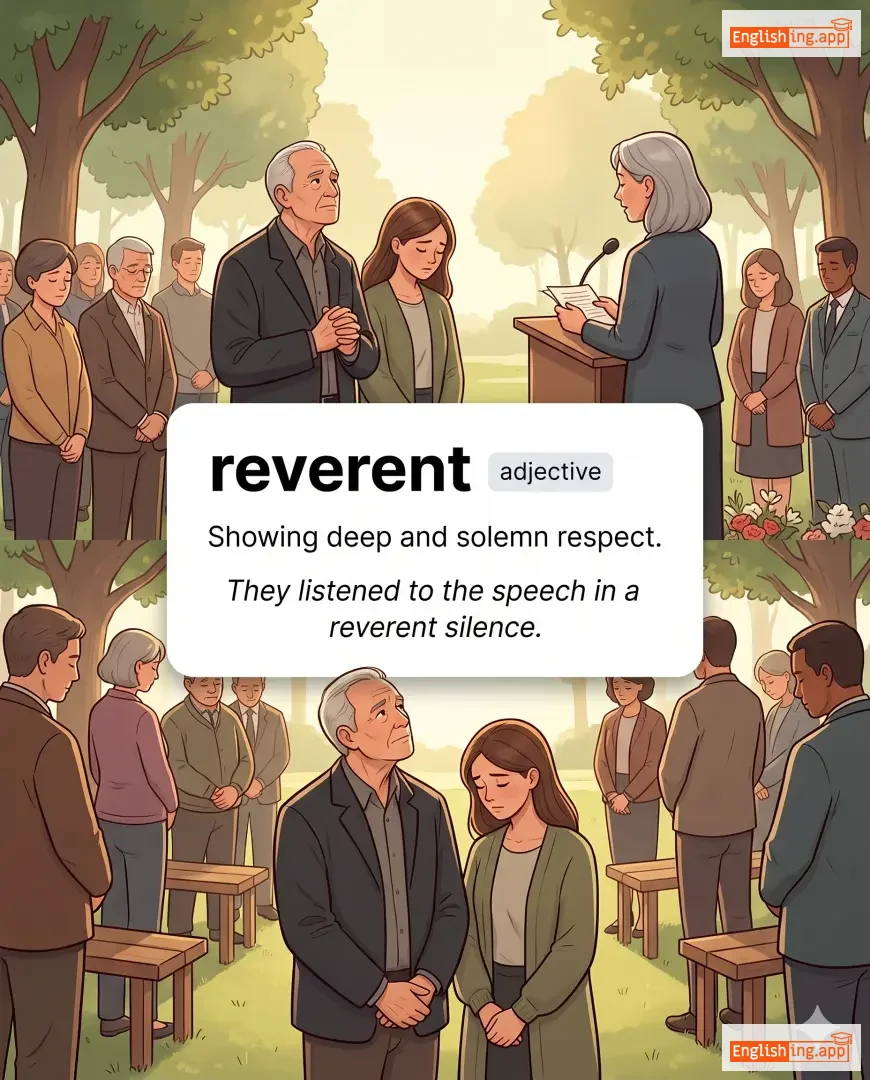
reverent definition card — visual illustration of the meaning
adjective
/ˈrɛvərənt/
reverente (reverente)

Showing deep and solemn respect.

"They listened to the speech in a reverent silence."

"Escucharon el discurso en un silencio reverente." (Escucharon el discurso en un silencio reverente.)
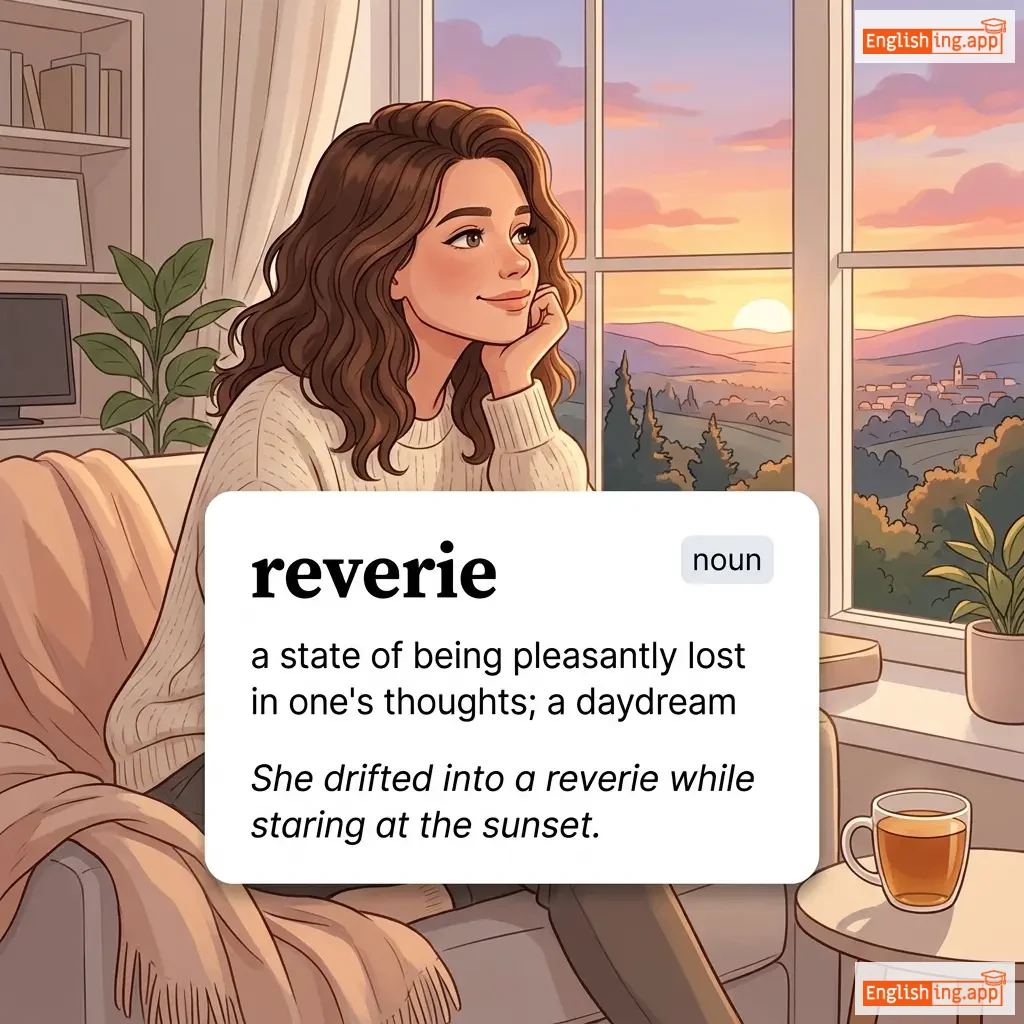
reverie definition card — visual illustration of the meaning
noun
/ˈrɛvəri/
ensoñación (ensonacion)

a state of being pleasantly lost in one's thoughts; a daydream

"She drifted into a reverie while staring at the sunset."

"Ella se sumió en una ensoñación mientras miraba la puesta de sol." (Ella se sumió en una ensoñacion mientras miraba la puesta de sol.)
verb
/rɪˈvɜːs/
invertir (invertir)

to change something to the opposite direction, position, or result

"She quickly reversed the car out of the driveway."

"Ella rápidamente invirtió el coche fuera de la entrada." (Ella rapida mente inverty el coche fuera de la entrada.)
adjective
/rɪˈvɜː.sə.bəl/
reversible (reh beer see ble)

able to be turned the other way around; able to be undone or changed back

"This jacket is reversible and can be worn on both sides."

"Esta chaqueta es reversible y se puede usar por ambos lados." (Esta chaqueta es reversible y se puede usar por ambos lados)
noun
/rɪˈvɜːrʒən/
reversión (reversion)

the act of returning to a previous state or condition

"The new policy marked a reversion to traditional methods."

"La nueva política marcó una reversión a los métodos tradicionales." (La nueva política marcó una reversión a los métodos tradicionales.)
verb
/rɪˈvɜːrt/
volver (volver)

to return to a previous state, condition, or practice

"The system will revert to its original settings after the update."

"El sistema volverá a su configuración original después de la actualización." (El sistema volverá a su configuración original después de la actualización.)
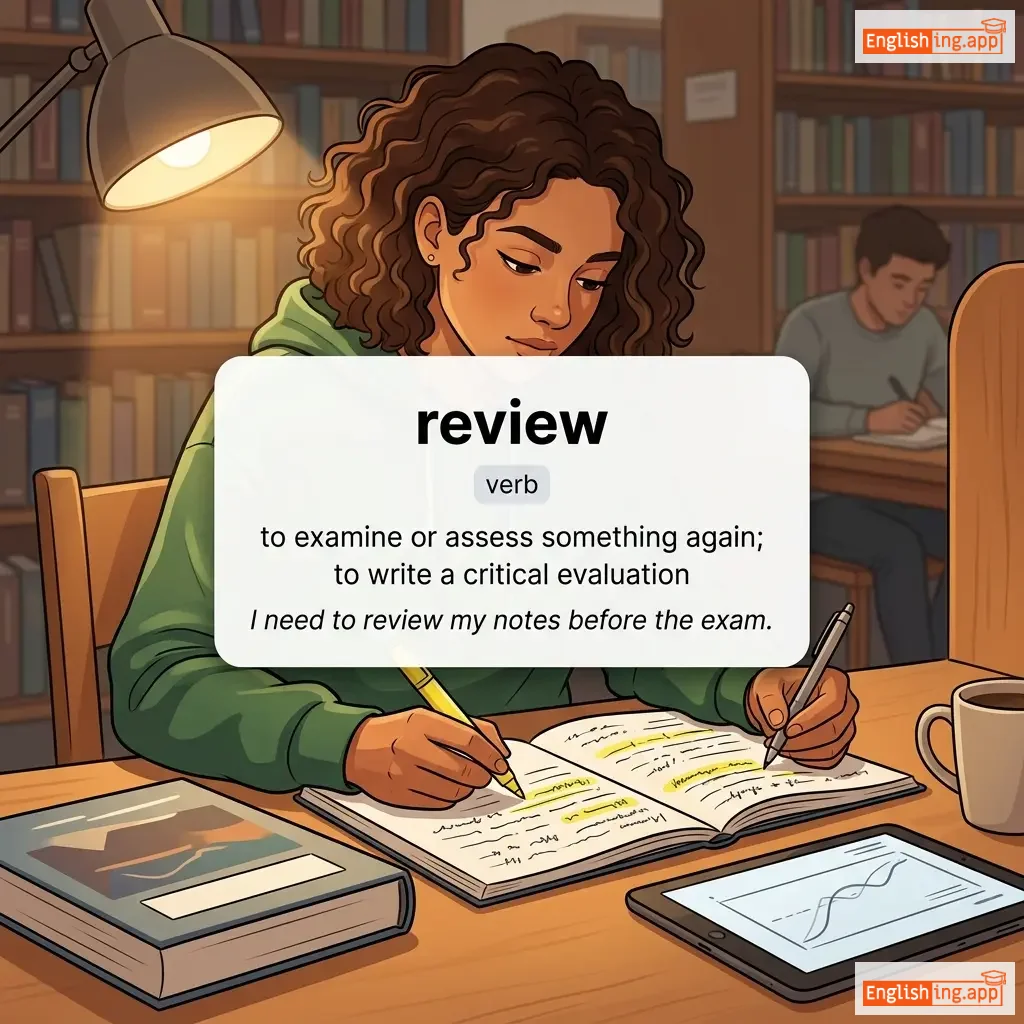
review definition card — visual illustration of the meaning
noun
/rɪˈvjuː/
reseña (reseña)

an evaluation or assessment of something

"I wrote a review of the movie for the blog."

"Escribí una reseña de la película para el blog." (Escribí una reseña de la película para el blog.)
verb
/rɪˈvaɪl/
despreciar (despreciar)

to criticize in an abusive or angrily insulting manner

"The politician was reviled by the public for his corruption."

"El político fue despreciado por el público debido a su corrupción." (El político fue despreciado por el público debido a su corrupción.)
noun
/rɪˈvaɪlər/
insultador (insultador)

a person who criticizes or insults others abusively

"He was known as a reviler of all who opposed him."

"Era conocido como un insultador de todos los que se le oponían." (Era conocido como un insultador de todos los que se le oponían.)
noun
/rɪb/
costilla (costilla)

one of the curved bones that form the rib cage in humans and animals, protecting the chest organs

"He broke a rib while playing football."

"Se rompió una costilla mientras jugaba al fútbol." (Se rompio una costilla mientras jugaba al futbol)
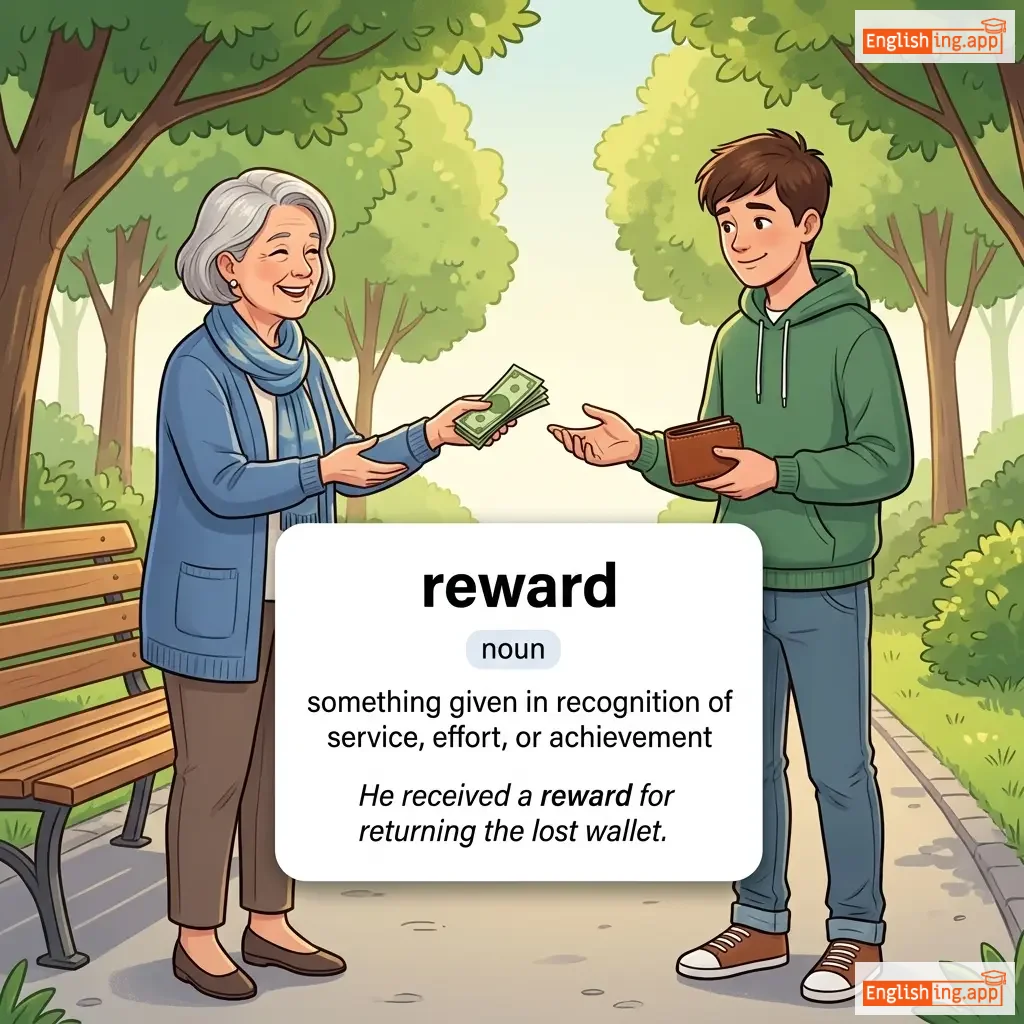
reward definition card — visual illustration of the meaning
noun
/rɪˈwɔːd/
recompensa (recompensa)

something given in recognition of service, effort, or achievement

"He received a reward for returning the lost wallet."

"Recibió una recompensa por devolver la billetera perdida." (Recibió una recompensa por devolver la billetera perdida.)
verb
/ˈræpsəˌdaɪz/
hablar con entusiasmo (hablar con entusiasmo)

to speak or write with great enthusiasm and admiration

"He would often rhapsodize about his travels to Europe."

"Él a menudo hablaba con entusiasmo sobre sus viajes a Europa." (Él a menudo hablaba con entusiasmo sobre sus viajes a Europa.)
noun
/ˈræpsədi/
canción exaltada/elogio (cancion exaltada/elogio)

an expression of great enthusiasm or an epic musical composition

"The singer’s performance was a rhapsody of emotions."

"La actuación del cantante fue una rapsodia de emociones." (La actuacion del cantante fue una rapsodia de emociones.)
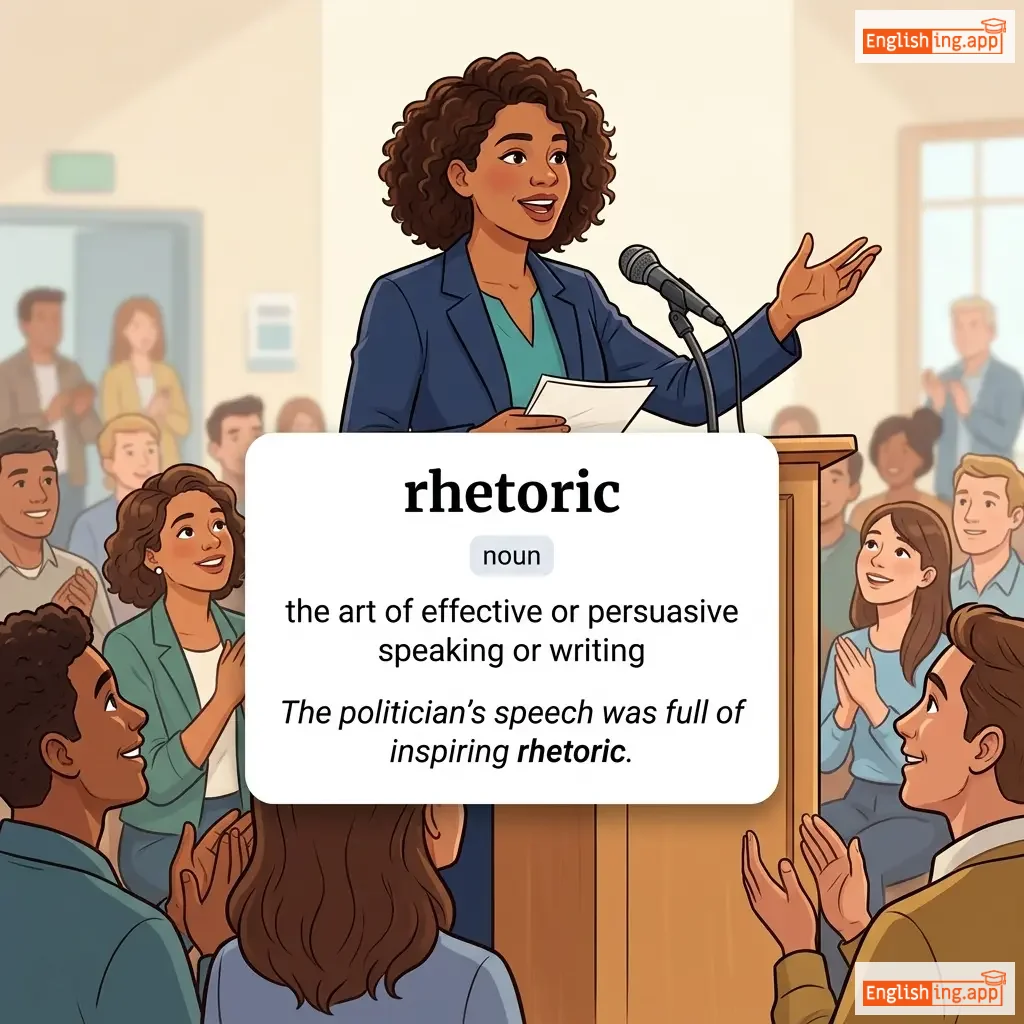
rhetoric definition card — visual illustration of the meaning
noun
/ˈrɛtərɪk/
retórica (retorica)

the art of effective or persuasive speaking or writing

"The politician’s speech was full of inspiring rhetoric."

"El discurso del político estaba lleno de retórica inspiradora." (El discurso del político estaba lleno de retórica inspiradora.)
adjective
/rɪˈtɔːrɪkəl/
retórico (retoriko)

relating to the art of effective or persuasive speaking or writing; often a question asked to make a point rather than get an answer

"He asked a rhetorical question during the debate."

"Hizo una pregunta retórica durante el debate." (Hizo una pregunta retorica durante el debate.)
noun
/ˌrɛtəˈrɪʃən/
orador (orador)

A person who is skilled in the art of rhetoric or persuasive speaking/writing.

"The rhetorician captivated the audience with his eloquence."

"El orador cautivó a la audiencia con su elocuencia." (El orador cautivo a la audiencia con su elocuencia.)
adjective
/ˈruːmi/
lagrimoso (lagrimoso)

Watery, especially referring to the eyes.

"His rheumy eyes showed signs of age and fatigue."

"Sus ojos lagrimosos mostraban signos de edad y fatiga." (Sus ojos lagrimosos mostraban signos de edad y fatiga.)
noun
/raɪˈnɒs.ər.əs/
rinoceronte (rinoceronte)

a large, heavy animal with thick skin and one or two horns on its nose

"The rhinoceros charged through the grassland."

"El rinoceronte cargó a través de la pradera." (El rinoceronte cargó a través de la pradera.)
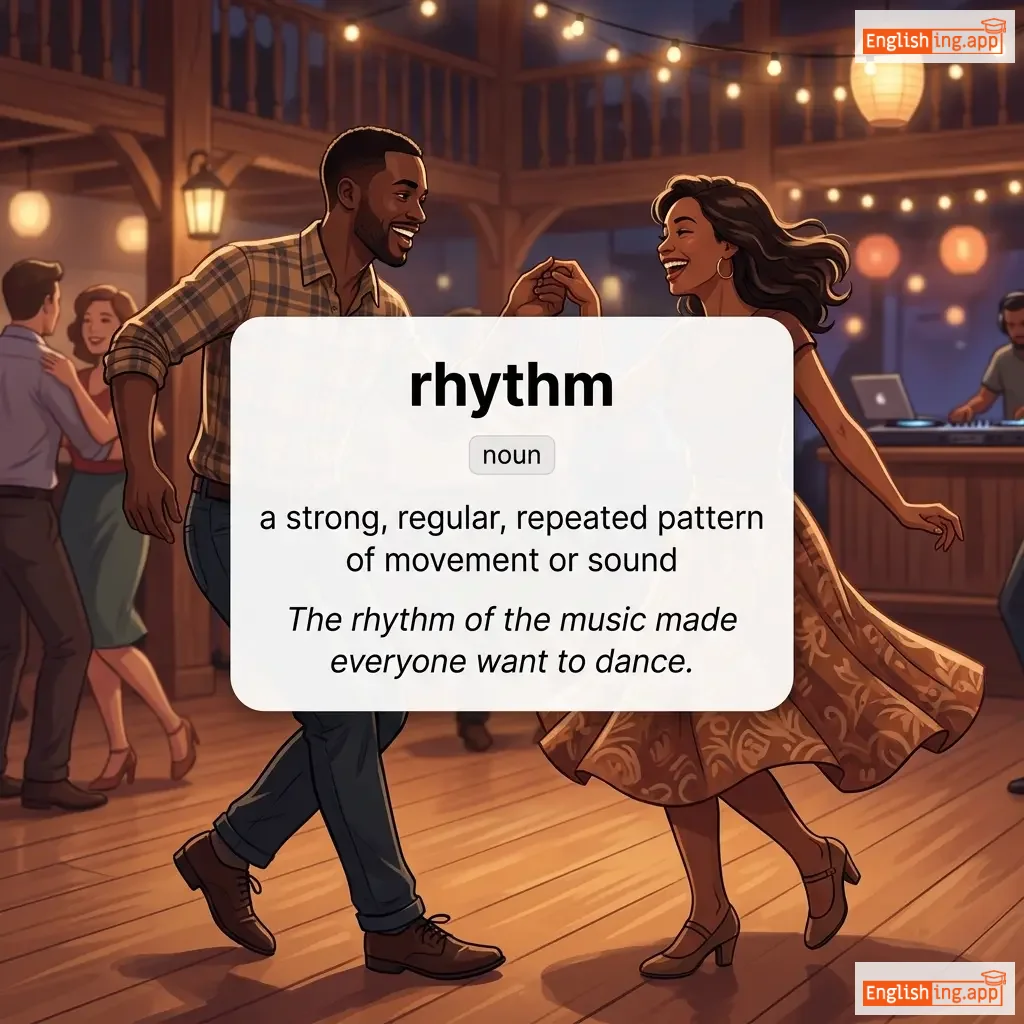
rhythm definition card — visual illustration of the meaning
noun
/ˈrɪðəm/
ritmo (ritmo)

a strong, regular, repeated pattern of movement or sound

"The rhythm of the music made everyone want to dance."

"El ritmo de la música hizo que todos quisieran bailar." (El ritmo de la musica hizo que todos quisieran bailar.)
noun
/raɪs ˈkʊkər/
cocedor de arroz eléctrico (cocedor de arroz electrico)

an electric appliance designed to cook rice automatically

"The rice cooker automatically switches off when the rice is perfectly cooked."

"El cocedor de arroz se apaga automáticamente cuando el arroz está perfectamente cocido." (El cocedor de arroz se apaga automaticamente cuando el arroz esta perfectamente cocido)
verb
/rɪd/
eliminar (eliminar)

to remove or get rid of something

"I need to rid the house of all the clutter."

"Necesito deshacerme del desorden en la casa." (Necesito deshacerme del desorden en la casa.)
noun
/ˈrɪk.ʃɔː/
rickshaw (rickshaw)

a light two-wheeled passenger vehicle drawn by one or more people

"We took a rickshaw to reach the busy marketplace."

"Tomamos un rickshaw para llegar al mercado concurrido." (Tomamos un rickshaw para llegar al mercado concurrido.)
adjective
/ˈrɪkɪti/
deteriorado (deteriorado)

Poorly made and likely to collapse; shaky.

"They crossed a rickety wooden bridge over the river."

"Cruzaron un puente de madera deteriorado sobre el río." (Cruzaron un puente de madera deteriorado sobre el río.)
adjective
/rɪʧ/
rico (reeko)

having a great deal of money or assets

"He became rich after his successful business venture."

"Se volvió rico después de su exitosa aventura empresarial." (Se volvio rico despues de su exitosa aventura empresarial.)
noun
/ˈrɪb.ən/
cinta (cinta)

a long, narrow strip of fabric used for tying or decoration

"She tied her hair with a red ribbon."

"Ella ató su cabello con una cinta roja." (Ella ato su cabello con una cinta roja.)