Vocabulaires

Découvrez, apprenez et maîtrisez le vocabulaire anglais

noun
/ˈrɛvərəns/
révérence (reverans)

deep respect for someone or something

"The students showed reverence to their teacher."

"Les étudiants ont montré de la révérence envers leur professeur." (Les étudiants ont montré de la révérence envers leur professeur.)
noun, adjective
/ˈrɛvərənd/
révérend, honorable (reverend, honorable)

A title of respect used for members of the clergy; deserving deep respect.

"The Reverend gave an inspiring sermon at the church."

"Le révérend a prononcé un sermon inspirant à l'église." (Le reverend a prononce un sermon inspirant a l'eglise.)
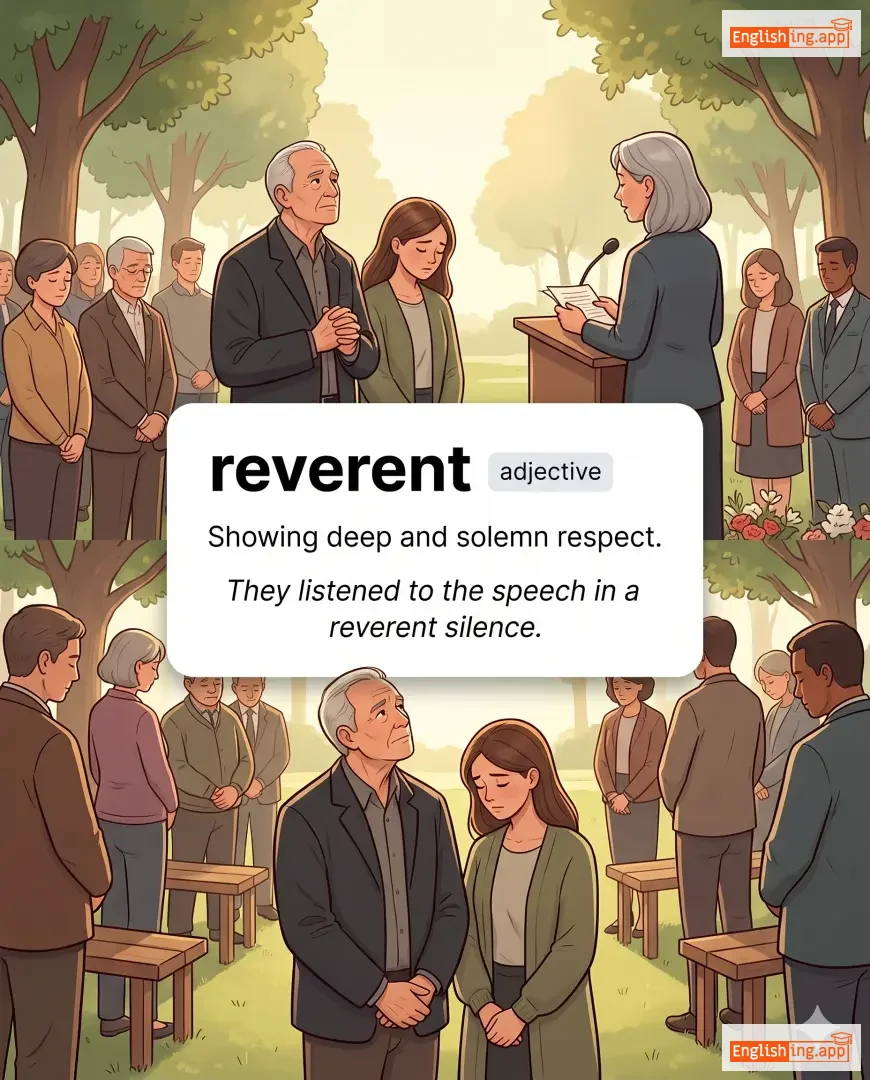
reverent definition card — visual illustration of the meaning
adjective
/ˈrɛvərənt/
révérencieux (reverencieux)

Showing deep and solemn respect.

"They listened to the speech in a reverent silence."

"Ils ont écouté le discours dans un silence révérencieux." (Ils ont écouté le discours dans un silence révérencieux.)
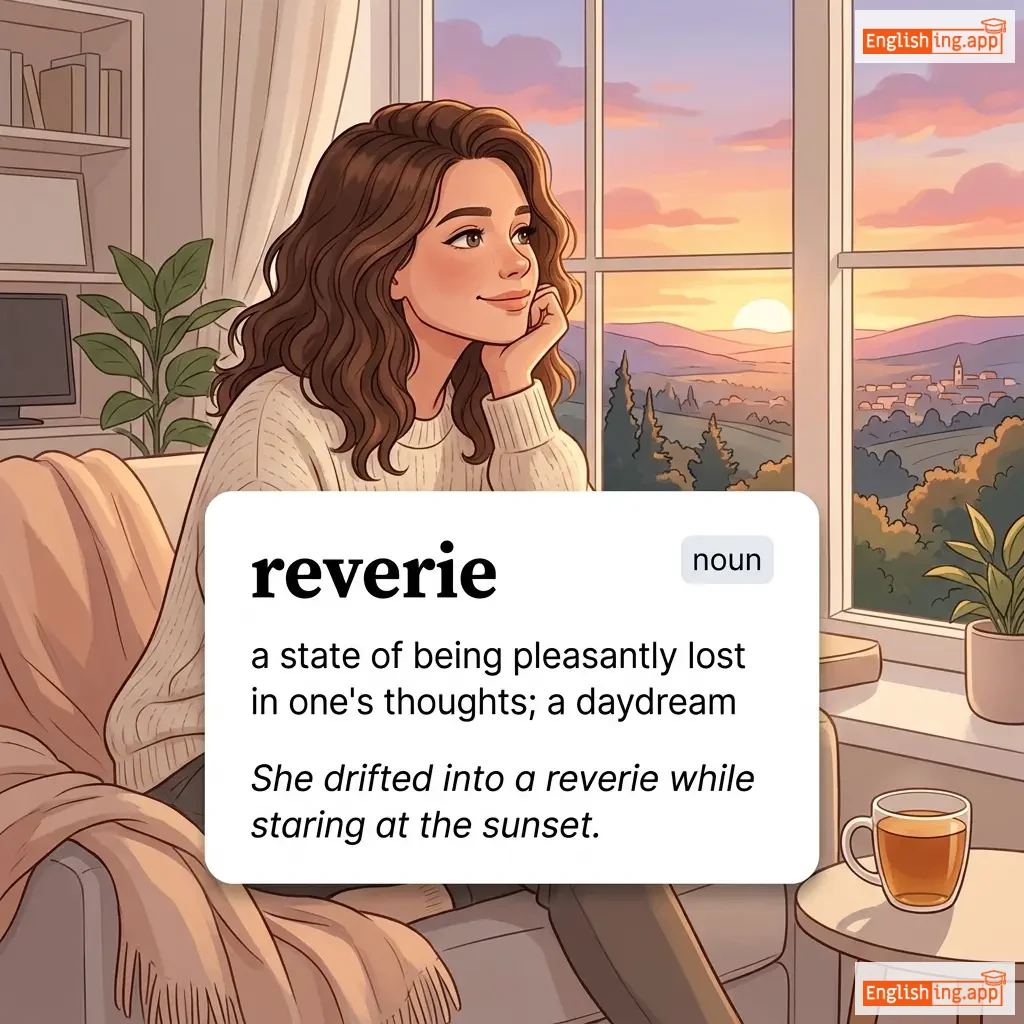
reverie definition card — visual illustration of the meaning
noun
/ˈrɛvəri/
rêverie (reverie)

a state of being pleasantly lost in one's thoughts; a daydream

"She drifted into a reverie while staring at the sunset."

"Elle s'est plongée dans une rêverie en regardant le coucher du soleil." (Elle s'est plongee dans une reverie en regardant le coucher du soleil.)
verb
/rɪˈvɜːs/
inverser (inverser)

to change something to the opposite direction, position, or result

"She quickly reversed the car out of the driveway."

"Elle a rapidement inversé la voiture hors de l'allée." (Elle a rapidement inversé la voiture hors de l'allée.)
adjective
/rɪˈvɜː.sə.bəl/
réversible (reversible)

able to be turned the other way around; able to be undone or changed back

"This jacket is reversible and can be worn on both sides."

"Cette veste est réversible et peut être portée des deux côtés." (Cette veste est reversible et peut etre portee des deux cotes.)
noun
/rɪˈvɜːrʒən/
réversion (reversion)

the act of returning to a previous state or condition

"The new policy marked a reversion to traditional methods."

"La nouvelle politique a marqué une réversion vers des méthodes traditionnelles." (La nouvelle politique a marqué une réversion vers des méthodes traditionnelles.)
verb
/rɪˈvɜːrt/
revenir (revenir)

to return to a previous state, condition, or practice

"The system will revert to its original settings after the update."

"Le système reviendra à ses paramètres d'origine après la mise à jour." (Le système reviendra à ses paramètres d'origine après la mise à jour.)
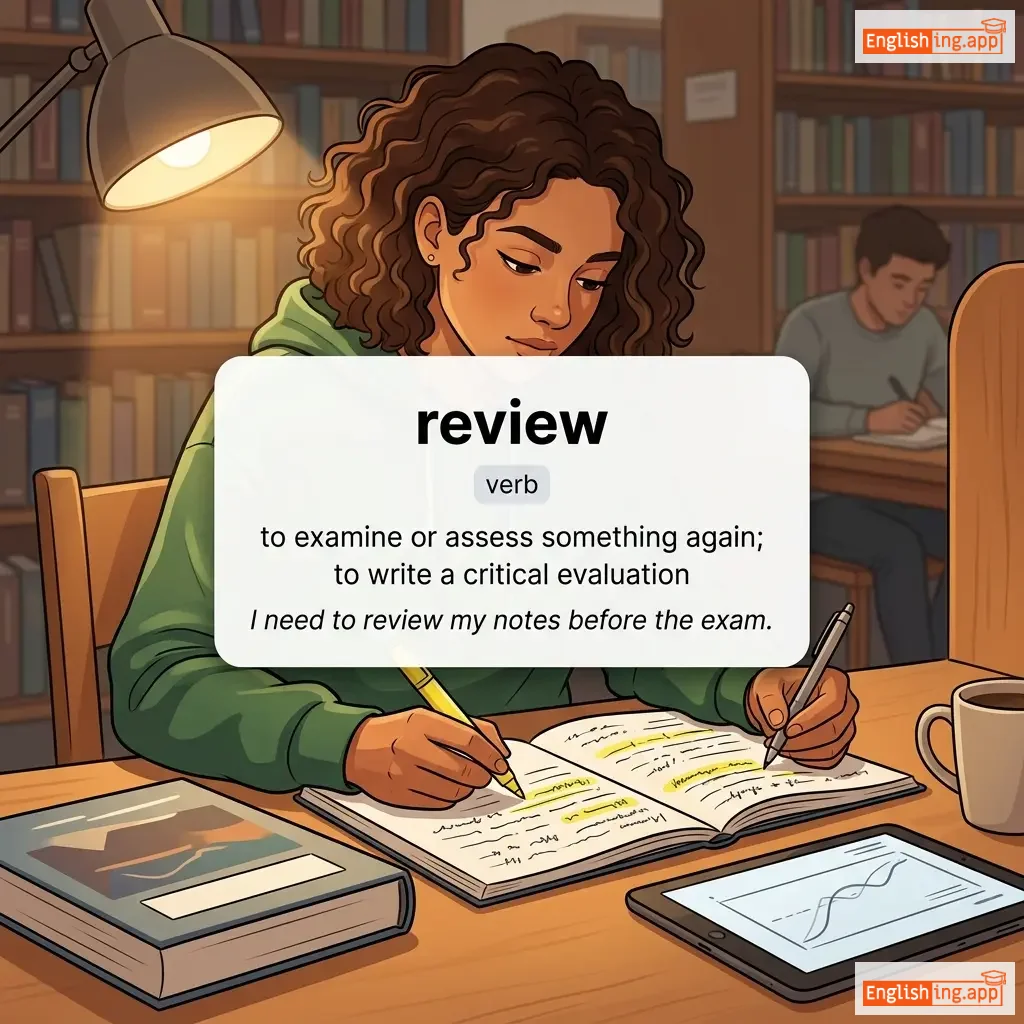
review definition card — visual illustration of the meaning
noun
/rɪˈvjuː/
critique (kritik)

an evaluation or assessment of something

"I wrote a review of the movie for the blog."

"J'ai écrit une critique du film pour le blog." (J'ai écrit une critique du film pour le blog.)
verb
/rɪˈvaɪl/
révérer (reverer)

to criticize in an abusive or angrily insulting manner

"The politician was reviled by the public for his corruption."

"Le politicien a été révéré par le public pour sa corruption." (Le politicien a été révéré par le public pour sa corruption.)
noun
/rɪˈvaɪlər/
insulteur (insulteur)

a person who criticizes or insults others abusively

"He was known as a reviler of all who opposed him."

"Il était connu comme un insulteur de tous ceux qui s'opposaient à lui." (Il était connu comme un insulteur de tous ceux qui s'opposaient à lui.)
noun
/rɪˈvaɪ.zəl/
révision (revision)

The act of revising, reviewing, or making changes to something.

"The revisal of the contract took longer than expected."

"La révision du contrat a pris plus de temps que prévu." (La revision du contrat a pris plus de temps que prevu.)
verb
/rɪˈvaɪz/
réviser (réviser)

To change, improve, or update something, especially a written work.

"She had to revise her essay before submission."

"Elle a dû réviser son essai avant la soumission." (Elle a dû réviser son essai avant la soumission.)
noun
/rɪˈvɪʒən/
révision (revision)

the action of revising or updating something, typically in preparation for something else

"She made some last-minute revisions to her report before submitting it."

"Elle a effectué quelques révisions de dernière minute avant de soumettre son rapport." (Elle a effectue quelques revisions de derniere minute avant de soumettre son rapport.)
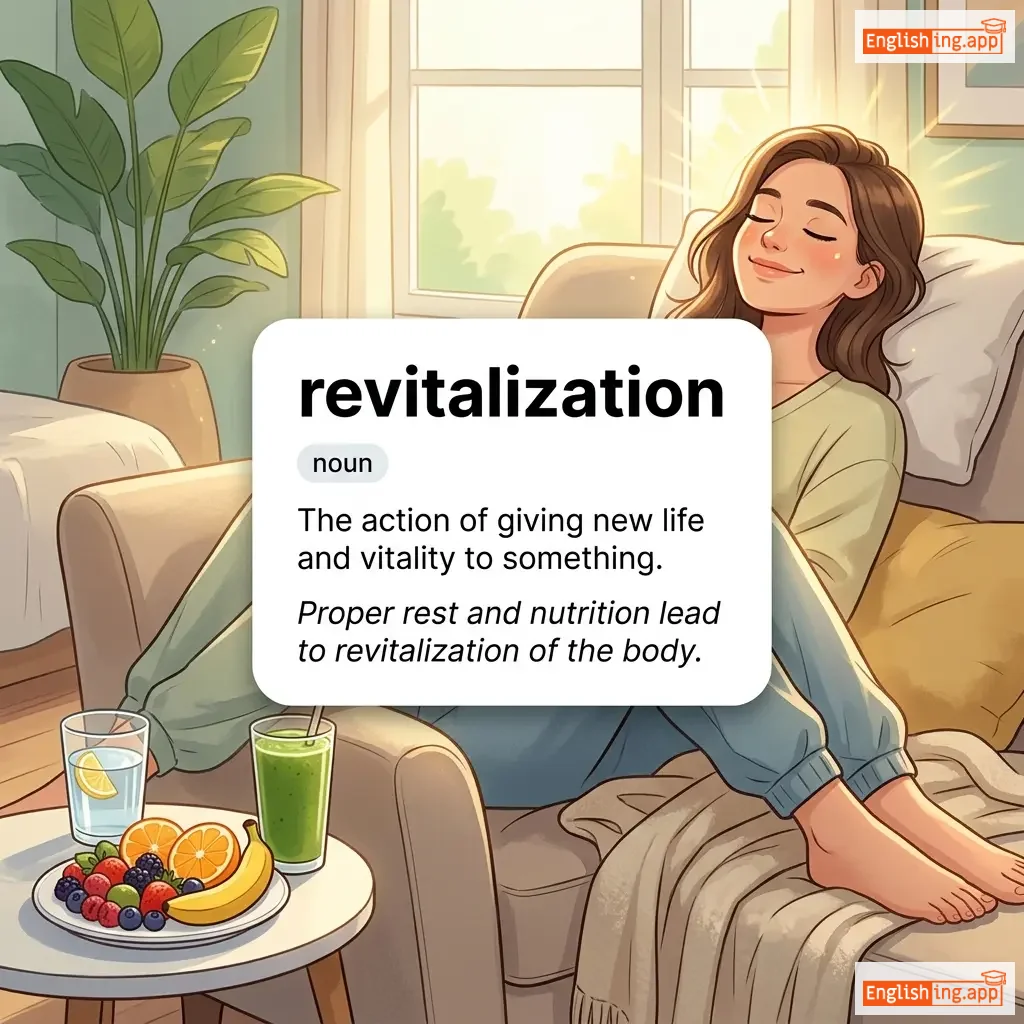
revitalization definition card — visual illustration of the meaning
noun
ˌriːˌvaɪ.təl.aɪˈzeɪ.ʃən
revitalisation (revitalisation)

The action of giving new life and vitality to something.

"Proper rest and nutrition lead to revitalization of the body."

"Un repos adéquat et une bonne nutrition conduisent à la revitalisation du corps." (Un repos adéquat et une bonne nutrition conduisent à la revitalisation du corps.)
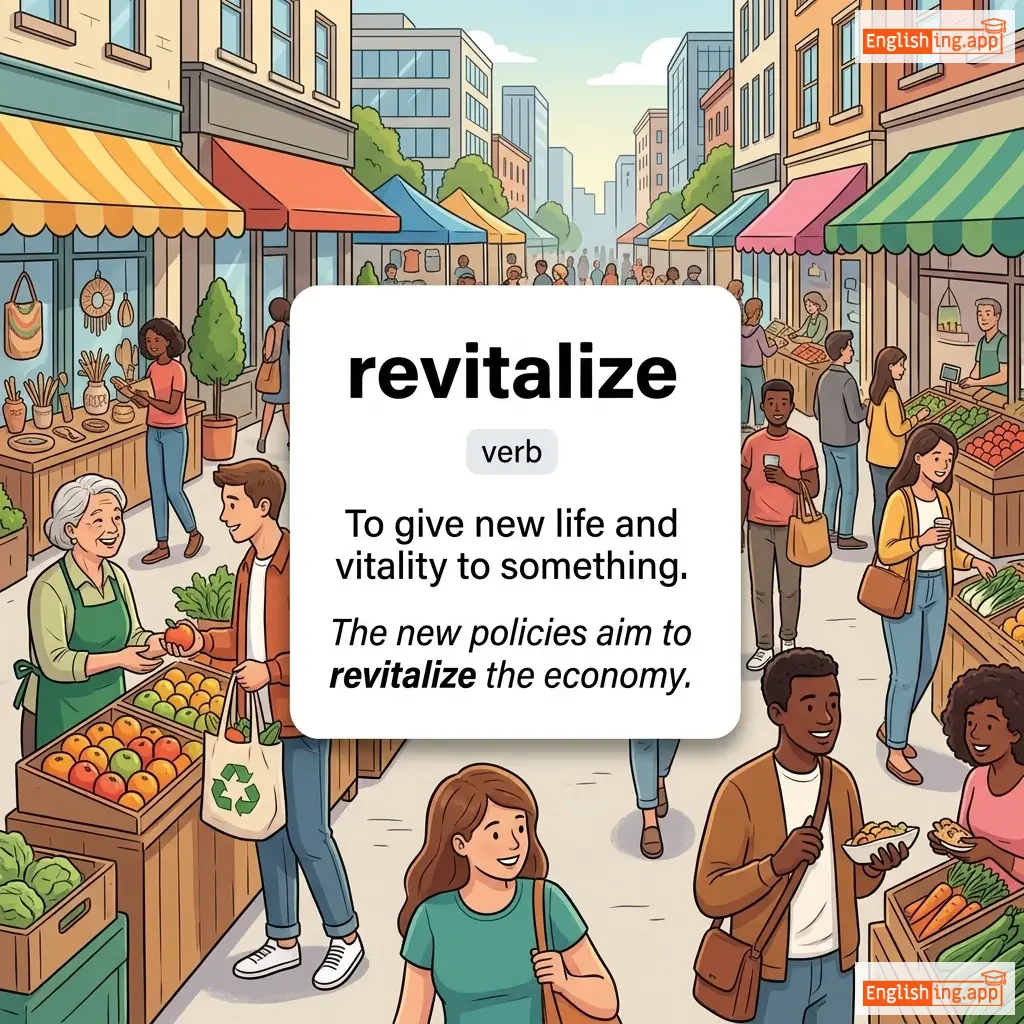
revitalize definition card — visual illustration of the meaning
verb
/ˌriːˈvaɪ.təl.aɪz/
revitaliser (revitaliser)

To give new life and vitality to something.

"The new policies aim to revitalize the economy."

"Les nouvelles politiques visent à revitaliser l'économie." (Les nouvelles politiques visent à revitaliser l'économie.)
noun
/rɪˈvaɪvəl/
renaissance (renaissance)

an improvement in the condition or strength of something

"The revival of the old traditions brought a sense of nostalgia."

"La renaissance des anciennes traditions a apporté un sentiment de nostalgie." (La renaissance des anciennes traditions a apporte un sentiment de nostalgie.)
verb
/rɪˈvaɪv/
réanimer (reanimer)

To bring back to life, consciousness, or activity.

"The paramedics managed to revive the unconscious man."

"Les paramédicaux ont réussi à réanimer l'homme inconscient." (Les paramédicaux ont réussi à réanimer l'homme inconscient.)
noun
/ˌrɛv.əˈkeɪ.ʃən/
révocation (revocation)

The act of officially canceling or withdrawing something.

"The court ordered the revocation of his license."

"Le tribunal a ordonné la révocation de sa licence." (Le tribunal a ordonné la révocation de sa licence.)
verb
/rɪˈvoʊk/
révoquer (revoker)

To officially cancel or withdraw a decision, privilege, or right.

"The government decided to revoke his passport."

"Le gouvernement a décidé de révoquer son passeport." (Le gouvernement a décidé de révoquer son passeport.)
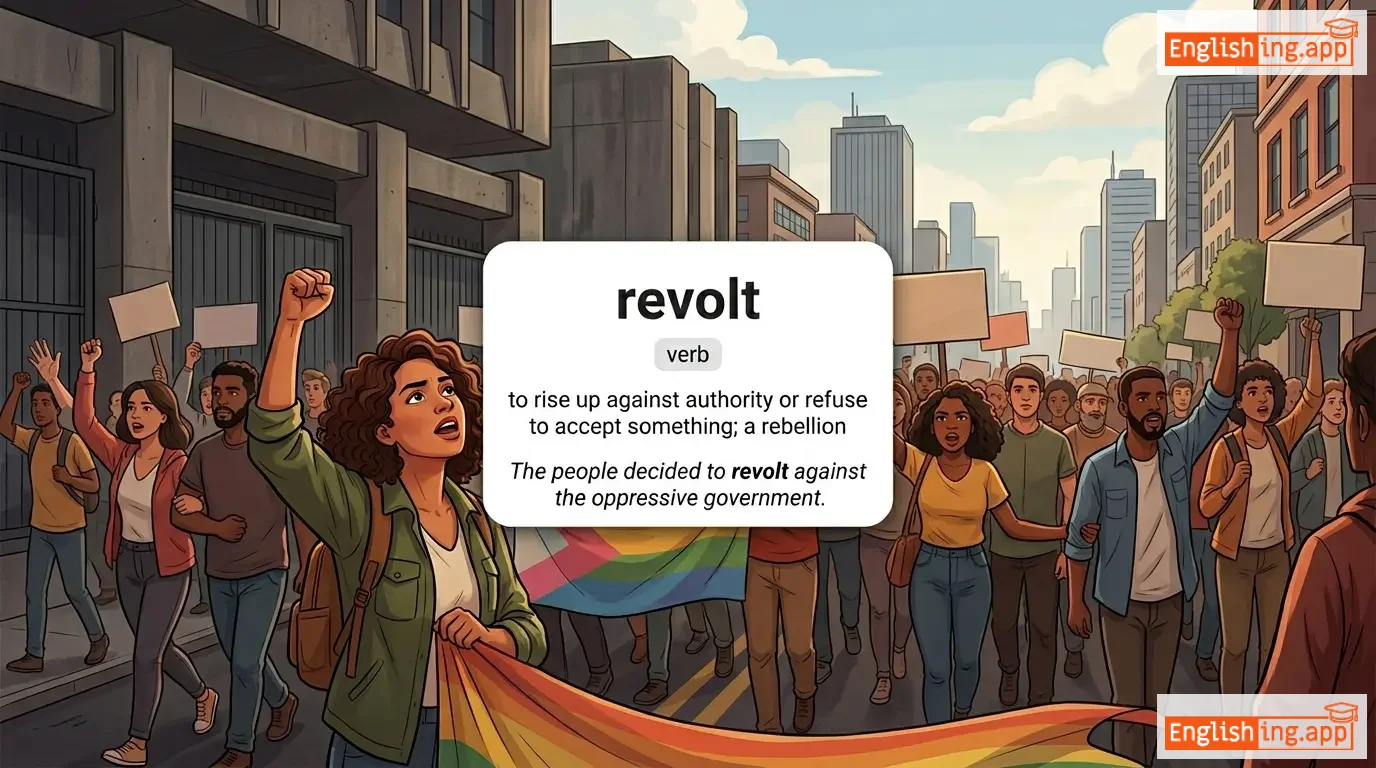
revolt definition card — visual illustration of the meaning
verb
/rɪˈvoʊlt/
révolte (revolte)

to rise up against authority or refuse to accept something; a rebellion

"The people decided to revolt against the oppressive government."

"Les gens ont décidé de se révolter contre le gouvernement oppressif." (Les gens ont décidé de se révolter contre le gouvernement oppressif.)
adjective
/rɪˈvoʊltɪŋ/
répugnant (repugnant)

extremely unpleasant or disgusting

"The smell of the garbage was revolting."

"L’odeur des ordures était répugnante." (lodeur des ordures etait repugnante)
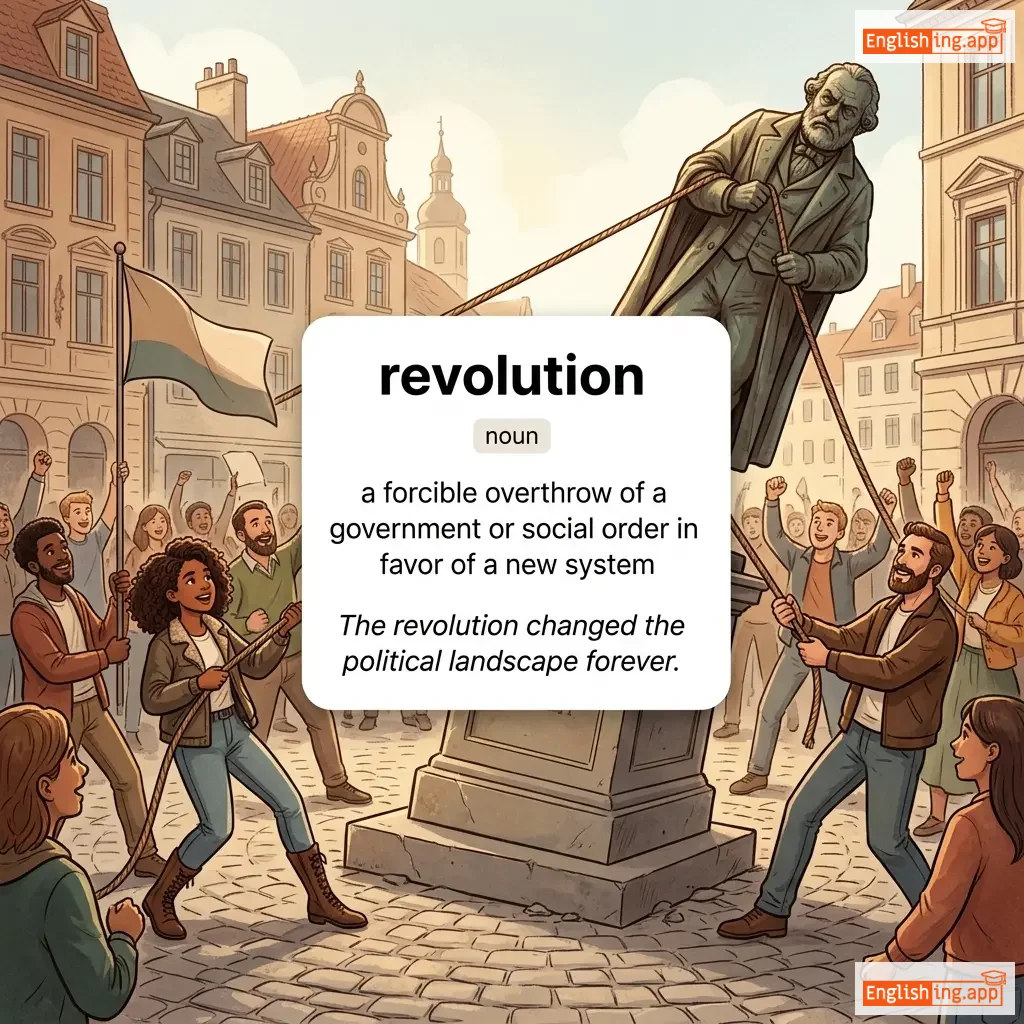
revolution definition card — visual illustration of the meaning
noun
/ˌrɛvəˈluːʃən/
révolution (revolution)

a forcible overthrow of a government or social order in favor of a new system

"The revolution changed the political landscape forever."

"La révolution a changé le paysage politique à jamais." (La revolution a change le paysage politique a jamais.)
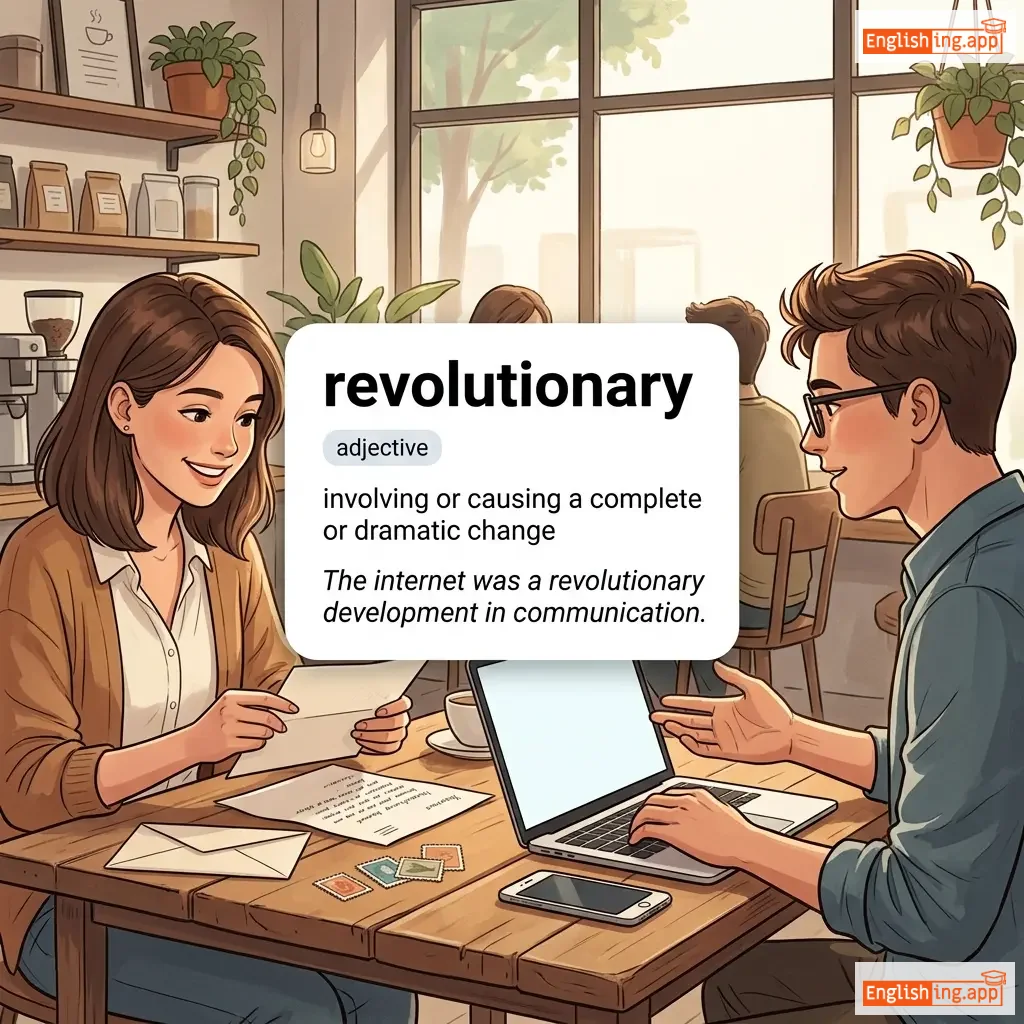
revolutionary definition card — visual illustration of the meaning
adjective
/ˌrɛvəˈluːʃəˌnɛri/
révolutionnaire (revolutionnaire)

involving or causing a complete or dramatic change

"The internet was a revolutionary development in communication."

"Internet a été un développement révolutionnaire dans la communication." (Internet a ete un developpement revolutionnaire dans la communication.)
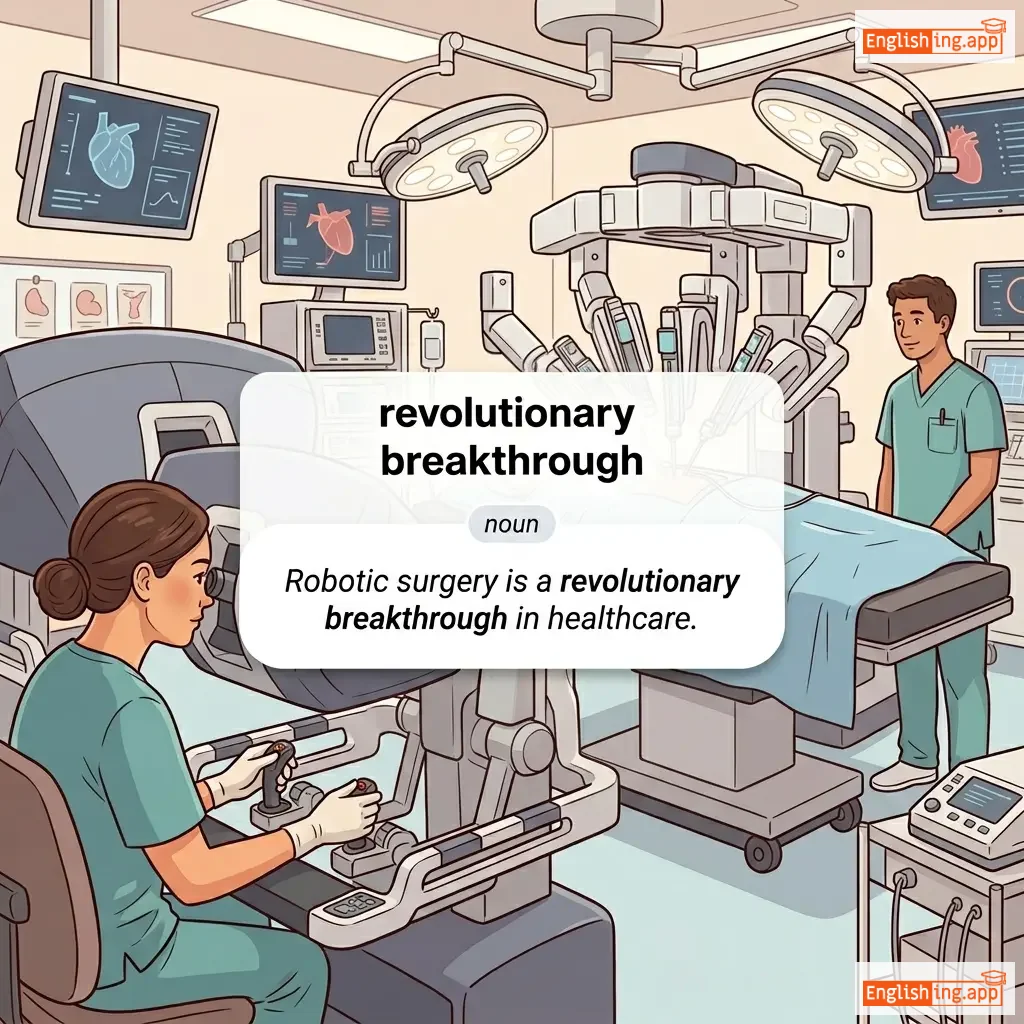
revolutionary breakthrough definition card — visual illustration of the meaning
noun
/ˌrev.əˈluː.ʃən.ər.i ˈbreɪk.θruː/
découverte révolutionnaire (découverte révolutionnaire)

A sudden, dramatic, and important discovery or development that changes everything.

"Robotic surgery is a revolutionary breakthrough in healthcare."

"La chirurgie robotique est une découverte révolutionnaire dans le domaine de la santé." (La chirurgie robotique est une découverte révolutionnaire dans le domaine de la santé.)
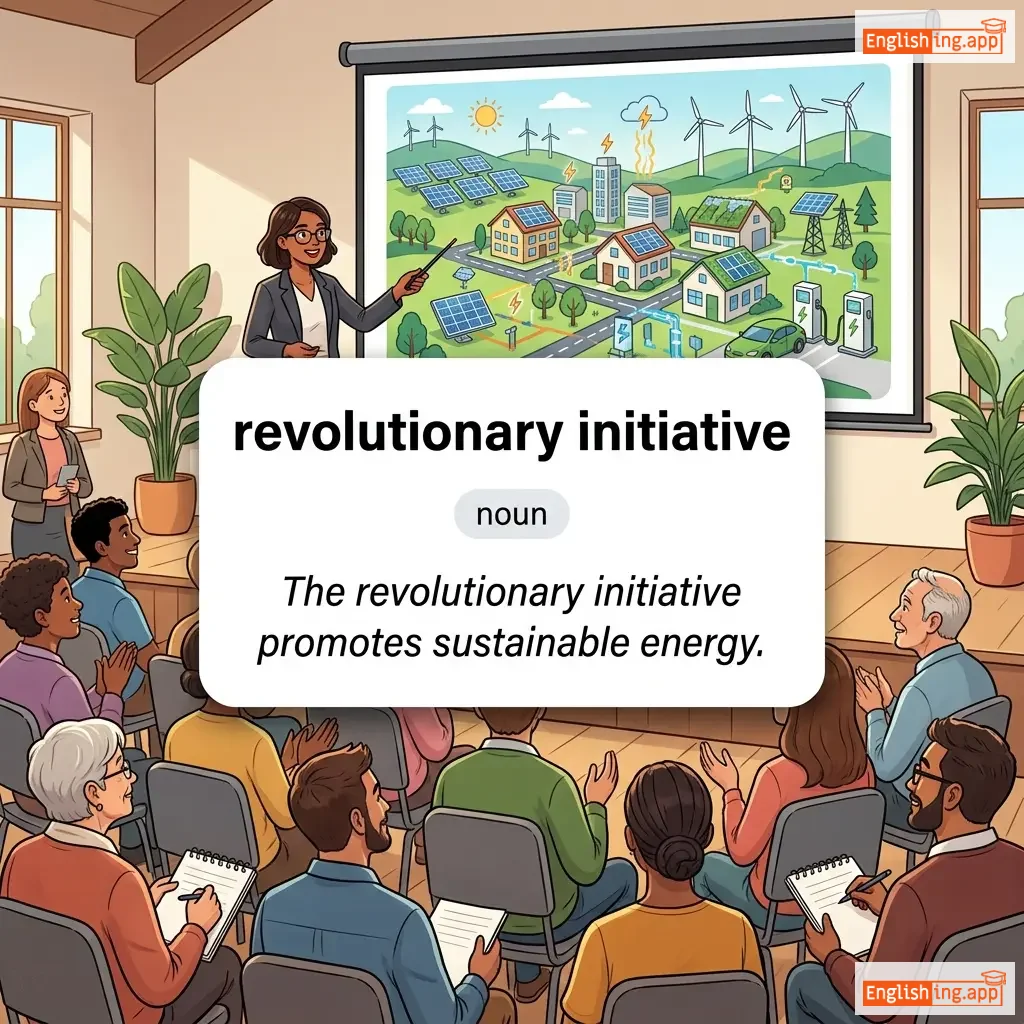
revolutionary initiative definition card — visual illustration of the meaning
noun
ˌrev.əˈluː.ʃən.ər.i ɪˈnɪʃ.ə.tɪv
initiative révolutionnaire (initiative revolutionnaire)

A groundbreaking action or plan that brings about significant change or transformation.

"The revolutionary initiative promotes sustainable energy."

"L'initiative révolutionnaire promeut l'énergie durable." (L'initiative revolutionnaire promeut l'energie durable.)
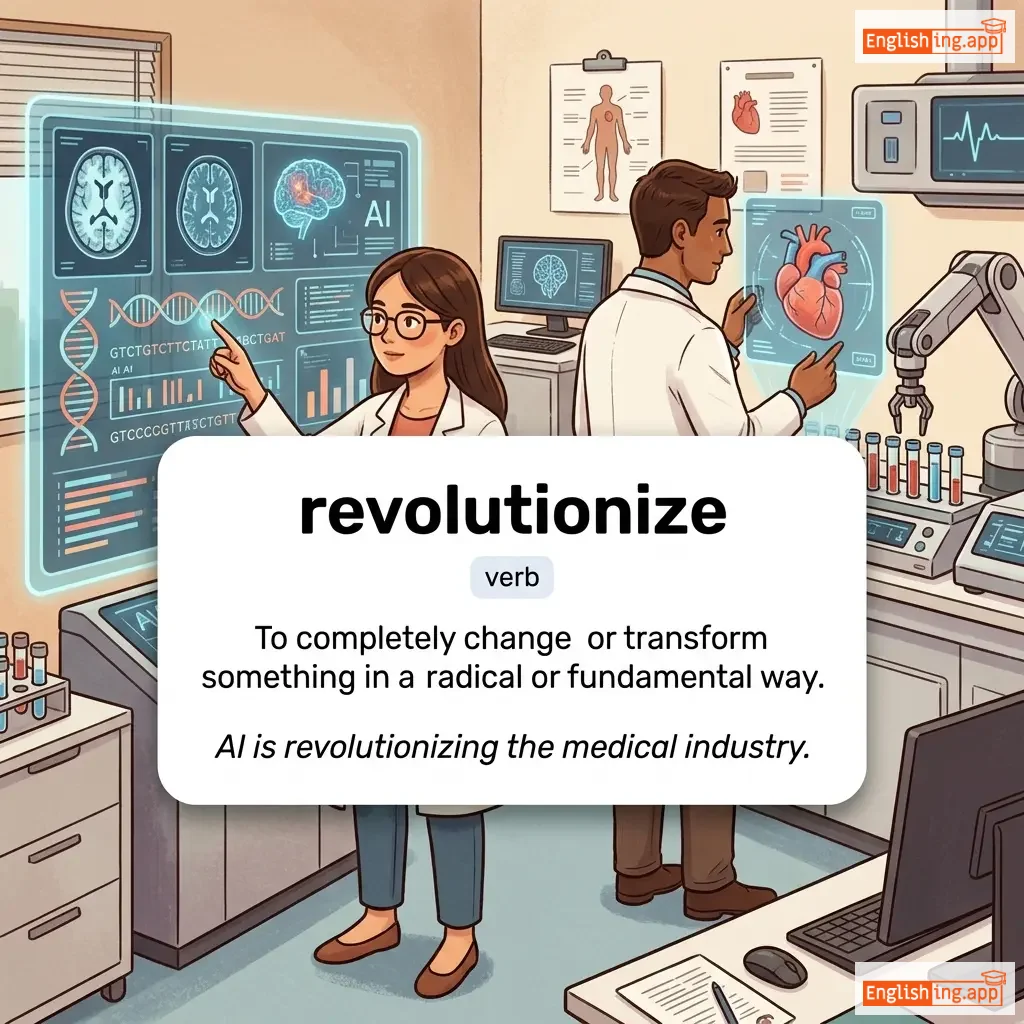
revolutionize definition card — visual illustration of the meaning
verb
ˌrev.əˈluː.ʃən.aɪz
révolutionner (revolutionner)

To completely change or transform something in a radical or fundamental way.

"AI is revolutionizing the medical industry."

"L'IA révolutionne l'industrie médicale." (L'IA révolutionne l'industrie médicale.)
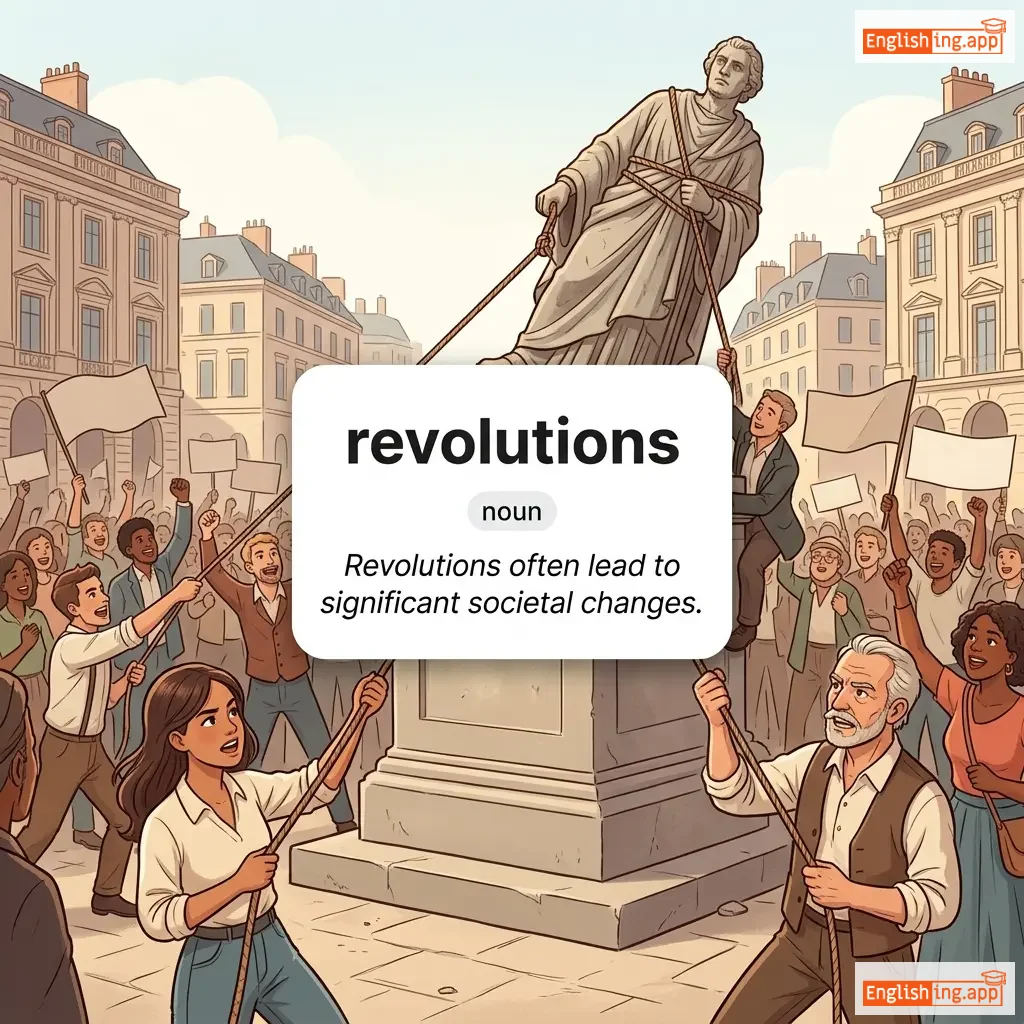
revolutions definition card — visual illustration of the meaning
noun
ˌrev.əˈluː.ʃənz
révolutions (revolutions)

Dramatic and wide-reaching changes in political, social, or economic systems, often involving the overthrow of a government or social order.

"Revolutions often lead to significant societal changes."

"Les révolutions mènent souvent à des changements sociaux importants." (Les revolutions menent souvent a des changements sociaux importants.)
noun
/rɪˈvɒl.vər/
révolver (revolver)

a pistol with revolving chambers enabling several shots to be fired without reloading

"The detective drew his revolver from its holster."

"Le détective a sorti son revolver de son étui." (Le detective a sorti son revolver de son etui.)
noun
/rɪˈvʌlʃən/
répulsion (repulsion)

a strong feeling of disgust or repulsion

"She felt revulsion at the sight of the cruel act."

"Elle a ressenti de la répulsion en voyant l'acte cruel." (Elle a ressenti de la repulsion en voyant l'acte cruel.)
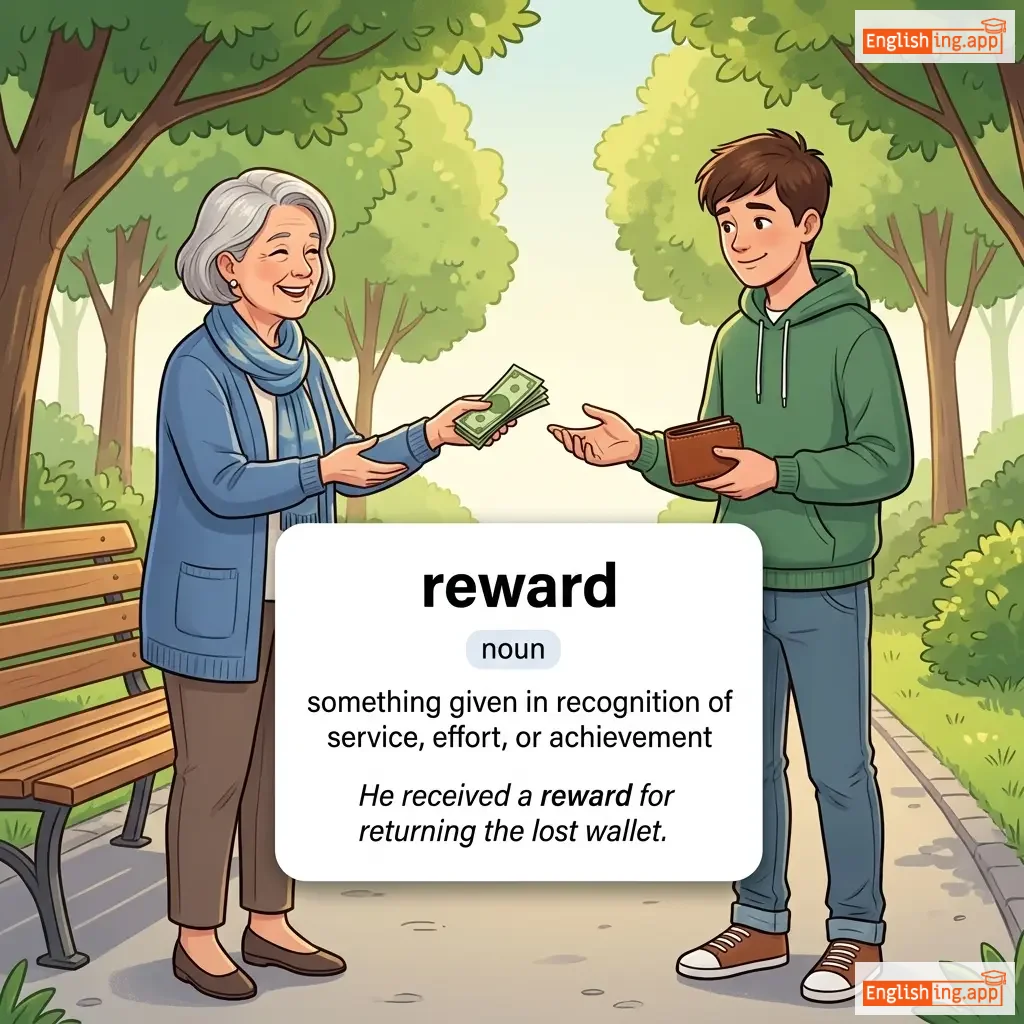
reward definition card — visual illustration of the meaning
noun
/rɪˈwɔːd/
récompense (recompense)

something given in recognition of service, effort, or achievement

"He received a reward for returning the lost wallet."

"Il a reçu une récompense pour avoir rendu le portefeuille perdu." (Il a reçu une récompense pour avoir rendu le portefeuille perdu.)
verb
/ˈræpsəˌdaɪz/
rhapsodier (rhapsodier)

to speak or write with great enthusiasm and admiration

"He would often rhapsodize about his travels to Europe."

"Il parlait souvent avec enthousiasme de ses voyages en Europe." (Il parlait souvent avec enthousiasme de ses voyages en Europe.)
noun
/ˈræpsədi/
chanson exaltée/éloge (chanson exaltee/elog)

an expression of great enthusiasm or an epic musical composition

"The singer’s performance was a rhapsody of emotions."

"La performance du chanteur était une rhapsodie d'émotions." (La performance du chanteur etait une rhapsodie d'emotions.)
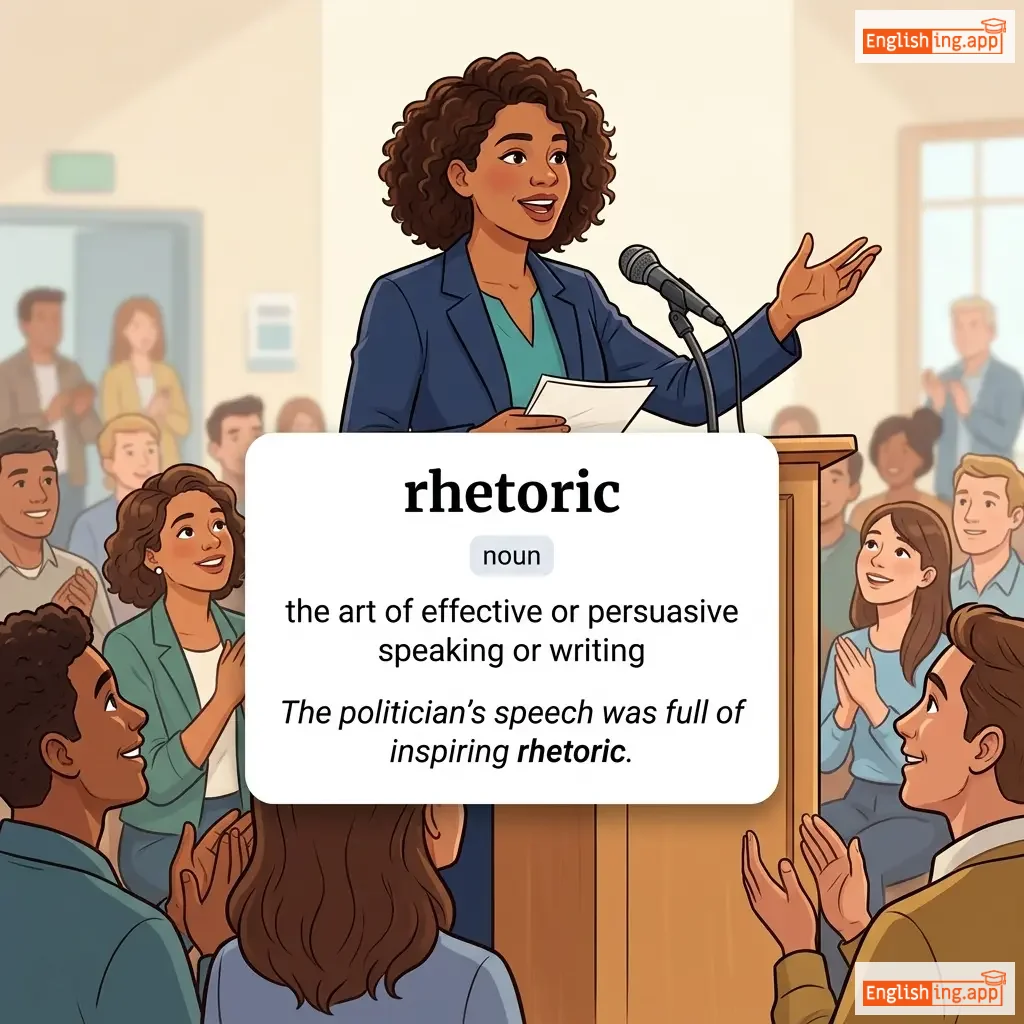
rhetoric definition card — visual illustration of the meaning
noun
/ˈrɛtərɪk/
rhétorique (rhetorique)

the art of effective or persuasive speaking or writing

"The politician’s speech was full of inspiring rhetoric."

"Le discours du politicien était plein de rhétorique inspirante." (Le discours du politicien était plein de rhétorique inspirante.)
adjective
/rɪˈtɔːrɪkəl/
rhétorique (rhetorique)

relating to the art of effective or persuasive speaking or writing; often a question asked to make a point rather than get an answer

"He asked a rhetorical question during the debate."

"Il a posé une question rhétorique pendant le débat." (Il a posé une question rhetorique pendant le debat.)
noun
/ˌrɛtəˈrɪʃən/
rhéteur (rheteur)

A person who is skilled in the art of rhetoric or persuasive speaking/writing.

"The rhetorician captivated the audience with his eloquence."

"Le rhéteur a captivé l'auditoire avec son éloquence." (Le rhetor a captive l'auditoire avec son eloquence.)
adjective
/ˈruːmi/
larmoyant (larmoyant)

Watery, especially referring to the eyes.

"His rheumy eyes showed signs of age and fatigue."

"Ses yeux larmoyants montraient des signes de vieillesse et de fatigue." (Ses yeux larmoyants montraient des signes de vieillesse et de fatigue.)
noun
/raɪˈnɒs.ər.əs/
rhinocéros (rhinocéros)

a large, heavy animal with thick skin and one or two horns on its nose

"The rhinoceros charged through the grassland."

"Le rhinocéros a chargé à travers la prairie." (Le rhinocéros a chargé à travers la prairie.)
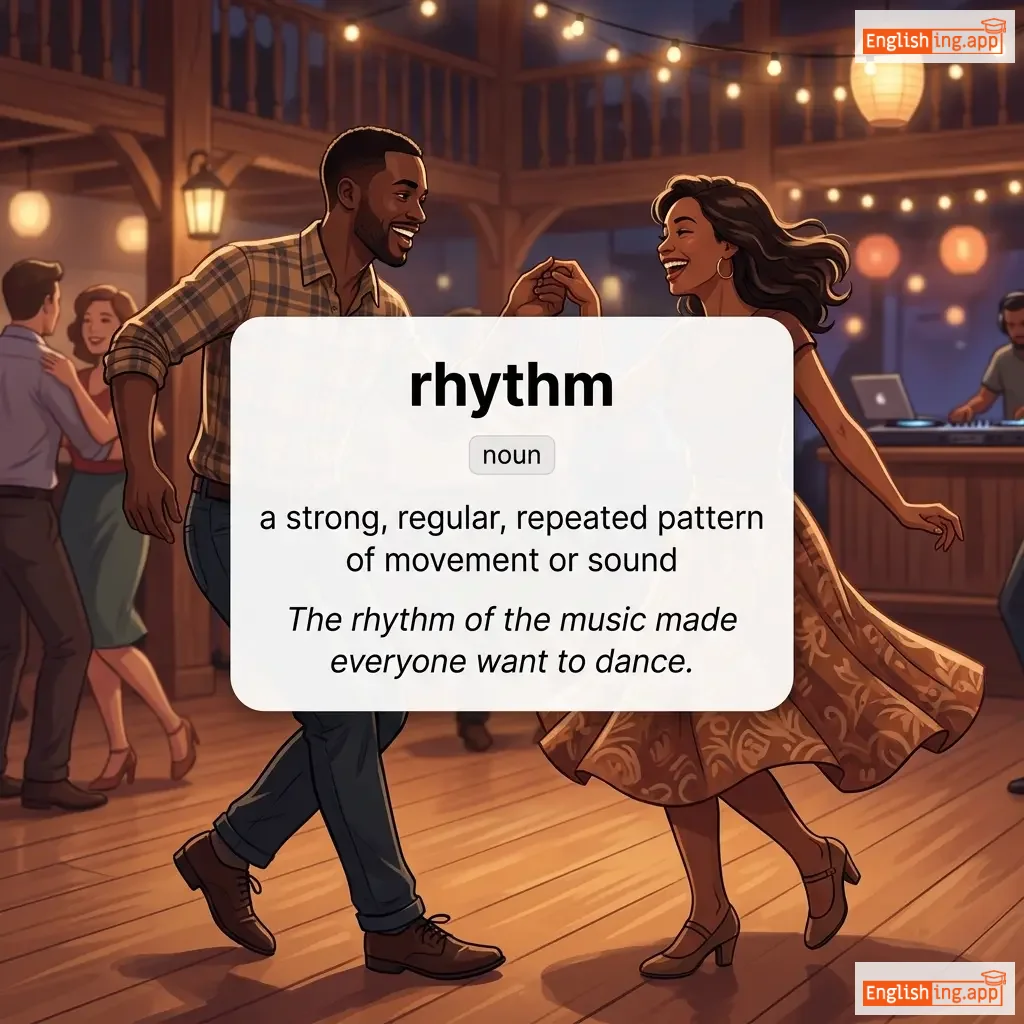
rhythm definition card — visual illustration of the meaning
noun
/ˈrɪðəm/
rythme (rythme)

a strong, regular, repeated pattern of movement or sound

"The rhythm of the music made everyone want to dance."

"Le rythme de la musique a poussé tout le monde à danser." (Le rythme de la musique a pousse tout le monde a danser.)
noun
/rɪb/
côte (cote)

one of the curved bones that form the rib cage in humans and animals, protecting the chest organs

"He broke a rib while playing football."

"Il a cassé une côte en jouant au football." (Il a casse une cote en jouant au football)
adjective
/ˈrɪbɔːld/
blagues vulgaires (blagues vulgaires)

Referring to sexual matters in a humorous or vulgar way.

"The comedian’s ribald jokes made the audience laugh uncomfortably."

"Les blagues vulgaires du comédien ont fait rire le public de manière inconfortable." (Les blagues vulgaires du comédien ont fait rire le public de manière inconfortable.)
noun
/ˈrɪb.ən/
ruban (ruban)

a long, narrow strip of fabric used for tying or decoration

"She tied her hair with a red ribbon."

"Elle a attaché ses cheveux avec un ruban rouge." (Elle a attache ses cheveux avec un ruban rouge.)
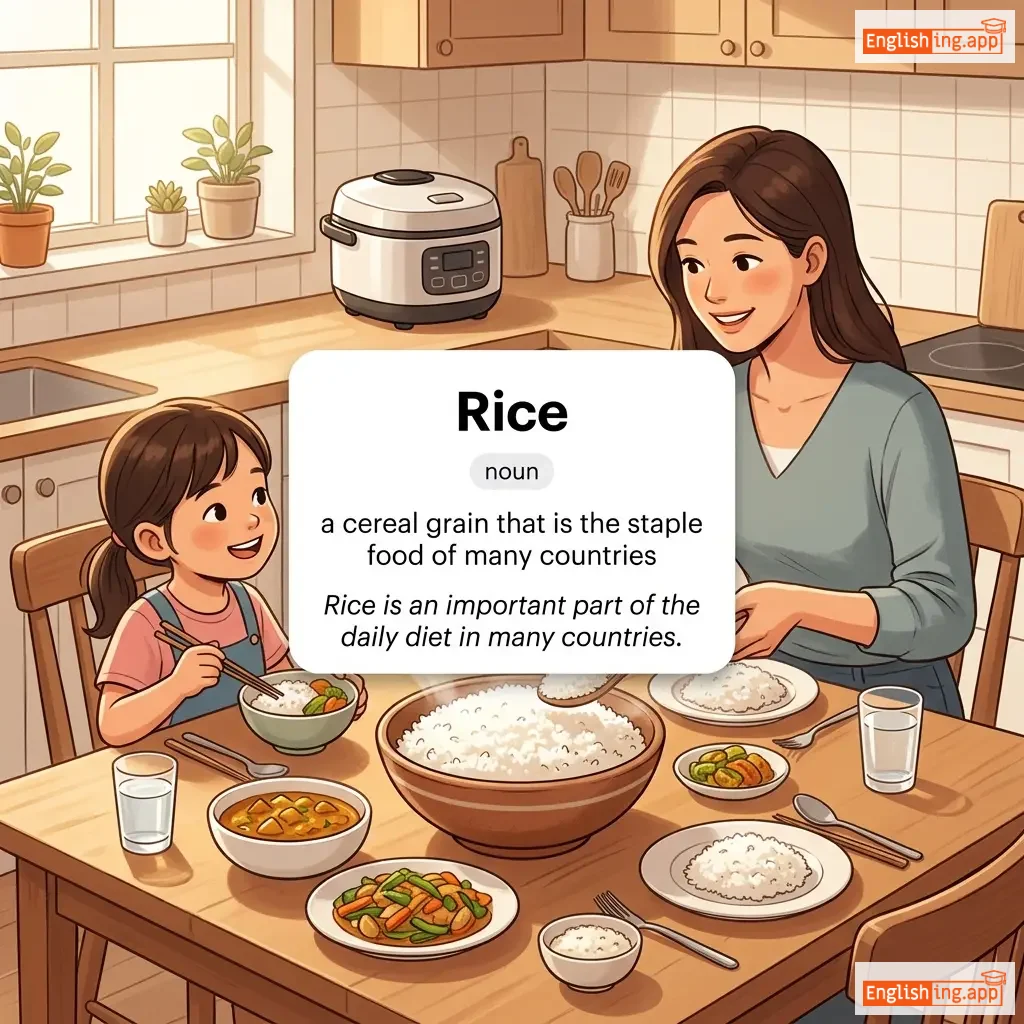
Rice definition card — visual illustration of the meaning
noun
/raɪs/
riz (riz)

a cereal grain that is the staple food of many countries

"Rice is an important part of the daily diet in many countries."

"Le riz est une partie importante de l'alimentation quotidienne dans de nombreux pays." (Le riz est une partie importante de l'alimentation quotidienne dans de nombreux pays.)
noun
/raɪs ˈkʊkər/
cuisinière à riz électrique (cuisiniere a riz electrique)

an electric appliance designed to cook rice automatically

"The rice cooker automatically switches off when the rice is perfectly cooked."

"Le cuiseur de riz s'éteint automatiquement lorsque le riz est parfaitement cuit." (Le cuiseur de riz s'eteint automatiquement lorsque le riz est parfaitement cuit)
adjective
/rɪʧ/
riche (reesh)

having a great deal of money or assets

"He became rich after his successful business venture."

"Il est devenu riche après sa réussite dans les affaires." (Il est devenu riche apres sa reussite dans les affaires.)
adjective
/ˈrɪkɪti/
fragile (fragile)

Poorly made and likely to collapse; shaky.

"They crossed a rickety wooden bridge over the river."

"Ils ont traversé un pont en bois fragile sur la rivière." (Ils ont traversé un pont en bois fragile sur la rivière.)
noun
/ˈrɪk.ʃɔː/
rickshaw (rickshaw)

a light two-wheeled passenger vehicle drawn by one or more people

"We took a rickshaw to reach the busy marketplace."

"Nous avons pris un rickshaw pour atteindre le marché animé." (Nous avons pris un rickshaw pour atteindre le marche anime.)
verb
/rɪd/
se débarrasser (se debarasser)

to remove or get rid of something

"I need to rid the house of all the clutter."

"J'ai besoin de débarrasser la maison de tout le désordre." (J'ai besoin de debarasser la maison de tout le desordre.)
verb
/ˈroʊ.teɪt/
tourner (tourner)

to turn around a central point or axis

"The Earth rotates on its axis once every 24 hours."

"La Terre tourne autour de son axe toutes les 24 heures." (La Terre tourne autour de son axe toutes les 24 heures.)
verb
/rɒt/
pourrir (pourrir)

to decay or decompose; to become corrupt

"The fruit will rot if left in the sun."

"Le fruit pourrira s'il est laissé au soleil." (Le fruit pourrira s'il est laisse au soleil)