Словари

Словарь английского языка | Значения слов, определения и примеры

noun
/skoʊp/
объем (ob'yem)

the range of one's perception, understanding, or activity

"The project is beyond the scope of our resources."

"Проект выходит за пределы наших ресурсов." (Proyekt vykhodit za predely nashikh resursov.)
verb
/skɔːrtʃ/
обжигать (obzhigat)

to burn the surface of something slightly

"The fire scorched the walls of the building."

"Огонь обжёг стены здания." (Ogon' obzhëg steny zdaniya.)
noun/verb
/skɔːr/
оценка (otsenka)

a number of points achieved in a game or test; to gain points or achieve a goal

"He scored the winning goal in the final match."

"Он забил победный гол в последнем матче." (On zabyl pobednyy gol v poslednem matche.)
noun/verb
/skɔːrn/
презрение (prezrenie)

the feeling or expression of contempt or disdain; to treat with contempt

"She looked at him with open scorn."

"Она посмотрела на него с презрением." (Ona posmotrela na nego s prezreniem.)
adjective
/ˈskɔːrnfəl/
презрительный (prezritelnij)

showing contempt or disdain; expressing scorn

"She gave him a scornful look when he made the rude comment."

"Она посмотрела на него с презрением, когда он сделал грубый комментарий." (Ona posmotrela na nego s prezreniem, kogda on sdelal grubyj kommentarij.)
noun
/ˈskɔːr.pi.ən/
скорпион (skorpion)

a small creature with eight legs, two claws, and a curved tail with a poisonous sting

"The scorpion hid under the rock during the day."

"Скорпион спрятался под камнем в течение дня." (Skorpion spryatal'sya pod kamnyem v techeniye dnya.)
noun
/ˈskɔːrpiən fɪʃ/
рыба-скорпион (ryba skorpion)

a type of fish with venomous spines that belongs to the family Scorpaenidae

"The scorpion fish has dangerous spines that can inject venom."

"Рыба-скорпион имеет опасные шипы, которые могут вводить яд." (ryba skorpion imeyet opasnye shipy kotorye mogut vvodyt yad)
verb/noun
/skɒtʃ/
положить конец / шотландский виски (polozhit' konets / shotlandskiy viski)

to put an end to something; also a type of whisky

"The report scotched the rumors of a merger."

"Отчет положил конец слухам о слиянии." (Otechot polozhil konets slukham o sliyaniji.)
noun
/ˈskaʊndrəl/
негодяй (negodyay)

a dishonest or unscrupulous person; a villain

"That scoundrel cheated the old man out of his savings."

"Этот негодяй обманул старика и украл его сбережения." (Etot negodyay obmanul starika i ukral ego sberezheniya.)
verb
/ˈskaʊər/
тереть / искать тщательно (teret / iskat' tщatel'no)

to clean or brighten the surface of something by scrubbing; to search thoroughly

"She scoured the kitchen until it shone."

"Она вычистила кухню до блеска." (Ona vychistila kukhnyu do bleska.)
noun/verb
/skɜːrdʒ/
бич / наказание (bich / nakazanie)

A source of great pain or punishment; to whip or inflict suffering on someone.

"Disease and poverty remain a scourge in many regions."

"Болезнь и бедность остаются бичом во многих регионах." (Bolezn' i bednost' ostayutsya bichom vo mnogikh regionakh.)
verb/noun
/skaʊl/
хмурить брови (khmurit brovi)

To frown in an angry or bad-tempered way.

"She scowled when she heard the unfair remark."

"Она нахмурилась, услышав несправедливое замечание." (Ona nakhmurilas, uslyshav nespravedlivoe zamechanie.)
verb
/ˈskræmbəl/
быстро забираться или смешивать (bystro zabiratsya ili smeshivat')

to move or climb quickly using hands and feet; to mix or arrange in a hurried way

"The kids scrambled up the hill to catch the kite."

"Дети быстро забрались на холм, чтобы поймать воздушного змея." (Deti bystro zabralis' na kholm, chtoby poymat' vozdushnogo zmeya.)
noun/verb
/skræp/
кусок / выбросить (kusok / vybrosit)

A small piece of something; to discard or get rid of something.

"He used a scrap of paper to jot down the number."

"Он использовал кусок бумаги, чтобы записать номер." (On ispol'zoval kusok bumagi, chtoby zapisać nomer.)
verb
/skreɪp/
царапать, скрести (tsarapat', skresti)

to remove or damage the surface of something by rubbing or scratching; to collect something by effort

"He scraped his knee while playing football."

"Он поцарапал колено, играя в футбол." (On potsarapal koleno, igraya v futbol.)
adjective
/ˈskræpi/
бойцовский / беспорядочный (boytsovskij / besporyadochnyj)

Determined and willing to fight or argue; also messy or disorganized.

"Despite being small, he was a scrappy fighter."

"Несмотря на небольшой размер, он был бойцовским бойцом." (Nesmotrya na nebol'shoj razmer, on byl boytsovskim boytsom.)
noun (plural)
/skræps/
остатки (ostatki)

Small pieces left over from something; also small fights or quarrels.

"The dog ate the scraps from the table."

"Собака съела остатки со стола." (Sobaka syela ostatki so stola.)
verb
/skrætʃ/
счастье (schast'ye)

to rub a surface or skin with something sharp or rough, often to relieve itching

"The cat scratched the door to be let in."

"Она не могла скрыть своего счастья, когда получила награду." (Ona ne mogla skryt' svoego schast'ya, kogda poluchila nagradu.)
verb
/skrɔːl/
быстро и небрежно писать (bystro i nebrezhno pisat)

to write or draw something quickly and carelessly, making it hard to read

"He scrawled his signature at the bottom of the page."

"Он написал свою подпись внизу страницы." (On napisal svoyu podpis' v nizу stranitsy.)
adjective
/ˈskrɔːni/
тощий (toschij)

very thin and bony, often looking unhealthy

"The scrawny boy could barely lift the heavy bag."

"Тощий мальчик едва мог поднять тяжёлую сумку." (Toschij mal'chik edva mog podnyat' tyazholuyu sumku.)
verb
/skriːm/
кричать (krichat')

to make a loud, high-pitched sound, usually because of fear, pain, or excitement

"She screamed when she saw the spider."

"Она закричала, когда увидела паука." (Ona zakrichala, kogda uvidela pauka.)
verb
/skriːtʃ/
издавать резкий звук (izdavat' rezkiy zvuk)

to make a loud, high-pitched and unpleasant sound

"The car screeched to a halt."

"Машина заскрипела и резко остановилась." (Mashina zaskripelа i rezko ostanovilas'.)
noun
/skriːd/
длинное и скучное письмо (dlinnoe i skuchnoe pismo)

a long, tedious piece of writing or speech; also a layer of material like cement spread on a surface

"He delivered a long screed against corruption."
"Он произнес длинную речь против коррупции." (On proiznes dlinnyu rech protiv korruptsii.)
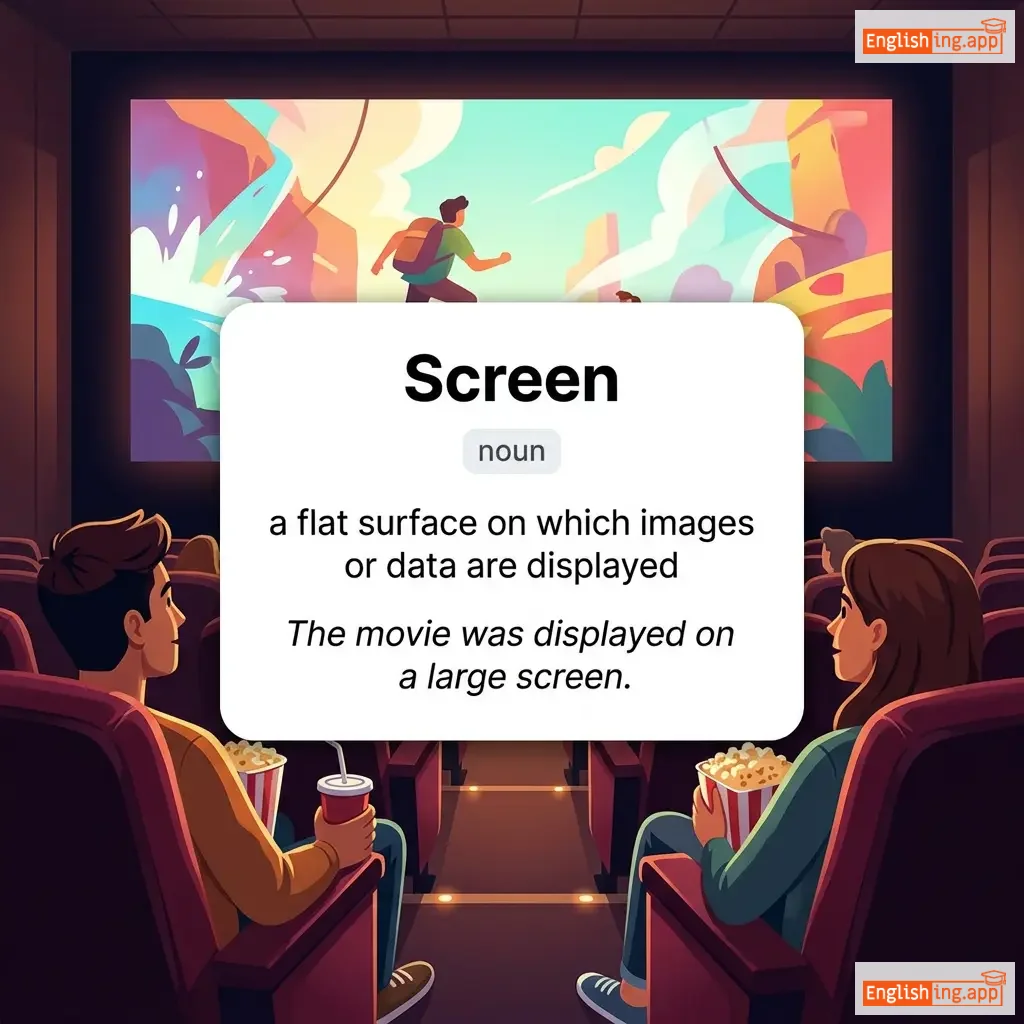
Screen definition card — visual illustration of the meaning
noun
/skriːn/
экран (ekran)

a flat surface on which images or data are displayed

"The movie was displayed on a large screen."

"Фильм был показан на большом экране." (Film byl pokazann na bol'shom ekrane.)
noun
/ˈskriːnɪŋ/
скрининг или показ (skrinig ili pokaz)

the act of examining or testing people to detect disease or evaluate suitability; a showing of a movie or program

"The hospital offered free health screening for all employees."
"Больница предложила бесплатное медицинское обследование для всех сотрудников." (Bol'nitsa predlozhila besplatnoe meditsinskoe obsledovanie dlya vsekh sotrudnikov.)
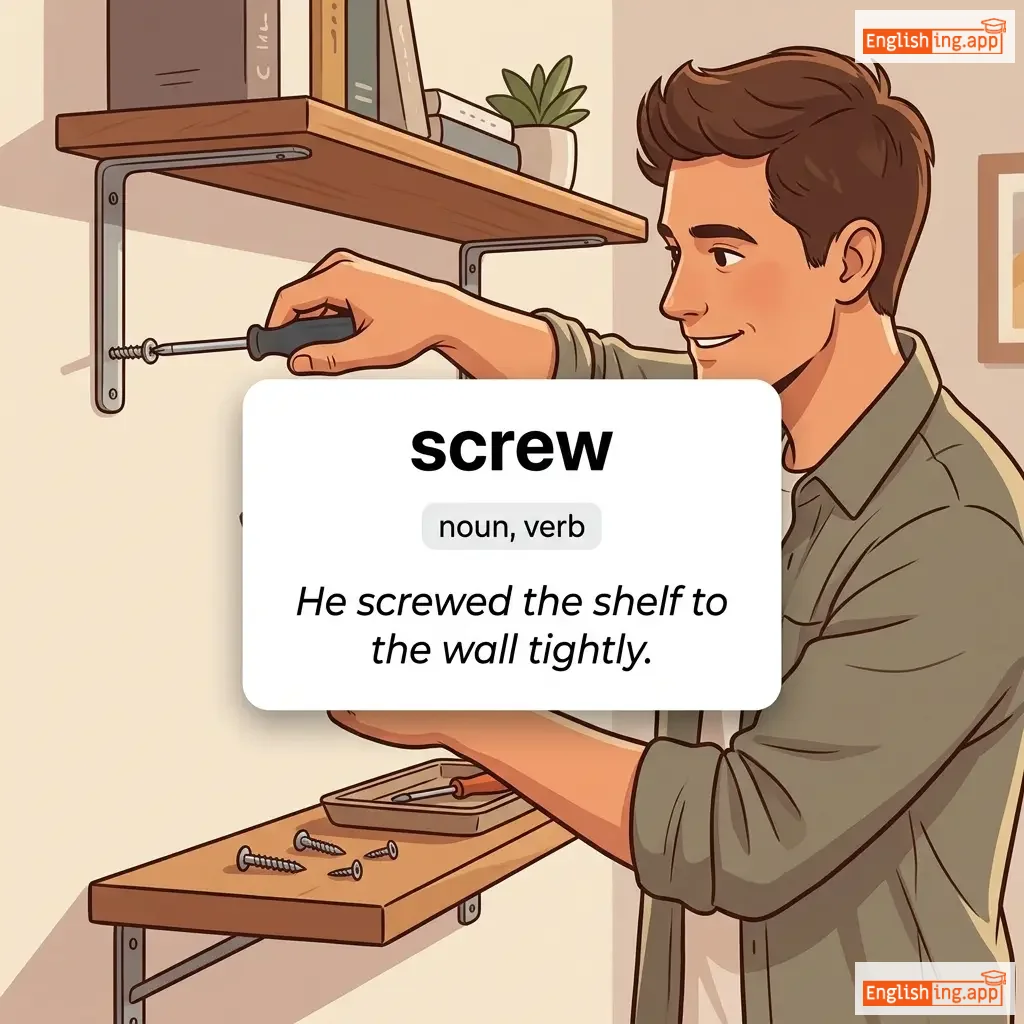
screw definition card — visual illustration of the meaning
noun, verb
/skruː/
металлический крепеж с витком; прикрутить или затянуть что-то винтом (metallicheskiy krepezh s vitkom; prikrutit' ili zatyanyt' chto-to vintom)

a metal fastener with a helical ridge; to fasten or tighten something with a screw

"He screwed the shelf to the wall tightly."

"Он прикрутил полку к стене крепко." (On prikrutil polku k stene krepko.)
verb
/ˈskrɪbəl/
царапать (tsarapать)

to write or draw carelessly or quickly

"The child scribbled all over the wall."

"Ребенок начертил все на стене." (Rebenok nachertil vse na stene.)
noun
/skraɪb/
писец (pistets)

a person who writes documents, especially in ancient times; a professional copyist

"In ancient Egypt, scribes recorded important events."

"В Древнем Египте писцы записывали важные события." (V Drevnem Egipte pis'tsy zapisyvali vazhnyye sobytiya.)
noun
/ˈskrɪmɪdʒ/
тренировочная игра (trenirovochnaya igra)

A practice game or informal match, often in sports, especially football.

"The team had a scrimmage before the official season started."

"Команда провела тренировочную игру перед началом официального сезона." (Komanda provela trenirovochnuyu igru pered nachalom ofitsial'nogo sezona.)
noun
/skrɪpt/
сценарий (stseniariy)

The written text of a play, film, or broadcast; handwriting style.

"The actor memorized his lines from the script."

"Актер выучил свои реплики из сценария." (Akter vyuchil svoi repliki iz stseniariya.)
adjective
/ˈskrɪptʃərəl/
писанный (pisannyy)

Relating to or contained in the scriptures or holy writings.

"The priest gave a scriptural reference during the sermon."
"Священник привел писанный пример во время проповеди." (Svyashchennik priyel pisannyy primer vo vremya propovedi.)
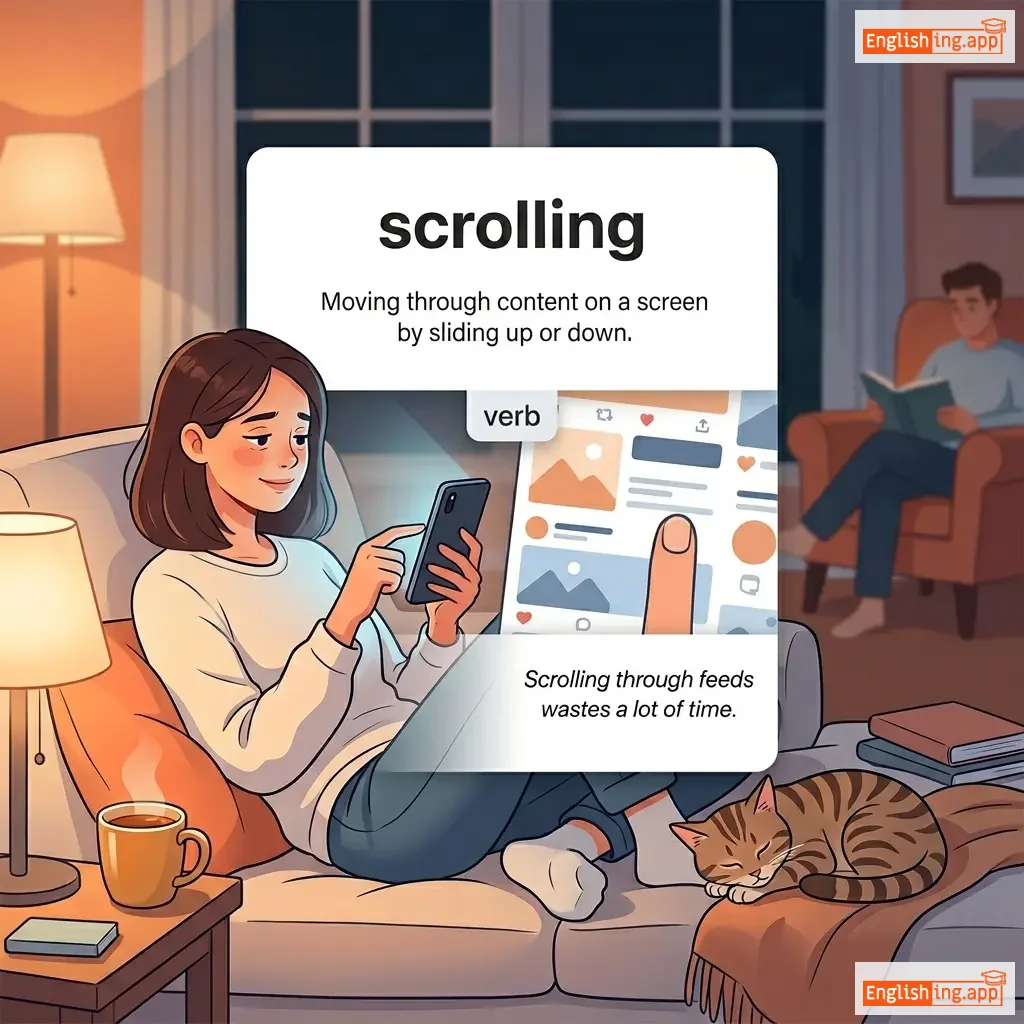
scrolling definition card — visual illustration of the meaning
verb
/ˈskroʊlɪŋ/
прокрутка (prokrutka)

Moving through content on a screen by sliding up or down.

"Scrolling through feeds wastes a lot of time."

"Прокрутка ленты тратит много времени." (Prokrutka lentyi tratit mnogo vremeni.)
scrolling addiction definition card — visual illustration of the meaning
noun
স্ক্রোলিং অ্যাডিকশন
зависимость от прокрутки (zavisimost ot prokrutki)

A compulsive need to continuously scroll through content on digital devices, particularly smartphones and social media platforms.

"Scrolling addiction is a growing concern among smartphone users."
"Зависимость от прокрутки является растущей проблемой среди пользователей смартфонов." (Zavisimost ot prokrutki yavlyaetsya rastushchey problemoy sredi pol'zovateley smartfonov.)
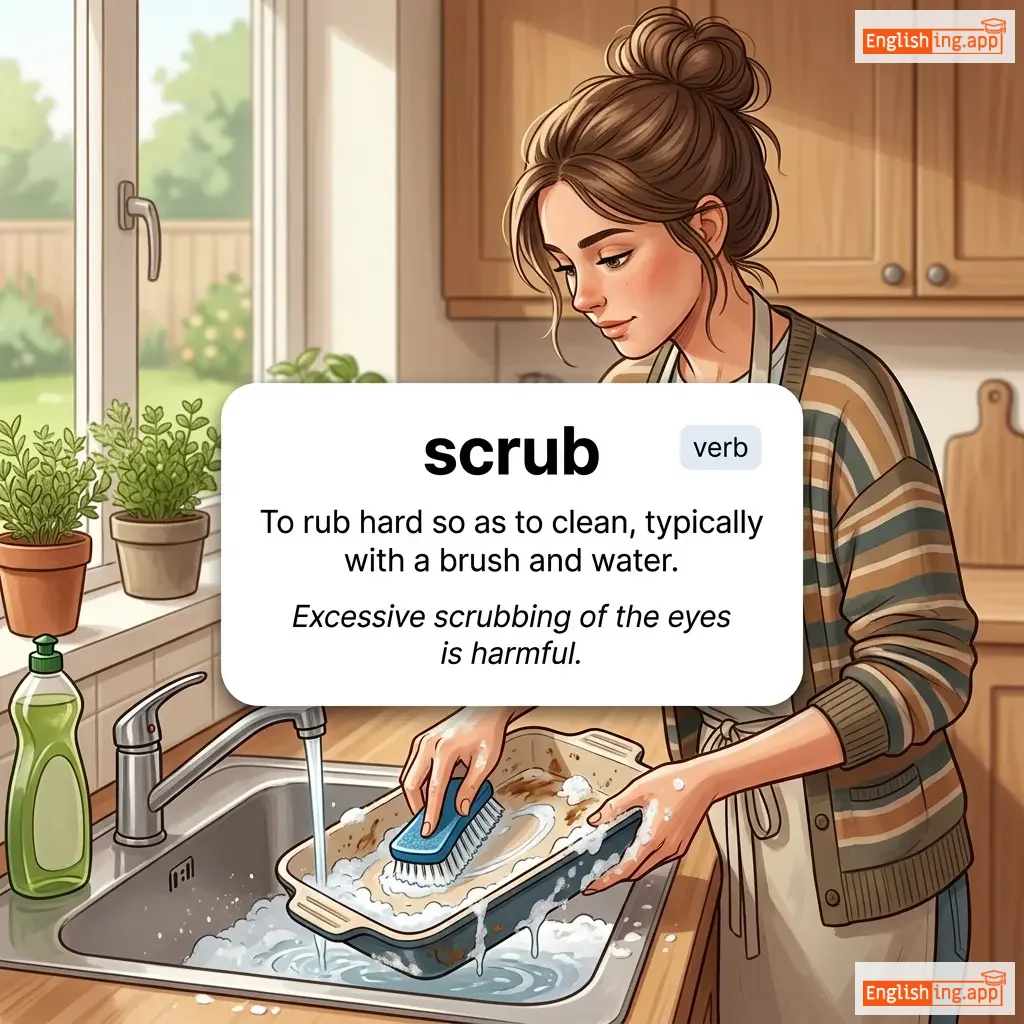
scrub definition card — visual illustration of the meaning
verb
/skrʌb/
тереть (teret')

To rub hard so as to clean, typically with a brush and water.

"Excessive scrubbing of the eyes is harmful."

"Чрезмерное трение глаз вредно." (Chrezmernoe trenie glaz vredno.)
adjective
/ˈskrʌfi/
неопрятный или неухоженный на вид; грязный и изношенный (neopryatnyy ili neukhodzhenyy na vid; gryaznyy i iznoshenyy)

untidy or unkempt in appearance; shabby and worn

"The scruffy old dog wandered through the streets looking for food."

"Неряшливый старый пес бродил по улицам, ища еду." (Neryashlivyy staryy pes brodil po ulitsam, ishchya yedu.)
adjective
/ˈskrʌmpʃəs/
вкусный (vkusnyy)

extremely tasty or delicious

"She baked a scrumptious chocolate cake for the party."

"Она испекла вкусный шоколадный торт для вечеринки." (Ona ispekla vkusnyy shokoladnyy tort dlya vecherinki.)
noun
/ˈskruːpəl/
скрупул (skrupul)

A moral or ethical consideration that restrains actions.

"He had no scruples about lying to get ahead."
"У него не было скрупулов, чтобы лгать ради продвижения." (U nego ne bylo skrupulov, chtoby lgat' radi prodvizheniya.)
scrupulous definition card — visual illustration of the meaning
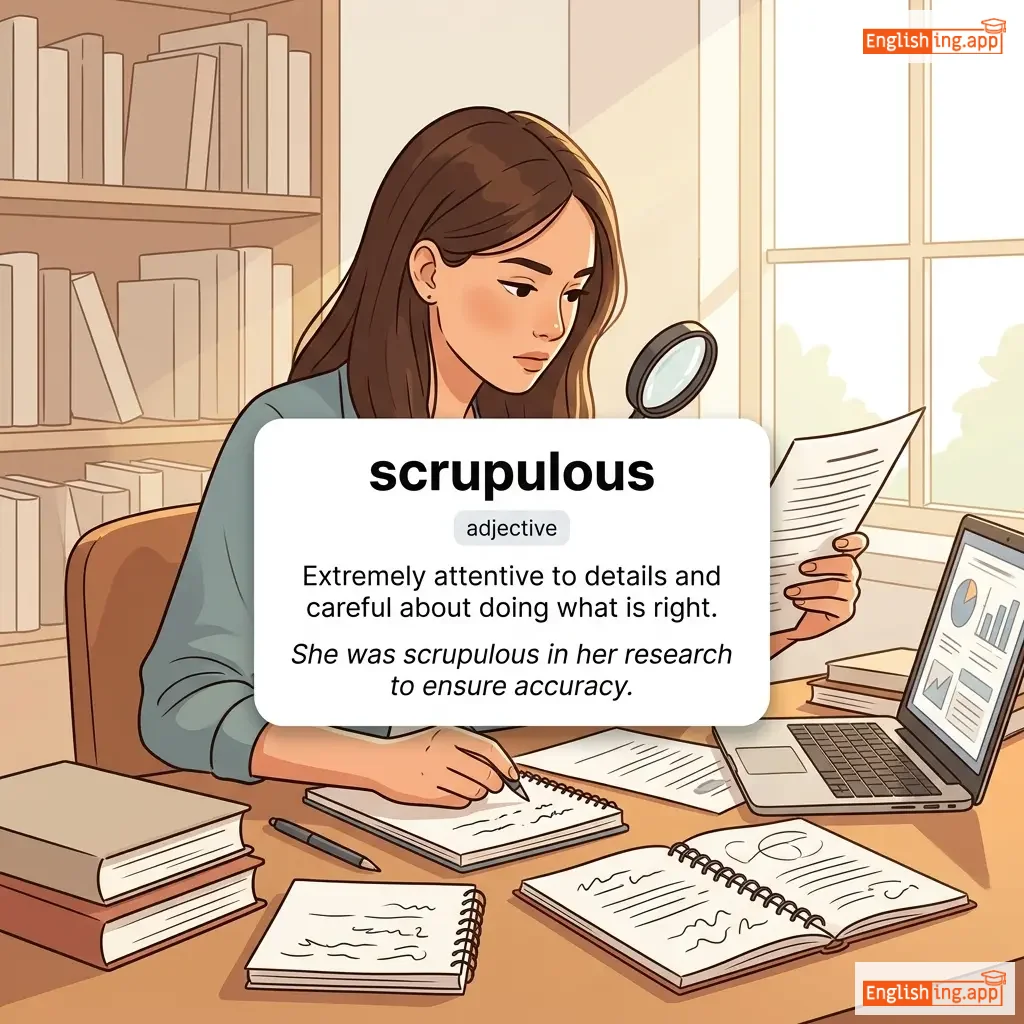
adjective
/ˈskruːpjələs/
скрупулезный (skrupulezny)

Extremely attentive to details and careful about doing what is right.

"She was scrupulous in her research to ensure accuracy."
"Она была скрупулезной в своем исследовании, чтобы гарантировать точность." (Ona byla skrupuleznoy v svoem issledovanii, chtoby garantirovat' tochnost'.)
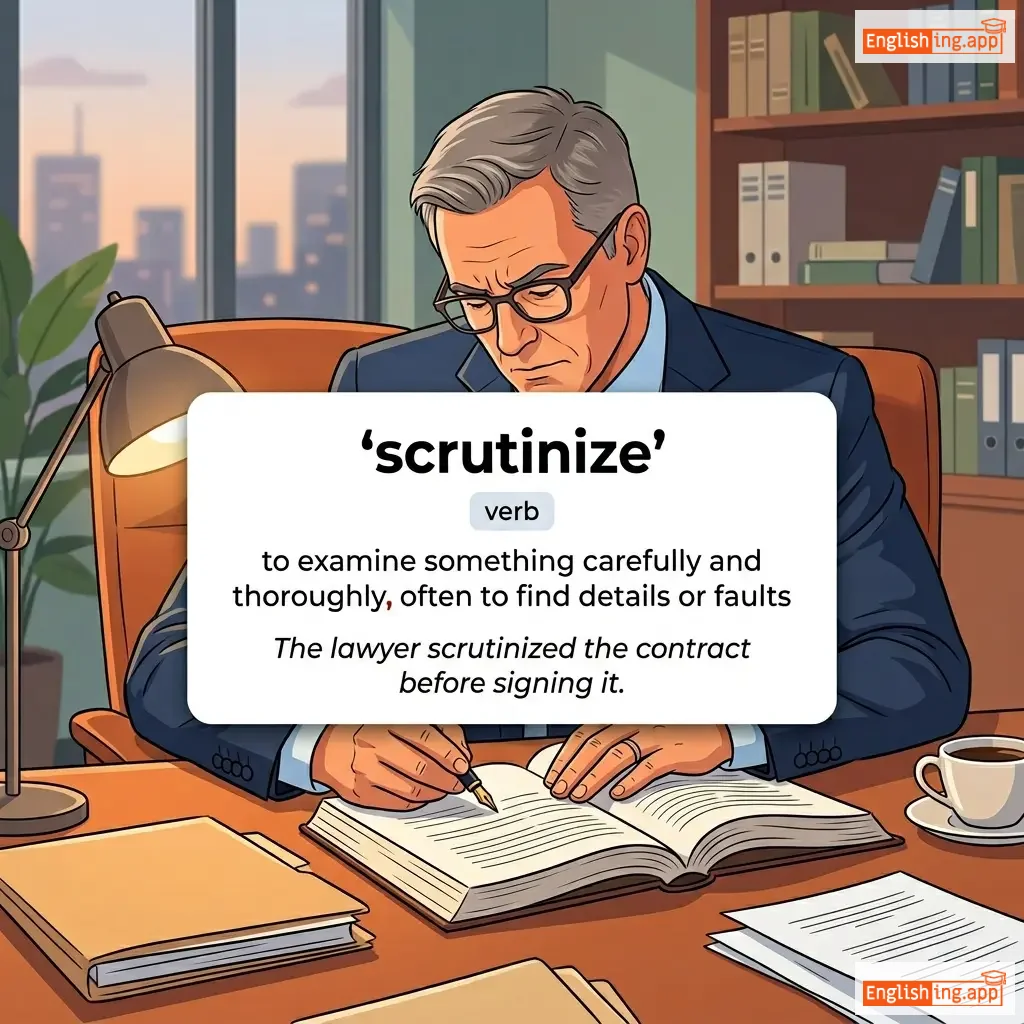
scrutinize definition card — visual illustration of the meaning
verb
/ˈskruː.tɪ.naɪz/

to examine something carefully and thoroughly, often to find details or faults

"The lawyer scrutinized the contract before signing it."
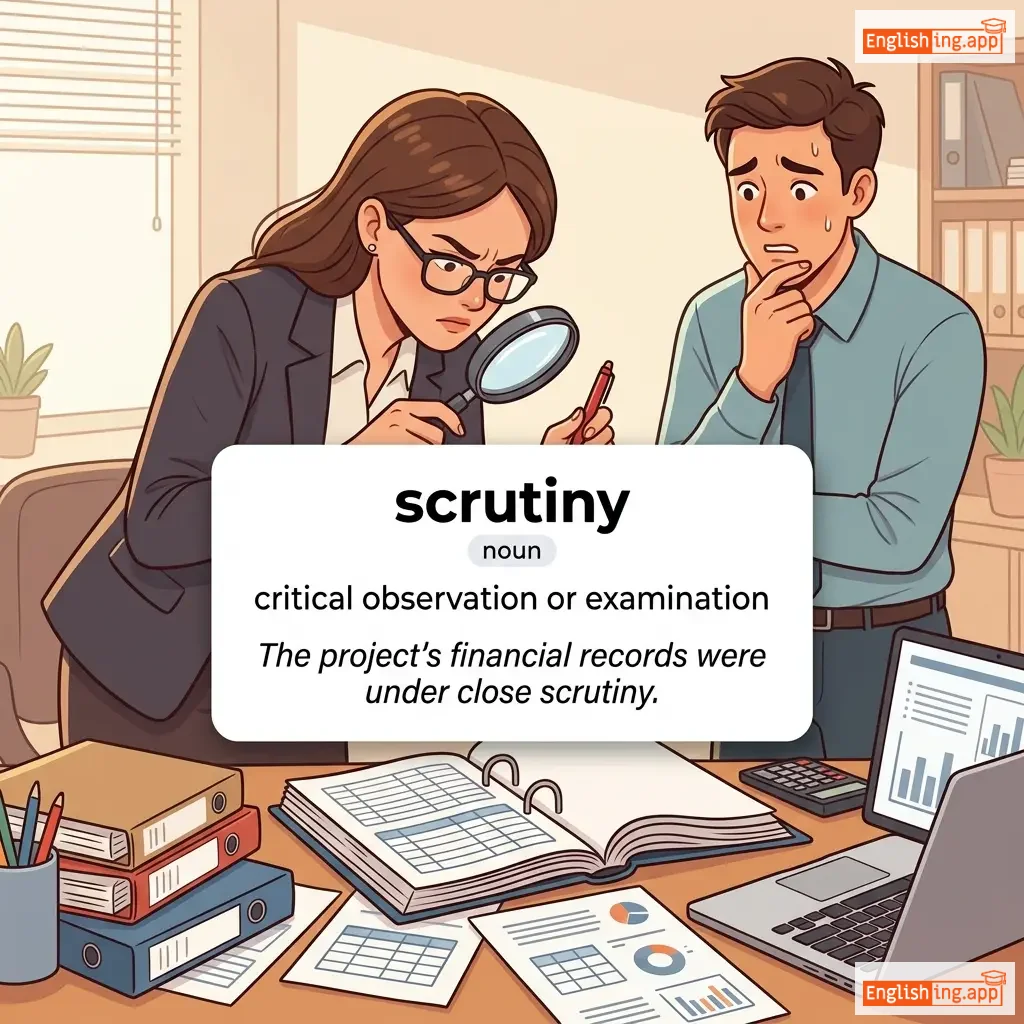
scrutiny definition card — visual illustration of the meaning
noun
/ˈskruːtɪni/
проверка (proverka)

critical observation or examination

"The project's financial records were under close scrutiny."

"Финансовые записи проекта находились под строгим контролем." (Finansovye zapisi proekta nakhodilis' pod strohim kontrol'em.)
verb
/skʌf/
стереть (sterec)

to mark or scratch the surface of something by rubbing

"He scuffed his shoes on the pavement."

"Он стер свои ботинки о тротуар." (On ster svoi botinki o trotuyar.)
noun, verb
/ˈskʌf.əl/
ссора (ssora)

a short, confused fight or struggle; to engage in such a fight

"Two players scuffled on the field after the foul."

"Два игрока подрались на поле после фола." (Dva igroka podralis' na pole posle fola.)
noun
/ˈskʌl.i.ən/
поварской слуга (povarskoy sluga)

a servant assigned the most menial kitchen tasks

"In medieval times, a scullion was responsible for cleaning pots and pans."

"В средние века скаллион был ответственен за чистку кастрюль и сковородок." (V srednie veka skallyon byl otvetstvenen za chistku kastryul i skovorodok.)
verb
/skʌlpt/
счастье (schast'ye)

to create or shape something by carving or molding

"The artist sculpted a beautiful statue from marble."

"Она не могла скрыть своего счастья, когда она получила награду." (Ona ne mogla skryt' svoego schast'ya, kogda ona poluchila nagradu.)
noun
/ˈskʌlp.tər/
скульптор (skulptor)

an artist who creates sculptures by carving, modeling, or shaping materials

"The sculptor spent months creating a beautiful marble statue."
"Скульптор потратил месяцы на создание прекрасной мраморной статуи." (Skulptor potratil mesyatsy na sozdanie prekrasnoy mramornoy statui.)
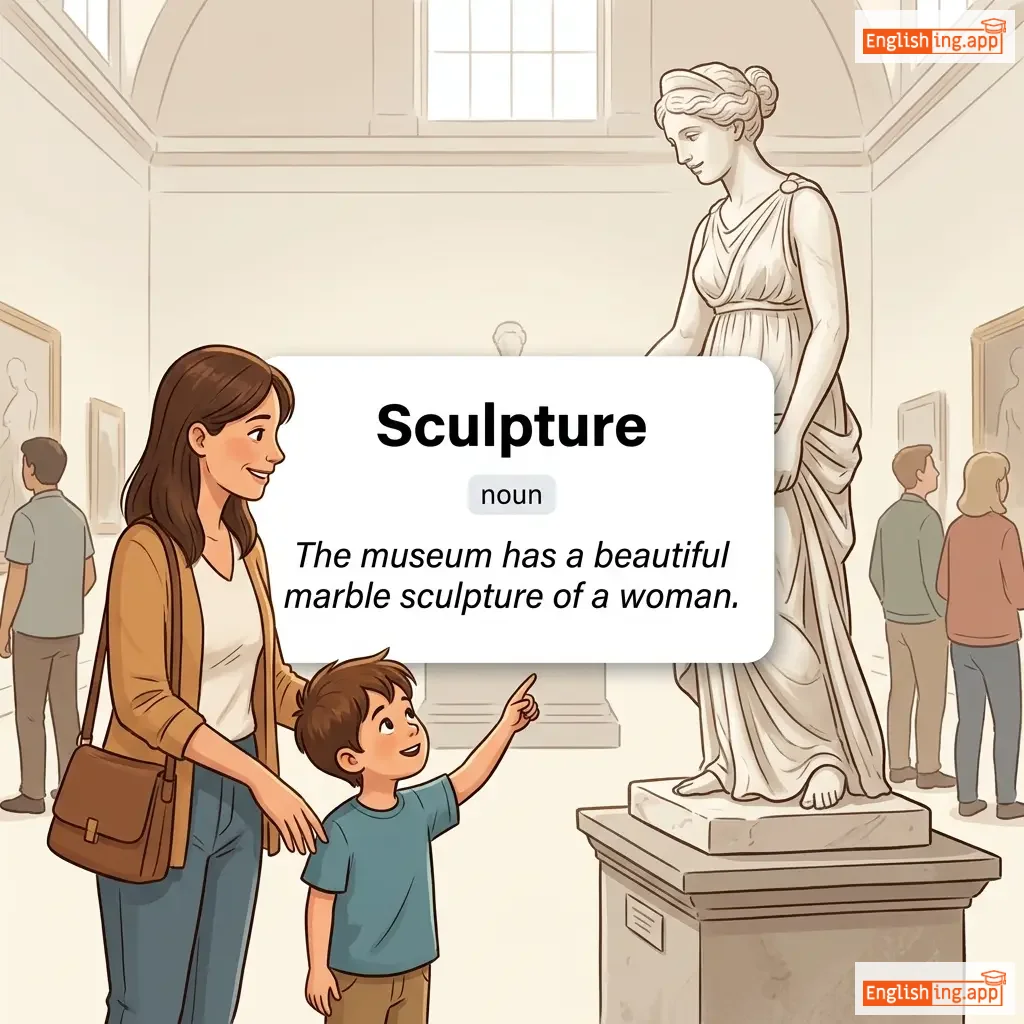
Sculpture definition card — visual illustration of the meaning
noun
/ˈskʌlp.tʃər/
скульптура (skulptura)

the art of making two- or three-dimensional representative or abstract forms, especially by carving stone or wood or by casting metal or plaster

"The museum has a beautiful marble sculpture of a woman."

"В музее есть красивая мраморная скульптура женщины." (V muzei yest' krasivaya mramornaya skulptura zhenshchiny.)
noun
/ˈsiːkrəsi/
секретность (sekretnost')

The action of keeping something secret or the state of being kept secret.

"The negotiations were conducted in complete secrecy."
"Переговоры велись в полной секретности." (Peregovory velis' v polnoy sekretnosti.)
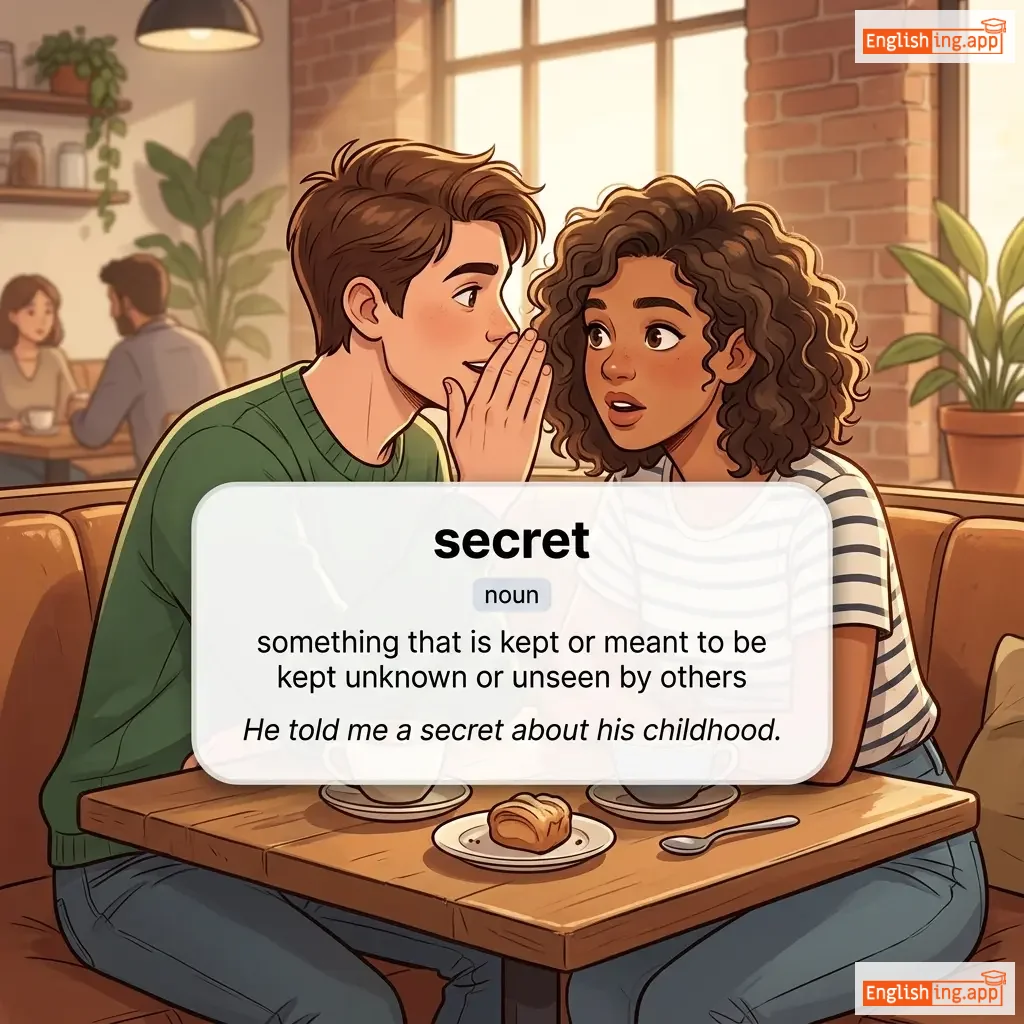
secret definition card — visual illustration of the meaning
noun
/ˈsiːkrət/
секрет (sekret)

something that is kept or meant to be kept unknown or unseen by others

"He told me a secret about his childhood."

"Он рассказал мне секрет о его детстве." (On rasskazal mne sekret o ego detstve.)
noun
/ˈsɛkrəteri/
секретарь (sekretar)

a person employed to handle correspondence and manage routine tasks for an individual or organization

"The secretary scheduled the meeting for tomorrow."

"Секретарь запланировал встречу на завтра." (Sekretar zaplaniroval vstrechu na zavtra.)
adverb
/ˈsekəndli/
во-вторых (vo-vtorykh)

Used to introduce the second point in a list of arguments or ideas.

"Firstly, we need funding; secondly, we need a strong team."

"Во-первых, нам нужно финансирование; во-вторых, нам нужна сильная команда." (Vo-pervykh, nam nuzhno finansirovanie; vo-vtorykh, nam nuzhna sil'naya komanda.)