Словари

Словарь английского языка | Значения слов, определения и примеры

🎖️

regiment

noun
/ˈrɛdʒɪmənt/

A permanent unit of an army, typically commanded by a colonel and divided into several companies.

"The regiment marched proudly through the streets after returning from the mission."

Region definition card — visual illustration of the meaning
noun
/ˈriːdʒən/
регион (region)

an area or division, especially part of a country or the world having definable characteristics but not always fixed boundaries

"The region is known for its beautiful landscapes."
"Регион известен своими красивыми пейзажами." (region izvesten svoimi krasivymi peyzazhami)
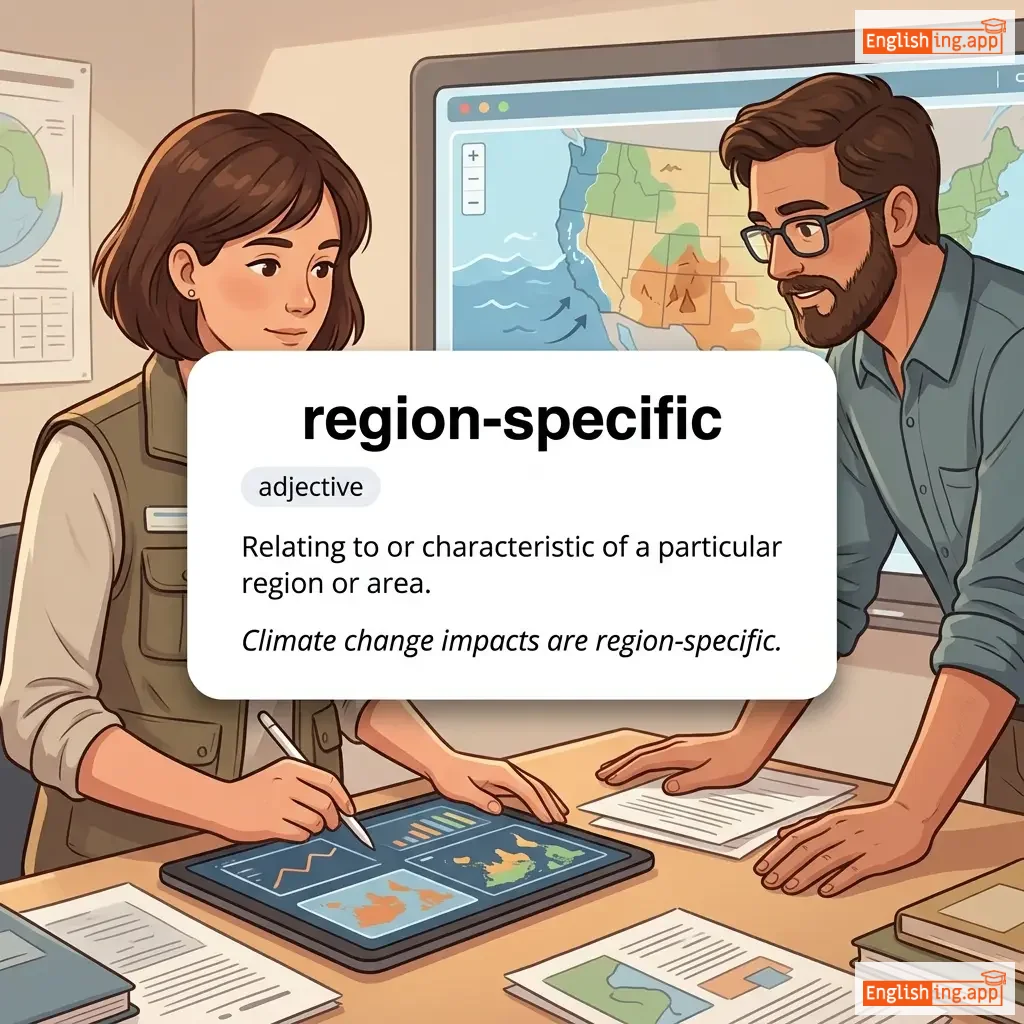
region-specific definition card — visual illustration of the meaning
adjective
ˈriːdʒən spəˈsɪfɪk
регионо-специфический (regiono-specificheskiy)

Relating to or characteristic of a particular region or area.

"Climate change impacts are region-specific."
"Воздействие изменения климата является специфическим для региона." (Vozdeystvie izmeneniya klimata yavyayetsya spetsificheskim dlya regiona.)
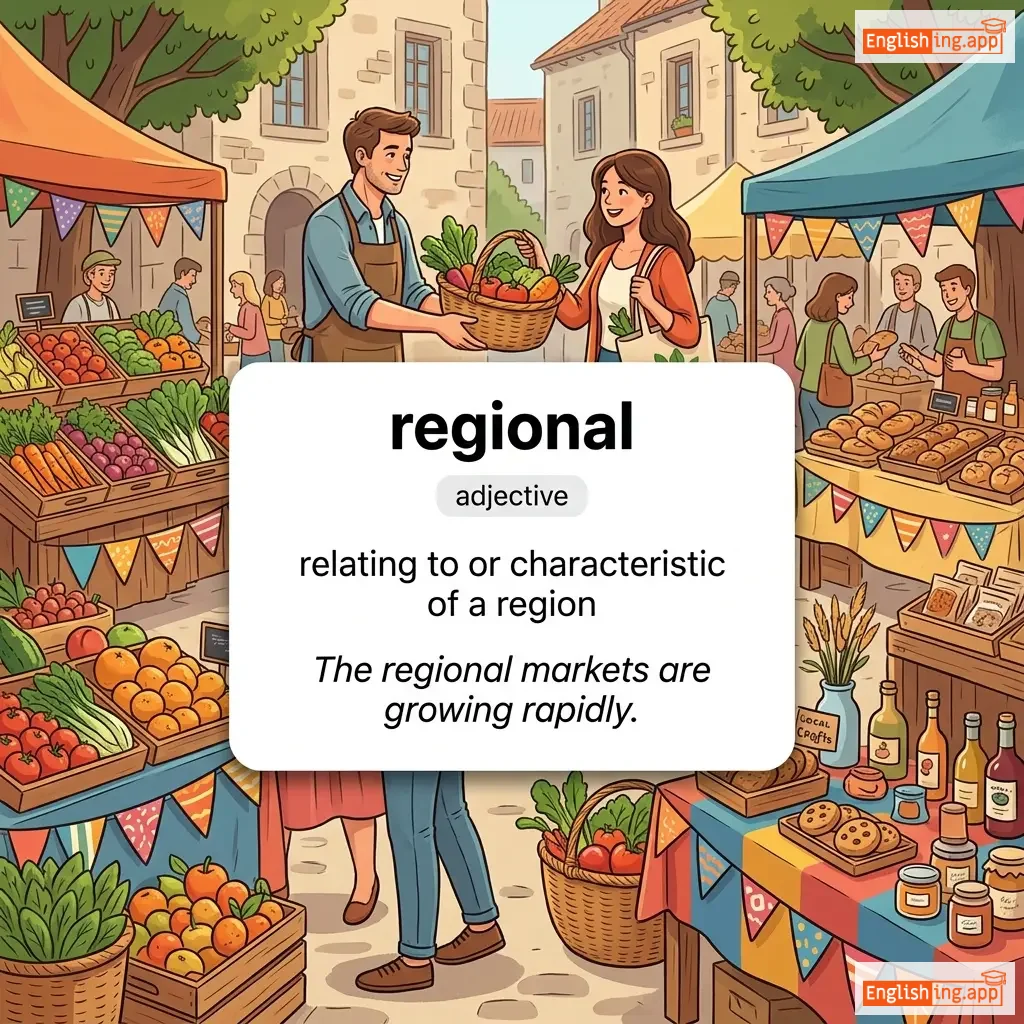
regional definition card — visual illustration of the meaning
adjective
/ˈriːdʒənl/
региональный (regional'nyj)

relating to or characteristic of a region

"The regional markets are growing rapidly."

"Региональные рынки быстро растут." (Regional'nye rynki bystro rastut.)
regional forum definition card — visual illustration of the meaning
phrase
ˈriː.dʒən.əl ˈfɔː.rəm
региональный форум (regional'nyy forum)

A meeting or conference where representatives from countries or organizations in a specific geographical area discuss issues of common interest.

"The Regional Forum discussed deforestation impacts."

"Региональный форум обсудил последствия вырубки лесов." (Regional'nyy forum obsudil posledstviya vyrubki lesov.)
verb
/ˈrɛdʒɪstər/
регистрировать (registrirovat)

To enter or record officially on a list or in a book.

"You must register for the conference before the deadline."
"Вы должны зарегистрироваться для конференции до окончания срока." (Vy dolzhny zaregistrirovatsya dlya konferentsii do okonchaniya sroka.)
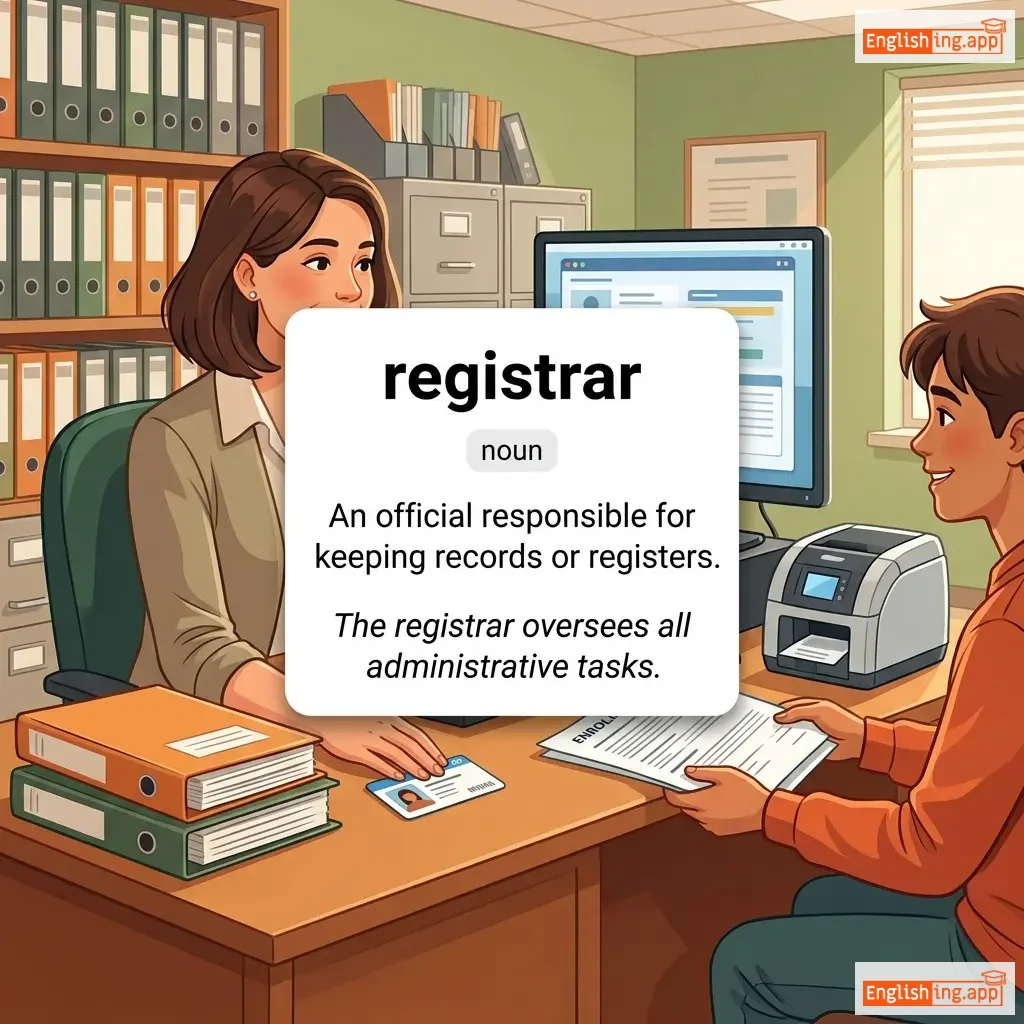
registrar definition card — visual illustration of the meaning
noun
ˈredʒ.ɪ.strɑːr
регистратор (registrator)

An official responsible for keeping records or registers.

"The registrar oversees all administrative tasks."

"Регистратор курирует все административные задачи." (Registrator kuriiruet vse administrativnye zadachi.)
noun
/ˌrɛdʒɪˈstreɪʃən/
регистрация (registratsiya)

the action or process of enrolling or signing up for something

"The registration for the event will close tomorrow."

"Регистрация на мероприятие завершится завтра." (Registratsiya na meropriyatie zavershitsya zavtra.)
adjective
/ˈrɛɡnənt/
правящий (pravyashchiy)

Reigning; currently holding power, authority, or dominance.

"The regnant queen introduced several reforms during her reign."

"Правящая королева внесла несколько реформ в течение своего правления." (Pravyashchaya koroleva vnesla neskol'ko reform v techeniye svoego pravyeniya.)
verb
/rɪˈɡrɛs/

To return to a former or less developed state.

"Without proper guidance, the child's progress began to regress."

Regret definition card — visual illustration of the meaning
verb
/rɪˈɡrɛt/
сожалеть (sozhalet')

to feel sad or disappointed about something that has happened or been done

"I deeply regret saying those harsh words to her."

"Я глубоко сожалею, что сказал ей эти жесткие слова." (Ya gluboko sozhaleю, chto skazal yey eti zhostkie slova.)
adjective
/rɪˈɡrɛtfəl/
сожалеющий (sozhaleyushchiy)

feeling or showing sadness or disappointment about something that has happened or been done

"She gave him a regretful smile as she turned away."

"Она подарила ему сожалительную улыбку, когда отвернулась." (Ona podarila yemu sozhalitel'nuyu ulybku, kogda otvernulas'.)
adjective
/rɪˈɡret.ə.bəl/
печальный; прискорбный; досадный (pechal'nyy; priskorbnyy; dosadnyy)

causing or deserving regret; unfortunate; deplorable

"It is regrettable that so many talented people left the company."

"Жаль, что так много талантливых людей покинули компанию." (Zhal', chto tak mnogo talantlivykh lyudey pokinuli kompaniyu.)
Regular definition card — visual illustration of the meaning
adjective
/ˈrɛɡjələr/
регулярный (regulyarnyy)

Happening at fixed intervals; usual or normal in pattern or quality

"He is a regular visitor to the library."

"Он регулярный посетитель библиотеки." (On regulyarnyy posetitel' biblioteki.)
noun
/ˌreɡ.jʊˈlær.ɪ.ti/
регулярность (regulyarnost)

the quality of being regular; occurring at fixed intervals or in a consistent pattern

"The regularity of his exercise routine helped him stay healthy."

"Регулярность его тренировочного расписания помогла ему оставаться здоровым." (Regulyarnost' ego trenirovochnogo raspisaniya pomogla yemu ostavat'sya zdorovym)
adverb
/ˈrɛɡjələrli/
регулярно (regulyarno)

at regular intervals; in a regular manner

"She exercises regularly to stay healthy."
"Она регулярно занимается спортом, чтобы оставаться здоровой." (Ona regulyarno zanimaetsya sportom, chtoby ostavat'sya zdorovoy.)
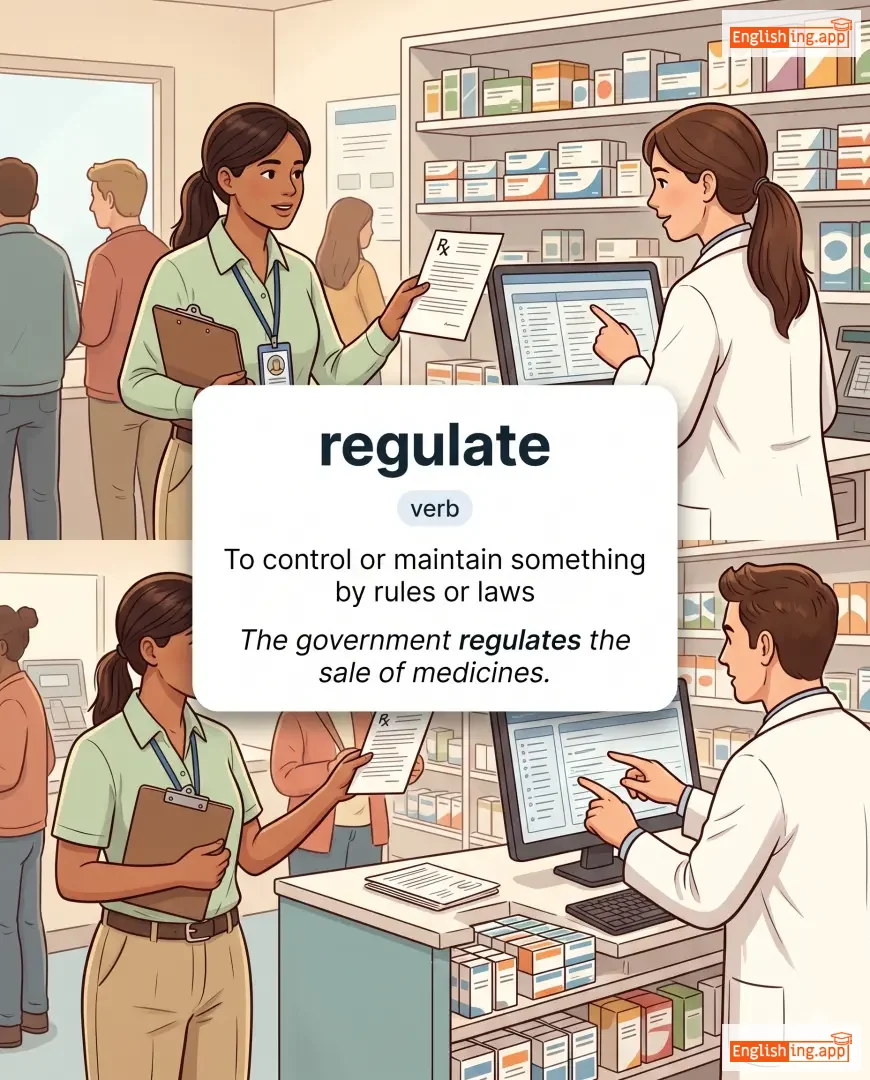
regulate definition card — visual illustration of the meaning
verb
/ˈrɛɡjʊˌleɪt/
регулировать (regulirovat)

To control or maintain something by rules or laws

"The government regulates the sale of medicines."
"Правительство регулирует продажу медикаментов." (Pravitel'stvo reguliruet prodazhu medikamentov.)
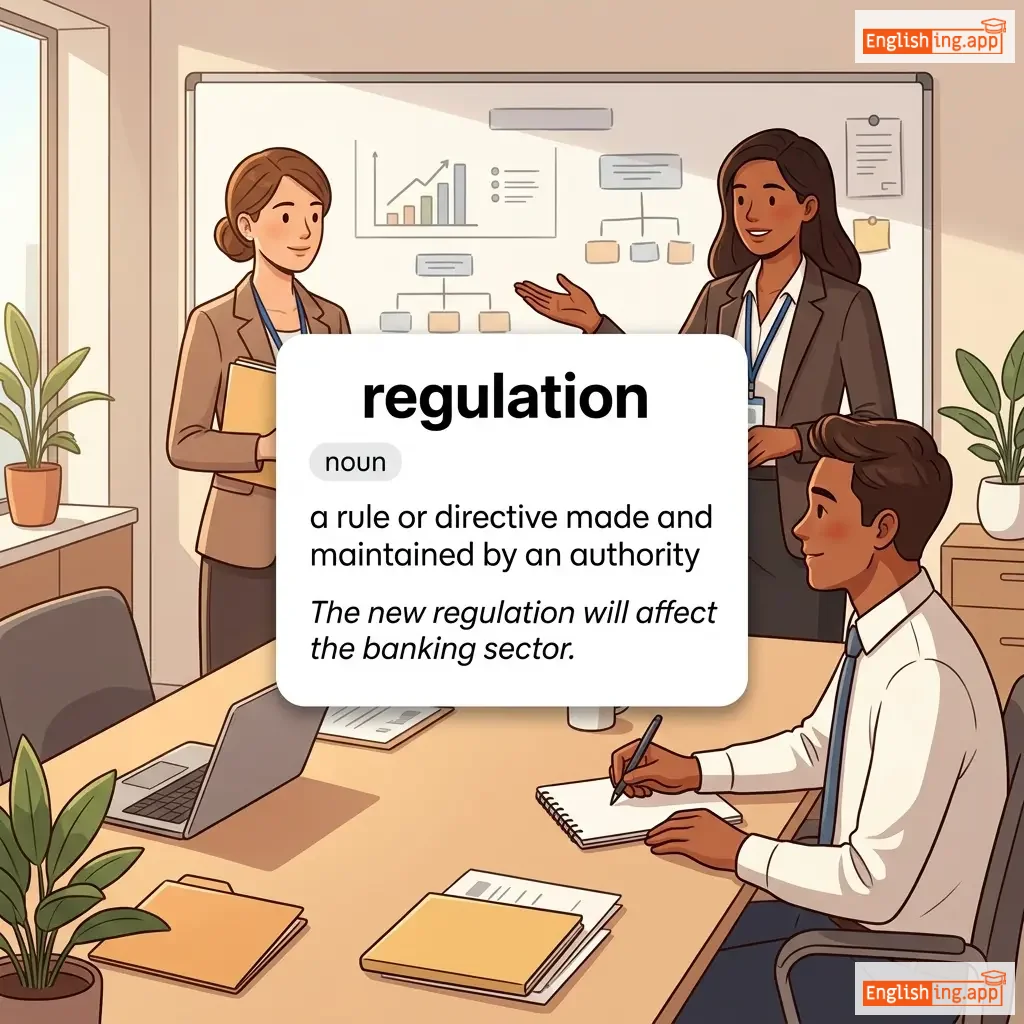
regulation definition card — visual illustration of the meaning
noun
/ˌrɛɡjuˈleɪʃən/
регламент (reglament)

a rule or directive made and maintained by an authority

"The new regulation will affect the banking sector."
"Новый регламент повлияет на банковский сектор." (Novyy reglament povliyaet na bankovskiy sektor.)
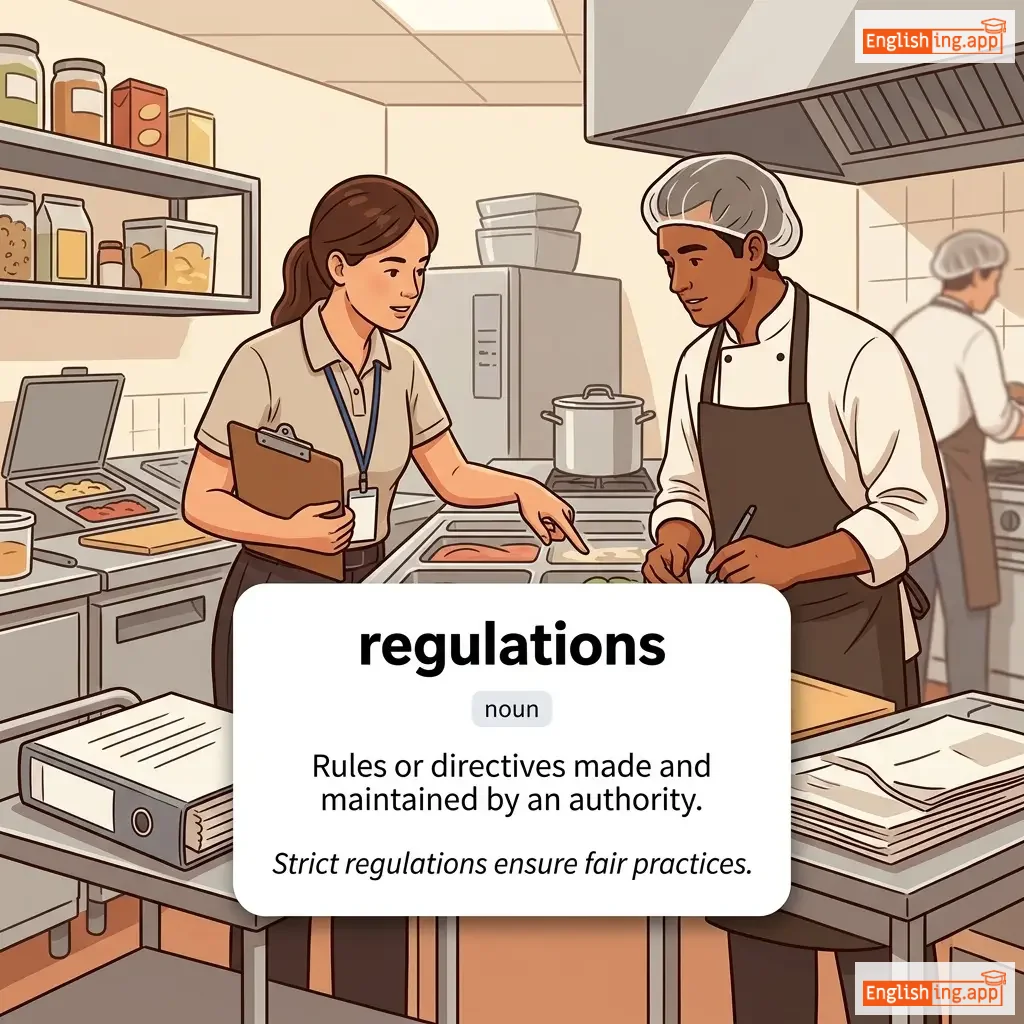
regulations definition card — visual illustration of the meaning
noun
/ˌreɡ.jʊˈleɪ.ʃənz/
регулирования (regulirovaniya)

Rules or directives made and maintained by an authority.

"Strict regulations ensure fair practices."

"Строгие правила обеспечивают справедливые практики." (Strogiye pravila obespechivayut spravedlivye praktiki.)
noun
/ˈrɛɡjəleɪtər/
регулятор (regulyator)

a person or device that controls or maintains the operation of a system

"The government appointed a new regulator for the financial sector."
"Правительство назначило нового регулятора для финансового сектора." (Pravitel'stvo naznachilo novogo regulyatora dlya finansovogo sektora.)
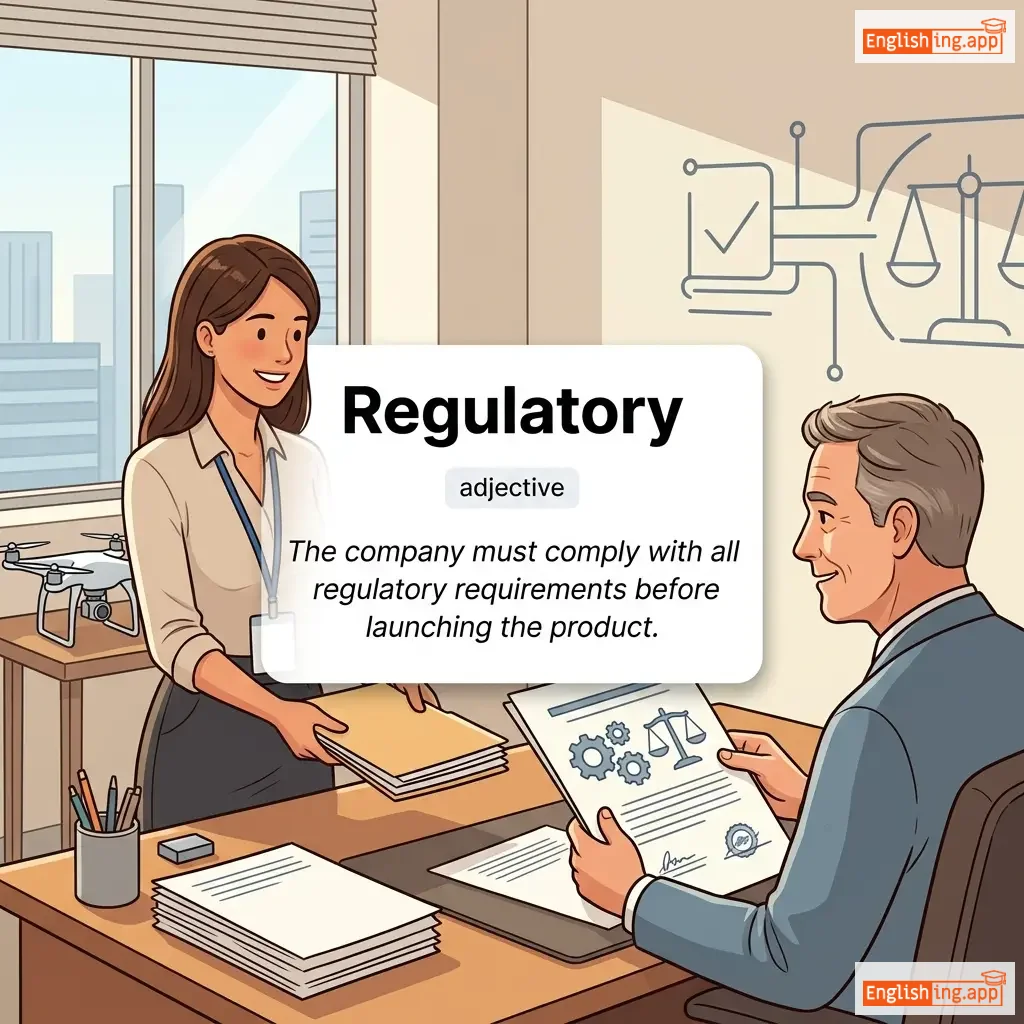
Regulatory definition card — visual illustration of the meaning
adjective
/ˈrɛɡjʊlətɔːri/
регулирующий (reguliruyushchiy)

relating to the rules or laws made by an authority to control an activity or process

"The company must comply with all regulatory requirements before launching the product."

"Компания должна выполнить все регулирующие требования перед запуском продукта." (Kompaniya dolzhna vypolnit' vse reguliruyushchie trebovaniya pered zapuskom produkta.)
verb
/ˌriːhəˈbɪlɪteɪt/
реабилитировать (reabilitirovat)

to restore someone to health, normal life, or a good condition after illness, injury, or imprisonment

"The clinic helps rehabilitate injured athletes."

"Клиника помогает реабилитировать травмированных спортсменов." (Klinika pomogaet reabilitirovat' travmirovannykh sportsmenov.)
noun
/ˌriːhəˌbɪlɪˈteɪʃən/
счастье (schastye)

the process of restoring someone or something to health or normal life through training or therapy

"After the accident, he went through months of rehabilitation to walk again."

"Она не смогла скрыть свое счастье, когда получила награду." (Ona ne smogla skryt' svoyo schast'ye, kogda poluchila nagradu.)
noun
/rɪˈhɜːrsəl/
репетиция (repetitsiya)

a practice or trial performance of a play, music, or other work for later public performance

"The actors had a final rehearsal before the play."

"Актёры провели финальную репетицию перед спектаклем." (Aktyory proveli final'nuyu repetitsiyu pered spektaklem.)
verb, noun
/reɪn/
царствовать (tsarstvovat)

to rule as a king or queen; the period during which a sovereign rules

"Queen Elizabeth II reigned for many decades."

"Королева Елизавета II правила в течение многих десятилетий." (Koroleva Yelizaveta II pravila v techeniye mnogikh desyatiletiy.)
verb
/ˌriːɪmˈbɜːrs/
возмещать (vozmeshchat)

to pay back money to someone who has spent it or lost it

"The company reimbursed him for travel expenses."

"Компания возместила ему расходы на поездку." (Kompaniya vozmestila emu raskhody na poezdku.)
🐎

rein

noun/verb
/reɪn/

A strap used to control a horse; to control or guide something.

"The rider pulled the rein to stop the horse."
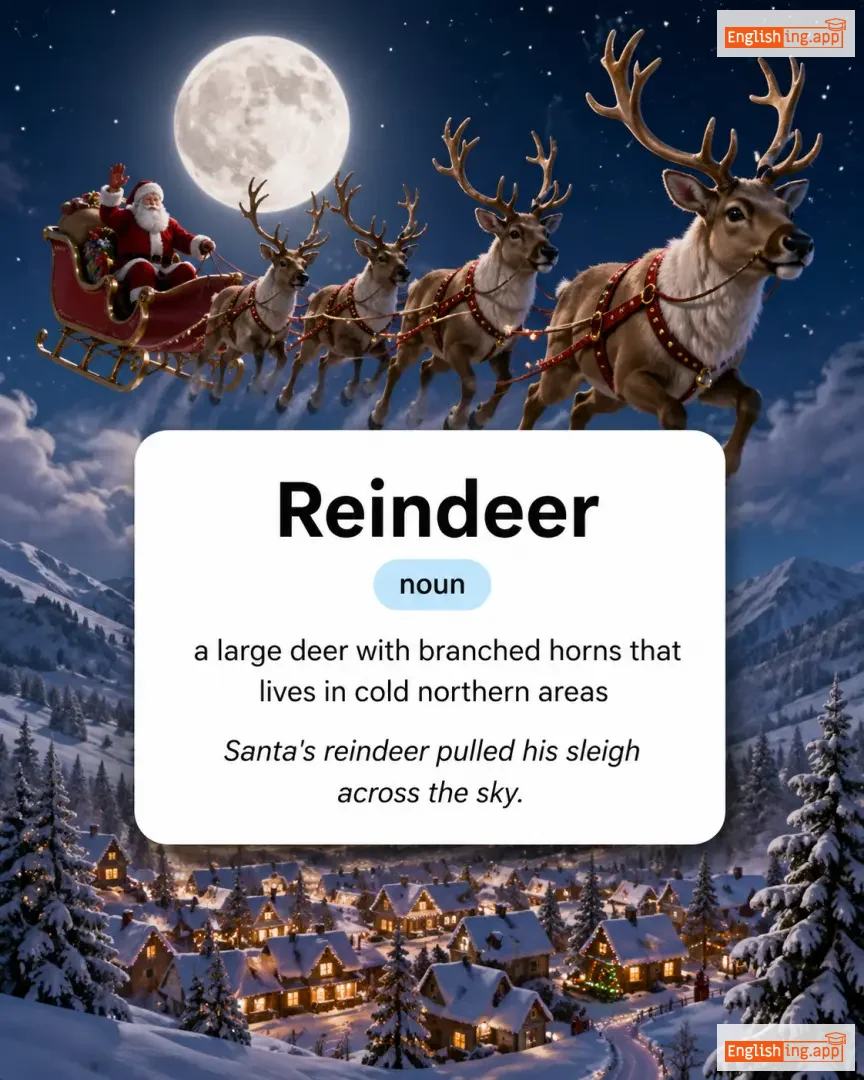
Reindeer definition card — visual illustration of the meaning
noun
/ˈreɪn.dɪər/
северный олень (severnyy olen')

a large deer with branched horns that lives in cold northern areas

"Santa's reindeer pulled his sleigh across the sky."
"Рождественский олень Санты вез его сани по небу." (Rozhdestvenskiy olen' Santi vez ego sani po nebu)
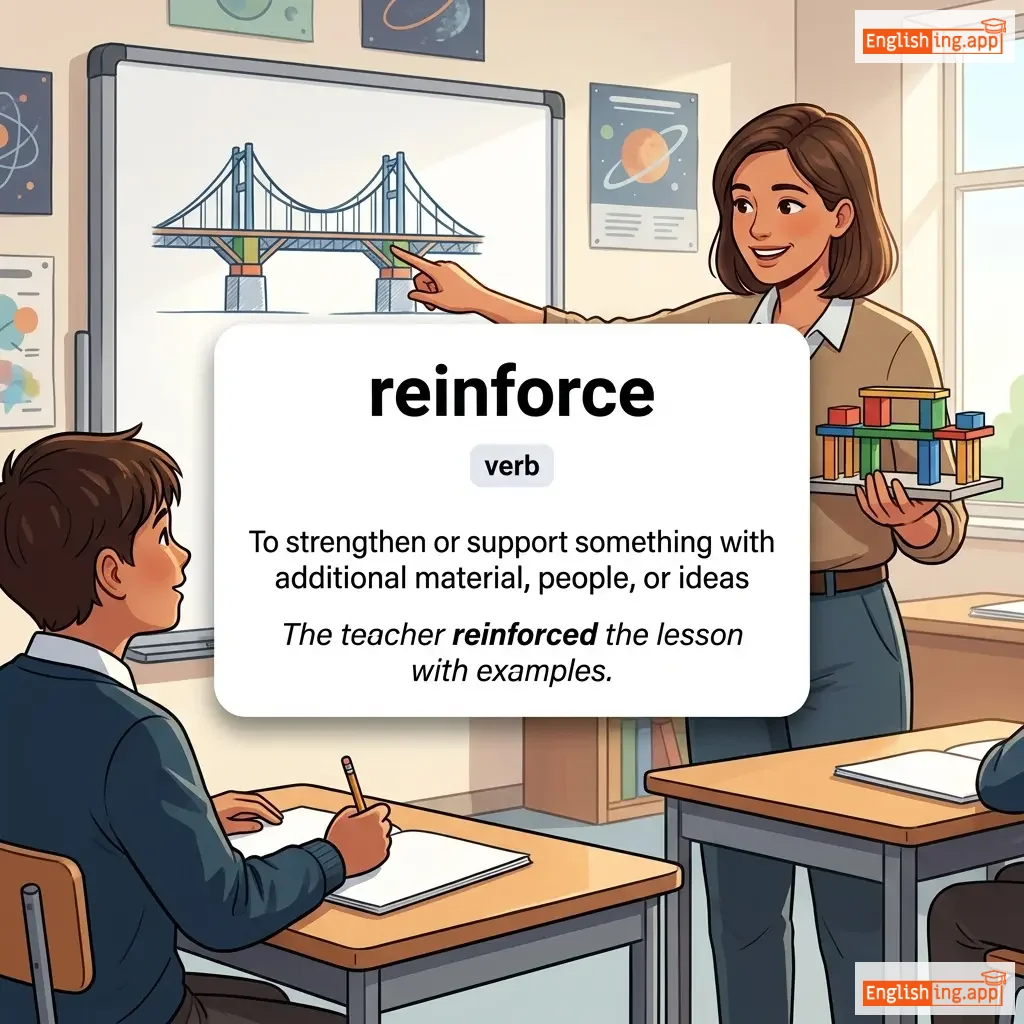
reinforce definition card — visual illustration of the meaning
verb
/ˌriːɪnˈfɔːrs/
усиливать (usilivat)

To strengthen or support something with additional material, people, or ideas

"The teacher reinforced the lesson with examples."
"Учитель укрепил урок с примерами." (Uchitel' ukrepil urok s primerami.)
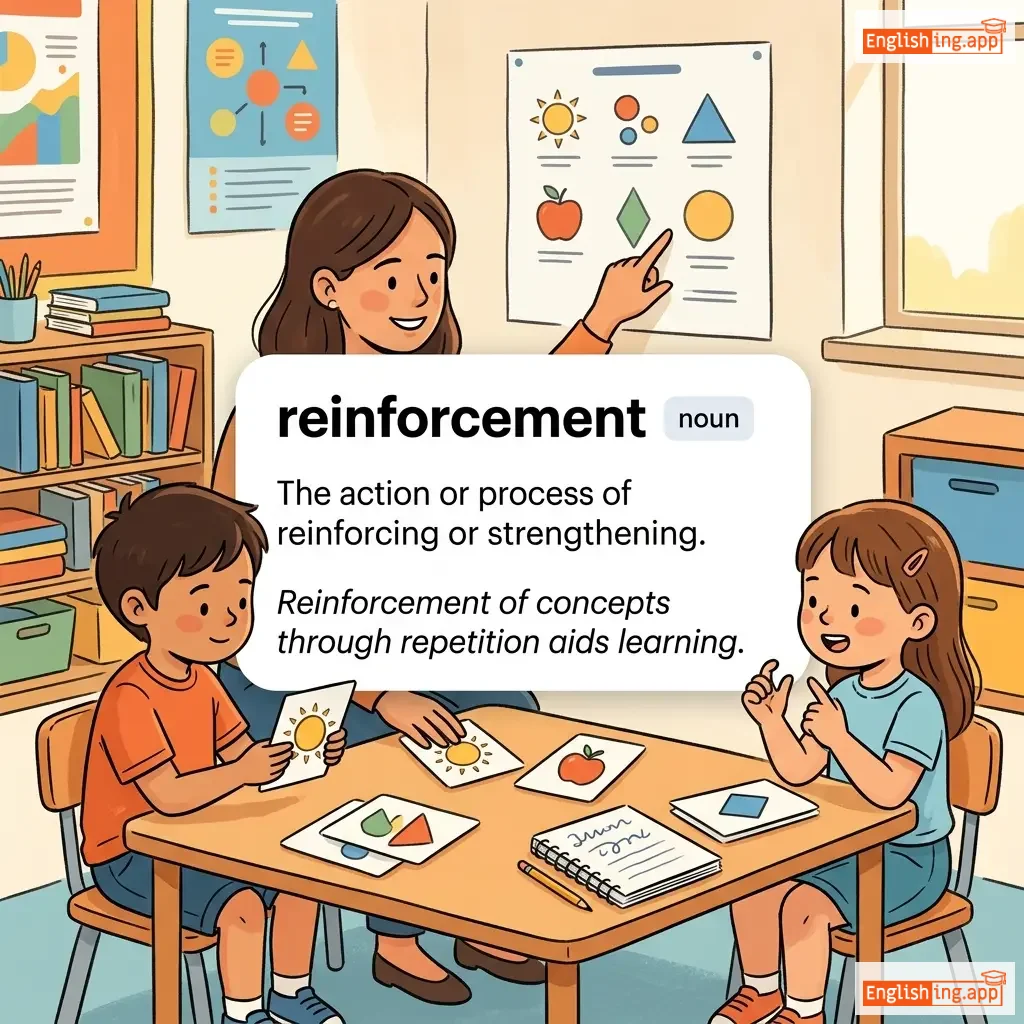
reinforcement definition card — visual illustration of the meaning
noun
ˌriː.ɪnˈfɔːrs.mənt
усиление или укрепление (usilenie ili ukreplenie)

The action or process of reinforcing or strengthening.

"Reinforcement of concepts through repetition aids learning."

"Укрепление концепций через повторение помогает обучению." (Ukreplenie kontseptsiy cherez povtorenie pomogaet obucheniu.)
verb
/ˌriːɪnˈsteɪt/
восстановить (vosstanovit)

To restore someone or something to their former position or condition.

"The company decided to reinstate the suspended employee."

"Компания решила восстановить приостановленного сотрудника." (Kompaniya reshila vosstanovit priostanovlennogo sotrudnika.)
verb
/ˌriːɪnˈtɪɡreɪt/
реинтегрировать (reintegrirovat)

To bring someone or something back into a group or society after being separated.

"The program helps prisoners reintegrate into society."

"Программа помогает заключённым реинтегрироваться в общество." (Programma pomogaet zaklyuchyonnym reintegrirvatsya v obshchestvo.)
verb
/riˈɪtəreɪt/
повторять (povtoryat)

To say something again or repeatedly for emphasis or clarity.

"The teacher reiterated the importance of honesty."
"Учитель повторил важность честности." (Uchitel' povtoril vazhnost' chestnosti.)
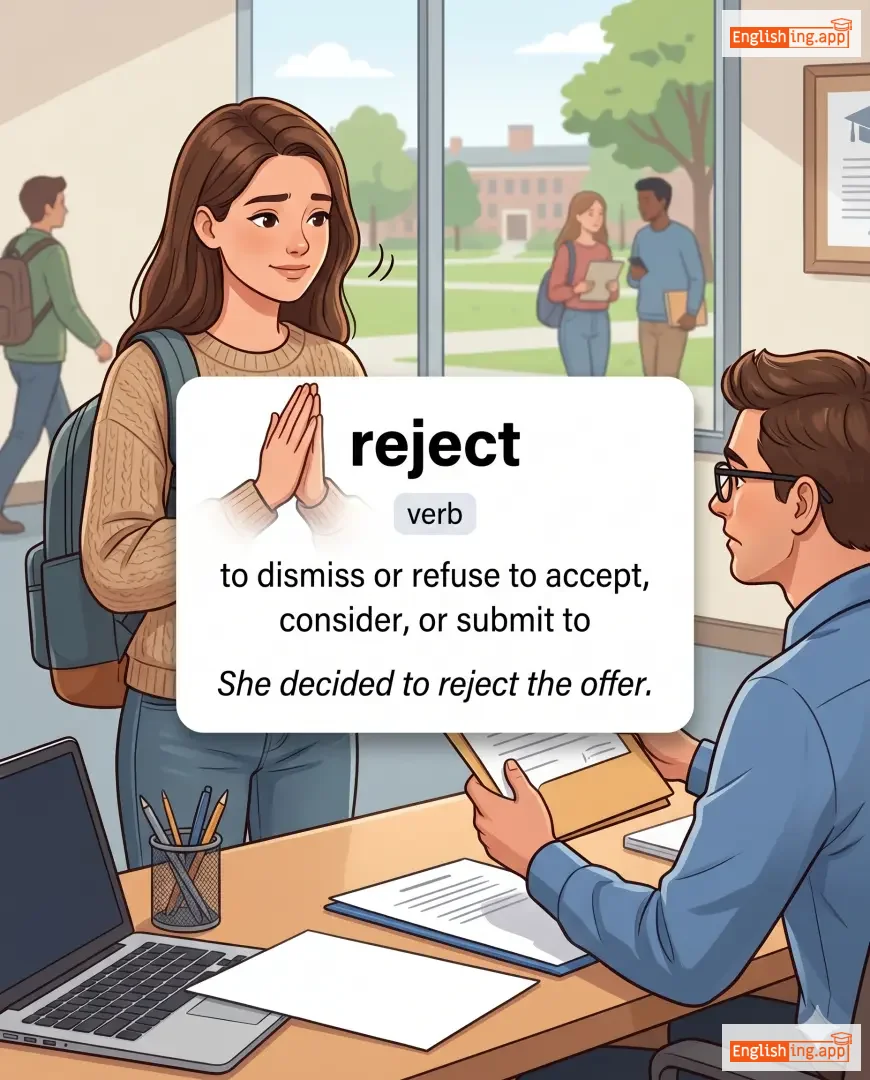
reject definition card — visual illustration of the meaning
verb
/rɪˈdʒɛkt/
отклонять (otklonyat')

to dismiss or refuse to accept, consider, or submit to

"She decided to reject the offer."

"Она решила отклонить предложение." (Ona reshilá otklonit' predlozheniye.)
noun
/rɪˈdʒɛkʃən/
отказ (otkaz)

the action of refusing or dismissing something or someone

"Her rejection of the offer surprised everyone."

"Её отказ от предложения удивил всех." (Yeyo otkaz ot predlozheniya udivil vsekh.)
verb
/rɪˈdʒɔɪs/
радоваться (radovatsya)

To feel or show great joy or delight.

"The fans rejoiced after their team won the championship."

"Фанаты радовались после того, как их команда выиграла чемпионат." (Fanaty radovalis' posle togo, kak ikh komanda vyigrala chempionat.)
noun
/rɪˈdʒɔɪsɪŋ/
радость (radost)

The action of showing great joy or happiness

"There was much rejoicing after the victory."

"После победы было много радости." (Posle pobedy bylo mnogo radosti.)
verb
/riˈdʒɔɪn/
воссоединиться (vossoedinitsya)

to join again or return to a group, place, or activity

"After a short break, she decided to rejoin the team."

"После короткого перерыва она решила вернуться в команду." (Posle korotkogo pereryva ona reshila vernut'sya v komandu.)
noun
/rɪˈdʒɔɪndər/
ответ (otvet)

a quick or witty reply; a response to a remark or argument

"His sharp rejoinder silenced the crowd."
"Его резкий ответ заставил толпу замолчать." (Ego rezkiy otvet zastavil tolpu zamoletchay.)
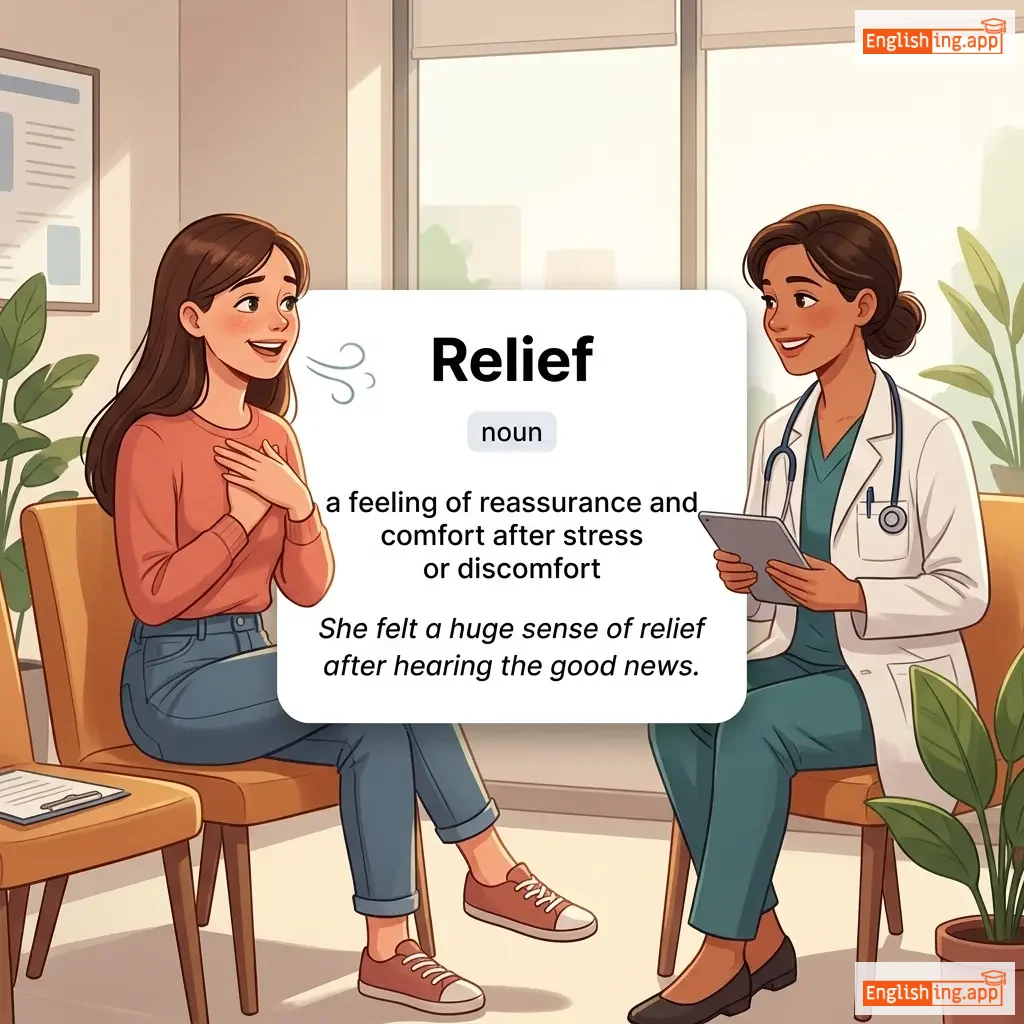
Relief definition card — visual illustration of the meaning
noun
/rɪˈliːf/
облегчение (rileef)

a feeling of reassurance and comfort after stress or discomfort

"She felt a huge sense of relief after hearing the good news."

"Она почувствовала огромное облегчение после того, как услышала хорошие новости." (Ona pochuvstvovala ogromnoye oblegchenie posle togo, kak uslyshala khoroshye novosti.)
Religious definition card — visual illustration of the meaning
adjective
/rɪˈlɪdʒəs/
религиозный (religiozny)

relating to or believing in a religion or faith

"She is a very religious woman who prays every day."

"Она очень религиозная женщина, которая молится каждый день." (Ona ochen' religioznaya zhenshchina, kotoraya molitsya kazhdyj den'.)
noun
/rɪˈlɪdʒ.ən/
религия (religiya)

a system of faith and worship involving belief in a higher power

"Freedom of religion is a fundamental human right."

"Свобода вероисповедания — это основное право человека." (Svoboda veroispovedaniya — eto osnovnoe pravo cheloveka.)
adjective
/rɪˈliːvd/
облегчённый (oblegchyonny)

feeling happy and less worried after something stressful has been removed or resolved

"She felt relieved after hearing the good news."

"Она почувствовала облегчение после того, как услышала хорошие новости." (Ona pochuvstvovala oblegchenie posle togo, kak uslyshala khoroshie novosti.)
verb
/rɪˈliːv/
облегчать (oblegchat)

to make pain, distress, or difficulty less severe or serious

"The medicine helped relieve his headache."
"Медикамент помог облегчить его головную боль." (Medikament pomog oblegchit ego golovnuju bol.)
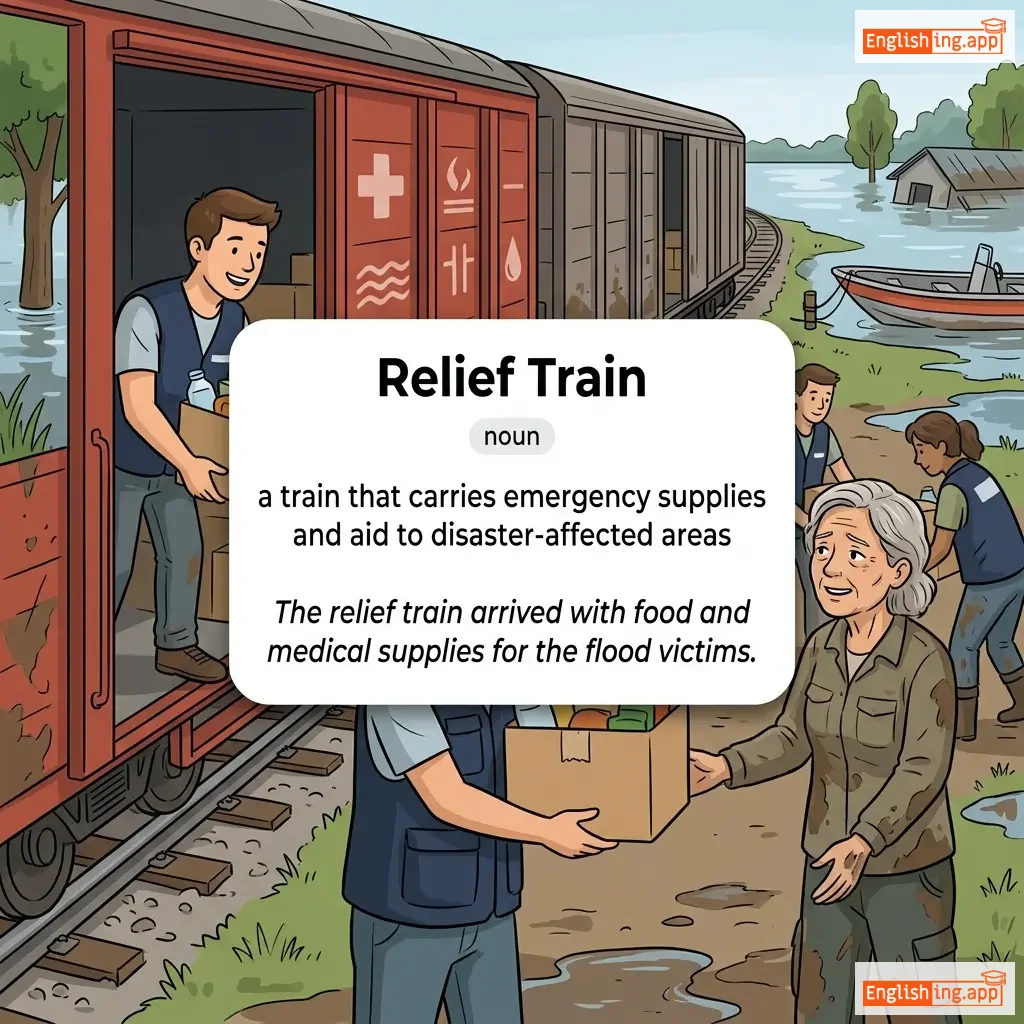
Relief Train definition card — visual illustration of the meaning
noun
/rɪˈliːf treɪn/
поезд помощи (poyezd pomoshchi)

a train that carries emergency supplies and aid to disaster-affected areas

"The relief train arrived with food and medical supplies for the flood victims."

"поезд помощи прибыл с едой и медицинскими припасами для жертв наводнения." (poyezd pomoshchi pribyl s yedoy i meditsinskimi pripasami dlya zhertv navodneniya)
adjective
/rɪˈlaɪ.ənt/
зависимый (zavisimyy)

depending on someone or something for support

"The country is too reliant on imported goods."
"Страна слишком зависит от импортных товаров." (Strana slishkom zavisit ot importnykh tovarov.)
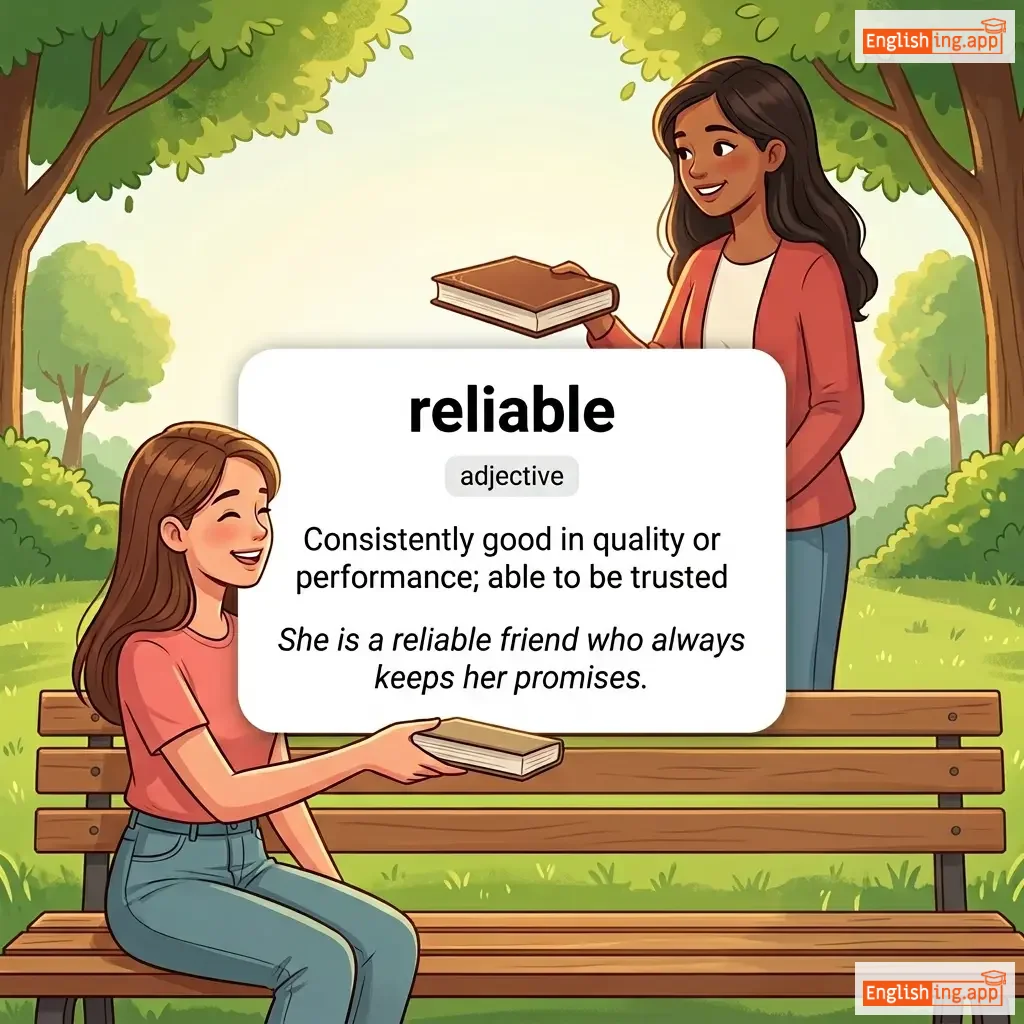
reliable definition card — visual illustration of the meaning
adjective
/rɪˈlaɪəbl/
надежный (nadezhny)

Consistently good in quality or performance; able to be trusted

"She is a reliable friend who always keeps her promises."

"Она надежный друг, который всегда сдерживает свои обещания." (Ona nadezhnyy drug, kotoryy vsegda sderzhivayet svoi obeshchaniya.)
noun
/rɪˈlaɪ.əns/
зависимость (zavisimost)

dependence on or trust in someone or something

"Her reliance on her friends helped her through difficult times."

"Ее зависимость от друзей помогла ей пройти через трудные времена." (Eyo zavisimost' ot druzey pomogla yey proyti cherez trudnye vremena.)
relinquish definition card — visual illustration of the meaning
verb
/rɪˈlɪŋkwɪʃ/
отказаться (otkazatsya)

to give up or let go of something voluntarily

"He had to relinquish control of the company after the merger."

"Он должен был отказаться от контроля над компанией после слияния." (On dolzhen byl otkazat'sya ot kontrolya nad kompaniyey posle sliyania.)
noun
/ˈrɛl.ɪk/
реликвия (relikviya)

an object surviving from an earlier time, often of historical or religious interest

"The museum displayed relics from the ancient civilization."

"Музей выставил реликвии древней цивилизации." (Muzey vystavil relikvii drevney tsivilizatsii.)