語彙集

英単語辞書 | 単語の意味、定義、例文

noun
/ˈreɪn.dɪər/
トナカイ (tonakai)

a large deer with branched horns that lives in cold northern areas

"Santa's reindeer pulled his sleigh across the sky."

"サンタのトナカイは空を越えてソリを引きました。" (Santa no tonakai wa sora o koete sori o hikimashita)
🐎

rein

noun/verb
/reɪn/

A strap used to control a horse; to control or guide something.

"The rider pulled the rein to stop the horse."

verb
/ˌriːɪmˈbɜːrs/
払い戻す (haraimodosu)

to pay back money to someone who has spent it or lost it

"The company reimbursed him for travel expenses."

"会社は彼に旅行費用を払い戻しました。" (Kaisha wa kare ni ryokou hiyou wo haraimodoshimashita.)
verb, noun
/reɪn/
支配する (shihai suru)

to rule as a king or queen; the period during which a sovereign rules

"Queen Elizabeth II reigned for many decades."

"エリザベス2世は何十年も統治していました。" (Erizabesu 2-sei wa nannenzō mo tōchi shiteimashita.)
noun
/rɪˈhɜːrsəl/
リハーサル (rihāsaru)

a practice or trial performance of a play, music, or other work for later public performance

"The actors had a final rehearsal before the play."

"俳優たちは本番前に最終リハーサルを行いました。" (Haiyū-tachi wa honban mae ni saishū rihaasaru o okonai mashita.)
noun
/ˌriːhəˌbɪlɪˈteɪʃən/
幸福 (kōfuku)

the process of restoring someone or something to health or normal life through training or therapy

"After the accident, he went through months of rehabilitation to walk again."

"彼女は賞を受け取ったとき、自分の幸福を隠せなかった。" (Kanojo wa shō o uketotta toki, jibun no kōfuku o kakusenakatta.)
verb
/ˌriːhəˈbɪlɪteɪt/

to restore someone to health, normal life, or a good condition after illness, injury, or imprisonment

"The clinic helps rehabilitate injured athletes."
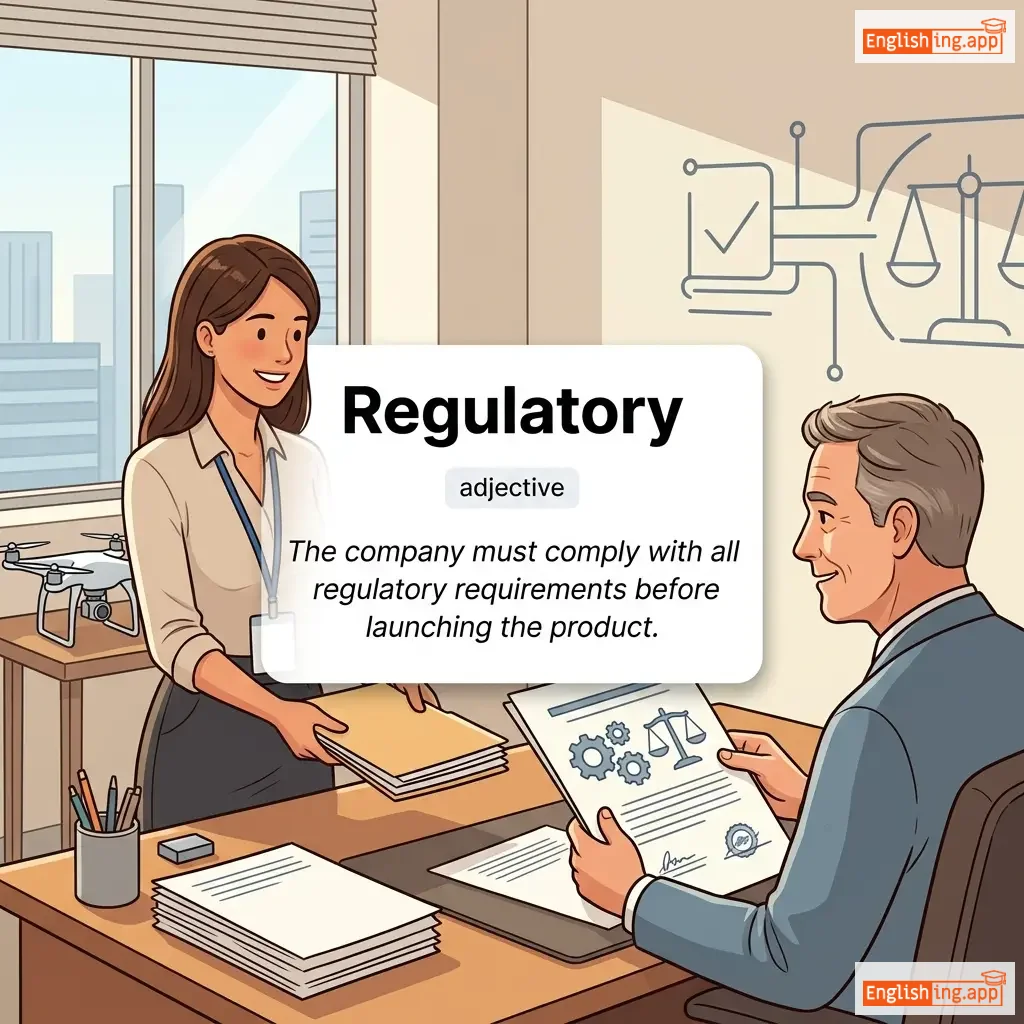
Regulatory definition card — visual illustration of the meaning
adjective
/ˈrɛɡjʊlətɔːri/
規制の (kisei no)

relating to the rules or laws made by an authority to control an activity or process

"The company must comply with all regulatory requirements before launching the product."

"企業は製品を発売する前にすべての規制要件を満たさなければなりません。" (Kigyō wa seihin o hatsubai suru mae ni subete no kisei yōken o mitasanakereba narimasen.)
noun
/ˈrɛɡjəleɪtər/
調整装置 (chōsei sōchi)

a person or device that controls or maintains the operation of a system

"The government appointed a new regulator for the financial sector."
"政府は金融セクターの新しい規制機関を任命した。" (Seifu wa kin'yū sekutā no atarashī kisei kikan o ninmei shita.)
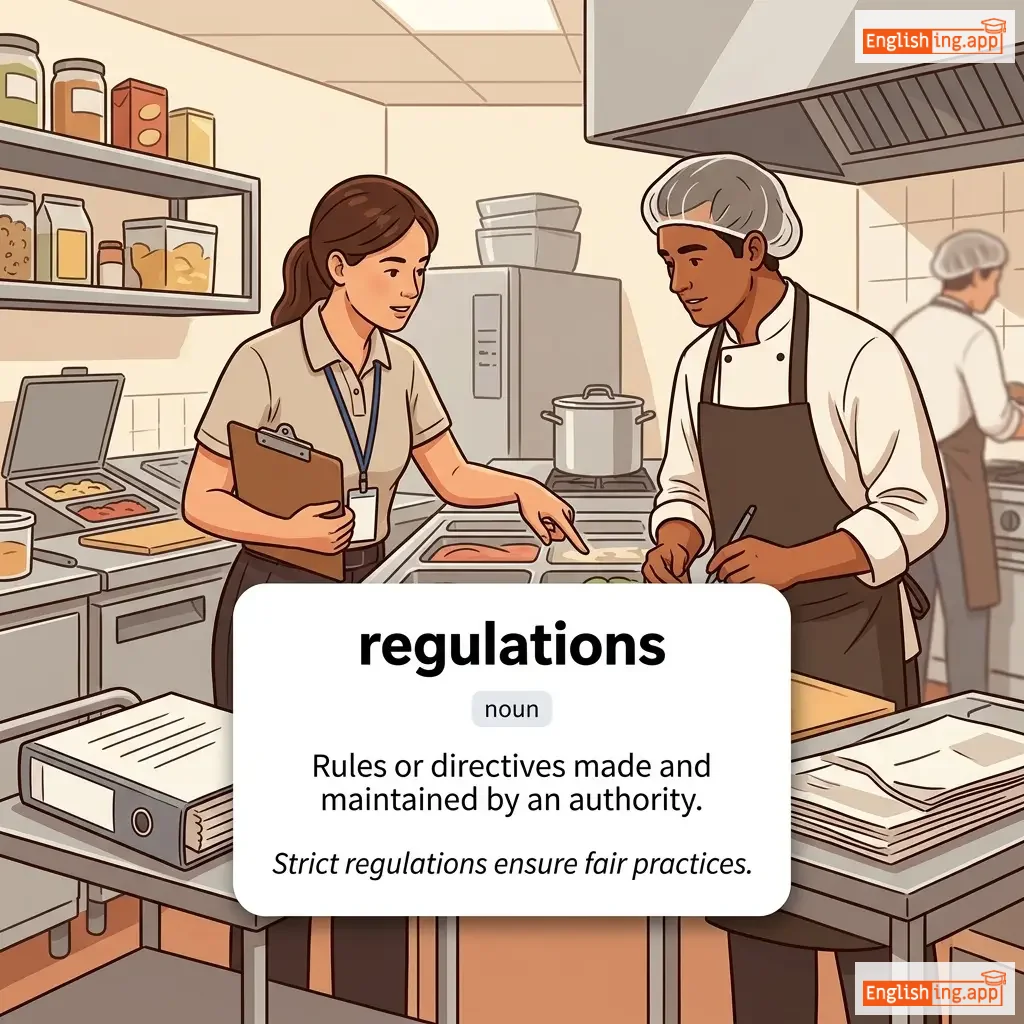
regulations definition card — visual illustration of the meaning
noun
/ˌreɡ.jʊˈleɪ.ʃənz/
規制 (kisei)

Rules or directives made and maintained by an authority.

"Strict regulations ensure fair practices."
"厳格な規制は公正な慣行を確保します。" (Gengaku na kisei wa kōsei na kankō o kakuho shimasu.)
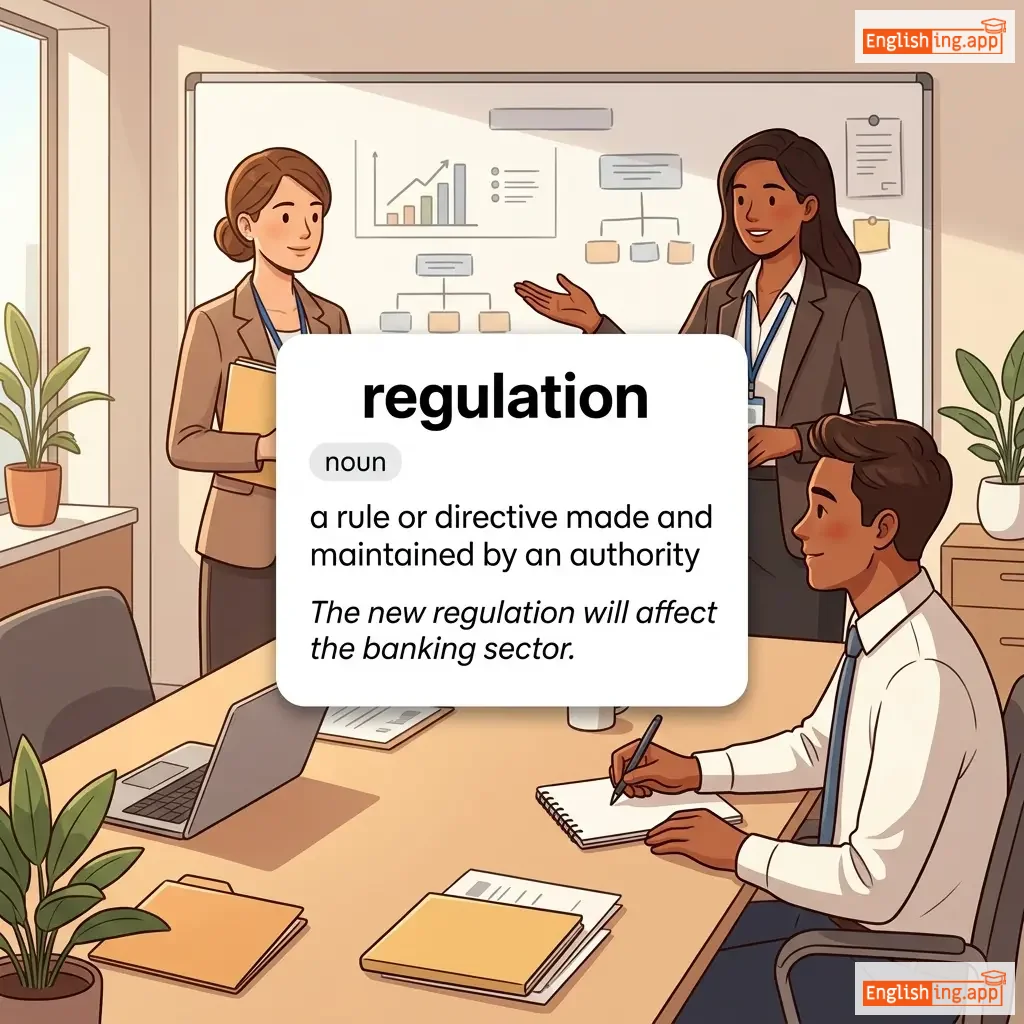
regulation definition card — visual illustration of the meaning
noun
/ˌrɛɡjuˈleɪʃən/
規制 (kisei)

a rule or directive made and maintained by an authority

"The new regulation will affect the banking sector."
"新しい規制は銀行業界に影響を与えるでしょう。" (Atarashii kisei wa ginkou gyoukai ni eikyou wo ataerudeshou.)
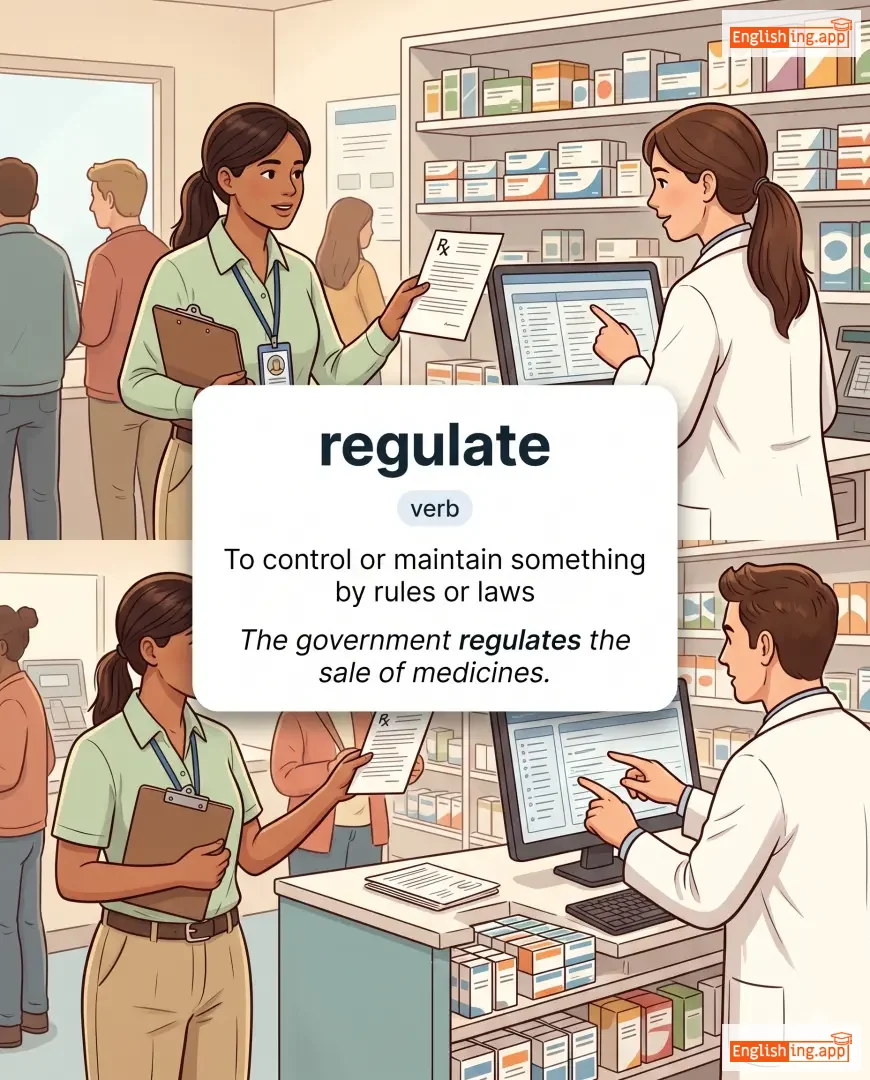
regulate definition card — visual illustration of the meaning
verb
/ˈrɛɡjʊˌleɪt/
規制する (kisei suru)

To control or maintain something by rules or laws

"The government regulates the sale of medicines."

"政府は薬の販売を規制しています。" (Seifu wa kusuri no hanbai o kisei shiteimasu.)
adverb
/ˈrɛɡjələrli/
定期的に (teikiteki ni)

at regular intervals; in a regular manner

"She exercises regularly to stay healthy."

"彼女は健康を保つために定期的に運動します。" (Kanojo wa kenko o tamotsu tame ni teikiteki ni undou shimasu.)
noun
/ˌreɡ.jʊˈlær.ɪ.ti/
規則正しさ (kisoku tadashisa)

the quality of being regular; occurring at fixed intervals or in a consistent pattern

"The regularity of his exercise routine helped him stay healthy."
"彼の運動習慣の規則正しさが健康を維持するのに役立ちました。" (kare no undō shūkan no kisoku tadashisa ga kenkō o iji suru no ni yakudachimashita)
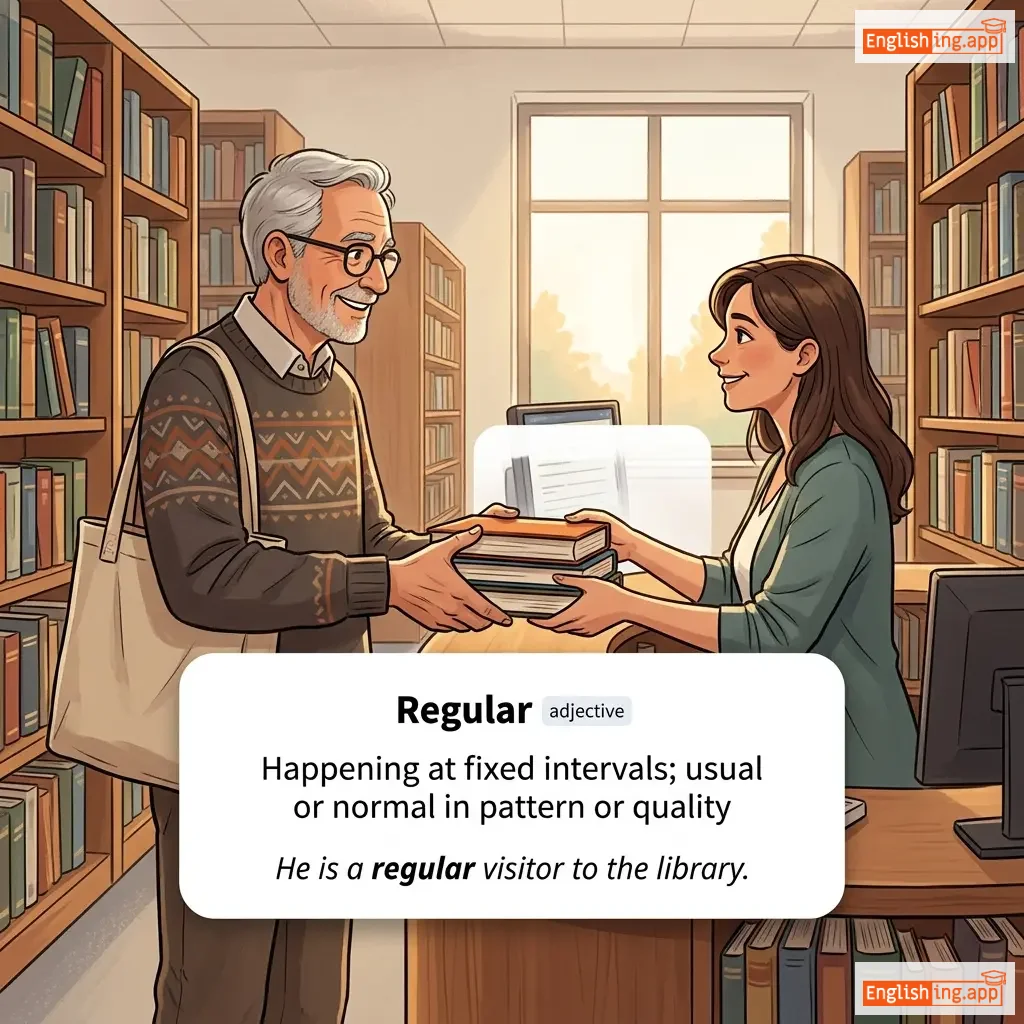
Regular definition card — visual illustration of the meaning
adjective
/ˈrɛɡjələr/
定期的な (teikiteki na)

Happening at fixed intervals; usual or normal in pattern or quality

"He is a regular visitor to the library."

"彼は図書館の定期的な訪問者です。" (Kare wa toshokan no teikiteki na hōmon-sha desu.)
adjective
/rɪˈɡret.ə.bəl/
残念な; 失望させる; 悲しい (zannen na; shitsubō saseru; kanashī)

causing or deserving regret; unfortunate; deplorable

"It is regrettable that so many talented people left the company."

"こんなに多くの才能ある人々が会社を辞めたのは残念です。" (Konnani ōku no sainō aru hitobito ga kaisha o yameta no wa zannen desu.)
adjective
/rɪˈɡrɛtfəl/
後悔している (kōkai shite iru)

feeling or showing sadness or disappointment about something that has happened or been done

"She gave him a regretful smile as she turned away."
"彼女は振り返りながら後悔している笑顔を彼に向けた。" (Kanojo wa furikaeri nagara kōkai shite iru egao o kare ni muketa.)
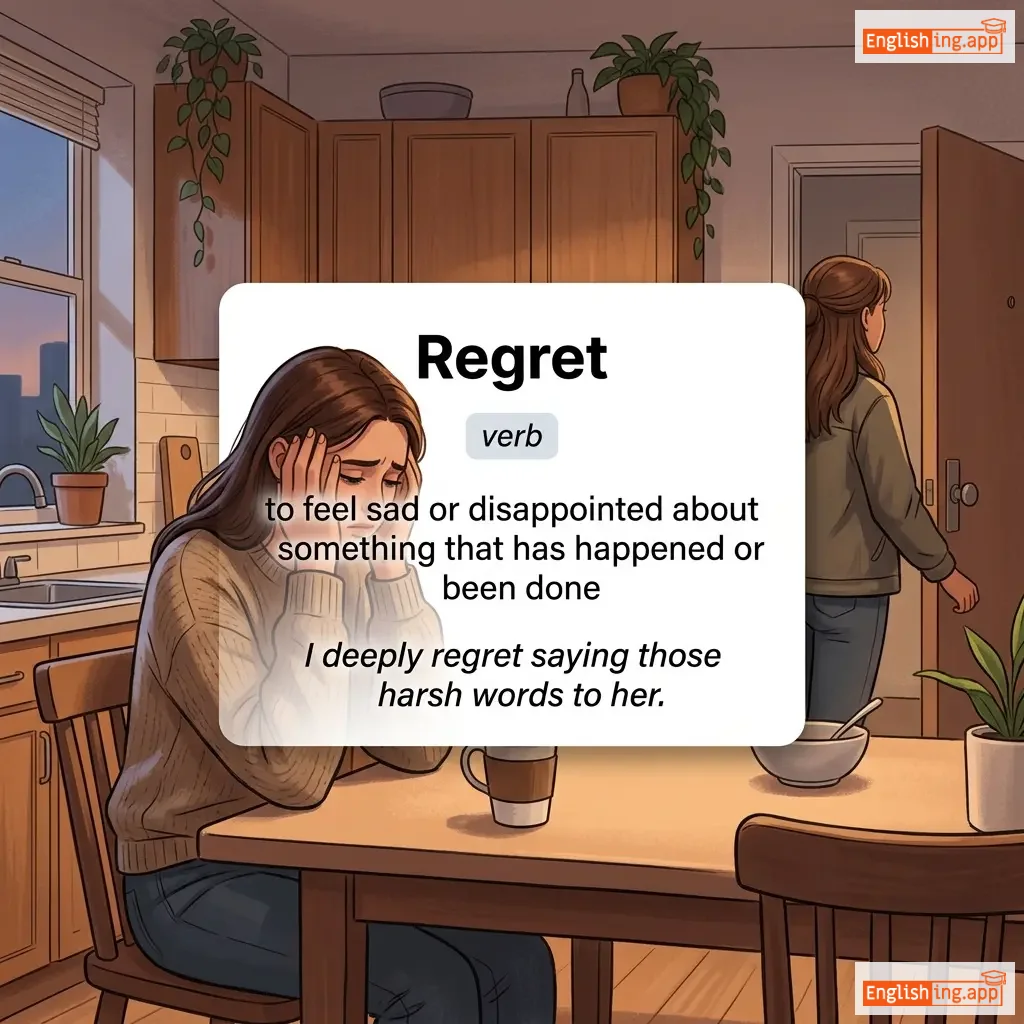
Regret definition card — visual illustration of the meaning
verb
/rɪˈɡrɛt/
後悔する (kōkai suru)

to feel sad or disappointed about something that has happened or been done

"I deeply regret saying those harsh words to her."

"私は彼女にその厳しい言葉を言ったことを深く後悔しています。" (Watashi wa kanojo ni sono kibishii kotoba o itta koto o fukaku kōkai shiteimasu.)
verb
/rɪˈɡrɛs/

To return to a former or less developed state.

"Without proper guidance, the child's progress began to regress."

adjective
/ˈrɛɡnənt/
統治している (tōchi shiteiru)

Reigning; currently holding power, authority, or dominance.

"The regnant queen introduced several reforms during her reign."

"統治している女王は、彼女の統治期間中にいくつかの改革を導入しました。" (Tōchi shiteiru joō wa, kanojo no tōchi kikan-chū ni ikutsuka no kaikaku o dōnyū shimashita.)
noun
/ˌrɛdʒɪˈstreɪʃən/
登録 (tōroku)

the action or process of enrolling or signing up for something

"The registration for the event will close tomorrow."
"イベントの登録は明日締め切りです。" (Ibento no tōroku wa ashita shimekiri desu.)
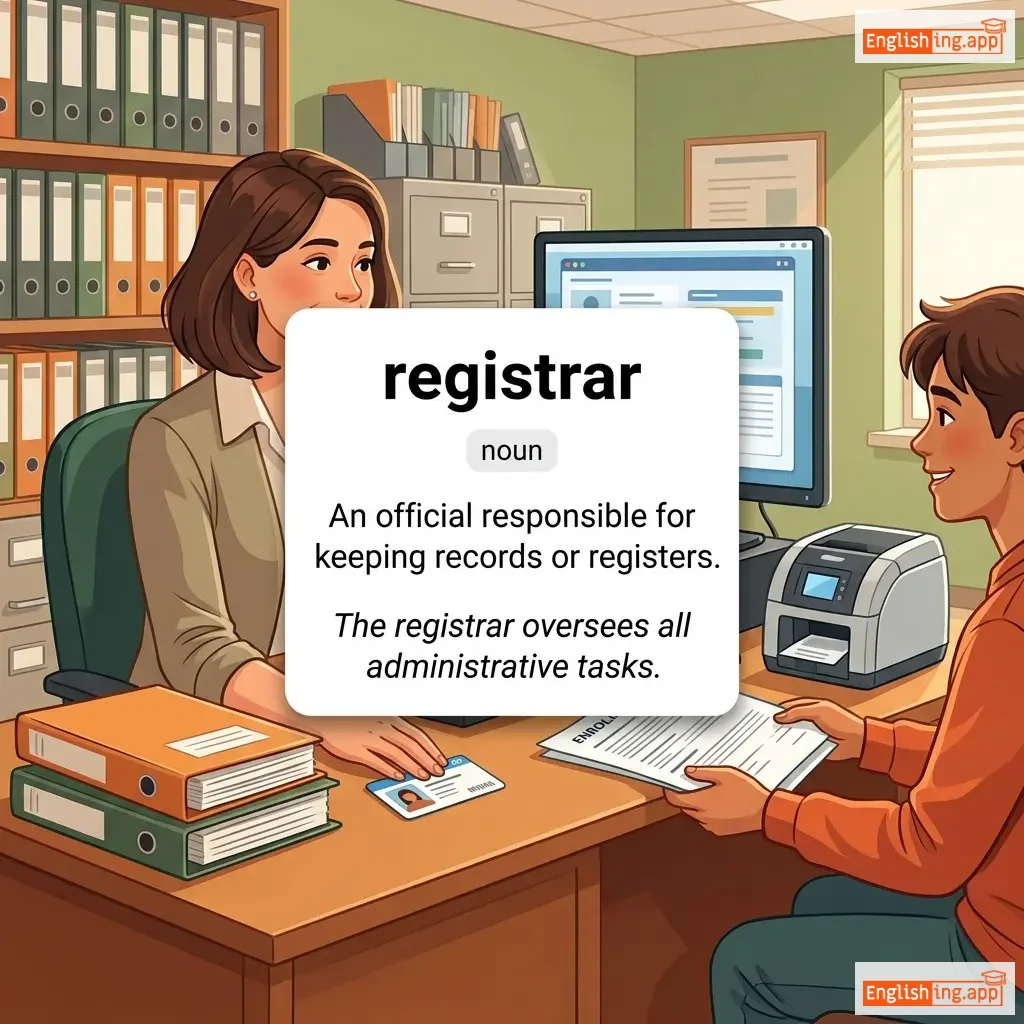
registrar definition card — visual illustration of the meaning
noun
ˈredʒ.ɪ.strɑːr
レジストラー (rejisutora)

An official responsible for keeping records or registers.

"The registrar oversees all administrative tasks."

"レジストラーはすべての行政業務を監督しています。" (Rejisutora wa subete no gyōsei gyōmu o kantoku shiteimasu.)
verb
/ˈrɛdʒɪstər/
登録する (tōroku suru)

To enter or record officially on a list or in a book.

"You must register for the conference before the deadline."
"期限前に会議に登録する必要があります。" (Kigen mae ni kaigi ni tōroku suru hitsuyō ga arimasu.)
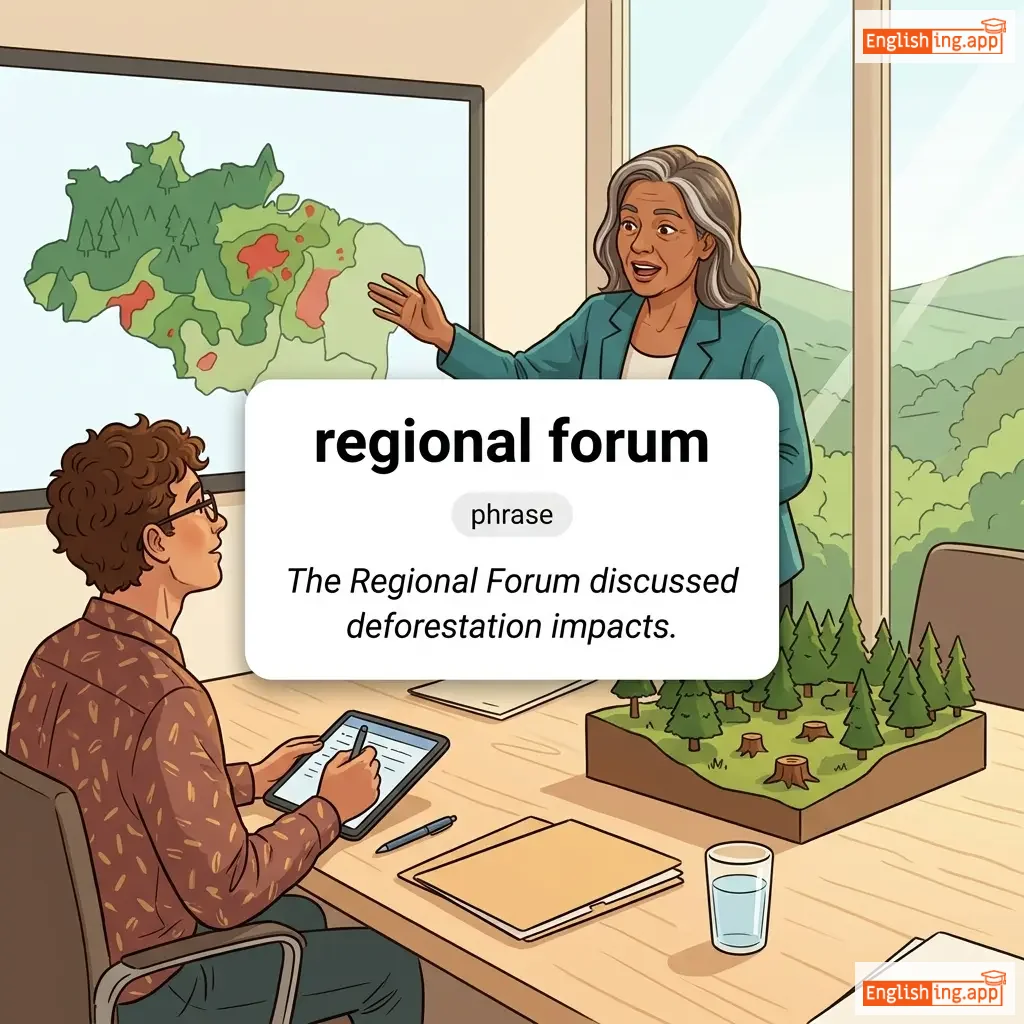
regional forum definition card — visual illustration of the meaning
phrase
ˈriː.dʒən.əl ˈfɔː.rəm
地域フォーラム (chiiki fōramu)

A meeting or conference where representatives from countries or organizations in a specific geographical area discuss issues of common interest.

"The Regional Forum discussed deforestation impacts."
"地域フォーラムでは、森林伐採の影響について議論されました。" (Chiiki fōramu de wa, shinrin bassai no eikyō ni tsuite giron saremashita.)
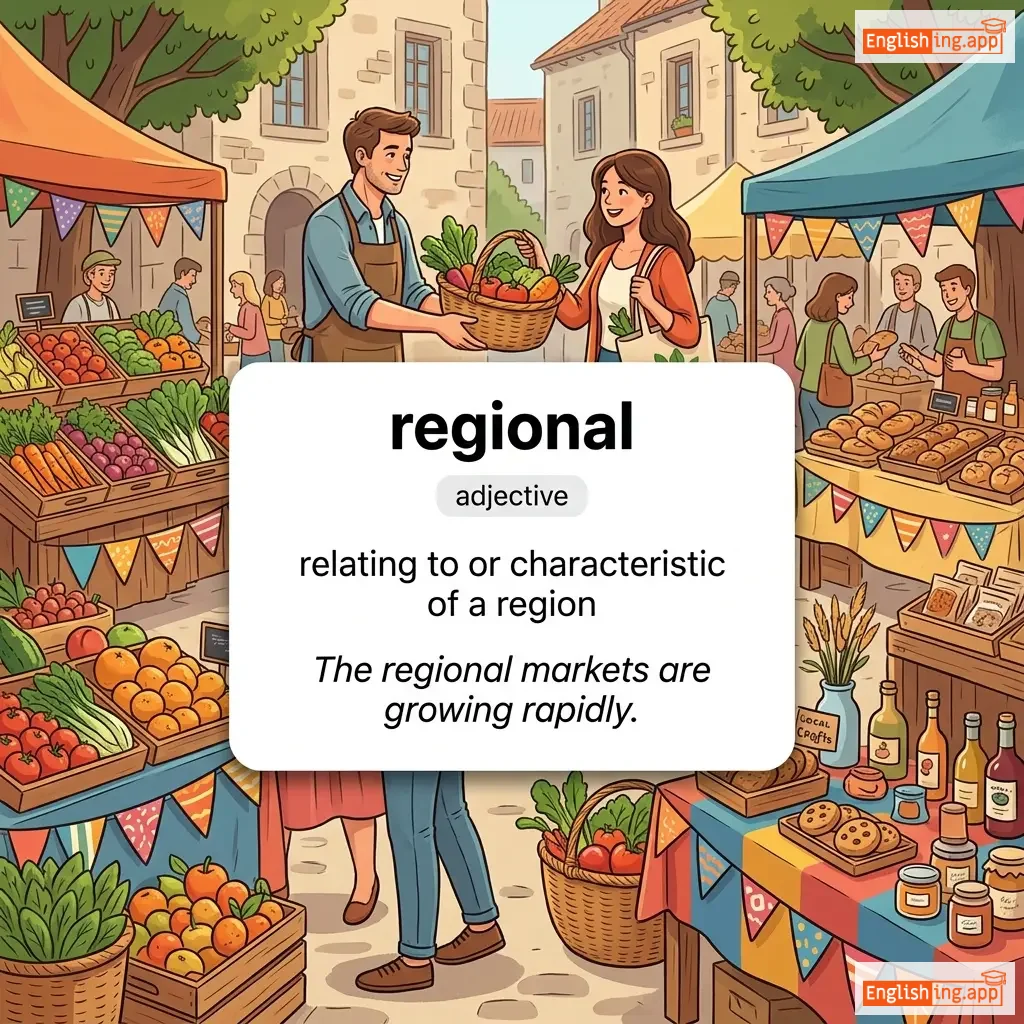
regional definition card — visual illustration of the meaning
adjective
/ˈriːdʒənl/
地域の (chiiki no)

relating to or characteristic of a region

"The regional markets are growing rapidly."
"地域の市場は急速に成長しています。" (Chiiki no shijou wa kyūsoku ni seichou shiteimasu.)
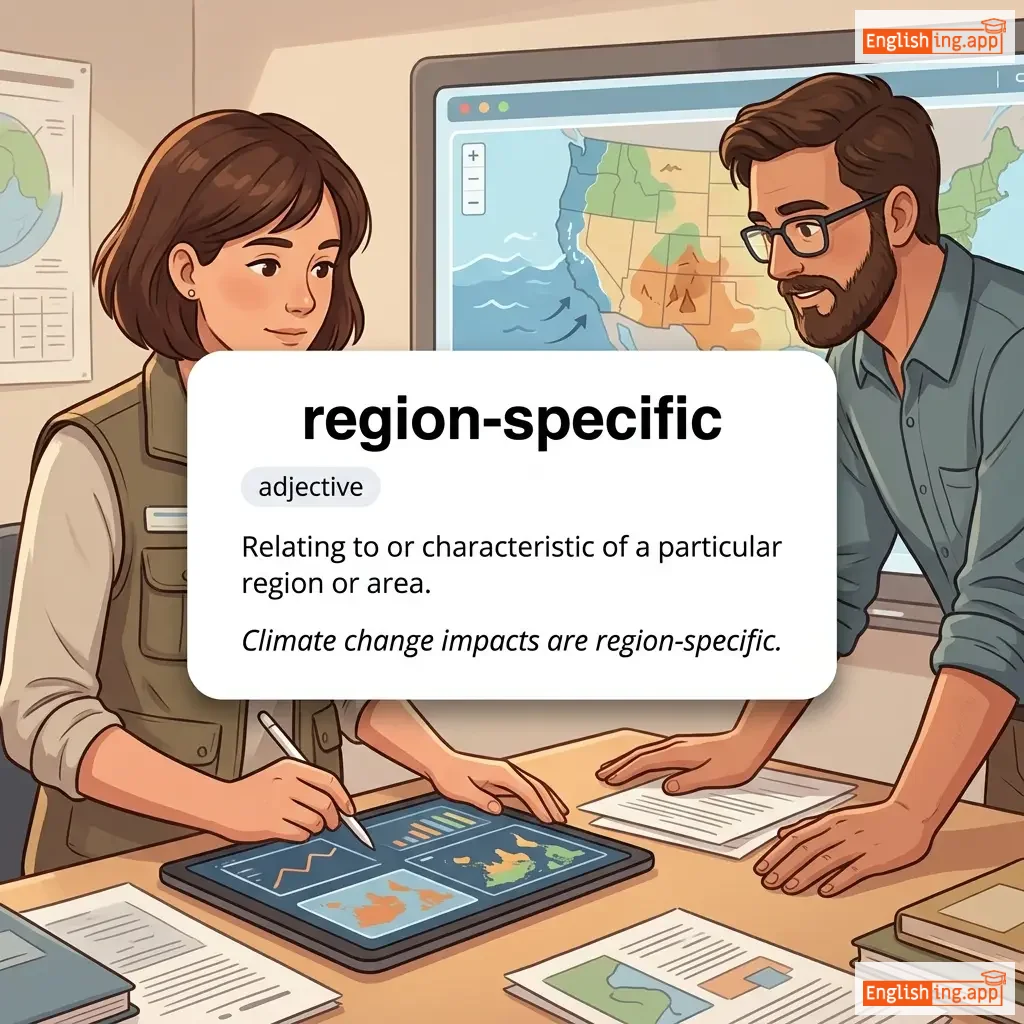
region-specific definition card — visual illustration of the meaning
adjective
ˈriːdʒən spəˈsɪfɪk
地域特有 (chiiki tokuyu)

Relating to or characteristic of a particular region or area.

"Climate change impacts are region-specific."
"気候変動の影響は地域特有です。" (Kikou hendou no eikyou wa chiiki tokuyu desu.)
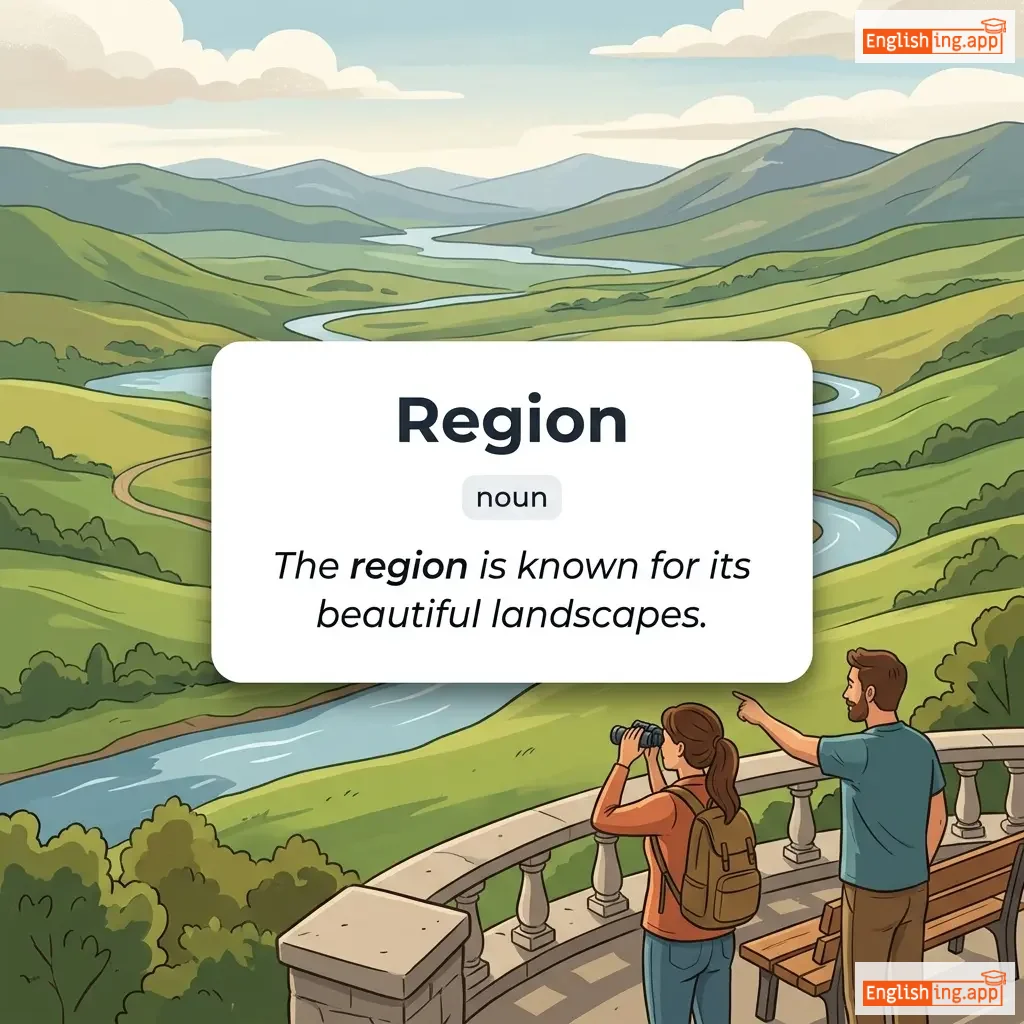
Region definition card — visual illustration of the meaning
noun
/ˈriːdʒən/
地域 (chiiki)

an area or division, especially part of a country or the world having definable characteristics but not always fixed boundaries

"The region is known for its beautiful landscapes."

"その地域は美しい景観で知られています。" (sono chiiki wa utsukushii keikan de shirareteimasu)
🎖️

regiment

noun
/ˈrɛdʒɪmənt/

A permanent unit of an army, typically commanded by a colonel and divided into several companies.

"The regiment marched proudly through the streets after returning from the mission."

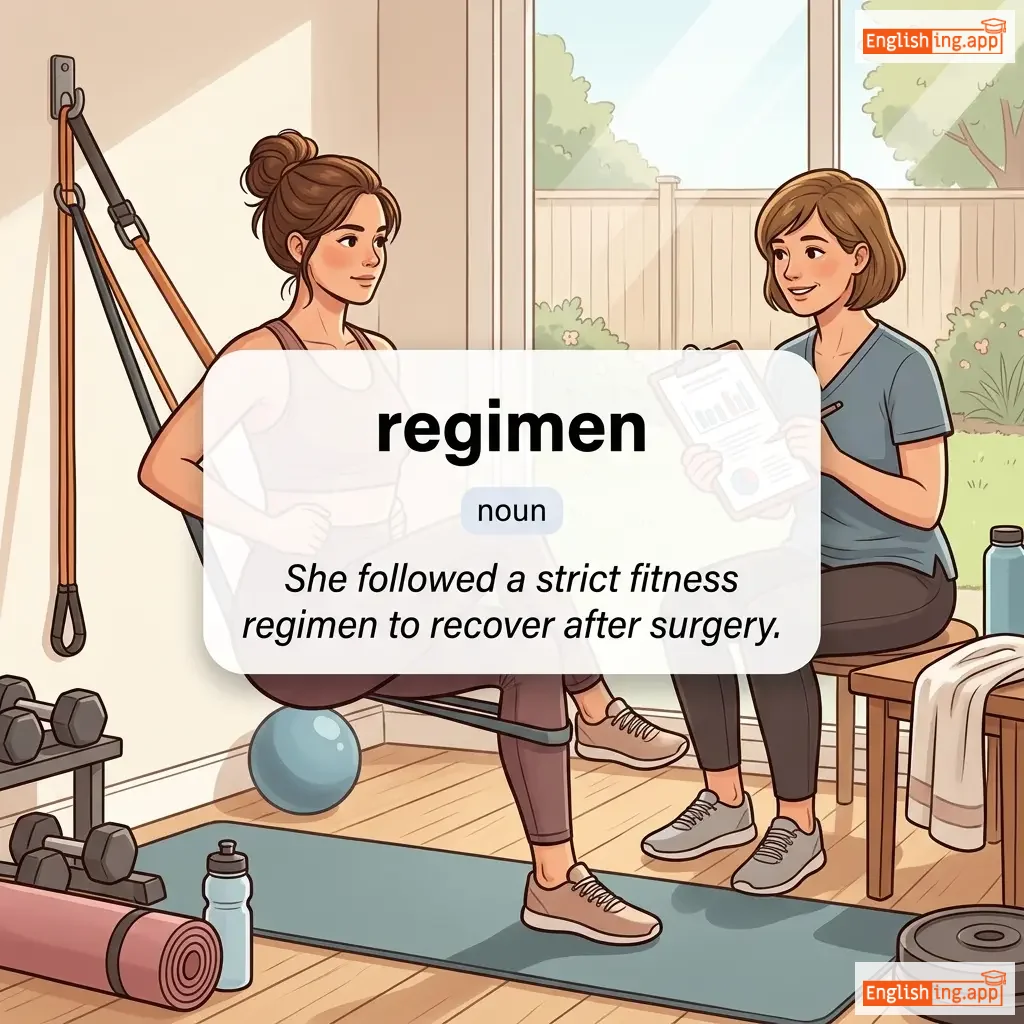
regimen definition card — visual illustration of the meaning
noun
/ˈrɛdʒɪmən/

A prescribed course of medical treatment, diet, or exercise for the promotion or restoration of health.

"She followed a strict fitness regimen to recover after surgery."

noun
/reɪˈʒiːm/
政権 (seiken)

a system or form of government, often authoritarian

"The military regime controlled the country for decades."
"軍事政権は数十年間国を支配していました。" (Gunji seiken wa suujun nenkan kuni o shihaishiteimashita.)
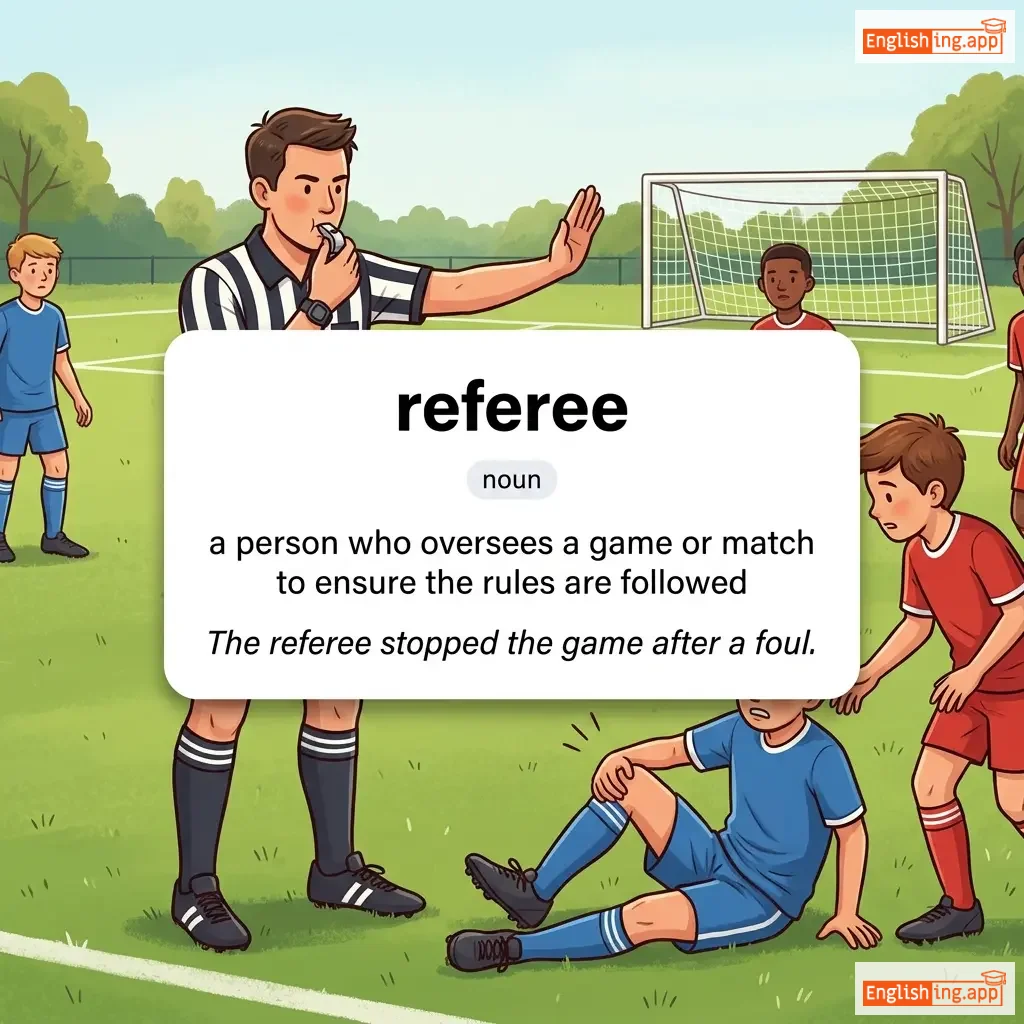
referee definition card — visual illustration of the meaning
noun
/ˌrɛfəˈriː/
審判 (shinpan)

a person who oversees a game or match to ensure the rules are followed

"The referee stopped the game after a foul."

"審判はファウルの後、試合を停止しました。" (Shinpan wa fauru no ato, shiai o teishi shimashita.)
noun
/rɪˈdʌndəns/
冗長 (jōchō)

the state of being unnecessary or more than needed

"The report contained too much redu ndance and repetition."
"報告書には冗長性と繰り返しが多すぎた。" (Hōkokusho ni wa jōchō-sei to kurikaeshi ga ōsugita.)
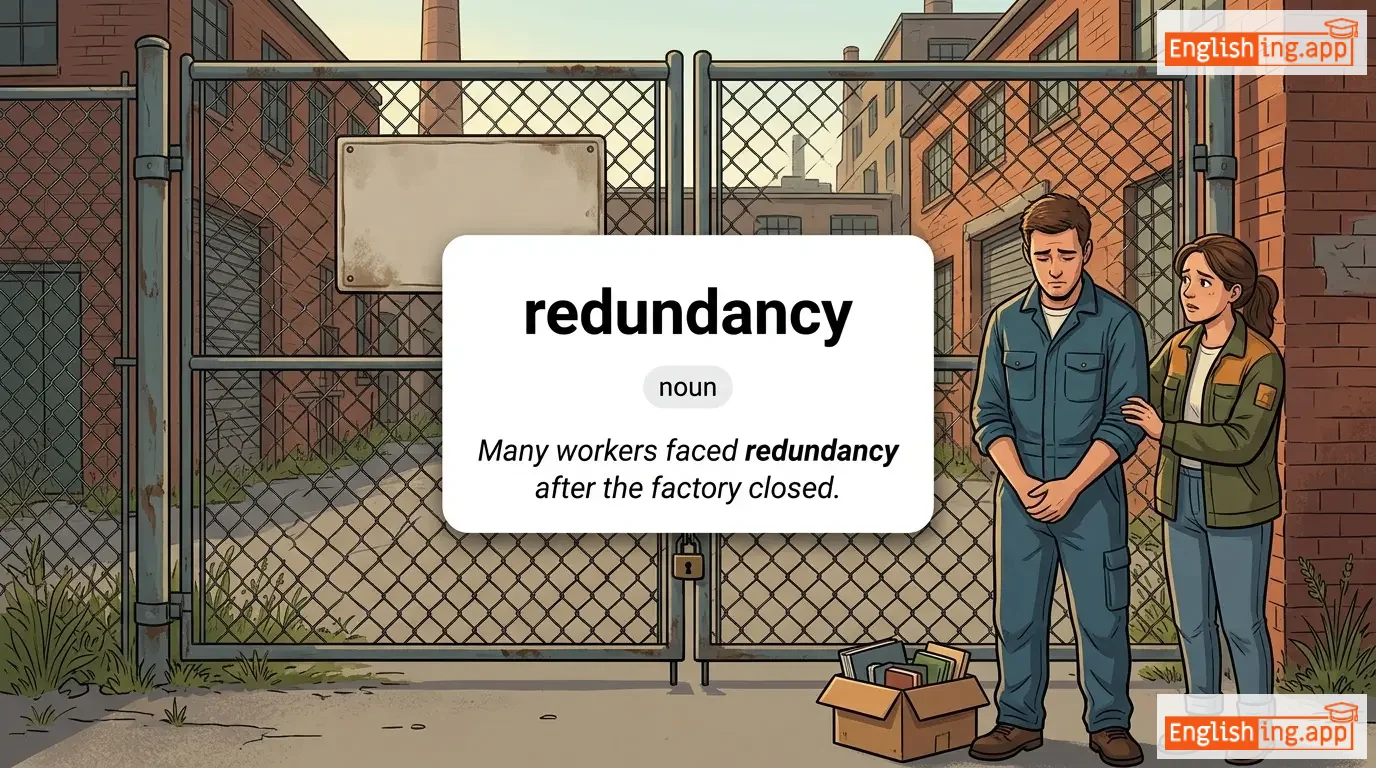
redundancy definition card — visual illustration of the meaning
noun
/rɪˈdʌndənsi/
冗長性 / 解雇 (jōchō-sei / kaiko)

the state of being unnecessary or no longer needed; dismissal from a job due to lack of work

"Many workers faced redundancy after the factory closed."
"工場が閉鎖された後、多くの労働者が冗長性に直面しました。" (Kōjō ga heisa sareta ato, ōku no rōdōsha ga jōchō-sei ni chokumen shimashita.)
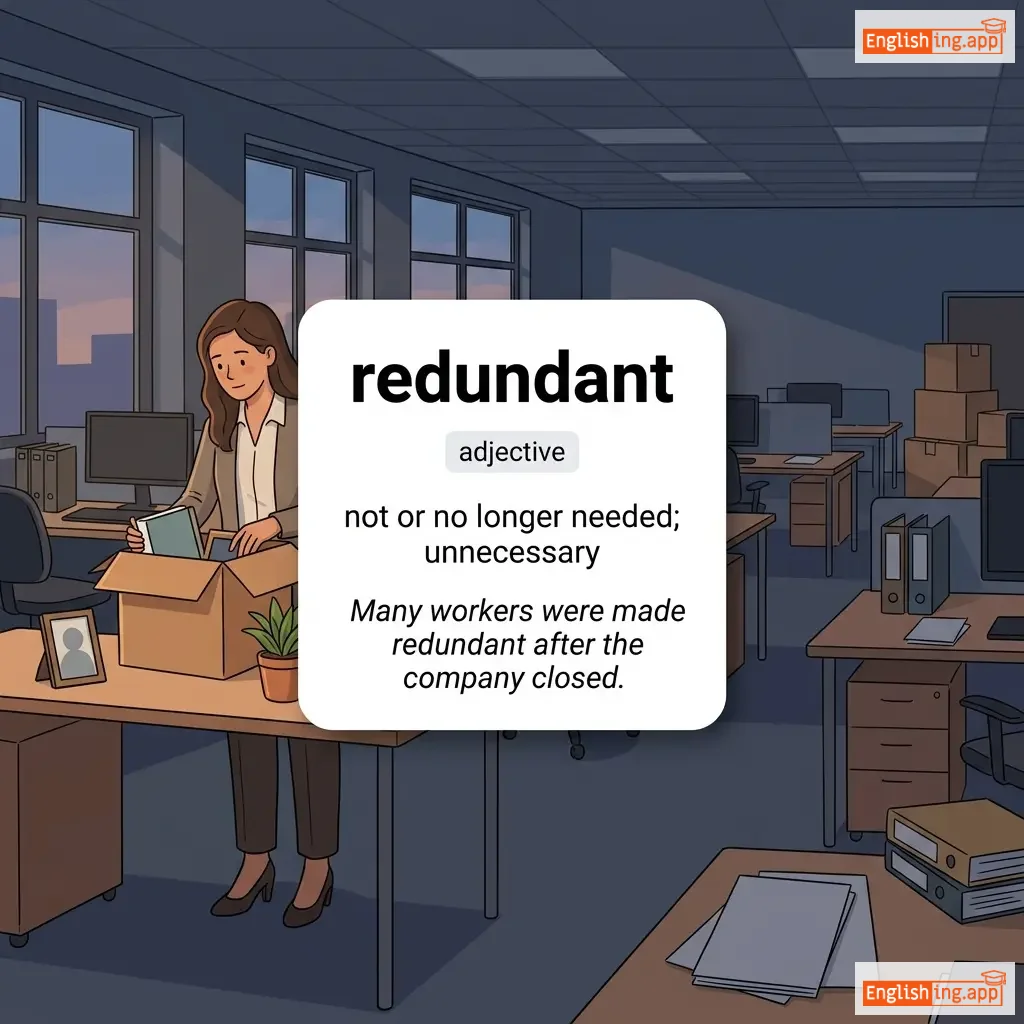
redundant definition card — visual illustration of the meaning
adjective
/rɪˈdʌndənt/
冗長な (jōchōna)

not or no longer needed; unnecessary

"Many workers were made redundant after the company closed."

"会社が閉鎖された後、多くの労働者は冗長だと見なされました。" (Kaisha ga heisa sareta ato, ōku no rōdōsha wa jōchō da to minasaremashita.)
verb
/riːk/
悪臭を放つ (akushuu wo hanatsu)

to smell strongly and unpleasantly; to give off a bad odor

"The garbage bin reeked after being left in the sun."

"ゴミ箱は太陽の下に放置された後、悪臭を放ちました。" (Gomibako wa taiyou no shita ni houchi sareta ato, akushuu wo hanachimashita.)
verb
/riːl/
つまずく / 巻き取る (tsumazuku / makitoru)

to lose balance and stagger; to wind or spin something onto a reel

"He reeled backward after being punched."

"彼は殴られた後、後ろに転んだ。" (Kare wa nagurareta ato, ushiro ni koronda.)
verb
/ˌriː.ɪˈstæblɪʃ/
再建する (saiken suru)

to set up or restore something again after it has been disrupted

"The government worked hard to reestablish peace in the region."

"政府は地域の平和を再建するために懸命に働きました。" (Seifu wa chiiki no heiwa o saiken suru tame ni kenmei ni hatarakimashita.)
noun
/rɪˈfɛkʃən/
食事 / 反省 (shokuji / hansei)

a meal or the act of taking food and drink

"The monks gathered for their evening refection."

"僧侶たちは夕食のために集まりました。" (Sōryo-tachi wa yūshoku no tame ni atsumarimashita.)
noun
/rɪˈfɛktəri/
食堂 (shokudou)

a dining hall, especially in a monastery, convent, or school

"Students had lunch in the refectory."

"学生たちは食堂で昼食をとった。" (Gakuseitachi wa shokudou de chuushoku o totta.)
verb
/rɪˈfɜːr/
紹介する (shoukai suru)

to direct someone to another source of help, information, or decision

"The doctor will refer you to a specialist."

"医者はあなたを専門家に紹介するでしょう。" (Isha wa anata o senmonka ni shoukai suru deshou.)
adjective
/rɪˈfɛrəbəl/
参照可能な (sanshō kanō na)

able to be related or directed to something

"The issue is referable to the new policy changes."

"その問題は新しい政策変更に関連付けることができます。" (Sono mondai wa atarashī seisaku henkō ni kanrendzukeru koto ga dekimasu.)
adjective
/rɪˈfaɪnd/
洗練された; 精製された (senren sareta; seisei sareta)

elegant and cultured in appearance, manner, or taste; purified

"She has very refined taste in art and music."
"彼女は芸術と音楽に非常に洗練された趣味を持っています。" (Kanojo wa geijutsu to ongaku ni hijō ni senren sareta shumi o motteimasu.)
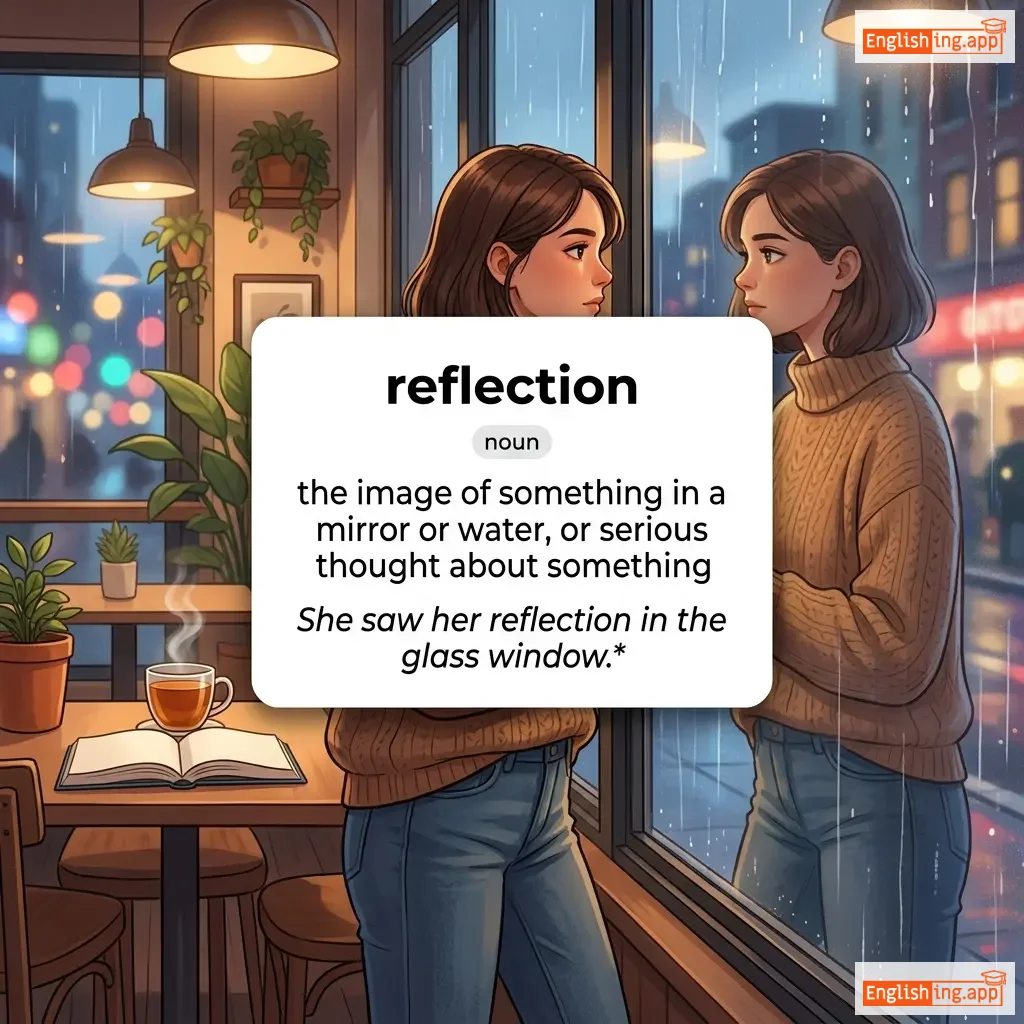
reflection definition card — visual illustration of the meaning
noun
/rɪˈflɛkʃən/
反映 (hanei)

the image of something in a mirror or water, or serious thought about something

"She saw her reflection in the glass window."

"彼女はガラスの窓に自分の反映を見ました。" (Kanojo wa garasu no mado ni jibun no hanei o mimashita.)
reflect definition card — visual illustration of the meaning
verb
/rɪˈflɛkt/
反映する (hanei suru)

to show an image as in a mirror, or to think deeply about something

"The mirror reflects her smiling face."

"鏡は彼女の笑顔を反映しています。" (Kagami wa kanojo no egao o hanei shiteimasu.)
noun
/rɪˈfaɪnəri/
製油所 (seiyujo)

an industrial facility where raw materials are processed and purified

"The oil refinery processes thousands of barrels daily."
"石油精製所は毎日何千バレルもの石油を処理します。" (Sekiyu seisējo wa mainichi nanzenbareru mono sekiyu o shori shimasu.)
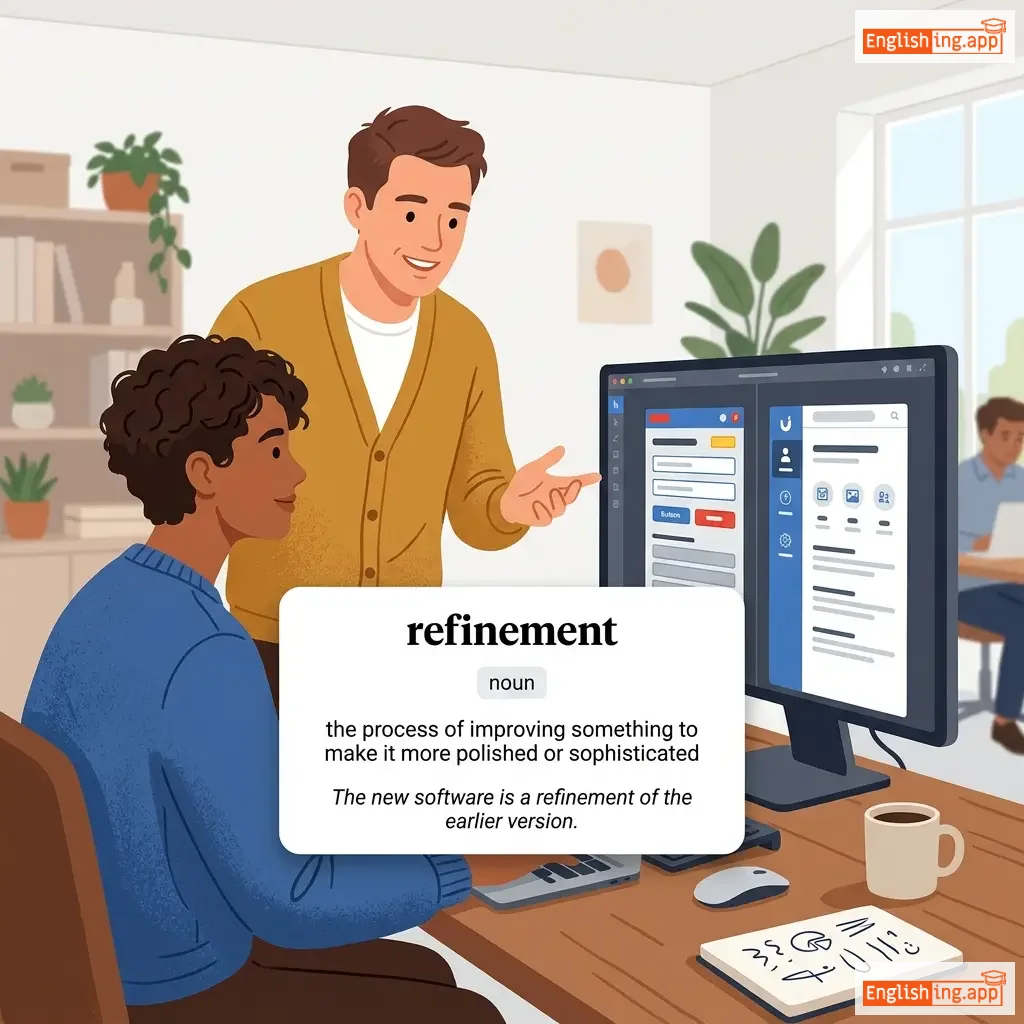
refinement definition card — visual illustration of the meaning
noun
/rɪˈfaɪnmənt/
洗練 (suren)

the process of improving something to make it more polished or sophisticated

"The new software is a refinement of the earlier version."

"新しいソフトウェアは、以前のバージョンの洗練です。" (Atarashī sofutowea wa, izen no bājon no suren desu.)
noun
/rɪˈfɜːrər/
紹介者 (shōkaisha)

a person who directs someone to another person or service

"The referrer earned a bonus for recommending a new client."

"紹介者は新しい顧客を推薦したことでボーナスを得ました。" (Shōkaisha wa atarashī kokyaku o suisen shita koto de bōnasu o emashita.)
noun
/ˈrɛfərəns/
参照 (sanshō)

the action of mentioning or alluding to something

"I need to check the reference for this article."

"この記事の参照を確認する必要があります。" (Kono kiji no sanshō o kakunin suru hitsuyō ga arimasu.)
noun
/ˌrɛfəˈrɛndəm/
国民投票 (kokumin touhyou)

a general vote by the population on a single political issue

"The government held a referendum on the new constitution."
"政府は新しい憲法について国民投票を実施しました。" (Seifu wa atarashii kenpou ni tsuite kokumin touhyou o jisshi shimashita.)
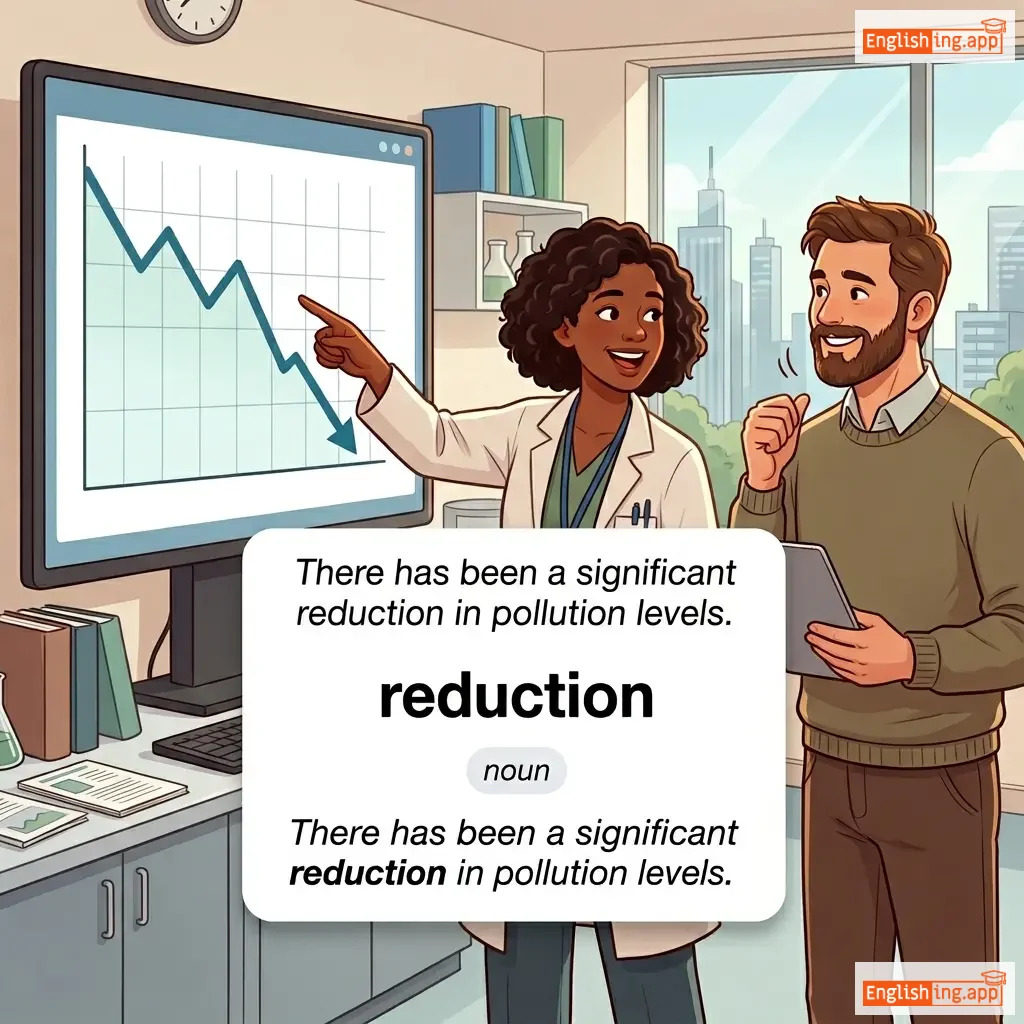
reduction definition card — visual illustration of the meaning
noun
/rɪˈdʌkʃən/
削減 (saku-gen)

the action or process of making something smaller or less in amount, degree, or size

"There has been a significant reduction in pollution levels."

"汚染レベルの重要なリダクションがありました。" (Osengēberu no jūyōna ridakushon ga arimashita.)