語彙集

英単語辞書 | 単語の意味、定義、例文

adjective
/rɪˈdjuːsəbl̩/

capable of being simplified, lessened, or made smaller

"The problem is complex but reducible to a few basic principles."

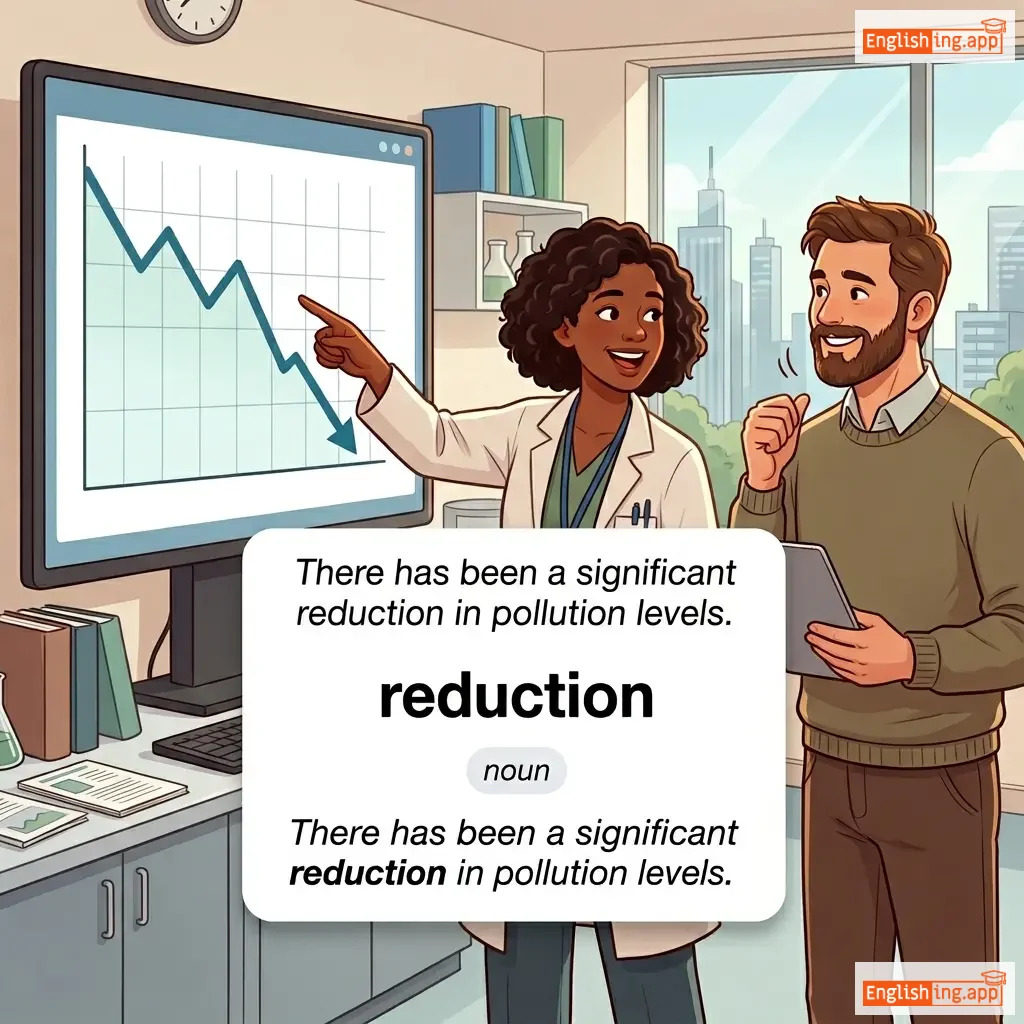
reduction definition card — visual illustration of the meaning
noun
/rɪˈdʌkʃən/
削減 (saku-gen)

the action or process of making something smaller or less in amount, degree, or size

"There has been a significant reduction in pollution levels."

"汚染レベルの重要なリダクションがありました。" (Osengēberu no jūyōna ridakushon ga arimashita.)
noun
/rɪˈdʌndəns/
冗長 (jōchō)

the state of being unnecessary or more than needed

"The report contained too much redu ndance and repetition."
"報告書には冗長性と繰り返しが多すぎた。" (Hōkokusho ni wa jōchō-sei to kurikaeshi ga ōsugita.)
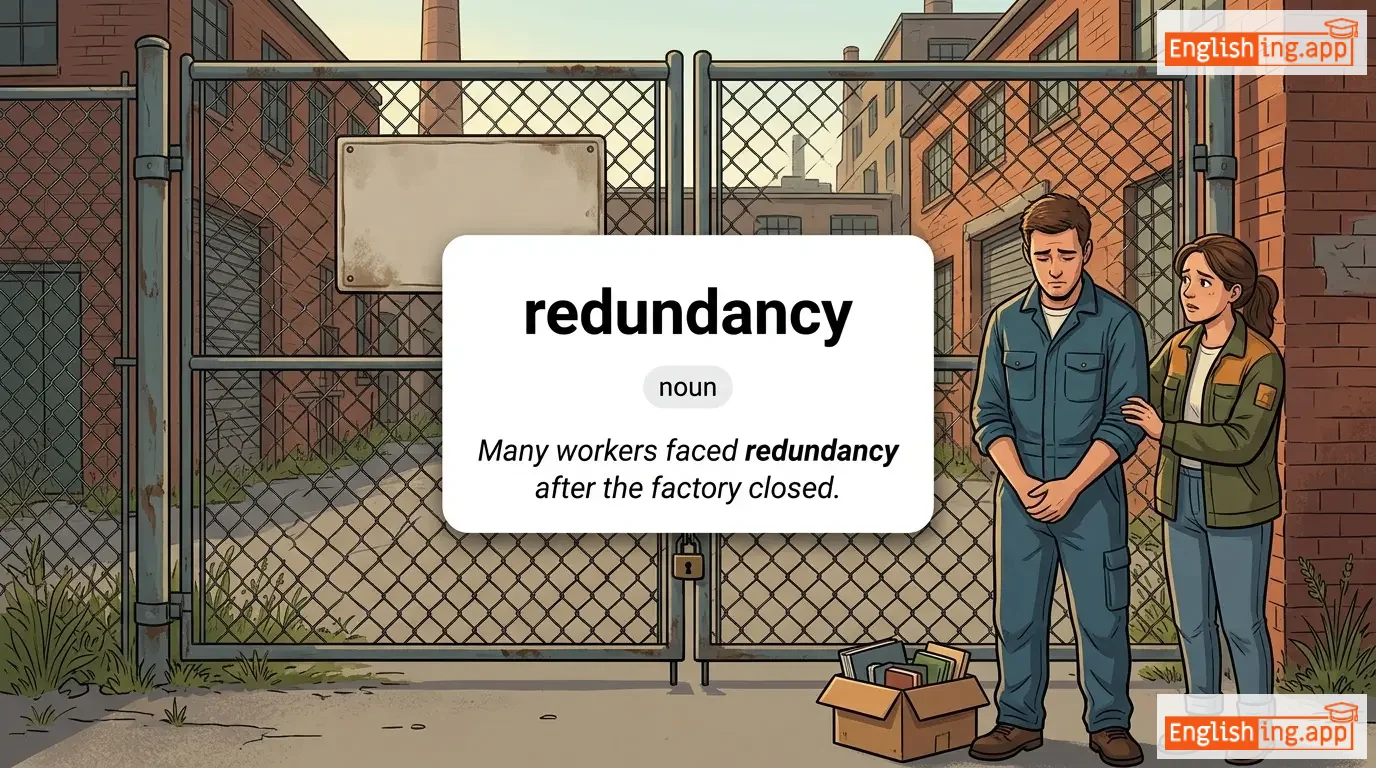
redundancy definition card — visual illustration of the meaning
noun
/rɪˈdʌndənsi/
冗長性 / 解雇 (jōchō-sei / kaiko)

the state of being unnecessary or no longer needed; dismissal from a job due to lack of work

"Many workers faced redundancy after the factory closed."
"工場が閉鎖された後、多くの労働者が冗長性に直面しました。" (Kōjō ga heisa sareta ato, ōku no rōdōsha ga jōchō-sei ni chokumen shimashita.)
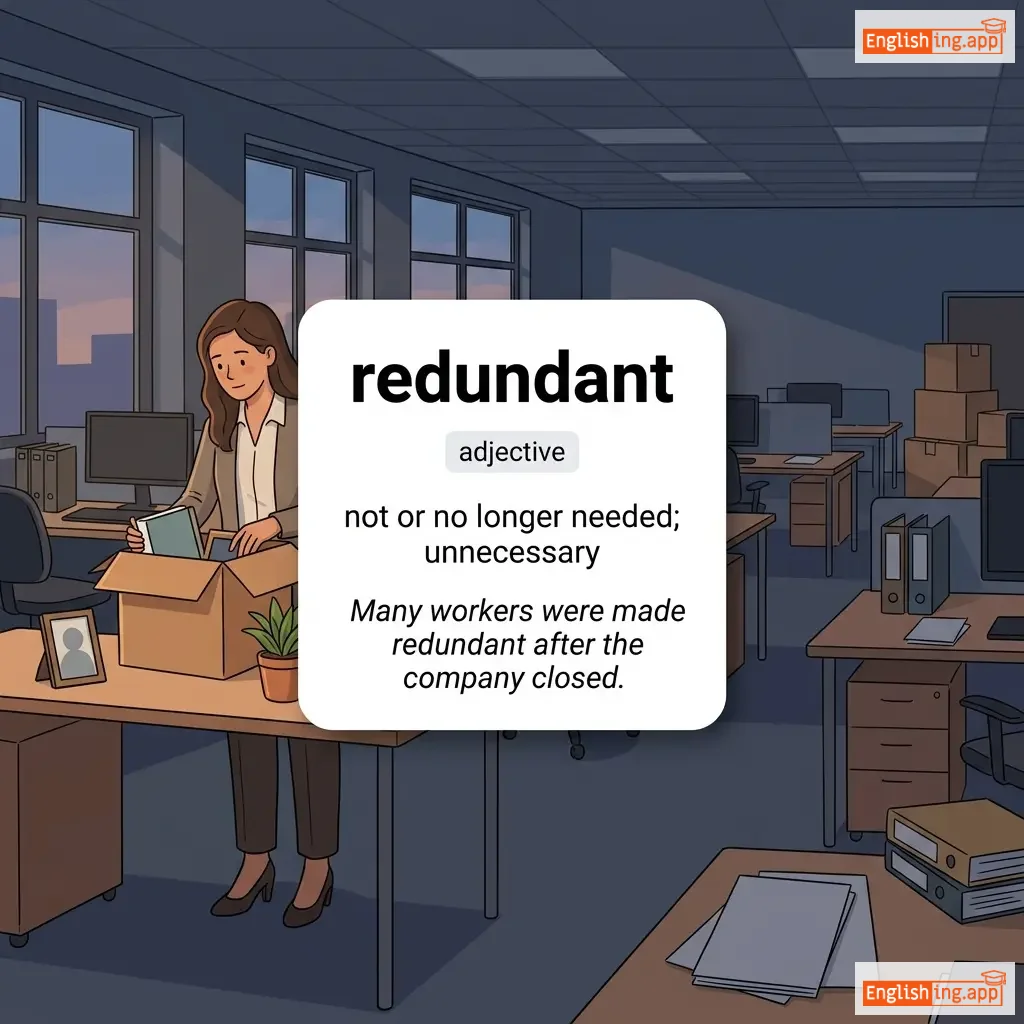
redundant definition card — visual illustration of the meaning
adjective
/rɪˈdʌndənt/
冗長な (jōchōna)

not or no longer needed; unnecessary

"Many workers were made redundant after the company closed."

"会社が閉鎖された後、多くの労働者は冗長だと見なされました。" (Kaisha ga heisa sareta ato, ōku no rōdōsha wa jōchō da to minasaremashita.)
verb
/riːk/
悪臭を放つ (akushuu wo hanatsu)

to smell strongly and unpleasantly; to give off a bad odor

"The garbage bin reeked after being left in the sun."

"ゴミ箱は太陽の下に放置された後、悪臭を放ちました。" (Gomibako wa taiyou no shita ni houchi sareta ato, akushuu wo hanachimashita.)
verb
/riːl/
つまずく / 巻き取る (tsumazuku / makitoru)

to lose balance and stagger; to wind or spin something onto a reel

"He reeled backward after being punched."

"彼は殴られた後、後ろに転んだ。" (Kare wa nagurareta ato, ushiro ni koronda.)
verb
/ˌriː.ɪˈstæblɪʃ/
再建する (saiken suru)

to set up or restore something again after it has been disrupted

"The government worked hard to reestablish peace in the region."

"政府は地域の平和を再建するために懸命に働きました。" (Seifu wa chiiki no heiwa o saiken suru tame ni kenmei ni hatarakimashita.)
noun
/rɪˈfɛkʃən/
食事 / 反省 (shokuji / hansei)

a meal or the act of taking food and drink

"The monks gathered for their evening refection."

"僧侶たちは夕食のために集まりました。" (Sōryo-tachi wa yūshoku no tame ni atsumarimashita.)
noun
/rɪˈfɛktəri/
食堂 (shokudou)

a dining hall, especially in a monastery, convent, or school

"Students had lunch in the refectory."

"学生たちは食堂で昼食をとった。" (Gakuseitachi wa shokudou de chuushoku o totta.)
verb
/rɪˈfɜːr/
紹介する (shoukai suru)

to direct someone to another source of help, information, or decision

"The doctor will refer you to a specialist."

"医者はあなたを専門家に紹介するでしょう。" (Isha wa anata o senmonka ni shoukai suru deshou.)
adjective
/rɪˈfɛrəbəl/
参照可能な (sanshō kanō na)

able to be related or directed to something

"The issue is referable to the new policy changes."
"その問題は新しい政策変更に関連付けることができます。" (Sono mondai wa atarashī seisaku henkō ni kanrendzukeru koto ga dekimasu.)
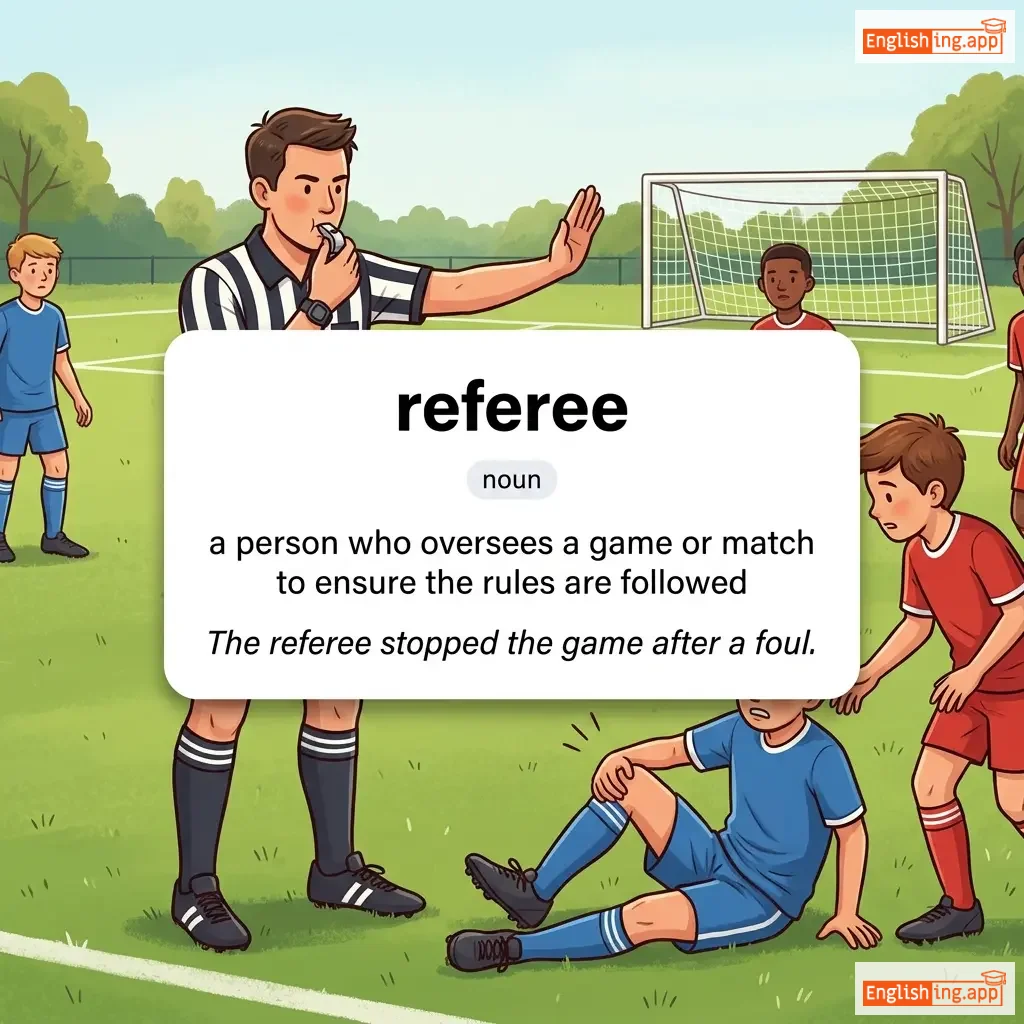
referee definition card — visual illustration of the meaning
noun
/ˌrɛfəˈriː/
審判 (shinpan)

a person who oversees a game or match to ensure the rules are followed

"The referee stopped the game after a foul."

"審判はファウルの後、試合を停止しました。" (Shinpan wa fauru no ato, shiai o teishi shimashita.)
noun
/ˈrɛfərəns/
参照 (sanshō)

the action of mentioning or alluding to something

"I need to check the reference for this article."

"この記事の参照を確認する必要があります。" (Kono kiji no sanshō o kakunin suru hitsuyō ga arimasu.)
noun
/ˌrɛfəˈrɛndəm/
国民投票 (kokumin touhyou)

a general vote by the population on a single political issue

"The government held a referendum on the new constitution."

"政府は新しい憲法について国民投票を実施しました。" (Seifu wa atarashii kenpou ni tsuite kokumin touhyou o jisshi shimashita.)
noun
/rɪˈfɜːrər/
紹介者 (shōkaisha)

a person who directs someone to another person or service

"The referrer earned a bonus for recommending a new client."
"紹介者は新しい顧客を推薦したことでボーナスを得ました。" (Shōkaisha wa atarashī kokyaku o suisen shita koto de bōnasu o emashita.)
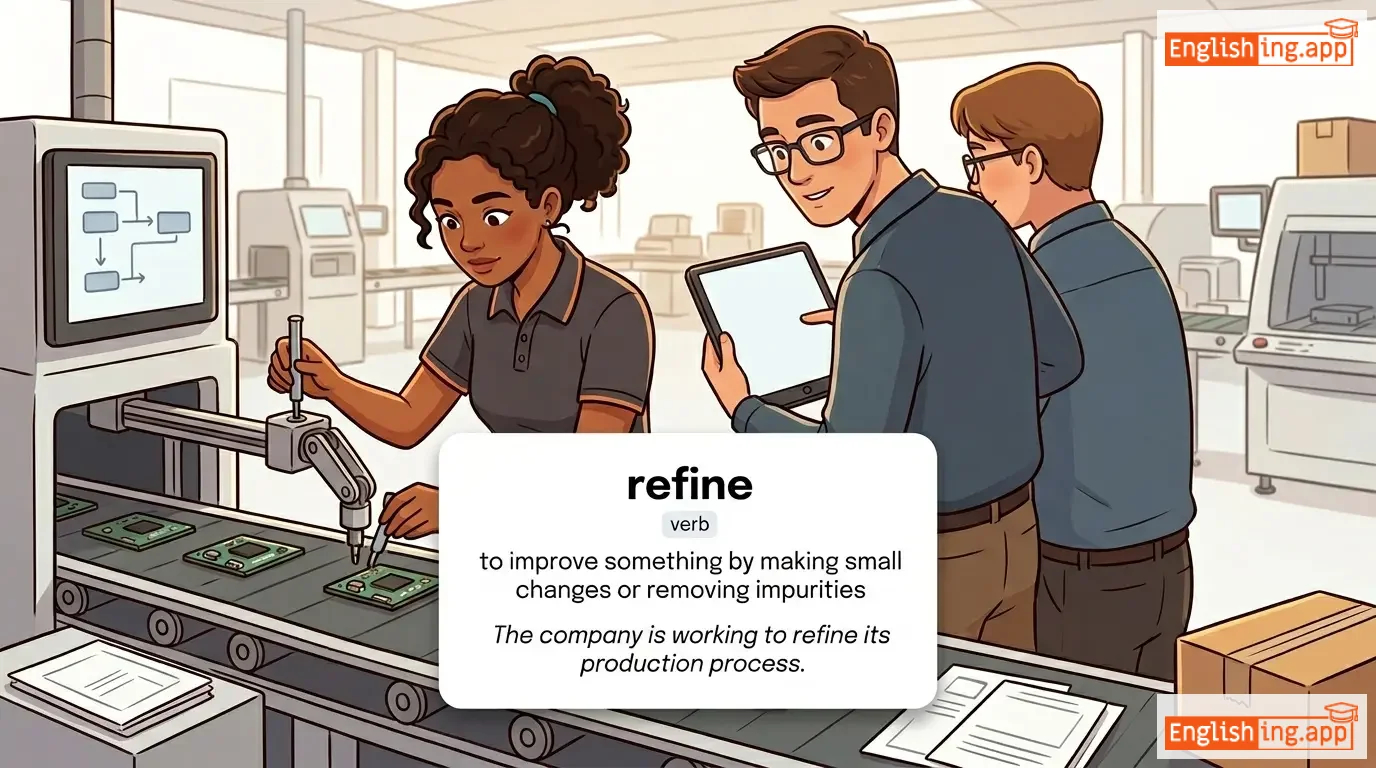
refine definition card — visual illustration of the meaning
verb
/rɪˈfaɪn/
改善する (kaizen suru)

to improve something by making small changes or removing impurities

"The company is working to refine its production process."

"会社は生産プロセスを改善するために努力しています。" (Kaisha wa seisan purosezu o kaizen suru tame ni doryoku shiteimasu.)
adjective
/rɪˈfaɪnd/
洗練された; 精製された (senren sareta; seisei sareta)

elegant and cultured in appearance, manner, or taste; purified

"She has very refined taste in art and music."
"彼女は芸術と音楽に非常に洗練された趣味を持っています。" (Kanojo wa geijutsu to ongaku ni hijō ni senren sareta shumi o motteimasu.)
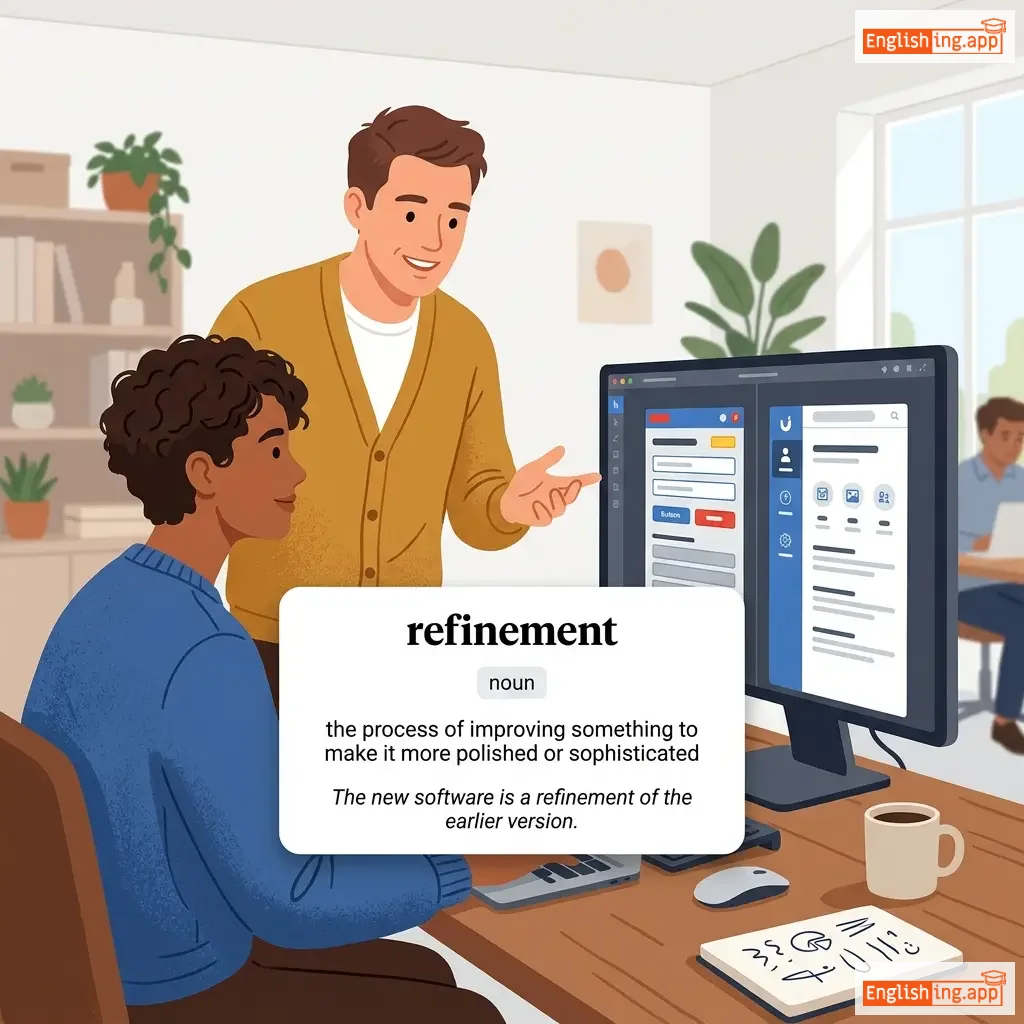
refinement definition card — visual illustration of the meaning
noun
/rɪˈfaɪnmənt/
洗練 (suren)

the process of improving something to make it more polished or sophisticated

"The new software is a refinement of the earlier version."

"新しいソフトウェアは、以前のバージョンの洗練です。" (Atarashī sofutowea wa, izen no bājon no suren desu.)
noun
/rɪˈfaɪnəri/
製油所 (seiyujo)

an industrial facility where raw materials are processed and purified

"The oil refinery processes thousands of barrels daily."

"石油精製所は毎日何千バレルもの石油を処理します。" (Sekiyu seisējo wa mainichi nanzenbareru mono sekiyu o shori shimasu.)
reflect definition card — visual illustration of the meaning
verb
/rɪˈflɛkt/
反映する (hanei suru)

to show an image as in a mirror, or to think deeply about something

"The mirror reflects her smiling face."
"鏡は彼女の笑顔を反映しています。" (Kagami wa kanojo no egao o hanei shiteimasu.)
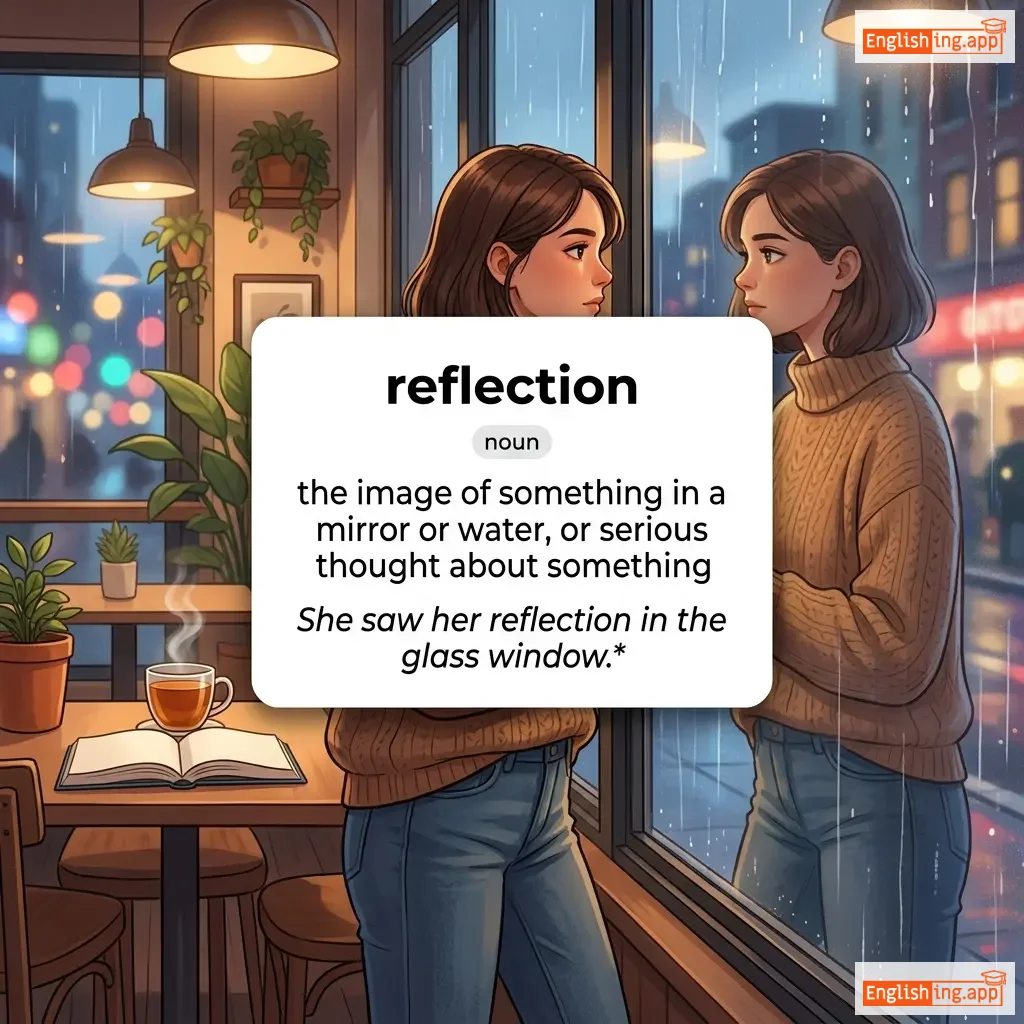
reflection definition card — visual illustration of the meaning
noun
/rɪˈflɛkʃən/
反映 (hanei)

the image of something in a mirror or water, or serious thought about something

"She saw her reflection in the glass window."

"彼女はガラスの窓に自分の反映を見ました。" (Kanojo wa garasu no mado ni jibun no hanei o mimashita.)
noun
/ˈrɛfjuːdʒ/
避難所 (hinanjo)

a place that provides shelter or protection from danger or distress

"The villagers took refuge in the temple during the storm."

"村人たちは嵐の間、寺院に避難した。" (Murabito-tachi wa arashi no aida, jiin ni hinan shita.)
noun
/ˈriːdʒənt/
摂政 (sesshō)

a person who rules in place of a monarch when the monarch is absent or too young

"The prince acted as regent until the king came of age."
"王子は王が成人するまで摂政として行動した。" (Ōji wa ō ga seijin suru made sesshō toshite kōdō shita.)
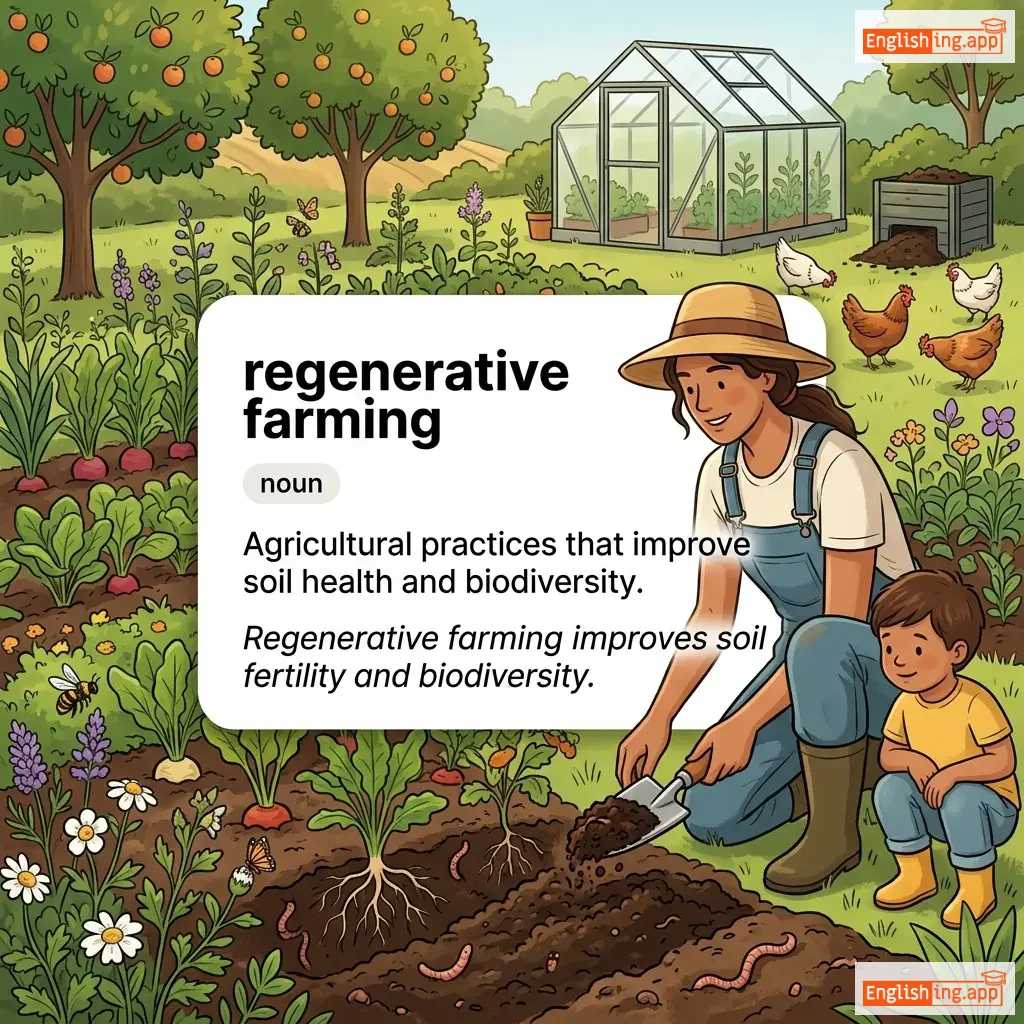
regenerative farming definition card — visual illustration of the meaning
noun
rɪˈdʒɛn.ər.ə.tɪv ˈfɑːr.mɪŋ
再生農業 (saisei nōgyō)

Agricultural practices that improve soil health and biodiversity.

"Regenerative farming improves soil fertility and biodiversity."
"再生農業は土壌の肥沃度と生物多様性を向上させます。" (Saisei nōgyō wa dojo no hiwokudo to seibutsu tayōsei o kōjō sasemasu.)
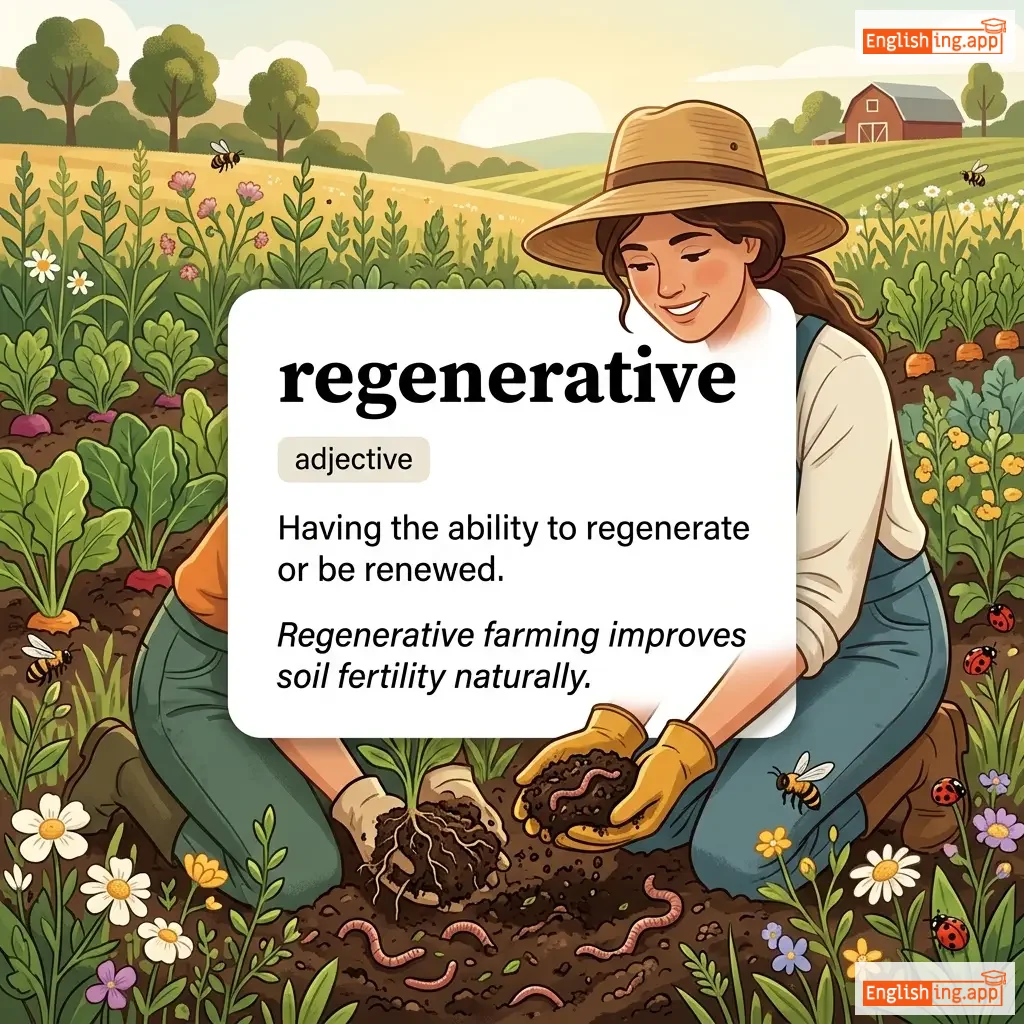
regenerative definition card — visual illustration of the meaning
adjective
rɪˈdʒɛn.ər.ə.tɪv
再生可能または再生的 (saisei kanou mata wa saisei-teki)

Having the ability to regenerate or be renewed.

"Regenerative farming improves soil fertility naturally."
"再生農業は自然に土壌の肥沃度を向上させます。" (Saisei nougyou wa shizen ni dojou no hiyokudo o koujou sasemasu.)
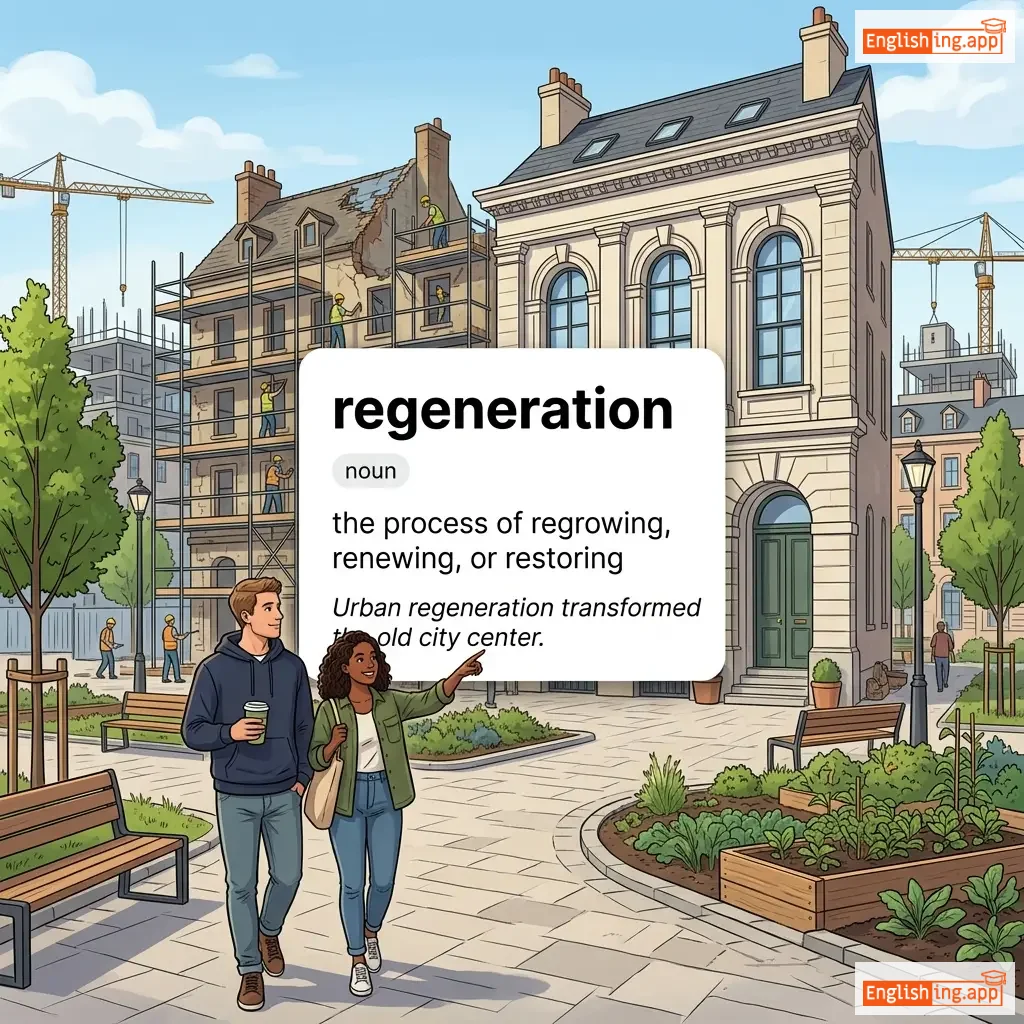
regeneration definition card — visual illustration of the meaning
noun
/rɪˌdʒɛnəˈreɪʃən/
再生 (saisei)

the process of regrowing, renewing, or restoring

"Urban regeneration transformed the old city center."

"都市の再生は古い市街地を変革しました。" (Toshi no saisei wa furui shigaichi o henka shimashita.)
verb
/rɪˈdʒɛnəreɪt/
再生する (saisei suru)

to grow or produce again; to renew or restore

"The lizard can regenerate its lost tail."

"トカゲは失われた尾を再生できます。" (Tokage wa ushinawareta o wo saisei dekimasu.)
noun
/rɪˈɡætə/
ボート競走 (booto kyoso)

A sporting event consisting of a series of boat or yacht races.

"The annual regatta attracted competitors from around the world."

"毎年のレガッタは世界中から競技者を引き付けた。" (mainen no regatta wa sekaiju kara kyogisha o hikitsuketa)
adverb
/rɪˈɡɑrdləs/
関係なく (kankeinaku)

without paying attention to the current situation or condition

"She will go to the party regardless of the weather."

"彼女は天気に関係なくパーティーに行きます。" (Kanojo wa tenki ni kankeinaku paatii ni ikimasu.)
preposition
/rɪˈɡɑrdɪŋ/
に関して (ni kanshite)

concerning or relating to

"The decision regarding the meeting will be made tomorrow."

"会議に関する決定は明日行われます。" (Kaigi ni kanshite kettei wa ashita okonawaremasu.)
noun/verb
/rɪˈɡɑrd/
尊敬、考慮 (sonkei, koryo)

consider or think of in a specified way

"She regarded him as her mentor."
"彼女は彼をメンターとして見なしました。" (Kanojo wa kare wo mentaa to shite minashimashita.)
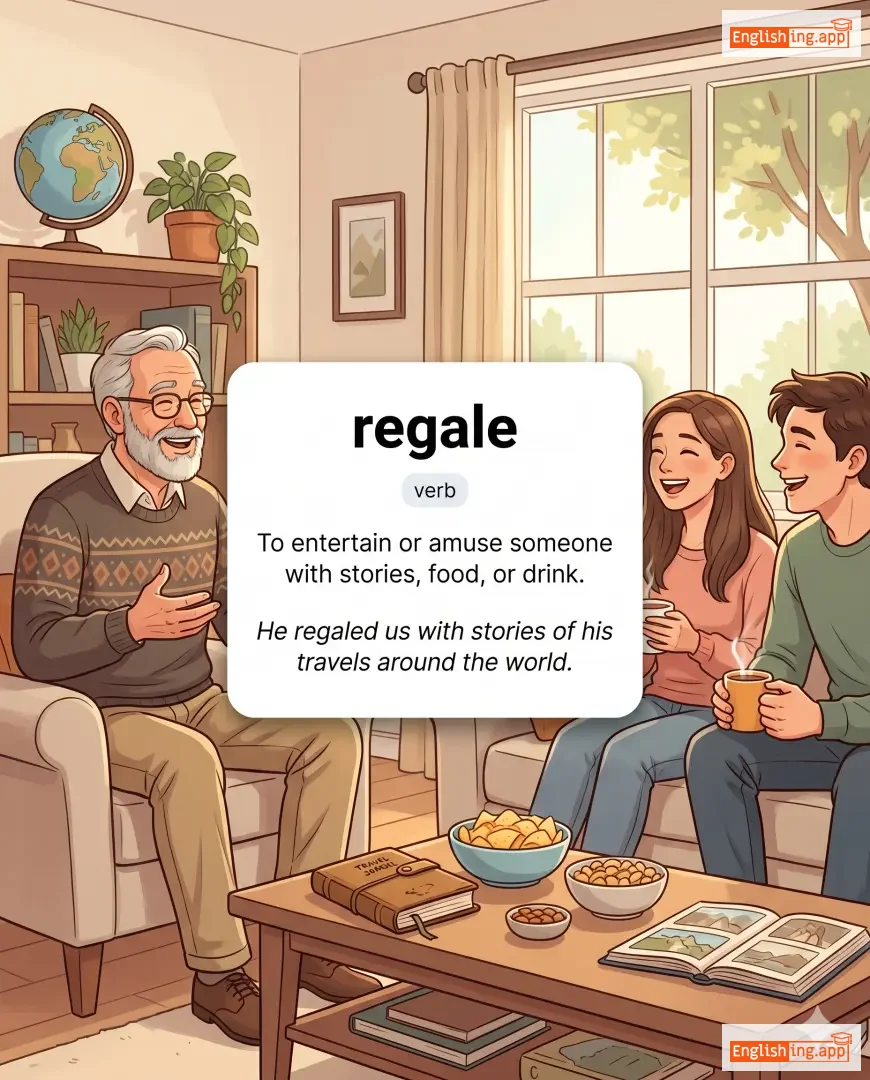
regale definition card — visual illustration of the meaning
verb
/rɪˈɡeɪl/
楽しませる (tanoshimaseru)

To entertain or amuse someone with stories, food, or drink.

"He regaled us with stories of his travels around the world."

"彼は世界中を旅した話で私たちを楽しませました。" (Kare wa sekaijū o tabishita hanashi de watashitachi o tanoshimashita.)
adjective
/ˈriːɡəl/
王室の (ōshitsu no)

Resembling or fit for a king; majestic or royal.

"The queen entered the hall with a regal presence."
"女王は王室のような存在感でホールに入った。" (Joō wa ōshitsu no yōna sonzai-kan de hōru ni haitta.)
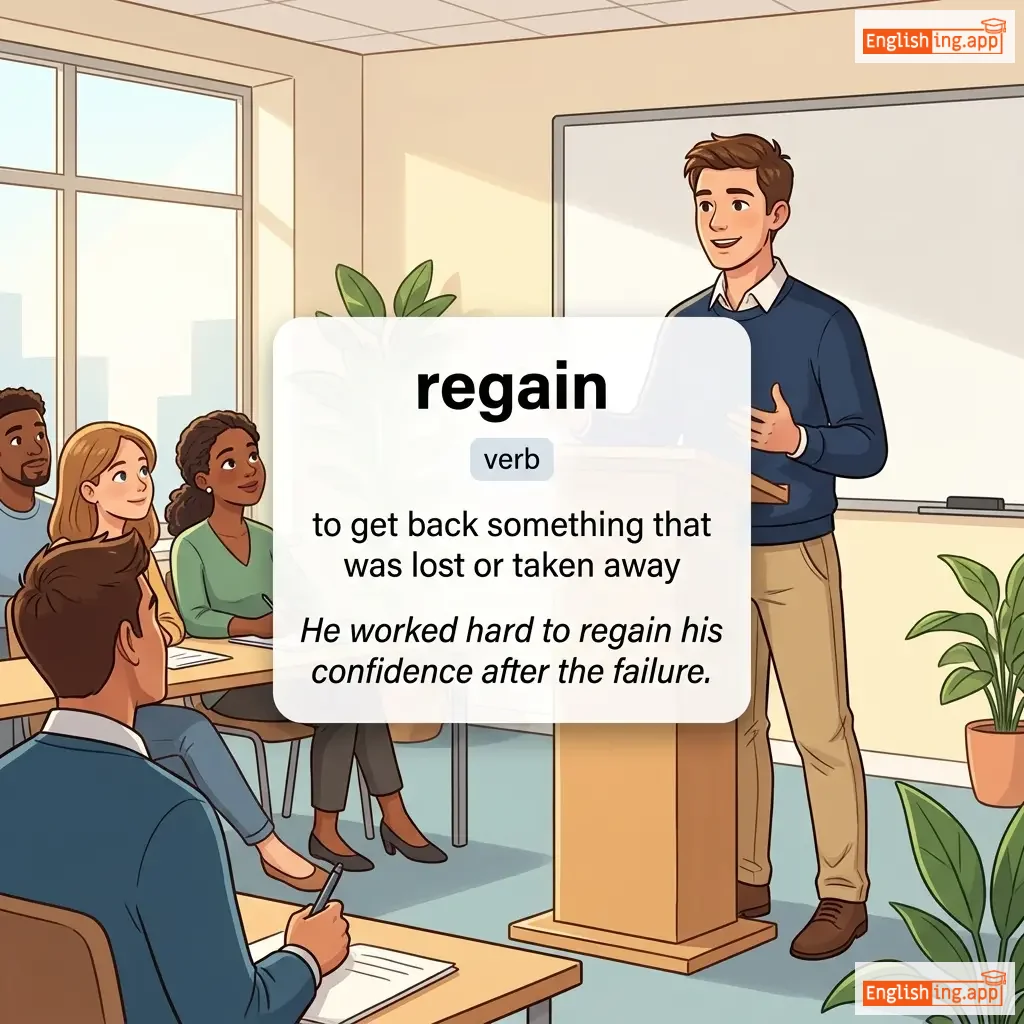
regain definition card — visual illustration of the meaning
verb
/rɪˈɡeɪn/
取り戻す (torimodosu)

to get back something that was lost or taken away

"He worked hard to regain his confidence after the failure."
"失敗後、彼は自信を取り戻すために一生懸命働いた。" (Shippai go, kare wa jishin o torimodosu tame ni isshoukenmei hataraita.)
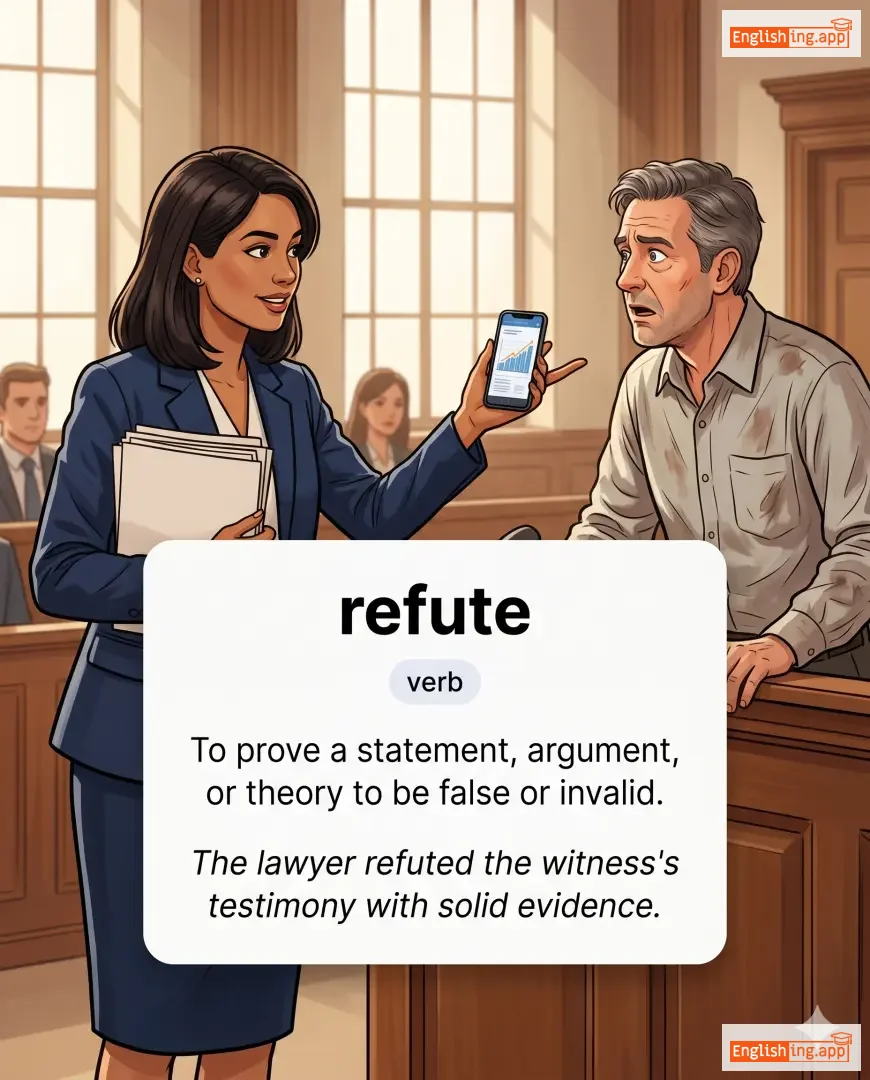
refute definition card — visual illustration of the meaning
verb
/rɪˈfjuːt/
反論する (hanron suru)

To prove a statement, argument, or theory to be false or invalid.

"The lawyer refuted the witness's testimony with solid evidence."

"弁護士は証人の証言を確かな証拠で反論しました。" (Bengoshi wa shounin no shougen wo tashikana shouko de hanron shimashita.)
noun
/ˌrɛfjʊˈteɪʃən/
反証 (hanshō)

The act of proving a statement or argument to be false or incorrect.

"Her essay was a strong refutation of the opposing theory."

"彼女のエッセイは反対の理論に対する強い反証でした。" (Kanojo no essei wa hantai no riron ni taisuru tsuyoi hanshō deshita.)
adjective
/rɪˈfjuː.tə.bəl/
反証可能 (hanshō kanō)

capable of being proven wrong or false; able to be disproved

"His theory was refutable because it could be tested experimentally."
"彼の理論は実験的にテストできるので反証可能でした。" (kare no riron wa jikken-teki ni tesuto dekiru node hanshō kanō deshita.)
♻️

Refuse

verb, noun
/rɪˈfjuːz/ (verb), /ˈrɛfjuːs/ (noun)

As a verb: to say no to something offered or requested; as a noun: waste material; rubbish.

"He refused to answer the question, and the street was full of refuse."

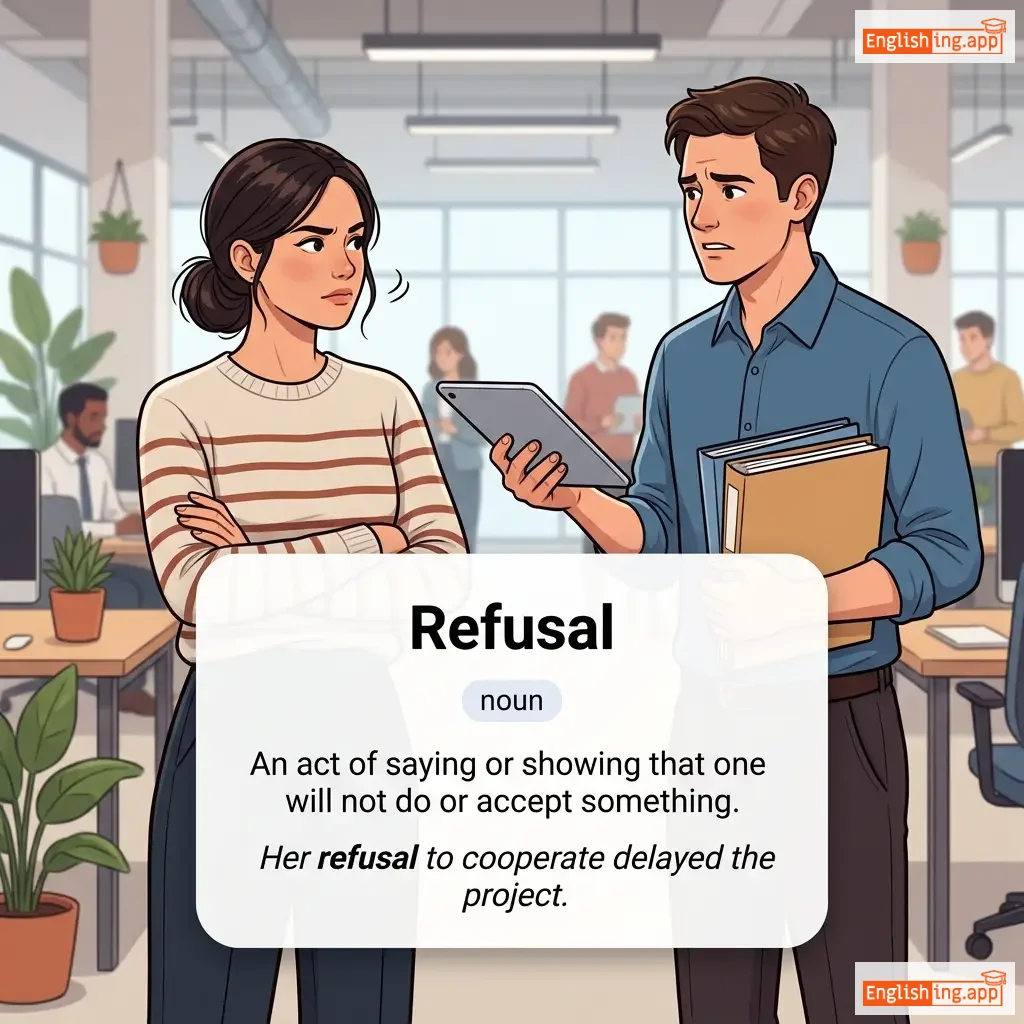
Refusal definition card — visual illustration of the meaning
noun
/rɪˈfjuːzəl/
拒否 (kyohi)

An act of saying or showing that one will not do or accept something.

"Her refusal to cooperate delayed the project."

"彼女の協力しないという拒否がプロジェクトを遅らせた。" (Kanojo no kyouryoku shinai to iu kyohi ga purojekuto wo okuraseta.)
verb
/riːˈfɜːrbɪʃ/
改装する (kaisou suru)

To renovate or redecorate something, especially a building.

"The company decided to refurbish its old office."
"その会社は古いオフィスを改装することを決定しました。" (Sono kaisha wa furui ofisu o kaisō suru koto o kettei shimashita.)
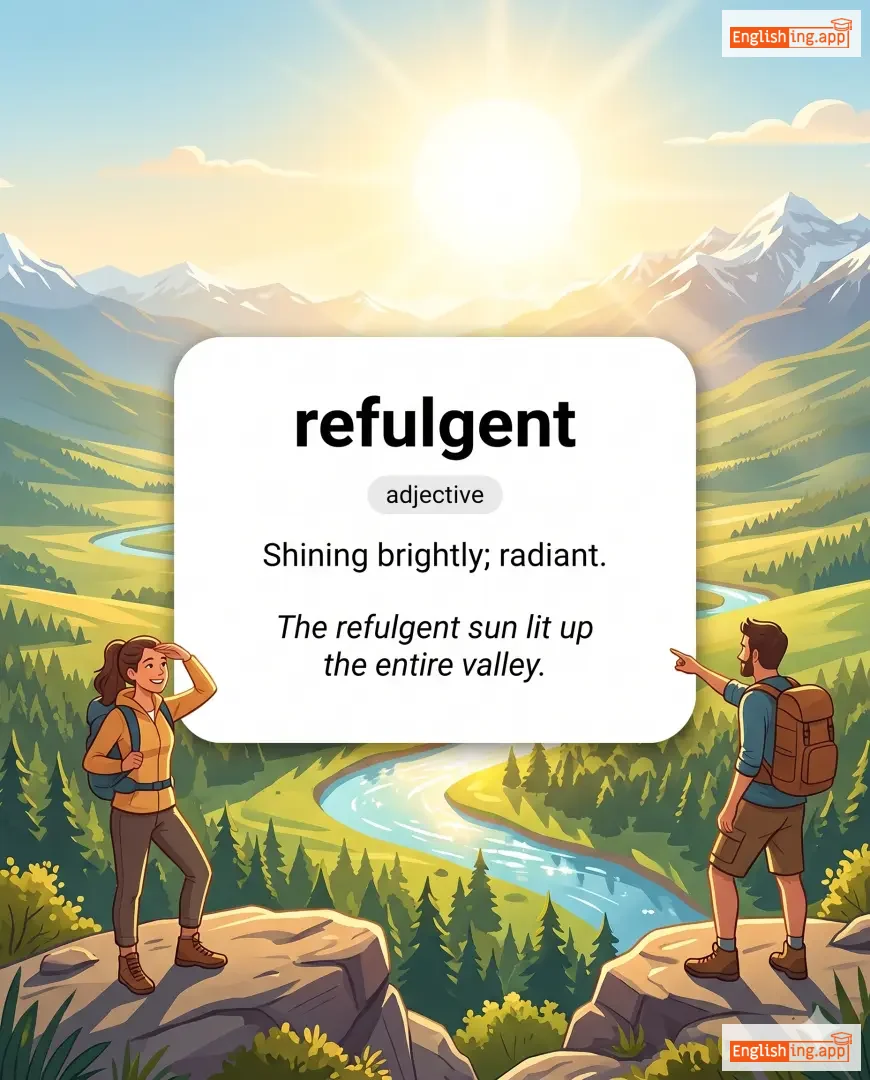
refulgent definition card — visual illustration of the meaning
adjective
/rɪˈfʌldʒənt/
輝く (kagayaku)

Shining brightly; radiant.

"The refulgent sun lit up the entire valley."
"輝く太陽が谷全体を照らした。" (Kagayaku taiyō ga tani zentai o terashita.)
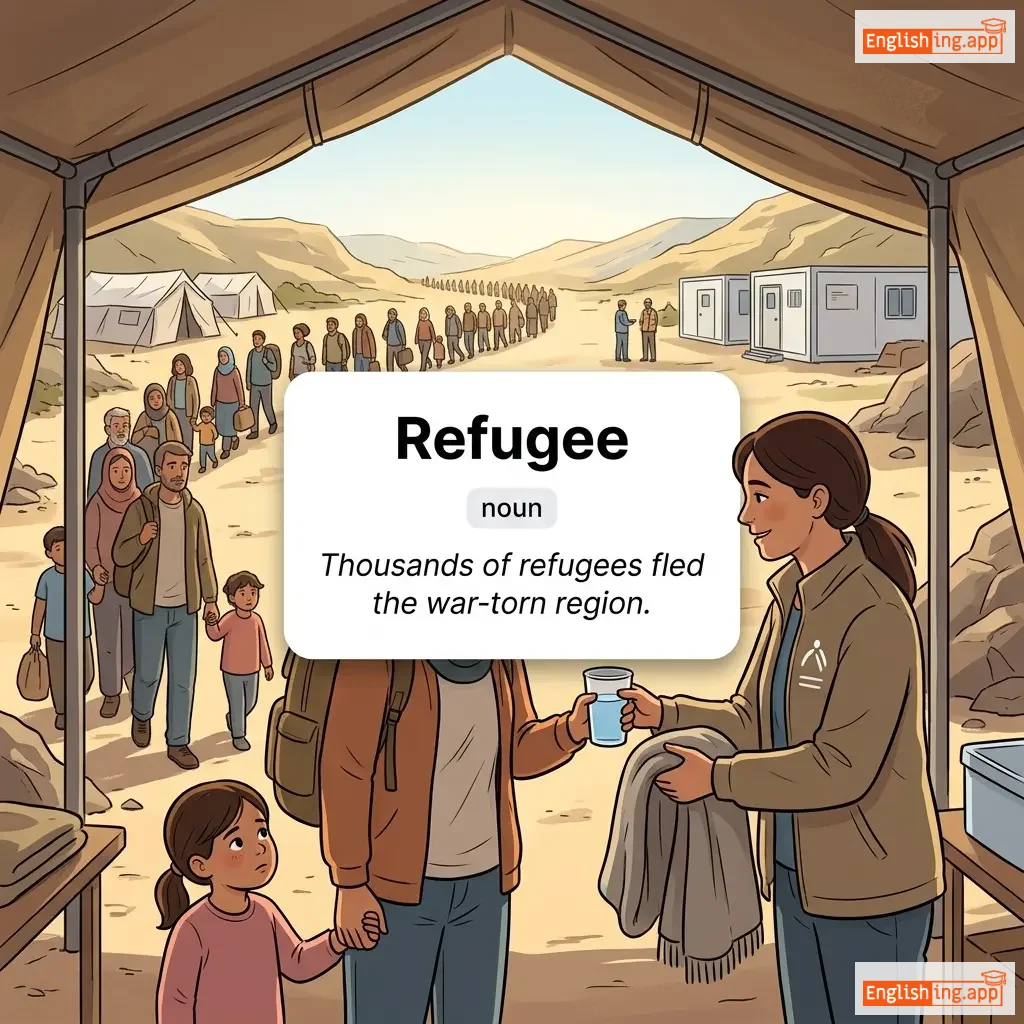
Refugee definition card — visual illustration of the meaning
noun
/ˌrɛfjuˈʤi/
難民 (nanmin)

a person who has been forced to leave their country in order to escape war, persecution, or natural disaster

"Thousands of refugees fled the war-torn region."
"何千人もの難民が戦争で荒廃した地域から逃げました。" (Nanzen-nin mono nanmin ga sensou de kouhai shita chiiki kara nigemashita.)
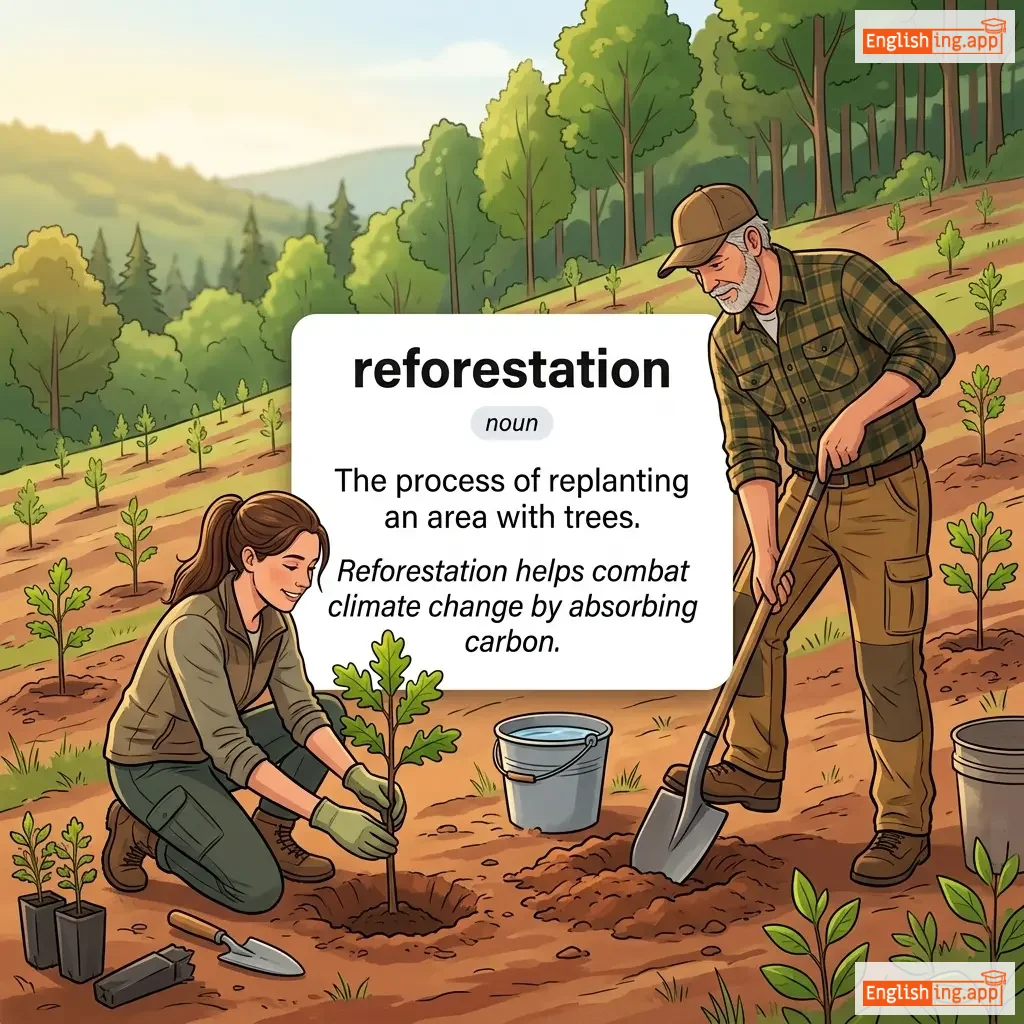
reforestation definition card — visual illustration of the meaning
noun
ˌriːfɔːrɪˈsteɪʃən
再植林 (saishokurin)

The process of replanting an area with trees.

"Reforestation helps combat climate change by absorbing carbon."

"再植林は炭素を吸収することによって気候変動に対して対抗するのに役立ちます。" (saishokurin wa tanso o kyuushuu suru koto ni yotte kikou hendou ni taishite taikou suru noni yakudachimasu)
noun
/rɪˈfrækʃən/
屈折 (kussetsu)

The bending of light, sound, or other waves when they pass from one medium to another of different density.

"The refraction of light in water makes objects appear bent."

"水中の光の屈折により、物体が曲がって見えます。" (Suichuu no hikari no kussetsu ni yori, butsu ga magatte mie masu.)
verb
/rɪˈfrækt/
屈折する (kusseki suru)

To bend light, sound, or heat as it passes through a medium.

"The water refracts light, making the straw look bent."

"水は光を屈折させ、ストローが曲がって見える。" (Mizu wa hikari o kussetsu sase, sutoroo ga magatte mieru.)
noun
/rɪˈfɔːrmər/
改革者 (kaikakusha)

A person who works to improve laws, institutions, or social practices.

"Martin Luther King Jr. was a great social reformer."
"マーティン・ルーサー・キング・ジュニアは偉大な社会改革者でした。" (Mātin Rūsā Kinga Junia wa idaina shakai kaikakusha deshita.)
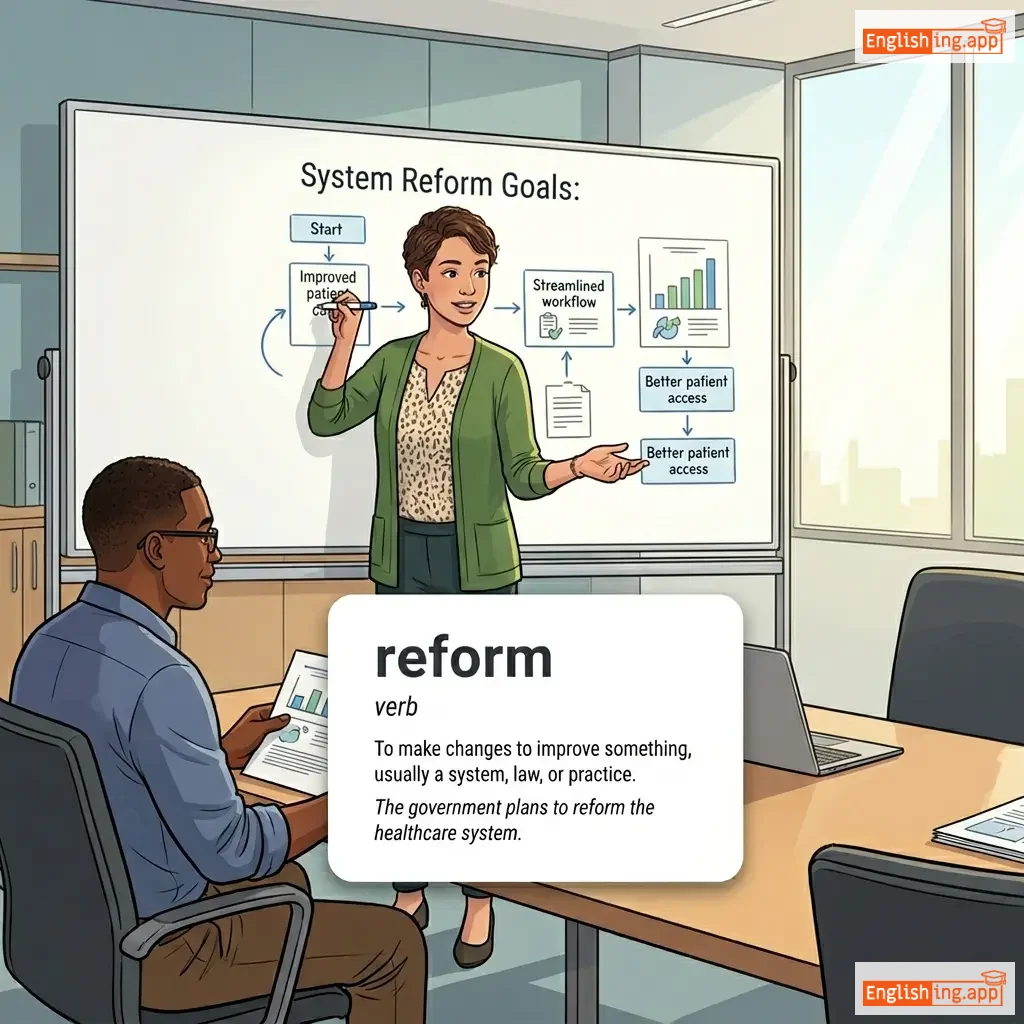
reform definition card — visual illustration of the meaning
verb
/rɪˈfɔːrm/
改革する (kaikaku suru)

To make changes to improve something, usually a system, law, or practice.

"The government plans to reform the healthcare system."

"政府は医療制度を改革する予定です。" (seifu wa iryou seido o kaikaku suru yotei desu.)
adjective
/rɪˈflɛksəbl/
反射可能な (hansha kanō na)

Capable of being reflected or bent back.

"The surface was highly reflexible, bouncing light in different directions."

"その表面は非常に反射可能で、光を異なる方向に反射させていました。" (Sono hyōmen wa hijō ni hansha kanō de, hikari o kotonaru hōkō ni hansha sasete imashita.)
noun
/rɪˈflɛktər/
反射器 (hanshaki)

A surface or device that reflects light, heat, or sound, often used to direct beams or improve visibility.

"The cyclist attached a red reflector to the back of his bike for safety."

"自転車のライダーは安全のために自分の自転車の後ろに赤い反射器を取り付けました。" (Jitensha no raidā wa anzen no tame ni jibun no jitensha no ushiro ni akai hanshaki o toritsukemashita.)