語彙集

英単語辞書 | 単語の意味、定義、例文

adjective
/rɪˈmiːdiəbl/
修正可能 (shūsei kanō)

capable of being corrected or cured

"The mistake was serious but still remediable."

"その誤りは重大でしたが、まだ修正可能でした。" (Sono ayamari wa jūdai deshita ga, mada shūsei kanō deshita.)
adjective
/rɪˈmiːdiəl/
改善のための (kaizen no tame no)

intended to correct or improve a situation, especially related to learning or health

"The school offers remedial classes in mathematics."

"学校は数学の補習クラスを提供しています。" (Gakkō wa suugaku no hoshū kurasu wo teikyō shiteimasu.)
noun
/ˈrɛmɪdi/
治療法 (chiryouhou)

a treatment or solution for a problem or illness

"The doctor prescribed a remedy for the cough."

"医者は咳のために治療法を処方した。" (Isha wa seki no tame ni chiryouhou o shohoushita.)
remember definition card — visual illustration of the meaning
verb
/rɪˈmɛmbər/
覚える (oboeru)

to recall to the mind; to keep in memory

"I can't remember the last time we met."

"最後に会った時を思い出せません。" (Saigo ni atta toki o omoidasemasen.)
noun
/rɪˈmɛmbrəns/
記憶 (kioku)

the act of remembering or honoring someone or something

"A service was held in remembrance of the fallen soldiers."
"戦死した兵士たちを記憶するための式典が行われた。" (Senshishita heishitachi o kioku suru tame no shikiten ga okonawareta.)
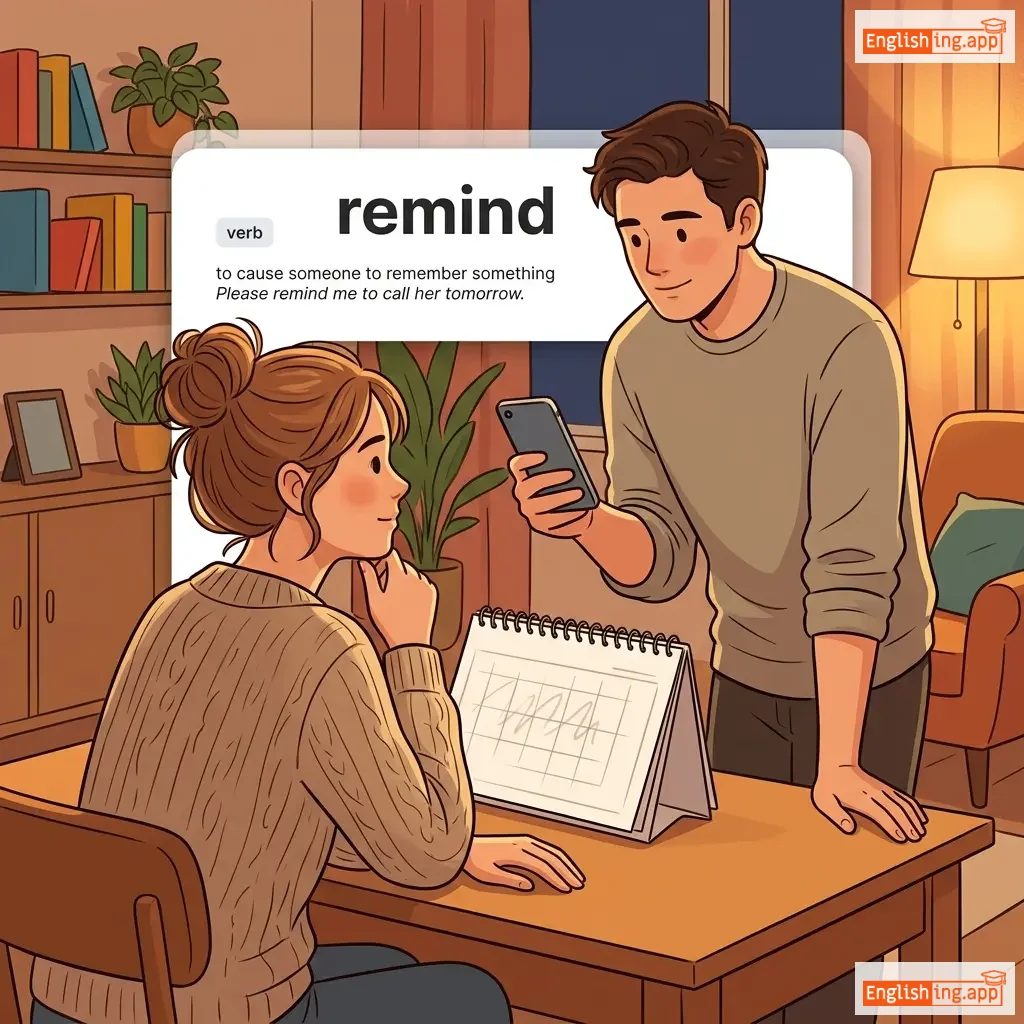
remind definition card — visual illustration of the meaning
verb
/rɪˈmaɪnd/
思い出させる (omoidasaseru)

to cause someone to remember something

"Please remind me to call her tomorrow."

"明日彼女に電話するのをリマインドして下さい。" (Ashita kanojo ni denwa suru no o rimaindo shite kudasai.)
noun
/rɪˈmaɪndər/
リマインダー (riminda)

something that helps you remember a fact, event, or action that you need to do or recall

"He set a reminder to call his mother on her birthday."

"彼は母親の誕生日に電話するためにリマインダーを設定しました。" (Kare wa hahaoya no tanjoubi ni denwa suru tame ni rimindaa o settei shimashita.)
noun
/ˌrɛmɪˈnɪsəns/
回想 (kaiso)

a story or memory about past events

"He shared a reminiscence of his childhood days in the village."

"彼は村での子供時代の思い出を語った。" (Kare wa mura de no kodomojidai no omoide o katatta.)
adjective
/ˌrɛmɪˈnɪsənt/
思い出させる (omoidasaseru)

Tending to remind one of something; suggestive of something in the past.

"The smell of rain is reminiscent of my childhood in the village."

"雨の匂いは私の村での子供時代を思い出させる。" (Ame no nioi wa watashi no mura de no kodomojidai o omoidasa seru.)
adjective
/rɪˈmɪs/
怠慢 (taiman)

Negligent in performing a duty or responsibility.

"The manager was remiss in not checking the financial reports carefully."

"マネージャーは財務報告書を慎重に確認しなかったことで怠慢だった。" (Manējā wa zaimu hōkokusho o shinchō ni kakunin shinakatta koto de taimanda.)
noun
/rɪˈmɪʃən/

A temporary or permanent decrease or disappearance of disease symptoms; forgiveness of sins or debts.

"The patient’s cancer is in remission after the treatment."

verb
/rɪˈmɪt/
送金する / 免除する (sōkin suru / menjo suru)

To send money in payment or as a gift; to cancel or refrain from exacting a debt or punishment.

"He promised to remit the payment by the end of the week."
"彼は週の終わりまでに支払いを送金すると約束しました。" (Kare wa shū no owari made ni shiharai o sōkin suru to yakusoku shimashita.)
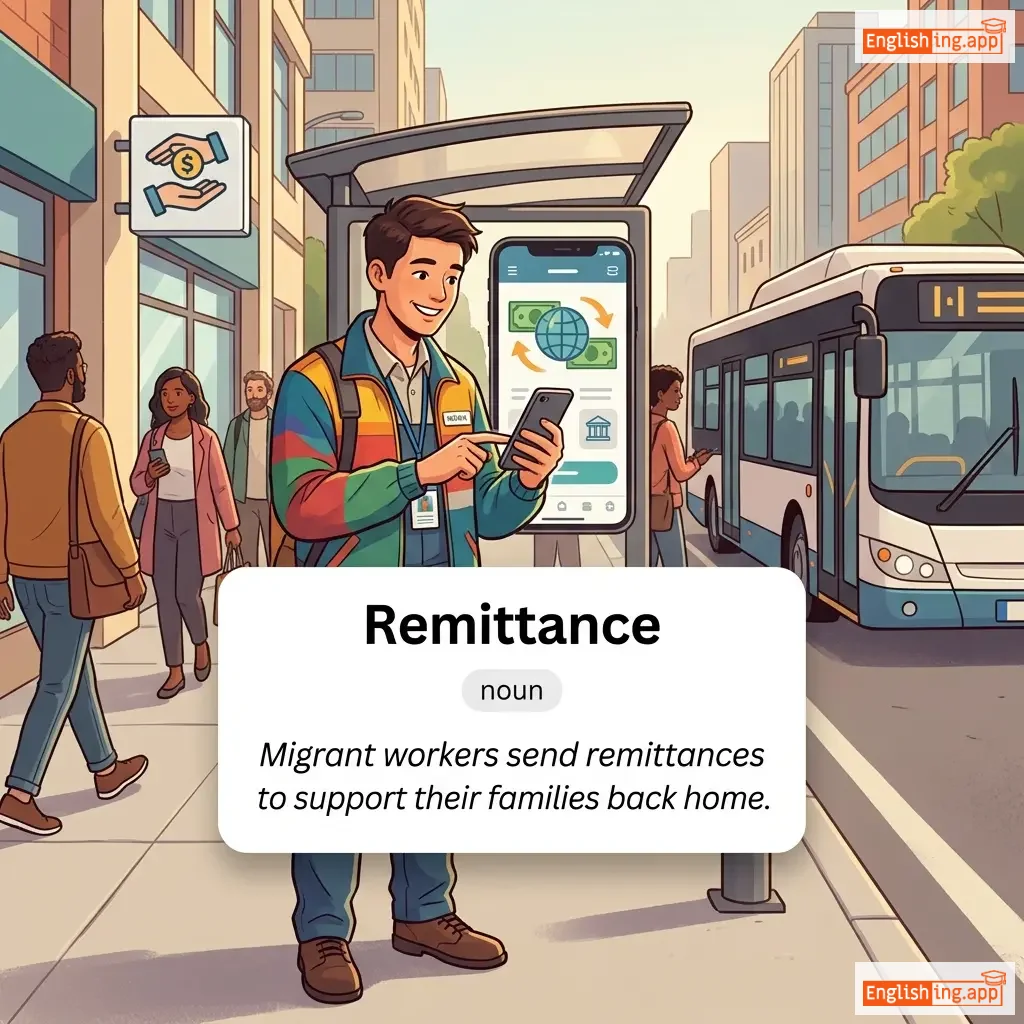
Remittance definition card — visual illustration of the meaning
noun
/rɪˈmɪtəns/
送金 / 資金転送 (sōkin / shikin tensō)

A sum of money sent, especially by mail or electronic transfer, as payment or gift.

"Migrant workers send remittances to support their families back home."

"移民労働者は、故郷の家族を支援するために送金を送ります。" (Imin rōdōsha wa, kokyō no kazoku o shien suru tame ni sōkin o okurimasu.)
noun
/ˈrɛmnənt/
残余 (zan'yo)

A small remaining part of something that once existed or was larger.

"The old house still had remnants of its former glory."
"その古い家には、かつての栄光の残余がまだ残っていました。" (Sono furui ie ni wa, katsute no eikō no zan'yo ga mada nokotte imashita.)
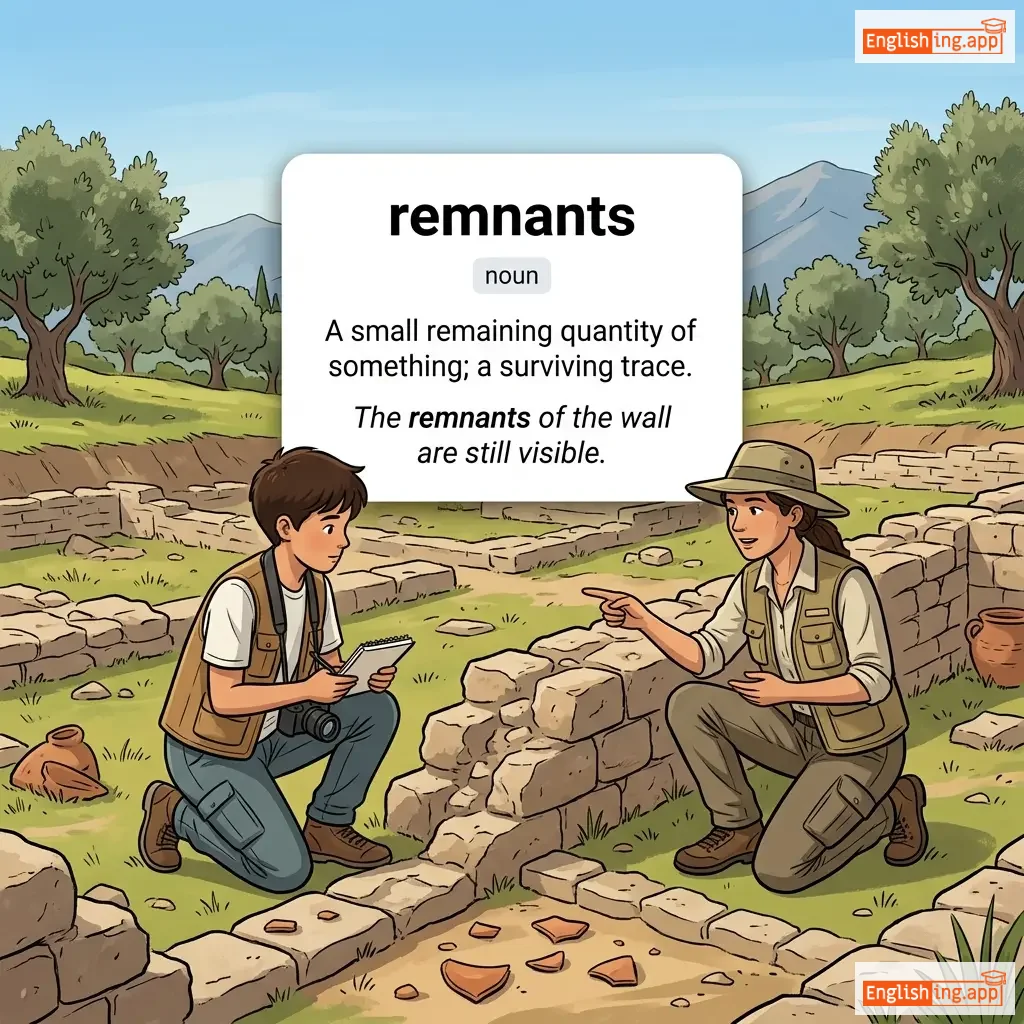
remnants definition card — visual illustration of the meaning
noun
ˈremnənts
遺物 (ibutsu)

A small remaining quantity of something; a surviving trace.

"The remnants of the wall are still visible."

"壁の遺物はまだ見える。" (Kabe no ibutsu wa mada mieru.)
verb
/ˌriːˈmɒdəl/
改装する (kaisou suru)

To change the structure or form of something, especially a building.

"They decided to remodel their kitchen last summer."

"彼らは昨年の夏にキッチンをリモデルすることに決めました。" (Karera wa sakunen no natsu ni kitchin o rimoderu suru koto ni kimemashita.)
noun
/rɪˈmɒnstrəns/
抗議 (kougi)

A forceful protest or objection.

"The workers’ remonstrance against unfair treatment was ignored."

"労働者たちの不公平な扱いに対する抗議は無視された。" (Roudousha-tachi no fukouhei na atsukai ni taisuru kougi wa mushi sareta.)
noun/adjective
/rɪˈmɒnstrənt/
抗議者 (kōgisha)

A person who makes a forceful protest (noun); protesting or objecting (adjective).

"He was a remonstrant voice in the assembly."
"彼は集会で抗議の声を上げていた。" (Kare wa shūkai de kōgi no koe o agete ita.)
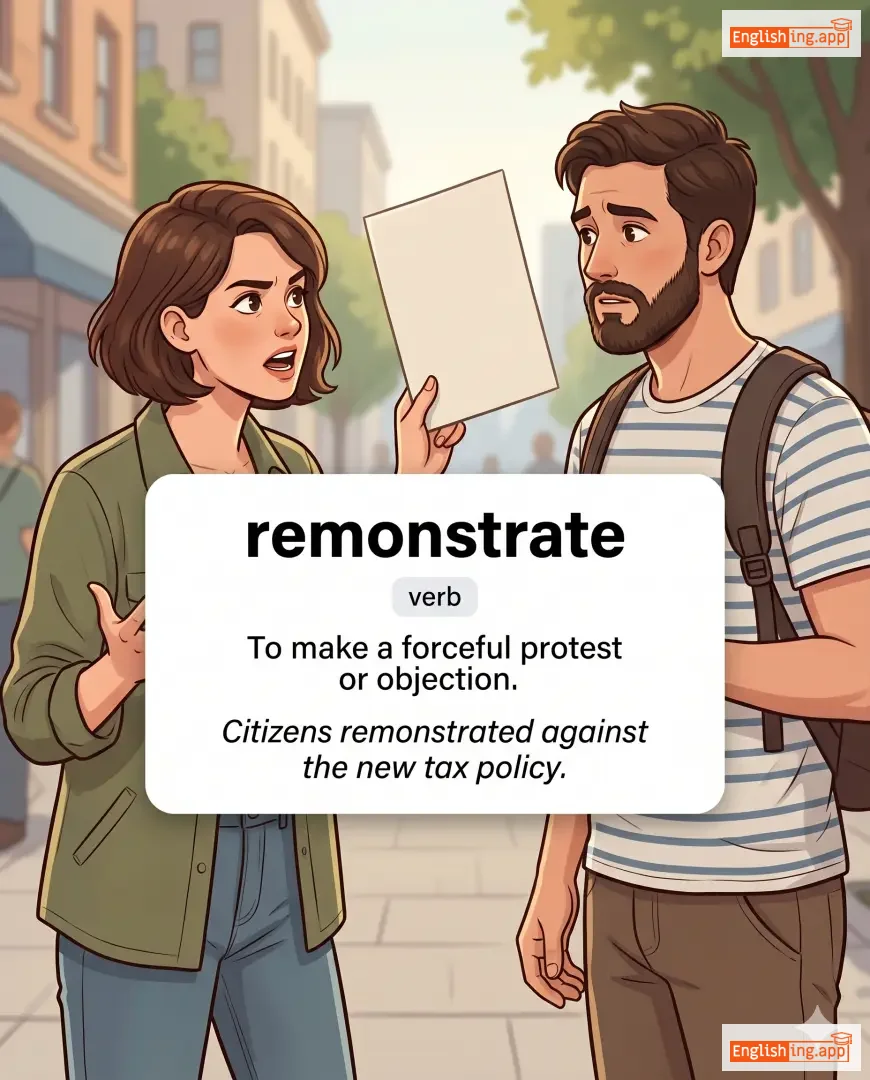
remonstrate definition card — visual illustration of the meaning
verb
/rɪˈmɒnstreɪt/
抗議する (kougisuru)

To make a forceful protest or objection.

"Citizens remonstrated against the new tax policy."

"市民たちは新しい税制政策に抗議した。" (Shimin-tachi wa atarashī zeisei seisaku ni kougi shita.)
noun
/rɪˈmɔːrs/
後悔 (kōkai)

A deep feeling of regret or guilt for a wrong committed.

"He was filled with remorse after lying to his friend."
"彼は友達に嘘をついた後、後悔の念にかられた。" (Kare wa tomodachi ni uso o tsuita ato, kōkai no nen ni karareta.)
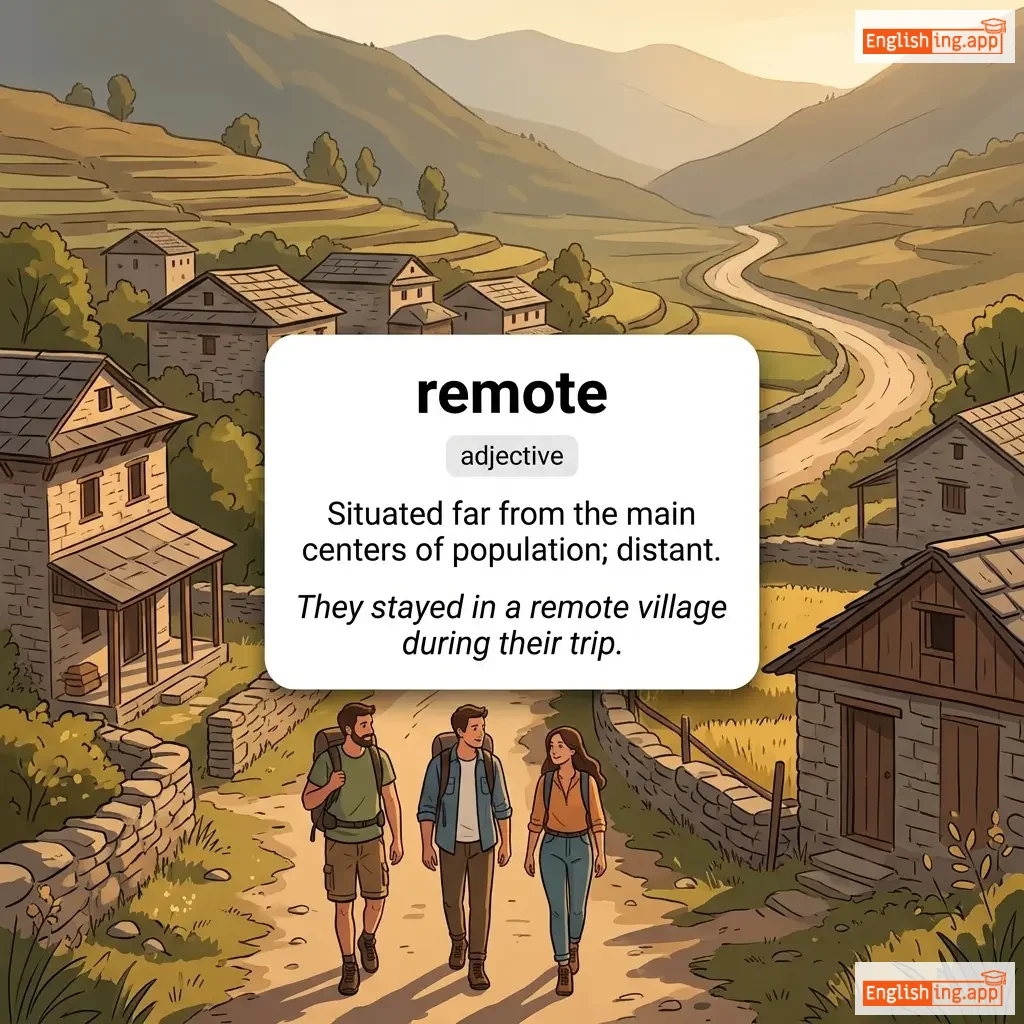
remote definition card — visual illustration of the meaning
adjective
/rɪˈmoʊt/
遠隔 (enkaku)

Situated far from the main centers of population; distant.

"They stayed in a remote village during their trip."

"彼らは旅行中に遠隔の村に泊まりました。" (Karera wa ryokouchuu ni enkaku no mura ni tomarimashita.)
adjective
/rɪˈmoʊtɪd/
リモートされた (rimōto sareta)

placed at a distance; made remote

"The system was remoted to a secure location."

"システムは安全な場所にリモートされました。" (Shisutemu wa anzen na basho ni rimōto saremashita.)
adjective
/rɪˈmuːvəbəl/
取り外し可能な (torihashi kanou na)

able to be removed or taken away

"This phone has a removable battery."

"この電話には取り外し可能なバッテリーがあります。" (Kono denwa ni wa torihashi kanou na batterii ga arimasu.)
noun
/rɪˈmuːvəl/
取り除き (torinozoki)

the act of taking something or someone away or out of a place

"The removal of old furniture made the room look spacious."
"古い家具の取り除きが部屋を広く見せた。" (Furui kagu no torinozoki ga heya o hiroku miseta.)
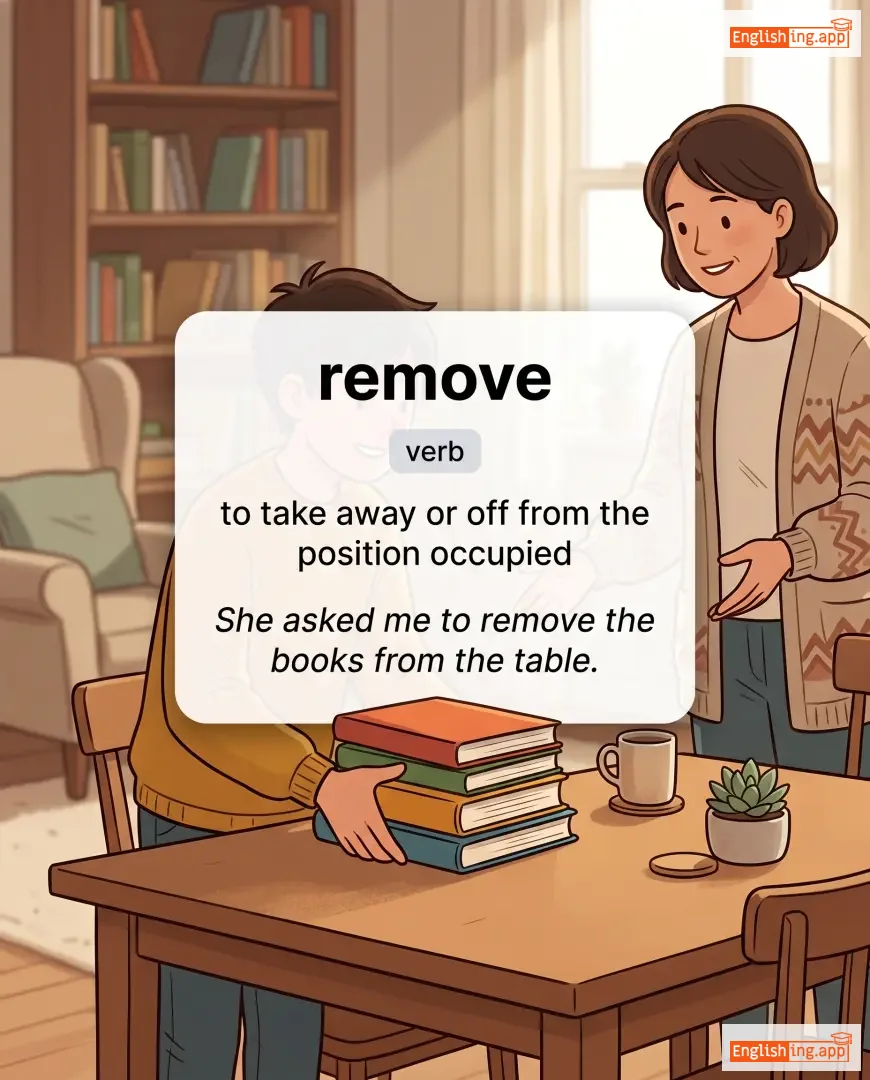
remove definition card — visual illustration of the meaning
verb
/rɪˈmuːv/
取り除く (torinozoku)

to take away or off from the position occupied

"She asked me to remove the books from the table."

"彼女はテーブルから本を取り除くように頼んだ。" (Kanojo wa tēburu kara hon o torinozoku yō ni tanonda.)
verb
/rɪˈmjuːnəreɪt/
報酬を支払う (hōshū o shiharau)

To pay someone for services or work done.

"The company will remunerate employees fairly for their overtime."

"会社は残業に対して従業員に公正な報酬を支払います。" (Kaisha wa zangyō ni taishite jūgyōin ni kōsei na hōshū o shiharai masu.)
noun
/rɪˌmjuːnəˈreɪʃən/
報酬 (hoshu)

Money paid for work or a service.

"The remuneration for this job is quite generous."

"この仕事の報酬はかなり寛大です。" (Kono shigoto no hoshū wa kanari kandai desu.)
adjective
/rɪˈmjuːnərətɪv/
利益がある (rieki ga aru)

Financially rewarding or profitable.

"He chose a remunerative career in medicine."

"彼は医学の中で利益のあるキャリアを選びました。" (Kare wa igaku no naka de rieki no aru kyaria o erabimashita.)
noun
/ˈrɛnəˌsɑːns/
ルネサンス (runesansu)

a revival of art, culture, or learning; a period of renewed interest and growth

"The city experienced a cultural renaissance during the 1990s."

"その都市は1990年代に文化的なルネサンスを経験しました。" (Sono toshi wa 1990 nendai ni bunka-teki na runesansu o keiken shimashita.)
verb
/rɛnd/
引き裂く (hikisaku)

to tear something apart violently or forcefully

"The explosion rent the air with a deafening noise."
"爆発は耳をつんざくような音で空気を引き裂いた。" (Bakuhatsu wa mimi o tsunzakuyou na oto de kuuki o hikisaita.)
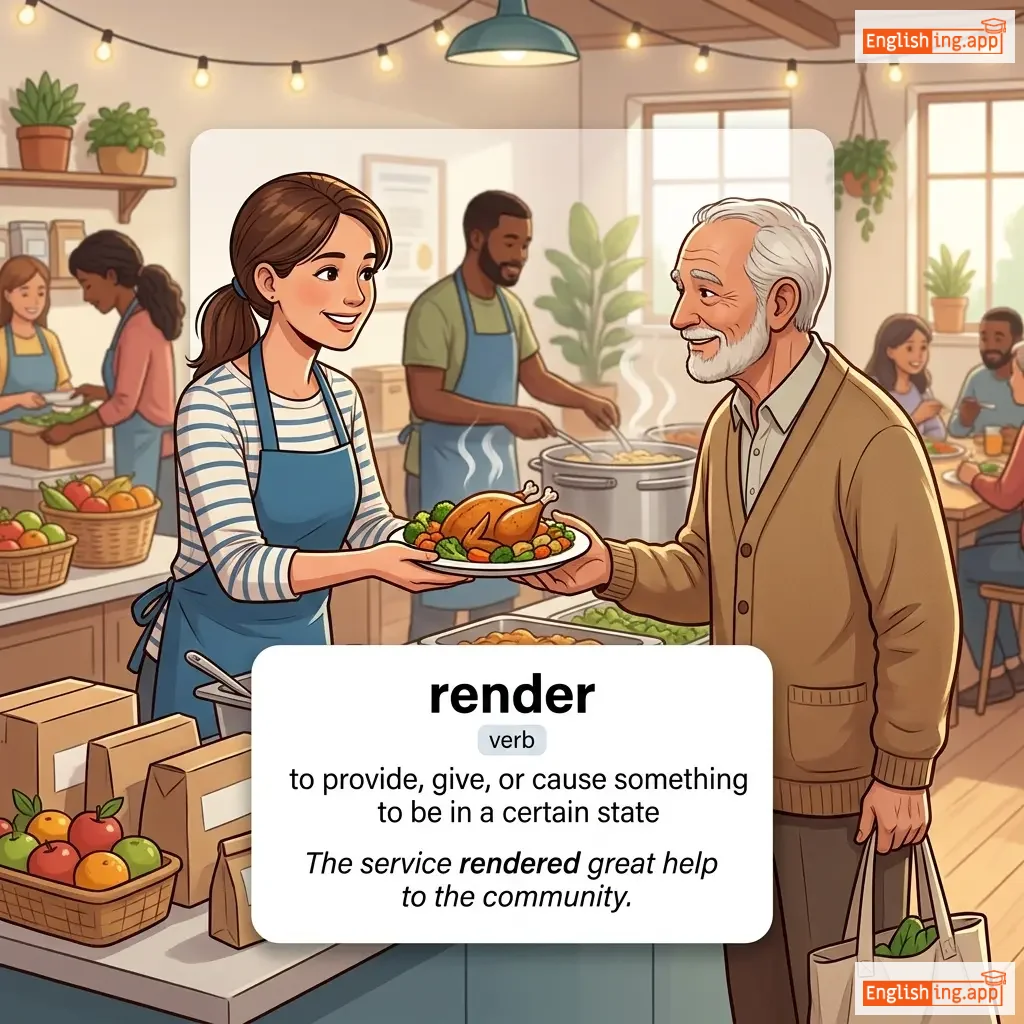
render definition card — visual illustration of the meaning
verb
/ˈrɛndər/
提供する (teikyō suru)

to provide, give, or cause something to be in a certain state

"The service rendered great help to the community."

"そのサービスはコミュニティに大きな助けを提供しました。" (Sono sābisu wa komyuniti ni ōkina tasuke o teikyō shimashita.)
noun
/ˈrɒndɪvuː/
会合 (kaigou)

a meeting or appointment at an agreed time and place

"They arranged a secret rendezvous at the café."

"彼らはカフェで秘密の会合を手配しました。" (Karera wa kafe de himitsu no kaigou o tehai shimashita.)
noun
/rɛnˈdɪʃən/
演奏 (enzō)

a performance or interpretation of a piece of art, music, or text

"The singer gave a moving rendition of the classic song."

"歌手はクラシックな歌の感動的な演奏を行いました。" (Kashu wa kurashikku na uta no kandōteki na enzō o okonaimashita.)
noun
/ˈrɛnɪˌɡeɪd/
裏切り者 (uragirimono)

a person who deserts or betrays an organization, country, or principles

"He was labeled a renegade after leaving the party and criticizing its policies."

"彼は党を離れ、その政策を批判した後、裏切り者と見なされた。" (Kare wa tō o hanare, sono seisaku o hihan shita ato, uragirimono to minasareta.)
renege definition card — visual illustration of the meaning
verb
/rɪˈnɛɡ/
約束を破る (yakusoku wo yaburu)

to go back on a promise, agreement, or commitment

"The company reneged on its promise to increase wages."

"その会社は賃金を引き上げるという約束を破りました。" (Sono kaisha wa chingin wo hikiageru to iu yakusoku wo yaburimashita.)
🔄

renew

verb
/rɪˈnuː/

to make something new again or extend its period of validity

"I need to renew my passport before traveling."

renewable definition card — visual illustration of the meaning
adjective
rɪˈnjuː.ə.bəl
再生可能 (saisei kanou)

A source of energy that is not depleted when used, such as wind or solar power.

"Renewable energy is the future of global power."
"再生可能エネルギーは、世界のエネルギーの未来です。" (Saisei kanou enerugī wa, sekai no enerugī no mirai desu.)
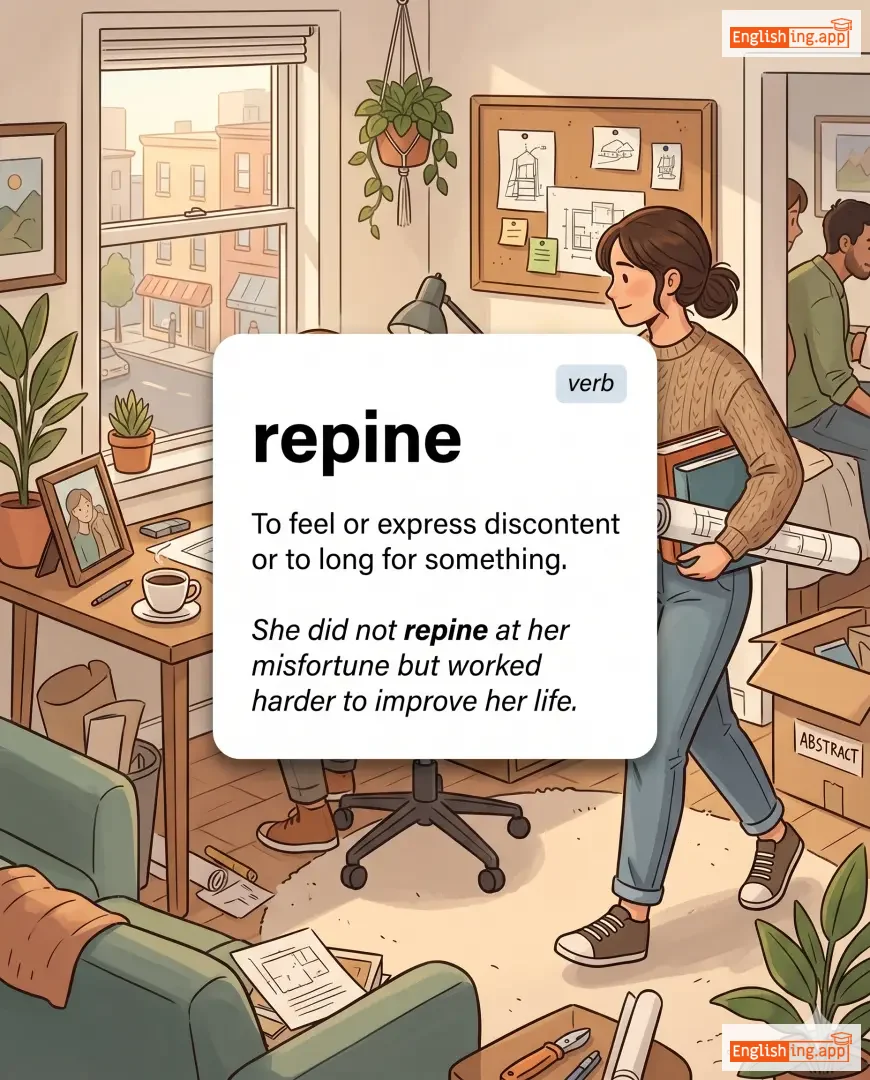
repine definition card — visual illustration of the meaning
verb
/rɪˈpaɪn/
嘆く (nageku)

To feel or express discontent or to long for something.

"She did not repine at her misfortune but worked harder to improve her life."

"彼女は不幸を嘆かず、より一生懸命に働いて生活を向上させました。" (Kanojo wa fukō o nagekazu, yori isshōkenmei ni hataraite seikatsu o kōjō sasemashita.)
repel definition card — visual illustration of the meaning
verb
/rɪˈpɛl/
撃退する (gekitai suru)

To drive back or push away, especially an attack or something unwanted.

"The army managed to repel the enemy forces."

"軍隊は敵の軍隊を撃退することに成功した。" (Guntai wa teki no guntai o gekitai suru koto ni seikou shita.)
adjective
/rɪˈpɛlənt/
忌避剤 (kihi-zai)

Able to drive away something, especially insects or unpleasant things; causing disgust or distaste.

"This cream is highly effective as a mosquito repellent."

"このクリームは蚊除けとして非常に効果的です。" (Kono kurīmu wa ka-yoke to shite hijō ni kōkateki desu.)
noun
/rɪˈpɛntəns/
後悔 (kōkai)

Deep regret or remorse for wrongdoing; sincere sorrow for one's sins or mistakes.

"He showed true repentance after apologizing for his mistakes."

"彼は自分の過ちを謝罪した後、真の後悔を示しました。" (Kare wa jibun no ayamachi o shazai shita ato, shin no kōkai o shimeshimasita.)
adjective
/rɪˈpen.tənt/
後悔している; 反省している; 悔いている (kōkai shite iru; hansei shite iru; kuite iru)

feeling or expressing sincere regret and remorse; sorry for one's actions

"The repentant thief returned the stolen money."
"後悔している泥棒は盗んだお金を返しました。" (Kōkai shite iru dorobō wa nusunda okane o kaeshimashita.)
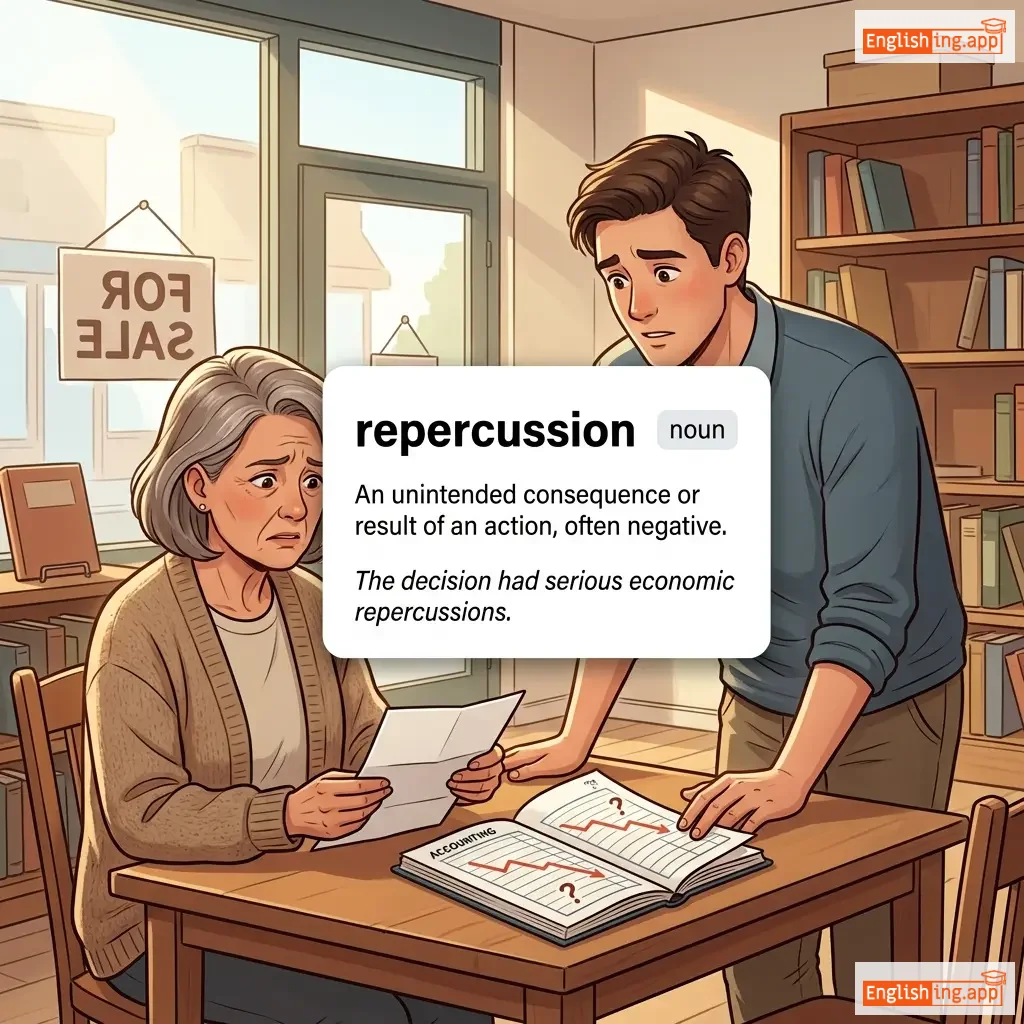
repercussion definition card — visual illustration of the meaning
noun
/ˌriːpərˈkʌʃən/

An unintended consequence or result of an action, often negative.

"The decision had serious economic repercussions."
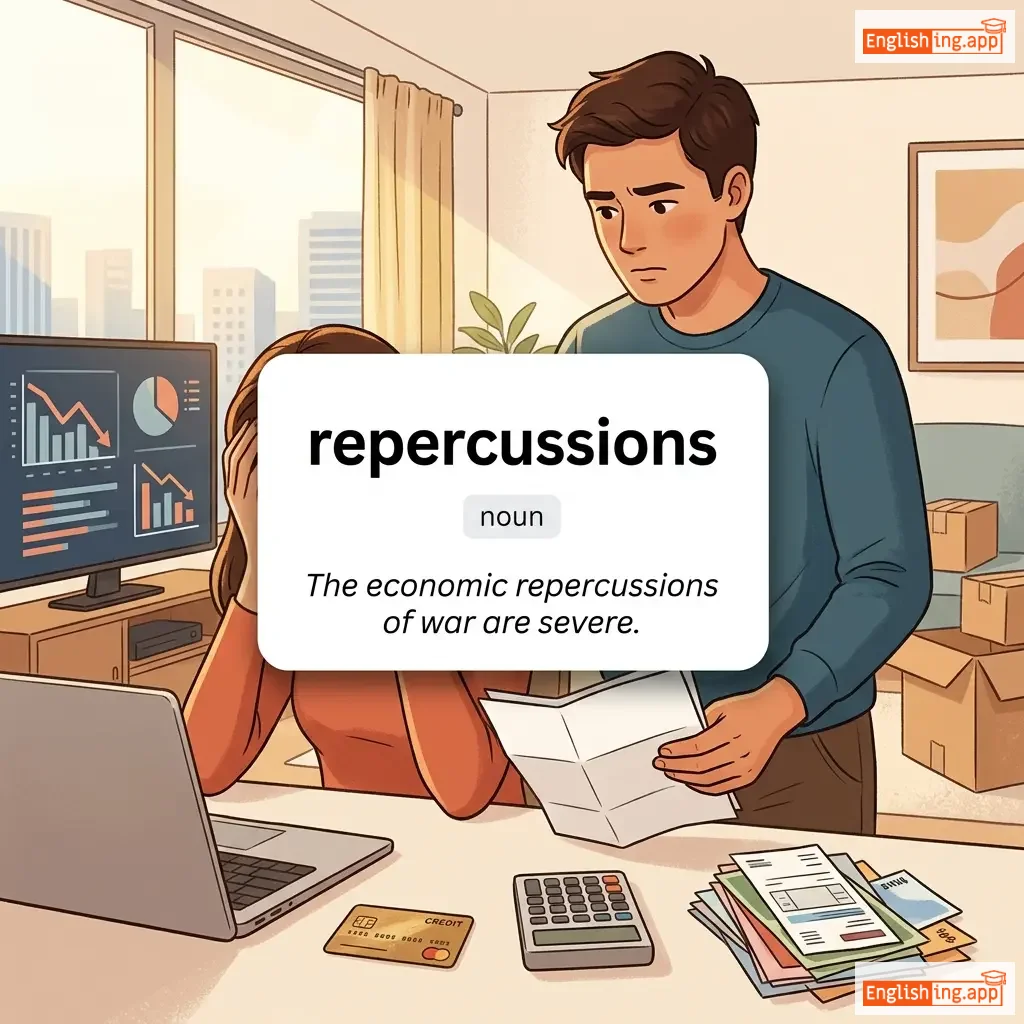
repercussions definition card — visual illustration of the meaning
noun
/ˌriː.pəˈkʌʃ.ənz/
影響 (eikyō)

An unintended consequence occurring some time after an event or action; the effects or results of something.

"The economic repercussions of war are severe."
"戦争の経済的影響は深刻です。" (Sensō no keizaiteki eikyō wa shinkoku desu.)
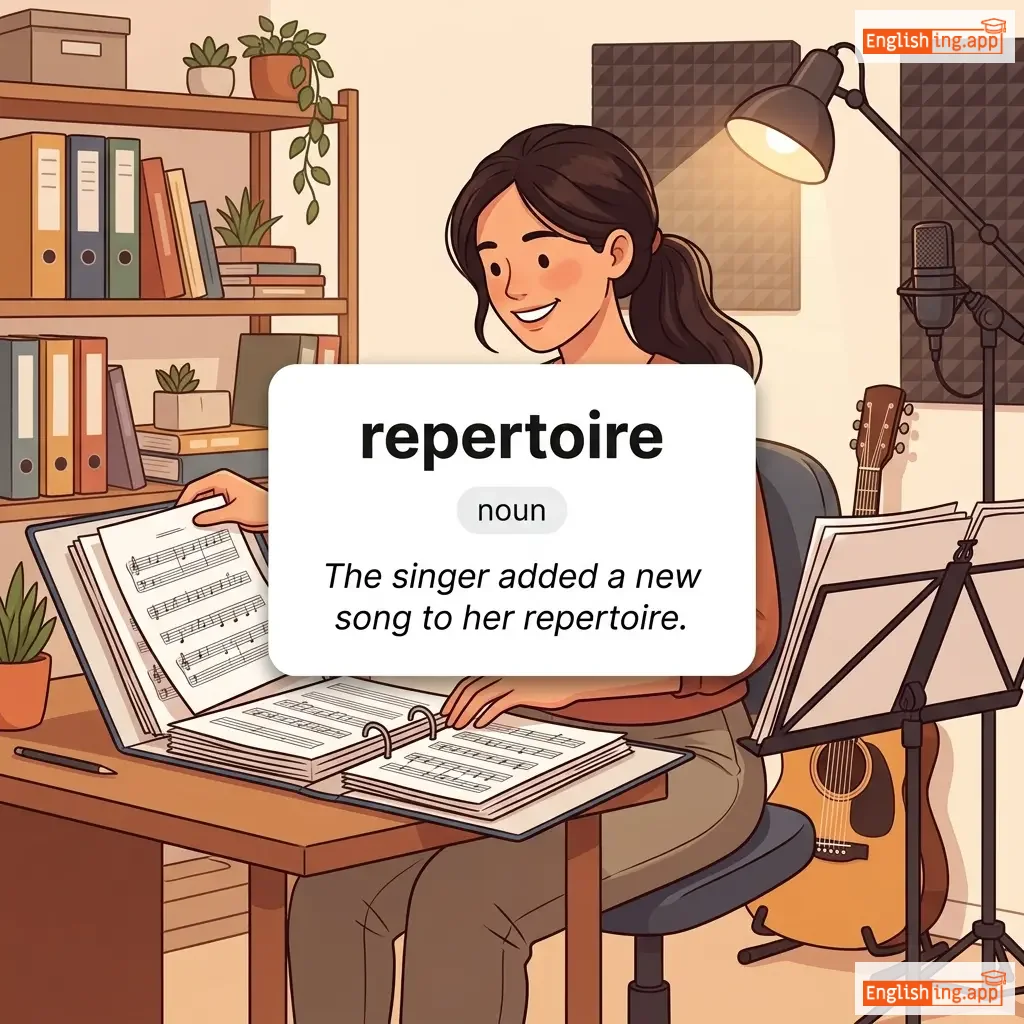
repertoire definition card — visual illustration of the meaning
noun
/ˈrɛpərˌtwɑːr/
レパートリー (repatorii)

The entire range of skills, works, or pieces that a person or group is prepared to perform or use.

"The singer added a new song to her repertoire."

"その歌手は自分のレパートリーに新しい歌を加えました。" (Sono kashu wa jibun no repatorii ni atarashī uta o kuwaemashita.)
adjective
/ˌrɛpərˈtɔːriəl/
レポートに関する (repōto ni kansuru)

Relating to or characteristic of a repertoire, especially in journalism or performance contexts.

"The journalist's repertorial style captured every detail of the unfolding story."

"そのジャーナリストのレポーティオリアルスタイルは、展開するストーリーのあらゆる詳細を捉えました。" (Sono jānarisuto no repōtioriaru sutairu wa, tenkai suru sutōrī no arayuru shōsai o toraemashita.)
noun
/ˈrɛpərˌtɔːri/
レパートリー (repaatoree)

A collection of works that a company, performer, or institution regularly performs; also a storehouse of information or skills.

"The theater has a repertory of classic plays."

"劇場にはクラシックな演劇のレパートリーがあります。" (Gekijou ni wa kurashikku na engeki no repaatoree ga arimasu.)
noun
/ˌrɛpɪˈtɪʃən/
繰り返し (kurikaeshi)

The action of repeating something that has already been said, written, or done.

"The teacher emphasized the importance of repetition in learning new vocabulary."
"先生は新しい語彙を学ぶ際の繰り返しの重要性を強調しました。" (Sensei wa atarashī goi o manabu sai no kurikaeshi no jūyō-sei o kyōchō shimashita.)
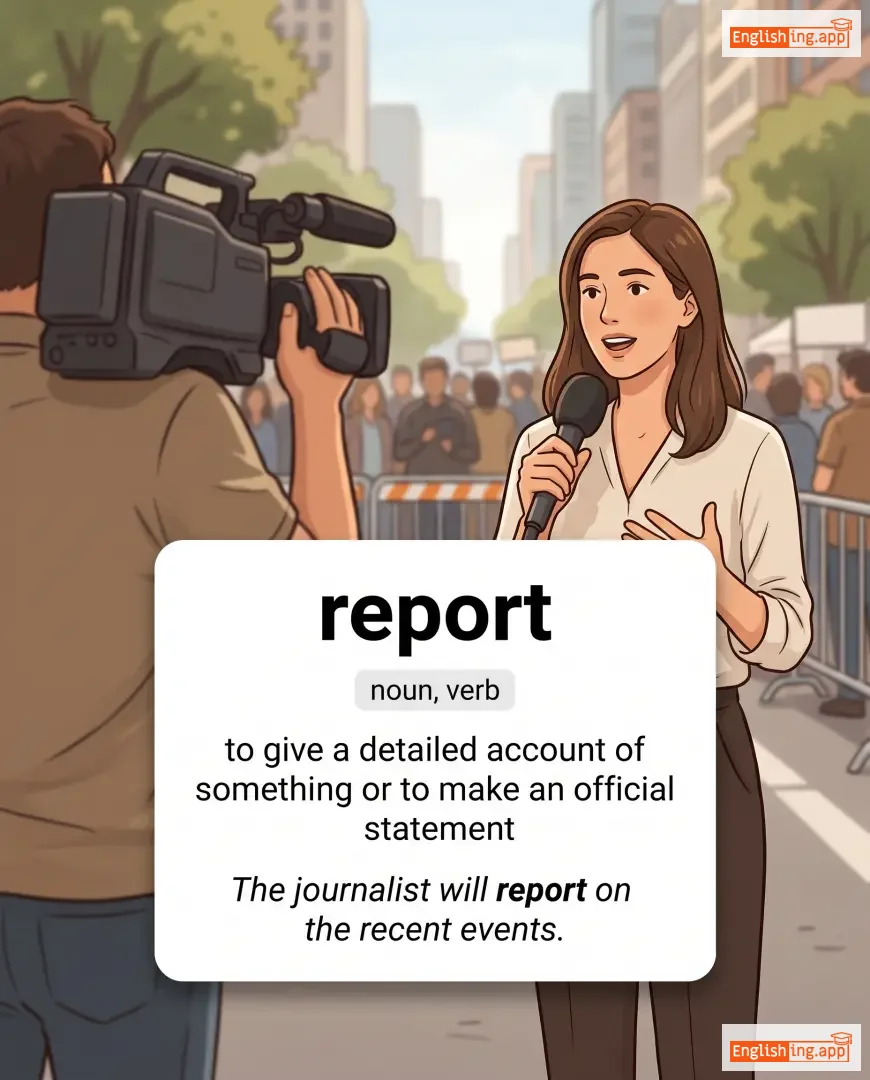
report definition card — visual illustration of the meaning
noun, verb
/rɪˈpɔːrt/
報告 (houkoku)

to give a detailed account of something or to make an official statement

"The journalist will report on the recent events."

"ジャーナリストは最近の出来事について報告します。" (Jaanaristo wa saikin no dekigoto ni tsuite houkoku shimasu.)
verb
/ˈrɛplɪkeɪt/
複製する (fukusei suru)

to copy, reproduce, or duplicate something exactly

"The scientist tried to replicate the experiment for accuracy."

"科学者は実験を正確に再現しようとしました。" (Kagakusha wa jikken o seikaku ni saigen shiyou to shimashita.)