Vocabularios

Descubra, aprenda y domine el vocabulario en inglés

adjective
/rɪˈmiːdiəbl/
remediable (remediable)

capable of being corrected or cured

"The mistake was serious but still remediable."

"El error fue grave pero aún remediable." (El error fue grave pero aún remediable.)
adjective
/rɪˈmiːdiəl/
correctivo (correctivo)

intended to correct or improve a situation, especially related to learning or health

"The school offers remedial classes in mathematics."

"La escuela ofrece clases de apoyo en matemáticas." (La escuela ofrece clases de apoyo en matematicas.)
noun
/ˈrɛmɪdi/
remedio (remedio)

a treatment or solution for a problem or illness

"The doctor prescribed a remedy for the cough."

"El doctor recetó un remedio para la tos." (El doctor receto un remedio para la tos.)
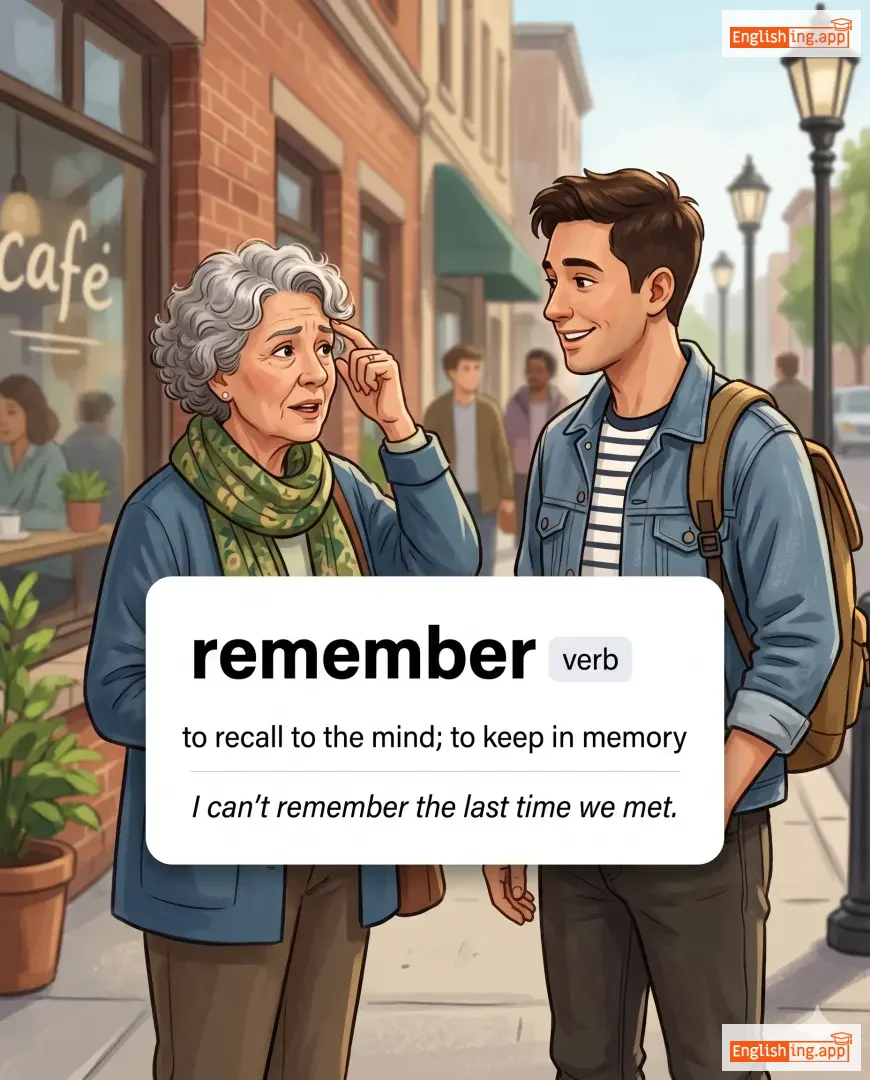
remember definition card — visual illustration of the meaning
verb
/rɪˈmɛmbər/
recordar (recordar)

to recall to the mind; to keep in memory

"I can't remember the last time we met."

"No puedo recordar la última vez que nos encontramos." (No puedo recordar la última vez que nos encontramos.)
noun
/rɪˈmɛmbrəns/
recuerdo (recuerdo)

the act of remembering or honoring someone or something

"A service was held in remembrance of the fallen soldiers."

"Se celebró un servicio en recuerdo de los soldados caídos." (Se celebró un servicio en recuerdo de los soldados caídos.)
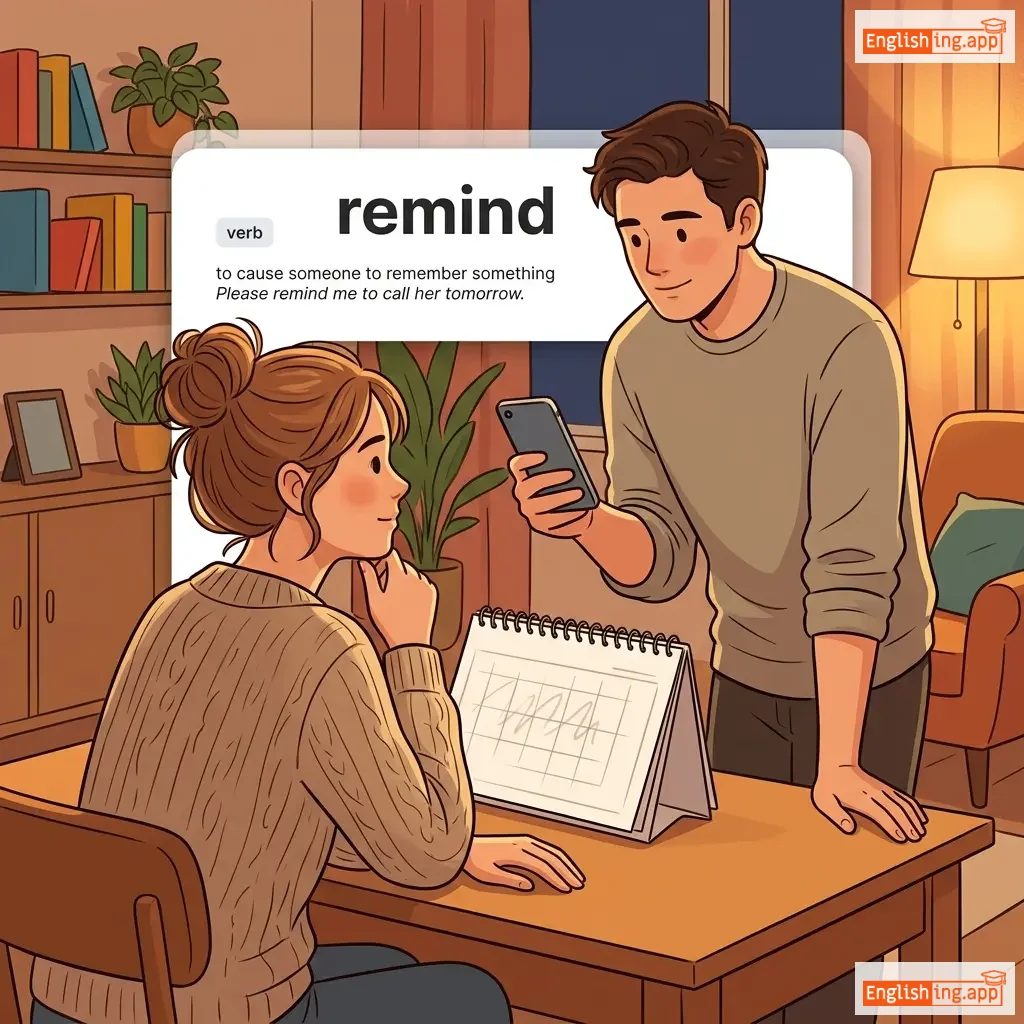
remind definition card — visual illustration of the meaning
verb
/rɪˈmaɪnd/
recordar (recordar)

to cause someone to remember something

"Please remind me to call her tomorrow."

"Por favor, recuérdame llamar a ella mañana." (Por favor, recuérdame llamar a ella mañana.)
noun
/rɪˈmaɪndər/
recordatorio (recordatorio)

something that helps you remember a fact, event, or action that you need to do or recall

"He set a reminder to call his mother on her birthday."

"Él configuró un recordatorio para llamar a su madre en su cumpleaños." (El configuró un recordatorio para llamar a su madre en su cumpleaños.)
noun
/ˌrɛmɪˈnɪsəns/
rememoración (rememoracion)

a story or memory about past events

"He shared a reminiscence of his childhood days in the village."

"Él compartió una rememoración de sus días de infancia en el pueblo." (El compartió una rememoración de sus días de infancia en el pueblo.)
adjective
/ˌrɛmɪˈnɪsənt/
rememorativo (rememorativo)

Tending to remind one of something; suggestive of something in the past.

"The smell of rain is reminiscent of my childhood in the village."

"El olor a lluvia es rememorativo de mi infancia en el pueblo." (El olor a lluvia es rememorativo de mi infancia en el pueblo.)
adjective
/rɪˈmɪs/
negligente (negligente)

Negligent in performing a duty or responsibility.

"The manager was remiss in not checking the financial reports carefully."

"El gerente fue negligente al no revisar cuidadosamente los informes financieros." (El gerente fue negligente al no revisar cuidadosamente los informes financieros.)
noun
/rɪˈmɪʃən/
remisión (rimishun)

A temporary or permanent decrease or disappearance of disease symptoms; forgiveness of sins or debts.

"The patient’s cancer is in remission after the treatment."

"El cáncer del paciente está en remisión después del tratamiento." (El cancer del paciente esta en remission despues del tratamiento)
verb
/rɪˈmɪt/
enviar dinero / perdonar (enviar dinero / perdonar)

To send money in payment or as a gift; to cancel or refrain from exacting a debt or punishment.

"He promised to remit the payment by the end of the week."

"Él prometió remitir el pago antes del final de la semana." (Él prometió remitir el pago antes del final de la semana.)
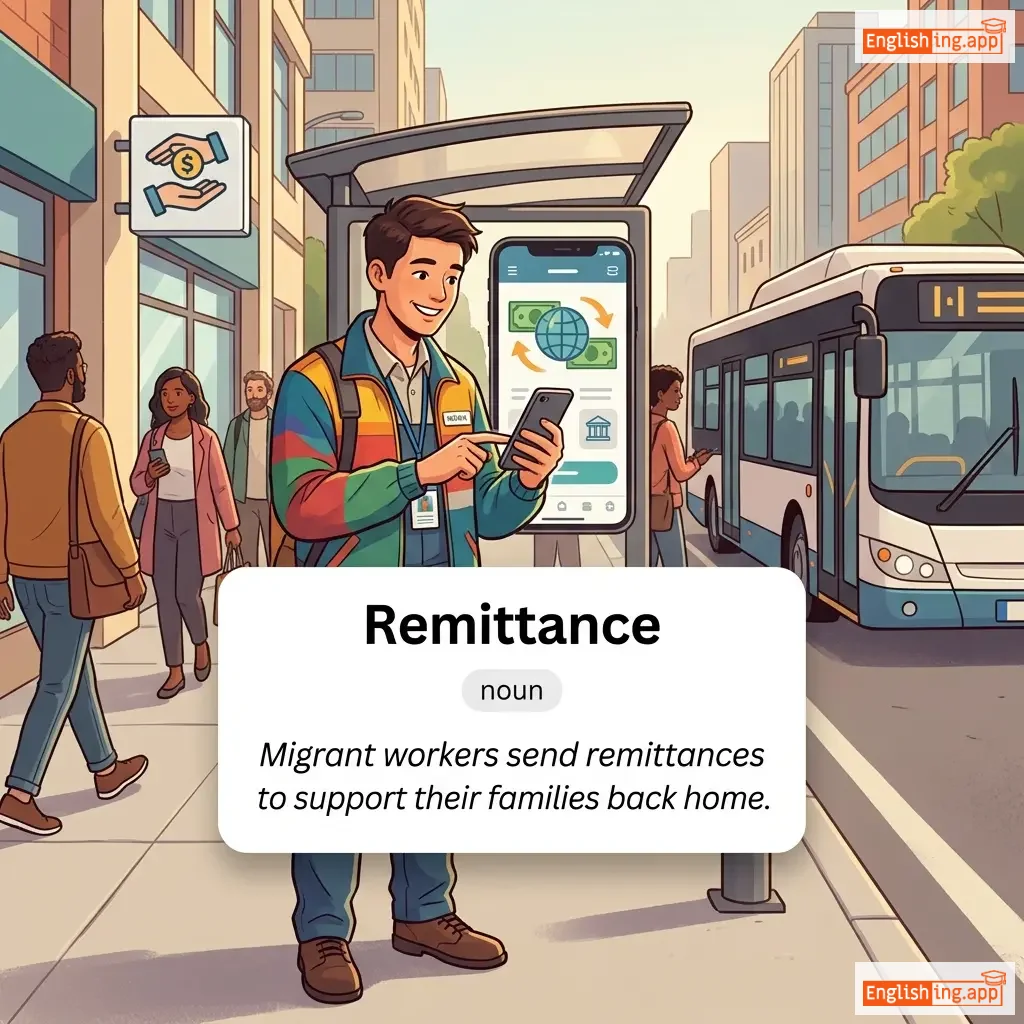
Remittance definition card — visual illustration of the meaning
noun
/rɪˈmɪtəns/
remesa / transferencia de dinero (remesa / transferencia de dinero)

A sum of money sent, especially by mail or electronic transfer, as payment or gift.

"Migrant workers send remittances to support their families back home."

"Los trabajadores migrantes envían remesas para apoyar a sus familias en su país de origen." (Los trabajadores migrantes envían remesas para apoyar a sus familias en su país de origen.)
noun
/ˈrɛmnənt/
resto (resto)

A small remaining part of something that once existed or was larger.

"The old house still had remnants of its former glory."

"La vieja casa todavía tenía restos de su antigua gloria." (La vieja casa todavia tenia restos de su antigua gloria.)
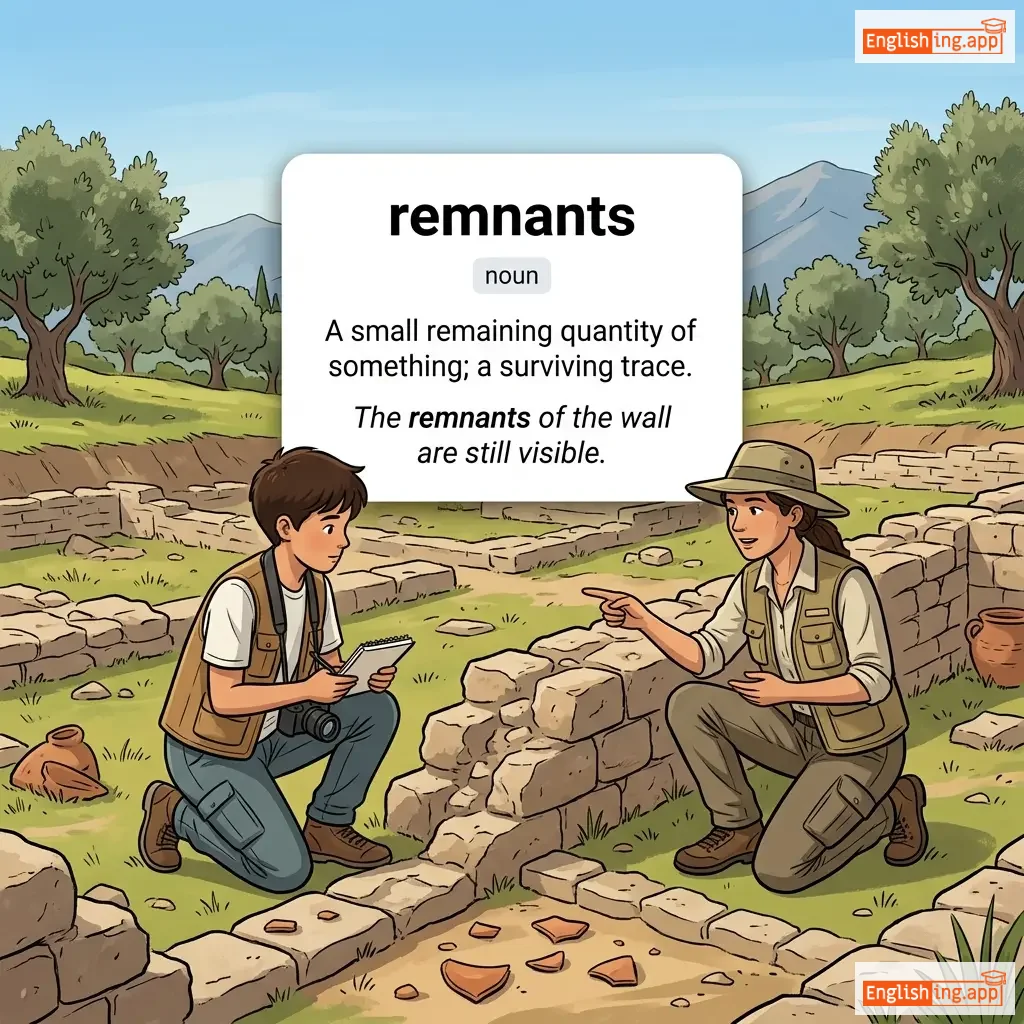
remnants definition card — visual illustration of the meaning
noun
ˈremnənts
restos (restos)

A small remaining quantity of something; a surviving trace.

"The remnants of the wall are still visible."

"Los restos de la pared aún son visibles." (Los restos de la pared aun son visibles.)
verb
/ˌriːˈmɒdəl/
remodelar (remodelar)

To change the structure or form of something, especially a building.

"They decided to remodel their kitchen last summer."

"Ellos decidieron remodelar su cocina el verano pasado." (Ellos decidieron remodelar su cocina el verano pasado.)
noun
/rɪˈmɒnstrəns/
protesta (protesta)

A forceful protest or objection.

"The workers’ remonstrance against unfair treatment was ignored."

"La protesta de los trabajadores contra el trato injusto fue ignorada." (La protesta de los trabajadores contra el trato injusto fue ignorada.)
noun/adjective
/rɪˈmɒnstrənt/
protestante (protestante)

A person who makes a forceful protest (noun); protesting or objecting (adjective).

"He was a remonstrant voice in the assembly."

"Él fue una voz de protesta en la asamblea." (Él fue una voz de protesta en la asamblea.)
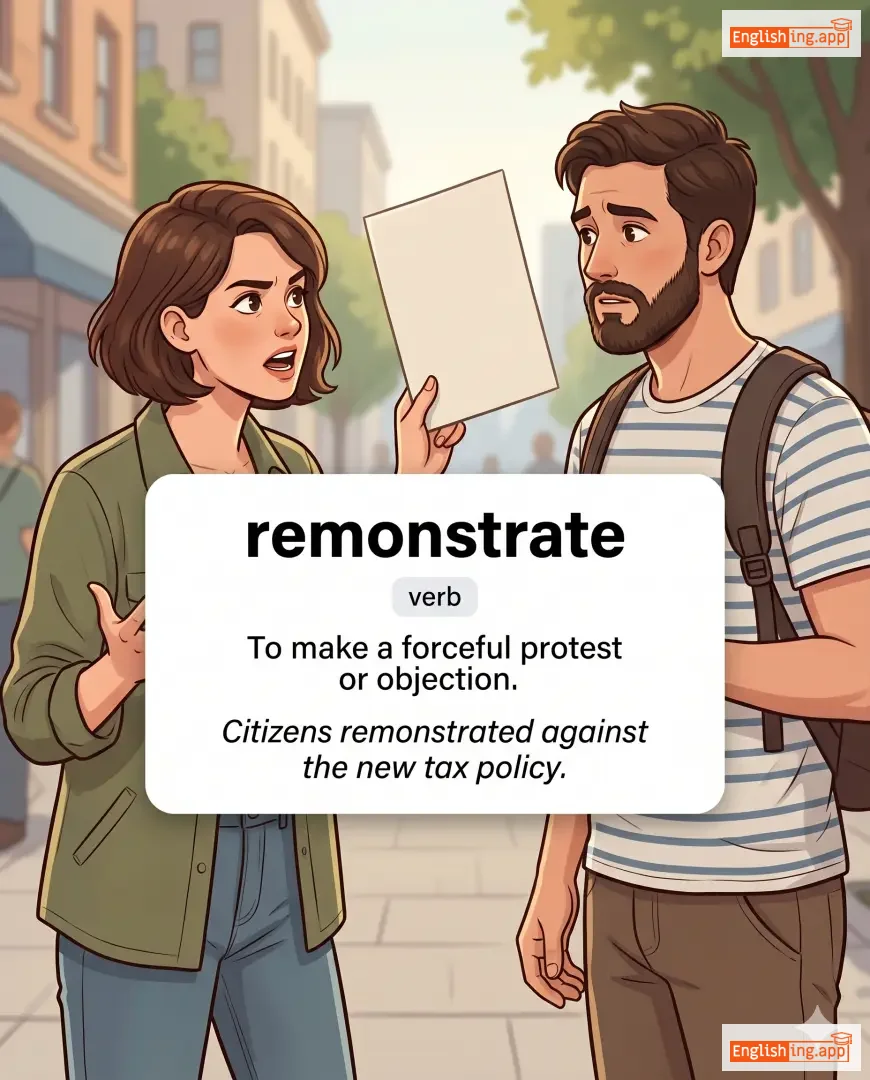
remonstrate definition card — visual illustration of the meaning
verb
/rɪˈmɒnstreɪt/
protestar (protestar)

To make a forceful protest or objection.

"Citizens remonstrated against the new tax policy."

"Los ciudadanos protestaron contra la nueva política fiscal." (Los ciudadanos protestaron contra la nueva política fiscal.)
noun
/rɪˈmɔːrs/
remordimiento (remordimiento)

A deep feeling of regret or guilt for a wrong committed.

"He was filled with remorse after lying to his friend."

"Se llenó de remordimiento después de mentirle a su amigo." (Se llenó de remordimiento después de mentirle a su amigo.)
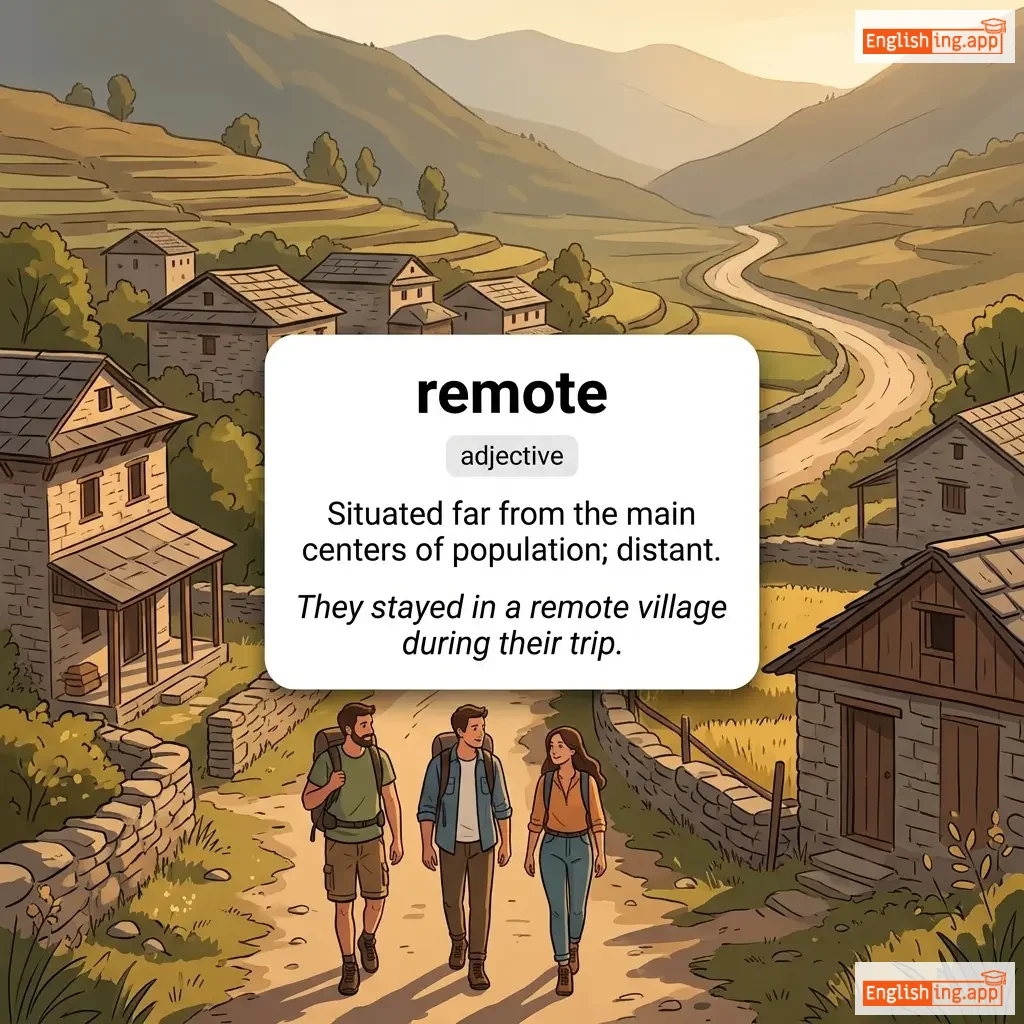
remote definition card — visual illustration of the meaning
adjective
/rɪˈmoʊt/
remoto (remoto)

Situated far from the main centers of population; distant.

"They stayed in a remote village during their trip."

"Se quedaron en un pueblo remoto durante su viaje." (Se quedaron en un pueblo remoto durante su viaje.)
adjective
/rɪˈmoʊtɪd/
remotado (remotado)

placed at a distance; made remote

"The system was remoted to a secure location."

"El sistema fue remotado a una ubicación segura." (El sistema fue remotado a una ubicacion segura.)
adjective
/rɪˈmuːvəbəl/
extraíble (extraible)

able to be removed or taken away

"This phone has a removable battery."

"Este teléfono tiene una batería extraíble." (Este teléfono tiene una batería extraíble.)
noun
/rɪˈmuːvəl/
eliminación (eliminacion)

the act of taking something or someone away or out of a place

"The removal of old furniture made the room look spacious."

"La eliminación de los muebles viejos hizo que la habitación pareciera más espaciosa." (La eliminacion de los muebles viejos hizo que la habitacion pareciera mas espaciosa.)
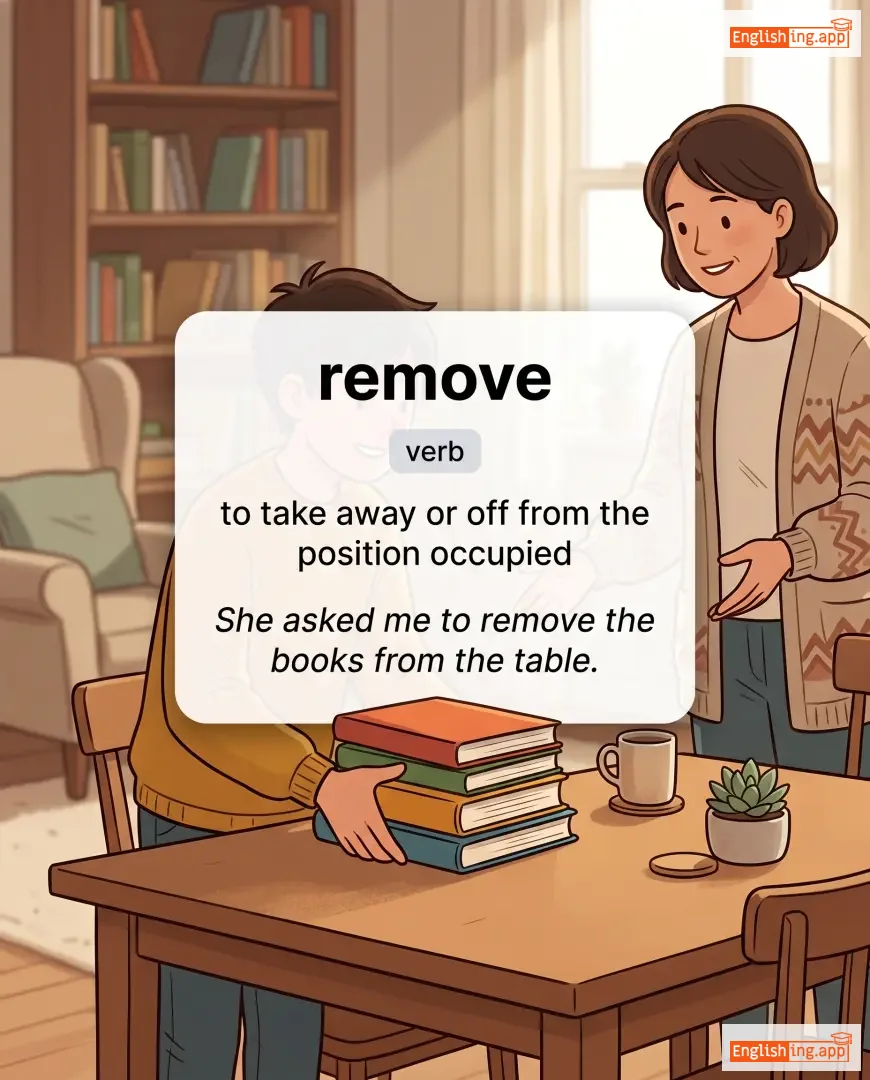
remove definition card — visual illustration of the meaning
verb
/rɪˈmuːv/
quitar (quitar)

to take away or off from the position occupied

"She asked me to remove the books from the table."

"Ella me pidió que quitara los libros de la mesa." (Ella me pidió que quitara los libros de la mesa.)
verb
/rɪˈmjuːnəreɪt/
remunerar (remunerar)

To pay someone for services or work done.

"The company will remunerate employees fairly for their overtime."

"La empresa remunerará a los empleados de manera justa por su tiempo extra." (La empresa remunerará a los empleados de manera justa por su tiempo extra.)
noun
/rɪˌmjuːnəˈreɪʃən/
remuneración (remuneracion)

Money paid for work or a service.

"The remuneration for this job is quite generous."

"La remuneración por este trabajo es bastante generosa." (La remuneracion por este trabajo es bastante generosa.)
adjective
/rɪˈmjuːnərətɪv/
remunerativo (remunerativo)

Financially rewarding or profitable.

"He chose a remunerative career in medicine."

"Eligió una carrera remunerada en medicina." (Eligió una carrera remunerada en medicina.)
noun
/ˈrɛnəˌsɑːns/
renacimiento (renacimiento)

a revival of art, culture, or learning; a period of renewed interest and growth

"The city experienced a cultural renaissance during the 1990s."

"La ciudad experimentó un renacimiento cultural durante los años 90." (La ciudad experimentó un renacimiento cultural durante los años 90.)
verb
/rɛnd/
rasgar (rasgar)

to tear something apart violently or forcefully

"The explosion rent the air with a deafening noise."

"La explosión rasgó el aire con un ruido ensordecedor." (La explosión rasgó el aire con un ruido ensordecedor.)
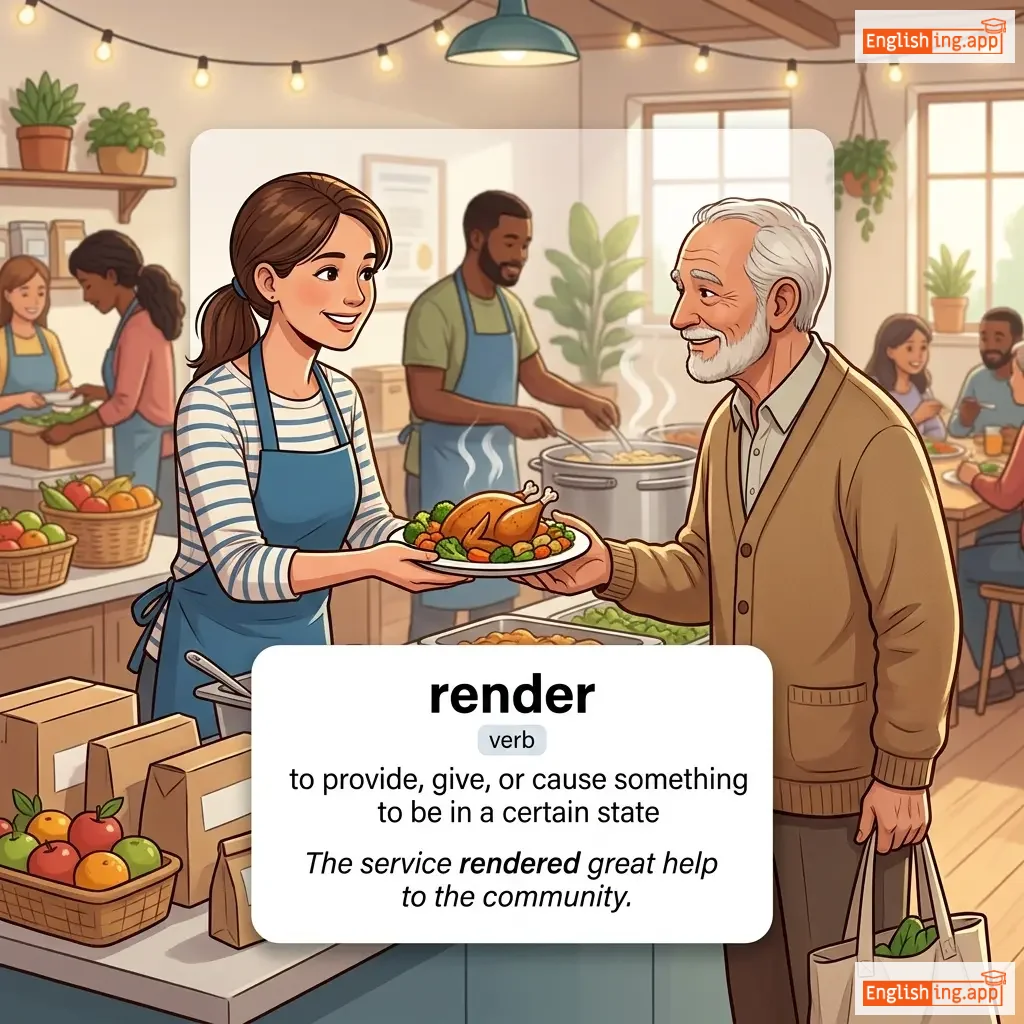
render definition card — visual illustration of the meaning
verb
/ˈrɛndər/
prestar (prestar)

to provide, give, or cause something to be in a certain state

"The service rendered great help to the community."

"El servicio prestado ayudó mucho a la comunidad." (El servicio prestado ayudó mucho a la comunidad.)
noun
/ˈrɒndɪvuː/
encuentro (encuentro)

a meeting or appointment at an agreed time and place

"They arranged a secret rendezvous at the café."

"Arreglaron un encuentro secreto en el café." (Arreglaron un encuentro secreto en el café.)
noun
/rɛnˈdɪʃən/
interpretación (interpretacion)

a performance or interpretation of a piece of art, music, or text

"The singer gave a moving rendition of the classic song."

"El cantante dio una emotiva interpretación de la canción clásica." (El cantante dio una emotiva interpretacion de la cancion clasica.)
noun
/ˈrɛnɪˌɡeɪd/
renegado (renegado)

a person who deserts or betrays an organization, country, or principles

"He was labeled a renegade after leaving the party and criticizing its policies."

"Fue etiquetado como un renegado después de dejar el partido y criticar sus políticas." (Fue etiquetado como un renegado despues de dejar el partido y criticar sus politicas.)
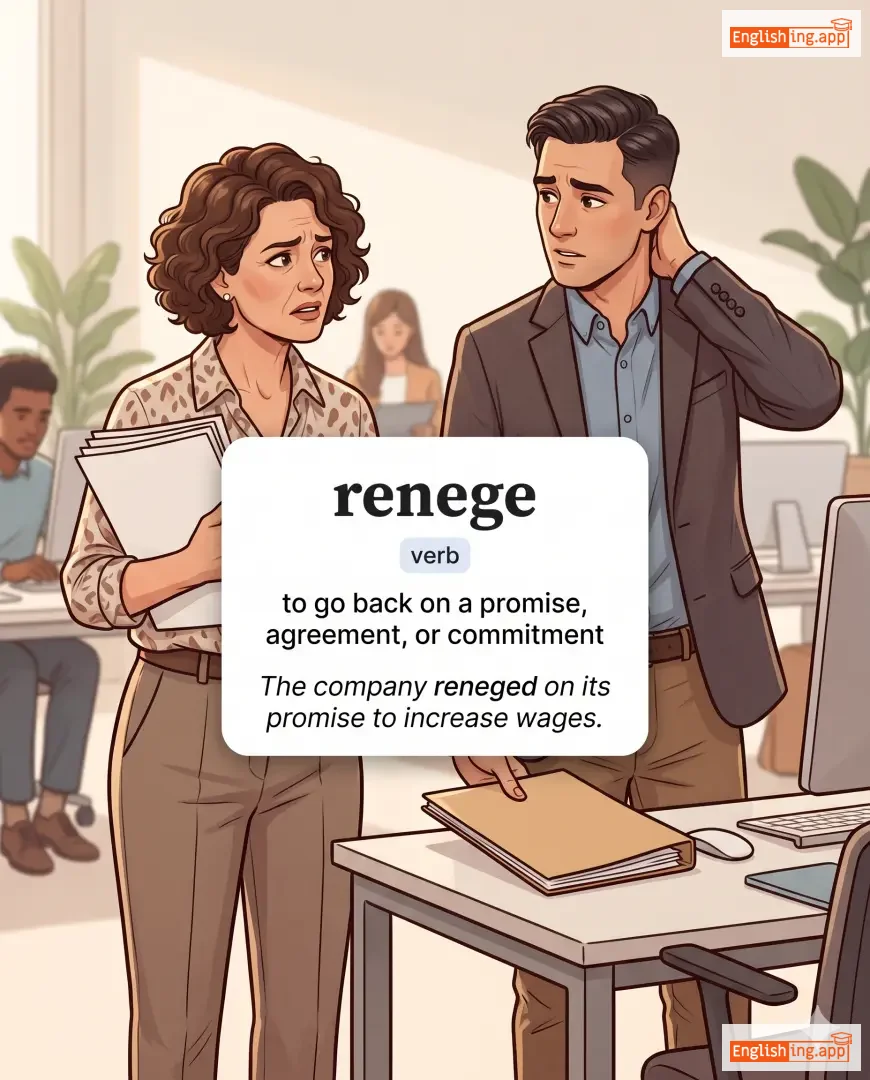
renege definition card — visual illustration of the meaning
verb
/rɪˈnɛɡ/
romper un compromiso (romper un compromiso)

to go back on a promise, agreement, or commitment

"The company reneged on its promise to increase wages."

"La empresa rompió su promesa de aumentar los salarios." (La empresa rompió su promesa de aumentar los salarios.)
verb
/rɪˈnuː/
renovar (renovar)

to make something new again or extend its period of validity

"I need to renew my passport before traveling."

"Necesito renovar mi pasaporte antes de viajar." (Necesito renovar mi pasaporte antes de viajar.)
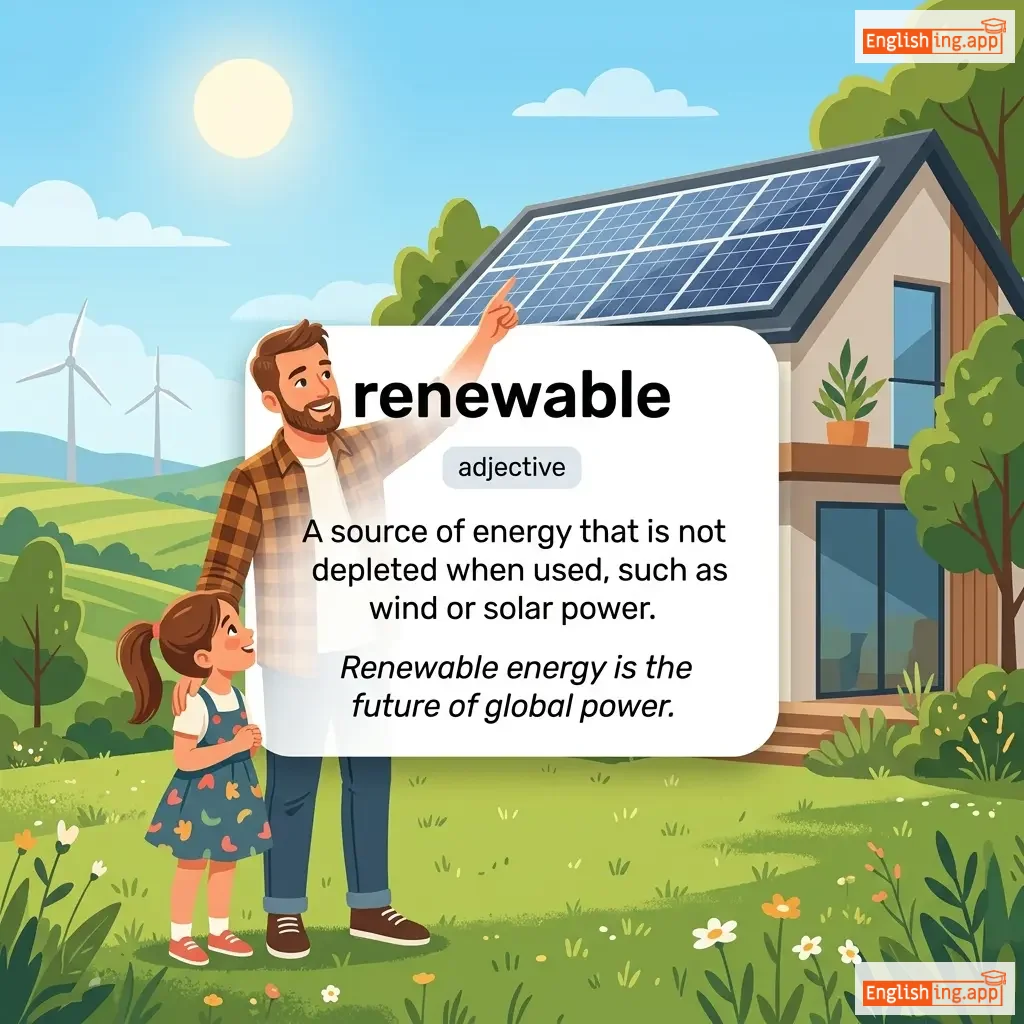
renewable definition card — visual illustration of the meaning
adjective
rɪˈnjuː.ə.bəl
renovable (renovable)

A source of energy that is not depleted when used, such as wind or solar power.

"Renewable energy is the future of global power."

"La energía renovable es el futuro del poder global." (La energía renovable es el futuro del poder global.)
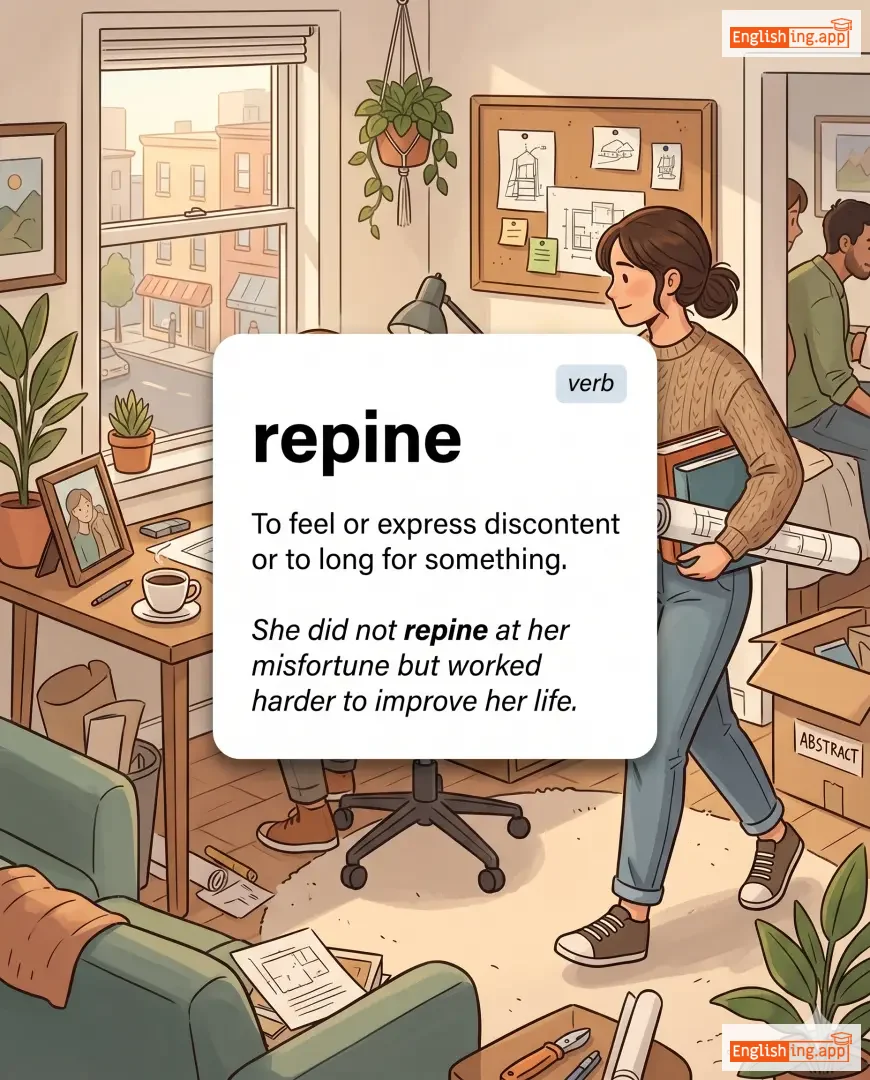
repine definition card — visual illustration of the meaning
verb
/rɪˈpaɪn/
lamentarse (lamentarse)

To feel or express discontent or to long for something.

"She did not repine at her misfortune but worked harder to improve her life."

"Ella no lamentó su desgracia, sino que trabajó más duro para mejorar su vida." (Ella no lamentó su desgracia, sino que trabajó más duro para mejorar su vida.)
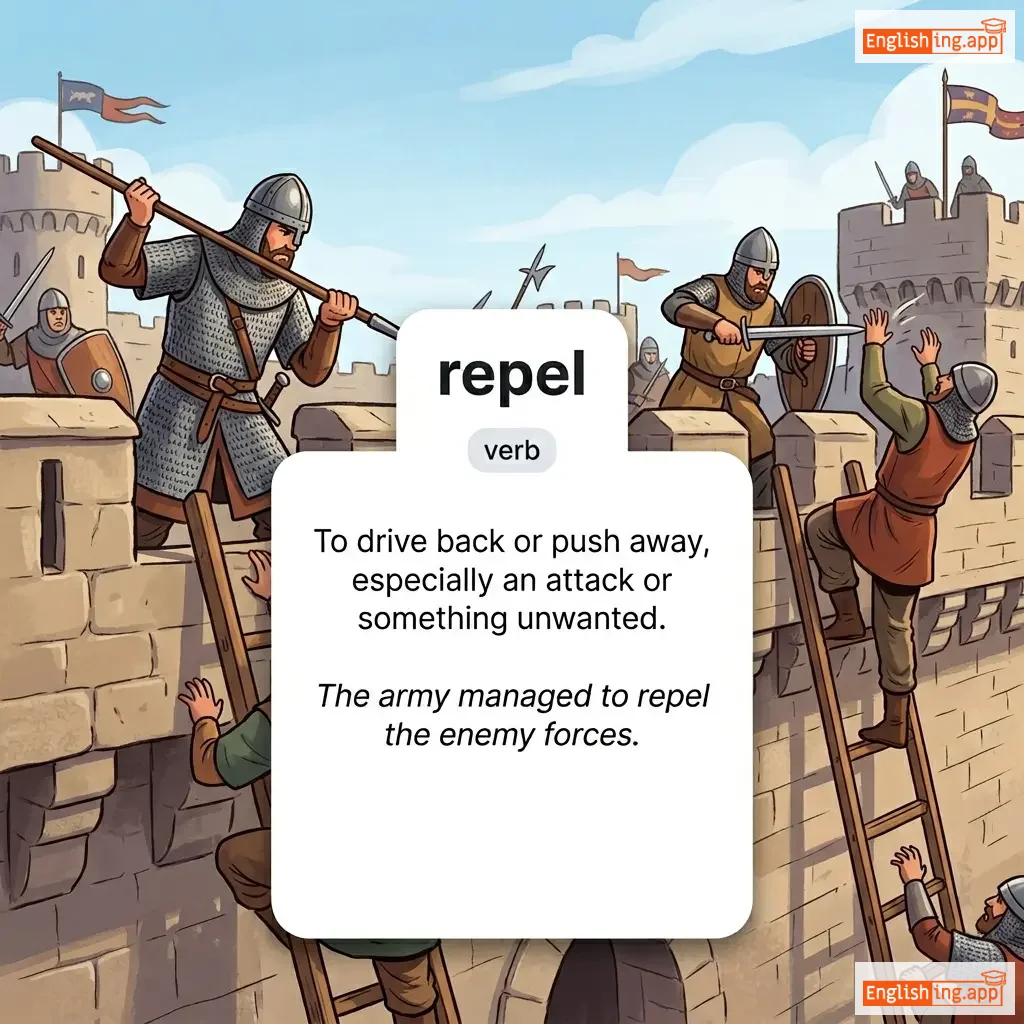
repel definition card — visual illustration of the meaning
verb
/rɪˈpɛl/
repeler (repeler)

To drive back or push away, especially an attack or something unwanted.

"The army managed to repel the enemy forces."

"El ejército logró repeler las fuerzas enemigas." (El ejército logró repeler las fuerzas enemigas.)
adjective
/rɪˈpɛlənt/
repelente (repelente)

Able to drive away something, especially insects or unpleasant things; causing disgust or distaste.

"This cream is highly effective as a mosquito repellent."

"Esta crema es muy efectiva como repelente de mosquitos." (Esta crema es muy efectiva como repelente de mosquitos.)
noun
/rɪˈpɛntəns/
arrepentimiento (arrepentimiento)

Deep regret or remorse for wrongdoing; sincere sorrow for one's sins or mistakes.

"He showed true repentance after apologizing for his mistakes."

"Él mostró verdadero arrepentimiento después de disculparse por sus errores." (Él mostró verdadero arrepentimiento después de disculparse por sus errores.)
adjective
/rɪˈpen.tənt/
arrepentido; lamentoso; contrito (arrepentido; lamentoso; contrito)

feeling or expressing sincere regret and remorse; sorry for one's actions

"The repentant thief returned the stolen money."

"El ladrón arrepentido devolvió el dinero robado." (El ladron arrepentido devolvió el dinero robado.)
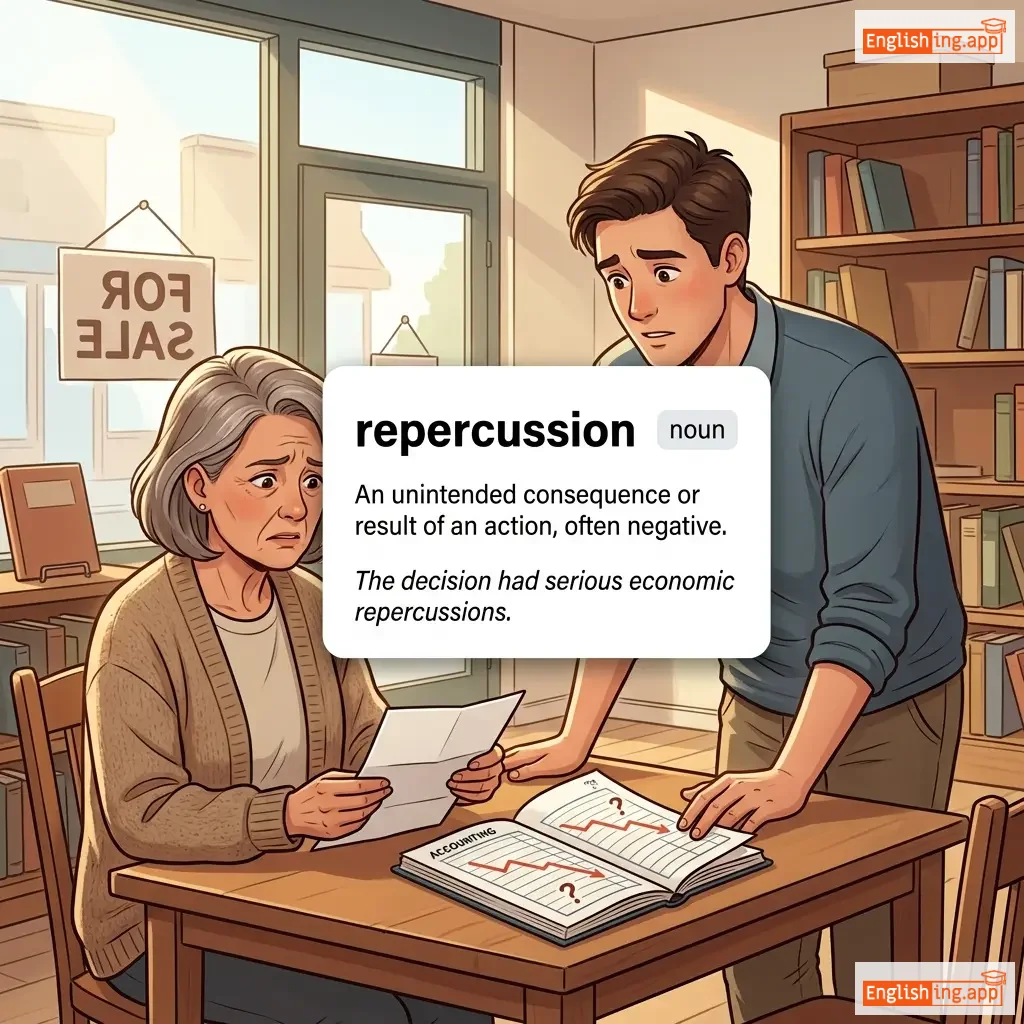
repercussion definition card — visual illustration of the meaning
noun
/ˌriːpərˈkʌʃən/
repercusión (repercusion)

An unintended consequence or result of an action, often negative.

"The decision had serious economic repercussions."

"La decisión tuvo repercusiones económicas serias." (La decision tuvo repercusiones economicas serias)
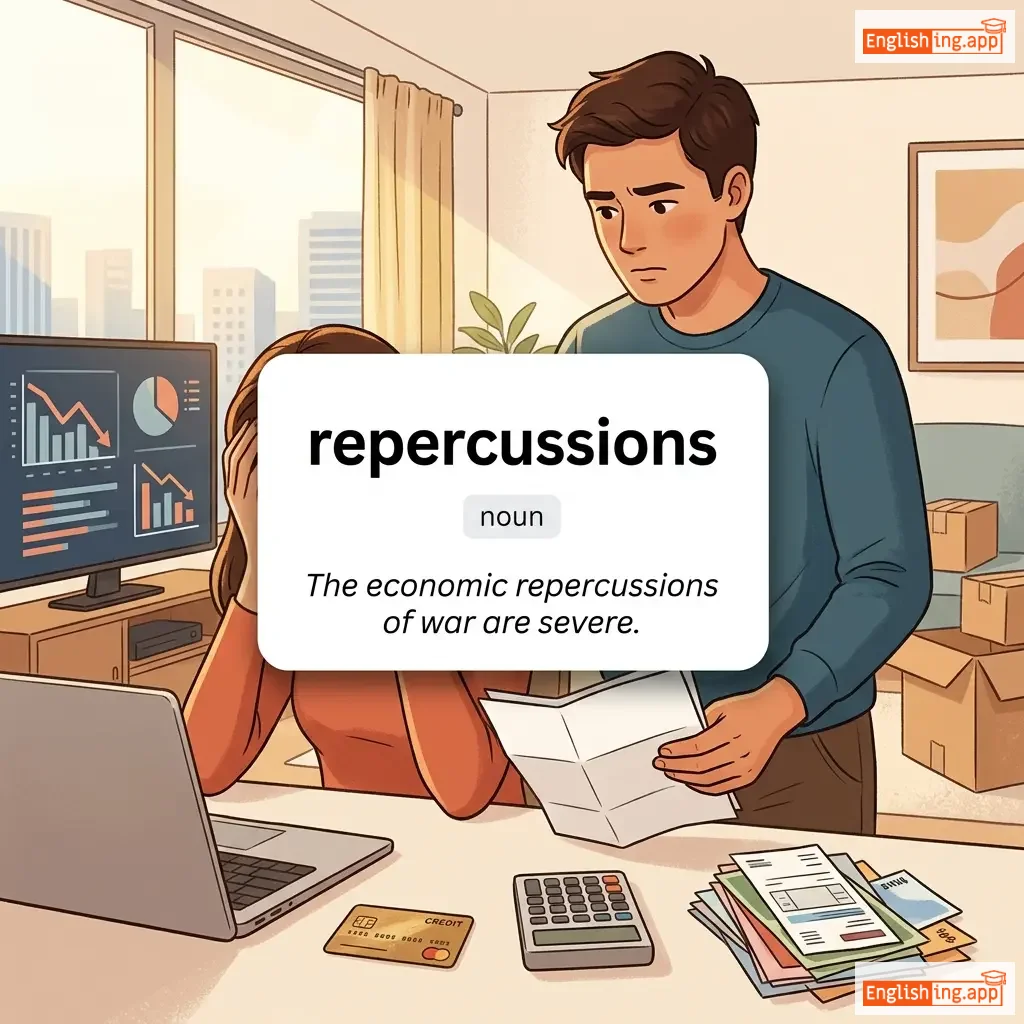
repercussions definition card — visual illustration of the meaning
noun
/ˌriː.pəˈkʌʃ.ənz/
repercusiones (repercusiones)

An unintended consequence occurring some time after an event or action; the effects or results of something.

"The economic repercussions of war are severe."

"Las repercusiones económicas de la guerra son graves." (Las repercusiones economicas de la guerra son graves.)
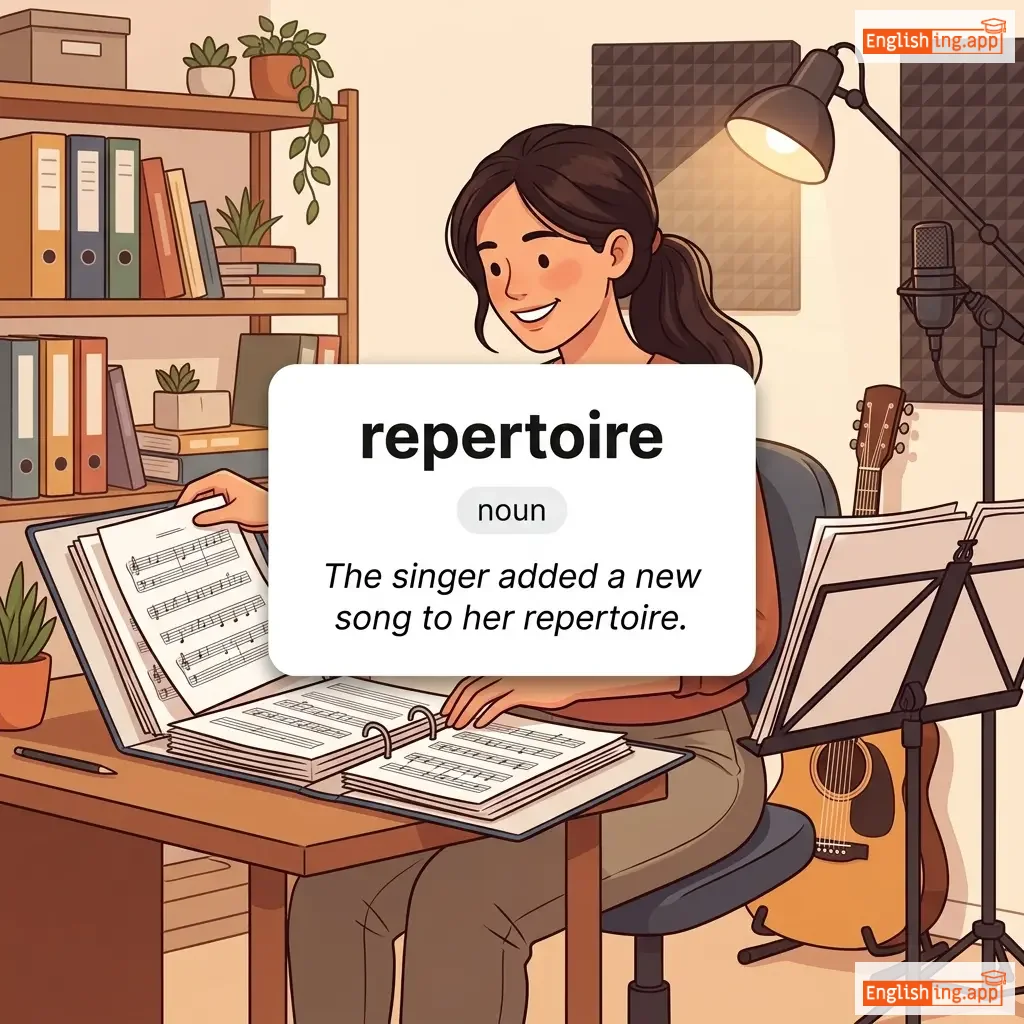
repertoire definition card — visual illustration of the meaning
noun
/ˈrɛpərˌtwɑːr/
repertorio (repertorio)

The entire range of skills, works, or pieces that a person or group is prepared to perform or use.

"The singer added a new song to her repertoire."

"La cantante añadió una nueva canción a su repertorio." (La cantante añadió una nueva canción a su repertorio.)
adjective
/ˌrɛpərˈtɔːriəl/
repertorial (repertorial)

Relating to or characteristic of a repertoire, especially in journalism or performance contexts.

"The journalist's repertorial style captured every detail of the unfolding story."

"El estilo repertorial del periodista capturó cada detalle de la historia en desarrollo." (El estilo repertorial del periodista capturó cada detalle de la historia en desarrollo.)
noun
/ˈrɛpərˌtɔːri/
repertorio (repertorio)

A collection of works that a company, performer, or institution regularly performs; also a storehouse of information or skills.

"The theater has a repertory of classic plays."

"El teatro tiene un repertorio de obras clásicas." (El teatro tiene un repertorio de obras clasicas.)
noun
/ˌrɛpɪˈtɪʃən/
repetición (repeticion)

The action of repeating something that has already been said, written, or done.

"The teacher emphasized the importance of repetition in learning new vocabulary."

"El maestro enfatizó la importancia de la repetición en el aprendizaje de nuevo vocabulario." (El maestro enfatizo la importancia de la repeticion en el aprendizaje de nuevo vocabulario.)
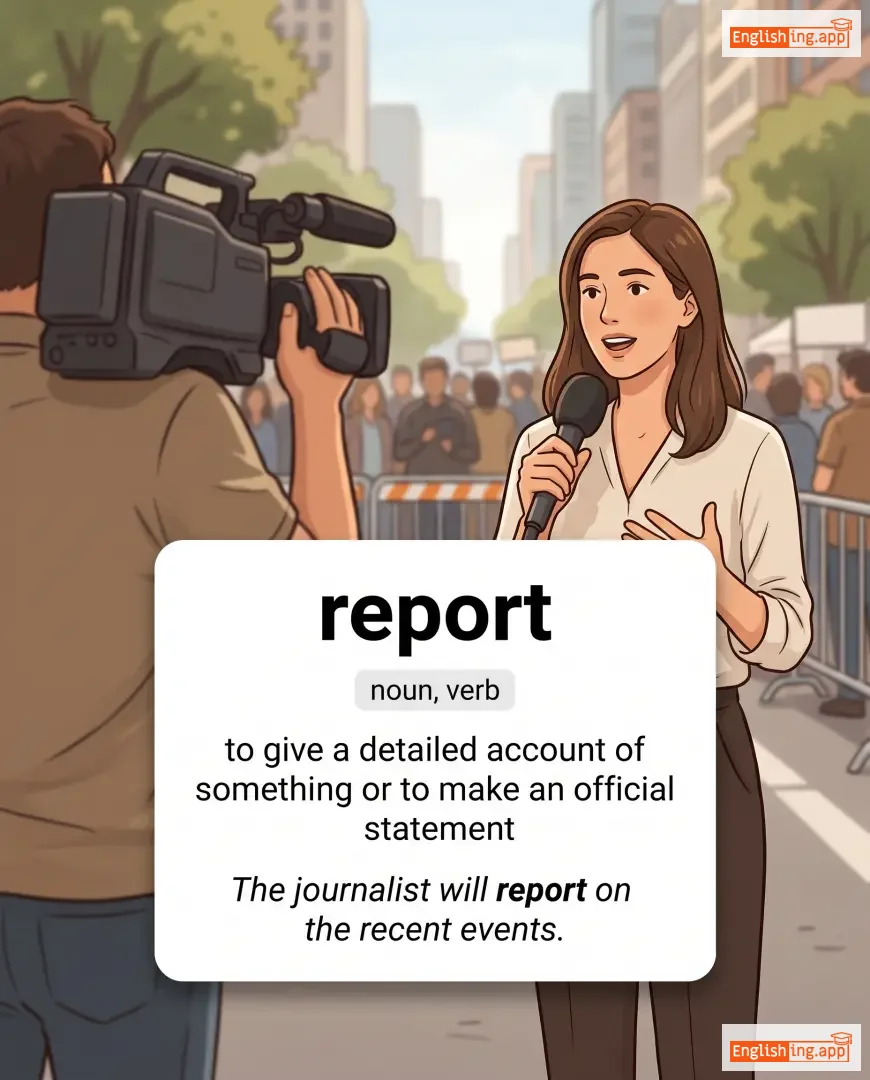
report definition card — visual illustration of the meaning
noun, verb
/rɪˈpɔːrt/
informe (informe)

to give a detailed account of something or to make an official statement

"The journalist will report on the recent events."

"El periodista informará sobre los eventos recientes." (El periodista informara sobre los eventos recientes.)
verb
/ˈrɛplɪkeɪt/
replicar (replicar)

to copy, reproduce, or duplicate something exactly

"The scientist tried to replicate the experiment for accuracy."

"El científico intentó replicar el experimento para mayor precisión." (El cientifico intento replicar el experimento para mayor precision.)