Vocabularios

Descubra, aprenda y domine el vocabulario en inglés

adjective
/rɪˈliːvd/
aliviado (aliviado)

feeling happy and less worried after something stressful has been removed or resolved

"She felt relieved after hearing the good news."

"Se sintió aliviada después de escuchar la buena noticia." (Se sintió aliviada después de escuchar la buena noticia.)
noun
/rɪˈlɪdʒ.ən/
religión (religion)

a system of faith and worship involving belief in a higher power

"Freedom of religion is a fundamental human right."

"La libertad de religión es un derecho humano fundamental." (La libertad de religión es un derecho humano fundamental.)
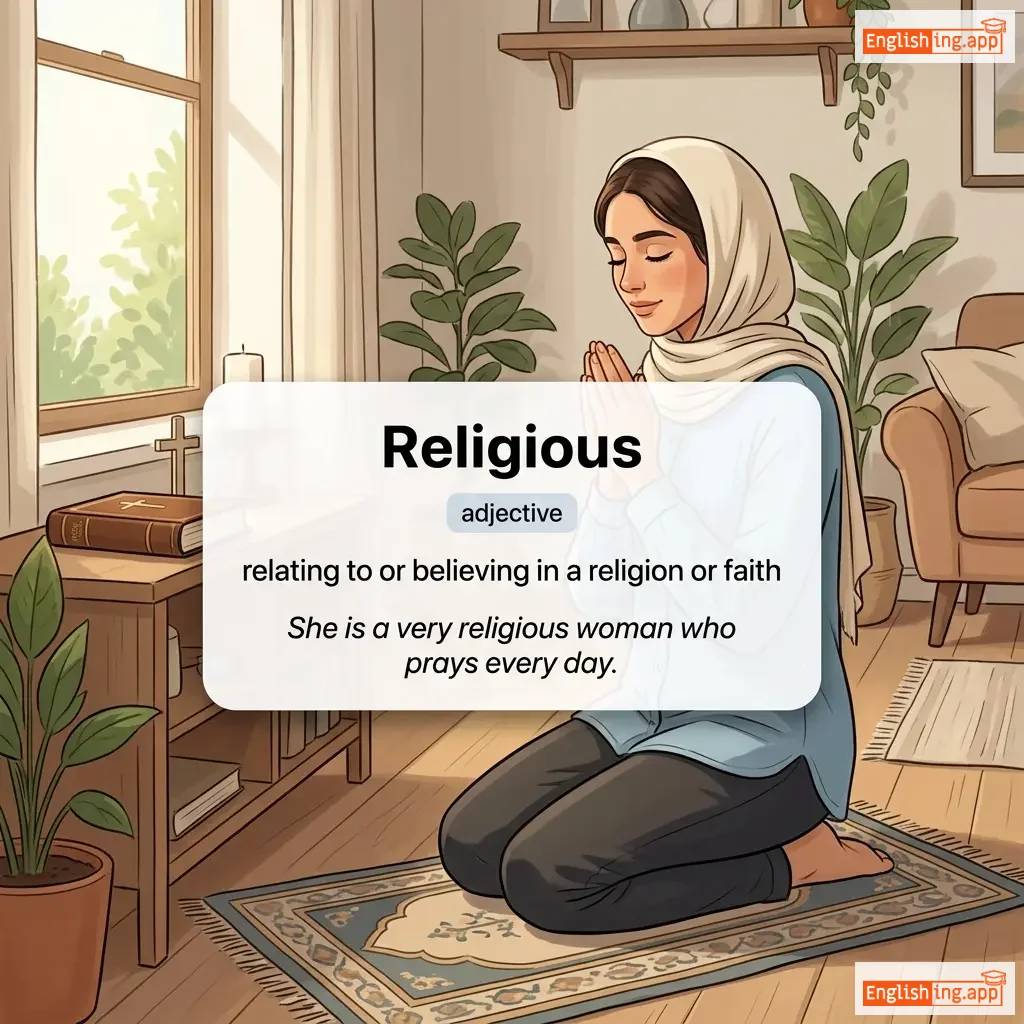
Religious definition card — visual illustration of the meaning
adjective
/rɪˈlɪdʒəs/
religioso (religioso)

relating to or believing in a religion or faith

"She is a very religious woman who prays every day."

"Ella es una mujer muy religiosa que ora todos los días." (Ella es una mujer muy religiosa que ora todos los días.)
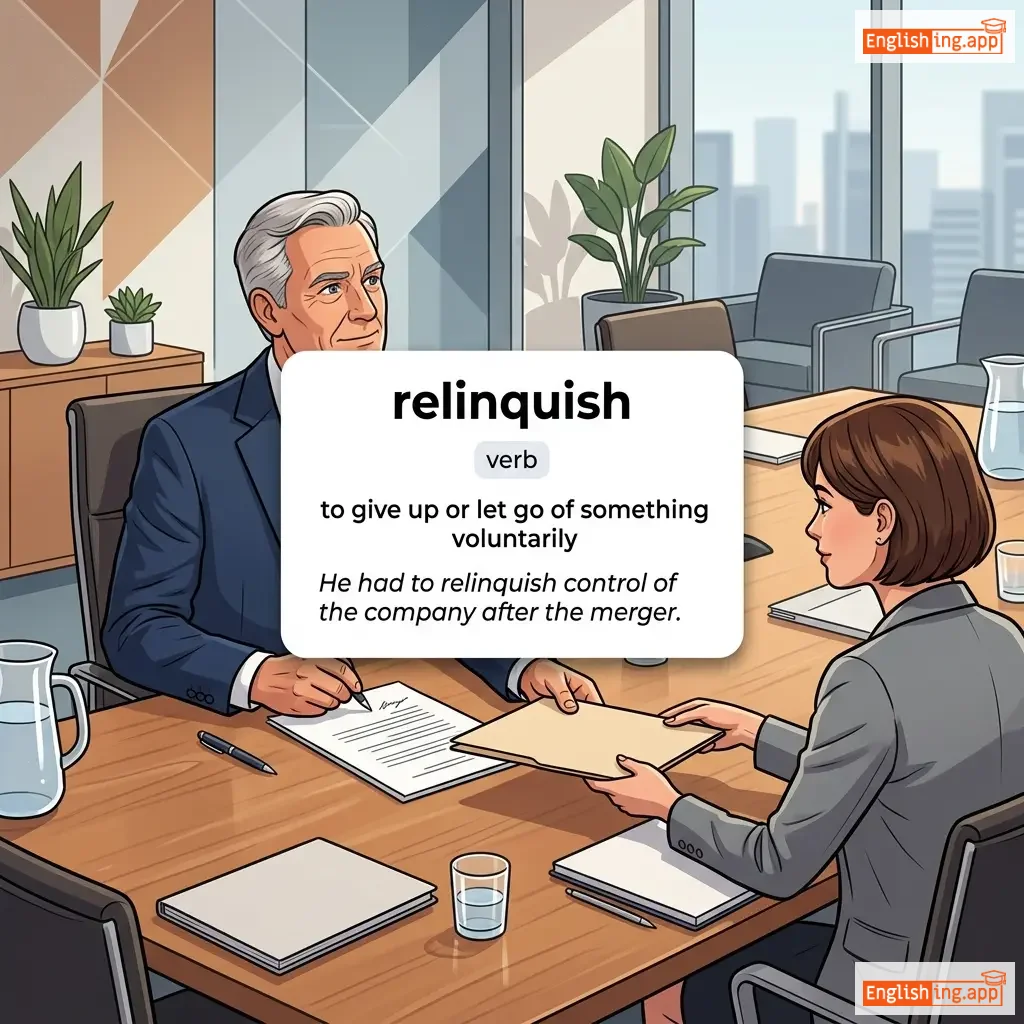
relinquish definition card — visual illustration of the meaning
verb
/rɪˈlɪŋkwɪʃ/
renunciar (renunciar)

to give up or let go of something voluntarily

"He had to relinquish control of the company after the merger."

"Tuvo que renunciar al control de la empresa después de la fusión." (Tuvo que renunciar al control de la empresa despues de la fusion.)
noun
/ˈrɛlɪkwɛri/
relicario (relicario)

a container for holy relics

"The ancient reliquary was decorated with gold and precious stones."

"El antiguo relicario estaba decorado con oro y piedras preciosas." (El antiguo relicario estaba decorado con oro y piedras preciosas.)
verb/noun
/ˈrɛlɪʃ/
disfrutar / condimento (disfrutar / condimento)

to greatly enjoy; also a condiment or sauce

"She relished the opportunity to travel abroad."

"Ella disfrutó mucho de la oportunidad de viajar al extranjero." (Ella disfruto mucho de la oportunidad de viajar al extranjero.)
noun
/rɪˈlʌktəns/
reticencia (reticencia)

unwillingness or hesitation to do something

"His reluctance to speak made the meeting awkward."

"Su reticencia para hablar hizo que la reunión fuera incómoda." (Su reticencia para hablar hizo que la reunion fuera incomoda.)
adjective
/rɪˈlʌktənt/
reacio (reacio)

unwilling or hesitant to do something

"She was reluctant to speak in front of the large audience."

"Ella estaba reacia a hablar frente al gran público." (Ella estaba reacia a hablar frente al gran público.)
adverb
/rɪˈlʌk.tənt.li/
de mala gana (de mala gana)

in an unwilling manner; with hesitation or resistance

"She reluctantly agreed to help with the project."

"Ella aceptó ayudar con el proyecto de mala gana." (Ella aceptó ayudar con el proyecto de mala gana.)
verb
/rɪˈlaɪ/
confiar (confiar)

to depend on with confidence

"You can always rely on her to help you out."

"Siempre puedes confiar en ella para que te ayude." (Siempre puedes confiar en ella para que te ayude.)
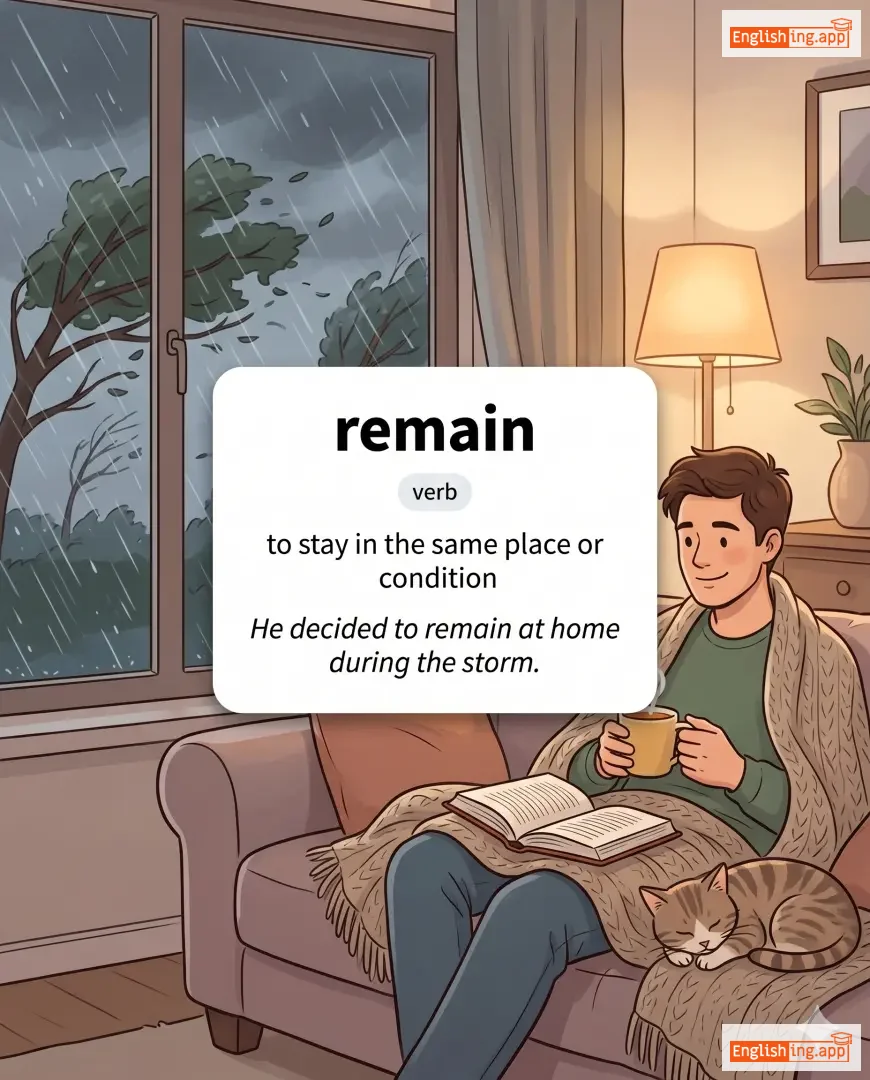
remain definition card — visual illustration of the meaning
verb
/rɪˈmeɪn/
permanecer (permanecer)

to stay in the same place or condition

"He decided to remain at home during the storm."

"Él decidió permanecer en casa durante la tormenta." (El decidio permanecer en casa durante la tormenta.)
noun
/rɪˈmeɪndər/
resto (resto)

the part that is left after the main part is gone or used

"He ate most of the cake and left the remainder on the plate."

"Él comió la mayoría del pastel y dejó el resto en el plato." (Él comió la mayoría del pastel y dejó el resto en el plato.)
adjective
/rɪˈmeɪnɪŋ/
restante (restante)

still existing or left after others are gone or dealt with

"There were only a few remaining tickets for the concert."

"Quedaban solo unos pocos boletos para el concierto." (Quedaban solo unos pocos boletos para el concierto.)
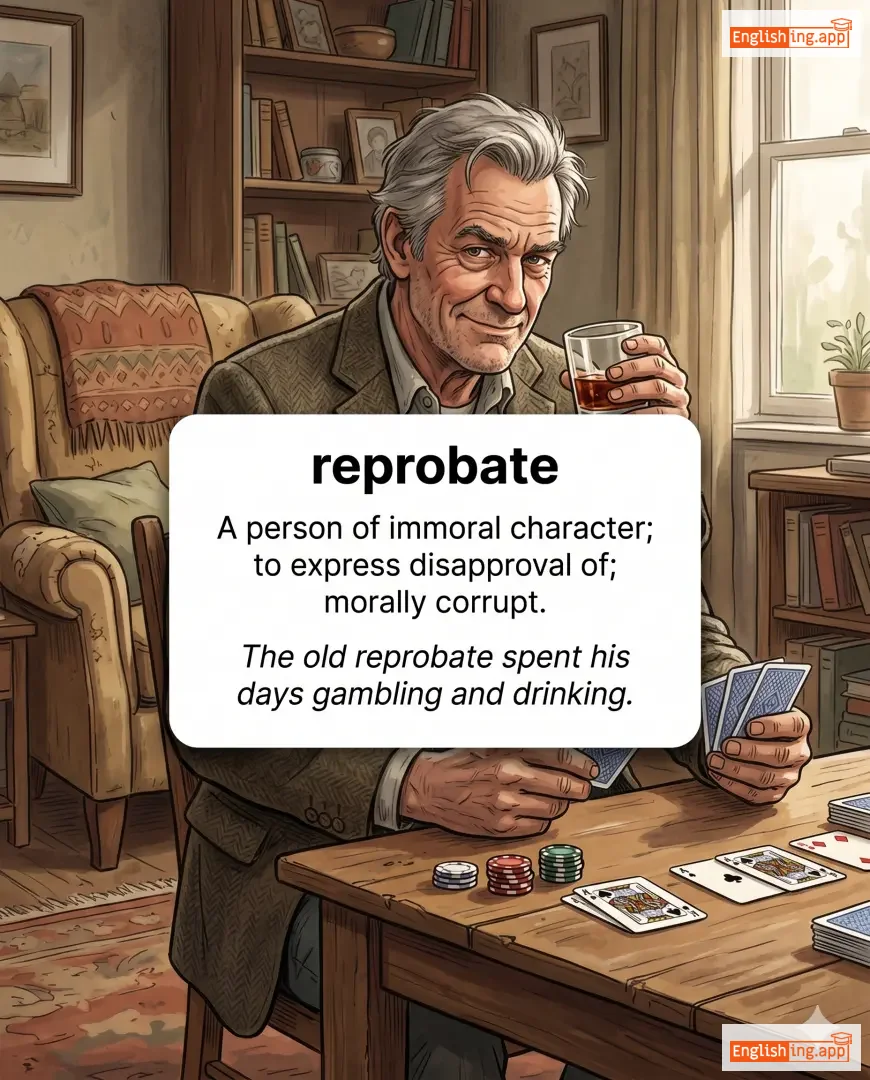
reprobate definition card — visual illustration of the meaning
noun, adjective, verb
/ˈrɛprəˌbeɪt/
persona inmoral (persona inmoral)

A person of immoral character; to express disapproval of; morally corrupt.

"The old reprobate spent his days gambling and drinking."

"El viejo reprobado pasó sus días apostando y bebiendo." (El viejo reprobado paso sus dias apostando y bebiendo.)
noun
/rɪˈkwɛst/
solicitud (solicitud)

a formal or polite demand for something

"She made a request for additional time to complete the project."

"Ella hizo una solicitud de tiempo adicional para completar el proyecto." (Ella hizo una solicitud de tiempo adicional para completar el proyecto.)
adjective
/rɪˈpjuːtɪd/
reputado (reputado)

Generally considered or believed to be something, often based on reputation rather than certainty.

"He is a reputed expert in financial management."

"Él es un experto reputado en gestión financiera." (Él es un experto reputado en gestión financiera.)
noun
/rɪˈpjuːt/
reputación (reputacion)

the opinion generally held of someone or something; reputation

"He is a scholar of great repute in his field."

"Él es un académico de gran reputación en su campo." (El es un academico de gran reputacion en su campo.)
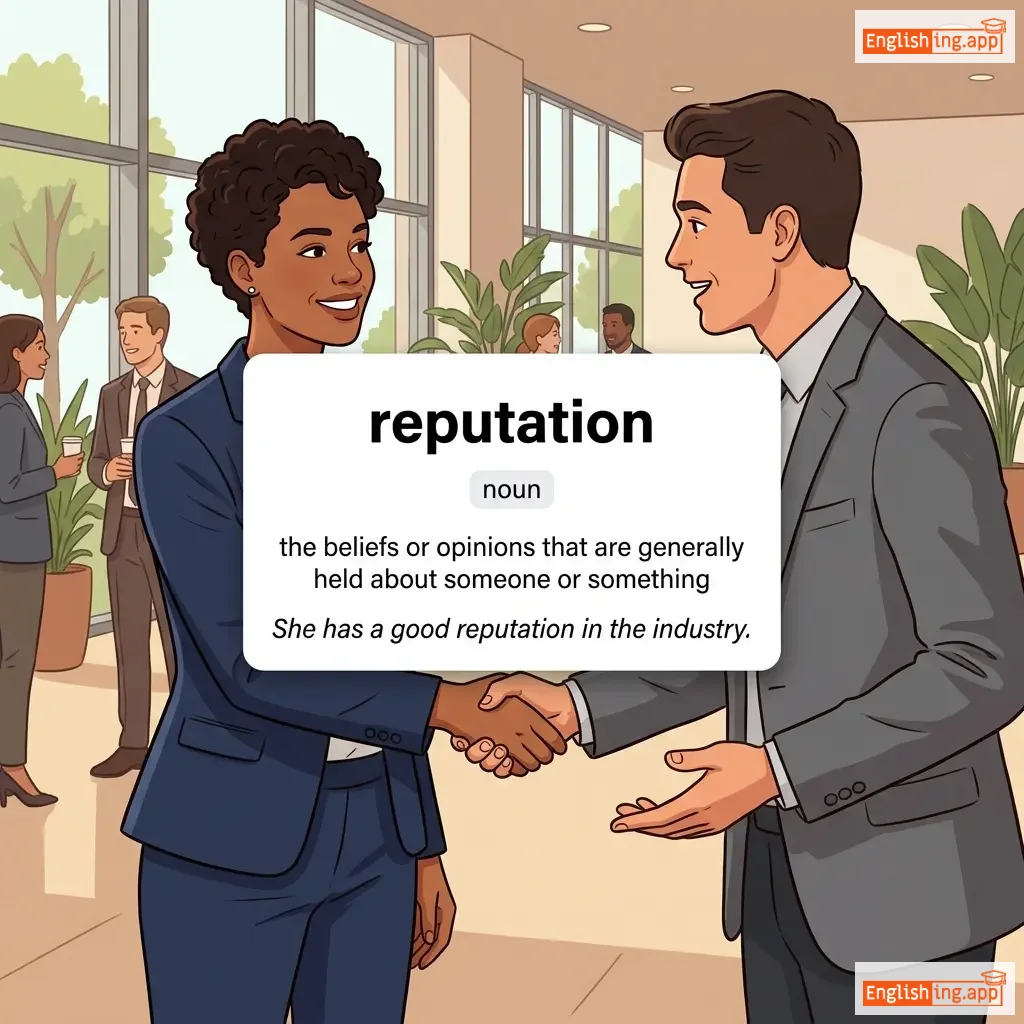
reputation definition card — visual illustration of the meaning
noun
/ˌrɛpjuˈteɪʃən/
reputación (reputacion)

the beliefs or opinions that are generally held about someone or something

"She has a good reputation in the industry."

"Ella tiene una buena reputación en la industria." (Ella tiene una buena reputación en la industria.)
adjective
/ˈrɛpjətəbəl/
respetable (respetable)

having a good reputation; respected

"They chose a reputable company to handle their finances."

"Eligieron una empresa de buena reputación para manejar sus finanzas." (Eligieron una empresa de buena reputación para manejar sus finanzas.)
adjective
/rɪˈpʌlsɪv/
repulsivo (repulsivo)

arousing intense distaste or disgust

"The garbage gave off a repulsive smell."

"La basura dio un olor repulsivo." (La basura dio un olor repulsivo.)
noun
/rɪˈpʌlʃən/

a strong feeling of dislike or disgust

"She felt deep repulsion at the sight of cruelty to animals."

verb
/rɪˈpʌls/
repeler / provocar desagrado (repeler / provocar desagrado)

to drive back an attack or attacker by force; to cause intense dislike or disgust

"The army managed to repulse the enemy attack."

"El ejército logró repeler el ataque enemigo." (El ejército logró repeler el ataque enemigo.)
adjective
/rɪˈpʌɡ.nənt/
repugnante (repugnante)

causing strong dislike, disgust, or opposition

"The idea of cheating was repugnant to him."

"La idea de hacer trampa le parecía repugnante." (La idea de hacer trampa le parecía repugnante.)
noun
/rɪˈpʌɡ.nəns/
repulsión (repulsion)

intense disgust or strong aversion towards something

"She felt deep repugnance at the cruelty of the act."

"Ella sintió un profundo desprecio por la crueldad del acto." (Ella sintió un profundo desprecio por la crueldad del acto.)
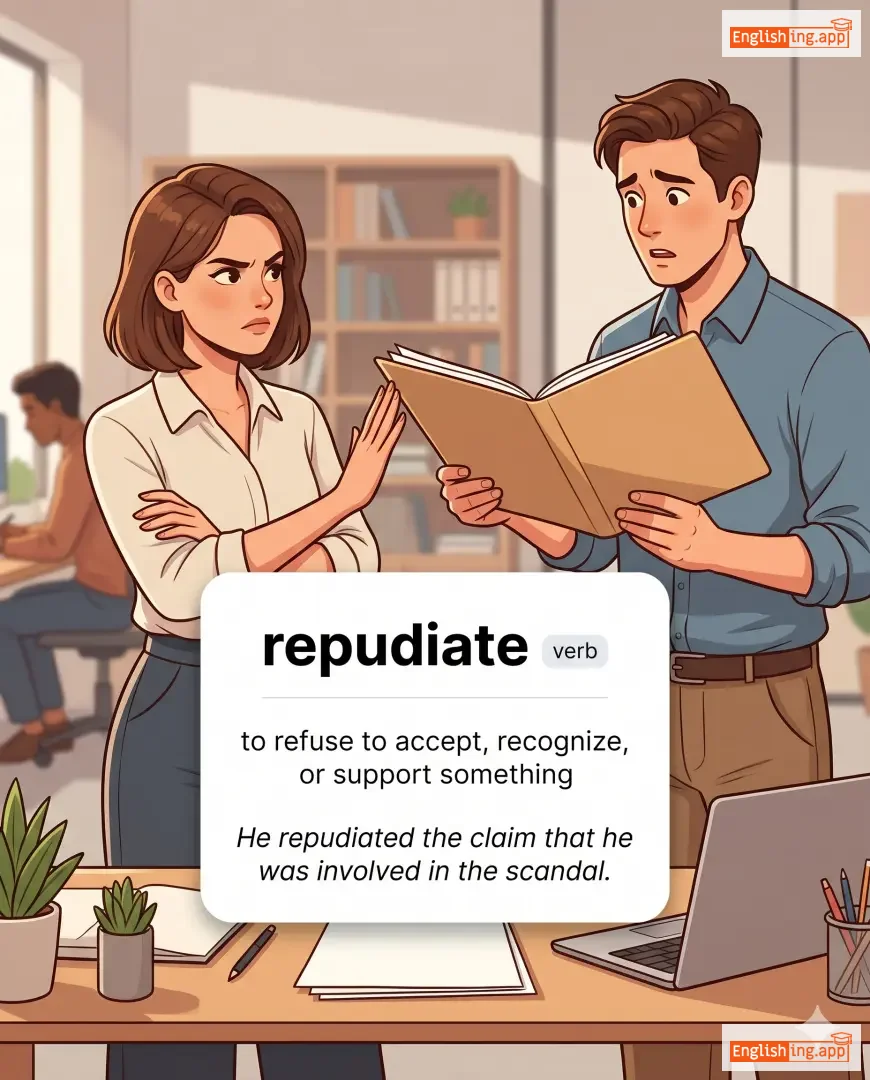
repudiate definition card — visual illustration of the meaning
verb
/rɪˈpjuː.di.eɪt/
repudiar (repudiar)

to refuse to accept, recognize, or support something

"He repudiated the claim that he was involved in the scandal."

"Él repudió la afirmación de que estuvo involucrado en el escándalo." (Él repudió la afirmación de que estuvo involucrado en el escándalo.)
noun/adjective
/rɪˈpʌblɪkən/
republicano (republicano)

a member or supporter of a republican political party or system

"The republican candidate won the election."

"El candidato republicano ganó las elecciones." (El candidato republicano ganó las elecciones.)
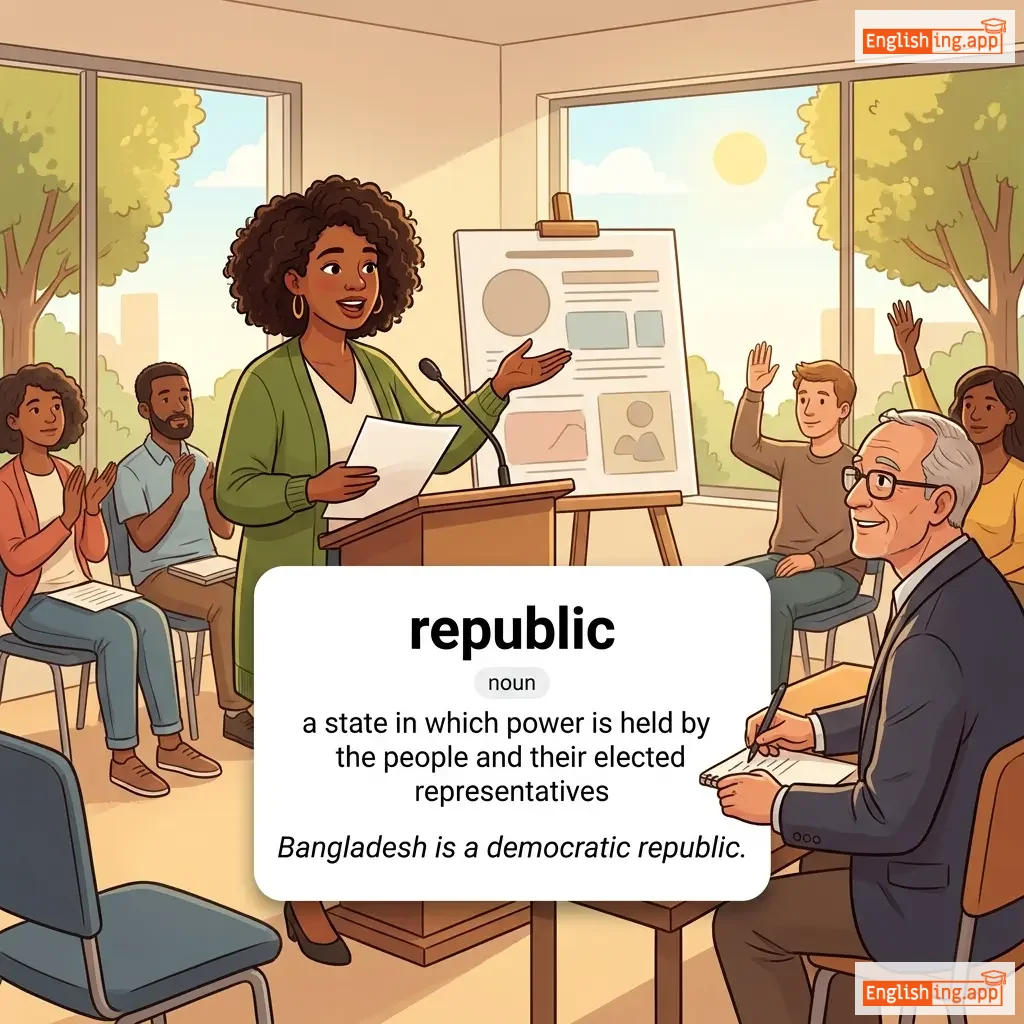
republic definition card — visual illustration of the meaning
noun
/rɪˈpʌblɪk/
república (republica)

a state in which power is held by the people and their elected representatives

"Bangladesh is a democratic republic."

"Bangladesh es una república democrática." (Bangladesh es una republica democratica.)
noun
/ˈrɛp.taɪl/
reptil (reptil)

a cold-blooded animal with scales that lays eggs, such as snakes, lizards, turtles, or crocodiles

"The snake is a reptile that can be found in many parts of the world."

"La serpiente es un reptil que se puede encontrar en muchas partes del mundo." (La serpiente es un reptil que se puede encontrar en muchas partes del mundo.)
verb
/rɪˈpruːv/
reprender (reprender)

to criticize or correct someone gently or disapprove of their actions

"The teacher reproved the student for being late."

"El maestro reprendió al estudiante por llegar tarde." (El maestro reprendió al estudiante por llegar tarde.)
noun
/rɪˈpruːf/
reprobación, censura (reprobacion, censura)

An expression of blame or disapproval.

"His careless words drew a sharp reproof from his mother."

"Sus palabras descuidadas provocaron una fuerte reprobación de su madre." (Sus palabras descuidadas provocaron una fuerte reprobacion de su madre.)
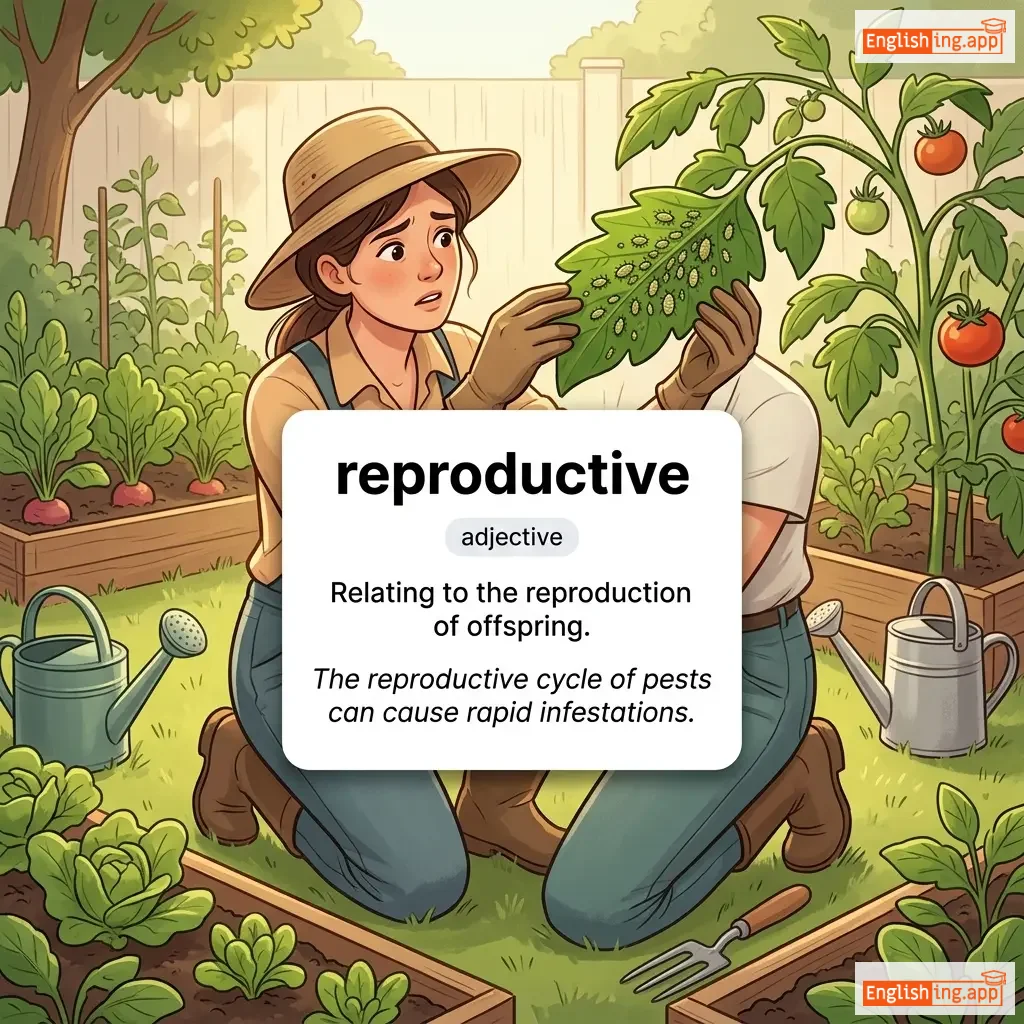
reproductive definition card — visual illustration of the meaning
adjective
ˌriːprəˈdʌktɪv
reproductivo (reproductivo)

Relating to the reproduction of offspring.

"The reproductive cycle of pests can cause rapid infestations."

"El ciclo reproductivo de las plagas puede causar infestaciones rápidas." (El ciclo reproductivo de las plagas puede causar infestaciones rápidas.)
noun
/ˌriːprəˈdʌkʃən/
reproducción, reproducción (reproduccion, reproduccion)

The process of producing offspring; the act of copying or duplicating.

"The textbook included a detailed diagram of human reproduction."

"El libro de texto incluía un diagrama detallado de la reproducción humana." (El libro de texto incluía un diagrama detallado de la reproducción humana.)
verb
/ˌriːprəˈdjuːs/
reproducir, procrear (reproducir, procrear)

To make a copy of something; to generate offspring.

"Many animals reproduce rapidly in favorable conditions."

"Muchos animales se reproducen rápidamente en condiciones favorables." (Muchos animales se reproducen rápidamente en condiciones favorables.)
noun
/ˌrɛprəˈbeɪʃən/
reprobación (reprobacion)

Strong disapproval or condemnation; rejection by God as beyond salvation.

"The teacher’s face showed clear reprobation at the student’s rude remark."

"El rostro del profesor mostró una clara reprobación ante el comentario grosero del estudiante." (El rostro del profesor mostro una clara reprobacion ante el comentario grosero del estudiante.)
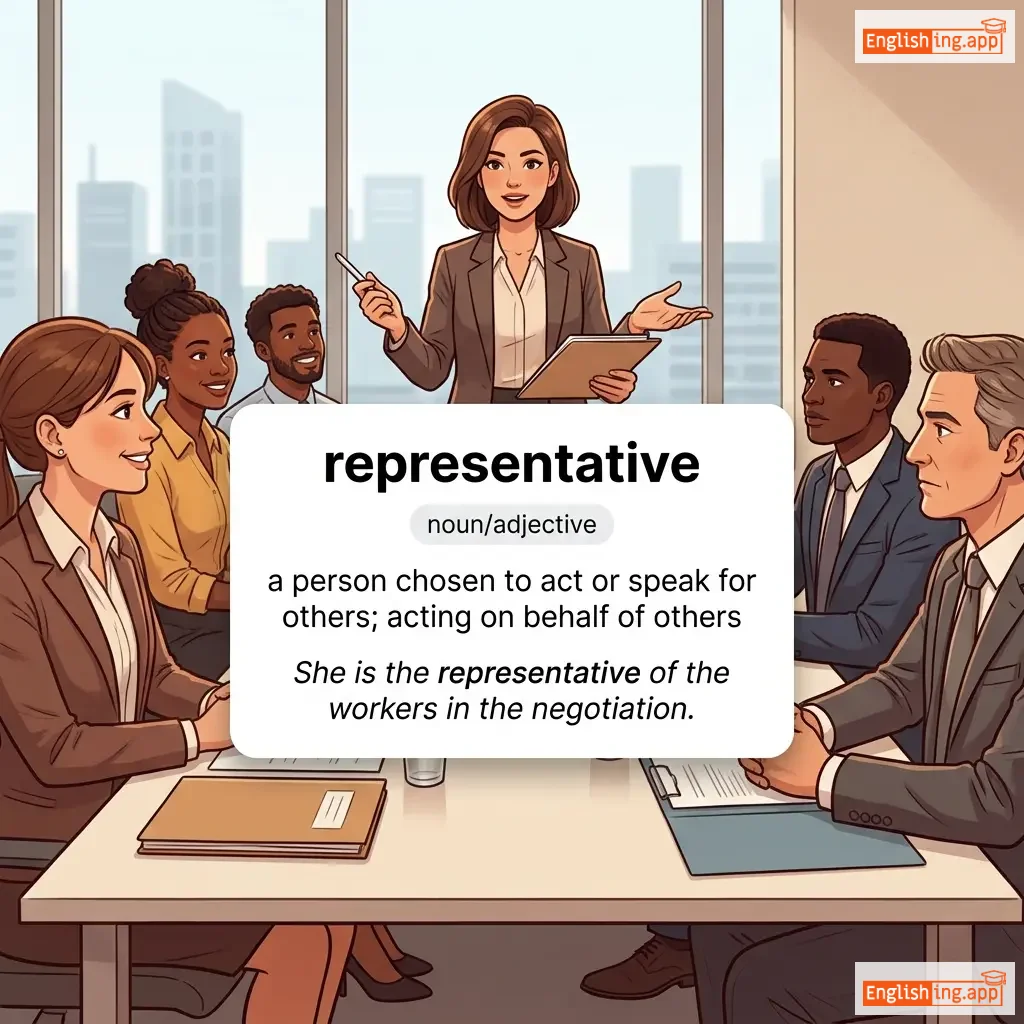
representative definition card — visual illustration of the meaning
noun/adjective
/ˌrɛprɪˈzɛntətɪv/
representante (representante)

a person chosen to act or speak for others; acting on behalf of others

"She is the representative of the workers in the negotiation."

"Ella es la representante de los trabajadores en la negociación." (Ella es la representante de los trabajadores en la negociación.)
noun
/rɪˈpɔːrtər/
reportero (reportero)

a person who reports news or information

"The reporter interviewed several people at the scene."

"El reportero entrevistó a varias personas en la escena." (El reportero entrevisto a varias personas en la escena.)
noun
/rɪˈpɔːtɪŋ/
informes (informes)

the act of giving news or information about something

"Good reporting is essential for public awareness."

"Un buen informe es esencial para la conciencia pública." (Un buen informe es esencial para la conciencia pública.)
noun/verb
/rɪˈpoʊz/
reposo (reposo)

a state of rest, sleep, or tranquility; to rest or lie in a peaceful position

"After the long journey, she sought repose in the quiet garden."

"Después del largo viaje, ella buscó reposo en el jardín tranquilo." (Despuéz del largo viaje, ella busco reposo en el jardin tranquilo.)
noun
/rɪˈpɑːzɪtɔːri/
repositorio (repositorio)

a place where things are stored or kept for safekeeping

"The library serves as a repository of knowledge."

"La biblioteca sirve como un repositorio de conocimiento." (La biblioteca sirve como un repositorio de conocimiento.)
verb
/ˌrɛprɪˈhɛnd/
reprender (reprender)

to express disapproval or criticism of someone or something

"The teacher reprehended the student for being dishonest."

"El maestro reprendió al estudiante por ser deshonesto." (El maestro reprendió al estudiante por ser deshonesto.)
adjective
/ˌrɛprɪˈhɛnsəbl̩/
reprensible (reprensible)

Deserving strong criticism or blame.

"His dishonest actions were truly reprehensible."

"Sus acciones deshonestas fueron realmente reprensibles." (Sus acciones deshonestas fueron realmente reprensibles.)
noun
/ˌrɛprɪˈhɛnʃən/
reprensión (reprension)

The act of rebuking or criticizing severely.

"The teacher’s reprehension of the student’s behavior was justified."

"La reprensión del comportamiento del estudiante por parte del profesor fue justificada." (La reprension del comportamiento del estudiante por parte del profesor fue justificada.)
verb
/ˌrɛprɪˈzɛnt/
representar (representar)

to act or speak on behalf of someone or something

"He will represent our company at the conference."

"Él representará nuestra empresa en la conferencia." (Él representará nuestra empresa en la conferencia.)
noun
/ˌrɛprɪzɛnˈteɪʃən/
representación (representacion)

the action of speaking or acting on behalf of someone or something

"Her representation of the team was impeccable."

"Su representación del equipo fue impecable." (Su representacion del equipo fue impecable.)
adjective
/ˌrɛprɪzɛnˈteɪʃənl̩/
representacional (representacional)

Relating to or depicting something in a realistic or symbolic way.

"The artist preferred a representational style of painting."

"El artista prefería un estilo representacional de pintura." (El artista prefería un estilo representacional de pintura.)
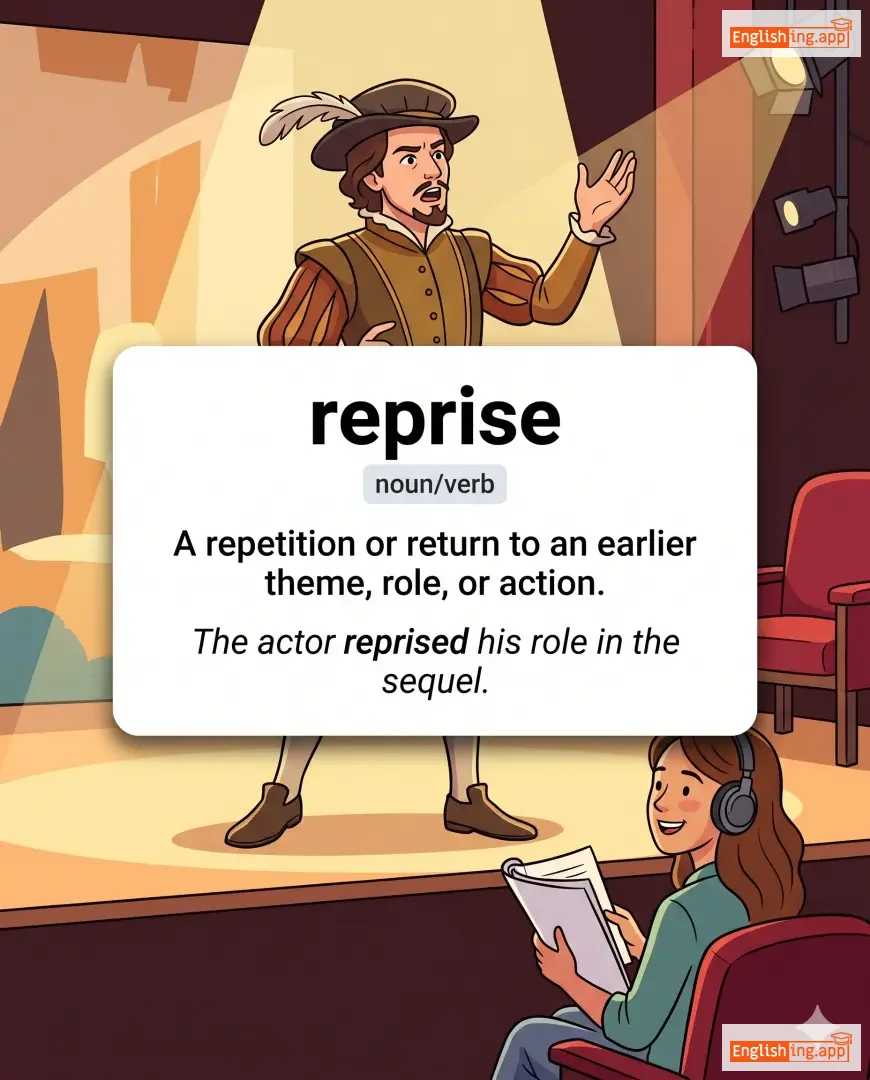
reprise definition card — visual illustration of the meaning
noun/verb
/rɪˈpriːz/
repetición (repeticion)

A repetition or return to an earlier theme, role, or action.

"The actor reprised his role in the sequel."

"El actor repitió su papel en la secuela." (El actor repitio su papel en la secuela.)
noun/verb
/ˈrɛprɪˌmænd/
reprensión (reprehsion)

A formal expression of disapproval; to scold or criticize someone officially.

"The teacher reprimanded the student for being late."

"El maestro reprendió al estudiante por llegar tarde." (El maestro reprendió al estudiante por llegar tarde.)
noun
/rɪˈpraɪzəl/
represalia (represalia)

An act of retaliation or revenge, especially in a conflict.

"The attack was carried out as a reprisal for the bombing."

"El ataque se llevó a cabo como represalia por el bombardeo." (El ataque se llevó a cabo como represalia por el bombardeo.)
noun/verb
/rɪˈpriːv/
retraso temporal / perdón de castigo (retraso temporal / perdon de castigo)

A temporary relief or delay from something unpleasant; to postpone or cancel punishment.

"The prisoner was granted a last-minute reprieve from execution."

"El prisionero recibió un perdón de último minuto de la ejecución." (El prisionero recibio un perdon de ultimo minuto de la ejecucion.)
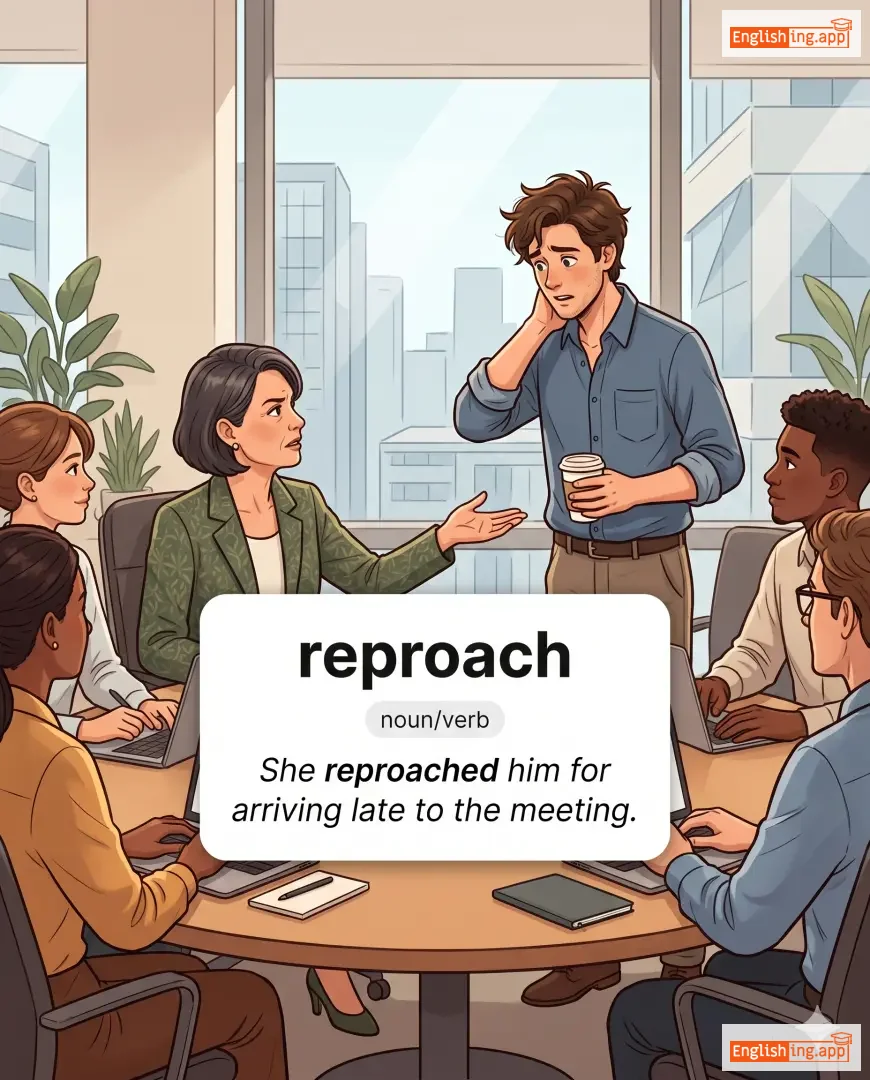
reproach definition card — visual illustration of the meaning
noun/verb
/rɪˈproʊtʃ/
reproche / crítica (reproche / critica)

An expression of disapproval or disappointment; to criticize someone for doing wrong.

"She reproached him for arriving late to the meeting."

"Ella le reprochó por llegar tarde a la reunión." (Ella le reprochó por llegar tarde a la reunión.)