Vocabularios

Descubra, aprenda y domine el vocabulario en inglés

adjective
/ˌrɛpərˈtɔːriəl/
repertorial (repertorial)

Relating to or characteristic of a repertoire, especially in journalism or performance contexts.

"The journalist's repertorial style captured every detail of the unfolding story."

"El estilo repertorial del periodista capturó cada detalle de la historia en desarrollo." (El estilo repertorial del periodista capturó cada detalle de la historia en desarrollo.)
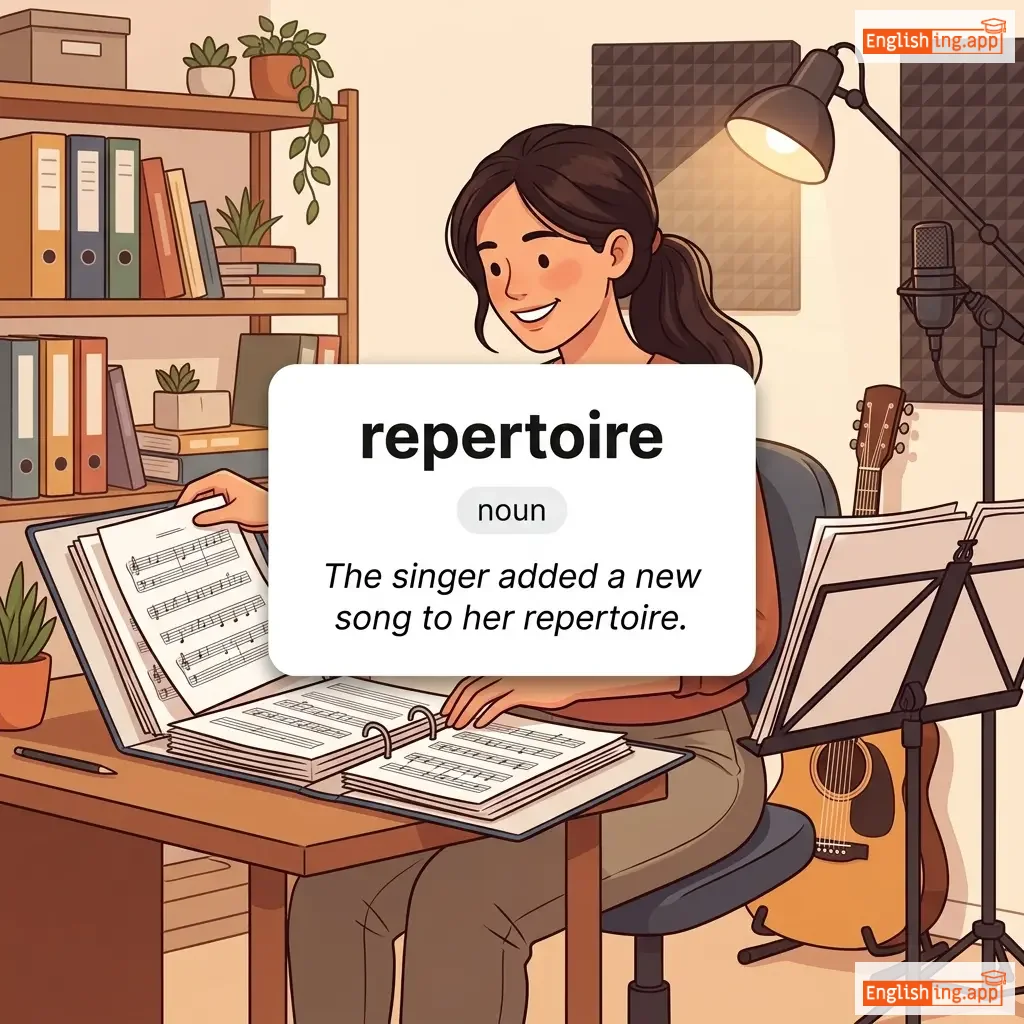
repertoire definition card — visual illustration of the meaning
noun
/ˈrɛpərˌtwɑːr/
repertorio (repertorio)

The entire range of skills, works, or pieces that a person or group is prepared to perform or use.

"The singer added a new song to her repertoire."

"La cantante añadió una nueva canción a su repertorio." (La cantante añadió una nueva canción a su repertorio.)
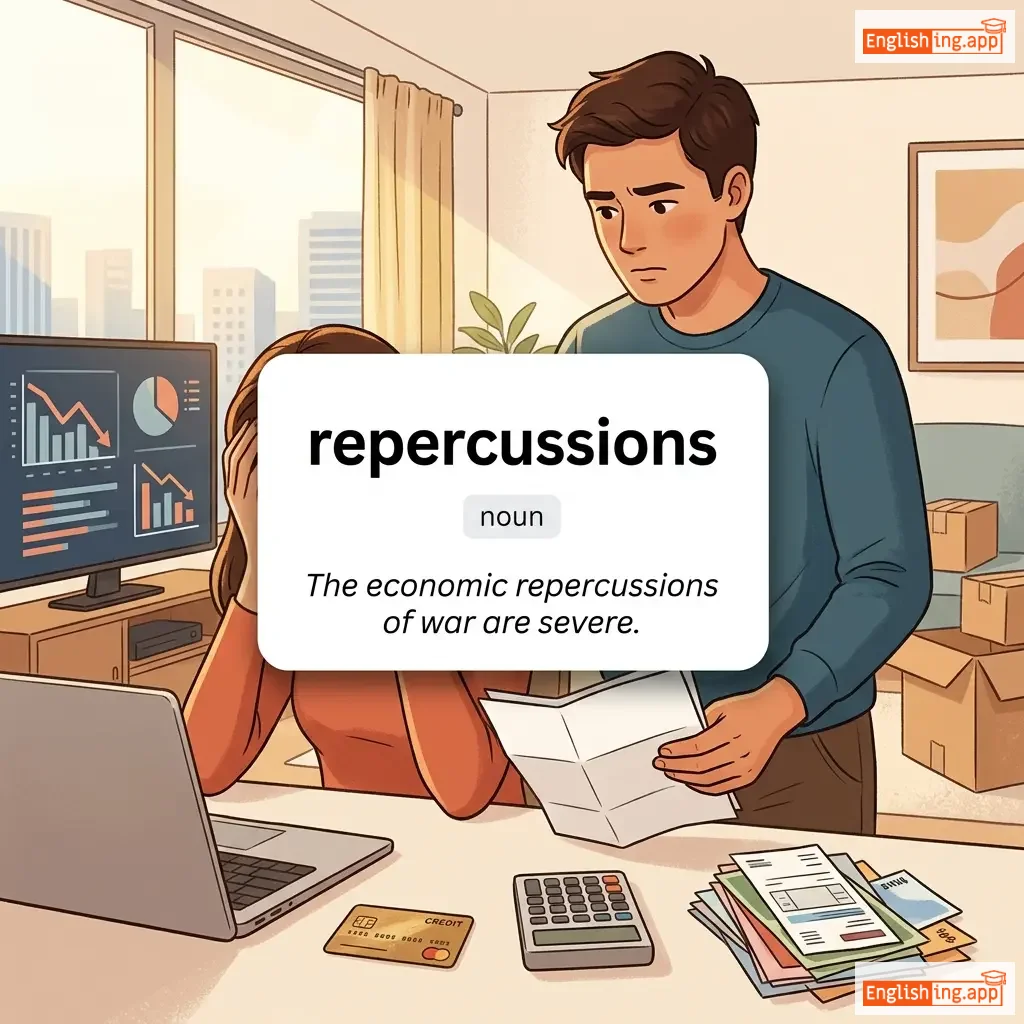
repercussions definition card — visual illustration of the meaning
noun
/ˌriː.pəˈkʌʃ.ənz/
repercusiones (repercusiones)

An unintended consequence occurring some time after an event or action; the effects or results of something.

"The economic repercussions of war are severe."

"Las repercusiones económicas de la guerra son graves." (Las repercusiones economicas de la guerra son graves.)
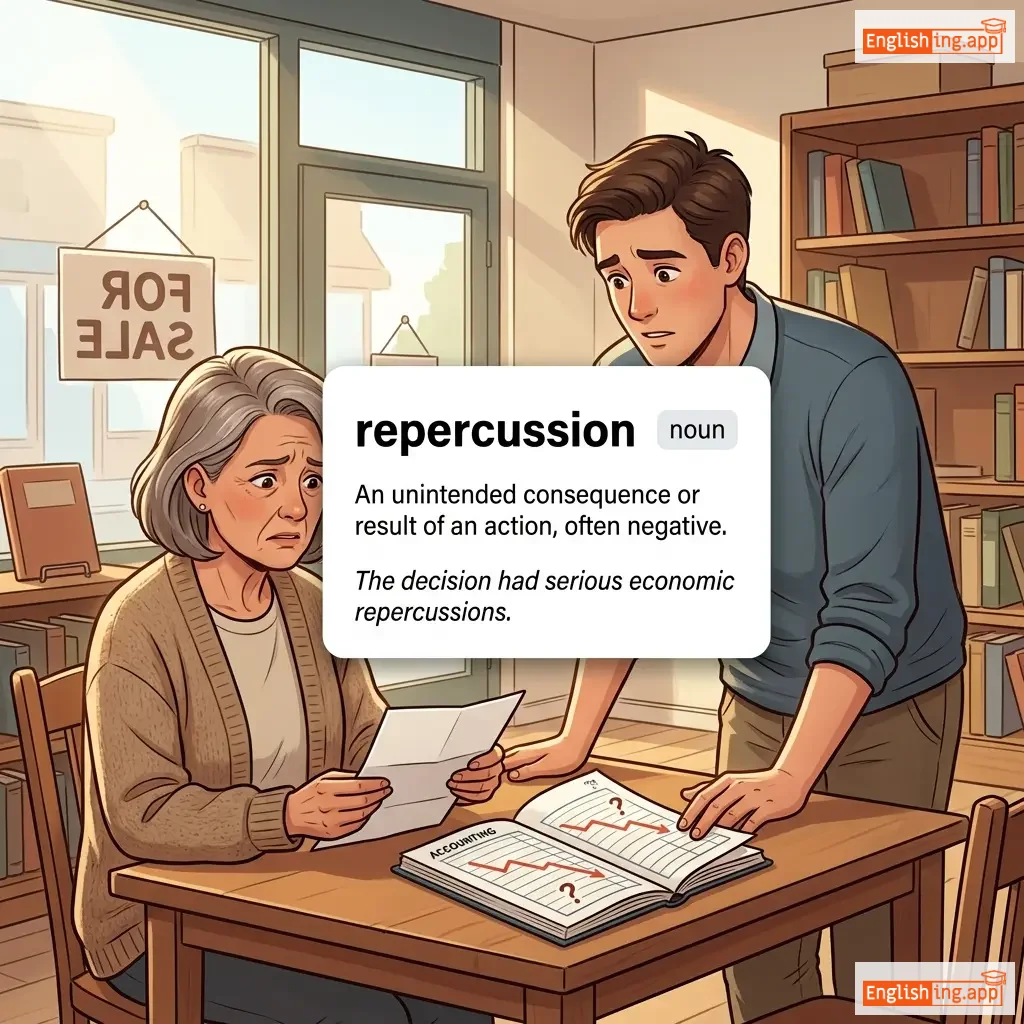
repercussion definition card — visual illustration of the meaning
noun
/ˌriːpərˈkʌʃən/
repercusión (repercusion)

An unintended consequence or result of an action, often negative.

"The decision had serious economic repercussions."

"La decisión tuvo repercusiones económicas serias." (La decision tuvo repercusiones economicas serias)
adjective
/rɪˈpen.tənt/
arrepentido; lamentoso; contrito (arrepentido; lamentoso; contrito)

feeling or expressing sincere regret and remorse; sorry for one's actions

"The repentant thief returned the stolen money."

"El ladrón arrepentido devolvió el dinero robado." (El ladron arrepentido devolvió el dinero robado.)
noun
/rɪˈpɛntəns/
arrepentimiento (arrepentimiento)

Deep regret or remorse for wrongdoing; sincere sorrow for one's sins or mistakes.

"He showed true repentance after apologizing for his mistakes."

"Él mostró verdadero arrepentimiento después de disculparse por sus errores." (Él mostró verdadero arrepentimiento después de disculparse por sus errores.)
adjective
/rɪˈpɛlənt/
repelente (repelente)

Able to drive away something, especially insects or unpleasant things; causing disgust or distaste.

"This cream is highly effective as a mosquito repellent."

"Esta crema es muy efectiva como repelente de mosquitos." (Esta crema es muy efectiva como repelente de mosquitos.)
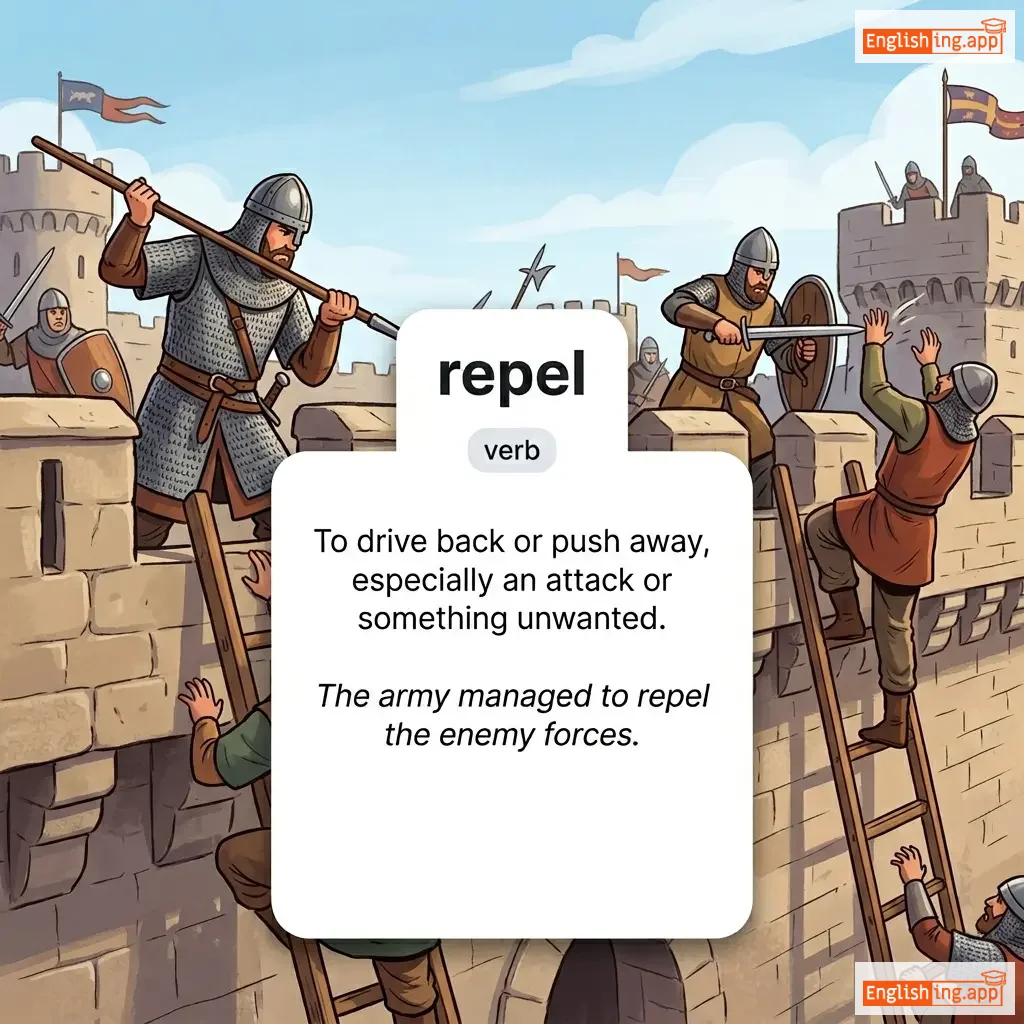
repel definition card — visual illustration of the meaning
verb
/rɪˈpɛl/
repeler (repeler)

To drive back or push away, especially an attack or something unwanted.

"The army managed to repel the enemy forces."

"El ejército logró repeler las fuerzas enemigas." (El ejército logró repeler las fuerzas enemigas.)
adjective
/rɪˈpiː.tɪd/
repetido; que ocurre varias veces (repetido; que ocurre varias veces)

done again; happening again; occurring multiple times

"He made repeated attempts to contact her."

"Él hizo intentos repetidos para contactarla." (El hizo intentos repetidos para contactarla)
verb
/rɪˈpiːt/
repetir (repetir)

to say again or do again

"Could you please repeat that sentence?"

"¿Puedes repetir esa frase, por favor?" (¿Puedes repetir esa frase, por favor?)
verb
/rɪˈpiːl/
derogar (derogar)

To officially cancel or revoke a law or decision.

"The government decided to repeal the outdated law."

"El gobierno decidió derogar la ley obsoleta." (El gobierno decidió derogar la ley obsoleta.)
verb
/riːˈpeɪ.tri.eɪt/
repatriar (repatriar)

To return someone to their own country, often after war or imprisonment.

"The government worked to repatriate the refugees safely."

"El gobierno trabajó para repatriar a los refugiados de manera segura." (El gobierno trabajó para repatriar a los refugiados de manera segura.)
noun
/rɪˈpæst/
comida (comida)

A meal or the food eaten during a meal.

"They enjoyed a delicious repast by the riverside."

"Disfrutaron de una deliciosa comida junto al río." (Disfrutaron de una deliciosa comida junto al río.)
noun
/ˌrɛpɑːrˈtiː/
respuesta ingeniosa (respuesta ingeniosa)

A quick, witty, and clever reply in conversation.

"The debate was full of sharp repartee between the two speakers."

"El debate estuvo lleno de respuestas agudas entre los dos oradores." (El debate estuvo lleno de respuestas agudas entre los dos oradores.)
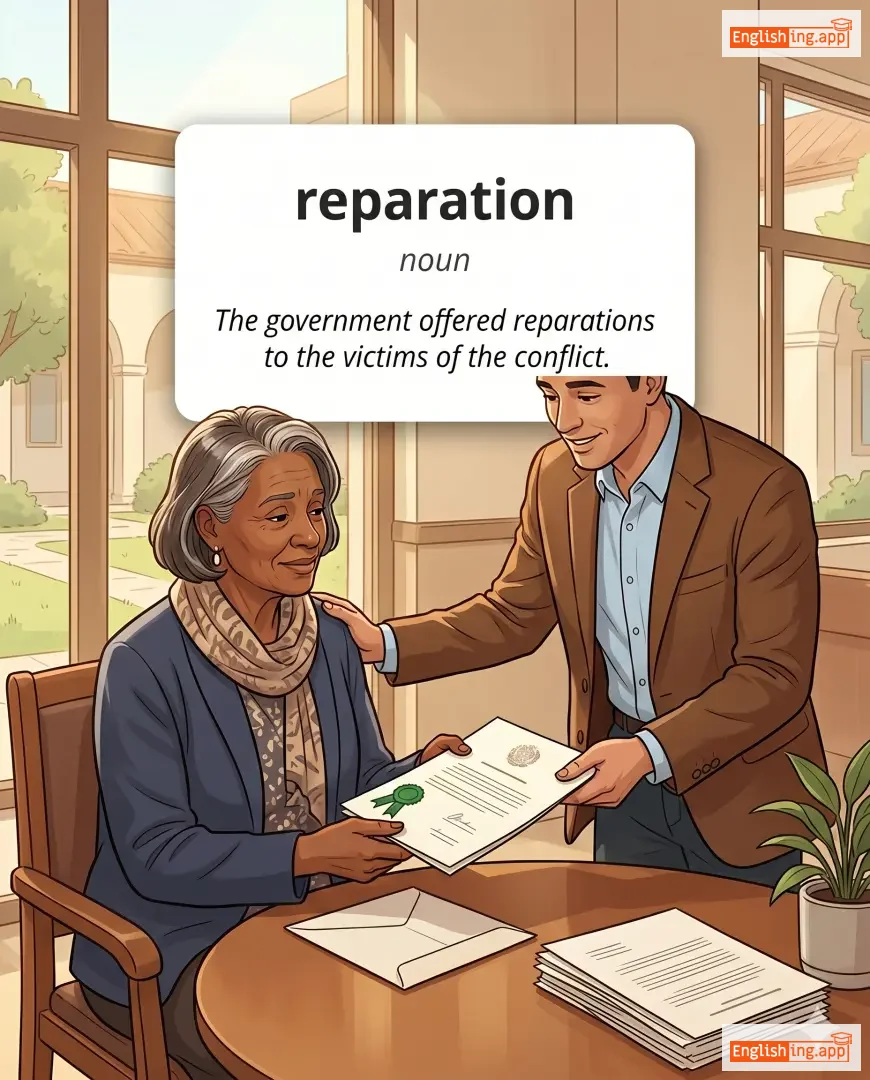
reparation definition card — visual illustration of the meaning
noun
/ˌrɛpəˈreɪʃən/
reparación (reparacion)

the making of amends for a wrong done by paying money or helping those who were wronged

"The government offered reparations to the victims of the conflict."

"El gobierno ofreció reparaciones a las víctimas del conflicto." (El gobierno ofreció reparaciones a las víctimas del conflicto.)
adjective
/ˈrɛpərəbəl/
reparable (reparable)

able to be repaired or fixed

"The damage to the car was serious but still reparable."

"El daño al coche fue grave, pero aún reparable." (El daño al coche fue grave, pero aún reparable.)
noun
/rɪˈpɛərə/
reparador (reparador)

a person whose job is to fix damaged or broken things

"The repairer fixed the broken washing machine quickly."

"El reparador arregló la lavadora rota rápidamente." (el reparador arreglo la lavadora rota rapidamente)
adjective
/rɪˈper.ə.bəl/
reparable (reparable)

able to be fixed or mended; capable of being repaired

"The broken phone is repairable with the right parts."

"El teléfono roto se puede reparar con las piezas adecuadas." (El telefono roto se puede reparar con las piezas adecuadas.)
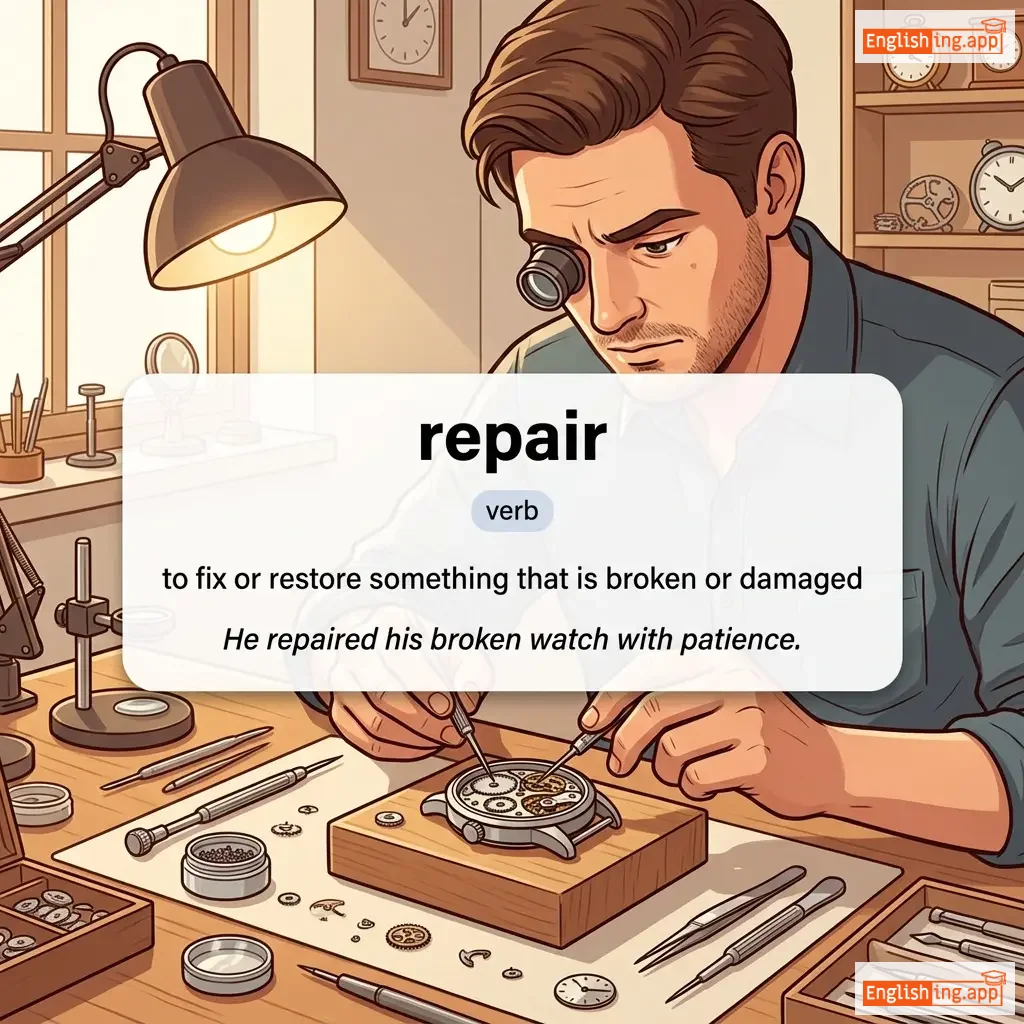
repair definition card — visual illustration of the meaning
verb
/rɪˈpɛər/
reparar (reparar)

to fix or restore something that is broken or damaged

"He repaired his broken watch with patience."

"Él reparó su reloj roto con paciencia." (El reparo su reloj roto con paciencia.)
verb
/riːˈɔːrɡənaɪz/
reorganizar (reorganizar)

to arrange something again in a different way for greater efficiency or order

"The manager decided to reorganize the team structure."

"El gerente decidió reorganizar la estructura del equipo." (El gerente decidió reorganizar la estructura del equipo.)
noun
/rɪˌnʌnsiˈeɪʃən/
renuncia (renuncia)

the formal rejection or giving up of something, usually a belief, claim, or way of life

"His renunciation of worldly pleasures impressed the monks."

"Su renuncia a los placeres mundanos impresionó a los monjes." (Su renuncia a los placeres mundanos impresionó a los monjes.)
noun
/ˈrɛntəl/
alquiler (alquiler)

an arrangement in which something is rented, or the amount paid for renting

"The car rental was more expensive than we expected."

"El alquiler del coche fue más caro de lo que esperábamos." (El alquiler del coche fue más caro de lo que esperábamos.)
noun, verb
/rɛnt/
alquiler (alquiler)

payment made regularly by a tenant to a landlord for the use of property or land; also to pay for the use of something

"They decided to rent an apartment in the city center."

"Decidieron alquilar un apartamento en el centro de la ciudad." (Decidieron alquilar un apartamento en el centro de la ciudad.)
renowned definition card — visual illustration of the meaning
adjective
/rɪˈnaʊnd/
renombrado (renombrado)

famous or well-known for a particular skill or achievement

"She is a renowned artist in the country."

"Ella es una artista renombrada en el país." (Ella es una artista renombrada en el país.)
noun
/rɪˈnaʊn/
renombre (renombre)

the condition of being widely known and highly respected

"The scientist gained international renown for his groundbreaking research."

"El científico ganó renombre internacional por su investigación innovadora." (El cientifico gano renombre internacional por su investigacion innovadora.)
noun
/ˌren.əˈveɪ.ʃən/
renovación; restauración (renovacion; restauracion)

the act of renovating; restoration to a former better state

"The old house underwent a complete renovation last year."

"La vieja casa pasó por una renovación completa el año pasado." (La vieja casa paso por una renovacion completa el ano pasado.)
adverb
/rɪˈpiːtɪdli/
repetidamente (repetidamente)

in a way that is repeated or done many times

"She apologized repeatedly for the mistake."

"Ella se disculpó repetidamente por el error." (Ella se disculpó repetidamente por el error.)
adjective
/kwɪər/
extraño (extrano)

Strange, odd, or unusual.

"He had a queer feeling that something was wrong."

"Él tenía una sensación extraña de que algo estaba mal." (Él tenía una sensación extraña de que algo estaba mal.)
verb
/kwɛl/
sofocar (sofocar)

To suppress or put an end to something, usually by force.

"The police were called to quell the violent protest."

"La policía fue llamada para sofocar la protesta violenta." (La policía fue llamada para sofocar la protesta violenta.)
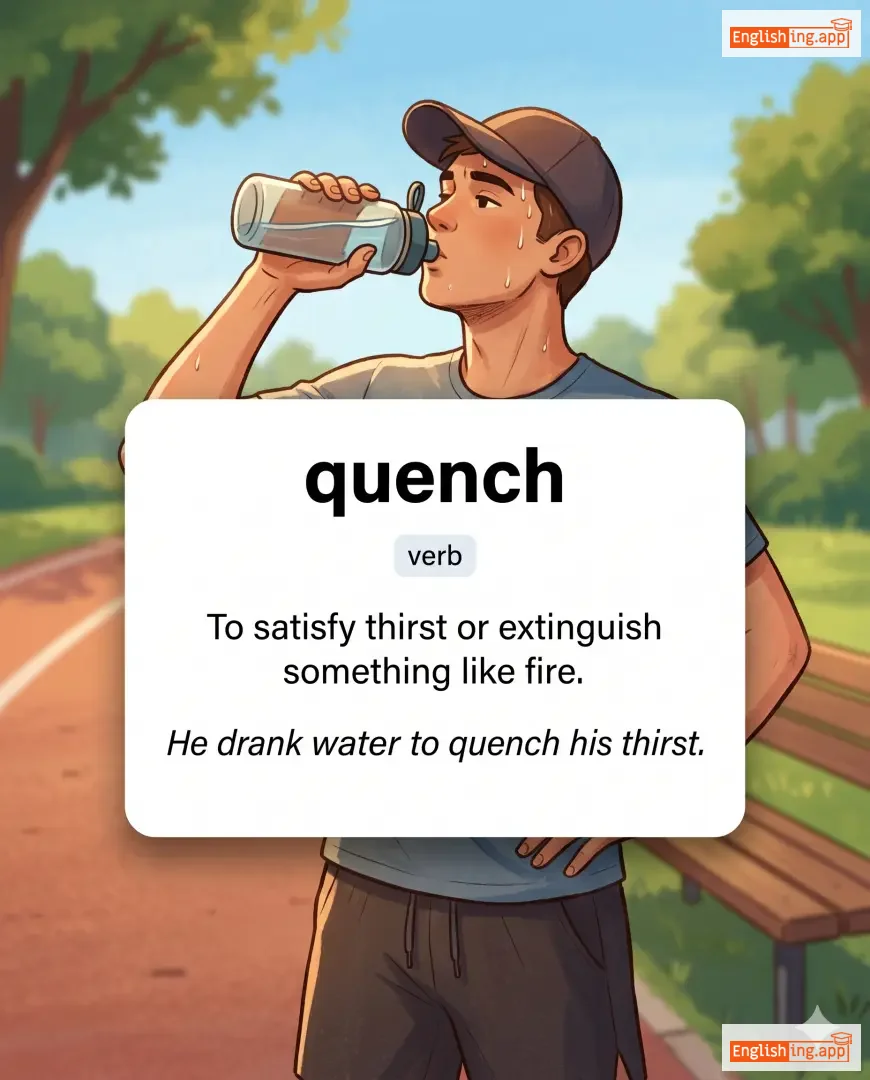
quench definition card — visual illustration of the meaning
verb
/kwɛntʃ/
saciar (saciar)

To satisfy thirst or extinguish something like fire.

"He drank water to quench his thirst."

"Él bebió agua para saciar su sed." (Él bebió agua para saciar su sed.)
verb
/ˈkwentʃɪŋ/
saciar / apagar (saciar / apagar)

The act of satisfying thirst or extinguishing something like fire.

"Drinking cold water was quenching her thirst."

"Beber agua fría estaba saciando su sed." (Beber agua fría estaba saciando su sed.)
adjective
/ˈkwɛrʊləs/
quejoso (quejoso)

Complaining in a whining or irritable manner.

"The querulous customer kept finding fault with every detail."

"El cliente quejoso seguía encontrando fallos en cada detalle." (El cliente quejoso seguía encontrando fallos en cada detalle.)
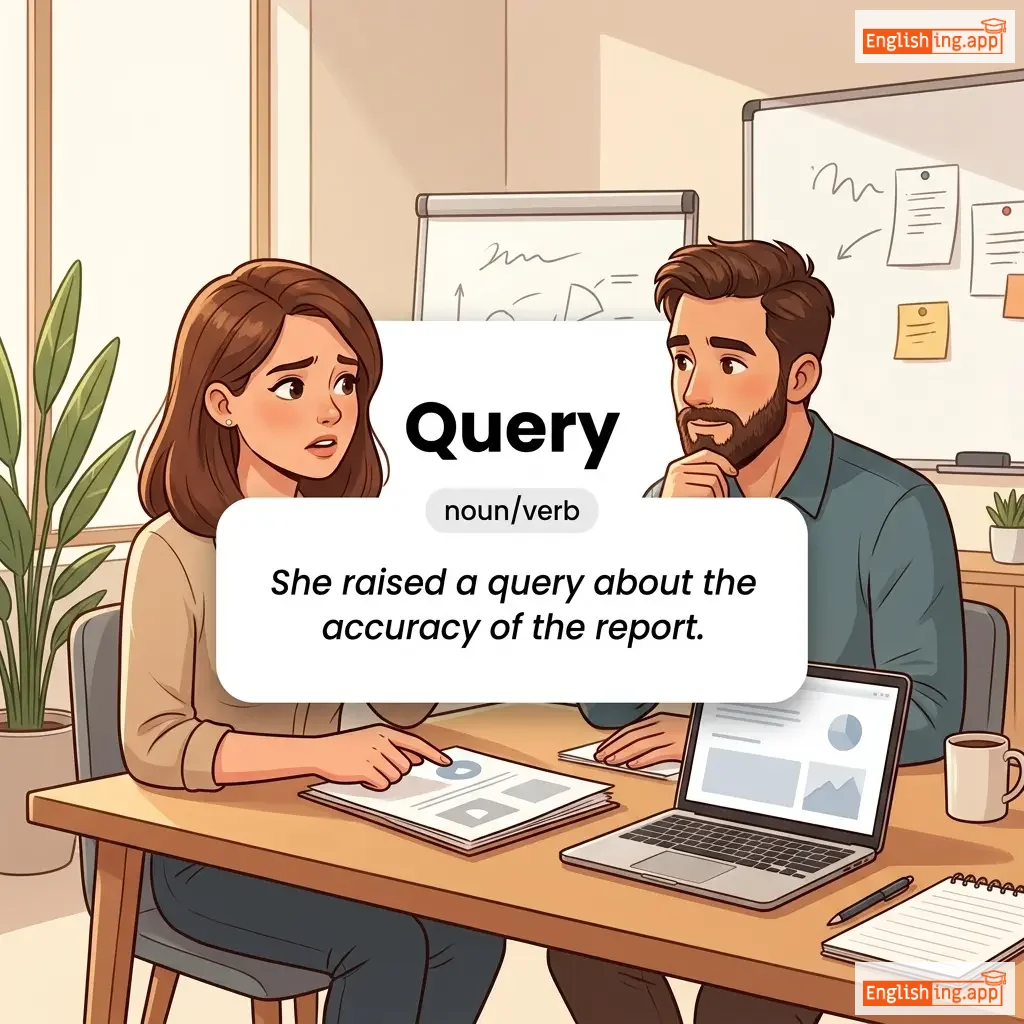
Query definition card — visual illustration of the meaning
noun/verb
/ˈkwɪəri/
consulta (consulta)

A question, especially one addressed to an official or organization; to ask a question or express doubt.

"She raised a query about the accuracy of the report."

"Ella planteó una consulta sobre la exactitud del informe." (Ella planto una consulta sobre la exactitud del informe.)
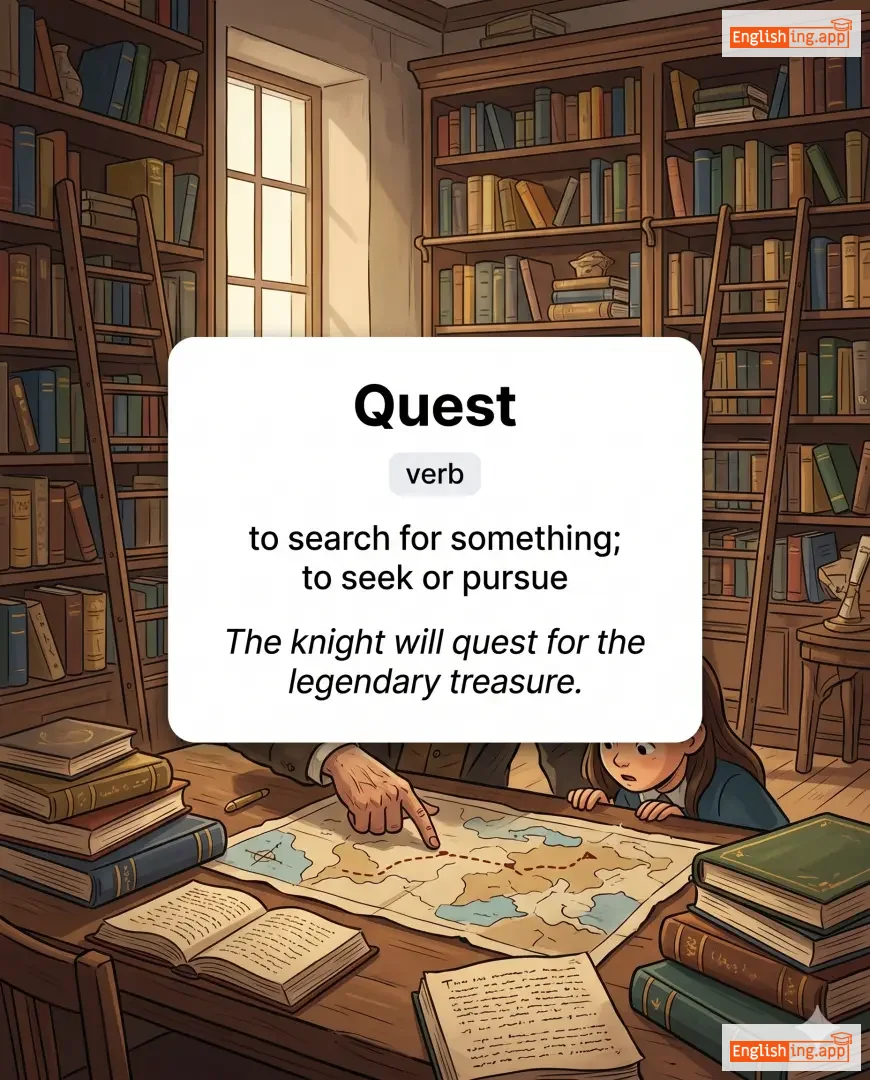
Quest definition card — visual illustration of the meaning
noun
/kwest/
búsqueda, misión (busqueda, mision)

a long search for something that is difficult to find

"They went on a quest to find the lost treasure."

"Fueron en una búsqueda para encontrar el tesoro perdido." (Fueron en una busqueda para encontrar el tesoro perdido.)
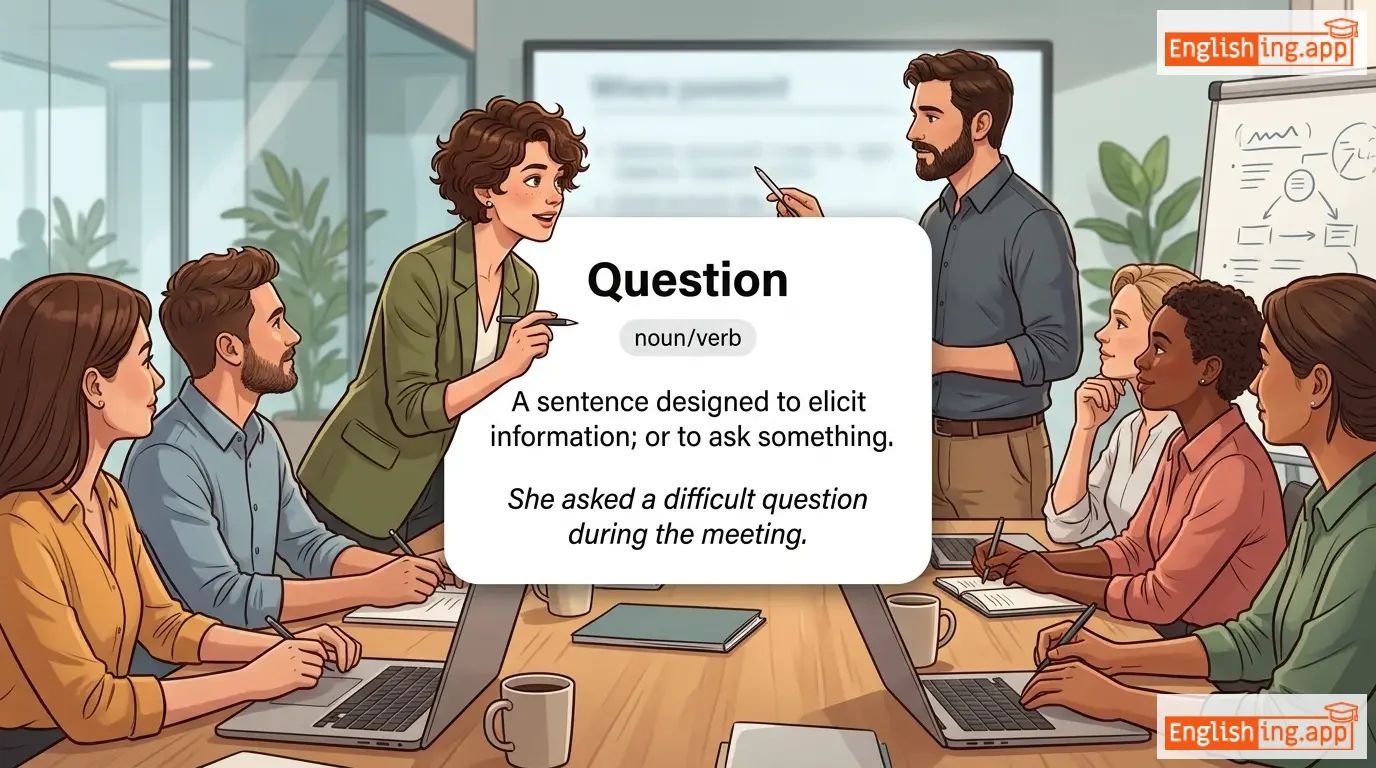
Question definition card — visual illustration of the meaning
noun/verb
/ˈkwes.tʃən/
pregunta (pregunta)

A sentence designed to elicit information; or to ask something.

"She asked a difficult question during the meeting."

"Ella hizo una pregunta difícil durante la reunión." (Ella hizo una pregunta dificil durante la reunion.)
adjective
/ˈkwestʃənəbl/
cuestionable (kveshchoneble)

doubtful; dubious; suspicious; open to doubt or suspicion

"His questionable business practices led to an investigation."

"Sus prácticas comerciales cuestionables llevaron a una investigación." (Sus practicas comerciales cuestionables llevaron a una investigacion.)
noun
/ˌkwes.tʃəˈneər/
cuestionario (cuestionario)

a set of written questions used to collect information or opinions

"Participants filled out a detailed questionnaire about their habits."

"Los participantes llenaron un cuestionario detallado sobre sus hábitos." (Los participantes llenaron un cuestionario detallado sobre sus hábitos.)
🧍‍♂️🧍‍♀️

Queue (kiu)

noun/verb
/kjuː/
cola (cola)

A line or sequence of people or vehicles awaiting their turn; to wait in line.

"People queued outside the theater for tickets."

"Las personas hicieron cola afuera del teatro para los boletos." (Las personas hicieron cola afuera del teatro para los boletos.)
noun
/ˌkiː ˈviːv/
alerta (alerta)

A state of alertness or vigilance.

"The guards were on the qui vive during the night."

"Los guardias estaban en alerta durante la noche." (Los guardias estaban en alerta durante la noche.)
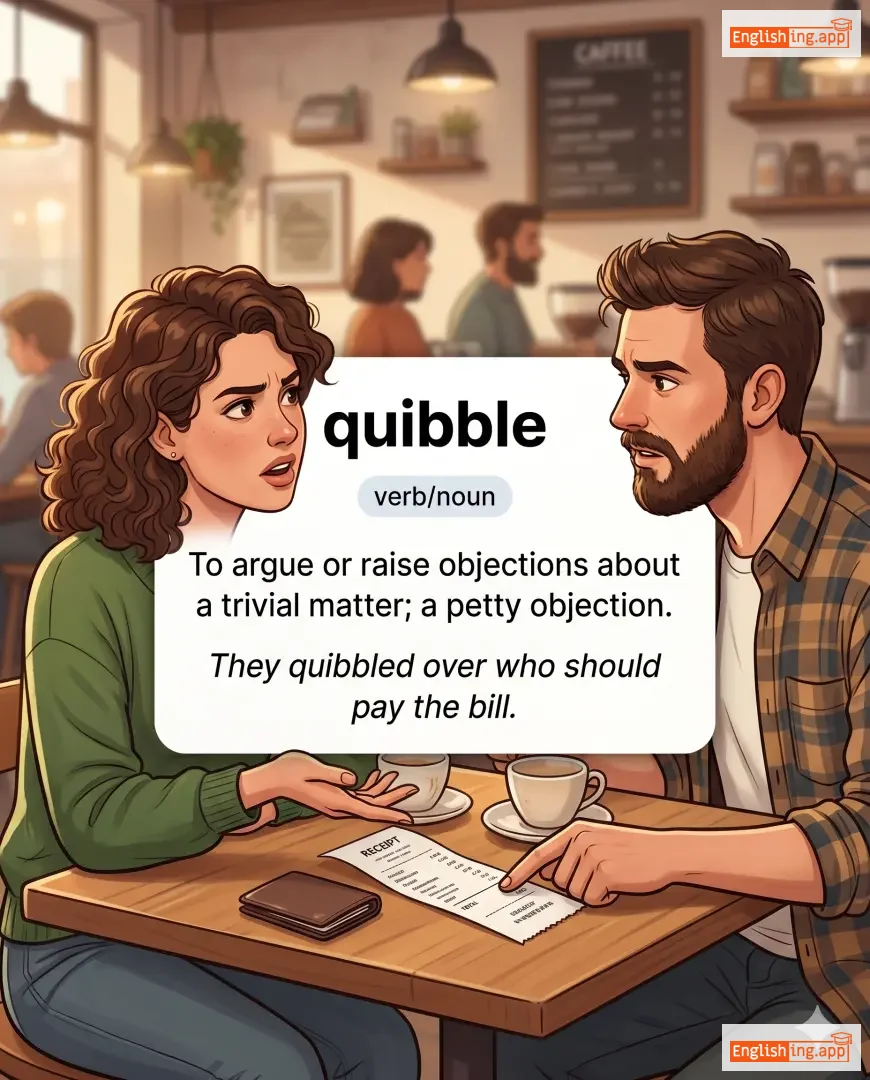
quibble definition card — visual illustration of the meaning
verb/noun
/ˈkwɪbəl/
discutir sobre algo trivial (discutir sobre algo trivial)

To argue or raise objections about a trivial matter; a petty objection.

"They quibbled over who should pay the bill."

"Ellos discutieron sobre quién debía pagar la cuenta." (Ellos discutieron sobre quién debía pagar la cuenta.)
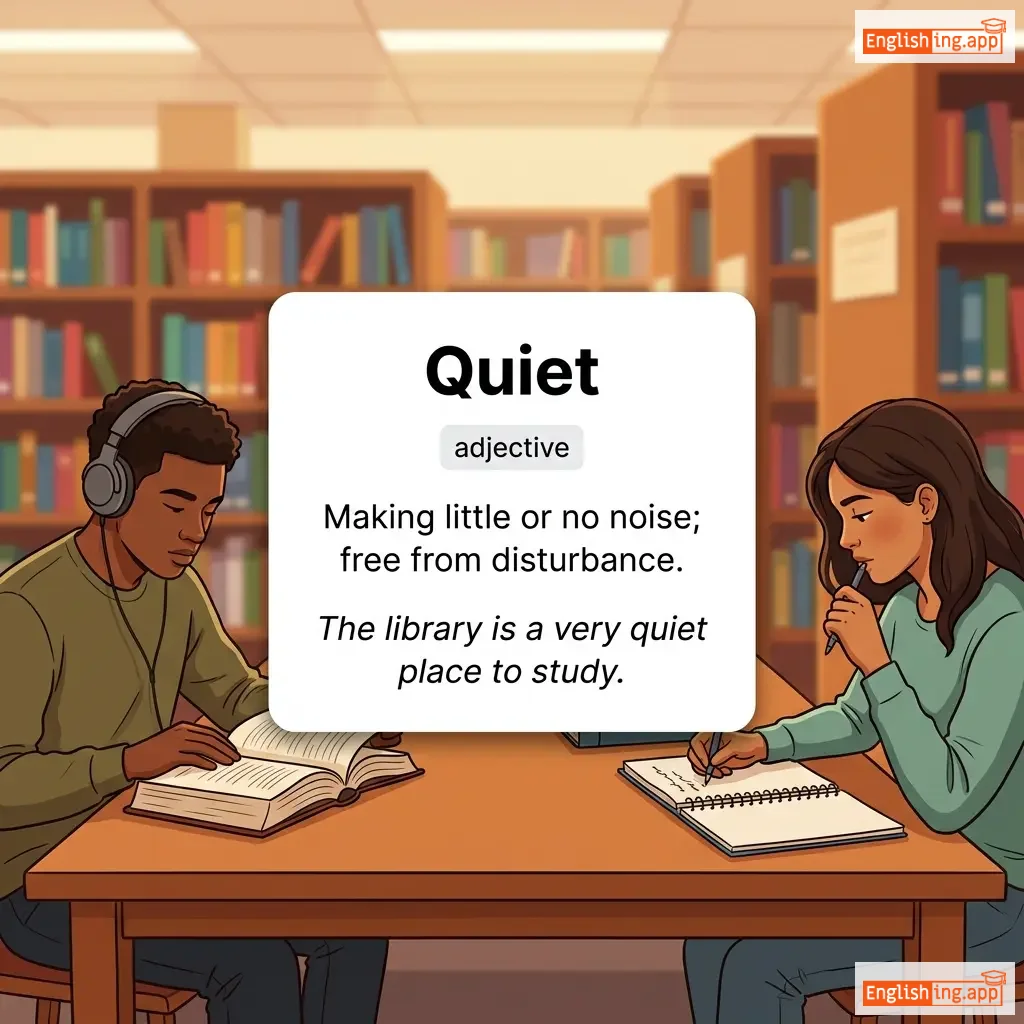
Quiet definition card — visual illustration of the meaning
adjective
/ˈkwaɪət/
silencioso (silencioso)

Making little or no noise; free from disturbance.

"The library is a very quiet place to study."

"La biblioteca es un lugar muy silencioso para estudiar." (La biblioteca es un lugar muy silencioso para estudiar.)
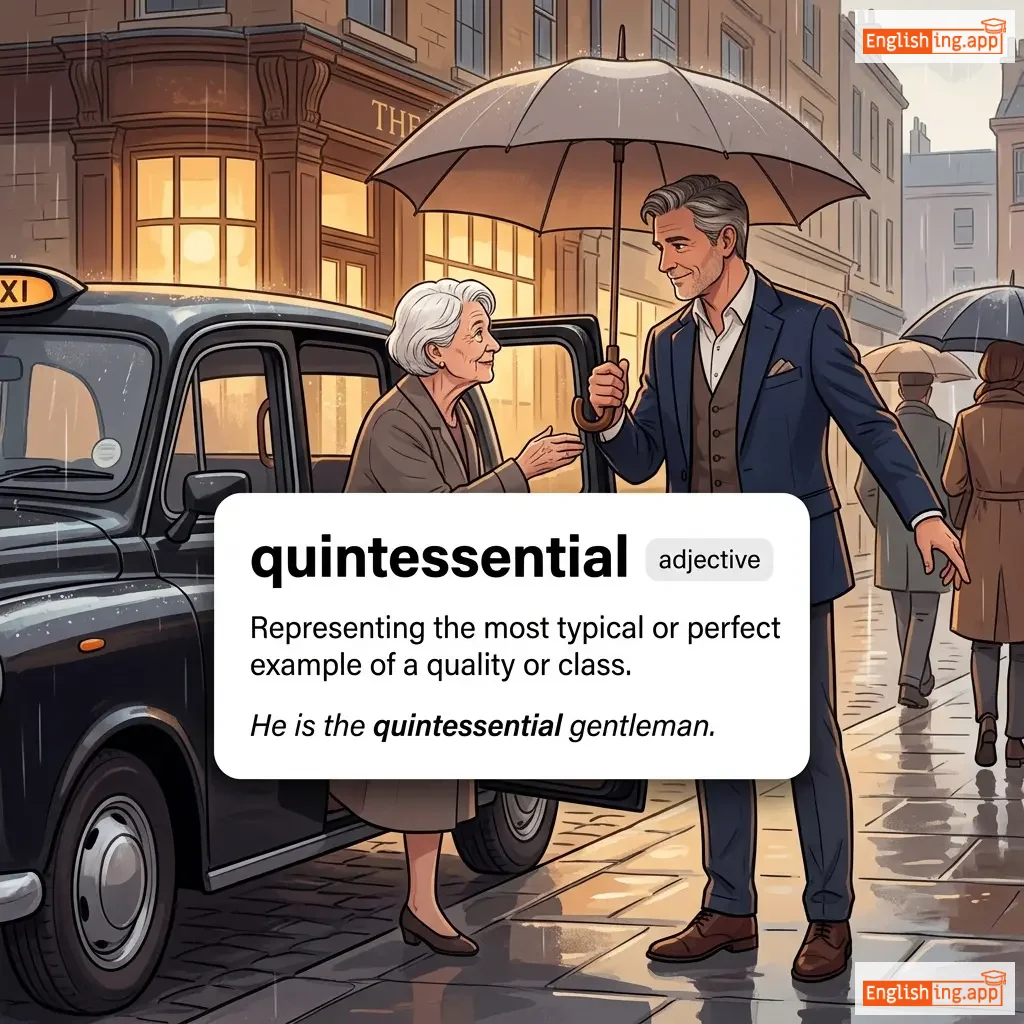
quintessential definition card — visual illustration of the meaning
adjective
/ˌkwɪntɪˈsɛnʃəl/
ejemplo perfecto (ejemplo perfecto)

Representing the most typical or perfect example of a quality or class.

"He is the quintessential gentleman."

"Él es el ejemplo perfecto de un caballero." (El es el ejemplo perfecto de un caballero.)
noun
/kwɪnˈtɛsəns/
la quintaesencia (la quintesencia)

The purest or most perfect example of something.

"She is the quintessence of elegance."

"Ella es la quintaesencia de la elegancia." (Ella es la quintesencia de la elegancia.)
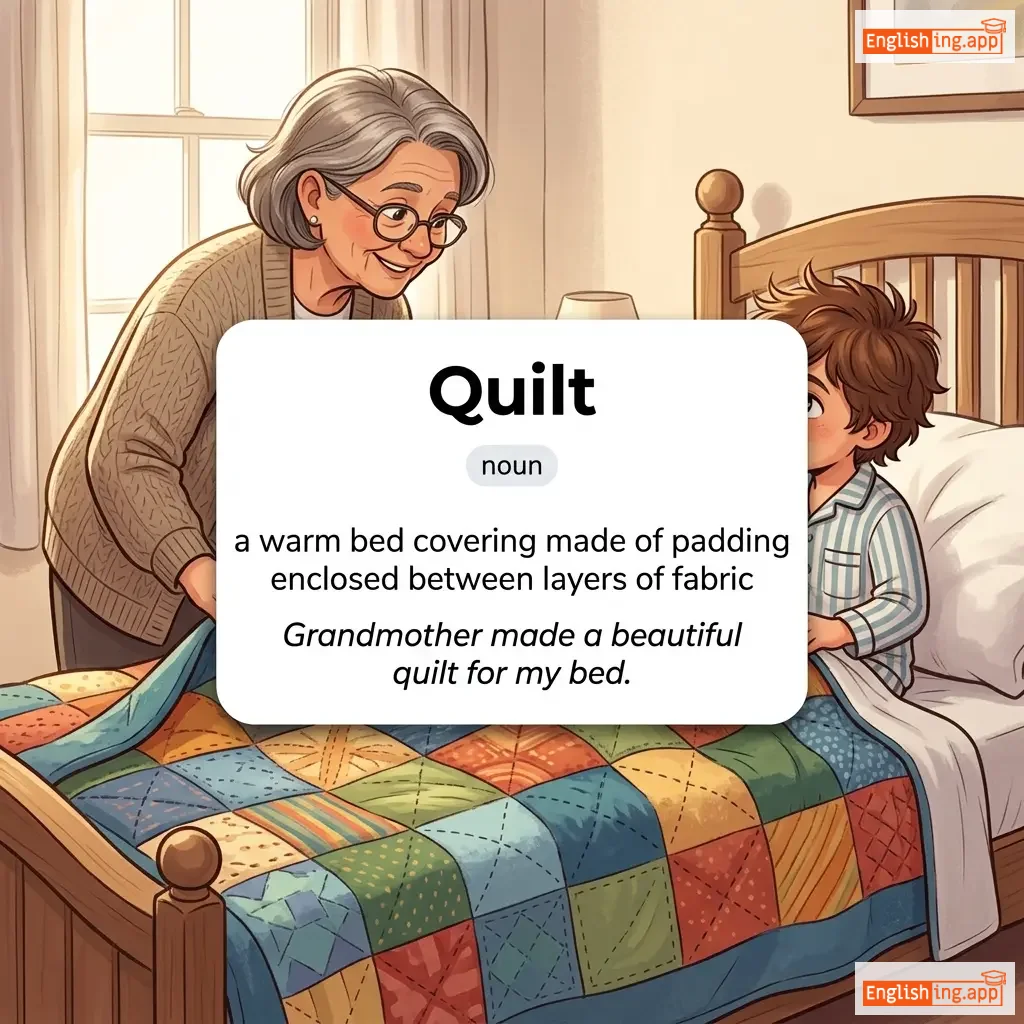
Quilt definition card — visual illustration of the meaning
noun
/kwɪlt/
edredón (edredon)

a warm bed covering made of padding enclosed between layers of fabric

"Grandmother made a beautiful quilt for my bed."

"La abuela hizo un hermoso edredón para mi cama." (La abuela hizo un hermoso edredón para mi cama.)
noun
/kwaɪˈiːtəs/
fin, muerte (fin, muerte)

Something that ends or settles a situation; release from life, death.

"The scandal brought a quietus to his political career."

"El escándalo puso fin a su carrera política." (El escandalo puso fin a su carrera politica.)
noun
/ˈkwaɪəˌtuːd/
quietud (quietud)

A state of stillness and tranquility.

"She enjoys the quietude of the countryside."

"Ella disfruta de la quietud del campo." (Ella disfruta de la quietud del campo.)
adverb
/ˈkwaɪətli/
silenciosamente (silenciosamente)

in a silent or calm manner

"He spoke quietly so no one would hear."

"Él habló silenciosamente para que nadie lo escuchara." (Él habló silenciosamente para que nadie lo escuchara.)
verb
/ˈkwɪkən/
acelerar (acelerar)

to make or become faster; to accelerate

"His pulse began to quicken as he approached the finish line."

"Su pulso empezó a acelerarse a medida que se acercaba a la meta." (Su pulso empezo a acelerarse a medida que se acercaba a la meta.)
adverb
/ˈkwɪkli/
rápidamente (rapidamente)

at a fast speed

"She finished the test quickly."

"Ella terminó el examen rápidamente." (Ella termino el examen rapidamente.)
noun
/ˈkwɪkˌsɪlvər/
mercurio (mercurio)

Mercury; a liquid metal, or something that is quick and unpredictable.

"His mood was as changeable as quicksilver."

"Su estado de ánimo era tan cambiante como el mercurio." (Su estado de ánimo era tan cambiante como el mercurio.)