词汇表

英语词汇词典 | 单词含义、定义和示例

adjective
/ˌrɛpərˈtɔːriəl/
报道的 (baodao de)

Relating to or characteristic of a repertoire, especially in journalism or performance contexts.

"The journalist's repertorial style captured every detail of the unfolding story."
"记者的报道风格捕捉了展开故事的每个细节。" (Jìzhě de bàodào fēnggé bǔzhuōle zhǎnkāi gùshì de měi gè xìjié.)
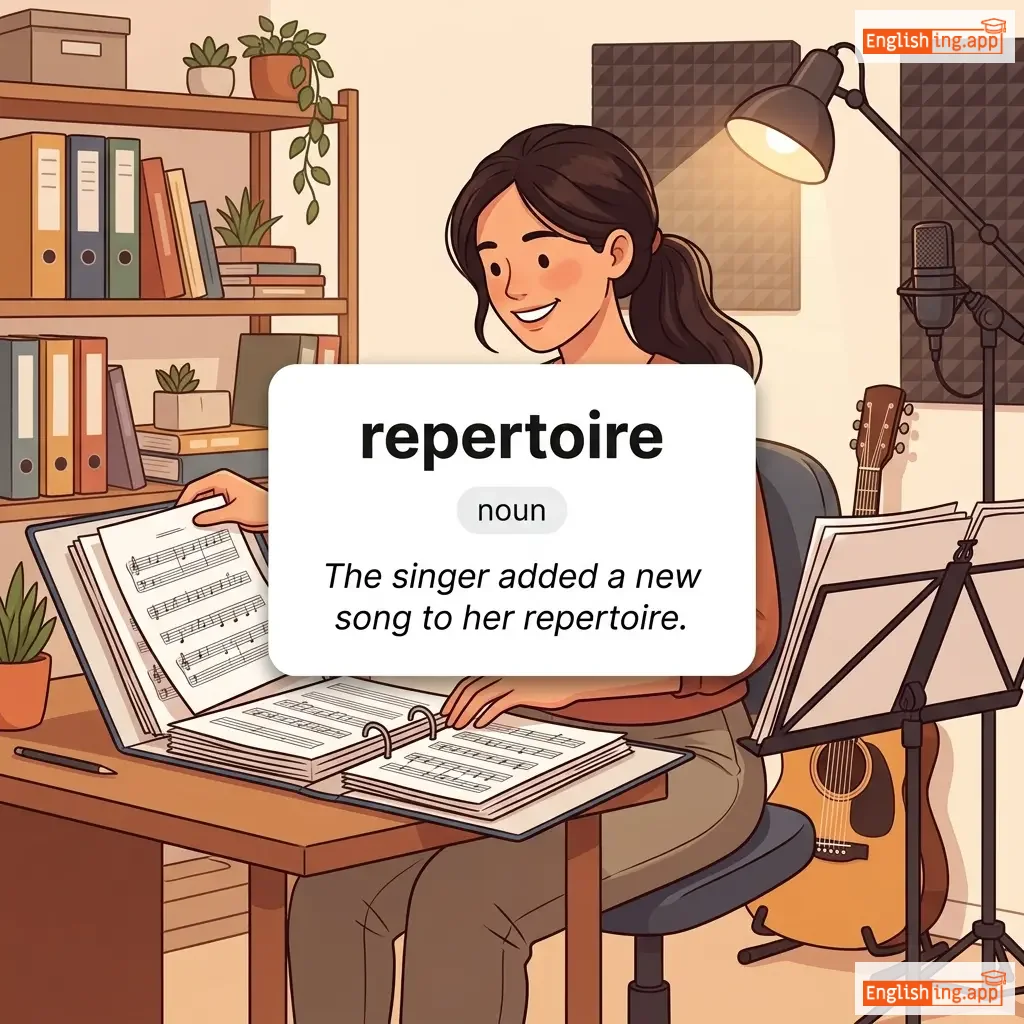
repertoire definition card — visual illustration of the meaning
noun
/ˈrɛpərˌtwɑːr/
曲目 (qumu)

The entire range of skills, works, or pieces that a person or group is prepared to perform or use.

"The singer added a new song to her repertoire."

"这位歌手将一首新歌加入了她的曲目。" (Zhè wèi gēshǒu jiāng yī shǒu xīn gē jiārùle tā de qǔmù.)
repercussions definition card — visual illustration of the meaning
noun
/ˌriː.pəˈkʌʃ.ənz/
后果 (houguo)

An unintended consequence occurring some time after an event or action; the effects or results of something.

"The economic repercussions of war are severe."
"战争的经济后果是严重的。" (Zhànzhēng de jīngjì hòuguǒ shì yánzhòng de.)
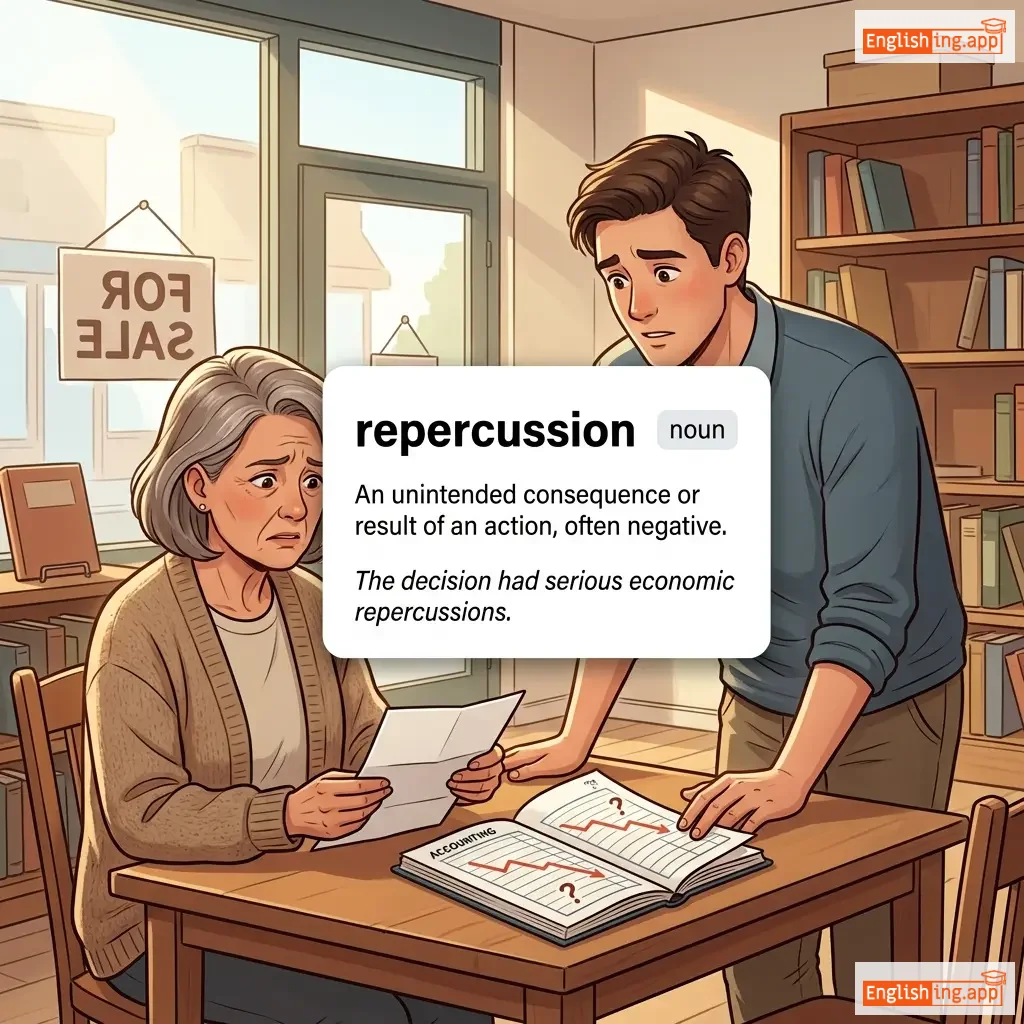
repercussion definition card — visual illustration of the meaning
noun
/ˌriːpərˈkʌʃən/

An unintended consequence or result of an action, often negative.

"The decision had serious economic repercussions."

adjective
/rɪˈpen.tənt/
悔过的; 懊悔的; 后悔的 (huǐguò de; àohuǐ de; hòuhuǐ de)

feeling or expressing sincere regret and remorse; sorry for one's actions

"The repentant thief returned the stolen money."

"悔过的窃贼归还了被盗的钱。" (Huǐguò de qièzéi guīhuán le bèi dào de qián.)
noun
/rɪˈpɛntəns/
忏悔 (chanhui)

Deep regret or remorse for wrongdoing; sincere sorrow for one's sins or mistakes.

"He showed true repentance after apologizing for his mistakes."

"他在为自己的错误道歉后表现出了真正的忏悔。" (Tā zài wèi zìjǐ de cuòwù dàoqiàn hòu biǎoxiàn chūle zhēnzhèng de chànhuǐ.)
adjective
/rɪˈpɛlənt/
驱虫剂 (qūchóng jì)

Able to drive away something, especially insects or unpleasant things; causing disgust or distaste.

"This cream is highly effective as a mosquito repellent."

"这款乳霜在防蚊方面非常有效。" (Zhè kuǎn rǔshuāng zài fáng wén fāngmiàn fēicháng yǒuxiào.)
repel definition card — visual illustration of the meaning
verb
/rɪˈpɛl/
击退 (jī tuì)

To drive back or push away, especially an attack or something unwanted.

"The army managed to repel the enemy forces."

"军队成功地击退了敌军。" (Jūnduì chénggōng de jī tuì le dí jūn.)
adjective
/rɪˈpiː.tɪd/
重复的; 多次发生 (chongfu de; duoci fasheng)

done again; happening again; occurring multiple times

"He made repeated attempts to contact her."

"他多次尝试联系她。" (Ta duoci changshi lianxi ta)
verb
/rɪˈpiːt/
重复 (chong fu)

to say again or do again

"Could you please repeat that sentence?"

"你能再说一遍那句话吗?" (Ni neng zai shuo yi bian na ju hua ma?)
📜❌

repeal

verb
/rɪˈpiːl/

To officially cancel or revoke a law or decision.

"The government decided to repeal the outdated law."

verb
/riːˈpeɪ.tri.eɪt/
遣返 (qianfan)

To return someone to their own country, often after war or imprisonment.

"The government worked to repatriate the refugees safely."

"政府努力确保安全地将难民遣返回国。" (Zhengfu nuli quebao anquan de jiang nanmin qianfan hui guo.)
noun
/rɪˈpæst/
宴席 (yanxi)

A meal or the food eaten during a meal.

"They enjoyed a delicious repast by the riverside."

"他们在河边享用了美味的宴席。" (Tāmen zài hé biān xiǎngyòngle měiwèi de yànxí.)
noun
/ˌrɛpɑːrˈtiː/
机智的回答 (jīzhì de huídá)

A quick, witty, and clever reply in conversation.

"The debate was full of sharp repartee between the two speakers."
"辩论充满了两位演讲者之间的机智回答。" (Biànlùn chōngmǎnle liǎng wèi yǎnjiǎng zhě zhī jiān de jīzhì huídá.)
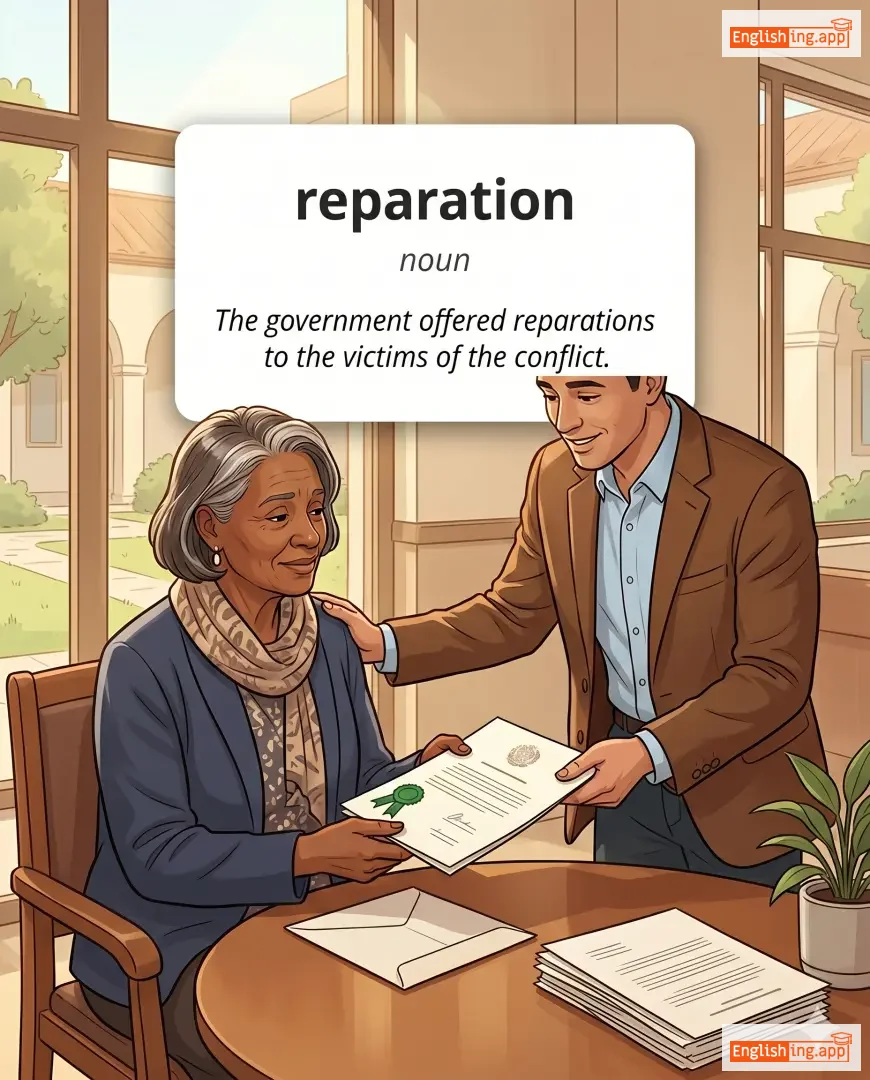
reparation definition card — visual illustration of the meaning
noun
/ˌrɛpəˈreɪʃən/
赔偿 (peichang)

the making of amends for a wrong done by paying money or helping those who were wronged

"The government offered reparations to the victims of the conflict."

"政府向冲突受害者提供了赔偿。" (Zhengfu xiang chongtu shouhaizhe tigongle peichang.)
adjective
/ˈrɛpərəbəl/
可修复的 (ke xiufu de)

able to be repaired or fixed

"The damage to the car was serious but still reparable."

"汽车的损坏很严重,但仍然是可修复的。" (Qiche de sunhai hen yanzhong, dan rengran shi ke xiufu de.)
noun
/rɪˈpɛərə/
修理工 (xiuligong)

a person whose job is to fix damaged or broken things

"The repairer fixed the broken washing machine quickly."

"修理工很快修好了坏掉的洗衣机。" (xiuligong hen kuai xiu hao le huai diao de xiyiji)
adjective
/rɪˈper.ə.bəl/
可修复的 (ke xiufu de)

able to be fixed or mended; capable of being repaired

"The broken phone is repairable with the right parts."

"坏掉的手机可以用正确的部件修复。" (Huai diao de shouji keyi yong zhengque de bujian xiufu.)
repair definition card — visual illustration of the meaning
verb
/rɪˈpɛər/

to fix or restore something that is broken or damaged

"He repaired his broken watch with patience."

verb
/riːˈɔːrɡənaɪz/
重新组织 (chóngxīn zǔzhī)

to arrange something again in a different way for greater efficiency or order

"The manager decided to reorganize the team structure."

"经理决定重新组织团队结构。" (Jīnglǐ juédìng chóngxīn zǔzhī tuánduì jiégòu.)
noun
/rɪˌnʌnsiˈeɪʃən/
放弃 (fangqi)

the formal rejection or giving up of something, usually a belief, claim, or way of life

"His renunciation of worldly pleasures impressed the monks."

"他对世俗享乐的放弃让僧侣们印象深刻。" (Tā duì shìsú xiǎnglè de fàngqì ràng sēnglǚmen yìnxiàng shēnkè.)
noun
/ˈrɛntəl/
租赁 (zūlìn)

an arrangement in which something is rented, or the amount paid for renting

"The car rental was more expensive than we expected."

"汽车租赁比我们预期的要贵。" (qìchē zūlìn bǐ wǒmen yùqí de yào guì.)
noun, verb
/rɛnt/
租金 (zujin)

payment made regularly by a tenant to a landlord for the use of property or land; also to pay for the use of something

"They decided to rent an apartment in the city center."

"他们决定在市中心租一间公寓。" (Tāmen juédìng zài shì zhōngxīn zū yī jiān gōngyù.)
renowned definition card — visual illustration of the meaning
adjective
/rɪˈnaʊnd/
著名 (zhùmíng)

famous or well-known for a particular skill or achievement

"She is a renowned artist in the country."

"她是国内著名的艺术家。" (Tā shì guónèi zhùmíng de yìshùjiā.)
noun
/rɪˈnaʊn/
声誉 (shengyu)

the condition of being widely known and highly respected

"The scientist gained international renown for his groundbreaking research."

"这位科学家因其开创性的研究而获得了国际声誉。" (Zhe wei kexuejia yin qi kaichuangxing de yanjiu er huodele guoji shengyu.)
noun
/ˌren.əˈveɪ.ʃən/
翻新; 恢复 (fanxin; huifu)

the act of renovating; restoration to a former better state

"The old house underwent a complete renovation last year."

"去年老房子进行了彻底的翻修。" (qunian lao fangzi jinxingle chedi de fanxin.)
adverb
/rɪˈpiːtɪdli/
反复地 (fǎn fù de)

in a way that is repeated or done many times

"She apologized repeatedly for the mistake."

"她因错误反复道歉。" (Tā yīn cuòwù fǎnfù dàoqiàn.)
adjective
/kwɪər/
奇怪 (qiguai)

Strange, odd, or unusual.

"He had a queer feeling that something was wrong."

"他有一种奇怪的感觉,觉得有什么不对劲。" (Ta you yi zhong qiguai de ganjue, jue de you shenme bu dui jin.)
verb
/kwɛl/
镇压 (zhenya)

To suppress or put an end to something, usually by force.

"The police were called to quell the violent protest."

"警方被召唤以平息暴力抗议。" (Jǐngfāng bèi zhàohuàn yǐ píngxī bàolì kàngyì.)
quench definition card — visual illustration of the meaning
verb
/kwɛntʃ/
解渴 (jie ke)

To satisfy thirst or extinguish something like fire.

"He drank water to quench his thirst."

"他喝水来解渴。" (Ta he shui lai jie ke.)
verb
/ˈkwentʃɪŋ/
解渴 / 熄灭 (jie ke / xi mie)

The act of satisfying thirst or extinguishing something like fire.

"Drinking cold water was quenching her thirst."

"喝冷水解渴。" (He leng shui jie ke.)
adjective
/ˈkwɛrʊləs/
抱怨的 (bàoyuàn de)

Complaining in a whining or irritable manner.

"The querulous customer kept finding fault with every detail."

"那个抱怨的顾客一直在找每个细节的错误。" (Nàgè bàoyuàn de gùkè yīzhí zài zhǎo měi gè xìjié de cuòwù.)
Query definition card — visual illustration of the meaning
noun/verb
/ˈkwɪəri/
查询 (chaxun)

A question, especially one addressed to an official or organization; to ask a question or express doubt.

"She raised a query about the accuracy of the report."

"她提出了关于报告准确性的查询。" (Ta tichu le guanyu baogao zhunquexing de chaxun.)
Quest definition card — visual illustration of the meaning
noun
/kwest/
探索, 寻找 (tansuo, xunzhao)

a long search for something that is difficult to find

"They went on a quest to find the lost treasure."

"他们去寻找失落的宝藏。" (tamen qu xunzhao shiluode baocang.)
Question definition card — visual illustration of the meaning
noun/verb
/ˈkwes.tʃən/
问题 (wenti)

A sentence designed to elicit information; or to ask something.

"She asked a difficult question during the meeting."

"她在会议中提出了一个困难的问题。" (Ta zai huiyi zhong tichu le yige kunnan de wenti.)
adjective
/ˈkwestʃənəbl/
可疑的 (ke-yi-de)

doubtful; dubious; suspicious; open to doubt or suspicion

"His questionable business practices led to an investigation."

"他的可疑商业行为导致了一项调查。" (Tā de kěyí shāngyè xíngwéi dǎozhìle yī xiàng diàochá.)
noun
/ˌkwes.tʃəˈneər/
问卷 (wenjuan)

a set of written questions used to collect information or opinions

"Participants filled out a detailed questionnaire about their habits."

"参与者填写了关于他们习惯的详细问卷。" (Canyu zhe tianxie le guanyu tamen xiguan de xishi wenjuan.)
🧍‍♂️🧍‍♀️

Queue (qiú)

noun/verb
/kjuː/
队列 (duìliè)

A line or sequence of people or vehicles awaiting their turn; to wait in line.

"People queued outside the theater for tickets."

"人们在剧院外排队等票。" (Rénmen zài jùyuàn wài páiduì děng piào.)
noun
/ˌkiː ˈviːv/
警觉 (jingjue)

A state of alertness or vigilance.

"The guards were on the qui vive during the night."
"警卫们在夜间保持警觉。" (Jingwei men zai yejian baochi jingjue.)
quibble definition card — visual illustration of the meaning
🗣️

quibble

verb/noun
/ˈkwɪbəl/

To argue or raise objections about a trivial matter; a petty objection.

"They quibbled over who should pay the bill."

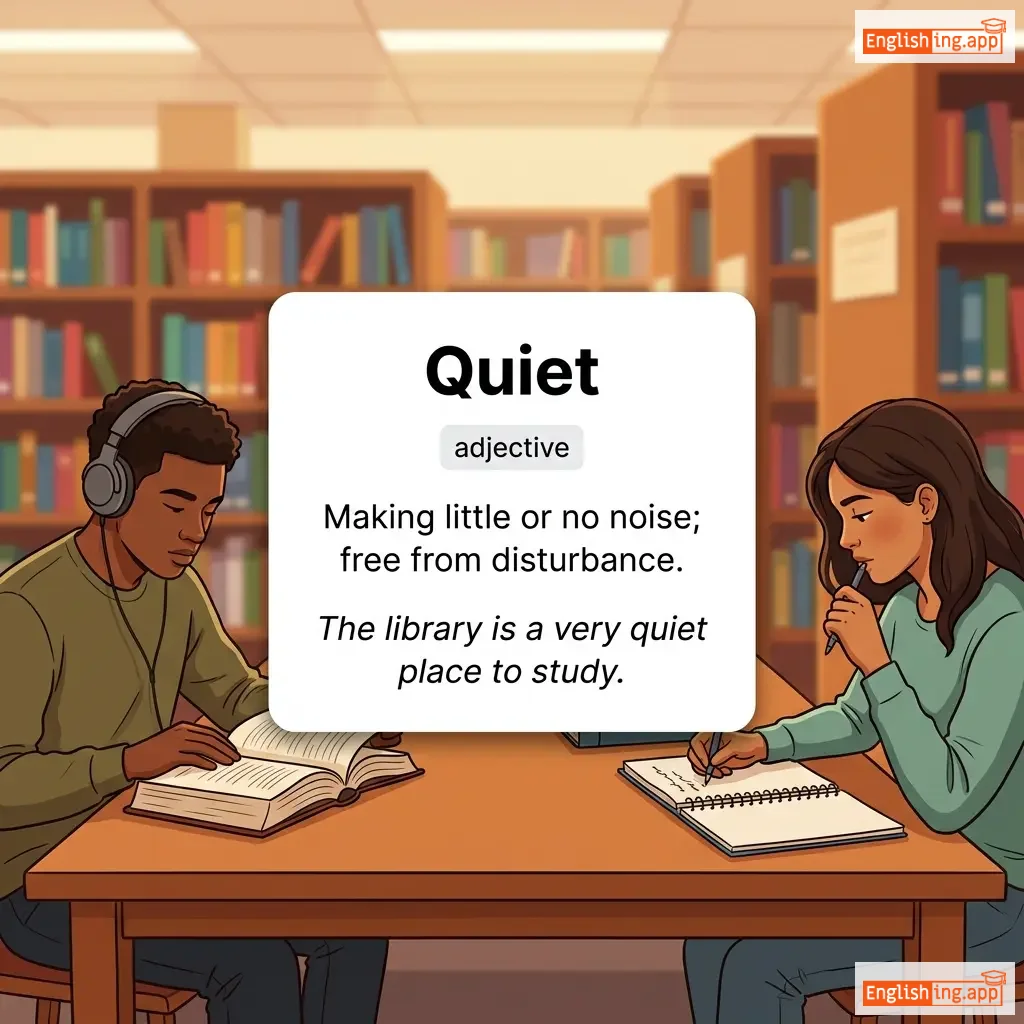
Quiet definition card — visual illustration of the meaning
adjective
/ˈkwaɪət/
安静 (anjing)

Making little or no noise; free from disturbance.

"The library is a very quiet place to study."
"图书馆是一个非常安静的学习场所。" (Túshūguǎn shì yīgè fēicháng ānjìng de xuéxí chǎngsuǒ.)
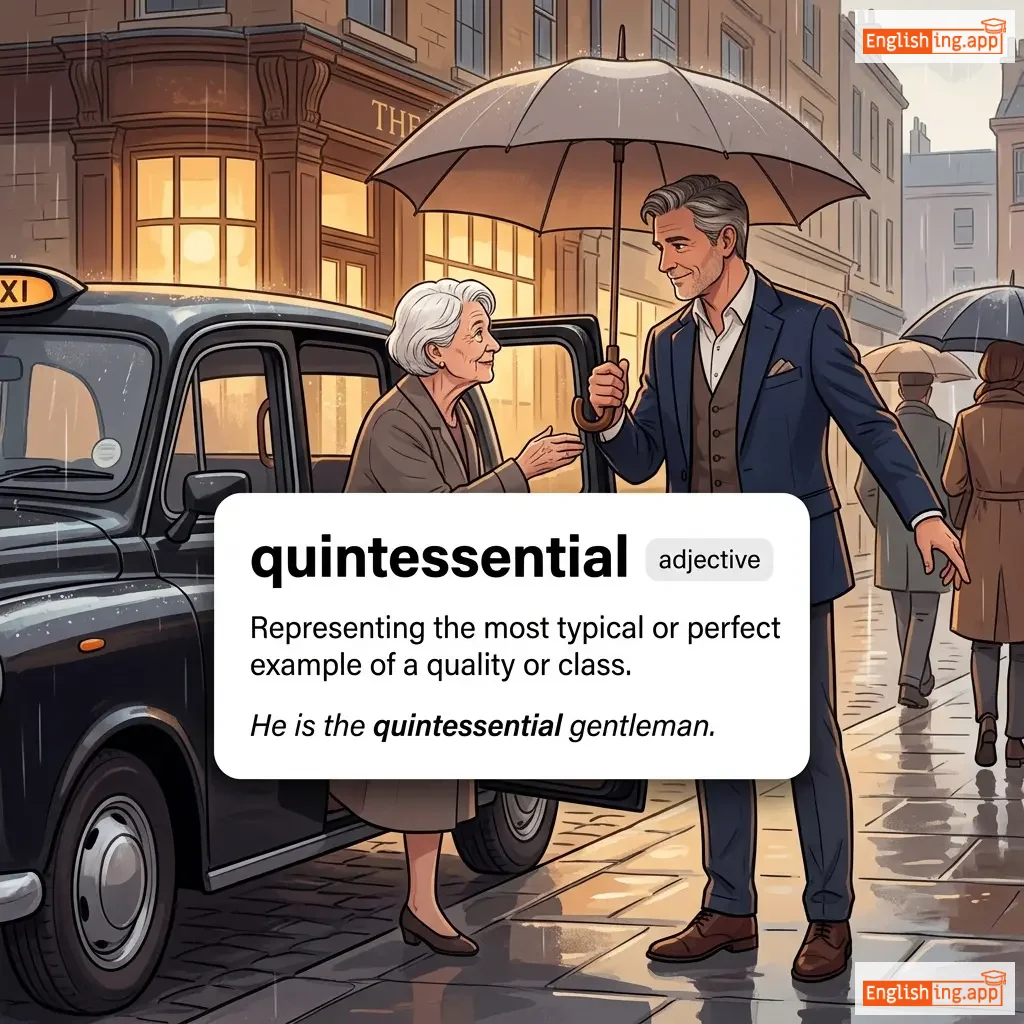
quintessential definition card — visual illustration of the meaning
adjective
/ˌkwɪntɪˈsɛnʃəl/
典型例子 (dianxing lizi)

Representing the most typical or perfect example of a quality or class.

"He is the quintessential gentleman."

"他是典型的绅士。" (Ta shi dianxing de shenshi.)
noun
/kwɪnˈtɛsəns/
精髓 (jīngsuǐ)

The purest or most perfect example of something.

"She is the quintessence of elegance."

"她是优雅的精髓。" (Tā shì yōuyǎ de jīngsuǐ.)
noun
/kwɪlt/
被子 (bèizi)

a warm bed covering made of padding enclosed between layers of fabric

"Grandmother made a beautiful quilt for my bed."

"祖母为我的床做了一个漂亮的被子。" (Zǔmǔ wèi wǒ de chuáng zuòle yīgè piàoliang de bèizi.)
noun
/kwaɪˈiːtəs/
结束, 死亡 (jieshu, siwang)

Something that ends or settles a situation; release from life, death.

"The scandal brought a quietus to his political career."

"这场丑闻给他的政治生涯带来了结束。" (Zhe chang chouwen gei tade zhengzhi shengya dailai le jieshu.)
noun
/ˈkwaɪəˌtuːd/
宁静 (ningjing)

A state of stillness and tranquility.

"She enjoys the quietude of the countryside."

"她享受乡村的宁静。" (Ta xiangshou xiangcun de ningjing.)
adverb
/ˈkwaɪətli/
安静地 (an jing di)

in a silent or calm manner

"He spoke quietly so no one would hear."

"他安静地说话,以便没有人听见。" (Ta an jing di shuo hua, yi bian mei you ren ting jian.)
verb
/ˈkwɪkən/
加快 (jiakuai)

to make or become faster; to accelerate

"His pulse began to quicken as he approached the finish line."

"他的脉搏在接近终点线时开始加速。" (Tā de màibó zài jiējìn zhōngdiǎn xiàn shí kāishǐ jiāsù.)
adverb
/ˈkwɪkli/
快速 (kuai su)

at a fast speed

"She finished the test quickly."

"她迅速完成了测试。" (Ta xun su wan cheng le ce shi.)
noun
/ˈkwɪkˌsɪlvər/
水银 (shuiyin)

Mercury; a liquid metal, or something that is quick and unpredictable.

"His mood was as changeable as quicksilver."

"他的情绪像水银一样变化无常。" (Tā de qíngxù xiàng shuǐyín yīyàng biànhuà wúcháng.)