Словари

Словарь английского языка | Значения слов, определения и примеры

adjective
/ˌrɛpərˈtɔːriəl/
репортерский (reporterskiy)

Relating to or characteristic of a repertoire, especially in journalism or performance contexts.

"The journalist's repertorial style captured every detail of the unfolding story."
"Репортерский стиль журналиста запечатлел каждую деталь разворачивающейся истории." (Reporterkiy stil' zhurnalista zapechatlel kazhduyu detal' razvorachivayushcheysya istorii.)
repertoire definition card — visual illustration of the meaning
noun
/ˈrɛpərˌtwɑːr/
репертуар (repertuar)

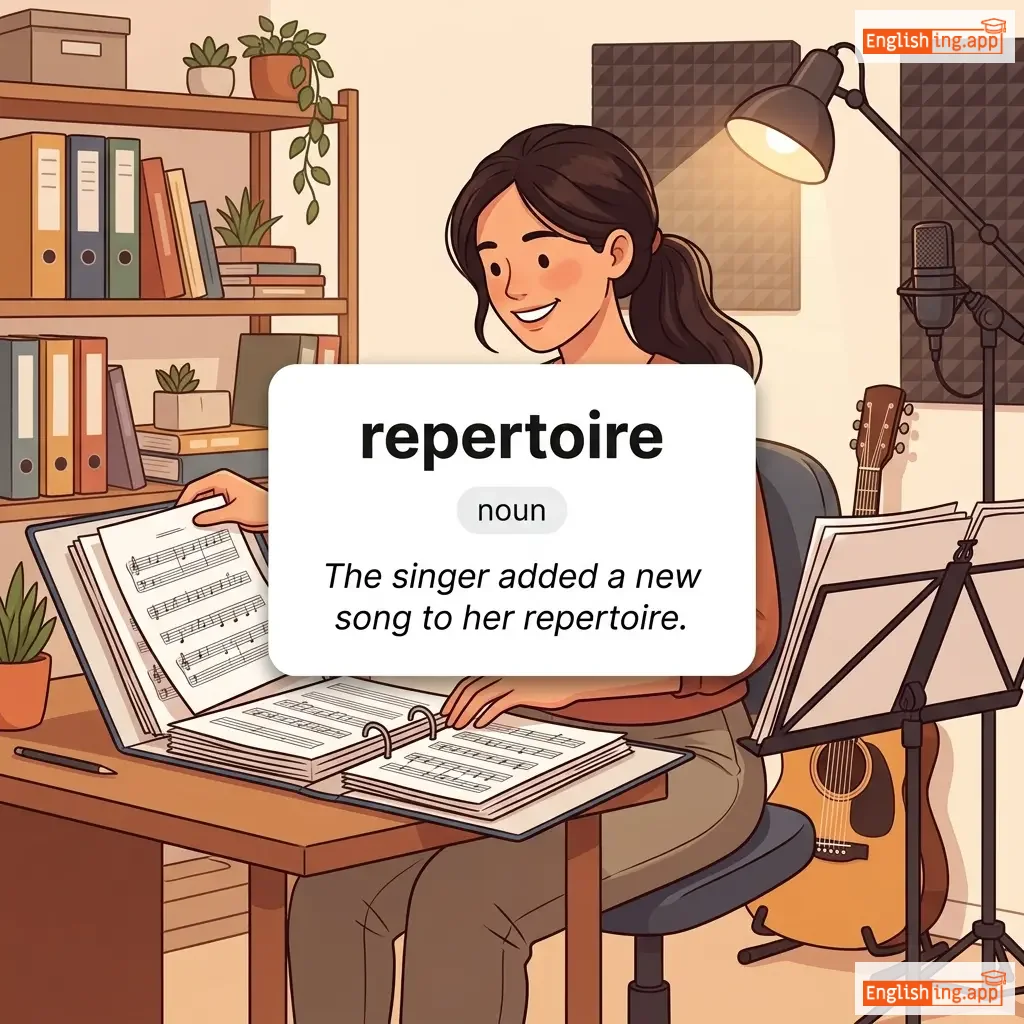
The entire range of skills, works, or pieces that a person or group is prepared to perform or use.

"The singer added a new song to her repertoire."
"Певица добавила новую песню в свой репертуар." (Pevitsa dobavila novuyu pesnyu v svoy repertuar.)
repercussions definition card — visual illustration of the meaning
noun
/ˌriː.pəˈkʌʃ.ənz/
последствия (posledstviya)

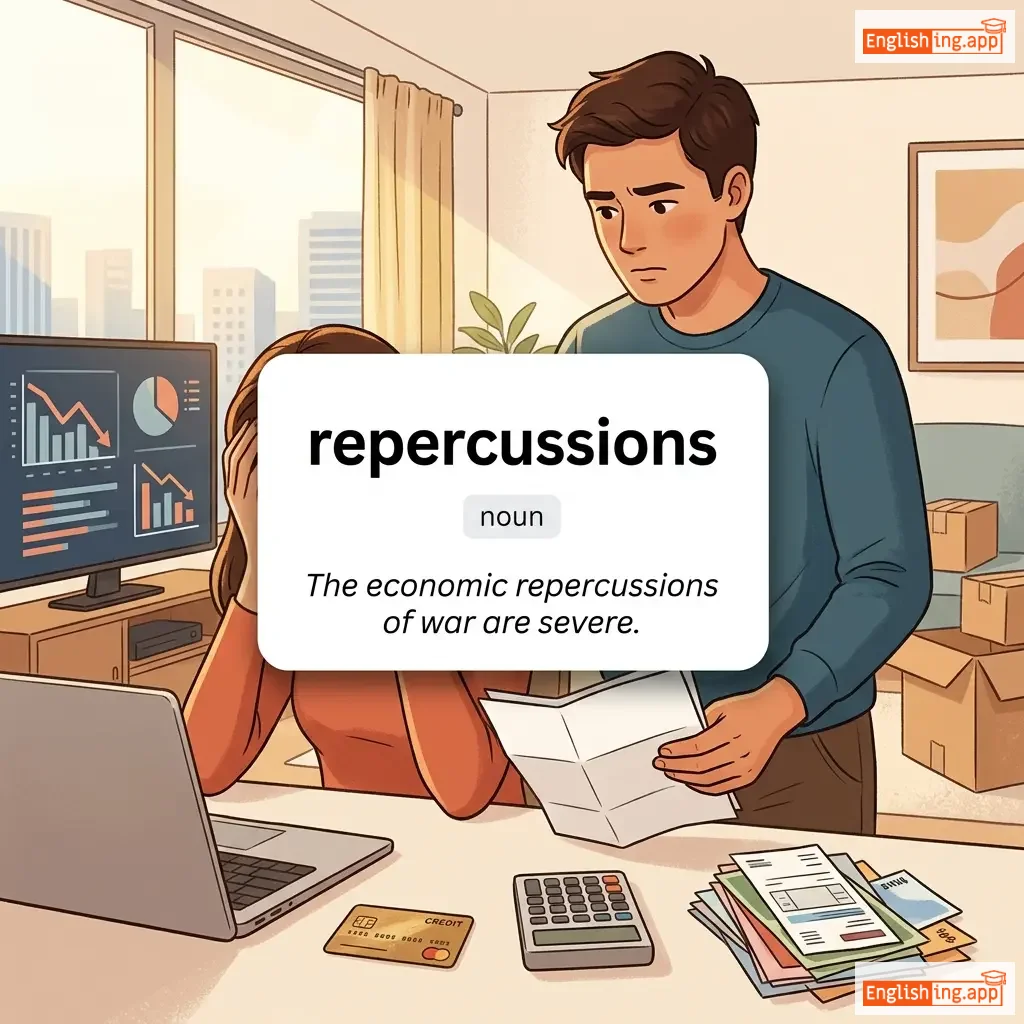
An unintended consequence occurring some time after an event or action; the effects or results of something.

"The economic repercussions of war are severe."
"Экономические последствия войны тяжелы." (Ekonomicheskie posledstviya voyny tyazhely.)
repercussion definition card — visual illustration of the meaning
noun
/ˌriːpərˈkʌʃən/
последствие (riperkushn)

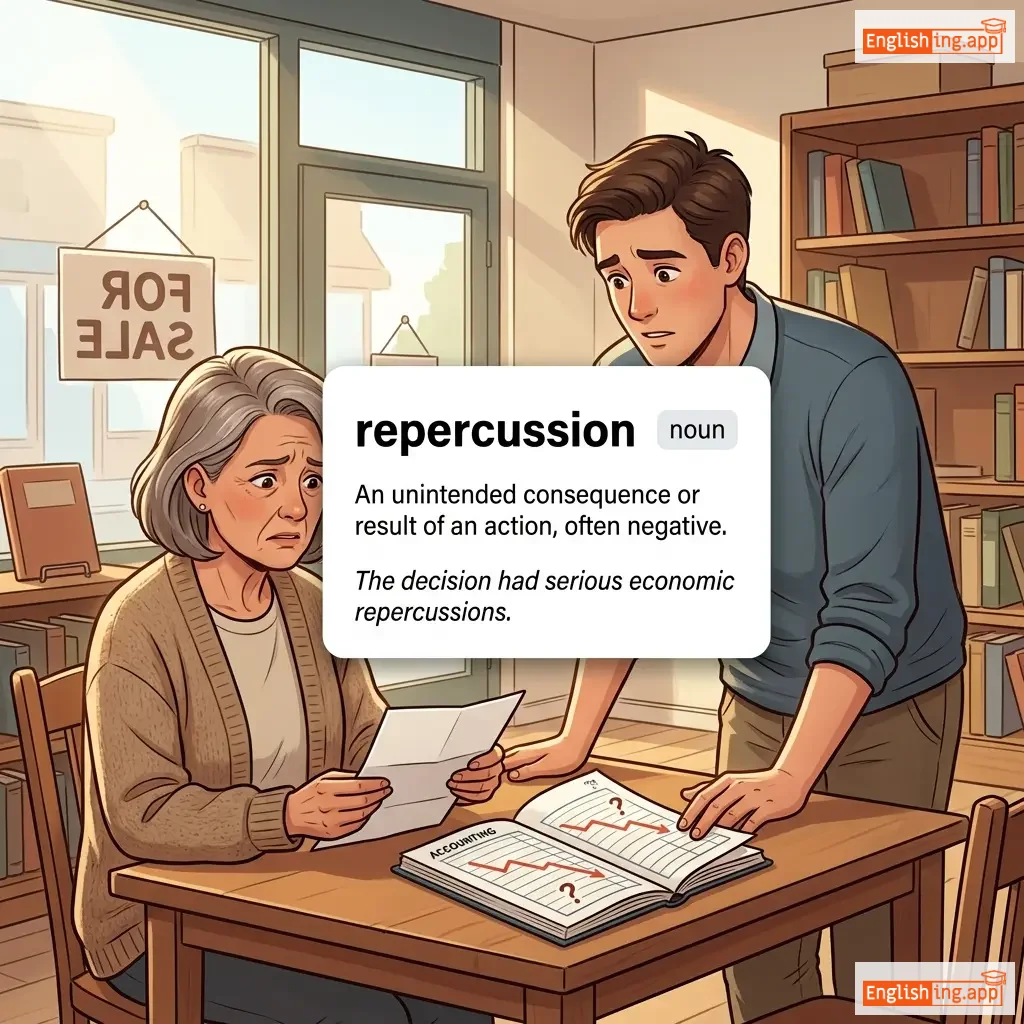
An unintended consequence or result of an action, often negative.

"The decision had serious economic repercussions."

"Решение имело серьёзные экономические последствия." (Reshenie imelo seryoznyye ekonomicheskie posledstviya)
adjective
/rɪˈpen.tənt/
раскаявшийся; сожалеющий; виновный (raskayavshiysya; sozhaleyushchiy; vinovnyy)

feeling or expressing sincere regret and remorse; sorry for one's actions

"The repentant thief returned the stolen money."

"Раскаявшийся вор вернул украденные деньги." (Raskayavshiysya vor vernul ukradennyye den'gi.)
noun
/rɪˈpɛntəns/
раскаяние (raskayanie)

Deep regret or remorse for wrongdoing; sincere sorrow for one's sins or mistakes.

"He showed true repentance after apologizing for his mistakes."

"Он продемонстрировал настоящее раскаяние после того, как извинился за свои ошибки." (On prodemonstriroval nastoyashchee raskayanie posle togo, kak izviniilsya za svoi oshibki.)
adjective
/rɪˈpɛlənt/
отпугивающий (otpugivayushchiy)

Able to drive away something, especially insects or unpleasant things; causing disgust or distaste.

"This cream is highly effective as a mosquito repellent."
"Этот крем очень эффективен как средство от комаров." (Etot krem ochen' effektiven kak sredstva ot komarov.)
repel definition card — visual illustration of the meaning
verb
/rɪˈpɛl/
отражать (otrazhat)

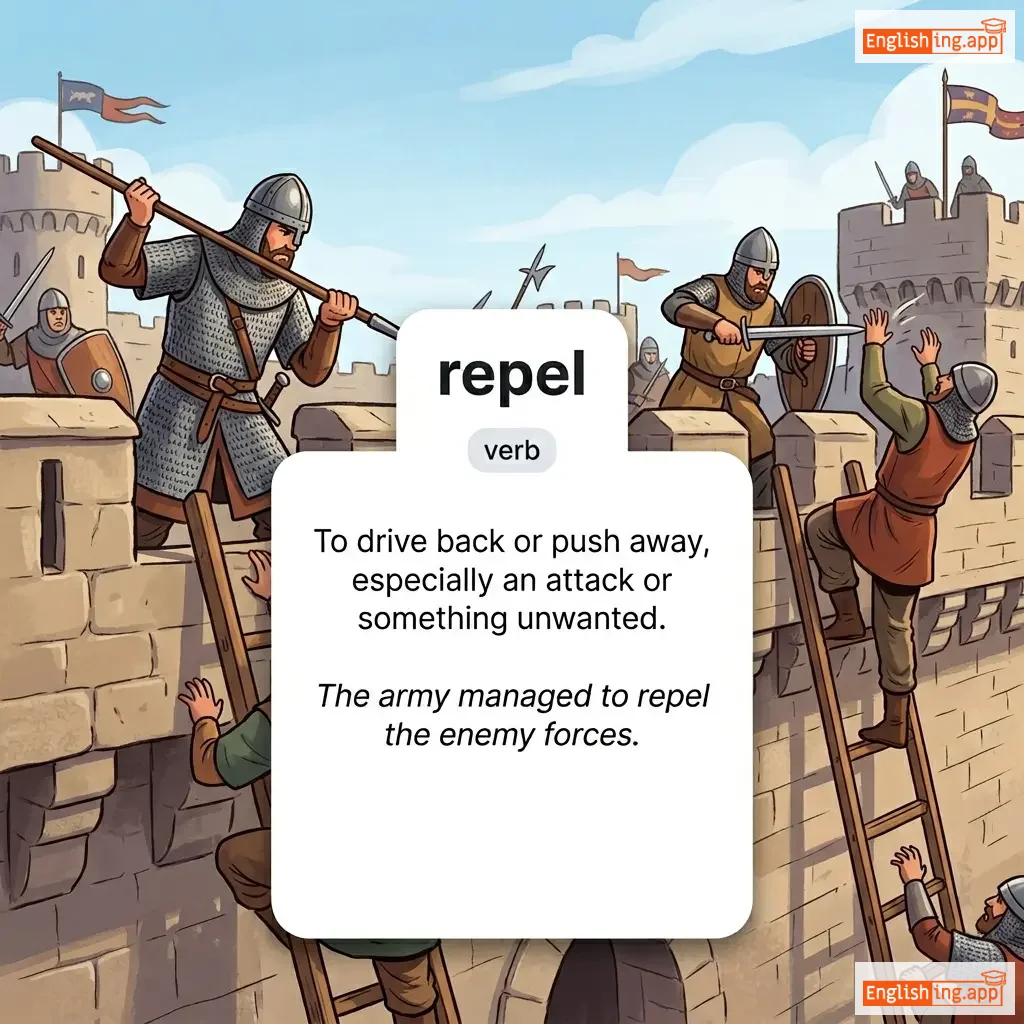
To drive back or push away, especially an attack or something unwanted.

"The army managed to repel the enemy forces."

"Армия смогла отразить вражеские силы." (Armiya smogla otrazit' vragekiye sily.)
adjective
/rɪˈpiː.tɪd/
повторный; происходящий несколько раз (povtorny; proiskhodyashchiy neskol'ko raz)

done again; happening again; occurring multiple times

"He made repeated attempts to contact her."

"Он сделал повторные попытки связаться с ней." (On sdelal povtornye popytki svyazatsya s ney)
verb
/rɪˈpiːt/
повторить (povtorit')

to say again or do again

"Could you please repeat that sentence?"

"Можешь, пожалуйста, повторить это предложение?" (Mozhesh', pozhaluysta, povtorit' eto predlozhenie?)
verb
/rɪˈpiːl/
отменить (otmenit)

To officially cancel or revoke a law or decision.

"The government decided to repeal the outdated law."

"Правительство решило отменить устаревший закон." (Pravitel'stvo reshilo otmenit' ustarevshij zakon.)
verb
/riːˈpeɪ.tri.eɪt/
репатриировать (repatriirovat)

To return someone to their own country, often after war or imprisonment.

"The government worked to repatriate the refugees safely."

"Правительство работало над тем, чтобы безопасно репатриировать беженцев." (Pravitel'stvo rabotalo nad tem, chtoby bezopasno repatriirovat' bezhentsev.)
noun
/rɪˈpæst/
трапеза (trapeza)

A meal or the food eaten during a meal.

"They enjoyed a delicious repast by the riverside."

"Они насладились вкусной трапезой у реки." (Oni naslazhdalis' vkusnoy trapezoy u reki.)
noun
/ˌrɛpɑːrˈtiː/
остроумный ответ (ostroumnyy otvet)

A quick, witty, and clever reply in conversation.

"The debate was full of sharp repartee between the two speakers."
"Дебаты были полны остроумных ответов между двумя ораторами." (Debaty byli polny ostroumnykh otvetov mezhdu dvumya oratorami.)
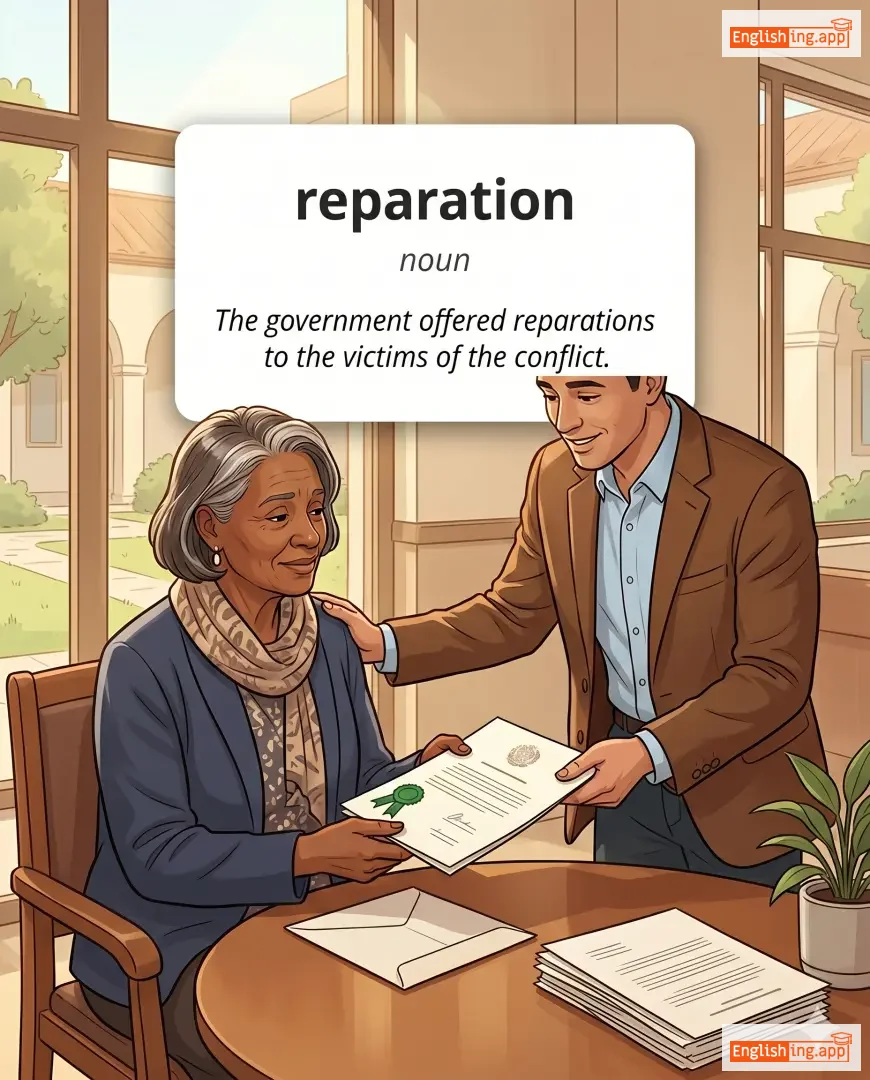
reparation definition card — visual illustration of the meaning
noun
/ˌrɛpəˈreɪʃən/
репарации (reparatsii)

the making of amends for a wrong done by paying money or helping those who were wronged

"The government offered reparations to the victims of the conflict."

"Правительство предложило репарации жертвам конфликта." (Pravitel'stvo predlozhilo reparatsii zhertvam konflikta.)
adjective
/ˈrɛpərəbəl/
ремонтопригодный (remontoprigojnyj)

able to be repaired or fixed

"The damage to the car was serious but still reparable."

"Повреждения автомобиля были серьезными, но все еще ремонтопригодными." (Povrezhdeniya avtomobily byli seryoznymi, no vse eshche remontoprigojnymi.)
noun
/rɪˈpɛərə/
ремонтник (remontnik)

a person whose job is to fix damaged or broken things

"The repairer fixed the broken washing machine quickly."

"Ремонтник быстро починил сломанную стиральную машину." (remontnik bystro pochinil slomannuyu stiralnuyu mashinu)
adjective
/rɪˈper.ə.bəl/
ремонтируемый (remontiruemyy)

able to be fixed or mended; capable of being repaired

"The broken phone is repairable with the right parts."

"Сломанный телефон можно починить с правильными деталями." (Slomannyy telefon mozhno pochinit' s pravil'nymi detal'yami.)
repair definition card — visual illustration of the meaning
verb
/rɪˈpɛər/

to fix or restore something that is broken or damaged

"He repaired his broken watch with patience."

verb
/riːˈɔːrɡənaɪz/
реорганизовать (reorganizovat)

to arrange something again in a different way for greater efficiency or order

"The manager decided to reorganize the team structure."

"Менеджер решил реорганизовать структуру команды." (Menedzher reshil reorganizovat' strukturu komandy.)
noun
/rɪˌnʌnsiˈeɪʃən/
отречение (otrecheniye)

the formal rejection or giving up of something, usually a belief, claim, or way of life

"His renunciation of worldly pleasures impressed the monks."

"Его отречение от мирских удовольствий впечатлило монахов." (Yego otrecheniye ot mirskikh udovol'stviy vpechatlilo monakhov.)
noun
/ˈrɛntəl/
аренда (arenda)

an arrangement in which something is rented, or the amount paid for renting

"The car rental was more expensive than we expected."

"Аренда машины была дороже, чем мы ожидали." (Arenda mashiny byla dorozhe, chem my ozhidali.)
noun, verb
/rɛnt/
аренда (arenda)

payment made regularly by a tenant to a landlord for the use of property or land; also to pay for the use of something

"They decided to rent an apartment in the city center."

"Они решили арендовать квартиру в центре города." (Oni reshili arendovat' kvartiru v tsentre goroda.)
renowned definition card — visual illustration of the meaning
adjective
/rɪˈnaʊnd/
знаменитый (znamenity)

famous or well-known for a particular skill or achievement

"She is a renowned artist in the country."

"Она известная художница в стране." (Ona izvestnaya khudozhnitsa v strane.)
noun
/rɪˈnaʊn/
известность (izvestnost)

the condition of being widely known and highly respected

"The scientist gained international renown for his groundbreaking research."

"Учёный приобрёл международную известность благодаря своим революционным исследованиям." (Uchonyy priobrelyo mezhdunarodnuyu izvestnost' blagodarya svoim revolyutsionnym issledovaniyam.)
noun
/ˌren.əˈveɪ.ʃən/
реновация; восстановление (renovatsiya; vosstanovlenie)

the act of renovating; restoration to a former better state

"The old house underwent a complete renovation last year."

"Старый дом прошел полную реконструкцию в прошлом году." (Staryy dom proshel polnuyu rekonstruktsiyu v proshlom godu.)
adverb
/rɪˈpiːtɪdli/
неоднократно (neodnokратно)

in a way that is repeated or done many times

"She apologized repeatedly for the mistake."

"Она извинялась неоднократно за ошибку." (Ona izvinyalas' neodnokратно za oshibku.)
adjective
/kwɪər/
странный (stranniy)

Strange, odd, or unusual.

"He had a queer feeling that something was wrong."

"У него было странное чувство, что что-то не так." (U nego bylo strannoye chuvstvo, chto chto-to ne tak.)
verb
/kwɛl/
подавлять (podavlyat)

To suppress or put an end to something, usually by force.

"The police were called to quell the violent protest."
"Полиция была вызвана, чтобы подавить насильственные протесты." (Politsiya byla vyzvana, chtoby podavit' nasil'stvennye protesty.)
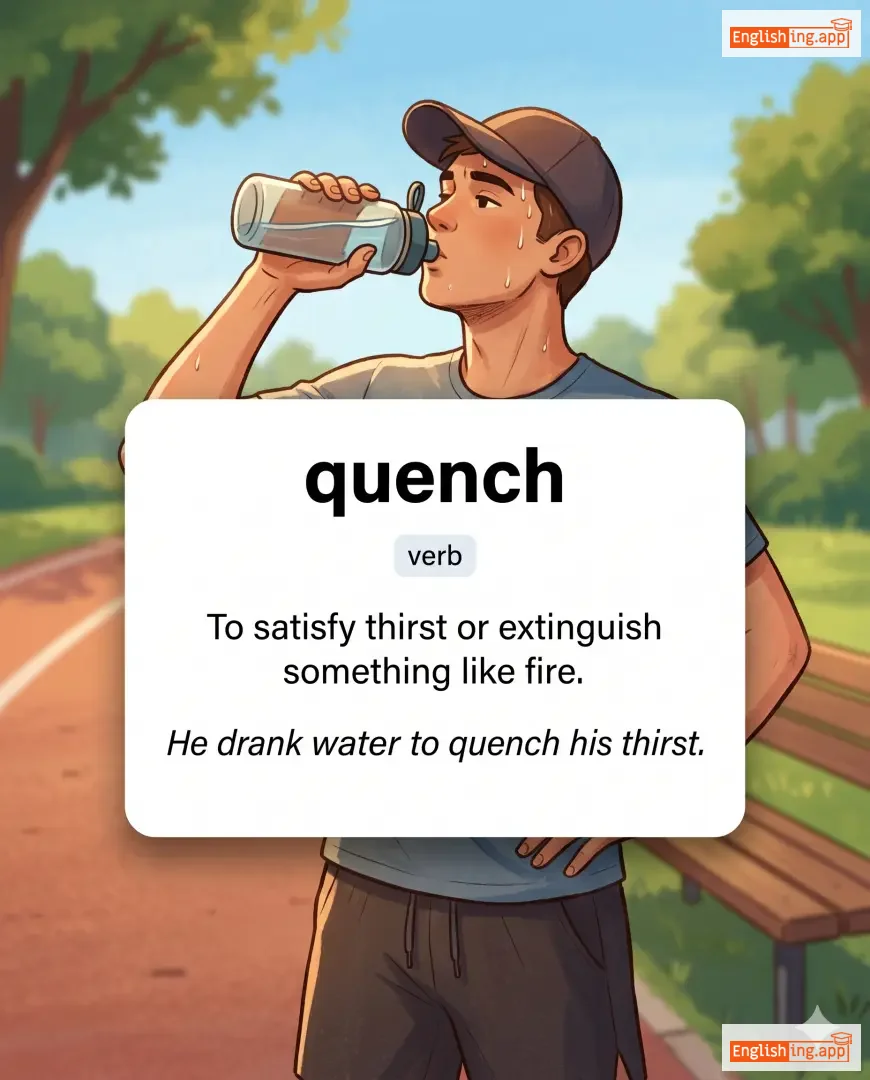
quench definition card — visual illustration of the meaning
verb
/kwɛntʃ/
утолить (utolit)

To satisfy thirst or extinguish something like fire.

"He drank water to quench his thirst."

"Он выпил воду, чтобы утолить жажду." (On vypil vodu, chtoby utolit' zhazhdu.)
verb
/ˈkwentʃɪŋ/
утолить жажду / потушить (utolit' zhazhdu / potushit')

The act of satisfying thirst or extinguishing something like fire.

"Drinking cold water was quenching her thirst."

"Пить холодную воду утолял ее жажду." (Pit' kholodnuyu vodu utolyal yeyo zhazhdu.)
adjective
/ˈkwɛrʊləs/
недовольный (nedovol'nyj)

Complaining in a whining or irritable manner.

"The querulous customer kept finding fault with every detail."

"Недовольный клиент продолжал находить ошибки в каждой детали." (Nedovol'nyj klient prodolzhal nakhodit' oshibki v kazhdoy detali.)
Query definition card — visual illustration of the meaning
noun/verb
/ˈkwɪəri/
вопрос (vopros)

A question, especially one addressed to an official or organization; to ask a question or express doubt.

"She raised a query about the accuracy of the report."

"Она подняла вопрос о точности отчета." (Ona podnyala vopros o tochnosti otcheta.)
Quest definition card — visual illustration of the meaning
noun
/kwest/
поиск, квест (poisk, kvest)

a long search for something that is difficult to find

"They went on a quest to find the lost treasure."
"Они отправились в поиски, чтобы найти потерянное сокровище." (Oni otpravilis v poisky, chtoby najti poteryannoe sokrovishche.)
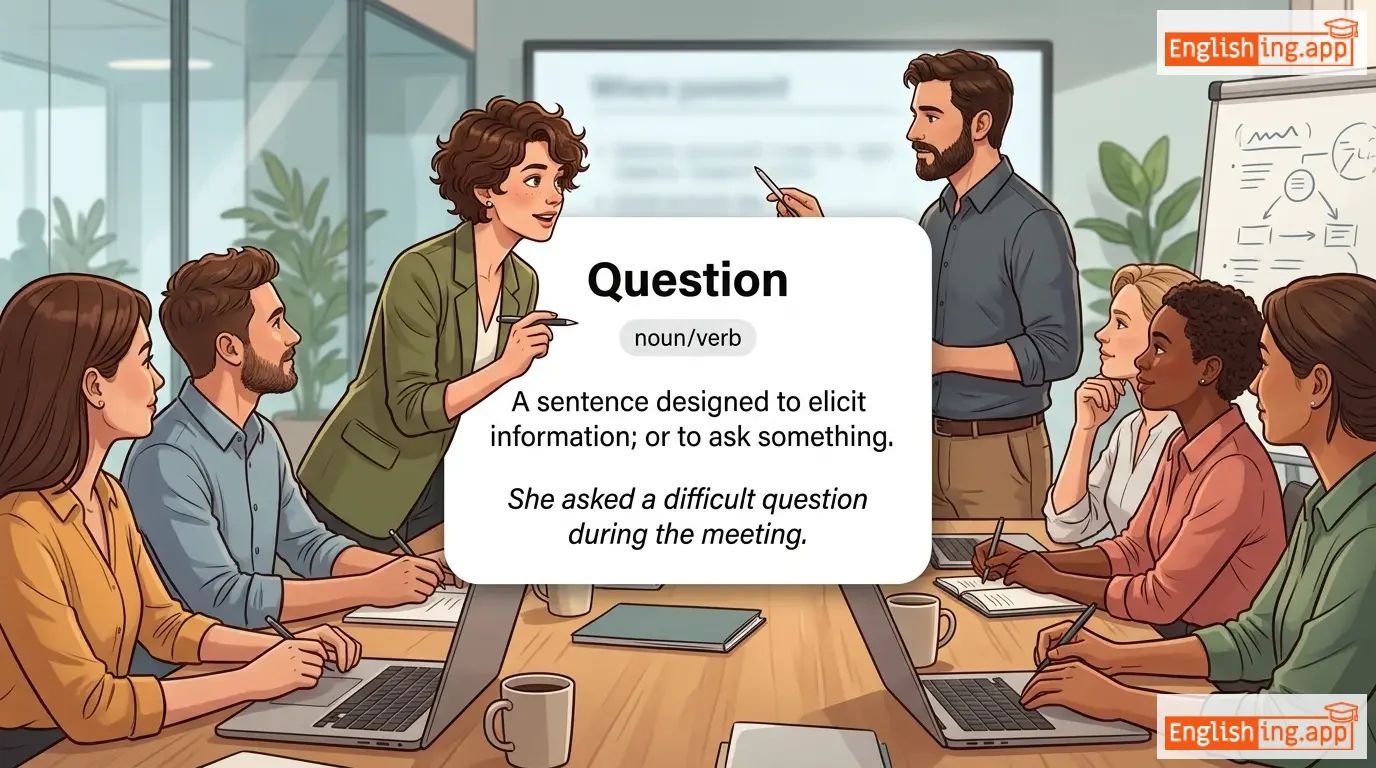
Question definition card — visual illustration of the meaning
noun/verb
/ˈkwes.tʃən/
вопрос (vopros)

A sentence designed to elicit information; or to ask something.

"She asked a difficult question during the meeting."

"Она задала трудный вопрос на встрече." (Ona zadala trudnyy vopros na vstreche.)
adjective
/ˈkwestʃənəbl/
сомнительный (somnitel'nyy)

doubtful; dubious; suspicious; open to doubt or suspicion

"His questionable business practices led to an investigation."

"Его сомнительные деловые практики привели к расследованию." (Yego somnitel'nye delovye praktiki privedi k rassledovaniyu.)
noun
/ˌkwes.tʃəˈneər/
анкетa (anketa)

a set of written questions used to collect information or opinions

"Participants filled out a detailed questionnaire about their habits."

"Участники заполнили подробную анкету о своих привычках." (Uchastniki zapolnili podrobnuyu anketu o svoikh privychkakh.)
🧍‍♂️🧍‍♀️

Queue (kju)

noun/verb
/kjuː/
очередь (ochered')

A line or sequence of people or vehicles awaiting their turn; to wait in line.

"People queued outside the theater for tickets."

"Люди стояли в очереди у театра за билетами." (Lyudi stoyali v ocheredi u teatra za biletami.)
noun
/ˌkiː ˈviːv/
настороженность (nastorozhennost)

A state of alertness or vigilance.

"The guards were on the qui vive during the night."

"Стражи были в состоянии настороженности ночью." (Strazhi byli v sostoyanii nastorozhennosti noch'yu.)
quibble definition card — visual illustration of the meaning
verb/noun
/ˈkwɪbəl/
спорить по пустякам (sporit' po pustyakam)

To argue or raise objections about a trivial matter; a petty objection.

"They quibbled over who should pay the bill."
"Они спорили о том, кто должен заплатить по счету." (Oni sporyli o tom, kto dolzhen zaplatit' po schetu.)
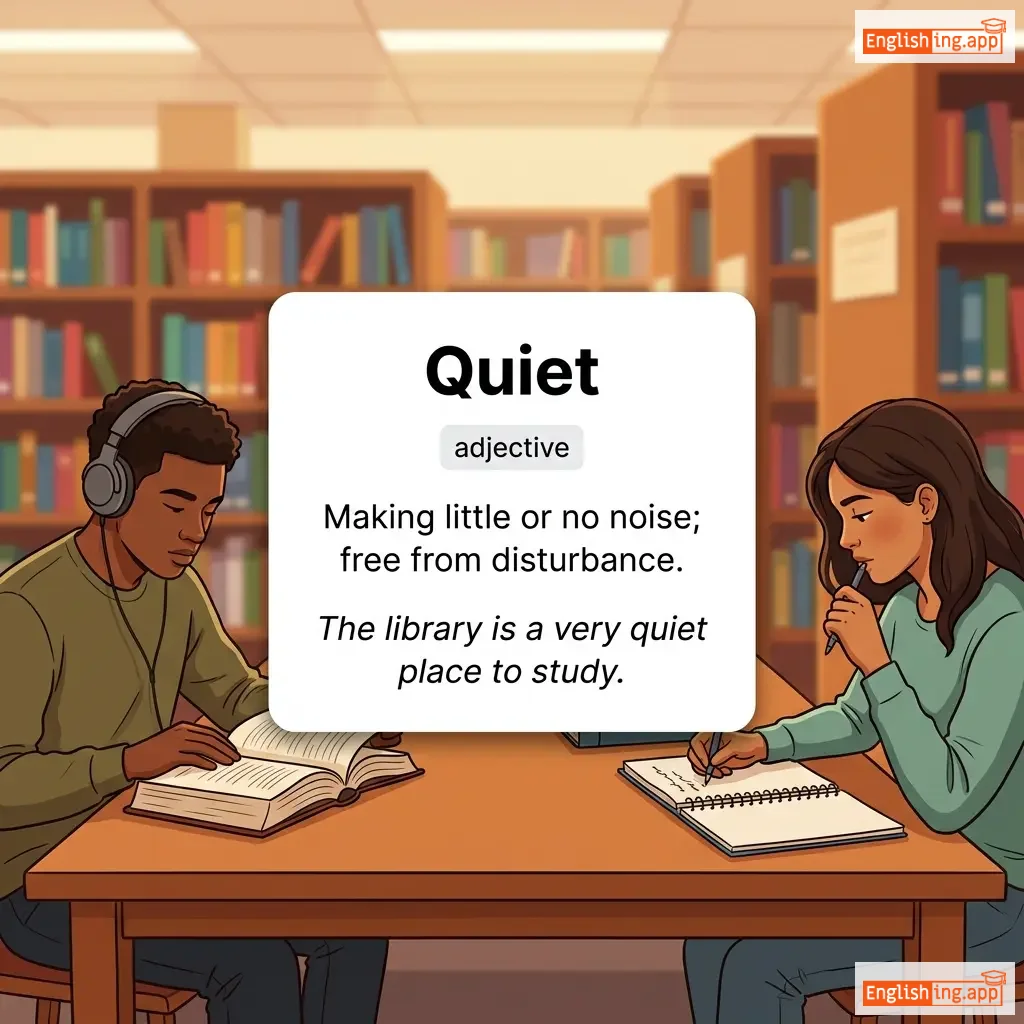
Quiet definition card — visual illustration of the meaning
adjective
/ˈkwaɪət/
тихий (tikhiy)

Making little or no noise; free from disturbance.

"The library is a very quiet place to study."
"Библиотека — это очень тихое место для учебы." (Biblioteka — eto ochen' tikhoye mesto dlya ucheby.)
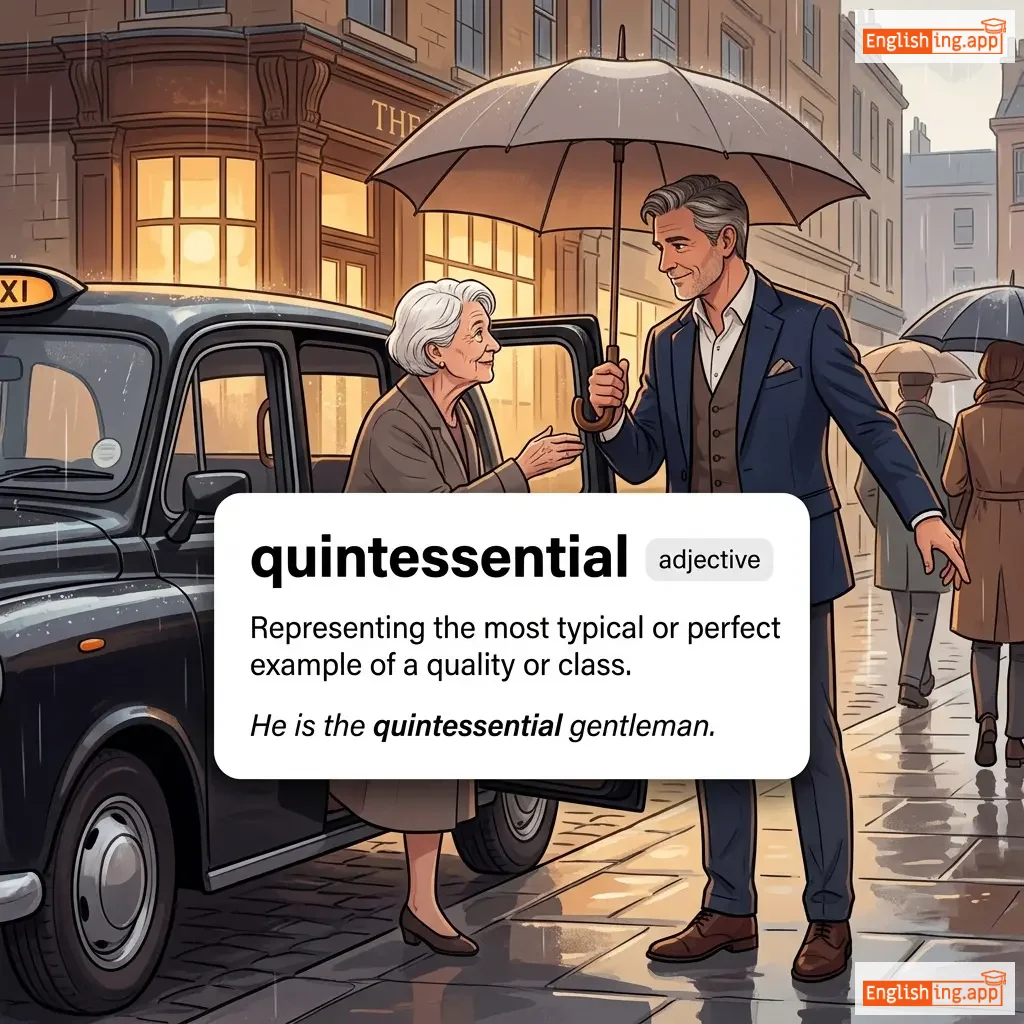
quintessential definition card — visual illustration of the meaning
adjective
/ˌkwɪntɪˈsɛnʃəl/
безупречный пример (bezuprechniy primer)

Representing the most typical or perfect example of a quality or class.

"He is the quintessential gentleman."

"Он является безупречным примером джентльмена." (On yavlyayetsya bezuprechniym primerom djentl'mena.)
noun
/kwɪnˈtɛsəns/
квинтэссенция (kvintessentsiya)

The purest or most perfect example of something.

"She is the quintessence of elegance."

"Она квинтэссенция элегантности." (Ona kvintessentsiya eleganntnosti.)
noun
/kwɪlt/
одеяло (odeyalo)

a warm bed covering made of padding enclosed between layers of fabric

"Grandmother made a beautiful quilt for my bed."

"Бабушка сделала красивое одеяло для моей кровати." (Babushka sdelala krasivoye odeyalo dlya moyey krovaty.)
noun
/kwaɪˈiːtəs/
конец, смерть (konets, smert)

Something that ends or settles a situation; release from life, death.

"The scandal brought a quietus to his political career."

"Этот скандал завершил его политическую карьеру." (Etot skandal zavershil ego politicheskuyu kar'eru.)
noun
/ˈkwaɪəˌtuːd/
тишина (tishina)

A state of stillness and tranquility.

"She enjoys the quietude of the countryside."

"Она наслаждается тишиной деревни." (Ona naslazhdaietsya tishinoy derevni.)
adverb
/ˈkwaɪətli/
тихо (tikho)

in a silent or calm manner

"He spoke quietly so no one would hear."

"Он говорил тихо, чтобы никто не услышал." (On govoryl tikho, chtoby nikto ne uslyshal.)
verb
/ˈkwɪkən/
ускорять (uskoryat)

to make or become faster; to accelerate

"His pulse began to quicken as he approached the finish line."

"Его пульс начал ускоряться, когда он приближался к финишной линии." (Ego pul's nachal uskoryatsya, kogda on priblizhal'sya k finishnoy linii.)
adverb
/ˈkwɪkli/
быстро (bystro)

at a fast speed

"She finished the test quickly."

"Она закончила тест быстро." (Ona zakonchila test bystro.)
noun
/ˈkwɪkˌsɪlvər/
ртуть (rtut)

Mercury; a liquid metal, or something that is quick and unpredictable.

"His mood was as changeable as quicksilver."

"Его настроение было таким же изменчивым, как ртуть." (Ego nastroeniye bylo takim zhe izmenchivym, kak rtut.)