Словари

Словарь английского языка | Значения слов, определения и примеры

noun
/kiː/
причал (prichal)

A platform lying alongside or projecting into water for loading and unloading ships.

"The cargo was unloaded at the quay."

"Груз был выгружен на причале." (Gruz byl vygruzhen na prichale.)
adjective
/ˈkwiːzi/
тошнота (toshnota)

Feeling sick to one's stomach; nauseated.

"She felt queasy after the long boat ride."

"Она почувствовала себя плохо после долгой поездки на лодке." (Ona pochuvstvovala sebya plokho posle dolgoy poezdki na lodke.)
noun
/kwiːn/
королева (koroleva)

a female ruler of a country or the wife of a king

"The queen addressed her people with grace."

"Королева обратилась к своему народу с грацией." (Koroleva obratilas' k svoemu narodu s graciey.)
noun
/kwiːn kreɪp ˈmɜːrtəl/
Креп Мертл королевы (Krep Mertl korolevyi)

A flowering tree with colorful, crepe-like flowers, scientifically known as Lagerstroemia

"The Queen crape myrtle bloomed beautifully in the garden with its purple flowers."

"Квін Креп Мертл красиво распустился в саду с фиолетовыми цветами." (Kvin Krep Mertl krasivo raspustilsya v sadu s fioletovymi tsvetami.)
adjective
/kwɪər/
странный (stranniy)

Strange, odd, or unusual.

"He had a queer feeling that something was wrong."

"У него было странное чувство, что что-то не так." (U nego bylo strannoye chuvstvo, chto chto-to ne tak.)
verb
/kwɛl/
подавлять (podavlyat)

To suppress or put an end to something, usually by force.

"The police were called to quell the violent protest."
"Полиция была вызвана, чтобы подавить насильственные протесты." (Politsiya byla vyzvana, chtoby podavit' nasil'stvennye protesty.)
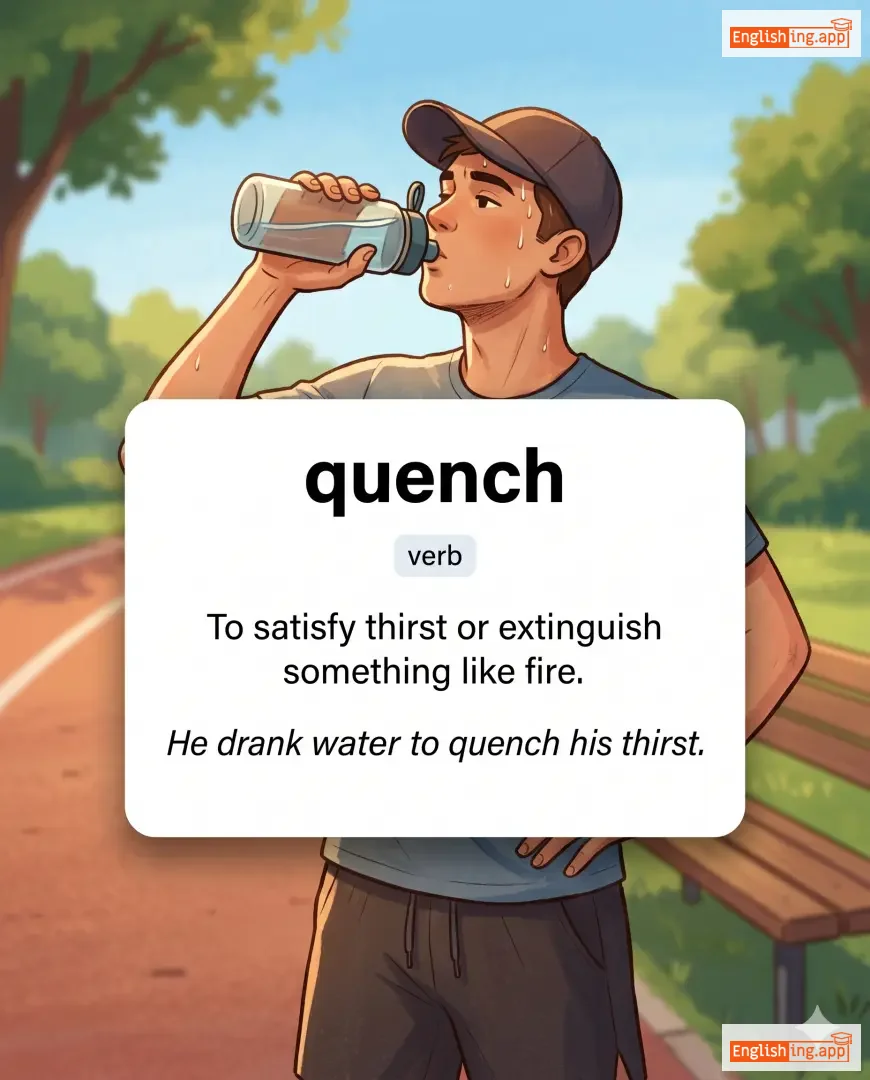
quench definition card — visual illustration of the meaning
verb
/kwɛntʃ/
утолить (utolit)

To satisfy thirst or extinguish something like fire.

"He drank water to quench his thirst."

"Он выпил воду, чтобы утолить жажду." (On vypil vodu, chtoby utolit' zhazhdu.)
verb
/ˈkwentʃɪŋ/
утолить жажду / потушить (utolit' zhazhdu / potushit')

The act of satisfying thirst or extinguishing something like fire.

"Drinking cold water was quenching her thirst."

"Пить холодную воду утолял ее жажду." (Pit' kholodnuyu vodu utolyal yeyo zhazhdu.)
adjective
/ˈkwɛrʊləs/
недовольный (nedovol'nyj)

Complaining in a whining or irritable manner.

"The querulous customer kept finding fault with every detail."

"Недовольный клиент продолжал находить ошибки в каждой детали." (Nedovol'nyj klient prodolzhal nakhodit' oshibki v kazhdoy detali.)
Query definition card — visual illustration of the meaning
noun/verb
/ˈkwɪəri/
вопрос (vopros)

A question, especially one addressed to an official or organization; to ask a question or express doubt.

"She raised a query about the accuracy of the report."

"Она подняла вопрос о точности отчета." (Ona podnyala vopros o tochnosti otcheta.)
Quest definition card — visual illustration of the meaning
noun
/kwest/
поиск, квест (poisk, kvest)

a long search for something that is difficult to find

"They went on a quest to find the lost treasure."

"Они отправились в поиски, чтобы найти потерянное сокровище." (Oni otpravilis v poisky, chtoby najti poteryannoe sokrovishche.)
Question definition card — visual illustration of the meaning
noun/verb
/ˈkwes.tʃən/
вопрос (vopros)

A sentence designed to elicit information; or to ask something.

"She asked a difficult question during the meeting."

"Она задала трудный вопрос на встрече." (Ona zadala trudnyy vopros na vstreche.)
adjective
/ˈkwestʃənəbl/
сомнительный (somnitel'nyy)

doubtful; dubious; suspicious; open to doubt or suspicion

"His questionable business practices led to an investigation."

"Его сомнительные деловые практики привели к расследованию." (Yego somnitel'nye delovye praktiki privedi k rassledovaniyu.)
noun
/ˌkwes.tʃəˈneər/
анкетa (anketa)

a set of written questions used to collect information or opinions

"Participants filled out a detailed questionnaire about their habits."

"Участники заполнили подробную анкету о своих привычках." (Uchastniki zapolnili podrobnuyu anketu o svoikh privychkakh.)
🧍‍♂️🧍‍♀️

Queue (kju)

noun/verb
/kjuː/
очередь (ochered')

A line or sequence of people or vehicles awaiting their turn; to wait in line.

"People queued outside the theater for tickets."

"Люди стояли в очереди у театра за билетами." (Lyudi stoyali v ocheredi u teatra za biletami.)
noun
/ˌkiː ˈviːv/
настороженность (nastorozhennost)

A state of alertness or vigilance.

"The guards were on the qui vive during the night."

"Стражи были в состоянии настороженности ночью." (Strazhi byli v sostoyanii nastorozhennosti noch'yu.)
quibble definition card — visual illustration of the meaning
verb/noun
/ˈkwɪbəl/
спорить по пустякам (sporit' po pustyakam)

To argue or raise objections about a trivial matter; a petty objection.

"They quibbled over who should pay the bill."

"Они спорили о том, кто должен заплатить по счету." (Oni sporyli o tom, kto dolzhen zaplatit' po schetu.)
Quick definition card — visual illustration of the meaning
adjective
/kwɪk/
быстрый (bystryy)

moving fast or doing something in a short time

"She is a quick learner."

"Она быстро учится." (Ona bystro uchitsya.)
noun
/ˈkwɪk.sænd/
песчаная трясина (peschanaya triesina)

loose wet sand that yields easily to pressure and sucks in anything on its surface

"The explorer got trapped in quicksand while crossing the desert."

"Исследователь попал в песчаную трясину, переходя пустыню." (Issledovatel' popal v peschanuyu triesinu, perekhodya pustynyu)
verb
/ˈkwɪkən/
ускорять (uskoryat)

to make or become faster; to accelerate

"His pulse began to quicken as he approached the finish line."

"Его пульс начал ускоряться, когда он приближался к финишной линии." (Ego pul's nachal uskoryatsya, kogda on priblizhal'sya k finishnoy linii.)
adverb
/ˈkwɪkli/
быстро (bystro)

at a fast speed

"She finished the test quickly."

"Она закончила тест быстро." (Ona zakonchila test bystro.)
noun
/ˈkwɪkˌsɪlvər/
ртуть (rtut)

Mercury; a liquid metal, or something that is quick and unpredictable.

"His mood was as changeable as quicksilver."

"Его настроение было таким же изменчивым, как ртуть." (Ego nastroeniye bylo takim zhe izmenchivym, kak rtut.)
noun
/kwɪˈɛsəns/
тишина (tishina)

A state of quietness, inactivity, or dormancy.

"The volcano has been in a state of quiescence for decades."
"Вулкан находится в состоянии тишины уже десятки лет." (Vulkan nakhoditsya v sostoyanii tishiny uzhe desyatki let.)
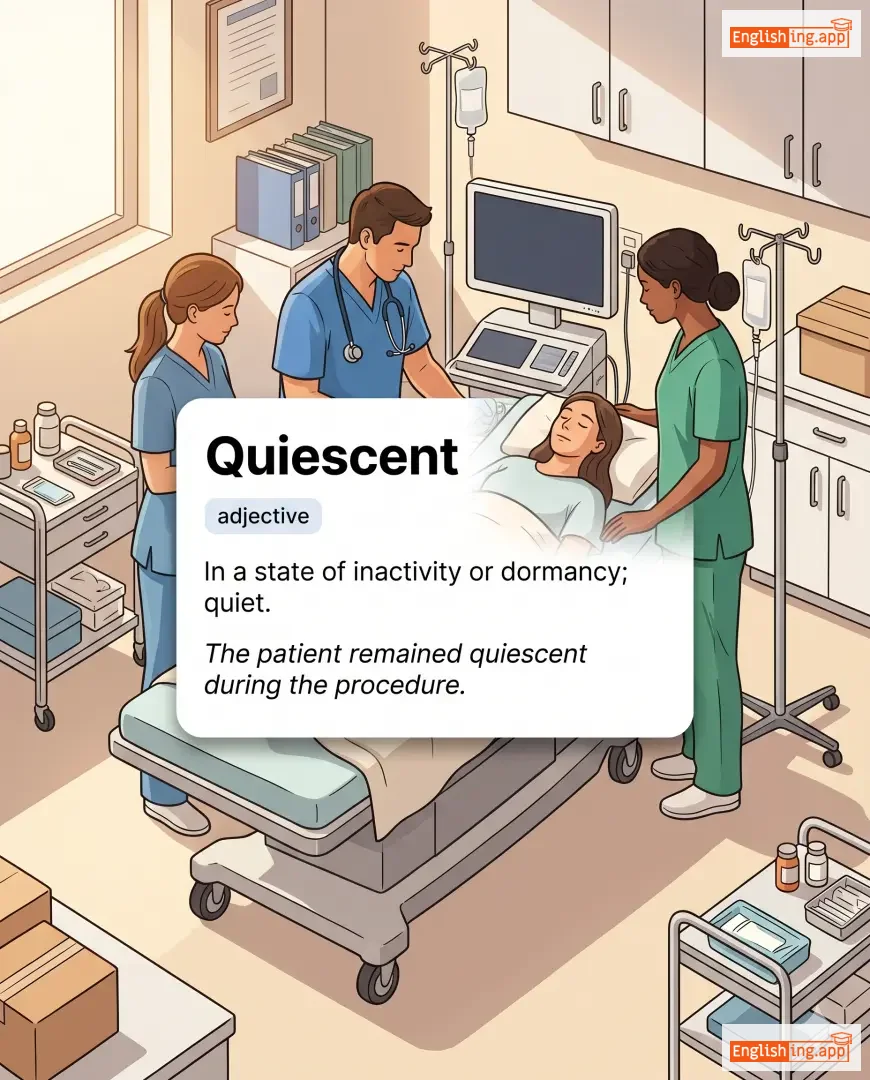
Quiescent definition card — visual illustration of the meaning
adjective
/kwɪˈɛsənt/
спокойный (spokoynyy)

In a state of inactivity or dormancy; quiet.

"The patient remained quiescent during the procedure."
"Пациент оставался спокойным в течение процедуры." (Patsiyent ostavalsya spokoynym v techeniye protsedury.)
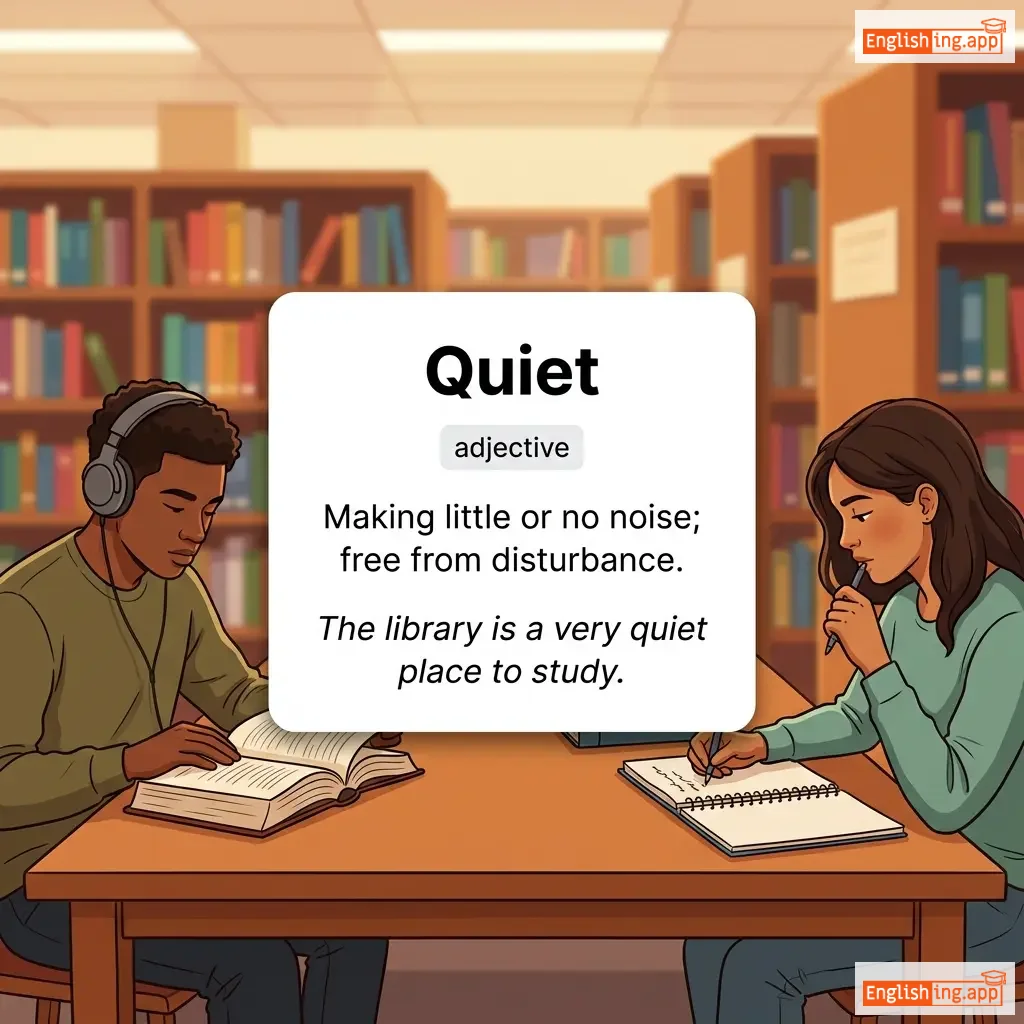
Quiet definition card — visual illustration of the meaning
adjective
/ˈkwaɪət/
тихий (tikhiy)

Making little or no noise; free from disturbance.

"The library is a very quiet place to study."

"Библиотека — это очень тихое место для учебы." (Biblioteka — eto ochen' tikhoye mesto dlya ucheby.)
adverb
/ˈkwaɪətli/
тихо (tikho)

in a silent or calm manner

"He spoke quietly so no one would hear."

"Он говорил тихо, чтобы никто не услышал." (On govoryl tikho, chtoby nikto ne uslyshal.)
noun
/ˈkwaɪəˌtuːd/
тишина (tishina)

A state of stillness and tranquility.

"She enjoys the quietude of the countryside."

"Она наслаждается тишиной деревни." (Ona naslazhdaietsya tishinoy derevni.)
noun
/kwaɪˈiːtəs/
конец, смерть (konets, smert)

Something that ends or settles a situation; release from life, death.

"The scandal brought a quietus to his political career."

"Этот скандал завершил его политическую карьеру." (Etot skandal zavershil ego politicheskuyu kar'eru.)
noun
/kwɪlt/
одеяло (odeyalo)

a warm bed covering made of padding enclosed between layers of fabric

"Grandmother made a beautiful quilt for my bed."

"Бабушка сделала красивое одеяло для моей кровати." (Babushka sdelala krasivoye odeyalo dlya moyey krovaty.)
noun
/kwɪnˈtɛsəns/
квинтэссенция (kvintessentsiya)

The purest or most perfect example of something.

"She is the quintessence of elegance."
"Она квинтэссенция элегантности." (Ona kvintessentsiya eleganntnosti.)
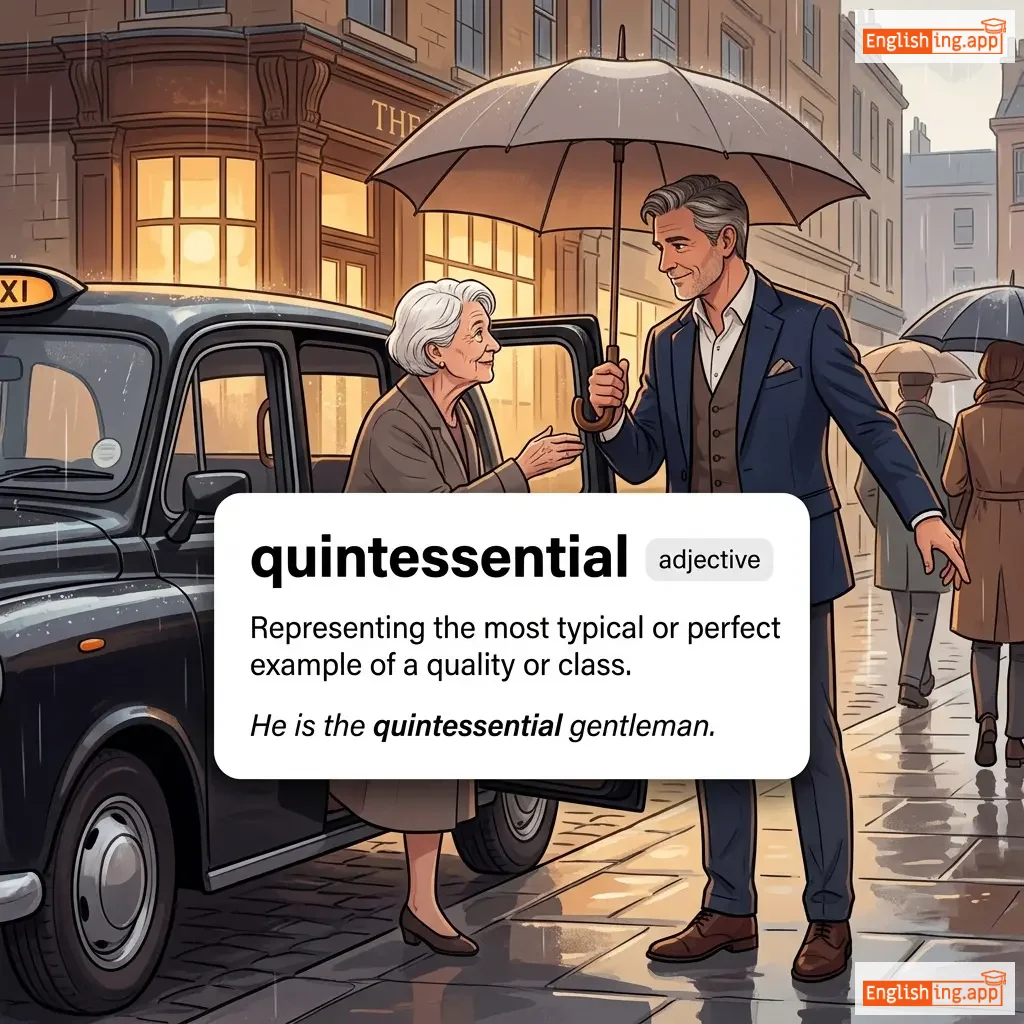
quintessential definition card — visual illustration of the meaning
adjective
/ˌkwɪntɪˈsɛnʃəl/
безупречный пример (bezuprechniy primer)

Representing the most typical or perfect example of a quality or class.

"He is the quintessential gentleman."

"Он является безупречным примером джентльмена." (On yavlyayetsya bezuprechniym primerom djentl'mena.)
noun
/ˈræftər/
кровельная балка (krovel'naya balka)

One of the sloping beams that supports a roof.

"The old barn’s rafters were exposed."

"Кровельные балки старого сарая были открыты." (Krovel'nye balki starogo saraya byli otkryty.)
noun
/ˈreɪdɑːr/
радар (radar)

a system that uses radio waves to detect the position and speed of objects

"The plane was detected by the airport's radar system."

"Самолет был обнаружен радарной системой аэропорта." (Samolet byl obnaruzhen radarnoj sistemoju aeroporta.)
noun
/ˈreɪdiəns/
сияние (siyanie)

the quality of shining with bright light; a glowing or beaming quality

"Her face was filled with radiance after hearing the good news."

"Ее лицо было наполнено сиянием после того, как она услышала хорошие новости." (Eye litso bylo napolneno siyaniem posle togo, kak ona uslyshala khoroshie novosti.)
adjective
/ˈreɪdiənt/
сияющий / сияющая (siyayushchiy / siyayushchaya)

Shining brightly; expressing great happiness.

"She looked radiant in her wedding dress."

"Она выглядела сияющей в своем свадебном платье." (Ona vyhlyadela siyayushchey v svoem svadebnom plat'ye.)
verb
/ˈreɪdieɪt/
излучать (izluchat')

to emit energy or light; to spread out from a center

"The fireplace radiates warmth throughout the room."
"Камин излучает тепло по всей комнате." (Kamin izluchayet teplo po vsey komnate.)
radiation definition card — visual illustration of the meaning
noun
/ˌreɪdiˈeɪʃən/
радиация (radiatsiya)

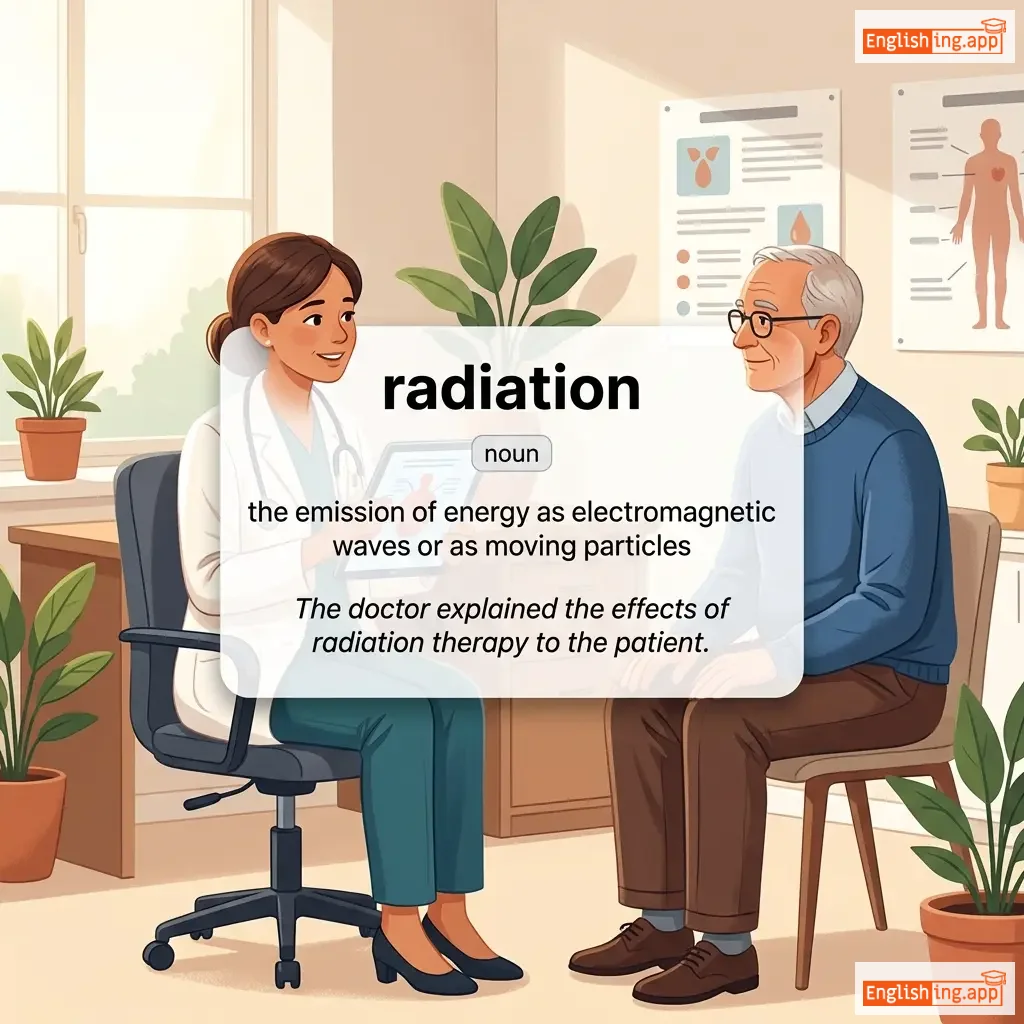
the emission of energy as electromagnetic waves or as moving particles

"The doctor explained the effects of radiation therapy to the patient."
"Доктор объяснил пациенту эффекты радиационной терапии." (Doktor obyasnil patsiyentu effekty radiatsionnoy terapii.)
radical definition card — visual illustration of the meaning
adjective
/ˈrædɪkl/
радикальный (radikal)

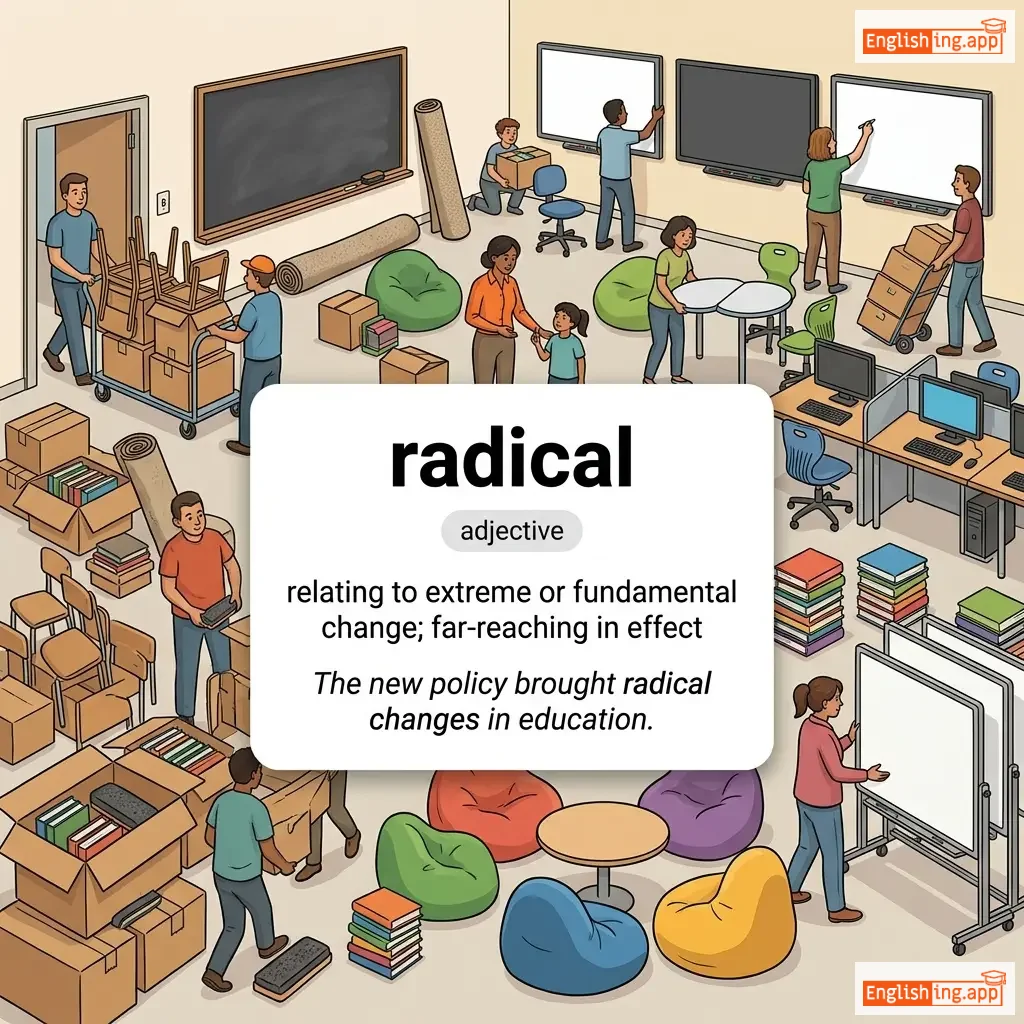
relating to extreme or fundamental change; far-reaching in effect

"The new policy brought radical changes in education."
"Новая политика принесла радикальные изменения в образовании." (The new policy brought radical changes in education)
radio definition card — visual illustration of the meaning
noun
/ˈreɪdioʊ/
радио (radio)

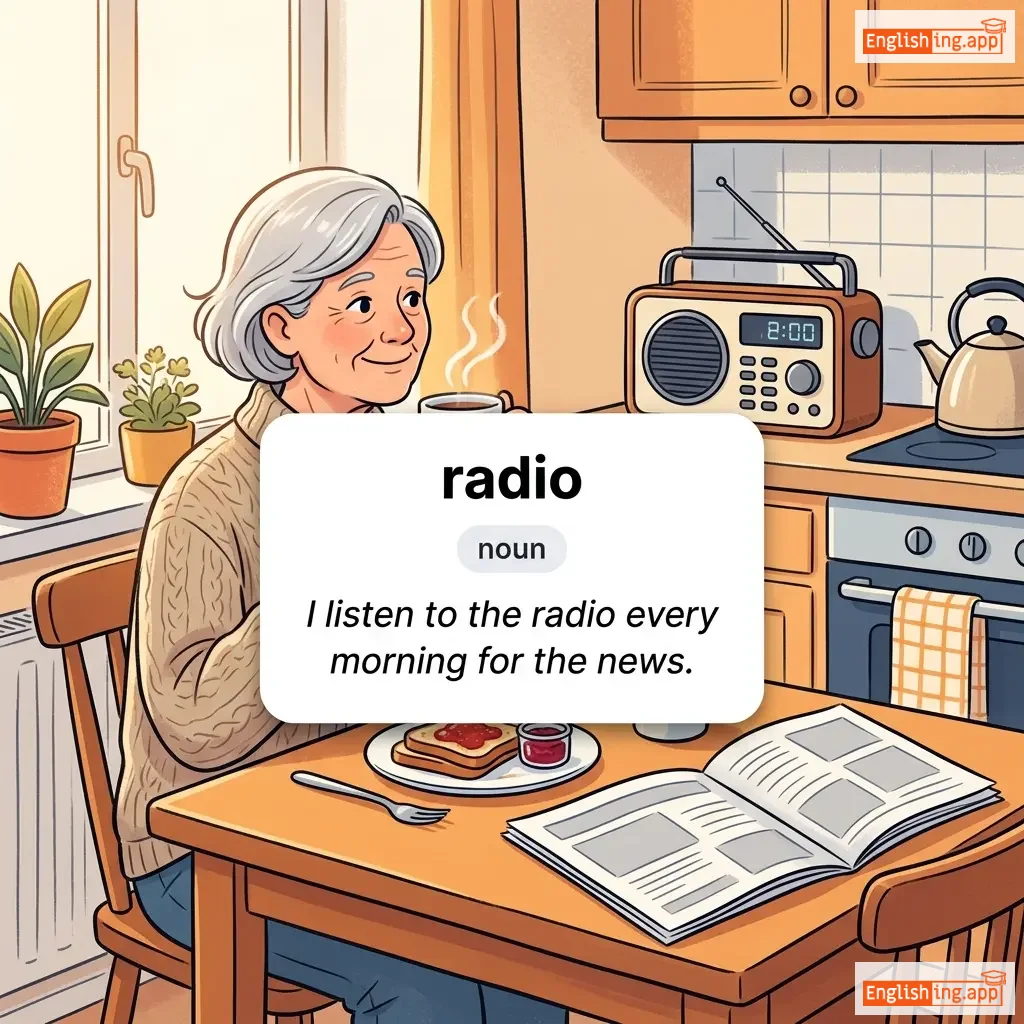
a device for receiving or transmitting radio signals, or the use of such signals for communication

"I listen to the radio every morning for the news."

"Я слушаю радио каждое утро для новостей." (Ya slushayu radio kazhdoe utro dlya novostey.)
radioactivity definition card — visual illustration of the meaning
noun
ˌreɪ.di.oʊ.ækˈtɪv.ə.ti
радиоактивность (radioaktivnost)

The emission of ionizing radiation or particles caused by the spontaneous disintegration of atomic nuclei.

"Radioactivity is used in medical treatments like cancer therapy."

"Радиоактивность используется в медицинских процедурах, таких как лечение рака." (Radioaktivnost ispolzuetsya v meditsinskikh protsedurakh takikh kak lechenie raka.)
noun
/'ræd.ɪʃ/
редис (redis)

a small pungent edible root vegetable with white or red skin

"The farmer harvested fresh radishes from the garden."

"Фермер собрал свежие редиски из сада." (Fermer sobral svezhie rediski iz sada.)
noun
/ˈreɪdɪks/
основание (osnovanie)

the base or root of something; the number on which a system of numeration is built

"In mathematics, the decimal system has a radix of ten."

"В математике десятичная система имеет основание десяти." (V matematike desyatichnaya sistema imeet osnovanie desyati.)
adjective
/ˈræfɪʃ/
несколько необычный и слегка сомнительный, но привлекательный (neskol'ko neobychnyy i slegka somnitel'nyy, no privlekatel'nyy)

unconventional and slightly disreputable but attractive

"He had a raffish charm that made him popular in the city."

"У него был очаровательный рэфиш, который сделал его популярным в городе." (U nego byl ocharovatel'nyy refish, kotoryy sdelal ego populyarnym v gorode.)
noun/verb
/ˈræfəl/
продажа лотерейных билетов (prodazha lotereinykh biletov)

A means of raising money by selling numbered tickets, one or more of which are drawn at random for a prize; to sell something in such a lottery.

"The charity decided to raffle a bicycle to raise funds."

"Благотворительная организация решила разыграть велосипед для сбора средств." (Blagotvoritel'naya organizatsiya reshila razygrat' velosiped dlya sbora sredstv.)
noun/verb
/ræft/
плот (plot)

A flat structure made of logs or planks tied together, used as a boat or floating platform; to travel or transport on such a structure.

"They built a raft to cross the river."

"Они построили плот, чтобы пересечь реку." (Oni postroili plot, chtoby peresech' reku.)
noun
/ˈreɪmənt/
одежда (odezhda)

clothing, especially fine or formal wear

"The king wore royal raiment during the ceremony."

"Король носил королевскую одежду во время церемонии." (Korol' nosil korolevskuyu odezhdu vo vremya tseremonii.)
noun
/ˈreɪləri/
дружеские шутки (druzheskie shutki)

good-humored teasing or joking

"Their friendship was full of light-hearted raillery."

"Их дружба была полна легких подшучиваний." (Ikh druzhba byla polna legkikh podshuchivaniy.)
noun
/ˈreɪlˌroʊd/
железная дорога (zheleznaya doroga)

a track or system of tracks made of steel rails along which trains run

"The railroad connects the city to several nearby towns."

"Железная дорога соединяет город с несколькими соседними городами." (Zheleznaya doroga soedinyaet gorod s neskolkimi sosednimi gorodami.)
noun
/ˈreɪl.weɪ/
железная дорога (zheleznaia doroga)

a track made of steel rails along which trains run; a system of tracks with trains, stations, and other facilities

"The railway connects major cities across the country."

"Железная дорога соединяет крупные города страны." (zheleznaia doroga soedinyaet krupnye goroda strany)
verb
/reɪl/
протестовать (protestovat)

to complain or protest strongly about something

"He railed against the unfair decision."

"Он протестовал против несправедливого решения." (On protestoval protiv nespravedlivogo resheniya.)