Словари

Словарь английского языка | Значения слов, определения и примеры

noun
/ˈpʌblɪʃɪŋ/

the business or activity of preparing and issuing books, journals, or other material for sale

"He works in the publishing industry as an editor."

verb
/ˈpʌkər/
сжимать (szshimat)

to tighten or contract into small folds or wrinkles

"She puckered her lips before kissing the child."

"Она сжала губы перед тем, как поцеловать ребенка." (Ona szhala guby pered tem, kak potselovat' rebenka.)
adjective
/ˈpʌkɪʃ/
озорной (ozornoy)

playfully mischievous

"The child gave a puckish grin before hiding the toy."

"Ребенок дал озорную улыбку перед тем, как спрятать игрушку." (Rebenok dal ozornuyu ulybku pered tem, kak spryatat' igrooshku.)
noun
/ˈpʊdɪŋ/
пудинг (puding)

a sweet or savory dish, often soft and creamy, eaten as dessert

"She made chocolate pudding for dessert."

"Она приготовила шоколадный пудинг на десерт." (Ona prigotovila shokoladnyy puding na desert.)
adjective
/ˈpʌdʒi/
пухлый (pukhlyi)

slightly fat or chubby in a way that is often cute

"The baby had pudgy cheeks that everyone adored."

"У младенца были пухлые щечки, которые все обожали." (U mladenza byli pukhlye shchotchki, kotorye vse obozhali.)
adjective
/ˈpjʊəraɪl/
ребячливый (rebyachlivyy)

childishly silly or immature

"His puerile jokes annoyed the audience."

"Его ребячливые шутки раздражали аудиторию." (Yego rebyachlivye shutki razdrazhaly auditoriyu.)
noun
/ˈpjuːdʒɪlɪzəm/
бокс (boks)

The practice or sport of boxing.

"He studied the art of pugilism in his youth."

"Он изучал искусство бокса в своей молодости." (On izuchal iskusstvo boksa v svoey molodosti.)
noun
/ˈpjuːdʒɪlɪst/
боксер (boksior)

A professional or skilled boxer.

"The pugilist entered the ring with confidence."

"Боксер вошёл в ринг с уверенностью." (Boksior voshyol v ring s uverennost'yu.)
adjective
/pʌɡˈneɪʃəs/
драчливый (drachlivyy)

Having a quarrelsome or combative nature; eager to fight.

"His pugnacious attitude often got him into trouble."

"Его драчливое поведение часто приводило его в неприятности." (Ego drachlivoye povedeniye chasto privodilo yego v nepriyatnosti.)
noun
/pʌɡˈnæsɪti/
пugnacитет (pugnacitet)

A natural disposition to be combative or aggressive.

"The coach admired the player's pugnacity on the field."

"Тренер восхищался пugnacитетом игрока на поле." (Trener voskhishchalsya pugnacitetom igroka na pole.)
noun
/ˈpjuːɪsəns/
мощь (moshch)

Great power, strength, or influence.

"The empire showed its puissance through vast armies."

"Империя продемонстрировала свою мощь через огромные армии." (Imperiya prodemonstrirovala svoyu moshch cherez ogromnye armii.)
adjective
/ˈpjuːɪsənt/
могущественный (mogushchestvennyy)

having great power or influence; mighty

"The king was a puissant ruler whose word was law."

"Король был могущественным правителем, чье слово было законом." (Korol' byl mogushchestvennym pravitelem, ch'ye slovo bylo zakonom.)
noun
/ˈpʌlkrɪˌtjuːd/
красота (krasota)

physical beauty

"The actress was admired for her pulchritude as well as her talent."
"Актриса была восхищена своей красотой и талантом." (Aktrisa byla voskhishchena svoey krasotoy i talantom.)
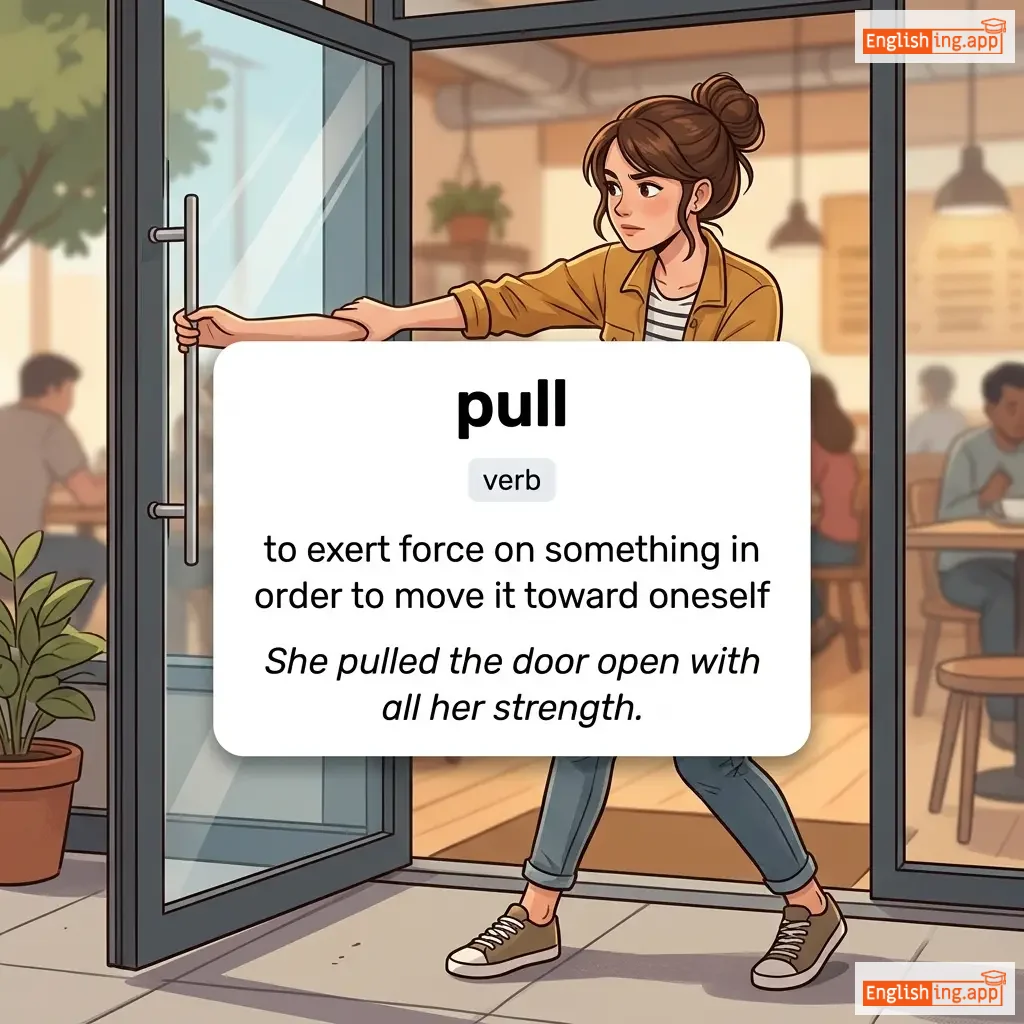
pull definition card — visual illustration of the meaning
🖐️

pull (pul)

verb
/pʊl/
тянуть (tyanut)

to exert force on something in order to move it toward oneself

"She pulled the door open with all her strength."

"Она открыла дверь с всей своей силой." (Ona otkryla dver' s vsei svoei siloi.)
noun
/ˈpʊl.oʊ.vər/
свитер (sviter)

a knitted garment worn on the upper body, typically pulled on over the head

"She wore a warm pullover during the cold winter evening."

"Она надела тёплый свитер в холодный зимний вечер." (Ona nadela tyoplyy sviter v kholodnyy zimniy vecher.)
adjective
/ˈpʌlməˌneri/

relating to the lungs

"The patient suffered from a serious pulmonary infection."

noun
/ˈpʊlpɪt/
паперть (papert)

a raised platform in a church from which the preacher delivers a sermon

"The pastor stood at the pulpit to address the congregation."

"Пастор встал на паперти, чтобы обратиться к прихожанам." (Pastor vstal na paperti, chtoby obratitsya k prikhozhanyam.)
verb
/ˈpʌlseɪt/
пульсировать (pul'sirovat')

to expand and contract rhythmically; to throb or beat

"The neon lights pulsated with a steady rhythm."

"Неоновые огни пульсировали с постоянным ритмом." (Neonovye ogni pul'sirovali s postoyannym ritmom.)
noun/verb
/pʌls/
пульс (pul's)

A rhythmic beat or vibration, especially the heartbeat; to throb or move with a rhythm.

"The doctor checked her pulse after the long run."

"Врач проверил ее пульс после долгого бега." (Vrach proveril ye p'uls posle dolgogo bega.)
verb
/ˈpʌlvəraɪz/
пульверизировать (pul'verizirovat)

To crush or grind something into a fine powder; to completely defeat or destroy.

"The machine can pulverize stones into dust."

"Машина может пульверизировать камни в пыль." (Mashina mozhet pulverizirovat' kamni v pyl'.)
verb
/ˈpʌməl/
избивать (izbivat)

To strike repeatedly with the fists; to beat or hit forcefully.

"The boxer pummeled his opponent in the final round."

"Боксёр избил своего соперника в финальном раунде." (Bokser izbil svoego sopernika v finalnom raunde.)
verb
/pʌmp/
накачивать (nakachivat)

to force liquid or gas to move in a particular direction using a device

"They pumped water from the well into the tank."

"Они откачивали воду из колодца в бак." (Oni otkachivali vodu iz kolodtsa v bak.)
noun
/'pʌmp.kɪn/
тыква (tykva)

a large round orange fruit with thick skin and edible flesh

"We carved a jack-o'-lantern from a big pumpkin."

"Мы вырезали фонарь из большого тыквы." (My vyrezali fonar' iz bol'shogo tykvy)
noun
/pʌn/
игра слов (igra slov)

A humorous use of words that suggests different meanings or words that sound alike.

"He made a clever pun about the bakery's bread rising."

"Он сделал остроумную игру слов о хлебе, поднимающемся в пекарне." (On sdelal ostroymnuyu igru slov o hlebe, podnimayushchimsya v pekarne.)
verb
/pʌntʃ/
ударить кулаком (udarit' kulakom)

to hit someone or something hard with your fist

"He punched the wall in frustration."

"Он ударил по стене от разочарования." (On udaril po stene ot razocharovaniya.)
noun
/ˈpʌntʃ laɪn/
финальная шутка (final'naya shutka)

The final part of a joke or story that makes it funny.

"Everyone laughed loudly at the punch line of his joke."

"Все громко смеялись над финальной шуткой его анекдота." (Vse gromko smeyalis' nad final'noy shutkoy ego anekdota.)
adjective
/pʌŋkˈtɪliəs/
педантичный (pedantichnyy)

Showing great attention to detail or correct behavior.

"She was punctilious in her attention to etiquette."

"Она была педантична в своем отношении к этикету." (Ona byla pedantichna v svoem otnoshenii k etiketu.)
adjective
/ˈpʌŋktʃuəl/
пунктуальный (panktual)

Happening or doing something at the agreed or proper time; on time.

"He is always punctual for meetings."
"Он всегда пунктуален на встречах." (On vsegda punktualen na vstrechakh.)
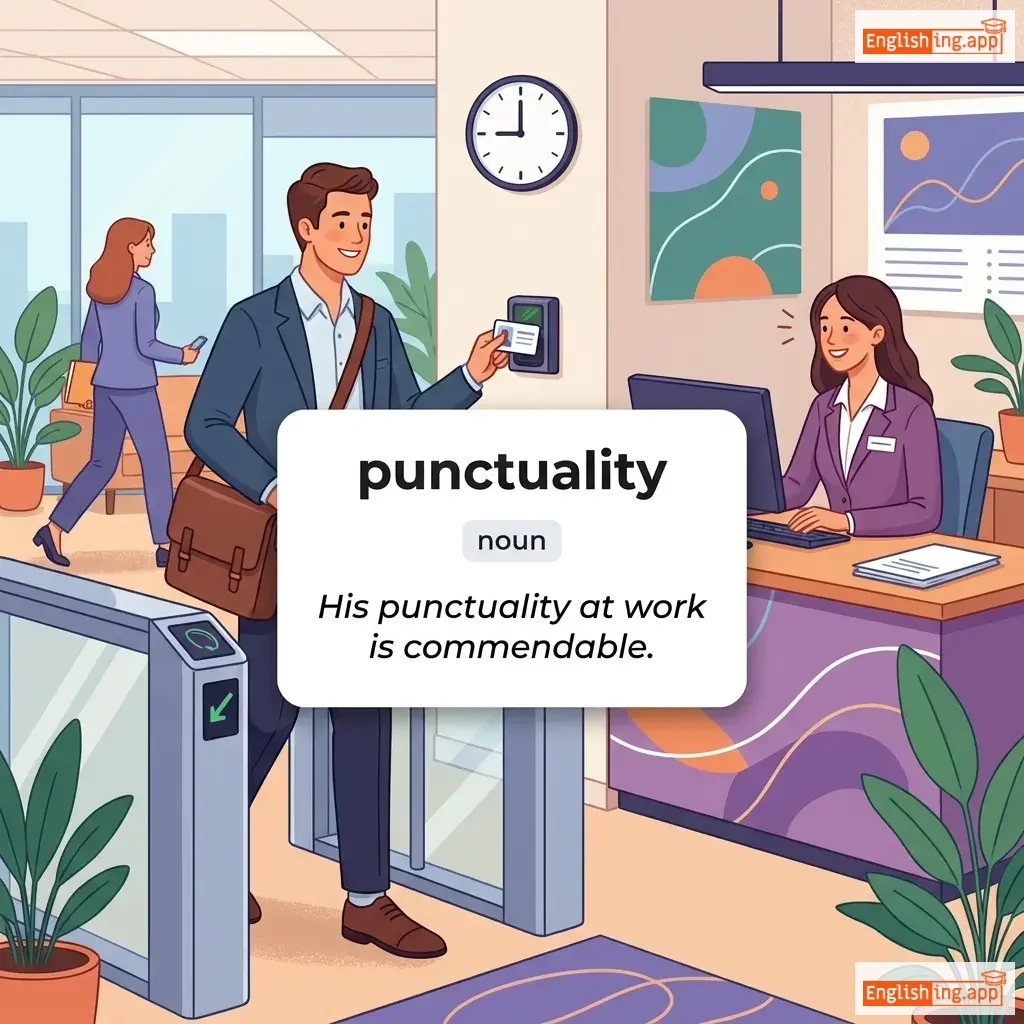
punctuality definition card — visual illustration of the meaning
noun
/ˌpʌŋk.tʃuˈæl.ə.ti/
пунктуальность (punktual'nost')

The quality or habit of being on time; arriving or occurring at the scheduled time.

"His punctuality at work is commendable."

"Его пунктуальность на работе заслуживает похвалы." (Ego punktual'nost' na rabote zasluzhivaet odobreniya.)
adverb
/ˈpʌŋk.tʃu.əl.i/
пунктуально (punktual'no)

at the exact time arranged; on time; not late

"She always arrives punctually for meetings."

"Она всегда приходит на встречи пунктуально." (Ona vsegda prikhodit na vstrechi punktual'no.)
noun
/ˈpʌŋk.tʃər/
прокол (prokol)

a small hole in a tire that causes air to escape

"I had to fix a puncture in my bicycle tire this morning."

"Мне пришлось исправить прокол на моем велосипеде сегодня утром." (Mne prishlos' ispravit' prokol na moyem velosipede segodnya utrom.)
noun
/ˈpʌndɪt/
эксперт (ekspert)

An expert in a particular subject or field who is frequently called upon to give opinions to the public.

"Political pundits debated the election results on television."

"Политические эксперты обсуждали результаты выборов по телевидению." (Politicheskiye eksperty obsuzhdali rezul'taty vyborov po televideniyu.)
noun
/ˈpʌndʒənsi/
пикантность (pikantnost')

The quality of having a strong, sharp taste or smell.

"The pungency of garlic filled the kitchen."
"Острота чеснока заполнила кухню." (Ostrota chesnoka zapolnila kukhnyu.)
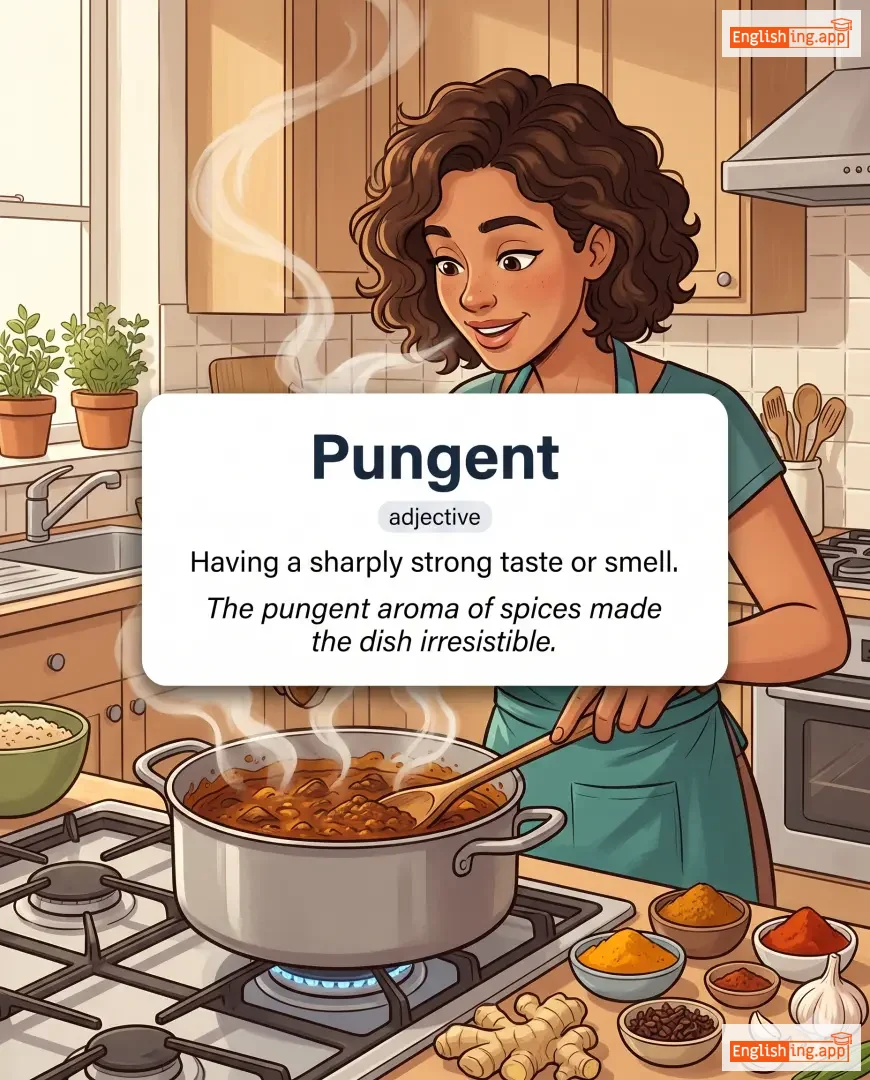
Pungent definition card — visual illustration of the meaning
adjective
/ˈpʌndʒənt/
резкий запах или вкус (rezkiy zapakh ili vkus)

Having a sharply strong taste or smell.

"The pungent aroma of spices made the dish irresistible."
"Резкий аромат специй сделал это блюдо неотразимым." (Rezkij aromat spetsij sdelal eto blyudo neotrazimym.)
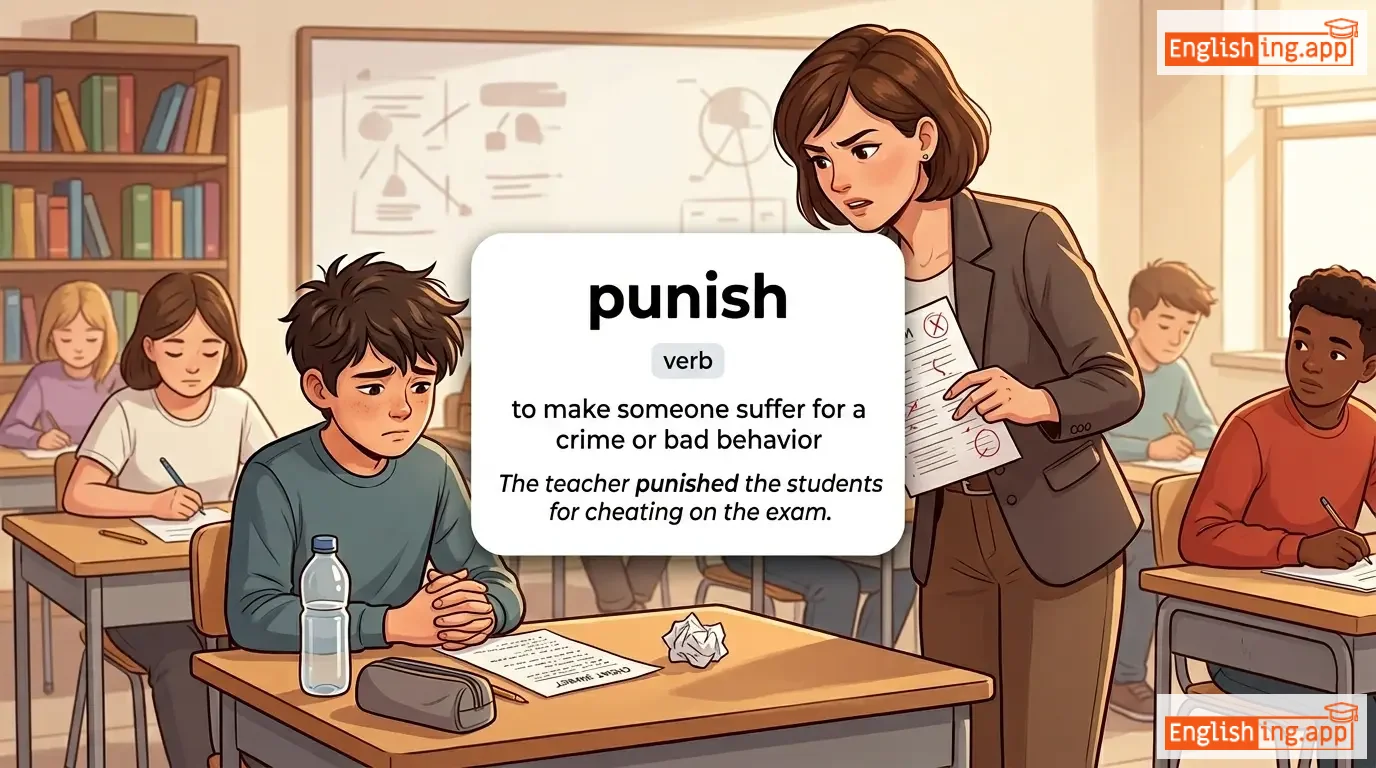
punish definition card — visual illustration of the meaning
verb
/ˈpʌnɪʃ/
наказать (nakazat)

to make someone suffer for a crime or bad behavior

"The teacher punished the students for cheating on the exam."
"Учитель наказал студентов за мошенничество на экзамене." (Uchitel' nakazal studentov za moshenichestvo na ekzamene.)
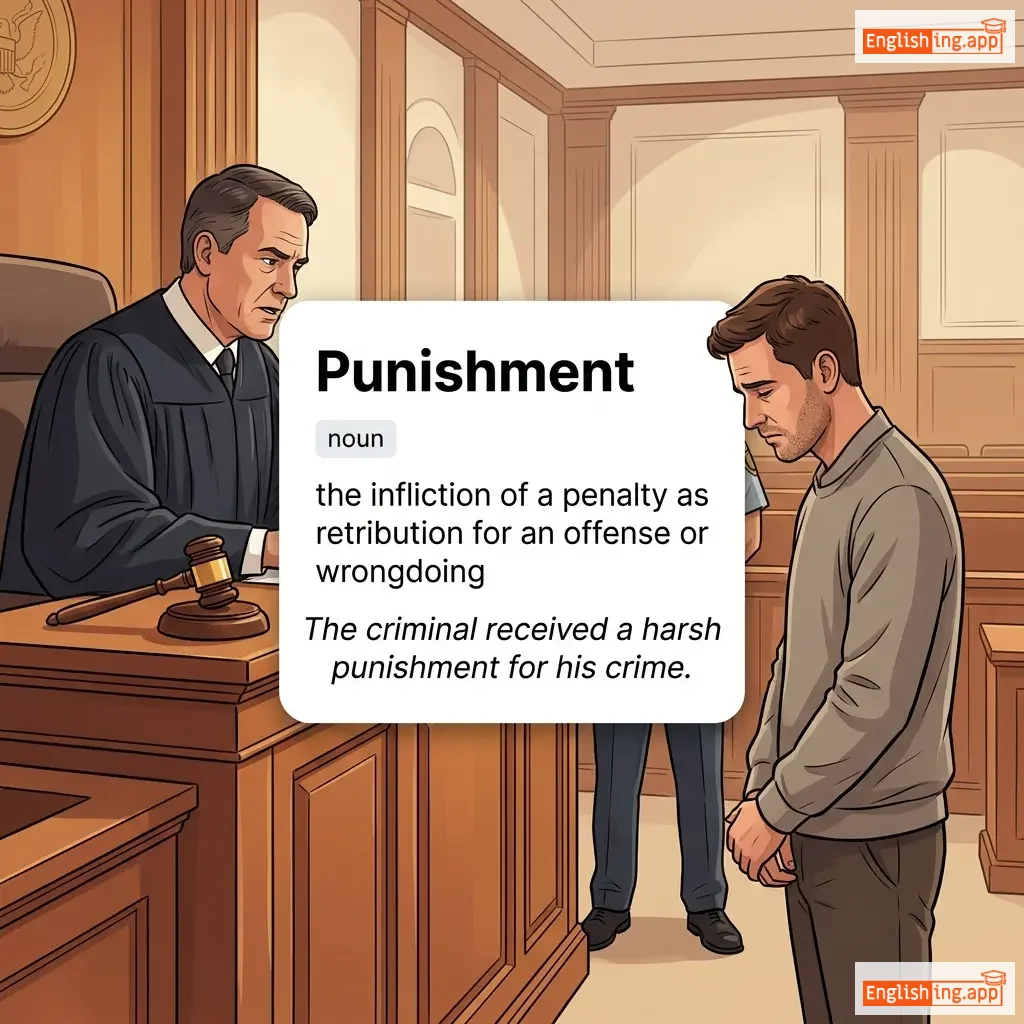
Punishment definition card — visual illustration of the meaning
noun
/ˈpʌnɪʃmənt/
наказание (nakazanie)

the infliction of a penalty as retribution for an offense or wrongdoing

"The criminal received a harsh punishment for his crime."

"Преступник получил суровое наказание за своё преступление." (Prestupler poluchil surovoe nakazanie za svoe prestuplenie.)
adjective
/ˈpjuː.nɪ.tɪv/
карательный (karatelnyj)

Inflicting or intended as punishment.

"The company faced punitive measures for violating the law."

"Компания столкнулась с карательными мерами за нарушение закона." (Kompaniya stolknulas s karatel'nymi merami za narushenie zakona.)
noun
/pʌnˈdʒɑː.bi/
панджаби (pandzhabi)

a traditional long shirt worn in South Asia, typically loose-fitting

"He wore a white punjabi for the festival celebration."

"Он носил белый панджаби на праздновании фестиваля." (On nosil belyy pandzhabi na prazdnovanii festivalya.)
noun
/pʌŋk/
панк (punk)

a type of popular music, or the culture associated with it, characterized by loud, fast rhythms and rebellious attitudes

"He’s always been into punk music and fashion."
"Он всегда увлекался панк-музыкой и модой." (On vsegda uvelikalsya pank-muzykoy i modoy.)
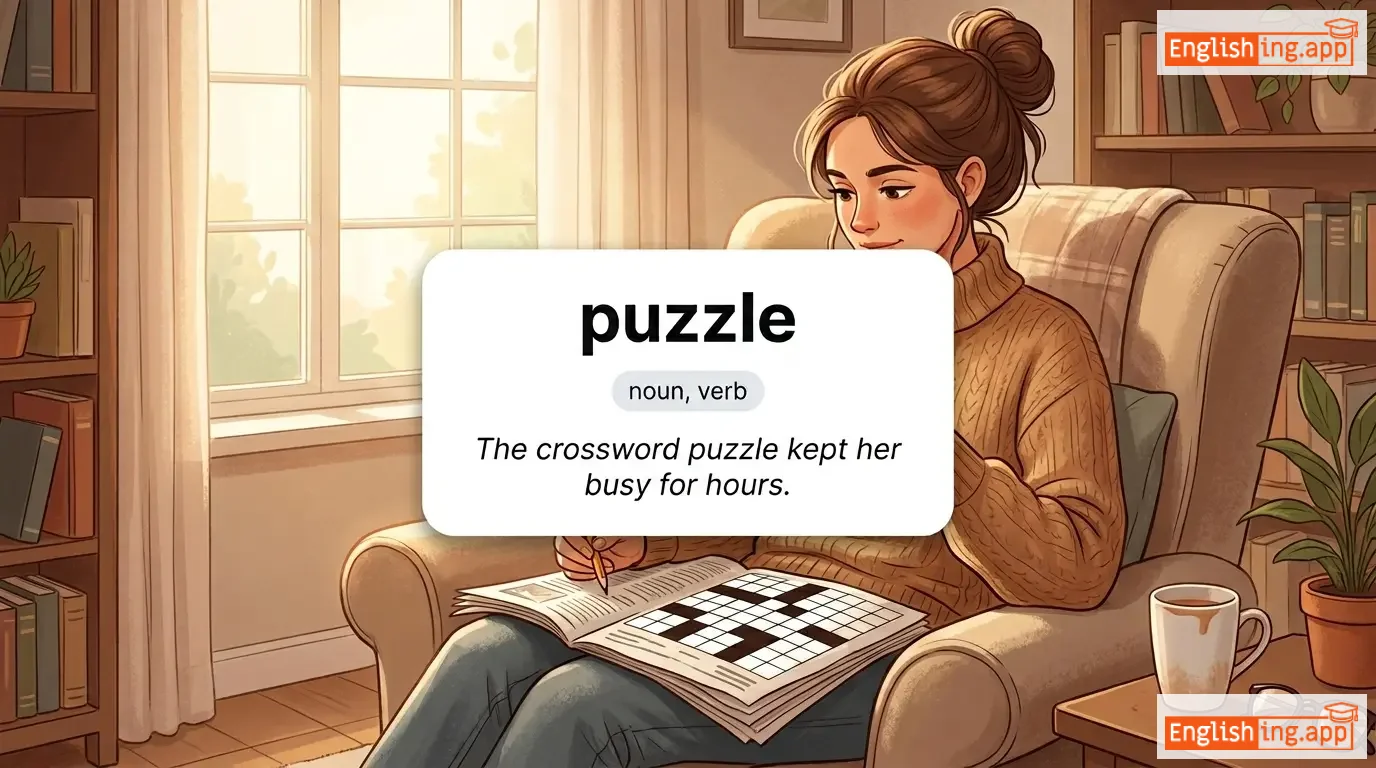
puzzle definition card — visual illustration of the meaning
noun, verb
/ˈpʌzl/
головоломка / сбивать с толку (golovolomka / sbivat' s tolk)

a game, toy, or problem designed to test ingenuity; to cause someone to be confused

"The crossword puzzle kept her busy for hours."

"Кроссворд держал её занятой часами." (Krossvord derzhal yey zanyatoy chasami.)
adjective
/ˈpɪrɪk/
пиррова победа (pirrova pobeda)

A victory won at such a great cost that it is almost equivalent to defeat.

"The general declared the battle a pyrrhic victory due to heavy losses."

"Генерал объявил битву пирровой победой из-за больших потерь." (General obyavil bitvu pirrovoy pobedoy iz-za bol'shikh potery.)
adjective
/ˌpaɪroʊˈtɛknɪk/
пиротехнический (pirotechnicheskiy)

Relating to fireworks or spectacular displays involving fire.

"The city celebrated with a grand pyrotechnic display on New Year's Eve."

"Город отпраздновал с грандиозным пиротехническим шоу накануне Нового года." (Gorod otprazdnoval s grandioznym pirotekhnicheskim shou nakanuye Novogo goda.)
noun
/ˌpaɪroʊˈmeɪniæk/
пироман (piroman)

A person with an uncontrollable desire to set things on fire.

"The pyromaniac was arrested for setting several buildings ablaze."

"Пироман был арестован за поджог нескольких зданий." (Piroman byl arestovan za podzhog neskol'kikh zdaniy.)
noun
/ˌpaɪrəˈmeɪniə/
неп контролируемое желание поджигать вещи (nep kontroliruemoe zhelanie podzhigat' veshchi)

An uncontrollable desire to set things on fire.

"The suspect was diagnosed with pyromania after repeated incidents of arson."

"Подозреваемый был диагностирован с пироманией после повторных случаев поджога." (Podozrevaemyi byl diagnostirovan s piromaniiei posle povtornykh sluchaev podzhoga.)
noun
/paɪər/
кремация (krematsiya)

A heap of combustible material, especially one used for burning a corpse as part of a funeral ceremony.

"The villagers built a pyre to honor the deceased."

"Жители деревни построили костёр, чтобы почтить усопшего." (Zhiteli derevni postroili kostyor, chtoby pochtit' usopshchego.)
adjective
/ˈpʌz.lɪŋ/
загадочный (zagadochnyy)

confusing; perplexing;

"The scientist found the results puzzling."
"Учёный нашёл результаты загадочными." (Uchyoniy nashol rezultaty zagadochnymi.)
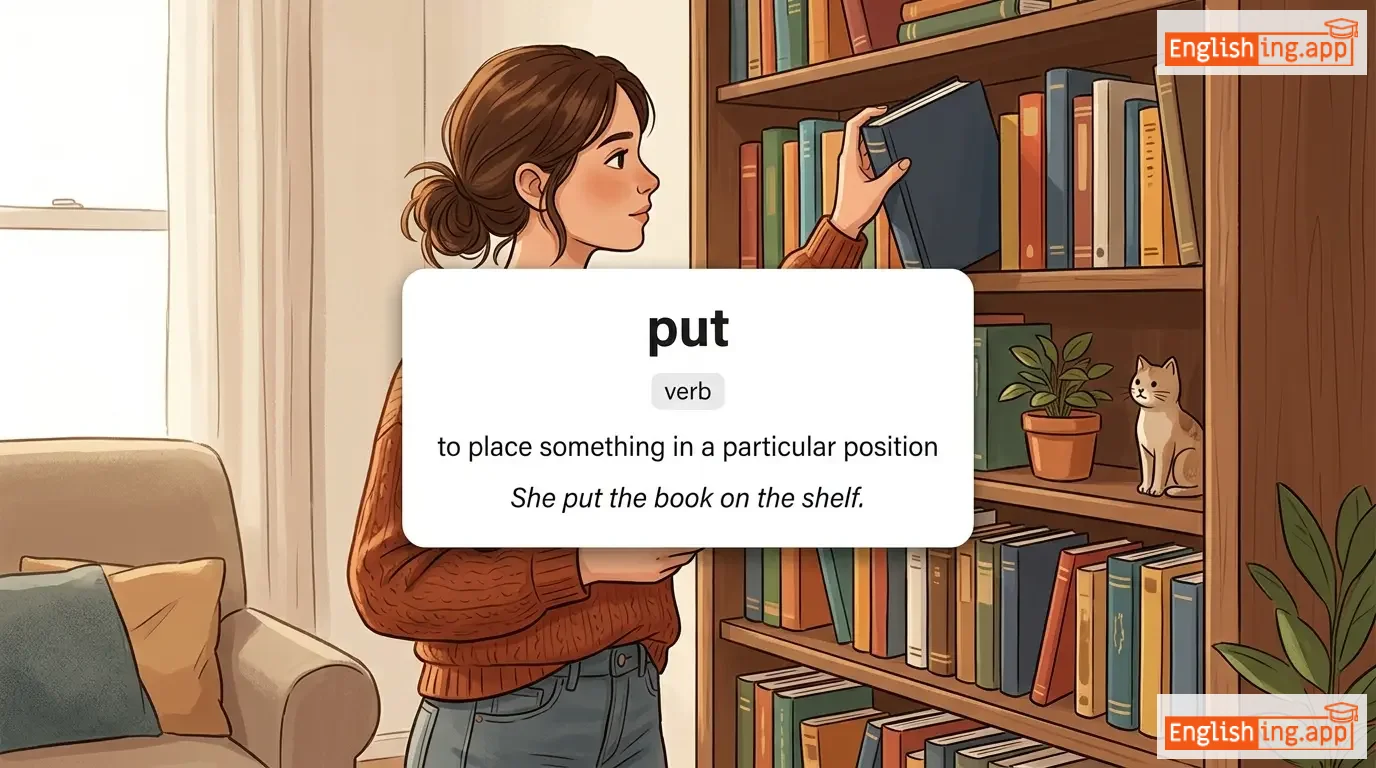
put definition card — visual illustration of the meaning
verb
/pʊt/
положить (polozhit)

to place something in a particular position

"She put the book on the shelf."

"Она поставила книгу на полку." (Ona postavila knigu na polku.)
adjective
/ˈpjuːtətɪv/
признанный (priznannyy)

commonly accepted or supposed; generally regarded as such

"He is the putative father of the child."

"Он является предполагаемым отцом ребенка." (On yavyayetsya predpolagayemym otcom rebenka.)
verb
/ˈpjuːtrɪfaɪ/
гнить (gnit')

to decay or rot, producing a foul smell

"The meat began to putrefy in the heat."

"Мясо начало гнить на жаре." (Myaso nachalo gnit' na zhare.)
adjective
/ˌpjuːsɪˈlænɪməs/
трус (trus)

showing a lack of courage or determination; timid

"The pusillanimous leader avoided making tough decisions."

"Трус лидер избегал принятия трудных решений." (Trus lider izbegal prinyatiya trudnykh resheniy.)