词汇表

英语词汇词典 | 单词含义、定义和示例

noun
/ˈpʌblɪʃɪŋ/

the business or activity of preparing and issuing books, journals, or other material for sale

"He works in the publishing industry as an editor."

verb
/ˈpʌkər/

to tighten or contract into small folds or wrinkles

"She puckered her lips before kissing the child."

adjective
/ˈpʌkɪʃ/
顽皮 (wánpí)

playfully mischievous

"The child gave a puckish grin before hiding the toy."

"孩子在藏玩具之前露出了顽皮的笑容。" (Háizi zài cáng wánjù zhīqián lùchūle wánpí de xiàoróng.)
noun
/ˈpʊdɪŋ/
布丁 (buding)

a sweet or savory dish, often soft and creamy, eaten as dessert

"She made chocolate pudding for dessert."

"她做了巧克力布丁作为甜点。" (Tā zuòle qiǎokèlì bùdīng zuòwéi tiándiǎn.)
adjective
/ˈpʌdʒi/
圆胖 (yuan pang)

slightly fat or chubby in a way that is often cute

"The baby had pudgy cheeks that everyone adored."

"这个宝宝有圆胖的脸颊,大家都很喜欢。" (Zhege baobao you yuan pang de lianjia, dade dou hen xihuan.)
adjective
/ˈpjʊəraɪl/
幼稚的 (yòuzhì de)

childishly silly or immature

"His puerile jokes annoyed the audience."

"他的幼稚笑话让观众感到烦恼。" (Tā de yòuzhì xiàohuà ràng guānzhòng gǎndào fánnǎo.)
noun
/ˈpjuːdʒɪlɪzəm/
拳击 (quanji)

The practice or sport of boxing.

"He studied the art of pugilism in his youth."

"他在年轻时研究了拳击的艺术。" (Ta zai nianqing shi yanjiu le quanji de yishu.)
noun
/ˈpjuːdʒɪlɪst/
拳击手 (quánjīshǒu)

A professional or skilled boxer.

"The pugilist entered the ring with confidence."

"拳击手充满信心地进入了拳台。" (Quánjīshǒu chōngmǎn xìnxīn de jìnrùle quántái.)
adjective
/pʌɡˈneɪʃəs/
好斗的 (hao dou de)

Having a quarrelsome or combative nature; eager to fight.

"His pugnacious attitude often got him into trouble."

"他好斗的态度常常让他陷入麻烦。" (Ta haodou de taidu changchang rang ta xianru mafan.)
noun
/pʌɡˈnæsɪti/
好斗 (haodou)

A natural disposition to be combative or aggressive.

"The coach admired the player's pugnacity on the field."

"教练欣赏球员在场上的好斗精神。" (Jiaolian xīnshǎng qiúyuán zài chǎngshàng de hǎodòu jīngshén.)
noun
/ˈpjuːɪsəns/
权力 (quanli)

Great power, strength, or influence.

"The empire showed its puissance through vast armies."

"帝国通过庞大的军队展现了其权力。" (Diguo tongguo pangda de jundui zhanshixian le qi quanli.)
adjective
/ˈpjuːɪsənt/
强大的 (qiángdà de)

having great power or influence; mighty

"The king was a puissant ruler whose word was law."

"国王是一个强大的统治者,他的话就是法律。" (Guówáng shì yīgè qiángdà de tǒngzhì zhě, tā de huà jiù shì fǎlǜ.)
noun
/ˈpʌlkrɪˌtjuːd/
美丽 (meili)

physical beauty

"The actress was admired for her pulchritude as well as her talent."
"这位女演员因她的美丽和才华而受到钦佩。" (Zhe wei nvyanyuan yin ta de meili he caihua er shoudao qinpei.)
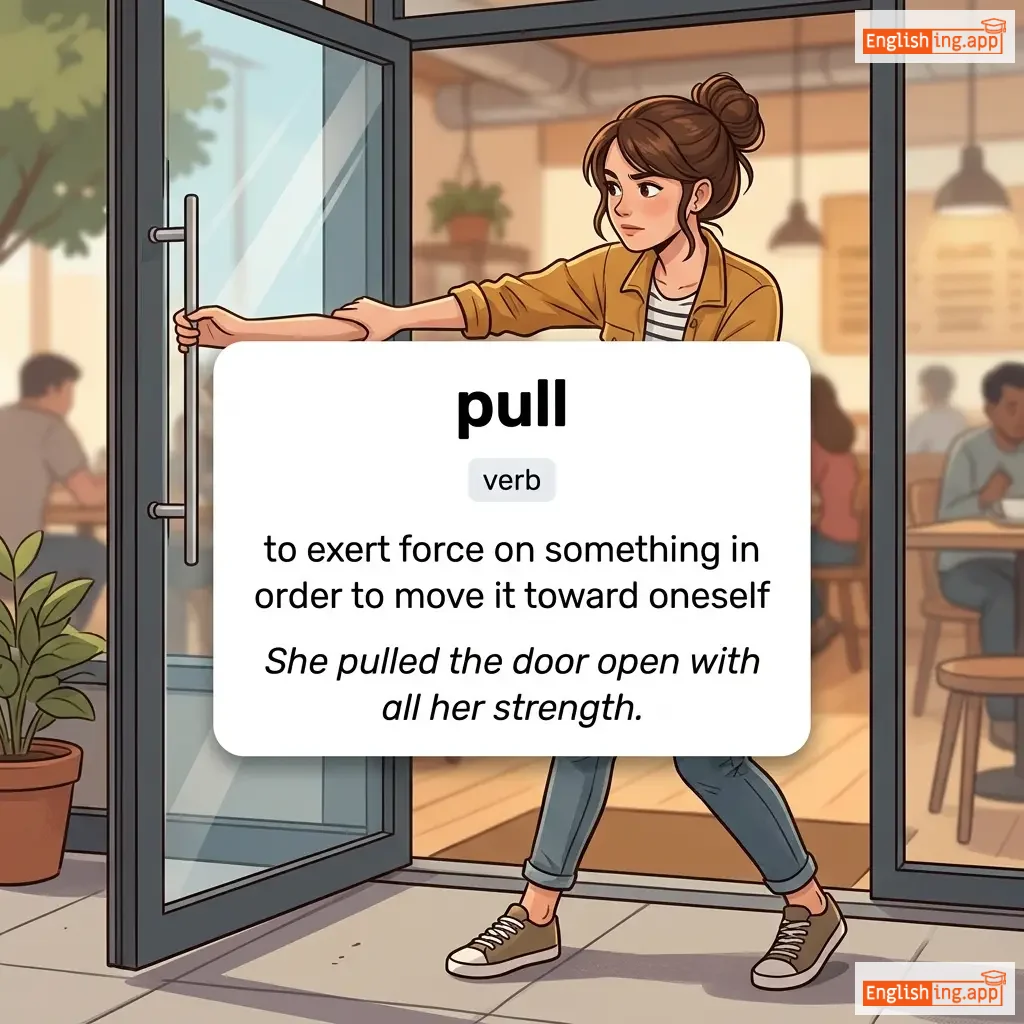
pull definition card — visual illustration of the meaning
🖐️

pull (pul)

verb
/pʊl/
(lā)

to exert force on something in order to move it toward oneself

"She pulled the door open with all her strength."

"她用所有的力量将门拉开。" (Tā yòng suǒyǒu de lìliàng jiāng mén lā kāi.)
noun
/ˈpʊl.oʊ.vər/
毛衣 (maoyi)

a knitted garment worn on the upper body, typically pulled on over the head

"She wore a warm pullover during the cold winter evening."

"她在寒冷的冬季傍晚穿上了温暖的毛衣。" (Tā zài hánlěng de dōngjì bàngwǎn chuān shàngle wēnnuǎn de máoyī.)
adjective
/ˈpʌlməˌneri/

relating to the lungs

"The patient suffered from a serious pulmonary infection."

noun
/ˈpʊlpɪt/
讲道台 (jiang dao tai)

a raised platform in a church from which the preacher delivers a sermon

"The pastor stood at the pulpit to address the congregation."

"牧师站在讲道台上向会众致辞。" (mushi zhan zai jiangdaotai shang xiang huizhong zhici.)
verb
/ˈpʌlseɪt/
跳动 (tiaodong)

to expand and contract rhythmically; to throb or beat

"The neon lights pulsated with a steady rhythm."

"霓虹灯光以稳定的节奏跳动。" (Nihong dengguang yi wending de jiezou tiaodong.)
💓

Pulse

noun/verb
/pʌls/

A rhythmic beat or vibration, especially the heartbeat; to throb or move with a rhythm.

"The doctor checked her pulse after the long run."

verb
/ˈpʌlvəraɪz/
粉碎 (fěnsuì)

To crush or grind something into a fine powder; to completely defeat or destroy.

"The machine can pulverize stones into dust."

"机器可以将石头粉碎成灰尘。" (Jīqì kěyǐ jiāng shítou fěnsuì chéng huīchén.)
verb
/ˈpʌməl/
痛打 (tong da)

To strike repeatedly with the fists; to beat or hit forcefully.

"The boxer pummeled his opponent in the final round."

"拳击手在最后一回合痛打了对手。" (quan ji shou zai zui hou yi hui he tong da le dui shou.)
verb
/pʌmp/
抽水 (chōushuǐ)

to force liquid or gas to move in a particular direction using a device

"They pumped water from the well into the tank."

"他们把水从井里抽到水箱里。" (Tāmen bǎ shuǐ cóng jǐng lǐ chōu dào shuǐxiāng lǐ.)
noun
/'pʌmp.kɪn/
南瓜 (nangua)

a large round orange fruit with thick skin and edible flesh

"We carved a jack-o'-lantern from a big pumpkin."

"我们从一个大南瓜里雕刻了一个南瓜灯。" (wǒmen cóng yīgè dà nangua lǐ diāokè le yīgè nangua dēng)
noun
/pʌn/
双关语 (shuangguanyu)

A humorous use of words that suggests different meanings or words that sound alike.

"He made a clever pun about the bakery's bread rising."

"他在面包店关于面包发酵的玩笑中巧妙地运用了双关语。" (Ta zai mianbaodian guanyu mianbao faxiao de wanxiao zhong qiaomiao de yunxiao le shuangguanyu.)
verb
/pʌntʃ/
击打 (jī dǎ)

to hit someone or something hard with your fist

"He punched the wall in frustration."

"他因沮丧打了墙。" (Tā yīn jǔsàng dǎle qiáng.)
noun
/ˈpʌntʃ laɪn/
笑话的高潮 (xiàohuà de gāocháo)

The final part of a joke or story that makes it funny.

"Everyone laughed loudly at the punch line of his joke."

"大家都因为他的笑话高潮而大笑。" (Dàjiā dōu yīnwèi tā de xiàohuà gāocháo ér dàxiào.)
adjective
/pʌŋkˈtɪliəs/
一丝不苟 (yīsī bù gǒu)

Showing great attention to detail or correct behavior.

"She was punctilious in her attention to etiquette."
"她对礼仪的关注非常一丝不苟。" (Tā duì lǐyí de guānzhù fēicháng yīsī bù gǒu.)
adjective
/ˈpʌŋktʃuəl/

Happening or doing something at the agreed or proper time; on time.

"He is always punctual for meetings."

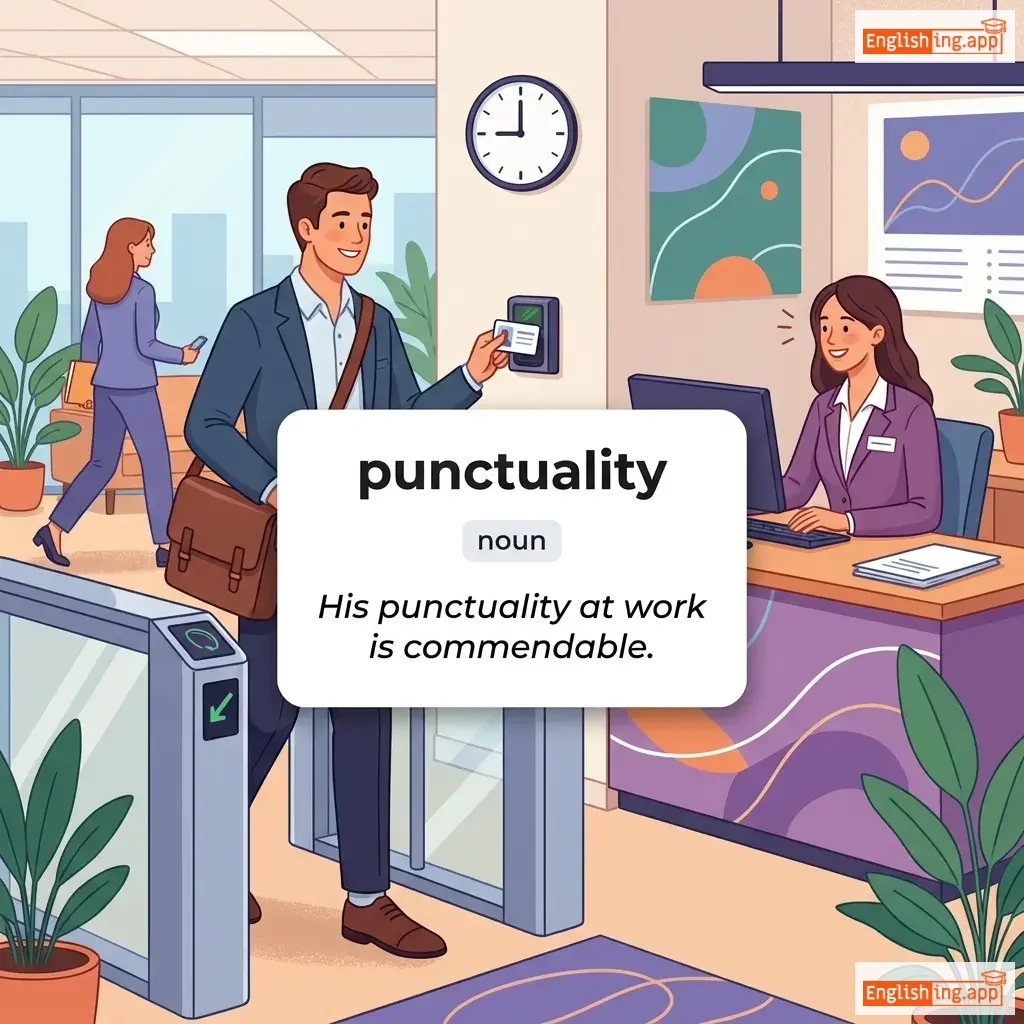
punctuality definition card — visual illustration of the meaning
noun
/ˌpʌŋk.tʃuˈæl.ə.ti/
守时 (shǒushí)

The quality or habit of being on time; arriving or occurring at the scheduled time.

"His punctuality at work is commendable."

"他的工作守时性值得称赞。" (Tā de gōngzuò shǒushíxìng zhídé chēngzàn.)
adverb
/ˈpʌŋk.tʃu.əl.i/
准时 (zhunshi)

at the exact time arranged; on time; not late

"She always arrives punctually for meetings."

"她总是准时到达会议。" (Ta zongshi zhunshi daoda huiyi.)
noun
/ˈpʌŋk.tʃər/
穿孔 (chuānkǒng)

a small hole in a tire that causes air to escape

"I had to fix a puncture in my bicycle tire this morning."

"今天早上我不得不修理我的自行车轮胎上的一个穿孔。" (jīn tiān zǎo shàng wǒ bù dé bù xiū lǐ wǒ de zì xíng chē lún tāi shàng de yí gè chuān kǒng.)
noun
/ˈpʌndɪt/
专家 (zhuānjiā)

An expert in a particular subject or field who is frequently called upon to give opinions to the public.

"Political pundits debated the election results on television."

"政治专家在电视上讨论了选举结果。" (Zhèngzhì zhuānjiā zài diànshì shàng tǎolùnle xuǎnjǔ jiéguǒ.)
noun
/ˈpʌndʒənsi/
辛辣 (xinla)

The quality of having a strong, sharp taste or smell.

"The pungency of garlic filled the kitchen."
"大蒜的辛辣味充满了厨房。" (Dàsuàn de xīnlà wèi chōngmǎnle chúfáng.)
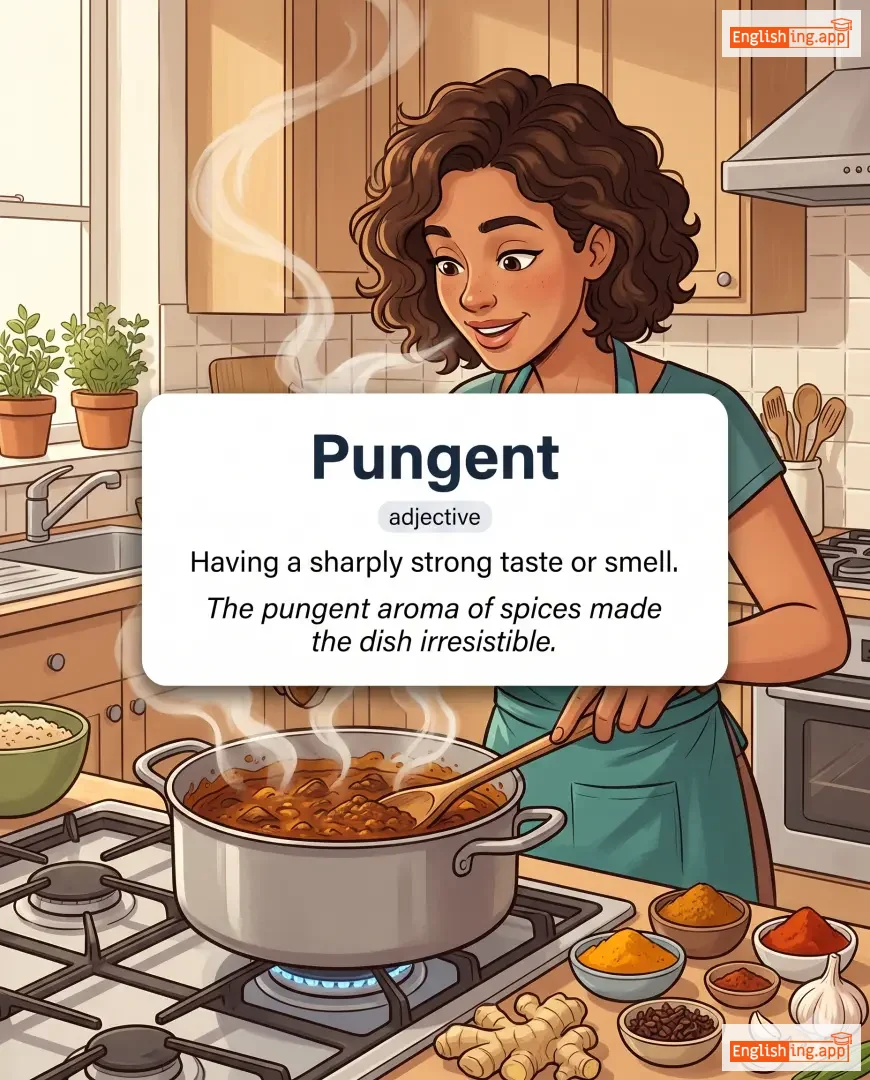
Pungent definition card — visual illustration of the meaning
adjective
/ˈpʌndʒənt/
强烈的气味或味道 (qiángliè de qìwèi huò wèidào)

Having a sharply strong taste or smell.

"The pungent aroma of spices made the dish irresistible."
"香料的强烈气味让这道菜变得难以抗拒。" (xiāngliào de qiángliè qìwèi ràng zhè dào cài biàn dé nán yǐ kàngjù.)
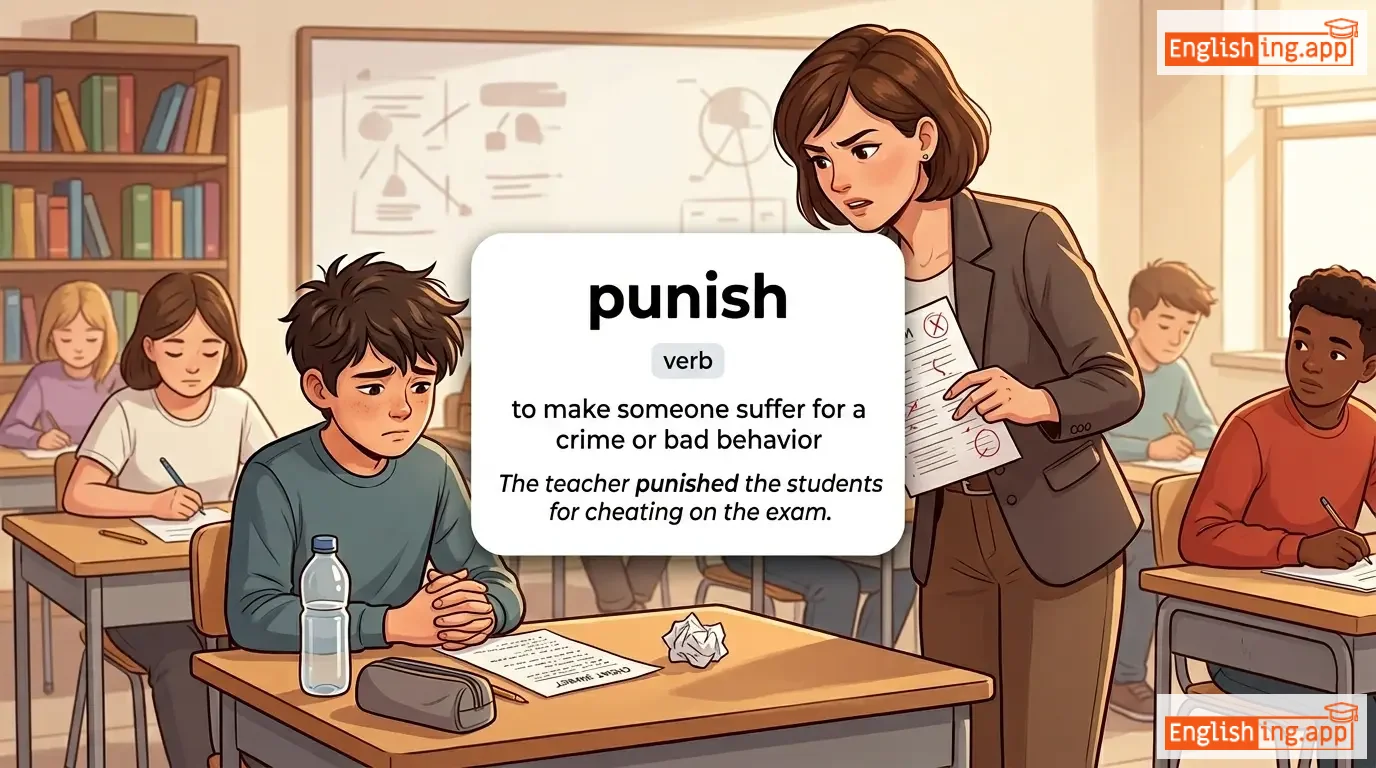
punish definition card — visual illustration of the meaning
verb
/ˈpʌnɪʃ/
惩罚 (chéngfá)

to make someone suffer for a crime or bad behavior

"The teacher punished the students for cheating on the exam."
"老师因学生在考试中作弊而惩罚了他们。" (Lǎoshī yīn xuéshēng zài kǎoshì zhōng zhòubì ér chéngfá le tāmen.)
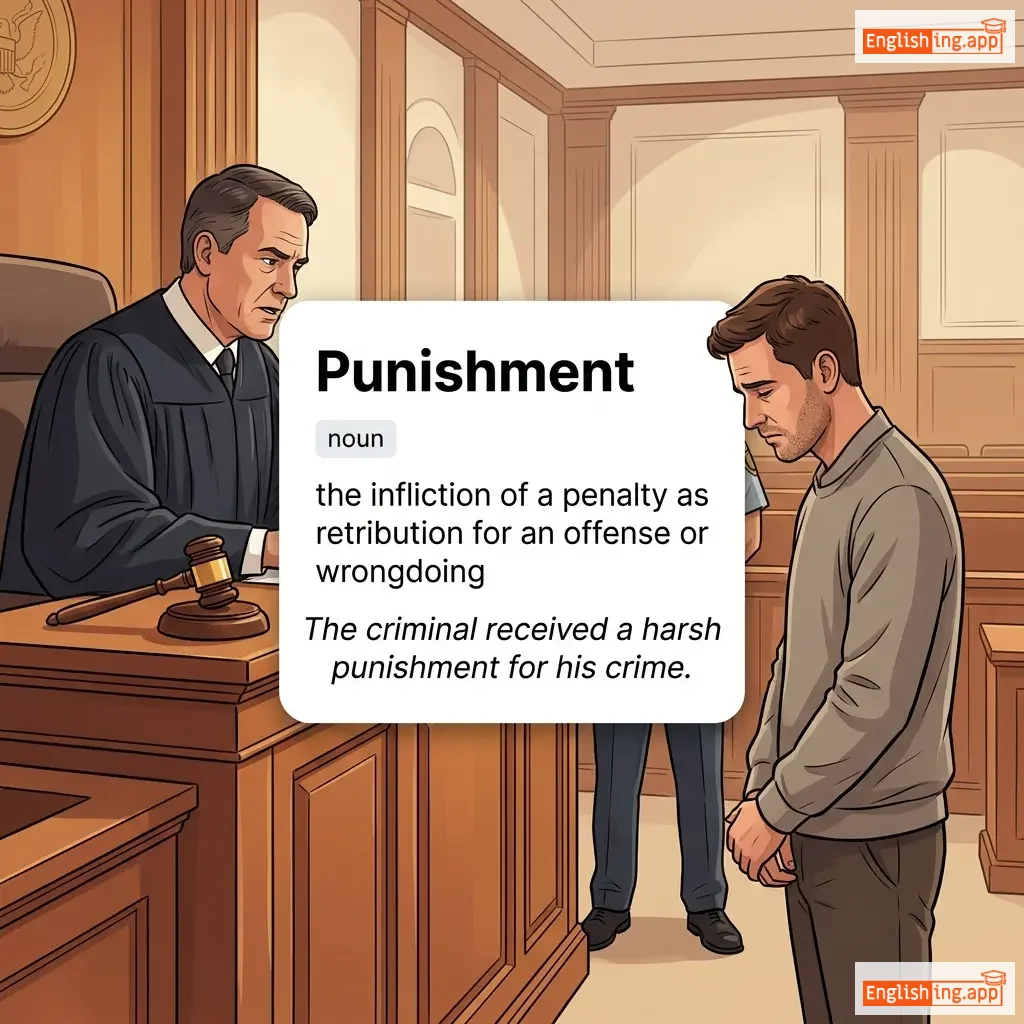
Punishment definition card — visual illustration of the meaning
noun
/ˈpʌnɪʃmənt/
惩罚 (chěngfá)

the infliction of a penalty as retribution for an offense or wrongdoing

"The criminal received a harsh punishment for his crime."

"罪犯因其罪行受到了严厉的惩罚。" (zuìfàn yīn qí zuìxíng shòudàole yánlì de chěngfá.)
adjective
/ˈpjuː.nɪ.tɪv/
惩罚性 (chéngfá xìng)

Inflicting or intended as punishment.

"The company faced punitive measures for violating the law."

"该公司因违反法律而面临惩罚性措施。" (Gāi gōngsī yīn wéifǎn fǎlǜ ér miànlín chéngfá xìng cuòshī.)
noun
/pʌnˈdʒɑː.bi/
旁遮普 (pángzhēpǔ)

a traditional long shirt worn in South Asia, typically loose-fitting

"He wore a white punjabi for the festival celebration."

"他穿着白色的旁遮普参加节日庆典。" (Tā chuānzhuó báisè de pángzhēpǔ cānjiā jiérì qìngdiǎn.)
noun
/pʌŋk/
朋克 (pēngkè)

a type of popular music, or the culture associated with it, characterized by loud, fast rhythms and rebellious attitudes

"He’s always been into punk music and fashion."
"他一直对朋克音乐和时尚感兴趣。" (Tā yīzhí duì pēngkè yīnyuè hé shíshàng gǎn xìngqù.)
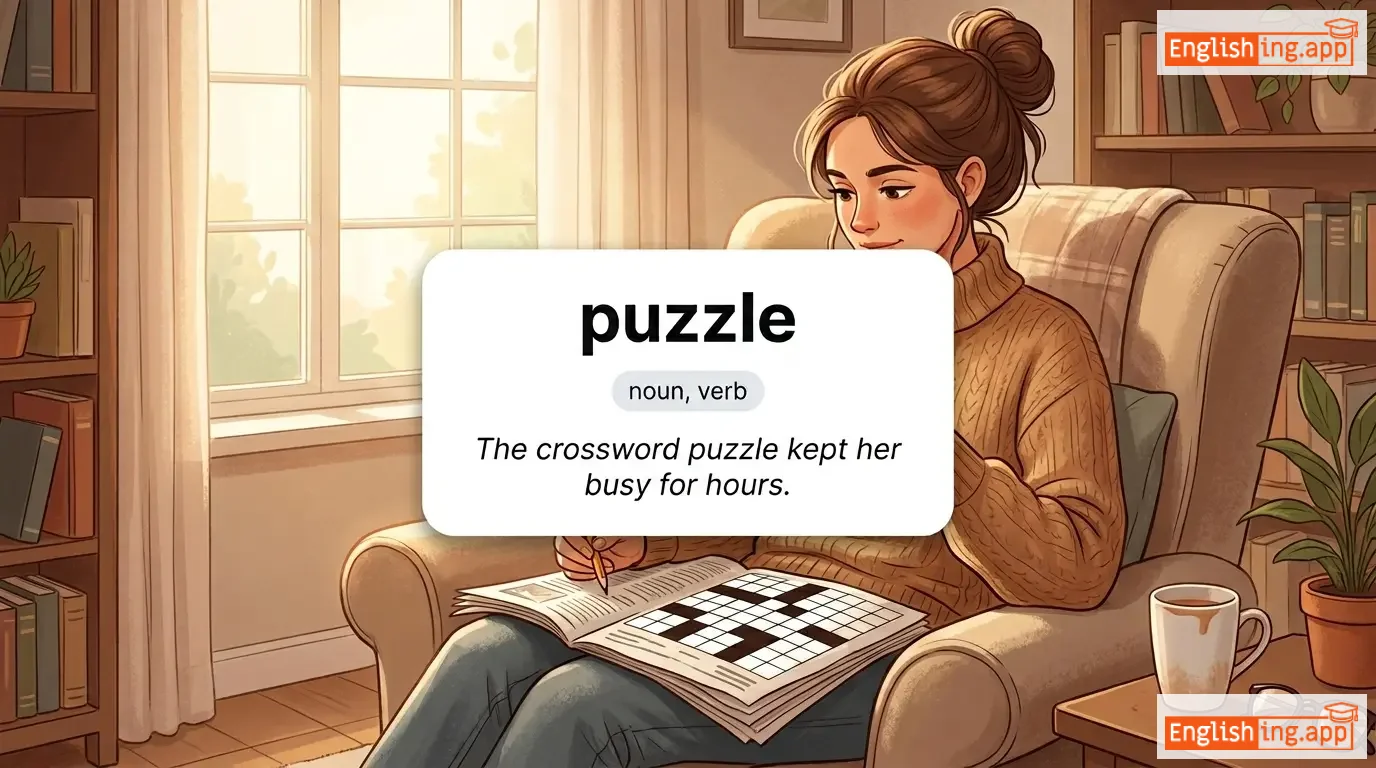
puzzle definition card — visual illustration of the meaning
noun, verb
/ˈpʌzl/
谜题 / 使困惑 (mí tí / shǐ kùn huò)

a game, toy, or problem designed to test ingenuity; to cause someone to be confused

"The crossword puzzle kept her busy for hours."

"填字游戏让她忙了好几个小时。" (Tián zì yóu xì ràng tā máng le hǎo jǐ gè xiǎo shí.)
adjective
/ˈpɪrɪk/
皮洛斯式胜利 (pī luò sī shì shèng lì)

A victory won at such a great cost that it is almost equivalent to defeat.

"The general declared the battle a pyrrhic victory due to heavy losses."

"由于巨大的损失,指挥官宣布战斗为皮洛斯式胜利。" (Yóu yú jùdà de sǔnshī, zhǐhuīguān xuānbù zhàndòu wéi pī luò sī shì shèng lì.)
adjective
/ˌpaɪroʊˈtɛknɪk/
烟火技术 (yan huo ji shu)

Relating to fireworks or spectacular displays involving fire.

"The city celebrated with a grand pyrotechnic display on New Year's Eve."

"这座城市在新年前夕举办了盛大的烟火技术展示。" (Zhe zuo cheng shi zai xin nian qian xi ju ban le sheng da de yan huo ji shu zhan shi.)
noun
/ˌpaɪroʊˈmeɪniæk/
纵火狂 (zong huo kuang)

A person with an uncontrollable desire to set things on fire.

"The pyromaniac was arrested for setting several buildings ablaze."

"纵火狂因点燃多座建筑而被逮捕。" (Zong huo kuang yin dianran duo zuo jianzhutian er bei daibu.)
noun
/ˌpaɪrəˈmeɪniə/
纵火的失控欲望 (zong huo de shi kong yu wang)

An uncontrollable desire to set things on fire.

"The suspect was diagnosed with pyromania after repeated incidents of arson."

"嫌疑人在多次纵火事件后被诊断为纵火狂。" (Xianyi ren zai duoci zonghuo shijian hou bei zhenduan wei zonghuo kuang.)
noun
/paɪər/
火葬堆 (huǒzàng duī)

A heap of combustible material, especially one used for burning a corpse as part of a funeral ceremony.

"The villagers built a pyre to honor the deceased."

"村民们建造了一堆火葬堆,以尊重已故者。" (Cūnmínmen jiànzàole yī duī huǒzàng duī, yǐ zūnzhòng yǐgù zhě.)
adjective
/ˈpʌz.lɪŋ/
令人困惑的 (puzzling)

confusing; perplexing;

"The scientist found the results puzzling."

"科学家发现的结果令人困惑。" (ke xue jia fa xian de jie guo ling ren kun huo)
put definition card — visual illustration of the meaning
verb
/pʊt/
(fang)

to place something in a particular position

"She put the book on the shelf."

"她把书放在了书架上。" (Ta ba shu fang zai le shujia shang.)
adjective
/ˈpjuːtətɪv/
假定的 (jiading de)

commonly accepted or supposed; generally regarded as such

"He is the putative father of the child."

"他是孩子的假定父亲。" (Ta shi haizi de jiading fuxi.)
verb
/ˈpjuːtrɪfaɪ/
腐烂 (fulan)

to decay or rot, producing a foul smell

"The meat began to putrefy in the heat."

"肉在热气中开始腐烂。" (Ròu zài rè qì zhōng kāishǐ fǔlàn.)
adjective
/ˌpjuːsɪˈlænɪməs/
胆小的 (danxiaode)

showing a lack of courage or determination; timid

"The pusillanimous leader avoided making tough decisions."

"那个胆小的领导人避免做出艰难的决定。" (Na ge danxiaode lingdaoren bianmi zuochu jiannan de jueding.)