ভোকাবুলারিসমূহ

ইংরেজি শব্দের বাংলা অর্থ | English to Bangla Word Meaning Dictionary

noun
/ˈpʌblɪʃɪŋ/
প্রকাশনা (prokashona)

the business or activity of preparing and issuing books, journals, or other material for sale

"He works in the publishing industry as an editor."

"সে প্রকাশনা শিল্পে সম্পাদক হিসেবে কাজ করে।" (Se prokashona shilpe sampadok hisebe kaj kore.)
verb
/ˈpʌkər/
কুঁচকানো (kuchkano)

to tighten or contract into small folds or wrinkles

"She puckered her lips before kissing the child."

"সে শিশুকে চুমু খাওয়ার আগে ঠোঁট কুঁচকালো।" (Se shishuke chumu khawar age thot kuchkalo.)
adjective
/ˈpʌkɪʃ/
দুষ্টুমি পূর্ণ (dushtumi purno)

playfully mischievous

"The child gave a puckish grin before hiding the toy."

"শিশুটি খেলনা লুকানোর আগে এক দুষ্টুমি ভরা হাসি দিল।" (Shishuti khelona lukanor age ek dushtumi vora hasi dilo.)
noun
/ˈpʊdɪŋ/
পুডিং (puding)

a sweet or savory dish, often soft and creamy, eaten as dessert

"She made chocolate pudding for dessert."

"সে মিষ্টান্ন হিসেবে চকোলেট পুডিং বানিয়েছিল।" (Se mishtanno hisebe chocolate puding baniyechhilo.)
adjective
/ˈpʌdʒi/
মোটা (mota)

slightly fat or chubby in a way that is often cute

"The baby had pudgy cheeks that everyone adored."

"শিশুর গোলগাল গাল সবার ভালো লেগেছিল।" (Shishur golgal gal sobar bhalo leghchhilo.)
adjective
/ˈpjʊəraɪl/
শিশুসুলভ (shishusulobh)

childishly silly or immature

"His puerile jokes annoyed the audience."

"তার শিশুসুলভ কৌতুকগুলো দর্শকদের বিরক্ত করেছিল।" (Tar shishusulobh koutukgulo dorshokder birokt korechhilo.)
noun
/ˈpjuːdʒɪlɪzəm/
মুষ্টিযুদ্ধ (mustijuddho)

The practice or sport of boxing.

"He studied the art of pugilism in his youth."

"তিনি তরুণ বয়সে মুষ্টিযুদ্ধের শিল্প শিখেছিলেন।" (Tini torun boyose mustijuddher shilpo shikhechilen.)
noun
/ˈpjuːdʒɪlɪst/
মুষ্টিযোদ্ধা (mustijoddha)

A professional or skilled boxer.

"The pugilist entered the ring with confidence."

"মুষ্টিযোদ্ধা আত্মবিশ্বাস নিয়ে রিং-এ প্রবেশ করল।" (Mustijoddha atmobishwas niye ring-e probesh korlo.)
adjective
/pʌɡˈneɪʃəs/
ঝগড়াটে (jhograto)

Having a quarrelsome or combative nature; eager to fight.

"His pugnacious attitude often got him into trouble."

"তার ঝগড়াটে মনোভাব প্রায়ই তাকে সমস্যায় ফেলত।" (Tar jhograto monobhav prayoi take shomosshay felt.)
noun
/pʌɡˈnæsɪti/
ঝগড়াটেপনা (jhogratenna)

A natural disposition to be combative or aggressive.

"The coach admired the player's pugnacity on the field."

"কোচ মাঠে খেলোয়াড়ের ঝগড়াটেপনা প্রশংসা করলেন।" (Coach mathe khelowar-er jhogratenna proshongsha korlen.)
noun
/ˈpjuːɪsəns/
শক্তি (shokti)

Great power, strength, or influence.

"The empire showed its puissance through vast armies."

"সাম্রাজ্য তার বিশাল সেনাবাহিনীর মাধ্যমে শক্তি প্রদর্শন করেছিল।" (Samrajjo tar bishal senabahinir maddhome shokti prodorshon korechilo.)
adjective
/ˈpjuːɪsənt/
শক্তিশালী (shoktishali)

having great power or influence; mighty

"The king was a puissant ruler whose word was law."

"রাজা ছিলেন এক শক্তিশালী শাসক যার কথা ছিল আইন।" (Raja chilen ek shoktishali shasok jar kotha chhilo ain.)
noun
/ˈpʌlkrɪˌtjuːd/
সৌন্দর্য (soundorjo)

physical beauty

"The actress was admired for her pulchritude as well as her talent."

"অভিনেত্রীকে তার সৌন্দর্য এবং প্রতিভার জন্য প্রশংসা করা হয়েছিল।" (Abhinetrike tar soundorjo ebong protibar jonno prosongsha kora hoyechhilo.)
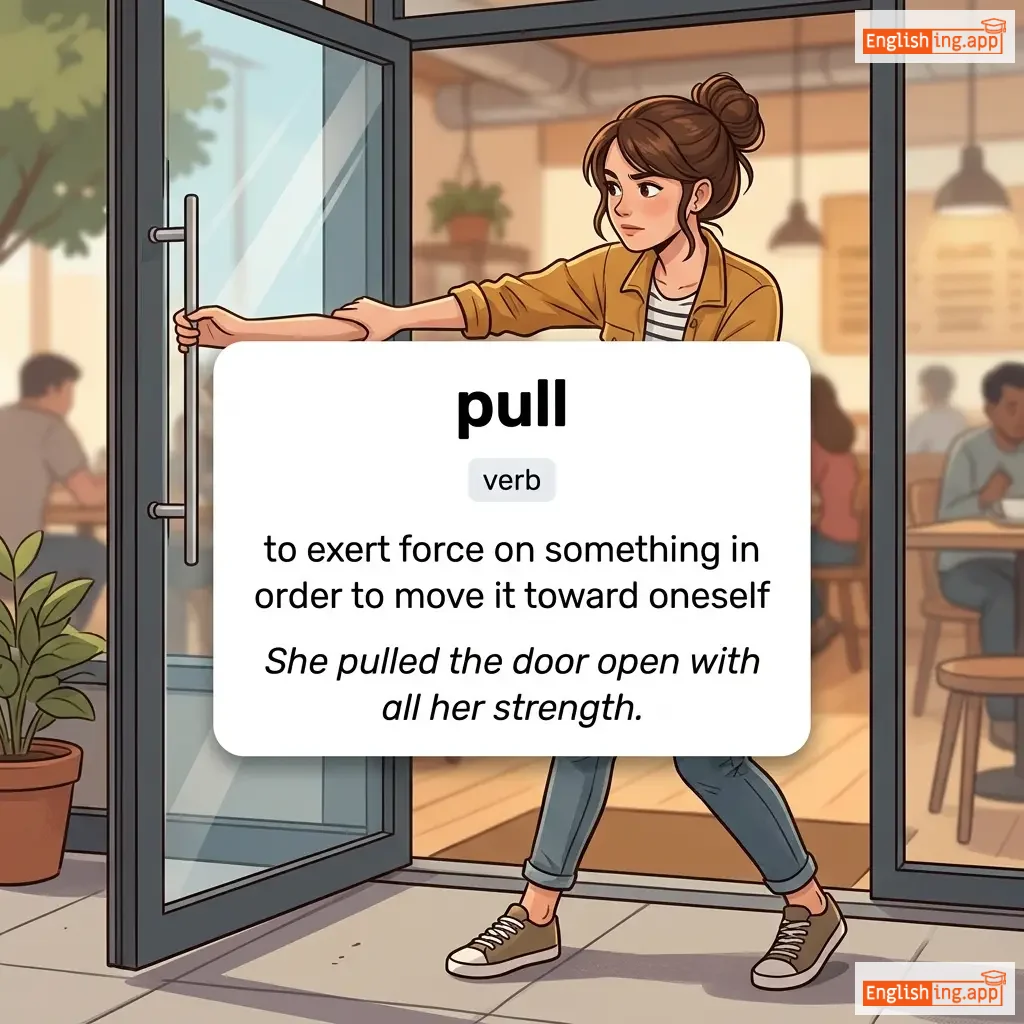
pull definition card — visual illustration of the meaning
verb
/pʊl/
টানা (tana)

to exert force on something in order to move it toward oneself

"She pulled the door open with all her strength."

"সে তার সমস্ত শক্তি দিয়ে দরজা খুলে ফেলল।" (Se tar shomosto shokti diye dorja khule fello.)
noun
/ˈpʊl.oʊ.vər/
উলেন গেঞ্জি (ulen genji)

a knitted garment worn on the upper body, typically pulled on over the head

"She wore a warm pullover during the cold winter evening."

"শীতের ঠান্ডা সন্ধ্যায় সে একটি গরম উলেন গেঞ্জি পরেছিল।" (shiter thanda shondhyay she ekti gorom ulen genji porechilo.)
adjective
/ˈpʌlməˌneri/
ফুসফুস সম্পর্কিত (fushfush somporkito)

relating to the lungs

"The patient suffered from a serious pulmonary infection."

"রোগী গুরুতর ফুসফুসের সংক্রমণে ভুগছিল।" (Rogi gurutor fushfusher songkromone bhugchhilo.)
noun
/ˈpʊlpɪt/
ধর্মোপদেশ মঞ্চ (dhormopodesh moncho)

a raised platform in a church from which the preacher delivers a sermon

"The pastor stood at the pulpit to address the congregation."

"পাদ্রী মণ্ডলীকে সম্বোধন করার জন্য পালপিটে দাঁড়ালেন।" (Padri mondolike sombodhon korar jonno palpitte daralen.)
verb
/ˈpʌlseɪt/
ধুকপুক করা (dhukpuk kora)

to expand and contract rhythmically; to throb or beat

"The neon lights pulsated with a steady rhythm."

"নিয়ন বাতিগুলো একটানা ছন্দে ধুকপুক করছিল।" (Niyon batigulo ektana chhonde dhukpuk korchhilo.)
noun/verb
/pʌls/
নাড়ি (nari)

A rhythmic beat or vibration, especially the heartbeat; to throb or move with a rhythm.

"The doctor checked her pulse after the long run."

"দৌড়ানোর পর ডাক্তার তার নাড়ি পরীক্ষা করলেন।" (Douranor por daktar tar nari porikkha korlen.)
verb
/ˈpʌlvəraɪz/
গুঁড়ো করা (guro kora)

To crush or grind something into a fine powder; to completely defeat or destroy.

"The machine can pulverize stones into dust."

"মেশিনটি পাথরকে গুঁড়ো করে ফেলতে পারে।" (Meshinti pathorke guro kore felte pare.)
verb
/ˈpʌməl/
মুষ্টাঘাত করা (mushtaghat kora)

To strike repeatedly with the fists; to beat or hit forcefully.

"The boxer pummeled his opponent in the final round."

"বক্সারটি ফাইনাল রাউন্ডে তার প্রতিপক্ষকে ঘুষি মারল।" (Boxarti final rounde tar protipokkho ke ghushi marlo.)
verb
/pʌmp/
পাম্প করা (pamp kora)

to force liquid or gas to move in a particular direction using a device

"They pumped water from the well into the tank."

"তারা কূপ থেকে ট্যাংকে পানি পাম্প করেছিল।" (Tara kup theke tank e pani pamp korechhilo.)
noun
/'pʌmp.kɪn/
কুমড়া (kumra)

a large round orange fruit with thick skin and edible flesh

"We carved a jack-o'-lantern from a big pumpkin."

"আমরা একটি বড় কুমড়া থেকে জ্যাক-ও'-ল্যান্টার্ন খোদাই করলাম।" (amra ekti boro kumra theke jack-o'-lantern khodai korlam)
noun
/pʌn/
শব্দখেলা (shobdokhela)

A humorous use of words that suggests different meanings or words that sound alike.

"He made a clever pun about the bakery's bread rising."

"সে বেকারির রুটি ওঠা নিয়ে একটি চতুর শব্দখেলা করেছিল।" (Se bekari ruti otha niye ekti chotur shobdokhela korechilo.)
verb
/pʌntʃ/
ঘুষি মারা (ghushi mara)

to hit someone or something hard with your fist

"He punched the wall in frustration."

"সে হতাশায় দেয়ালে ঘুষি মেরেছিল।" (Se hotashay deale ghushi merechhilo.)
noun
/ˈpʌntʃ laɪn/
চূড়ান্ত হাসির অংশ (churanto hasir angsho)

The final part of a joke or story that makes it funny.

"Everyone laughed loudly at the punch line of his joke."

"সবাই তার কৌতুকের শেষ অংশে জোরে হেসে উঠল।" (Sobai tar koutuker shesh angshe jore hese uthlo.)
adjective
/pʌŋkˈtɪliəs/
অত্যন্ত যত্নশীল (otonto jotnoshil)

Showing great attention to detail or correct behavior.

"She was punctilious in her attention to etiquette."

"সে আচার-আচরণের প্রতি অত্যন্ত যত্নশীল ছিল।" (Se achar-acharoner proti otonto jotnoshil chilo.)
adjective
/ˈpʌŋktʃuəl/
সময়নিষ্ঠ (somoynistho)

Happening or doing something at the agreed or proper time; on time.

"He is always punctual for meetings."

"সে সবসময় মিটিংয়ে সময়মতো আসে।" (Se sobsomoy meetinge somoymoto ase.)
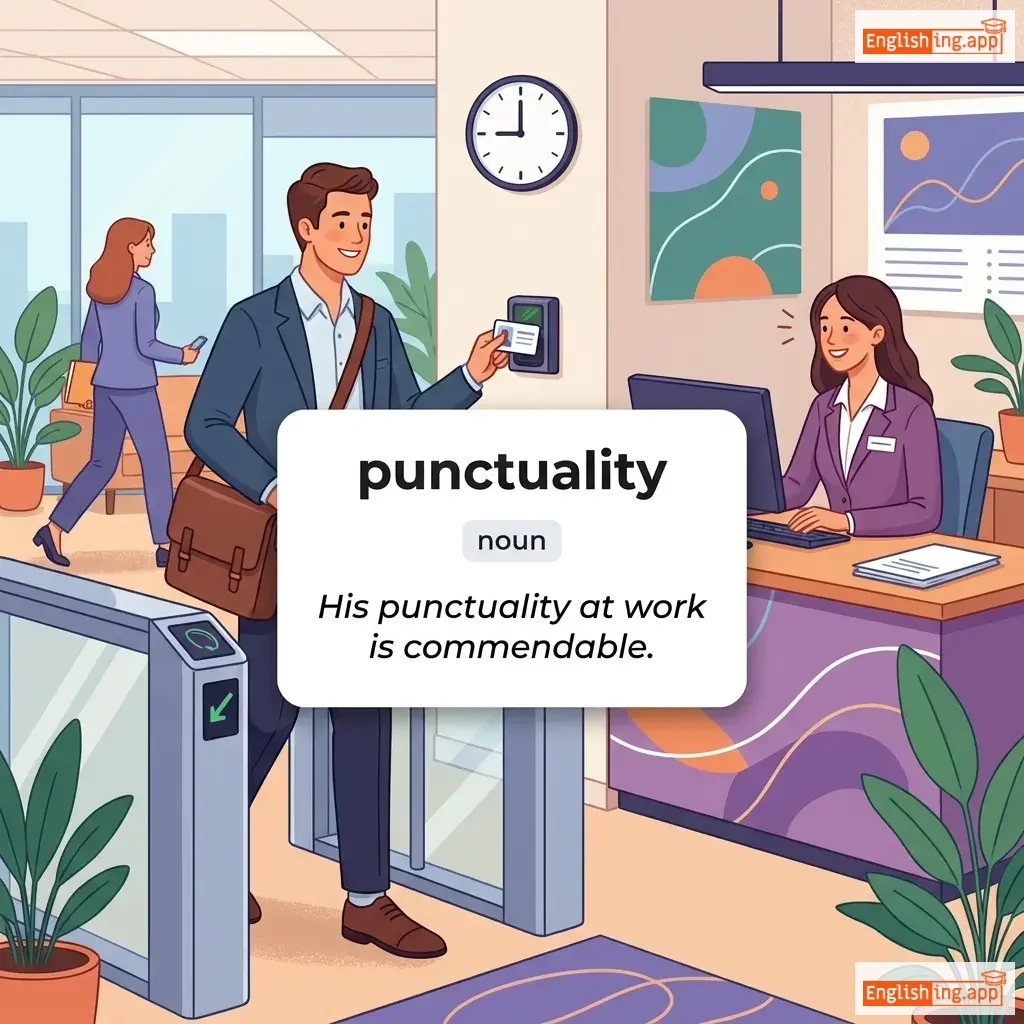
punctuality definition card — visual illustration of the meaning
noun
/ˌpʌŋk.tʃuˈæl.ə.ti/
সময়নিষ্ঠতা (shomoynishthota)

The quality or habit of being on time; arriving or occurring at the scheduled time.

"His punctuality at work is commendable."

"তার কর্মস্থলে সময়নিষ্ঠতা প্রশংসনীয়।" (Tar kormosthle shomoynishthota proshongshoniyo.)
adverb
/ˈpʌŋk.tʃu.əl.i/
সময়মতো; নিয়মমাফিক; (shomoyomoto; niyommafik)

at the exact time arranged; on time; not late

"She always arrives punctually for meetings."

"সে সর্বদা মিটিংয়ে সময়মতো পৌঁছায়।" (she shorboda mitingge shomoyomoto pounchay)
noun
/ˈpʌŋk.tʃər/
চাকার ছিদ্র; (chakar chhidro)

a small hole in a tire that causes air to escape

"I had to fix a puncture in my bicycle tire this morning."

"আজ সকালে আমাকে আমার সাইকেলের টায়ারের পাংচার ঠিক করতে হয়েছিল।" (aj shokale amake amar cycler tirer puncture thik korte hoyechilo)
noun
/ˈpʌndɪt/
পণ্ডিত / বিশেষজ্ঞ (pundit / bisheshoggo)

An expert in a particular subject or field who is frequently called upon to give opinions to the public.

"Political pundits debated the election results on television."

"রাজনৈতিক পণ্ডিতরা টেলিভিশনে নির্বাচনের ফলাফল নিয়ে বিতর্ক করছিল।" (Rajnaitik punditra televisione nirbachoner folafol niye bitorko korchhilo.)
noun
/ˈpʌndʒənsi/
তীব্রতা / ঝাঁঝ (tibrota / jhajh)

The quality of having a strong, sharp taste or smell.

"The pungency of garlic filled the kitchen."

"রসুনের ঝাঁঝ রান্নাঘর ভরে ফেলেছিল।" (Rosuner jhajh rannaghor bhore felchhilo.)
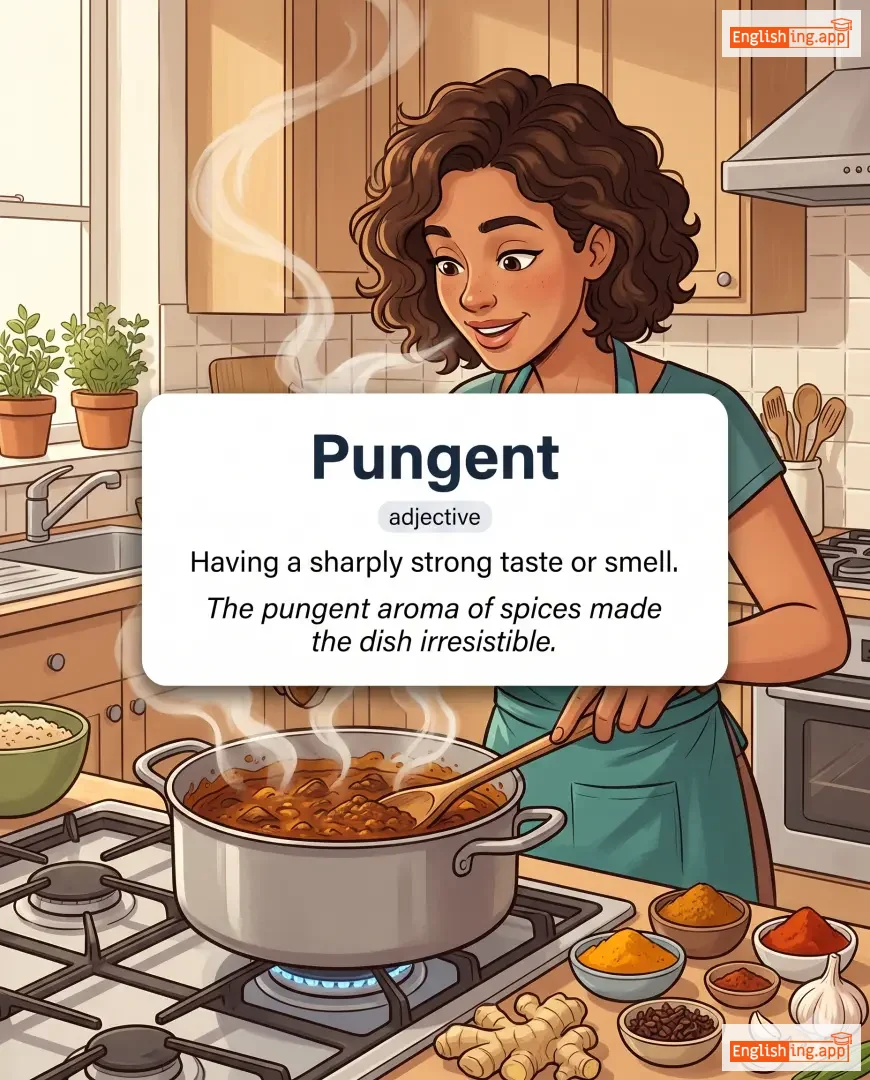
Pungent definition card — visual illustration of the meaning
adjective
/ˈpʌndʒənt/
ঝাঁঝালো / তীব্র গন্ধযুক্ত (jhajhalo / tibro gondhojukt)

Having a sharply strong taste or smell.

"The pungent aroma of spices made the dish irresistible."

"মশলার ঝাঁঝালো গন্ধ খাবারটিকে অপ্রতিরোধ্য করে তুলেছিল।" (Moshalar jhajhalo gondho khabartike oprotrodhyo kore tulchhilo.)
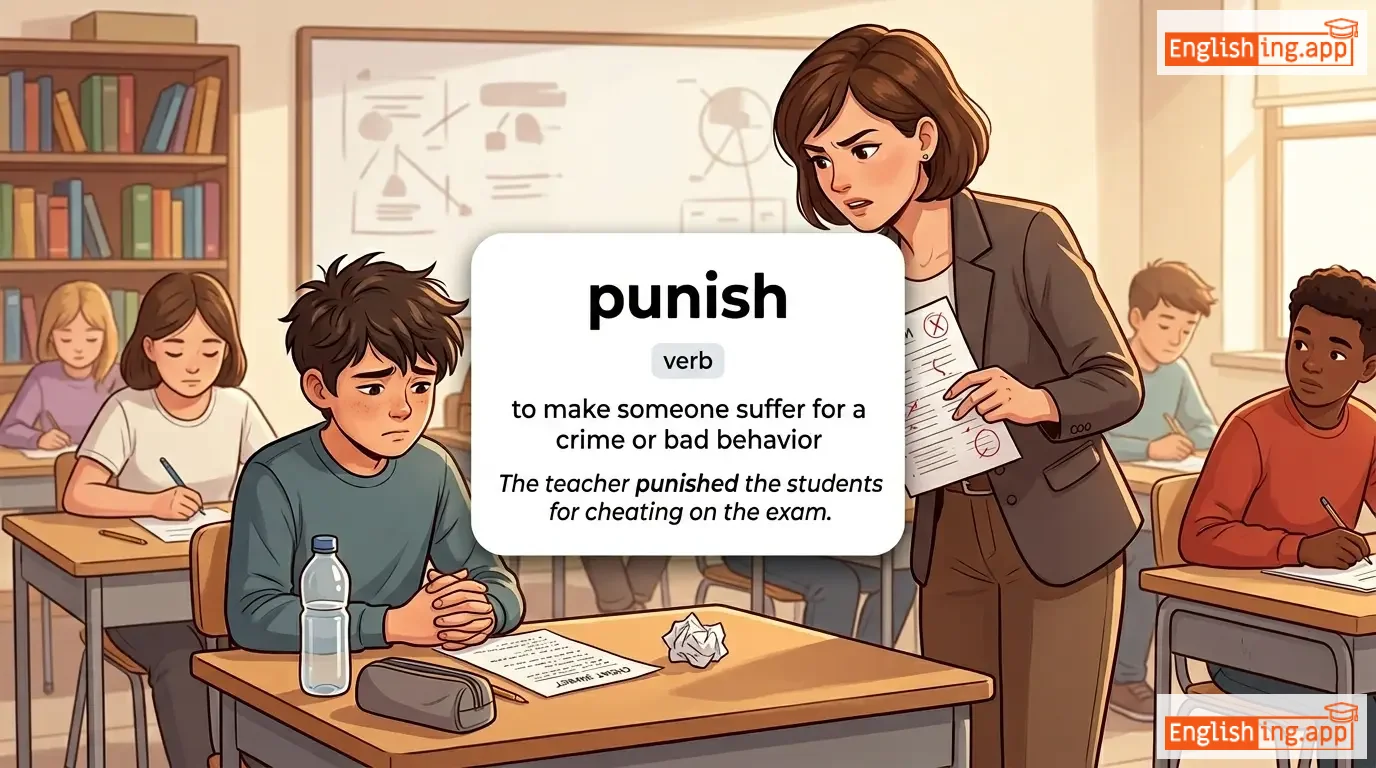
punish definition card — visual illustration of the meaning
verb
/ˈpʌnɪʃ/
শাস্তি দেওয়া (shasti deoa)

to make someone suffer for a crime or bad behavior

"The teacher punished the students for cheating on the exam."

"শিক্ষক পরীক্ষায় প্রতারণার জন্য ছাত্রদের শাস্তি দিয়েছিলেন।" (Shikkhok porikkhay protaronar jonno chatroder shasti diyechhilen.)
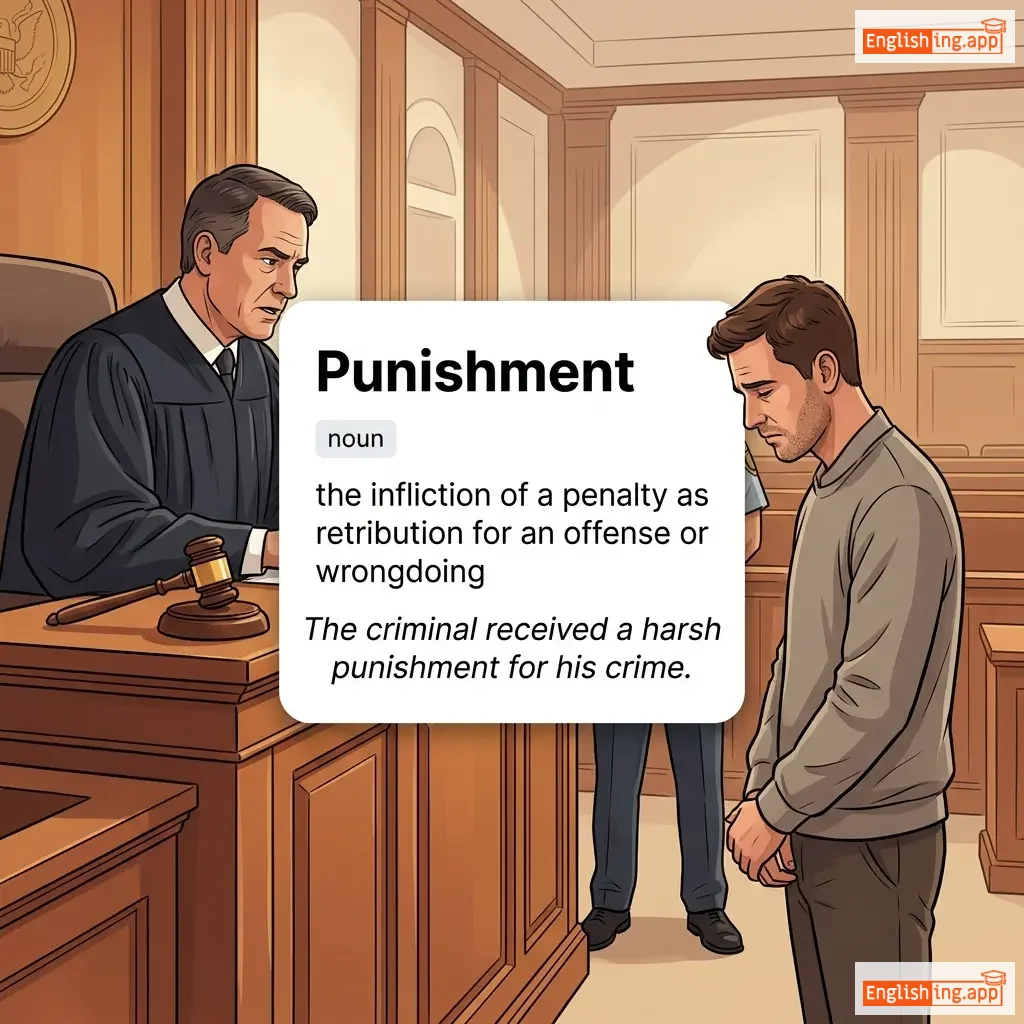
Punishment definition card — visual illustration of the meaning
noun
/ˈpʌnɪʃmənt/
শাস্তি (shasti)

the infliction of a penalty as retribution for an offense or wrongdoing

"The criminal received a harsh punishment for his crime."

"অপরাধী তার অপরাধের জন্য কঠোর শাস্তি পেল।" (Oporadhi tar oporadh er jonno kothor shasti pello.)
adjective
/ˈpjuː.nɪ.tɪv/
শাস্তিমূলক (shastimulok)

Inflicting or intended as punishment.

"The company faced punitive measures for violating the law."

"আইন ভঙ্গ করার জন্য কোম্পানিটি শাস্তিমূলক ব্যবস্থা মুখোমুখি হয়েছিল।" (Ain bhong korar jonno kompaniti shastimulok byabostha mukhomukhi hoyechhilo.)
noun
/pʌnˈdʒɑː.bi/
পাঞ্জাবি (punjabi)

a traditional long shirt worn in South Asia, typically loose-fitting

"He wore a white punjabi for the festival celebration."

"উৎসবের অনুষ্ঠানে সে একটি সাদা পাঞ্জাবি পরেছিল।" (utshober onushtane she ekti shada punjabi porechilo.)
noun
/pʌŋk/
পাঙ্ক (pank)

a type of popular music, or the culture associated with it, characterized by loud, fast rhythms and rebellious attitudes

"He’s always been into punk music and fashion."

"সে সবসময় পাঙ্ক সংগীত এবং ফ্যাশনে আগ্রহী।" (Se shobsomoy pank songit ebong fashion-e agrohi.)
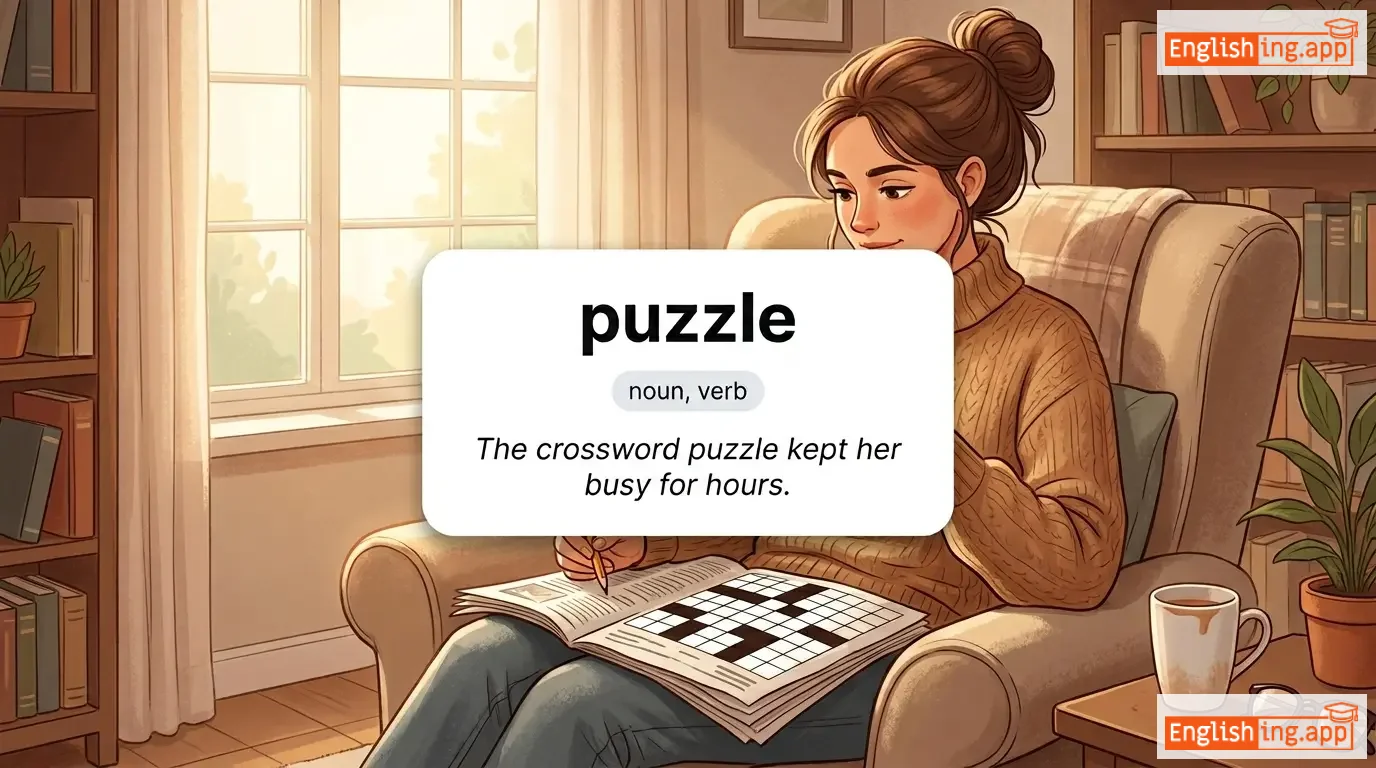
puzzle definition card — visual illustration of the meaning
noun, verb
/ˈpʌzl/
ধাঁধা / বিভ্রান্ত করা (dhadha / bivhranto kora)

a game, toy, or problem designed to test ingenuity; to cause someone to be confused

"The crossword puzzle kept her busy for hours."

"ক্রসওয়ার্ড ধাঁধা তাকে ঘন্টার পর ঘন্টা ব্যস্ত রেখেছিল।" (Crossword dhadha take ghontar por ghonta byosto rekhechilo.)
adjective
/ˈpɪrɪk/
বেদনাদায়ক বিজয় (bedanadayok bijoy)

A victory won at such a great cost that it is almost equivalent to defeat.

"The general declared the battle a pyrrhic victory due to heavy losses."

"ভারী ক্ষতির কারণে জেনারেল যুদ্ধটিকে একটি বেদনাদায়ক বিজয় ঘোষণা করেছিলেন।" (Bari khotir karone jeneral juddhoti ke ekti bedanadayok bijoy ghoshona korechilen.)
adjective
/ˌpaɪroʊˈtɛknɪk/
আতশবাজি সম্পর্কিত (atashbaji somprokito)

Relating to fireworks or spectacular displays involving fire.

"The city celebrated with a grand pyrotechnic display on New Year's Eve."

"শহরটি নববর্ষের প্রাক্কালে একটি বিশাল আতশবাজির প্রদর্শনী উদযাপন করেছিল।" (Shohoti noboborsher prakkale ekti bishal atashbajir prodorshoni udjapon korechilo.)
noun
/ˌpaɪroʊˈmeɪniæk/
অগ্নিসংযোগপ্রবণ ব্যক্তি (agnisongjogprobno bekti)

A person with an uncontrollable desire to set things on fire.

"The pyromaniac was arrested for setting several buildings ablaze."

"পাইরোম্যানিয়াককে কয়েকটি ভবনে আগুন দেওয়ার কারণে গ্রেপ্তার করা হয়েছিল।" (Pyromaniac ke koyekti vobone agun dewar karone greptar kora hoyechilo.)
noun
/ˌpaɪrəˈmeɪniə/
অগ্নিকাণ্ড করার মানসিক প্রবণতা (agnikando korar manoshik probonota)

An uncontrollable desire to set things on fire.

"The suspect was diagnosed with pyromania after repeated incidents of arson."

"অভিযুক্ত ব্যক্তিকে বারবার অগ্নিসংযোগের কারণে পাইরোম্যানিয়ায় আক্রান্ত হিসেবে চিহ্নিত করা হয়েছিল।" (Ovijukto bektike bar bar agnisongjoger karone pyromania akranto hisebe chihnito kora hoyechilo.)
noun
/paɪər/
চিতার আগুন (chitar agun)

A heap of combustible material, especially one used for burning a corpse as part of a funeral ceremony.

"The villagers built a pyre to honor the deceased."

"গ্রামবাসীরা মৃতকে সম্মান জানাতে একটি চিতা বানিয়েছিল।" (Grambasira mrto ke somman janate ekti chita baniyechilo.)
adjective
/ˈpʌz.lɪŋ/
জটিলসমস্যামূলক; হতচকিতকর; (jotil-shomoshamulok)

confusing; perplexing;

"The scientist found the results puzzling."

"বিজ্ঞানী ফলাফলগুলো জটিল সমস্যামূলক মনে করলেন।" (biggani folafolgulo jotil shomoshamulok mone korlen.)
put definition card — visual illustration of the meaning
verb
/pʊt/
রাখা (rakha)

to place something in a particular position

"She put the book on the shelf."

"সে বইটি শেলফে রাখল।" (Se boiti shelfe rakhlo.)
adjective
/ˈpjuːtətɪv/
অভিযুক্ত / অনুমিত (obhijukto / onumito)

commonly accepted or supposed; generally regarded as such

"He is the putative father of the child."

"সে শিশুটির অনুমিত পিতা।" (Se shishutir onumito pita.)
verb
/ˈpjuːtrɪfaɪ/
পচে যাওয়া (poche jaoya)

to decay or rot, producing a foul smell

"The meat began to putrefy in the heat."

"গরমে মাংস পচে যেতে শুরু করলো।" (Garome mangsho poche jete suru korlo.)
adjective
/ˌpjuːsɪˈlænɪməs/
ভীরু (bhiru)

showing a lack of courage or determination; timid

"The pusillanimous leader avoided making tough decisions."

"ভীরু নেতা কঠিন সিদ্ধান্ত নেওয়া এড়িয়ে গেলেন।" (Bhinu neta kothin siddhanto newa eriye gelen.)