語彙集

英単語辞書 | 単語の意味、定義、例文

noun
/ˈpʌblɪʃɪŋ/

the business or activity of preparing and issuing books, journals, or other material for sale

"He works in the publishing industry as an editor."

verb
/ˈpʌkər/

to tighten or contract into small folds or wrinkles

"She puckered her lips before kissing the child."

adjective
/ˈpʌkɪʃ/
いたずら好き (itazurazuki)

playfully mischievous

"The child gave a puckish grin before hiding the toy."

"子供はおもちゃを隠す前にいたずらっぽい笑顔を見せました。" (Kodomo wa omocha o kakusu mae ni itazurappoi egao o misemashita.)
noun
/ˈpʊdɪŋ/
プディング (pudingu)

a sweet or savory dish, often soft and creamy, eaten as dessert

"She made chocolate pudding for dessert."

"彼女はデザートにチョコレートプディングを作りました。" (Kanojo wa dezāto ni chokorēto pudingu o tsukurimashita.)
adjective
/ˈpʌdʒi/
ぽっちゃり (pocchari)

slightly fat or chubby in a way that is often cute

"The baby had pudgy cheeks that everyone adored."

"その赤ちゃんは、みんなが愛したぽっちゃりしたほっぺたを持っていました。" (Sono akachan wa, minna ga aishita pocchari shita hoppeta o motte imashita.)
adjective
/ˈpjʊəraɪl/
幼稚な (yōchina)

childishly silly or immature

"His puerile jokes annoyed the audience."

"彼の幼稚な冗談は観客をうんざりさせた。" (Kare no yōchina jōdan wa kankyaku o unzari saseta.)
noun
/ˈpjuːdʒɪlɪzəm/
ボクシング (bokushingu)

The practice or sport of boxing.

"He studied the art of pugilism in his youth."

"彼は若い頃、ボクシングの技術を学びました。" (Kare wa wakai koro, bokushingu no gijutsu o manabimashita.)
noun
/ˈpjuːdʒɪlɪst/
ボクサー (bokusā)

A professional or skilled boxer.

"The pugilist entered the ring with confidence."

"ボクサーは自信を持ってリングに上がった。" (Bokusā wa jishin o motte ringu ni agatta.)
adjective
/pʌɡˈneɪʃəs/
好戦的な (kousenteki na)

Having a quarrelsome or combative nature; eager to fight.

"His pugnacious attitude often got him into trouble."

"彼の好戦的な態度はしばしば彼を困難に陥れました。" (Kare no kousenteki na taido wa shibashiba kare o konnan ni ochiiremashita.)
noun
/pʌɡˈnæsɪti/
好戦的 (kousenteki)

A natural disposition to be combative or aggressive.

"The coach admired the player's pugnacity on the field."

"コーチはフィールドで選手のパグナシティを賞賛しました。" (Kochi wa fiirudo de senshu no pugnacity wo shousan shimashita.)
noun
/ˈpjuːɪsəns/
(chikara)

Great power, strength, or influence.

"The empire showed its puissance through vast armies."

"帝国は膨大な軍隊を通じてその力を示しました。" (Teikoku wa bōdaina guntai o tōjite sono chikara o shimashita.)
adjective
/ˈpjuːɪsənt/
強力な (kyōryokuna)

having great power or influence; mighty

"The king was a puissant ruler whose word was law."

"その王は強力な支配者で、その言葉は法律だった。" (Sono ō wa kyōryokuna shihaisha de, sono kotoba wa hōritsu datta.)
noun
/ˈpʌlkrɪˌtjuːd/
美しさ (utsukushisa)

physical beauty

"The actress was admired for her pulchritude as well as her talent."

"その女優は美しさと才能で賞賛されました。" (Sono joyu wa utsukushisa to saino de shousan saremashita.)
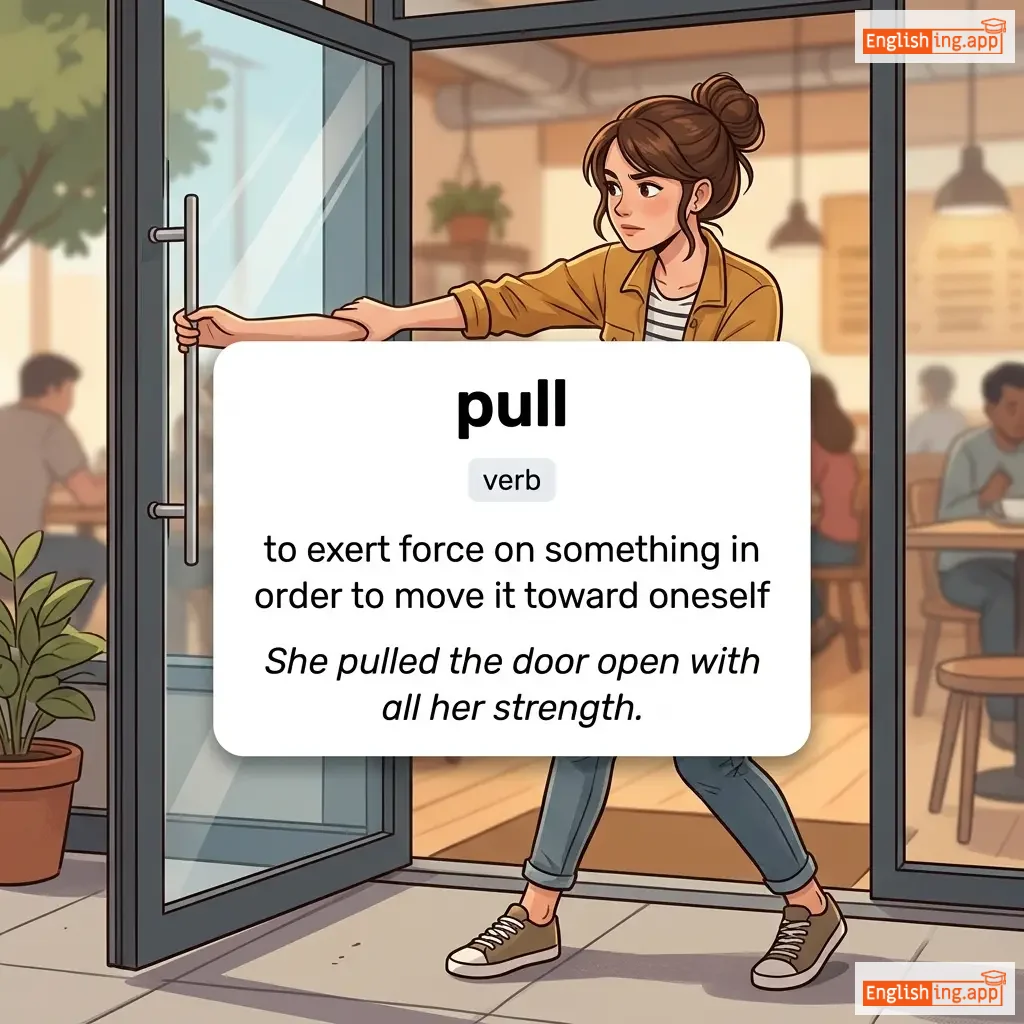
pull definition card — visual illustration of the meaning
verb
/pʊl/
引く (hiku)

to exert force on something in order to move it toward oneself

"She pulled the door open with all her strength."

"彼女は力いっぱいドアを引いて開けた。" (Kanojo wa chikara ippai doa o hiite aketa.)
noun
/ˈpʊl.oʊ.vər/
セーター (seetaa)

a knitted garment worn on the upper body, typically pulled on over the head

"She wore a warm pullover during the cold winter evening."

"彼女は寒い冬の夕方に温かいセーターを着ていた。" (Kanojo wa samui fuyu no yūgata ni atatakai seetaa o kite ita.)
adjective
/ˈpʌlməˌneri/

relating to the lungs

"The patient suffered from a serious pulmonary infection."

noun
/ˈpʊlpɪt/
説教台 (sekkyōdai)

a raised platform in a church from which the preacher delivers a sermon

"The pastor stood at the pulpit to address the congregation."

"牧師は説教台の前に立って、会衆に向かって話した。" (Bokushi wa sekkyōdai no mae ni tatte, kaishū ni mukatte hanashita.)
verb
/ˈpʌlseɪt/
脈動する (myakudo suru)

to expand and contract rhythmically; to throb or beat

"The neon lights pulsated with a steady rhythm."

"ネオンのライトは一定のリズムで脈打っていた。" (Neon no raito wa ittei no rizumu de myakutte ita.)
💓

Pulse

noun/verb
/pʌls/

A rhythmic beat or vibration, especially the heartbeat; to throb or move with a rhythm.

"The doctor checked her pulse after the long run."

verb
/ˈpʌlvəraɪz/
粉砕する (funsai suru)

To crush or grind something into a fine powder; to completely defeat or destroy.

"The machine can pulverize stones into dust."

"その機械は石を粉々にすることができます。" (Sono kikai wa ishi o funsai suru koto ga dekimasu.)
verb
/ˈpʌməl/
殴りつける (naguritsukeru)

To strike repeatedly with the fists; to beat or hit forcefully.

"The boxer pummeled his opponent in the final round."

"ボクサーは最終ラウンドで相手を激しく殴りつけた。" (bokusa wa saishu raundo de aite o hageshiku naguritsuketa.)
verb
/pʌmp/
ポンプする (ponpu suru)

to force liquid or gas to move in a particular direction using a device

"They pumped water from the well into the tank."

"彼らは井戸からタンクに水をポンプしました。" (Karera wa ido kara tanku ni mizu o ponpu shimashita.)
noun
/'pʌmp.kɪn/
カボチャ (kabocha)

a large round orange fruit with thick skin and edible flesh

"We carved a jack-o'-lantern from a big pumpkin."

"私たちは大きなカボチャからジャック・オー・ランタンを彫りました。" (watashitachi wa ookina kabocha kara jakku o ran tan o horimashita)
noun
/pʌn/
言葉遊び (kotoba asobi)

A humorous use of words that suggests different meanings or words that sound alike.

"He made a clever pun about the bakery's bread rising."

"彼はベーカリーでパンが膨らんでいることについて巧妙な言葉遊びをしました。" (Kare wa bēkārī de pan ga fukurande iru koto ni tsuite kōmyō na kotoba asobi o shimashita.)
verb
/pʌntʃ/
殴る (naguru)

to hit someone or something hard with your fist

"He punched the wall in frustration."

"彼はフラストレーションで壁を殴った。" (Kare wa furasutorēshon de kabe o nagutta.)
noun
/ˈpʌntʃ laɪn/
パンチライン (panchirain)

The final part of a joke or story that makes it funny.

"Everyone laughed loudly at the punch line of his joke."

"みんな彼のジョークのパンチラインで大笑いした。" (Minna kare no jōku no panchirain de ōwarai shita.)
adjective
/pʌŋkˈtɪliəs/
几帳面 (kichoumen)

Showing great attention to detail or correct behavior.

"She was punctilious in her attention to etiquette."
"彼女はマナーに対して非常に几帳面だった。" (Kanojo wa manā ni taishite hijō ni kichōmen datta.)
adjective
/ˈpʌŋktʃuəl/

Happening or doing something at the agreed or proper time; on time.

"He is always punctual for meetings."

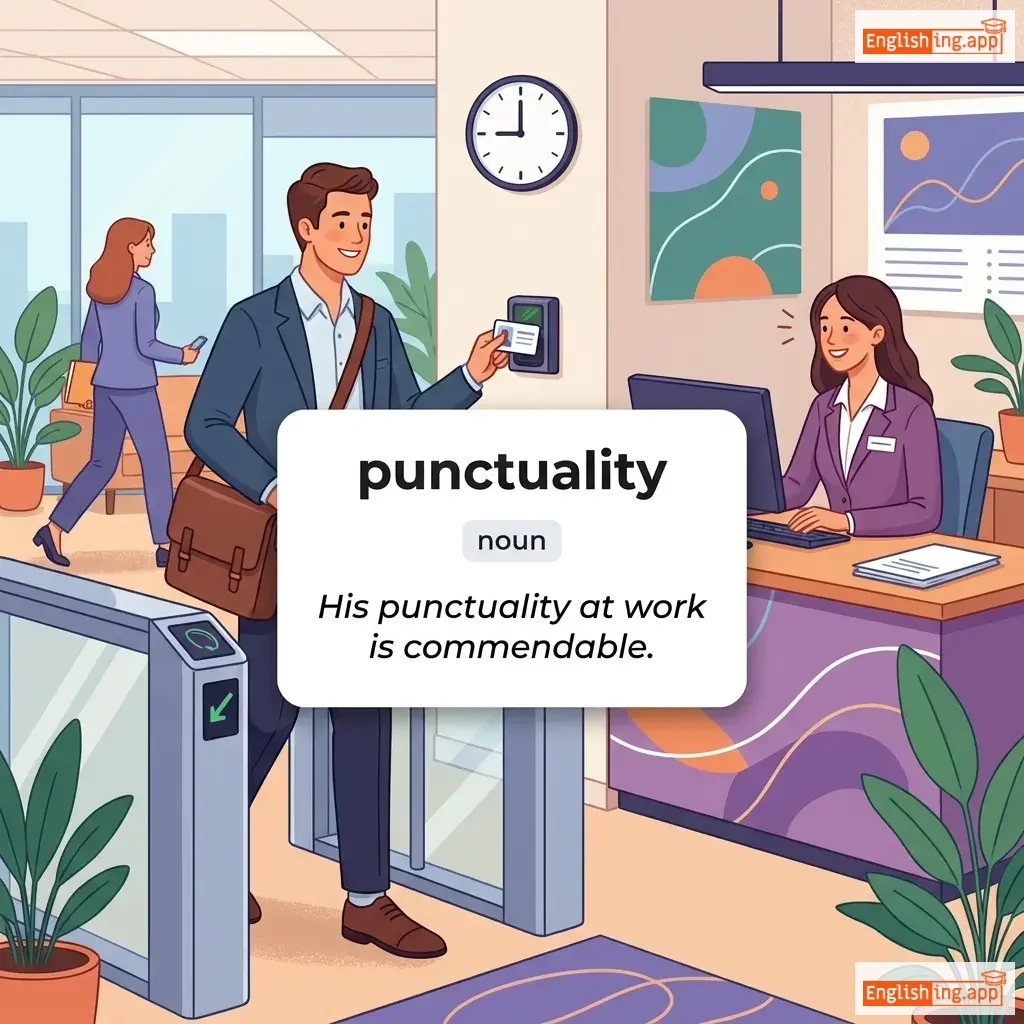
punctuality definition card — visual illustration of the meaning
noun
/ˌpʌŋk.tʃuˈæl.ə.ti/
時間厳守 (jikan genshu)

The quality or habit of being on time; arriving or occurring at the scheduled time.

"His punctuality at work is commendable."

"彼の仕事における時間厳守は称賛に値する。" (Kare no shigoto ni okeru jikan genshu wa shōsan ni ataisuru.)
adverb
/ˈpʌŋk.tʃu.əl.i/
時間通り (jikan doori)

at the exact time arranged; on time; not late

"She always arrives punctually for meetings."

"彼女は会議にいつも時間通りに到着します。" (Kanojo wa kaigi ni itsumo jikan doori ni touchakushimasu.)
noun
/ˈpʌŋk.tʃər/
パンク (panku)

a small hole in a tire that causes air to escape

"I had to fix a puncture in my bicycle tire this morning."

"今朝、自転車のタイヤのパンクを修理しなければなりませんでした。" (kesa, jitensha no taiya no panku wo shūri shinakereba narimasen deshita.)
noun
/ˈpʌndɪt/
専門家 (senmonka)

An expert in a particular subject or field who is frequently called upon to give opinions to the public.

"Political pundits debated the election results on television."

"政治の専門家たちはテレビで選挙結果について議論しました。" (Seiji no senmonkatachi wa terebi de senkyo kekka ni tsuite giron shimashita.)
noun
/ˈpʌndʒənsi/
辛味 (karami)

The quality of having a strong, sharp taste or smell.

"The pungency of garlic filled the kitchen."
"ニンニクの辛味がキッチンに充満した。" (Ninniku no karami ga kicchin ni juumanshita.)
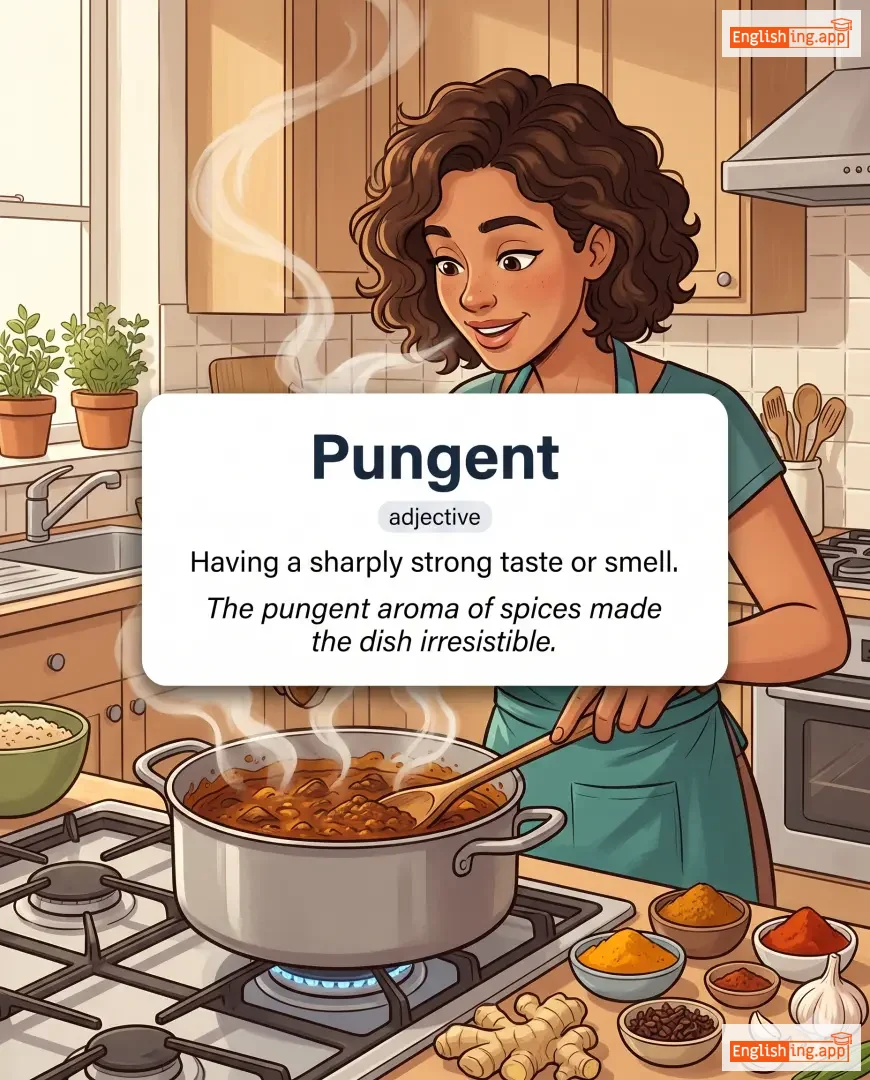
Pungent definition card — visual illustration of the meaning
adjective
/ˈpʌndʒənt/
強い匂いや味 (tsuyoi nioi ya aji)

Having a sharply strong taste or smell.

"The pungent aroma of spices made the dish irresistible."
"スパイスの強い香りがその料理を抗しがたくした。" (supaisu no tsuyoi kaori ga sono ryouri wo kōshigataku shita.)
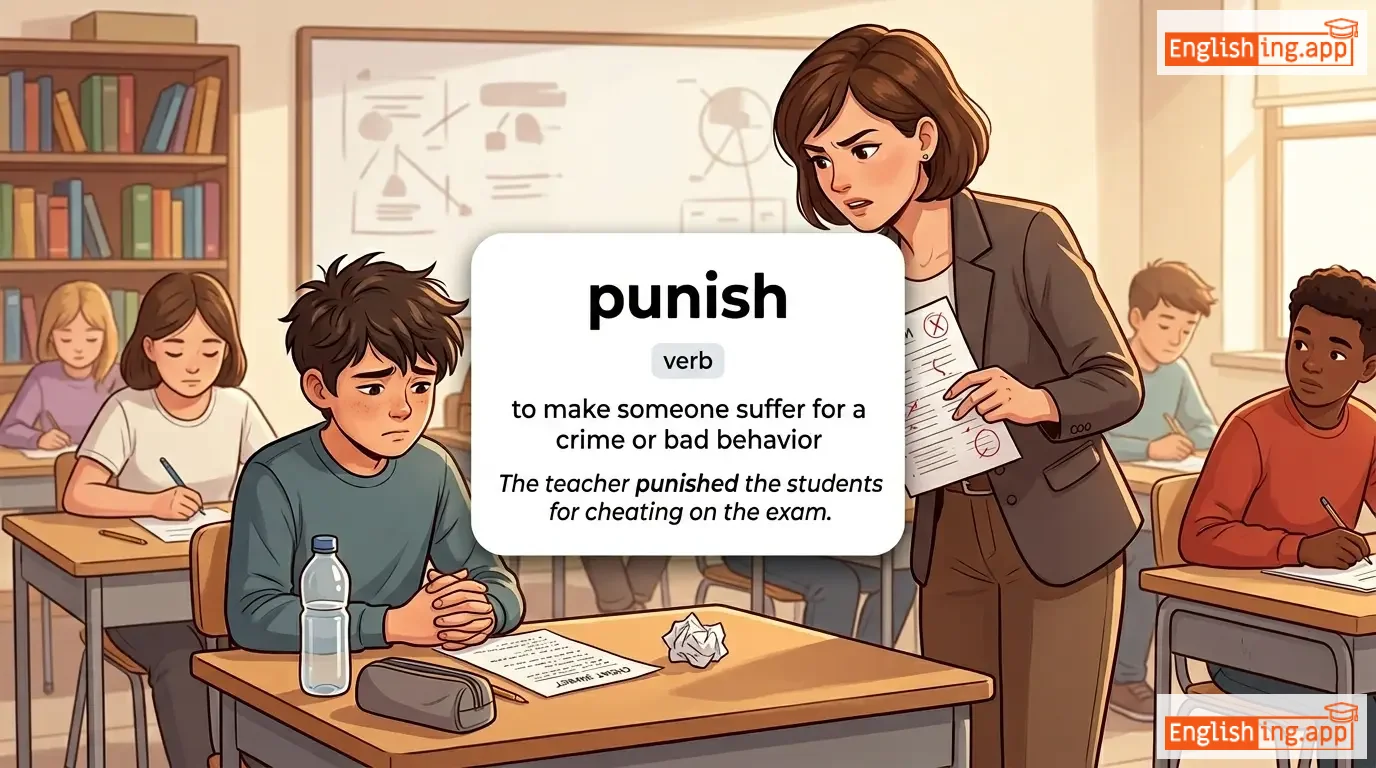
punish definition card — visual illustration of the meaning
verb
/ˈpʌnɪʃ/
罰する (bassuru)

to make someone suffer for a crime or bad behavior

"The teacher punished the students for cheating on the exam."
"教師は試験でカンニングをした学生を罰した。" (Kyoushi wa shiken de kanningu wo shita gakusei wo basshita.)
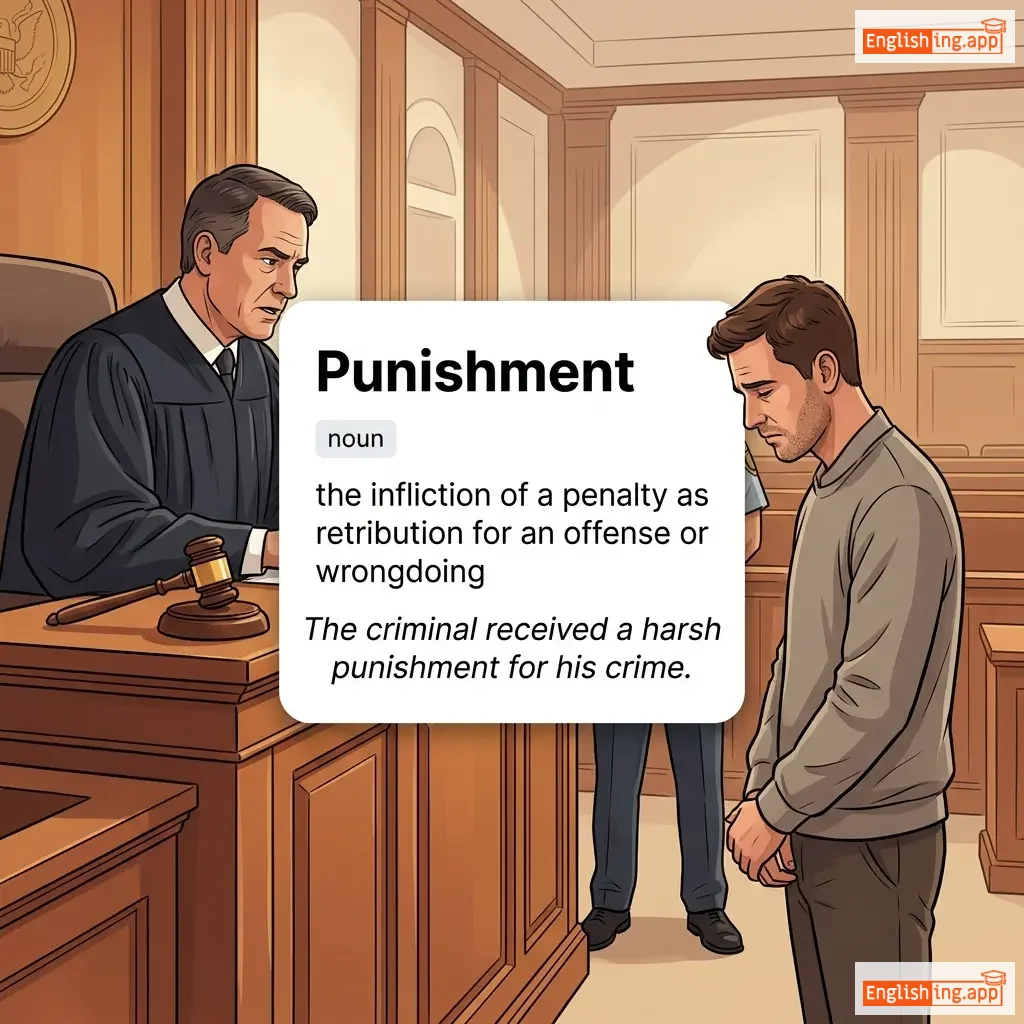
Punishment definition card — visual illustration of the meaning
noun
/ˈpʌnɪʃmənt/
(batsu)

the infliction of a penalty as retribution for an offense or wrongdoing

"The criminal received a harsh punishment for his crime."

"犯人はその犯罪に対して厳しい罰を受けました。" (Hannin wa sono hanzai ni taishite kibishii batsu o ukemashita.)
adjective
/ˈpjuː.nɪ.tɪv/
懲罰的 (chōbatsuteki)

Inflicting or intended as punishment.

"The company faced punitive measures for violating the law."

"その会社は法を違反したため、懲罰的措置に直面しました。" (Sono kaisha wa hō o ihan shita tame, chōbatsuteki sochi ni chokumen shimashita.)
noun
/pʌnˈdʒɑː.bi/
パンジャビ (panjabi)

a traditional long shirt worn in South Asia, typically loose-fitting

"He wore a white punjabi for the festival celebration."

"彼は祭りのために白いパンジャビを着ていました。" (Kare wa matsuri no tame ni shiroi panjabi o kite imashita.)
noun
/pʌŋk/
パンク (panku)

a type of popular music, or the culture associated with it, characterized by loud, fast rhythms and rebellious attitudes

"He’s always been into punk music and fashion."
"彼はいつもパンク音楽とファッションに興味を持っている。" (Kare wa itsumo panku ongaku to fasshon ni kyōmi o motte iru.)
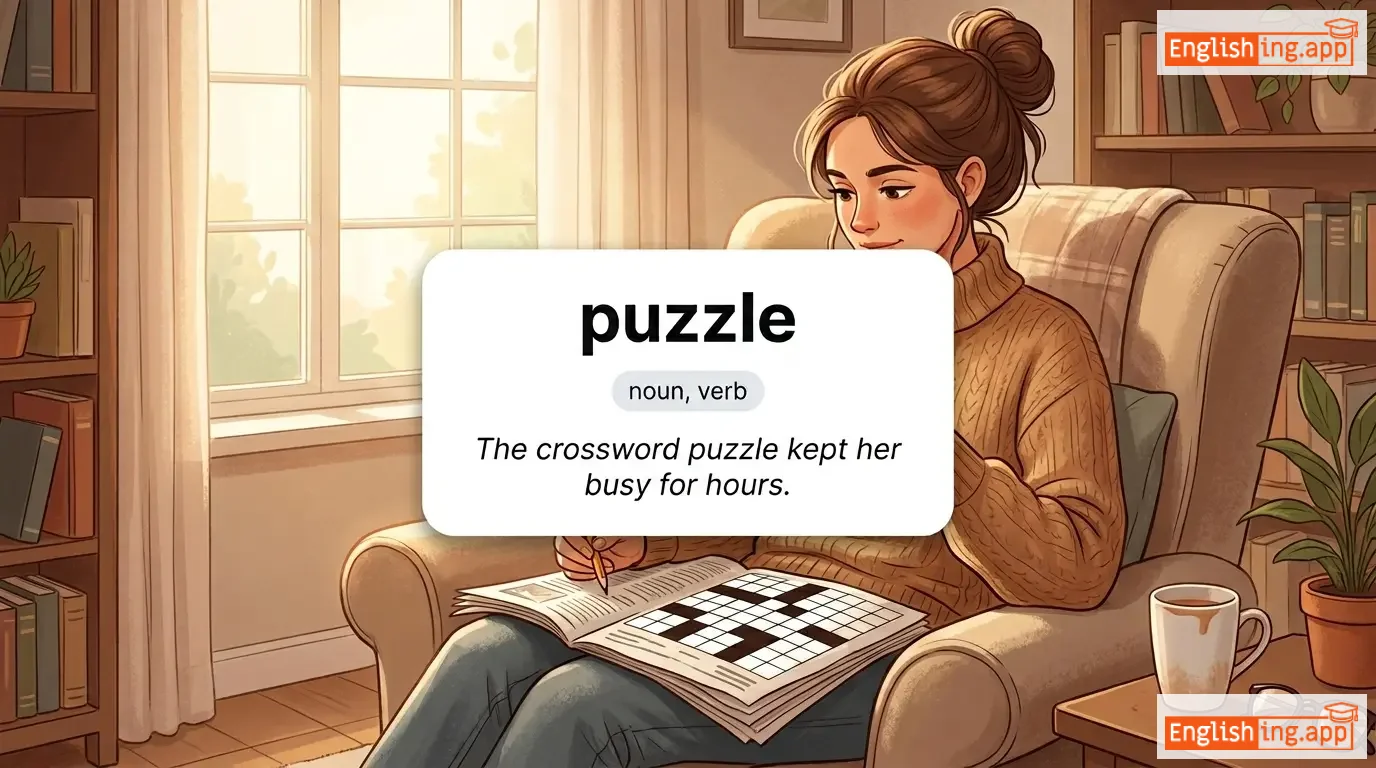
puzzle definition card — visual illustration of the meaning
noun, verb
/ˈpʌzl/
パズル / 困らせる (pazuru / komaraseru)

a game, toy, or problem designed to test ingenuity; to cause someone to be confused

"The crossword puzzle kept her busy for hours."

"クロスワードパズルは彼女を数時間忙しくさせました。" (Kurosuwādo pazuru wa kanojo o suū jikan isogashiku sasemashita.)
adjective
/ˈpɪrɪk/
ピリック勝利 (pirikku shōri)

A victory won at such a great cost that it is almost equivalent to defeat.

"The general declared the battle a pyrrhic victory due to heavy losses."

"将軍は大きな損失のため、この戦いをピリック勝利と宣言した。" (Shōgun wa ōkina sonshitsu no tame, kono tatakai o pirikku shōri to sengen shita.)
adjective
/ˌpaɪroʊˈtɛknɪk/
花火技術 (hanabi gijutsu)

Relating to fireworks or spectacular displays involving fire.

"The city celebrated with a grand pyrotechnic display on New Year's Eve."

"街は大晦日に盛大な花火技術のショーを祝いました。" (Machi wa oomisoka ni seidana hanabi gijutsu no shou wo iwai mashita.)
noun
/ˌpaɪroʊˈmeɪniæk/
放火魔 (hōkama)

A person with an uncontrollable desire to set things on fire.

"The pyromaniac was arrested for setting several buildings ablaze."

"放火魔は数軒の建物に火をつけたことで逮捕された。" (Hōkama wa suken no tatemono ni hi wo tsuketa koto de taiho sareta.)
noun
/ˌpaɪrəˈmeɪniə/
火をつけたいという抑制できない欲望 (hi o tsukettai to iu yokusei dekinai yokubou)

An uncontrollable desire to set things on fire.

"The suspect was diagnosed with pyromania after repeated incidents of arson."

"容疑者は繰り返される放火事件後にパイロマニアと診断されました。" (Yougisha wa kurikaesareru houka jiken go ni pairomania to shindan saremashita.)
noun
/paɪər/
火葬の火 (kasou no hi)

A heap of combustible material, especially one used for burning a corpse as part of a funeral ceremony.

"The villagers built a pyre to honor the deceased."

"村人たちは亡くなった人を敬うために火葬の火を作った。" (Mura no hitobito wa nakunatta hito o uyamau tame ni kasou no hi o tsukutta.)
adjective
/ˈpʌz.lɪŋ/
不可解な (pazuringu)

confusing; perplexing;

"The scientist found the results puzzling."

"科学者はその結果を謎めいたと感じた。" (Kagakusha wa sono kekka o nazomeita to kanjita.)
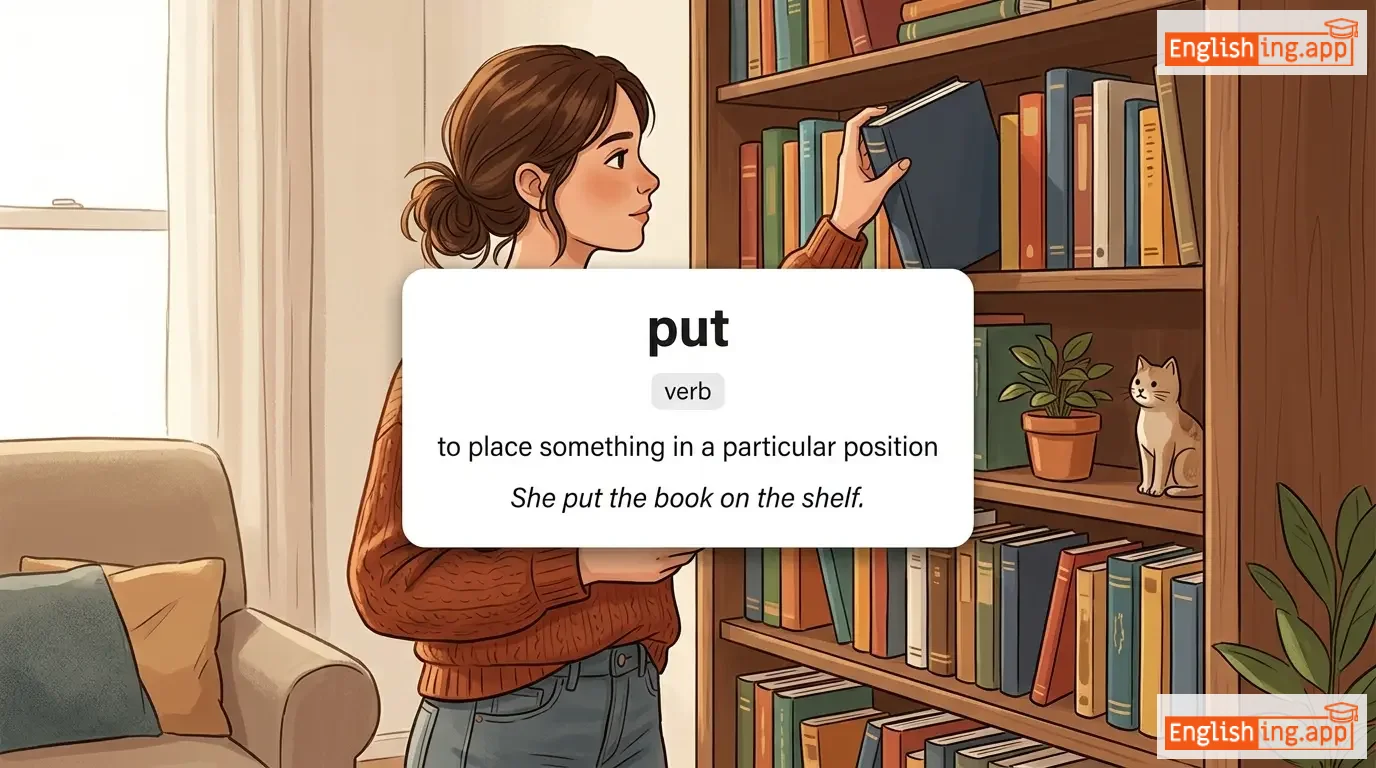
put definition card — visual illustration of the meaning
verb
/pʊt/
置く (oku)

to place something in a particular position

"She put the book on the shelf."

"彼女は本を棚に置いた。" (Kanojo wa hon o tana ni oita.)
adjective
/ˈpjuːtətɪv/
推定の (suitei no)

commonly accepted or supposed; generally regarded as such

"He is the putative father of the child."

"彼は子供の推定父親です。" (Kare wa kodomo no suitei chichioya desu.)
verb
/ˈpjuːtrɪfaɪ/
腐敗する (fuhai suru)

to decay or rot, producing a foul smell

"The meat began to putrefy in the heat."

"肉は熱で腐り始めました。" (Niku wa netsu de kusari hajimemashita.)
adjective
/ˌpjuːsɪˈlænɪməs/
臆病な (okubyona)

showing a lack of courage or determination; timid

"The pusillanimous leader avoided making tough decisions."

"臆病なリーダーは難しい決断を避けていた。" (Okubyona ri-da- wa muzukashii ketsudan wo saketeta.)