語彙集

英単語辞書 | 単語の意味、定義、例文

adjective
/ˌrɛpərˈtɔːriəl/
レポートに関する (repōto ni kansuru)

Relating to or characteristic of a repertoire, especially in journalism or performance contexts.

"The journalist's repertorial style captured every detail of the unfolding story."
"そのジャーナリストのレポーティオリアルスタイルは、展開するストーリーのあらゆる詳細を捉えました。" (Sono jānarisuto no repōtioriaru sutairu wa, tenkai suru sutōrī no arayuru shōsai o toraemashita.)
repertoire definition card — visual illustration of the meaning
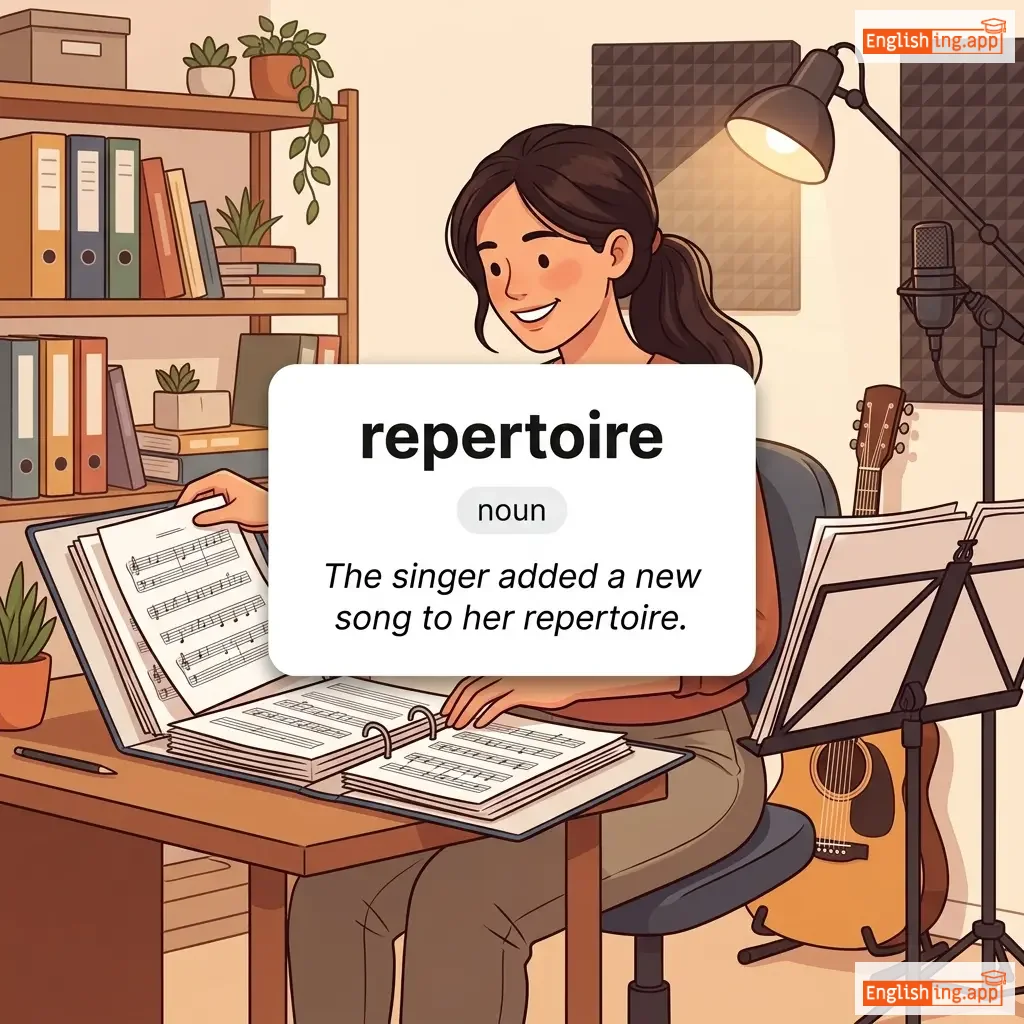
noun
/ˈrɛpərˌtwɑːr/
レパートリー (repatorii)

The entire range of skills, works, or pieces that a person or group is prepared to perform or use.

"The singer added a new song to her repertoire."
"その歌手は自分のレパートリーに新しい歌を加えました。" (Sono kashu wa jibun no repatorii ni atarashī uta o kuwaemashita.)
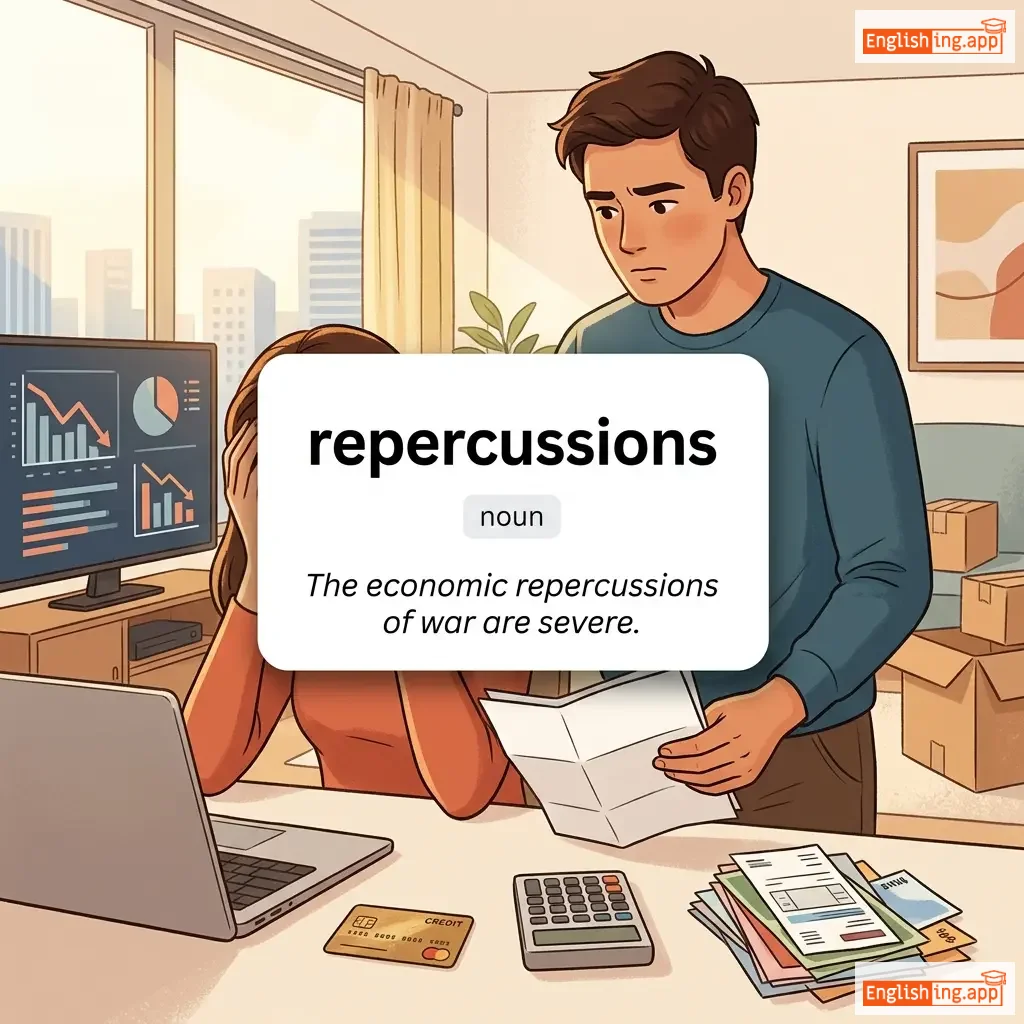
repercussions definition card — visual illustration of the meaning
noun
/ˌriː.pəˈkʌʃ.ənz/
影響 (eikyō)

An unintended consequence occurring some time after an event or action; the effects or results of something.

"The economic repercussions of war are severe."
"戦争の経済的影響は深刻です。" (Sensō no keizaiteki eikyō wa shinkoku desu.)
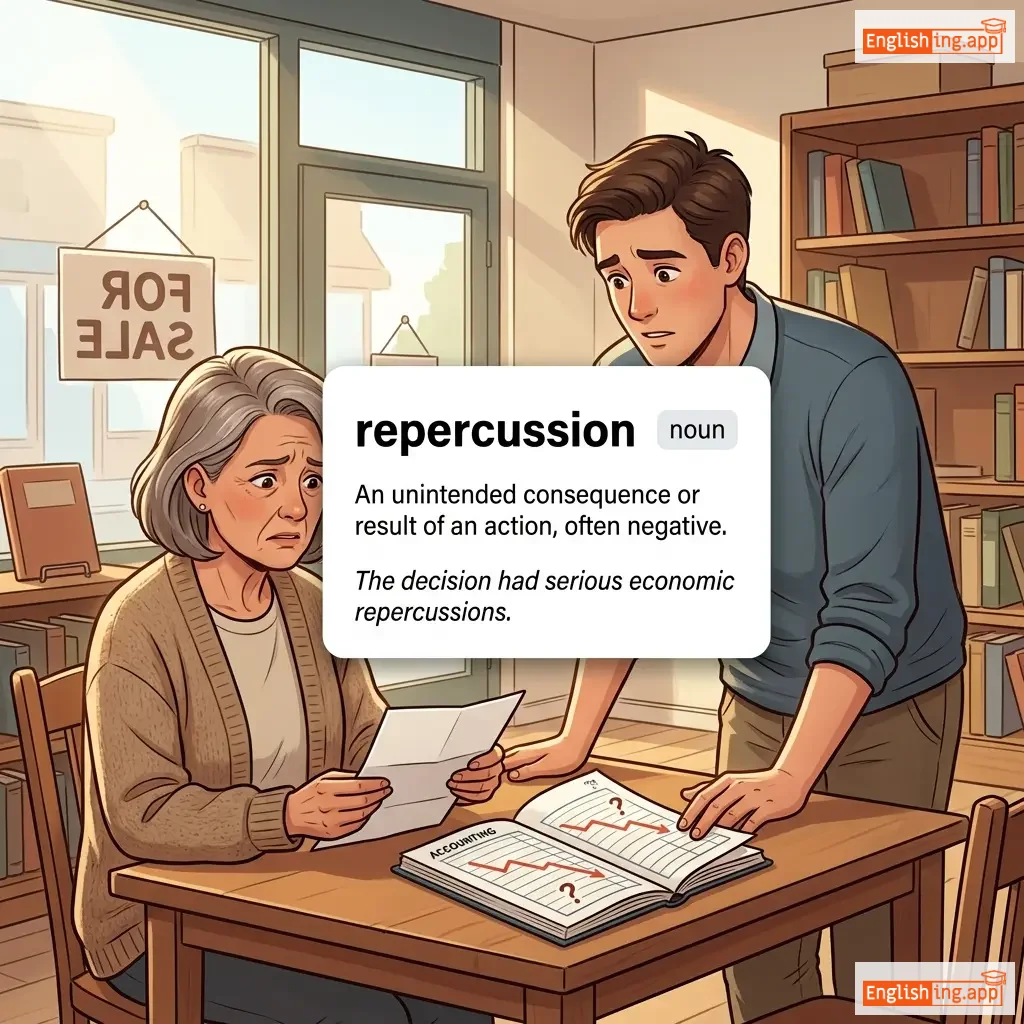
repercussion definition card — visual illustration of the meaning
noun
/ˌriːpərˈkʌʃən/

An unintended consequence or result of an action, often negative.

"The decision had serious economic repercussions."

adjective
/rɪˈpen.tənt/
後悔している; 反省している; 悔いている (kōkai shite iru; hansei shite iru; kuite iru)

feeling or expressing sincere regret and remorse; sorry for one's actions

"The repentant thief returned the stolen money."

"後悔している泥棒は盗んだお金を返しました。" (Kōkai shite iru dorobō wa nusunda okane o kaeshimashita.)
noun
/rɪˈpɛntəns/
後悔 (kōkai)

Deep regret or remorse for wrongdoing; sincere sorrow for one's sins or mistakes.

"He showed true repentance after apologizing for his mistakes."

"彼は自分の過ちを謝罪した後、真の後悔を示しました。" (Kare wa jibun no ayamachi o shazai shita ato, shin no kōkai o shimeshimasita.)
adjective
/rɪˈpɛlənt/
忌避剤 (kihi-zai)

Able to drive away something, especially insects or unpleasant things; causing disgust or distaste.

"This cream is highly effective as a mosquito repellent."
"このクリームは蚊除けとして非常に効果的です。" (Kono kurīmu wa ka-yoke to shite hijō ni kōkateki desu.)
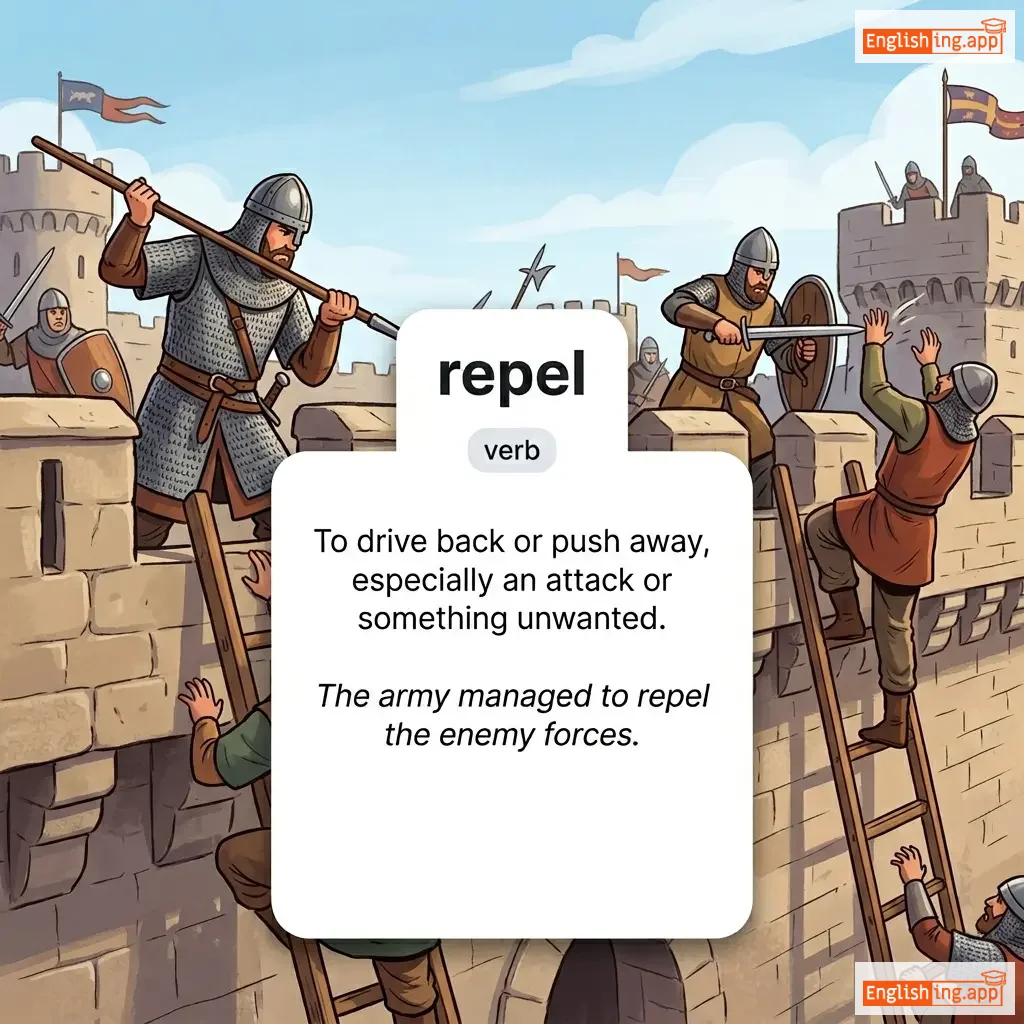
repel definition card — visual illustration of the meaning
verb
/rɪˈpɛl/
撃退する (gekitai suru)

To drive back or push away, especially an attack or something unwanted.

"The army managed to repel the enemy forces."

"軍隊は敵の軍隊を撃退することに成功した。" (Guntai wa teki no guntai o gekitai suru koto ni seikou shita.)
adjective
/rɪˈpiː.tɪd/
繰り返しの; 多くの回発生する (kurikaeshi no; ooku no kai hassei suru)

done again; happening again; occurring multiple times

"He made repeated attempts to contact her."

"彼は何度も彼女に連絡を試みました。" (Kare wa nando mo kanojo ni renraku o kokoromimashita)
verb
/rɪˈpiːt/
繰り返す (kurikaesu)

to say again or do again

"Could you please repeat that sentence?"

"その文をもう一度言ってくれませんか?" (Sono bun o mou ichido itte kuremasen ka?)
📜❌

repeal

verb
/rɪˈpiːl/

To officially cancel or revoke a law or decision.

"The government decided to repeal the outdated law."

verb
/riːˈpeɪ.tri.eɪt/
帰還させる (kikan saseru)

To return someone to their own country, often after war or imprisonment.

"The government worked to repatriate the refugees safely."

"政府は難民を安全に帰国させるために尽力しました。" (Seifu wa nanmin o anzen ni kikoku saseru tame ni jinryoku shimashita.)
noun
/rɪˈpæst/
食事 (shokuji)

A meal or the food eaten during a meal.

"They enjoyed a delicious repast by the riverside."

"彼らは川辺で美味しい食事を楽しんだ。" (Karera wa kawabe de oishii shokuji o tanoshinda.)
noun
/ˌrɛpɑːrˈtiː/
機知に富んだ返答 (kichi ni tonda hentou)

A quick, witty, and clever reply in conversation.

"The debate was full of sharp repartee between the two speakers."
"討論は二人の話者の間で鋭い機知に富んだ返答が交わされました。" (Tōron wa futari no hanashite no aida de surudoi kichi ni tonda hentou ga kawasaremashita.)
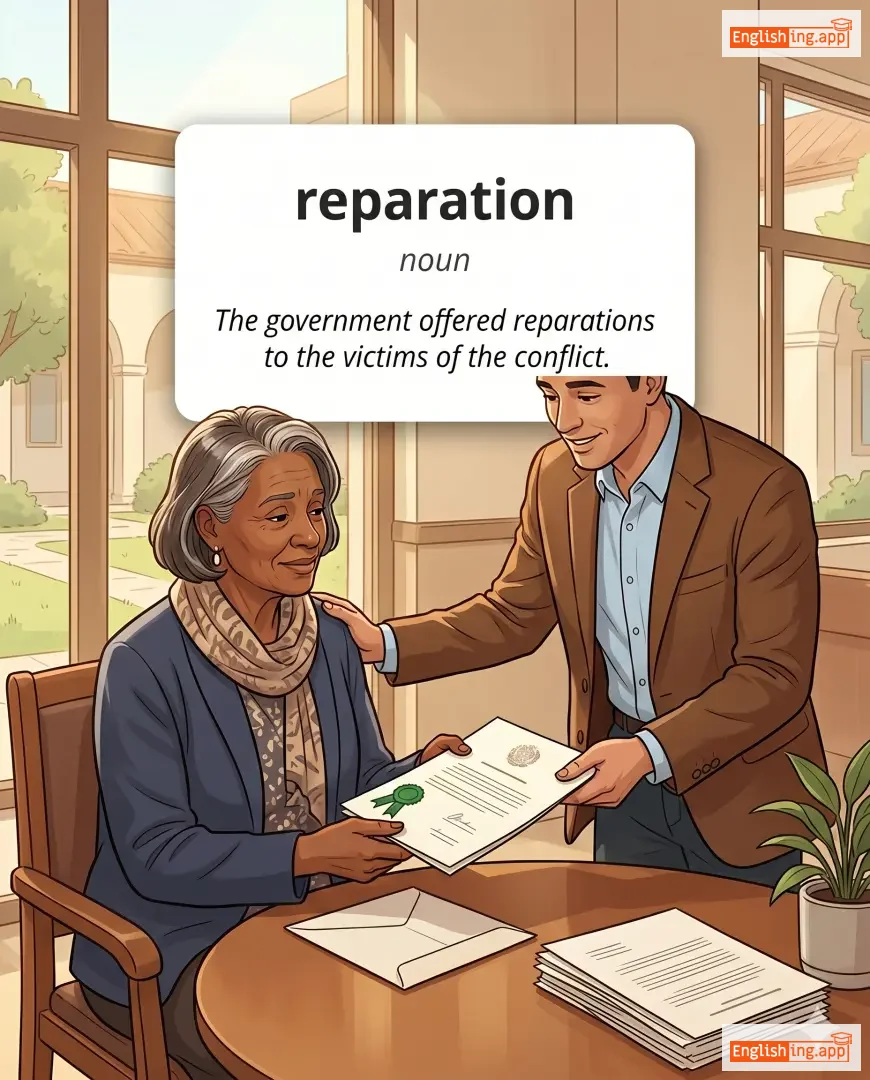
reparation definition card — visual illustration of the meaning
noun
/ˌrɛpəˈreɪʃən/
賠償 (baishou)

the making of amends for a wrong done by paying money or helping those who were wronged

"The government offered reparations to the victims of the conflict."

"政府は紛争の被害者に賠償を提供しました。" (Seifu wa funsou no higaisha ni baishou o teikyō shimashita.)
adjective
/ˈrɛpərəbəl/
修理可能 (shuuri kanou)

able to be repaired or fixed

"The damage to the car was serious but still reparable."

"車の損傷は深刻だったが、それでも修理可能だった。" (Kuruma no sonshou wa shinkoku datta ga, sore demo shuuri kanou datta.)
noun
/rɪˈpɛərə/
修理人 (shuurinin)

a person whose job is to fix damaged or broken things

"The repairer fixed the broken washing machine quickly."

"修理人は壊れた洗濯機をすぐに直した。" (shuurinin wa kowareta sentakuki o sugu ni naoshita)
adjective
/rɪˈper.ə.bəl/
修理可能 (shūrikano)

able to be fixed or mended; capable of being repaired

"The broken phone is repairable with the right parts."

"壊れた電話は正しい部品で修理可能です。" (Kowareta denwa wa tadashii buhin de shūri kanō desu.)
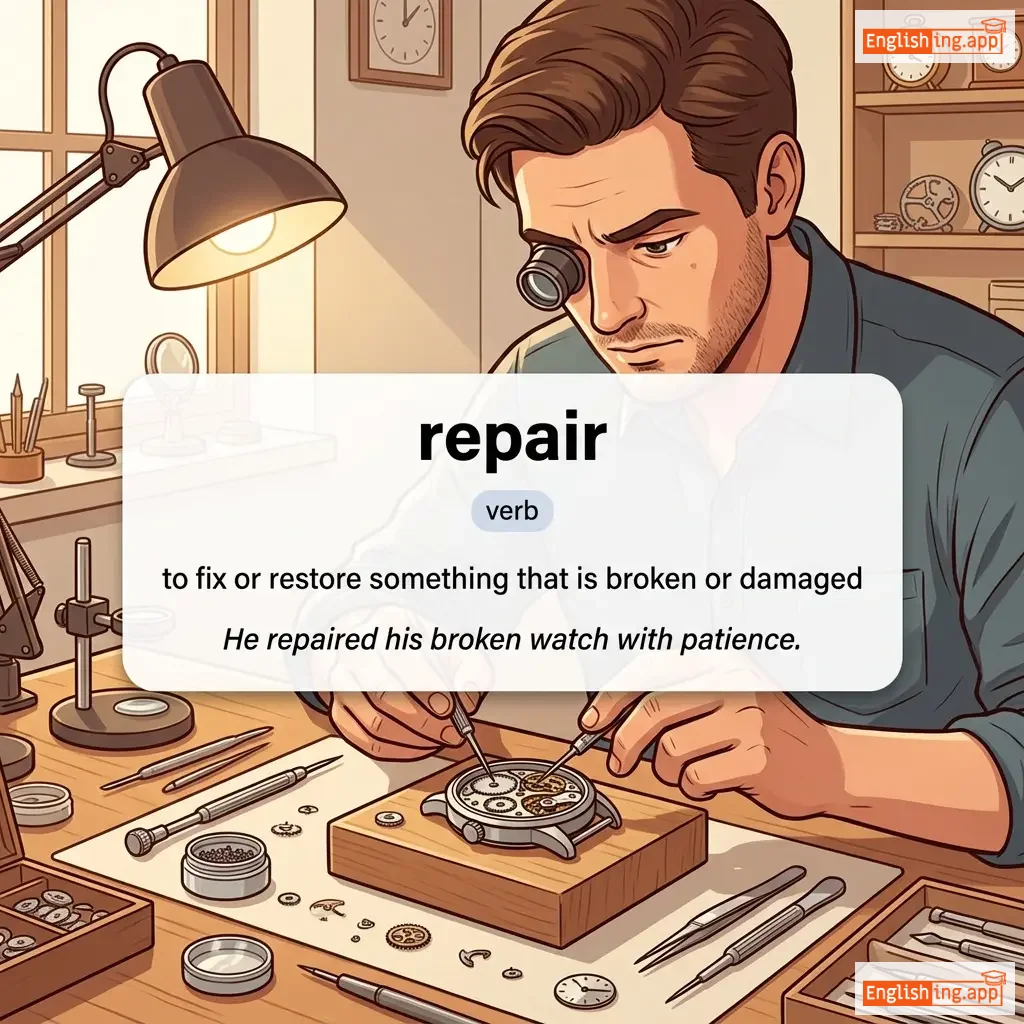
repair definition card — visual illustration of the meaning
verb
/rɪˈpɛər/

to fix or restore something that is broken or damaged

"He repaired his broken watch with patience."

verb
/riːˈɔːrɡənaɪz/
再編成する (saihensei suru)

to arrange something again in a different way for greater efficiency or order

"The manager decided to reorganize the team structure."

"マネージャーはチームの構造を再編成することに決めました。" (Manējā wa chīmu no kōzō o saihenkei suru koto ni kimemashita.)
noun
/rɪˌnʌnsiˈeɪʃən/
放棄 (hōki)

the formal rejection or giving up of something, usually a belief, claim, or way of life

"His renunciation of worldly pleasures impressed the monks."

"彼の世俗的な楽しみへの放棄は僧侶たちに感銘を与えました。" (Kare no sezokuteki na tanoshimi e no hōki wa sōryo-tachi ni kanmei o ataemashita.)
noun
/ˈrɛntəl/
レンタル (rentaru)

an arrangement in which something is rented, or the amount paid for renting

"The car rental was more expensive than we expected."

"レンタカーは予想より高かった。" (Rentakā wa yosō yori takakatta.)
noun, verb
/rɛnt/
家賃 (yachin)

payment made regularly by a tenant to a landlord for the use of property or land; also to pay for the use of something

"They decided to rent an apartment in the city center."

"彼らは市内中心部でアパートを借りることに決めました。" (Karera wa shinai chuushinbu de apāto wo kariru koto ni kimemashita.)
renowned definition card — visual illustration of the meaning
adjective
/rɪˈnaʊnd/
有名 (yūmei)

famous or well-known for a particular skill or achievement

"She is a renowned artist in the country."

"彼女はその国で有名なアーティストです。" (Kanojo wa sono kuni de yūmei na ātisuto desu.)
noun
/rɪˈnaʊn/
名声 (meisei)

the condition of being widely known and highly respected

"The scientist gained international renown for his groundbreaking research."

"その科学者は革新的な研究で国際的な名声を得ました。" (Sono kagakusha wa kakushinteki na kenkyuu de kokusai-teki na meisei o emashita.)
noun
/ˌren.əˈveɪ.ʃən/
リノベーション; 改修 (rinobeshon; kaishu)

the act of renovating; restoration to a former better state

"The old house underwent a complete renovation last year."

"その古い家は昨年完全な改修を受けました。" (Sono furui ie wa sakunen kanzen na kaishu wo ukemashita.)
adverb
/rɪˈpiːtɪdli/
繰り返し (kurikaeshi)

in a way that is repeated or done many times

"She apologized repeatedly for the mistake."

"彼女はそのミスを繰り返し謝罪しました。" (Kanojo wa sono misu o kurikaeshi shazai shimashita.)
adjective
/kwɪər/
奇妙 (kimyou)

Strange, odd, or unusual.

"He had a queer feeling that something was wrong."

"彼は何かが違うと感じて奇妙な気分だった。" (Kare wa nanika ga chigau to kanjite kimyou na kibun datta.)
verb
/kwɛl/
鎮圧する (chin'atsu suru)

To suppress or put an end to something, usually by force.

"The police were called to quell the violent protest."
"警察は暴力的な抗議を鎮圧するために呼ばれました。" (Keisatsu wa bōryokuteki na kōgi o chin'atsu suru tame ni yoba remashita.)
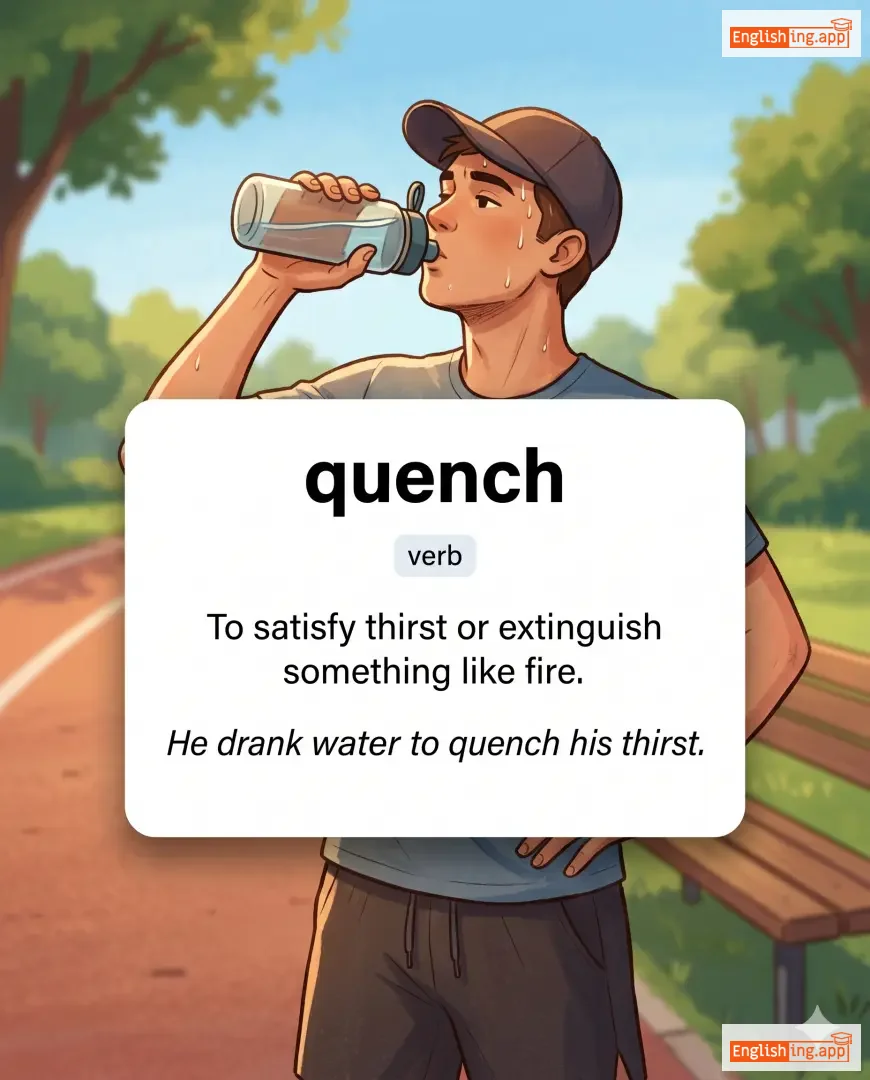
quench definition card — visual illustration of the meaning
verb
/kwɛntʃ/
渇きを癒す (kawaki wo iyasu)

To satisfy thirst or extinguish something like fire.

"He drank water to quench his thirst."

"彼は喉の渇きを癒すために水を飲んだ。" (Kare wa nodo no kawaki wo iyasu tame ni mizu wo nonda.)
verb
/ˈkwentʃɪŋ/
渇きを癒す / 火を消す (kawaki o iyasu / hi o kesu)

The act of satisfying thirst or extinguishing something like fire.

"Drinking cold water was quenching her thirst."

"冷たい水を飲むことが彼女の渇きを癒していました。" (Tsumetai mizu o nomu koto ga kanojo no kawaki o iyashiteimashita.)
adjective
/ˈkwɛrʊləs/
不平を言う (fuhē wo iu)

Complaining in a whining or irritable manner.

"The querulous customer kept finding fault with every detail."

"その不平を言う顧客は、すべての細部に不満を見つけ続けました。" (Sono fuhē wo iu kokyaku wa, subete no saibū ni fuman wo mitsukemashita.)
Query definition card — visual illustration of the meaning
noun/verb
/ˈkwɪəri/
質問 (shitsumon)

A question, especially one addressed to an official or organization; to ask a question or express doubt.

"She raised a query about the accuracy of the report."
"彼女はレポートの正確性について質問を提起しました。" (Kanojo wa repōto no seikakusa ni tsuite shitsumon wo teiki shimashita.)
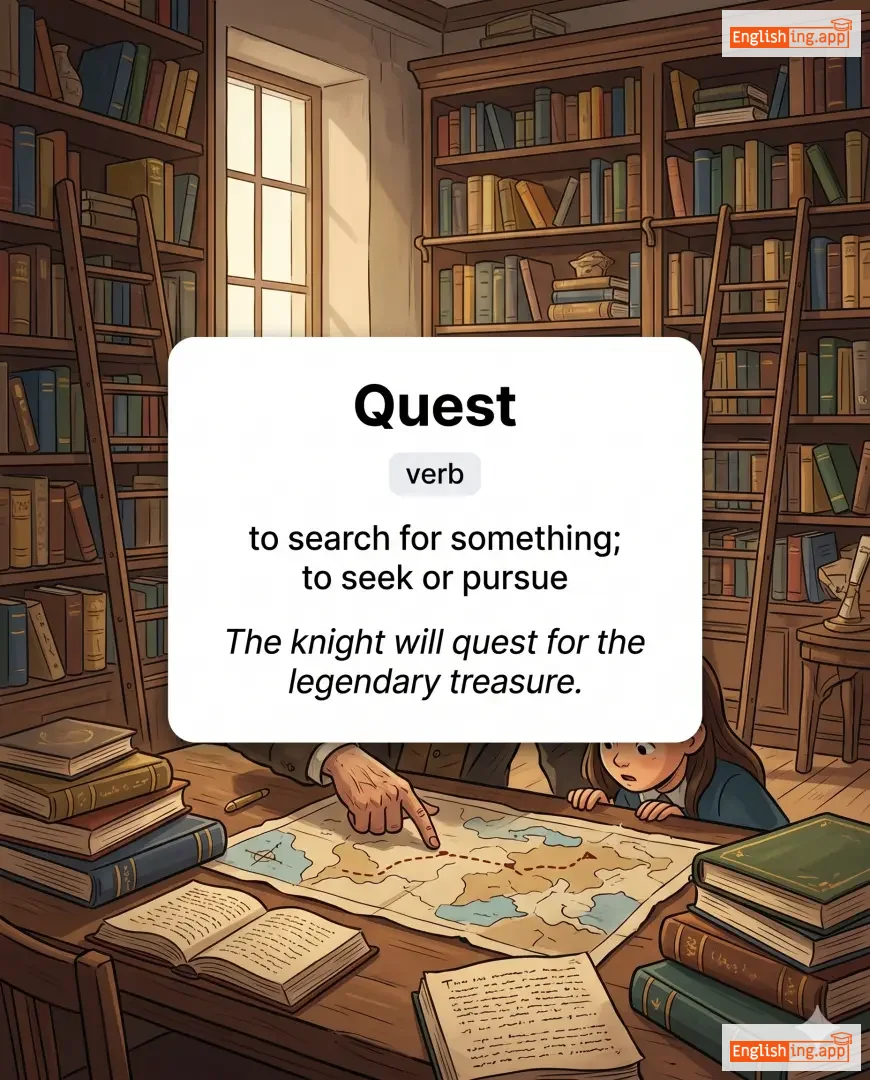
Quest definition card — visual illustration of the meaning
noun
/kwest/
探求, 探索 (tankyu, tansaku)

a long search for something that is difficult to find

"They went on a quest to find the lost treasure."
"彼らは失われた宝物を探しに行った。" (Karera wa ushinawareta hōmotsu o sagashi ni itta.)
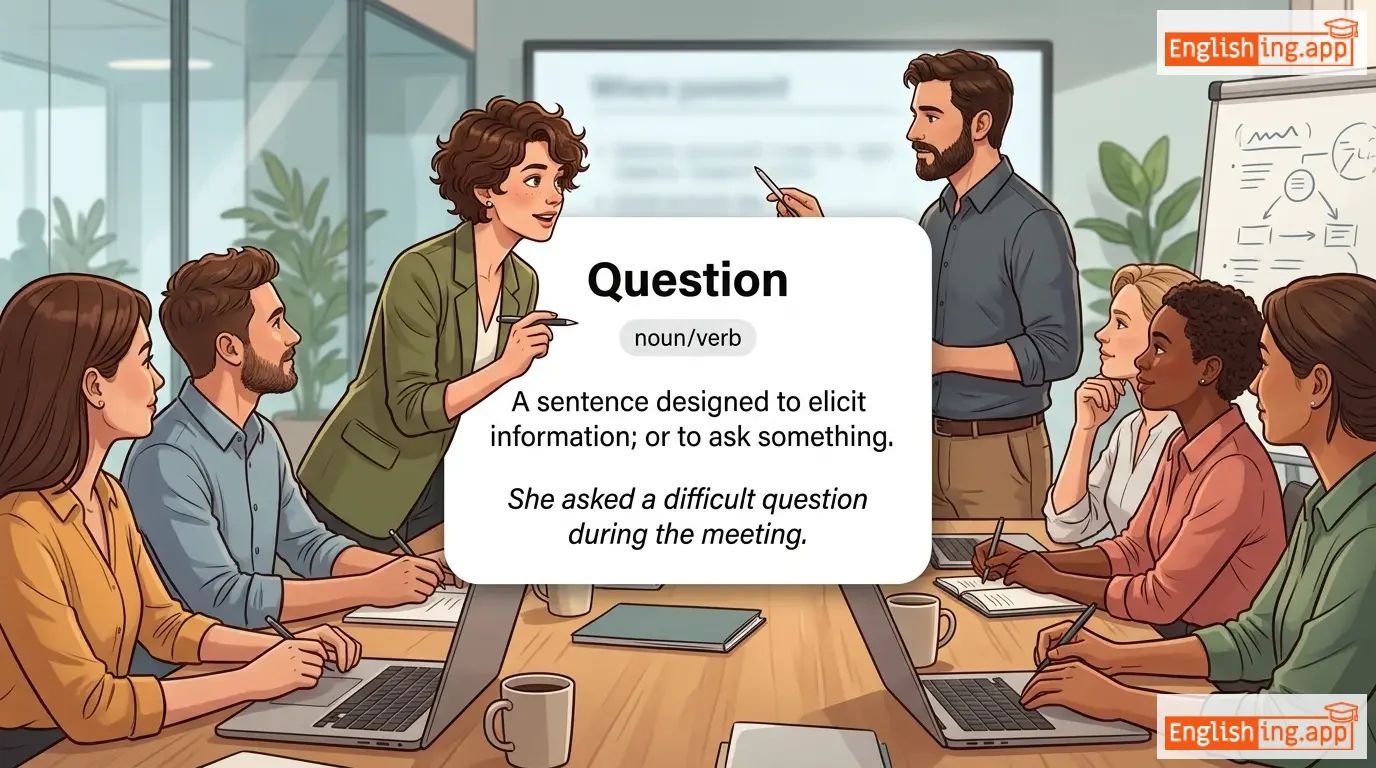
Question definition card — visual illustration of the meaning
noun/verb
/ˈkwes.tʃən/
質問 (shitsumon)

A sentence designed to elicit information; or to ask something.

"She asked a difficult question during the meeting."

"彼女は会議中に難しい質問をしました。" (Kanojo wa kaigi chuu ni muzukashii shitsumon wo shimashita.)
adjective
/ˈkwestʃənəbl/
疑わしい (utagawashii)

doubtful; dubious; suspicious; open to doubt or suspicion

"His questionable business practices led to an investigation."

"彼の疑わしいビジネス慣行は調査を引き起こしました。" (Kare no utagawashii bijinesu kan'nō wa chōsa o hikiokoshimashita.)
noun
/ˌkwes.tʃəˈneər/
アンケート (ankēto)

a set of written questions used to collect information or opinions

"Participants filled out a detailed questionnaire about their habits."

"参加者は自分の習慣についての詳細なアンケートに記入しました。" (Sanka-sha wa jibun no shūkan ni tsuite no shōsai na ankēto ni kinyū shimashita.)
🧍‍♂️🧍‍♀️

Queue (キュー)

noun/verb
/kjuː/
(retsu)

A line or sequence of people or vehicles awaiting their turn; to wait in line.

"People queued outside the theater for tickets."

"人々はチケットを求めて劇場の外で行列を作った。" (Hitobito wa chiketto o motomete gekijou no soto de gyoretsu o tsukutta.)
noun
/ˌkiː ˈviːv/
警戒 (keikai)

A state of alertness or vigilance.

"The guards were on the qui vive during the night."
"警備員は夜間、警戒状態にありました。" (Keibiin wa yakan, keikai jōtai ni arimashita.)
quibble definition card — visual illustration of the meaning
🗣️

quibble

verb/noun
/ˈkwɪbəl/

To argue or raise objections about a trivial matter; a petty objection.

"They quibbled over who should pay the bill."

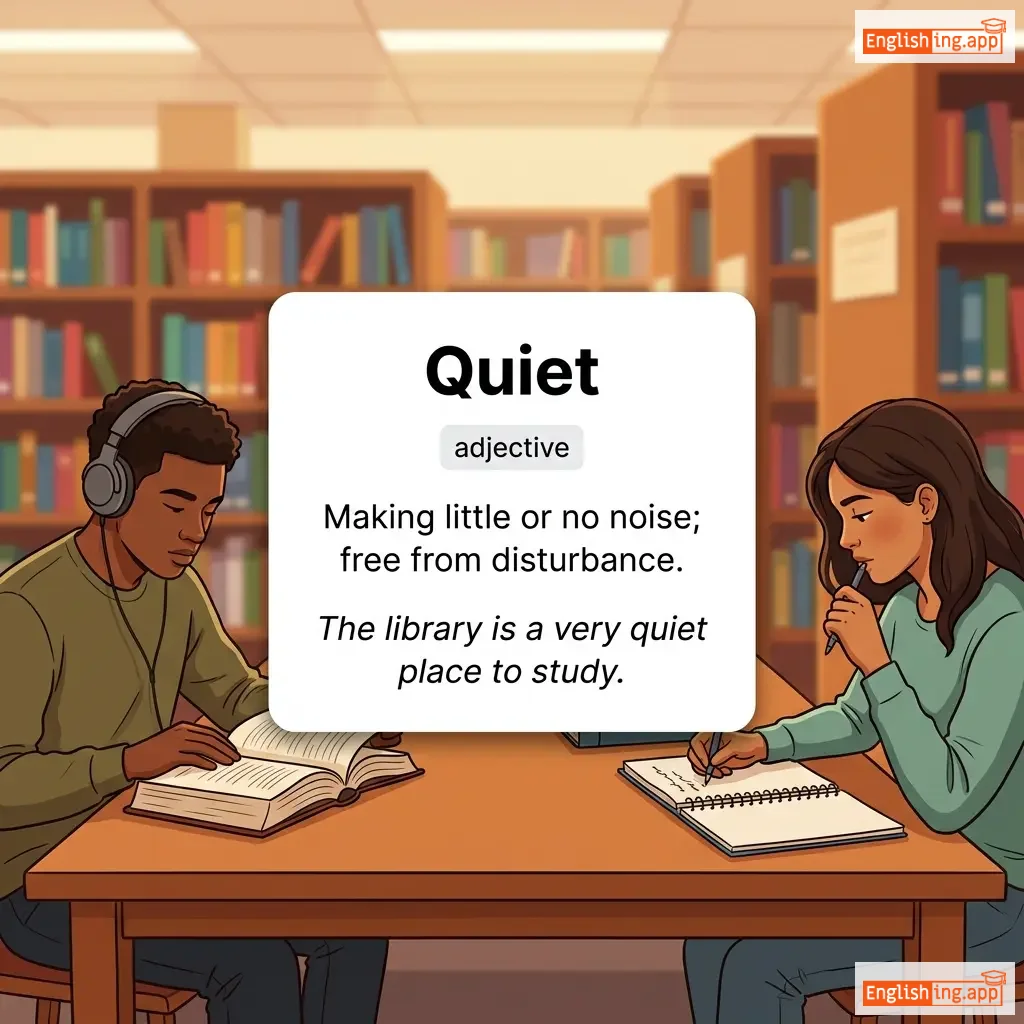
Quiet definition card — visual illustration of the meaning
adjective
/ˈkwaɪət/
静かな (shizukana)

Making little or no noise; free from disturbance.

"The library is a very quiet place to study."
"図書館はとても静かな勉強場所です。" (Toshokan wa totemo shizukana benkyō basho desu.)
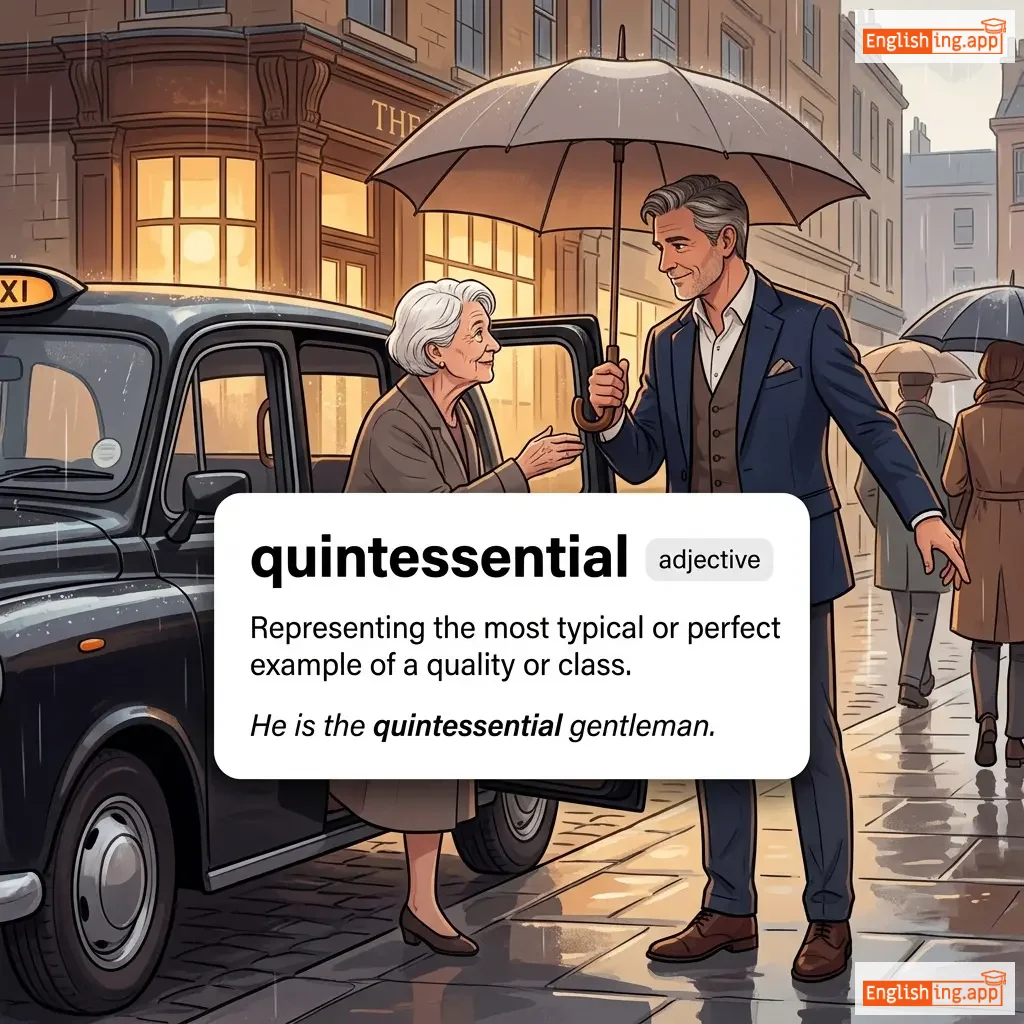
quintessential definition card — visual illustration of the meaning
adjective
/ˌkwɪntɪˈsɛnʃəl/
典型的な例 (tenkeiteki na rei)

Representing the most typical or perfect example of a quality or class.

"He is the quintessential gentleman."

"彼は典型的な紳士です。" (Kare wa tenkeiteki na shinshi desu.)
noun
/kwɪnˈtɛsəns/
エッセンス (essensu)

The purest or most perfect example of something.

"She is the quintessence of elegance."

"彼女は優雅さのエッセンスです。" (Kanojo wa yūgasa no essensu desu.)
noun
/kwɪlt/
キルト (kiruto)

a warm bed covering made of padding enclosed between layers of fabric

"Grandmother made a beautiful quilt for my bed."

"おばあちゃんは私のベッドに素敵なキルトを作ってくれました。" (Obaachan wa watashi no beddo ni suteki na kiruto o tsukutte kuremashita.)
noun
/kwaɪˈiːtəs/
終焉、死 (shūen, shi)

Something that ends or settles a situation; release from life, death.

"The scandal brought a quietus to his political career."

"そのスキャンダルは彼の政治キャリアに終焉をもたらした。" (Sono sukyandaru wa kare no seiji kyaria ni shūen o motarashita.)
noun
/ˈkwaɪəˌtuːd/
静けさ (shizukesa)

A state of stillness and tranquility.

"She enjoys the quietude of the countryside."

"彼女は田舎の静けさを楽しんでいます。" (Kanojo wa inaka no shizukesa wo tanoshindeimasu.)
adverb
/ˈkwaɪətli/
静かに (shizukani)

in a silent or calm manner

"He spoke quietly so no one would hear."

"彼は静かに話し、誰も聞こえないようにした。" (Kare wa shizukani hanashi, dare mo kikoenai yō ni shita.)
verb
/ˈkwɪkən/
加速する (kasoku suru)

to make or become faster; to accelerate

"His pulse began to quicken as he approached the finish line."

"彼の脈拍はゴールラインに近づくにつれて速くなり始めた。" (Kare no myakuhaku wa gōru rain ni chikaduku ni tsurete hayaku nari hajimeta.)
adverb
/ˈkwɪkli/
速く (hayaku)

at a fast speed

"She finished the test quickly."

"彼女はテストを速く終わらせた。" (Kanojo wa tesuto o hayaku owaraseta.)
noun
/ˈkwɪkˌsɪlvər/
水銀 (suigin)

Mercury; a liquid metal, or something that is quick and unpredictable.

"His mood was as changeable as quicksilver."

"彼の気分は水銀のように変わりやすかった。" (Kare no kibun wa suigin no you ni kawari yasukatta.)