語彙集

英単語辞書 | 単語の意味、定義、例文

noun
/kiː/
桟橋 (sanbashi)

A platform lying alongside or projecting into water for loading and unloading ships.

"The cargo was unloaded at the quay."

"貨物は桟橋で荷降ろしされました。" (Kamon wa sanbashi de ni oroshi saremashita.)
adjective
/ˈkwiːzi/
気分が悪い (kibun ga warui)

Feeling sick to one's stomach; nauseated.

"She felt queasy after the long boat ride."

"彼女は長いボートの旅の後、気分が悪くなった。" (Kanojo wa nagai booto no tabi no ato, kibun ga waruku natta.)
noun
/kwiːn/
女王 (joō)

a female ruler of a country or the wife of a king

"The queen addressed her people with grace."

"女王は優雅に人々に話しかけた。" (Joō wa yūga ni hitobito ni hanashikaketa.)
noun
/kwiːn kreɪp ˈmɜːrtəl/
クイーンクレープマートル (kui-n kure-pu ma-to-ru)

A flowering tree with colorful, crepe-like flowers, scientifically known as Lagerstroemia

"The Queen crape myrtle bloomed beautifully in the garden with its purple flowers."

"クイーンクレープマートルは庭で紫色の花とともに美しく咲きました。" (Kui-n kure-pu ma-to-ru wa niwa de murasakiiro no hana to tomo ni utsukushiku sakimashita.)
adjective
/kwɪər/
奇妙 (kimyou)

Strange, odd, or unusual.

"He had a queer feeling that something was wrong."

"彼は何かが違うと感じて奇妙な気分だった。" (Kare wa nanika ga chigau to kanjite kimyou na kibun datta.)
verb
/kwɛl/
鎮圧する (chin'atsu suru)

To suppress or put an end to something, usually by force.

"The police were called to quell the violent protest."
"警察は暴力的な抗議を鎮圧するために呼ばれました。" (Keisatsu wa bōryokuteki na kōgi o chin'atsu suru tame ni yoba remashita.)
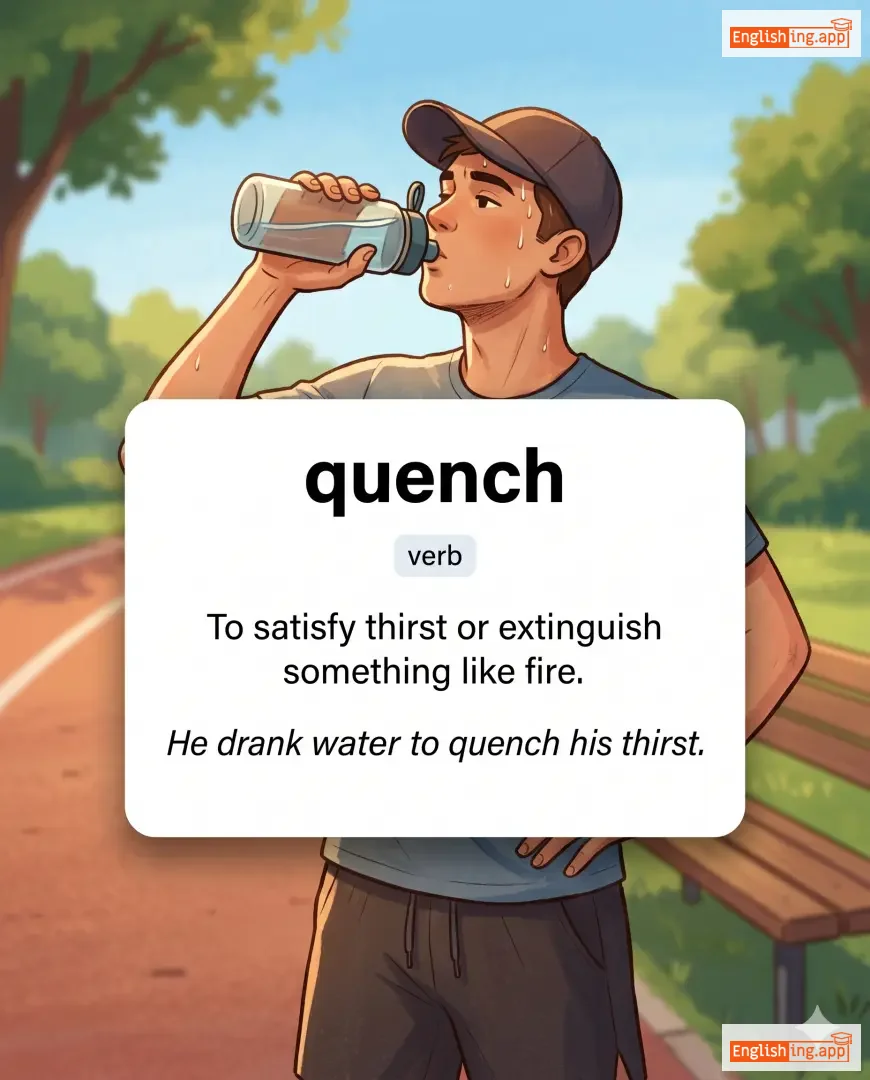
quench definition card — visual illustration of the meaning
verb
/kwɛntʃ/
渇きを癒す (kawaki wo iyasu)

To satisfy thirst or extinguish something like fire.

"He drank water to quench his thirst."

"彼は喉の渇きを癒すために水を飲んだ。" (Kare wa nodo no kawaki wo iyasu tame ni mizu wo nonda.)
verb
/ˈkwentʃɪŋ/
渇きを癒す / 火を消す (kawaki o iyasu / hi o kesu)

The act of satisfying thirst or extinguishing something like fire.

"Drinking cold water was quenching her thirst."

"冷たい水を飲むことが彼女の渇きを癒していました。" (Tsumetai mizu o nomu koto ga kanojo no kawaki o iyashiteimashita.)
adjective
/ˈkwɛrʊləs/
不平を言う (fuhē wo iu)

Complaining in a whining or irritable manner.

"The querulous customer kept finding fault with every detail."

"その不平を言う顧客は、すべての細部に不満を見つけ続けました。" (Sono fuhē wo iu kokyaku wa, subete no saibū ni fuman wo mitsukemashita.)
Query definition card — visual illustration of the meaning
noun/verb
/ˈkwɪəri/
質問 (shitsumon)

A question, especially one addressed to an official or organization; to ask a question or express doubt.

"She raised a query about the accuracy of the report."
"彼女はレポートの正確性について質問を提起しました。" (Kanojo wa repōto no seikakusa ni tsuite shitsumon wo teiki shimashita.)
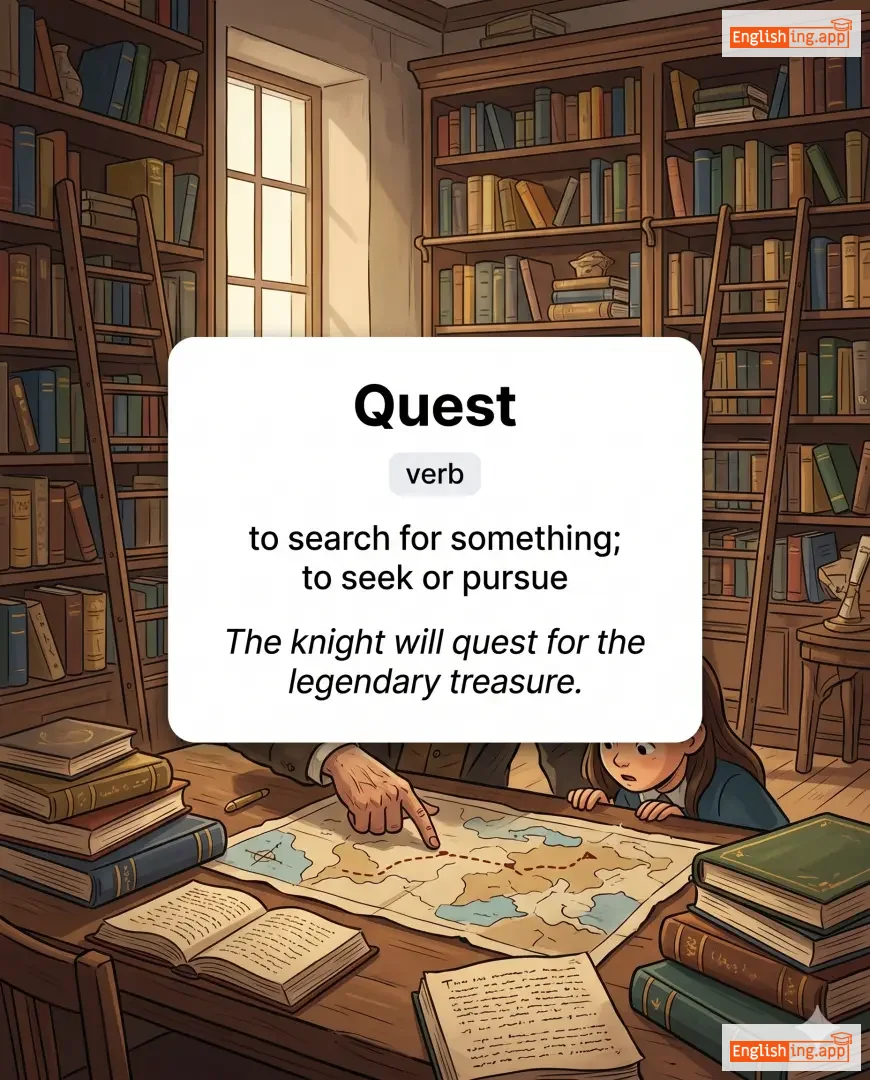
Quest definition card — visual illustration of the meaning
noun
/kwest/
探求, 探索 (tankyu, tansaku)

a long search for something that is difficult to find

"They went on a quest to find the lost treasure."
"彼らは失われた宝物を探しに行った。" (Karera wa ushinawareta hōmotsu o sagashi ni itta.)
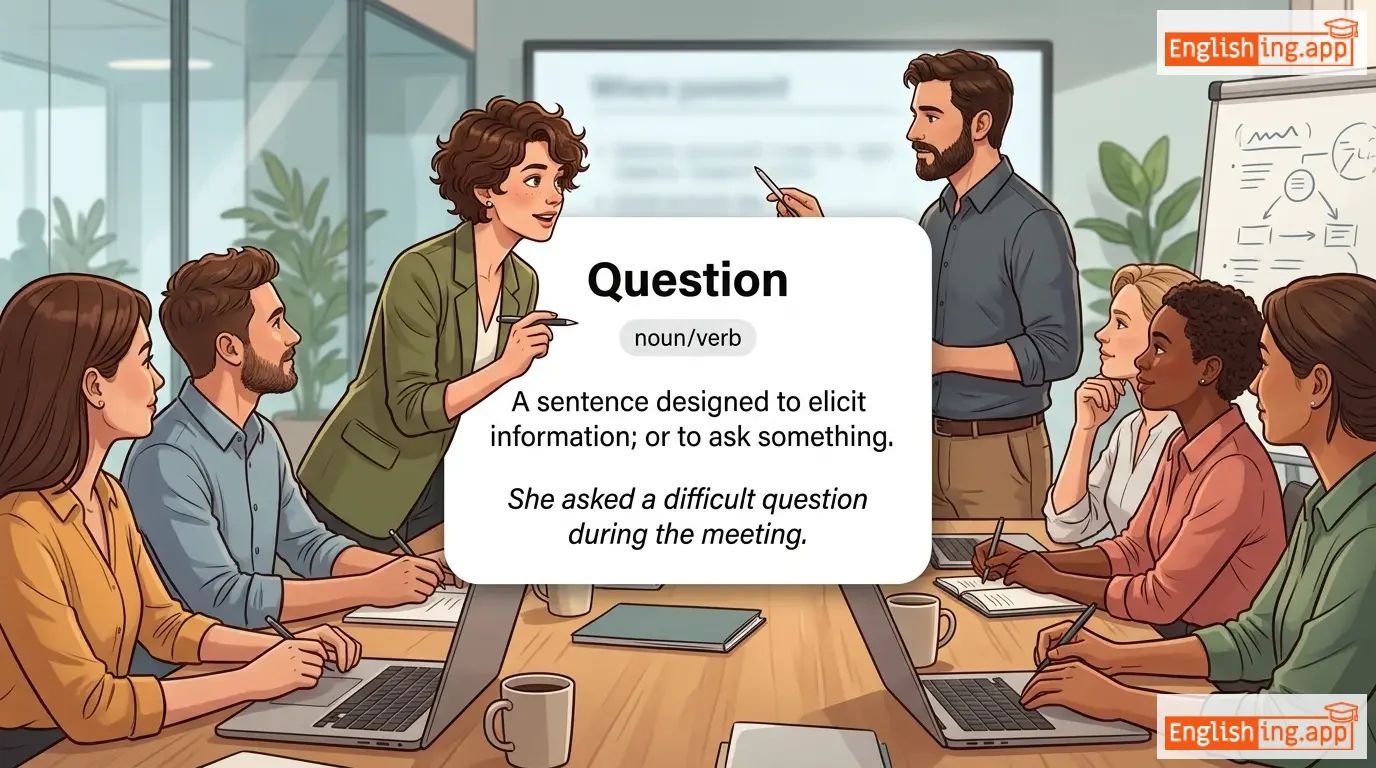
Question definition card — visual illustration of the meaning
noun/verb
/ˈkwes.tʃən/
質問 (shitsumon)

A sentence designed to elicit information; or to ask something.

"She asked a difficult question during the meeting."

"彼女は会議中に難しい質問をしました。" (Kanojo wa kaigi chuu ni muzukashii shitsumon wo shimashita.)
adjective
/ˈkwestʃənəbl/
疑わしい (utagawashii)

doubtful; dubious; suspicious; open to doubt or suspicion

"His questionable business practices led to an investigation."

"彼の疑わしいビジネス慣行は調査を引き起こしました。" (Kare no utagawashii bijinesu kan'nō wa chōsa o hikiokoshimashita.)
noun
/ˌkwes.tʃəˈneər/
アンケート (ankēto)

a set of written questions used to collect information or opinions

"Participants filled out a detailed questionnaire about their habits."

"参加者は自分の習慣についての詳細なアンケートに記入しました。" (Sanka-sha wa jibun no shūkan ni tsuite no shōsai na ankēto ni kinyū shimashita.)
🧍‍♂️🧍‍♀️

Queue (キュー)

noun/verb
/kjuː/
(retsu)

A line or sequence of people or vehicles awaiting their turn; to wait in line.

"People queued outside the theater for tickets."

"人々はチケットを求めて劇場の外で行列を作った。" (Hitobito wa chiketto o motomete gekijou no soto de gyoretsu o tsukutta.)
noun
/ˌkiː ˈviːv/
警戒 (keikai)

A state of alertness or vigilance.

"The guards were on the qui vive during the night."

"警備員は夜間、警戒状態にありました。" (Keibiin wa yakan, keikai jōtai ni arimashita.)
quibble definition card — visual illustration of the meaning
🗣️

quibble

verb/noun
/ˈkwɪbəl/

To argue or raise objections about a trivial matter; a petty objection.

"They quibbled over who should pay the bill."

Quick definition card — visual illustration of the meaning
adjective
/kwɪk/
速い (hayai)

moving fast or doing something in a short time

"She is a quick learner."

"彼女は速い学習者です。" (Kanojo wa hayai gakushuusha desu.)
noun
/ˈkwɪk.sænd/
クイックサンド (quicksand)

loose wet sand that yields easily to pressure and sucks in anything on its surface

"The explorer got trapped in quicksand while crossing the desert."

"探検家は砂漠を横断中にクイックサンドに捕まりました。" (tankenka wa sabaku o ōdan chū ni quicksand ni tsukamari mashita)
verb
/ˈkwɪkən/
加速する (kasoku suru)

to make or become faster; to accelerate

"His pulse began to quicken as he approached the finish line."

"彼の脈拍はゴールラインに近づくにつれて速くなり始めた。" (Kare no myakuhaku wa gōru rain ni chikaduku ni tsurete hayaku nari hajimeta.)
adverb
/ˈkwɪkli/
速く (hayaku)

at a fast speed

"She finished the test quickly."

"彼女はテストを速く終わらせた。" (Kanojo wa tesuto o hayaku owaraseta.)
noun
/ˈkwɪkˌsɪlvər/
水銀 (suigin)

Mercury; a liquid metal, or something that is quick and unpredictable.

"His mood was as changeable as quicksilver."

"彼の気分は水銀のように変わりやすかった。" (Kare no kibun wa suigin no you ni kawari yasukatta.)
noun
/kwɪˈɛsəns/
静止 (seishi)

A state of quietness, inactivity, or dormancy.

"The volcano has been in a state of quiescence for decades."
"火山は数十年間静止状態にあります。" (Kazan wa suujyun nenkan seishi joutai ni arimasu.)
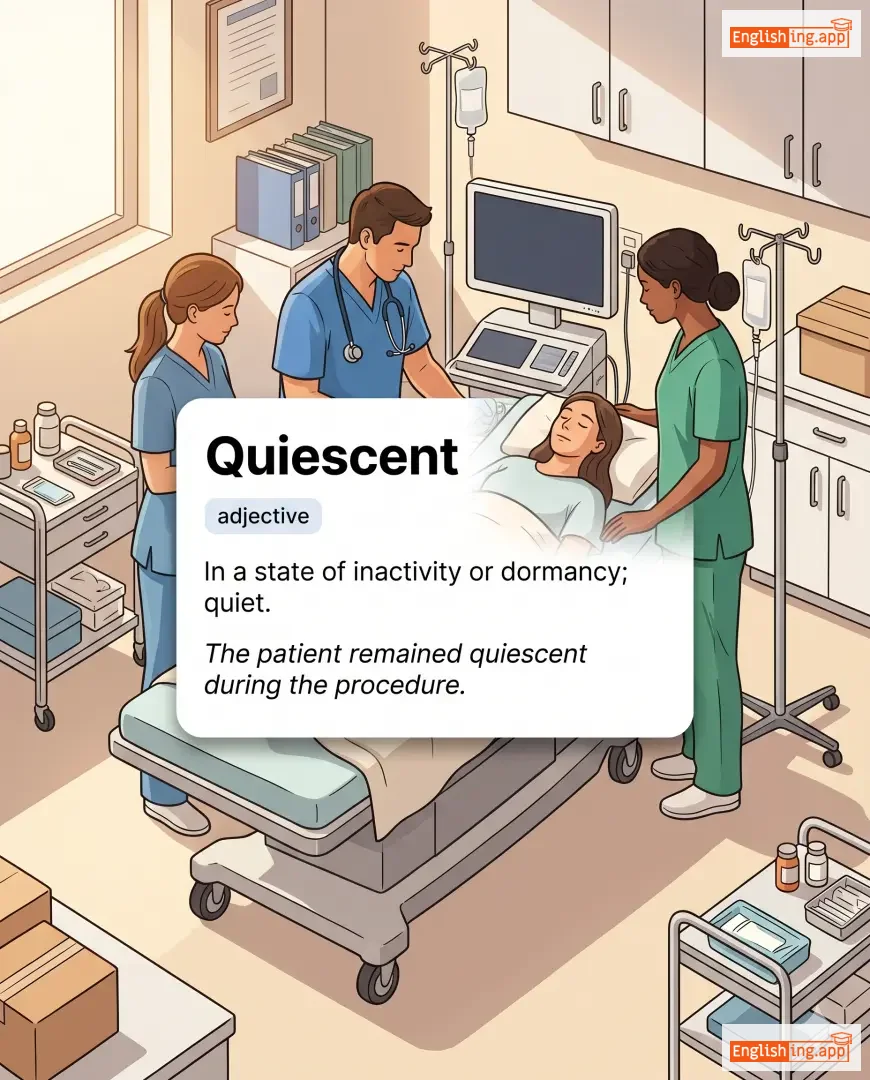
Quiescent definition card — visual illustration of the meaning
adjective
/kwɪˈɛsənt/
静かな (shizukana)

In a state of inactivity or dormancy; quiet.

"The patient remained quiescent during the procedure."
"患者は手順中静かにしていました。" (Kanja wa tetsuzuki-chū shizukani shite imashita.)
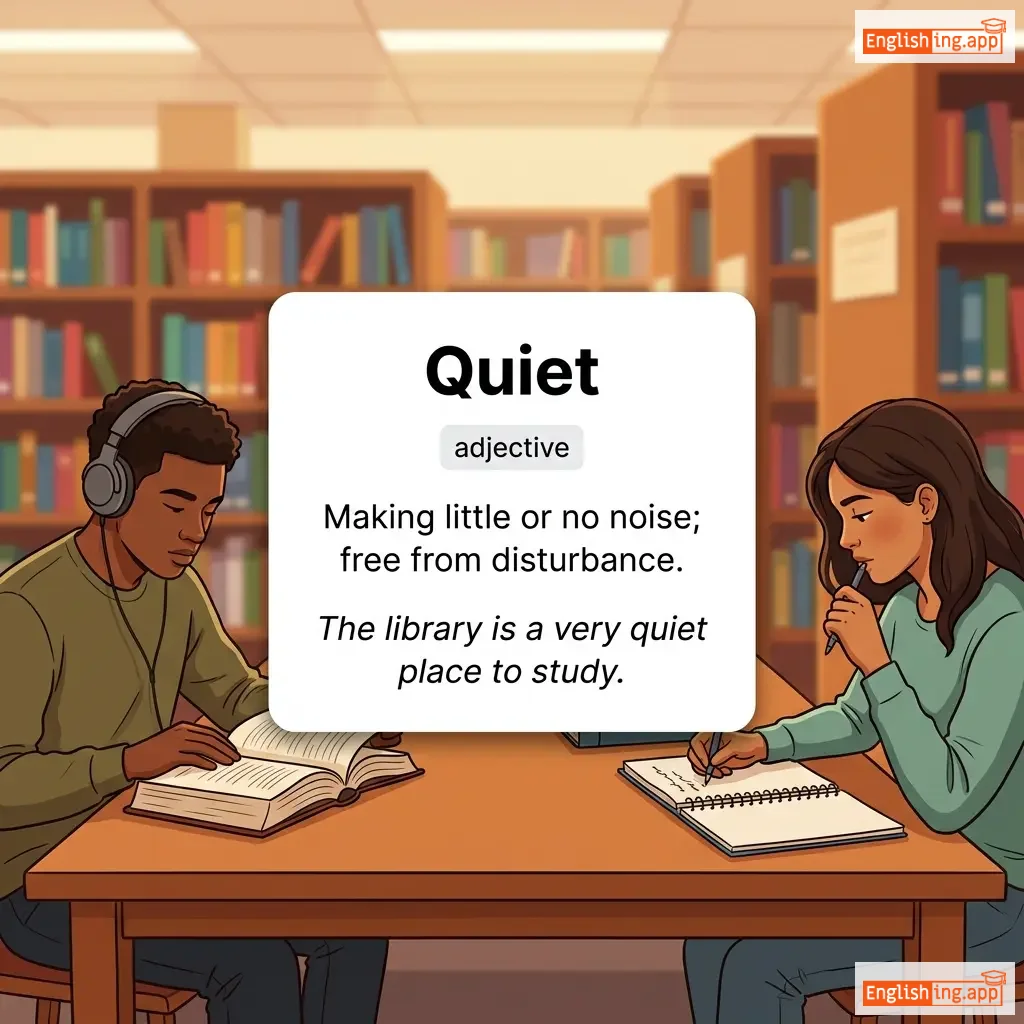
Quiet definition card — visual illustration of the meaning
adjective
/ˈkwaɪət/
静かな (shizukana)

Making little or no noise; free from disturbance.

"The library is a very quiet place to study."

"図書館はとても静かな勉強場所です。" (Toshokan wa totemo shizukana benkyō basho desu.)
adverb
/ˈkwaɪətli/
静かに (shizukani)

in a silent or calm manner

"He spoke quietly so no one would hear."

"彼は静かに話し、誰も聞こえないようにした。" (Kare wa shizukani hanashi, dare mo kikoenai yō ni shita.)
noun
/ˈkwaɪəˌtuːd/
静けさ (shizukesa)

A state of stillness and tranquility.

"She enjoys the quietude of the countryside."

"彼女は田舎の静けさを楽しんでいます。" (Kanojo wa inaka no shizukesa wo tanoshindeimasu.)
noun
/kwaɪˈiːtəs/
終焉、死 (shūen, shi)

Something that ends or settles a situation; release from life, death.

"The scandal brought a quietus to his political career."

"そのスキャンダルは彼の政治キャリアに終焉をもたらした。" (Sono sukyandaru wa kare no seiji kyaria ni shūen o motarashita.)
noun
/kwɪlt/
キルト (kiruto)

a warm bed covering made of padding enclosed between layers of fabric

"Grandmother made a beautiful quilt for my bed."

"おばあちゃんは私のベッドに素敵なキルトを作ってくれました。" (Obaachan wa watashi no beddo ni suteki na kiruto o tsukutte kuremashita.)
noun
/kwɪnˈtɛsəns/
エッセンス (essensu)

The purest or most perfect example of something.

"She is the quintessence of elegance."
"彼女は優雅さのエッセンスです。" (Kanojo wa yūgasa no essensu desu.)
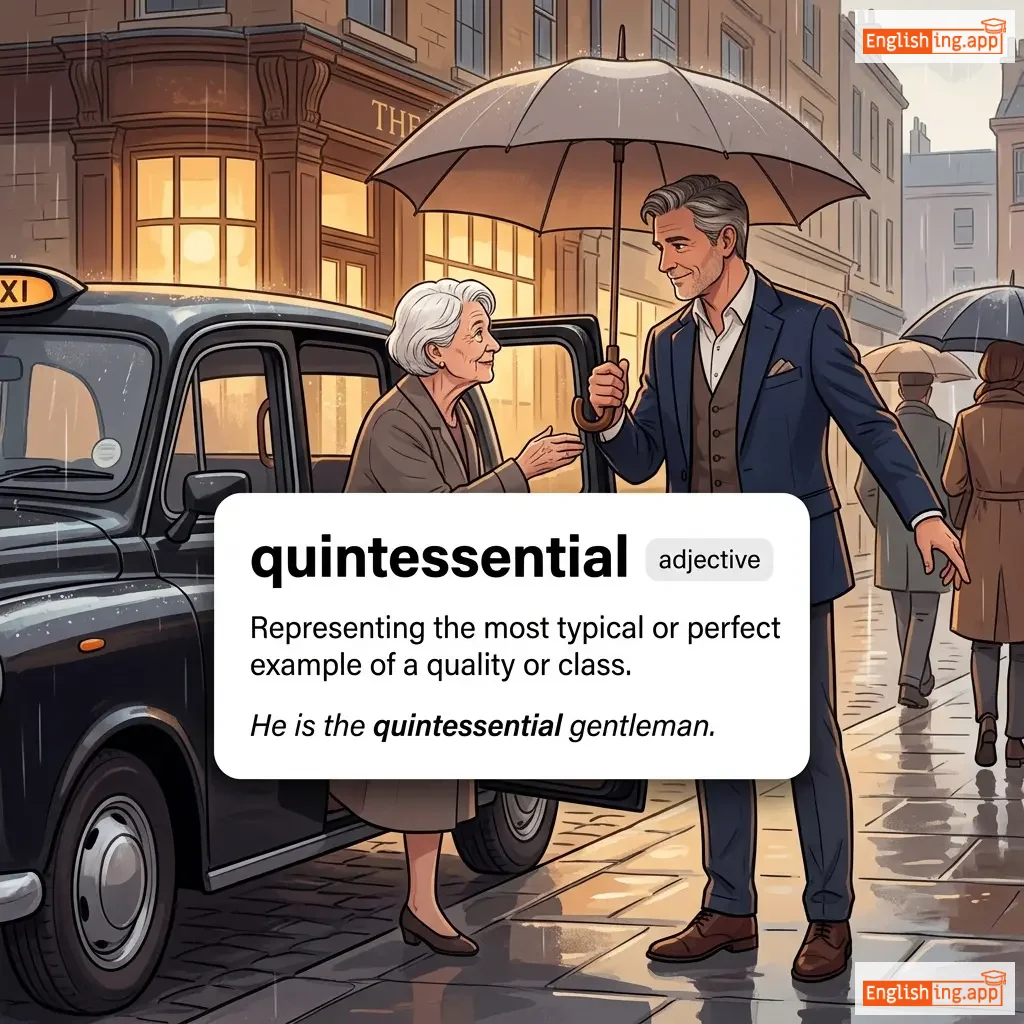
quintessential definition card — visual illustration of the meaning
adjective
/ˌkwɪntɪˈsɛnʃəl/
典型的な例 (tenkeiteki na rei)

Representing the most typical or perfect example of a quality or class.

"He is the quintessential gentleman."

"彼は典型的な紳士です。" (Kare wa tenkeiteki na shinshi desu.)
noun
/ˈræftər/
小屋の梁 (koya no hari)

One of the sloping beams that supports a roof.

"The old barn’s rafters were exposed."

"古い納屋の小屋の梁がむき出しになっていました。" (Furui noya no koya no hari ga mukidashi ni natte imashita.)
noun
/ˈreɪdɑːr/
レーダー (rēdā)

a system that uses radio waves to detect the position and speed of objects

"The plane was detected by the airport's radar system."

"その飛行機は空港のレーダーシステムによって検出されました。" (sono hikōki wa kūkō no rēdā shisutemu ni yotte kenshutsu saremashita.)
noun
/ˈreɪdiəns/
輝き (kagayaki)

the quality of shining with bright light; a glowing or beaming quality

"Her face was filled with radiance after hearing the good news."

"良いニュースを聞いた後、彼女の顔は輝きで満ちていました。" (Yoi nyūsu o kiita ato, kanojo no kao wa kagayaki de michiteimashita.)
adjective
/ˈreɪdiənt/
輝く (kagayaku)

Shining brightly; expressing great happiness.

"She looked radiant in her wedding dress."

"彼女はウェディングドレスで輝いて見えました。" (Kanojo wa ueddingu doresu de kagayaite miemashita.)
verb
/ˈreɪdieɪt/
放射する (hōsha suru)

to emit energy or light; to spread out from a center

"The fireplace radiates warmth throughout the room."
"暖炉は部屋全体に暖かさを放射します。" (Danro wa heya zentai ni atatakasa o hōsha shimasu.)
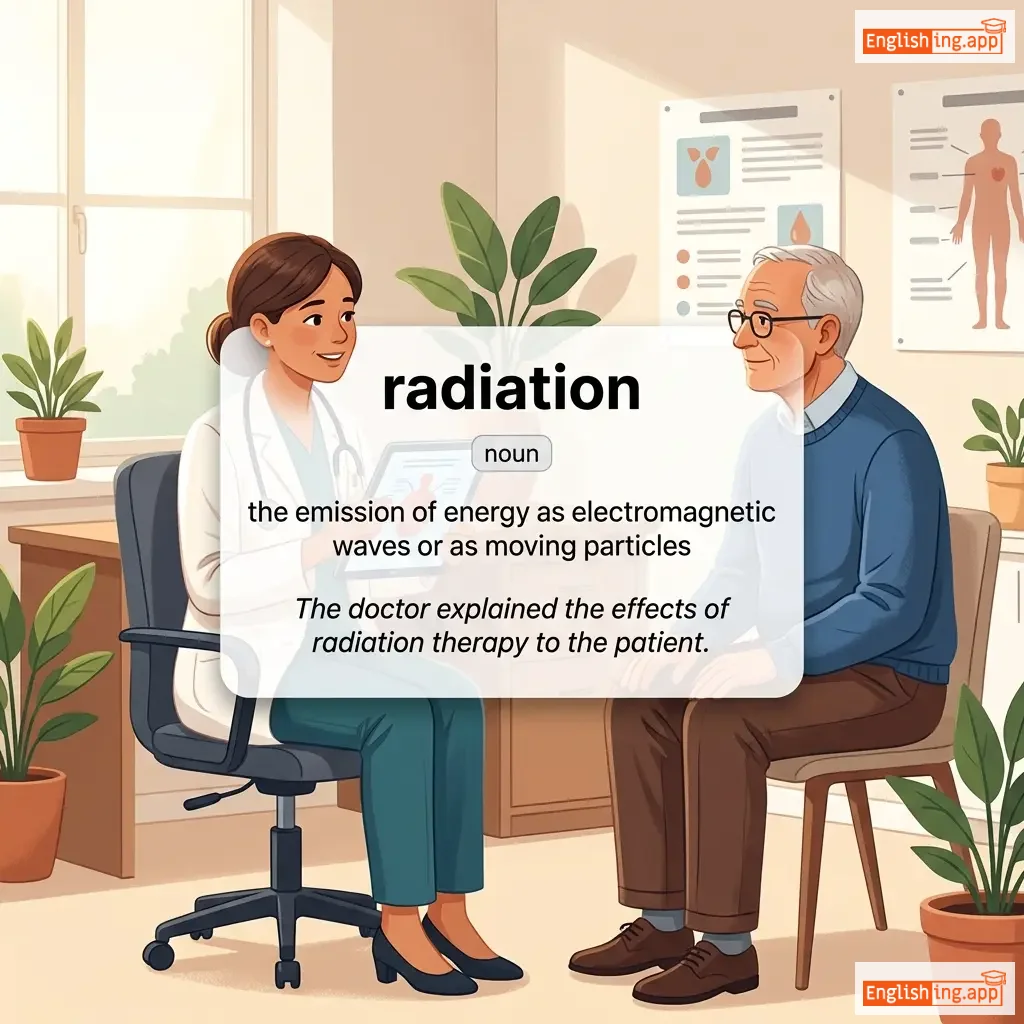
radiation definition card — visual illustration of the meaning
noun
/ˌreɪdiˈeɪʃən/
放射線 (hōshasen)

the emission of energy as electromagnetic waves or as moving particles

"The doctor explained the effects of radiation therapy to the patient."
"医者は患者に放射線治療の効果を説明しました。" (Isha wa kanja ni hōshasen chiryō no kōka o setsumei shimashita.)
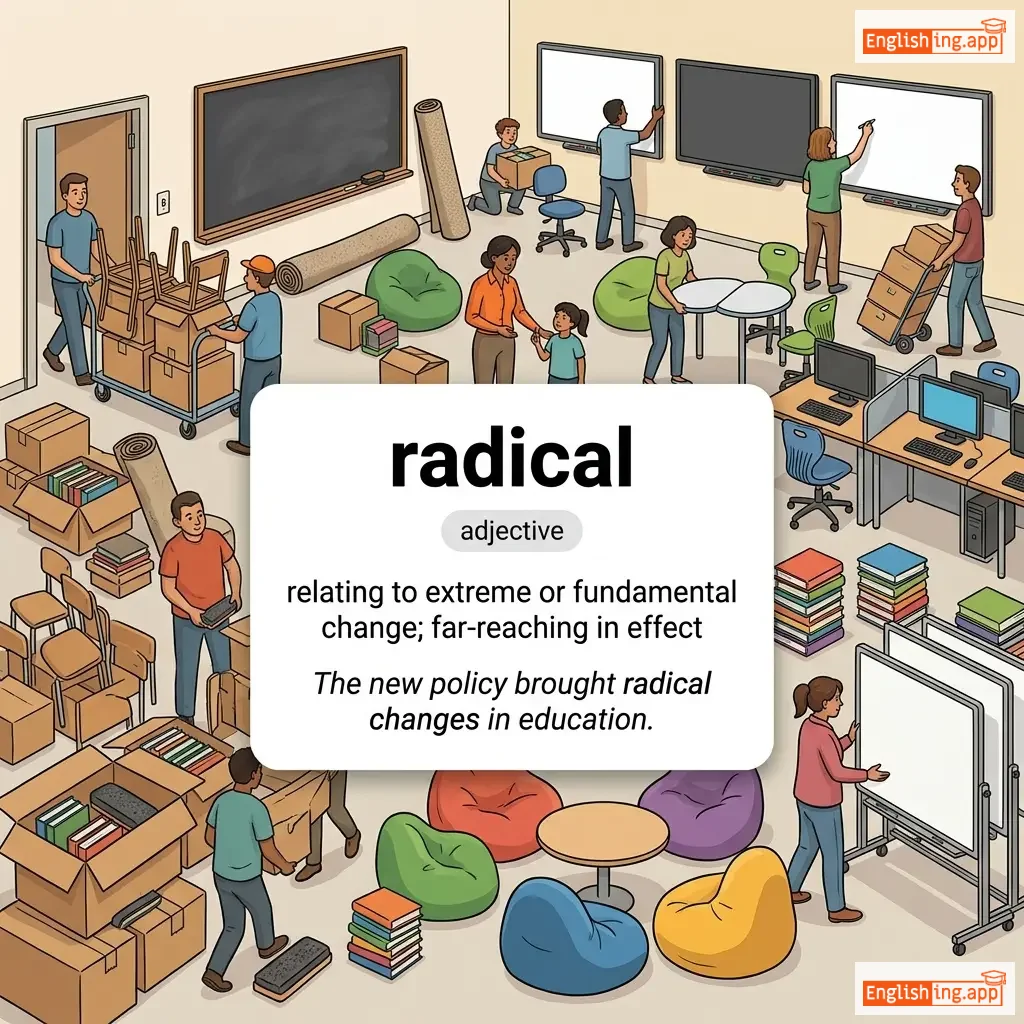
radical definition card — visual illustration of the meaning
adjective
/ˈrædɪkl/

relating to extreme or fundamental change; far-reaching in effect

"The new policy brought radical changes in education."

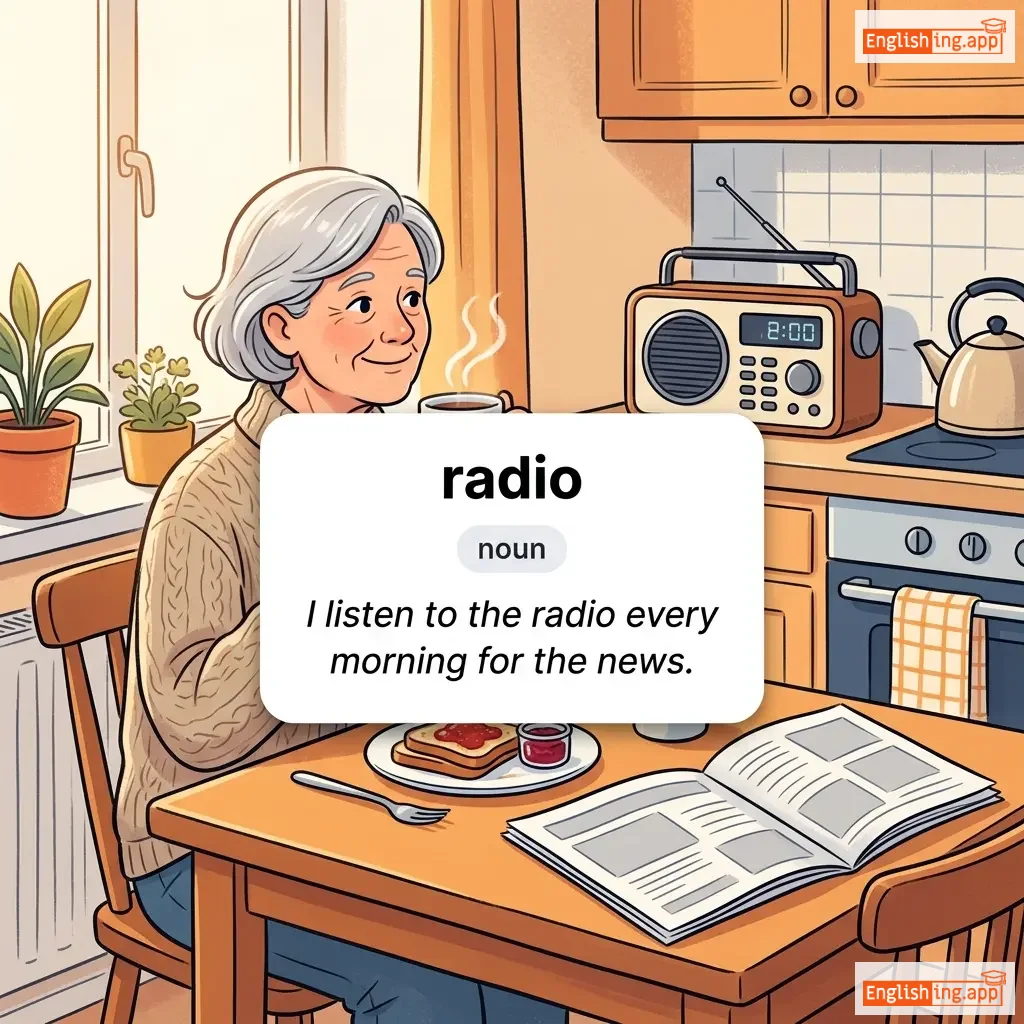
radio definition card — visual illustration of the meaning
noun
/ˈreɪdioʊ/
ラジオ (rajio)

a device for receiving or transmitting radio signals, or the use of such signals for communication

"I listen to the radio every morning for the news."
"私は毎朝ニュースを聞くためにラジオを聴きます。" (Watashi wa mai asa nyuusu o kiku tame ni rajio o kikimasu.)
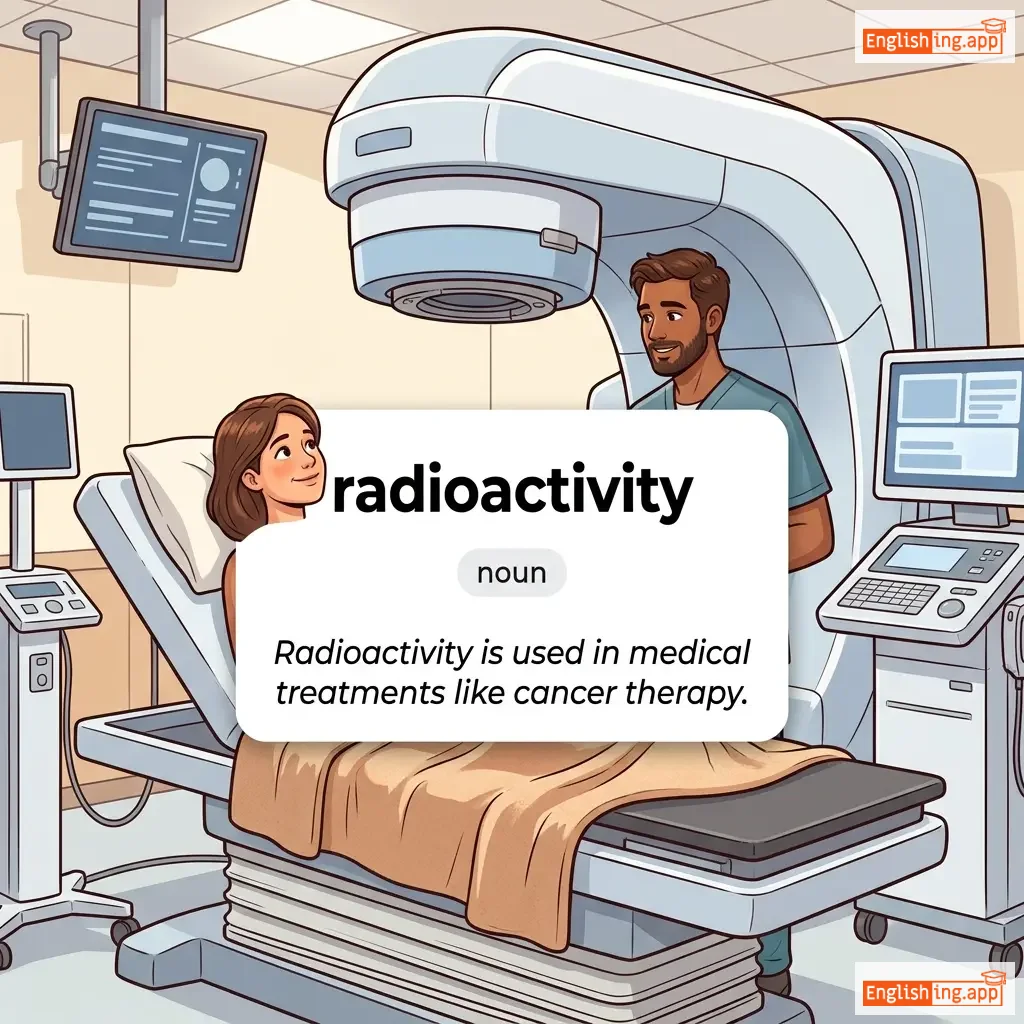
radioactivity definition card — visual illustration of the meaning
noun
ˌreɪ.di.oʊ.ækˈtɪv.ə.ti
放射性 (rajioakutibiti)

The emission of ionizing radiation or particles caused by the spontaneous disintegration of atomic nuclei.

"Radioactivity is used in medical treatments like cancer therapy."

"放射性は、がん治療のような医療に用いられている。" (houshasei wa ganchiryou no youna iryou ni mochiirareteiru)
noun
/'ræd.ɪʃ/
ラディッシュ (radisshu)

a small pungent edible root vegetable with white or red skin

"The farmer harvested fresh radishes from the garden."

"農家は庭から新鮮なラディッシュを収穫しました。" (nouka wa niwa kara shinzen na radisshu wo shuukaku shimashita)
noun
/ˈreɪdɪks/
基数 (kisū)

the base or root of something; the number on which a system of numeration is built

"In mathematics, the decimal system has a radix of ten."

"数学では、十進法の基数は十です。" (Sūgaku de wa, jū-shinhō no kisū wa jū desu.)
adjective
/ˈræfɪʃ/
型破りで少し評判が悪いが魅力的 (katayari de sukoshi hyōban ga warui ga miryokuteki)

unconventional and slightly disreputable but attractive

"He had a raffish charm that made him popular in the city."

"彼は街で人気がある理由は、レイフィッシュな魅力があったからだ。" (Kare wa machi de ninki ga aru riyū wa, reifisshu na miryoku ga atta kara da.)
noun/verb
/ˈræfəl/
抽選券の販売 (ちゅうせんけんのはんばい)

A means of raising money by selling numbered tickets, one or more of which are drawn at random for a prize; to sell something in such a lottery.

"The charity decided to raffle a bicycle to raise funds."

"チャリティーは資金調達のために自転車を抽選で販売することに決めました。" (Charity wa shikin chōtatsu no tame ni jitensha o chūsen de hanbai suru koto ni kimemashita.)
noun/verb
/ræft/
(ikada)

A flat structure made of logs or planks tied together, used as a boat or floating platform; to travel or transport on such a structure.

"They built a raft to cross the river."

"彼らは川を渡るために筏を作った。" (Karera wa kawa o wataru tame ni ikada o tsukutta.)
noun
/ˈreɪmənt/
衣服 (ifuku)

clothing, especially fine or formal wear

"The king wore royal raiment during the ceremony."

"王は儀式の間、王族の衣服を着ていた。" (Ou wa gishiki no aida, ouzoku no ifuku o kiteita.)
noun
/ˈreɪləri/
友好的な冗談 (yū kō teki na jōdan)

good-humored teasing or joking

"Their friendship was full of light-hearted raillery."

"彼らの友情は軽い冗談で満ちていました。" (Karera no yūjō wa karui jōdan de michiteimashita.)
noun
/ˈreɪlˌroʊd/
鉄道 (tetsudou)

a track or system of tracks made of steel rails along which trains run

"The railroad connects the city to several nearby towns."

"鉄道は都市といくつかの近くの町を結びつけています。" (Tetsudou wa toshi to ikutsu ka no chikaku no machi o musubitsuketeimasu.)
noun
/ˈreɪl.weɪ/
鉄道 (tetsudo)

a track made of steel rails along which trains run; a system of tracks with trains, stations, and other facilities

"The railway connects major cities across the country."

"鉄道は国内の主要な都市を結んでいます。" (tetsudo wa kokunai no shuyona toshi o musundeimasu)
verb
/reɪl/
抗議する (kougi suru)

to complain or protest strongly about something

"He railed against the unfair decision."

"彼は不公平な決定に対して強く抗議した。" (Kare wa fukouhei na kettei ni taishite tsuyoku kougi shita.)