वोकैबुलरीज

इंग्लिश वोकैबुलरी डिस्कवर, लर्न और मास्टर करें

noun
/kiː/
घाट (ghat)

A platform lying alongside or projecting into water for loading and unloading ships.

"The cargo was unloaded at the quay."

"कार्गो को घाट पर उतारा गया था।" (Cargo ko ghat par utara gaya tha.)
adjective
/ˈkwiːzi/
बेहद उल्टी जैसा महसूस होना (behad ulti jaisa mehsoos hona)

Feeling sick to one's stomach; nauseated.

"She felt queasy after the long boat ride."

"वह लंबी नाव की सवारी के बाद अस्वस्थ महसूस कर रही थी।" (Wah lambi naav ki sawaari ke baad aswasth mehsoos kar rahi thi.)
noun
/kwiːn/
रानी (rani)

a female ruler of a country or the wife of a king

"The queen addressed her people with grace."

"रानी ने अपने लोगों से शांति से बात की।" (Rani ne apne logon se shanti se baat ki.)
noun
/kwiːn kreɪp ˈmɜːrtəl/
क्वीन क्रेप मर्टल (queen crep mertel)

A flowering tree with colorful, crepe-like flowers, scientifically known as Lagerstroemia

"The Queen crape myrtle bloomed beautifully in the garden with its purple flowers."

"क्वीन क्रेप मर्टल बगिया में अपने बैंगनी फूलों के साथ खूबसूरती से खिला।" (queen crep mertel bagiya mein apne beguni phoolon ke saath khoobsurati se khila.)
adjective
/kwɪər/
अजीब (ajeeb)

Strange, odd, or unusual.

"He had a queer feeling that something was wrong."

"उसे यह अजीब सा महसूस हुआ कि कुछ गलत था।" (Use yeh ajeeb sa mehsoos hua ki kuch galat tha.)
verb
/kwɛl/
दबाना (dabaana)

To suppress or put an end to something, usually by force.

"The police were called to quell the violent protest."

"हिंसक विरोध को दबाने के लिए पुलिस को बुलाया गया था।" (Hinsak virodh ko dabaane ke liye police ko bulaaya gaya tha.)
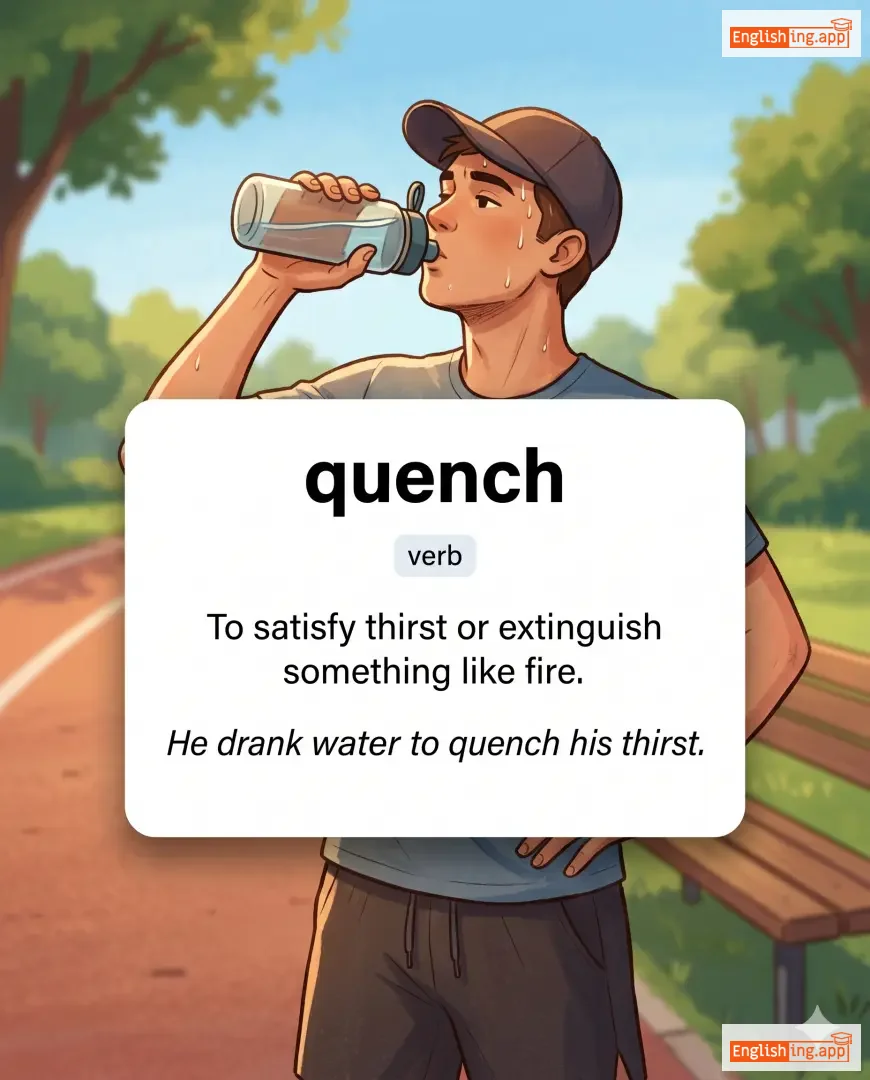
quench definition card — visual illustration of the meaning
verb
/kwɛntʃ/
प्यास बुझाना (pyaas bujhaana)

To satisfy thirst or extinguish something like fire.

"He drank water to quench his thirst."

"उसने अपनी प्यास बुझाने के लिए पानी पिया।" (Usne apni pyaas bujhaane ke liye paani piya.)
verb
/ˈkwentʃɪŋ/
तृष्णा शान्त करना / आग बुझाना (trishna shant karna / aag bujhana)

The act of satisfying thirst or extinguishing something like fire.

"Drinking cold water was quenching her thirst."

"ठंडी पानी पीना उसकी तृष्णा शान्त कर रहा था।" (Thandi pani peena uski trishna shant kar raha tha.)
adjective
/ˈkwɛrʊləs/
शिकायती (shikayati)

Complaining in a whining or irritable manner.

"The querulous customer kept finding fault with every detail."

"शिकायती ग्राहक हर विवरण में दोष निकाल रहा था।" (Shikayati grahak har vivaran mein dosh nikaal raha tha.)
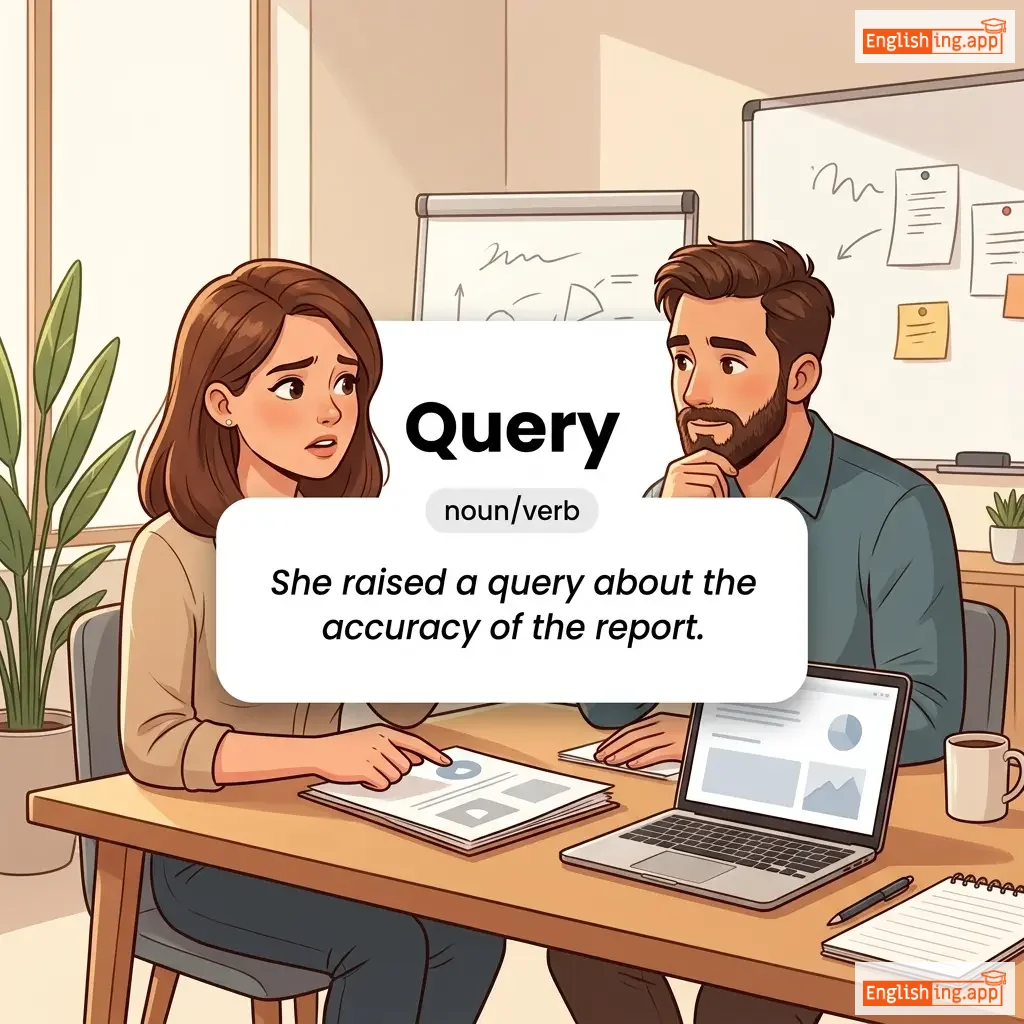
Query definition card — visual illustration of the meaning
noun/verb
/ˈkwɪəri/
प्रश्न (prashna)

A question, especially one addressed to an official or organization; to ask a question or express doubt.

"She raised a query about the accuracy of the report."

"उसने रिपोर्ट की सटीकता के बारे में एक प्रश्न उठाया।" (Usne report ki sathikta ke baare mein ek prashna uthaya.)
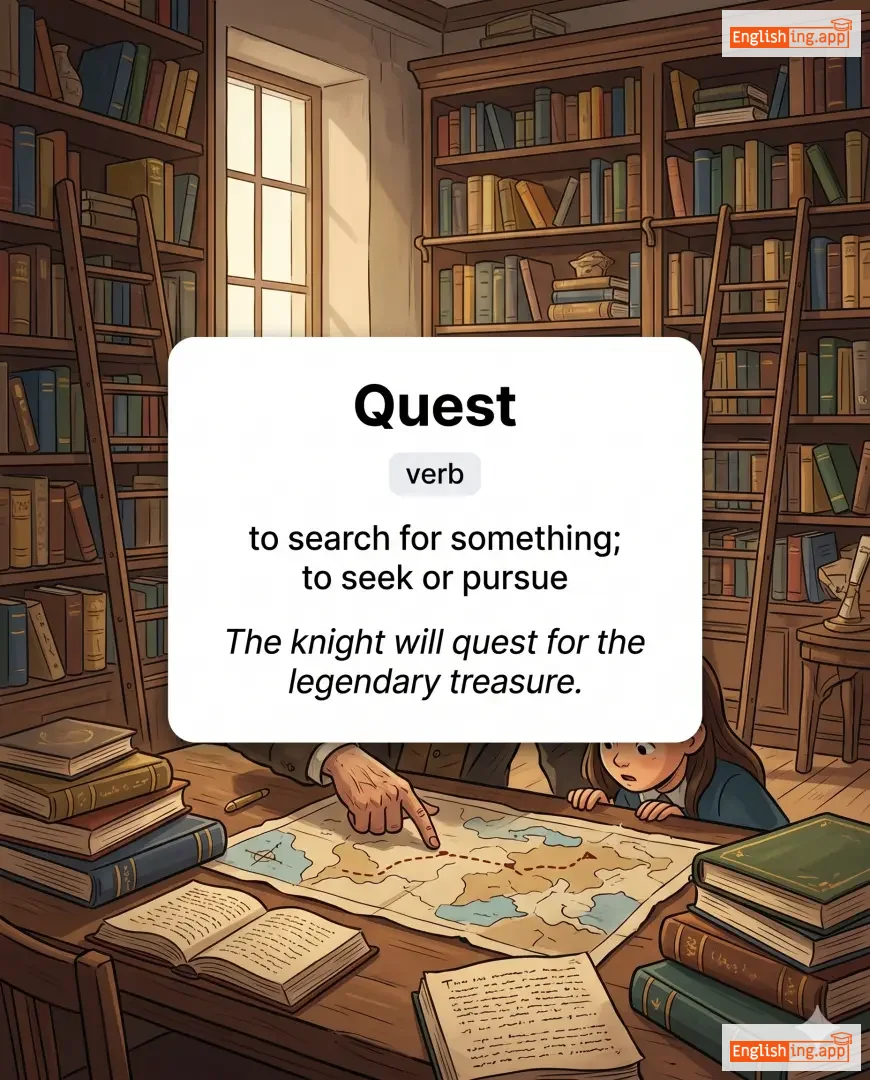
Quest definition card — visual illustration of the meaning
noun
/kwest/
खोज, अन्वेषण (khonj, anvashan)

a long search for something that is difficult to find

"They went on a quest to find the lost treasure."

"वे खोई हुई खजाने को खोजने के लिए एक यात्रा पर गए।" (ve khoi hui khazane ko khojne ke liye ek yatra par gaye.)
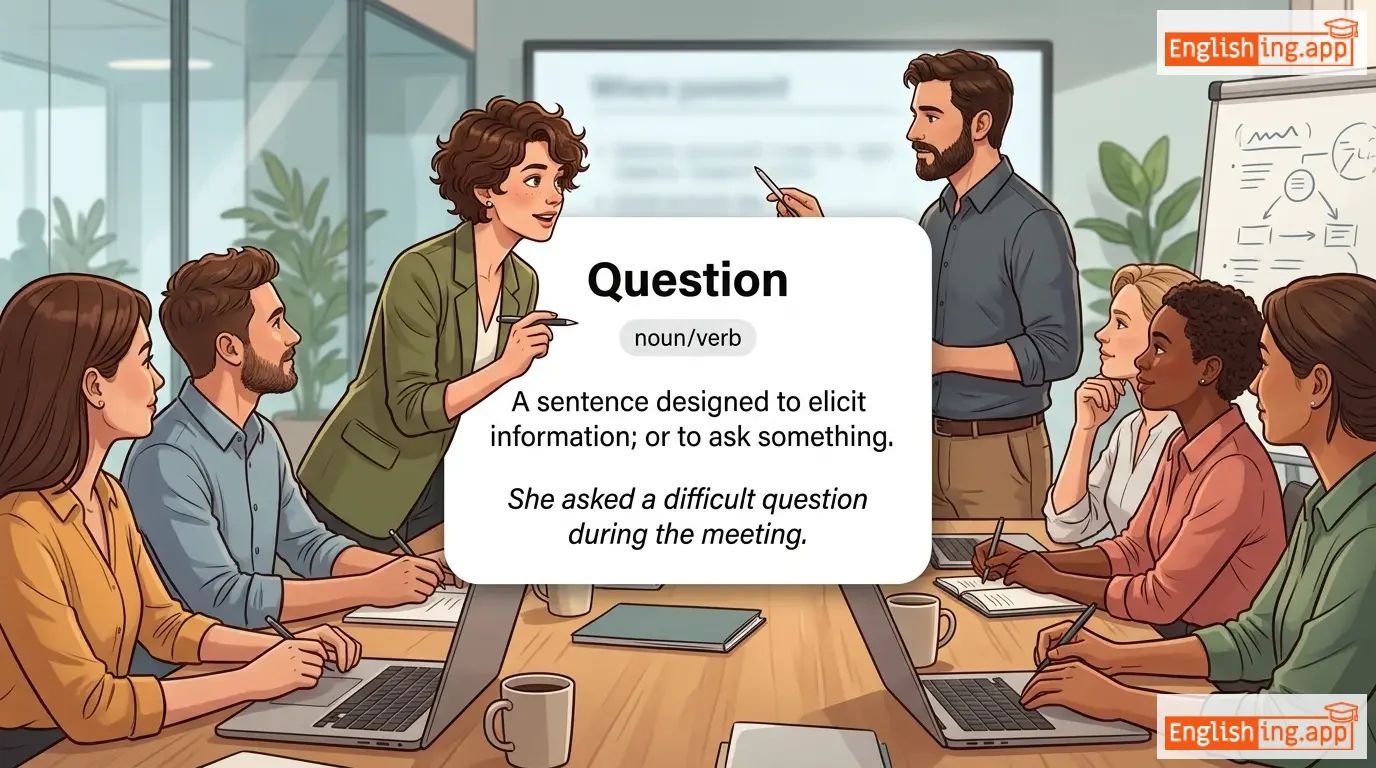
Question definition card — visual illustration of the meaning
noun/verb
/ˈkwes.tʃən/
प्रश्न (prashna)

A sentence designed to elicit information; or to ask something.

"She asked a difficult question during the meeting."

"उसने बैठक के दौरान एक कठिन प्रश्न पूछा।" (Usne baithak ke dauran ek kathin prashna poocha.)
adjective
/ˈkwestʃənəbl/
संदेहजनक (kveshchanel)

doubtful; dubious; suspicious; open to doubt or suspicion

"His questionable business practices led to an investigation."

"उनकी संदिग्ध व्यापारिक प्रथाओं के कारण एक जांच शुरू हुई।" (unki sandigdh vyaparik prathao ke karan ek jaanch shuru hui.)
noun
/ˌkwes.tʃəˈneər/
प्रश्नावली (prashnavali)

a set of written questions used to collect information or opinions

"Participants filled out a detailed questionnaire about their habits."

"प्रतिभागियों ने अपनी आदतों के बारे में एक विस्तृत प्रश्नावली पूरी की।" (Pratibhagiyon ne apni aadaton ke baare mein ek vistaarit prashnavali poori ki.)
🧍‍♂️🧍‍♀️

Queue (क्यू)

noun/verb
/kjuː/
लाइन (line)

A line or sequence of people or vehicles awaiting their turn; to wait in line.

"People queued outside the theater for tickets."

"लोग थिएटर के बाहर टिकट के लिए क्यू में खड़े थे।" (Log theater ke baahar ticket ke liye queue mein khade the.)
noun
/ˌkiː ˈviːv/
चेतावनी (chetavani)

A state of alertness or vigilance.

"The guards were on the qui vive during the night."

"गार्ड्स रात के दौरान चेतावनी की स्थिति में थे।" (Guards raat ke dauran chetavani ki sthiti mein the.)
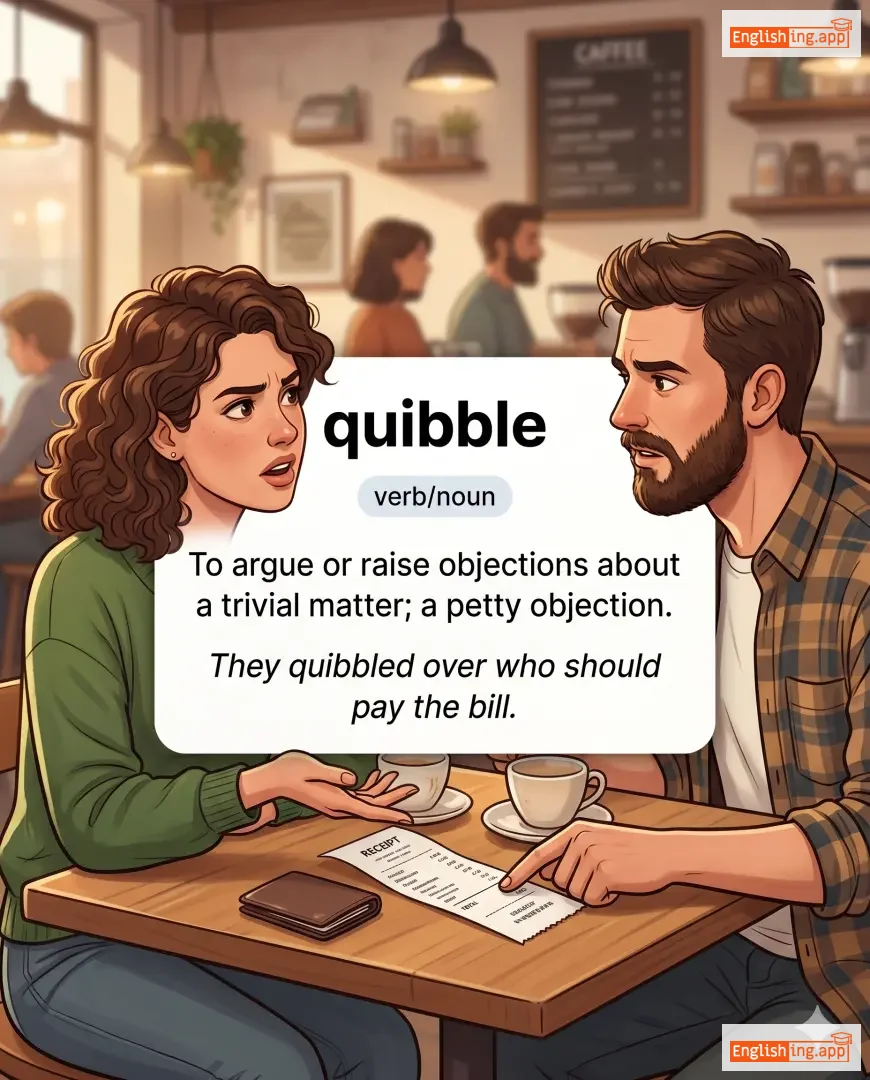
quibble definition card — visual illustration of the meaning
verb/noun
/ˈkwɪbəl/
नकली तर्क (nakli tark)

To argue or raise objections about a trivial matter; a petty objection.

"They quibbled over who should pay the bill."

"वे बिल का भुगतान कौन करेगा इस पर तर्क कर रहे थे।" (ve bil ka bhugtan kaun karega is par tark kar rahe the.)
Quick definition card — visual illustration of the meaning
adjective
/kwɪk/
तेज़ (tez)

moving fast or doing something in a short time

"She is a quick learner."

"वह एक तेज़ सीखने वाली है।" (Vah ek tez seekhne wali hai.)
noun
/ˈkwɪk.sænd/
क्विकसैंड (quicksand)

loose wet sand that yields easily to pressure and sucks in anything on its surface

"The explorer got trapped in quicksand while crossing the desert."

"अन्वेषक मरुस्थल पार करते समय क्विकसैंड में फंस गया।" (anveshak marusthal paar karte samay quicksand mein fans gaya)
verb
/ˈkwɪkən/
तेज करना (tej karna)

to make or become faster; to accelerate

"His pulse began to quicken as he approached the finish line."

"उसकी नाड़ी फिनिश लाइन के पास पहुंचते ही तेज़ होने लगी।" (Uski naadi finish line ke paas pahuchte hi tez hone lagi.)
adverb
/ˈkwɪkli/
तेज़ (tez)

at a fast speed

"She finished the test quickly."

"उसने परीक्षा को जल्दी पूरा किया।" (Usne pariksha ko jaldi poora kiya.)
noun
/ˈkwɪkˌsɪlvər/
पारा (para)

Mercury; a liquid metal, or something that is quick and unpredictable.

"His mood was as changeable as quicksilver."

"उसका मूड क्विकसिल्वर की तरह परिवर्तनशील था।" (Uska mood quicksilver ki tarah parivartansheel tha.)
noun
/kwɪˈɛsəns/
निस्तब्धता (nistabdhata)

A state of quietness, inactivity, or dormancy.

"The volcano has been in a state of quiescence for decades."

"ज्वालामुखी दशकों से निस्तब्धता की अवस्था में है।" (Jwalamukhi dashko se nistabdhata ki avastha mein hai.)
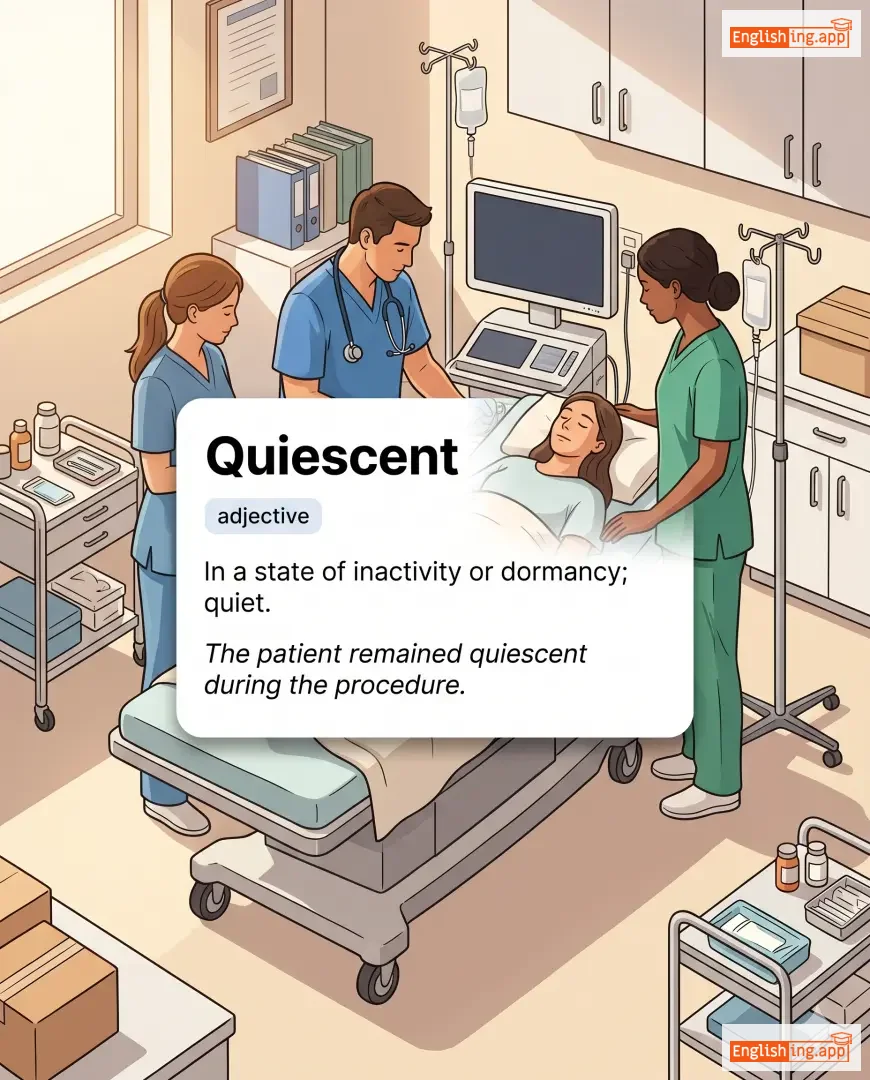
Quiescent definition card — visual illustration of the meaning
adjective
/kwɪˈɛsənt/
निष्क्रिय (nishkriya)

In a state of inactivity or dormancy; quiet.

"The patient remained quiescent during the procedure."

"रोगी प्रक्रिया के दौरान निष्क्रिय रहे।" (Rogi prakriya ke dauran nishkriya rahe.)
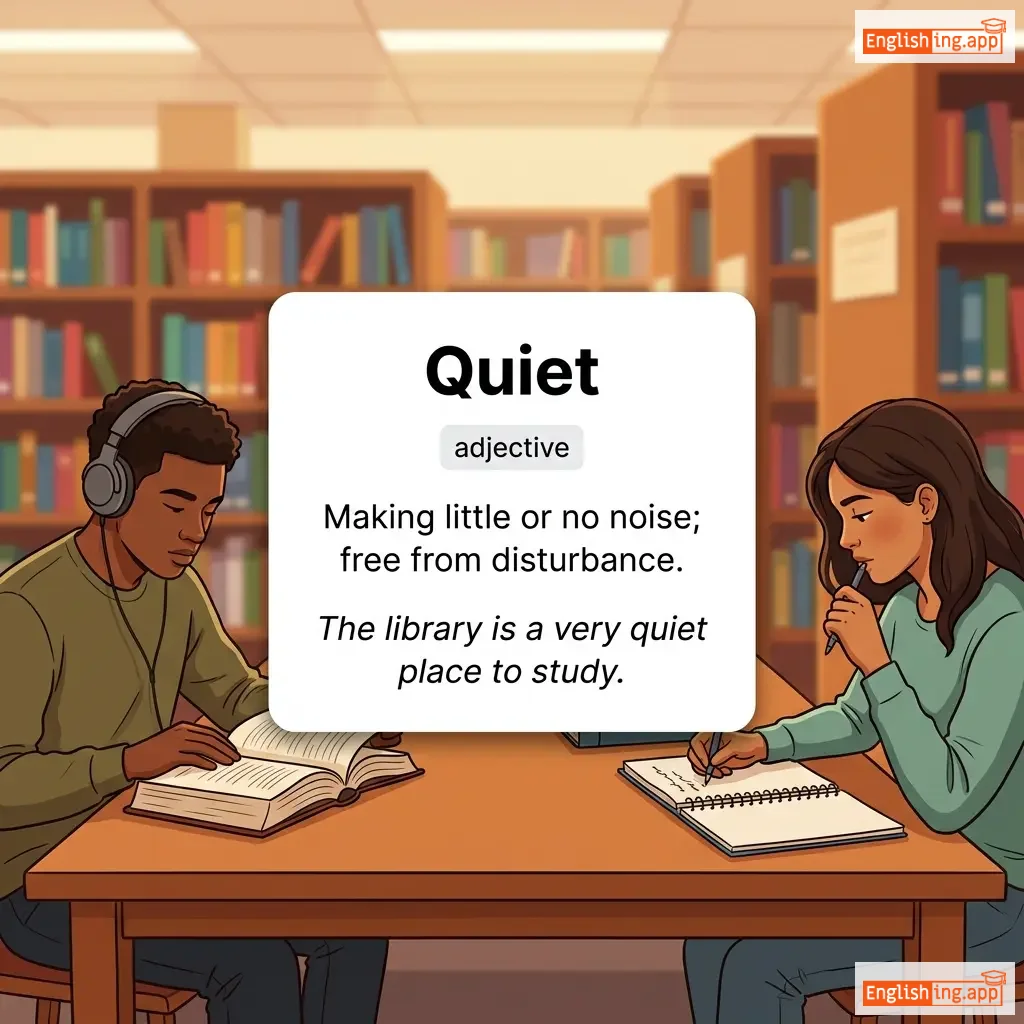
Quiet definition card — visual illustration of the meaning
adjective
/ˈkwaɪət/
शांत (shaant)

Making little or no noise; free from disturbance.

"The library is a very quiet place to study."

"पुस्तकालय अध्ययन करने के लिए एक बहुत शांत स्थान है।" (Pustakalay adhyayan karne ke liye ek bahut shaant sthan hai.)
adverb
/ˈkwaɪətli/
धीरे से (dheere se)

in a silent or calm manner

"He spoke quietly so no one would hear."

"वह धीरे से बोला ताकि कोई न सुने।" (Wah dheere se bola taki koi na sune.)
noun
/ˈkwaɪəˌtuːd/
शांति (shanti)

A state of stillness and tranquility.

"She enjoys the quietude of the countryside."

"वह गांव की शांति का आनंद लेती है।" (Woh gaon ki shanti ka anand leti hai.)
noun
/kwaɪˈiːtəs/
समाप्ति, मृत्यु (samaapti, mrityu)

Something that ends or settles a situation; release from life, death.

"The scandal brought a quietus to his political career."

"उसके राजनीतिक करियर की समाप्ति में वह घोटाला एक शांतिपूर्वक निर्णय था।" (Uske rajnaitik career ki samaapti mein wah ghotala ek shaantipoorvak nirnay tha.)
noun
/kwɪlt/
कंबल (kambal)

a warm bed covering made of padding enclosed between layers of fabric

"Grandmother made a beautiful quilt for my bed."

"दादी ने मेरे बिस्तर के लिए एक सुंदर कंबल बनाया।" (dadi ne mere bistar ke liye ek sundar kambal banaya.)
noun
/kwɪnˈtɛsəns/
सर्वोत्तम उदाहरण (sarvottam udaharan)

The purest or most perfect example of something.

"She is the quintessence of elegance."

"वह शास्त्रीय संगीत की सर्वोत्तम उदाहरण है।" (Vah shastriya sangeet ki sarvottam udaharan hai.)
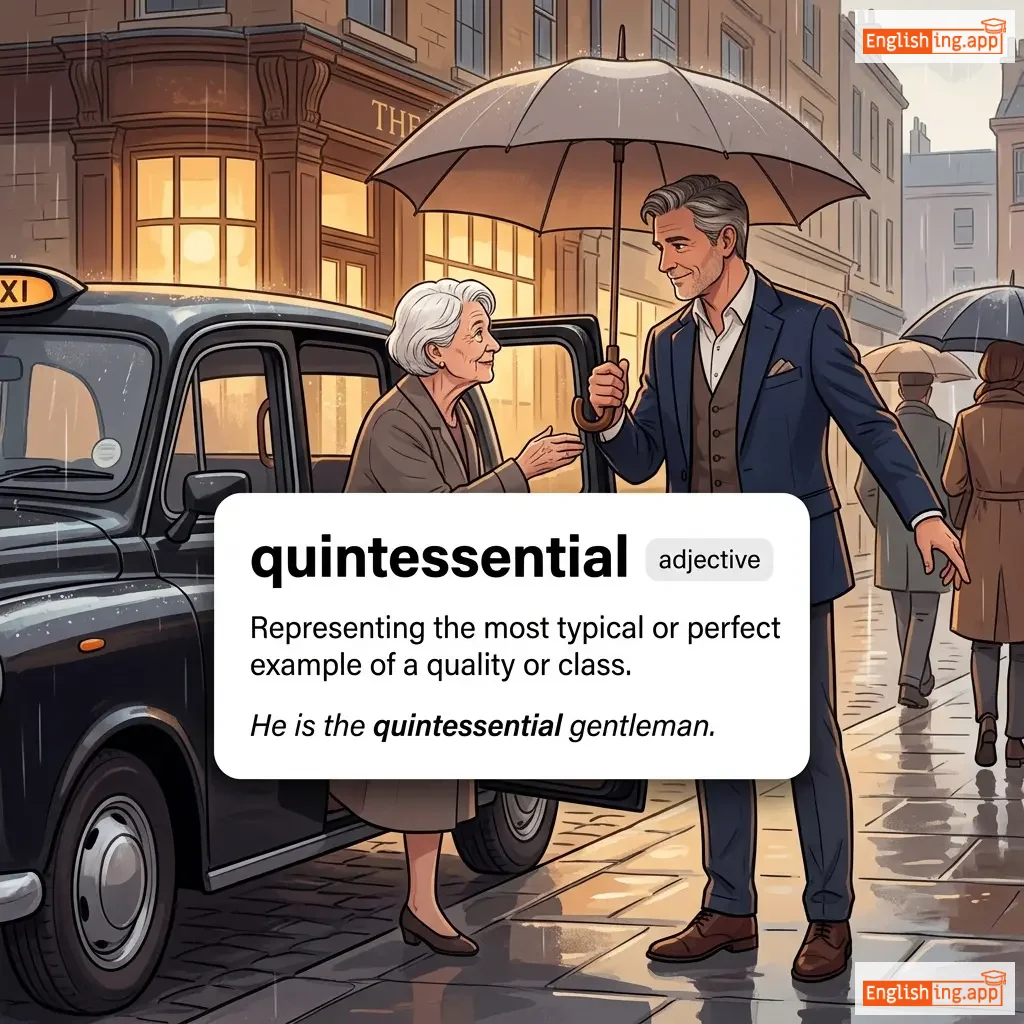
quintessential definition card — visual illustration of the meaning
adjective
/ˌkwɪntɪˈsɛnʃəl/
पूर्णत: आदर्श (poornat: aadarsh)

Representing the most typical or perfect example of a quality or class.

"He is the quintessential gentleman."

"वह पूर्णत: आदर्श सज्जन है।" (Vah poornat: aadarsh sajjan hai.)
noun
/ˈræftər/
राफ्टर (rafter)

One of the sloping beams that supports a roof.

"The old barn’s rafters were exposed."

"पुरानी गोशाले के राफ्टर दिखाई दे रहे थे।" (Purani goshale ke rafter dikhai de rahe the.)
noun
/ˈreɪdɑːr/
रेडार (radar)

a system that uses radio waves to detect the position and speed of objects

"The plane was detected by the airport's radar system."

"विमान को हवाई अड्डे के रडार सिस्टम द्वारा पहचाना गया।" (Vimaan ko havai adde ke radar system dwara pehchana gaya.)
noun
/ˈreɪdiəns/
प्रकाश (prakash)

the quality of shining with bright light; a glowing or beaming quality

"Her face was filled with radiance after hearing the good news."

"अच्छी खबर सुनने के बाद उसका चेहरा प्रकाश से भर गया था।" (Achhi khabar sunne ke baad uska chehra prakash se bhar gaya tha.)
adjective
/ˈreɪdiənt/
चमकदार (chamakdaar)

Shining brightly; expressing great happiness.

"She looked radiant in her wedding dress."

"वह अपनी शादी की ड्रेस में बहुत ही चमकदार लग रही थी।" (Vah apnī śādī kī ḍres men bahut hī chamakdār lag rahī thī.)
verb
/ˈreɪdieɪt/
विकिरण करना (vikiran karna)

to emit energy or light; to spread out from a center

"The fireplace radiates warmth throughout the room."

"फायरप्लेस पूरे कमरे में गर्मी उत्सर्जित करता है।" (fireplace poore kamre mein garmi utsarjit karta hai.)
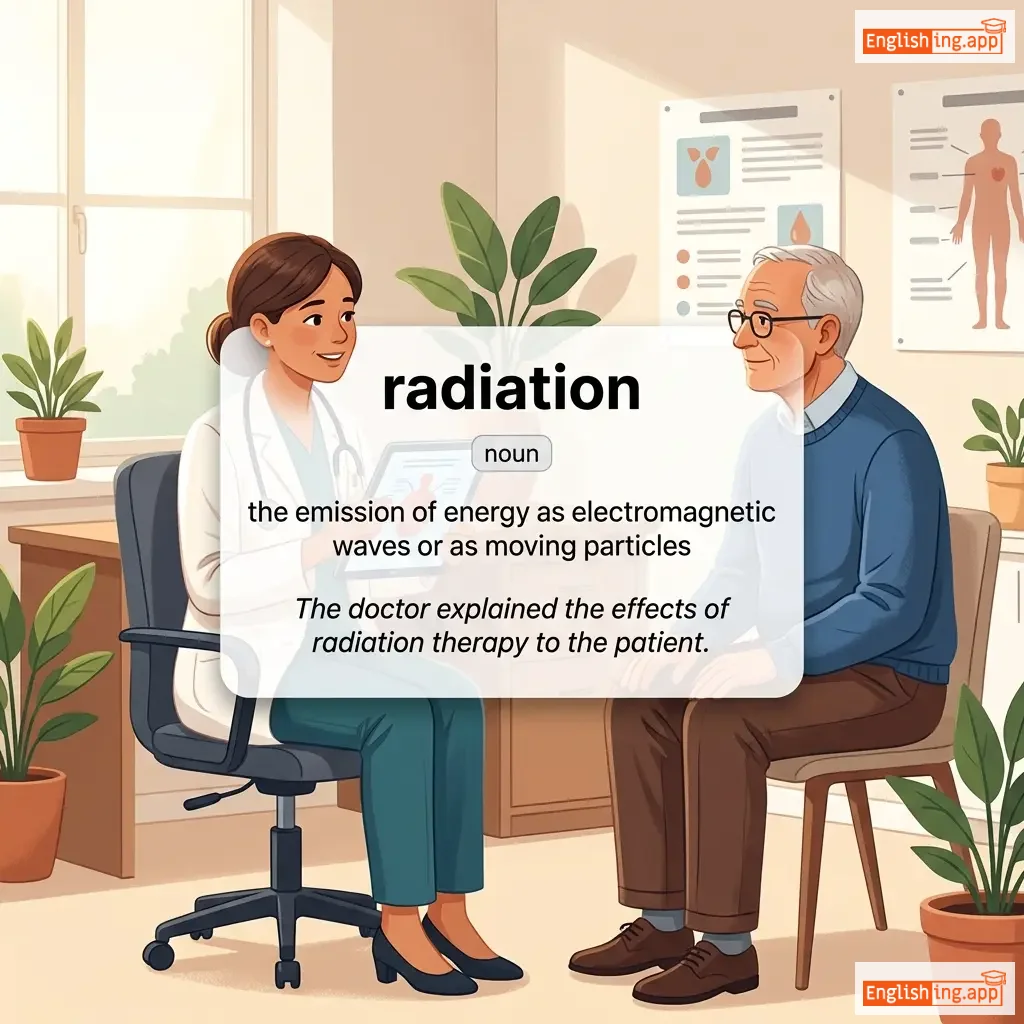
radiation definition card — visual illustration of the meaning
noun
/ˌreɪdiˈeɪʃən/
किरण विकिरण (kiran vikiran)

the emission of energy as electromagnetic waves or as moving particles

"The doctor explained the effects of radiation therapy to the patient."

"डॉक्टर ने रोगी को रेडिएशन थेरेपी के प्रभावों को समझाया।" (Doktor ne rogi ko radiation therapy ke prabhavon ko samjhaya.)
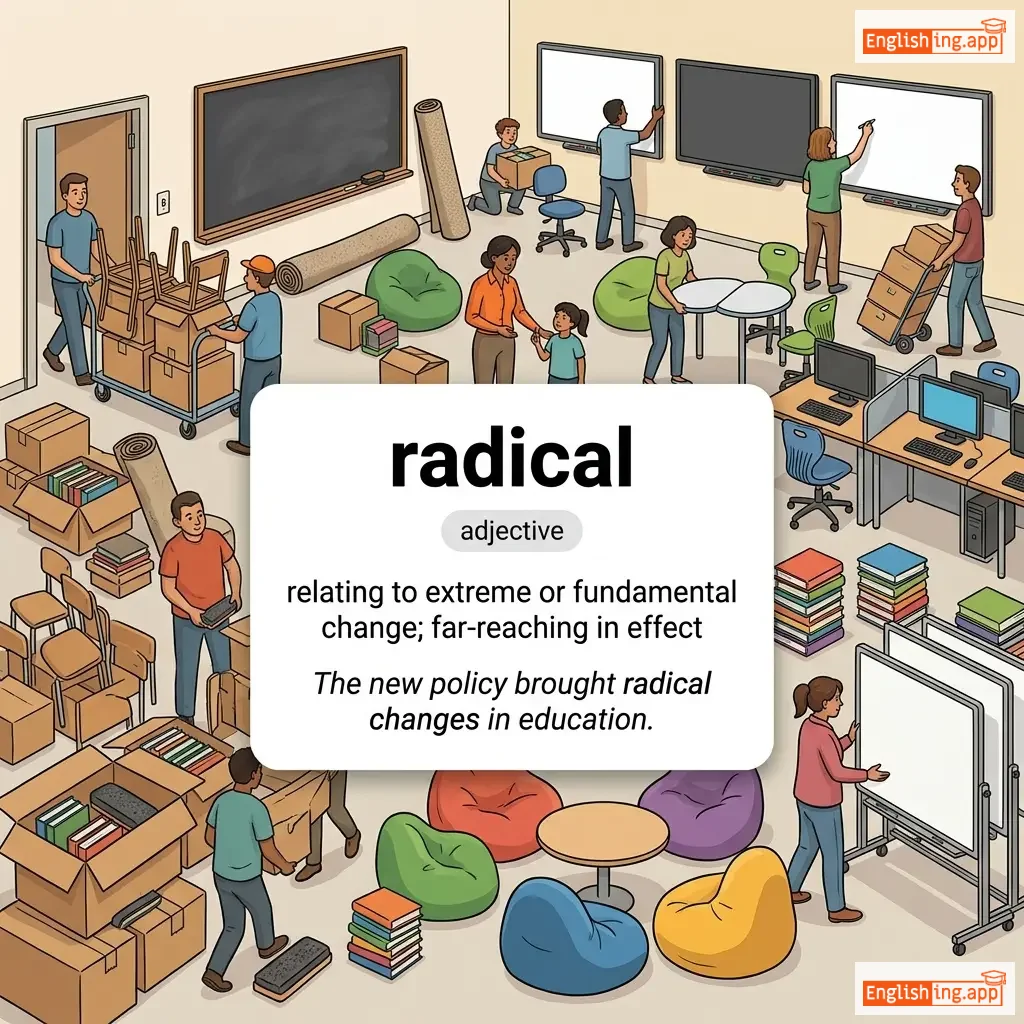
radical definition card — visual illustration of the meaning
adjective
/ˈrædɪkl/
क्रांतिकारी (redikal)

relating to extreme or fundamental change; far-reaching in effect

"The new policy brought radical changes in education."

"नई नीति ने शिक्षा में क्रांतिकारी परिवर्तन लाए।" (nai niti ne shiksha mein krantikaari parivartan lae)
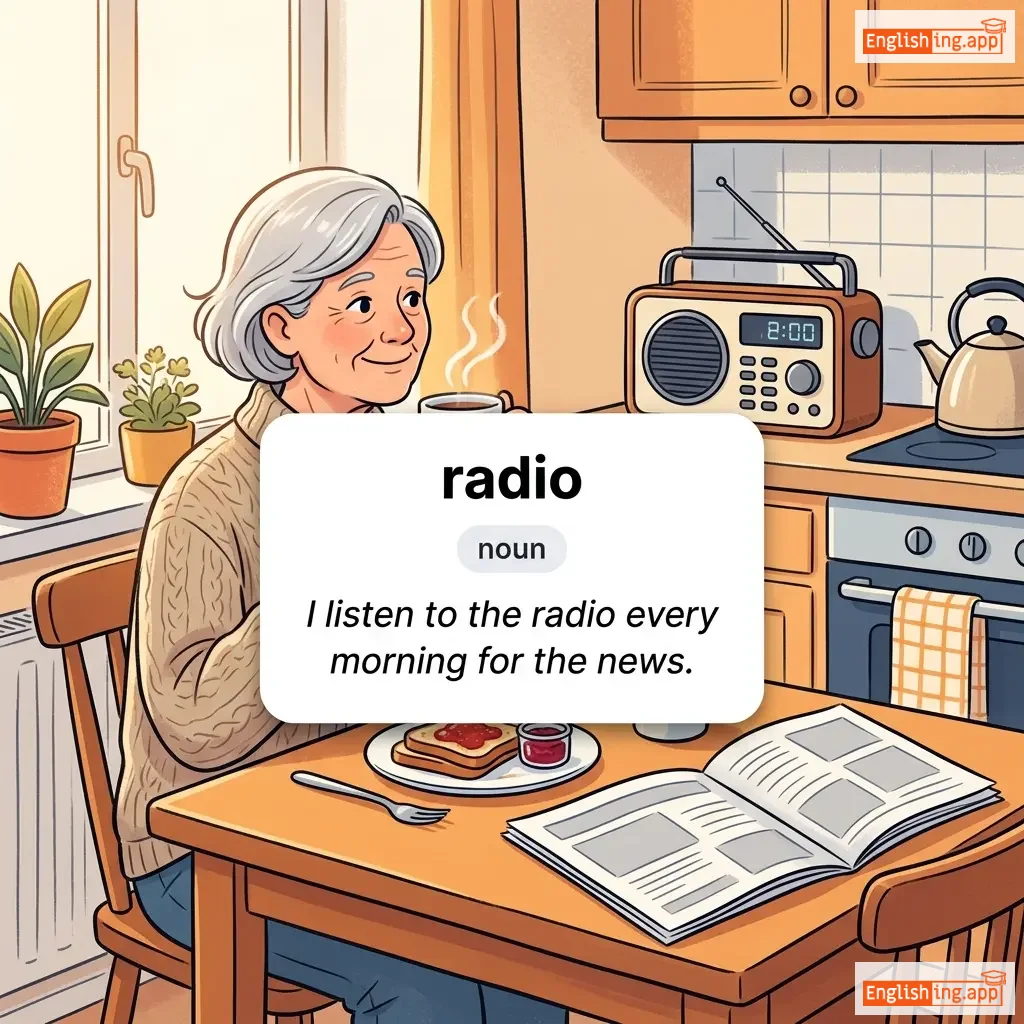
radio definition card — visual illustration of the meaning
noun
/ˈreɪdioʊ/
रेडियो (radio)

a device for receiving or transmitting radio signals, or the use of such signals for communication

"I listen to the radio every morning for the news."

"मैं हर सुबह समाचार के लिए रेडियो सुनता हूँ।" (Main har subah samachar ke liye radio sunta hoon.)
radioactivity definition card — visual illustration of the meaning
noun
ˌreɪ.di.oʊ.ækˈtɪv.ə.ti
रेडियोधर्मिता (rediodharmita)

The emission of ionizing radiation or particles caused by the spontaneous disintegration of atomic nuclei.

"Radioactivity is used in medical treatments like cancer therapy."

"रेडियोऐक्टिविटी कैंसर चिकित्सा जैसे मेडिकल उपचारों में उपयोग की जाती है।" (Redioaiktivity cancer chikitsa jaise medical upcharon mein upyog ki jati hai.)
noun
/'ræd.ɪʃ/
मूली (mooli)

a small pungent edible root vegetable with white or red skin

"The farmer harvested fresh radishes from the garden."

"किसान ने बाग़ीचे से ताजे मूली निकाले।" (kisaan ne baagiche se tazey mooli nikaale)
noun
/ˈreɪdɪks/
आधार (aadhar)

the base or root of something; the number on which a system of numeration is built

"In mathematics, the decimal system has a radix of ten."

"गणित में, दशमलव प्रणाली का आधार दस है।" (Ganit mein, dashamlav pranali ka aadhar das hai.)
adjective
/ˈræfɪʃ/
असामान्य और थोड़ा बदनाम लेकिन आकर्षक (asaamanya aur thoda badnaam lekin aakarshak)

unconventional and slightly disreputable but attractive

"He had a raffish charm that made him popular in the city."

"वह शहर में लोकप्रिय होने के लिए रैफिश आकर्षण रखता था।" (Vah shahar mein lokpriya hone ke liye raifish aakarshan rakhta tha.)
noun/verb
/ˈræfəl/
लॉटरी टिकट बेचना (lottari tiket bechna)

A means of raising money by selling numbered tickets, one or more of which are drawn at random for a prize; to sell something in such a lottery.

"The charity decided to raffle a bicycle to raise funds."

"चैरिटी ने धन इकट्ठा करने के लिए एक साइकिल रैफल करने का फैसला किया।" (Charity ne dhan ikattha karne ke liye ek cycle raffle karne ka faisla kiya.)
noun/verb
/ræft/
बेड़ा (beda)

A flat structure made of logs or planks tied together, used as a boat or floating platform; to travel or transport on such a structure.

"They built a raft to cross the river."

"उन्होंने नदी पार करने के लिए एक बेड़ा बनाया।" (Unhone nadi paar karne ke liye ek beda banaya.)
noun
/ˈreɪmənt/
वस्त्र (vastr)

clothing, especially fine or formal wear

"The king wore royal raiment during the ceremony."

"राजा ने समारोह में शाही वस्त्र पहने।" (Raja ne samaroh mein shaahi vastr pehene.)
noun
/ˈreɪləri/
मज़ाक-मस्ती (mazaak-masti)

good-humored teasing or joking

"Their friendship was full of light-hearted raillery."

"उनकी दोस्ती हल्की-फुल्की रैलरी से भरी हुई थी।" (Unki dosti halki-phulki raillery se bhari hui thi.)
noun
/ˈreɪlˌroʊd/
रेल मार्ग (rel maarg)

a track or system of tracks made of steel rails along which trains run

"The railroad connects the city to several nearby towns."

"रेलमार्ग शहर को कई नजदीकी कस्बों से जोड़ता है।" (Relmaarg shahar ko kai najdeeki kasbon se jodta hai.)
noun
/ˈreɪl.weɪ/
रेलमार्ग (relmarg)

a track made of steel rails along which trains run; a system of tracks with trains, stations, and other facilities

"The railway connects major cities across the country."

"रेलमार्ग देश के प्रमुख शहरों को जोड़ता है।" (relmarg desh ke pramukh shahron ko jodata hai)
verb
/reɪl/
विरोध करना (virodh karna)

to complain or protest strongly about something

"He railed against the unfair decision."

"उसने अन्यायपूर्ण निर्णय के खिलाफ तीव्र विरोध किया।" (Usne anyaypoorn nirnay ke khilaf teevr virodh kiya.)