वोकैबुलरीज

इंग्लिश वोकैबुलरी डिस्कवर, लर्न और मास्टर करें

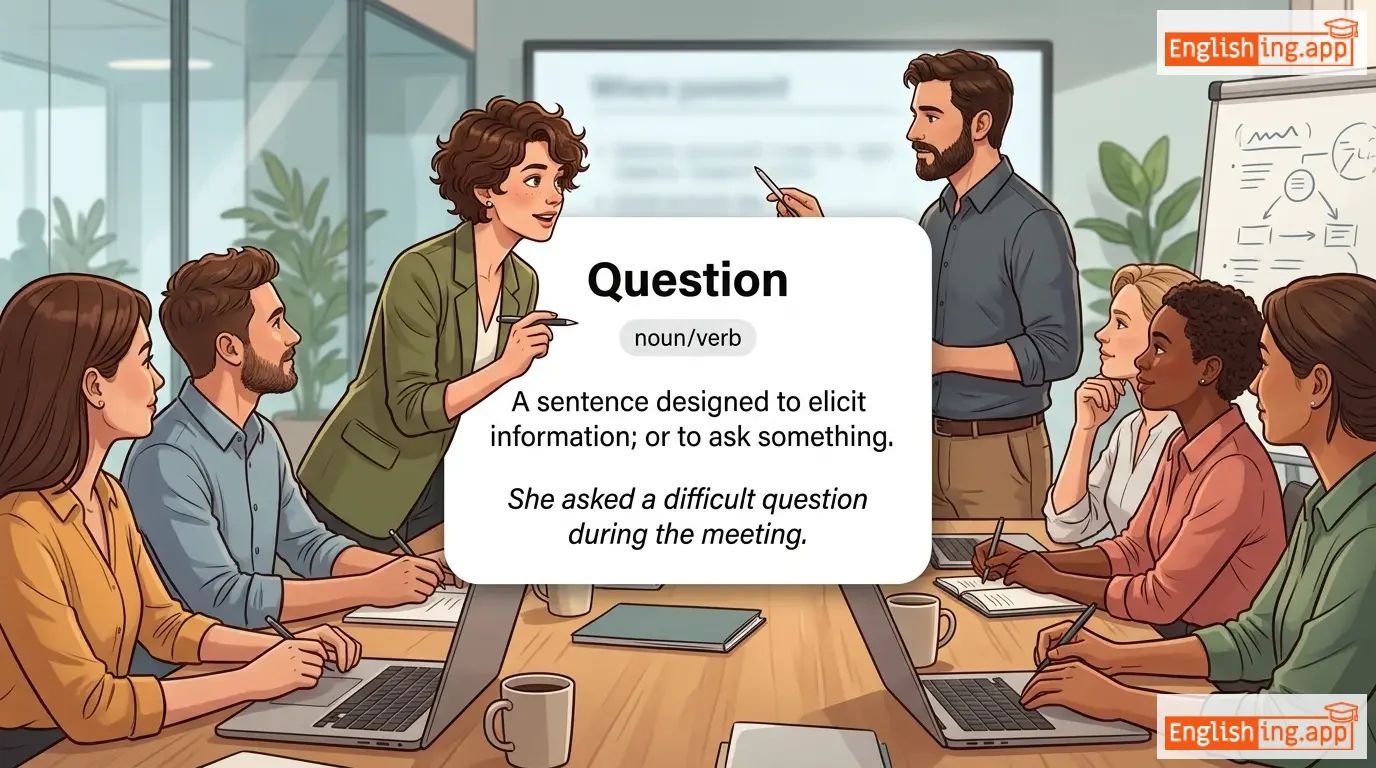
Question definition card — visual illustration of the meaning
noun/verb
/ˈkwes.tʃən/
प्रश्न (prashna)

A sentence designed to elicit information; or to ask something.

"She asked a difficult question during the meeting."

"उसने बैठक के दौरान एक कठिन प्रश्न पूछा।" (Usne baithak ke dauran ek kathin prashna poocha.)
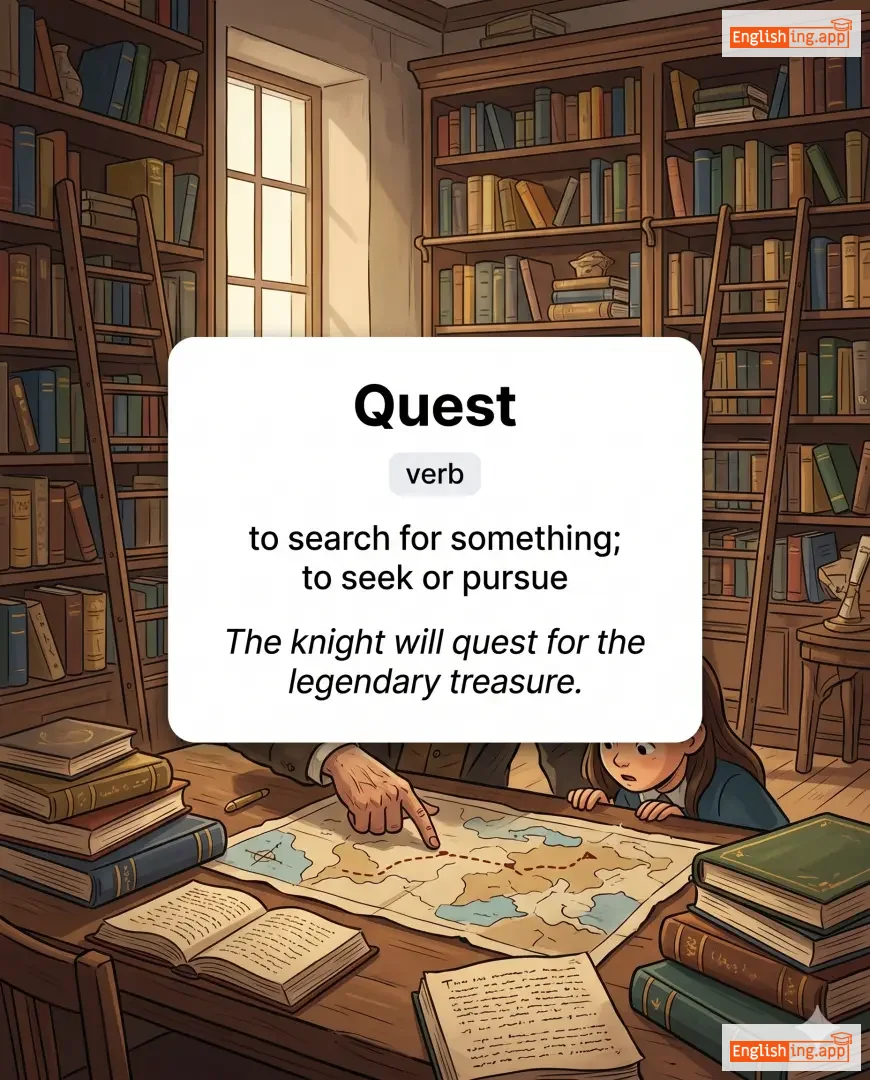
Quest definition card — visual illustration of the meaning
noun
/kwest/
खोज, अन्वेषण (khonj, anvashan)

a long search for something that is difficult to find

"They went on a quest to find the lost treasure."

"वे खोई हुई खजाने को खोजने के लिए एक यात्रा पर गए।" (ve khoi hui khazane ko khojne ke liye ek yatra par gaye.)
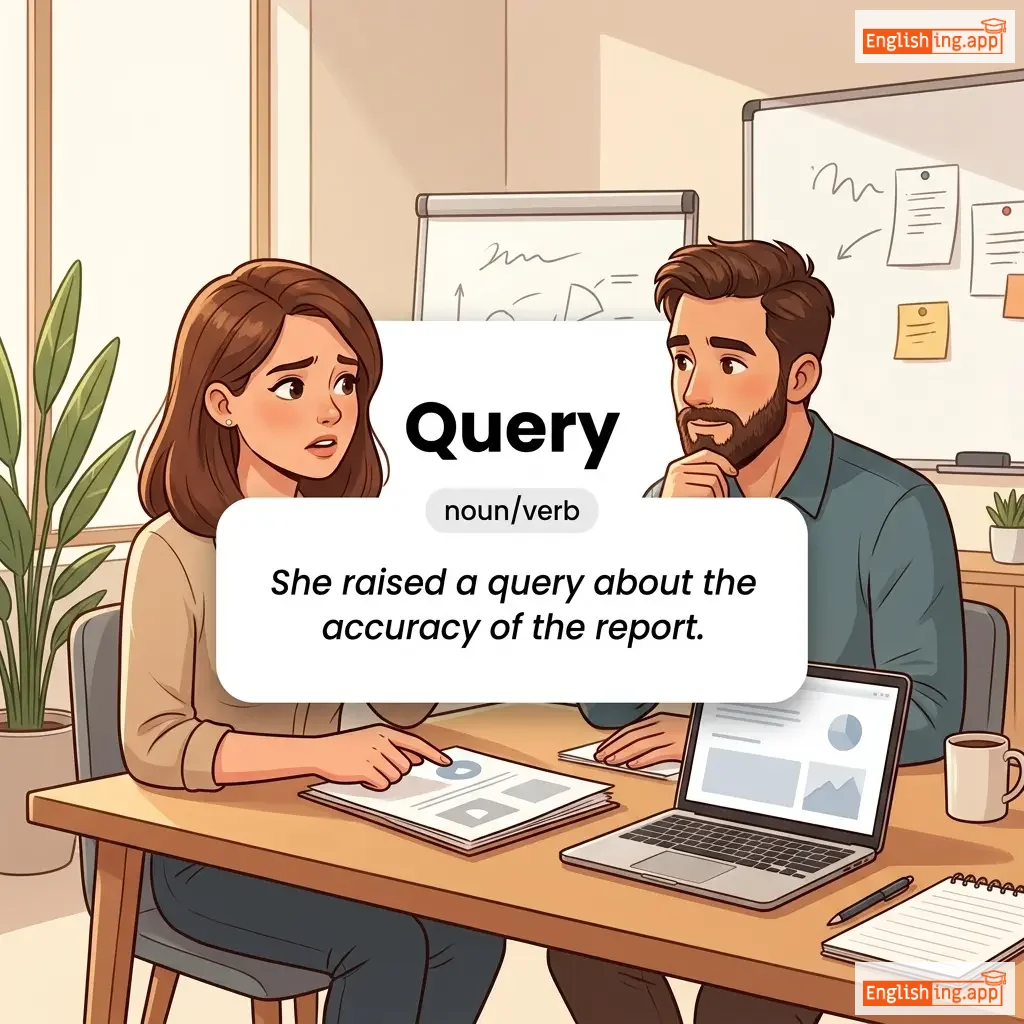
Query definition card — visual illustration of the meaning
noun/verb
/ˈkwɪəri/
प्रश्न (prashna)

A question, especially one addressed to an official or organization; to ask a question or express doubt.

"She raised a query about the accuracy of the report."

"उसने रिपोर्ट की सटीकता के बारे में एक प्रश्न उठाया।" (Usne report ki sathikta ke baare mein ek prashna uthaya.)
adjective
/ˈkwɛrʊləs/
शिकायती (shikayati)

Complaining in a whining or irritable manner.

"The querulous customer kept finding fault with every detail."

"शिकायती ग्राहक हर विवरण में दोष निकाल रहा था।" (Shikayati grahak har vivaran mein dosh nikaal raha tha.)
verb
/ˈkwentʃɪŋ/
तृष्णा शान्त करना / आग बुझाना (trishna shant karna / aag bujhana)

The act of satisfying thirst or extinguishing something like fire.

"Drinking cold water was quenching her thirst."

"ठंडी पानी पीना उसकी तृष्णा शान्त कर रहा था।" (Thandi pani peena uski trishna shant kar raha tha.)
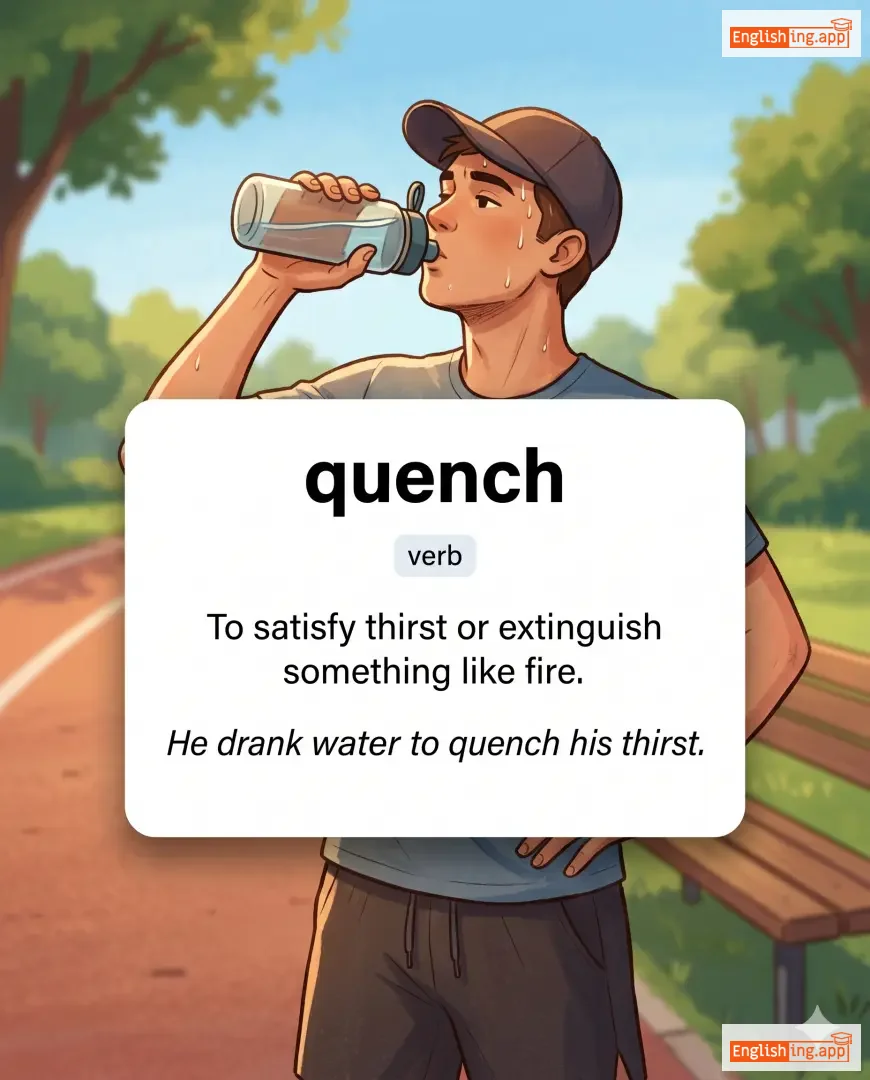
quench definition card — visual illustration of the meaning
verb
/kwɛntʃ/
प्यास बुझाना (pyaas bujhaana)

To satisfy thirst or extinguish something like fire.

"He drank water to quench his thirst."

"उसने अपनी प्यास बुझाने के लिए पानी पिया।" (Usne apni pyaas bujhaane ke liye paani piya.)
verb
/kwɛl/
दबाना (dabaana)

To suppress or put an end to something, usually by force.

"The police were called to quell the violent protest."

"हिंसक विरोध को दबाने के लिए पुलिस को बुलाया गया था।" (Hinsak virodh ko dabaane ke liye police ko bulaaya gaya tha.)
adjective
/kwɪər/
अजीब (ajeeb)

Strange, odd, or unusual.

"He had a queer feeling that something was wrong."

"उसे यह अजीब सा महसूस हुआ कि कुछ गलत था।" (Use yeh ajeeb sa mehsoos hua ki kuch galat tha.)
noun
/kwiːn kreɪp ˈmɜːrtəl/
क्वीन क्रेप मर्टल (queen crep mertel)

A flowering tree with colorful, crepe-like flowers, scientifically known as Lagerstroemia

"The Queen crape myrtle bloomed beautifully in the garden with its purple flowers."

"क्वीन क्रेप मर्टल बगिया में अपने बैंगनी फूलों के साथ खूबसूरती से खिला।" (queen crep mertel bagiya mein apne beguni phoolon ke saath khoobsurati se khila.)
noun
/kwiːn/
रानी (rani)

a female ruler of a country or the wife of a king

"The queen addressed her people with grace."

"रानी ने अपने लोगों से शांति से बात की।" (Rani ne apne logon se shanti se baat ki.)
adjective
/ˈkwiːzi/
बेहद उल्टी जैसा महसूस होना (behad ulti jaisa mehsoos hona)

Feeling sick to one's stomach; nauseated.

"She felt queasy after the long boat ride."

"वह लंबी नाव की सवारी के बाद अस्वस्थ महसूस कर रही थी।" (Wah lambi naav ki sawaari ke baad aswasth mehsoos kar rahi thi.)
noun
/kiː/
घाट (ghat)

A platform lying alongside or projecting into water for loading and unloading ships.

"The cargo was unloaded at the quay."

"कार्गो को घाट पर उतारा गया था।" (Cargo ko ghat par utara gaya tha.)
verb, noun
/ˈkweɪvər/
काँपना (kaampna)

To shake or tremble in speaking, typically through nervousness or emotion.

"Her voice quavered as she spoke before the crowd."

"उसकी आवाज़ कांप रही थी जब उसने भीड़ के सामने बात की।" (Uski awaaz kaamp rahi thi jab usne bheed ke samne baat ki.)
verb
/kwɑːʃ/
रद्द करना (radd karna)

To reject or void something legally or to put an end to something forcefully.

"The court quashed the decision due to lack of evidence."

"कोर्ट ने सबूतों की कमी के कारण निर्णय को रद्द कर दिया।" (Court ne sabooton ki kami ke karan nirnay ko radd kar diya.)
noun
/ˈkwɔːrtoʊ/
चार पन्नों वाली किताब (chaar pannon wali kitaab)

A book size resulting from folding each printed sheet into four leaves (eight pages).

"The library has rare Shakespeare quartos."

"पुस्तकालय में दुर्लभ शेक्सपियर क्वार्टो हैं।" (Pustakalay mein durlabh Shakespeare quarto hain.)
noun
/kwɔːrˈtɛt/
चतुष्कोण (chatushkona)

A group of four people playing music or singing together.

"The string quartet performed beautifully at the concert."

"स्ट्रिंग चतुष्कोण ने संगीत समारोह में सुंदर प्रदर्शन किया।" (String chatushkona ne sangeet samaroh mein sundar pradarshan kiya.)
noun
/ˈkwɔː.tərz/
आवास; निर्धारित स्थान; सैन्य आवास (aavaas; nirdharit sthan; sainik aavaas)

living accommodation; lodgings; military housing

"The soldiers returned to their quarters after the training exercise."

"सैन्यकर्मी प्रशिक्षण अभ्यास के बाद अपने आवास लौटे।" (sainyakarmee prashikshan abhyas ke baad apne aavaas lautay)
adjective, adverb, noun
/ˈkwɔːrtərli/
तिमाही (timaahi)

Happening every three months; occurring four times a year.

"The company publishes a quarterly report on its earnings."

"कंपनी अपनी कमाई पर एक तिमाही रिपोर्ट प्रकाशित करती है।" (Kampani apni kamaai par ek timaahi report prakaashit karti hai.)
noun
/ˈkwɔːtərˌbæk/
क्वार्टरबैक (quarterback)

the player who directs a team’s offense in American football

"The quarterback threw a perfect pass."

"क्वार्टरबैक ने एक परफेक्ट पास फेंका।" (Quarterback ne ek perfect pass feka.)
noun/verb
/ˈkwɔː.tər/
चतुर्थांश / क्वार्टर (chaturthansh / quarter)

One-fourth part of something; also used for housing or accommodating.

"She paid a quarter of the total bill."

"उसने कुल बिल का एक-चतुर्थांश अदा किया।" (Usne kul bil ka ek-chaturthansh ada kiya.)
noun/verb
/ˈkwɒr.i/
खनिज खदान / शिकार (khani khadan / shikar)

A place where stone or minerals are extracted; also means prey when hunted.

"The workers quarried limestone from the hill."

"कर्मचारियों ने पहाड़ से चूना पत्थर निकाला।" (Karmachariyon ne pahar se chuna pathar nikala.)
adjective
/ˈkwɒr.əl.səm/
झगड़ालू (jhagdaalu)

Inclined to argue or fight.

"He became quarrelsome after losing the game."

"वह खेल हारने के बाद झगड़ालू हो गया।" (vah khel haarne ke baad jhagdaalu ho gaya.)
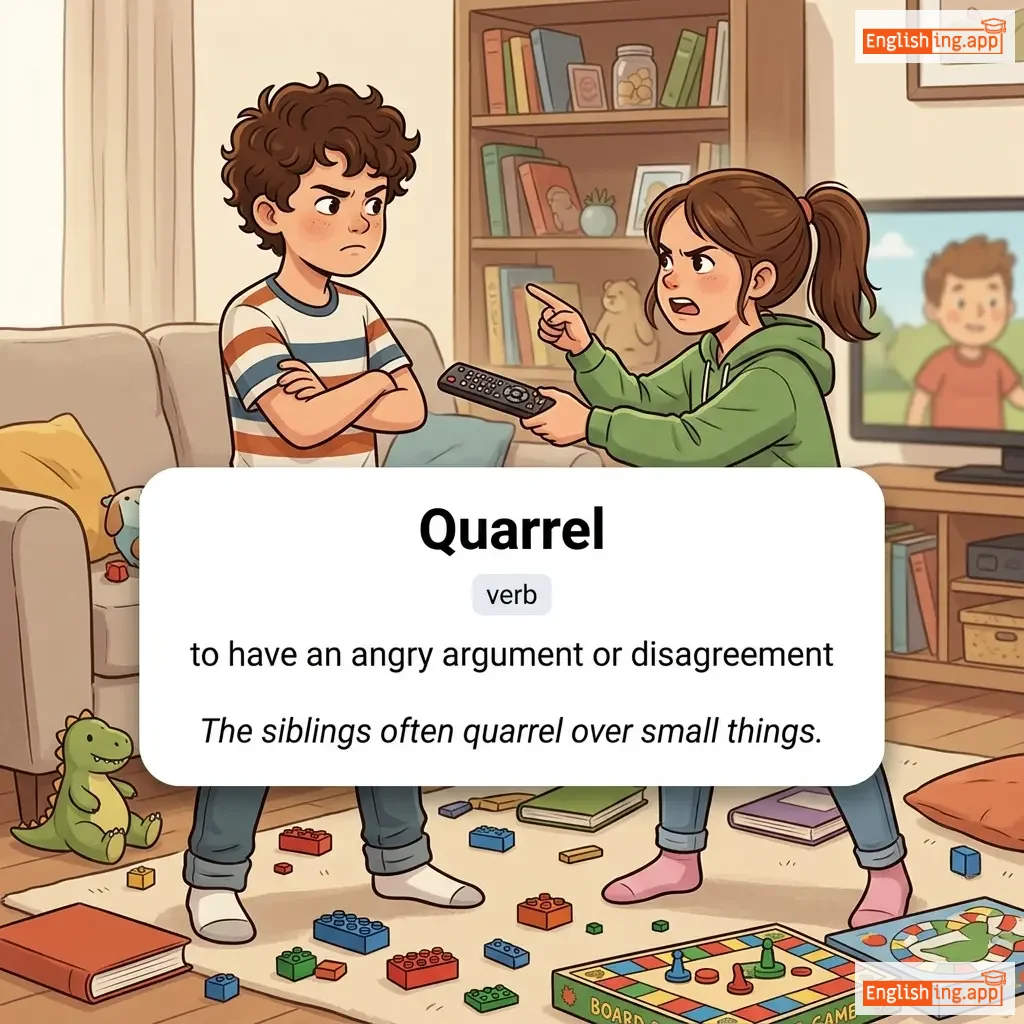
Quarrel definition card — visual illustration of the meaning
noun
/ˈkwɒr.əl/
विवाद; झगड़ा (vivaad; jhagra)

an angry argument or disagreement between people

"They had a quarrel about money and stopped talking to each other."

"वे पैसे को लेकर विवाद कर रहे थे और एक दूसरे से बात करना बंद कर दिया था।" (ve paise ko lekar vivaad kar rahe the aur ek doosre se baat karna band kar diya tha.)
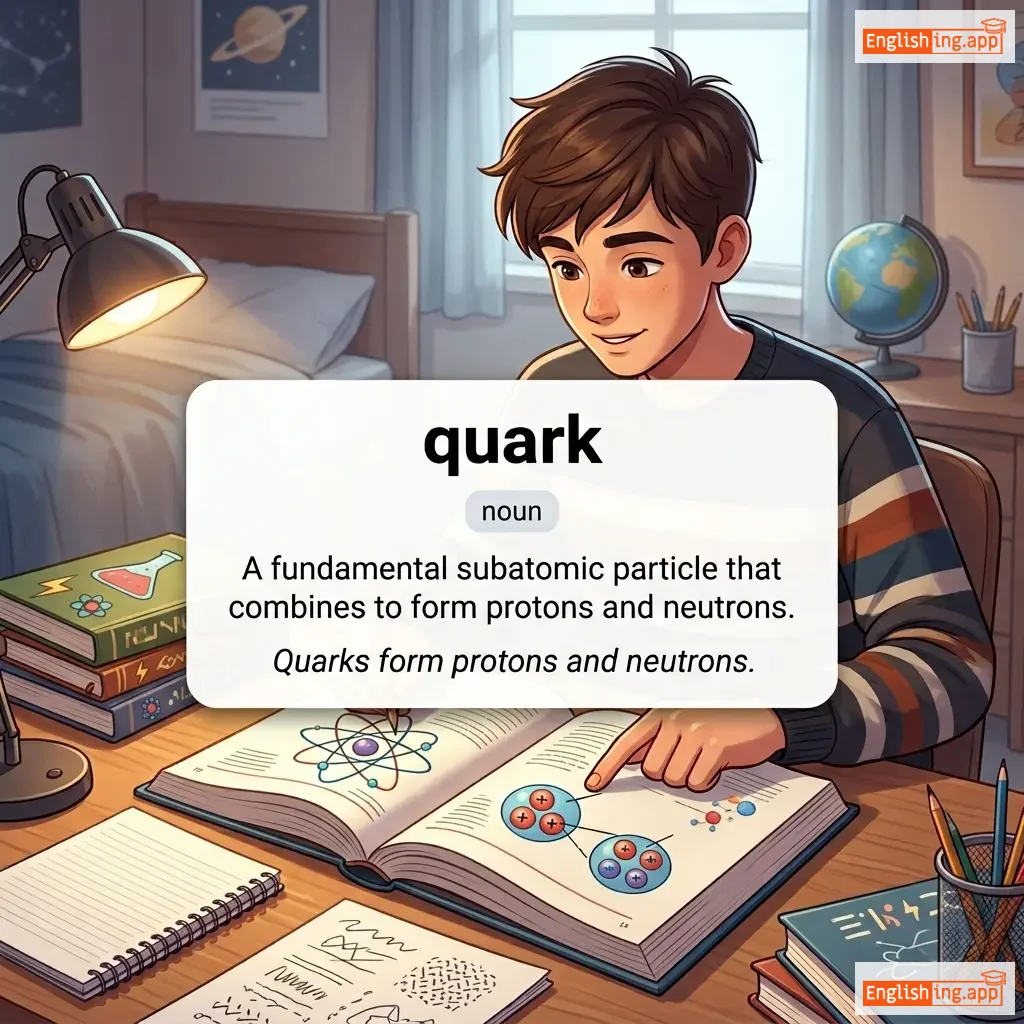
quark definition card — visual illustration of the meaning
noun
kwɔːrk
क्वार्क (kvark)

A fundamental subatomic particle that combines to form protons and neutrons.

"Quarks form protons and neutrons."

"क्वार्क प्रोटॉन और न्यूट्रॉन बनाते हैं।" (Kvark proton aur neutron banate hain.)
noun/verb
/ˈkwɒr.ən.tiːn/
संगरोध (sangrodh)

A period of isolation to prevent the spread of disease.

"The travelers were placed in quarantine for two weeks."

"यात्रियों को दो सप्ताह के लिए संगरोध में रखा गया था।" (Yatriyon ko do saptah ke liye sangrodh mein rakha gaya tha.)
noun
/ˈkwɒn.tə.ti/
मात्रा (maatra)

An amount or number of something.

"The shop ordered a large quantity of rice."

"दुकान ने चावल की बड़ी मात्रा ऑर्डर की थी।" (Dukaan ne chaawal ki badi maatra order ki thi.)
adjective
/ˈkwɑːn.tə.teɪ.tɪv/
मात्रात्मक (matratmak)

Relating to the measurement or amount of something.

"The report included quantitative data on population growth."

"रिपोर्ट में जनसंख्या वृद्धि पर मात्रात्मक डेटा शामिल था।" (Report mein jansankhya vruddhi par matratmak data shamil tha.)
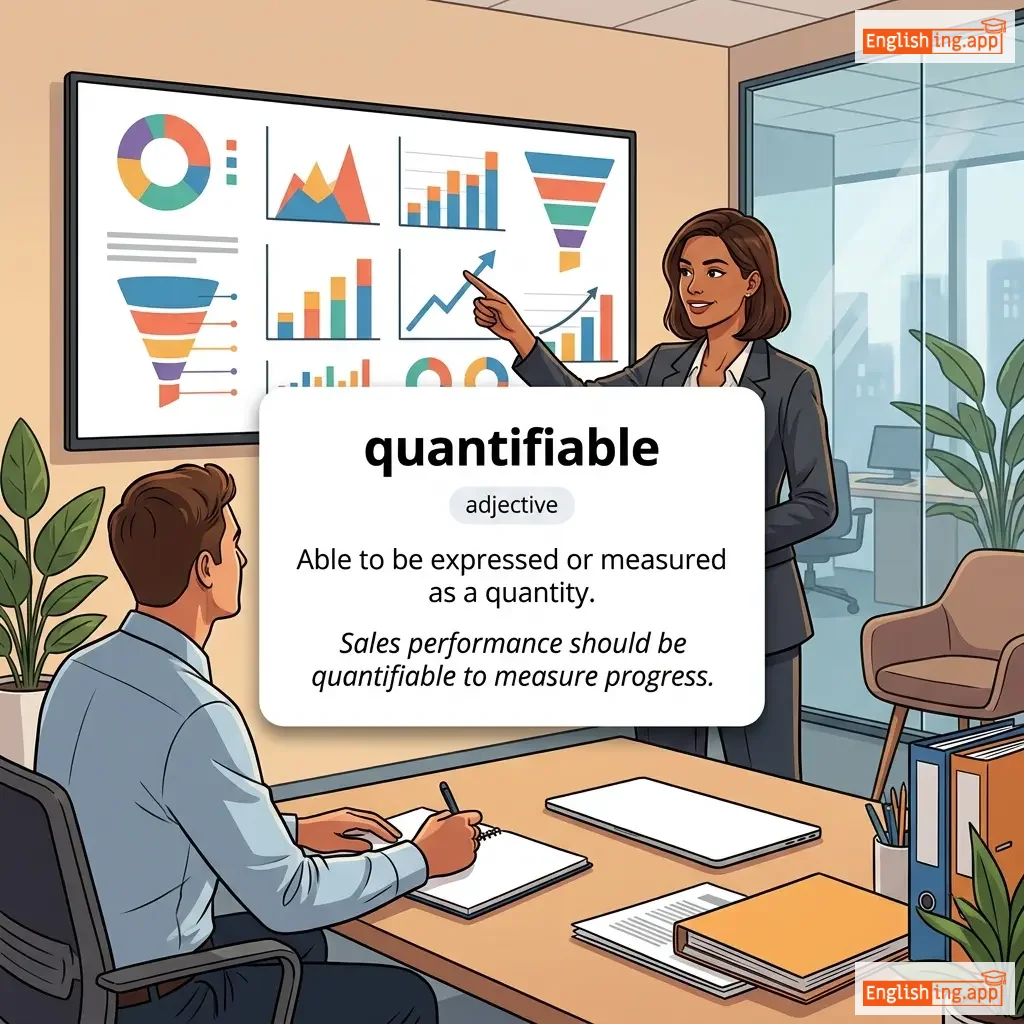
quantifiable definition card — visual illustration of the meaning
adjective
ˈkwɒn.tɪ.faɪ.ə.bəl
मापने योग्य (quantifaaybal)

Able to be expressed or measured as a quantity.

"Sales performance should be quantifiable to measure progress."

"बिक्री प्रदर्शन को प्रगति मापने के लिए माप योग्य होना चाहिए." (bikri pradarshan ko pragati maapne ke liye maap yogya hona chahiye)
noun
/ˈkwɒndəri/
दुविधा (duvidha)

a state of uncertainty or confusion about what to do

"He was in a quandary about whether to accept the job offer."

"वह नौकरी के प्रस्ताव को स्वीकार करे या नहीं, इसके बारे में वह उलझन में था." (vah naukri ke prastaav ko svikaar kare ya nahin, is baare mein vah uljhan mein tha)
noun (plural)
/kwɑːmz/
संदेह (sandeh)

feelings of doubt, worry, or uneasiness

"He had serious qualms about accepting the offer."

"उसे प्रस्ताव स्वीकार करने पर गंभीर संदेह था।" (Use prastaav sveekar karne par gambheer sandeh tha.)
noun
/kwɑːm/
संदेह (sandeh)

a feeling of doubt, worry, or fear about something

"She had no qualm about speaking her mind."

"उसे अपनी बात कहने में कोई संकोच नहीं था।" (Use apni baat kehne mein koi sankoch nahi tha.)
quality time definition card — visual illustration of the meaning
noun
/ˈkwɒl.ɪ.ti taɪm/
गुणवत्ता समय (gunwatta samay)

Time spent giving someone your full attention in order to strengthen your relationship with them.

"Spending quality time with family enhances relationships."

"परिवार के साथ गुणवत्तापूर्ण समय बिताने से रिश्तों में सुधार होता है।" (Parivar ke saath gunwattapurn samay bitane se rishton mein sudhaar hota hai.)
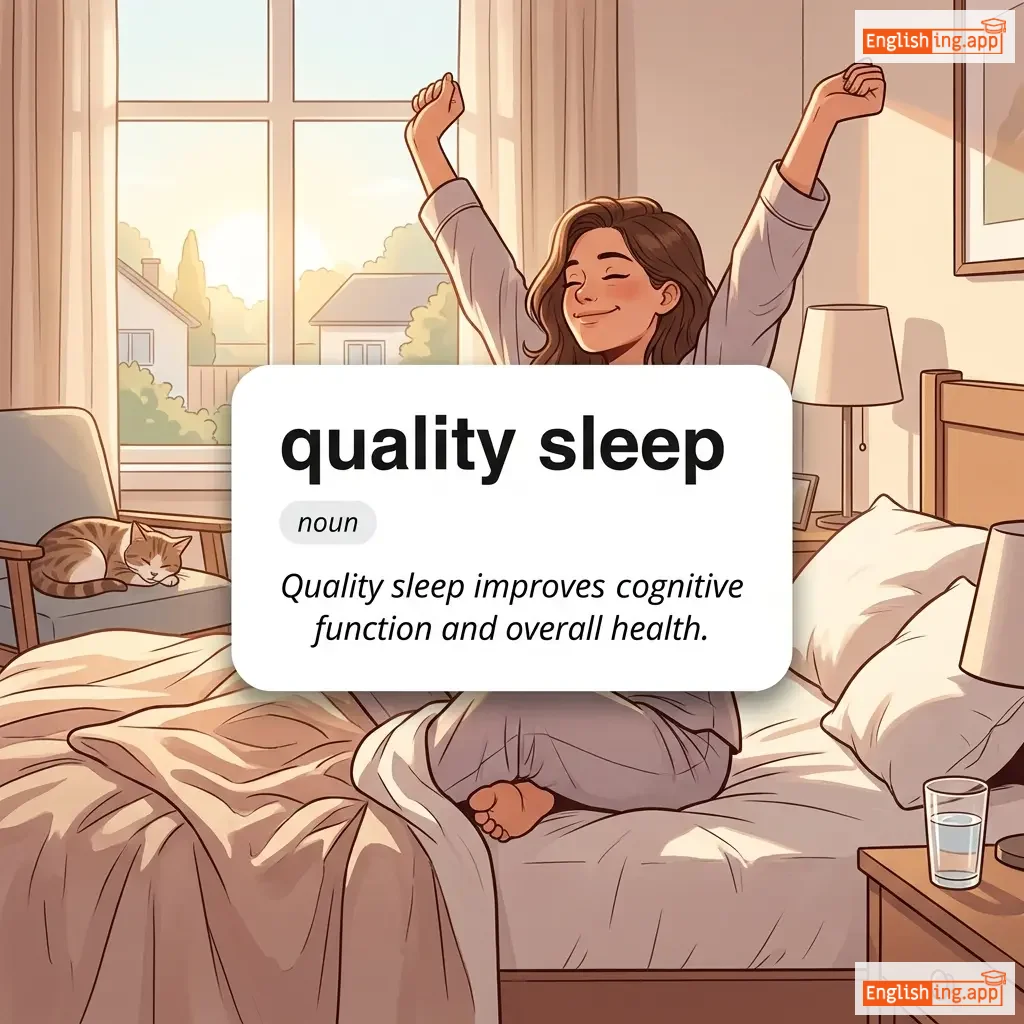
quality sleep definition card — visual illustration of the meaning
noun
ˈkwɒlɪti sliːp
गुणवत्ता नींद (gunwatta neend)

Deep and healthy sleep that is adequate and restorative, ensuring physical and mental well-being

"Quality sleep improves cognitive function and overall health."

"गुणवत्ता नींद संज्ञानात्मक कार्यक्षमता और समग्र स्वास्थ्य में सुधार करती है।" (Gunwatta neend sangyanatmak karyakshamata aur samagra swasthya mein sudhaar karti hai.)
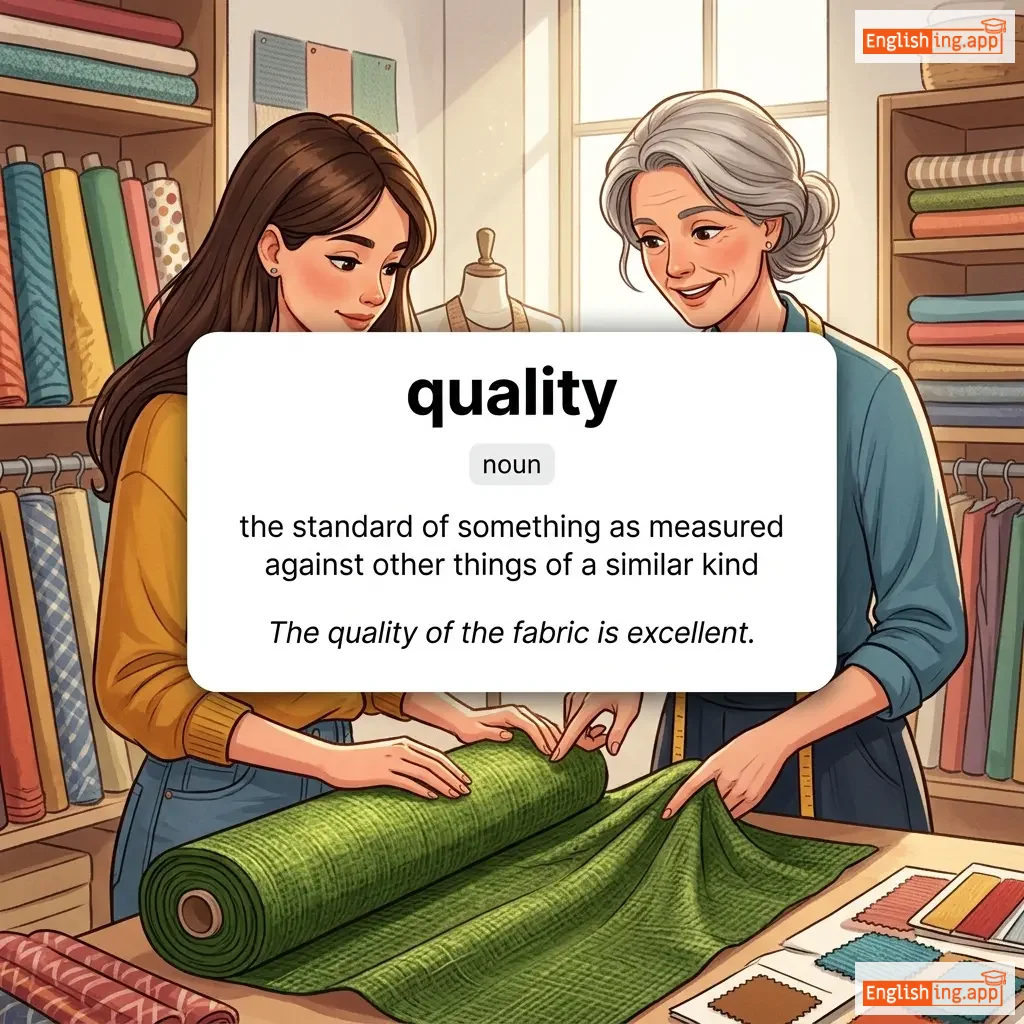
quality definition card — visual illustration of the meaning
noun
/ˈkwɒləti/
गुणवत्ता (gunwatta)

the standard of something as measured against other things of a similar kind

"The quality of the fabric is excellent."

"फैब्रिक की गुणवत्ता उत्कृष्ट है।" (Fabric ki gunwatta utkṛṣṭ hai.)
adjective
/ˈkwɑː.lɪ.teɪ.tɪv/
गुणात्मक (gunatmak)

Relating to the quality or nature of something rather than its quantity.

"The study focused on the qualitative aspects of customer feedback."

"अध्यान ने ग्राहक प्रतिक्रिया के गुणात्मक पहलुओं पर ध्यान केंद्रित किया।" (Adhyaan ne grahak pratikriya ke gunatmak pehluon par dhyan kendrit kiya.)
adjective
/pʌŋkˈtɪliəs/
विवरण पर विशेष ध्यान देने वाला (vivaran par vishesh dhyan dene wala)

Showing great attention to detail or correct behavior.

"She was punctilious in her attention to etiquette."

"वह शिष्टाचार के प्रति अपनी अत्यधिक ध्यान देने वाली थी।" (Vah shishtachar ke prati apni atyadhik dhyan dene wali thi.)
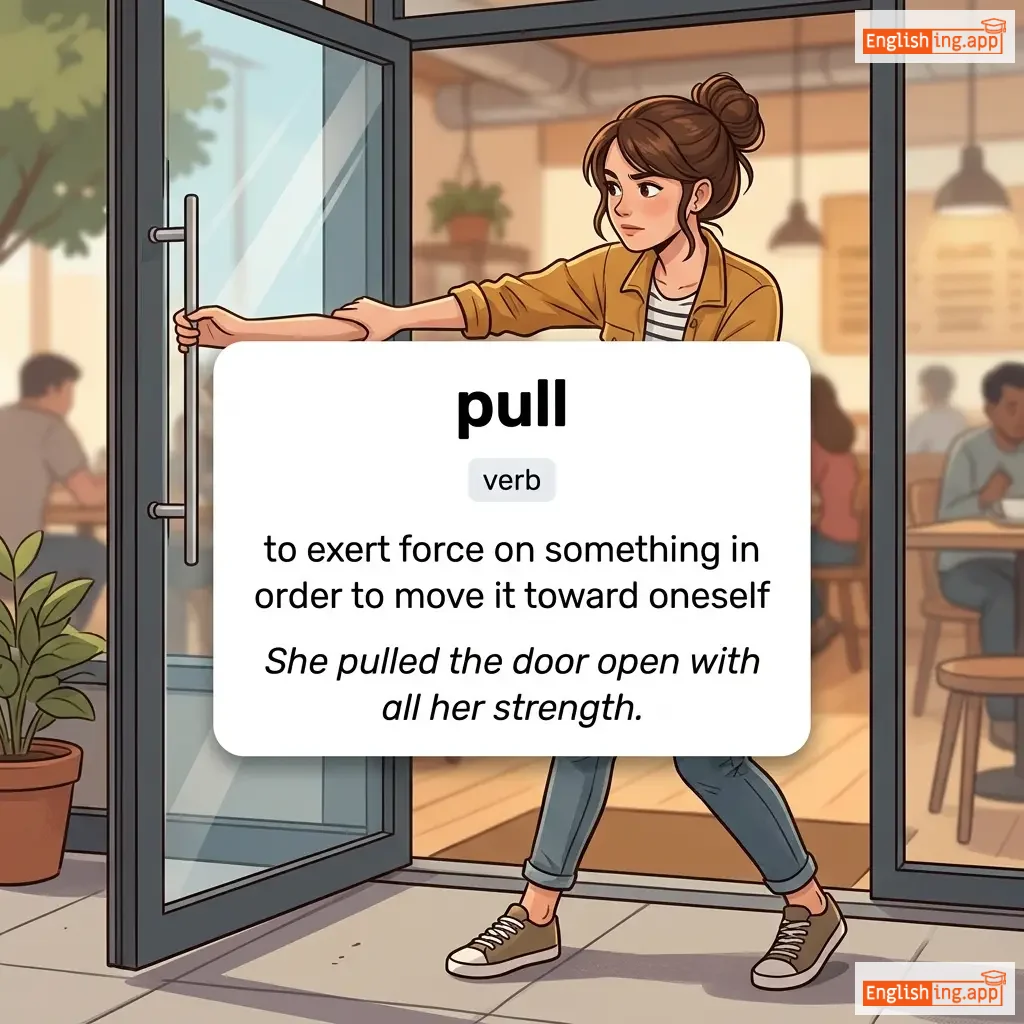
pull definition card — visual illustration of the meaning
verb
/pʊl/
खींचना (kheenchna)

to exert force on something in order to move it toward oneself

"She pulled the door open with all her strength."

"उसने अपनी सारी ताकत से दरवाज़ा खोला।" (Usne apni saari taakat se darwaza khola.)
noun
/ˈpʊl.oʊ.vər/
स्वेटर (sweter)

a knitted garment worn on the upper body, typically pulled on over the head

"She wore a warm pullover during the cold winter evening."

"उसने ठंडी सर्दी की शाम में एक गर्म स्वेटर पहना था।" (usne thandi sardi ki shaam mein ek garm sweter pehna tha.)
adjective
/ˈpʌlməˌneri/
फेफड़ों से सम्बन्धित (fephdon se sambandhit)

relating to the lungs

"The patient suffered from a serious pulmonary infection."

"रोगी को एक गंभीर पल्मोनरी संक्रमण हुआ।" (rogi ko ek gambhir pulmonary sankraman hua)
noun
/ˈpʊlpɪt/
धर्मोपदेश मञ्च (dharmopadesh manch)

a raised platform in a church from which the preacher delivers a sermon

"The pastor stood at the pulpit to address the congregation."

"पादरी ने मंडली से संबोधित करने के लिए पलपिट पर खड़ा हुआ।" (Padri ne mandali se sambodhit karne ke liye palpit par khada hua.)
verb
/ˈpʌlseɪt/
धड़कना (dhadakna)

to expand and contract rhythmically; to throb or beat

"The neon lights pulsated with a steady rhythm."

"नियॉन लाइट्स एक स्थिर लय में धड़क रही थीं।" (Niyon lights ek sthir lay mein dhadak rahi thin.)
noun/verb
/pʌls/
नाड़ी (naadi)

A rhythmic beat or vibration, especially the heartbeat; to throb or move with a rhythm.

"The doctor checked her pulse after the long run."

"दौड़ने के बाद डॉक्टर ने उसकी नाड़ी चेक की।" (Daudne ke baad doctor ne uski naadi check ki.)
verb
/ˈpʌlvəraɪz/
पिसना (pisna)

To crush or grind something into a fine powder; to completely defeat or destroy.

"The machine can pulverize stones into dust."

"मशीन पत्थरों को धूल में पल्वराइज़ कर सकती है।" (Machine patharon ko dhool mein pulverize kar sakti hai.)
verb
/ˈpʌməl/
पीटना (peetna)

To strike repeatedly with the fists; to beat or hit forcefully.

"The boxer pummeled his opponent in the final round."

"अंतिम राउंड में बॉक्सर ने अपने प्रतिद्वंद्वी को बुरी तरह पीटा।" (antim round me boxer ne apne pratidvandvi ko buri tarah peeta.)
verb
/pʌmp/
पंप करना (pamp karna)

to force liquid or gas to move in a particular direction using a device

"They pumped water from the well into the tank."

"उन्होंने कुएं से पानी पंप किया।" (Unhone kuen se pani pamp kiya.)
noun
/'pʌmp.kɪn/
कद्दू (kaddu)

a large round orange fruit with thick skin and edible flesh

"We carved a jack-o'-lantern from a big pumpkin."

"हमने एक बड़े कद्दू से जैक-ओ'-लैंटर्न उकेरा।" (hamne ek bade kaddu se jack-o'-lantern ukeyra)
noun
/pʌn/
शब्दविन्यास (shabdvinyas)

A humorous use of words that suggests different meanings or words that sound alike.

"He made a clever pun about the bakery's bread rising."

"उसने बेकरी की ब्रेड उठने के बारे में एक चतुर शब्दविन्यास किया।" (Usne bakery ki bread uthne ke baare mein ek chatur shabdvinyas kiya.)
verb
/pʌntʃ/
घूंसा मारना (ghoonsa maarna)

to hit someone or something hard with your fist

"He punched the wall in frustration."

"उसने निराशा में दीवार पर पंच मारा।" (Usne niraasha mein deewar par punch maara.)
noun
/ˈpʌntʃ laɪn/
पंच लाइन (panch line)

The final part of a joke or story that makes it funny.

"Everyone laughed loudly at the punch line of his joke."

"सभी ने उसकी मजाक के पंच लाइन पर जोर से हंसी मारी।" (Sabhi ne uski mazaak ke panch line par zor se hansi maari.)
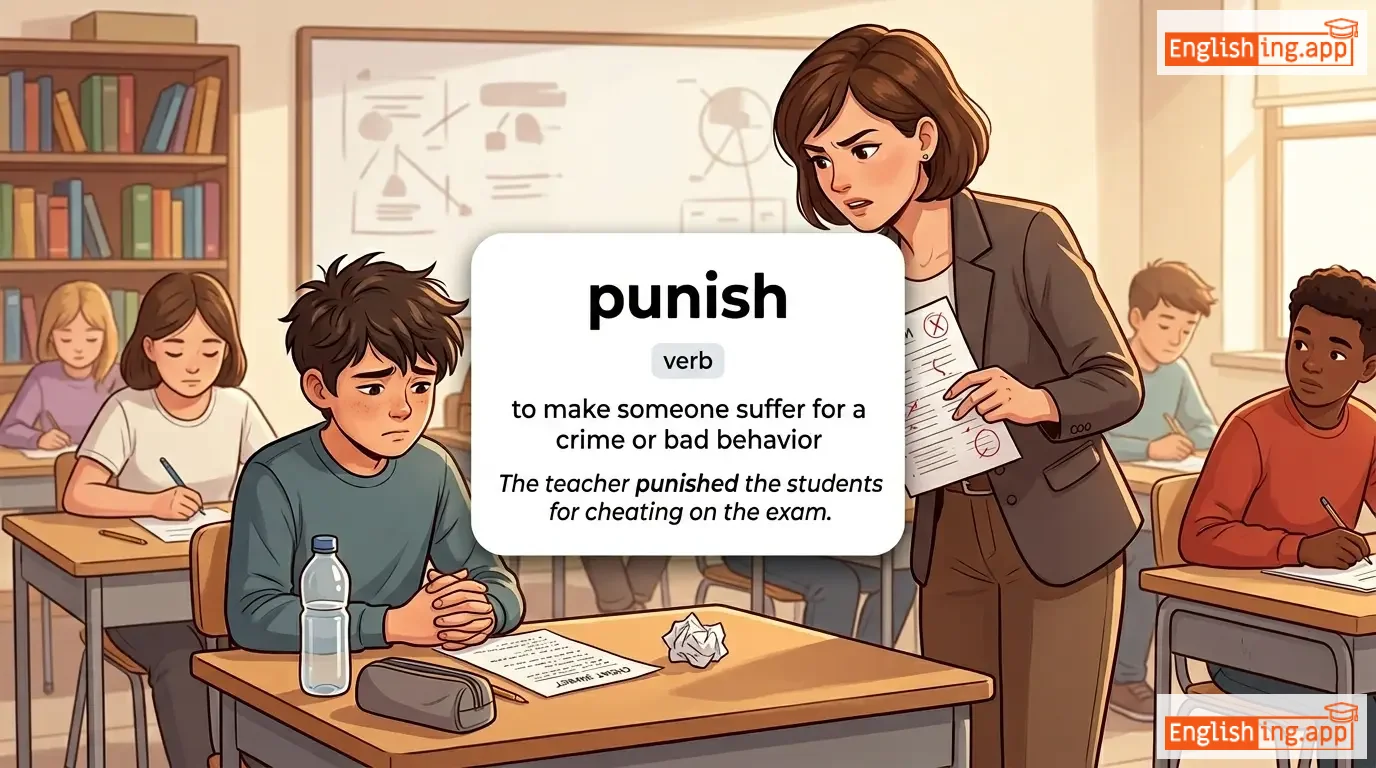
punish definition card — visual illustration of the meaning
verb
/ˈpʌnɪʃ/
सजा देना (saza dena)

to make someone suffer for a crime or bad behavior

"The teacher punished the students for cheating on the exam."

"अध्यापक ने परीक्षा में धोखाधड़ी के लिए छात्रों को सजा दी।" (Adhyapak ne pareeksha mein dhokhaadhadi ke liye chatron ko saza di.)