Словари

Словарь английского языка | Значения слов, определения и примеры
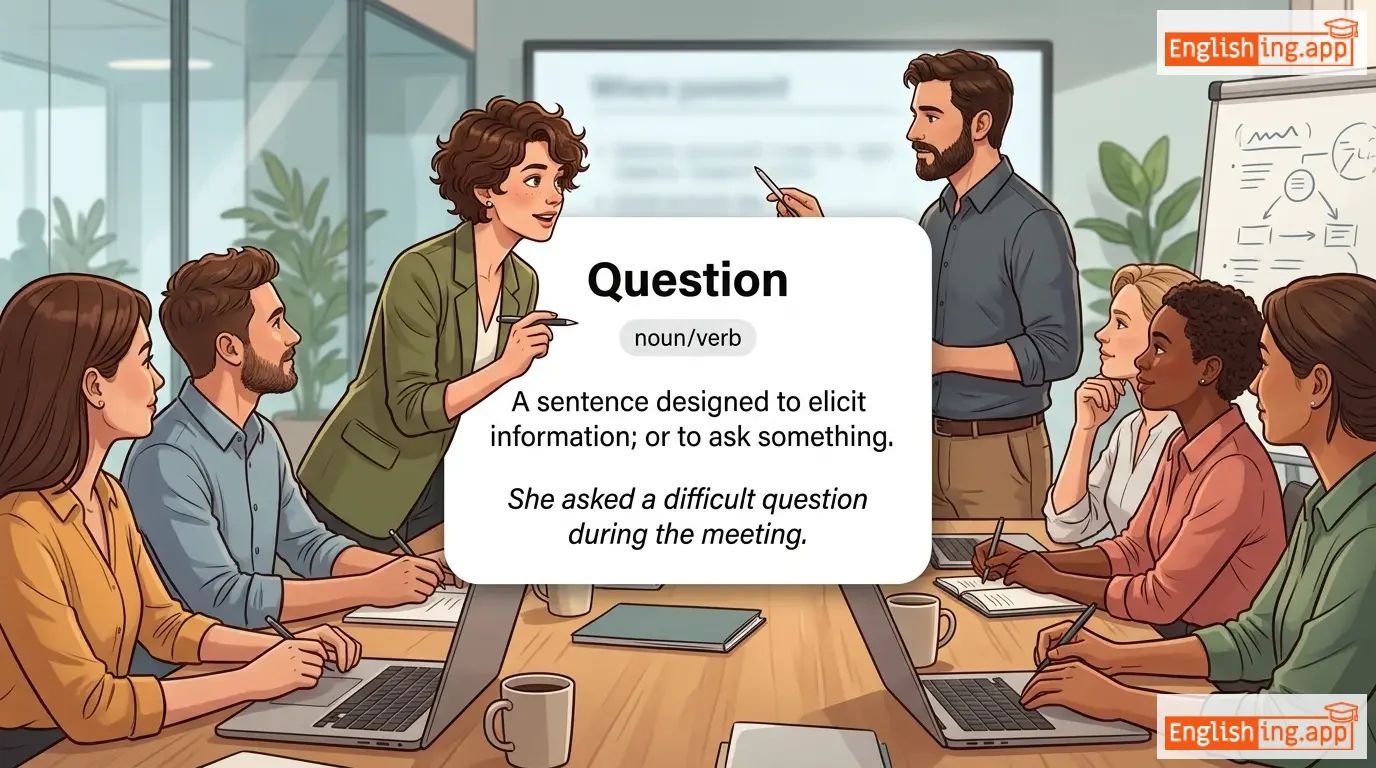
Question definition card — visual illustration of the meaning
noun/verb
/ˈkwes.tʃən/
вопрос (vopros)

A sentence designed to elicit information; or to ask something.

"She asked a difficult question during the meeting."
"Она задала трудный вопрос на встрече." (Ona zadala trudnyy vopros na vstreche.)
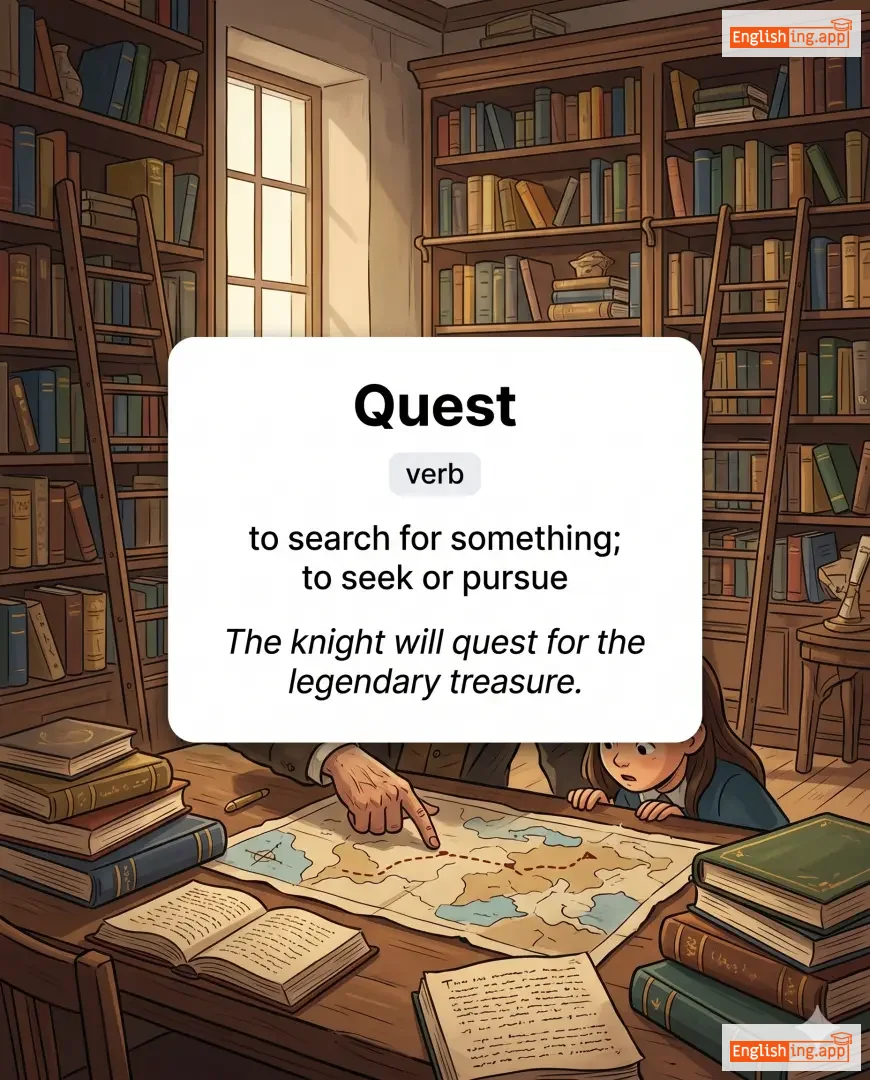
Quest definition card — visual illustration of the meaning
noun
/kwest/
поиск, квест (poisk, kvest)

a long search for something that is difficult to find

"They went on a quest to find the lost treasure."

"Они отправились в поиски, чтобы найти потерянное сокровище." (Oni otpravilis v poisky, chtoby najti poteryannoe sokrovishche.)
Query definition card — visual illustration of the meaning
noun/verb
/ˈkwɪəri/
вопрос (vopros)

A question, especially one addressed to an official or organization; to ask a question or express doubt.

"She raised a query about the accuracy of the report."

"Она подняла вопрос о точности отчета." (Ona podnyala vopros o tochnosti otcheta.)
adjective
/ˈkwɛrʊləs/
недовольный (nedovol'nyj)

Complaining in a whining or irritable manner.

"The querulous customer kept finding fault with every detail."

"Недовольный клиент продолжал находить ошибки в каждой детали." (Nedovol'nyj klient prodolzhal nakhodit' oshibki v kazhdoy detali.)
verb
/ˈkwentʃɪŋ/
утолить жажду / потушить (utolit' zhazhdu / potushit')

The act of satisfying thirst or extinguishing something like fire.

"Drinking cold water was quenching her thirst."
"Пить холодную воду утолял ее жажду." (Pit' kholodnuyu vodu utolyal yeyo zhazhdu.)
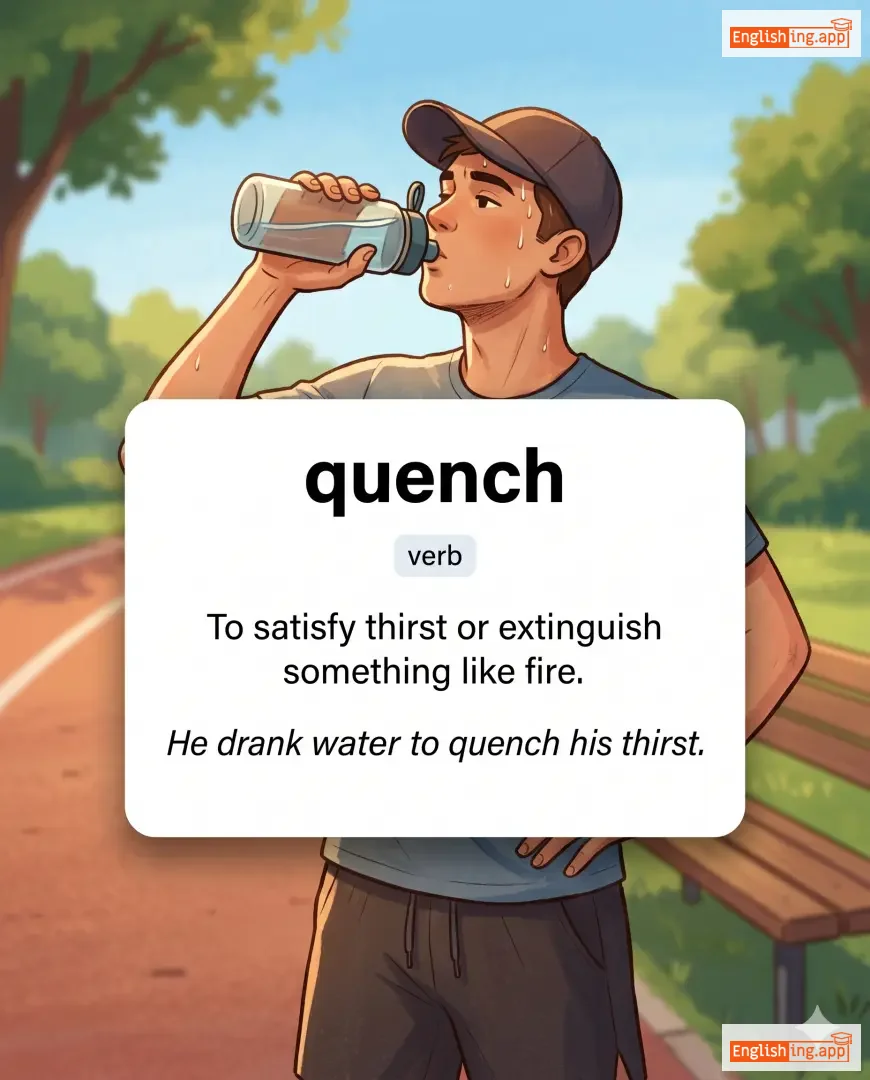
quench definition card — visual illustration of the meaning
verb
/kwɛntʃ/
утолить (utolit)

To satisfy thirst or extinguish something like fire.

"He drank water to quench his thirst."

"Он выпил воду, чтобы утолить жажду." (On vypil vodu, chtoby utolit' zhazhdu.)
verb
/kwɛl/
подавлять (podavlyat)

To suppress or put an end to something, usually by force.

"The police were called to quell the violent protest."

"Полиция была вызвана, чтобы подавить насильственные протесты." (Politsiya byla vyzvana, chtoby podavit' nasil'stvennye protesty.)
adjective
/kwɪər/
странный (stranniy)

Strange, odd, or unusual.

"He had a queer feeling that something was wrong."
"У него было странное чувство, что что-то не так." (U nego bylo strannoye chuvstvo, chto chto-to ne tak.)
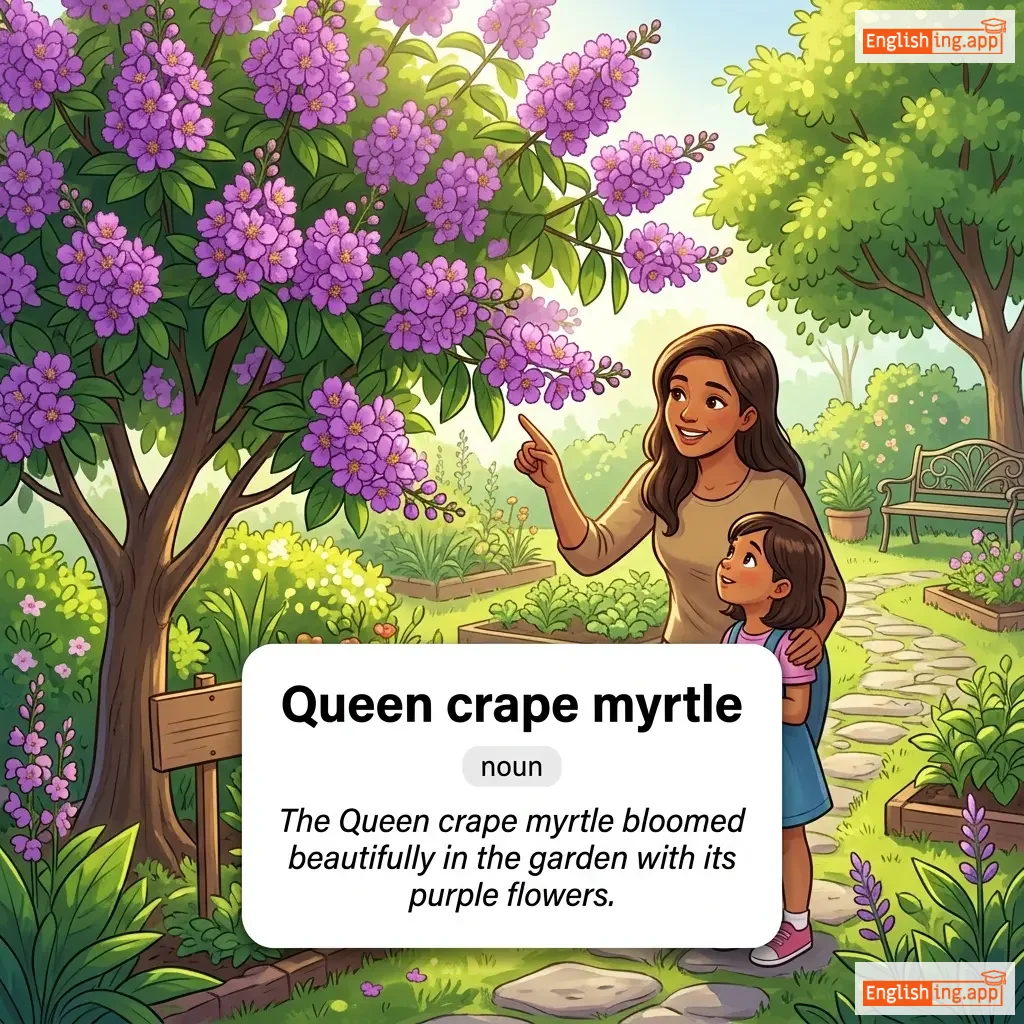
Queen crape myrtle definition card — visual illustration of the meaning
noun
/kwiːn kreɪp ˈmɜːrtəl/
Креп Мертл королевы (Krep Mertl korolevyi)

A flowering tree with colorful, crepe-like flowers, scientifically known as Lagerstroemia

"The Queen crape myrtle bloomed beautifully in the garden with its purple flowers."

"Квін Креп Мертл красиво распустился в саду с фиолетовыми цветами." (Kvin Krep Mertl krasivo raspustilsya v sadu s fioletovymi tsvetami.)
noun
/kwiːn/
королева (koroleva)

a female ruler of a country or the wife of a king

"The queen addressed her people with grace."

"Королева обратилась к своему народу с грацией." (Koroleva obratilas' k svoemu narodu s graciey.)
adjective
/ˈkwiːzi/
тошнота (toshnota)

Feeling sick to one's stomach; nauseated.

"She felt queasy after the long boat ride."

"Она почувствовала себя плохо после долгой поездки на лодке." (Ona pochuvstvovala sebya plokho posle dolgoy poezdki na lodke.)
noun
/kiː/
причал (prichal)

A platform lying alongside or projecting into water for loading and unloading ships.

"The cargo was unloaded at the quay."

"Груз был выгружен на причале." (Gruz byl vygruzhen na prichale.)
verb, noun
/ˈkweɪvər/
дрожать (drozhat)

To shake or tremble in speaking, typically through nervousness or emotion.

"Her voice quavered as she spoke before the crowd."

"Её голос дрожал, когда она говорила перед толпой." (Eyo golos drozhal, kogda ona govoryla pered tolploy.)
verb
/kwɑːʃ/
отменить (otmenit)

To reject or void something legally or to put an end to something forcefully.

"The court quashed the decision due to lack of evidence."

"Суд отменил решение из-за отсутствия доказательств." (Sud otmenil reshenie iz-za otsutstviya dokazatel'stv.)
noun
/ˈkwɔːrtoʊ/
книга формата кварто (kniga formata kvarto)

A book size resulting from folding each printed sheet into four leaves (eight pages).

"The library has rare Shakespeare quartos."

"В библиотеке есть редкие кварто Шекспира." (V biblioteke est' redkie kvarto Shekspira.)
noun
/kwɔːrˈtɛt/
квартет (kvartet)

A group of four people playing music or singing together.

"The string quartet performed beautifully at the concert."

"Струнный квартет великолепно выступил на концерте." (Strunnyj kvartet velikolepno vystupil na koncerte.)
noun
/ˈkwɔː.tərz/
жилище; казармы; военное жилье (zhilishche; kazarmy; voennoye zhilye)

living accommodation; lodgings; military housing

"The soldiers returned to their quarters after the training exercise."

"Солдаты вернулись в свои казармы после учебного занятия." (Soldaty vernulis' v svoi kazarmy posle uchebnogo zanyatiya.)
adjective, adverb, noun
/ˈkwɔːrtərli/
квартальный (kvartalny)

Happening every three months; occurring four times a year.

"The company publishes a quarterly report on its earnings."

"Компания публикует квартальный отчет о своих доходах." (Kompaniya publikuet kvartalnyy otchet o svoikh dokhodakh.)
noun
/ˈkwɔːtərˌbæk/
квотербек (kvoterbek)

the player who directs a team’s offense in American football

"The quarterback threw a perfect pass."

"Квотербек бросил идеальный пас." (Kvoterbek brosil ideal'nyy pas.)
noun/verb
/ˈkwɔː.tər/
четверть (chetvert)

One-fourth part of something; also used for housing or accommodating.

"She paid a quarter of the total bill."

"Она заплатила четверть от общей суммы счета." (Ona zaplatila chetvert' ot obshchey summi scheta.)
noun/verb
/ˈkwɒr.i/
карьер / дичь (kar'yer / d'ich)

A place where stone or minerals are extracted; also means prey when hunted.

"The workers quarried limestone from the hill."

"Рабочие добывали известняк с холма." (Rabochie dobyvali izvestnyak s kholma.)
adjective
/ˈkwɒr.əl.səm/
сварливый (svarlivy)

Inclined to argue or fight.

"He became quarrelsome after losing the game."
"Он стал сварливым после того, как проиграл в игре." (On stal svarlivym posle togo, kak proigral v igre.)
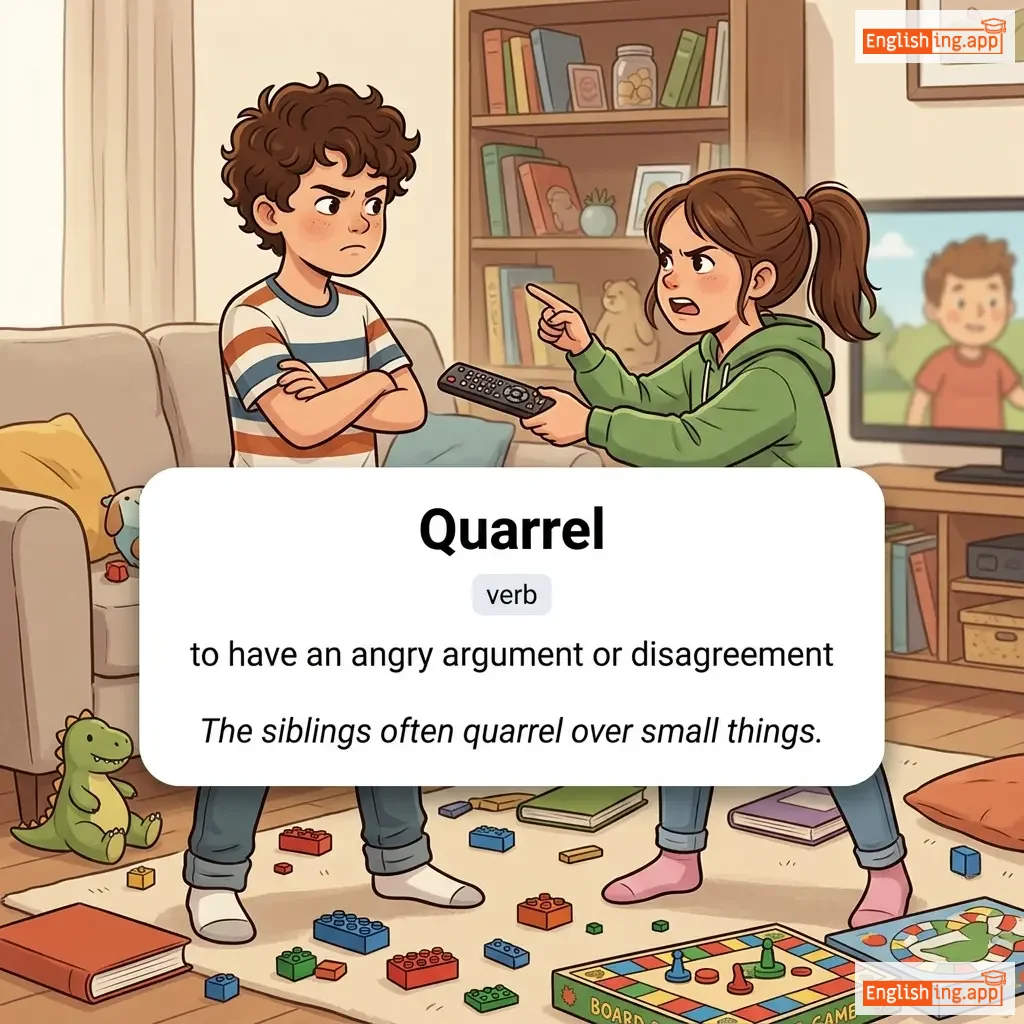
Quarrel definition card — visual illustration of the meaning
noun
/ˈkwɒr.əl/
ссора; спор (ssora; spor)

an angry argument or disagreement between people

"They had a quarrel about money and stopped talking to each other."

"Они поссорились из-за денег и перестали разговаривать друг с другом." (Oni pssorilis' iz-za deneg i perestali razgovarivat' drug s drugom.)
quark definition card — visual illustration of the meaning
noun
kwɔːrk
кварк (kvark)

A fundamental subatomic particle that combines to form protons and neutrons.

"Quarks form protons and neutrons."

"Кварки образуют протоны и нейтроны." (Kvarki obrazyuyut protony i neytrony.)
noun/verb
/ˈkwɒr.ən.tiːn/
карантин (karantin)

A period of isolation to prevent the spread of disease.

"The travelers were placed in quarantine for two weeks."

"Путешественников поместили на карантин на две недели." (Puteshestvennikov pomestili na karantin na dve nedeli.)
noun
/ˈkwɒn.tə.ti/
количество (kolichestvo)

An amount or number of something.

"The shop ordered a large quantity of rice."

"Магазин заказал большое количество риса." (Magazin zakazal bol'shoye kolichestvo risa.)
adjective
/ˈkwɑːn.tə.teɪ.tɪv/
количественный (kolichestvennyy)

Relating to the measurement or amount of something.

"The report included quantitative data on population growth."

"Отчет включал количественные данные о росте населения." (Otchet vklyuchal kolichestvennye dannye o roste naseleniya.)
quantifiable definition card — visual illustration of the meaning
adjective
ˈkwɒn.tɪ.faɪ.ə.bəl
измеримый (kvantifiabl)

Able to be expressed or measured as a quantity.

"Sales performance should be quantifiable to measure progress."

"Результаты продаж должны быть измеримыми, чтобы оценивать прогресс." (Rezultaty prodazh dolzhny byt izmerimyimi, chtoby otsenivat progress.)
noun
/ˈkwɒndəri/

a state of uncertainty or confusion about what to do

"He was in a quandary about whether to accept the job offer."

noun (plural)
/kwɑːmz/
сомнения (somneniya)

feelings of doubt, worry, or uneasiness

"He had serious qualms about accepting the offer."

"У него были серьезные сомнения по поводу принятия предложения." (U nego byli seryoznye somneniya po povodu prinyatiya predlozheniya.)
noun
/kwɑːm/
сомнение (somnenie)

a feeling of doubt, worry, or fear about something

"She had no qualm about speaking her mind."

"Она не сомневалась в том, что говорила." (Ona ne somnevalas' v tom, chto govoryla.)
quality time definition card — visual illustration of the meaning
noun
/ˈkwɒl.ɪ.ti taɪm/
время качества (vremya kachestva)

Time spent giving someone your full attention in order to strengthen your relationship with them.

"Spending quality time with family enhances relationships."

"Проведение качественного времени с семьей улучшает отношения." (Provedeniye kachestvennogo vremeni s sem'yoj uluchshayet otnosheniya.)
quality sleep definition card — visual illustration of the meaning
noun
ˈkwɒlɪti sliːp
качественный сон (kachestvennyy son)

Deep and healthy sleep that is adequate and restorative, ensuring physical and mental well-being

"Quality sleep improves cognitive function and overall health."
"Качественный сон улучшает когнитивные функции и общее состояние здоровья." (Kachestvennyy son uluchshaet kognitivnye funktsii i obshchee sostoyanie zdorov'ya.)
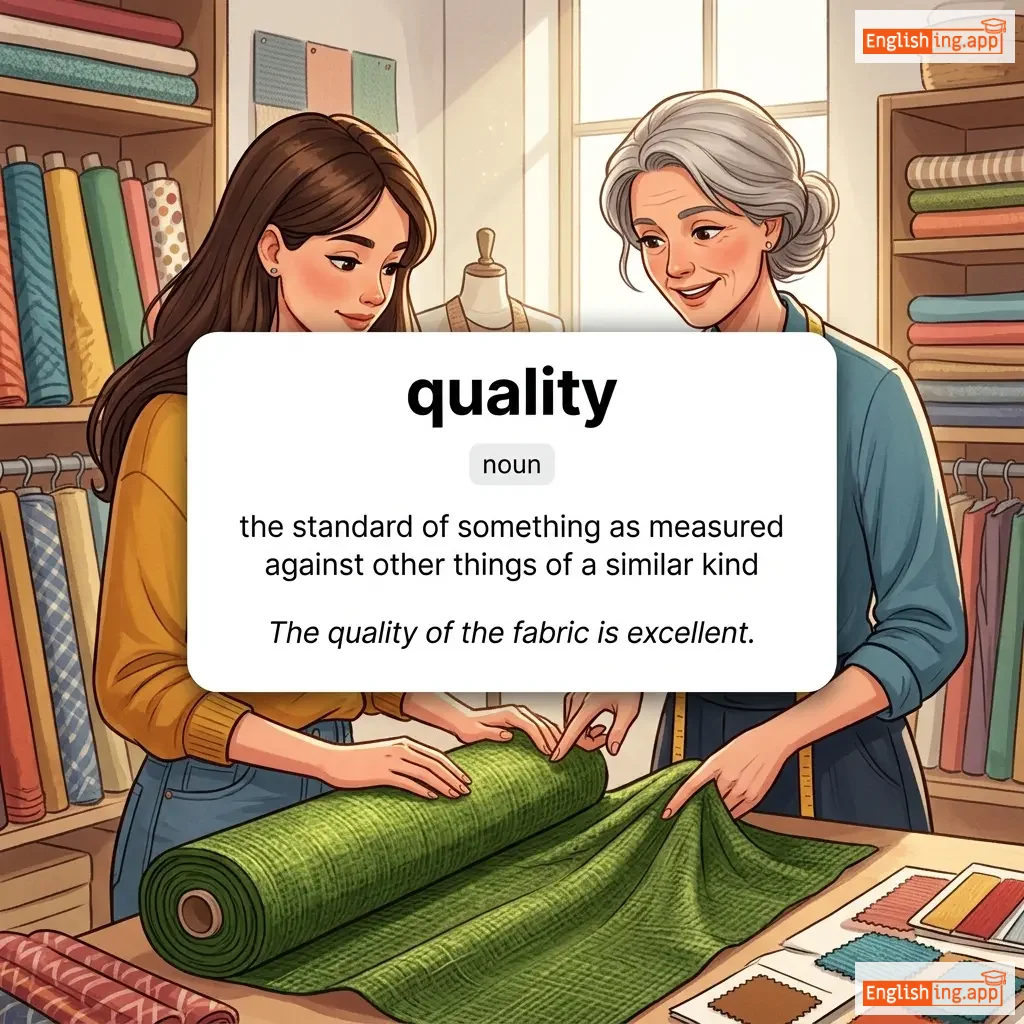
quality definition card — visual illustration of the meaning
noun
/ˈkwɒləti/
качество (kachestvo)

the standard of something as measured against other things of a similar kind

"The quality of the fabric is excellent."

"Качество ткани отличное." (Kachestvo tkani otlichnoe.)
adjective
/ˈkwɑː.lɪ.teɪ.tɪv/
качественный (kachestvenny)

Relating to the quality or nature of something rather than its quantity.

"The study focused on the qualitative aspects of customer feedback."

"Исследование было сосредоточено на качественных аспектах отзывов клиентов." (Issledovanie bylo sosredotocheno na kachestvennykh aspektakh otzyvov klientov.)
adjective
/pʌŋkˈtɪliəs/
педантичный (pedantichnyy)

Showing great attention to detail or correct behavior.

"She was punctilious in her attention to etiquette."
"Она была педантична в своем отношении к этикету." (Ona byla pedantichna v svoem otnoshenii k etiketu.)
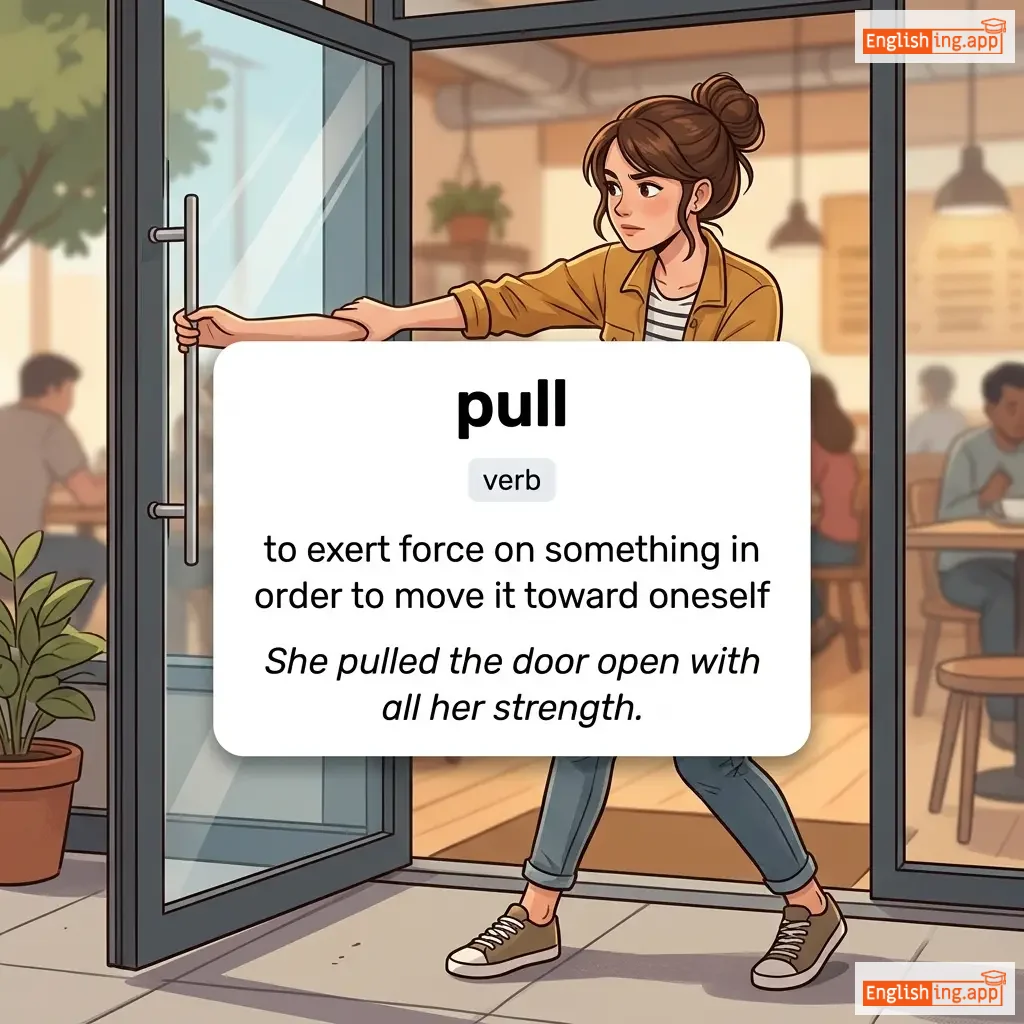
pull definition card — visual illustration of the meaning
🖐️

pull (pul)

verb
/pʊl/
тянуть (tyanut)

to exert force on something in order to move it toward oneself

"She pulled the door open with all her strength."
"Она открыла дверь с всей своей силой." (Ona otkryla dver' s vsei svoei siloi.)
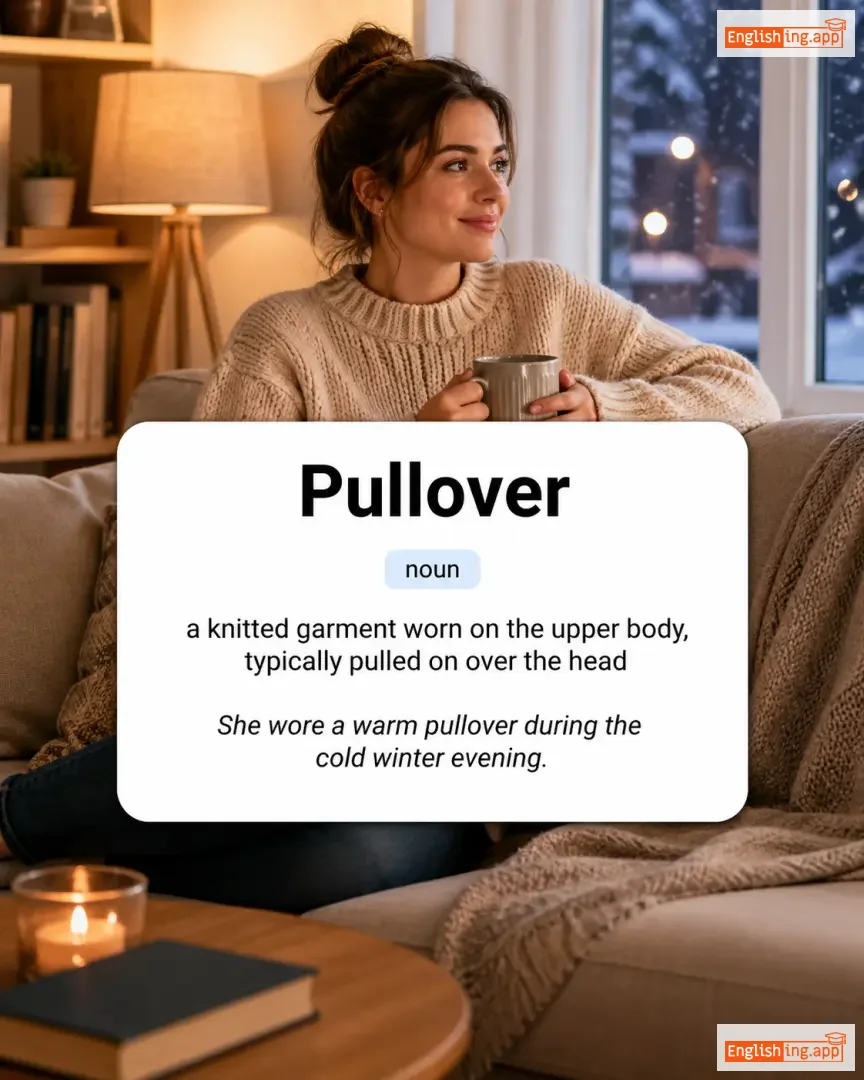
Pullover definition card — visual illustration of the meaning
noun
/ˈpʊl.oʊ.vər/
свитер (sviter)

a knitted garment worn on the upper body, typically pulled on over the head

"She wore a warm pullover during the cold winter evening."

"Она надела тёплый свитер в холодный зимний вечер." (Ona nadela tyoplyy sviter v kholodnyy zimniy vecher.)
adjective
/ˈpʌlməˌneri/

relating to the lungs

"The patient suffered from a serious pulmonary infection."

noun
/ˈpʊlpɪt/
паперть (papert)

a raised platform in a church from which the preacher delivers a sermon

"The pastor stood at the pulpit to address the congregation."

"Пастор встал на паперти, чтобы обратиться к прихожанам." (Pastor vstal na paperti, chtoby obratitsya k prikhozhanyam.)
verb
/ˈpʌlseɪt/
пульсировать (pul'sirovat')

to expand and contract rhythmically; to throb or beat

"The neon lights pulsated with a steady rhythm."

"Неоновые огни пульсировали с постоянным ритмом." (Neonovye ogni pul'sirovali s postoyannym ritmom.)
Pulse definition card — visual illustration of the meaning
noun/verb
/pʌls/
пульс (pul's)

A rhythmic beat or vibration, especially the heartbeat; to throb or move with a rhythm.

"The doctor checked her pulse after the long run."

"Врач проверил ее пульс после долгого бега." (Vrach proveril ye p'uls posle dolgogo bega.)
verb
/ˈpʌlvəraɪz/
пульверизировать (pul'verizirovat)

To crush or grind something into a fine powder; to completely defeat or destroy.

"The machine can pulverize stones into dust."

"Машина может пульверизировать камни в пыль." (Mashina mozhet pulverizirovat' kamni v pyl'.)
verb
/ˈpʌməl/
избивать (izbivat)

To strike repeatedly with the fists; to beat or hit forcefully.

"The boxer pummeled his opponent in the final round."

"Боксёр избил своего соперника в финальном раунде." (Bokser izbil svoego sopernika v finalnom raunde.)
verb
/pʌmp/
накачивать (nakachivat)

to force liquid or gas to move in a particular direction using a device

"They pumped water from the well into the tank."
"Они откачивали воду из колодца в бак." (Oni otkachivali vodu iz kolodtsa v bak.)
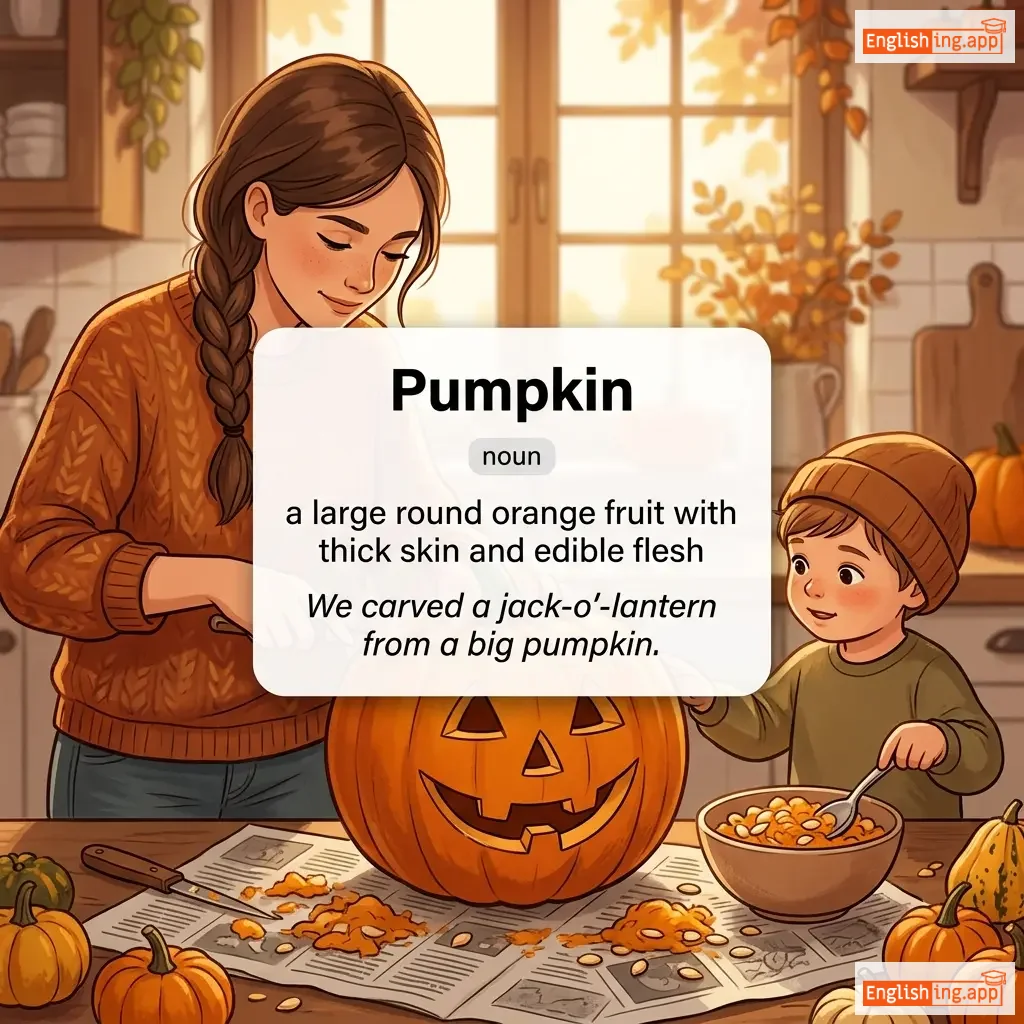
Pumpkin definition card — visual illustration of the meaning
noun
/'pʌmp.kɪn/
тыква (tykva)

a large round orange fruit with thick skin and edible flesh

"We carved a jack-o'-lantern from a big pumpkin."

"Мы вырезали фонарь из большого тыквы." (My vyrezali fonar' iz bol'shogo tykvy)
noun
/pʌn/
игра слов (igra slov)

A humorous use of words that suggests different meanings or words that sound alike.

"He made a clever pun about the bakery's bread rising."
"Он сделал остроумную игру слов о хлебе, поднимающемся в пекарне." (On sdelal ostroymnuyu igru slov o hlebe, podnimayushchimsya v pekarne.)
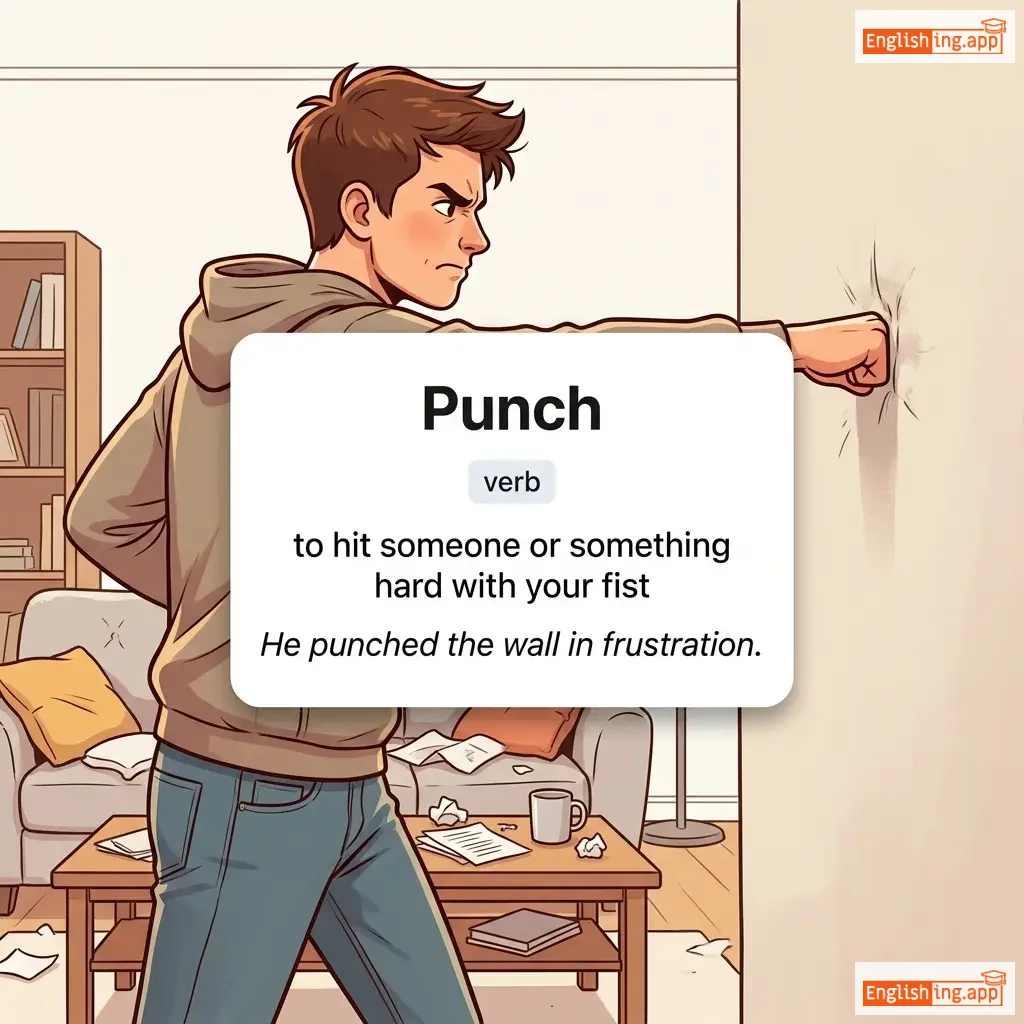
Punch definition card — visual illustration of the meaning
verb
/pʌntʃ/
ударить кулаком (udarit' kulakom)

to hit someone or something hard with your fist

"He punched the wall in frustration."

"Он ударил по стене от разочарования." (On udaril po stene ot razocharovaniya.)
noun
/ˈpʌntʃ laɪn/
финальная шутка (final'naya shutka)

The final part of a joke or story that makes it funny.

"Everyone laughed loudly at the punch line of his joke."
"Все громко смеялись над финальной шуткой его анекдота." (Vse gromko smeyalis' nad final'noy shutkoy ego anekdota.)
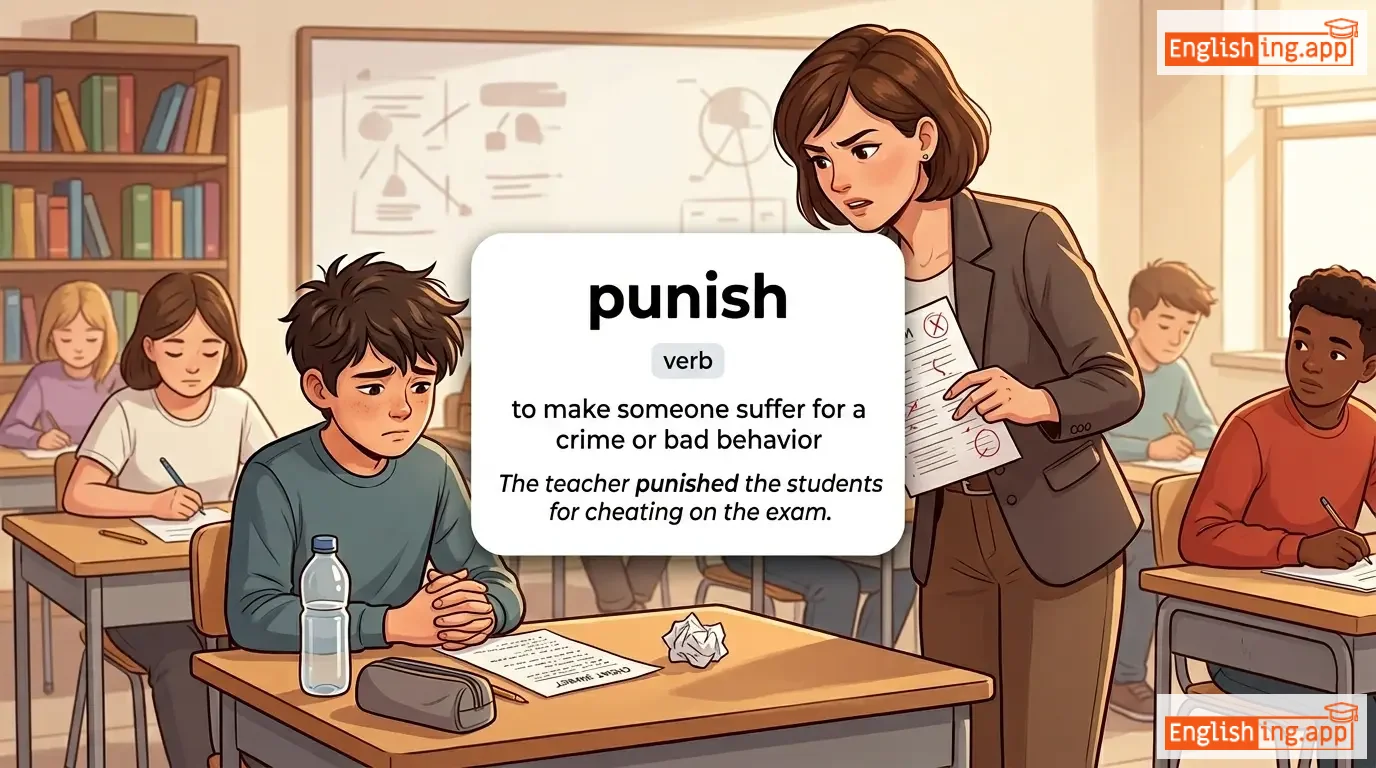
punish definition card — visual illustration of the meaning
verb
/ˈpʌnɪʃ/
наказать (nakazat)

to make someone suffer for a crime or bad behavior

"The teacher punished the students for cheating on the exam."

"Учитель наказал студентов за мошенничество на экзамене." (Uchitel' nakazal studentov za moshenichestvo na ekzamene.)