Vocabularios

Descubra, aprenda y domine el vocabulario en inglés

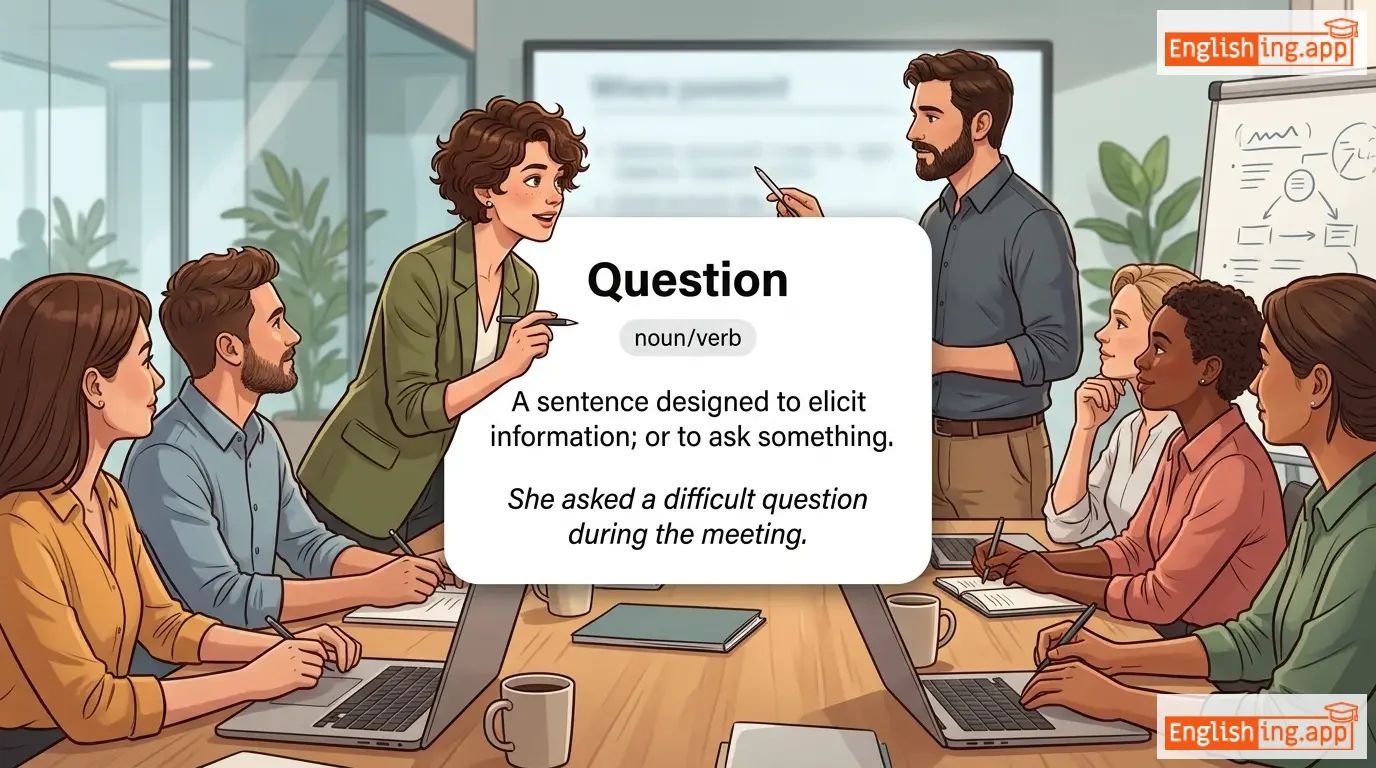
Question definition card — visual illustration of the meaning
noun/verb
/ˈkwes.tʃən/
pregunta (pregunta)

A sentence designed to elicit information; or to ask something.

"She asked a difficult question during the meeting."

"Ella hizo una pregunta difícil durante la reunión." (Ella hizo una pregunta dificil durante la reunion.)
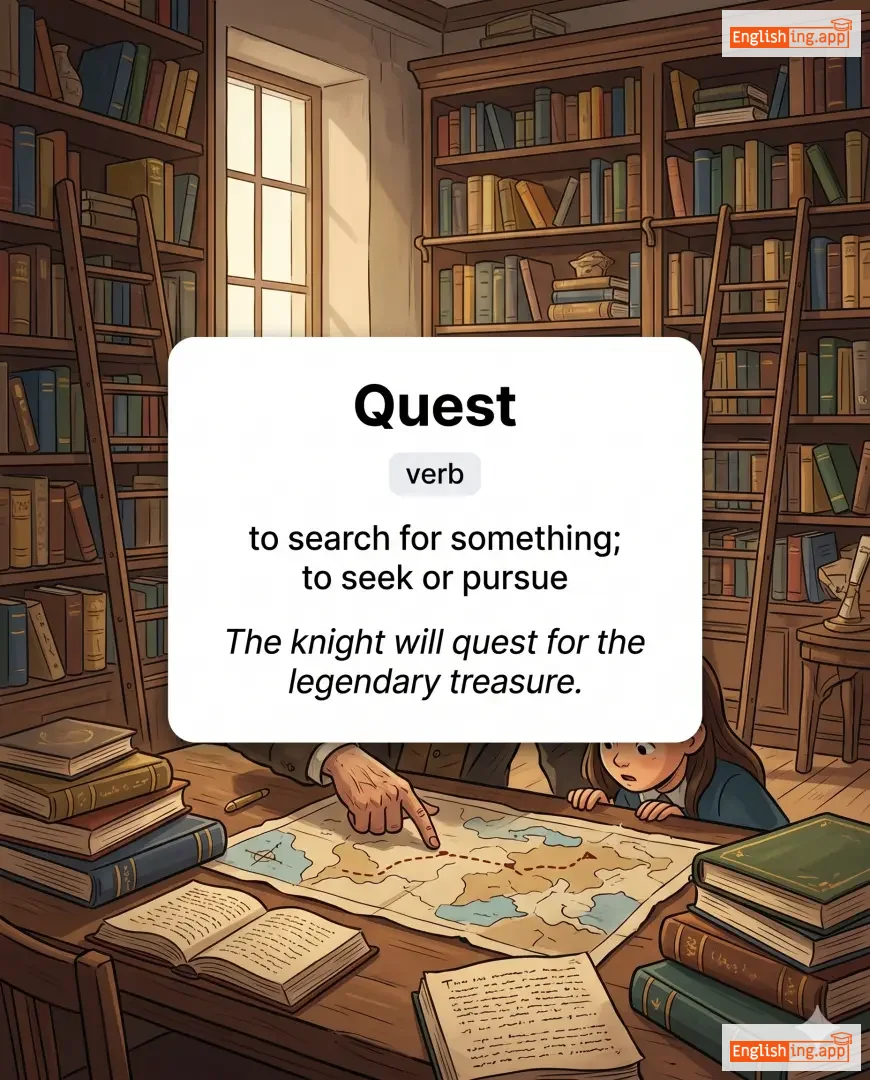
Quest definition card — visual illustration of the meaning
noun
/kwest/
búsqueda, misión (busqueda, mision)

a long search for something that is difficult to find

"They went on a quest to find the lost treasure."

"Fueron en una búsqueda para encontrar el tesoro perdido." (Fueron en una busqueda para encontrar el tesoro perdido.)
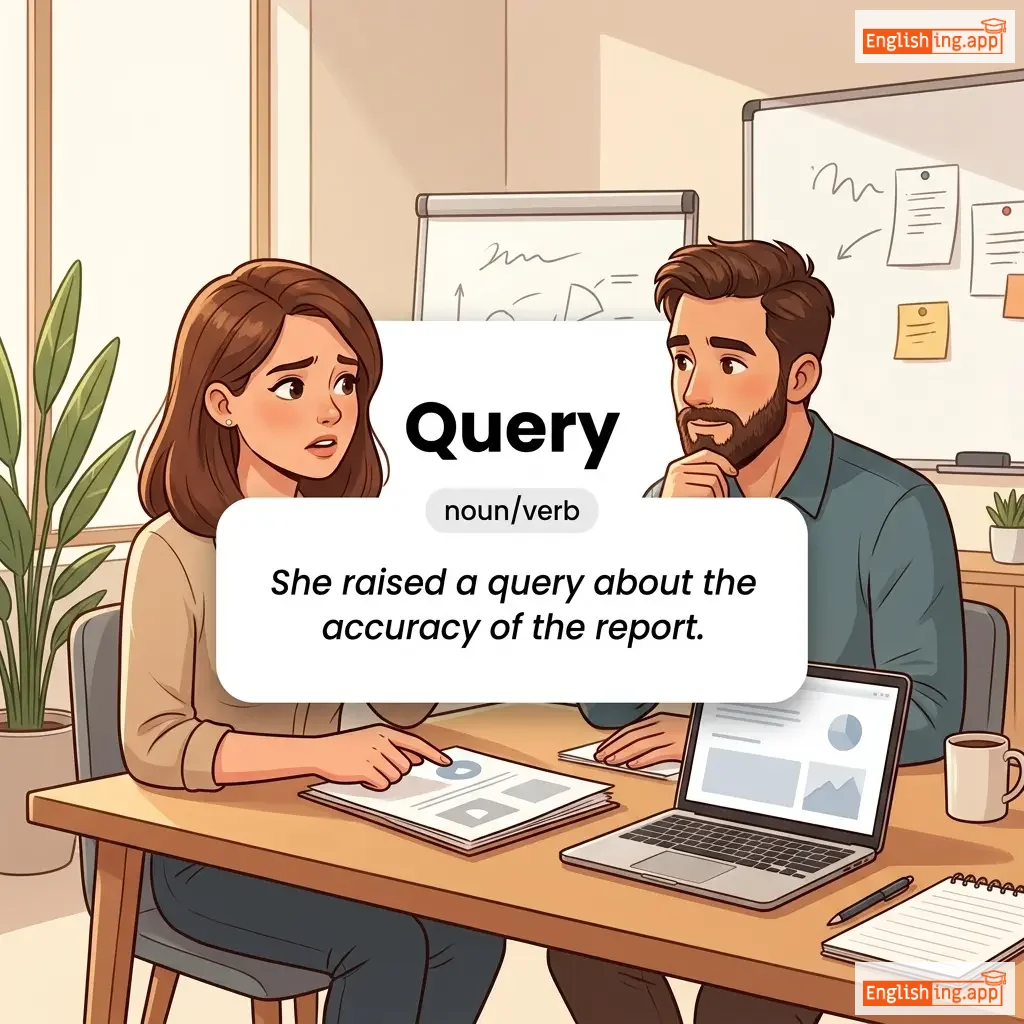
Query definition card — visual illustration of the meaning
noun/verb
/ˈkwɪəri/
consulta (consulta)

A question, especially one addressed to an official or organization; to ask a question or express doubt.

"She raised a query about the accuracy of the report."

"Ella planteó una consulta sobre la exactitud del informe." (Ella planto una consulta sobre la exactitud del informe.)
adjective
/ˈkwɛrʊləs/
quejoso (quejoso)

Complaining in a whining or irritable manner.

"The querulous customer kept finding fault with every detail."

"El cliente quejoso seguía encontrando fallos en cada detalle." (El cliente quejoso seguía encontrando fallos en cada detalle.)
verb
/ˈkwentʃɪŋ/
saciar / apagar (saciar / apagar)

The act of satisfying thirst or extinguishing something like fire.

"Drinking cold water was quenching her thirst."

"Beber agua fría estaba saciando su sed." (Beber agua fría estaba saciando su sed.)
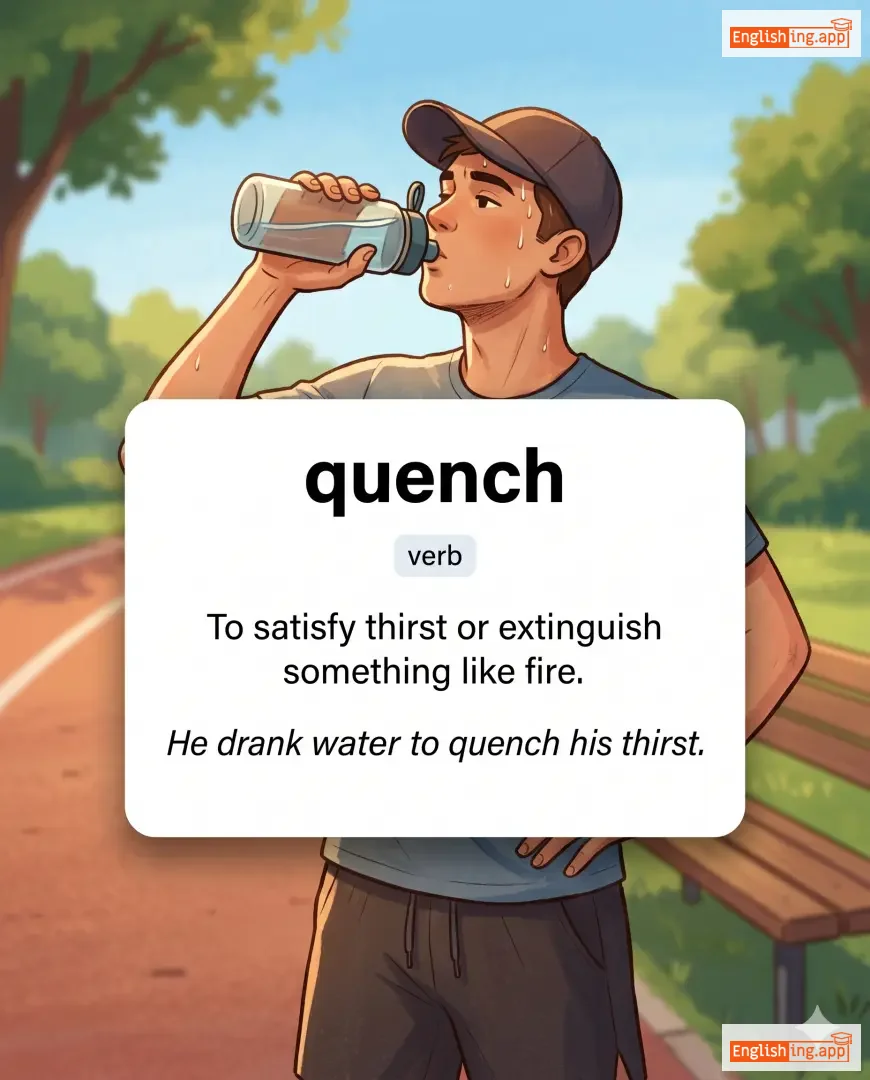
quench definition card — visual illustration of the meaning
verb
/kwɛntʃ/
saciar (saciar)

To satisfy thirst or extinguish something like fire.

"He drank water to quench his thirst."

"Él bebió agua para saciar su sed." (Él bebió agua para saciar su sed.)
verb
/kwɛl/
sofocar (sofocar)

To suppress or put an end to something, usually by force.

"The police were called to quell the violent protest."

"La policía fue llamada para sofocar la protesta violenta." (La policía fue llamada para sofocar la protesta violenta.)
adjective
/kwɪər/
extraño (extrano)

Strange, odd, or unusual.

"He had a queer feeling that something was wrong."

"Él tenía una sensación extraña de que algo estaba mal." (Él tenía una sensación extraña de que algo estaba mal.)
noun
/kwiːn kreɪp ˈmɜːrtəl/
Myrtillo de crepé de la reina (myrtillo de crepe de la reina)

A flowering tree with colorful, crepe-like flowers, scientifically known as Lagerstroemia

"The Queen crape myrtle bloomed beautifully in the garden with its purple flowers."

"El myrtillo de crepé de la reina floreció hermosamente en el jardín con sus flores moradas." (El myrtillo de crepe de la reina florecio hermosamente en el jardin con sus flores moradas.)
noun
/kwiːn/
reina (reina)

a female ruler of a country or the wife of a king

"The queen addressed her people with grace."

"La reina se dirigió a su pueblo con gracia." (La reina se dirigió a su pueblo con gracia.)
adjective
/ˈkwiːzi/
mareado (mareado)

Feeling sick to one's stomach; nauseated.

"She felt queasy after the long boat ride."

"Ella se sintió mal después del largo paseo en bote." (Ella se sintió mal después del largo paseo en bote.)
noun
/kiː/
muelle (muelle)

A platform lying alongside or projecting into water for loading and unloading ships.

"The cargo was unloaded at the quay."

"La carga fue descargada en el muelle." (La carga fue descargada en el muelle.)
verb, noun
/ˈkweɪvər/
temblar (temblar)

To shake or tremble in speaking, typically through nervousness or emotion.

"Her voice quavered as she spoke before the crowd."

"Su voz temblaba mientras hablaba frente a la multitud." (Su voz temblaba mientras hablaba frente a la multitud.)
verb
/kwɑːʃ/
anular (anular)

To reject or void something legally or to put an end to something forcefully.

"The court quashed the decision due to lack of evidence."

"El tribunal anuló la decisión debido a la falta de pruebas." (El tribunal anuló la decisión debido a la falta de pruebas.)
noun
/ˈkwɔːrtoʊ/
libro de tamaño cuarto (libro de tamano cuarto)

A book size resulting from folding each printed sheet into four leaves (eight pages).

"The library has rare Shakespeare quartos."

"La biblioteca tiene raros cuartos de Shakespeare." (La biblioteca tiene raros cuartos de Shakespeare.)
noun
/kwɔːrˈtɛt/
cuarteto (cuarteto)

A group of four people playing music or singing together.

"The string quartet performed beautifully at the concert."

"El cuarteto de cuerdas actuó maravillosamente en el concierto." (El cuarteto de cuerdas actuó maravillosamente en el concierto.)
noun
/ˈkwɔː.tərz/
alojamiento; cuarteles; alojamiento militar (alojamiento; cuarteles; alojamiento militar)

living accommodation; lodgings; military housing

"The soldiers returned to their quarters after the training exercise."

"Los soldados regresaron a sus cuarteles después del ejercicio de entrenamiento." (Los soldados regresaron a sus cuarteles después del ejercicio de entrenamiento.)
adjective, adverb, noun
/ˈkwɔːrtərli/
trimestral (trimestral)

Happening every three months; occurring four times a year.

"The company publishes a quarterly report on its earnings."

"La compañía publica un informe trimestral sobre sus ganancias." (La compania publica un informe trimestral sobre sus ganancias.)
noun
/ˈkwɔːtərˌbæk/
mariscal de campo (mariscal de campo)

the player who directs a team’s offense in American football

"The quarterback threw a perfect pass."

"El mariscal de campo lanzó un pase perfecto." (El mariscal de campo lanzo un pase perfecto.)
noun/verb
/ˈkwɔː.tər/
cuarto (kwarto)

One-fourth part of something; also used for housing or accommodating.

"She paid a quarter of the total bill."

"Ella pagó un cuarto de la cuenta total." (Ella pago un cuarto de la cuenta total.)
noun/verb
/ˈkwɒr.i/
cantera / presa (cantera / presa)

A place where stone or minerals are extracted; also means prey when hunted.

"The workers quarried limestone from the hill."

"Los trabajadores extrajeron piedra caliza de la colina." (Los trabajadores extrajeron piedra caliza de la colina.)
adjective
/ˈkwɒr.əl.səm/
pendenciero (pendenciero)

Inclined to argue or fight.

"He became quarrelsome after losing the game."

"Se volvió pendenciero después de perder el juego." (Se volvió pendenciero después de perder el juego.)
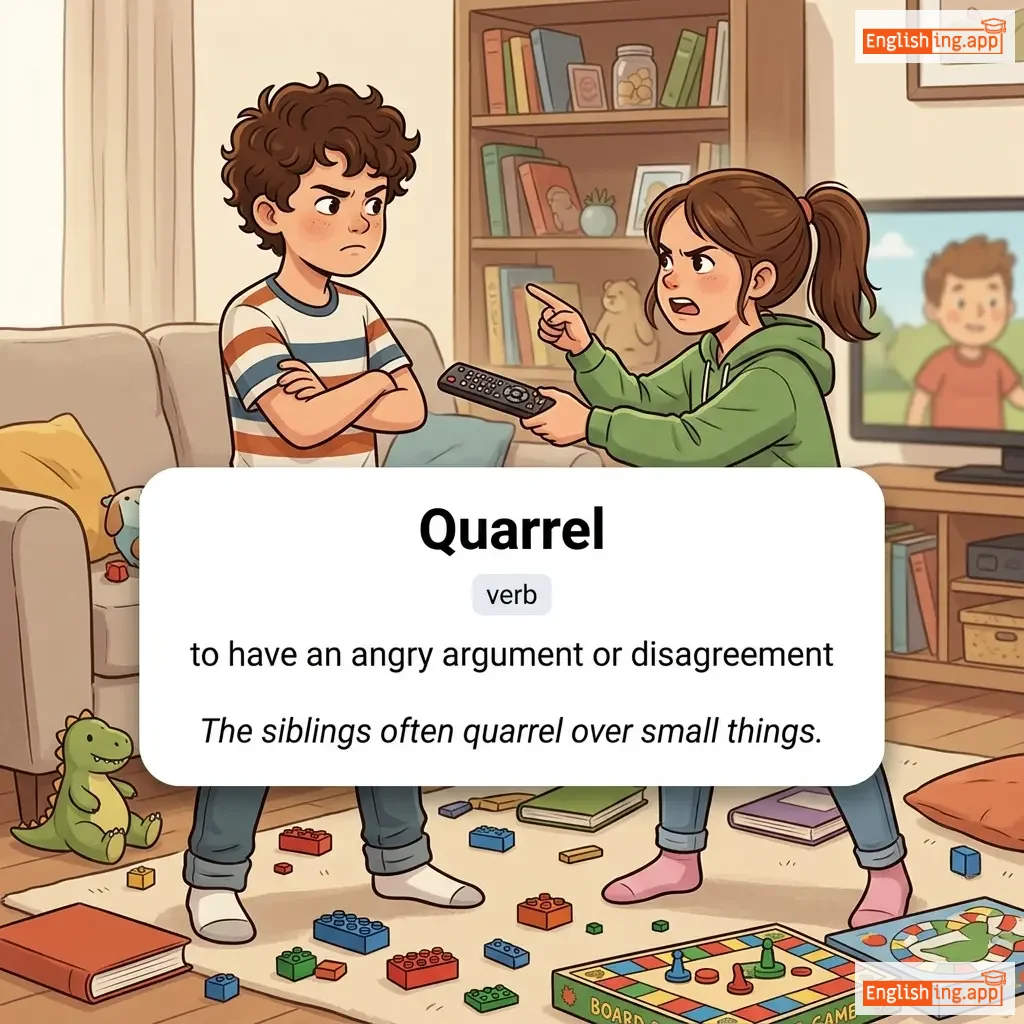
Quarrel definition card — visual illustration of the meaning
noun
/ˈkwɒr.əl/
pelea; disputa (pelea; disputa)

an angry argument or disagreement between people

"They had a quarrel about money and stopped talking to each other."

"Tuvieron una pelea por el dinero y dejaron de hablarse entre ellos." (Tuvieron una pelea por el dinero y dejaron de hablarse entre ellos.)
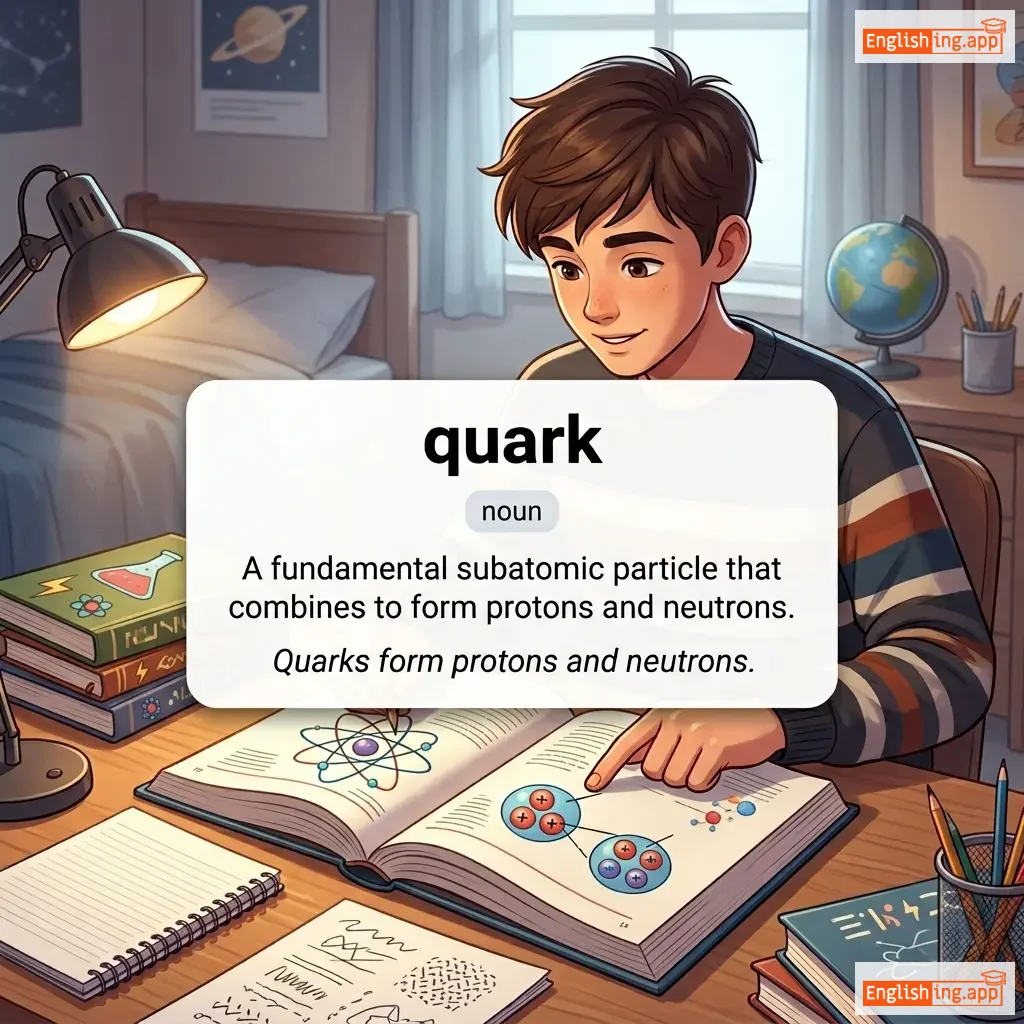
quark definition card — visual illustration of the meaning
noun
kwɔːrk
quark (kwark)

A fundamental subatomic particle that combines to form protons and neutrons.

"Quarks form protons and neutrons."

"Los quarks forman protones y neutrones." (Los quarks forman protones y neutrones.)
noun/verb
/ˈkwɒr.ən.tiːn/
cuarentena (cuarentena)

A period of isolation to prevent the spread of disease.

"The travelers were placed in quarantine for two weeks."

"Los viajeros fueron colocados en cuarentena durante dos semanas." (Los viajeros fueron colocados en cuarentena durante dos semanas.)
noun
/ˈkwɒn.tə.ti/
cantidad (cantidad)

An amount or number of something.

"The shop ordered a large quantity of rice."

"La tienda ordenó una gran cantidad de arroz." (La tienda ordenó una gran cantidad de arroz.)
adjective
/ˈkwɑːn.tə.teɪ.tɪv/
cuantitativo (cuantitativo)

Relating to the measurement or amount of something.

"The report included quantitative data on population growth."

"El informe incluyó datos cuantitativos sobre el crecimiento de la población." (El informe incluyó datos cuantitativos sobre el crecimiento de la población.)
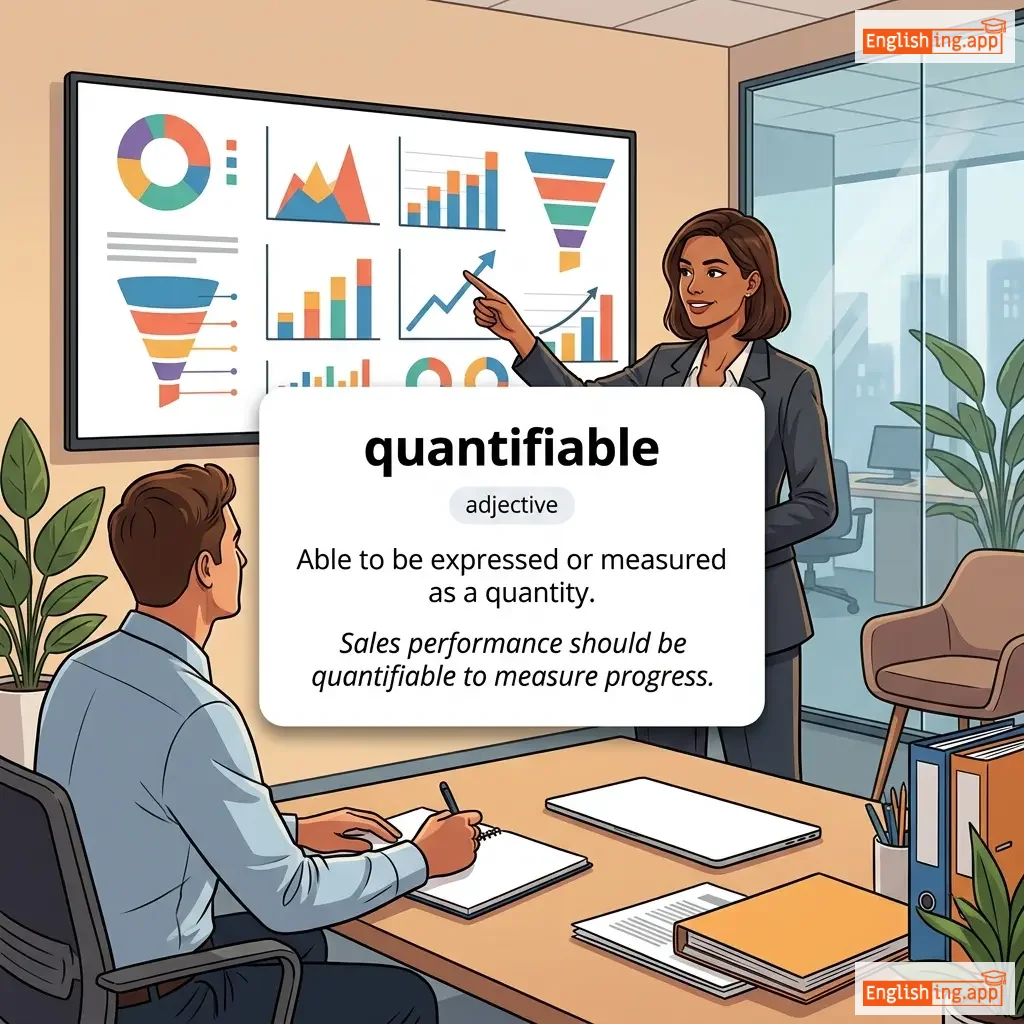
quantifiable definition card — visual illustration of the meaning
adjective
ˈkwɒn.tɪ.faɪ.ə.bəl
cuantificable (kwon ti fai bul)

Able to be expressed or measured as a quantity.

"Sales performance should be quantifiable to measure progress."

"El rendimiento de las ventas deberia ser cuantificable para medir el progreso." (El rendimiento de las ventas deveria ser cuantificable para medir el progreso.)
noun
/ˈkwɒndəri/

a state of uncertainty or confusion about what to do

"He was in a quandary about whether to accept the job offer."

noun (plural)
/kwɑːmz/
dudas (dudas)

feelings of doubt, worry, or uneasiness

"He had serious qualms about accepting the offer."

"Él tenía serias dudas sobre aceptar la oferta." (El tenía serias dudas sobre aceptar la oferta.)
noun
/kwɑːm/
duda (duda)

a feeling of doubt, worry, or fear about something

"She had no qualm about speaking her mind."

"Ella no tuvo duda en decir lo que pensaba." (Ella no tuvo duda en decir lo que pensaba.)
quality time definition card — visual illustration of the meaning
👨‍👩‍👧‍👦

quality time (kwaliti taim)

noun
/ˈkwɒl.ɪ.ti taɪm/
tiempo de calidad (tiempo de calidad)

Time spent giving someone your full attention in order to strengthen your relationship with them.

"Spending quality time with family enhances relationships."

"Pasar tiempo de calidad con la familia mejora las relaciones." (Pasar tiempo de calidad con la familia mejora las relaciones.)
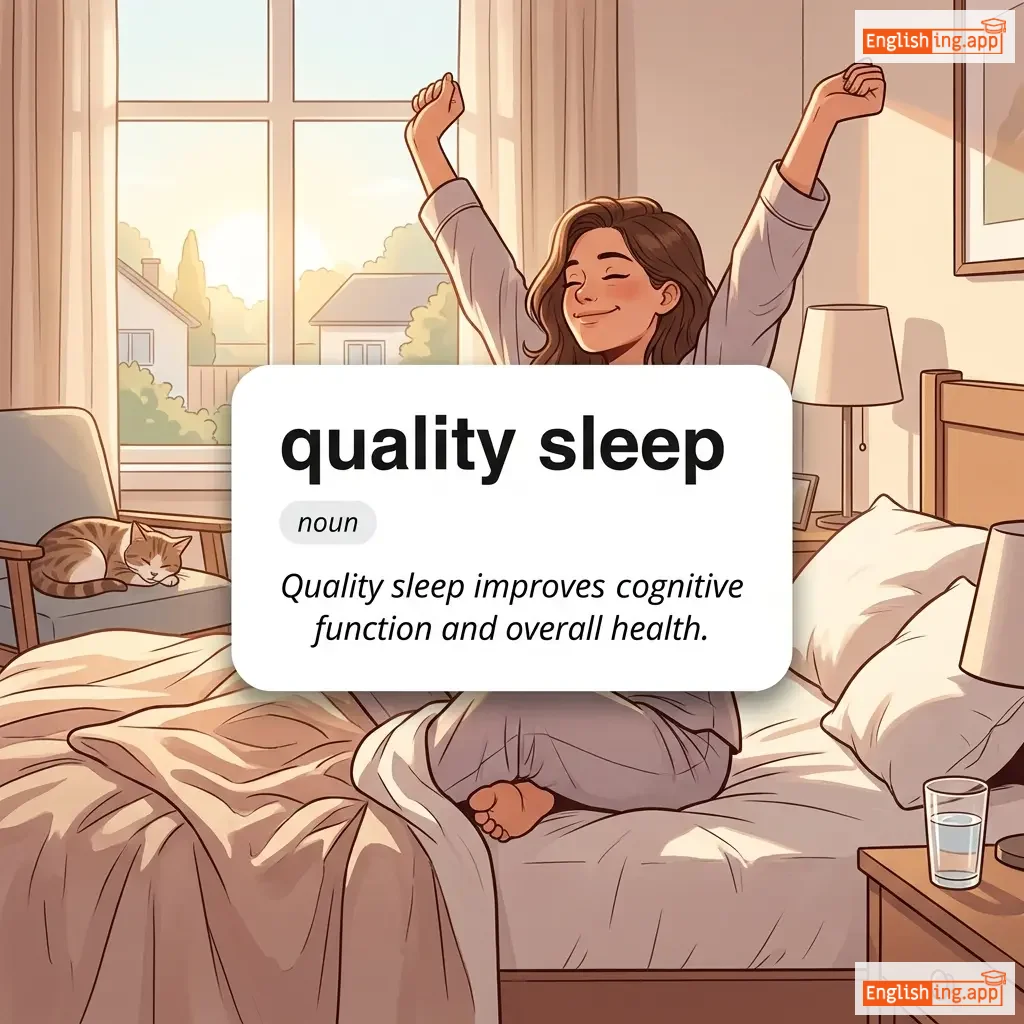
quality sleep definition card — visual illustration of the meaning
noun
ˈkwɒlɪti sliːp
sueño de calidad (sueno de calidad)

Deep and healthy sleep that is adequate and restorative, ensuring physical and mental well-being

"Quality sleep improves cognitive function and overall health."

"El sueño de calidad mejora la función cognitiva y la salud en general." (El sueno de calidad mejora la funcion cognitiva y la salud en general.)
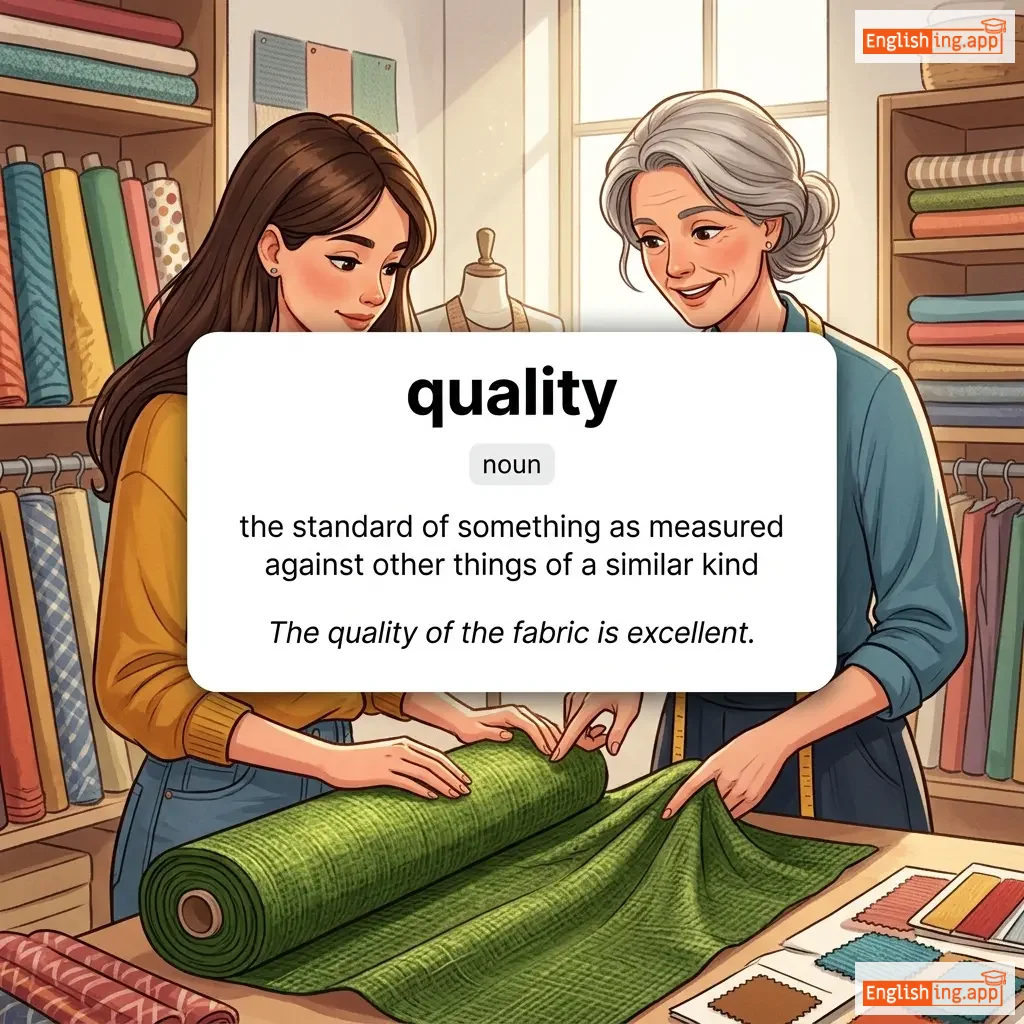
quality definition card — visual illustration of the meaning
noun
/ˈkwɒləti/
calidad (calidad)

the standard of something as measured against other things of a similar kind

"The quality of the fabric is excellent."

"La calidad de la tela es excelente." (La calidad de la tela es excelente.)
adjective
/ˈkwɑː.lɪ.teɪ.tɪv/
cualitativo (cualitativo)

Relating to the quality or nature of something rather than its quantity.

"The study focused on the qualitative aspects of customer feedback."

"El estudio se centró en los aspectos cualitativos de la retroalimentación de los clientes." (El estudio se centró en los aspectos cualitativos de la retroalimentación de los clientes.)
adjective
/pʌŋkˈtɪliəs/
puntilloso (puntilloso)

Showing great attention to detail or correct behavior.

"She was punctilious in her attention to etiquette."

"Ella era puntillosa en su atención a la etiqueta." (Ella era puntillosa en su atencion a la etiqueta.)
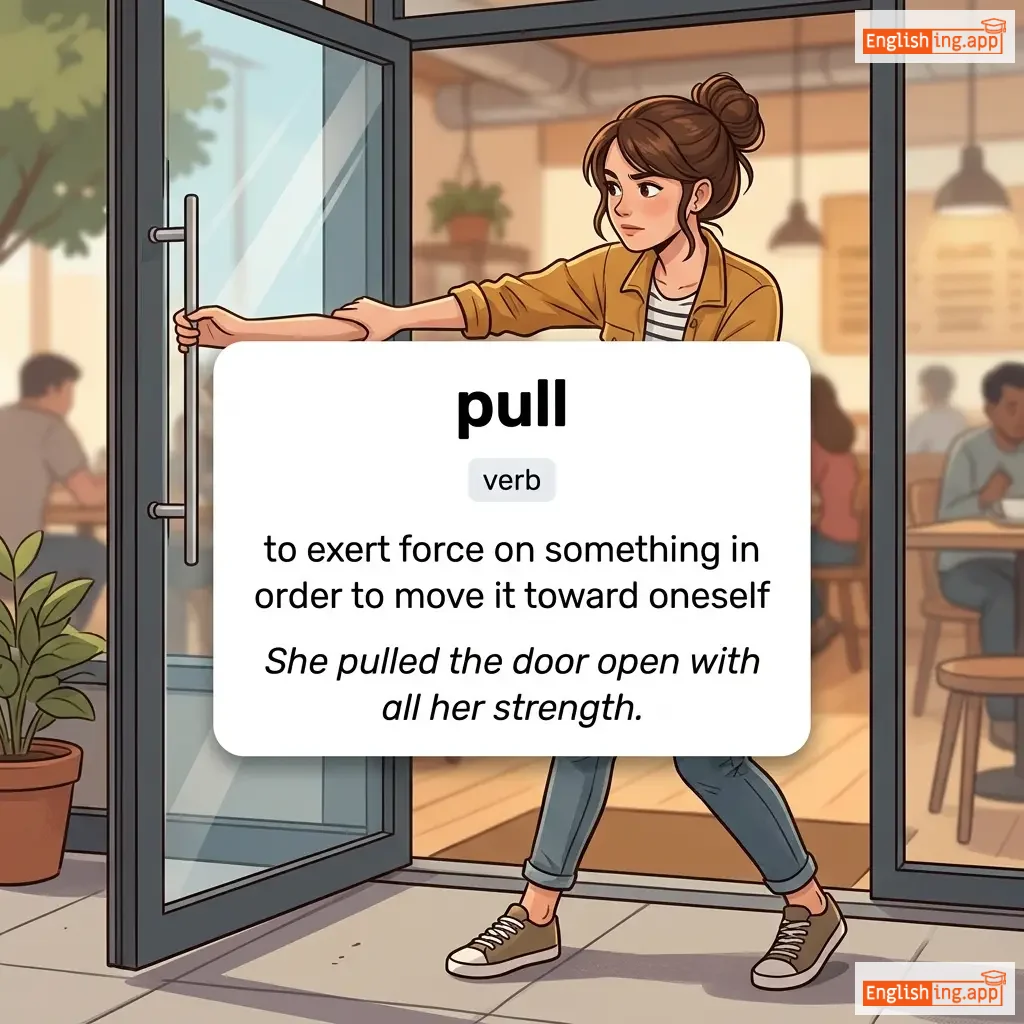
pull definition card — visual illustration of the meaning
🖐️

pull (pul)

verb
/pʊl/
tirar (tirar)

to exert force on something in order to move it toward oneself

"She pulled the door open with all her strength."

"Ella abrió la puerta con toda su fuerza." (Ella abrió la puerta con toda su fuerza.)
noun
/ˈpʊl.oʊ.vər/
suéter (sueter)

a knitted garment worn on the upper body, typically pulled on over the head

"She wore a warm pullover during the cold winter evening."

"Ella usó un suéter cálido durante la fría noche de invierno." (Ella uso un sueter calido durante la fria noche de invierno.)
adjective
/ˈpʌlməˌneri/
pulmonar (pulmonar)

relating to the lungs

"The patient suffered from a serious pulmonary infection."

"El paciente sufrió una grave infección pulmonar." (El paciente sufrio una grave infeccion pulmonar.)
noun
/ˈpʊlpɪt/
púlpito (pulpito)

a raised platform in a church from which the preacher delivers a sermon

"The pastor stood at the pulpit to address the congregation."

"El pastor se paró en el púlpito para dirigirse a la congregación." (El pastor se paró en el pulpito para dirigirse a la congregación.)
verb
/ˈpʌlseɪt/
palpitar (palpitar)

to expand and contract rhythmically; to throb or beat

"The neon lights pulsated with a steady rhythm."

"Las luces de neón pulsaban con un ritmo constante." (Las luces de neón pulsaban con un ritmo constante.)
noun/verb
/pʌls/
pulso (pulso)

A rhythmic beat or vibration, especially the heartbeat; to throb or move with a rhythm.

"The doctor checked her pulse after the long run."

"El doctor revisó su pulso después de la larga carrera." (El doctor reviso su pulso despues de la larga carrera.)
verb
/ˈpʌlvəraɪz/
pulverizar (pulverizar)

To crush or grind something into a fine powder; to completely defeat or destroy.

"The machine can pulverize stones into dust."

"La máquina puede pulverizar piedras en polvo." (La maquina puede pulverizar piedras en polvo.)
verb
/ˈpʌməl/
aporrear (aporrar)

To strike repeatedly with the fists; to beat or hit forcefully.

"The boxer pummeled his opponent in the final round."

"El boxeador aporreó a su oponente en la ronda final." (El boxeador aporreo a su oponente en la ronda final.)
verb
/pʌmp/
bombear (bombear)

to force liquid or gas to move in a particular direction using a device

"They pumped water from the well into the tank."

"Ellos bombeaban agua del pozo al tanque." (Ellos bombeaban agua del pozo al tanque.)
noun
/'pʌmp.kɪn/
calabaza (calabaza)

a large round orange fruit with thick skin and edible flesh

"We carved a jack-o'-lantern from a big pumpkin."

"Tallamos una linterna de calabaza de una calabaza grande." (tallamos una linterna de calabaza de una calabaza grande)
noun
/pʌn/
juego de palabras (juego de palabras)

A humorous use of words that suggests different meanings or words that sound alike.

"He made a clever pun about the bakery's bread rising."

"Hizo un juego de palabras ingenioso sobre el pan que sube en la panadería." (Hizo un juego de palabras ingenioso sobre el pan que sube en la panadería.)
verb
/pʌntʃ/
dar un puñetazo (dar un punyetaço)

to hit someone or something hard with your fist

"He punched the wall in frustration."

"Él dio un puñetazo a la pared en frustración." (Él dio un puñetazo a la pared en frustración.)
noun
/ˈpʌntʃ laɪn/
remate (remate)

The final part of a joke or story that makes it funny.

"Everyone laughed loudly at the punch line of his joke."

"Todos se rieron fuertemente con el remate de su chiste." (Todos se rieron fuertemente con el remate de su chiste.)
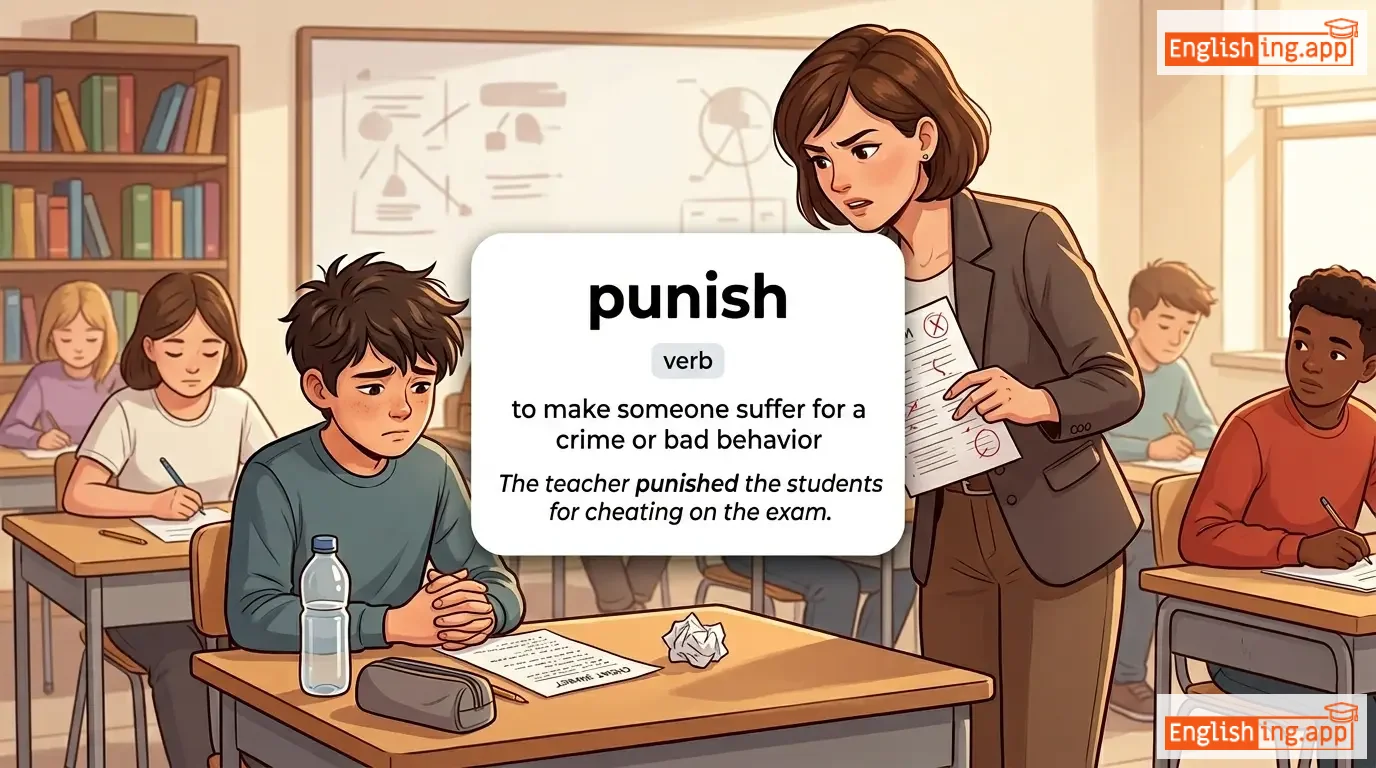
punish definition card — visual illustration of the meaning
verb
/ˈpʌnɪʃ/
castigar (castigar)

to make someone suffer for a crime or bad behavior

"The teacher punished the students for cheating on the exam."

"El maestro castigó a los estudiantes por hacer trampa en el examen." (El maestro castigó a los estudiantes por hacer trampa en el examen.)