
词汇表

英语词汇词典 | 单词含义、定义和示例

Question definition card — visual illustration of the meaning
noun/verb
/ˈkwes.tʃən/
问题 (wenti)

A sentence designed to elicit information; or to ask something.

"She asked a difficult question during the meeting."

"她在会议中提出了一个困难的问题。" (Ta zai huiyi zhong tichu le yige kunnan de wenti.)
Quest definition card — visual illustration of the meaning
noun
/kwest/
探索, 寻找 (tansuo, xunzhao)

a long search for something that is difficult to find

"They went on a quest to find the lost treasure."

"他们去寻找失落的宝藏。" (tamen qu xunzhao shiluode baocang.)
Query definition card — visual illustration of the meaning
noun/verb
/ˈkwɪəri/
查询 (chaxun)

A question, especially one addressed to an official or organization; to ask a question or express doubt.

"She raised a query about the accuracy of the report."

"她提出了关于报告准确性的查询。" (Ta tichu le guanyu baogao zhunquexing de chaxun.)
adjective
/ˈkwɛrʊləs/
抱怨的 (bàoyuàn de)

Complaining in a whining or irritable manner.

"The querulous customer kept finding fault with every detail."

"那个抱怨的顾客一直在找每个细节的错误。" (Nàgè bàoyuàn de gùkè yīzhí zài zhǎo měi gè xìjié de cuòwù.)
verb
/ˈkwentʃɪŋ/
解渴 / 熄灭 (jie ke / xi mie)

The act of satisfying thirst or extinguishing something like fire.

"Drinking cold water was quenching her thirst."
"喝冷水解渴。" (He leng shui jie ke.)
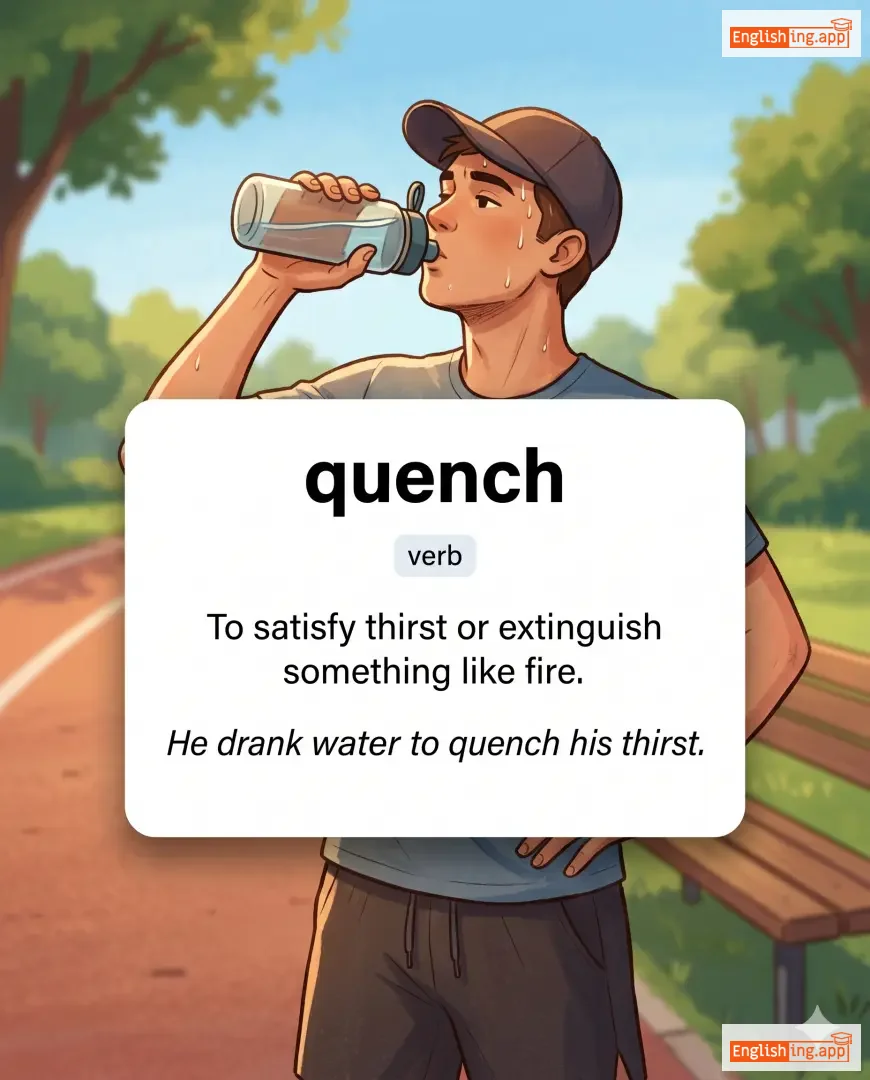
quench definition card — visual illustration of the meaning
verb
/kwɛntʃ/
解渴 (jie ke)

To satisfy thirst or extinguish something like fire.

"He drank water to quench his thirst."

"他喝水来解渴。" (Ta he shui lai jie ke.)
verb
/kwɛl/
镇压 (zhenya)

To suppress or put an end to something, usually by force.

"The police were called to quell the violent protest."

"警方被召唤以平息暴力抗议。" (Jǐngfāng bèi zhàohuàn yǐ píngxī bàolì kàngyì.)
adjective
/kwɪər/
奇怪 (qiguai)

Strange, odd, or unusual.

"He had a queer feeling that something was wrong."

"他有一种奇怪的感觉,觉得有什么不对劲。" (Ta you yi zhong qiguai de ganjue, jue de you shenme bu dui jin.)
noun
/kwiːn kreɪp ˈmɜːrtəl/
皇后夹竹桃 (huánghòu jiā zhútáo)

A flowering tree with colorful, crepe-like flowers, scientifically known as Lagerstroemia

"The Queen crape myrtle bloomed beautifully in the garden with its purple flowers."

"皇后夹竹桃在花园里盛开,紫色的花朵美丽地绽放。" (Huánghòu jiā zhútáo zài huāyuán lǐ shèngkāi, zǐsè de huāduǒ měilì de zhànfàng.)
noun
/kwiːn/
女王 (nǚwáng)

a female ruler of a country or the wife of a king

"The queen addressed her people with grace."

"女王以优雅的姿态向她的人民致辞。" (Nǚwáng yǐ yōuyǎ de zītài xiàng tā de rénmín zhìcí.)
adjective
/ˈkwiːzi/
恶心 (ěxīn)

Feeling sick to one's stomach; nauseated.

"She felt queasy after the long boat ride."

"她在长时间的船上旅行后感到恶心。" (Tā zài cháng shíjiān de chuán shàng lǚxíng hòu gǎndào ěxīn.)
noun
/kiː/
码头 (matou)

A platform lying alongside or projecting into water for loading and unloading ships.

"The cargo was unloaded at the quay."

"货物在码头被卸下。" (Huowu zai matou bei xiexia.)
verb, noun
/ˈkweɪvər/
颤抖 (chan3dou3)

To shake or tremble in speaking, typically through nervousness or emotion.

"Her voice quavered as she spoke before the crowd."

"她的声音在讲话时颤抖,尤其是在人群面前。" (Ta de shengyin zai jianghua shi chan3dou3, yuxi shi zai renqun mianqian.)
verb
/kwɑːʃ/
撤销 (chèxiāo)

To reject or void something legally or to put an end to something forcefully.

"The court quashed the decision due to lack of evidence."

"法院因缺乏证据而撤销了决定。" (Fǎyuàn yīn quēfá zhèngjù ér chèxiāo le juédìng.)
noun
/ˈkwɔːrtoʊ/
四折书 (sì zhé shū)

A book size resulting from folding each printed sheet into four leaves (eight pages).

"The library has rare Shakespeare quartos."

"图书馆里有稀有的莎士比亚四折书。" (Túshūguǎn lǐ yǒu xīyǒu de shāshìbǐyǎ sì zhé shū.)
noun
/kwɔːrˈtɛt/
四重奏 (sìchóngzòu)

A group of four people playing music or singing together.

"The string quartet performed beautifully at the concert."

"弦乐四重奏在音乐会上表现得非常出色。" (Xiányuè sìchóngzòu zài yīnyuè huì shàng biǎoxiàn dé fēicháng chūsè.)
noun
/ˈkwɔː.tərz/
宿舍; 兵营; 军事住房 (sùshè; bīngyíng; jūnshì zhùfáng)

living accommodation; lodgings; military housing

"The soldiers returned to their quarters after the training exercise."

"士兵们在训练后返回了他们的宿舍。" (Shìbīngmen zài xùnliàn hòu fǎnhuíle tāmen de sùshè.)
adjective, adverb, noun
/ˈkwɔːrtərli/
季度的 (jidu de)

Happening every three months; occurring four times a year.

"The company publishes a quarterly report on its earnings."

"公司每季度发布一次收入报告。" (Gongsi mei jidu fabu yici shouru baogao.)
noun
/ˈkwɔːtərˌbæk/
四分卫 (sifènwèi)

the player who directs a team’s offense in American football

"The quarterback threw a perfect pass."

"四分卫传了一个完美的传球。" (Sifènwèi chuánle yīgè wánměi de chuánqiú.)
noun/verb
/ˈkwɔː.tər/
四分之一 (si fen zhi yi)

One-fourth part of something; also used for housing or accommodating.

"She paid a quarter of the total bill."

"她支付了总账单的四分之一。" (Tā zhīfùle zǒng zhàngdān de sì fēn zhī yī.)
noun/verb
/ˈkwɒr.i/
采石场 / 猎物 (cǎi shí chǎng / liè wù)

A place where stone or minerals are extracted; also means prey when hunted.

"The workers quarried limestone from the hill."

"工人们从山上开采石灰岩。" (Gōngrén men cóng shān shàng kāicǎi shíhuīyán.)
adjective
/ˈkwɒr.əl.səm/
好争吵的 (hǎo zhēngchǎo de)

Inclined to argue or fight.

"He became quarrelsome after losing the game."
"他在输掉比赛后变得好争吵。" (Tā zài shū diào bǐsài hòu biàn dé hǎo zhēngchǎo.)
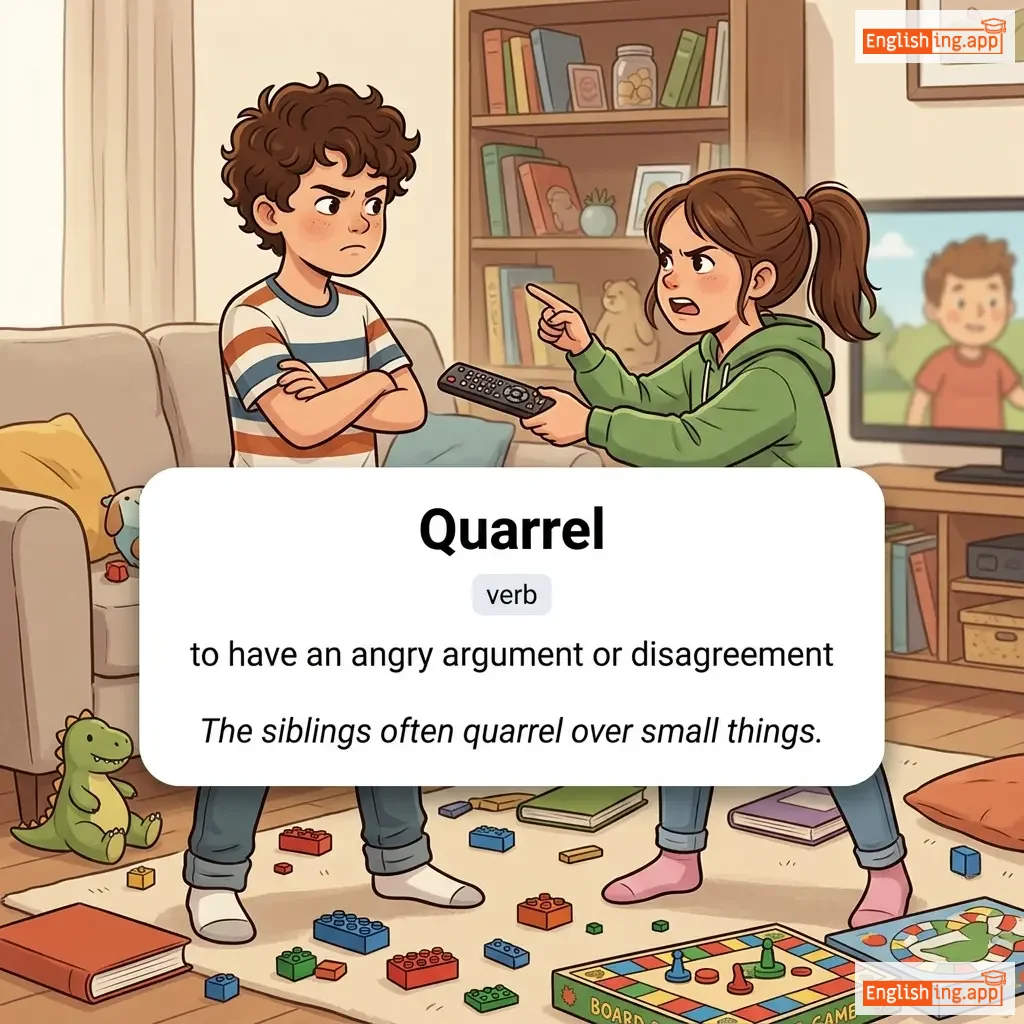
Quarrel definition card — visual illustration of the meaning
noun
/ˈkwɒr.əl/
争吵; 争论 (zhēngchǎo; zhēnglùn)

an angry argument or disagreement between people

"They had a quarrel about money and stopped talking to each other."

"他们因为钱发生了争吵,停止了相互交谈。" (Tāmen yīnwèi qián fāshēngle zhēngchǎo, tíngzhǐle xiānghù jiāotán.)
quark definition card — visual illustration of the meaning
noun
kwɔːrk
夸克 (kuākè)

A fundamental subatomic particle that combines to form protons and neutrons.

"Quarks form protons and neutrons."

"夸克形成质子和中子。" (Kuākè xíngchéng zhìzǐ hé zhōngzǐ.)
noun/verb
/ˈkwɒr.ən.tiːn/
隔离 (geli)

A period of isolation to prevent the spread of disease.

"The travelers were placed in quarantine for two weeks."

"旅行者被隔离了两周。" (Lüxingzhe bei geli le liang zhou.)
noun
/ˈkwɒn.tə.ti/
数量 (shùliàng)

An amount or number of something.

"The shop ordered a large quantity of rice."

"商店订购了大量的米。" (Shāngdiàn dìnggòu le dàliàng de mǐ.)
adjective
/ˈkwɑːn.tə.teɪ.tɪv/
定量的 (dingliang de)

Relating to the measurement or amount of something.

"The report included quantitative data on population growth."

"报告包括了关于人口增长的定量数据。" (Bàogào bāokuòle guānyú rénkǒu zēngzhǎng de dìngliàng shùjù.)
quantifiable definition card — visual illustration of the meaning
adjective
ˈkwɒn.tɪ.faɪ.ə.bəl
可量化的 (kwontuhfaiuhbuhl)

Able to be expressed or measured as a quantity.

"Sales performance should be quantifiable to measure progress."

"销售业绩应可量化,以便衡量进展。" (xiaoshouyejiyingkelianghuayibianhengliangjinzhan)
noun
/ˈkwɒndəri/

a state of uncertainty or confusion about what to do

"He was in a quandary about whether to accept the job offer."

noun (plural)
/kwɑːmz/
疑虑 (yílǜ)

feelings of doubt, worry, or uneasiness

"He had serious qualms about accepting the offer."

"他对接受这个提议感到严重的怀疑。" (Tā duì jiēshòu zhège tíyì gǎndào yánzhòng de huáiyí.)
noun
/kwɑːm/
怀疑 (huáiyí)

a feeling of doubt, worry, or fear about something

"She had no qualm about speaking her mind."

"她在表达自己想法时没有任何怀疑。" (Tā zài biǎodá zìjǐ xiǎngfǎ shí méiyǒu rènhé huáiyí.)
quality time definition card — visual illustration of the meaning
👨‍👩‍👧‍👦

quality time (质量时间)

noun
/ˈkwɒl.ɪ.ti taɪm/
优质时间 (youzhi shijian)

Time spent giving someone your full attention in order to strengthen your relationship with them.

"Spending quality time with family enhances relationships."

"与家人共度优质时间可以增强关系。" (Yu jiaren gongdu youzhi shijian keyi zengqiang guanxi.)
quality sleep definition card — visual illustration of the meaning
noun
ˈkwɒlɪti sliːp
优质睡眠 (yōu zhì shuì mián)

Deep and healthy sleep that is adequate and restorative, ensuring physical and mental well-being

"Quality sleep improves cognitive function and overall health."
"优质的睡眠改善认知功能和整体健康。" (Yōu zhì de shuìmián gǎishàn rènzhī gōngnéng hé zhěngtǐ jiànkāng.)
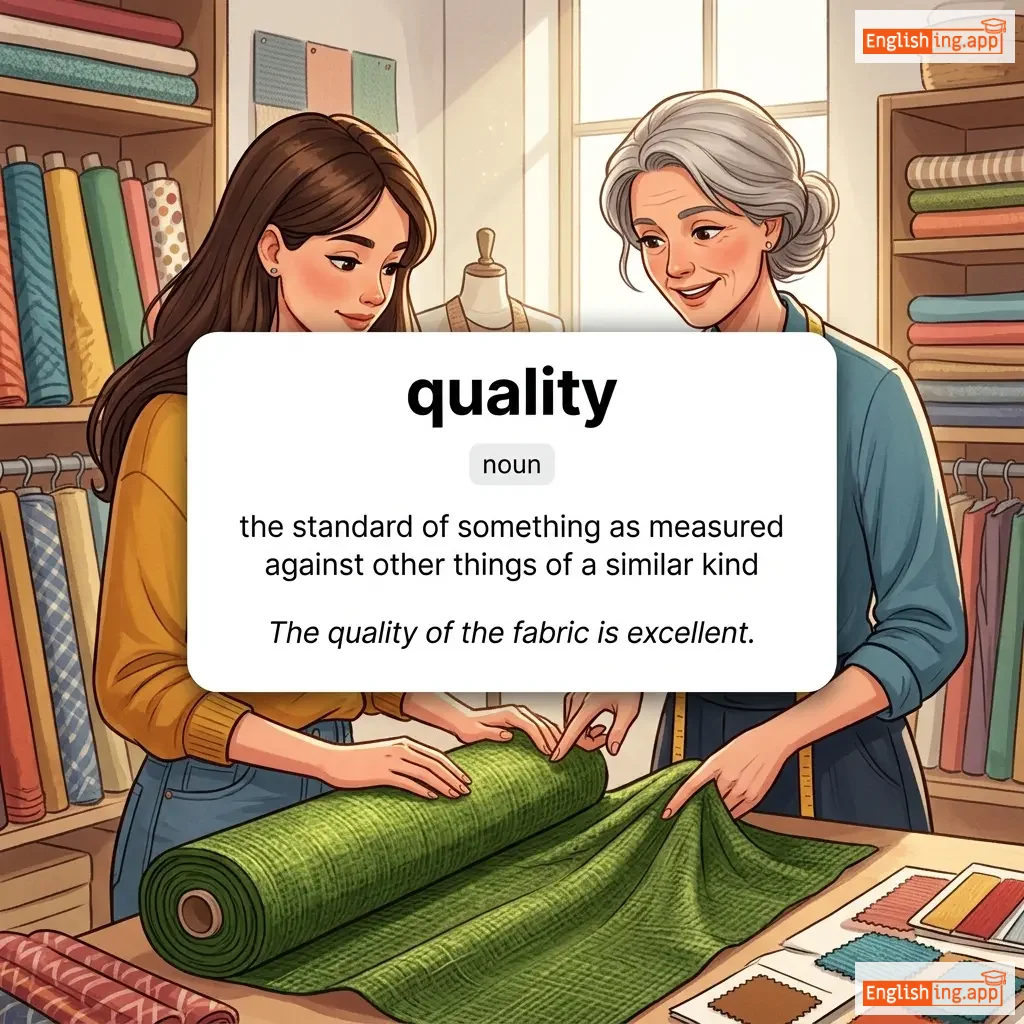
quality definition card — visual illustration of the meaning
noun
/ˈkwɒləti/
质量 (zhì liàng)

the standard of something as measured against other things of a similar kind

"The quality of the fabric is excellent."

"这块布料的质量非常好。" (Zhè kuài bù liào de zhì liàng fēi cháng hǎo.)
adjective
/ˈkwɑː.lɪ.teɪ.tɪv/
定性 (dingxing)

Relating to the quality or nature of something rather than its quantity.

"The study focused on the qualitative aspects of customer feedback."

"研究集中于客户反馈的定性方面。" (Yanjiu jizhong yu kehu fankui de dingxing fangmian.)
adjective
/pʌŋkˈtɪliəs/
一丝不苟 (yīsī bù gǒu)

Showing great attention to detail or correct behavior.

"She was punctilious in her attention to etiquette."
"她对礼仪的关注非常一丝不苟。" (Tā duì lǐyí de guānzhù fēicháng yīsī bù gǒu.)
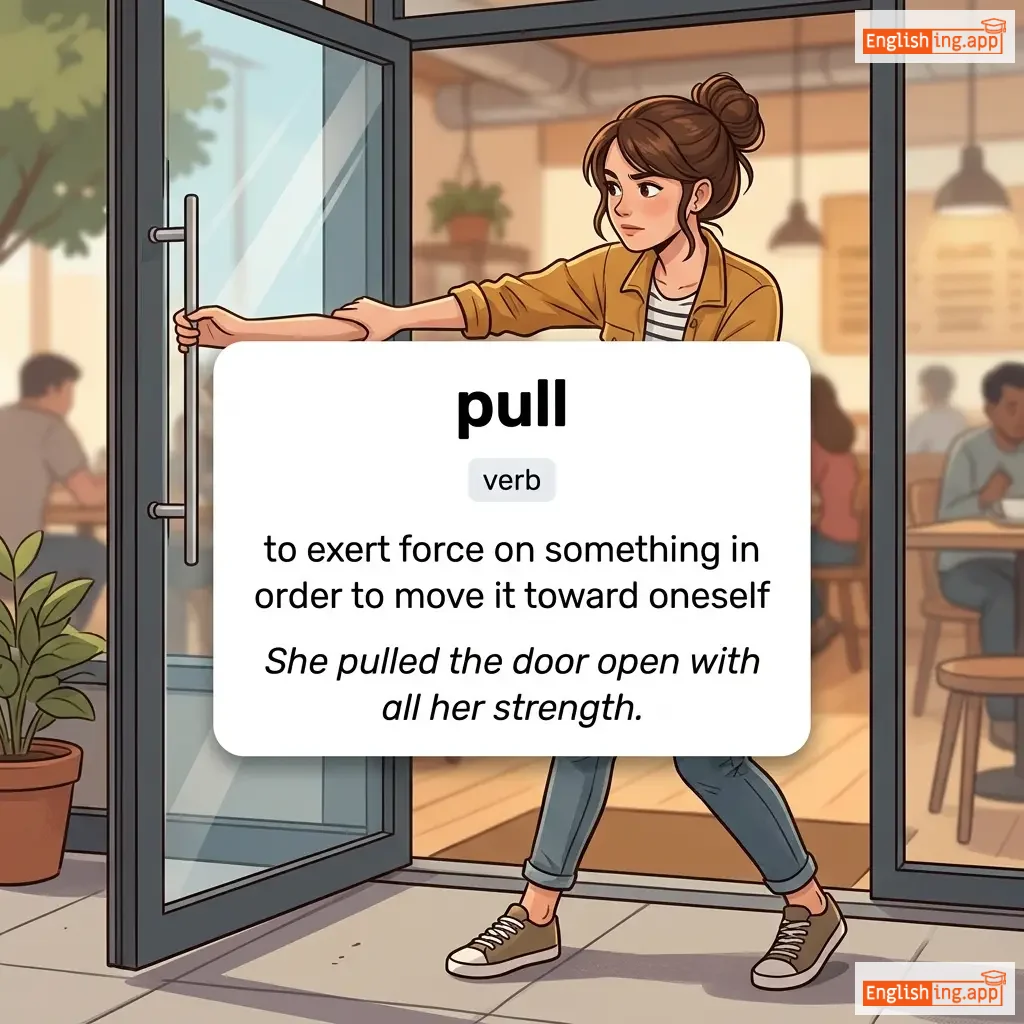
pull definition card — visual illustration of the meaning
🖐️

pull (pul)

verb
/pʊl/
(lā)

to exert force on something in order to move it toward oneself

"She pulled the door open with all her strength."

"她用所有的力量将门拉开。" (Tā yòng suǒyǒu de lìliàng jiāng mén lā kāi.)
noun
/ˈpʊl.oʊ.vər/
毛衣 (maoyi)

a knitted garment worn on the upper body, typically pulled on over the head

"She wore a warm pullover during the cold winter evening."

"她在寒冷的冬季傍晚穿上了温暖的毛衣。" (Tā zài hánlěng de dōngjì bàngwǎn chuān shàngle wēnnuǎn de máoyī.)
adjective
/ˈpʌlməˌneri/

relating to the lungs

"The patient suffered from a serious pulmonary infection."

noun
/ˈpʊlpɪt/
讲道台 (jiang dao tai)

a raised platform in a church from which the preacher delivers a sermon

"The pastor stood at the pulpit to address the congregation."

"牧师站在讲道台上向会众致辞。" (mushi zhan zai jiangdaotai shang xiang huizhong zhici.)
verb
/ˈpʌlseɪt/
跳动 (tiaodong)

to expand and contract rhythmically; to throb or beat

"The neon lights pulsated with a steady rhythm."

"霓虹灯光以稳定的节奏跳动。" (Nihong dengguang yi wending de jiezou tiaodong.)
💓

Pulse

noun/verb
/pʌls/

A rhythmic beat or vibration, especially the heartbeat; to throb or move with a rhythm.

"The doctor checked her pulse after the long run."

verb
/ˈpʌlvəraɪz/
粉碎 (fěnsuì)

To crush or grind something into a fine powder; to completely defeat or destroy.

"The machine can pulverize stones into dust."

"机器可以将石头粉碎成灰尘。" (Jīqì kěyǐ jiāng shítou fěnsuì chéng huīchén.)
verb
/ˈpʌməl/
痛打 (tong da)

To strike repeatedly with the fists; to beat or hit forcefully.

"The boxer pummeled his opponent in the final round."

"拳击手在最后一回合痛打了对手。" (quan ji shou zai zui hou yi hui he tong da le dui shou.)
verb
/pʌmp/
抽水 (chōushuǐ)

to force liquid or gas to move in a particular direction using a device

"They pumped water from the well into the tank."

"他们把水从井里抽到水箱里。" (Tāmen bǎ shuǐ cóng jǐng lǐ chōu dào shuǐxiāng lǐ.)
noun
/'pʌmp.kɪn/
南瓜 (nangua)

a large round orange fruit with thick skin and edible flesh

"We carved a jack-o'-lantern from a big pumpkin."

"我们从一个大南瓜里雕刻了一个南瓜灯。" (wǒmen cóng yīgè dà nangua lǐ diāokè le yīgè nangua dēng)
noun
/pʌn/
双关语 (shuangguanyu)

A humorous use of words that suggests different meanings or words that sound alike.

"He made a clever pun about the bakery's bread rising."

"他在面包店关于面包发酵的玩笑中巧妙地运用了双关语。" (Ta zai mianbaodian guanyu mianbao faxiao de wanxiao zhong qiaomiao de yunxiao le shuangguanyu.)
verb
/pʌntʃ/
击打 (jī dǎ)

to hit someone or something hard with your fist

"He punched the wall in frustration."

"他因沮丧打了墙。" (Tā yīn jǔsàng dǎle qiáng.)
noun
/ˈpʌntʃ laɪn/
笑话的高潮 (xiàohuà de gāocháo)

The final part of a joke or story that makes it funny.

"Everyone laughed loudly at the punch line of his joke."
"大家都因为他的笑话高潮而大笑。" (Dàjiā dōu yīnwèi tā de xiàohuà gāocháo ér dàxiào.)
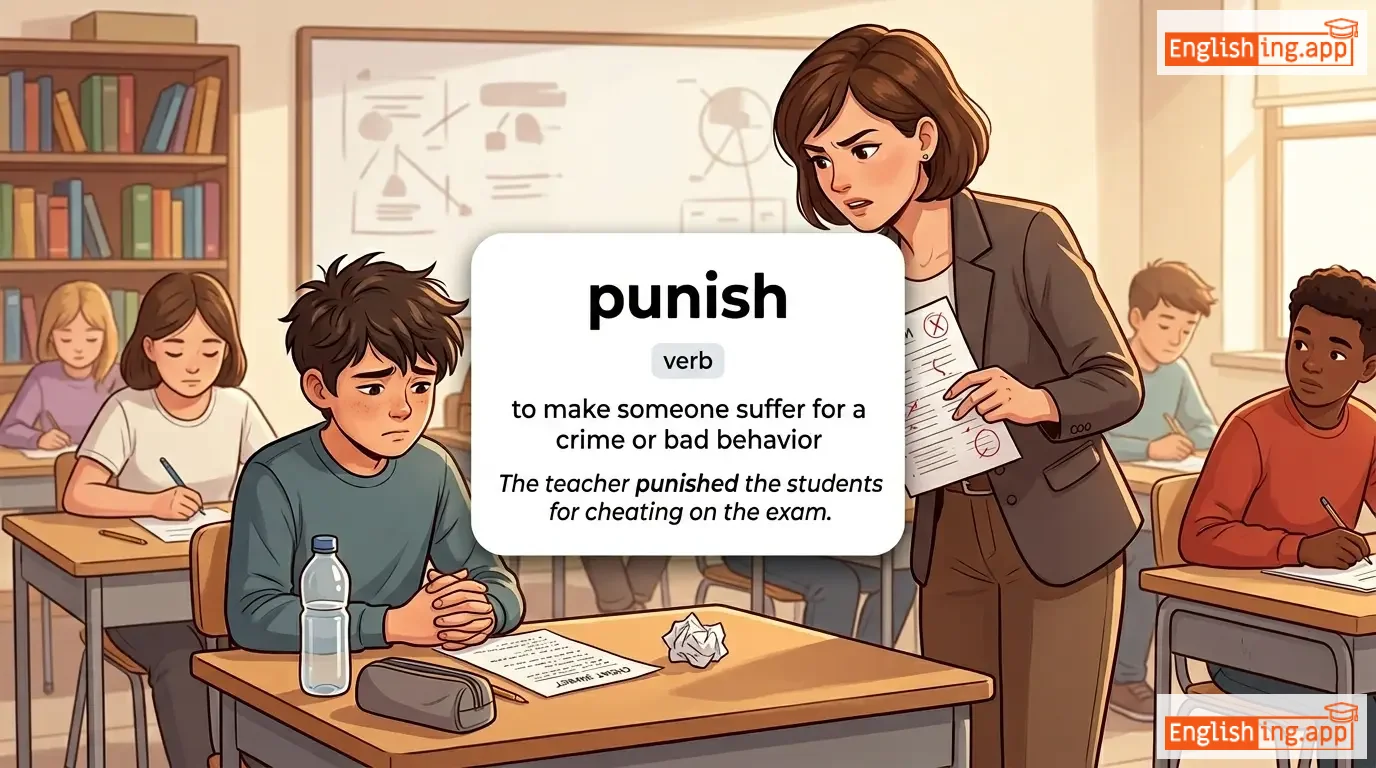
punish definition card — visual illustration of the meaning
verb
/ˈpʌnɪʃ/
惩罚 (chéngfá)

to make someone suffer for a crime or bad behavior

"The teacher punished the students for cheating on the exam."

"老师因学生在考试中作弊而惩罚了他们。" (Lǎoshī yīn xuéshēng zài kǎoshì zhōng zhòubì ér chéngfá le tāmen.)