词汇表

英语词汇词典 | 单词含义、定义和示例

noun
/kwoʊ/
现状 (xianzhuang)

The existing state of affairs or situation, often used in the phrase 'status quo'.

"He wanted to maintain the status quo at work."

"他想保持工作中的现状。" (Ta xiang baochi gongzuo zhong de xianzhuang.)
noun
/ˈkwɔːrəm/
法定人数 (fǎdìng rénshù)

The minimum number of members needed to conduct official business in a meeting.

"The board meeting was postponed because there was no quorum."
"由于没有法定人数,董事会会议被推迟了。" (yóuyú méiyǒu fǎdìng rénshù, dǒngshìhuì huìyì bèi tuīchí le.)
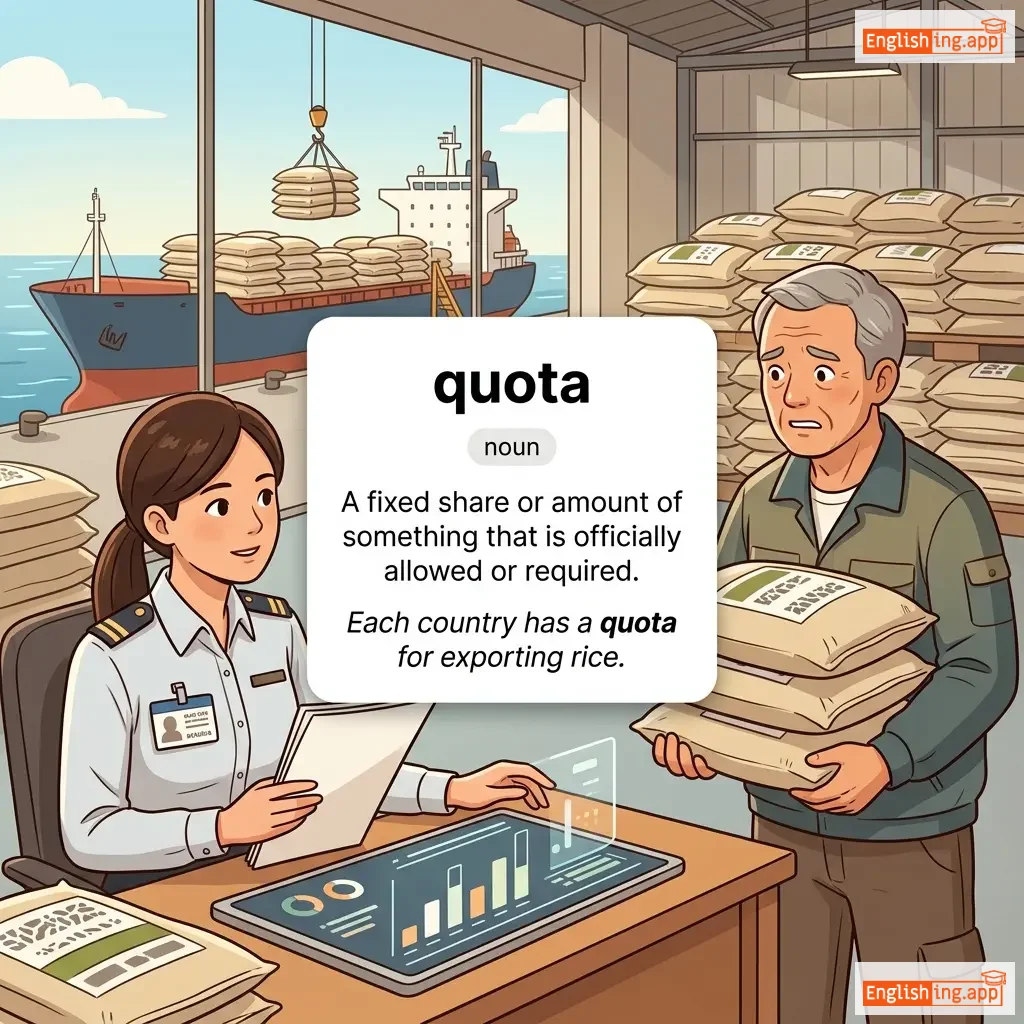
quota definition card — visual illustration of the meaning
noun
/ˈkwəʊtə/
配额, 固定份额 (pèiguì, gùdìng fèn'é)

A fixed share or amount of something that is officially allowed or required.

"Each country has a quota for exporting rice."

"每个国家都有一个出口稻米的配额。" (Měi gè guójiā dōu yǒu yīgè chūkǒu dàomǐ de pèiguì.)
noun
/kwəʊˈteɪʃən/
引语; 报价 (yinyu; baojia)

a group of words taken from a text or speech and repeated exactly; an estimated price given for goods or services

"The article opened with a famous quotation from Shakespeare."

"这篇文章以莎士比亚的一句名言开头。" (Zhe pian wenzhang yi Shashibiya de yi ju mingyan kaitou)
quote definition card — visual illustration of the meaning
verb
/kwəʊt/
引用 (yǐnyòng)

to repeat or copy the words of someone

"She quoted a famous line from the novel."

"她引用了小说中的一句名言。" (Tā yǐnyòngle xiǎoshuō zhōng de yījù míngyán.)
adjective
/kwəʊˈtɪdiən/
日常的,普通的 (rìcháng de, pǔtōng de)

Ordinary or everyday, especially when mundane.

"He focused on the quotidian details of family life."
"他专注于家庭生活中的日常细节。" (Tā zhuānzhù yú jiātíng shēnghuó zhōng de rìcháng xìjié.)
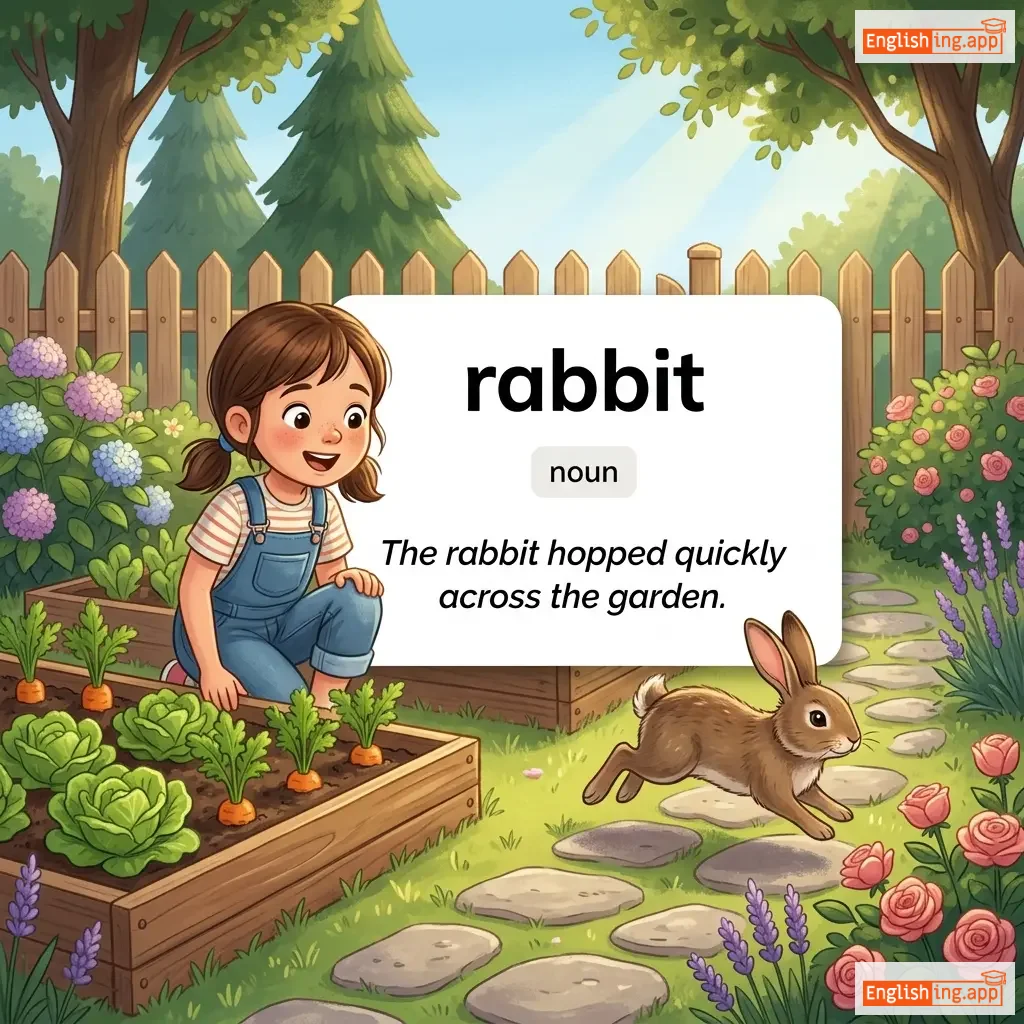
rabbit definition card — visual illustration of the meaning
noun
/ˈræbɪt/
兔子 (tùzi)

a small furry animal with long ears that lives in holes in the ground and moves by hopping

"The rabbit hopped quickly across the garden."

"兔子快速跳过花园。" (Tùzi kuàisù tiàoguò huāyuán.)
noun
/ˈræb.əl/
骚乱的人群 (saoluan de renqun)

A disorderly crowd or mob; the common people regarded as noisy or unruly.

"A rabble gathered in the streets to protest the decision."

"一群骚乱的人群在街上聚集,抗议决定。" (Yi qun saoluan de renqun zai jie shang juji, kangyi jue ding.)
adjective
/ˈræb.ɪd/
狂热的 (kuángrè de)

Having extreme or fanatical support for something; relating to or suffering from rabies.

"He was a rabid fan of the football team."

"他是足球队的狂热粉丝。" (Tā shì zúqiú duì de kuángrè fěnsī.)
noun
/ˈreɪ.biːz/
狂犬病 (kuáng quǎn bìng)

A viral disease that causes inflammation of the brain in humans and other mammals, usually transmitted through animal bites.

"The dog was vaccinated against rabies."
"狗已接种狂犬病疫苗。" (gǒu yǐ jiēzhòng kuáng quǎn bìng yìmiáo.)
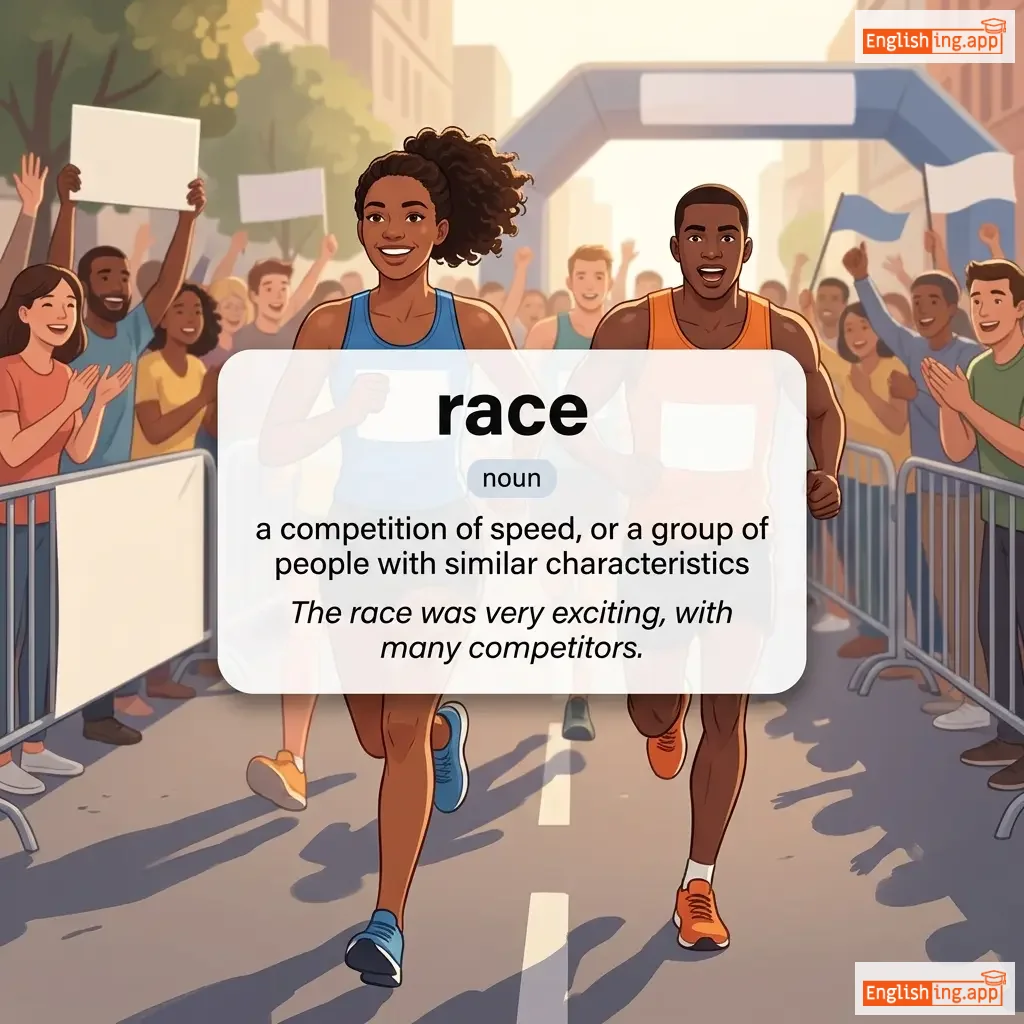
race definition card — visual illustration of the meaning
noun
/reɪs/
比赛 (bisai)

a competition of speed, or a group of people with similar characteristics

"The race was very exciting, with many competitors."

"比赛非常激动人心,有许多参赛者。" (Bisai feichang jidong renxin, you xuduo cansaizhe.)
adjective
/ˈreɪʃəl/
种族的 (zhǒngzú de)

relating to a race of people

"Racial equality is an important issue in many societies."

"种族平等是许多社会中的一个重要问题。" (Zhǒngzú píngděng shì xǔduō shèhuì zhōng de yīgè zhòngyào wèntí.)
noun
/ˈreɪsɪzəm/
种族主义 (zhǒngzú zhǔyì)

the belief that some races are superior to others, leading to unfair treatment or prejudice

"The organization works to eliminate racism in all forms."

"该组织致力于消除所有形式的种族主义。" (Gāi zǔzhī zhìlì yú xiāochú suǒyǒu xíngshì de zhǒngzú zhǔyì.)
adjective
/ˈreɪsɪst/
种族主义者 (zhǒngzú zhǔyì zhě)

showing or feeling discrimination or prejudice against people of other races

"He was accused of making racist comments."

"他被指控发表种族主义的评论。" (Tā bèi zhǐkòng fābiǎo zhǒngzú zhǔyì de pínglùn.)
noun
/ræk/
架子 (jiazi)

a frame or stand used to hold or store things

"She placed her wet clothes on the drying rack."

"她把湿衣服放在晾衣架上。" (Tā bǎ shī yīfú fàng zài liàng yī jià shàng.)
noun
/ˈrækɪt/
球拍 / 喧闹 (qiupai / xuanao)

A piece of equipment used to hit the ball in sports like tennis or badminton; also a loud noise or an illegal scheme.

"He bought a new tennis racket for the match."

"他为比赛买了一把新网球拍。" (Ta wei bisai mai le yi ba xin wangqiu pai.)
noun
/ˌræk.ɒnˈtɜːr/
善于讲故事的人 (shànyú jiǎng gùshì de rén)

A person who tells anecdotes in a skillful and amusing way.

"The professor was a brilliant raconteur who kept his audience entertained."

"教授是一位出色的故事讲述者,能让听众保持娱乐。" (Jiàoshòu shì yī wèi chūsè de gùshì jiǎngshù zhě, néng ràng tīngzhòng bǎochí yúlè.)
adjective
/ˈreɪ.si/
刺激的 (cìjī de)

Lively, entertaining, or slightly shocking (especially in a sexual way).

"The novel was full of racy dialogues."

"这部小说充满了刺激的对话。" (Zhè bù xiǎoshuō chōngmǎnle cìjī de duìhuà.)
noun
/ˈreɪdɑːr/
雷达 (leida)

a system that uses radio waves to detect the position and speed of objects

"The plane was detected by the airport's radar system."

"飞机通过机场的雷达系统被发现了。" (fēijī tōngguò jīchǎng de léidá xìtǒng bèi fāxiàn le.)
noun
/ˈreɪdiəns/
光辉 (guānghuī)

the quality of shining with bright light; a glowing or beaming quality

"Her face was filled with radiance after hearing the good news."

"她在听到好消息后,脸上充满了光辉。" (Tā zài tīng dào hǎo xiāoxī hòu, liǎn shàng chōngmǎn le guānghuī.)
adjective
/ˈreɪdiənt/
光彩照人 (guāngcǎi zhàorén)

Shining brightly; expressing great happiness.

"She looked radiant in her wedding dress."

"她在婚礼上穿着婚纱,看起来非常耀眼。" (Tā zài hūnlǐ shàng chuānzhuó hūnshā, kàn qǐlái fēicháng yàoyǎn.)
verb
/ˈreɪdieɪt/
辐射 (fúshè)

to emit energy or light; to spread out from a center

"The fireplace radiates warmth throughout the room."

"壁炉向整个房间辐射热量。" (Bìlú xiàng zhěnggè fángjiān fúshè rèliàng.)
radiation definition card — visual illustration of the meaning
noun
/ˌreɪdiˈeɪʃən/
辐射 (fúshè)

the emission of energy as electromagnetic waves or as moving particles

"The doctor explained the effects of radiation therapy to the patient."
"医生向患者解释了辐射治疗的效果。" (yīshēng xiàng huànzhě jiěshìle fúshè zhìliáo de xiàoguǒ.)
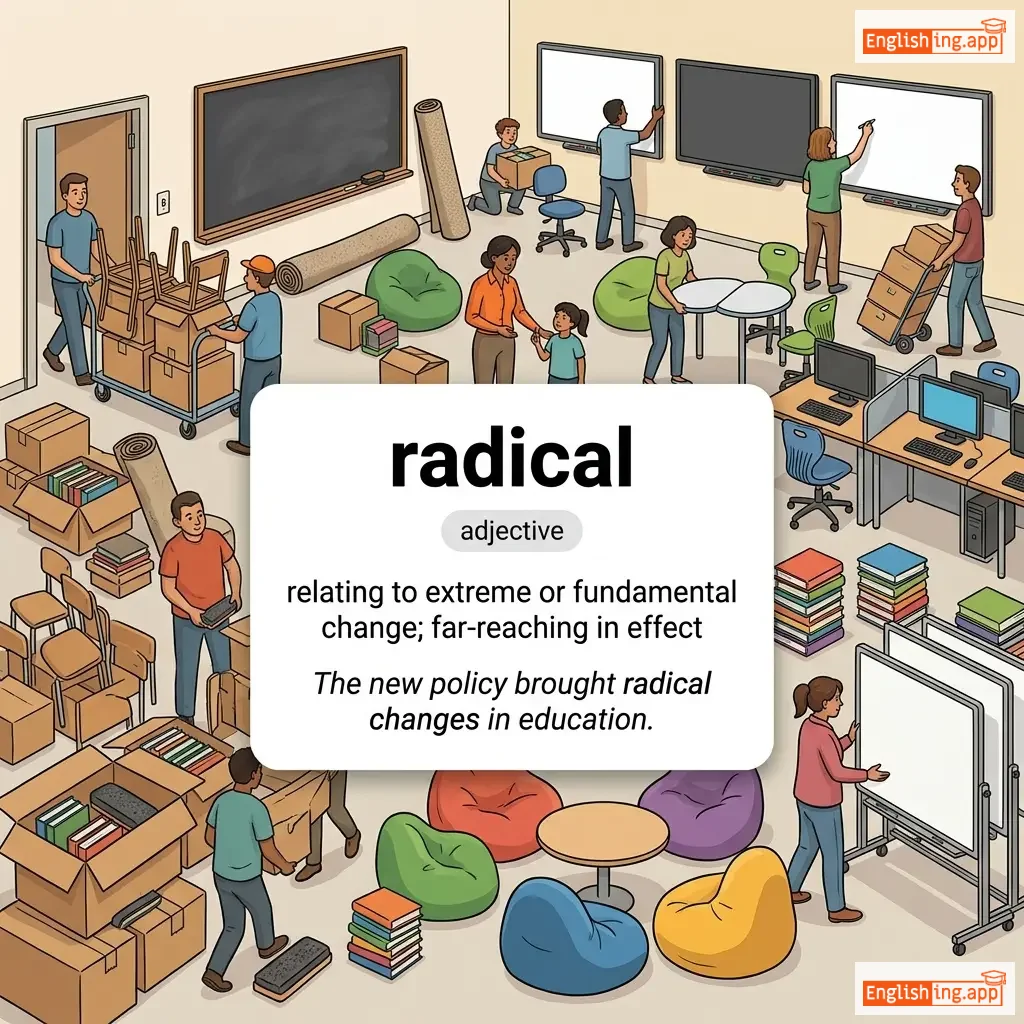
radical definition card — visual illustration of the meaning
adjective
/ˈrædɪkl/

relating to extreme or fundamental change; far-reaching in effect

"The new policy brought radical changes in education."

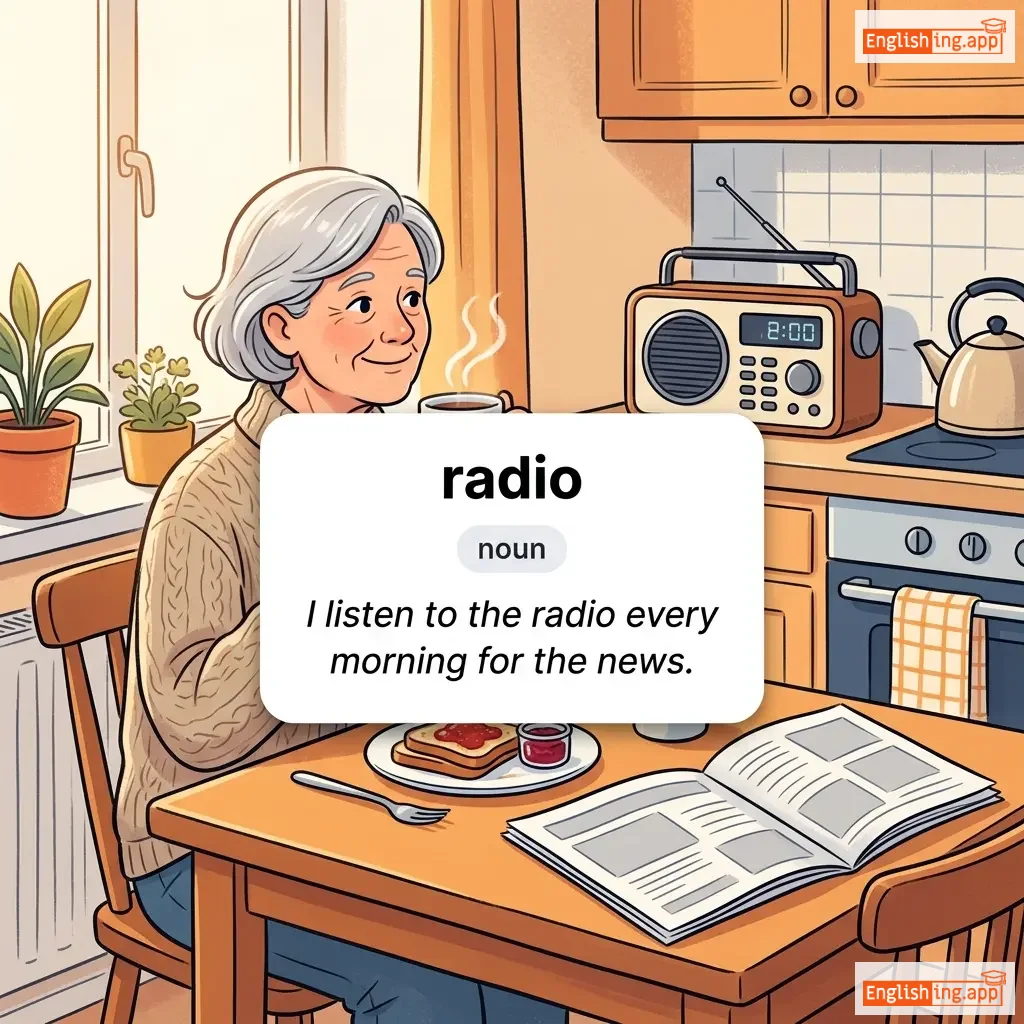
radio definition card — visual illustration of the meaning
noun
/ˈreɪdioʊ/
收音机 (shouyinji)

a device for receiving or transmitting radio signals, or the use of such signals for communication

"I listen to the radio every morning for the news."

"我每天早上听收音机获取新闻。" (Wǒ měitiān zǎoshang tīng shōuyīnjī huòqǔ xīnwén.)
radioactivity definition card — visual illustration of the meaning
noun
ˌreɪ.di.oʊ.ækˈtɪv.ə.ti
放射性 (raydeeohaktiviti)

The emission of ionizing radiation or particles caused by the spontaneous disintegration of atomic nuclei.

"Radioactivity is used in medical treatments like cancer therapy."

"放射性在包括癌症治疗在内的医疗治疗中被用于治疗。" (Fangshexing bei yong yu baokuo aizheng zhiliao zai nei de yiliao zhiliao zhong)
noun
/'ræd.ɪʃ/
小萝卜 (xiao luobo)

a small pungent edible root vegetable with white or red skin

"The farmer harvested fresh radishes from the garden."

"农民从花园里收获了新鲜的小萝卜。" (nongmin cong huayuan li shouhuo le xinxian de xiao luobo)
noun
/ˈreɪdɪks/
基数 (jīshù)

the base or root of something; the number on which a system of numeration is built

"In mathematics, the decimal system has a radix of ten."

"在数学中,十进制系统的基数是十。" (Zài shùxué zhōng, shí jìnzhì xìtǒng de jīshù shì shí.)
adjective
/ˈræfɪʃ/
不拘一格且稍微不太体面但又很有吸引力 (bù jū yī gé qiě shāo wēi bù tài tǐ miàn dàn yòu hěn yǒu xī yǐn lì)

unconventional and slightly disreputable but attractive

"He had a raffish charm that made him popular in the city."

"他有一种迷人的雷菲什魅力,使他在城市里非常受欢迎。" (Tā yǒu yī zhǒng mírén de léi fēi shí mèilì, shǐ tā zài chéngshì lǐ fēicháng shòu huānyíng.)
noun/verb
/ˈræfəl/
销售彩票 (xiāoshòu cǎipiào)

A means of raising money by selling numbered tickets, one or more of which are drawn at random for a prize; to sell something in such a lottery.

"The charity decided to raffle a bicycle to raise funds."

"慈善机构决定通过抽奖出售自行车来筹集资金。" (Císhàn jīgòu juédìng tōngguò chōujiǎng chūshòu zìxíngchē lái chóují zījīn.)
noun/verb
/ræft/
(fa)

A flat structure made of logs or planks tied together, used as a boat or floating platform; to travel or transport on such a structure.

"They built a raft to cross the river."

"他们建造了一只筏子来过河。" (Tāmen jiànzào le yī zhī fázi lái guò hé.)
noun
/ˈræftər/
屋梁 (wuliang)

One of the sloping beams that supports a roof.

"The old barn’s rafters were exposed."

"老谷仓的屋梁暴露在外。" (Lǎo gǔcāng de wū liáng bàolù zài wài.)
🧽

Rag

noun/verb
/ræɡ/

A piece of old, torn cloth; to tease or scold someone in a playful way.

"She used an old rag to clean the table."

noun
/ˈræɡəmʌfɪn/
破烂的孩子 (pòlàn de háizi)

A person, typically a child, in ragged, dirty clothes.

"The little ragamuffin begged for food on the street."

"那个小破烂的孩子在街上乞讨食物。" (Nàgè xiǎo pòlàn de háizi zài jiē shàng qǐtǎo shíwù.)
noun
/reɪdʒ/
愤怒 (fennu)

intense anger or fury

"She shouted in a fit of rage after hearing the news."

"她听到消息后在愤怒中大喊。" (Ta tingdao xiaoxi hou zai fennu zhong dahuan.)
adjective
/ˈræɡɪd/
破旧的 (pojiu de)

torn, worn out, or in poor condition

"The homeless man wore a ragged coat."

"无家可归的人穿着破旧的外套。" (Wu jia ke gui de ren chuan zhe po jiu de wai tao.)
raid definition card — visual illustration of the meaning
verb
/reɪd/
突袭 (tuxi)

To suddenly attack or enter a place, especially by force.

"The police raided the warehouse last night."

"警方昨晚突袭了仓库。" (Jingfang zuowan tuxi le cangku.)
verb
/reɪl/
抗议 (kàngyì)

to complain or protest strongly about something

"He railed against the unfair decision."

"他抗议不公平的决定。" (Tā kàngyì bù gōngpíng de juédìng.)
noun
/ˈreɪləri/
友好的玩笑 (yǒu hǎo de wán xiào)

good-humored teasing or joking

"Their friendship was full of light-hearted raillery."

"他们的友谊充满了轻松的玩笑。" (Tāmen de yǒuyì chōngmǎnle qīngsōng de wánxiào.)
noun
/ˈreɪlˌroʊd/
铁路 (tielu)

a track or system of tracks made of steel rails along which trains run

"The railroad connects the city to several nearby towns."

"铁路将城市与附近的几个小镇连接起来。" (Tielu jiang chengshi yu fujin de ji ge xiao zhen lianjie qilai.)
noun
/ˈreɪl.weɪ/
铁路 (tielu)

a track made of steel rails along which trains run; a system of tracks with trains, stations, and other facilities

"The railway connects major cities across the country."

"铁路连接全国主要城市。" (tielu lianjie quanguo zhuyao chengshi)
noun
/ˈreɪmənt/
衣服 (yifu)

clothing, especially fine or formal wear

"The king wore royal raiment during the ceremony."

"国王在仪式上穿着皇家衣服。" (Guowang zai yishi shang chuanzhuo huangjia yifu.)
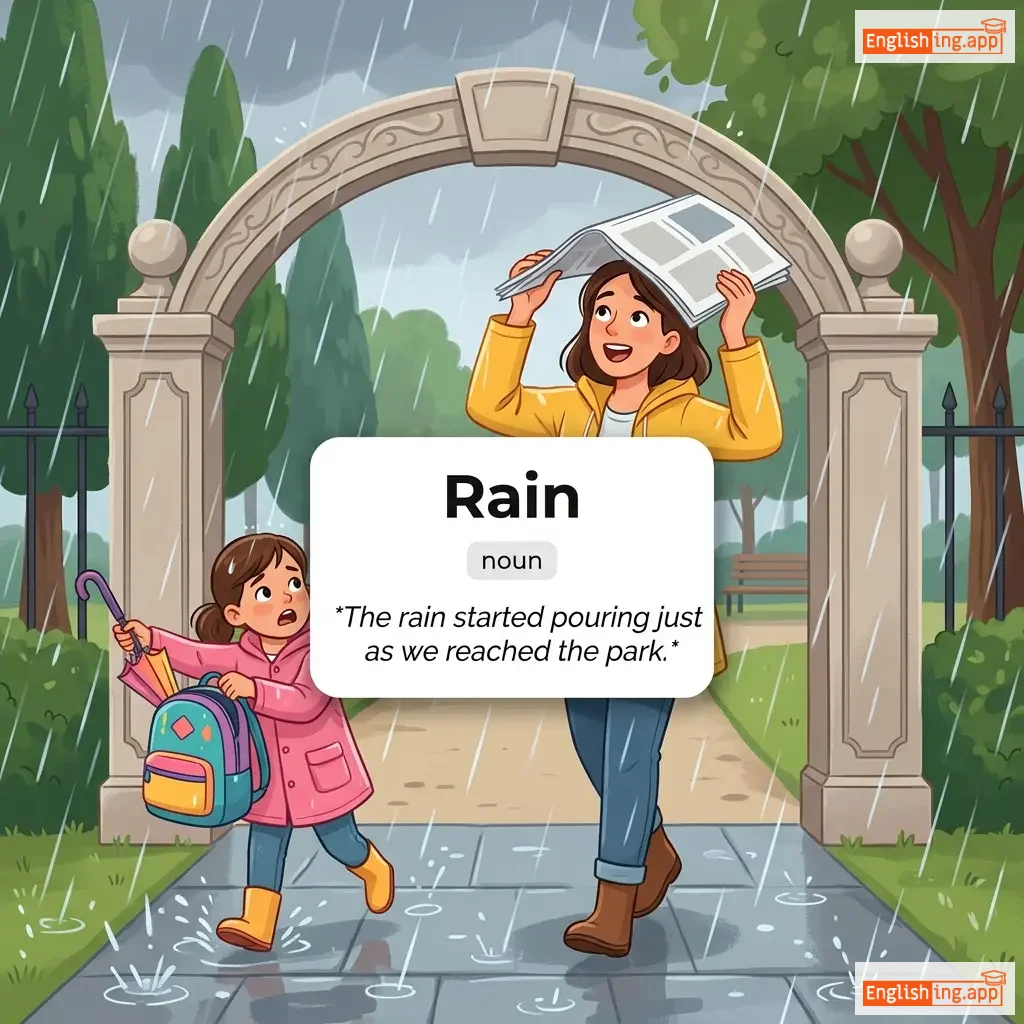
Rain definition card — visual illustration of the meaning
🌧️

Rain

noun
/reɪn/

water droplets that fall from the sky as a result of condensation in the atmosphere

"The rain started pouring just as we reached the park."

noun
/rɪˈsepʃən/
接待 (jiēdài)

the act of receiving something or someone; a formal social gathering

"We attended a wedding reception at the hotel."

"我们参加了酒店的婚礼接待。" (Wǒmen cānjiāle jiǔdiàn de hūnlǐ jiēdài.)
noun
/rɪˈsiːvər/
接收器 (jieshouqi)

a person or device that receives something such as a signal, message, or object

"The radio receiver picks up signals from distant stations."

"收音机接收器从远处的电台接收信号。" (Shouyinji jieshouqi cong yuanchu de diantai jieshou xinhao.)
adjective
/ˈriːsənt/
最近的 (zui jin de)

having happened or started only a short time ago

"The recent developments have been quite exciting."

"最近的发展非常令人兴奋。" (Zuìjìn de fāzhǎn fēicháng lìng rén xīngfèn.)
adverb
/ˈriːsəntli/
最近 (zuìjìn)

in the recent past; not long ago

"I recently visited the museum."

"我最近参观了博物馆。" (Wǒ zuìjìn cānguānle bówùguǎn.)
receive definition card — visual illustration of the meaning
verb
/rɪˈsiːv/
接收 (jiēshōu)

To get or be given something; to accept something offered.

"She received a letter from her friend."

"她收到了朋友的一封信。" (Tā shōu dào le péngyǒu de yī fēng xìn.)
adjective
/rɪˈsɛptɪv/
善于接受 (shan yu jie shou)

Willing to listen to or accept new ideas, suggestions, or experiences.

"She was receptive to feedback from her colleagues."

"她对同事们的反馈持开放态度。" (Ta dui tongshi men de feedback chi kaifang taidu.)
receptivity definition card — visual illustration of the meaning
noun
/rɪˌsɛptɪˈvɪti/
接受能力 (jiē shòu néng lì)

The ability or willingness to receive something, especially signals or stimuli.

"Her receptivity to new ideas helped improve the project."

"她对新思想的接受能力帮助改善了项目。" (Tā duì xīn sīxiǎng de jiēshòu nénglì bāngzhù gǎishànle xiàngmù.)