語彙集

英単語辞書 | 単語の意味、定義、例文

noun
/kwoʊ/
現状 (genjou)

The existing state of affairs or situation, often used in the phrase 'status quo'.

"He wanted to maintain the status quo at work."

"彼は職場で現状を維持したかった。" (Kare wa shokuba de genjou o iji shitakatta.)
noun
/ˈkwɔːrəm/
定足数 (teizokusu)

The minimum number of members needed to conduct official business in a meeting.

"The board meeting was postponed because there was no quorum."
"クォーラムがなかったため、理事会の会議は延期されました。" (Kwōramu ga nakatta tame, rijikai no kaigi wa enki sare mashita.)
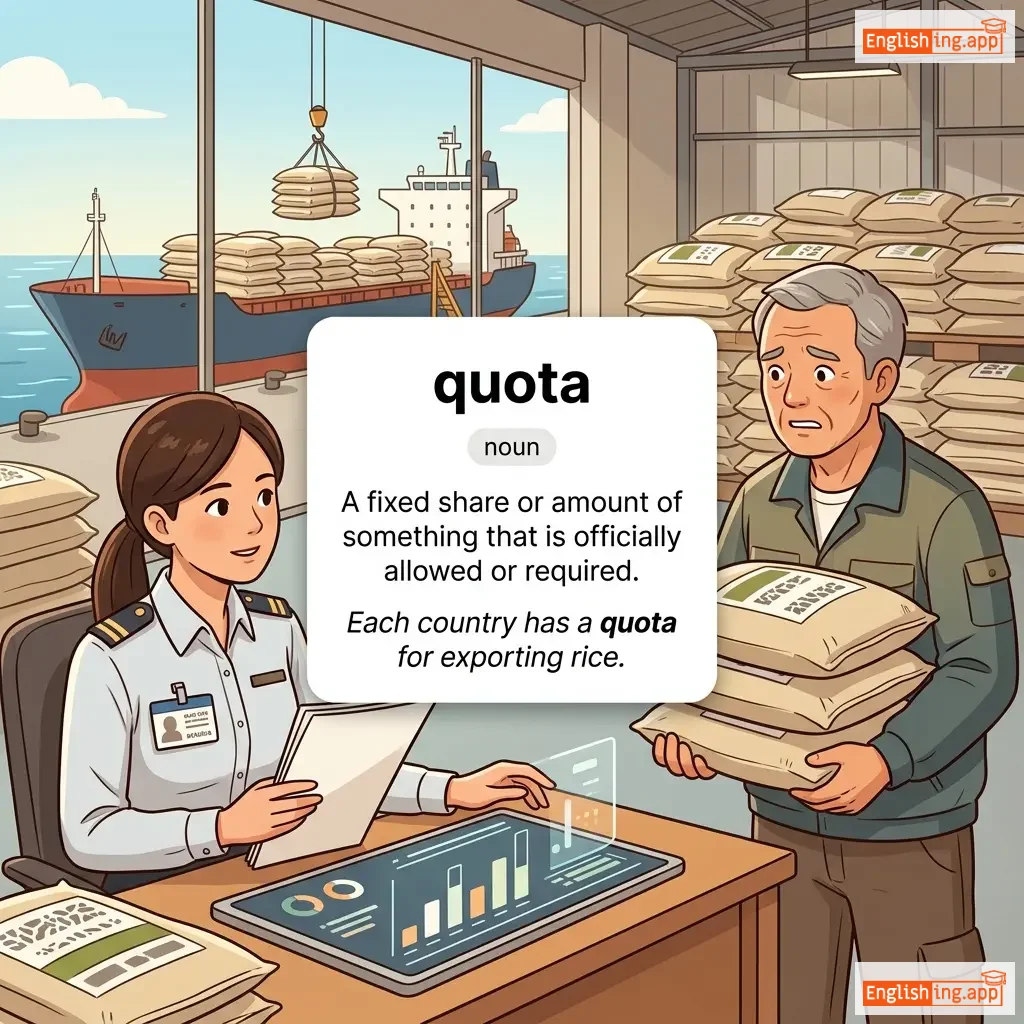
quota definition card — visual illustration of the meaning
noun
/ˈkwəʊtə/
割り当て, 定額 (wariate, teigaku)

A fixed share or amount of something that is officially allowed or required.

"Each country has a quota for exporting rice."

"各国には、米の輸出に関する割り当てがあります。" (Kakoku ni wa, kome no yushutsu ni kansuru wariate ga arimasu.)
noun
/kwəʊˈteɪʃən/
引用; 見積もり (inyo; mitsumori)

a group of words taken from a text or speech and repeated exactly; an estimated price given for goods or services

"The article opened with a famous quotation from Shakespeare."

"その記事はシェイクスピアの有名な引用で始まった。" (sono kiji wa Sheikusupia no yuumei na inyo de hajimatta)
quote definition card — visual illustration of the meaning
verb
/kwəʊt/
引用する (in'yō suru)

to repeat or copy the words of someone

"She quoted a famous line from the novel."

"彼女は小説から有名な一文を引用した。" (Kanojo wa shōsetsu kara yūmei na ichibun o in'yō shita.)
adjective
/kwəʊˈtɪdiən/
日常的な、普通の (nichijōteki na, futsū no)

Ordinary or everyday, especially when mundane.

"He focused on the quotidian details of family life."
"彼は家族生活の日常的な詳細に集中した。" (Kare wa kazoku seikatsu no nichijōteki na shōsai ni shūchū shita.)
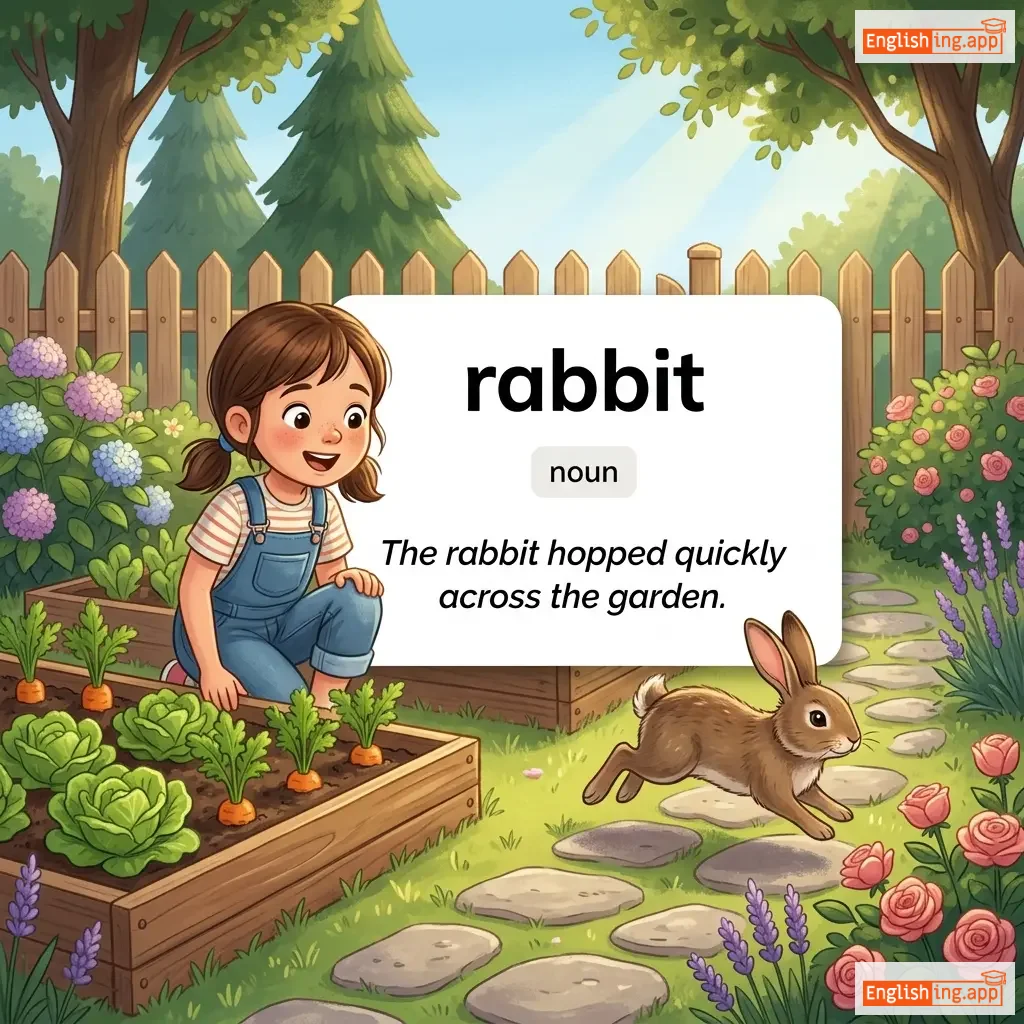
rabbit definition card — visual illustration of the meaning
noun
/ˈræbɪt/
ウサギ (usagi)

a small furry animal with long ears that lives in holes in the ground and moves by hopping

"The rabbit hopped quickly across the garden."

"ウサギは庭を素早く跳びました。" (Usagi wa niwa o subayaku tobimashita.)
noun
/ˈræb.əl/
無秩序な群衆 (muchi tetsuna gunshuu)

A disorderly crowd or mob; the common people regarded as noisy or unruly.

"A rabble gathered in the streets to protest the decision."

"無秩序な群衆が通りに集まり、決定に抗議しました。" (muchi tetsuna gunshuu ga toori ni atsumari, kettei ni kougi shimashita.)
adjective
/ˈræb.ɪd/
狂信的 (kyōshinteki)

Having extreme or fanatical support for something; relating to or suffering from rabies.

"He was a rabid fan of the football team."

"彼はサッカーチームの狂信的なファンだった。" (Kare wa sakkā chīmu no kyōshinteki na fan datta.)
noun
/ˈreɪ.biːz/
狂犬病 (kyoukenbyou)

A viral disease that causes inflammation of the brain in humans and other mammals, usually transmitted through animal bites.

"The dog was vaccinated against rabies."
"犬は狂犬病のワクチンを接種しました。" (Inu wa kyoukenbyou no wakuchin wo sesshu shimashita.)
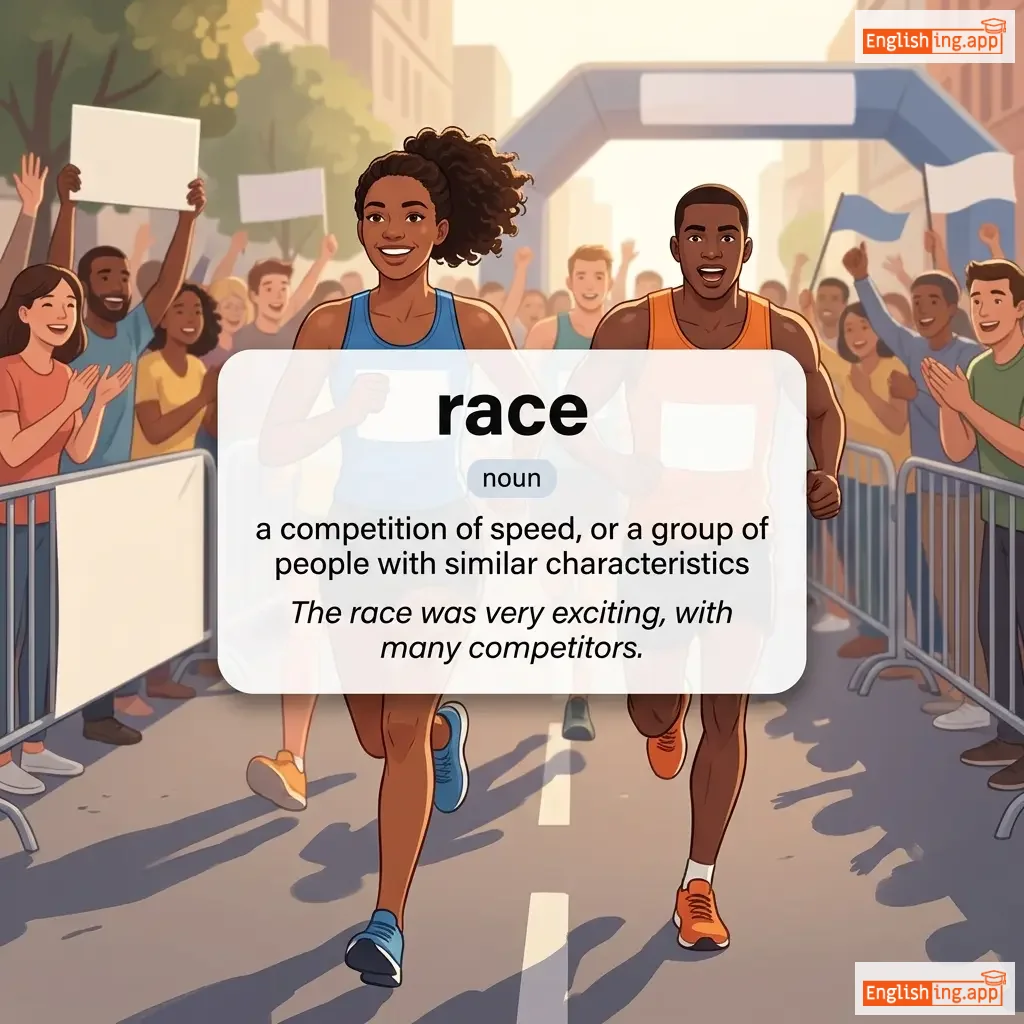
race definition card — visual illustration of the meaning
noun
/reɪs/
レース (resu)

a competition of speed, or a group of people with similar characteristics

"The race was very exciting, with many competitors."

"レースは非常にエキサイティングで、たくさんの競技者がいました。" (Resu wa hijou ni ekisaitingu de, takusan no kyōgisha ga imashita.)
adjective
/ˈreɪʃəl/
人種の (jinshu no)

relating to a race of people

"Racial equality is an important issue in many societies."

"人種平等は多くの社会において重要な問題です。" (Jinshu byōdō wa ōku no shakai ni oite jūyōna mondai desu.)
noun
/ˈreɪsɪzəm/
人種差別 (jinshu sabetsu)

the belief that some races are superior to others, leading to unfair treatment or prejudice

"The organization works to eliminate racism in all forms."

"その組織はすべての形態の人種差別を排除するために取り組んでいます。" (Sono soshiki wa subete no keitai no jinshu sabetsu o haijo suru tame ni torikundeimasu.)
adjective
/ˈreɪsɪst/
人種差別主義者 (jinshu sabetsu shugi-sha)

showing or feeling discrimination or prejudice against people of other races

"He was accused of making racist comments."

"彼は人種差別的なコメントをしたとして非難された。" (Kare wa jinshu sabetsu teki na komento o shita to shite hinan sareta.)
noun
/ræk/
ラック (rakku)

a frame or stand used to hold or store things

"She placed her wet clothes on the drying rack."

"彼女は濡れた服を乾かすためにラックに置いた。" (Kanojo wa nureta fuku o kawakasu tame ni rakku ni oita.)
noun
/ˈrækɪt/
ラケット / 騒音 (raketto / saion)

A piece of equipment used to hit the ball in sports like tennis or badminton; also a loud noise or an illegal scheme.

"He bought a new tennis racket for the match."

"彼は試合のために新しいテニスラケットを買った。" (Kare wa shiai no tame ni atarashii tenisu raketto wo katta.)
noun
/ˌræk.ɒnˈtɜːr/
巧妙な語り手 (koumyou na katarite)

A person who tells anecdotes in a skillful and amusing way.

"The professor was a brilliant raconteur who kept his audience entertained."

"その教授は素晴らしい語り手で、観客を楽しませ続けた。" (Sono kyōju wa subarashii katarite de, kankyaku o tanoshimase tsuzuketa.)
adjective
/ˈreɪ.si/
刺激的 (shigekiteki)

Lively, entertaining, or slightly shocking (especially in a sexual way).

"The novel was full of racy dialogues."

"その小説は刺激的な対話で満ちていた。" (Sono shōsetsu wa shigekiteki na taiwa de michite ita.)
noun
/ˈreɪdɑːr/
レーダー (rēdā)

a system that uses radio waves to detect the position and speed of objects

"The plane was detected by the airport's radar system."

"その飛行機は空港のレーダーシステムによって検出されました。" (sono hikōki wa kūkō no rēdā shisutemu ni yotte kenshutsu saremashita.)
noun
/ˈreɪdiəns/
輝き (kagayaki)

the quality of shining with bright light; a glowing or beaming quality

"Her face was filled with radiance after hearing the good news."

"良いニュースを聞いた後、彼女の顔は輝きで満ちていました。" (Yoi nyūsu o kiita ato, kanojo no kao wa kagayaki de michiteimashita.)
adjective
/ˈreɪdiənt/
輝く (kagayaku)

Shining brightly; expressing great happiness.

"She looked radiant in her wedding dress."

"彼女はウェディングドレスで輝いて見えました。" (Kanojo wa ueddingu doresu de kagayaite miemashita.)
verb
/ˈreɪdieɪt/
放射する (hōsha suru)

to emit energy or light; to spread out from a center

"The fireplace radiates warmth throughout the room."
"暖炉は部屋全体に暖かさを放射します。" (Danro wa heya zentai ni atatakasa o hōsha shimasu.)
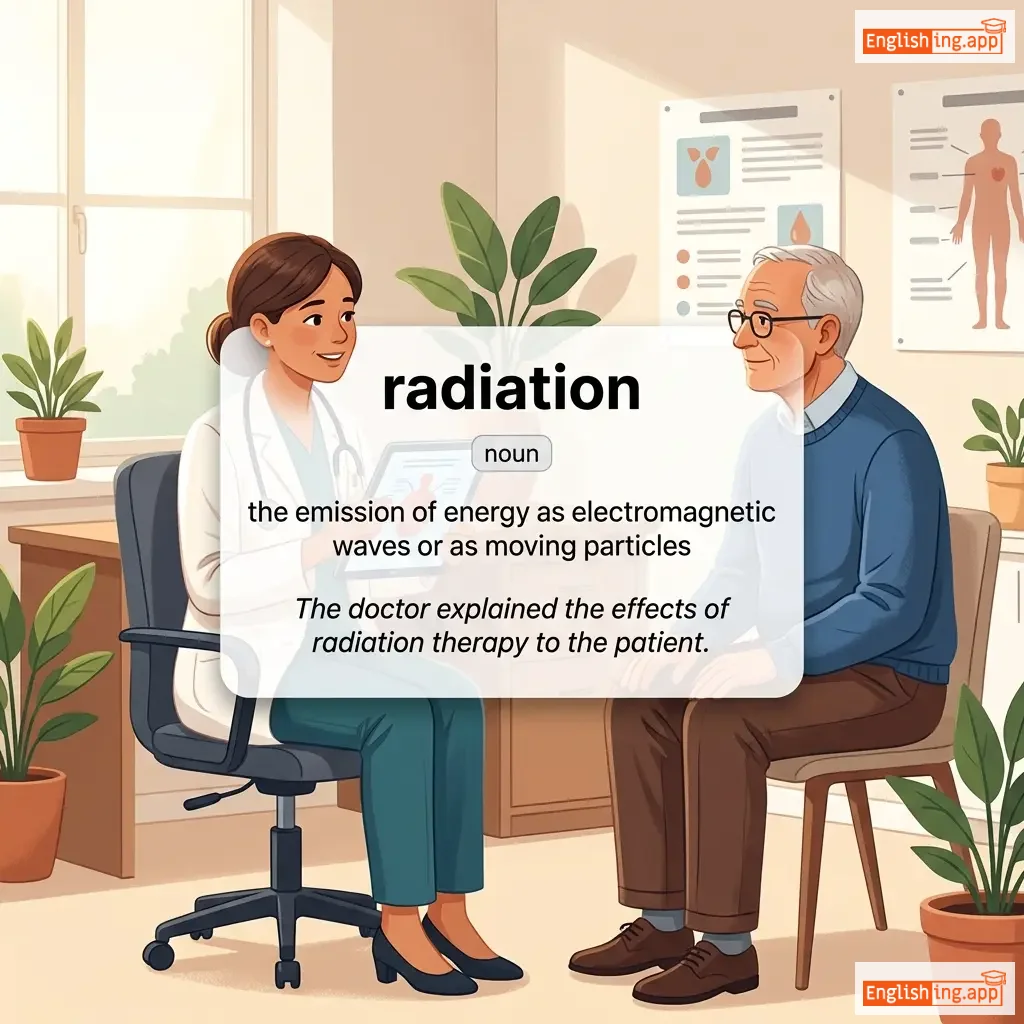
radiation definition card — visual illustration of the meaning
noun
/ˌreɪdiˈeɪʃən/
放射線 (hōshasen)

the emission of energy as electromagnetic waves or as moving particles

"The doctor explained the effects of radiation therapy to the patient."
"医者は患者に放射線治療の効果を説明しました。" (Isha wa kanja ni hōshasen chiryō no kōka o setsumei shimashita.)
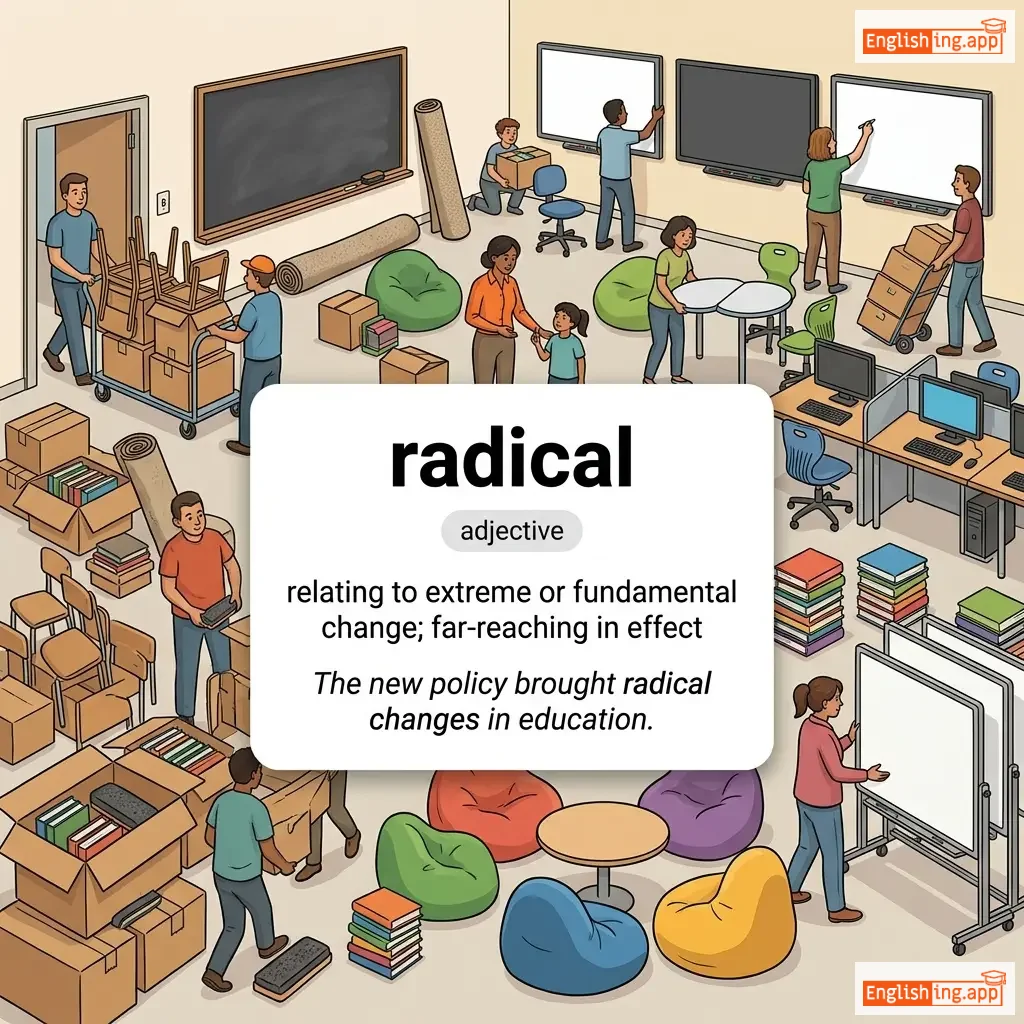
radical definition card — visual illustration of the meaning
adjective
/ˈrædɪkl/

relating to extreme or fundamental change; far-reaching in effect

"The new policy brought radical changes in education."

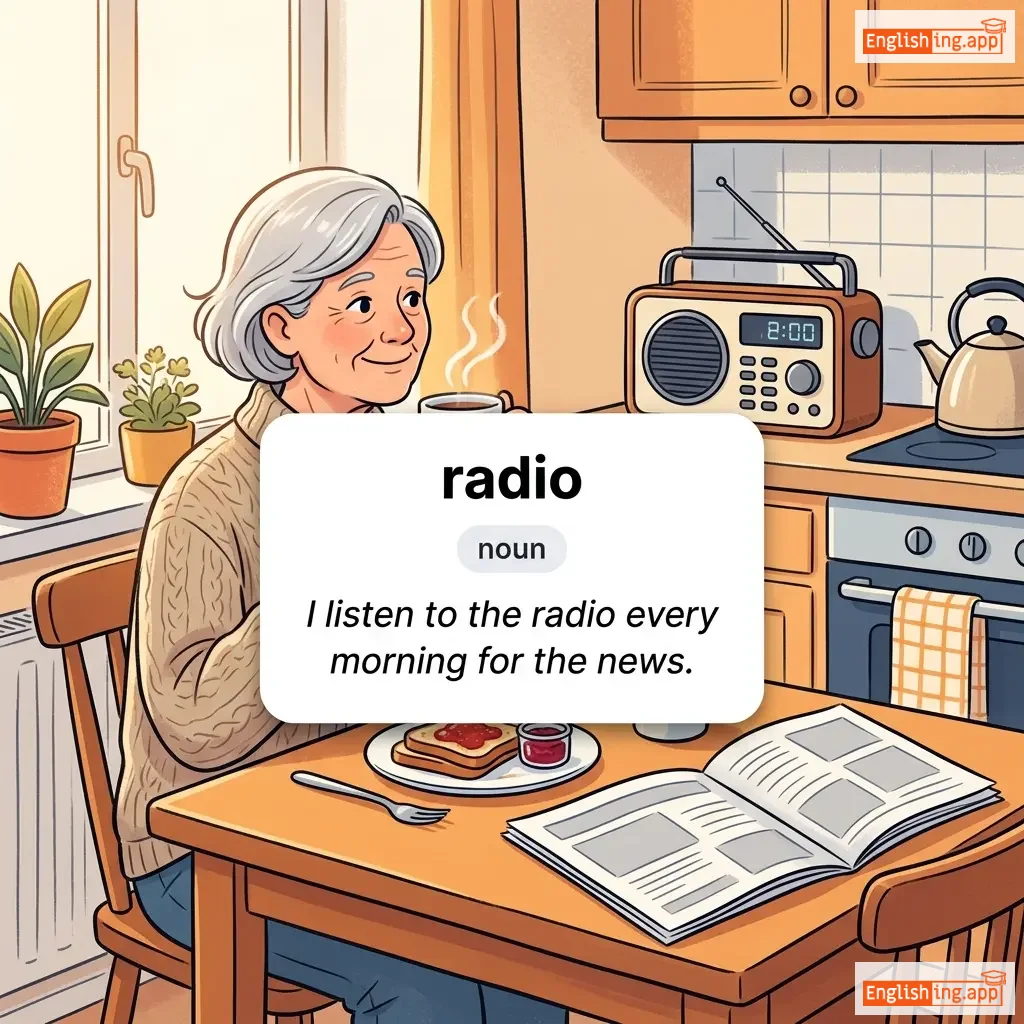
radio definition card — visual illustration of the meaning
noun
/ˈreɪdioʊ/
ラジオ (rajio)

a device for receiving or transmitting radio signals, or the use of such signals for communication

"I listen to the radio every morning for the news."
"私は毎朝ニュースを聞くためにラジオを聴きます。" (Watashi wa mai asa nyuusu o kiku tame ni rajio o kikimasu.)
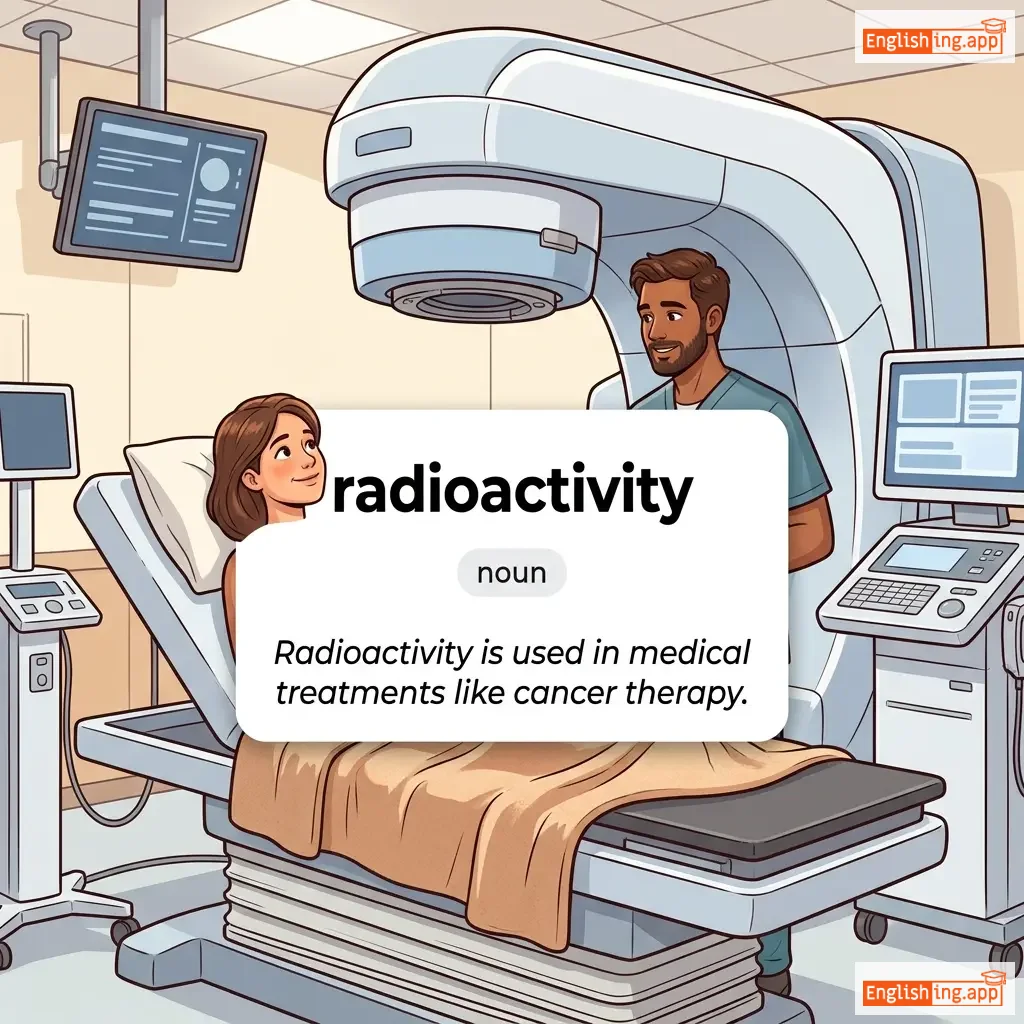
radioactivity definition card — visual illustration of the meaning
noun
ˌreɪ.di.oʊ.ækˈtɪv.ə.ti
放射性 (rajioakutibiti)

The emission of ionizing radiation or particles caused by the spontaneous disintegration of atomic nuclei.

"Radioactivity is used in medical treatments like cancer therapy."

"放射性は、がん治療のような医療に用いられている。" (houshasei wa ganchiryou no youna iryou ni mochiirareteiru)
noun
/'ræd.ɪʃ/
ラディッシュ (radisshu)

a small pungent edible root vegetable with white or red skin

"The farmer harvested fresh radishes from the garden."

"農家は庭から新鮮なラディッシュを収穫しました。" (nouka wa niwa kara shinzen na radisshu wo shuukaku shimashita)
noun
/ˈreɪdɪks/
基数 (kisū)

the base or root of something; the number on which a system of numeration is built

"In mathematics, the decimal system has a radix of ten."

"数学では、十進法の基数は十です。" (Sūgaku de wa, jū-shinhō no kisū wa jū desu.)
adjective
/ˈræfɪʃ/
型破りで少し評判が悪いが魅力的 (katayari de sukoshi hyōban ga warui ga miryokuteki)

unconventional and slightly disreputable but attractive

"He had a raffish charm that made him popular in the city."

"彼は街で人気がある理由は、レイフィッシュな魅力があったからだ。" (Kare wa machi de ninki ga aru riyū wa, reifisshu na miryoku ga atta kara da.)
noun/verb
/ˈræfəl/
抽選券の販売 (ちゅうせんけんのはんばい)

A means of raising money by selling numbered tickets, one or more of which are drawn at random for a prize; to sell something in such a lottery.

"The charity decided to raffle a bicycle to raise funds."

"チャリティーは資金調達のために自転車を抽選で販売することに決めました。" (Charity wa shikin chōtatsu no tame ni jitensha o chūsen de hanbai suru koto ni kimemashita.)
noun/verb
/ræft/
(ikada)

A flat structure made of logs or planks tied together, used as a boat or floating platform; to travel or transport on such a structure.

"They built a raft to cross the river."

"彼らは川を渡るために筏を作った。" (Karera wa kawa o wataru tame ni ikada o tsukutta.)
noun
/ˈræftər/
小屋の梁 (koya no hari)

One of the sloping beams that supports a roof.

"The old barn’s rafters were exposed."

"古い納屋の小屋の梁がむき出しになっていました。" (Furui noya no koya no hari ga mukidashi ni natte imashita.)
🧽

Rag

noun/verb
/ræɡ/

A piece of old, torn cloth; to tease or scold someone in a playful way.

"She used an old rag to clean the table."

noun
/ˈræɡəmʌfɪn/
ぼろぼろの子供 (boroboro no kodomo)

A person, typically a child, in ragged, dirty clothes.

"The little ragamuffin begged for food on the street."

"小さなぼろぼろの子供が通りで食べ物を求めていた。" (Chīsana boroboro no kodomo ga tōri de tabemono o motomete ita.)
noun
/reɪdʒ/
怒り (ikari)

intense anger or fury

"She shouted in a fit of rage after hearing the news."

"彼女はそのニュースを聞いて怒りの叫び声を上げました。" (Kanojo wa sono nyūsu o kiite ikari no sakebigoe o agemashita.)
adjective
/ˈræɡɪd/
ボロボロ (boroboro)

torn, worn out, or in poor condition

"The homeless man wore a ragged coat."
"ホームレスの男性はボロボロのコートを着ていた。" (Hōmuresu no dansei wa boroboro no kōto o kite ita.)
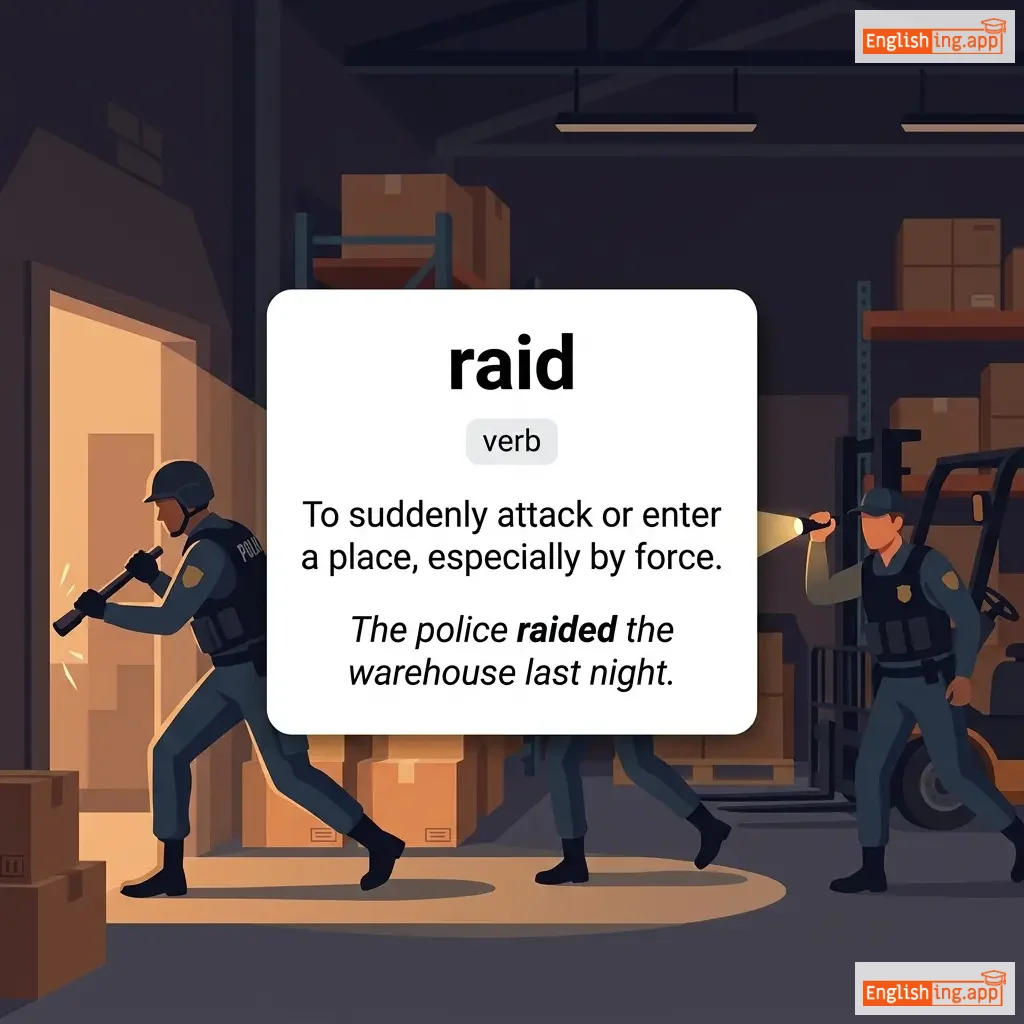
raid definition card — visual illustration of the meaning
verb
/reɪd/
急襲 (kyuushu)

To suddenly attack or enter a place, especially by force.

"The police raided the warehouse last night."

"警察は昨晩倉庫を家宅捜索しました。" (Keisatsu wa sakuban souko o kataku sousaku shimashita.)
verb
/reɪl/
抗議する (kougi suru)

to complain or protest strongly about something

"He railed against the unfair decision."

"彼は不公平な決定に対して強く抗議した。" (Kare wa fukouhei na kettei ni taishite tsuyoku kougi shita.)
noun
/ˈreɪləri/
友好的な冗談 (yū kō teki na jōdan)

good-humored teasing or joking

"Their friendship was full of light-hearted raillery."

"彼らの友情は軽い冗談で満ちていました。" (Karera no yūjō wa karui jōdan de michiteimashita.)
noun
/ˈreɪlˌroʊd/
鉄道 (tetsudou)

a track or system of tracks made of steel rails along which trains run

"The railroad connects the city to several nearby towns."

"鉄道は都市といくつかの近くの町を結びつけています。" (Tetsudou wa toshi to ikutsu ka no chikaku no machi o musubitsuketeimasu.)
noun
/ˈreɪl.weɪ/
鉄道 (tetsudo)

a track made of steel rails along which trains run; a system of tracks with trains, stations, and other facilities

"The railway connects major cities across the country."

"鉄道は国内の主要な都市を結んでいます。" (tetsudo wa kokunai no shuyona toshi o musundeimasu)
noun
/ˈreɪmənt/
衣服 (ifuku)

clothing, especially fine or formal wear

"The king wore royal raiment during the ceremony."

"王は儀式の間、王族の衣服を着ていた。" (Ou wa gishiki no aida, ouzoku no ifuku o kiteita.)
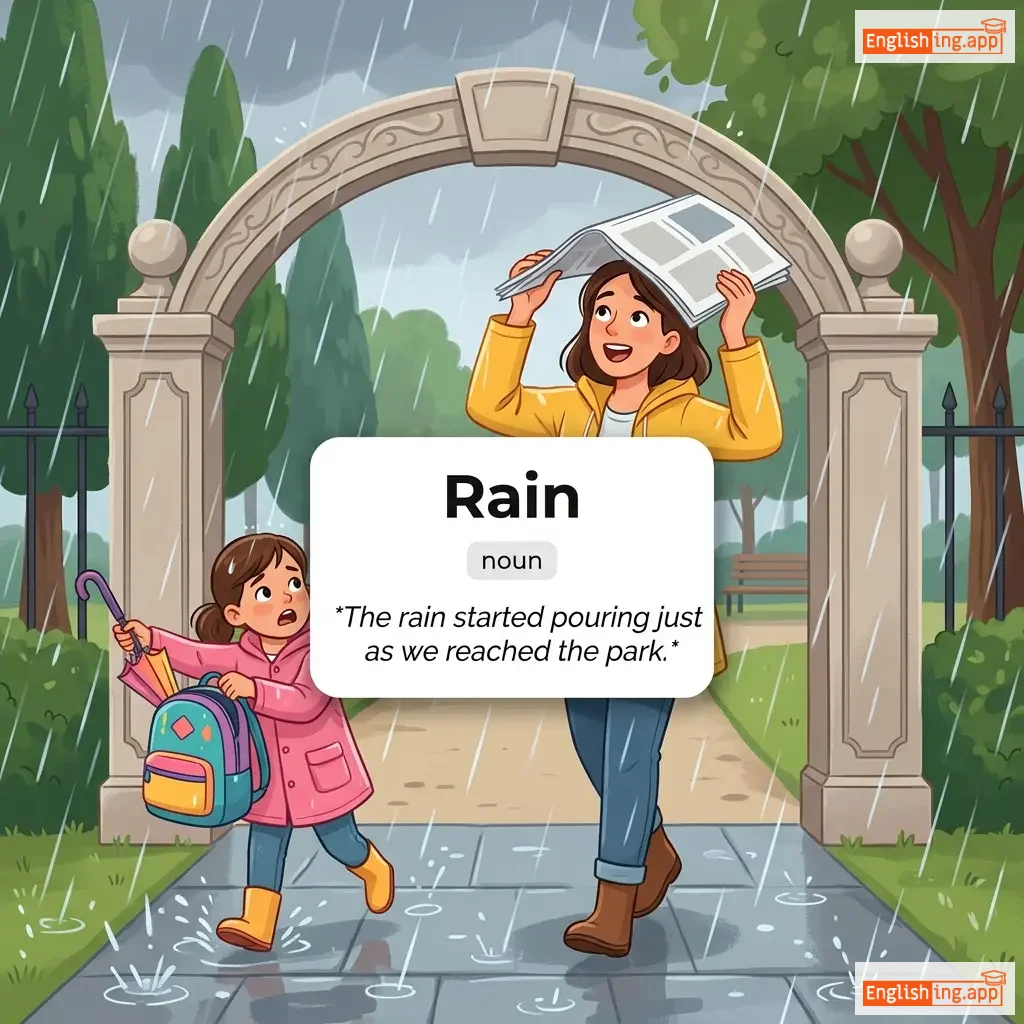
Rain definition card — visual illustration of the meaning
🌧️

Rain

noun
/reɪn/

water droplets that fall from the sky as a result of condensation in the atmosphere

"The rain started pouring just as we reached the park."

noun
/rɪˈsepʃən/
レセプション (resepushon)

the act of receiving something or someone; a formal social gathering

"We attended a wedding reception at the hotel."

"私たちはホテルで結婚式のレセプションに参加しました。" (Watashitachi wa hoteru de kekkonshiki no resepushon ni sanka shimashita.)
noun
/rɪˈsiːvər/
受信機 (jushinki)

a person or device that receives something such as a signal, message, or object

"The radio receiver picks up signals from distant stations."

"ラジオの受信機は遠くの局から信号を受信します。" (Rajio no jushinki wa tooku no kyoku kara shingou wo jushin shimasu.)
adjective
/ˈriːsənt/
最近の (saikin no)

having happened or started only a short time ago

"The recent developments have been quite exciting."

"最近の出来事はかなり興奮させるものでした。" (Saikin no dekigoto wa kanari kōfun saseru mono deshita.)
adverb
/ˈriːsəntli/
最近 (saikin)

in the recent past; not long ago

"I recently visited the museum."
"最近博物館を訪れました。" (Saikin hakubutsukan o otozuremashita.)
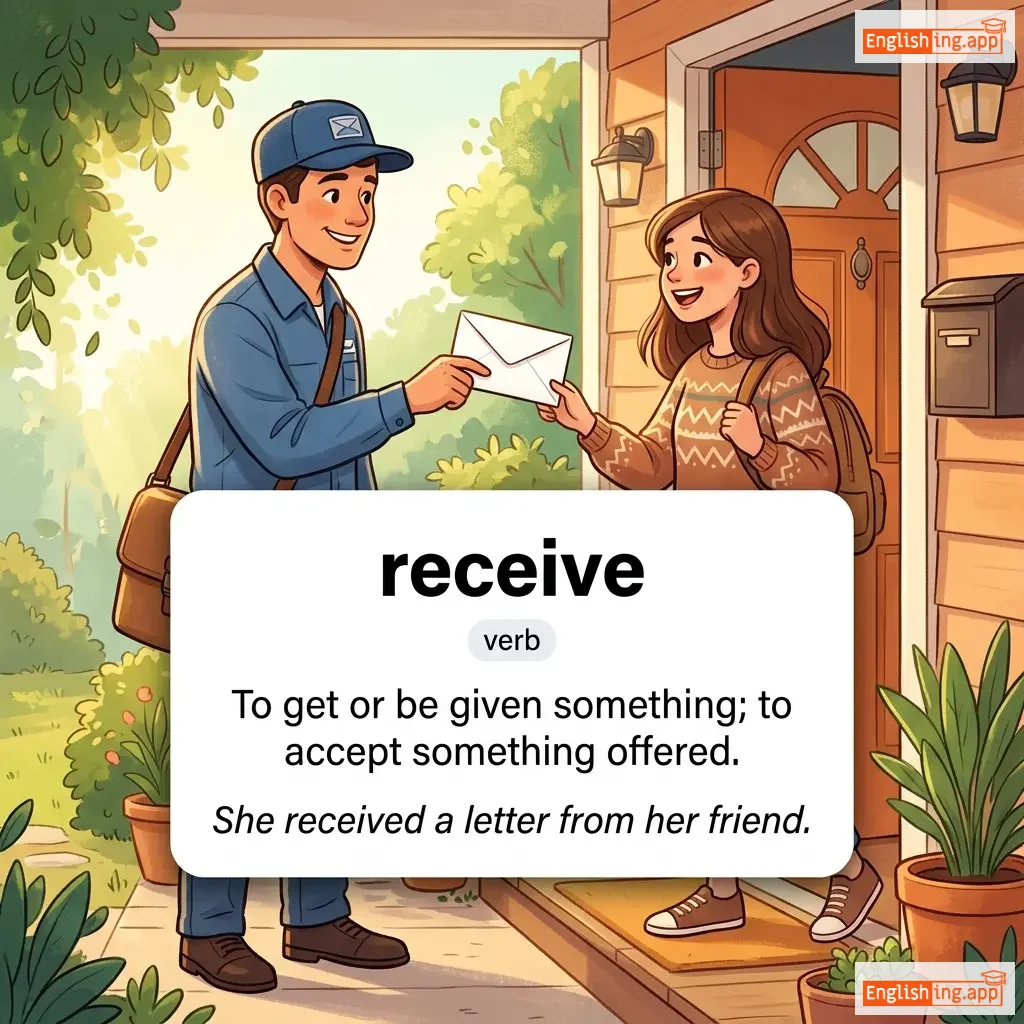
receive definition card — visual illustration of the meaning
verb
/rɪˈsiːv/
受け取る (uketoru)

To get or be given something; to accept something offered.

"She received a letter from her friend."

"彼女は友達から手紙を受け取った。" (Kanojo wa tomodachi kara tegami o uketotta.)
adjective
/rɪˈsɛptɪv/
受容的 (juyouteki)

Willing to listen to or accept new ideas, suggestions, or experiences.

"She was receptive to feedback from her colleagues."
"彼女は同僚からのフィードバックを受け入れる姿勢を持っていました。" (Kanojo wa doryou kara no feedback wo ukeireru shisei wo motteimashita.)
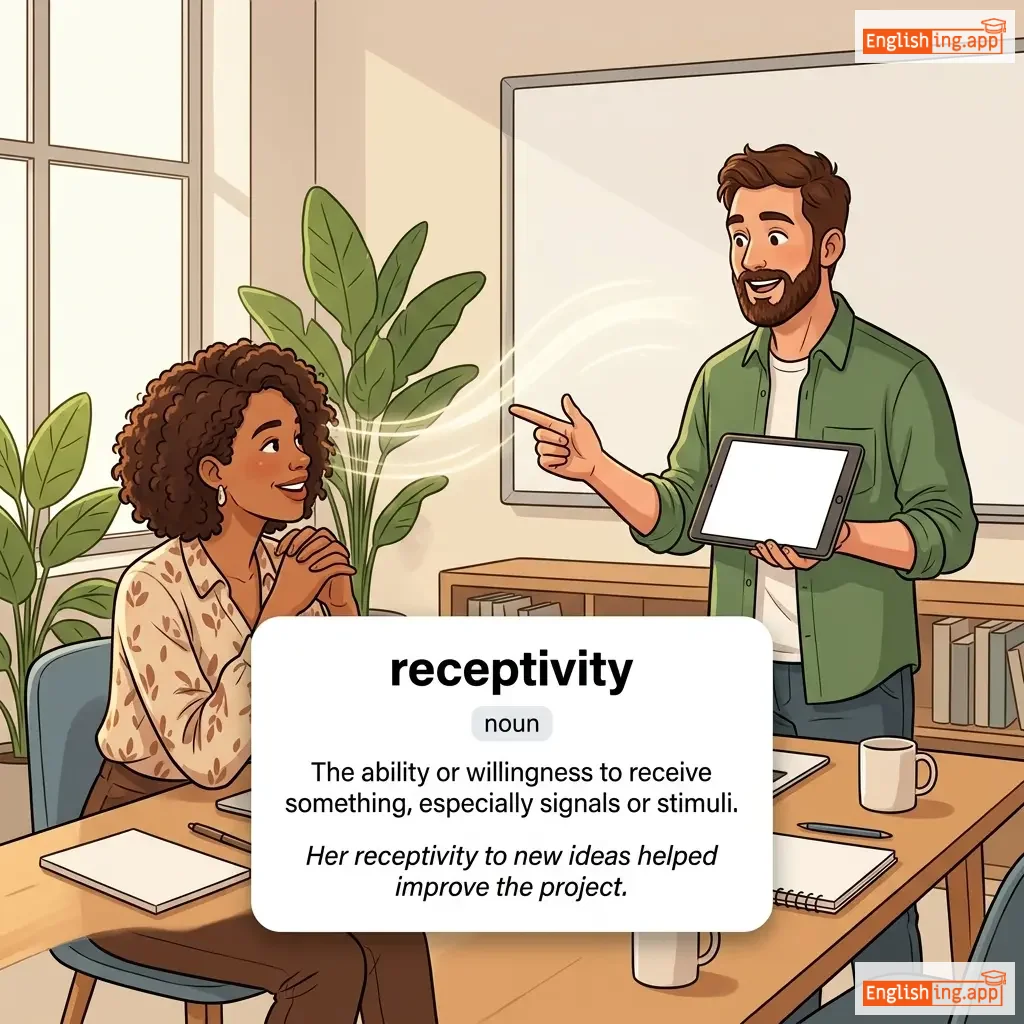
receptivity definition card — visual illustration of the meaning
noun
/rɪˌsɛptɪˈvɪti/
受容性 (juyou-sei)

The ability or willingness to receive something, especially signals or stimuli.

"Her receptivity to new ideas helped improve the project."

"新しいアイデアへの受容性がプロジェクトの改善に役立った。" (Atarashii aidea e no juyou-sei ga purojekuto no kaizen ni yakudatta.)