語彙集

英単語辞書 | 単語の意味、定義、例文

noun
/riːm/
リーム (riimu)

A large quantity of paper (typically 500 sheets); informally, a large amount of something.

"The office ordered ten reams of paper."

"オフィスは10リームの紙を注文した。" (Ofisu wa 10 riimu no kami o chūmon shita.)
👑

realm

noun
/rɛlm/

A kingdom or domain; a field or area of activity or interest.

"He is well known in the realm of science."

verb
/ˈreɪn.dʒɪŋ/
変動する (hendou suru)

Extending or varying between limits.

"The temperatures are ranging from 15 to 30 degrees this week."

"今週の気温は15度から30度の間で変動しています。" (Konshuu no kion wa 15-do kara 30-do no aida de hendou shiteimasu.)
🔧

rasp

verb
/ræsp/

to speak in a rough, harsh voice or to scrape with a coarse sound

"He rasped out a warning before collapsing."

adjective
/ræʃ/
軽率, 無謀 (keisotsu, mubou)

Acting quickly without careful consideration; reckless.

"It was a rash decision to invest without research."

"調査なしで投資するのは無謀な決断だった。" (Chousa nashi de toushi suru no wa mubou na ketsudan datta.)
noun
/ˈrerəti/
珍しい状態; 普通でないもの、または希少なもの (mezurashī jōtai; futsū denai mono, mata wa kishōna mono)

the state of being rare; something that is uncommon or scarce

"The antique vase was a rarity worth thousands of dollars."

"その古代の花瓶は、数千ドルの価値がある珍しいものだった。" (sono kodai no kabin wa, sūsen doru no kachi ga aru mezurashī mono datta.)
adverb
/ˈrɛə(r)li/
めったに (mattan ni)

not often, infrequently

"She rarely eats sweets because of her diet."

"彼女はダイエットのため、お菓子をめったに食べません。" (Kanojo wa daietto no tame, okashi o mattan ni tabemasen.)
verb
/ˈreə.rɪ.faɪ/
薄くする, 精製する (usukusuru, seisei suru)

To make something less dense or more refined.

"The air rarefies as you climb higher into the mountains."

"山に登るにつれて、空気は薄くなります。" (Yama ni noboru ni tsurete, kūki wa usuku narimasu.)
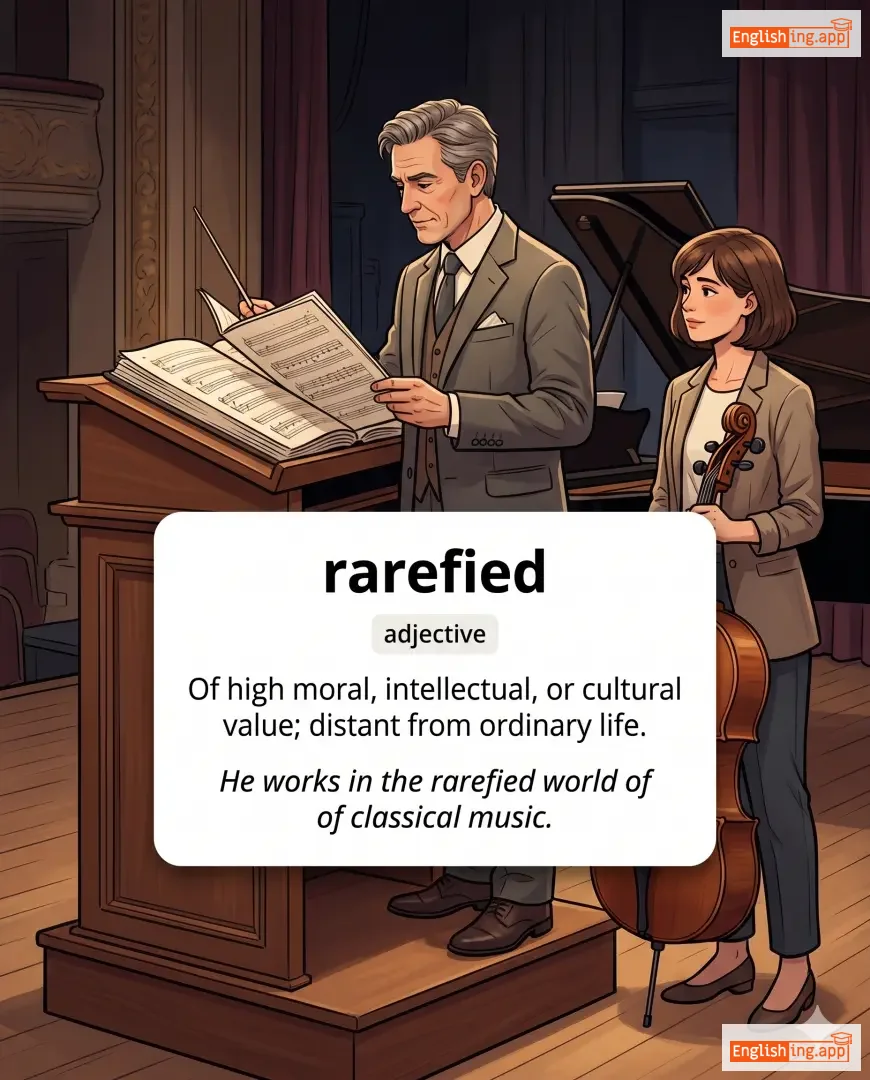
rarefied definition card — visual illustration of the meaning
adjective
/ˈreə.rɪ.faɪd/

Of high moral, intellectual, or cultural value; distant from ordinary life.

"He works in the rarefied world of classical music."

adjective
/reər/
希少 (kishou)

Unusual or uncommon; not occurring often.

"This species of bird is extremely rare."

"この鳥の種は非常に希少です。" (Kono tori no shu wa hijou ni kishou desu.)
noun
/ˈræp.tʃər/
狂喜, 恍惚 (kyouki, kouko)

A feeling of intense joy, delight, or ecstasy.

"She listened to the music in rapture."

"彼女は音楽に没頭して、狂喜していました。" (Kanojo wa ongaku ni bottou shite, kyouki shiteimashita.)
adjective
/ræpˈtɔːriəl/
肉食鳥 (nikushoku tori)

Relating to birds of prey or predatory behavior.

"The eagle is a raptorial bird with sharp talons."

"ワシは鋭い爪を持つ肉食鳥です。" (Washi wa surudoi tsume o motsu nikushoku tori desu.)
adjective
/ræpt/
熱中した (necchū shita)

Completely absorbed or fascinated by something.

"She listened with rapt attention to the speaker’s words."

"彼女はスピーカーの言葉を熱心に聞いていた。" (kanojo wa supīkā no kotoba o nesshin ni kiite ita.)
noun
/ræpˈskæliən/
いたずら好きな人 (itazura sukina hito)

A mischievous or cheeky person; a rascal.

"The little rapscallion hid his brother’s shoes as a prank."

"小さなラプスカリオンは兄の靴をいたずらで隠した。" (Chiisana rapscallion wa ani no kutsu o itazura de kakushita.)
noun
/ˌræproʊʃˈmɑːn/
関係修復 (kankei shūfuku)

The establishment or resumption of harmonious relations.

"The two countries signed an agreement that marked a new rapprochement."
"二国は新しい関係修復を示す合意書に署名した。" (Nikkoku wa atarashī kankei shūfuku o shimesu gōisho ni shomei shita.)
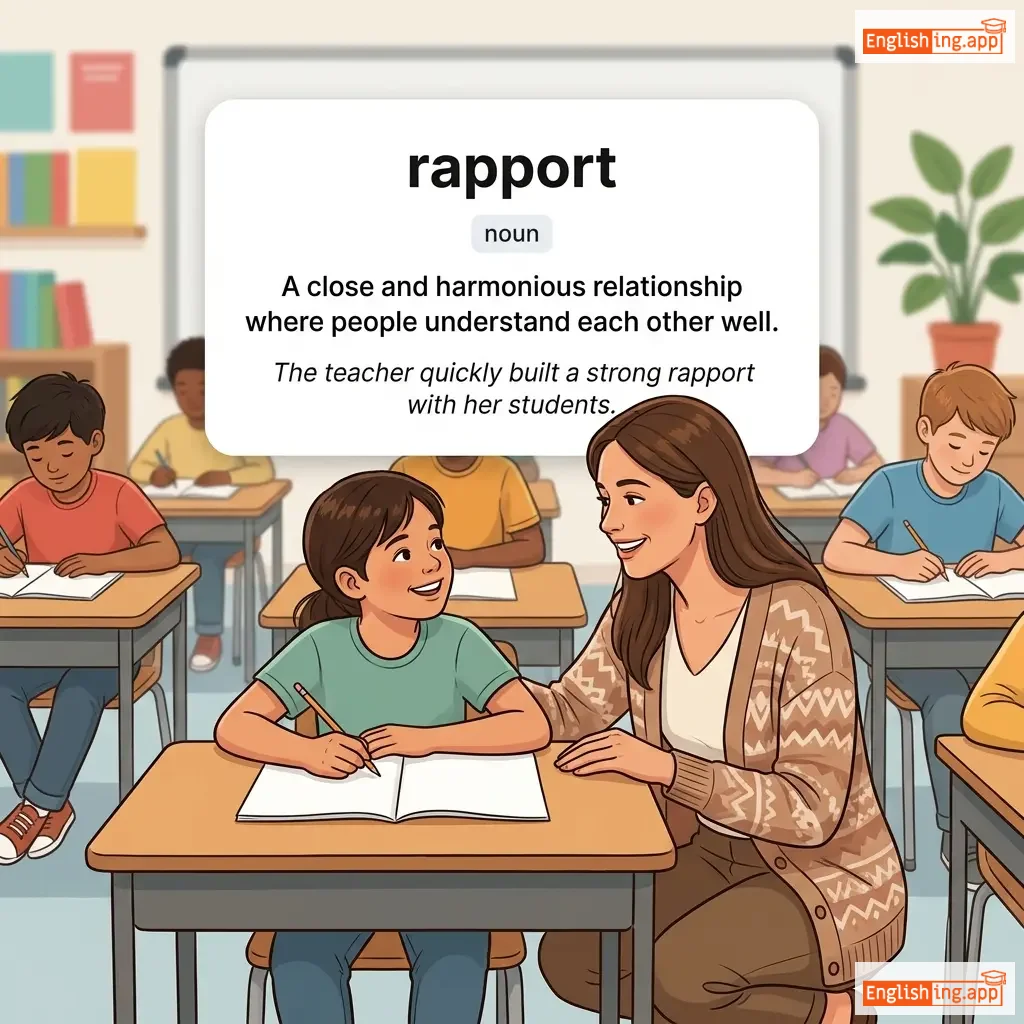
rapport definition card — visual illustration of the meaning
noun
/ræˈpɔːr/
関係 (kankei)

A close and harmonious relationship where people understand each other well.

"The teacher quickly built a strong rapport with her students."

"教師は生徒たちと素早く強い関係を築いた。" (Kyōshi wa seito-tachi to subayaku tsuyoi kankei o kizuita.)
noun
/ˈræp.aɪn/
略奪 (ryakudatsu)

the violent seizure of someone's property

"The war was marked by rapine and destruction."
"戦争は略奪と破壊で特徴づけられていた。" (Sensō wa ryakudatsu to hakai de tokuchō dzukerarete ita.)
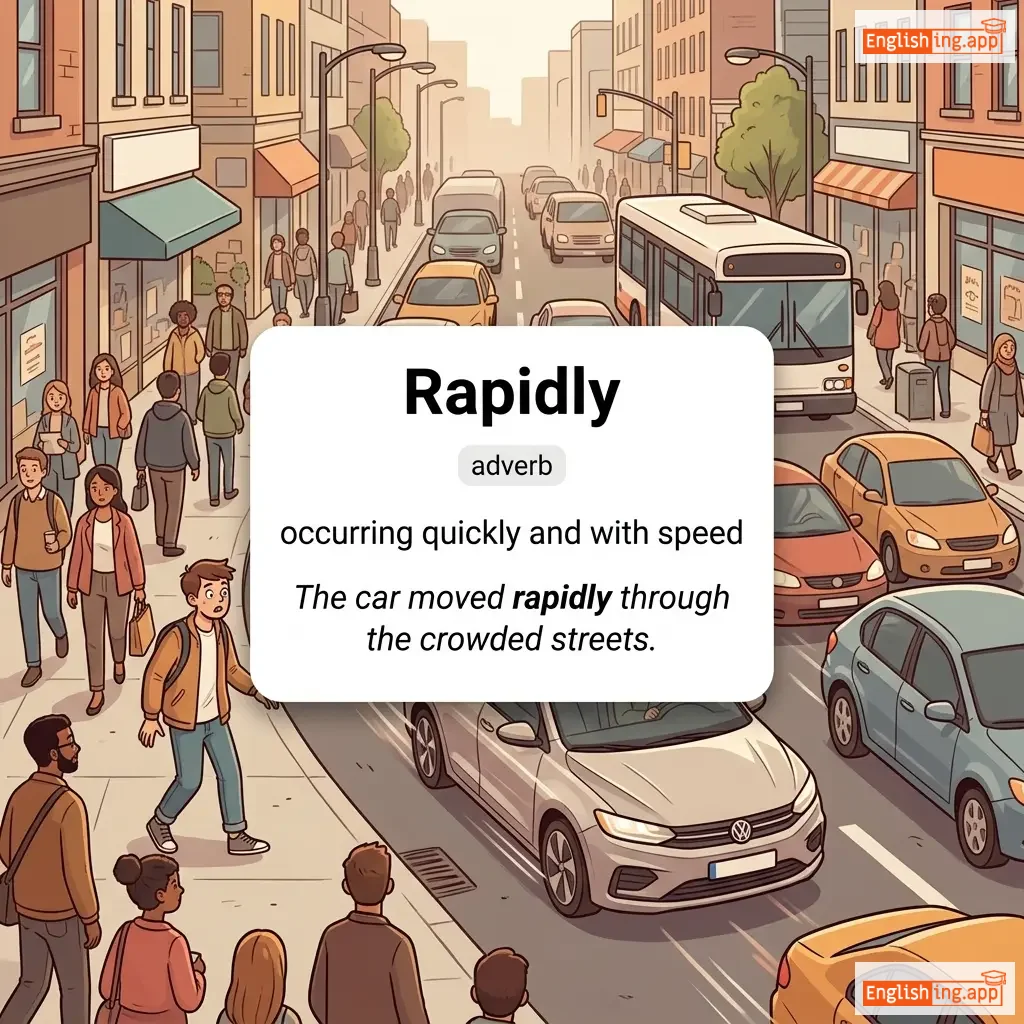
Rapidly definition card — visual illustration of the meaning
adverb
/ˈræpɪdli/
速く (hayaku)

occurring quickly and with speed

"The car moved rapidly through the crowded streets."

"車は混雑した通りを速く走った。" (Kuruma wa konzatsu shita tōri o hayaku hashitta.)
noun
/rəˈpɪdəti/
迅速さ (jinsokusa)

The quality of moving or happening quickly; swiftness or speed.

"The rapidity of technological change is astonishing."

"技術的な変化の速さは驚くべきものです。" (Gijutsuteki na henka no hayasa wa odorokubeki mono desu.)
adjective
/ˈræp.ɪd/
速い (hayai)

happening quickly or in a short time

"The company experienced rapid growth last year."

"その会社は昨年急速な成長を経験しました。" (Sono kaisha wa sakunen kyūsoku na seichō o keiken shimashita.)
verb
/reɪp/
強姦 (gōkan)

to force someone to have sexual intercourse without their consent

"The law strictly punishes those who commit rape."

"法律は強姦を犯した者に厳罰を与えます。" (Hōritsu wa gōkan o okashita mono ni genbatsu o ataemasu.)
adjective
/rəˈpeɪ.ʃəs/
貪欲 (don'yoku)

having an extreme desire to take things for oneself, greedy

"The rapacious landlord raised the rent without reason."

"貪欲な家主は理由もなく家賃を上げた。" (Don'yoku na iyashu wa riyuu mo naku yachin wo ageta.)
verb
/rænt/
怒鳴る (donaru)

to speak or shout in an angry, uncontrolled way

"He ranted about the unfair treatment at work."

"彼は仕事で不公平な扱いについて叫んでいました。" (Kare wa shigoto de fukōhei na atsukai ni tsuite sakendemashita.)
verb
/ˈræn.sæk/
略奪する (ryakudatsu suru)

to search a place roughly and steal or damage things

"Burglars ransacked the house while the family was away."

"泥棒たちは家族が留守の間に家を荒らした。" (Dorobōtachi wa kazoku ga rusu no aida ni ie o arashita.)
noun, verb
/ræŋks/
ランク (ranku)

Positions within a group, especially in a hierarchy or organization.

"He quickly moved up the ranks of the army."

"彼はすぐに軍隊のランクで上昇しました。" (Kare wa sugu ni guntai no ranku de jōshō shimashita.)
verb
/ˈræŋ.kəl/
イライラさせる (iraira saseru)

To cause continuing annoyance or resentment.

"His unfair criticism continued to rankle her for days."
"彼の不公平な批判は何日も彼女をイライラさせ続けた。" (Kare no fukouhei na hihan wa nannichi mo kanojo o iraira sase tsudzuketa.)
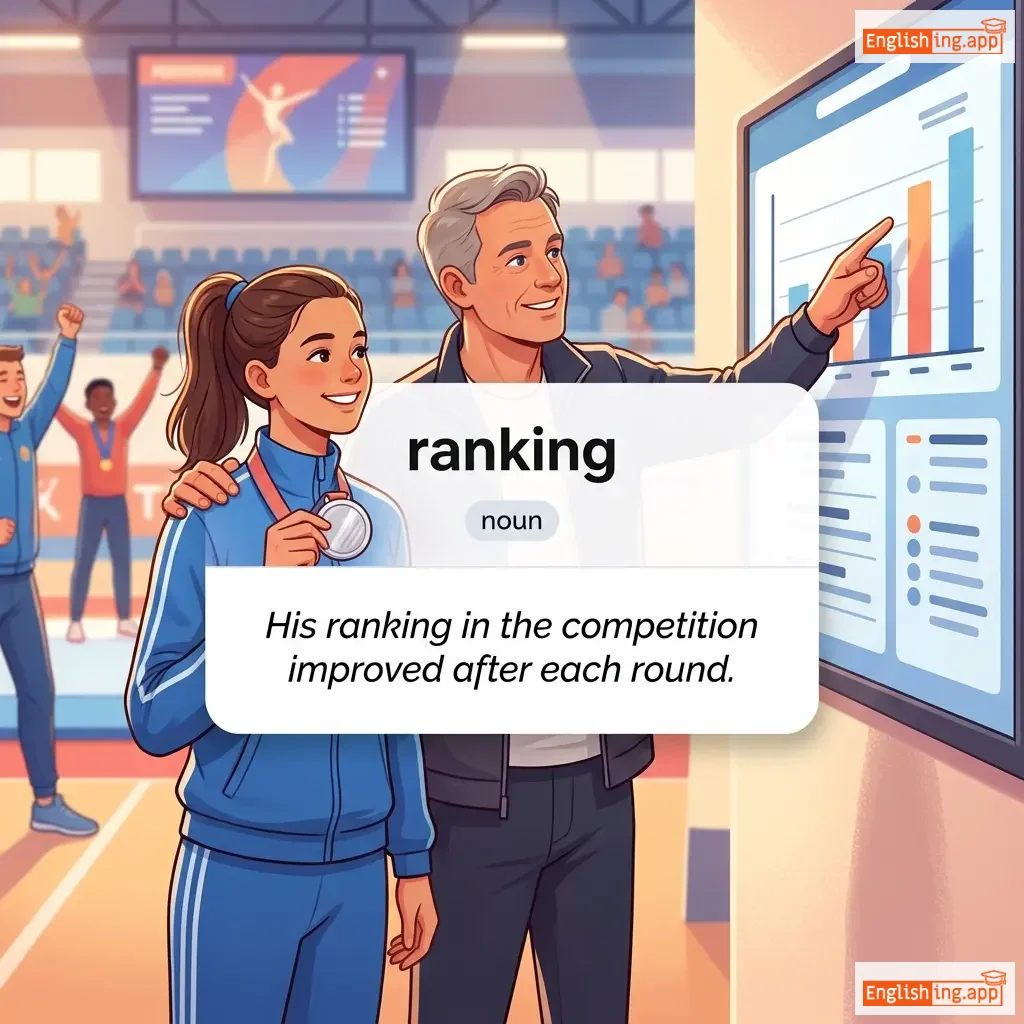
ranking definition card — visual illustration of the meaning
noun
/ˈræŋkɪŋ/
ランキング (ranking)

a position in a list or hierarchy, especially in terms of performance or importance

"His ranking in the competition improved after each round."

"彼の競技でのランキングは、各ラウンド後に向上しました。" (Kare no kyōgi de no ranking wa, kaku raundo go ni kōjō shimashita.)
noun, verb, adjective
/ræŋk/
ランク (ranku)

A position in a hierarchy; to place in order according to importance or quality.

"She quickly rose to a senior rank in the company."

"彼女は会社で素早く上級ランクに昇進しました。" (Kanojo wa kaisha de subayaku joukyuu ranku ni shoushin shimashita.)
noun
/ræŋˈɡuːn ˈkriːpər/
ランゴーン クリーパー (Rangoon creeper)

A climbing vine with fragrant flowers that change color from white to pink to red

"The Rangoon creeper covered the entire fence with its sweet-smelling flowers."

"ランゴーン クリーパーはその甘い香りの花でフェンス全体を覆いました。" (Rangoon creeper wa sono amai kaori no hana de fensu zentai wo ooi mashita.)
adjective
/ˈreɪ.moʊs/
分岐した (bunkishita)

having many branches.

"The ramose tree shaded the entire garden."

"その分岐した木は庭全体に日陰を提供しました。" (Sono bunkishita ki wa niwa zentai ni hikage o teikyō shimashita.)
adjective
/ˈreɪ.ni/
雨の日の (ame no hi no)

characterized by rain; wet from rain; having much rain

"It was a rainy day, so we stayed indoors."
"今日は雨の日だったので、家の中にいました。" (kyō wa ame no hi datta node, ie no naka ni imashita.)
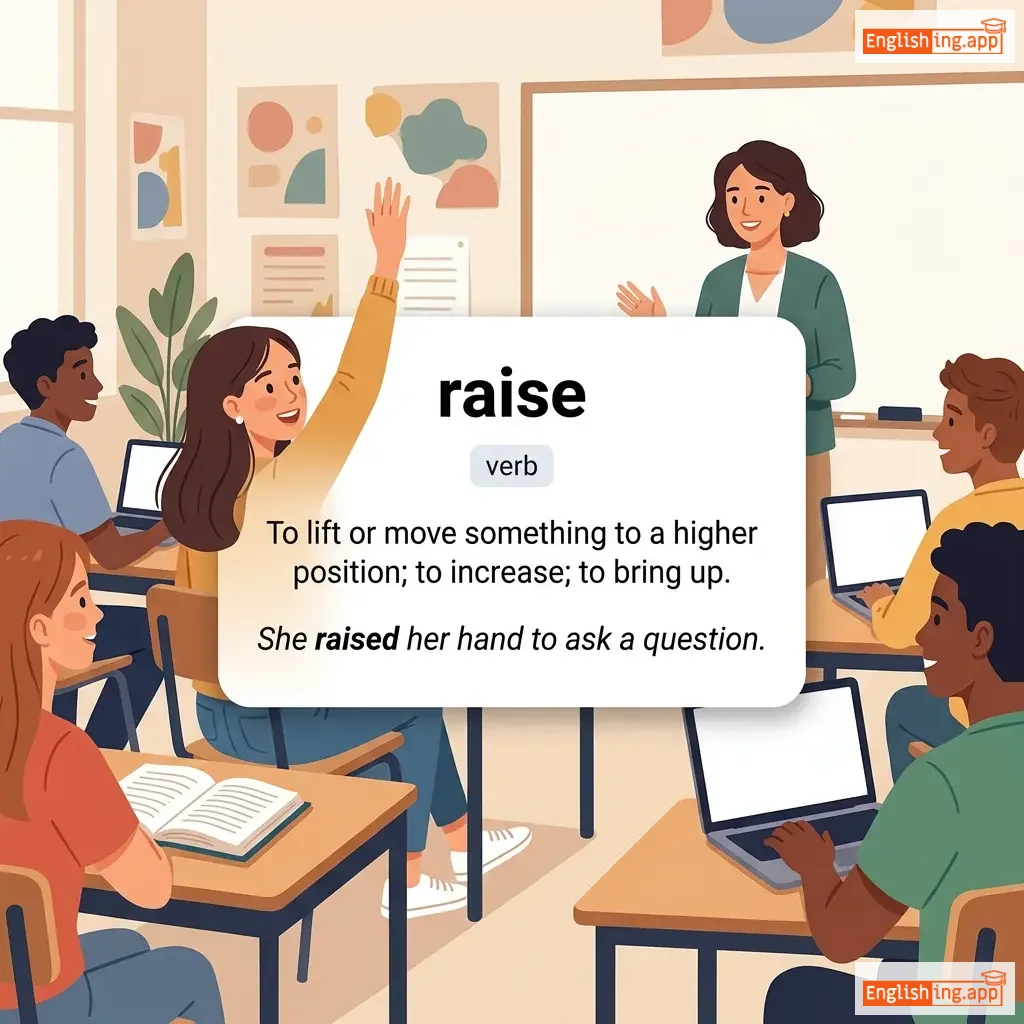
raise definition card — visual illustration of the meaning
verb
/reɪz/
上げる / 増加させる (ageru / zoukasaseru)

To lift or move something to a higher position; to increase; to bring up.

"She raised her hand to ask a question."

"彼女は質問をするために手を上げました。" (Kanojo wa shitsumon o suru tame ni te o agemashita.)
noun
/ˈreɪ.zən/
レーズン (rezun)

a dried grape, often eaten as a snack or used in cooking and baking

"She added raisins to the cake batter for extra sweetness."

"彼女はケーキの生地に甘さを加えるためにレーズンを入れました。" (Kanojo wa keeki no kiji ni amasa o kuwaeru tame ni reezu n o iremashita.)
noun
/ˈreɪ.zɪnz/
レーズン (re-zu-n)

dried grapes, often used in cooking and baking

"She added raisins to the oatmeal cookies for extra sweetness."

"彼女はオートミールクッキーに甘さを加えるためにレーズンを加えた。" (Kanojo wa ootomiiru kukkii ni amasa o kuwaeru tame ni re-zu-n o kuwaeta.)
🍂

Rake

verb
/reɪk/

to collect or gather with a rake; to scrape or smooth a surface

"He raked the leaves into a pile."

adjective
/ˈreɪ.kɪʃ/
スタイリッシュで自信に満ち、少し不良っぽい外見 (sutairisshu de jishin ni michi, sukoshi furyō-ppoi gaiken)

having a stylish, confident, and slightly disreputable appearance

"He walked in with a rakish smile and tilted hat."

"彼はレイキッシュな笑顔と傾いた帽子で入ってきました。" (Kare wa reikisshu na egao to katamuita bōshi de haitte kimashita.)
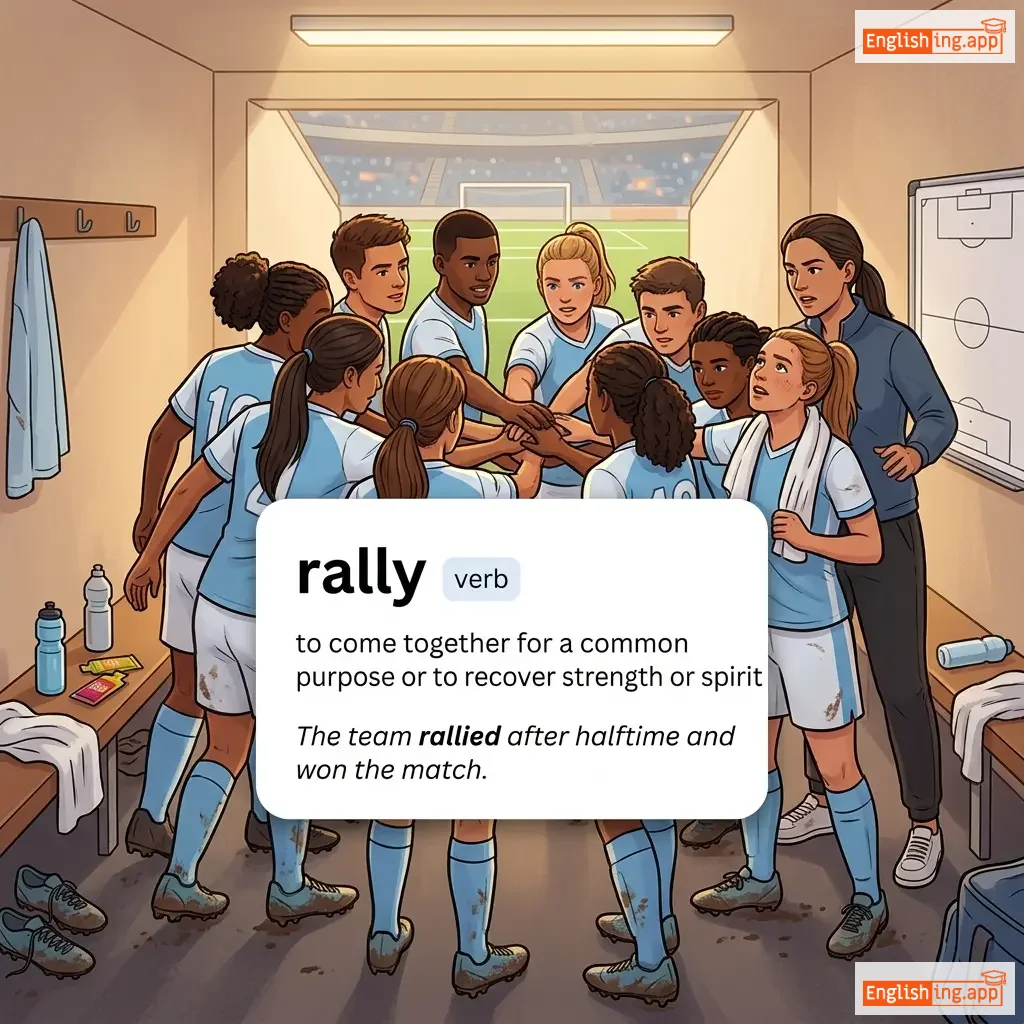
rally definition card — visual illustration of the meaning
📣

rally

verb
/ˈræl.i/

to come together for a common purpose or to recover strength or spirit

"The team rallied after halftime and won the match."

🐏

ram

verb
/ræm/

to strike or push something with great force

"The truck rammed into the wall."

verb
/ˈræm.bəl/

to talk or write at length in a confused or inconsequential way; to walk for pleasure without a fixed route.

"He rambled on about his childhood for hours."

adjective
/ræmˈbʌŋk.ʃəs/
騒々しい (sōzōshī)

boisterous, energetic, and difficult to control.

"The rambunctious children filled the house with noise."

"騒々しい子供たちが家を騒音で満たしました。" (Sōzōshī kodomotachi ga ie o sōon de mitashimashita.)
noun
/ræmˈbuːtən/
ランブータン (ranbutan)

a tropical fruit with red spiky skin and white translucent sweet flesh similar to litchi

"The rambutan looks scary with its hairy skin but tastes very sweet inside."

"ランブータンは毛皮のような皮で怖そうに見えますが、中はとても甘いです。" (Ranbutan wa ke-gara no youna kawa de kowasou ni miemasu ga, naka wa totemo amai desu.)
noun
/ˌræm.ɪ.fɪˈkeɪ.ʃən/
結果 (kekka)

a consequence of an action or event, often complex or unwelcome.

"The new law has serious social ramifications."

"新しい法律には深刻な社会的影響があります。" (Atarashii houritsu ni wa shinkoku na shakaiteki eikyou ga arimasu.)
verb
/ˈræm.ɪ.faɪ/
分岐する (bunki suru)

to spread or branch out into divisions or subdivisions.

"The river ramifies into several smaller streams."

"川は複数の小さな小川に分岐します。" (Kawa wa fukusū no chīsana ogawa ni bunki shimasu.)
verb
/ˈræn.də.maɪz/
ランダム化する (randamuka suru)

To make something happen in a random order or manner.

"The software can randomize the order of questions."

"ソフトウェアは質問の順番をランダマイズできます。" (Sofutowea wa shitsumon no junban o randamaizu dekimasu.)
noun
/ˈræŋ.kər/
憎しみ (nikushimi)

A feeling of deep and bitter anger or resentment.

"There was a rancor between the two rivals that never faded."

"二人のライバルの間には、決して消えることのない憎しみがあった。" (Futari no raibaru no aida ni wa, kesshite kieru koto no nai nikushimi ga atta.)
adjective
/ˈræŋ.kər.əs/
恨みを持った (urami wo motta)

Characterized by bitterness or resentment.

"Their rancorous debate lasted for hours."

"彼らの恨みを持った議論は何時間も続いた。" (Karera no urami wo motta giron wa nan jikan mo tsuzuita.)
adjective
/ˈræn.dəm/
ランダム (random)

Made, done, or happening without method or conscious decision.

"He made a random choice from the menu."

"彼はメニューからランダムに選択をしました。" (Kare wa menyū kara randomu ni sentaku o shimashita.)
adjective
/ˈrænsɪd/
腐った (kusatta)

having a bad taste or smell due to being old or spoiled (especially fats or oils)

"The butter had gone rancid after being left out too long."
"バターは外に長時間置かれて腐ってしまった。" (Batā wa soto ni nagajikan okarete kusatte shimatta.)
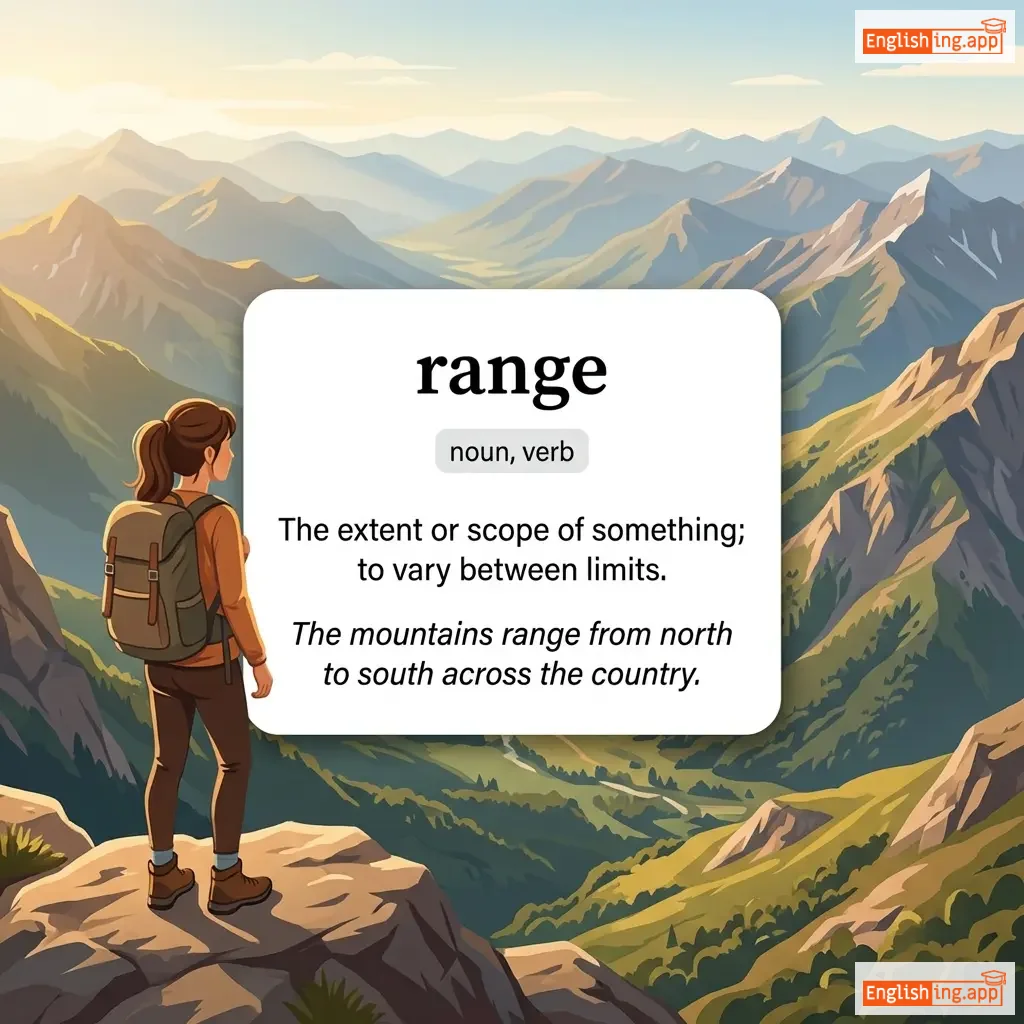
range definition card — visual illustration of the meaning
noun, verb
/reɪndʒ/
範囲, 領域 (han'i, ryouiki)

The extent or scope of something; to vary between limits.

"The mountains range from north to south across the country."

"山々は北から南まで国中に広がっている。" (Yama yama wa kita kara minami made kuni naka ni hirogatte iru.)
noun
/ˈreɪn.dʒər/
レンジャー (renjā)

A person responsible for protecting and managing forests, parks, or natural areas.

"The park ranger guided the tourists through the forest trail."

"公園のレンジャーは観光客を森の小道を案内しました。" (Kōen no renjā wa kankōkyaku o mori no komichi o annai shimashita.)