語彙集

英単語辞書 | 単語の意味、定義、例文

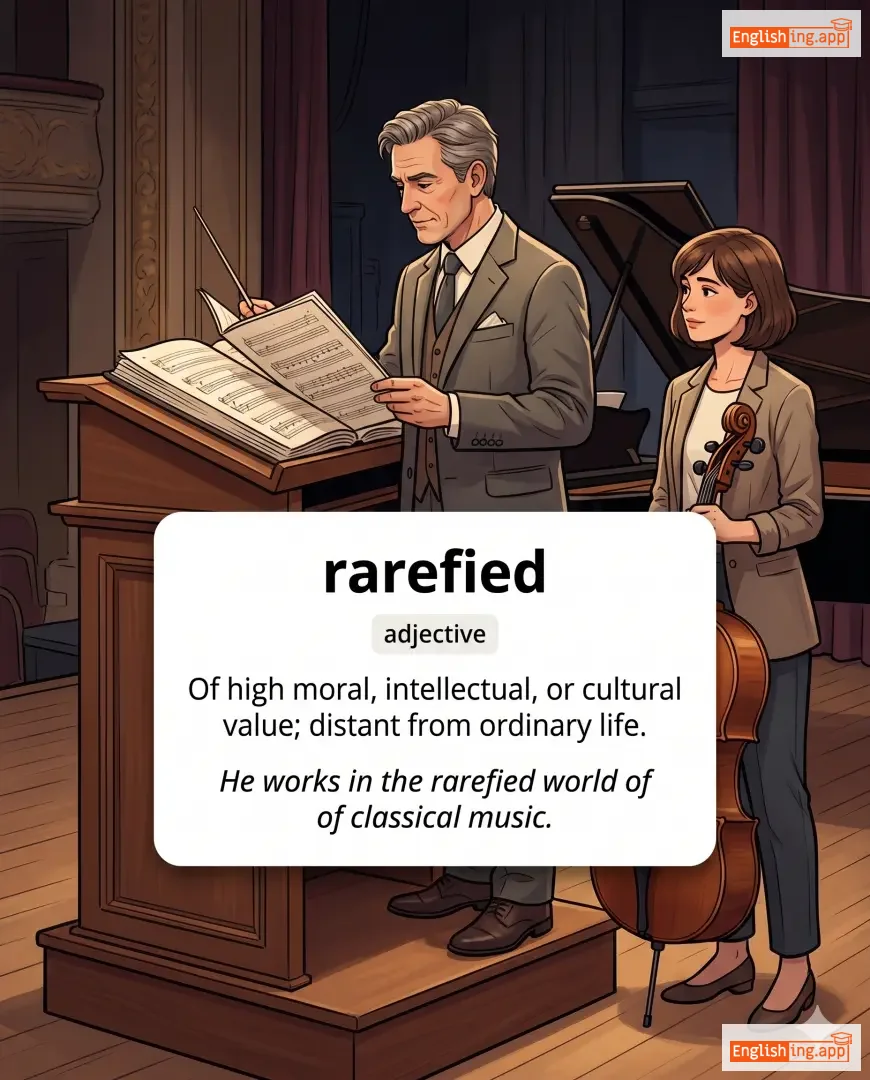
rarefied definition card — visual illustration of the meaning
adjective
/ˈreə.rɪ.faɪd/

Of high moral, intellectual, or cultural value; distant from ordinary life.

"He works in the rarefied world of classical music."

verb
/ˈreə.rɪ.faɪ/
薄くする, 精製する (usukusuru, seisei suru)

To make something less dense or more refined.

"The air rarefies as you climb higher into the mountains."

"山に登るにつれて、空気は薄くなります。" (Yama ni noboru ni tsurete, kūki wa usuku narimasu.)
adverb
/ˈrɛə(r)li/
めったに (mattan ni)

not often, infrequently

"She rarely eats sweets because of her diet."

"彼女はダイエットのため、お菓子をめったに食べません。" (Kanojo wa daietto no tame, okashi o mattan ni tabemasen.)
noun
/ˈrerəti/
珍しい状態; 普通でないもの、または希少なもの (mezurashī jōtai; futsū denai mono, mata wa kishōna mono)

the state of being rare; something that is uncommon or scarce

"The antique vase was a rarity worth thousands of dollars."

"その古代の花瓶は、数千ドルの価値がある珍しいものだった。" (sono kodai no kabin wa, sūsen doru no kachi ga aru mezurashī mono datta.)
adjective
/ræʃ/
軽率, 無謀 (keisotsu, mubou)

Acting quickly without careful consideration; reckless.

"It was a rash decision to invest without research."

"調査なしで投資するのは無謀な決断だった。" (Chousa nashi de toushi suru no wa mubou na ketsudan datta.)
🔧

rasp

verb
/ræsp/

to speak in a rough, harsh voice or to scrape with a coarse sound

"He rasped out a warning before collapsing."

noun
/ræt/
ネズミ (nezumi)

a small rodent that resembles a large mouse, often considered a pest

"A rat ran across the kitchen floor last night."

"昨晩、ネズミがキッチンの床を走り回っていました。" (sakuban, nezumi ga kicchin no yuka o hashirimawatteimashita.)
adjective
/ˈræspi/
ハスキー (hasukī)

having a harsh, rough, or grating sound

"His raspy voice revealed years of smoking."

"彼のハスキーな声は喫煙の年数を明らかにした。" (Kare no hasukī na koe wa kitsuen no nensū o akiraka ni shita.)
noun
/ˌrɪəlɪˈzeɪʃən/
実現 (jitsugen)

the act of becoming fully aware of something as a fact

"Her realization of the problem helped solve the issue."

"彼女の問題の認識が問題解決に役立った。" (Kanojo no mondai no ninshiki ga mondai kaiketsu ni yakudatta.)
reality definition card — visual illustration of the meaning
noun
/riˈæləti/
現実 (genjitsu)

the state of things as they actually exist, rather than as they may appear or might be imagined

"The reality of the situation is more complicated than we thought."

"状況の現実は、私たちが考えていたよりも複雑です。" (Joukyou no genjitsu wa, watashitachi ga kangaete ita yori mo fukuzatsu desu.)
adjective
/ˌriːəˈlɪstɪk/
現実的 (genjitsuteki)

having or showing a sensible and practical idea of what can be achieved or expected

"She gave a realistic estimate of the project's cost."

"彼女はプロジェクトのコストの現実的な見積もりを出した。" (Kanojo wa purojekuto no kosuto no genjitsuteki na mitsumori o dashita.)
noun
/ˈrɪə.lɪ.zəm/
リアリズム (riarizumu)

The quality of representing things as they are; a practical or factual view.

"Her paintings are admired for their realism."

"彼女の絵画はそのリアリズムで賞賛されています。" (Kanojo no kaiga wa sono riarizumu de shōsan sareteimasu.)
adjective
/riːəl/
リアル (riaru)

actually existing or happening; true and not imagined

"This is the real deal, no gimmicks."

"これは本物の話だ、ギミックなしで。" (Kore wa honmono no hanashi da, gimikkunashi de.)
verb
/ˌriːəˈfɜːrm/
再確認する (saikakunin suru)

To state again strongly; to confirm or strengthen a statement or belief.

"The president reaffirmed his commitment to education reform."

"大統領は教育改革への取り組みを再確認した。" (daitouryou wa kyouiku kaikaku e no torikumi o saikakunin shita.)
adjective
/ˈrɛd.i/
準備ができた (junbi ga dekita)

Prepared or available for use or action.

"She was ready to leave for the airport."

"彼女は空港に行く準備ができていた。" (Kanojo wa kuukou ni iku junbi ga dekite ita.)
noun
/ˌriː.əˈdʒʌst.mənt/

The act of changing or correcting something again to make it suitable or balanced.

"After moving to a new city, he went through a period of readjustment."

verb
/ˌriːəˈdʒʌst/
再調整 (saichousei)

To change or move something again in order to achieve a better fit, condition, or balance.

"He readjusted the chair to make it more comfortable."

"彼は椅子をもっと快適にするために再調整しました。" (Kare wa isu wo motto kaiteki ni suru tame ni saichousei shimashita.)
reading definition card — visual illustration of the meaning
noun
/ˈriːdɪŋ/
読書 (dokusho)

the action or skill of reading

"Reading is one of my favorite hobbies."

"読書は私の好きな趣味の一つです。" (Dokusho wa watashi no sukina shumi no hitotsu desu.)
Readily definition card — visual illustration of the meaning
adverb
/ˈrɛdəli/
簡単に (kantan ni)

Without hesitation or difficulty; willingly.

"She readily accepted the job offer."

"彼女は簡単に仕事のオファーを受け入れました。" (Kanojo wa kantan ni shigoto no ofā o ukeiremashita.)
noun
/ˈriːdər/
読者 (dokusha)

a person who reads or who is capable of reading

"She is a fast reader, finishing books in a day."

"彼女は速読者で、1日で本を読み終えます。" (Kanojo wa sokudoku-sha de, ichinichi de hon o yomi oemasu.)
read definition card — visual illustration of the meaning
verb
/riːd/
読む (yomu)

to look at and comprehend the meaning of written or printed matter

"I like to read books before bed."

"私は寝る前に本を読むのが好きです。" (Watashi wa neru mae ni hon o yomu no ga suki desu.)
adjective
/riˈæk.tɪv/
反応的; 化学的に活発 (hannō-teki; kagaku-teki ni kappatsu)

responding to situations rather than initiating them; chemically active

"The company took a reactive approach to customer complaints."

"会社は顧客の苦情に反応的なアプローチを採用しました。" (Kaisha wa kokyaku no kujō ni hannō-teki na apurōchi o sai-yō shimashita.)
adjective
/riˈækʃəˌneri/
反動的 (handōteki)

Opposing political or social progress or reform; extremely conservative.

"The group took a reactionary stance against the new policies."
"グループは新しい政策に対して反動的な立場を取った。" (Gurūpu wa atarashī seisaku ni taishite handōteki na tachiba o totta.)
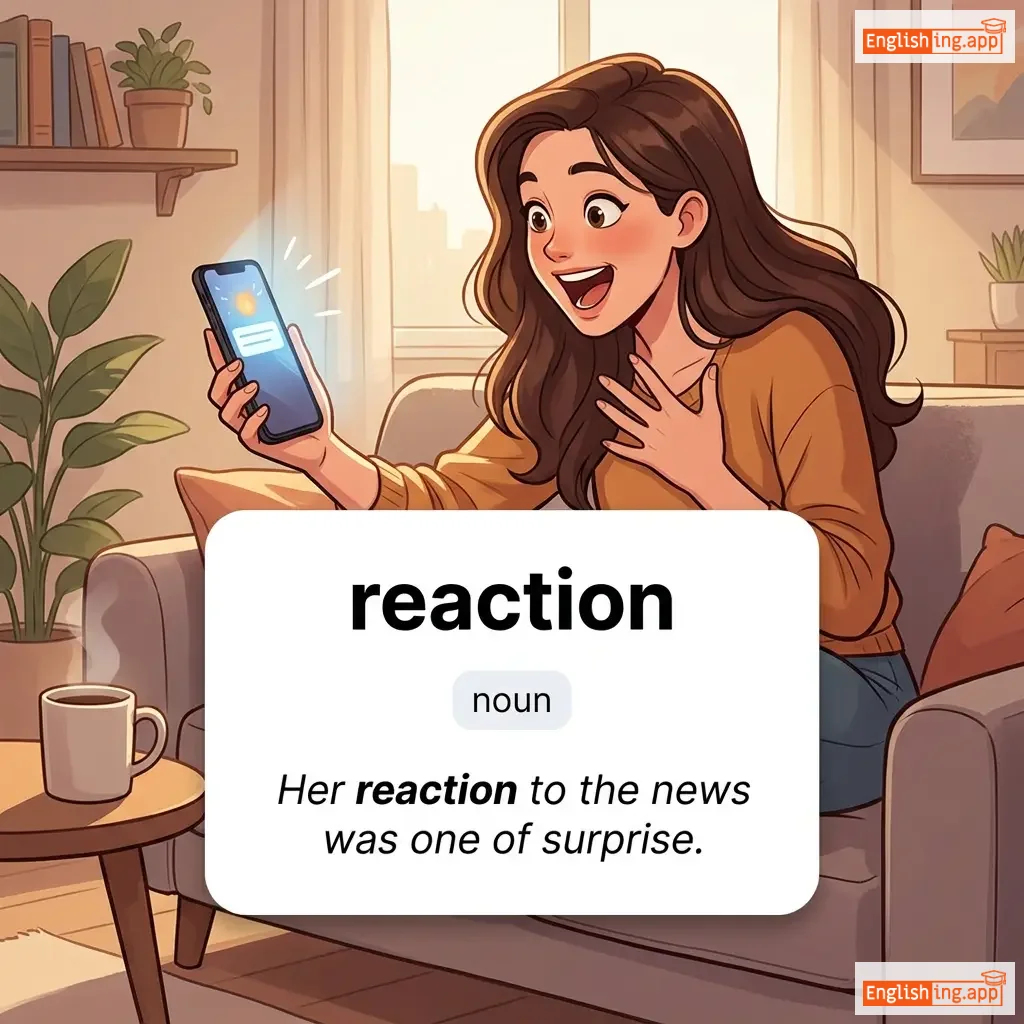
reaction definition card — visual illustration of the meaning
noun
/riˈækʃən/
反応 (hanno)

A response to a situation, event, or stimulus; also a chemical change involving reactants and products.

"Her reaction to the news was one of surprise."

"ニュースに対する彼女の反応は驚きでした。" (Nyūsu ni taisuru kanojo no hannou wa odoroki deshita.)
⚗️

reactant

noun
/riˈæktənt/

A substance that takes part in and undergoes change during a chemical reaction.

"Oxygen is a reactant in the process of combustion."

verb
/riˈækt/
反応する (hannou suru)

to respond or behave in a particular way to something

"She reacted angrily when she heard the news."

"彼女はニュースを聞いて怒って反応した。" (Kanojo wa nyūsu o kiite okotte hannou shita.)
reach definition card — visual illustration of the meaning
verb
/riːtʃ/
届く (todoku)

to stretch out or extend to something or someone

"She reached for the book on the top shelf."

"彼女は上の棚の本に手を伸ばしました。" (Kanojo wa ue no tana no hon ni te o nobashimashita.)
preposition
/riː/
について (nitsuite)

concerning or about (used in formal letters or emails)

"The letter was sent re your recent application."

"その手紙はあなたの最近の申請について送られました。" (Sono tegami wa anata no saikin no shinsei nitsuite okuraremashita.)
noun
/ˈreɪ.zər/
かみそり (kamisori)

a sharp-edged instrument used for shaving hair from the skin

"He shaved his beard with a sharp razor."

"彼は鋭いかみそりでひげを剃った。" (kare wa surudoi kamisori de hige o totta.)
verb
/reɪz/
取り壊す (torikowasu)

To completely destroy or demolish something, especially a building.

"The old factory was razed to make way for new apartments."

"古い工場は新しいアパートメントのために取り壊されました。" (Furui kōjō wa atarashī apātomento no tame ni torikowasaremashita.)
noun
/reɪ/
光線 (kōsen)

a narrow beam of light, heat, or radiation

"A ray of sunlight broke through the clouds."

"太陽の光線が雲を突き抜けた。" (Taiyō no kōsen ga kumo o tsukinuketa.)
noun
/rɔ ˈtɜrmərɪk/
生のターメリック (nama no taamerikku)

fresh unprocessed root of the turmeric plant used as a spice and medicine

"Grate raw turmeric into the curry for authentic flavor."
"カレーに生のターメリックをすりおろして、オーセンティックな風味を加えましょう。" (Karee ni nama no taamerikku wo surioroshite, oosentikku na fuumi wo kuwaemashou)
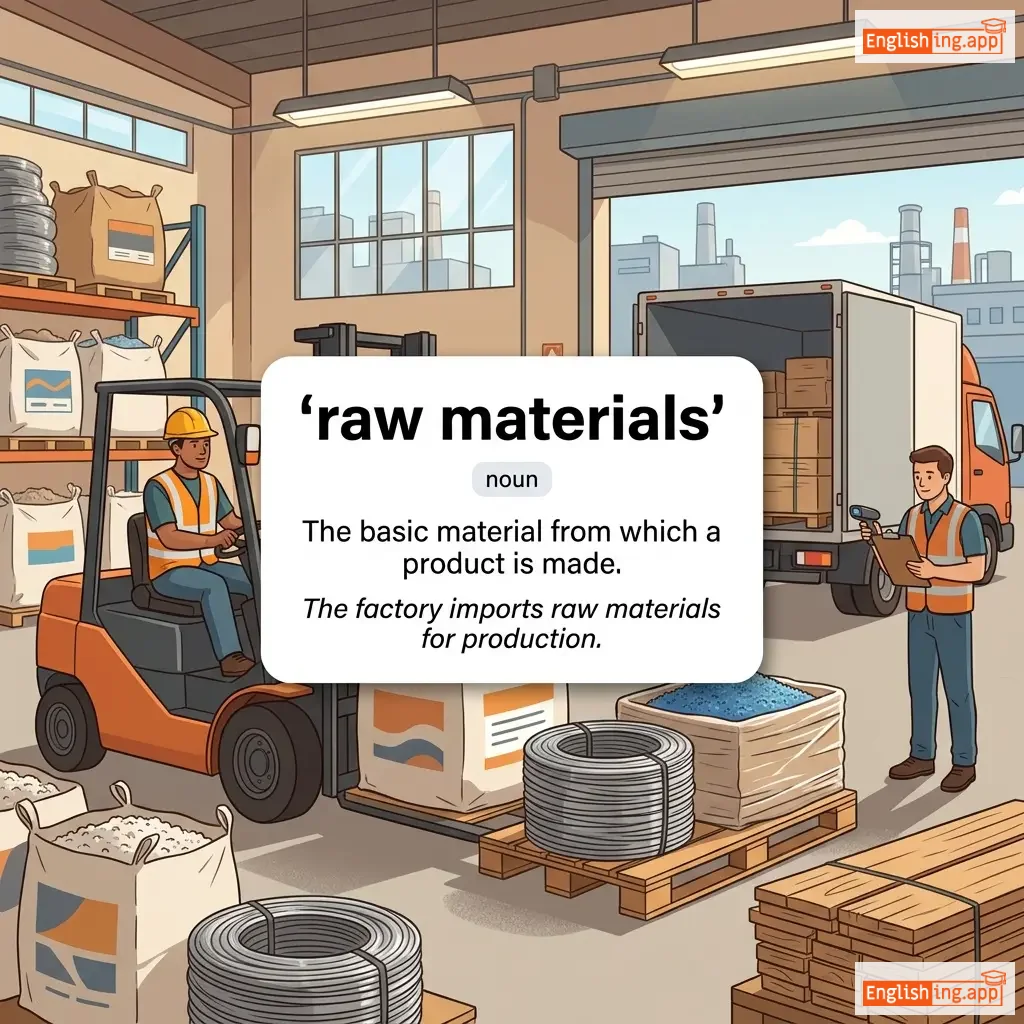
raw materials definition card — visual illustration of the meaning
noun
rɔː mətɪˈrɪəlz
原材料 (gen zairyō)

The basic material from which a product is made.

"The factory imports raw materials for production."

"工場は生産のために原材料を輸入しています。" (Kōjō wa seisan no tame ni gen zairyō o yunyū shiteimasu.)
verb
/ˈrævɪʃ/
魅了する (miryō suru)

To fill with intense delight; to captivate or enchant.

"The beauty of the sunset ravished the travelers."

"夕日の美しさが旅行者を魅了した。" (Yūhi no utsukushisa ga ryokō-sha o miryō shita.)
adjective
/rɔː/
(nama)

not cooked or processed; in its natural state

"She ate raw vegetables for lunch."

"彼女は昼食に生の野菜を食べました。" (Kanojo wa chuushoku ni nama no yasai o tabemashita.)
noun
/reɪt/
レート (rēto)

the cost or price of something, or the amount at which something happens

"The rate of inflation is increasing every year."

"インフレ率は毎年増加しています。" (Infure ritsu wa mainen zōka shiteimasu.)
adverb
/ˈræðər/
ほとんどの場合 (hotondo no baai)

to a certain extent or degree

"I would rather stay home than go out."

"私は外出するよりも家にいる方が好きです。" (Watashi wa gaishutsu suru yori mo ie ni iru hō ga suki desu.)
adverb
/ˈrɪəli/

used to emphasize a statement or description

"She really enjoyed the movie last night."

noun
/ˌrætɪfɪˈkeɪʃən/
承認 (shōnin)

the action of signing or giving formal consent to a treaty, contract, or agreement

"The treaty required ratification by both countries' parliaments."

"その条約は両国の議会による批准を必要とした。" (sono jōyaku wa ryōkoku no gikai ni yoru shōnin o hitsuyō to shita.)
verb
/ˈrætɪfaɪ/
批准する (hīson suru)

to approve or confirm something officially, usually by law or formal consent

"The government ratified the trade agreement."

"政府は貿易協定を批准しました。" (Seifu wa bōeki kyōtei o hīson shimashita.)
noun
/ˈreɪtɪŋ/
評価 (hyouka)

an evaluation or assessment, usually numerical

"The movie received a high rating from critics."

"その映画は批評家から高い評価を受けました。" (Sono eiga wa hihyōka kara takai hyōka o ukemashita.)
noun
/ˈreɪʃoʊ/
比率 (hiritu)

a relationship between two numbers showing how many times the first number contains the second

"The ratio of boys to girls in the class is 2:1."

"クラスでの男の子と女の子の比率は2:1です。" (Kurasu de no otokonoko to onnanoko no hiritu wa 2:1 desu.)
noun
/ˌræʃioʊsɪˈneɪʃən/
推論 (suiron)

the process of reasoning or logical thinking

"His ratiocination impressed the judges during the debate."

"彼の推論は討論中に審査員を感動させた。" (Kare no suiron wa touron-chuu ni shinsain wo kandou saseta.)
noun
/ˈræʃən/
配給 (haiki)

a fixed amount of something, especially food, officially allowed to each person

"During the war, each family received a weekly ration of rice."

"戦争中、各家族は毎週一定量のご飯を配給されました。" (Sensou-chuu, kaku kazoku wa maishuu ittei-ryou no gohan o haiki saremashita.)
adjective
/ˈræʃənəl/

based on or in accordance with reason or logic

"She made a rational decision after considering all the facts."

noun
/ˌræʃəˈnæl/
根本的な理由 (konponteki na riyuu)

the underlying reason or explanation for something

"The rationale behind his decision was clearly explained."

"彼の決断の背後にある理由は明確に説明されました。" (Kare no ketsudan no haigo ni aru riyuu wa meikaku ni setsumei saremashita.)
noun
/ˈræʃənəlɪzəm/
合理主義 (gōri shugi)

a belief or theory that opinions and actions should be based on reason and knowledge rather than religious belief or emotion

"Rationalism emphasizes logic and reasoning over faith."

"合理主義は信仰よりも論理と推論を強調します。" (Gōri shugi wa shinkō yori mo ronri to suiron o kyōchō shimasu.)
noun
/ˈreɪ.vən/
ワタリガラス (watarigarasu)

a large, black bird with a thick bill and harsh croaking voice

"The raven perched on the old oak tree and cawed loudly."

"ワタリガラスが古いオークの木に止まり、大きな声で鳴いた。" (watarigarasu ga furui o-ku no ki ni tomari ookina koe de naita)
adjective
/ˈrævənɪŋ/
非常に空腹で貪欲 (hijō ni kūfuku de dongyoku)

Extremely hungry and greedy; voracious.

"The ravening wolves circled the camp."

"空腹の狼たちはキャンプを囲んだ。" (Kūfuku no ōkami-tachi wa kyanpu o kakonda.)
adjective
/ˈrævənəs/
猛烈にお腹がすいている (mōretsu ni onaka ga suite iru)

Extremely hungry; famished.

"After the long hike, she was ravenous and ate quickly."

"長いハイキングの後、彼女は猛烈にお腹がすいて、すぐに食べました。" (Nagai haikingu no ato, kanojo wa mōretsu ni onaka ga suite, sugu ni tabemashita.)