वोकैबुलरीज

इंग्लिश वोकैबुलरी डिस्कवर, लर्न और मास्टर करें

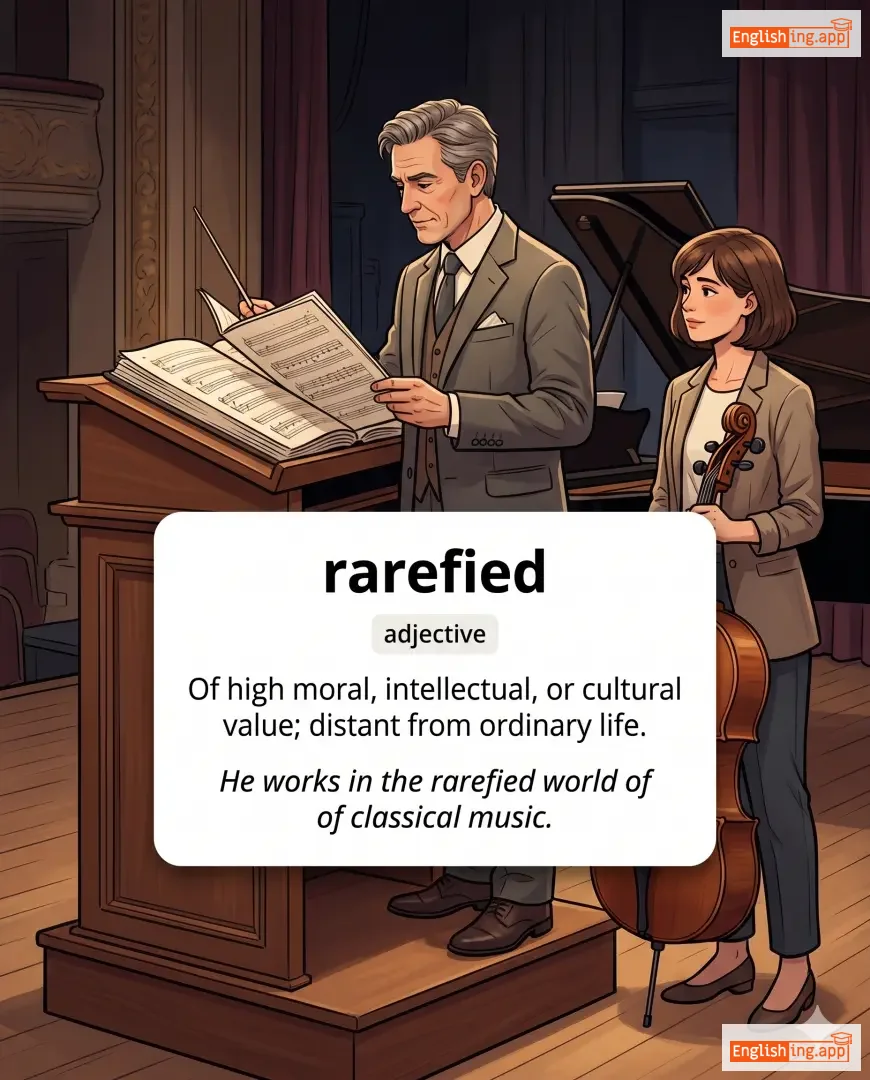
rarefied definition card — visual illustration of the meaning
adjective
/ˈreə.rɪ.faɪd/
उच्च-स्तरीय (rarefied)

Of high moral, intellectual, or cultural value; distant from ordinary life.

"He works in the rarefied world of classical music."

"वह शास्त्रीय संगीत की उच्च-स्तरीय दुनिया में काम करता है." (vah shaastriya sangeet ki uchh-stariya duniya mein kaam karta hai.)
verb
/ˈreə.rɪ.faɪ/
पतला करना, शुद्ध करना (patla karna, shuddh karna)

To make something less dense or more refined.

"The air rarefies as you climb higher into the mountains."

"जैसे जैसे आप पहाड़ों में ऊपर चढ़ते हैं, हवा पतली होती जाती है।" (Jaise jaise aap pahadon mein upar chadte hain, hawa patli hoti jaati hai.)
adverb
/ˈrɛə(r)li/
कभी-कभी (kabhi-kabhi)

not often, infrequently

"She rarely eats sweets because of her diet."

"वह अपने आहार के कारण बहुत कम मिठाई खाती है।" (Woh apne aahar ke kaaran bahut kam mithai khati hai.)
noun
/ˈrerəti/
दुर्लभता; कुछ असामान्य या दुर्लभ वस्तु (durlabhta; kuch asamanya ya durlabh vastu)

the state of being rare; something that is uncommon or scarce

"The antique vase was a rarity worth thousands of dollars."

"प्राचीन फूलदान एक दुर्लभ वस्तु थी, जिसकी कीमत हजारों डॉलर थी।" (prachin phooldan ek durlabh vastu thi, jiska keemat hazaron dollar thi.)
adjective
/ræʃ/
आवेगपूर्ण, लापरवाह (avegpoorn, laparwaha)

Acting quickly without careful consideration; reckless.

"It was a rash decision to invest without research."

"यह बिना शोध किए निवेश करने का एक लापरवाह निर्णय था।" (Yeh bina shodh kiye nivesh karne ka ek laparwaha nirnay tha.)
verb
/ræsp/
कर्कश आवाज में बोलना या खुरचना (karkash awaaz mein bolna ya khurchna)

to speak in a rough, harsh voice or to scrape with a coarse sound

"He rasped out a warning before collapsing."

"उसने गिरने से पहले एक चेतावनी कर्कश आवाज में दी।" (Usne girne se pehle ek chetawani karkash awaaz mein di.)
noun
/ræt/
चूहा (chuhha)

a small rodent that resembles a large mouse, often considered a pest

"A rat ran across the kitchen floor last night."

"रात को एक चूहा रसोईघर के फर्श पर दौड़ रहा था" (raat ko ek chuhha rasoi ghar ke farsh par daud raha tha)
adjective
/ˈræspi/
कर्कश (karkash)

having a harsh, rough, or grating sound

"His raspy voice revealed years of smoking."

"उसकी कर्कश आवाज़ ने धूम्रपान के वर्षों का खुलासा किया।" (Uski karkash awaaz ne dhumrapan ke varsho ka khulasa kiya.)
noun
/ˌrɪəlɪˈzeɪʃən/
साक्षात्कार (sakshatkar)

the act of becoming fully aware of something as a fact

"Her realization of the problem helped solve the issue."

"उसकी समस्या को समझने से समाधान में मदद मिली।" (Uski samasya ko samajhne se samadhan mein madad mili.)
reality definition card — visual illustration of the meaning
noun
/riˈæləti/
वास्तविकता (vastavikta)

the state of things as they actually exist, rather than as they may appear or might be imagined

"The reality of the situation is more complicated than we thought."

"स्थिति की वास्तविकता हमसे ज्यादा जटिल है जितना हमने सोचा था।" (Sthiti ki vastavikta humse zyada jatil hai jitna humne socha tha.)
adjective
/ˌriːəˈlɪstɪk/
वास्तविक (vastavik)

having or showing a sensible and practical idea of what can be achieved or expected

"She gave a realistic estimate of the project's cost."

"उसने परियोजना की लागत का एक वास्तविक अनुमान दिया।" (Usne pariyojna ki lagat ka ek vastavik anuman diya.)
noun
/ˈrɪə.lɪ.zəm/
यथार्थवाद (yatharthvad)

The quality of representing things as they are; a practical or factual view.

"Her paintings are admired for their realism."

"उसकी पेंटिंग्स को उनके यथार्थवाद के लिए सराहा जाता है।" (Uski paintings ko unke yatharthvad ke liye saraha jata hai.)
adjective
/riːəl/
वास्तविक (vastavik)

actually existing or happening; true and not imagined

"This is the real deal, no gimmicks."

"यह असली मामला है, कोई चाल नहीं।" (Yeh asli mamla hai, koi chaal nahi.)
verb
/ˌriːəˈfɜːrm/
पुनः पुष्टि करना (punah pushti karna)

To state again strongly; to confirm or strengthen a statement or belief.

"The president reaffirmed his commitment to education reform."

"राष्ट्रपति ने शिक्षा सुधार के प्रति अपनी प्रतिबद्धता की पुनः पुष्टि की।" (rashtrapati ne shiksha sudhar ke prati apni pratibaddhata ki punah pushti ki.)
adjective
/ˈrɛd.i/
तैयार (taiyar)

Prepared or available for use or action.

"She was ready to leave for the airport."

"वह एयरपोर्ट जाने के लिए तैयार थी।" (Woh airport jaane ke liye taiyar thi.)
noun
/ˌriː.əˈdʒʌst.mənt/
पुनः समायोजन (punah samaayojan)

The act of changing or correcting something again to make it suitable or balanced.

"After moving to a new city, he went through a period of readjustment."

"एक नए शहर में रहने के बाद उसने पुनः समायोजन का एक दौर गुज़ारा." (ek naye shahar mein rehne ke baad usne punah samaayojan ka ek daur guzaara.)
verb
/ˌriːəˈdʒʌst/
फिर से समायोजित करना (phir se samaayojit karna)

To change or move something again in order to achieve a better fit, condition, or balance.

"He readjusted the chair to make it more comfortable."

"उसने कुर्सी को अधिक आरामदायक बनाने के लिए उसे फिर से समायोजित किया।" (Usne kursi ko adhik aramdayak banane ke liye use phir se samaayojit kiya.)
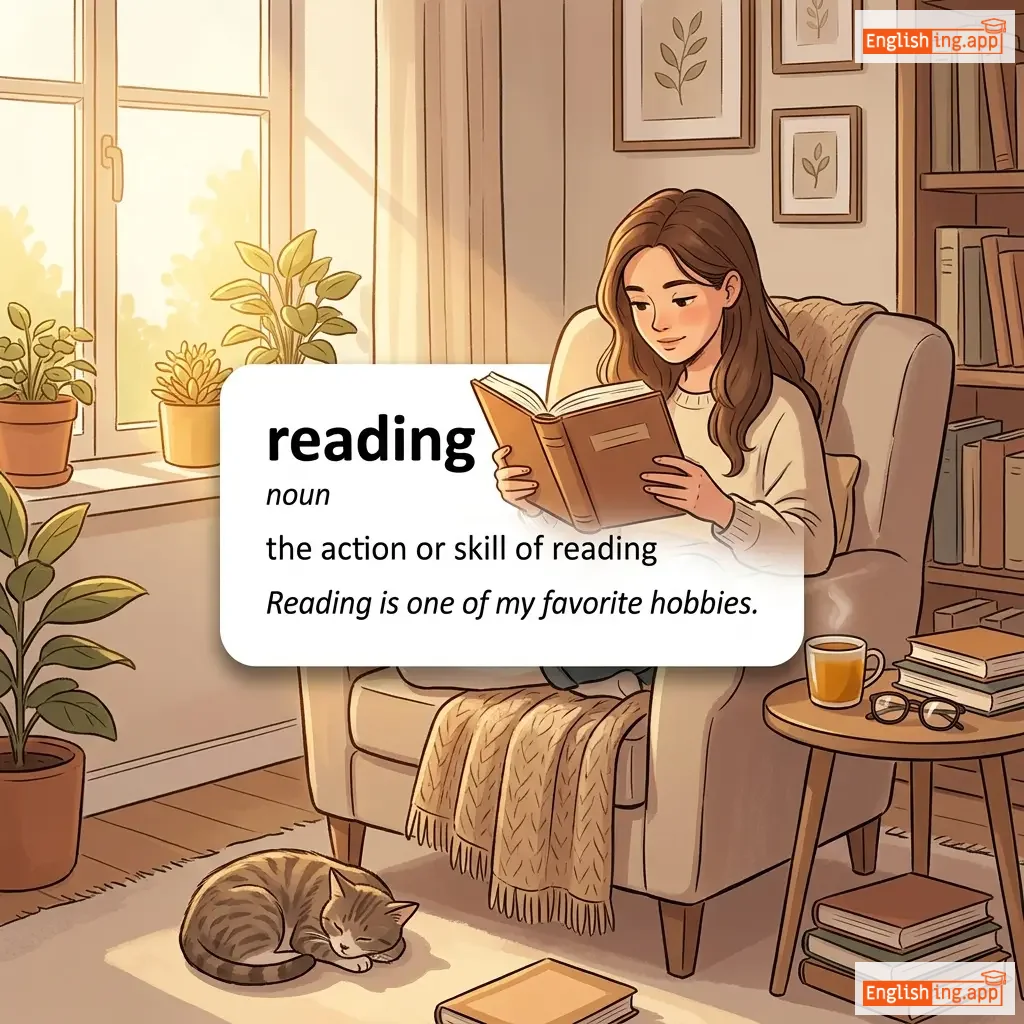
reading definition card — visual illustration of the meaning
noun
/ˈriːdɪŋ/
पढ़ाई (padhai)

the action or skill of reading

"Reading is one of my favorite hobbies."

"पढ़ाई मेरे पसंदीदा शौकों में से एक है।" (Padhai mere pasandida shaukon mein se ek hai.)
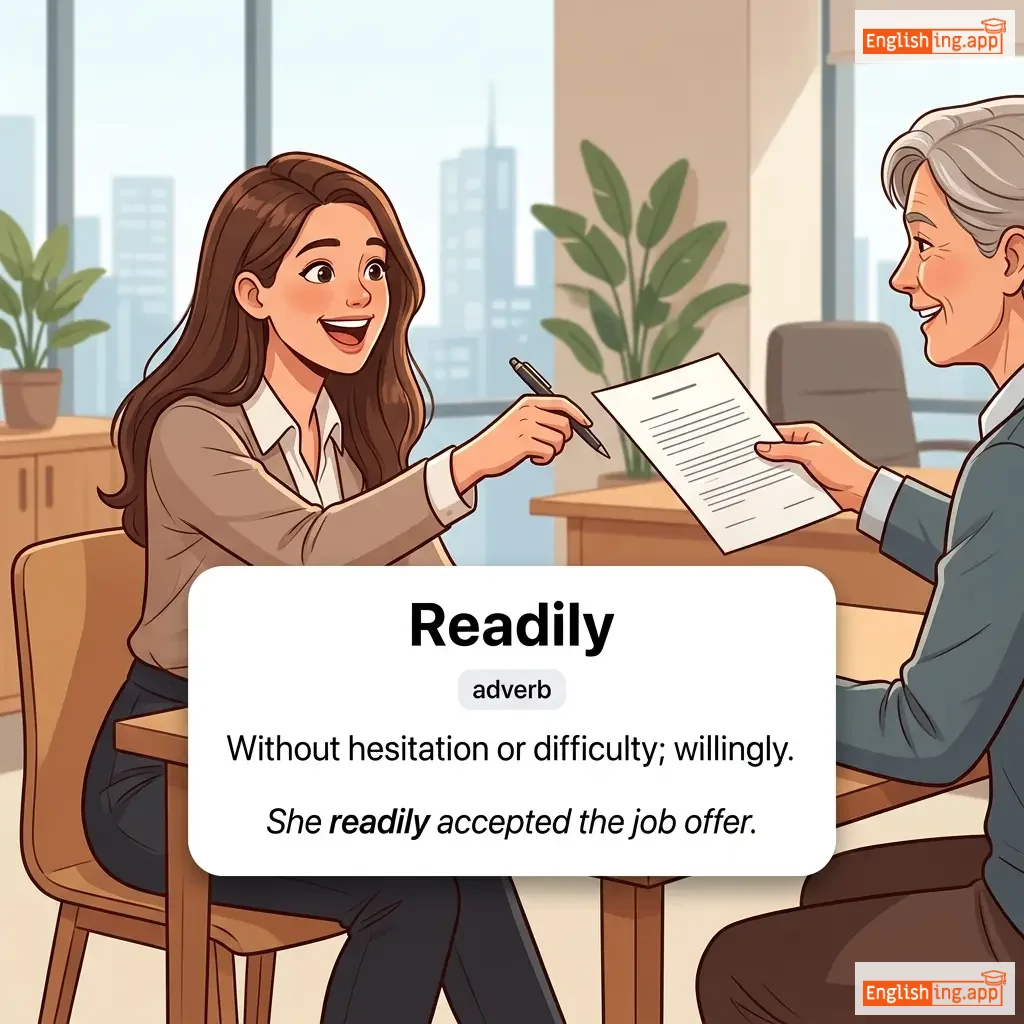
Readily definition card — visual illustration of the meaning
adverb
/ˈrɛdəli/
आसानी से (aasaani se)

Without hesitation or difficulty; willingly.

"She readily accepted the job offer."

"उसने आसानी से नौकरी का प्रस्ताव स्वीकार कर लिया।" (Usne aasaani se naukri ka prastaav sweekar kar liya.)
noun
/ˈriːdər/
पाठक (pathak)

a person who reads or who is capable of reading

"She is a fast reader, finishing books in a day."

"वह एक तेज़ पाठक है, एक दिन में किताबें खत्म कर देती है।" (Wah ek tez pathak hai, ek din mein kitaabein khatm kar deti hai.)
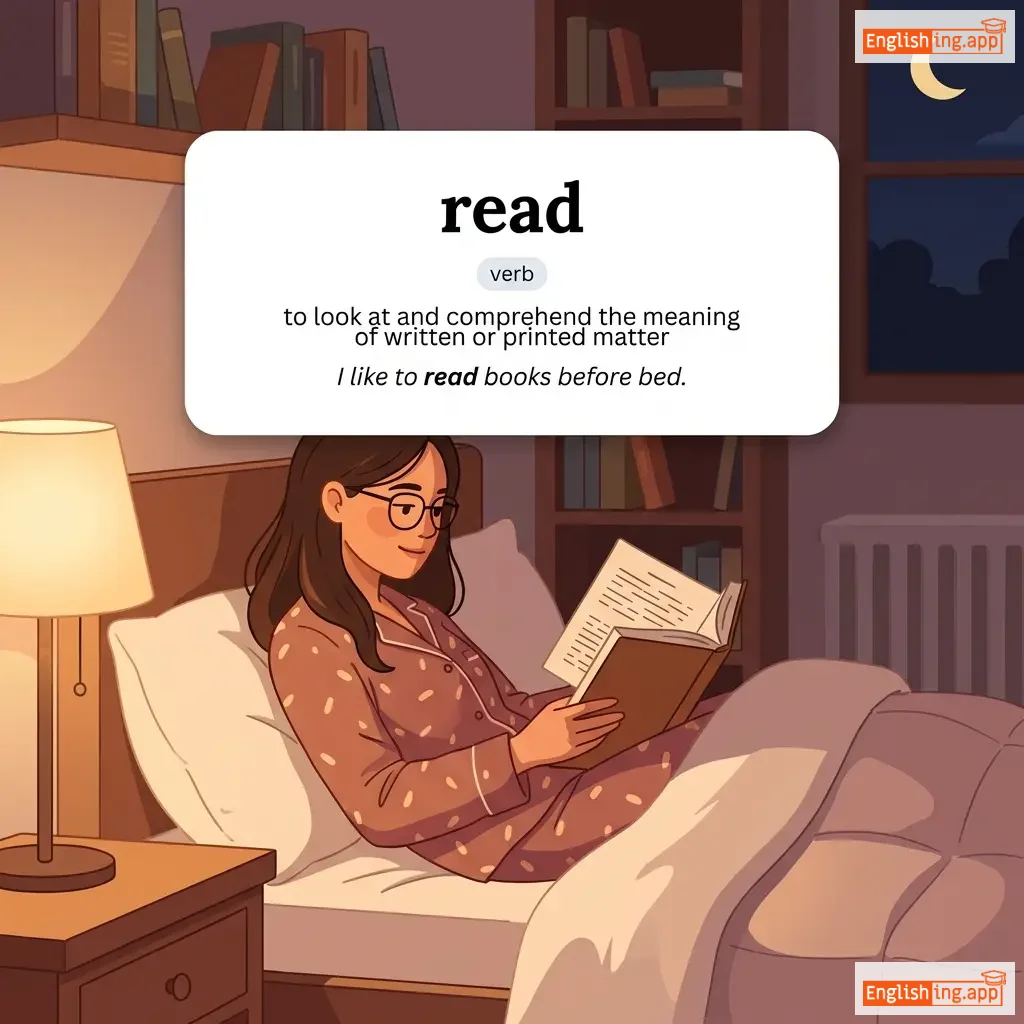
read definition card — visual illustration of the meaning
verb
/riːd/
पढ़ना (padhna)

to look at and comprehend the meaning of written or printed matter

"I like to read books before bed."

"मैं बिस्तर पर जाने से पहले किताबें पढ़ना पसंद करता हूँ।" (Main bistar par jane se pehle kitaabein padhna pasand karta hoon.)
adjective
/riˈæk.tɪv/
प्रतिक्रियाशील; रासायनिक सक्रिय (pratikriyaasheel; rasanik sakriya)

responding to situations rather than initiating them; chemically active

"The company took a reactive approach to customer complaints."

"कंपनी ने ग्राहक शिकायतों के लिए एक प्रतिक्रियाशील दृष्टिकोण अपनाया।" (kampani ne grahak shikayaton ke liye ek pratikriyaasheel drishtikon apnaya.)
adjective
/riˈækʃəˌneri/
प्रतिक्रियावादी (pratikriyavadi)

Opposing political or social progress or reform; extremely conservative.

"The group took a reactionary stance against the new policies."

"समूह ने नई नीतियों के खिलाफ एक प्रतिक्रियाशील रुख अपनाया।" (Samuh ne nai neetiyon ke khilaf ek pratikriyashil rukh apnaya.)
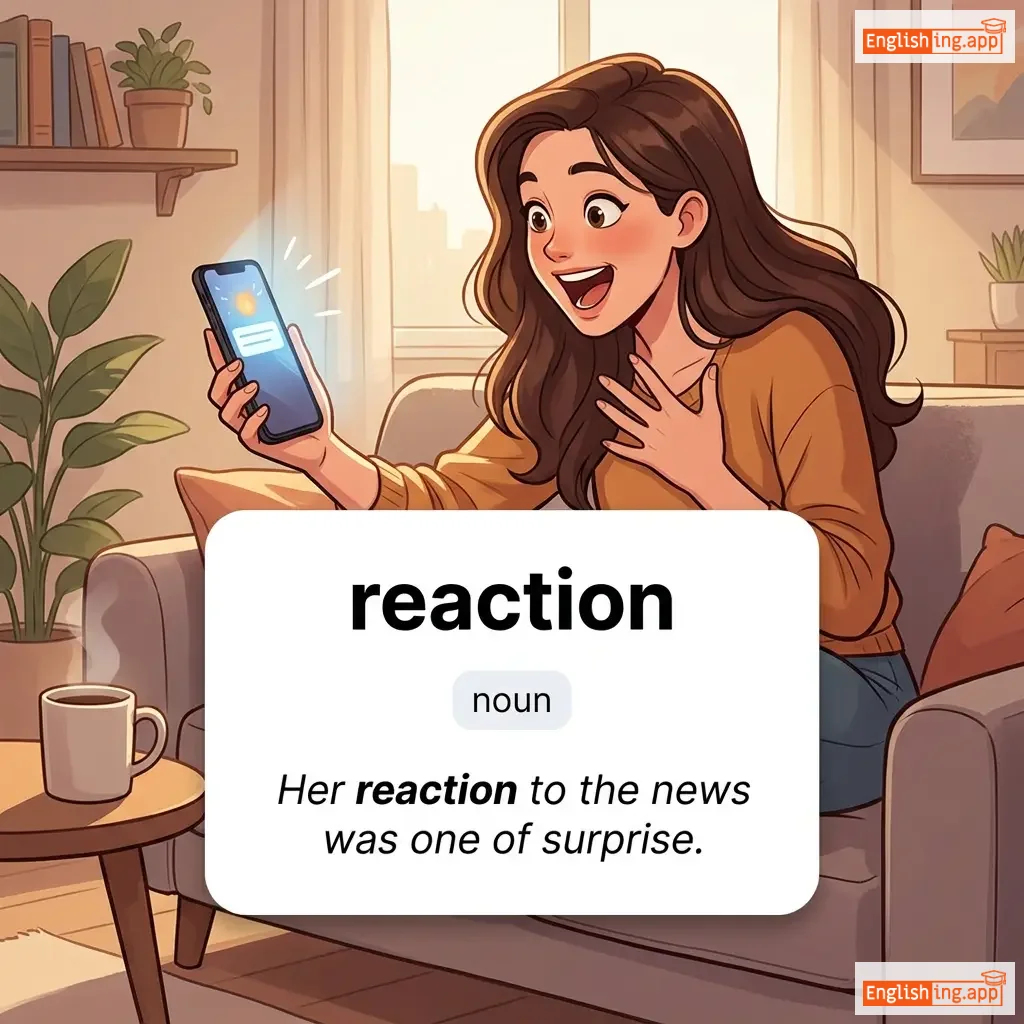
reaction definition card — visual illustration of the meaning
noun
/riˈækʃən/
प्रतिक्रिया (pratikriya)

A response to a situation, event, or stimulus; also a chemical change involving reactants and products.

"Her reaction to the news was one of surprise."

"उसकी प्रतिक्रिया खबरों के प्रति आश्चर्यजनक थी।" (Uski pratikriya khabron ke prati aashcharyajanak thi.)
noun
/riˈæktənt/
प्रतिक्रियामें भाग लेने वाला पदार्थ (riyaktaant)

A substance that takes part in and undergoes change during a chemical reaction.

"Oxygen is a reactant in the process of combustion."

"ऑक्सीजन दहन प्रक्रिया में एक प्रतिक्रिया-घटक है।" (aaksijan dahan prakriya mein ek pratikriya ghatak hai)
verb
/riˈækt/
प्रतिक्रिया देना (pratikriya dena)

to respond or behave in a particular way to something

"She reacted angrily when she heard the news."

"उसने गुस्से में प्रतिक्रिया दी जब उसने खबर सुनी।" (Usne gusse mein pratikriya di jab usne khabar suni.)
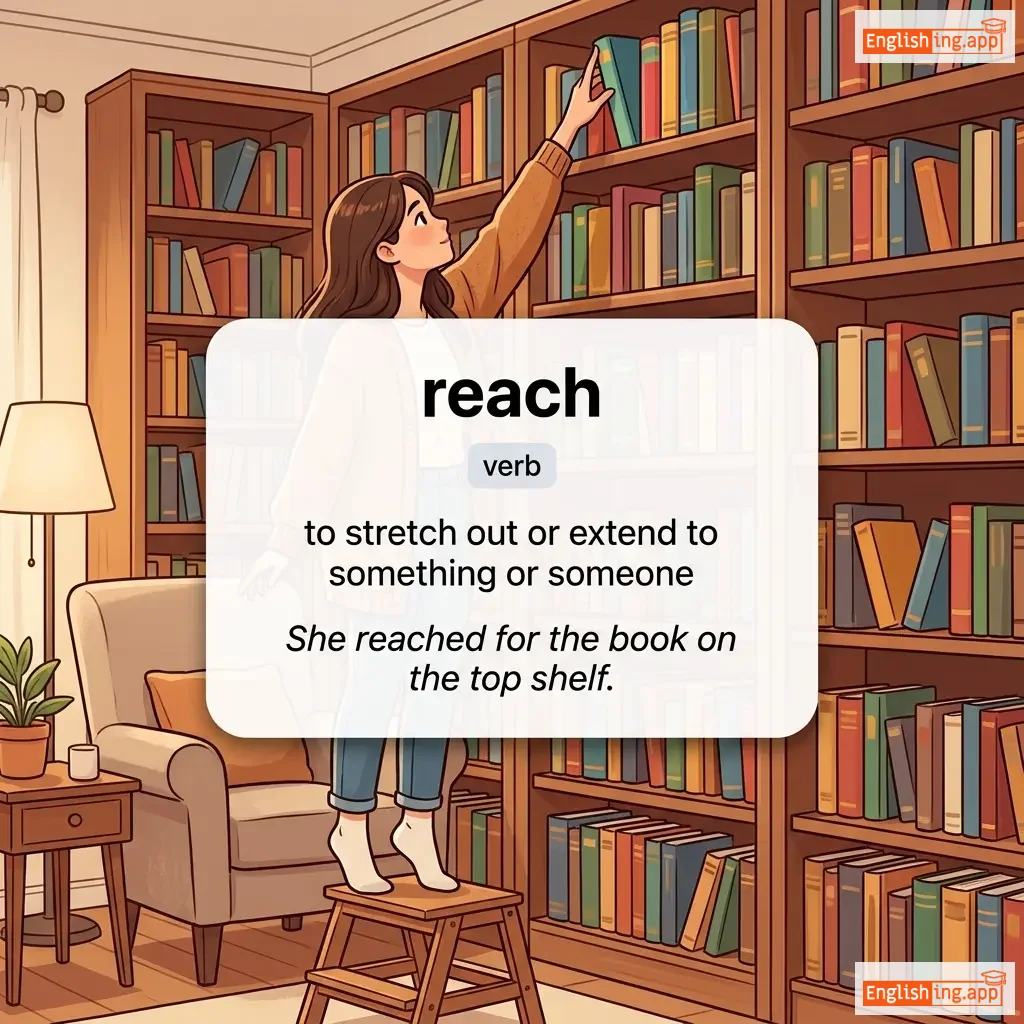
reach definition card — visual illustration of the meaning
verb
/riːtʃ/
पहुंचना (pahuchna)

to stretch out or extend to something or someone

"She reached for the book on the top shelf."

"उसने ऊपरी शेल्फ पर किताब को पकड़ने के लिए हाथ बढ़ाया।" (Usne oopari shelf par kitaab ko pakadne ke liye haath badhaya.)
preposition
/riː/
के बारे में (ke baare mein)

concerning or about (used in formal letters or emails)

"The letter was sent re your recent application."

"पत्र आपके हालिया आवेदन के बारे में भेजा गया था।" (Patra aapke haaliya aavedan ke baare mein bheja gaya tha.)
noun
/ˈreɪ.zər/
रेजर (razor)

a sharp-edged instrument used for shaving hair from the skin

"He shaved his beard with a sharp razor."

"उसने अपनी दाढ़ी को तेज रेजर से शेव किया।" (usne apni daadhi ko tez razor se shave kiya.)
verb
/reɪz/
नष्ट करना (nasht karna)

To completely destroy or demolish something, especially a building.

"The old factory was razed to make way for new apartments."

"पुरानी फैक्ट्री को नए अपार्टमेंट्स के लिए नष्ट कर दिया गया।" (Purani factory ko naye apartments ke liye nasht kar diya gaya.)
noun
/reɪ/
रश्मि (rashmi)

a narrow beam of light, heat, or radiation

"A ray of sunlight broke through the clouds."

"एक सूरज की किरण बादलों के बीच से निकली।" (Ek suraj ki kiran baadalon ke beech se nikli.)
noun
/rɔ ˈtɜrmərɪk/
कच्चा हल्दी (kacha haldi)

fresh unprocessed root of the turmeric plant used as a spice and medicine

"Grate raw turmeric into the curry for authentic flavor."

"कढ़ी में असली स्वाद के लिए कच्ची हल्दी घिसें।" (kadhi mein asli swad ke liye kacchi haldi ghisain)
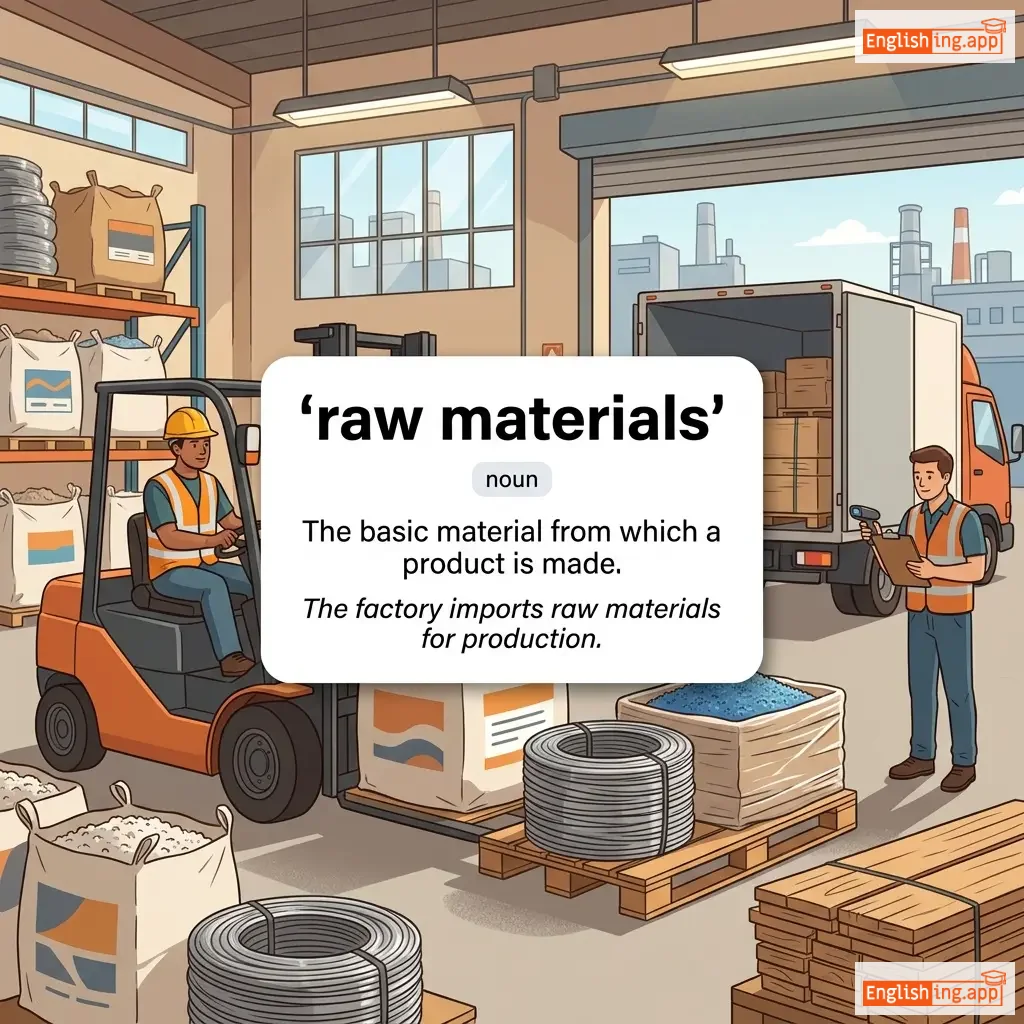
raw materials definition card — visual illustration of the meaning
noun
rɔː mətɪˈrɪəlz
कच्चा माल (kaccha maal)

The basic material from which a product is made.

"The factory imports raw materials for production."

"फैक्ट्री उत्पादन के लिए कच्चा माल आयात करती है।" (Factory utpadan ke liye kaccha maal aayat karti hai.)
verb
/ˈrævɪʃ/
मुग्ध करना (mugdh karna)

To fill with intense delight; to captivate or enchant.

"The beauty of the sunset ravished the travelers."

"सूर्यास्त की सुंदरता ने यात्रियों को मोहित कर दिया।" (Suryaast ki sundarta ne yatriyon ko mohit kar diya.)
adjective
/rɔː/
कच्चा (kacha)

not cooked or processed; in its natural state

"She ate raw vegetables for lunch."

"उसने लंच में कच्ची सब्ज़ियाँ खाई।" (Usne lunch mein kacchi sabziyan khai.)
noun
/reɪt/
दर (dar)

the cost or price of something, or the amount at which something happens

"The rate of inflation is increasing every year."

"महँगाई की दर हर साल बढ़ रही है।" (Mehngai ki dar har saal badh rahi hai.)
adverb
/ˈræðər/
ज़्यादातर मामलों में (zyadatar mamlo mein)

to a certain extent or degree

"I would rather stay home than go out."

"मैं बाहर जाने के बजाय घर पर रहना पसंद करूंगा।" (Main baahar jaane ke bajaye ghar par rehna pasand karunga.)
adverb
/ˈrɪəli/
वास्तव में (reeli)

used to emphasize a statement or description

"She really enjoyed the movie last night."

"उसने कल रात फिल्म का सचमुच आनंद लिया।" (Usne kal raat film ka sachmuch anand liya.)
noun
/ˌrætɪfɪˈkeɪʃən/
अनुमोदन (anumodan)

the action of signing or giving formal consent to a treaty, contract, or agreement

"The treaty required ratification by both countries' parliaments."

"संधि को दोनों देशों की संसदों से अनुमोदन की आवश्यकता थी।" (sandhi ko dono deshon ki sansadon se anumodan ki avashyakta thi.)
verb
/ˈrætɪfaɪ/
स्वीकृत करना (sweekrit karna)

to approve or confirm something officially, usually by law or formal consent

"The government ratified the trade agreement."

"सरकार ने व्यापार समझौते को स्वीकृत किया।" (Sarkar ne vyapar samjhaute ko sweekrit kiya.)
noun
/ˈreɪtɪŋ/
मूल्यांकन (mulyankan)

an evaluation or assessment, usually numerical

"The movie received a high rating from critics."

"फिल्म को आलोचकों से उच्च रेटिंग मिली।" (Film ko alochako se uchch rating mili.)
noun
/ˈreɪʃoʊ/
अनुपात (anupat)

a relationship between two numbers showing how many times the first number contains the second

"The ratio of boys to girls in the class is 2:1."

"कक्षा में लड़कों और लड़कियों का अनुपात 2:1 है।" (Kaksha mein ladkon aur ladkiyon ka anupat 2:1 hai.)
noun
/ˌræʃioʊsɪˈneɪʃən/
युक्तिवाद (yuktivad)

the process of reasoning or logical thinking

"His ratiocination impressed the judges during the debate."

"उसकी युक्तिवाद ने बहस के दौरान निर्णायकों को प्रभावित किया।" (Uski yuktivad ne bahas ke dauran nirnayako ko prabhavit kiya.)
noun
/ˈræʃən/
रेशन (reshan)

a fixed amount of something, especially food, officially allowed to each person

"During the war, each family received a weekly ration of rice."

"युद्ध के दौरान, हर परिवार को चावल का साप्ताहिक रेशन मिला।" (Yudh ke dauran, har parivar ko chawal ka saptahik reshan mila.)
adjective
/ˈræʃənəl/
तर्कसंगत (tarkasangat)

based on or in accordance with reason or logic

"She made a rational decision after considering all the facts."

"उसने सभी तथ्यों पर विचार करने के बाद तर्कसंगत निर्णय लिया।" (usne sabhi tathyon par vichar karne ke baad tarkasangat nirnaya liya)
noun
/ˌræʃəˈnæl/
युक्तिसंगत कारण (yuktisangat kaaran)

the underlying reason or explanation for something

"The rationale behind his decision was clearly explained."

"उसके निर्णय के पीछे का कारण स्पष्ट रूप से समझाया गया था।" (Uske nirnay ke peeche ka kaaran spasht roop se samjhaya gaya tha.)
noun
/ˈræʃənəlɪzəm/
तर्कवाद (tarkvad)

a belief or theory that opinions and actions should be based on reason and knowledge rather than religious belief or emotion

"Rationalism emphasizes logic and reasoning over faith."

"तर्कवाद विश्वास से ज्यादा तर्क और reasoning को महत्व देता है।" (Tarkvad vishwas se zyada tark aur reasoning ko mahatva deta hai.)
noun
/ˈreɪ.vən/
काला कौआ (kala kaua)

a large, black bird with a thick bill and harsh croaking voice

"The raven perched on the old oak tree and cawed loudly."

"काला कौआ पुराने ओक के पेड़ पर बैठा और जोर से बोला।" (kala kaua purane ok ke ped par baitha aur jor se bola)
adjective
/ˈrævənɪŋ/
भयंकर भूखा और लालची (bhayankar bhookha aur laalchi)

Extremely hungry and greedy; voracious.

"The ravening wolves circled the camp."

"भूखे भेड़िए शिविर के चारों ओर घूम रहे थे।" (Bhookhe bhediye shivir ke chaaron or ghoom rahe the.)
adjective
/ˈrævənəs/
भयानक भूखा (bhayanak bhookha)

Extremely hungry; famished.

"After the long hike, she was ravenous and ate quickly."

"लंबी चढ़ाई के बाद, वह रेविनस थी और जल्दी से खा लिया।" (Lambi chadhai ke baad, vah ravinas thi aur jaldi se kha liya.)