Словари

Словарь английского языка | Значения слов, определения и примеры
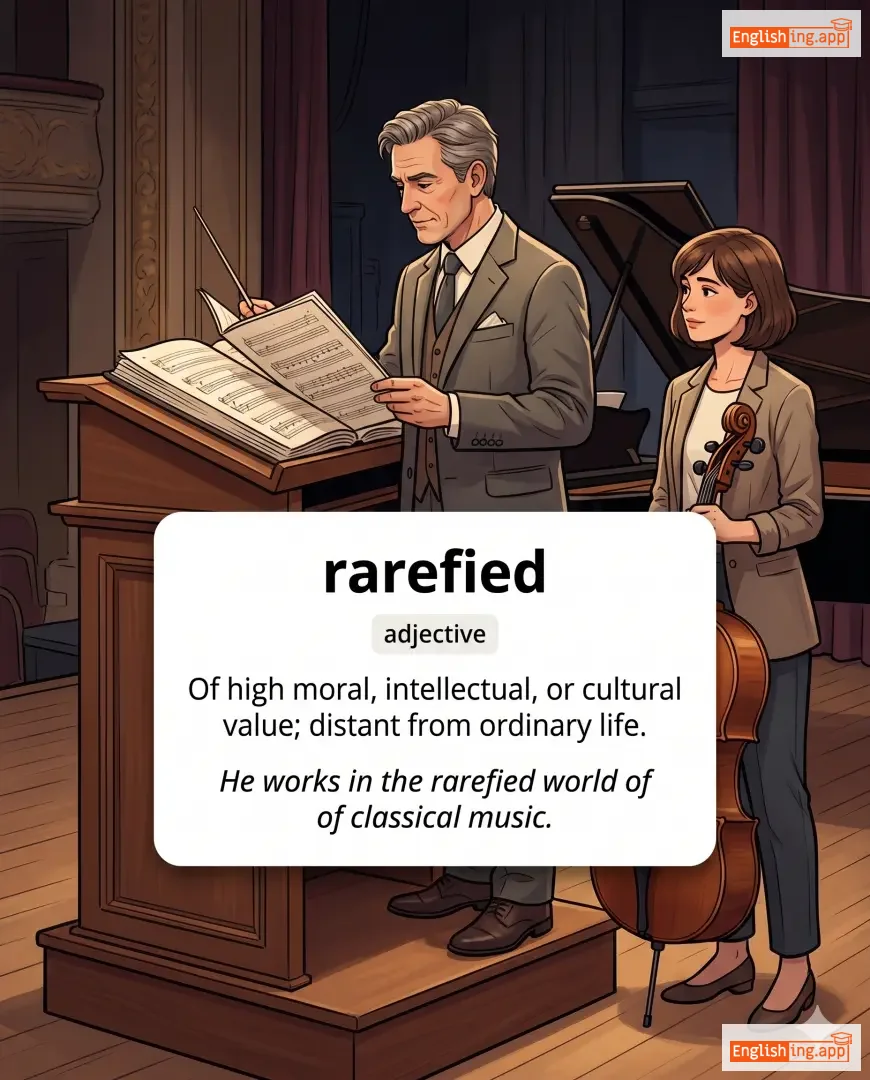
rarefied definition card — visual illustration of the meaning
adjective
/ˈreə.rɪ.faɪd/
возвышенный (rarefied)

Of high moral, intellectual, or cultural value; distant from ordinary life.

"He works in the rarefied world of classical music."

"Он работает в возвышенном мире классической музыки." (On rabotaet v vozvyshennom mire klassicheskoy muzyki.)
verb
/ˈreə.rɪ.faɪ/
разжижать, очищать (razhizhat', ochishchat')

To make something less dense or more refined.

"The air rarefies as you climb higher into the mountains."

"Воздух разжижается по мере того, как вы поднимаетесь выше в горах." (Vozdukh razhizhaetsya po mere togo, kak vy podnimayetes' vyshe v gorakh.)
adverb
/ˈrɛə(r)li/
редко (redko)

not often, infrequently

"She rarely eats sweets because of her diet."

"Она редко ест сладости из-за своей диеты." (Ona redko yest sladosti iz-za svoey diety.)
noun
/ˈrerəti/
состояние быть редким; что-то необычное или редкое (sostoyanie byt' redkim; chto-to neobychnoye ili redkoye)

the state of being rare; something that is uncommon or scarce

"The antique vase was a rarity worth thousands of dollars."

"Антикварная ваза была редкостью, стоящей тысячи долларов." (Antikvarnaya vaza byla redkost'yu, stoyashchiyey tysyachi dollarov.)
adjective
/ræʃ/
поспешный, необдуманный (pospeshny, neobdumanny)

Acting quickly without careful consideration; reckless.

"It was a rash decision to invest without research."

"Это было поспешное решение инвестировать без исследования." (Eto bylo pospeshnoe reshenie investirovat' bez issledovaniya.)
verb
/ræsp/
говорить грубым голосом или скрежетать с грубым звуком (govorit' grubym golosom ili skrezhyatat' s grubym zvukom)

to speak in a rough, harsh voice or to scrape with a coarse sound

"He rasped out a warning before collapsing."

"Он расспел предупреждение перед тем как упасть." (On raspel preduprezhdenie pered tem kak upast'.)
noun
/ræt/
крыса (krysa)

a small rodent that resembles a large mouse, often considered a pest

"A rat ran across the kitchen floor last night."

"Крыса пробежала по кухонному полу прошлой ночью." (Krysa probezhala po kukhonnomu polu proshloy noch'yu.)
adjective
/ˈræspi/
хриплый (khriply)

having a harsh, rough, or grating sound

"His raspy voice revealed years of smoking."

"Его хриплый голос показал годы курения." (Ego khriplyi golos pokazal gody kureniya.)
noun
/ˌrɪəlɪˈzeɪʃən/
осознание (osoznanie)

the act of becoming fully aware of something as a fact

"Her realization of the problem helped solve the issue."

"Её осознание проблемы помогло решить вопрос." (Eyo osoznanie problemy pomoglo reshit' vopros.)
reality definition card — visual illustration of the meaning
noun
/riˈæləti/
реальность (real'nost)

the state of things as they actually exist, rather than as they may appear or might be imagined

"The reality of the situation is more complicated than we thought."

"Реальность ситуации более сложна, чем мы думали." (Real'nost' situatsii bolee slozhna, chem my dumali.)
adjective
/ˌriːəˈlɪstɪk/
реалистичный (realistichny)

having or showing a sensible and practical idea of what can be achieved or expected

"She gave a realistic estimate of the project's cost."

"Она дала реалистичную оценку стоимости проекта." (Ona dala realistichnuyu otsenku stoimosti proyekte.)
noun
/ˈrɪə.lɪ.zəm/
реализм (realizm)

The quality of representing things as they are; a practical or factual view.

"Her paintings are admired for their realism."

"Её картины восхищают своим реализмом." (Eyo kartiny voskhishchayut svoim realizmom.)
adjective
/riːəl/
реальный (real'nyy)

actually existing or happening; true and not imagined

"This is the real deal, no gimmicks."

"Это настоящая сделка, без уловок." (Eto nastoyashchaya sdelka, bez ulovok.)
verb
/ˌriːəˈfɜːrm/
подтвердить снова (podtverdit snova)

To state again strongly; to confirm or strengthen a statement or belief.

"The president reaffirmed his commitment to education reform."

"Президент снова подтвердил свою приверженность реформе образования." (Prezident snova podtverdil svoyu priverzhennost reforme obrazovaniya.)
adjective
/ˈrɛd.i/
готовый (gotovyy)

Prepared or available for use or action.

"She was ready to leave for the airport."

"Она была готова поехать в аэропорт." (Ona byla gotova poyekhat' v aeroport.)
noun
/ˌriː.əˈdʒʌst.mənt/
адаптация (readjustment)

The act of changing or correcting something again to make it suitable or balanced.

"After moving to a new city, he went through a period of readjustment."

"После переезда в новый город он прошёл период адаптации." (Posle pereezda v novyy gorod on proshel period adaptatsii.)
verb
/ˌriːəˈdʒʌst/
переставлять (perestavlyat)

To change or move something again in order to achieve a better fit, condition, or balance.

"He readjusted the chair to make it more comfortable."

"Он переустроил стул, чтобы сделать его более удобным." (On pereustroil stul, chtoby sdelat' ego bolee udobnym.)
reading definition card — visual illustration of the meaning
noun
/ˈriːdɪŋ/
чтение (chtenie)

the action or skill of reading

"Reading is one of my favorite hobbies."

"Чтение — одно из моих любимых хобби." (Chteniye — odno iz moikh lyubimykh khobbi.)
Readily definition card — visual illustration of the meaning
adverb
/ˈrɛdəli/
охотно (ohotno)

Without hesitation or difficulty; willingly.

"She readily accepted the job offer."

"Она охотно приняла предложение о работе." (Ona okhotno prinyala predlozheniye o rabote.)
noun
/ˈriːdər/
читатель (chitatel)

a person who reads or who is capable of reading

"She is a fast reader, finishing books in a day."

"Она быстрый читатель, заканчивающая книги за один день." (Ona bystryy chitatel', zakanchivayushchaya knigi za odin den'.)
read definition card — visual illustration of the meaning
verb
/riːd/
читать (chitat)

to look at and comprehend the meaning of written or printed matter

"I like to read books before bed."

"Мне нравится читать книги перед сном." (Mne nravitsya chitát' knigi pered snom.)
adjective
/riˈæk.tɪv/
реактивный; химически активный (reaktivnyy; khimicheski aktivnyy)

responding to situations rather than initiating them; chemically active

"The company took a reactive approach to customer complaints."

"Компания приняла реактивный подход к жалобам клиентов." (Kompaniya prinяла reakтивnyy podkhod k zhalobam klientov.)
adjective
/riˈækʃəˌneri/
реакционный (reaktsionny)

Opposing political or social progress or reform; extremely conservative.

"The group took a reactionary stance against the new policies."
"Группа приняла реакционную позицию против новых политик." (Gruppa prinyala reaktsionnuyu pozitsiyu protiv novykh politik.)
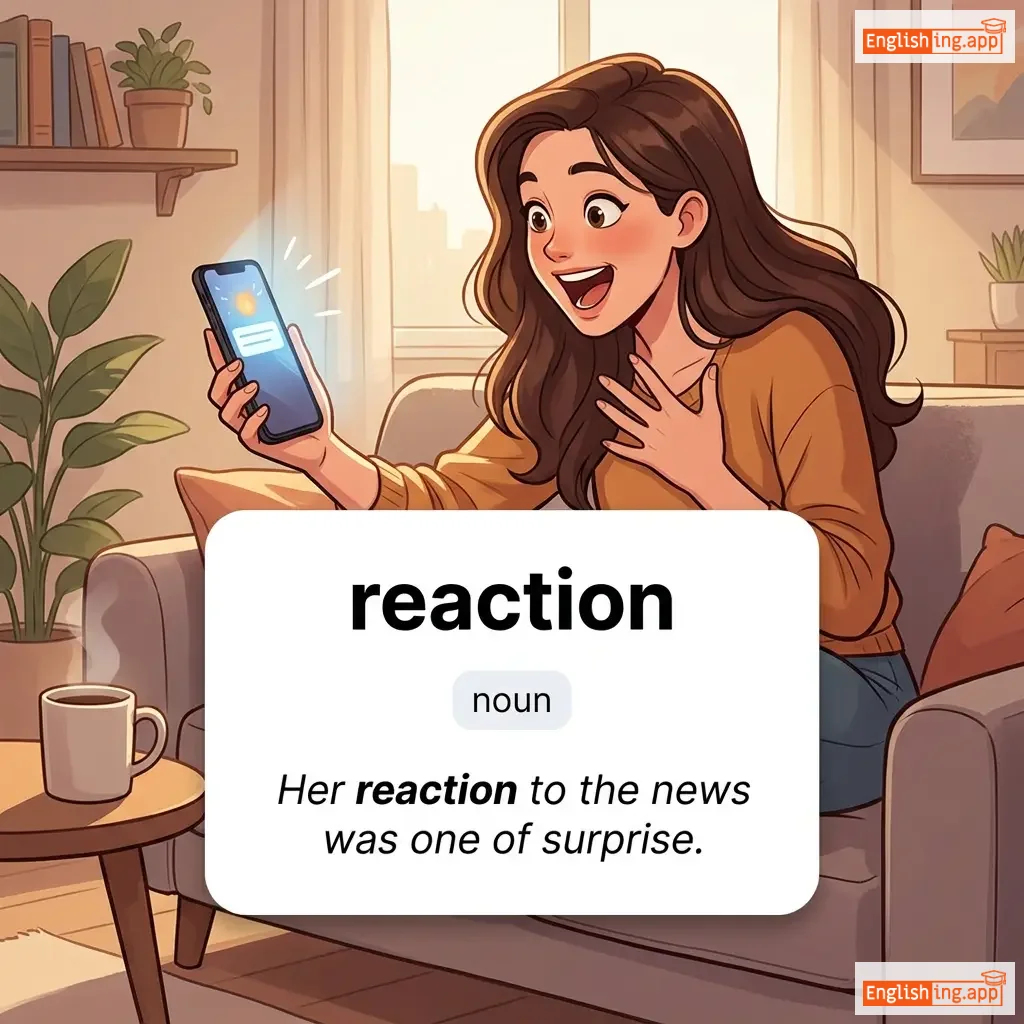
reaction definition card — visual illustration of the meaning
noun
/riˈækʃən/
реакция (reaktsiya)

A response to a situation, event, or stimulus; also a chemical change involving reactants and products.

"Her reaction to the news was one of surprise."

"Её реакция на новость была удивлением." (Yeyo reaktsiya na novost' byla udivleniyem.)
noun
/riˈæktənt/
реагент (reaktant)

A substance that takes part in and undergoes change during a chemical reaction.

"Oxygen is a reactant in the process of combustion."

"Oxygen is a reactant in the process of combustion." (Kislorod yavlyaetsya reagentom v protsesse goreniya.)
verb
/riˈækt/
реагировать (reagirovat)

to respond or behave in a particular way to something

"She reacted angrily when she heard the news."

"Она отреагировала с гневом, когда услышала новость." (Ona otreagirovala s gnevom, kogda uslyshala novost'.)
reach definition card — visual illustration of the meaning
verb
/riːtʃ/
достигать (dostigat)

to stretch out or extend to something or someone

"She reached for the book on the top shelf."

"Она потянулась за книгой на верхней полке." (Ona potyanulas' za knigoy na verkhney polke.)
preposition
/riː/
относительно (otnositel'no)

concerning or about (used in formal letters or emails)

"The letter was sent re your recent application."

"Письмо было отправлено относительно вашего недавнего заявления." (Pismo bylo otpravleno otnositel'no vashego nedavnogo zayavleniya.)
noun
/ˈreɪ.zər/
бритва (britva)

a sharp-edged instrument used for shaving hair from the skin

"He shaved his beard with a sharp razor."

"Он побрил свою бороду острым станком." (On pobril svoyu borodu ostrym stankom.)
verb
/reɪz/
сносить (snosit)

To completely destroy or demolish something, especially a building.

"The old factory was razed to make way for new apartments."

"Старая фабрика была снесена, чтобы освободить место для новых квартир." (Starya fabrika byla snesena, chtoby osvobodit' mesto dlya novykh kvartir.)
noun
/reɪ/
луч (luch)

a narrow beam of light, heat, or radiation

"A ray of sunlight broke through the clouds."

"Луч солнечного света прорвался сквозь облака." (Luch solnechnogo sveta prorvalsya skvoz' oblake.)
noun
/rɔ ˈtɜrmərɪk/
сырая куркума (syaraya kurkuma)

fresh unprocessed root of the turmeric plant used as a spice and medicine

"Grate raw turmeric into the curry for authentic flavor."
"Натрите сырую куркуму в карри для аутентичного вкуса." (Natritye syruyu kurkumu v karri dlya autentichnogo vkusa)
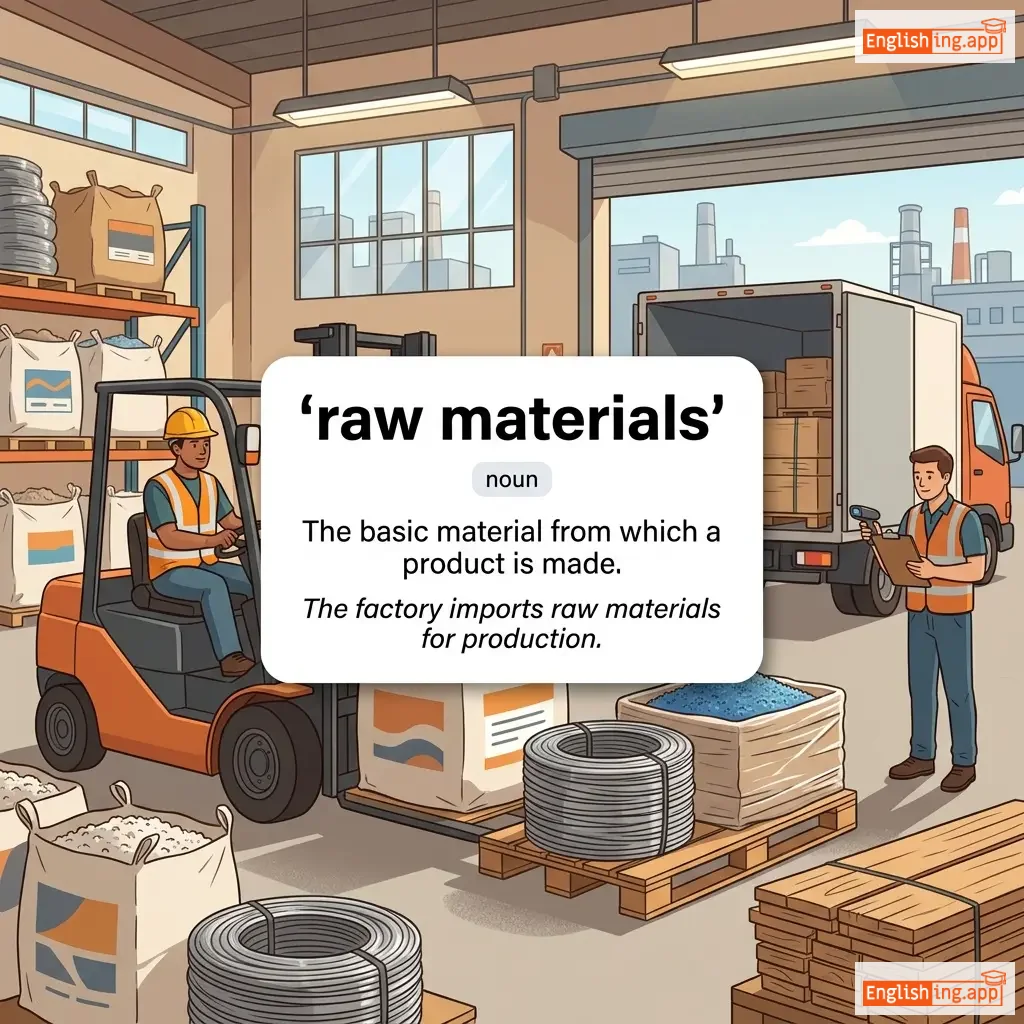
raw materials definition card — visual illustration of the meaning
noun
rɔː mətɪˈrɪəlz
сырьё (syr'yo)

The basic material from which a product is made.

"The factory imports raw materials for production."

"Фабрика импортирует сырьё для производства." (Fabrika importiruet syr'yo dlya proizvodstva.)
verb
/ˈrævɪʃ/
очаровывать (ocharovyvat)

To fill with intense delight; to captivate or enchant.

"The beauty of the sunset ravished the travelers."

"Красота заката очаровала путешественников." (Krasota zakata ocharovala puteshestvinnikov.)
adjective
/rɔː/
сырое (syroe)

not cooked or processed; in its natural state

"She ate raw vegetables for lunch."

"Она съела сырые овощи на обед." (Ona syela syrye ovoshchi na obed.)
noun
/reɪt/
ставка (stavka)

the cost or price of something, or the amount at which something happens

"The rate of inflation is increasing every year."

"Уровень инфляции увеличивается каждый год." (Uroven' inflyatsii uvelichivaetsya kazhdyy god.)
adverb
/ˈræðər/
в большинстве случаев (v bolshinstve sluchayev)

to a certain extent or degree

"I would rather stay home than go out."

"Я бы предпочел остаться дома, чем выходить." (Ya by predpochyol ostatsya doma, chem vykhodit.)
adverb
/ˈrɪəli/
действительно (riili)

used to emphasize a statement or description

"She really enjoyed the movie last night."

"Ей действительно понравился фильм прошлой ночью." (Ey deystvitelno ponravilsya film proshloy nochyu.)
noun
/ˌrætɪfɪˈkeɪʃən/
ратификация (ratifikaciya)

the action of signing or giving formal consent to a treaty, contract, or agreement

"The treaty required ratification by both countries' parliaments."

"Договор потребовал ратификации обоими парламентами стран." (Dogovor potreboval ratifikatsii oboimi parlamentami stran.)
verb
/ˈrætɪfaɪ/
ратифицировать (ratifitsirovat)

to approve or confirm something officially, usually by law or formal consent

"The government ratified the trade agreement."

"Правительство ратифицировало торговое соглашение." (Pravitel'stvo ratifitsirovalo torgovoe soglashenie.)
noun
/ˈreɪtɪŋ/
оценка (otsenka)

an evaluation or assessment, usually numerical

"The movie received a high rating from critics."

"Фильм получил высокую оценку от критиков." (Film poluchil vysokuyu otsenku ot kritikov.)
noun
/ˈreɪʃoʊ/
соотношение (sootnoshenie)

a relationship between two numbers showing how many times the first number contains the second

"The ratio of boys to girls in the class is 2:1."

"Соотношение мальчиков и девочек в классе 2:1." (Soootnoshenie mal'chikov i devochek v klasse 2:1.)
noun
/ˌræʃioʊsɪˈneɪʃən/
рационализация (ratsionalizatsiya)

the process of reasoning or logical thinking

"His ratiocination impressed the judges during the debate."

"Его рационализация впечатлила судей во время дебатов." (Yego ratsionalizatsiya vpechatlila sudey vo vremya debatov.)
noun
/ˈræʃən/
паёк (payok)

a fixed amount of something, especially food, officially allowed to each person

"During the war, each family received a weekly ration of rice."

"Во время войны каждая семья получала еженедельный паёк риса." (Vo vremya voyny kazhdaya sem'ya poluchala ezhenedel'nyy payok risa.)
adjective
/ˈræʃənəl/

based on or in accordance with reason or logic

"She made a rational decision after considering all the facts."

noun
/ˌræʃəˈnæl/
основная причина (osnovnaya prichina)

the underlying reason or explanation for something

"The rationale behind his decision was clearly explained."

"Основная причина его решения была четко объяснена." (Osnovnaya prichina yego resheniya byla chetko obyasnena.)
noun
/ˈræʃənəlɪzəm/
рационализм (ratsionalizm)

a belief or theory that opinions and actions should be based on reason and knowledge rather than religious belief or emotion

"Rationalism emphasizes logic and reasoning over faith."

"Рационализм подчеркивает логику и рассуждения, а не веру." (Ratsionalizm podcherkivayet logiku i rassuzhdeniya, a ne veru.)
noun
/ˈreɪ.vən/
ворон (voron)

a large, black bird with a thick bill and harsh croaking voice

"The raven perched on the old oak tree and cawed loudly."

"Ворон сел на старый дуб и громко каркнул." (voron sel na stary dub i gromko karknul)
adjective
/ˈrævənɪŋ/
голодный и жадный (golodnyy i zhadnyy)

Extremely hungry and greedy; voracious.

"The ravening wolves circled the camp."

"Голодные волки окружили лагерь." (Golodnye volki okruzili lagery.)
adjective
/ˈrævənəs/
голодный (golodny)

Extremely hungry; famished.

"After the long hike, she was ravenous and ate quickly."

"После долгого похода она была голодна и быстро поела." (Posle dolgogo pokhoda ona byla golodna i bystro poela.)