词汇表

英语词汇词典 | 单词含义、定义和示例

rarefied definition card — visual illustration of the meaning
adjective
/ˈreə.rɪ.faɪd/

Of high moral, intellectual, or cultural value; distant from ordinary life.

"He works in the rarefied world of classical music."

verb
/ˈreə.rɪ.faɪ/
稀释, 精炼 (xīshì, jīngliàn)

To make something less dense or more refined.

"The air rarefies as you climb higher into the mountains."

"随着你爬得更高,空气变得更稀薄。" (Suízhe nǐ pá dé gèng gāo, kōngqì biàn dé gèng xībó.)
adverb
/ˈrɛə(r)li/
很少 (hen shao)

not often, infrequently

"She rarely eats sweets because of her diet."

"她因为饮食限制,很少吃糖果。" (Ta yinwei yinshi xianzhi, hen shao chi tangguo.)
noun
/ˈrerəti/
稀有的状态; 不常见或稀缺的东西 (xī yǒu de zhuàngtài; bù chángjiàn huò xīquē de dōngxī)

the state of being rare; something that is uncommon or scarce

"The antique vase was a rarity worth thousands of dollars."

"古董花瓶是一种稀有物品,价值数千美元。" (gǔdǒng huāpíng shì yī zhǒng xīyǒu wùpǐn, jiàzhí shù qiān měiyuán.)
adjective
/ræʃ/
草率, 鲁莽 (caoluo, lumang)

Acting quickly without careful consideration; reckless.

"It was a rash decision to invest without research."

"没有研究就投资是一个鲁莽的决定。" (Meiyou yanjiu jiu touzi shi yige lumang de jueding.)
🔧

rasp

verb
/ræsp/

to speak in a rough, harsh voice or to scrape with a coarse sound

"He rasped out a warning before collapsing."

noun
/ræt/
老鼠 (laoshu)

a small rodent that resembles a large mouse, often considered a pest

"A rat ran across the kitchen floor last night."

"一只老鼠昨晚在厨房的地板上跑过。" (yi zhi laoshu zuowan zai chufang de diban shang paoguo.)
adjective
/ˈræspi/
沙哑 (shaya)

having a harsh, rough, or grating sound

"His raspy voice revealed years of smoking."

"他的沙哑声音揭示了多年的吸烟。" (Tā de shāyǎ shēngyīn jiēshìle duōnián de xīyān.)
noun
/ˌrɪəlɪˈzeɪʃən/
实现 (shixian)

the act of becoming fully aware of something as a fact

"Her realization of the problem helped solve the issue."

"她对问题的实现帮助解决了问题。" (Ta dui wenti de shixian bangzhu jie jue le wenti.)
reality definition card — visual illustration of the meaning
noun
/riˈæləti/
现实 (xianshi)

the state of things as they actually exist, rather than as they may appear or might be imagined

"The reality of the situation is more complicated than we thought."

"情况的现实比我们想象的要复杂。" (Qíngkuàng de xiànshí bǐ wǒmen xiǎngxiàng de yào fùzá.)
adjective
/ˌriːəˈlɪstɪk/
现实的 (xiànshí de)

having or showing a sensible and practical idea of what can be achieved or expected

"She gave a realistic estimate of the project's cost."

"她给出了项目成本的现实估计。" (Tā gěichūle xiàngmù chéngběn de xiànshí gūjì.)
noun
/ˈrɪə.lɪ.zəm/
现实主义 (xianshizhuyi)

The quality of representing things as they are; a practical or factual view.

"Her paintings are admired for their realism."

"她的画作因其现实主义而受到赞赏。" (Tā de huàzuò yīn qí xiànshí zhǔyì ér shòudào zànshǎng.)
adjective
/riːəl/
真实 (zhen shi)

actually existing or happening; true and not imagined

"This is the real deal, no gimmicks."

"这是实实在在的事,毫无花招。" (Zhe shi shi shi zai zai de shi, hao wu hua zhao.)
verb
/ˌriːəˈfɜːrm/
重申 (chong shen)

To state again strongly; to confirm or strengthen a statement or belief.

"The president reaffirmed his commitment to education reform."

"总统重申了他对教育改革的承诺。" (zong tong chong shen le ta dui jiao yu gai ge de cheng nuo.)
adjective
/ˈrɛd.i/
准备 (zhǔnbèi)

Prepared or available for use or action.

"She was ready to leave for the airport."

"她准备好去机场了。" (Tā zhǔnbèi hǎo qù jīchǎng le.)
noun
/ˌriː.əˈdʒʌst.mənt/

The act of changing or correcting something again to make it suitable or balanced.

"After moving to a new city, he went through a period of readjustment."

verb
/ˌriːəˈdʒʌst/
重新调整 (chongxin tiaozheng)

To change or move something again in order to achieve a better fit, condition, or balance.

"He readjusted the chair to make it more comfortable."

"他重新调整了椅子,使其更加舒适。" (Ta chongxin tiaozhengle yizi, shǐqí gèngjiā shūshì.)
reading definition card — visual illustration of the meaning
noun
/ˈriːdɪŋ/
阅读 (yuèdú)

the action or skill of reading

"Reading is one of my favorite hobbies."

"阅读是我最喜欢的爱好之一。" (Yuèdú shì wǒ zuì xǐhuān de àihào zhī yī.)
Readily definition card — visual illustration of the meaning
adverb
/ˈrɛdəli/
轻松地 (qīngsōng de)

Without hesitation or difficulty; willingly.

"She readily accepted the job offer."

"她轻松地接受了工作邀请。" (Tā qīngsōng de jiēshòu le gōngzuò yāoqǐng.)
noun
/ˈriːdər/
读者 (duzhe)

a person who reads or who is capable of reading

"She is a fast reader, finishing books in a day."

"她是一个快速的读者,一天就能读完书。" (Ta shi yige kuaisu de duzhe, yitian jiu neng duwan shu.)
read definition card — visual illustration of the meaning
verb
/riːd/
阅读 (yùdú)

to look at and comprehend the meaning of written or printed matter

"I like to read books before bed."

"我喜欢在睡觉前读书。" (Wǒ xǐhuān zài shuìjiào qián dúshū.)
adjective
/riˈæk.tɪv/
反应性; 化学活性 (fǎnyìngxìng; huàxué huóxìng)

responding to situations rather than initiating them; chemically active

"The company took a reactive approach to customer complaints."

"公司对客户投诉采取了反应性的方法。" (Gōngsī duì kèhù tóusù cǎiqǔle fǎnyìngxìng de fāngfǎ.)
adjective
/riˈækʃəˌneri/
反动的 (fandong de)

Opposing political or social progress or reform; extremely conservative.

"The group took a reactionary stance against the new policies."
"该小组采取了反动的立场,反对新政策。" (Gāi xiǎozǔ cǎiqǔle fǎndòng de lìchǎng, fǎnduì xīn zhèngcè.)
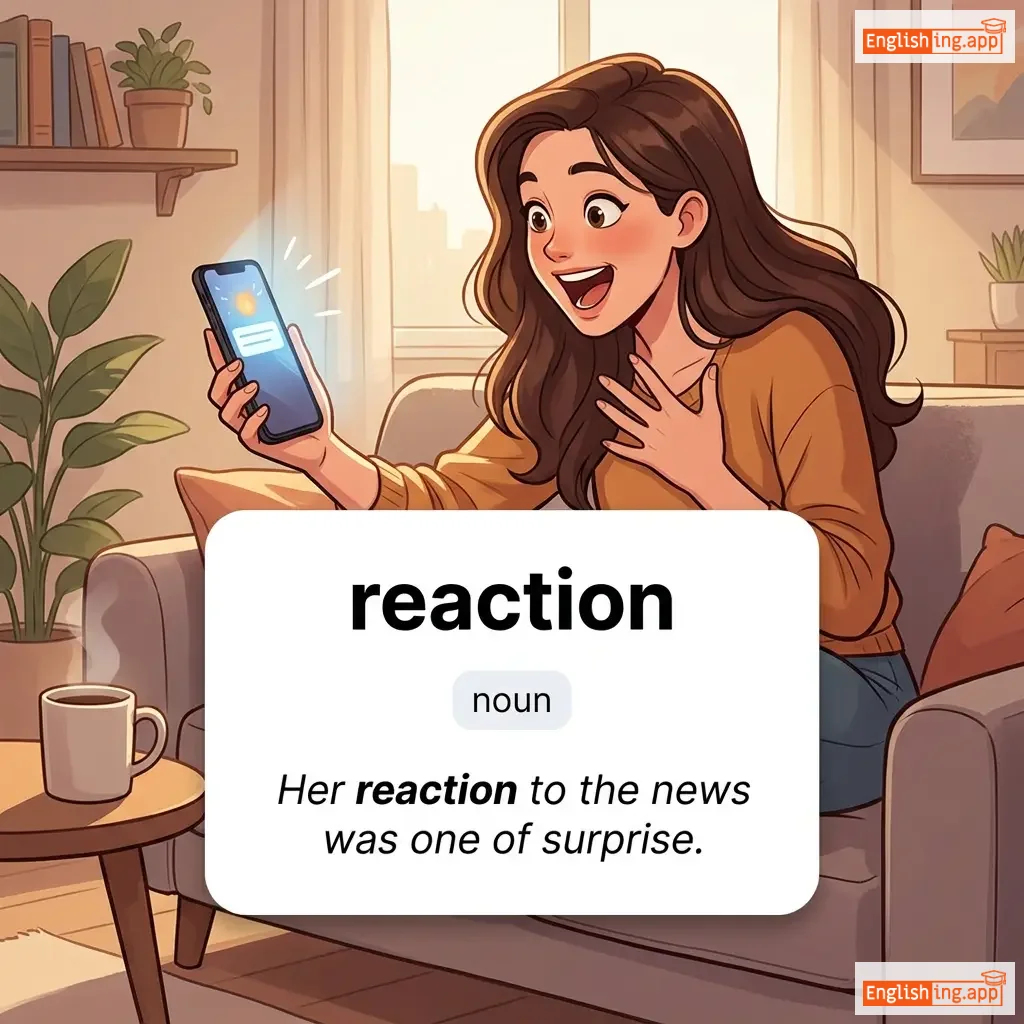
reaction definition card — visual illustration of the meaning
noun
/riˈækʃən/
反应 (fanying)

A response to a situation, event, or stimulus; also a chemical change involving reactants and products.

"Her reaction to the news was one of surprise."

"她对新闻的反应是惊讶。" (Ta dui xinwen de fanying shi jingya.)
⚗️

reactant

noun
/riˈæktənt/

A substance that takes part in and undergoes change during a chemical reaction.

"Oxygen is a reactant in the process of combustion."

verb
/riˈækt/
反应 (fǎnyìng)

to respond or behave in a particular way to something

"She reacted angrily when she heard the news."

"她听到这个消息后愤怒地做出了反应。" (Tā tīng dào zhège xiāoxī hòu fènnù de zuò chūle fǎnyìng.)
reach definition card — visual illustration of the meaning
verb
/riːtʃ/
达到 (dádào)

to stretch out or extend to something or someone

"She reached for the book on the top shelf."

"她伸手去够架子上面的书。" (Tā shēnshǒu qù gòu jiàzi shàngmiàn de shū.)
preposition
/riː/
关于 (guanyu)

concerning or about (used in formal letters or emails)

"The letter was sent re your recent application."

"该信是关于您最近的申请发出的。" (Gai xin shi guanyu nin zui jin de shenqing fashu de.)
noun
/ˈreɪ.zər/
剃须刀 (tì xū dāo)

a sharp-edged instrument used for shaving hair from the skin

"He shaved his beard with a sharp razor."

"他用一把锋利的剃须刀刮胡子。" (tā yòng yī bǎ fēnglì de tì xū dāo guā húzi)
verb
/reɪz/
拆除 (chaichu)

To completely destroy or demolish something, especially a building.

"The old factory was razed to make way for new apartments."

"旧工厂被拆除,为新公寓让路。" (Jiù gōngchǎng bèi chāichú, wèi xīn gōngyù ràng lù.)
noun
/reɪ/
光线 (guāngxiàn)

a narrow beam of light, heat, or radiation

"A ray of sunlight broke through the clouds."

"一束阳光穿透了云层。" (Yī shù yángguāng chuāntòu le yúncéng.)
noun
/rɔ ˈtɜrmərɪk/
生姜黄 (sheng jiang huang)

fresh unprocessed root of the turmeric plant used as a spice and medicine

"Grate raw turmeric into the curry for authentic flavor."
"将生姜黄磨成粉加入咖喱中,以增加正宗的味道。" (Jiang sheng jiang huang mo cheng fen jia ru ga li zhong, yi zeng jia zheng zong de wei dao)
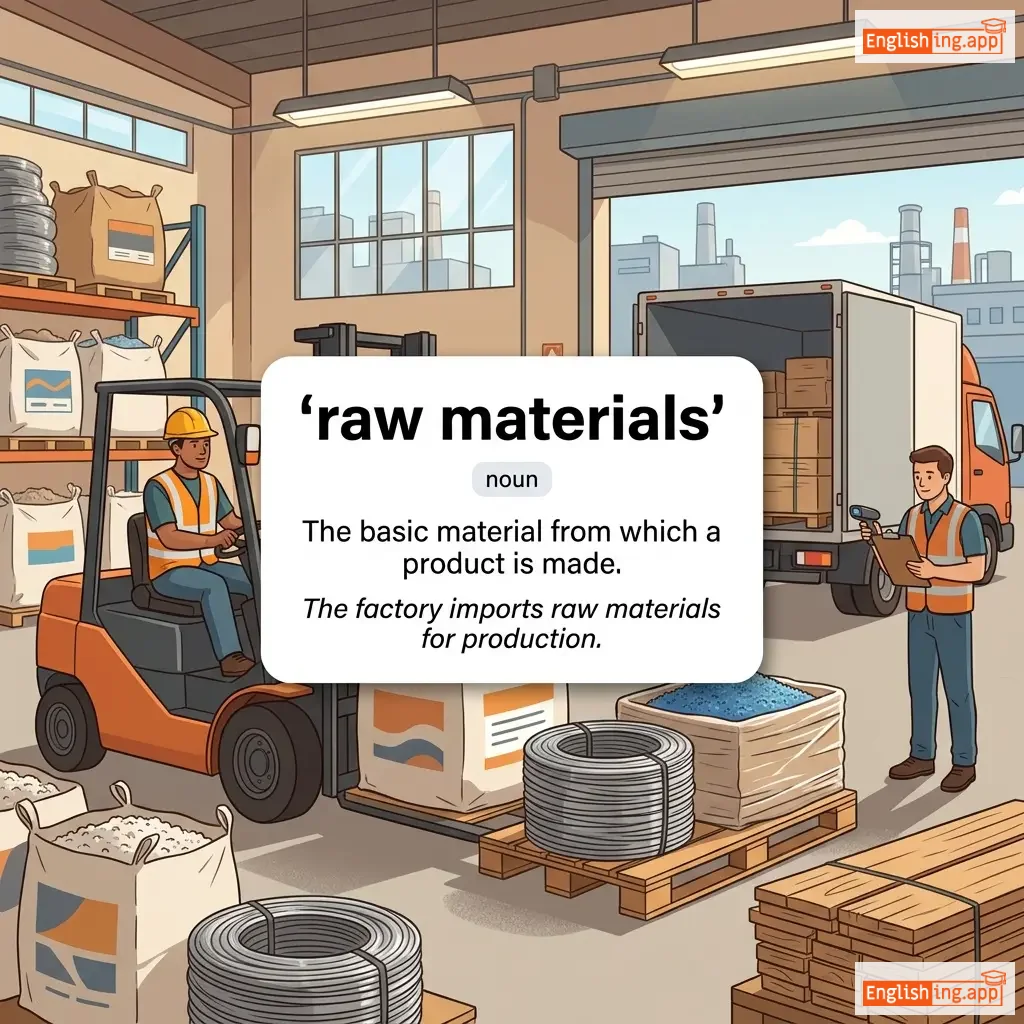
raw materials definition card — visual illustration of the meaning
noun
rɔː mətɪˈrɪəlz
原材料 (yuán cáiliào)

The basic material from which a product is made.

"The factory imports raw materials for production."

"工厂进口原材料用于生产。" (Gōngchǎng jìnkǒu yuán cáiliào yòng yú shēngchǎn.)
verb
/ˈrævɪʃ/
迷住 (mí zhù)

To fill with intense delight; to captivate or enchant.

"The beauty of the sunset ravished the travelers."

"日落的美丽让旅行者陶醉。" (Rìluò de měilì ràng lǚxíng zhě táo zuì.)
adjective
/rɔː/
(sheng)

not cooked or processed; in its natural state

"She ate raw vegetables for lunch."

"她午餐吃了生蔬菜。" (Ta wucan chīle shēng shucai.)
noun
/reɪt/
费率 (feilü)

the cost or price of something, or the amount at which something happens

"The rate of inflation is increasing every year."

"通货膨胀率每年都在上升。" (Tōnghuò péngzhàng lǜ měi nián dōu zài shàngshēng.)
adverb
/ˈræðər/
在大多数情况下 (zài dàduōshù qíngkuàng xià)

to a certain extent or degree

"I would rather stay home than go out."

"我宁愿呆在家里,也不愿外出。" (Wǒ nìngyuàn dāi zài jiālǐ, yě bù yuàn wàichū.)
adverb
/ˈrɪəli/

used to emphasize a statement or description

"She really enjoyed the movie last night."

noun
/ˌrætɪfɪˈkeɪʃən/
批准 (pīzhǔn)

the action of signing or giving formal consent to a treaty, contract, or agreement

"The treaty required ratification by both countries' parliaments."

"该条约要求两国议会的批准。" (gāi tiáoyuē yāoqiú liǎng guó yìhuì de pīzhǔn.)
verb
/ˈrætɪfaɪ/
批准 (pīzhǔn)

to approve or confirm something officially, usually by law or formal consent

"The government ratified the trade agreement."

"政府批准了贸易协议。" (Zhèngfǔ pīzhǔnle màoyì xiéyì.)
noun
/ˈreɪtɪŋ/
评分 (pingfen)

an evaluation or assessment, usually numerical

"The movie received a high rating from critics."

"这部电影得到了评论家的高评分。" (Zhe bu dianying dedaole pinglunjia de gao pingfen.)
noun
/ˈreɪʃoʊ/
比例 (bǐlì)

a relationship between two numbers showing how many times the first number contains the second

"The ratio of boys to girls in the class is 2:1."

"班级中男生和女生的比例是2:1。" (Bānjí zhōng nánshēng hé nǚshēng de bǐlì shì 2:1.)
noun
/ˌræʃioʊsɪˈneɪʃən/
推理 (tuili)

the process of reasoning or logical thinking

"His ratiocination impressed the judges during the debate."

"他的推理在辩论中给裁判留下了深刻印象。" (Tā de tuīlǐ zài biànlùn zhōng gěi cáipàn liú xiàle shēnkè yìnxiàng.)
noun
/ˈræʃən/
配给 (peiji)

a fixed amount of something, especially food, officially allowed to each person

"During the war, each family received a weekly ration of rice."

"在战争期间,每个家庭每周获得固定的米饭配给。" (Zai zhanzheng qijian, mei ge jiating mei zhou huode gu ding de mifan peiji.)
adjective
/ˈræʃənəl/

based on or in accordance with reason or logic

"She made a rational decision after considering all the facts."

noun
/ˌræʃəˈnæl/
基本原因 (jiben yuanyin)

the underlying reason or explanation for something

"The rationale behind his decision was clearly explained."

"他决定背后的理由被清楚地解释了。" (Ta jueding bei hou de liyi bei qingchu de jiexile.)
noun
/ˈræʃənəlɪzəm/
理性主义 (lǐxìng zhǔyì)

a belief or theory that opinions and actions should be based on reason and knowledge rather than religious belief or emotion

"Rationalism emphasizes logic and reasoning over faith."

"理性主义强调逻辑和推理,而不是信仰。" (Lǐxìng zhǔyì qiángdiào luójí hé tuīlǐ, ér bùshì xìnyǎng.)
noun
/ˈreɪ.vən/
乌鸦 (wu ya)

a large, black bird with a thick bill and harsh croaking voice

"The raven perched on the old oak tree and cawed loudly."

"那只乌鸦停在老橡树上大声地叫。" (na zhi wu ya ting zai lao xiang shu shang da sheng de jiao)
adjective
/ˈrævənɪŋ/
饥饿和贪婪 (jī'è hé tānlán)

Extremely hungry and greedy; voracious.

"The ravening wolves circled the camp."

"饥饿的狼包围了营地。" (Jī'è de láng bāowéi le yíngdì.)
adjective
/ˈrævənəs/
饥饿 (jī'è)

Extremely hungry; famished.

"After the long hike, she was ravenous and ate quickly."

"长时间的徒步旅行后,她饿极了,吃得很快。" (Cháng shíjiān de túbù lǚxíng hòu, tā è jíle, chī de hěn kuài.)