词汇表

英语词汇词典 | 单词含义、定义和示例

verb
/prɪˈzjuːm/
假设 (jiǎshè)

To suppose something is true without proof; to take for granted.

"I presume she has already left for the meeting."

"我假设她已经去参加会议了。" (Wǒ jiǎshè tā yǐjīng qù cānjiā huìyì le.)
noun
/prɪˈzʌmpʃən/
假设 (jiǎshè)

An idea believed to be true without proof; an assumption or act of overconfidence.

"The presumption of his guilt was unfair."

"他有罪的假设是不公平的。" (Tā yǒu zuì de jiǎshè shì bù gōngpíng de.)
adjective
/prɪˈzʌmptɪv/
推定的 (tuīdìng de)

Based on probability or assumption rather than proof.

"She is the presumptive nominee for the party."
"她是该党的推定候选人。" (Tā shì gāi dǎng de tuīdìng hòuxuǎn rén.)
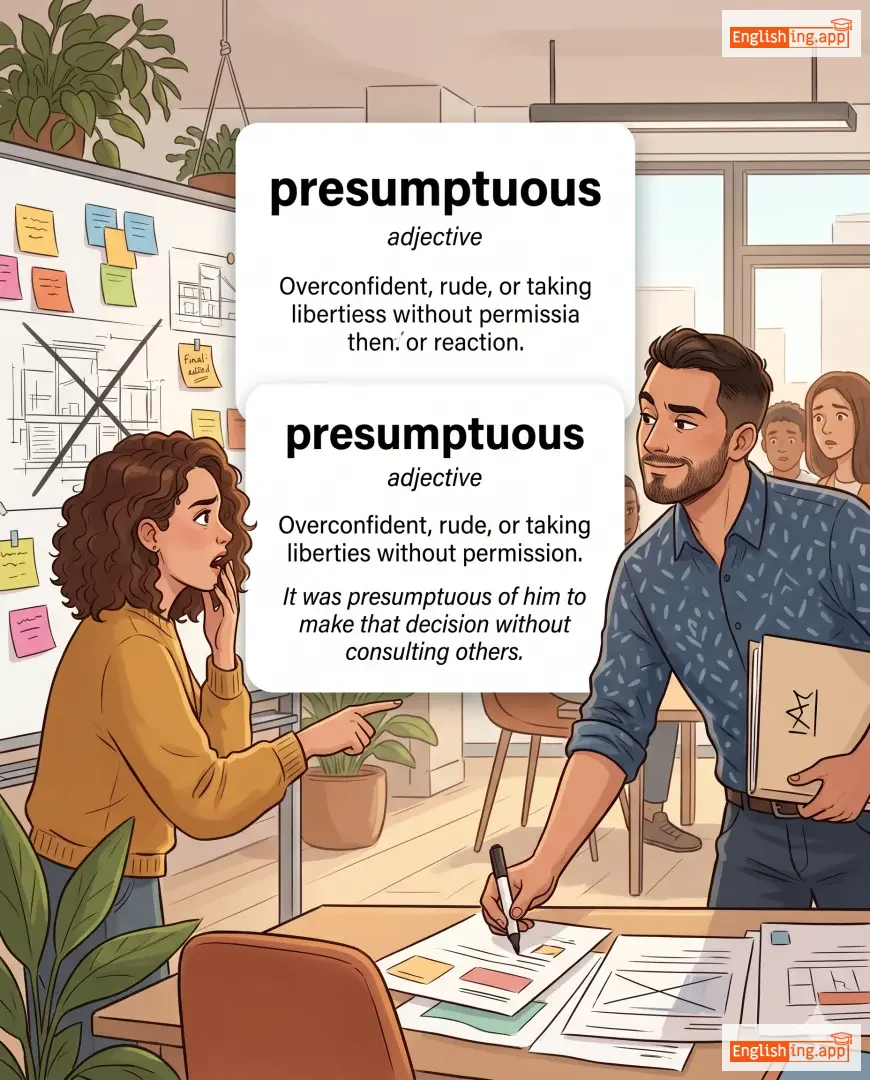
presumptuous definition card — visual illustration of the meaning
adjective
/prɪˈzʌmp.tʃu.əs/
自负的 (zì fù de)

Overconfident, rude, or taking liberties without permission.

"It was presumptuous of him to make that decision without consulting others."

"他在没有征求他人意见的情况下做出决定,显得非常自负。" (Tā zài méiyǒu zhēngqiú tārén yìjiàn de qíngkuàng xià zuòchū juédìng, xiǎn dé fēicháng zìfù.)
noun
/prɪˈtens/
虚伪 (xūwěi)

an attempt to make something that is not the case appear true

"He made no pretence of being interested in the conversation."

"他没有装作对谈话感兴趣。" (Tā méiyǒu zhuāngzuò duì tánhuà gǎn xìngqù.)
verb
/prɪˈtɛnd/
假装 (jiǎ zhuāng)

To act as if something is true when it is not.

"The children pretended to be superheroes."

"孩子们假装成超级英雄。" (Háizimen jiǎzhuāng chéng chāojí yīngxióng.)
noun
/ˈpriː.tɛns/ or /prɪˈtɛns/
伪装, 假象 (weizhuang, jiaxiang)

A false appearance or claim; an act of pretending.

"His kindness was only a pretense to gain trust."

"他的友善只是为了赢得信任的伪装。" (Tā de yǒushàn zhǐshì wèi le yíngdé xìnrèn de wěizhuāng.)
noun
/prɪˈtɛnʃən/
虚伪,假装 (xūwěi, jiǎzhuāng)

A claim or assertion to something, often without justification; an attempt to impress by showing greater importance or talent than is actually possessed.

"His pretension to be an expert was quickly exposed."

"他的假装是专家的伪装很快被揭穿了。" (tā de jiǎzhuāng shì zhuānjiā de wěizhuāng hěn kuài bèi jiēchuānle.)
adjective
/prɪˈtɛnʃəs/
做作的 (zuòzuò de)

Attempting to impress by affecting greater importance, talent, culture, etc., than is actually possessed.

"The restaurant was stylish but far too pretentious for my taste."

"餐厅很时尚,但对我的口味来说太做作了。" (Cāntīng hěn shíshàng, dàn duì wǒ de kǒuwèi lái shuō tài zuòzuòle.)
adjective
/ˌpriːtərˈnætʃərəl/
超自然 (chaoziran)

Beyond what is normal or natural; extraordinary or supernatural.

"She had a preternatural ability to remain calm in any crisis."

"她在任何危机中保持冷静的能力是超自然的。" (Tā zài rènhé wéijī zhōng bǎochí lěngjìng de nénglì shì chāo zìrán de.)
noun
/ˈpriːtɛkst/
借口, 假理由 (jièkǒu, jiǎ lǐyóu)

A false reason given to hide the real purpose or motive.

"He went out on the pretext of buying groceries."

"他以买杂货为借口出去。" (Tā yǐ mǎi záhuò wèi jièkǒu chūqù.)
adjective
/ˈprɪti/
漂亮 (piaoliang)

Attractive in a delicate way without being truly beautiful.

"She looked pretty in her new dress."

"她穿着新裙子看起来很漂亮。" (Tā chuānzhuó xīn qúnzi kàn qǐlái hěn piàoliang.)
verb
/prɪˈveɪl/
占上风 (zhàn shàng fēng)

To prove more powerful or superior; to be widespread or common.

"Justice will always prevail over injustice."
"正义总会战胜不公正。" (Zhèngyì zǒng huì zhànshèng bù gōngzhèng.)
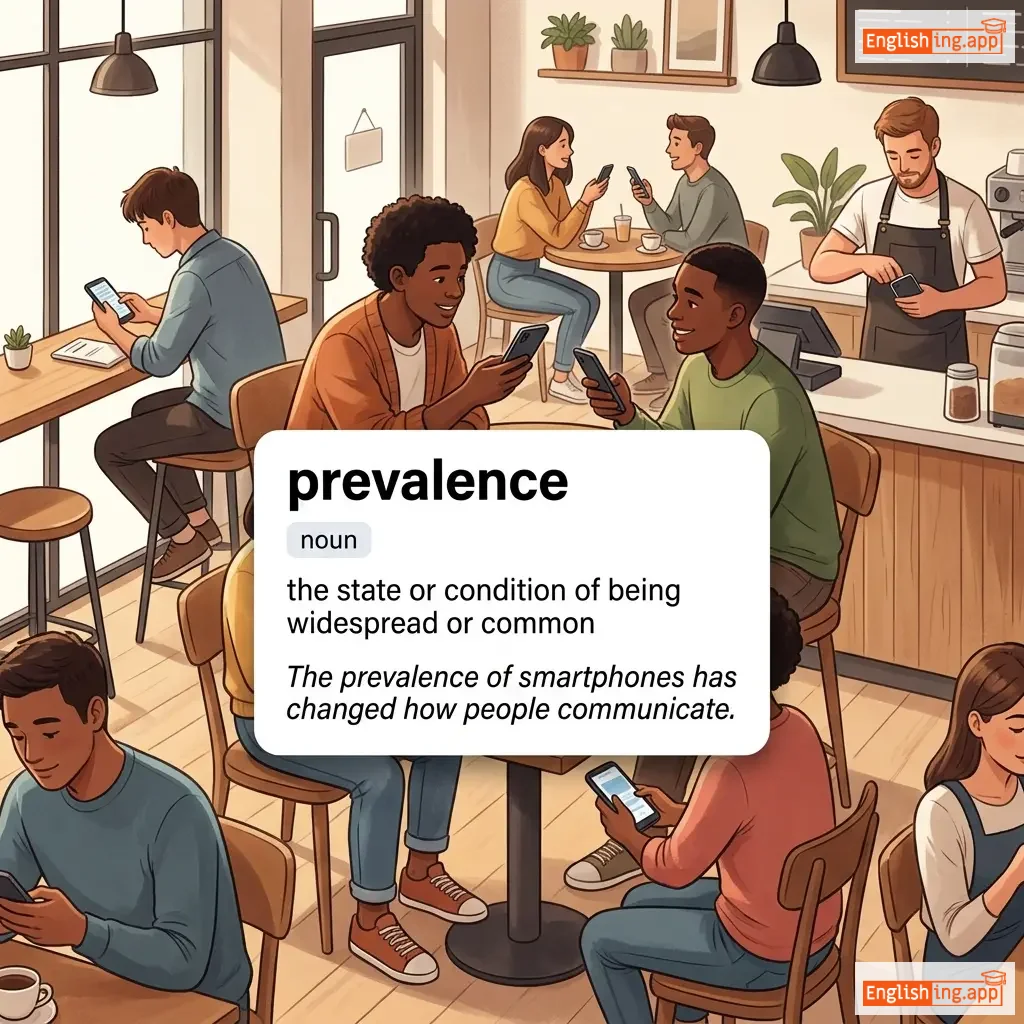
prevalence definition card — visual illustration of the meaning
noun
/ˈprɛvələns/
普遍性 (pǔbiànxìng)

the state or condition of being widespread or common

"The prevalence of smartphones has changed how people communicate."

"智能手机的普及改变了人们的交流方式。" (Zhìnéng shǒujī de pǔjí gǎibiànle rénmen de jiāoliú fāngshì.)
adjective
/ˈprɛvələnt/
普遍 (pǔbiàn)

widespread or commonly occurring

"Flu is prevalent during the winter season."

"流感在冬季季节很常见。" (Liúgǎn zài dōngjì jìjié hěn chángjiàn.)
prevaricate definition card — visual illustration of the meaning
verb
/prɪˈværɪkeɪt/

to avoid telling the truth by not giving a direct answer

"The politician began to prevaricate when asked about the scandal."
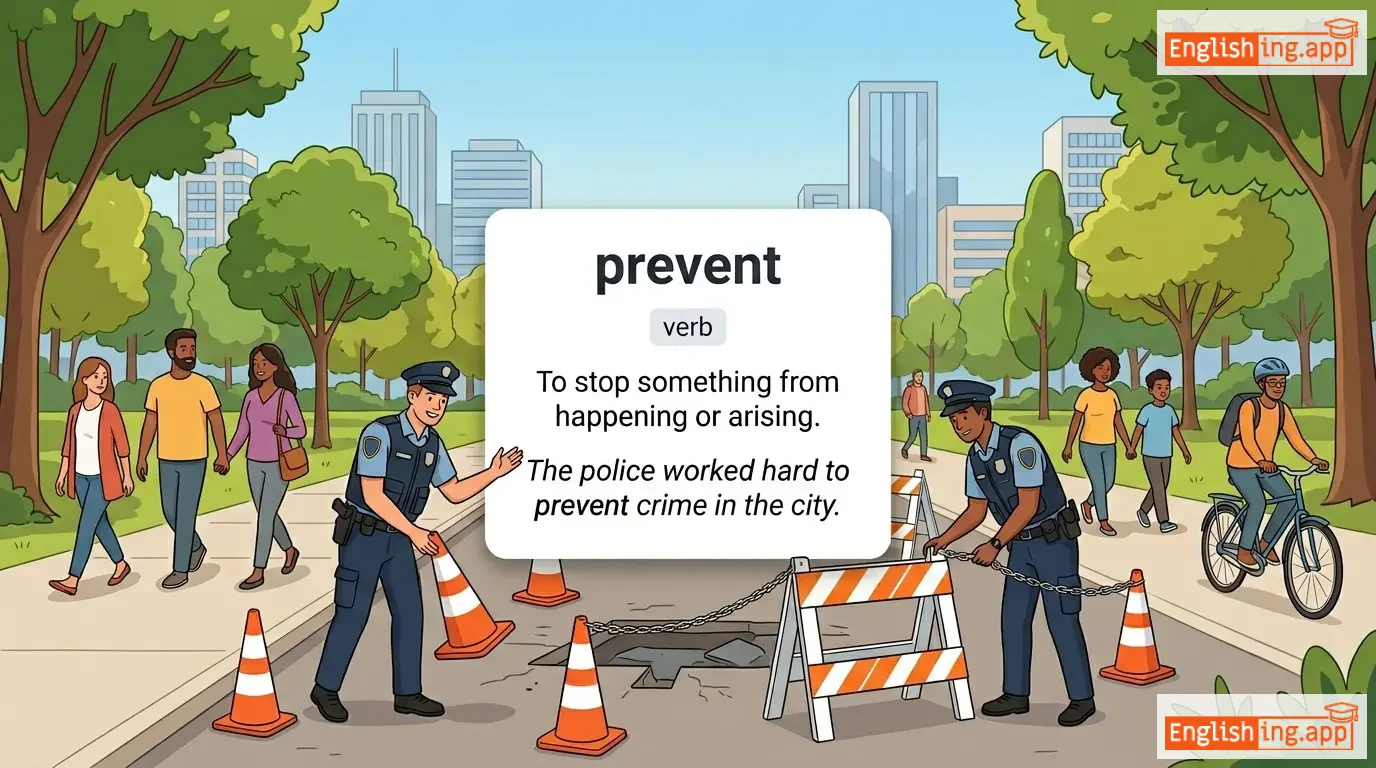
prevent definition card — visual illustration of the meaning
verb
/prɪˈvɛnt/
预防 (yùfáng)

To stop something from happening or arising.

"The police worked hard to prevent crime in the city."
"警察努力防止城市犯罪。" (Jǐngchá nǔlì fángzhǐ chéngshì fànzuì.)
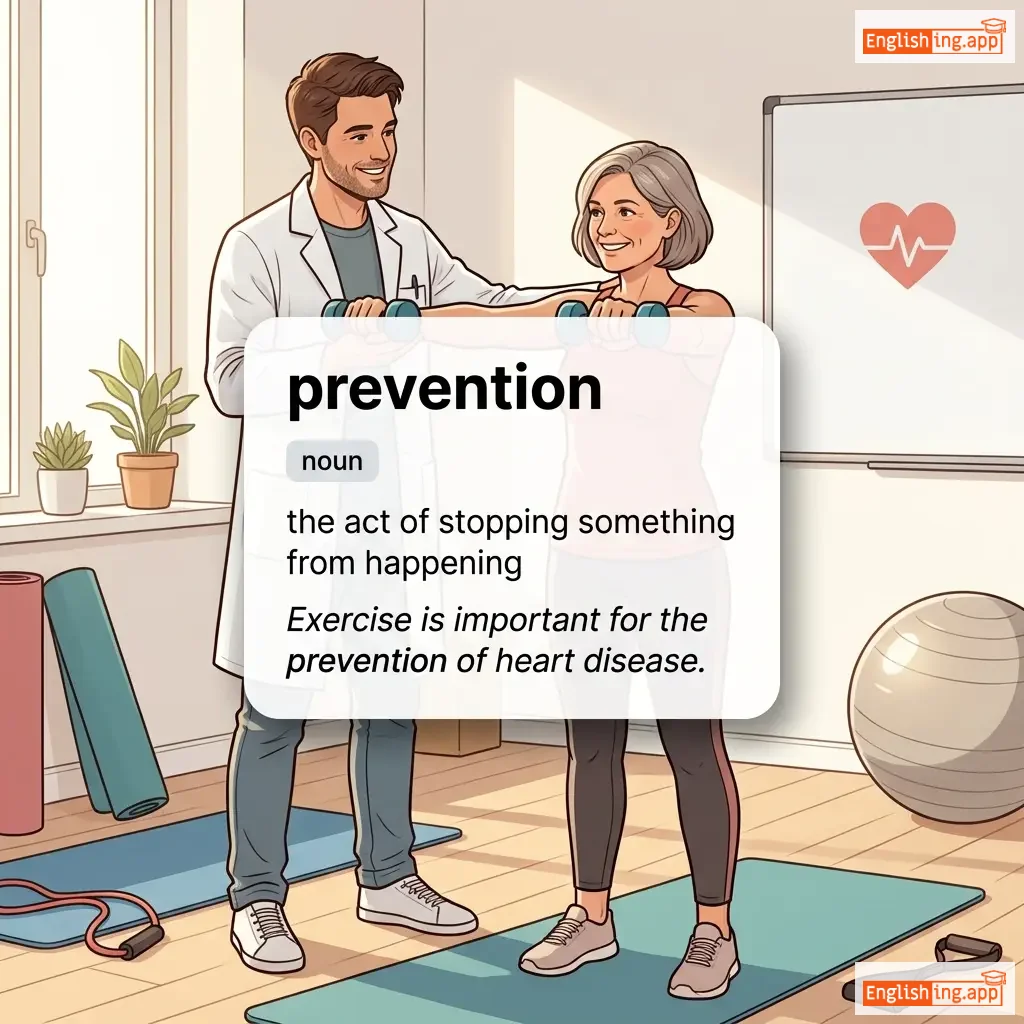
prevention definition card — visual illustration of the meaning
noun
/prɪˈvɛnʃən/
预防 (yufang)

the act of stopping something from happening

"Exercise is important for the prevention of heart disease."

"运动对预防心脏病很重要。" (Yùndòng duì yùfáng xīnzàngbìng hěn zhòngyào.)
adjective
/prɪˈventɪv/
预防的;设计用来防止某事发生 (yùfáng de)

designed to prevent something from happening; protective against disease

"Regular exercise is a preventive measure against heart disease."
"定期锻炼是预防心脏病的措施。" (Dìngqī duànliàn shì yùfáng xīnzàngbìng de cuòshī.)
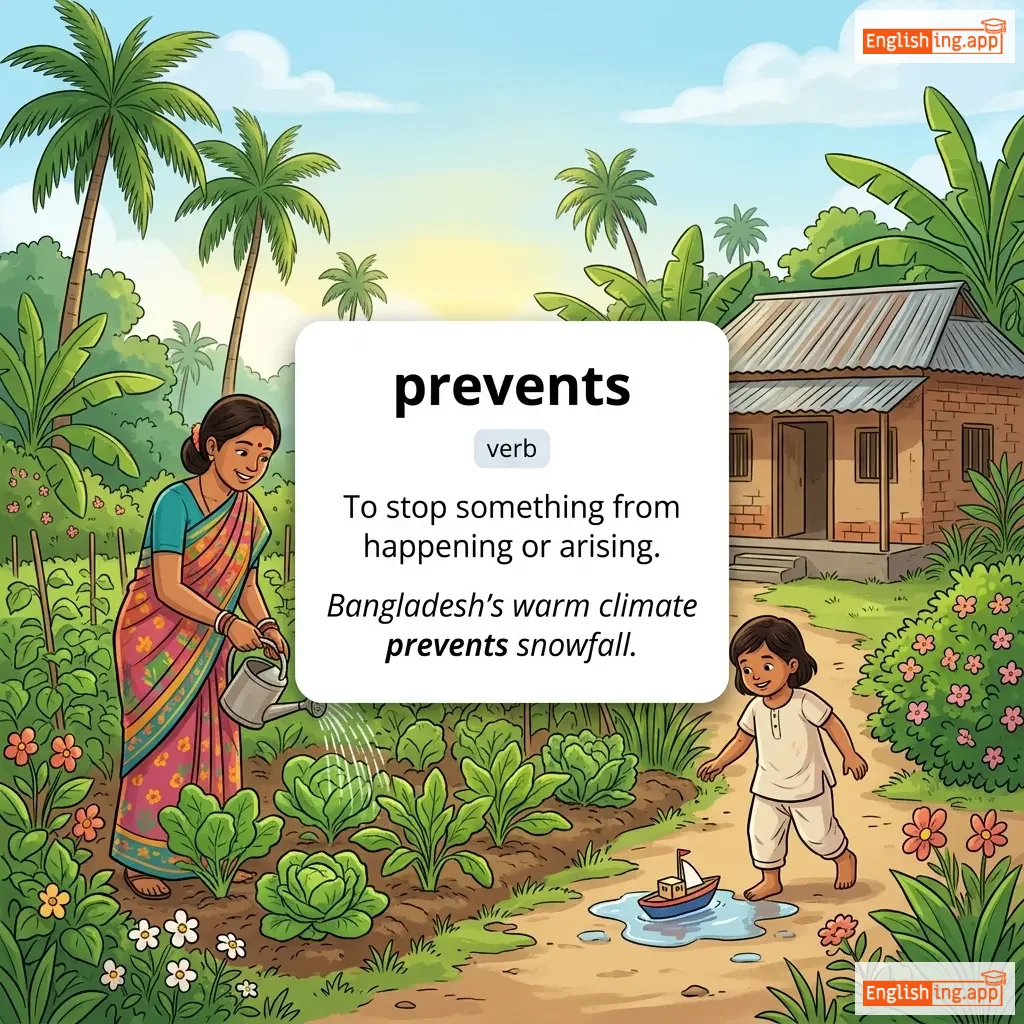
prevents definition card — visual illustration of the meaning
verb
প্রিভেন্টস
阻止 (zǔzhǐ)

To stop something from happening or arising.

"Bangladesh's warm climate prevents snowfall."

"孟加拉国的温暖气候阻止了降雪。" (Mèngjiālāguó de wēnnuǎn qìhòu zǔzhǐle jiàngxuě.)
adjective
/ˈpriːviəs/
以前的 (yǐqián de)

Existing or happening before the present time.

"He referred to the previous meeting to explain his point."

"他引用了上一场会议来解释他的观点。" (Tā yǐn yòngle shàng yī chǎng huì yì lái jiěshì tā de guāndiǎn.)
adverb
/ˈpriːviəsli/
以前 (yǐqián)

at an earlier time or before now

"She had previously worked at a bank before starting her own business."

"她曾在银行工作过,之后才开始了自己的生意。" (Tā céng zài yínháng gōngzuò guò, zhīhòu cái kāishǐle zìjǐ de shēngyì.)
🦁

prey

noun/verb
/preɪ/

an animal hunted by another for food; to hunt and feed on

"Lions prey on zebras in the wild."

price definition card — visual illustration of the meaning
noun
/praɪs/
价格 (jiàgé)

the amount of money expected, required, or given for something

"The price of the car has increased recently."

"这辆车的价格最近上涨了。" (Zhè liàng chē de jiàgé zuìjìn shàngzhǎng le.)
adjective
/ˈpraɪs.ləs/
无价的;极其宝贵的 (wú jià de; jí qí bǎo guì de)

extremely valuable; invaluable; beyond price

"Her grandmother's antique jewelry is absolutely priceless."
"她祖母的古董珠宝是绝对无价的。" (Tā zǔmǔ de gǔdǒng zhūbǎo shì juéduì wú jià de.)
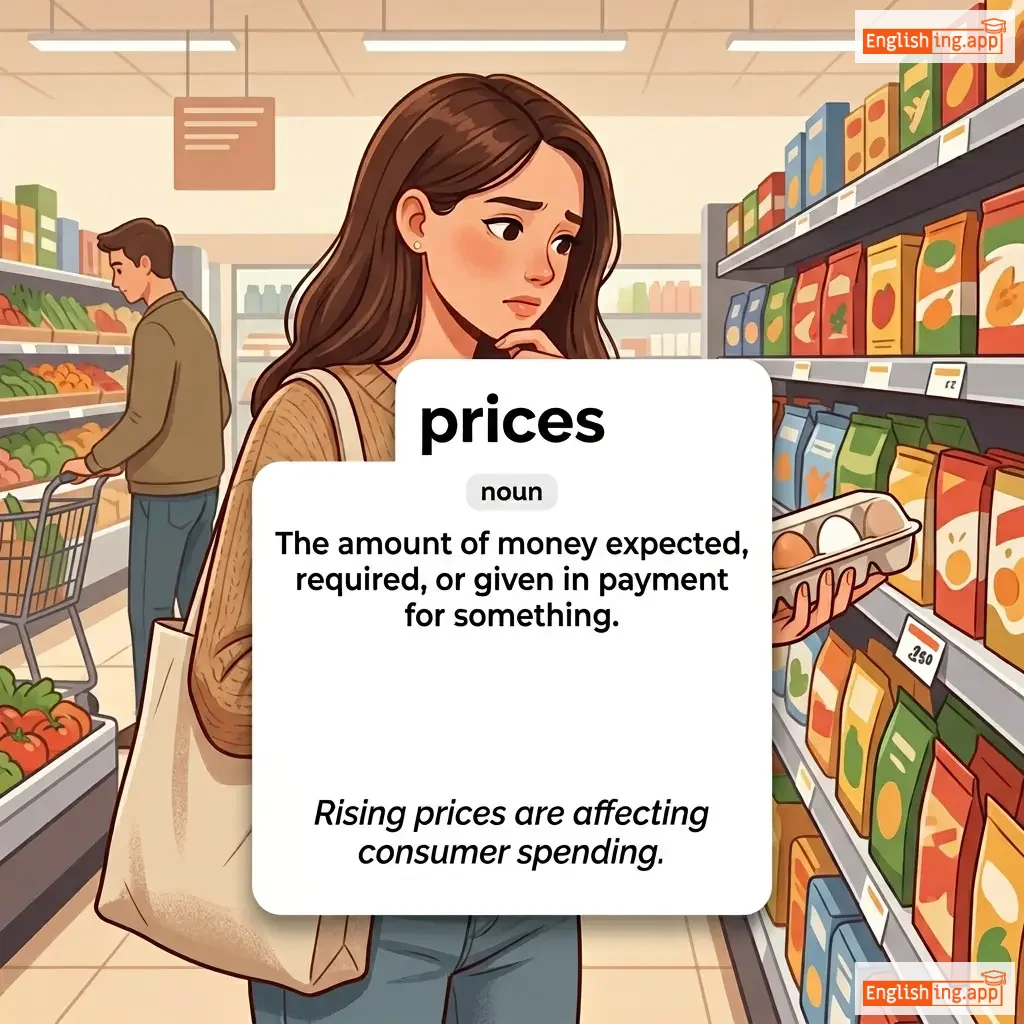
prices definition card — visual illustration of the meaning
noun
ˈpraɪsɪz
价格 (jiàgé)

The amount of money expected, required, or given in payment for something.

"Rising prices are affecting consumer spending."

"不断上涨的价格影响着消费者的支出。" (Bùduàn shàngzhǎng de jiàgé yǐngxiǎngzhe xiāofèi zhě de zhīchū.)
verb
/ˈprɪkəl/

to cause a slight stinging or tingling sensation on the skin

"Her skin began to prickle in the cold wind."

pride definition card — visual illustration of the meaning
noun
/praɪd/
自豪 (zì háo)

a feeling of deep pleasure or satisfaction derived from one's own achievements

"He took pride in his work and always aimed for perfection."

"他为自己的工作感到自豪,总是追求完美。" (Tā wèi zì jǐ de gōngzuò gǎn dào zì háo, zǒng shì zhuī qiú wán měi.)
noun
/priːst/
牧师 (mùshī)

a person who performs religious duties and ceremonies

"The priest blessed the congregation during the Sunday service."

"牧师在主日礼拜期间祝福了会众。" (Mùshī zài zhǔrì lǐbài qījiān zhùfú le huìzhòng.)
adjective
/ˈprɪɡɪʃ/
自以为是的道德主义者 (zì yǐ wéi shì de dàodé zhǔyì zhě)

self-righteously moralistic and superior

"He came across as priggish when correcting everyone's manners."

"当他纠正每个人的行为时,他显得很自以为是的道德主义者。" (Dāng tā jiūzhèng měi gèrén de xíngwéi shí, tā xiǎndé hěn zì yǐ wéi shì de dàodé zhǔyì zhě.)
adjective
/prɪm/
过于正式或合适 (guo yu zheng shi huo he shi)

stiffly formal and proper in appearance or behavior

"She looked prim in her neatly pressed dress."

"她穿着精心熨烫的裙子看起来非常端庄。" (Ta chuanzhuo jingxin yuntao de qunzi kan qilai feichang duanzhuang.)
adjective
/ˈpraɪvət/
私密的 (simi de)

belonging to or for the use of one particular person or group

"She enjoys her private time away from work."

"她喜欢远离工作的私人时间。" (Ta xihuan yuanli gongzuo de simi shijian.)
noun
/ˈprɪn.tər/
打印机 (dǎ yìn jī)

a person whose job is printing books, newspapers, or other materials; a machine that prints documents

"The printer delivered the wedding invitations on time."
"打印机准时交付了婚礼请柬。" (Dǎ yìn jī zhǔnshí jiāofù le hūnlǐ qǐngjiǎn.)
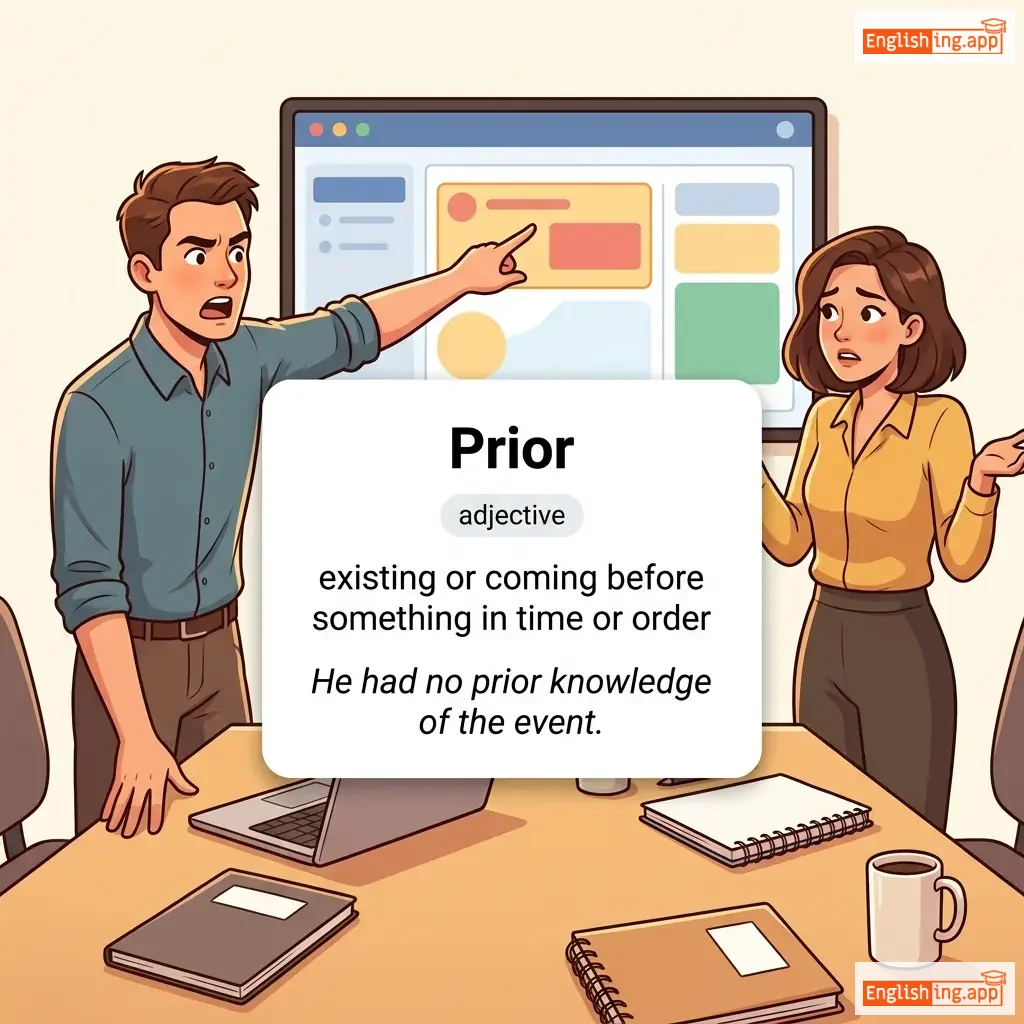
Prior definition card — visual illustration of the meaning
adjective
/ˈpraɪər/
先前的 (xianqian de)

existing or coming before something in time or order

"He had no prior knowledge of the event."
"他对这个事件没有事先的了解。" (Ta dui zhe ge shijian mei you shixian de liaojie.)
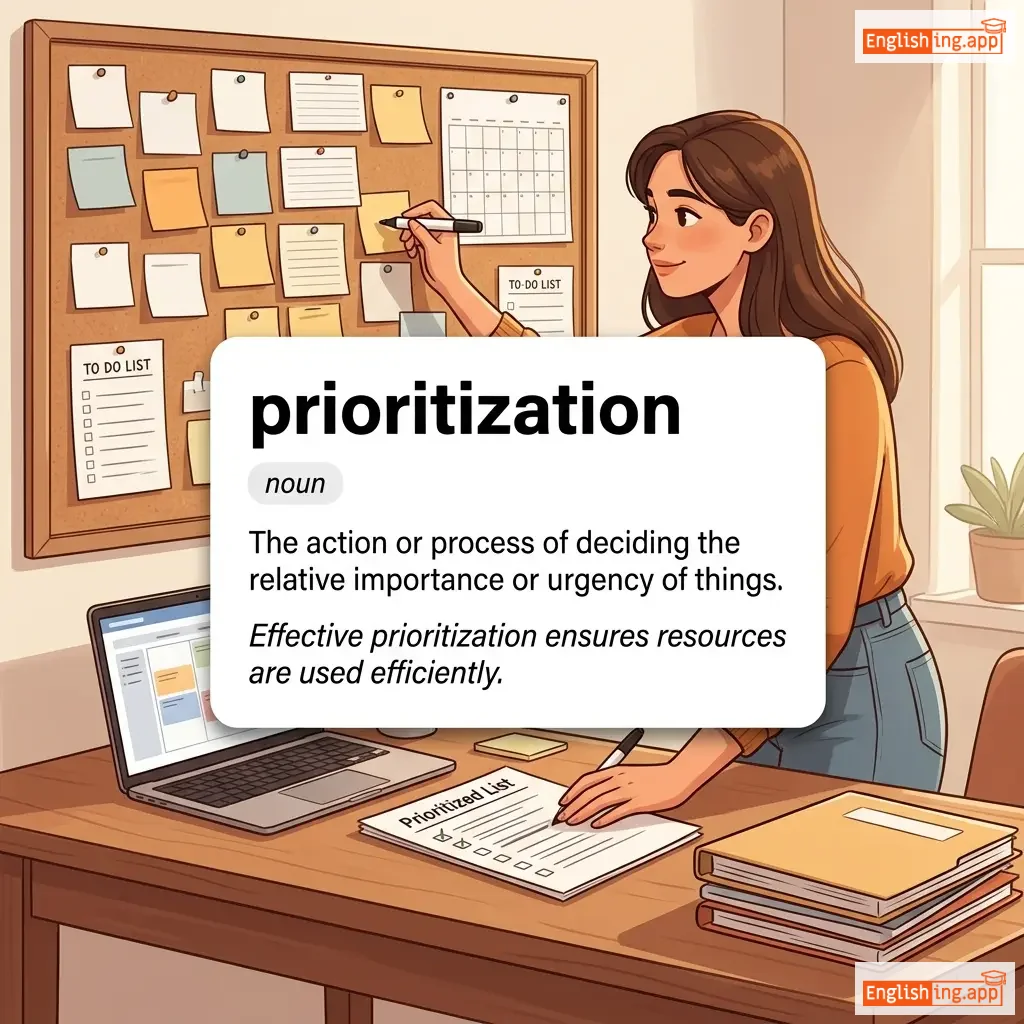
prioritization definition card — visual illustration of the meaning
noun
ˌpraɪɔːrɪtaɪˈzeɪʃən
优先排序 (youxian paixu)

The action or process of deciding the relative importance or urgency of things.

"Effective prioritization ensures resources are used efficiently."
"有效的优先排序确保资源得到有效利用。" (Yǒuxiào de yōuxiān pàixù quèbǎo zīyuán dédào yǒuxiào lìyòng.)
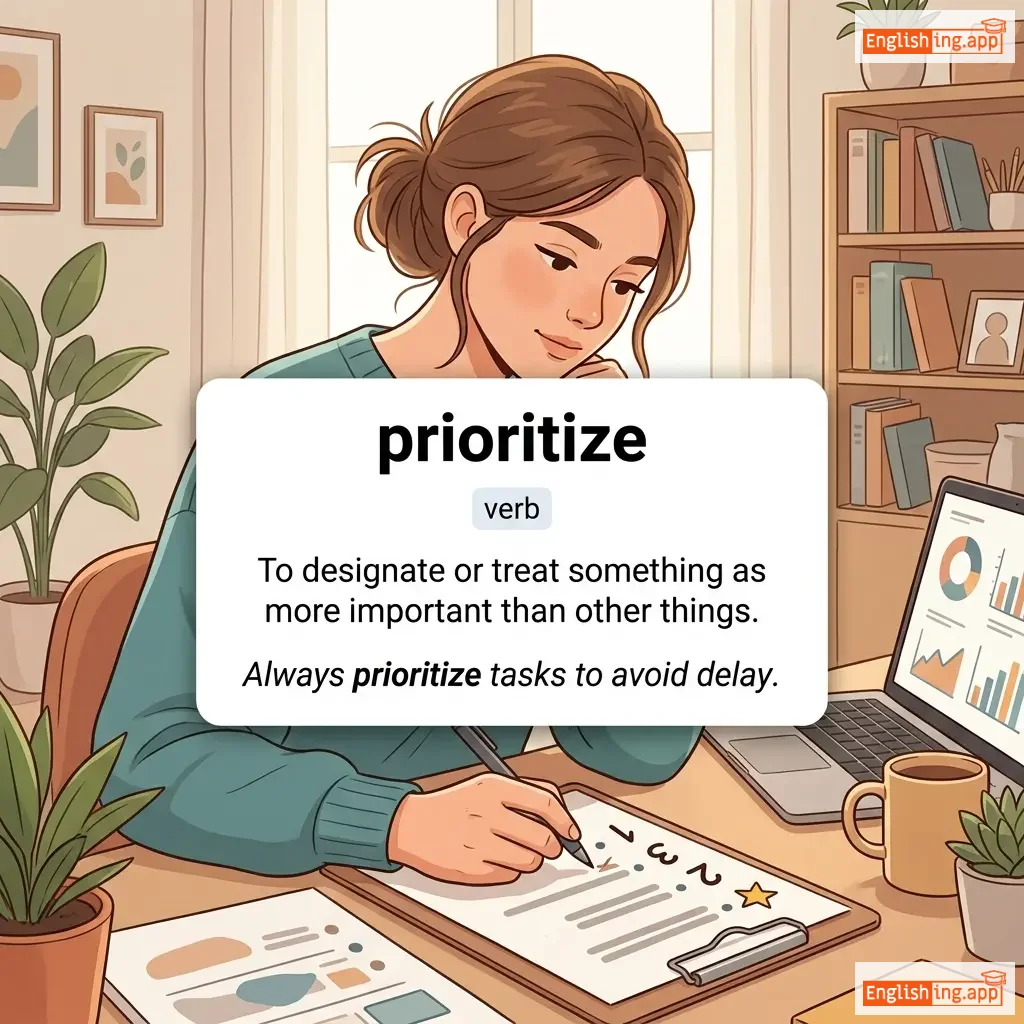
prioritize definition card — visual illustration of the meaning
verb
/praɪˈɔːrətaɪz/
优先考虑 (yōuxiān kǎolǜ)

To designate or treat something as more important than other things.

"Always prioritize tasks to avoid delay."

"始终优先考虑任务,以避免延迟。" (Shǐzhōng yōuxiān kǎolǜ rènwù, yǐ bìmiǎn yánchí.)
noun
/praɪˈɒrɪti/
优先 (youxian)

Something that is regarded as more important than other things.

"Safety is the top priority in this company."

"在这家公司,安全是最重要的优先事项。" (Zai zhe jia gongsi, anquan shi zui zhongyao de youxian shixiang.)
noun
/ˈpraɪəri/
修道院 (xiūdàoyuàn)

a small monastery or convent governed by a prior or prioress

"The old priory was converted into a museum."

"那个古老的修道院被改造成了博物馆。" (Nàgè gǔlǎo de xiūdàoyuàn bèi gǎizào chéngle bówùguǎn.)
noun
/ˈprɪzən/
监狱 (jianyu)

a building where people are kept as punishment for a crime or while waiting for trial

"He was sent to prison for his crimes."

"他因犯下罪行而被送进监狱。" (Ta yin fànxià zuìxíng ér bèi sòng jìn jiānyù.)
👨‍⚖️

prisoner (囚犯)

noun
/ˈprɪzənər/
囚犯 (qiúfàn)

a person who is in prison

"The prisoner was granted parole after serving 10 years."
"这个囚犯在服刑10年后被释放。" (Zhège qiúfàn zài fúxíng 10 nián hòu bèi shìfàng.)
pristine definition card — visual illustration of the meaning
adjective
/ˈprɪstiːn/

In its original condition; unspoiled, clean, and fresh.

"The hikers were amazed by the pristine beauty of the untouched forest."

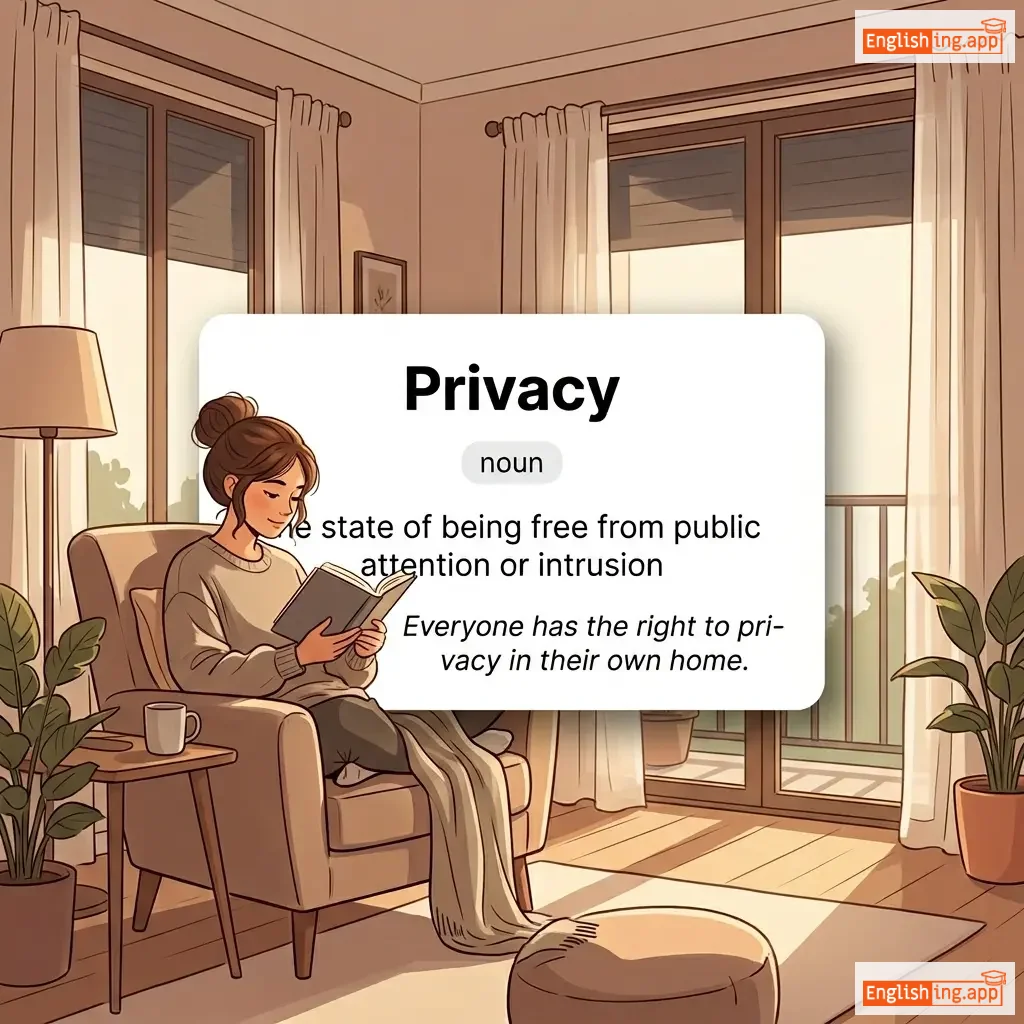
Privacy definition card — visual illustration of the meaning
noun
/ˈpraɪvəsi/
隐私 (yǐnsī)

the state of being free from public attention or intrusion

"Everyone has the right to privacy in their own home."
"每个人在自己的家中都有隐私权。" (Měi gèrén zài zìjǐ de jiā zhōng dōu yǒu yǐnsī quán.)
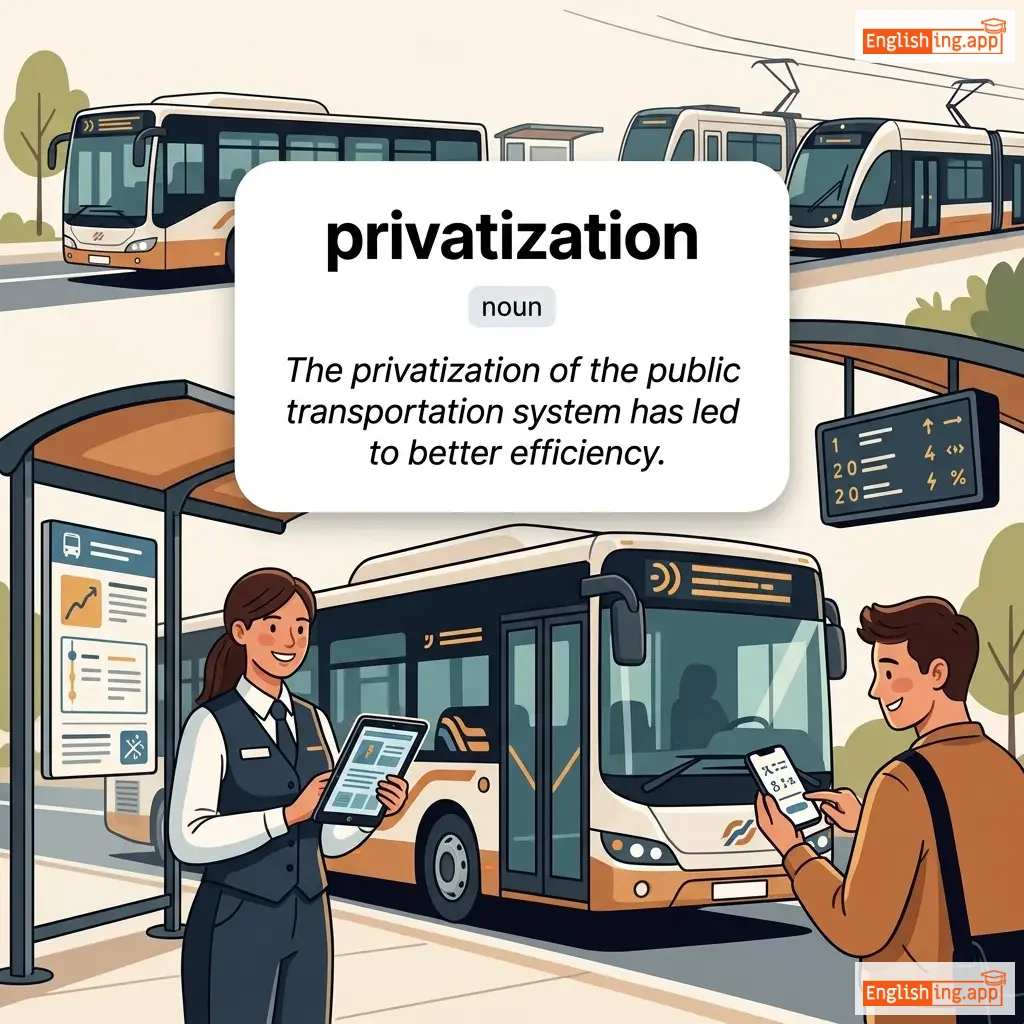
privatization definition card — visual illustration of the meaning
noun
/ˌpraɪvətəˈzeɪʃən/
私有化 (siyouhua)

the process of transferring ownership of a business, industry, or service from the public sector to the private sector

"The privatization of the public transportation system has led to better efficiency."

"公共交通系统的私有化带来了更高的效率。" (Gonggong jiaotong xitong de siyouhua dailai le geng gao de xiaolü.)
adjective
/ˈprɪvi/
秘密知识 (mìmì zhīshì)

having access to secret or private knowledge

"She was privy to the confidential discussions."

"她知道机密讨论。" (Tā zhīdào jīmì tǎolùn.)
noun
/ˈprɪvɪti/
私密关系, 合同关系 (simi guanxi, hetong guanxi)

A close, private, or special relationship; in law, the direct connection between parties to a contract.

"There was no privity of contract between the supplier and the customer."

"供应商和客户之间没有合同关系。" (gongying shang he kehu zhijian mei you hetong guanxi.)
adjective
/ˈprɪv.ə.lɪdʒd/
特权的 (privuhlidzhd)

having special advantages; favored; elite

"She comes from a privileged background with many opportunities."

"她来自一个有特权的背景,拥有许多机会。" (Ta laizi yi ge you tequan de beijing, yongyou xuduo jihui)
noun
/ˈprɪvəlɪdʒ/
特权, 优势 (tequan, youshi)

A special right, advantage, or immunity granted or available only to a particular person or group.

"Education is considered a privilege in many developing countries."

"在许多发展中国家,教育被视为一种特权。" (Zai xu duo fazhan zhongguo jia, jiaoyu bei shi wei yi zhong tequan.)
adverb
/ˈpraɪvətli/
私下里 (sī xià lǐ)

in a private way; not in public or not shared with others

"She spoke to him privately about the issue."

"她私下里与他谈论了这个问题。" (Tā sī xià lǐ yǔ tā tánlùnle zhège wèntí.)
noun
/ˈpraɪ.vət ˈtuː.tər/
私人导师 (sīrén dǎoshī)

a teacher who gives individual instruction to a student outside of regular school

"The private tutor helped the student improve his math skills."

"私人导师帮助学生提高了他的数学技能。" (sīrén dǎoshī bāngzhù xuéshēng tígāo le tā de shùxué jìnéng)
noun
/ˌpraɪvəˈtɪə/
私人战舰 (sīrén zhànjiàn)

A privately owned armed ship authorized by a government to attack enemy ships during war.

"The privateer captured several enemy vessels during the conflict."

"在冲突中,私人战舰俘获了多个敌方船只。" (Zài chōngtú zhōng, sīrén zhànjiàn fúhuòle duōgè dífāng chuánzhī.)