词汇表

英语词汇词典 | 单词含义、定义和示例

verb
/ˈprɒspər/
繁荣 (fánróng)

to succeed or flourish, especially in financial or business matters

"With hard work and determination, she managed to prosper in her career."

"凭借努力工作和决心,她在事业中取得了成功。" (Píngjiè nǔlì gōngzuò hé juéxīn, tā zài shìyè zhōng qǔdéle chénggōng.)
noun
/prəˈspɛktəs/
招生简章 (zhaosheng jianzhang)

a printed document that advertises or describes a school, business, or investment offering

"The university sent out a prospectus to attract new students."

"大学发送了招生简章以吸引新生。" (Daxue fasongle zhaosheng jianzhang yi xiqin xinsheng.)
prospects definition card — visual illustration of the meaning
noun
/ˈprɒs.pekts/
前景 (qianjing)

The possibility or likelihood of some future event occurring.

"The prospects for growth look promising."

"增长的前景看起来很有前途。" (Zengzhang de qianjing kan qilai hen you qiantu.)
adjective
/prəˈspɛktɪv/
前景的 (qianjing de)

likely or expected to happen in the future; potential

"The company is meeting with prospective clients next week."

"公司将于下周与潜在客户会面。" (Gongsi jiang yu xia zhou yu qianzai kehu huimian.)
noun
/ˈprɒspɛktər/
矿产勘探员 (kuàngchǎn kāntàn yuán)

a person who searches for mineral deposits, especially gold

"The prospector spent years in the mountains searching for gold."

"矿产勘探员花了多年在山中寻找黄金。" (Kuàngchǎn kāntàn yuán huāle duōnián zài shān zhōng xúnzhǎo huángjīn.)
adjective
/prəˈɡrɛsɪv/
进步的 (jinbu de)

favoring or implementing new and modern ideas or policies; moving forward or improving

"She holds progressive views on social justice and equality."

"她对社会公正和平等持有进步的观点。" (Tā duì shèhuì gōngzhèng hé píngděng chíyǒu jìnbù de guāndiǎn.)
noun
/ˌproʊɪˈbɪʃən/
禁止 (jinzhi)

The act of forbidding something by law or authority.

"The government announced the prohibition of smoking in public places."

"政府宣布在公共场所禁烟。" (Zhengfu xuānbù zài gōnggòng chǎngsuǒ jìnyān.)
noun
/ˌproʊɪˈbɪʃənɪst/
禁酒主义者 (jìn jiǔ zhǔ yì zhě)

A person who supports or advocates prohibition, especially of alcohol.

"The prohibitionist campaigned against the sale of liquor in the town."
"禁酒主义者在城里反对酒类销售的运动。" (Jìn jiǔ zhǔ yì zhě zài chéng lǐ fǎn duì jiǔ lèi xiāo shòu de yùn dòng.)
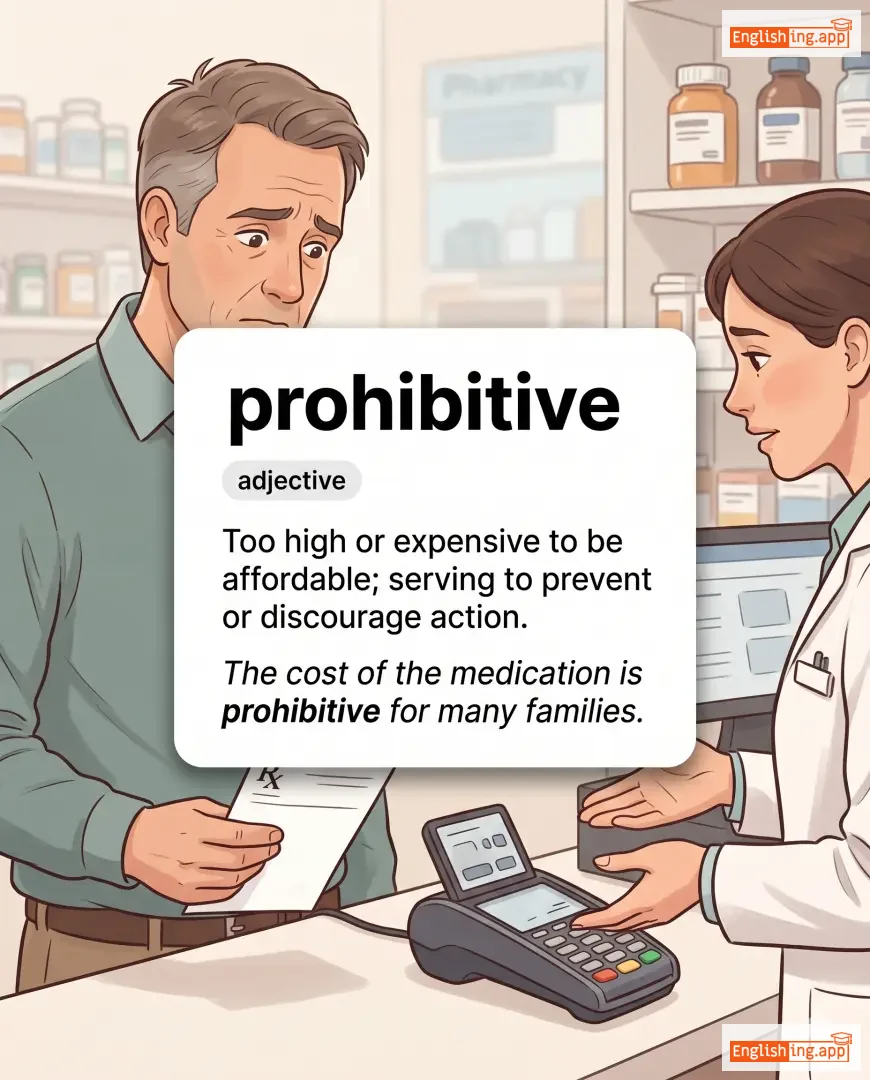
prohibitive definition card — visual illustration of the meaning
adjective
/prəˈhɪbɪtɪv/
过高的 (guò gāo de)

Too high or expensive to be affordable; serving to prevent or discourage action.

"The cost of the medication is prohibitive for many families."

"药物的费用对于许多家庭来说是过高的。" (Yàowù de fèiyòng duìyú xǔduō jiātíng lái shuō shì guò gāo de.)
adjective
/prəˈhɪbɪtɔːri/
禁止的 (jìnzhǐ de)

Serving or tending to prohibit or forbid.

"The prohibitory laws were strictly enforced in the region."

"禁止性的法律在该地区严格执行。" (Jìnzhǐ xìng de fǎlǜ zài gāi dìqū yángé zhíxíng.)
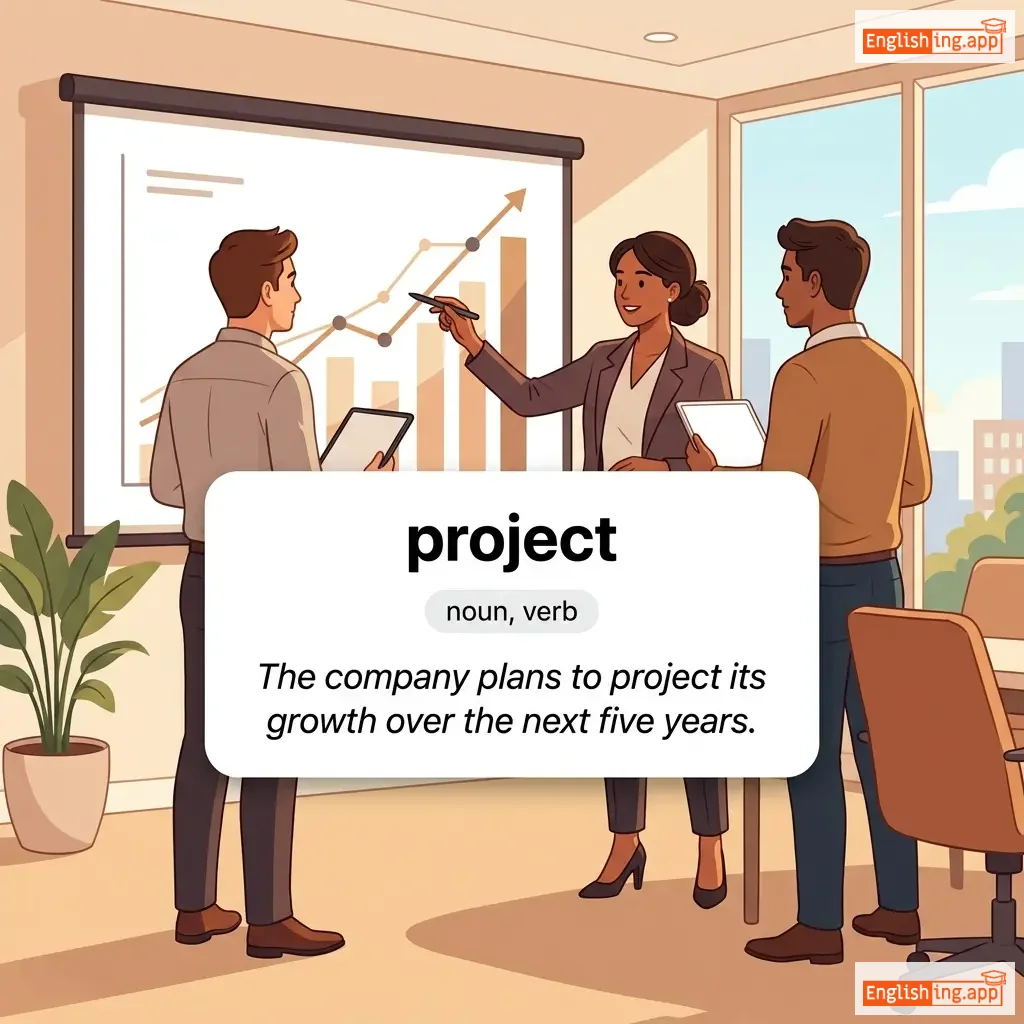
project definition card — visual illustration of the meaning
noun, verb
/ˈprɒdʒɛkt/ (noun), /prəˈdʒɛkt/ (verb)

As a noun: a planned task or assignment. As a verb: to plan, estimate, or extend something outward.

"The company plans to project its growth over the next five years."

noun
/prəˈdʒɛktaɪl/
弹丸 (dànwán)

An object fired, thrown, or propelled, especially from a weapon.

"The soldier dodged the incoming projectile."

"士兵躲过了来袭的弹丸。" (Shìbīng duǒguòle láixí de dànwán.)
projection definition card — visual illustration of the meaning
noun
/prəˈdʒɛkʃən/
预测 (yùcè)

An estimate or forecast of a future situation based on current trends.

"The sales projection shows a steady increase in revenue."

"销售预测显示收入稳步增长。" (Xiāoshòu yùcè xiǎnshì shōurù wěnbù zēngzhǎng.)
projects definition card — visual illustration of the meaning
noun
ˈprɒdʒ.ekts
项目 (xiangmu)

Individual or collaborative enterprises that are carefully planned to achieve a particular aim.

"These projects aim for technological breakthroughs."

"这些项目旨在推动技术突破。" (Zhèxiē xiàngmù zhǐ zài tuīdòng jìshù túpò.)
noun, adjective
/ˌproʊlɪˈtɛəriən/
无产阶级 (wúchǎn jiējí)

Relating to the working class, especially those who do not own property.

"The movement was rooted in proletarian struggles."
"这场运动根植于无产阶级的斗争中。" (Zhè chǎng yùndòng gēnzhí yú wúchǎn jiējí de dòuzhēng zhōng.)
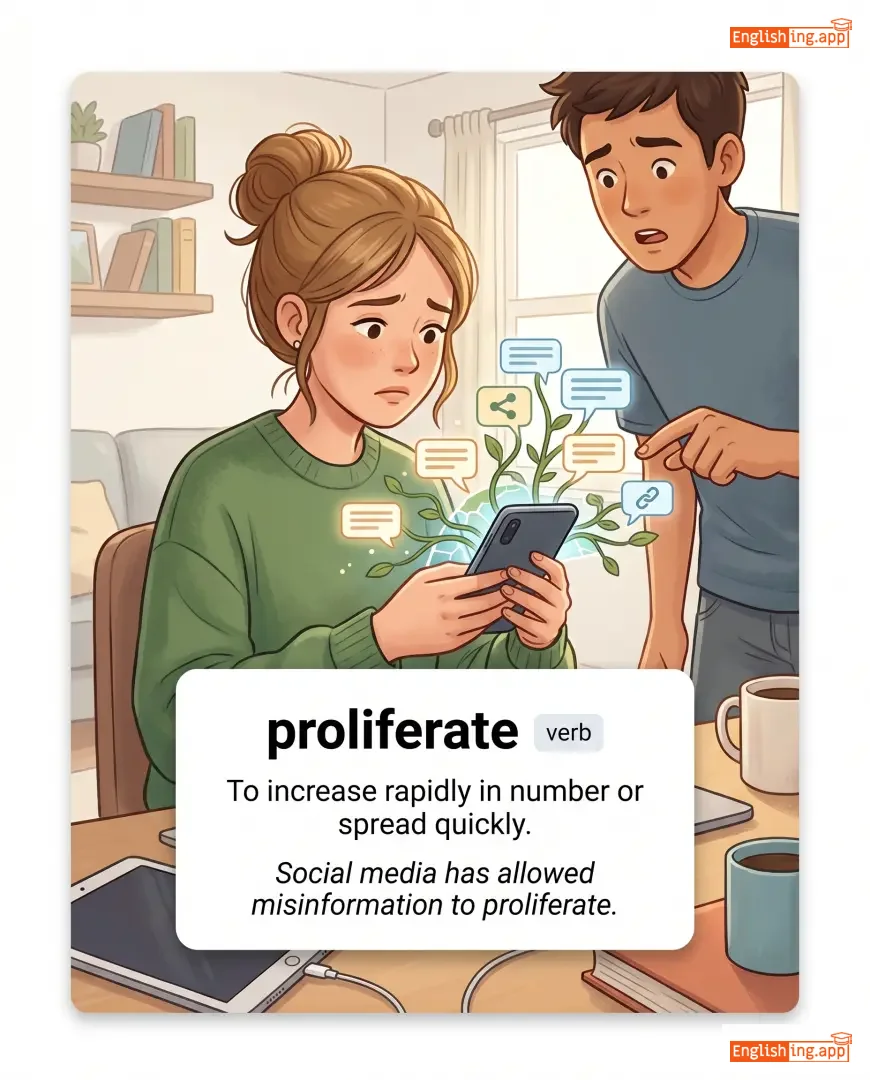
proliferate definition card — visual illustration of the meaning
verb
/prəˈlɪfəreɪt/
扩散 (kuò sàn)

To increase rapidly in number or spread quickly.

"Social media has allowed misinformation to proliferate."
"社交媒体让虚假信息迅速传播。" (Shèjiāo méitǐ ràng xūjiǎ xìnxī xùnsù chuánbō.)
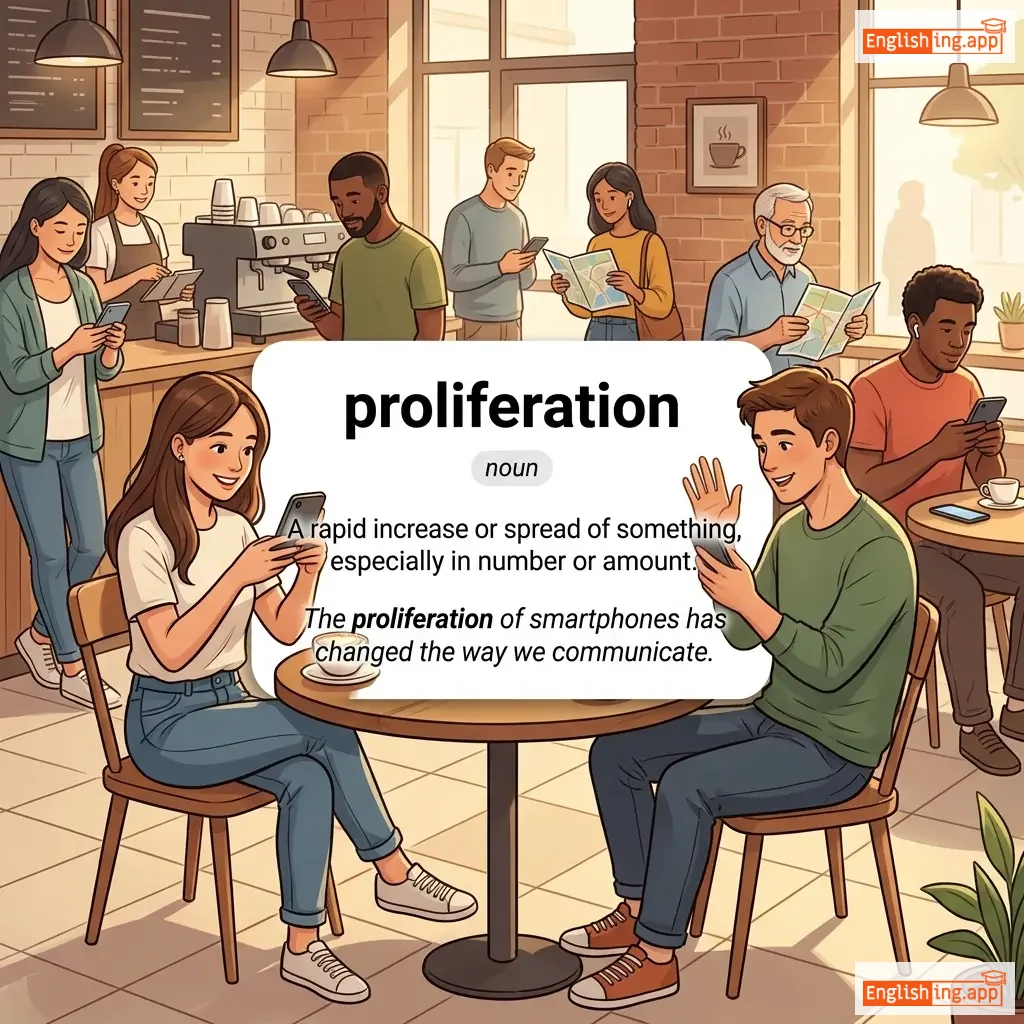
proliferation definition card — visual illustration of the meaning
noun
/prəˌlɪfəˈreɪʃən/
激增,扩展 (jizeng, kuozhan)

A rapid increase or spread of something, especially in number or amount.

"The proliferation of smartphones has changed the way we communicate."

"智能手机的普及改变了我们沟通的方式。" (Zhìnéng shǒujī de pǔjí gǎibiànle wǒmen gōutōng de fāngshì.)
prolific definition card — visual illustration of the meaning
adjective
/prəˈlɪfɪk/
高产的 (gāo chǎn de)

producing many works, results, or offspring; highly productive

"She is a prolific writer who publishes several books a year."

"她是一个高产的作家,每年出版几本书。" (Tā shì yīgè gāo chǎn de zuòjiā, měi nián chūbǎn jǐ běn shū.)
adjective
/ˈprəʊ.lɪks/
过于冗长 (guòyú rǒngcháng)

using too many words; tediously lengthy

"The professor’s prolix lecture put many students to sleep."

"教授冗长的讲座让许多学生打瞌睡。" (Jiàoshòu rǒngcháng de jiǎngzuò ràng xǔduō xuéshēng dǎ kēshuì.)
noun
/prəˈlɪksɪti/
冗长 (rǒngcháng)

the quality of being tediously wordy and long

"The book’s prolixity made it difficult to read in one sitting."

"这本书的冗长使得在一次阅读中读完变得困难。" (Zhè běn shū de rǒngcháng shǐ dé zài yīcì yuèdú zhōng dú wán biàn dé kùnnán.)
noun
/ˈprəʊ.lɒɡ/
序言 (xuyan)

an introduction to a book, play, or event

"The novel begins with a short prologue set in the past."

"这本小说以一段设定在过去的简短序言开始。" (Zhe ben xiaoshuo yi yiduan sheding zai guoqu de jianduan xuyan kaishi.)
prolong definition card — visual illustration of the meaning
verb
/prəˈlɒŋ/
延长 (yáncháng)

to make something last longer; to extend in time

"The treatment helped to prolong the patient’s life."

"治疗帮助延长了病人的生命。" (zhìliáo bāngzhù yáncháng le bìngrén de shēngmìng.)
prolonged definition card — visual illustration of the meaning
adjective
prəˈlɒŋd
延长的 (yáncháng de)

Something that continues for longer than normal

"Prolonged sleep deprivation affects overall well-being."

"长时间的睡眠不足会影响整体健康。" (Cháng shíjiān de shuìmián bùzú huì yǐngxiǎng zhěngtǐ jiànkāng.)
noun, verb
/ˌprɒməˈneɪd/
散步 (sanbu)

A leisurely walk or stroll, especially in a public place for pleasure or display.

"They went for a promenade along the seaside."

"他们在海边散步。" (Tāmen zài hǎibiān sànbù.)
noun
/ˈprɒmɪnəns/
声望 (shengwang)

The state of being important, famous, or easily noticed.

"Her work gained prominence after the award."

"她的工作在获奖后获得了声望。" (Ta de gongzuo zai huojiang hou huodele shengwang.)
adjective
/ˈprɒmɪnənt/
显著的 (xiǎnzhù de)

Important, famous, or easily noticeable.

"He is a prominent leader in the community."

"他是社区中的一个杰出领导者。" (Tā shì shèqū zhōng de yīgè jiéchū lǐngdǎo zhě.)
adjective
/prəˈmɪskjuəs/
放荡 (fàngdàng)

Having or showing a casual and unselective approach, often used to describe indiscriminate sexual relationships.

"The novel depicts a character with a promiscuous lifestyle."

"这本小说描述了一个过着放荡生活方式的角色。" (Zhè běn xiǎoshuō miáoshùle yīgè guòzhe fàngdàng shēnghuó fāngshì de juésè.)
promise definition card — visual illustration of the meaning
noun
/ˈprɒmɪs/
承诺 (chengnuo)

a statement that one will definitely do something or that something will happen

"I made a promise to help her with the project."

"我承诺帮助她完成这个项目。" (Wǒ chéngnuò bāngzhù tā wánchéng zhège xiàngmù.)
adjective
/ˈprɒmɪsɪŋ/
有前途的 (yǒu qiántú de)

showing signs of future success or potential

"She is a promising young scientist with great ideas."

"她是一个有前途的年轻科学家,拥有伟大的想法。" (Tā shì yīgè yǒu qiántú de niánqīng kēxuéjiā, yōngyǒu wěidà de xiǎngfǎ.)
adjective
/ˈprɒmɪsəri/
承诺的 (chengnuo de)

Containing or conveying a promise, especially in writing.

"He signed a promissory note to repay the loan."

"他签署了还款承诺书。" (Ta qianshu le huankuan chengnuo shu.)
noun
/ˈprɒm.ən.tɔːr.i/
海角 (haijiao)

A high point of land or rock projecting into a body of water.

"The lighthouse stood on a promontory overlooking the sea."

"灯塔矗立在俯瞰大海的海角上。" (Dēngtǎ chùlì zài fǔkàn dàhǎi de hǎijiǎo shàng.)
promote definition card — visual illustration of the meaning
verb
/prəˈmoʊt/
促进 / 推广 (cùjìn / tuīguǎng)

To support or encourage the growth, sale, or acceptance of something.

"The company worked hard to promote its new product."

"公司为推广其新产品而努力工作。" (Gōngsī wèi tuīguǎng qí xīn chǎnpǐn ér nǔlì gōngzuò.)
noun
/prəˈmoʊ.tər/
推广员 (tuī guǎng yuán)

A person or organization that helps to organize or finance an event, business, or product launch.

"The promoter organized a concert for the new band."

"推广员为新乐队组织了一场音乐会。" (Tuī guǎng yuán wèi xīn yuè duì zǔ zhī le yī chǎng yīn yuè huì.)
promoting definition card — visual illustration of the meaning
verb
prəˈmoʊtɪŋ
促进 (cujin)

To support or actively encourage a cause, venture, or aim; to help or encourage the progress or development of something.

"Promoting education can significantly improve children's lives."

"促进教育可以显著改善儿童的生活。" (Cujin jiaoyu keyi xianzhu gaishan ertong de shenghuo.)
verb, noun, adjective
/prɑːmpt/
促使 / 快速 (cùshǐ / kuàisù)

To cause someone to take action; done without delay.

"His speech prompted the audience to ask questions."

"他的演讲促使观众提问。" (Tā de yǎnjiǎng cùshǐ guānzhòng tíwèn.)
verb
/ˈprɑː.məl.ɡeɪt/
发布 (fabu)

To announce or make a law, decree, or idea officially known.

"The government promulgated new regulations on data privacy."

"政府发布了关于数据隐私的新规定。" (Zhengfu fabu le guanyu shuju yinxi xin guiding.)
adjective
/proʊn/
倾向 (qingxiang)

likely to suffer from or experience something, especially something unfortunate

"He is prone to headaches when he works too long."

"他在工作过长时间后容易头痛。" (Ta zai gongzuo guochang shijian hou rongyi toutong.)
noun
/prɔːŋ/
叉子的尖端 (chā zi de jiān duān)

a projecting pointed part, such as one of the pointed ends of a fork

"The fork has four prongs."

"叉子有四个尖端。" (Chā zi yǒu sì gè jiān duān.)
pronounce definition card — visual illustration of the meaning
verb
/prəˈnaʊns/
发音 (fayin)

to say words correctly; to declare officially

"She can pronounce French words perfectly."

"她可以完美地发音法语单词。" (Tā kěyǐ wánměi de fāyīn fǎyǔ dāncí.)
adjective
/prəˈnaʊnst/
明显的 (mingxian de)

very noticeable or strongly marked

"There is a pronounced difference between the two styles."

"这两种风格之间有明显的区别。" (Zhe liang zhong fengge zhijian you mingxian de qubie.)
noun
/prəˌnʌnsiˈeɪʃən/
发音 (fayin)

the way a word or language is spoken; the act or result of pronouncing words

"Her pronunciation of French words has improved significantly."

"她的法语单词发音有了很大提高。" (ta de fayu danci fayin youle henda tigao)
🧑‍⚖️

proof (pruf)

noun
/pruːf/
证据 (zhèngjù)

evidence or argument establishing a fact or the truth of a statement

"The detective presented proof of the suspect's guilt."

"侦探提供了嫌疑人有罪的证据。" (Zhēntàn tígōngle xiányí rén yǒu zuì de zhèngjù.)
verb
/ˈpruːfˌriːd/
校对 (jiàoduì)

to read written material and mark any errors

"She proofread the report before submission."

"她在提交前校对了报告。" (Tā zài tíjiāo qián jiàoduì le bàogào.)
noun
/prɒp/
道具 (dàojù)

an object used on stage by actors during a performance; something that supports or holds up

"The actor forgot his prop on stage."

"演员忘记了他的道具。" (Yǎnyuán wàngjìle tā de dàojù.)
verb
/prəˈroʊɡ/
暂停会议 (zanting huiyi)

to discontinue a session of a parliament or assembly without dissolving it

"The president decided to prorogue parliament until the crisis was resolved."
"总统决定暂停议会,直到危机得到解决。" (Zongtong jueding zanting yihui, zhidao weiji dedao jieju.)
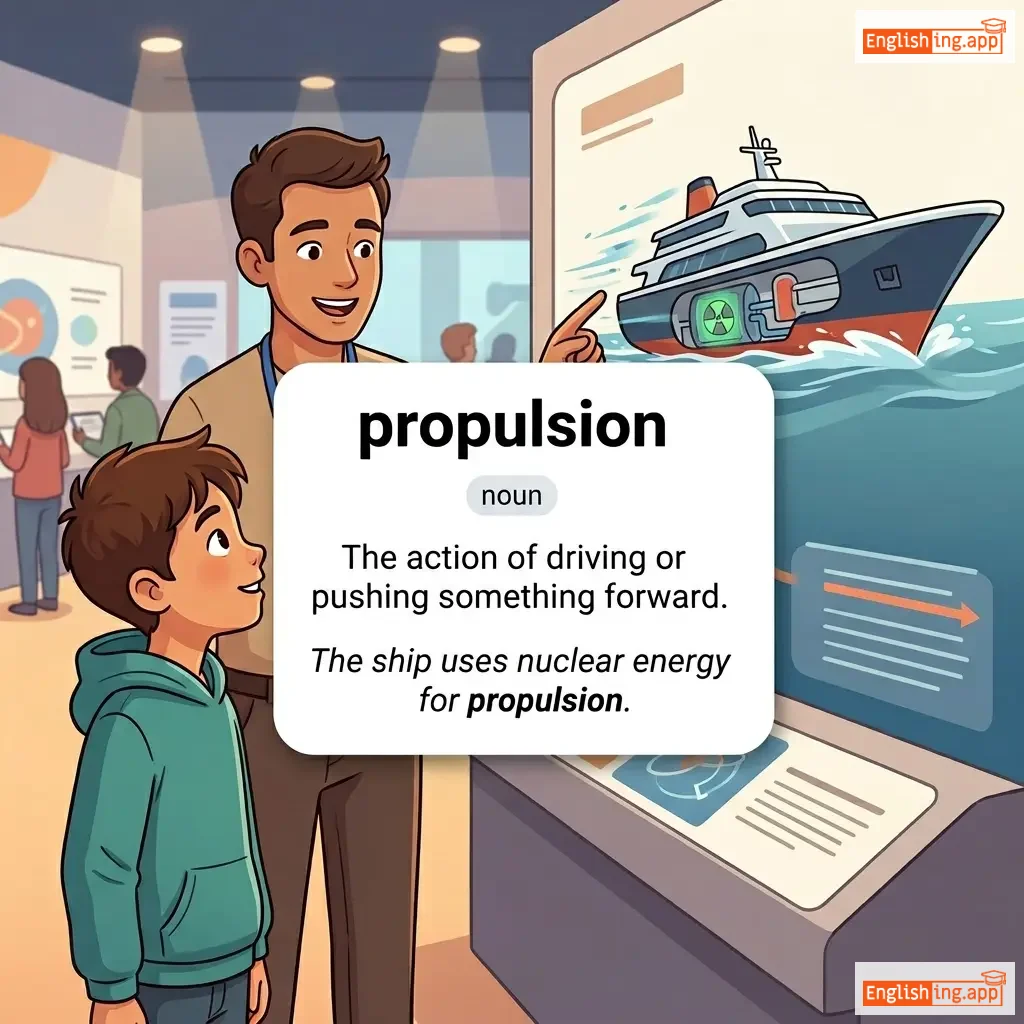
propulsion definition card — visual illustration of the meaning
noun
/prəˈpʌlʃən/
推进力 (tuī jìn lì)

The action of driving or pushing something forward.

"The ship uses nuclear energy for propulsion."

"这艘船使用核能推进。" (Zhè sōu chuán shǐyòng hé néng tuī jìn.)
adjective
/prəˈpʌlsɪv/
推进的 (tuījìn de)

Having the power to drive or push something forward.

"The propulsive force of the rocket lifted it off the ground."
"火箭的推进力将它从地面抬起。" (Huǒjiàn de tuījìn lì jiāng tā cóng dìmiàn táiqǐ.)
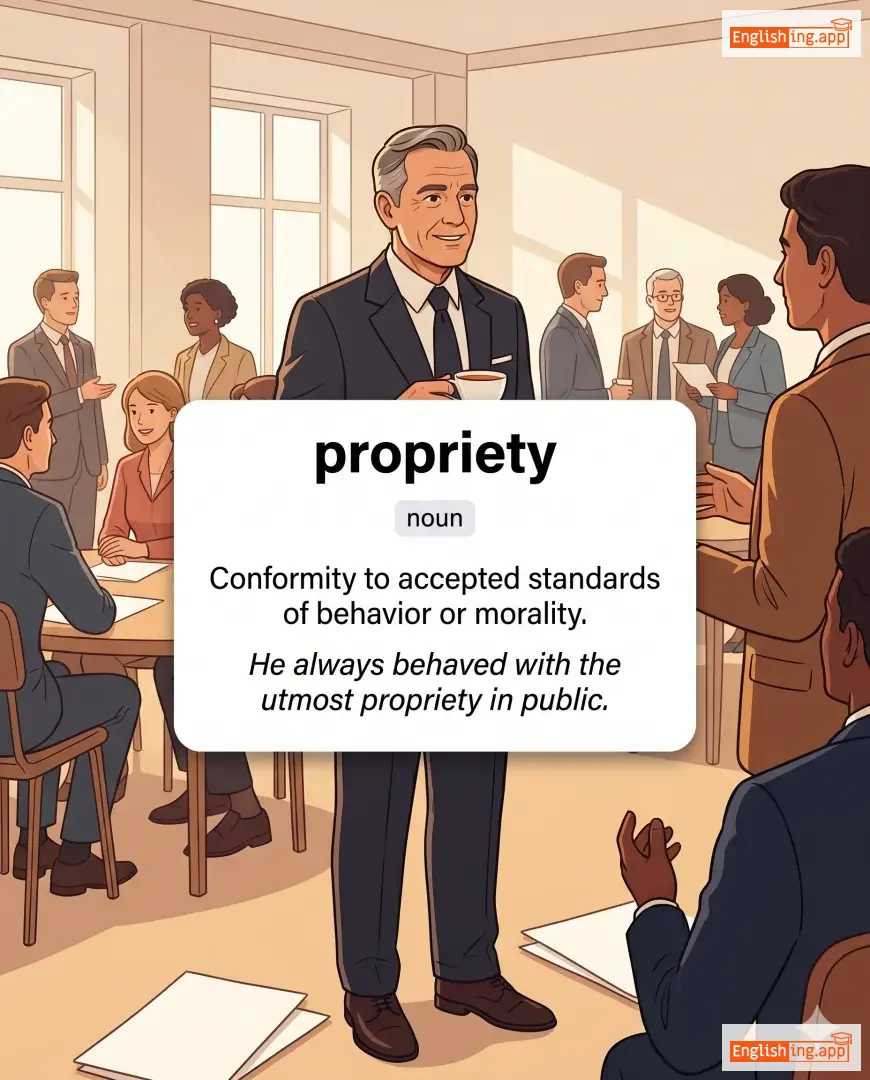
propriety definition card — visual illustration of the meaning
noun
/prəˈpraɪəti/
得体 (deti)

Conformity to accepted standards of behavior or morality.

"He always behaved with the utmost propriety in public."

"他在公共场合总是表现得体。" (Ta zai gonggong changhe zong shi biaoxian deti.)
adjective
/proʊˈzeɪ.ɪk/
平凡的 (pingfan de)

ordinary, dull, or lacking imagination

"The teacher’s explanation was accurate but rather prosaic."

"老师的解释很准确,但相当平凡。" (Laoshi de jieshi hen zhunque, dan xiangdang pingfan.)
noun
/proʊˈsiː.ni.əm/
舞台前沿 (wǔtái qián yán)

the part of a theater stage in front of the curtain; the arch framing the stage

"The actors bowed at the proscenium before leaving the stage."

"演员在离开舞台之前向舞台前沿鞠躬。" (yǎnyuán zài líkāi wǔtái zhīqián xiàng wǔtái qián yán jūgōng.)