Словари

Словарь английского языка | Значения слов, определения и примеры

verb
/ˈprɒspər/
преуспевать (preuspevat)

to succeed or flourish, especially in financial or business matters

"With hard work and determination, she managed to prosper in her career."

"С упорным трудом и решимостью, она смогла преуспеть в своей карьере." (S upornym trudom i reshimost'yu, ona smogla preuspet' v svoey kar'ere.)
noun
/prəˈspɛktəs/
проспект (prospekt)

a printed document that advertises or describes a school, business, or investment offering

"The university sent out a prospectus to attract new students."

"Университет отправил проспект, чтобы привлечь новых студентов." (Universitet otpravil prospekt, chtoby privlech' novykh studentov.)
prospects definition card — visual illustration of the meaning
noun
/ˈprɒs.pekts/
перспективы (perspektivy)

The possibility or likelihood of some future event occurring.

"The prospects for growth look promising."

"Перспективы роста выглядят обещающими." (Perspektivy rosta vyglyadyat obeshchayushchimi.)
adjective
/prəˈspɛktɪv/
перспективный (perspektivny)

likely or expected to happen in the future; potential

"The company is meeting with prospective clients next week."

"Компания встретится с перспективными клиентами на следующей неделе." (Kompaniya vstretitsya s perspektivnymi klientami na sleduyushchey nedele.)
noun
/ˈprɒspɛktər/
поискатель минералов (poiskatel' mineralov)

a person who searches for mineral deposits, especially gold

"The prospector spent years in the mountains searching for gold."

"Проспектор провел годы в горах, ища золото." (Prospektor provel gody v gorakh, ishchya zoloto.)
adjective
/prəˈɡrɛsɪv/
прогрессивный (progressivnyj)

favoring or implementing new and modern ideas or policies; moving forward or improving

"She holds progressive views on social justice and equality."

"У нее прогрессивные взгляды на социальную справедливость и равенство." (U nee progressivnye vzglyady na sotsial'nuyu spravedlivost' i ravenstvo.)
noun
/ˌproʊɪˈbɪʃən/
запрещение (zapreshchenie)

The act of forbidding something by law or authority.

"The government announced the prohibition of smoking in public places."

"Правительство объявило о запрете курения в общественных местах." (Pravitel'stvo ob'yavilo o zaprete kureniya v obshchestvennykh mestakh.)
noun
/ˌproʊɪˈbɪʃənɪst/
запретник (zapretnik)

A person who supports or advocates prohibition, especially of alcohol.

"The prohibitionist campaigned against the sale of liquor in the town."
"Запретник вел кампанию против продажи алкоголя в городе." (Zapretnik vel kampaniyu protiv prodazhi alkogolya v gorode.)
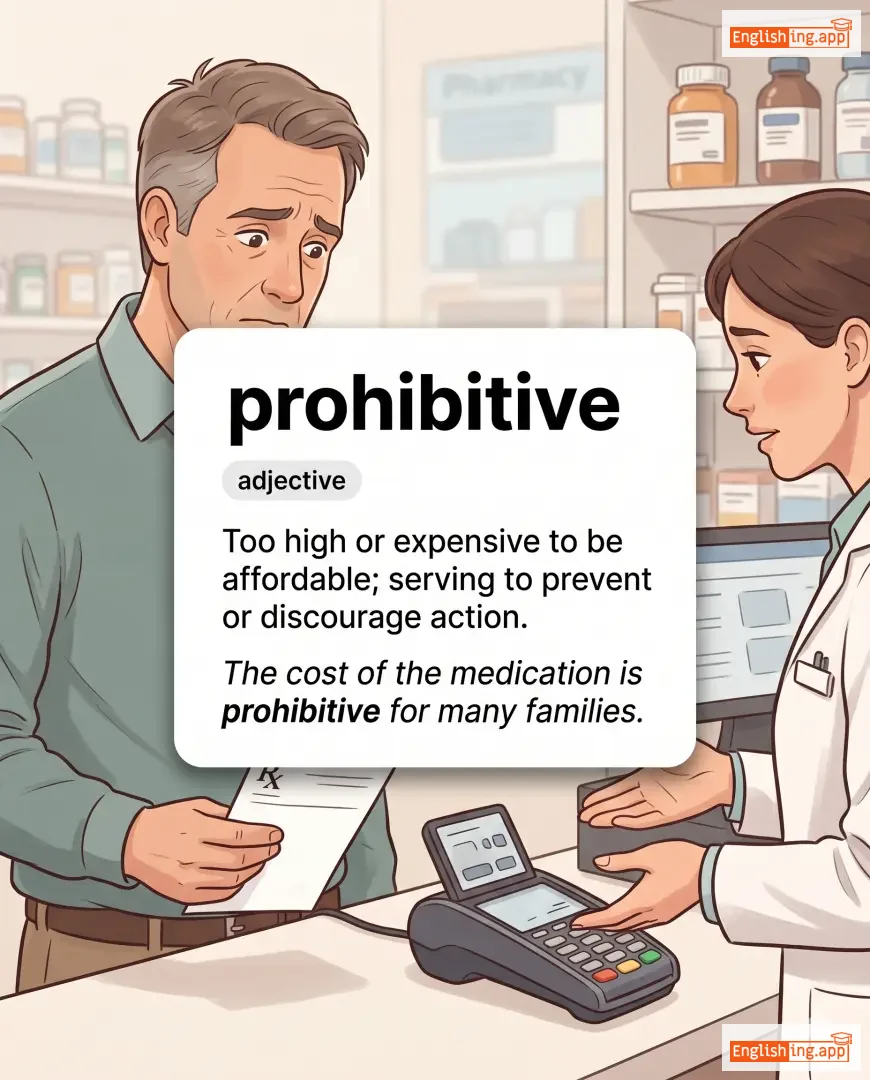
prohibitive definition card — visual illustration of the meaning
adjective
/prəˈhɪbɪtɪv/
непо́сильно дорогой (neposil'no dorogoy)

Too high or expensive to be affordable; serving to prevent or discourage action.

"The cost of the medication is prohibitive for many families."

"Стоимость лекарства является непосильной для многих семей." (Stoimost' lekarstva yavylyaetsya neposil'noy dlya mnogikh semey.)
adjective
/prəˈhɪbɪtɔːri/
запрещающий (zapreshchayushchiy)

Serving or tending to prohibit or forbid.

"The prohibitory laws were strictly enforced in the region."
"Запрещающие законы были строго применены в регионе." (Zapreshchayushchie zakony byli strogo primeneny v regione.)
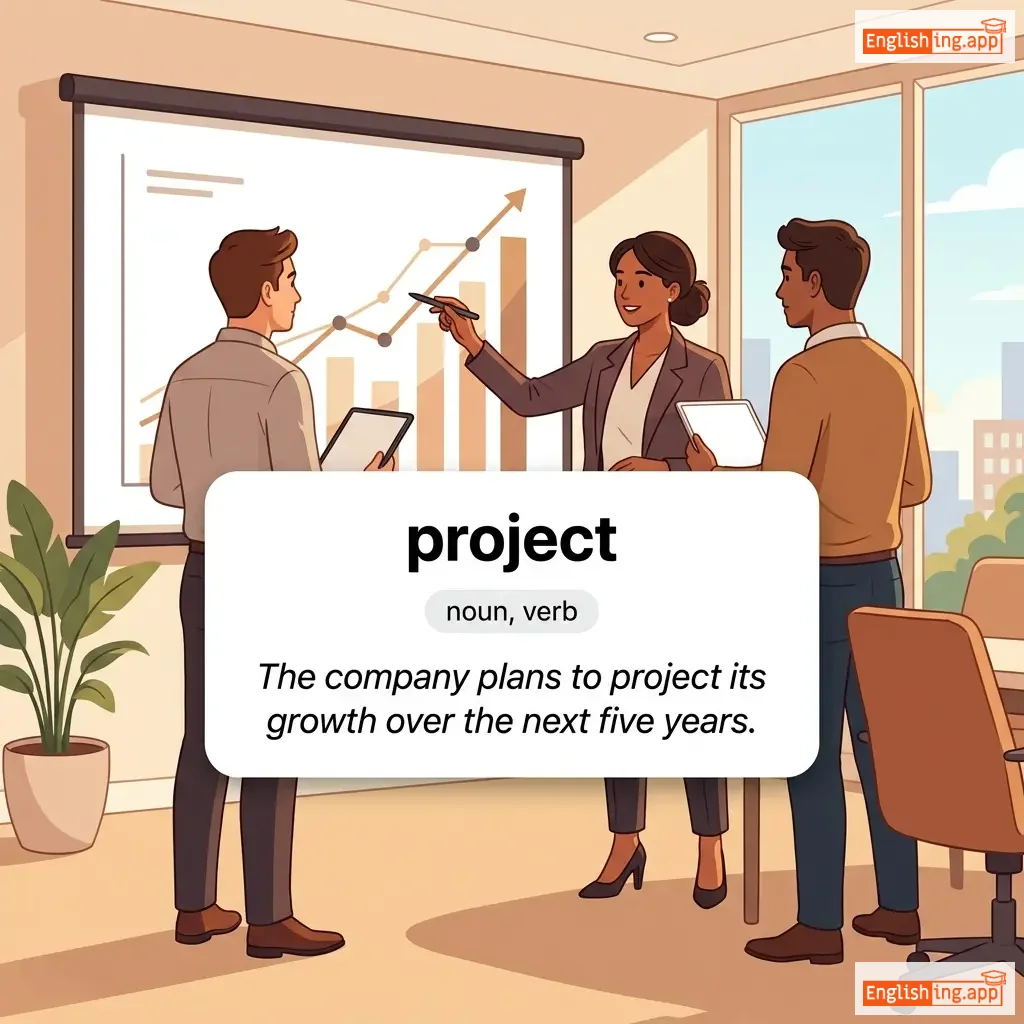
project definition card — visual illustration of the meaning
noun, verb
/ˈprɒdʒɛkt/ (noun), /prəˈdʒɛkt/ (verb)

As a noun: a planned task or assignment. As a verb: to plan, estimate, or extend something outward.

"The company plans to project its growth over the next five years."

noun
/prəˈdʒɛktaɪl/
снаряд (snaryad)

An object fired, thrown, or propelled, especially from a weapon.

"The soldier dodged the incoming projectile."

"Солдат увернулся от приближающегося снаряда." (Soldat uvernylsya ot priblizhayushchegosya snaryada.)
projection definition card — visual illustration of the meaning
noun
/prəˈdʒɛkʃən/
проекция (proekciya)

An estimate or forecast of a future situation based on current trends.

"The sales projection shows a steady increase in revenue."

"Прогноз продаж показывает устойчивый рост доходов." (Prognoz prodazh pokazyvayet ustoichivyy rost dokhodov.)
projects definition card — visual illustration of the meaning
noun
ˈprɒdʒ.ekts
проекты (proyekty)

Individual or collaborative enterprises that are carefully planned to achieve a particular aim.

"These projects aim for technological breakthroughs."

"Эти проекты направлены на технологические прорывы." (Eti proyektı napavleny na texnologicheskie proryvy.)
noun, adjective
/ˌproʊlɪˈtɛəriən/
пролетарий (proletariy)

Relating to the working class, especially those who do not own property.

"The movement was rooted in proletarian struggles."
"Движение было укоренено в пролетарских борьбах." (Dvizhenie bylo ukorenenno v proletarskikh bor'bakh.)
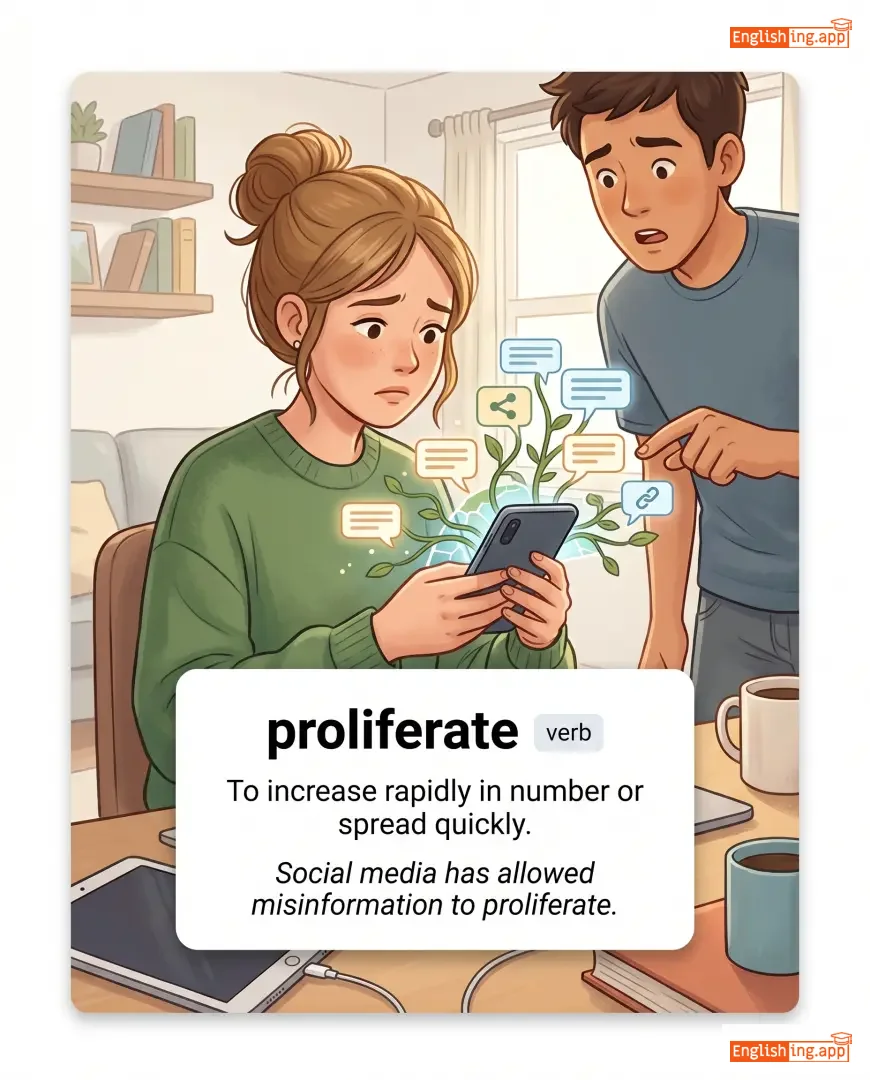
proliferate definition card — visual illustration of the meaning
verb
/prəˈlɪfəreɪt/
распространяться (rasprostranyatsya)

To increase rapidly in number or spread quickly.

"Social media has allowed misinformation to proliferate."
"Социальные сети позволили дезинформации быстро распространиться." (Sotsial'nye seti pozvolili dezinformatsii bystro rasprostranitsya.)
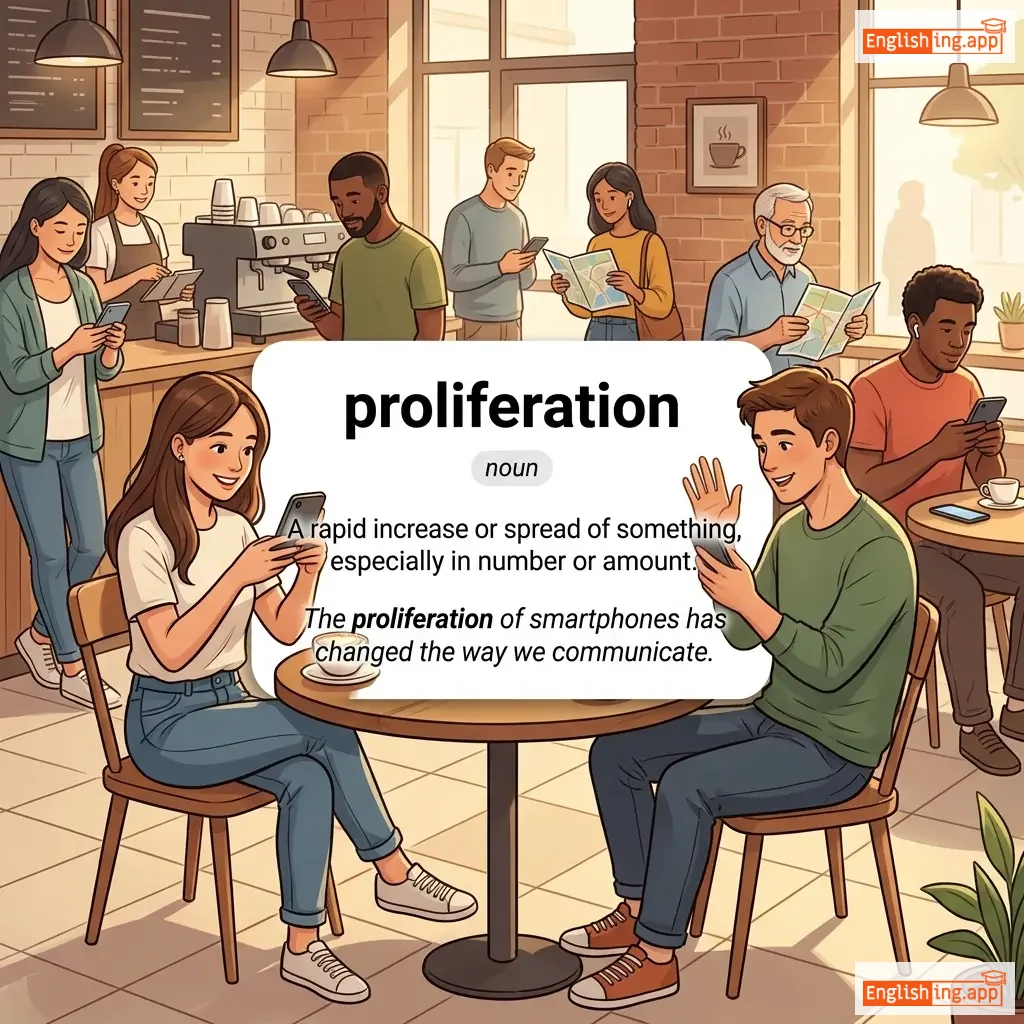
proliferation definition card — visual illustration of the meaning
noun
/prəˌlɪfəˈreɪʃən/
пролиферация, распространение (proliferaciya, rasprostranenie)

A rapid increase or spread of something, especially in number or amount.

"The proliferation of smartphones has changed the way we communicate."
"Пролиферация смартфонов изменила способ общения." (Proliferaciya smartfonov izmenila sposob obshcheniya.)
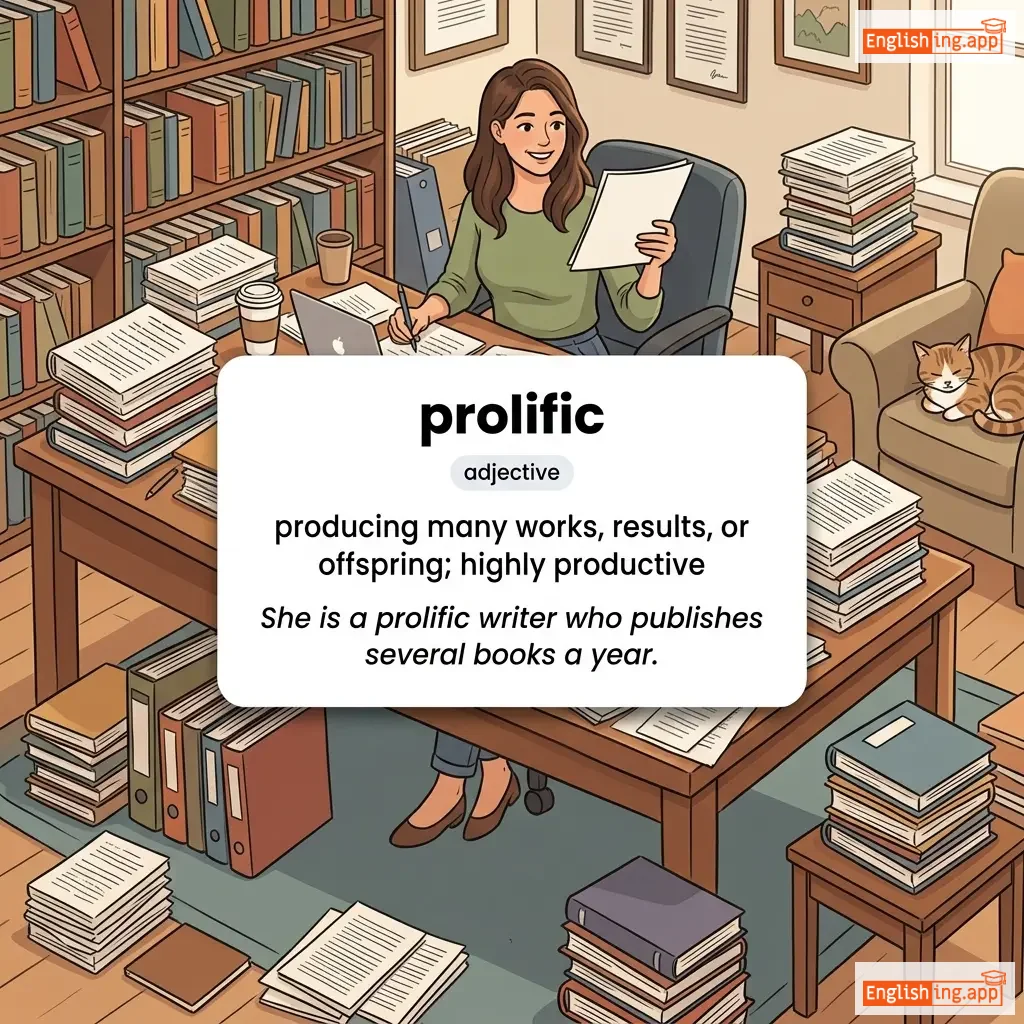
prolific definition card — visual illustration of the meaning
adjective
/prəˈlɪfɪk/
продуктивный (produktívnyy)

producing many works, results, or offspring; highly productive

"She is a prolific writer who publishes several books a year."

"Она продуктивный писатель, который публикует несколько книг в год." (Ona produktivnyj pisatel', kotoryj publikuyet neskol'ko knig v god.)
adjective
/ˈprəʊ.lɪks/
чересчур длинный (chereshchur dlinnyy)

using too many words; tediously lengthy

"The professor’s prolix lecture put many students to sleep."

"Проликс лекции профессора заставил многих студентов заснуть." (Proliks lektsii professora zastavil mnogikh studentov zasnut'.)
noun
/prəˈlɪksɪti/
проликсити (prolixity)

the quality of being tediously wordy and long

"The book’s prolixity made it difficult to read in one sitting."

"Проликсити книги сделало ее трудной для чтения за одно сиденье." (Prolixity knigi sdelalo yeye trudnoy dlya chteniya za odno siden'ye.)
noun
/ˈprəʊ.lɒɡ/
пролог (prolog)

an introduction to a book, play, or event

"The novel begins with a short prologue set in the past."

"Роман начинается с короткого пролога, действие которого происходит в прошлом." (Roman nachinayetsya s korotkogo prologa, deystviye kotorogo proiskhodit v proshlom.)
prolong definition card — visual illustration of the meaning
verb
/prəˈlɒŋ/
пролонгировать (prolongirovat)

to make something last longer; to extend in time

"The treatment helped to prolong the patient’s life."
"Лечение помогло продлить жизнь пациента." (Lechenie pomoglo prodlit' zhizn' patsiyenta.)
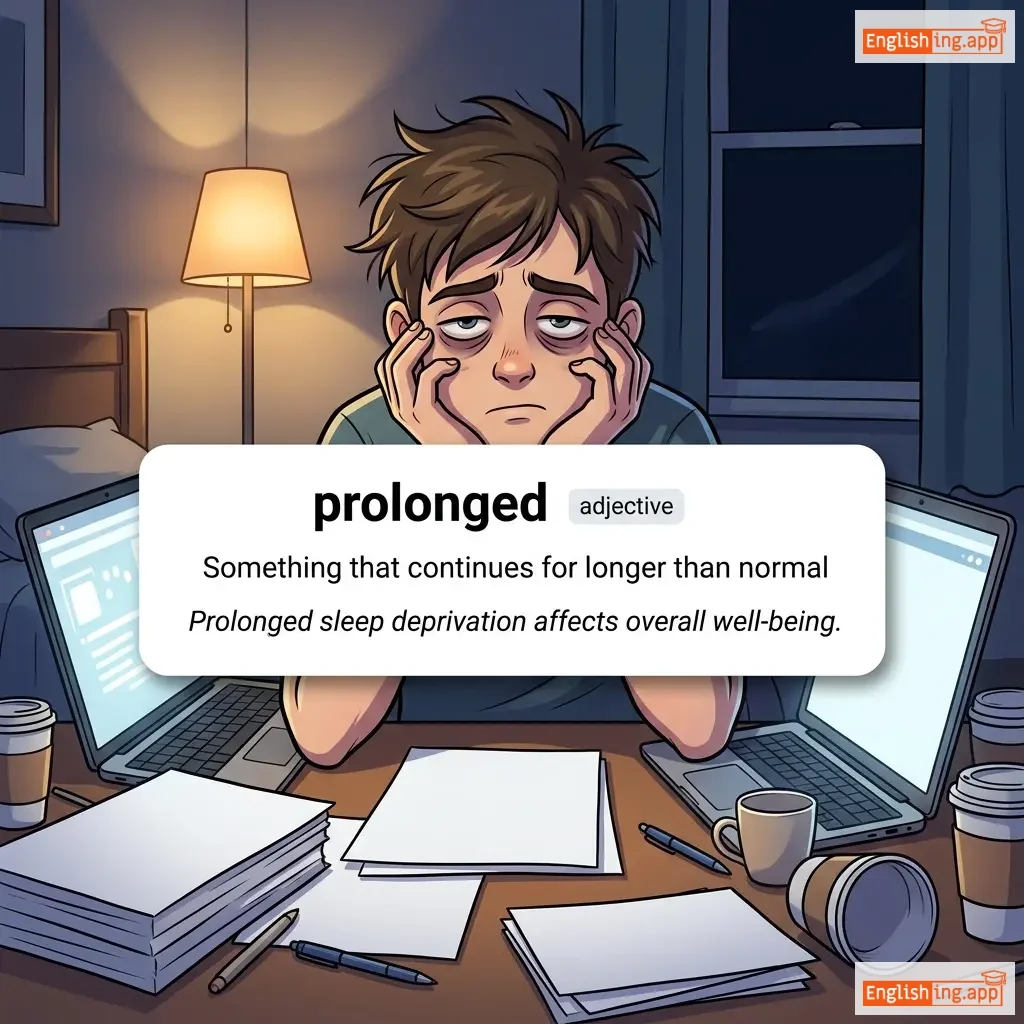
prolonged definition card — visual illustration of the meaning
adjective
prəˈlɒŋd
продолжительный (prodolzhitel'nyy)

Something that continues for longer than normal

"Prolonged sleep deprivation affects overall well-being."

"Продолжительный недостаток сна влияет на общее самочувствие." (Prodolzhitel'nyy nedostatok sna vliyayet na obshcheye samochevstviye.)
noun, verb
/ˌprɒməˈneɪd/
прогулка (progulka)

A leisurely walk or stroll, especially in a public place for pleasure or display.

"They went for a promenade along the seaside."

"Они пошли на прогулку вдоль моря." (Oni poshli na progulku vdol' morya.)
noun
/ˈprɒmɪnəns/
прославленность (proslavlennost)

The state of being important, famous, or easily noticed.

"Her work gained prominence after the award."

"Ее работа обрела славу после награды." (Eyo rabota obrela slavu posle nagrady.)
adjective
/ˈprɒmɪnənt/
выдающийся (vydayushchijsya)

Important, famous, or easily noticeable.

"He is a prominent leader in the community."

"Он ведущий лидер в сообществе." (On vedushchij lider v soobshchestve.)
adjective
/prəˈmɪskjuəs/
распутный (rasputnyy)

Having or showing a casual and unselective approach, often used to describe indiscriminate sexual relationships.

"The novel depicts a character with a promiscuous lifestyle."

"Роман изображает персонажа с распутным образом жизни." (Roman izobrazhaet personazha s rasputnym obrazom zhizni.)
promise definition card — visual illustration of the meaning
noun
/ˈprɒmɪs/
обещание (obeshchaniye)

a statement that one will definitely do something or that something will happen

"I made a promise to help her with the project."

"Я дал обещание помочь ей с проектом." (Ya dal obeshchaniye pomoch' yey s proyektom.)
adjective
/ˈprɒmɪsɪŋ/
многообещающий (mnogoobeshchayushchiy)

showing signs of future success or potential

"She is a promising young scientist with great ideas."

"Она многообещающий молодой ученый с отличными идеями." (Ona mnogoobeshchayushchiy molodoy uchenyy s otlichnymi ideyami.)
adjective
/ˈprɒmɪsəri/
обещанный (obeshchannyy)

Containing or conveying a promise, especially in writing.

"He signed a promissory note to repay the loan."

"Он подписал долговое обязательство для возврата кредита." (On podpisal dolgoye obyazatel'stvo dlya vozvrata kredita.)
noun
/ˈprɒm.ən.tɔːr.i/
мыс (mys)

A high point of land or rock projecting into a body of water.

"The lighthouse stood on a promontory overlooking the sea."

"Маяк стоял на мысе, с которого открывался вид на море." (Mayak stoyal na myse, s kotorogo otkryvalsya vid na more.)
promote definition card — visual illustration of the meaning
verb
/prəˈmoʊt/
продвигать / рекламировать (prodvigat / reklamirovat)

To support or encourage the growth, sale, or acceptance of something.

"The company worked hard to promote its new product."

"Компания усердно работала, чтобы продвигать свой новый продукт." (Kompaniya usyerodno rabotala, chtoby prodvigat' svoy novyy produkt.)
noun
/prəˈmoʊ.tər/
продвиженец (prodvizhenets)

A person or organization that helps to organize or finance an event, business, or product launch.

"The promoter organized a concert for the new band."

"Продвиженец организовал концерт для новой группы." (Prodvizhenets organizoval kontsert dlya novoy gruppy.)
promoting definition card — visual illustration of the meaning
verb
prəˈmoʊtɪŋ
продвижение (prodvizhenie)

To support or actively encourage a cause, venture, or aim; to help or encourage the progress or development of something.

"Promoting education can significantly improve children's lives."

"Продвижение образования может значительно улучшить жизнь детей." (Prodvizhenie obrazovaniya mozhet znachitel'no uluchshit' zhizn' detey.)
verb, noun, adjective
/prɑːmpt/
побуждать / быстро (pobuzhdat / bystro)

To cause someone to take action; done without delay.

"His speech prompted the audience to ask questions."

"Его речь побудила аудиторию задавать вопросы." (Ego rech' pobudila auditoriyu zadavat' voprosy.)
verb
/ˈprɑː.məl.ɡeɪt/
промульгировать (promul'giravat')

To announce or make a law, decree, or idea officially known.

"The government promulgated new regulations on data privacy."

"Правительство промульгировало новые правила по защите данных." (Pravitel'stvo promul'girovalo novye pravila po zashchite dannykh.)
adjective
/proʊn/
склонный (sklonnyy)

likely to suffer from or experience something, especially something unfortunate

"He is prone to headaches when he works too long."

"Он склонен к головным болям, когда работает слишком долго." (On sklonnye k golovnym bolyam, kogda rabotaet slishkom dolgo.)
noun
/prɔːŋ/
зуб вилки (zub vilki)

a projecting pointed part, such as one of the pointed ends of a fork

"The fork has four prongs."

"Вилка имеет четыре зуба." (Vilka imeet chetyre zuba.)
pronounce definition card — visual illustration of the meaning
verb
/prəˈnaʊns/
произносить (proiznosit')

to say words correctly; to declare officially

"She can pronounce French words perfectly."

"Она может правильно произнести французские слова." (Ona mozhet pravil'no proiznesti frantsuzskie slova.)
adjective
/prəˈnaʊnst/
выраженный (vyrazhennyi)

very noticeable or strongly marked

"There is a pronounced difference between the two styles."

"Существует выраженная разница между двумя стилями." (Sushchestvuet vyrazhennaya raznitsa mezhdu dvumya stilyami.)
noun
/prəˌnʌnsiˈeɪʃən/
произношение (proiznoshenie)

the way a word or language is spoken; the act or result of pronouncing words

"Her pronunciation of French words has improved significantly."

"Её произношение французских слов значительно улучшилось." (Yeyo proiznoshenie frantsuzskikh slov znachitelno uluchshilos)
🧑‍⚖️

proof (pruf)

noun
/pruːf/
доказательство (dokazatel'stvo)

evidence or argument establishing a fact or the truth of a statement

"The detective presented proof of the suspect's guilt."

"Детектив представил доказательство вины подозреваемого." (Detektiv predstavil dokazatel'stvo viny podozrevaemogo.)
verb
/ˈpruːfˌriːd/
проверить (proverit)

to read written material and mark any errors

"She proofread the report before submission."

"Она проверила отчет перед подачей." (Ona proverila otchet pered podachey.)
noun
/prɒp/
реквизит (rekvizit)

an object used on stage by actors during a performance; something that supports or holds up

"The actor forgot his prop on stage."

"Актер забыл свой реквизит на сцене." (Aktor zabyl svoy rekvizit na stsene.)
verb
/prəˈroʊɡ/
отсрочить заседание (otsrochit' zasedanie)

to discontinue a session of a parliament or assembly without dissolving it

"The president decided to prorogue parliament until the crisis was resolved."
"Президент решил отложить парламент до того, как кризис будет решен." (Prezident reshil otlozhit' parlament do togo, kak krizis budet reshen.)
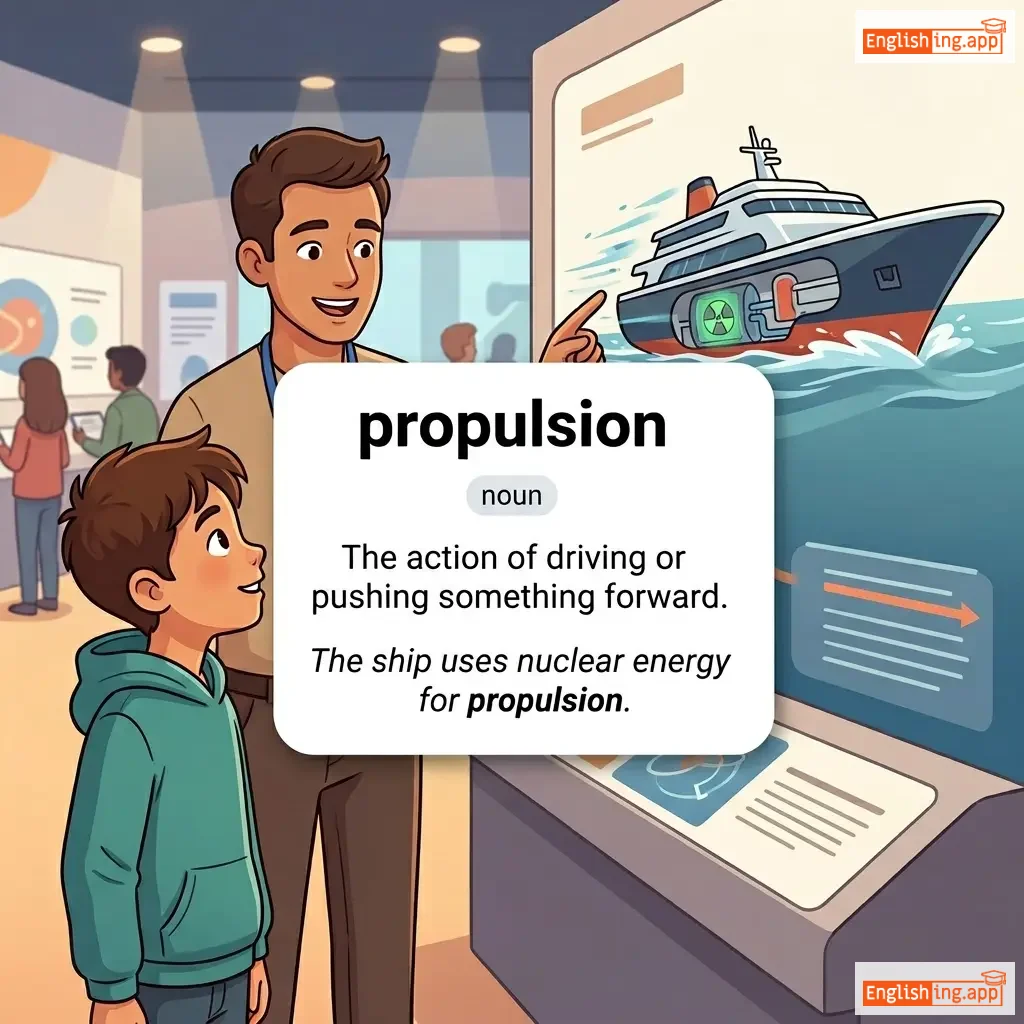
propulsion definition card — visual illustration of the meaning
noun
/prəˈpʌlʃən/
движущая сила (dvizhushchaya sila)

The action of driving or pushing something forward.

"The ship uses nuclear energy for propulsion."

"Корабль использует ядерную энергию для движения." (Korabl' ispol'zuyet yadernuu energiyu dlya dvizhena.)
adjective
/prəˈpʌlsɪv/
приводящий в движение (privoodyashchiy v dvizhene)

Having the power to drive or push something forward.

"The propulsive force of the rocket lifted it off the ground."
"Двигательная сила ракеты подняла ее с земли." (Dvigatelnaya sila rakety podnyala yeye s zemli.)
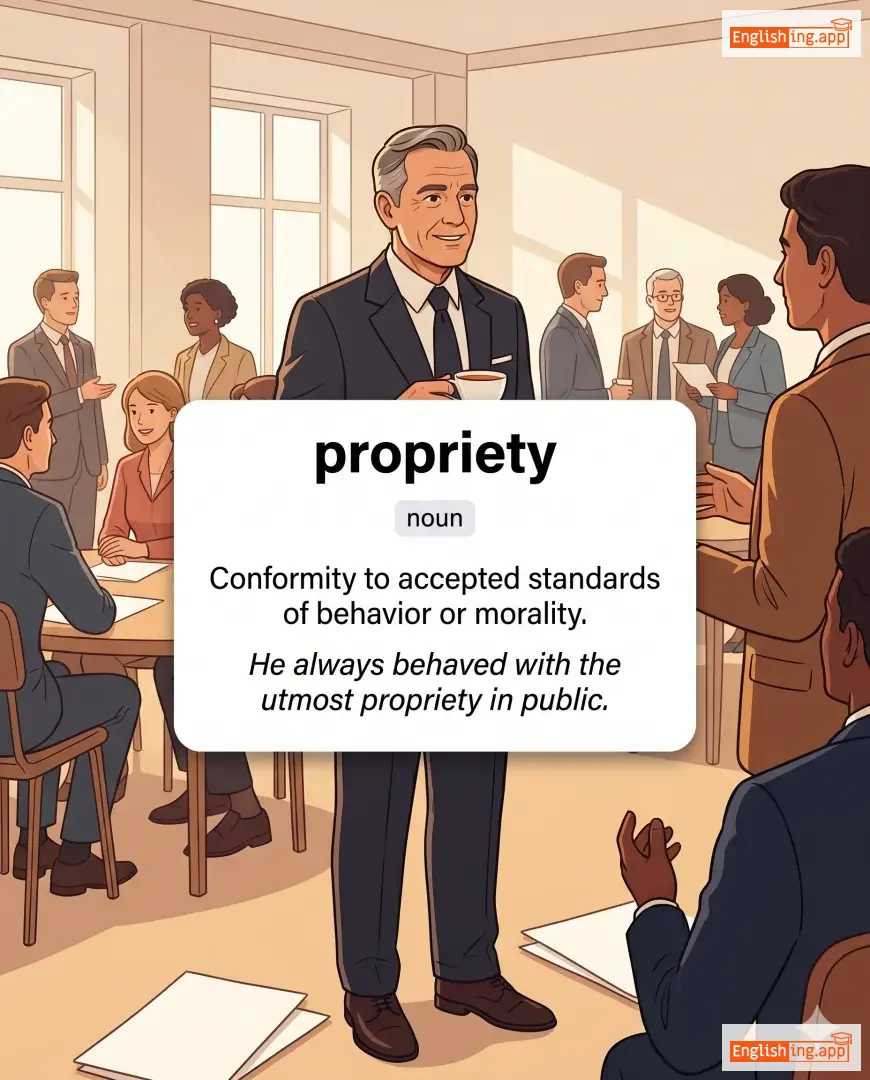
propriety definition card — visual illustration of the meaning
noun
/prəˈpraɪəti/
порядочность (poryadochnost)

Conformity to accepted standards of behavior or morality.

"He always behaved with the utmost propriety in public."

"Он всегда вел себя с величайшей порядочностью на публике." (On vsegda vel sebya s velichayshey poryadochnost'yu na publike.)
adjective
/proʊˈzeɪ.ɪk/
прозаичный (prozaitchny)

ordinary, dull, or lacking imagination

"The teacher’s explanation was accurate but rather prosaic."

"Объяснение учителя было точным, но довольно прозаичным." (Ob'yasneniye uchitelya bylo tochnym, no dovol'no prozaichnym.)
noun
/proʊˈsiː.ni.əm/
просцениум (proscenium)

the part of a theater stage in front of the curtain; the arch framing the stage

"The actors bowed at the proscenium before leaving the stage."

"Актеры поклонились перед просцениумом, прежде чем покинуть сцену." (Akhtery poklonilis' pered prosceniumom, prezhde chem pokinut' stseny.)