Словари

Словарь английского языка | Значения слов, определения и примеры

Profit definition card — visual illustration of the meaning
noun, verb
/ˈprɒfɪt/
прибыль (pribyl)

financial gain, especially the difference between the amount earned and the amount spent

"The company made a huge profit this quarter."

"Компания получила большую прибыль в этом квартале." (Kompaniya poluchila bol'shuyu pribyl' v etom kvartale.)
profitability definition card — visual illustration of the meaning
noun
ˌprɒf.ɪ.təˈbɪl.ə.ti
прибыльность, степень финансовой выгоды (pribyl'nost', stepen' finansovoy vygody)

The degree to which a business or activity yields profit or financial gain.

"Increased efficiency enhances business profitability."

"Повышенная эффективность улучшает прибыльность бизнеса." (Povyshennaya effektivnost' uluchshaet pribylnost' biznesa.)
adjective
/ˈprɒfɪtəbl/
прибыльный (pribyl'nyy)

yielding profit or financial gain

"The company has become highly profitable after the new strategy was implemented."

"Компания стала очень прибыльной после внедрения новой стратегии." (Kompaniya stala ochen' pribyl'noy posle vnedreniya novoy strategii.)
noun
/ˌprɑːfɪˈtɪr/
спекулянт (spekulyant)

a person who makes excessive profits, especially unfairly or illegally

"The government punished war profiteers."

"Правительство наказало спекулянтов войны." (Pravitel'stvo nakazalo spekulyantov voyny.)
noun
/ˈprɑːflɪɡəsi/
расточительство (rastochitel'stvo)

reckless wastefulness or extravagance

"His profligacy with money led him to bankruptcy."

"Его расточительство привело его к банкротству." (Ego rastochitel'stvo privelo ego k bankrotstvu.)
adjective
/ˈprɑːflɪɡət/
растрачивающий (rastrachivayushchiy)

recklessly extravagant or wasteful in resources

"The king was known for his profligate lifestyle."

"Король был известен своим расточительным образом жизни." (Korol' byl izvesten svoim rastochitel'nym obrazom zhizni.)
profound definition card — visual illustration of the meaning
adjective
/prəˈfaʊnd/
глубокий (glubokiy)

very great or intense; showing deep insight or understanding

"Her speech had a profound impact on the audience."
"Ее речь оказала глубокое влияние на аудиторию." (Eyo rech' okazala glubokoye vliyaniye na auditoriyu.)
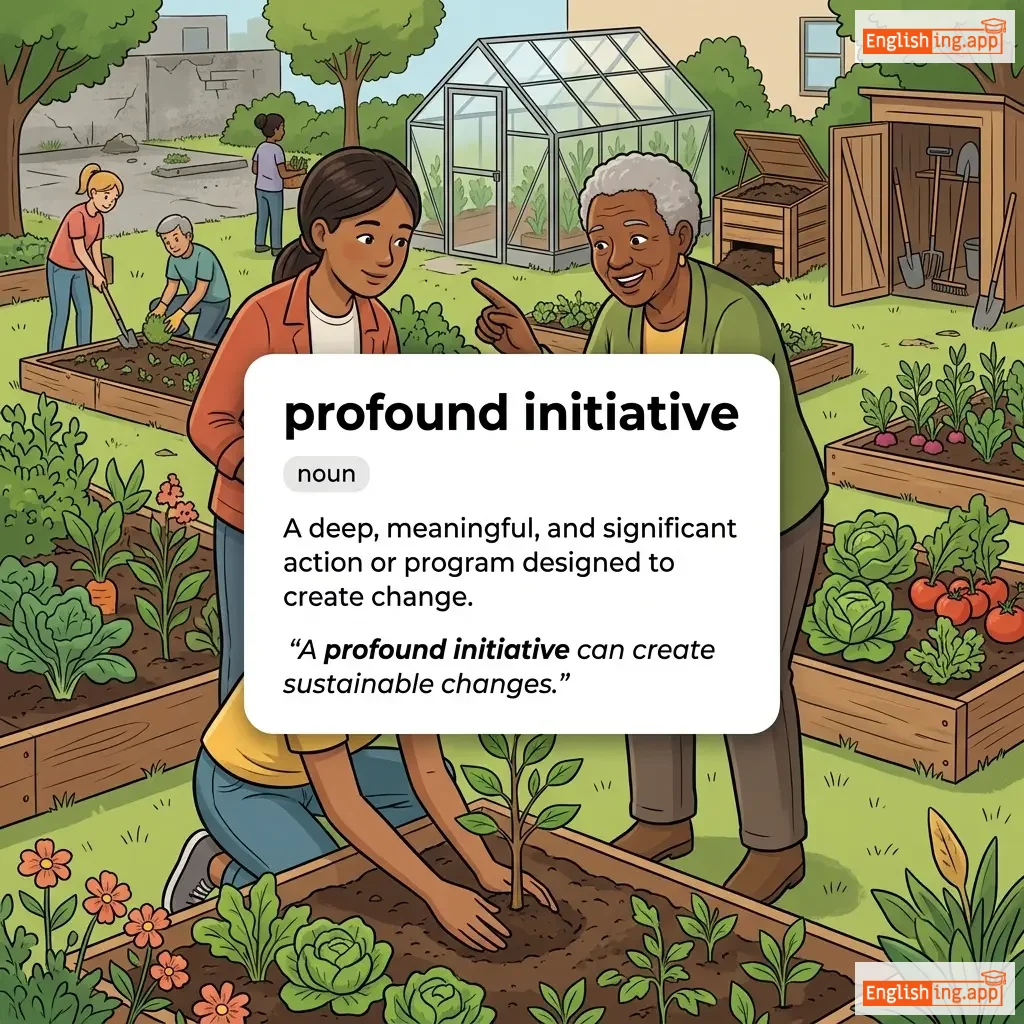
profound initiative definition card — visual illustration of the meaning
noun
prəˈfaʊnd ɪˈnɪʃətɪv
глубокая инициатива (glubokaya initsiativa)

A deep, meaningful, and significant action or program designed to create change.

"A profound initiative can create sustainable changes."

"Глубокая инициатива может создать устойчивые изменения." (Glubokaya initsiativa mozhet sozdать ustoychivye izmeneniya.)
profundity definition card — visual illustration of the meaning
noun
/prəˈfʌndɪti/
глубина (glubina)

great depth of insight, knowledge, or emotion

"The essay impressed the judges with its clarity and profundity."

"Эссе произвело впечатление на судей своей ясностью и глубиной." (Esse proizvelo vpechatlenie na sudey svoey yasnost'yu i glubinoy.)
adjective
/prəˈfjuːs/
обильный (obil'nyy)

existing or given in large amounts; abundant

"He offered profuse thanks for their timely help."

"Он выразил обильную благодарность за своевременную помощь." (On vyrazil ob'ylnuyu blagodarnost' za svoevremennuyu pomoshch'.)
noun
/prəˈfjuːʒən/
изобилие (izobilie)

an abundance or large quantity of something

"Spring brought a profusion of wildflowers to the valley."

"Весна принесла в долину изобилие диких цветов." (Vesna prinesla v dolinu izobilie dikikh tsvetov.)
noun
/proʊˈdʒɛnɪtər/
предок (predok)

a direct ancestor; a person or thing that originates something

"Researchers traced the custom back to a common progenitor."
"Исследователи проследили обычай до общего предка." (Issledovateli prosledili obychay do obshchego predka.)
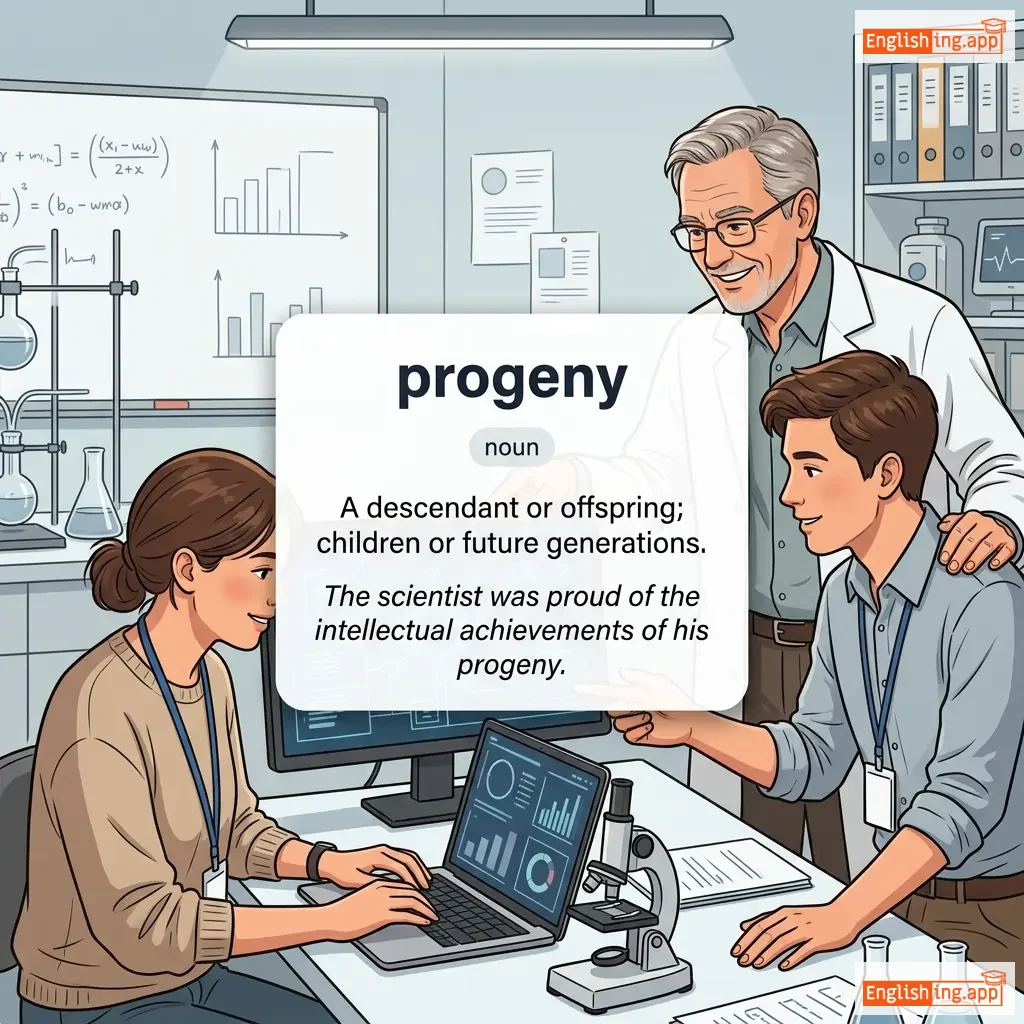
progeny definition card — visual illustration of the meaning
noun
/ˈprɒdʒəni/
потомство (potomstvo)

A descendant or offspring; children or future generations.

"The scientist was proud of the intellectual achievements of his progeny."

"Учёный гордился интеллектуальными достижениями своего потомства." (Uchonyi gordilsya intellektual'nymi dostizheniyami svoego potomstva.)
adjective
/ˈprɒɡnəθəs/
прогнатичный (prognatichny)

Having jaws that project forward beyond the rest of the face.

"The fossil displayed a distinctly prognathous skull structure."

"Ископаемое продемонстрировало структуру черепа с явно выраженным прогнатизмом." (Iskopaemoe prodemonstrirovalo strukturu cherepa s yavno vyrazhennym prognatizmom.)
noun
/prɒɡˈnoʊsɪs/
прогноз (prognoz)

A forecast of the likely outcome of a disease or situation.

"The doctor gave a positive prognosis for the patient's recovery."

"Доктор дал положительный прогноз для восстановления пациента." (Doktor dal polozhitelny prognoz dlya vosstanovleniya patsiyenta.)
verb
/prɒɡˈnɒstɪkeɪt/
прогнозировать (prognozirovat)

To foretell or predict future events, especially based on current signs.

"Experts attempted to prognosticate the outcome of the election."

"Эксперты пытались прогнозировать исход выборов." (Eksperty pytalis prognozirovat iskhod vyborov.)
noun
/prɒɡˌnɒstɪˈkeɪʃən/
прогноз (prognoz)

The act of foretelling or predicting future events.

"The astrologer's prognostication fascinated the audience."

"Прогноз астролога очаровал аудиторию." (Prognoz astrologa ocharoval auditoriyu.)
noun
/ˈprəʊɡræm/
программа (programma)

a planned series of events or activities

"The program starts at 9 AM sharp."

"Программа начинается ровно в 9 утра." (Programma nachinayetsya rovno v 9 utra.)
noun
/ˈproʊɡræmɪŋ/
программирование (programmirovanie)

the process of writing computer code to create software or applications

"He spends most of his time learning computer programming."

"Он проводит большую часть своего времени, изучая компьютерное программирование." (On provodit bol'shuyu chast' svoego vremeni, izuchaya komp'yuternoye programmirovanie.)
noun
/ˈprəʊɡræmɪŋ/
программирование (programmirovanie)

the process of designing and writing computer programs

"He has been learning programming for several months now."
"Он учит программирование уже несколько месяцев." (On uchit programmirovanie uzhe neskol'ko mesyatsev.)
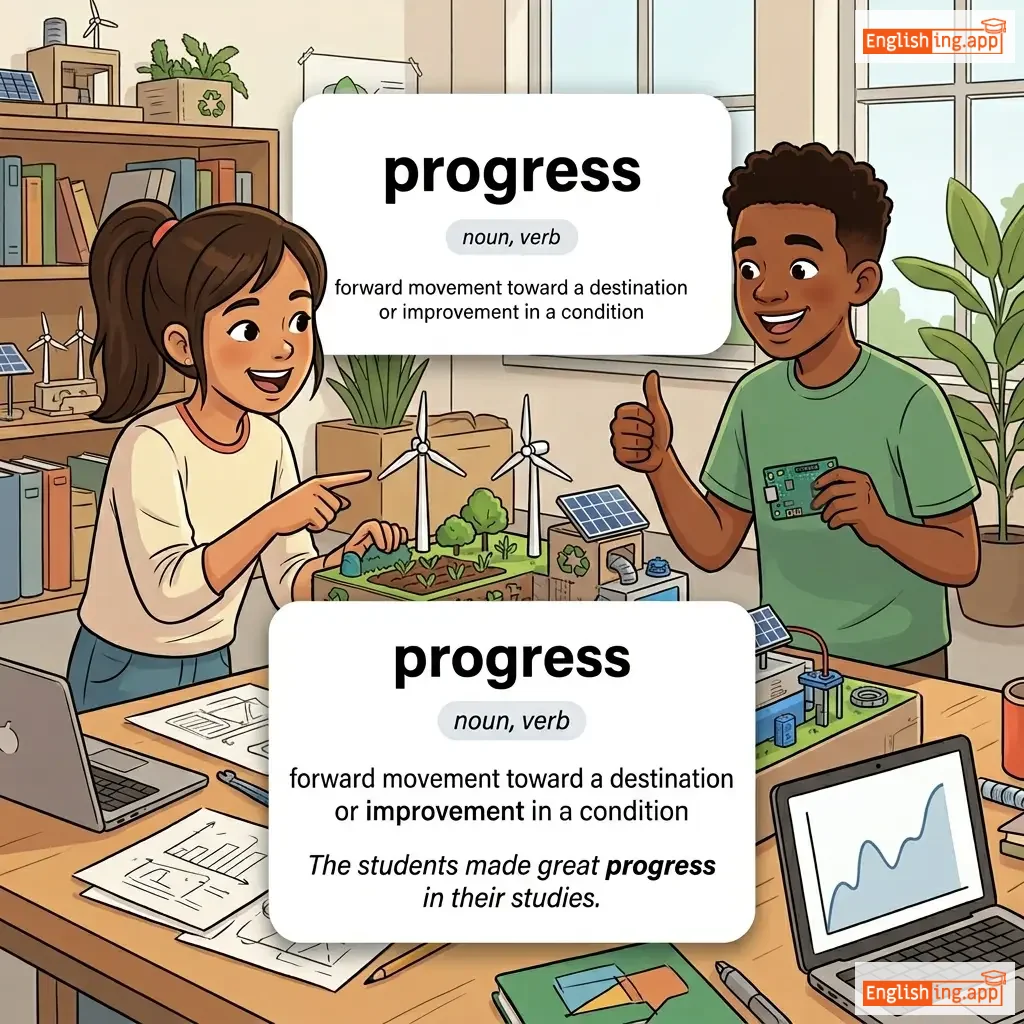
progress definition card — visual illustration of the meaning
noun, verb
/ˈprəʊɡrɛs/ (noun), /prəˈɡrɛs/ (verb)
прогресс (progress)

forward movement toward a destination or improvement in a condition

"The students made great progress in their studies."
"Студенты сделали большие успехи в учебе." (Studenty sdelali bol'shie uspekhi v uchebe.)
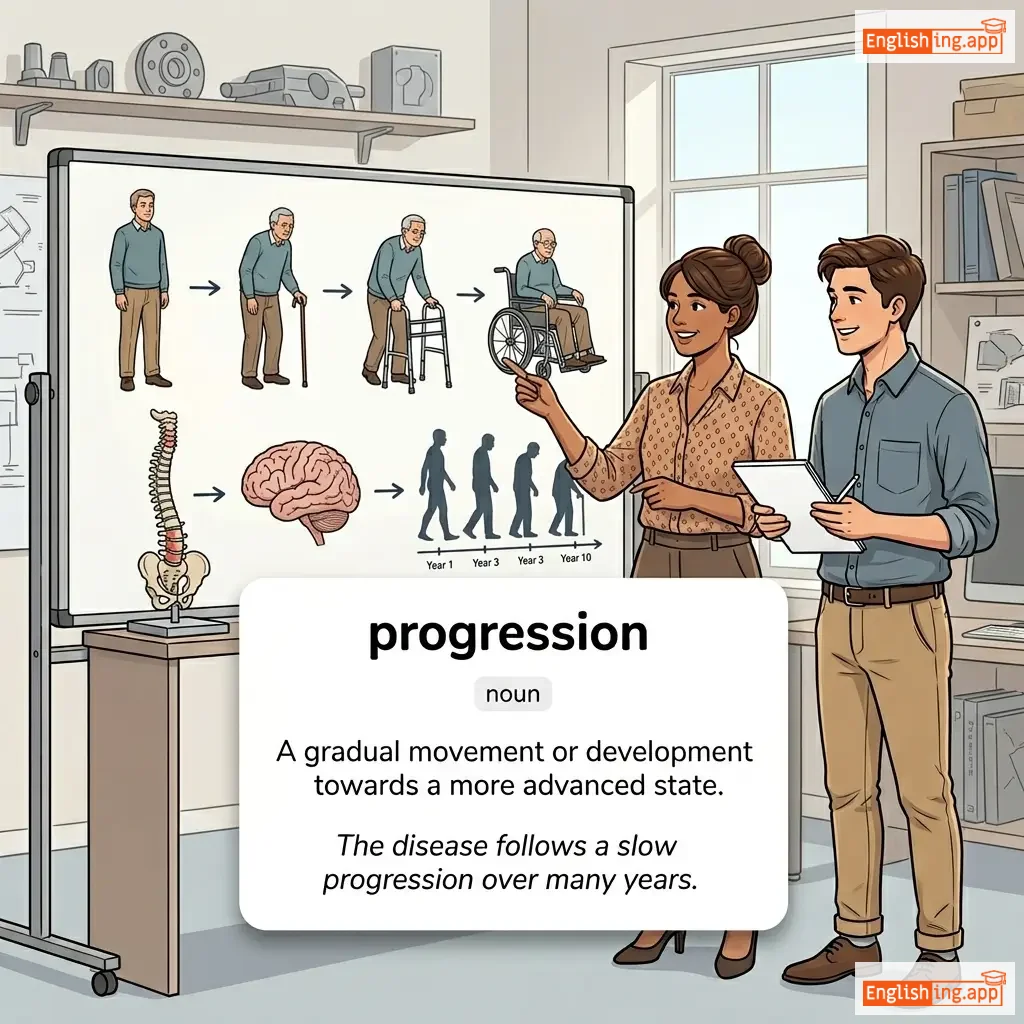
progression definition card — visual illustration of the meaning
noun
/prəˈɡrɛʃən/
прогрессия (progressiya)

A gradual movement or development towards a more advanced state.

"The disease follows a slow progression over many years."

"Болезнь проходит медленную прогрессию в течение многих лет." (Bolezn' prokhodit medlennuyu progressiyu v techenie mnogikh let.)
noun
/prəˈtɛstər/
протестующий (protestuyushchiy)

a person who takes part in a protest or demonstration

"The protester spoke passionately about the cause."

"Протестующий страстно говорил о причине." (Protestuyushchiy strastno govoril o prichine.)
noun
/ˈprɒvɪdəns/
божественное провидение (bozhestvennoe providenie)

the protective care of God or nature as a spiritual power; foresight or prudence

"They believed their survival was due to divine providence."

"Они верили, что их выживание было обусловлено божественным провидением." (Oni verili, chto ikh vyzhivanie bylo obuslovleno bozhestvennym provideniyem.)
verb
/prəˈvaɪdɪd/
предоставленный (predostavlennyy)

gave or supplied something that was needed

"The hotel provided free breakfast for all guests."

"Отель предоставил бесплатный завтрак для всех гостей." (Otel predostavil besplatnyy zavtrak dlya vsekh gostey.)
provide definition card — visual illustration of the meaning
verb
/prəˈvaɪd/
предоставить (predostavit')

to give or supply something that is needed or wanted

"The teacher will provide extra materials for the students."

"Учитель предоставит дополнительные материалы для студентов." (Uchitel' predostavit dopolnitel'nye materialy dlya studentov.)
noun
/ˈprɒvərb/
пословица (poslovitsa)

a short, commonly known saying that expresses a truth or piece of advice

"The proverb 'A stitch in time saves nine' teaches the value of prompt action."

"Пословица 'Бережёного Бог бережёт' учит важности своевременных действий." (Poslovitsa 'Berezhyonogo Bog berezhyot' uchit vazhnosti svoevremennykh deystviy.)
noun
/ˈprɒvəndər/
корм для скота (korm dlya skota)

food or provisions, especially for livestock

"The barn was filled with provender for the cattle."

"Сарай был заполнен кормом для скота." (Saraj byl zapolnen kormom dlya skota.)
noun
/ˈprɒvənəns/
происхождение (proiskhozhdenie)

The origin or source of something.

"The museum verified the provenance of the ancient manuscript."
"Музей проверил происхождение древней рукописи." (Muzei proveril proiskhozhdenie drevnei rukopisi.)
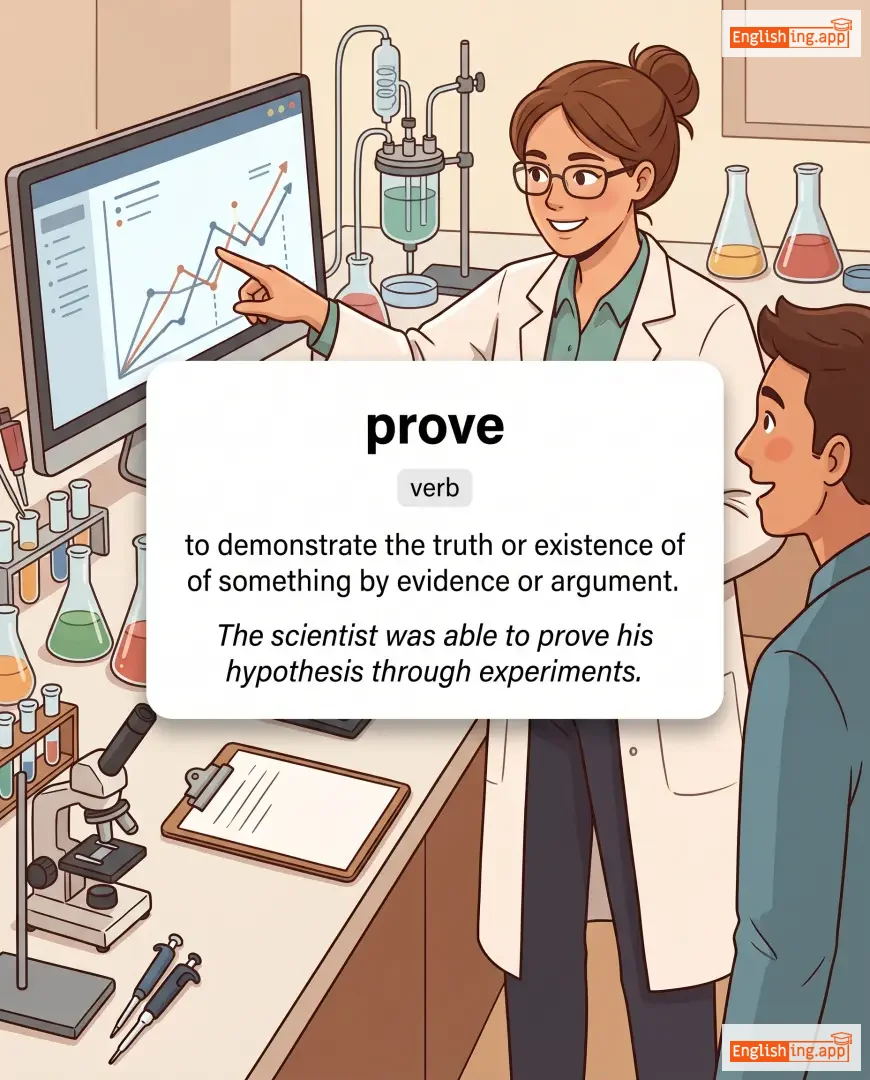
prove definition card — visual illustration of the meaning
verb
/pruːv/
доказать (dokazat')

to demonstrate the truth or existence of something by evidence or argument.

"The scientist was able to prove his hypothesis through experiments."

"Учёный смог доказать свою гипотезу с помощью экспериментов." (Uchyonnyy smog dokazat' svoyu gipotezu s pomoshch'yu eksperimentov.)
adverb
/ˈpraʊdli/
с гордостью (s gordostyu)

in a way that shows pride or satisfaction; with a sense of honor or achievement

"She proudly displayed her achievements to her family."

"Она с гордостью показала свои достижения семье." (ona s gordostyu pokazala svoi dostizheniya semye)
Proud definition card — visual illustration of the meaning
adjective
/praʊd/
гордый (gordyy)

Feeling deep pleasure or satisfaction as a result of achievements or qualities.

"She felt proud of her son's accomplishments."

"Она гордилась достижениями своего сына." (Ona gordilas' dostizheniyami svoego syna.)
verb
/ˈproʊtjuːbəreɪt/
выпучиваться (vypuchivatsya)

To swell out or bulge.

"The roots began to protuberate from the ground."

"Корни начали выпучиваться из земли." (Korni nachali vypuchivatsya iz zemli.)
adjective
/prəˈtuːbərənt/
выпуклый или надутый (vypuklyy ili nadutyy)

Sticking out or bulging.

"His protuberant belly showed after the meal."

"Его выпуклый живот показался после еды." (Ego vypuklyy zhivot pokazalsya posle edy.)
noun
/prəˈtuːbərəns/
опухоль (opukhole)

A rounded swelling or lump on a surface.

"The doctor examined the small protuberance on his arm."

"Доктор осмотрел небольшую опухоль на его руке." (Doktor osmotrel nebol'shuyu opukhol' na yego ruke.)
noun
/prəˈtruːʒən/
выступ (vystup)

Something that sticks out or projects from a surface.

"The protrusion on the wall made it difficult to move the furniture."

"Выступ на стене затруднил перемещение мебели." (Vystup na stene zatrudnil peremeshchenie mebeli.)
verb
/proʊˈtruːd/
выступать (vystupat)

To stick out or extend beyond a surface.

"A nail was protruding from the wooden board."

"Гвоздь выступал из деревянной доски." (Gvozdy vystupal iz derevyannoy doski.)
protracted definition card — visual illustration of the meaning
adjective
/prəˈtræktɪd/
затянувшийся (zatyanuvshiysya)

Lasting for a long time or longer than expected.

"The negotiation turned into a protracted process."

"Переговоры превратились в затянувшийся процесс." (Peregovory prevratilis' v zatyanuvshiysya protsess.)
verb
/proʊˈtrækt/
продлить (prodlyit)

To prolong or extend in time or duration.

"Negotiations were protracted for several months."

"Переговоры продлились несколько месяцев." (Peregovory prodlilis' neskol'ko mesyatsev.)
noun
/ˈproʊtəˌtaɪp/
прототип (prototip)

The first model or version of something, used as a sample for testing or improvement.

"The company built a prototype of the new smartphone before mass production."

"Компания построила прототип нового смартфона до массового производства." (Kompaniya postroila prototip novogo smartfona do massovogo proizvodstva.)
noun
/ˈproʊtoʊˌplæzəm/
протоплазма (protoplazma)

The living substance inside a cell, including the cytoplasm and nucleus.

"Scientists observed the movement of protoplasm under the microscope."

"Учёные наблюдали за движением протоплазмы под микроскопом." (Uchyonye nablyudali za dvizhением protoplazmy pod mikroskopom.)
noun
/ˈproʊtoʊˌmɑːrtɚ/
первый мученик (pervyy muchenik)

The first martyr in a cause or religion, often referring to the first Christian martyr.

"St. Stephen is known as the protomartyr of Christianity."

"Святой Стефан известен как протоматир христианства." (Svyatoy Stefan izvesten kak protomartyr khristianstva.)
noun
/ˈproʊtəkɔːl/
протокол (protokol)

an official procedure or system of rules

"The security team followed strict protocol during the event."

"Команда безопасности следовала строгому протоколу во время мероприятия." (Komanda bezopasnosti sledovala strohmu protokolu vo vremya meropriyatiya.)
adjective
/ˈprɒspərəs/
процветающий (prosperayushchiy)

successful in material terms; flourishing financially or in general well-being

"The town became prosperous after the new trade route opened."

"Город стал процветающим после того, как открылась новая торговая дорога." (Gorod stal protsvetyvayushchim posle togo, kak otkrylas' novaya torgovaya doroga.)
protect definition card — visual illustration of the meaning
verb
/prəˈtɛkt/
защищать (zashchishchat')

to keep safe from harm or danger

"It is important to protect your personal information online."

"Важно защитить вашу личную информацию в Интернете." (Vazhno zashchitit' vashu lichnuyu informatsiyu v internete.)
adjective
/ˈproʊtiən/
многообразный (mnogobrazny)

tending or able to change frequently or easily; versatile

"She is a protean artist who experiments with many styles."

"Она многогранная художница, которая экспериментирует с разными стилями." (Ona mnogogrannaya khudozhnitsa, kotoraya eksperimentiruyet s raznymi stilyami.)
protagonist definition card — visual illustration of the meaning
noun
/prəˈtæɡənɪst/
протагонист (protagonist)

the main character or leading figure in a story, drama, or other work

"The protagonist of the novel struggles with her inner conflicts."

"Протагонист романа борется со своими внутренними конфликтами." (Protagonist romana boretsya so svoimi vnutrennimi konfliktami.)
adjective/verb
/ˈprɒstreɪt/
поверженный (poverzhennyy)

lying stretched out on the ground with one's face downward, often as a sign of submission or exhaustion

"He lay prostrate on the ground after the long battle."

"Он упал поверженным на землю после долгой битвы." (On upal poverzhennym na zemlyu posle dolgoy bitvy.)
verb
/ˈprɒspər/
преуспевать (preuspevat)

to succeed or flourish, especially in financial or business matters

"With hard work and determination, she managed to prosper in her career."

"С упорным трудом и решимостью, она смогла преуспеть в своей карьере." (S upornym trudom i reshimost'yu, ona smogla preuspet' v svoey kar'ere.)
prospects definition card — visual illustration of the meaning
noun
/ˈprɒs.pekts/
перспективы (perspektivy)

The possibility or likelihood of some future event occurring.

"The prospects for growth look promising."

"Перспективы роста выглядят обещающими." (Perspektivy rosta vyglyadyat obeshchayushchimi.)