Vocabularios

Descubra, aprenda y domine el vocabulario en inglés

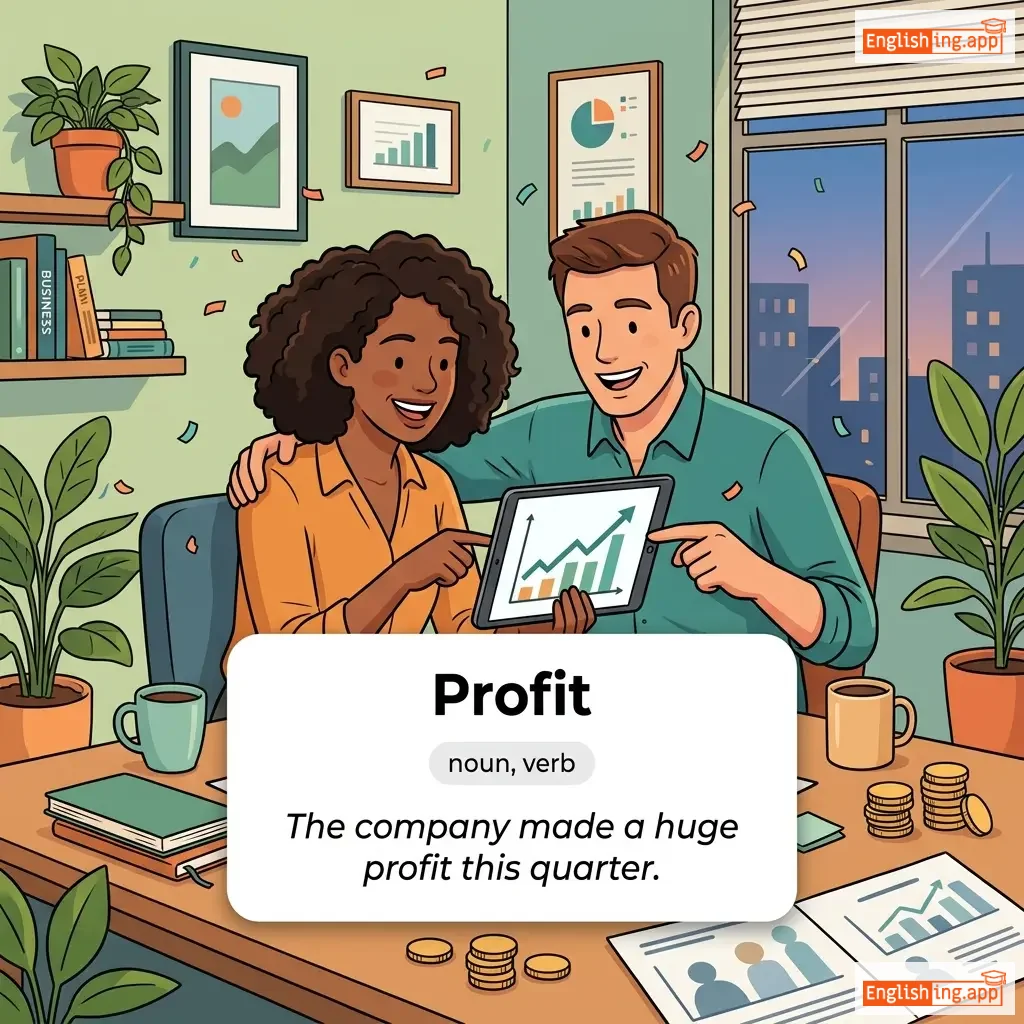
Profit definition card — visual illustration of the meaning
noun, verb
/ˈprɒfɪt/
ganancia (ganancia)

financial gain, especially the difference between the amount earned and the amount spent

"The company made a huge profit this quarter."

"La compañía hizo una gran ganancia este trimestre." (La compañía hizo una gran ganancia este trimestre.)
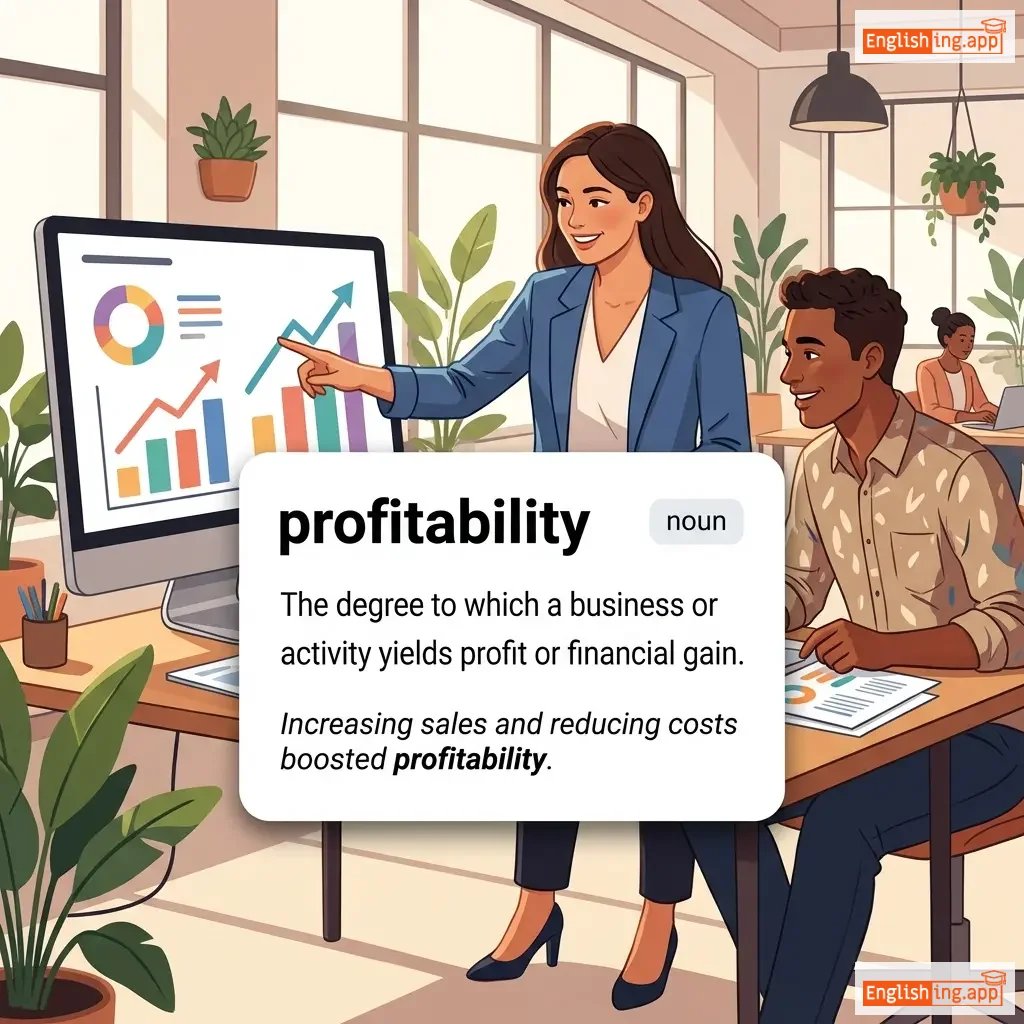
profitability definition card — visual illustration of the meaning
noun
ˌprɒf.ɪ.təˈbɪl.ə.ti
rentabilidad, grado de ganancia financiera (rentabilidad, grado de ganancia financiera)

The degree to which a business or activity yields profit or financial gain.

"Increased efficiency enhances business profitability."

"El aumento de la eficiencia mejora la rentabilidad del negocio." (El aumento de la eficiencia mejora la rentabilidad del negocio.)
adjective
/ˈprɒfɪtəbl/
rentable (rentable)

yielding profit or financial gain

"The company has become highly profitable after the new strategy was implemented."

"La empresa se ha vuelto altamente rentable después de implementar la nueva estrategia." (La empresa se ha vuelto altamente rentable después de implementar la nueva estrategia.)
noun
/ˌprɑːfɪˈtɪr/
especulador (especulador)

a person who makes excessive profits, especially unfairly or illegally

"The government punished war profiteers."

"El gobierno castigó a los especuladores de la guerra." (El gobierno castigó a los especuladores de la guerra.)
noun
/ˈprɑːflɪɡəsi/
derroche (derroche)

reckless wastefulness or extravagance

"His profligacy with money led him to bankruptcy."

"Su derroche de dinero lo llevó a la bancarrota." (Su derroche de dinero lo llevó a la bancarrota.)
adjective
/ˈprɑːflɪɡət/
despilfarrador (despilfarrador)

recklessly extravagant or wasteful in resources

"The king was known for his profligate lifestyle."

"El rey era conocido por su estilo de vida despilfarrador." (El rey era conocido por su estilo de vida despilfarrador.)
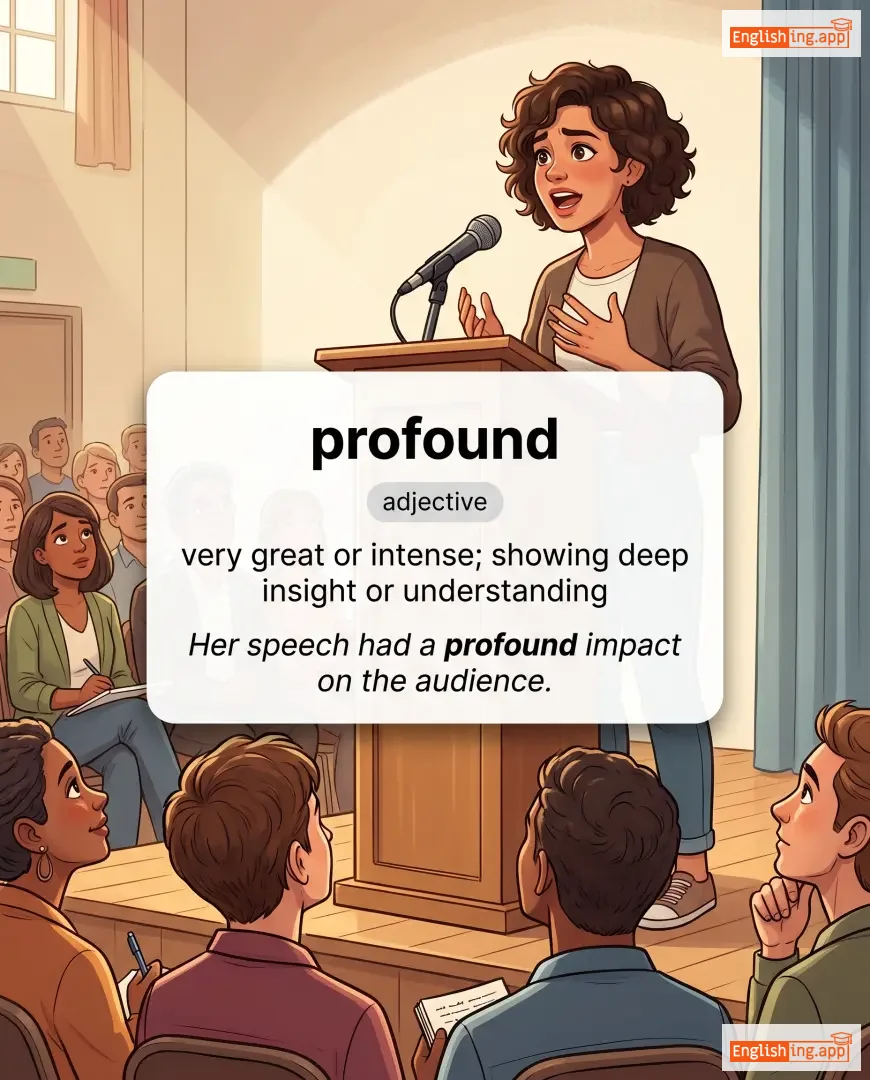
profound definition card — visual illustration of the meaning
adjective
/prəˈfaʊnd/
profundo (profundo)

very great or intense; showing deep insight or understanding

"Her speech had a profound impact on the audience."

"Su discurso tuvo un profundo impacto en la audiencia." (Su discurso tuvo un profundo impacto en la audiencia.)
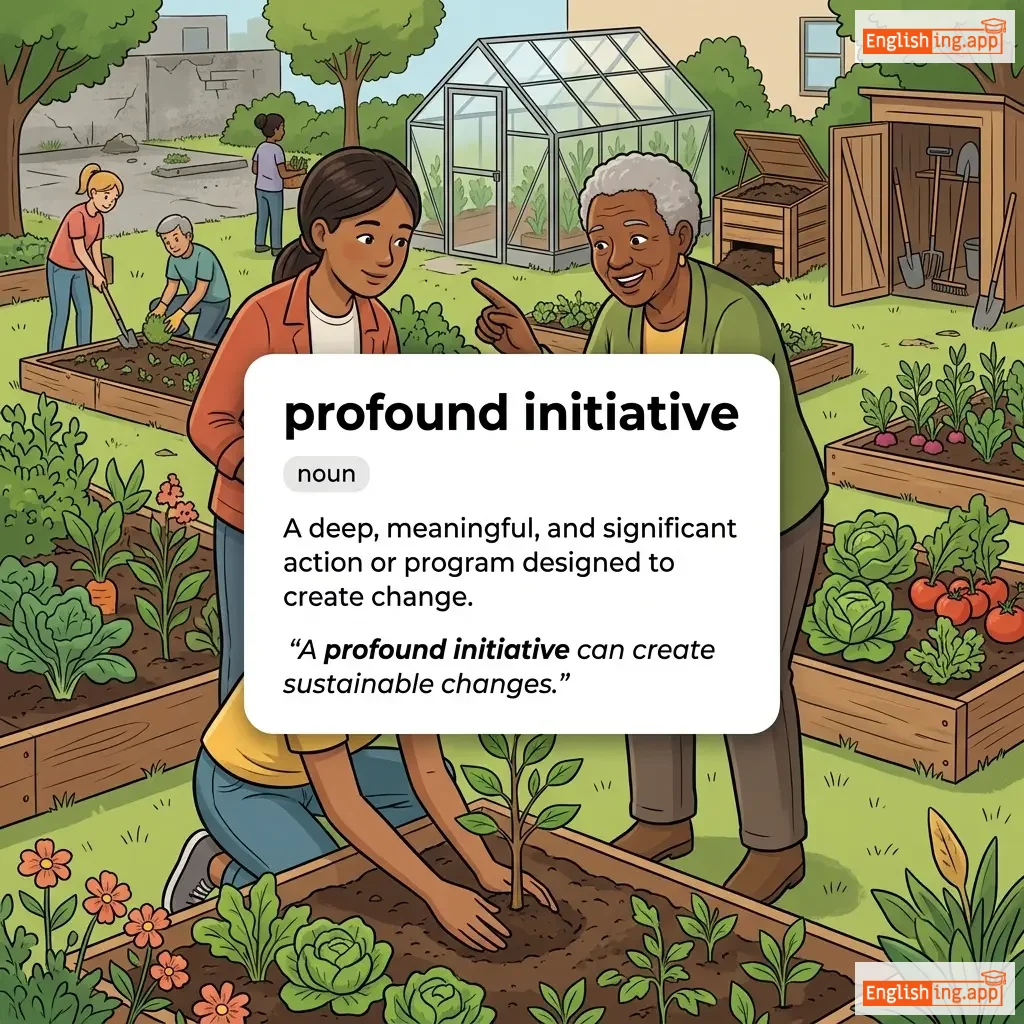
profound initiative definition card — visual illustration of the meaning
noun
prəˈfaʊnd ɪˈnɪʃətɪv
iniciativa profunda (iniciativa profunda)

A deep, meaningful, and significant action or program designed to create change.

"A profound initiative can create sustainable changes."

"Una iniciativa profunda puede crear cambios sostenibles." (Una iniciativa profunda puede crear cambios sostenibles.)
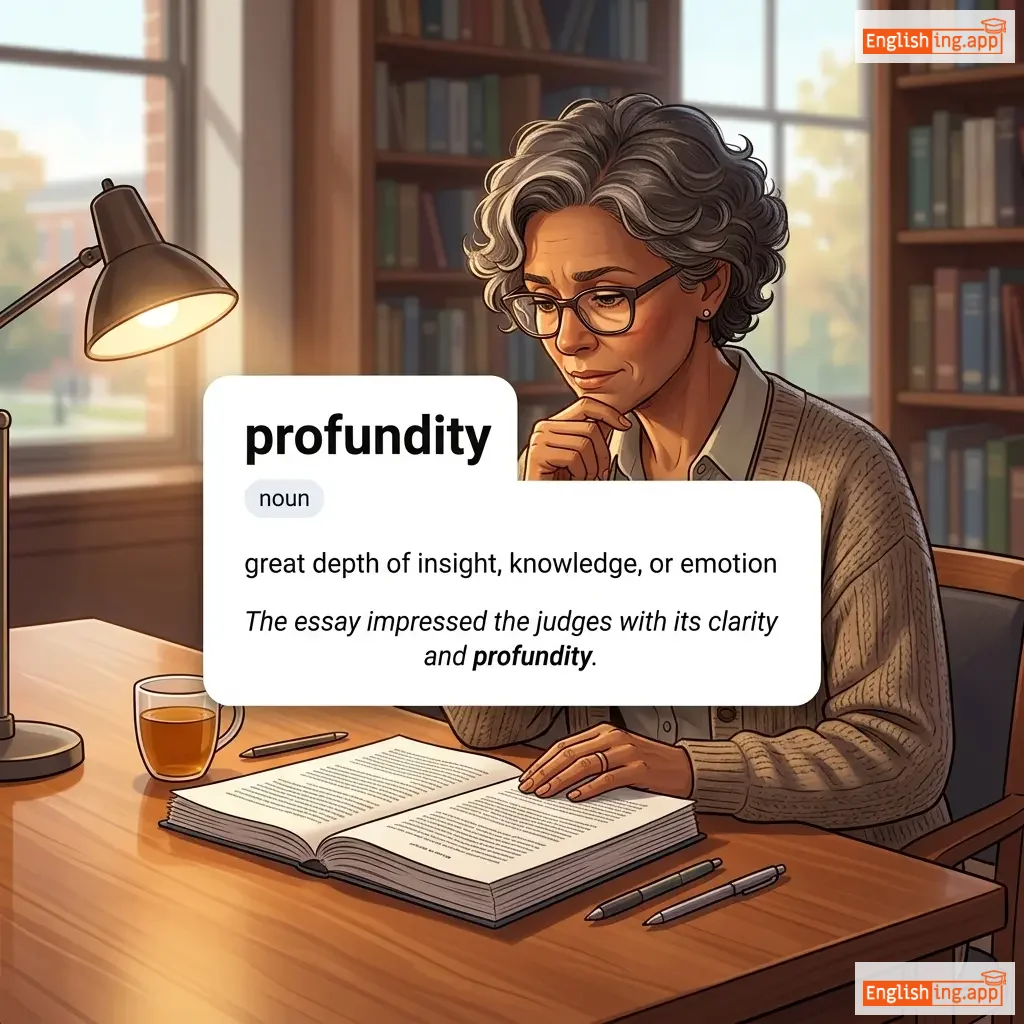
profundity definition card — visual illustration of the meaning
noun
/prəˈfʌndɪti/
profundidad (profundidad)

great depth of insight, knowledge, or emotion

"The essay impressed the judges with its clarity and profundity."

"El ensayo impresionó a los jueces con su claridad y profundidad." (El ensayo impresiono a los jueces con su claridad y profundidad.)
adjective
/prəˈfjuːs/
profuso (profuso)

existing or given in large amounts; abundant

"He offered profuse thanks for their timely help."

"Él ofreció abundantes gracias por su ayuda oportuna." (Él ofreció abundantes gracias por su ayuda oportuna.)
noun
/prəˈfjuːʒən/
profusión (profusion)

an abundance or large quantity of something

"Spring brought a profusion of wildflowers to the valley."

"La primavera trajo una profusión de flores silvestres al valle." (La primavera trajo una profusión de flores silvestres al valle.)
noun
/proʊˈdʒɛnɪtər/
antepasado (antepasado)

a direct ancestor; a person or thing that originates something

"Researchers traced the custom back to a common progenitor."

"Los investigadores rastrearon la costumbre hasta un antepasado común." (Los investigadores rastrearon la costumbre hasta un antepasado común.)
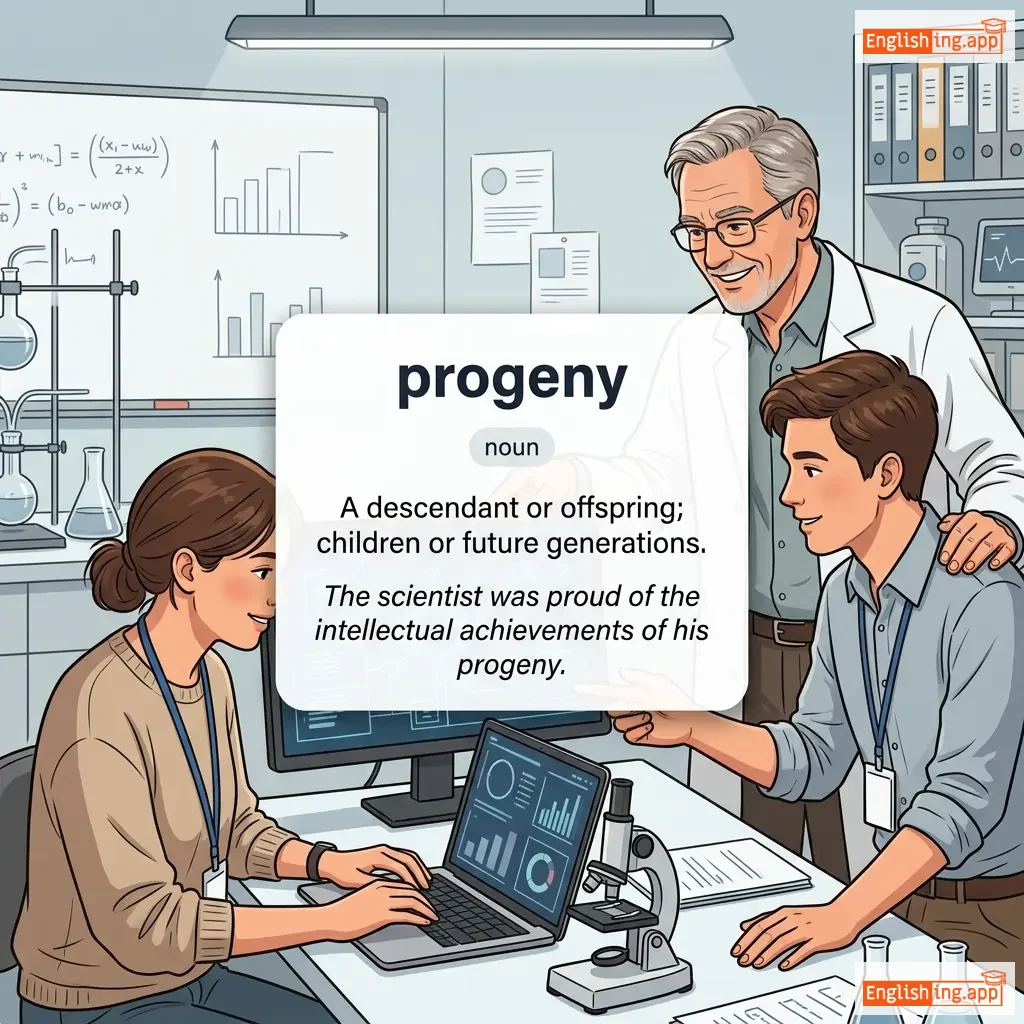
progeny definition card — visual illustration of the meaning
noun
/ˈprɒdʒəni/
descendencia (descendencia)

A descendant or offspring; children or future generations.

"The scientist was proud of the intellectual achievements of his progeny."

"El científico estaba orgulloso de los logros intelectuales de su descendencia." (El científico estaba orgulloso de los logros intelectuales de su descendencia.)
adjective
/ˈprɒɡnəθəs/
prognatoide (prognatoide)

Having jaws that project forward beyond the rest of the face.

"The fossil displayed a distinctly prognathous skull structure."

"El fósil mostraba una estructura de cráneo claramente prognatoide." (El fosil mostraba una estructura de cráneo claramente prognatoide.)
noun
/prɒɡˈnoʊsɪs/
pronóstico (pronostico)

A forecast of the likely outcome of a disease or situation.

"The doctor gave a positive prognosis for the patient's recovery."

"El doctor dio un pronóstico positivo para la recuperación del paciente." (El doctor dio un pronostico positivo para la recuperacion del paciente.)
verb
/prɒɡˈnɒstɪkeɪt/
pronosticar (pronosticar)

To foretell or predict future events, especially based on current signs.

"Experts attempted to prognosticate the outcome of the election."

"Los expertos intentaron pronosticar el resultado de las elecciones." (Los expertos intentaron pronosticar el resultado de las elecciones.)
noun
/prɒɡˌnɒstɪˈkeɪʃən/
pronóstico (pronostico)

The act of foretelling or predicting future events.

"The astrologer's prognostication fascinated the audience."

"El pronóstico del astrólogo fascinó a la audiencia." (El pronostico del astrólogo fascino a la audiencia.)
noun
/ˈprəʊɡræm/
programa (programa)

a planned series of events or activities

"The program starts at 9 AM sharp."

"El programa comienza a las 9 AM en punto." (El programa comienza a las 9 AM en punto.)
noun
/ˈproʊɡræmɪŋ/
programación (programacion)

the process of writing computer code to create software or applications

"He spends most of his time learning computer programming."

"Él pasa la mayor parte de su tiempo aprendiendo programación de computadoras." (El pasa la mayor parte de su tiempo aprendiendo programacion de computadoras.)
noun
/ˈprəʊɡræmɪŋ/
programación (programacion)

the process of designing and writing computer programs

"He has been learning programming for several months now."

"Ha estado aprendiendo programación durante varios meses." (Ha estado aprendiendo programacion durante varios meses.)
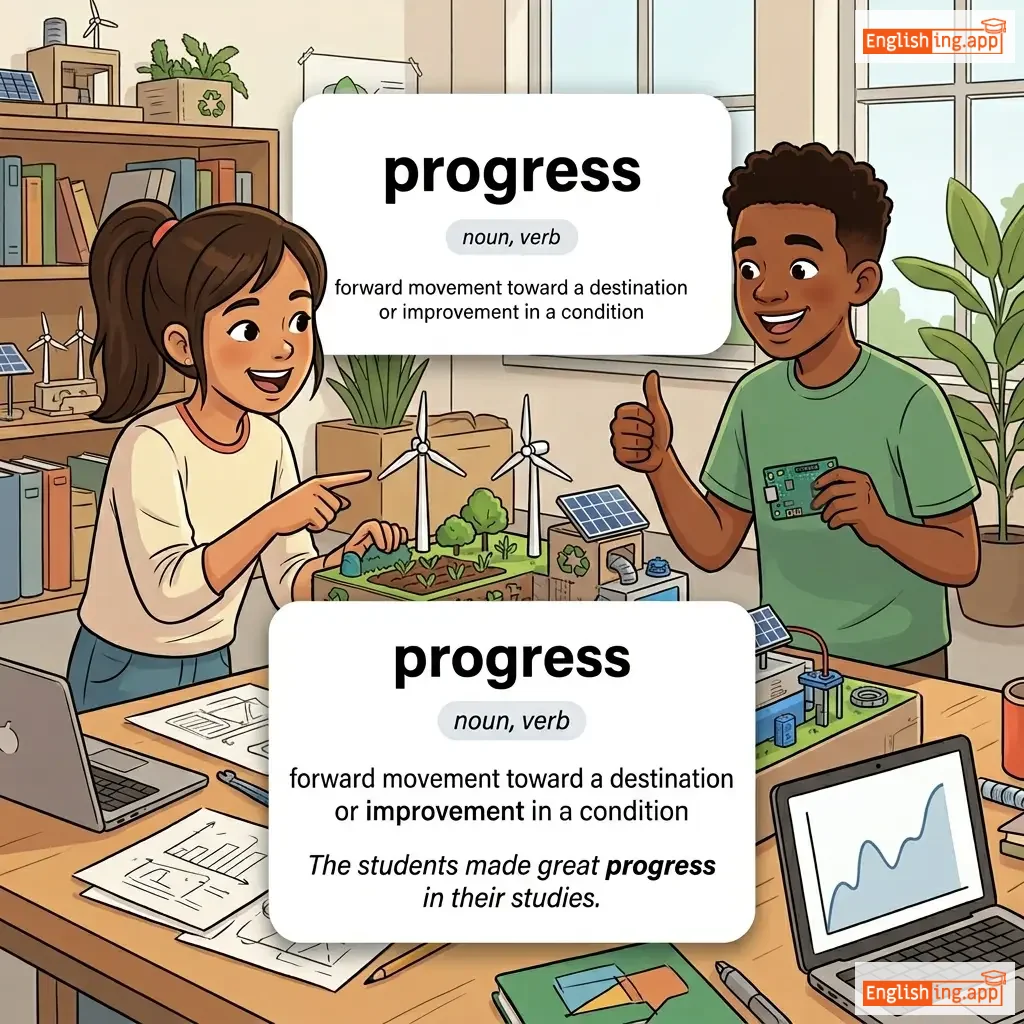
progress definition card — visual illustration of the meaning
noun, verb
/ˈprəʊɡrɛs/ (noun), /prəˈɡrɛs/ (verb)
progreso (progreso)

forward movement toward a destination or improvement in a condition

"The students made great progress in their studies."

"Los estudiantes hicieron grandes progresos en sus estudios." (Los estudiantes hicieron grandes progresos en sus estudios.)
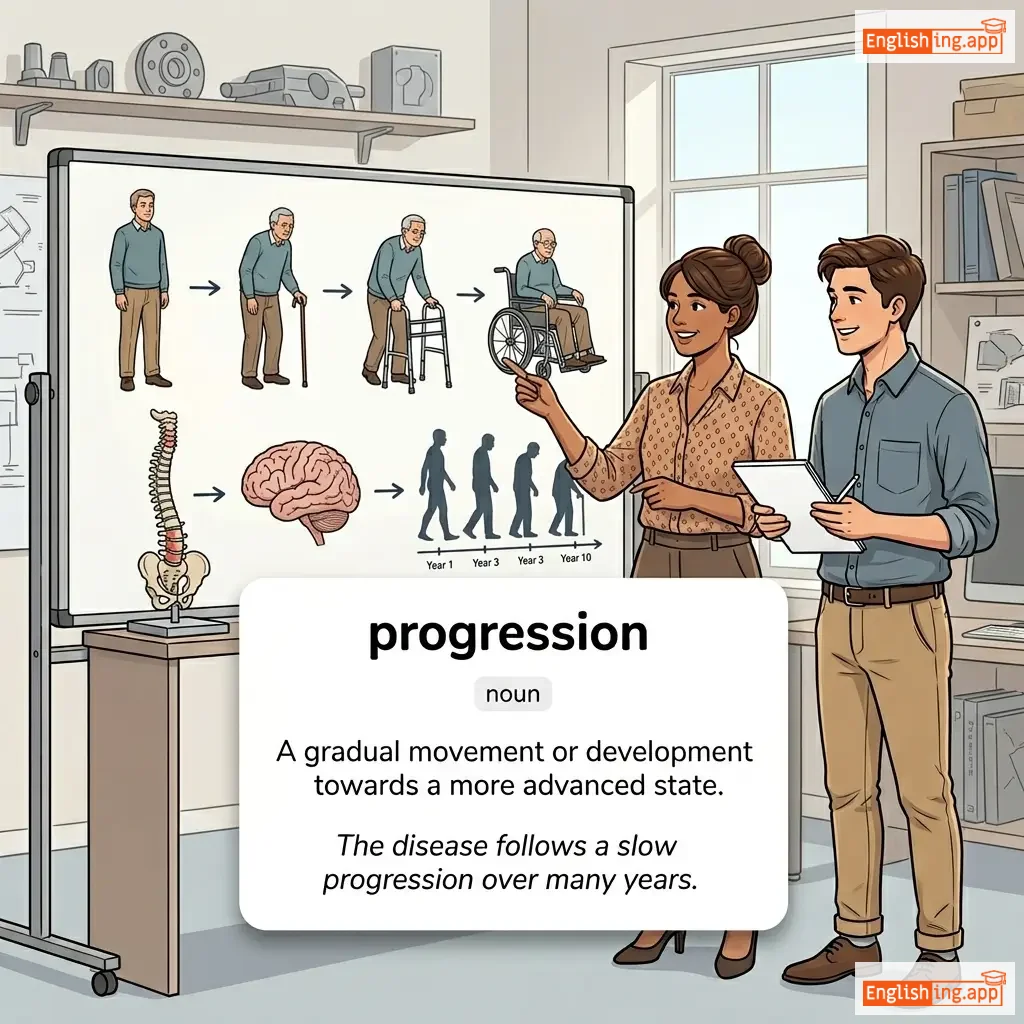
progression definition card — visual illustration of the meaning
noun
/prəˈɡrɛʃən/
progresión (progresion)

A gradual movement or development towards a more advanced state.

"The disease follows a slow progression over many years."

"La enfermedad sigue una lenta progresión durante muchos años." (La enfermedad sigue una lenta progresión durante muchos años.)
noun
/prəˈtɛstər/
manifestante (manifestante)

a person who takes part in a protest or demonstration

"The protester spoke passionately about the cause."

"El manifestante habló con pasión sobre la causa." (El manifestante habló con pasión sobre la causa.)
noun
/ˈprɒvɪdəns/
providencia divina (providencia divina)

the protective care of God or nature as a spiritual power; foresight or prudence

"They believed their survival was due to divine providence."

"Creían que su supervivencia se debía a la providencia divina." (Creian que su supervivencia se debia a la providencia divina.)
verb
/prəˈvaɪdɪd/
proporcionado (proporcionado)

gave or supplied something that was needed

"The hotel provided free breakfast for all guests."

"El hotel proporcionó desayuno gratuito para todos los huéspedes." (El hotel proporcionó desayuno gratuito para todos los huéspedes.)
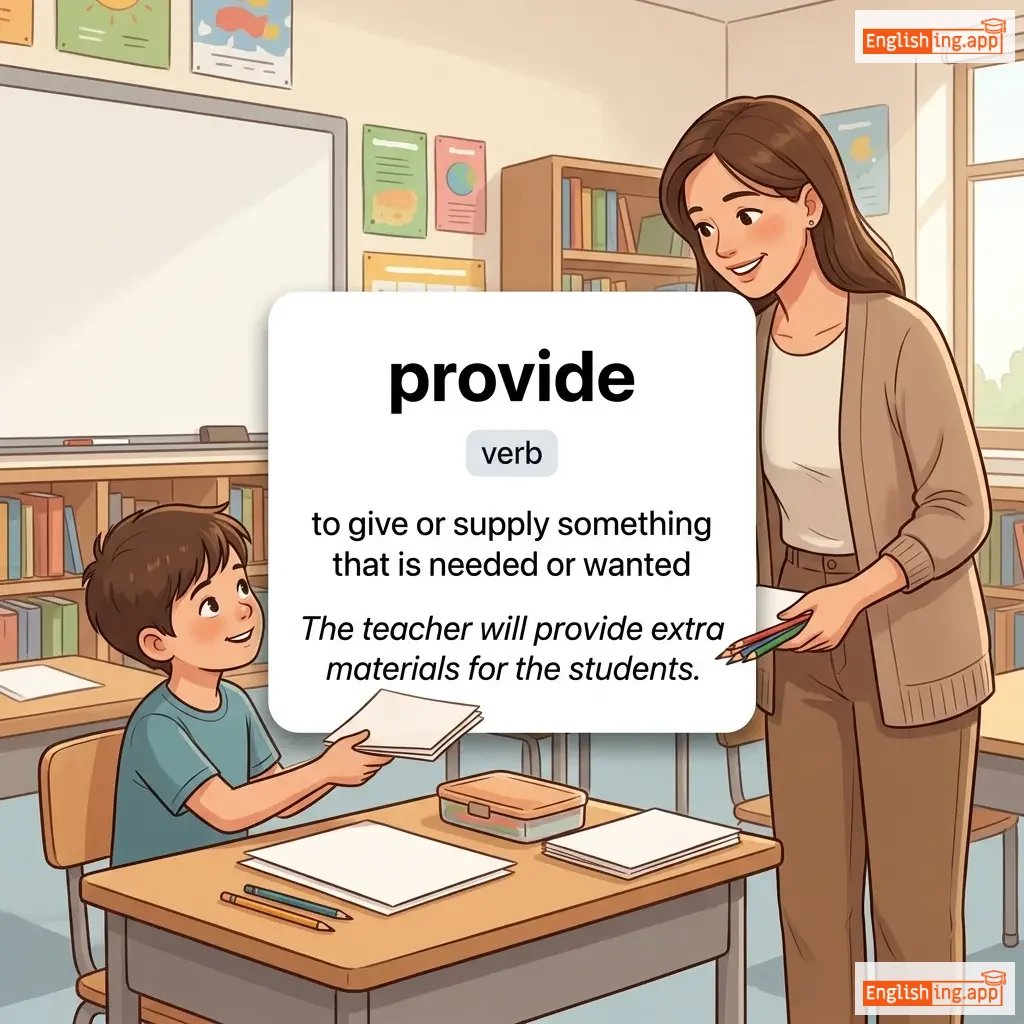
provide definition card — visual illustration of the meaning
verb
/prəˈvaɪd/
proporcionar (proporcionar)

to give or supply something that is needed or wanted

"The teacher will provide extra materials for the students."

"La profesora proporcionará materiales adicionales para los estudiantes." (La profesora proporcionará materiales adicionales para los estudiantes.)
noun
/ˈprɒvərb/
refrán (refran)

a short, commonly known saying that expresses a truth or piece of advice

"The proverb 'A stitch in time saves nine' teaches the value of prompt action."

"El refrán 'Más vale prevenir que lamentar' enseña la importancia de actuar a tiempo." (El refran 'Mas vale prevenir que lamentar' ensena la importancia de actuar a tiempo.)
noun
/ˈprɒvəndər/
alimento para el ganado (alimento para el ganado)

food or provisions, especially for livestock

"The barn was filled with provender for the cattle."

"El granero estaba lleno de alimento para el ganado." (El granero estaba lleno de alimento para el ganado.)
noun
/ˈprɒvənəns/
origen (origen)

The origin or source of something.

"The museum verified the provenance of the ancient manuscript."

"El museo verificó el origen del antiguo manuscrito." (El museo verificó el origen del antiguo manuscrito.)
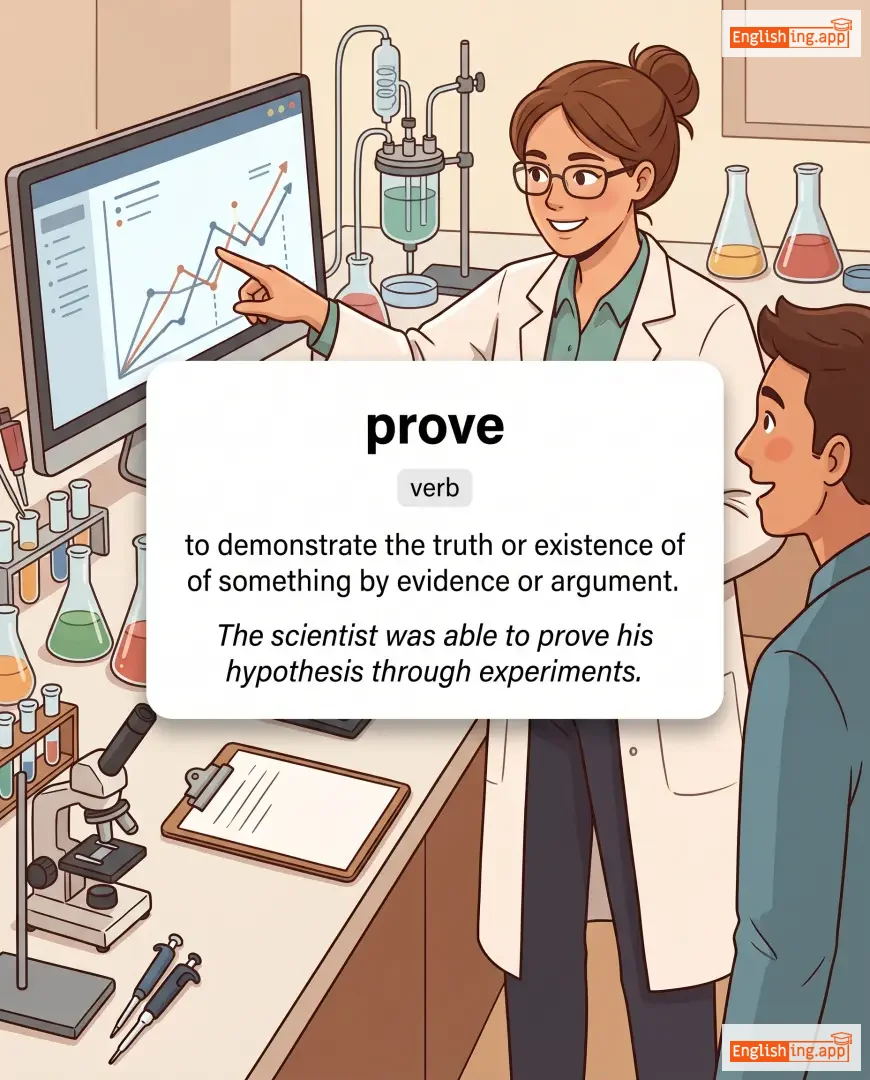
prove definition card — visual illustration of the meaning
verb
/pruːv/
demostrar (demostrar)

to demonstrate the truth or existence of something by evidence or argument.

"The scientist was able to prove his hypothesis through experiments."

"El científico pudo probar su hipótesis a través de experimentos." (El cientifico pudo probar su hipotesis a traves de experimentos.)
adverb
/ˈpraʊdli/
con orgullo (con orgullo)

in a way that shows pride or satisfaction; with a sense of honor or achievement

"She proudly displayed her achievements to her family."

"Ella mostró con orgullo sus logros a su familia." (ella mostro con orgullo sus logros a su familia)
Proud definition card — visual illustration of the meaning
adjective
/praʊd/
orgulloso (orgulloso)

Feeling deep pleasure or satisfaction as a result of achievements or qualities.

"She felt proud of her son's accomplishments."

"Ella se sintió orgullosa de los logros de su hijo." (Ella se sintio orgullosa de los logros de su hijo.)
verb
/ˈproʊtjuːbəreɪt/
hincharse (hincharse)

To swell out or bulge.

"The roots began to protuberate from the ground."

"Las raíces comenzaron a hincharse desde el suelo." (Las raices comenzaron a hincharse desde el suelo.)
adjective
/prəˈtuːbərənt/
protuberante (protuberante)

Sticking out or bulging.

"His protuberant belly showed after the meal."

"Su barriga protuberante se mostró después de la comida." (Su barriga protuberante se mostro despues de la comida.)
noun
/prəˈtuːbərəns/
protuberancia (protuberancia)

A rounded swelling or lump on a surface.

"The doctor examined the small protuberance on his arm."

"El doctor examinó la pequeña protuberancia en su brazo." (El doctor examinó la pequeña protuberancia en su brazo.)
noun
/prəˈtruːʒən/
protuberancia (protuberancia)

Something that sticks out or projects from a surface.

"The protrusion on the wall made it difficult to move the furniture."

"La protuberancia en la pared hizo que mover los muebles fuera difícil." (La protuberancia en la pared hizo que mover los muebles fuera difícil.)
verb
/proʊˈtruːd/
sobresalir (sobresalir)

To stick out or extend beyond a surface.

"A nail was protruding from the wooden board."

"Un clavo sobresalía desde la tabla de madera." (Un clavo sobresalia desde la tabla de madera.)
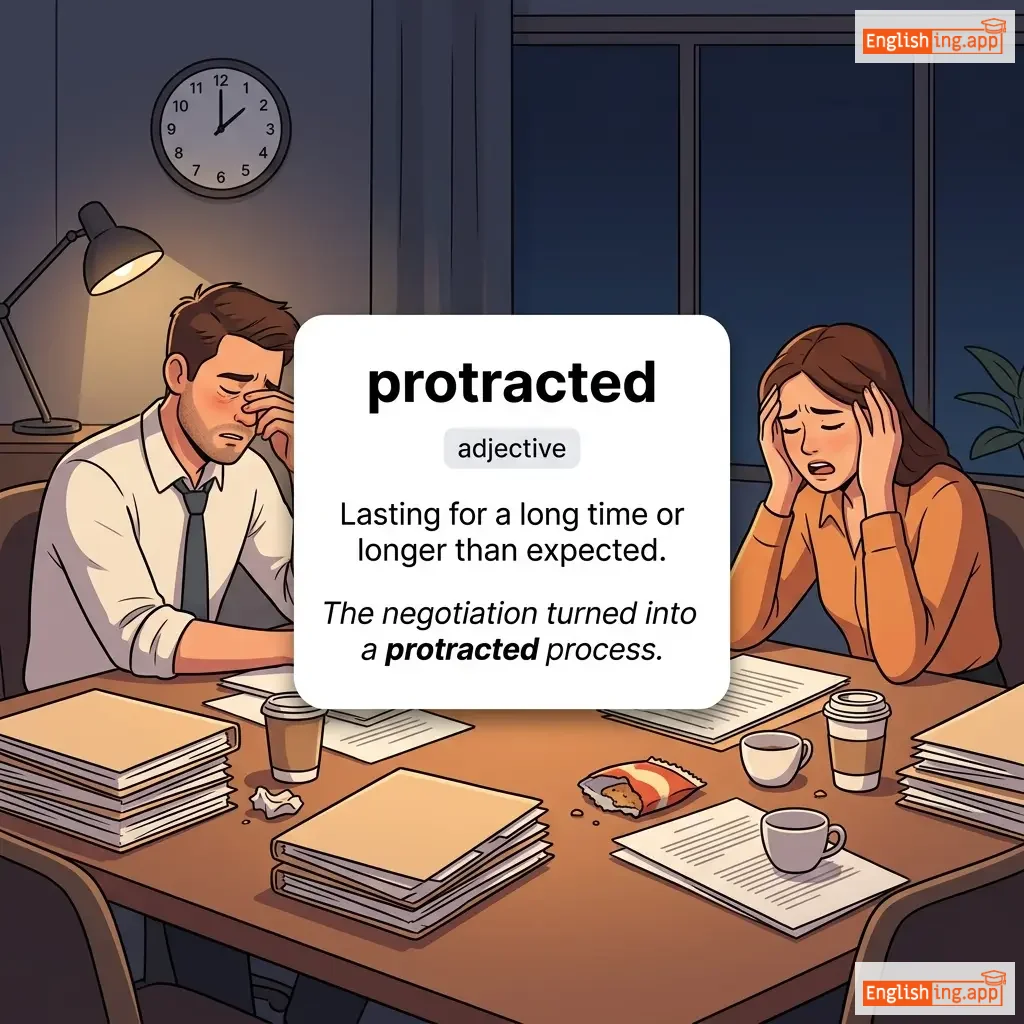
protracted definition card — visual illustration of the meaning
adjective
/prəˈtræktɪd/
prolongado (prolongado)

Lasting for a long time or longer than expected.

"The negotiation turned into a protracted process."

"La negociación se convirtió en un proceso prolongado." (La negociacion se convirtio en un proceso prolongado.)
verb
/proʊˈtrækt/
prolongar (prolongar)

To prolong or extend in time or duration.

"Negotiations were protracted for several months."

"Las negociaciones fueron prolongadas durante varios meses." (Las negociaciones fueron prolongadas durante varios meses.)
noun
/ˈproʊtəˌtaɪp/
prototipo (prototipo)

The first model or version of something, used as a sample for testing or improvement.

"The company built a prototype of the new smartphone before mass production."

"La compañía construyó un prototipo del nuevo teléfono inteligente antes de la producción en masa." (La compania construyo un prototipo del nuevo telefono inteligente antes de la produccion en masa.)
noun
/ˈproʊtoʊˌplæzəm/
protoplasma (protoplasma)

The living substance inside a cell, including the cytoplasm and nucleus.

"Scientists observed the movement of protoplasm under the microscope."

"Los científicos observaron el movimiento del protoplasma bajo el microscopio." (Los científicos observaron el movimiento del protoplasma bajo el microscopio.)
noun
/ˈproʊtoʊˌmɑːrtɚ/
primer mártir (primer martir)

The first martyr in a cause or religion, often referring to the first Christian martyr.

"St. Stephen is known as the protomartyr of Christianity."

"San Esteban es conocido como el protomártir del cristianismo." (San Esteban es conocido como el protomartir del cristianismo.)
noun
/ˈproʊtəkɔːl/
protocolo (protocolo)

an official procedure or system of rules

"The security team followed strict protocol during the event."

"El equipo de seguridad siguió un estricto protocolo durante el evento." (El equipo de seguridad siguió un estricto protocolo durante el evento.)
adjective
/ˈprɒspərəs/
próspero (prospero)

successful in material terms; flourishing financially or in general well-being

"The town became prosperous after the new trade route opened."

"La ciudad se hizo próspera después de que se abriera la nueva ruta comercial." (La ciudad se hizo próspera después de que se abriera la nueva ruta comercial.)
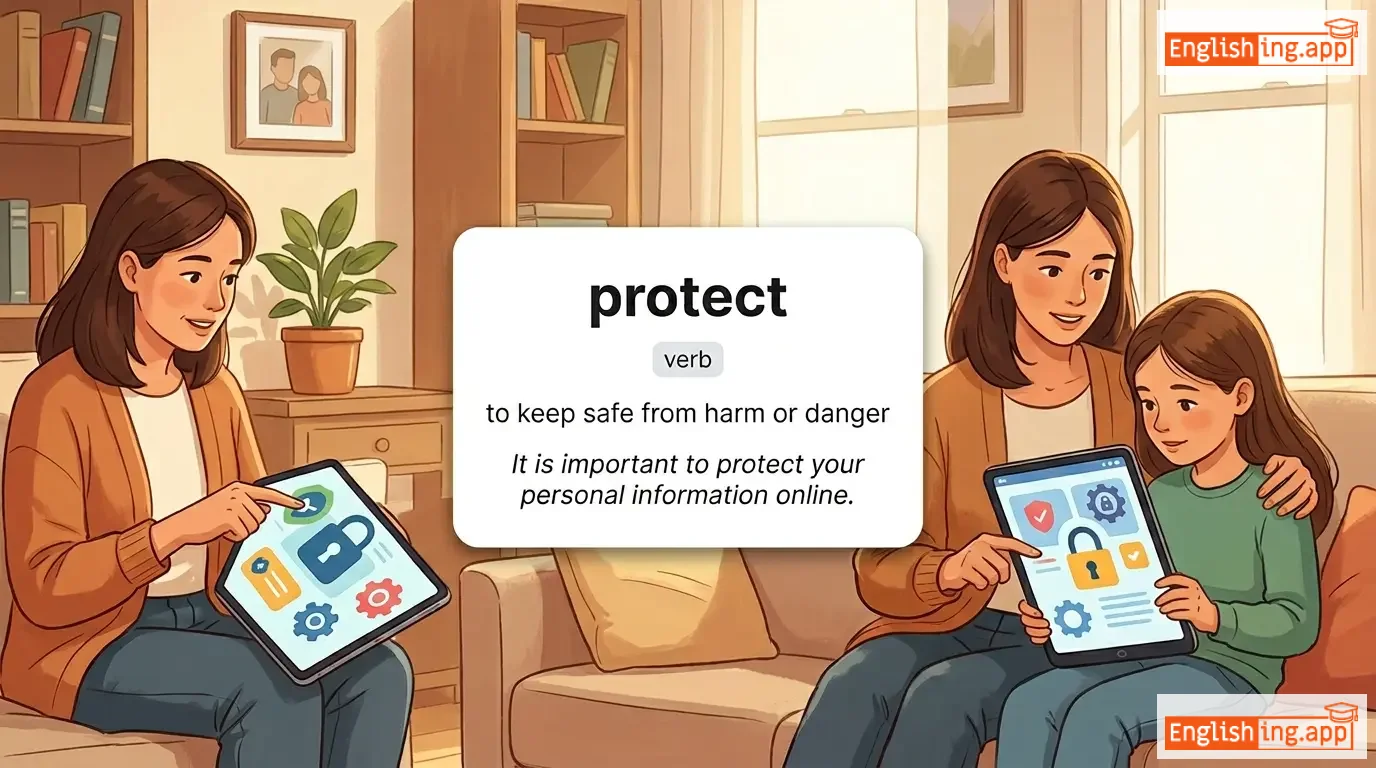
protect definition card — visual illustration of the meaning
verb
/prəˈtɛkt/
proteger (proteger)

to keep safe from harm or danger

"It is important to protect your personal information online."

"Es importante proteger tu información personal en línea." (Es importante proteger tu informacion personal en linea.)
adjective
/ˈproʊtiən/
versátil (versatil)

tending or able to change frequently or easily; versatile

"She is a protean artist who experiments with many styles."

"Ella es una artista versátil que experimenta con muchos estilos." (Ella es una artista versatil que experimenta con muchos estilos.)
protagonist definition card — visual illustration of the meaning
noun
/prəˈtæɡənɪst/
protagonista (protagonista)

the main character or leading figure in a story, drama, or other work

"The protagonist of the novel struggles with her inner conflicts."

"El protagonista de la novela lucha con sus conflictos internos." (El protagonista de la novela lucha con sus conflictos internos.)
adjective/verb
/ˈprɒstreɪt/
postrado (postrado)

lying stretched out on the ground with one's face downward, often as a sign of submission or exhaustion

"He lay prostrate on the ground after the long battle."

"Él se tiró postrado en el suelo después de la larga batalla." (El se tiro postrado en el suelo después de la larga batalla.)
verb
/ˈprɒspər/
prosperar (prosperar)

to succeed or flourish, especially in financial or business matters

"With hard work and determination, she managed to prosper in her career."

"Con trabajo duro y determinación, ella logró prosperar en su carrera." (Con trabajo duro y determinacion, ella logro prosperar en su carrera.)
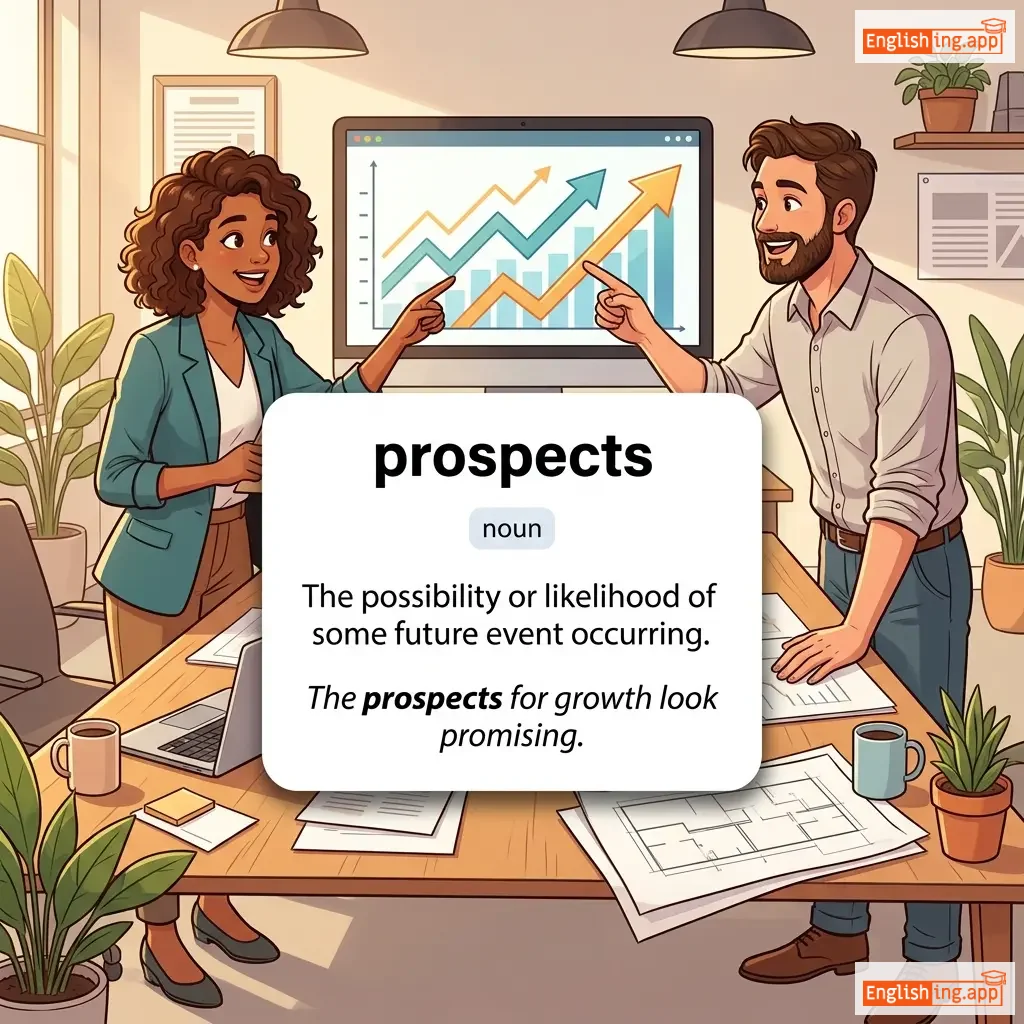
prospects definition card — visual illustration of the meaning
noun
/ˈprɒs.pekts/
prospectos (prospectos)

The possibility or likelihood of some future event occurring.

"The prospects for growth look promising."

"Los prospectos de crecimiento parecen prometedores." (Los prospectos de crecimiento parecen prometedores.)