वोकैबुलरीज

इंग्लिश वोकैबुलरी डिस्कवर, लर्न और मास्टर करें

Profit definition card — visual illustration of the meaning
noun, verb
/ˈprɒfɪt/
लाभ (labh)

financial gain, especially the difference between the amount earned and the amount spent

"The company made a huge profit this quarter."

"कंपनी ने इस तिमाही में भारी मुनाफा कमाया।" (Company ne is timahi mein bhaari munafa kamaya.)
profitability definition card — visual illustration of the meaning
noun
ˌprɒf.ɪ.təˈbɪl.ə.ti
लाभप्रदता, वित्तीय लाभ की डिग्री (labhpradta, vittiya labh ki degree)

The degree to which a business or activity yields profit or financial gain.

"Increased efficiency enhances business profitability."

"बढ़ी हुई दक्षता व्यापार की लाभप्रदता को बढ़ाती है।" (Badhi hui dakshata vyapar ki labhpradta ko badhati hai.)
adjective
/ˈprɒfɪtəbl/
लाभकारी (labhkaari)

yielding profit or financial gain

"The company has become highly profitable after the new strategy was implemented."

"कंपनी नई रणनीति लागू होने के बाद अत्यधिक लाभकारी हो गई है।" (Company nai rananeeti lagu hone ke baad atyadhik labhkaari ho gayi hai.)
noun
/ˌprɑːfɪˈtɪr/
अत्यधिक मुनाफा कमाने वाला (atyadhik munafa kamane wala)

a person who makes excessive profits, especially unfairly or illegally

"The government punished war profiteers."

"सरकार ने युद्ध मुनाफाखोरों को सजा दी।" (Sarkar ne yuddh munafakhoron ko saza di.)
noun
/ˈprɑːflɪɡəsi/
व्ययितता (vyayitata)

reckless wastefulness or extravagance

"His profligacy with money led him to bankruptcy."

"उसकी व्ययितता ने उसे दिवालिया बना दिया।" (Uski vyayitata ne use deewaliya bana diya.)
adjective
/ˈprɑːflɪɡət/
अत्यधिक खर्चीला (atyadhik kharchila)

recklessly extravagant or wasteful in resources

"The king was known for his profligate lifestyle."

"राजा अपनी अत्यधिक खर्चीली जीवनशैली के लिए प्रसिद्ध था।" (Raja apni atyadhik kharchili jeevanshaili ke liye prasiddh tha.)
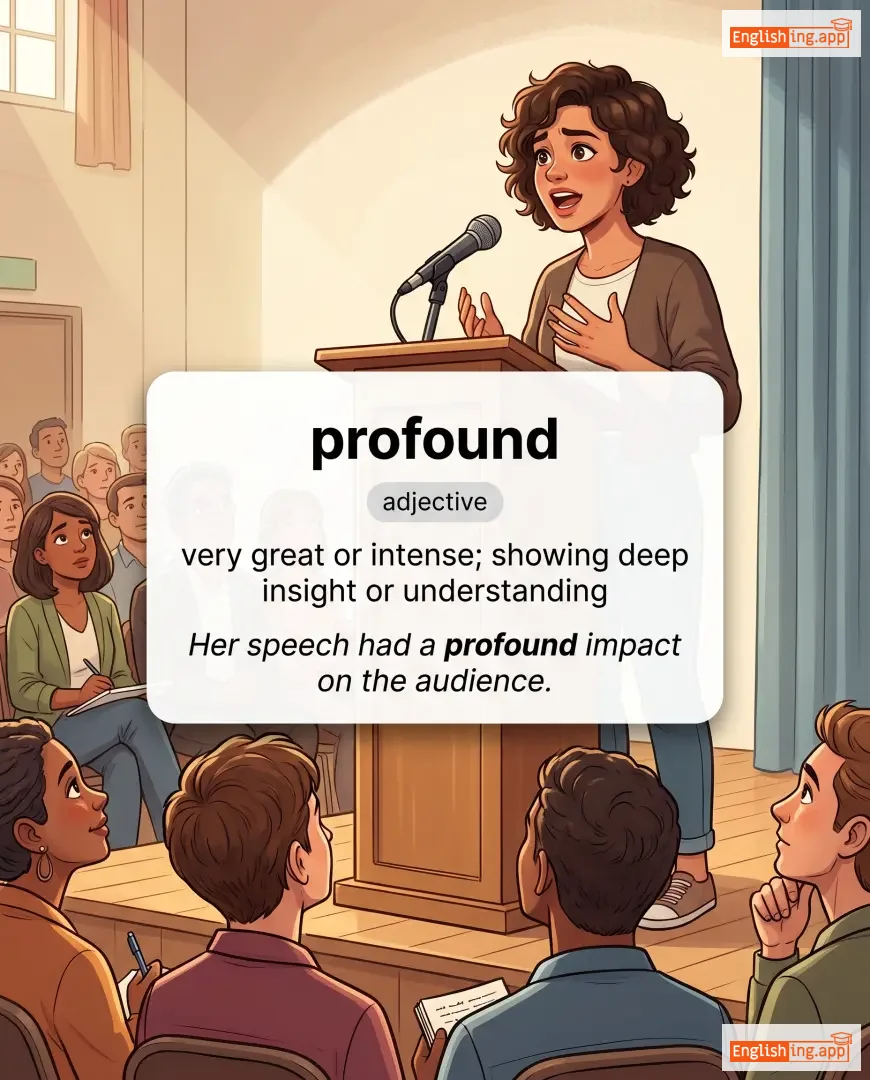
profound definition card — visual illustration of the meaning
adjective
/prəˈfaʊnd/
गहरा (gahra)

very great or intense; showing deep insight or understanding

"Her speech had a profound impact on the audience."

"उसका भाषण दर्शकों पर गहरा प्रभाव डाल गया।" (uska bhashan darshako par gahra prabhav daal gaya.)
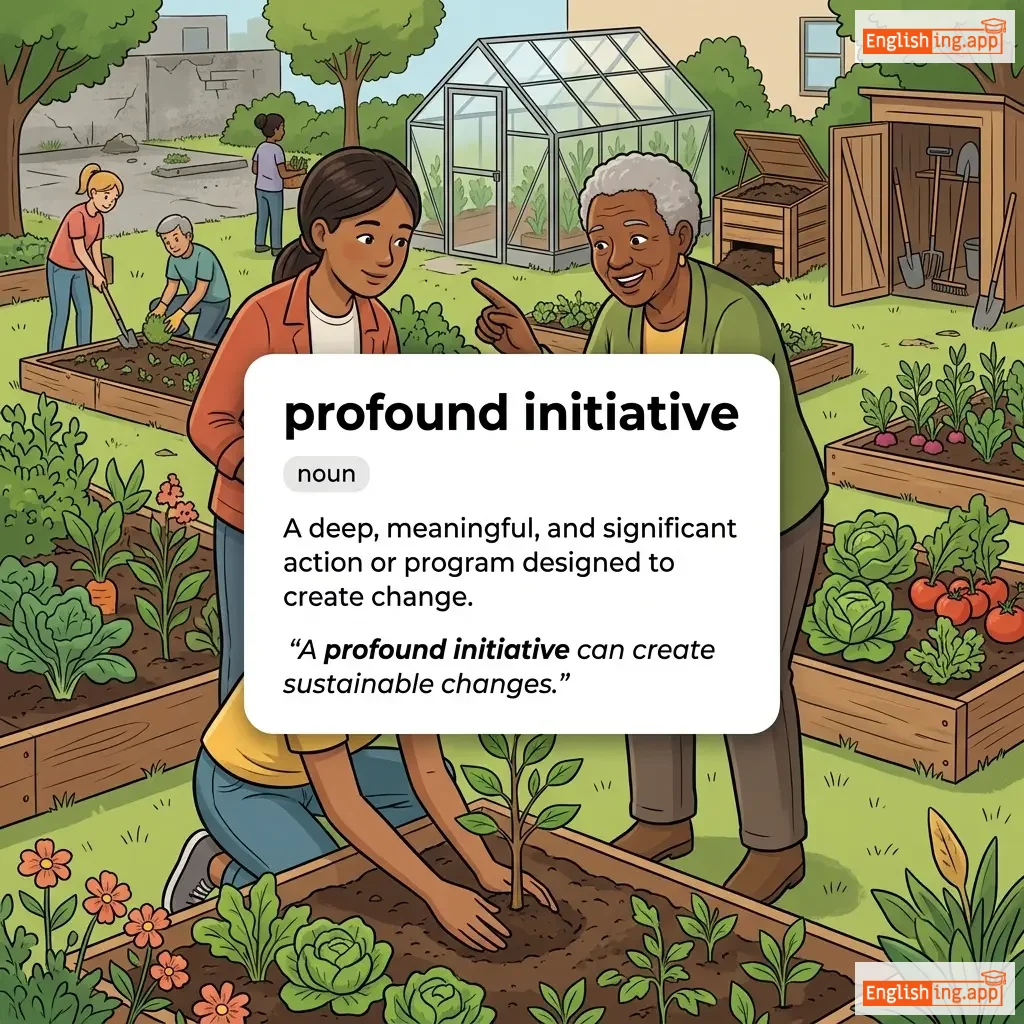
profound initiative definition card — visual illustration of the meaning
noun
prəˈfaʊnd ɪˈnɪʃətɪv
गंभीर पहल (gambhir pahal)

A deep, meaningful, and significant action or program designed to create change.

"A profound initiative can create sustainable changes."

"एक गंभीर पहल सस्टेनेबल बदलाव ला सकती है।" (Ek gambhir pahal sustainable badlav la sakti hai.)
profundity definition card — visual illustration of the meaning
noun
/prəˈfʌndɪti/
गंभीरता (gambhirata)

great depth of insight, knowledge, or emotion

"The essay impressed the judges with its clarity and profundity."

"निबंध ने अपने स्पष्टता और गंभीरता से जजों को प्रभावित किया।" (Nibandh ne apne spashtata aur gambhirata se jajo ko prabhavit kiya.)
adjective
/prəˈfjuːs/
प्रचुर (prachoor)

existing or given in large amounts; abundant

"He offered profuse thanks for their timely help."

"उसने समय पर मदद के लिए प्रचुर धन्यवाद दिया।" (usne samay par madad ke liye prachoor dhanyavaad diya.)
noun
/prəˈfjuːʒən/
प्रचुरता (prachurta)

an abundance or large quantity of something

"Spring brought a profusion of wildflowers to the valley."

"वसंत ने घाटी में जंगली फूलों की प्रचुरता ला दी।" (Vasant ne ghaati mein jangli phoolon ki prachurta la di.)
noun
/proʊˈdʒɛnɪtər/
पूर्वज (purvaj)

a direct ancestor; a person or thing that originates something

"Researchers traced the custom back to a common progenitor."

"शोधकर्ताओं ने परंपरा का पता एक सामान्य पूर्वज तक लगाया।" (shodhkartao ne parampara ka pata ek samanya purvaj tak lagaya.)
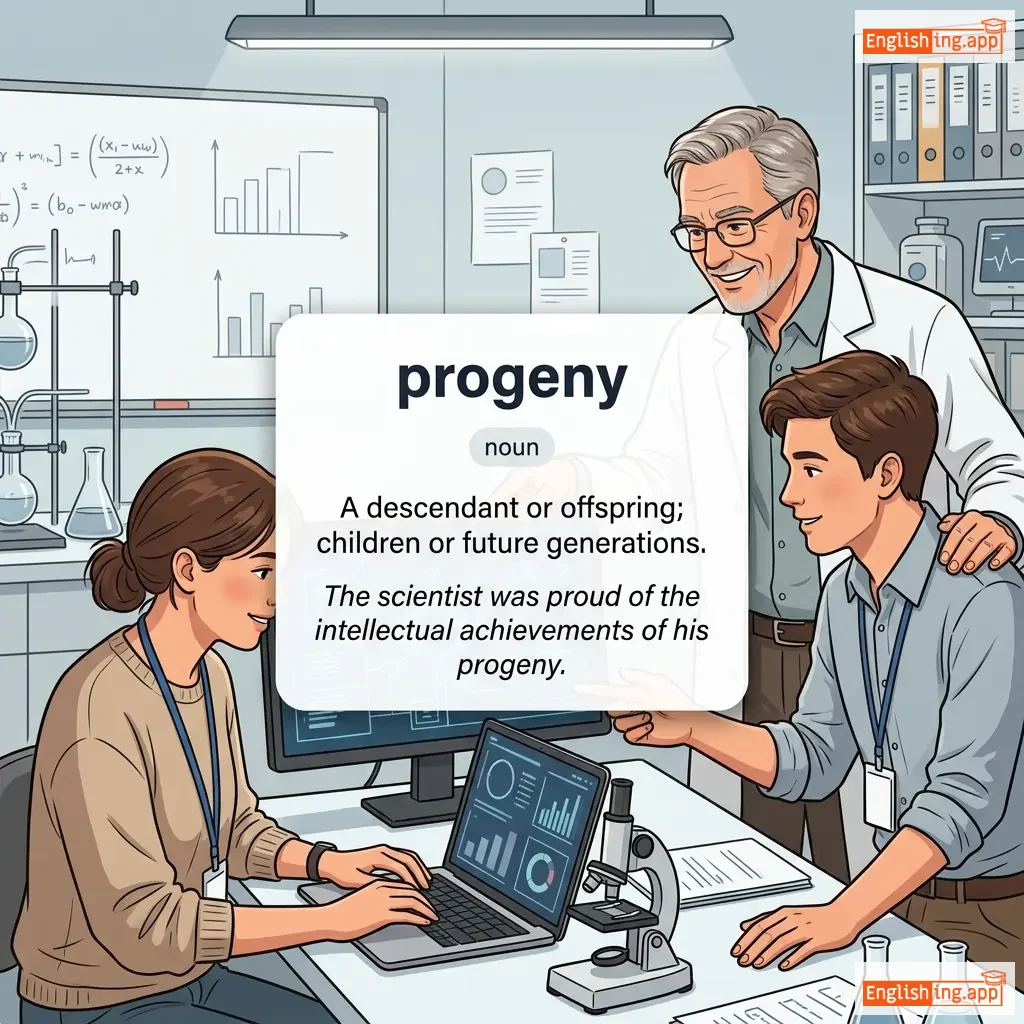
progeny definition card — visual illustration of the meaning
noun
/ˈprɒdʒəni/
संतान (santan)

A descendant or offspring; children or future generations.

"The scientist was proud of the intellectual achievements of his progeny."

"वैज्ञानिक अपने संतान की बौद्धिक उपलब्धियों पर गर्वित थे।" (Vaigyanik apne santan ki bauddhik uplabdhiyon par garvit the.)
adjective
/ˈprɒɡnəθəs/
अग्रकंठ (agrakanth)

Having jaws that project forward beyond the rest of the face.

"The fossil displayed a distinctly prognathous skull structure."

"जीवाश्म में एक विशेष रूप से अग्रकंठ खोपड़ी संरचना प्रदर्शित की गई।" (Jeevashm mein ek vishesh roop se agrakanth khopdi sanrachna pradarshit ki gayi.)
noun
/prɒɡˈnoʊsɪs/
रोग भविष्यवाणी (rog bhavishyavani)

A forecast of the likely outcome of a disease or situation.

"The doctor gave a positive prognosis for the patient's recovery."

"डॉक्टर ने मरीज की रिकवरी के लिए सकारात्मक प्रग्नोसिस दी।" (Daktar ne mareez ki recovery ke liye sakaratmak prognosis dee.)
verb
/prɒɡˈnɒstɪkeɪt/
पूर्वानुमान करना (purvanuman karna)

To foretell or predict future events, especially based on current signs.

"Experts attempted to prognosticate the outcome of the election."

"विशेषज्ञों ने चुनाव के परिणाम का अनुमान लगाने की कोशिश की।" (Visheshagyon ne chunaav ke parinaam ka anuman lagane ki koshish ki.)
noun
/prɒɡˌnɒstɪˈkeɪʃən/
पूर्वानुमान (purvanuman)

The act of foretelling or predicting future events.

"The astrologer's prognostication fascinated the audience."

"ज्योतिषी का पूर्वानुमान दर्शकों को मंत्रमुग्ध कर दिया था।" (Jyotishi ka purvanuman darshako ko mantrmugdh kar diya tha.)
noun
/ˈprəʊɡræm/
प्रोग्राम (program)

a planned series of events or activities

"The program starts at 9 AM sharp."

"प्रोग्राम 9 बजे सुबह शुरू होता है।" (Program 9 baje subah shuru hota hai.)
noun
/ˈproʊɡræmɪŋ/
प्रोग्रामिंग (programing)

the process of writing computer code to create software or applications

"He spends most of his time learning computer programming."

"वह अपना अधिकांश समय कंप्यूटर प्रोग्रामिंग सीखने में बिताता है।" (Wah apna adikansh samay computer programming seekhne mein bitata hai.)
noun
/ˈprəʊɡræmɪŋ/
प्रोग्रामिंग (programming)

the process of designing and writing computer programs

"He has been learning programming for several months now."

"वह अब कई महीनों से प्रोग्रामिंग सीख रहा है।" (Vah ab kai mahino se programming seekh raha hai.)
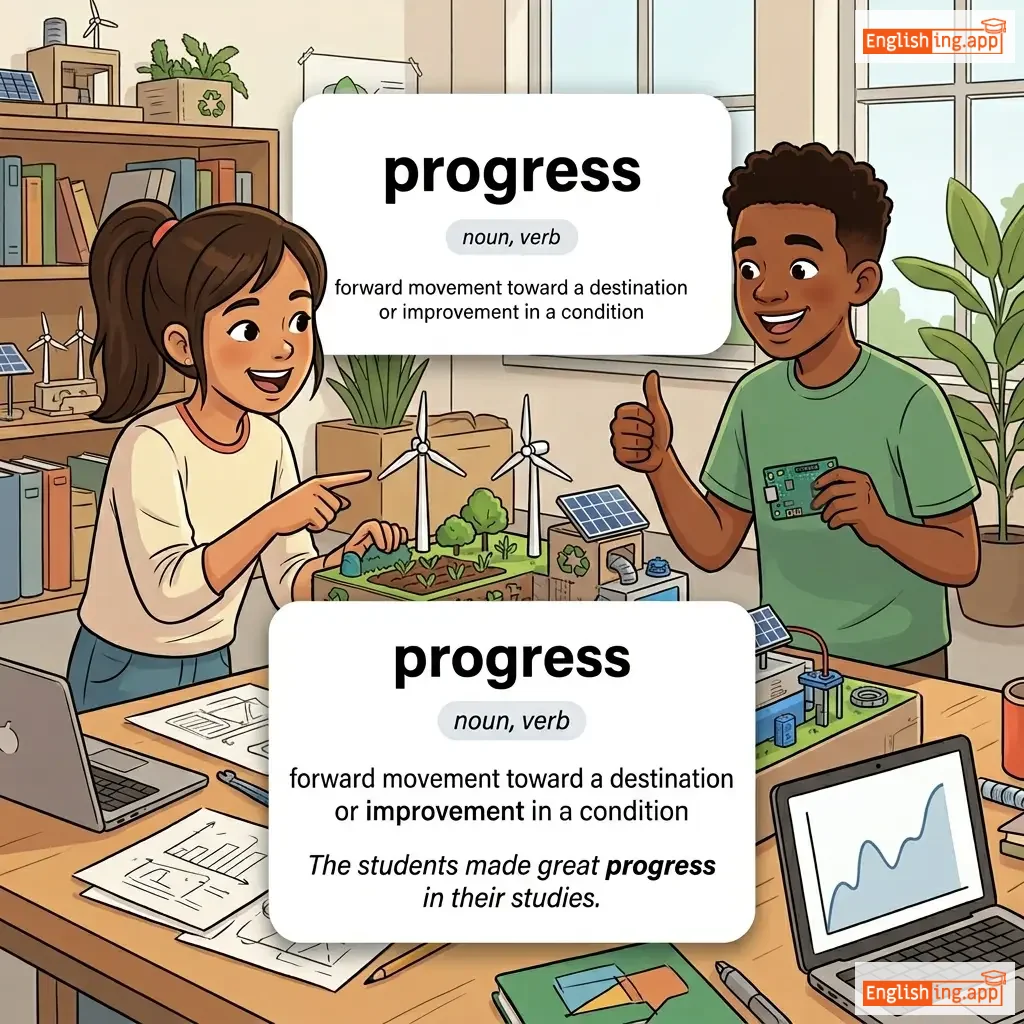
progress definition card — visual illustration of the meaning
noun, verb
/ˈprəʊɡrɛs/ (noun), /prəˈɡrɛs/ (verb)
प्रगति (pragati)

forward movement toward a destination or improvement in a condition

"The students made great progress in their studies."

"छात्रों ने अपनी पढ़ाई में बड़ी प्रगति की।" (Chhatron ne apni padhai mein badi pragati ki.)
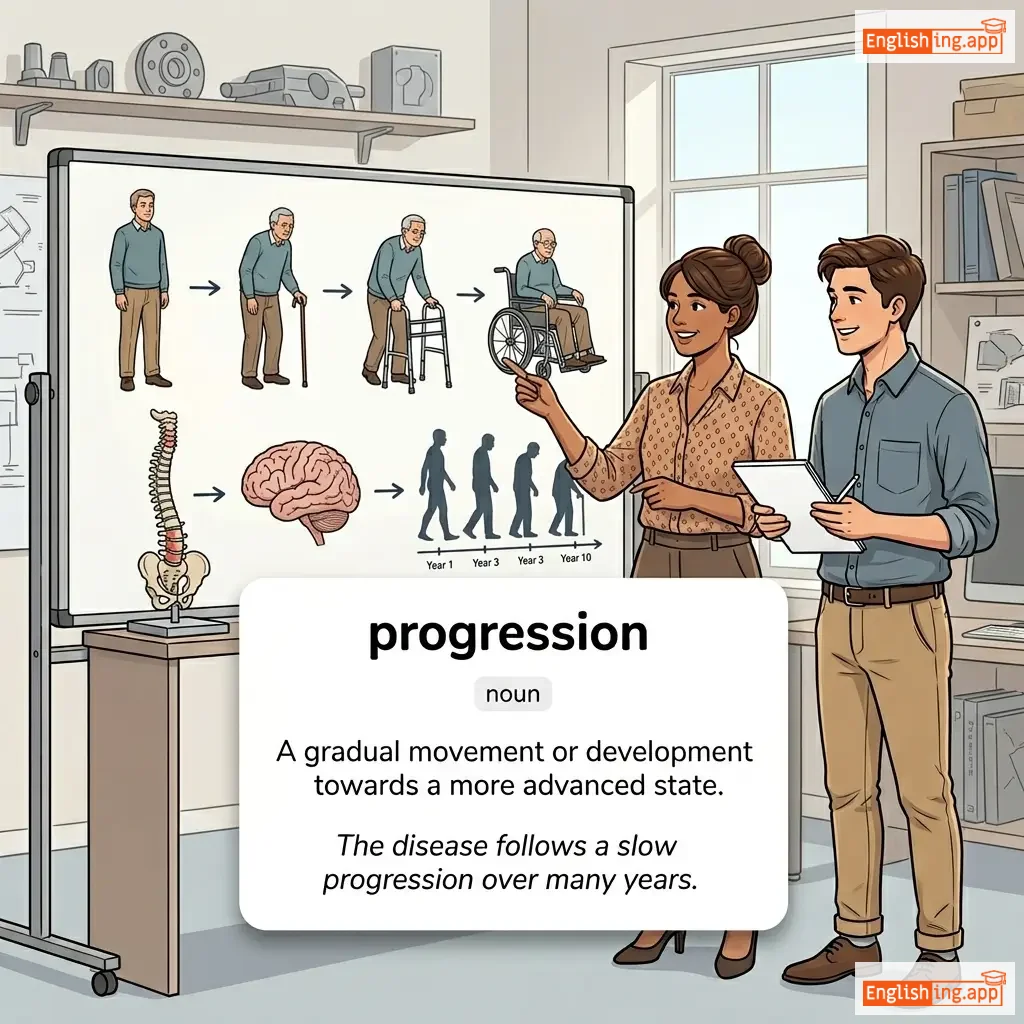
progression definition card — visual illustration of the meaning
noun
/prəˈɡrɛʃən/
प्रगति (pragati)

A gradual movement or development towards a more advanced state.

"The disease follows a slow progression over many years."

"रोग कई वर्षों में धीरे-धीरे प्रगति करता है।" (rog kai varshon mein dheere-dheere pragati karta hai.)
noun
/prəˈtɛstər/
विरोधी (virodhi)

a person who takes part in a protest or demonstration

"The protester spoke passionately about the cause."

"विरोधी ने कारण के बारे में जोश से बात की।" (Virodhi ne kaaran ke baare mein josh se baat ki.)
noun
/ˈprɒvɪdəns/
ईश्वर की कृपा (ishwar ki kripa)

the protective care of God or nature as a spiritual power; foresight or prudence

"They believed their survival was due to divine providence."

"उन्हें विश्वास था कि उनका बचाव ईश्वर की कृपा के कारण हुआ था।" (Unhein vishwas tha ki unka bachav ishwar ki kripa ke kaaran hua tha.)
verb
/prəˈvaɪdɪd/
प्रदान किया गया (pradan kiya gaya)

gave or supplied something that was needed

"The hotel provided free breakfast for all guests."

"होटल ने सभी मेहमानों के लिए मुफ्त नाश्ता प्रदान किया।" (Hotel ne sabhi mehmanon ke liye muft nashta pradan kiya.)
provide definition card — visual illustration of the meaning
verb
/prəˈvaɪd/
प्रदान करना (pradan karna)

to give or supply something that is needed or wanted

"The teacher will provide extra materials for the students."

"शिक्षक छात्रों के लिए अतिरिक्त सामग्री प्रदान करेंगे।" (Shikshak chhatron ke liye atirikt samagri pradan karenge.)
noun
/ˈprɒvərb/
कहावत (kahavat)

a short, commonly known saying that expresses a truth or piece of advice

"The proverb 'A stitch in time saves nine' teaches the value of prompt action."

"कहावत 'समय पर किया गया एक टांका नौ बचाता है' त्वरित क्रिया के महत्व को सिखाती है।" (kahavat 'samay par kiya gaya ek tanka nau bachata hai' tvarit kriya ke mahatva ko sikhati hai.)
noun
/ˈprɒvəndər/
पशुओं के लिए खाद्य (pashuon ke liye khadya)

food or provisions, especially for livestock

"The barn was filled with provender for the cattle."

"गोशाला में मवेशियों के लिए खाद्य से भरी हुई थी।" (Goshala mein maveshiyon ke liye khadya se bhari hui thi.)
noun
/ˈprɒvənəns/
उत्पत्ति (utpatti)

The origin or source of something.

"The museum verified the provenance of the ancient manuscript."

"संग्रहालय ने प्राचीन पांडुलिपि की उत्पत्ति की पुष्टि की।" (Sangrahalay ne pracheen pandulipi ki utpatti ki pushti ki.)
prove definition card — visual illustration of the meaning
verb
/pruːv/
साबित करना (saabit karna)

to demonstrate the truth or existence of something by evidence or argument.

"The scientist was able to prove his hypothesis through experiments."

"वैज्ञानिक अपने प्रयोगों के माध्यम से अपने सिद्धांत को साबित करने में सक्षम था।" (Vaigyanik apne prayogon ke madhyam se apne siddhant ko sabit karne mein saksham tha.)
adverb
/ˈpraʊdli/
गर्व से (garv se)

in a way that shows pride or satisfaction; with a sense of honor or achievement

"She proudly displayed her achievements to her family."

"उसने गर्व से अपनी उपलब्धियाँ अपने परिवार को दिखाईं।" (usne garv se apni uplabdhiyaan apne parivar ko dikhain)
Proud definition card — visual illustration of the meaning
adjective
/praʊd/
गर्वित (garvit)

Feeling deep pleasure or satisfaction as a result of achievements or qualities.

"She felt proud of her son's accomplishments."

"वह अपने बेटे की उपलब्धियों पर गर्वित महसूस कर रही थी।" (Vah apne bete ki uplabdhiyon par garvit mahsus kar rahi thi.)
verb
/ˈproʊtjuːbəreɪt/
फूलना (phoolna)

To swell out or bulge.

"The roots began to protuberate from the ground."

"जड़ें ज़मीन से बाहर उभरने लगीं।" (Jaden zameen se baahar ubharne lagi.)
adjective
/prəˈtuːbərənt/
उभड़ा हुआ या फूला हुआ (ubhda hua ya phoola hua)

Sticking out or bulging.

"His protuberant belly showed after the meal."

"खाने के बाद उसकी फूली हुई पेट दिखाई दी।" (Khaane ke baad uski phooli hui pet dikhayi di.)
noun
/prəˈtuːbərəns/
सूजन (sujan)

A rounded swelling or lump on a surface.

"The doctor examined the small protuberance on his arm."

"डॉक्टर ने उसके हाथ पर छोटे सूजन का परीक्षण किया।" (Doktar ne uske haath par chhote sujan ka parikshan kiya.)
noun
/prəˈtruːʒən/
उभार (ubhaar)

Something that sticks out or projects from a surface.

"The protrusion on the wall made it difficult to move the furniture."

"दीवार पर उभार ने फर्नीचर को स्थानांतरित करना कठिन बना दिया।" (Deewaar par ubhaar ne furniture ko sthaanantarit karna kathin bana diya.)
verb
/proʊˈtruːd/
बाहर आना (baahar aana)

To stick out or extend beyond a surface.

"A nail was protruding from the wooden board."

"एक कील लकड़ी के बोर्ड से बाहर आ रही थी।" (Ek keel lakdi ke board se baahar aa rahi thi.)
protracted definition card — visual illustration of the meaning
adjective
/prəˈtræktɪd/
दीर्घकालिक (dirghkalik)

Lasting for a long time or longer than expected.

"The negotiation turned into a protracted process."

"संचालन एक दीर्घकालिक प्रक्रिया में बदल गया।" (Sanchalan ek dirghkalik prakriya mein badal gaya.)
verb
/proʊˈtrækt/
दीर्घकालिक करना (dirghakalik karna)

To prolong or extend in time or duration.

"Negotiations were protracted for several months."

"संबंधित बातचीत कई महीने तक दीर्घकालिक रही।" (Sambandhit baatcheet kai mahine tak dirghakalik rahi.)
noun
/ˈproʊtəˌtaɪp/
प्रारूप (prarup)

The first model or version of something, used as a sample for testing or improvement.

"The company built a prototype of the new smartphone before mass production."

"कंपनी ने बड़े पैमाने पर उत्पादन से पहले नए स्मार्टफोन का प्रोटोटाइप बनाया।" (Company ne bade paimane par utpadan se pehle naye smartphone ka prototype banaya.)
noun
/ˈproʊtoʊˌplæzəm/
प्रोटोप्लाज्म (protoplazm)

The living substance inside a cell, including the cytoplasm and nucleus.

"Scientists observed the movement of protoplasm under the microscope."

"वैज्ञानिकों ने माइक्रोस्कोप के तहत प्रोटोप्लाज्म की गति का अवलोकन किया।" (Vaigyanikon ne microscope ke tahat protoplasm ki gati ka avlokan kiya.)
noun
/ˈproʊtoʊˌmɑːrtɚ/
प्रथम शहीद (pratham shaheed)

The first martyr in a cause or religion, often referring to the first Christian martyr.

"St. Stephen is known as the protomartyr of Christianity."

"सेंट स्टीफन को ईसाई धर्म के प्रोटोमार्टिर के रूप में जाना जाता है।" (Saint Stephen ko Isaai dharm ke protomartyr ke roop mein jaana jaata hai.)
noun
/ˈproʊtəkɔːl/
प्रोटोकॉल (protocol)

an official procedure or system of rules

"The security team followed strict protocol during the event."

"द सुरक्षा टीम ने कार्यक्रम के दौरान सख्त प्रोटोकॉल का पालन किया।" (da suraksha team ne karyakram ke dauran sakht protocol ka palan kiya.)
adjective
/ˈprɒspərəs/
सम्पन्न (sampann)

successful in material terms; flourishing financially or in general well-being

"The town became prosperous after the new trade route opened."

"नए व्यापार मार्ग खुलने के बाद शहर सम्पन्न हो गया।" (Naye vyapar maarg khulne ke baad shahar sampann ho gaya.)
protect definition card — visual illustration of the meaning
verb
/prəˈtɛkt/
सुरक्षित करना (surakshit karna)

to keep safe from harm or danger

"It is important to protect your personal information online."

"यह महत्वपूर्ण है कि आप अपनी व्यक्तिगत जानकारी ऑनलाइन सुरक्षित रखें।" (Yeh mahatvapurn hai ki aap apni vyaktigat jankari online surakshit rakhen.)
adjective
/ˈproʊtiən/
बहुमुखी (bahumukhi)

tending or able to change frequently or easily; versatile

"She is a protean artist who experiments with many styles."

"वह एक बहुमुखी कलाकार है जो कई शैलियों के साथ प्रयोग करती है।" (Vah ek bahumukhi kalakar hai jo kai shailiyon ke saath prayog karti hai.)
protagonist definition card — visual illustration of the meaning
noun
/prəˈtæɡənɪst/
प्रमुख पात्र (pramukh patra)

the main character or leading figure in a story, drama, or other work

"The protagonist of the novel struggles with her inner conflicts."

"उपन्यास की प्रमुख पात्र अपनी आंतरिक संघर्षों से जूझ रही है।" (Upanyas ki pramukh patra apni antarik sanghrshon se jujh rahi hai.)
adjective/verb
/ˈprɒstreɪt/
मुँह के बल लेटना (munh ke bal letna)

lying stretched out on the ground with one's face downward, often as a sign of submission or exhaustion

"He lay prostrate on the ground after the long battle."

"लंबी लड़ाई के बाद वह जमीन पर मुँह के बल लेट गए।" (Lambi ladai ke baad vah zameen par munh ke bal let gaye.)
verb
/ˈprɒspər/
समृद्ध होना (samriddh hona)

to succeed or flourish, especially in financial or business matters

"With hard work and determination, she managed to prosper in her career."

"कठिन परिश्रम और संकल्प के साथ, उसने अपने करियर में समृद्ध होने में सफलता पाई।" (Kathin parishram aur sankalp ke saath, usne apne career mein samriddh hone mein safalta paayi.)
prospects definition card — visual illustration of the meaning
noun
/ˈprɒs.pekts/
संभावनाएँ (sambhavnayein)

The possibility or likelihood of some future event occurring.

"The prospects for growth look promising."

"विकास की संभावनाएँ वादा करती दिख रही हैं।" (Vikas ki sambhavnayein vada karti dikh rahi hain.)