वोकैबुलरीज

इंग्लिश वोकैबुलरी डिस्कवर, लर्न और मास्टर करें

noun
/ˈprɑsɪˌkjuːtər/
अभियोजक (abhiyojak)

a lawyer who represents the government in criminal cases

"The prosecutor argued that the defendant was guilty of the crime."

"अभियोजक ने तर्क दिया कि अभियुक्त अपराधी था।" (Abhiyojak ne tark diya ki abhiyaukt aparadhi tha.)
noun
/ˌprɒsɪˈkjuːʃən/
अभियोग (abhiyog)

The act of bringing a criminal charge against someone and pursuing legal action in court.

"The prosecution presented strong evidence against the defendant."

"अभियोग पक्ष ने प्रतिवादी के खिलाफ मजबूत साक्ष्य प्रस्तुत किया।" (abhiyog paksh ne prativaadi ke khilaf majboot saakshya prastut kiya.)
prosecute definition card — visual illustration of the meaning
verb
/ˈprɒsɪkjuːt/
मुकदमा चलाना (mukadma chalana)

to institute legal proceedings against someone

"The lawyer decided to prosecute the case after gathering sufficient evidence."

"वकील ने पर्याप्त साक्ष्य एकत्र करने के बाद मामले को प्रॉसिक्यूट करने का निर्णय लिया।" (Vakeel ne paryapt saakshya ikattha karne ke baad maamla ko prosecute karne ka nirnay liya.)
noun
/proʊˈskrɪp.ʃən/
प्रतिबंध (pratibandh)

the act of forbidding something, especially by law

"The proscription of child labor is an important human rights achievement."

"बाल श्रम पर प्रतिबंध मानवाधिकार की एक महत्वपूर्ण उपलब्धि है।" (Baal shram par pratibandh manavadhikar ki ek mahatvapurn uplabhdhi hai.)
proscribe definition card — visual illustration of the meaning
verb
/proʊˈskraɪb/
निषिद्ध करना (nishiddh karna)

to forbid something by law or authority

"The new law will proscribe the use of harmful chemicals in farming."

"नया कानून कृषि में हानिकारक रसायनों के उपयोग को निषिद्ध कर देगा।" (Naya kanoon krishi mein haanikarak rasanayon ke upyog ko nishiddh kar dega.)
noun
/proʊˈsiː.ni.əm/
मंच का अग्रभाग (manch ka agrabhag)

the part of a theater stage in front of the curtain; the arch framing the stage

"The actors bowed at the proscenium before leaving the stage."

"अभिनेता मंच छोड़ने से पहले प्रोसीनियम में झुके।" (Abhineta manch chhodne se pehle proscenium mein jhuke.)
adjective
/proʊˈzeɪ.ɪk/
साधारण (saadharan)

ordinary, dull, or lacking imagination

"The teacher’s explanation was accurate but rather prosaic."

"टीचर की व्याख्या सटीक थी लेकिन वह काफी सामान्य थी।" (Teacher ki vyakhya sathik thi lekin wah kaafi saadharan thi.)
verb
/prəˈroʊɡ/
सत्र स्थगित करना (satra sthagit karna)

to discontinue a session of a parliament or assembly without dissolving it

"The president decided to prorogue parliament until the crisis was resolved."

"राष्ट्रपति ने संकट सुलझने तक संसद को स्थगित करने का निर्णय लिया।" (Rashtrapati ne sankat sulajhne tak sansad ko sthagit karne ka nirnay liya.)
adjective
/prəˈpʌlsɪv/
प्रेरक (prerak)

Having the power to drive or push something forward.

"The propulsive force of the rocket lifted it off the ground."

"रॉकेट की प्रेरक शक्ति ने उसे ज़मीन से ऊपर उठा लिया।" (Rocket ki prerak shakti ne use zameen se upar utha liya.)
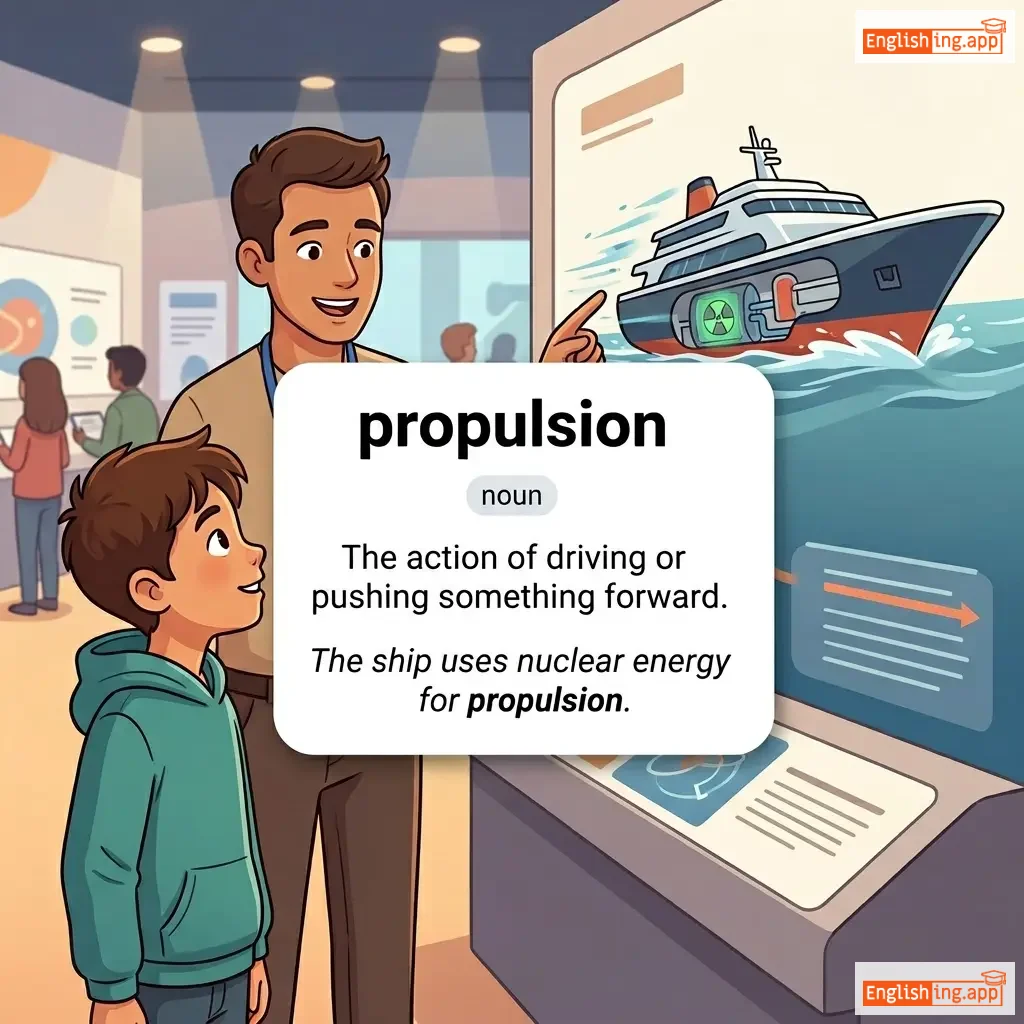
propulsion definition card — visual illustration of the meaning
noun
/prəˈpʌlʃən/
प्रेरणाशक्ति (preranashakti)

The action of driving or pushing something forward.

"The ship uses nuclear energy for propulsion."

"जहाज प्रोपल्शन के लिए परमाणु ऊर्जा का उपयोग करता है।" (Jahaz propulsion ke liye parmanu urja ka upyog karta hai.)
propriety definition card — visual illustration of the meaning
noun
/prəˈpraɪəti/
शालीनता (shalinata)

Conformity to accepted standards of behavior or morality.

"He always behaved with the utmost propriety in public."

"वह हमेशा सार्वजनिक रूप से शालीनता के साथ व्यवहार करते थे।" (Wah hamesha sarvajanik roop se shalinata ke saath vyavhaar karte the.)
verb
/prəˈpaʊnd/
प्रस्तावित करना (prastavit karna)

To put forward an idea, theory, or point for consideration.

"The professor propounded a new theory on climate change."

"प्रोफेसर ने जलवायु परिवर्तन पर एक नया सिद्धांत प्रपाउंड किया।" (Professor ne jalvayu parivartan par ek naya siddhant prapound kiya.)
noun
/ˌprɒpəˈzɪʃən/
प्रस्ताव, योजना (prastav, yojana)

A statement, idea, or plan put forward for consideration or discussion.

"The company made a business proposition to the investors."

"कंपनी ने निवेशकों को एक व्यापारिक प्रस्ताव दिया।" (Company ne niveshako ko ek vyavsaik prastav diya.)
adjective
/prəˈpoʊzd/
प्रस्तावित (prastavit)

suggested or put forward for consideration or discussion

"The proposed changes will improve the system."

"प्रस्तावित परिवर्तन प्रणाली को बेहतर बनाएंगे।" (Prastavit parivartan pranali ko behtar banayenge.)
propose definition card — visual illustration of the meaning
verb
/prəˈpoʊz/
प्रस्ताव देना (prastaav dena)

to suggest a plan or idea for consideration or discussion

"I propose that we meet tomorrow to discuss the project."

"मैं प्रस्ताव करता हूँ कि हम कल परियोजना पर चर्चा करने के लिए मिलें।" (Main prastaav karta hoon ki hum kal pariyojna par charcha karne ke liye milein.)
adjective
/prəˈpɔːrʃənət/
सामान्य अनुपाती (samanjya anupati)

Corresponding in size, degree, or intensity; balanced in relation.

"The punishment should be proportionate to the crime."

"सजा अपराध के अनुसार सामान्य अनुपाती होनी चाहिए।" (Saja aparadh ke anusar samanjya anupati honi chahiye.)
proposal definition card — visual illustration of the meaning
noun
/prəˈpəʊzəl/
प्रस्ताव (prastaav)

a formal suggestion or plan put forward for consideration or discussion

"She submitted a proposal for the new project to the board."

"उसने बोर्ड को नए प्रोजेक्ट के लिए एक प्रस्ताव प्रस्तुत किया।" (Usne board ko naye project ke liye ek prastaav prastut kiya.)
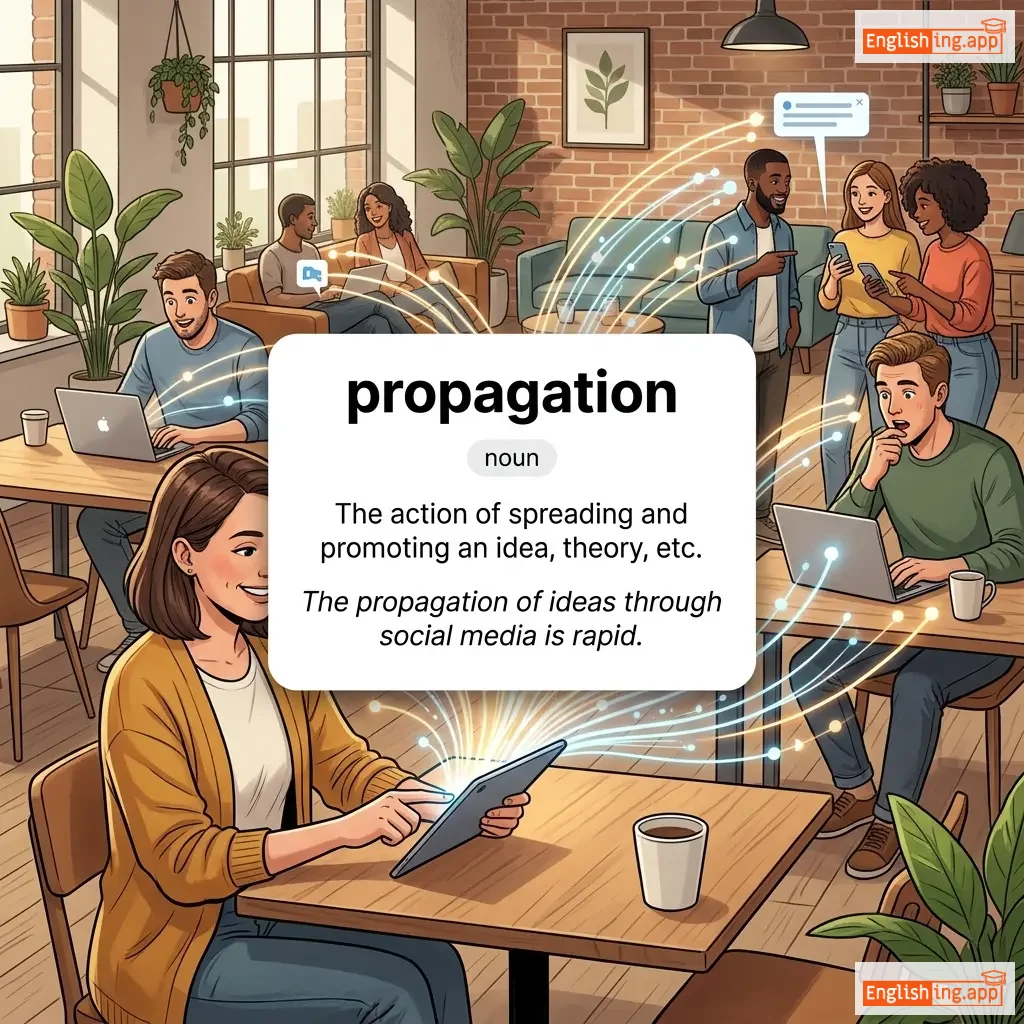
propagation definition card — visual illustration of the meaning
noun
/ˌprɒpəˈɡeɪʃən/
प्रचार, प्रसार (prachar, prasar)

The action of spreading and promoting an idea, theory, etc.

"The propagation of ideas through social media is rapid."

"सोशल मीडिया के जरिए विचारों का प्रचार तेज़ी से हो रहा है।" (Social media ke jariye vicharon ka prachar tez se ho raha hai.)
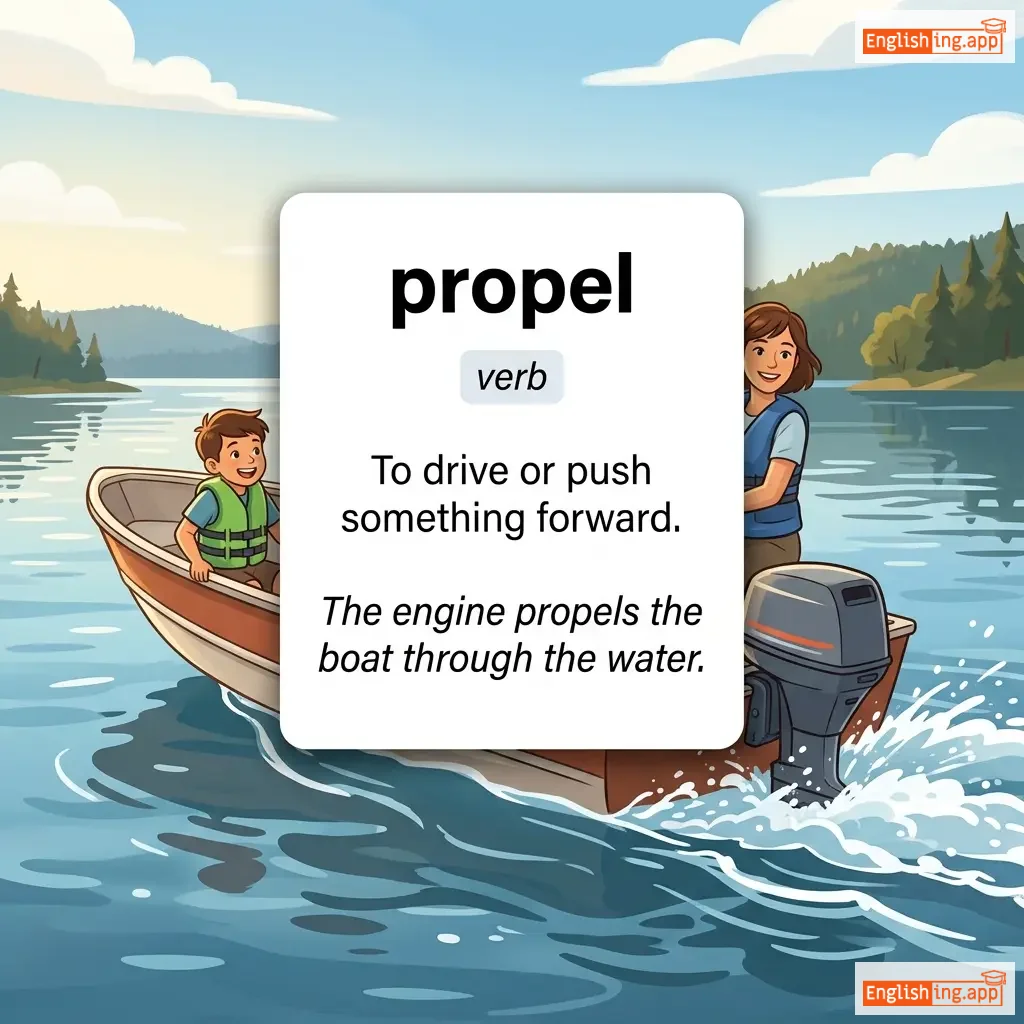
propel definition card — visual illustration of the meaning
verb
/prəˈpɛl/
आगे बढ़ाना (aage badhana)

To drive or push something forward.

"The engine propels the boat through the water."

"इंजन बोट को पानी में से बाहर की ओर धकेलता है।" (engine boat ko pani mein se baahar ki or dhakelta hai.)
noun
/prəˈpɛlənt/
प्रोपेलेंट (propelent)

A substance that drives or pushes something forward, especially fuel in rockets or engines.

"The rocket uses a liquid propellant to launch into space."

"रॉकेट अंतरिक्ष में लॉन्च करने के लिए तरल प्रोपेलेंट का उपयोग करता है।" (rocket antariksh mein launch karne ke liye taral propellent ka upyog karta hai.)
noun
/prəˈpɛlər/
प्रोपेलर (propeller)

A mechanical device with blades that rotates to drive a ship, aircraft, or other vehicle forward.

"The airplane’s propeller cut through the air with great speed."

"विमान के प्रोपेलर ने हवा को तेज़ी से काटा।" (vimaan ke propeller ne hawa ko tezī se kaṭā.)
propensity definition card — visual illustration of the meaning
noun
/prəˈpɛnsəti/
प्रवृत्ति (pravritti)

a natural tendency or inclination to behave in a particular way

"She has a propensity to trust people too easily."

"वह लोगों को बहुत आसानी से विश्वास करने की प्रवृत्ति रखती है।" (vah logon ko bahut aasanai se vishwas karne ki pravritti rakhti hai.)
adjective
/ˈprɒpər/
उचित (uchit)

conforming to accepted standards of behavior or morality

"He made sure to wear proper attire for the interview."

"उसने इंटरव्यू के लिए उचित पोशाक पहनी।" (Usne interview ke liye uchit poshak pehni.)
adverb
/ˈprɒpərli/
सही तरीके से (sahi tareeke se)

in the correct or suitable manner

"He performed the task properly to avoid mistakes."

"उसने गलती से बचने के लिए कार्य को ठीक से किया।" (Usne galti se bachne ke liye kaary ko theek se kiya.)
noun
/ˈprɒpərti/
संपत्ति (sampatti)

a thing or things that belong to someone; possessions or real estate

"The old mansion is his family’s property."

"पुराना महल उसके परिवार की संपत्ति है।" (purana mahal uske parivar ki sampatti hai.)
verb
/ˈprɒfəsaɪ/
भविष्यवाणी करना (bhavishyavani karna)

to state or predict that something will happen in the future, especially as if divinely inspired

"The monk prophesied that peace would return to the land."

"साधु ने भविष्यवाणी की थी कि शांति देश में लौटेगी।" (saadhu ne bhavishyavani ki thi ki shanti desh mein lautegi.)
adjective
/prəˈfɛtɪk/
भविष्यवाणी से संबंधित (bhavishyavani se sambandhit)

accurately predicting or describing what will happen in the future

"His prophetic words came true after many years."

"उसके भविष्यवाणी से संबंधित शब्द कई सालों बाद सच हो गए।" (uske bhavishyavani se sambandhit shabdon ka kai salon baad sach ho gaye.)
adjective
/ˌprɒfɪˈlæktɪk/
रोकथाम करने वाला (roktam karne wala)

intended to prevent disease or an unwanted outcome; protective

"The doctor prescribed a prophylactic treatment to prevent infection."

"डॉक्टर ने संक्रमण को रोकने के लिए एक रोकथाम उपचार निर्धारित किया।" (Daktar ne sankraman ko rokne ke liye ek roktam upchar nirdharit kiya.)
noun
/prəˈpɪŋkwɪti/
निकटता (nikatata)

the state of being close to someone or something; proximity

"The propinquity of their houses made them close friends."

"उनके घरों की निकटता ने उन्हें करीबी दोस्त बना दिया।" (Unke gharon ki nikatata ne unhe kareebi dost bana diya.)
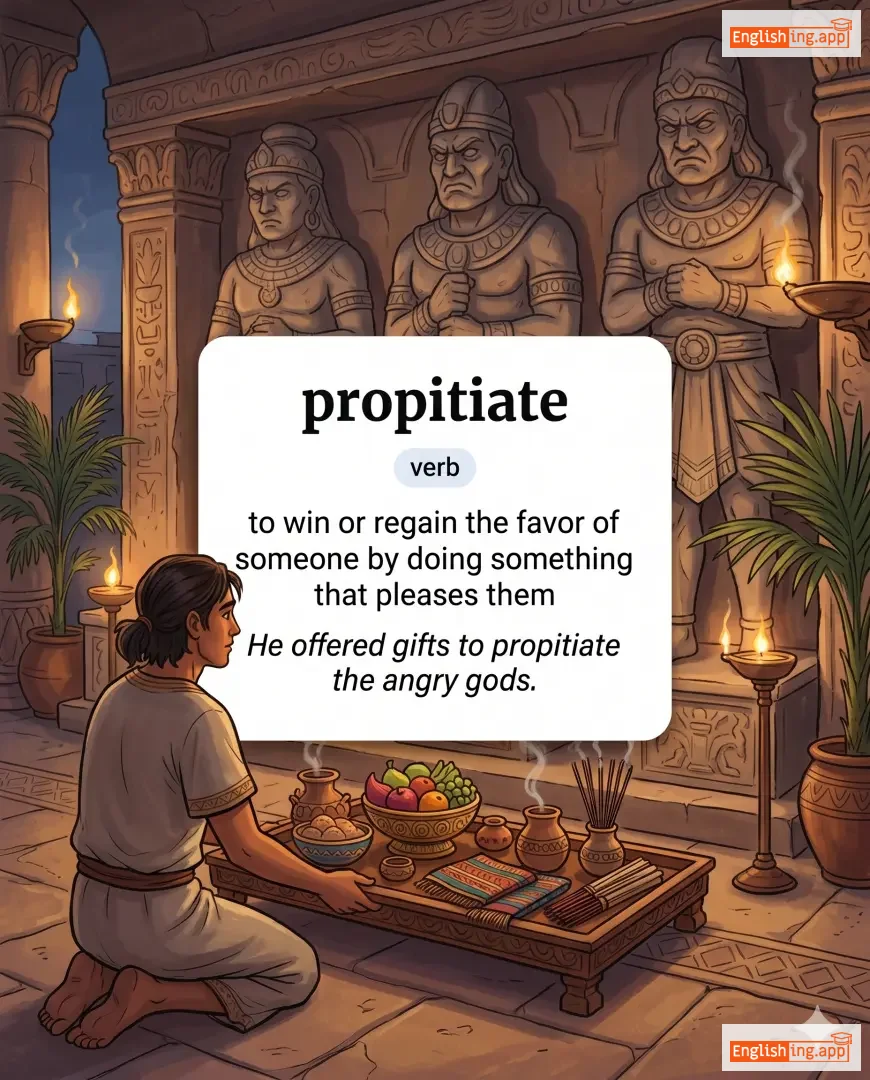
propitiate definition card — visual illustration of the meaning
verb
/prəˈpɪʃieɪt/
किसी को प्रसन्न करने के लिए उसका आशीर्वाद प्राप्त करना (kisi ko prasann karne ke liye uska aashirwad prapt karna)

to win or regain the favor of someone by doing something that pleases them

"He offered gifts to propitiate the angry gods."

"उसने गुस्साए हुए देवताओं को प्रसन्न करने के लिए उपहार दिए।" (Usne gussaaye huye devtaon ko prasann karne ke liye uphaar diye.)
adjective
/prəˈpɪʃəs/
शुभ, अनुकूल (shubh, anukul)

giving or indicating a good chance of success; favorable

"The sunny weather was a propitious start to the picnic."

"सनी मौसम पिकनिक के लिए शुभ शुरुआत थी।" (Sani mausam picnic ke liye shubh shuruat thi.)
noun
/prəˈpoʊnənt/
समर्थक, प्रस्तावक (samarthak, prastavak)

a person who advocates for or supports a particular idea, cause, or plan

"She is a strong proponent of renewable energy."

"वह नवीकरणीय ऊर्जा की एक मजबूत समर्थक है।" (vah navikaranīya ūrgā kī ek majabūt samarthak hai.)
noun
/prəˈpɔːʃən/
अनुपात (anupat)

a part, share, or number considered in comparative relation to a whole

"The proportion of students passing the exam was high."

"परीक्षा में पास होने वाले छात्रों का अनुपात उच्च था." (pareeksha mein paas hone wale chhatron ka anupat uchcha tha)
noun
/ˈprɒfəsi/
भविष्यवाणी (bhavishyavani)

a prediction or message about the future, often believed to be divinely inspired

"The prophecy foretold the rise of a great leader."

"भविष्यवाणी ने एक महान नेता के उदय की भविष्यवाणी की थी।" (bhavishyavani ne ek mahaan neta ke uday ki bhavishyavani ki thi)
noun
/ˈpɒpjʊləs/
जनसाधारण (janasadharans)

the general public; the ordinary people living in a country or area

"The new law was welcomed by the local populace."

"नया कानून स्थानीय जनसाधारण द्वारा स्वागत किया गया।" (Naya kanoon sthaniye janasadharan dwara swagat kiya gaya.)
adjective
/ˈpɒpjʊlər/
लोकप्रिय (lokpriya)

liked or admired by many people

"She is a popular singer with a huge fan base."

"वह एक लोकप्रिय गायिका है जिसकी बड़ी फैन बेस है।" (Wah ek lokpriya gaayika hai jiski badi fan base hai.)
noun
/ˌpɒpjəˈlærəti/
लोकप्रियता (lokpriyata)

the state of being liked, admired, or supported by many people

"The singer gained huge popularity after her new album release."

"गायिका ने अपने नए एल्बम की रिलीज़ के बाद बड़ी लोकप्रियता हासिल की।" (Gayika ne apne naye album ki release ke baad badi lokpriyata hasil ki.)
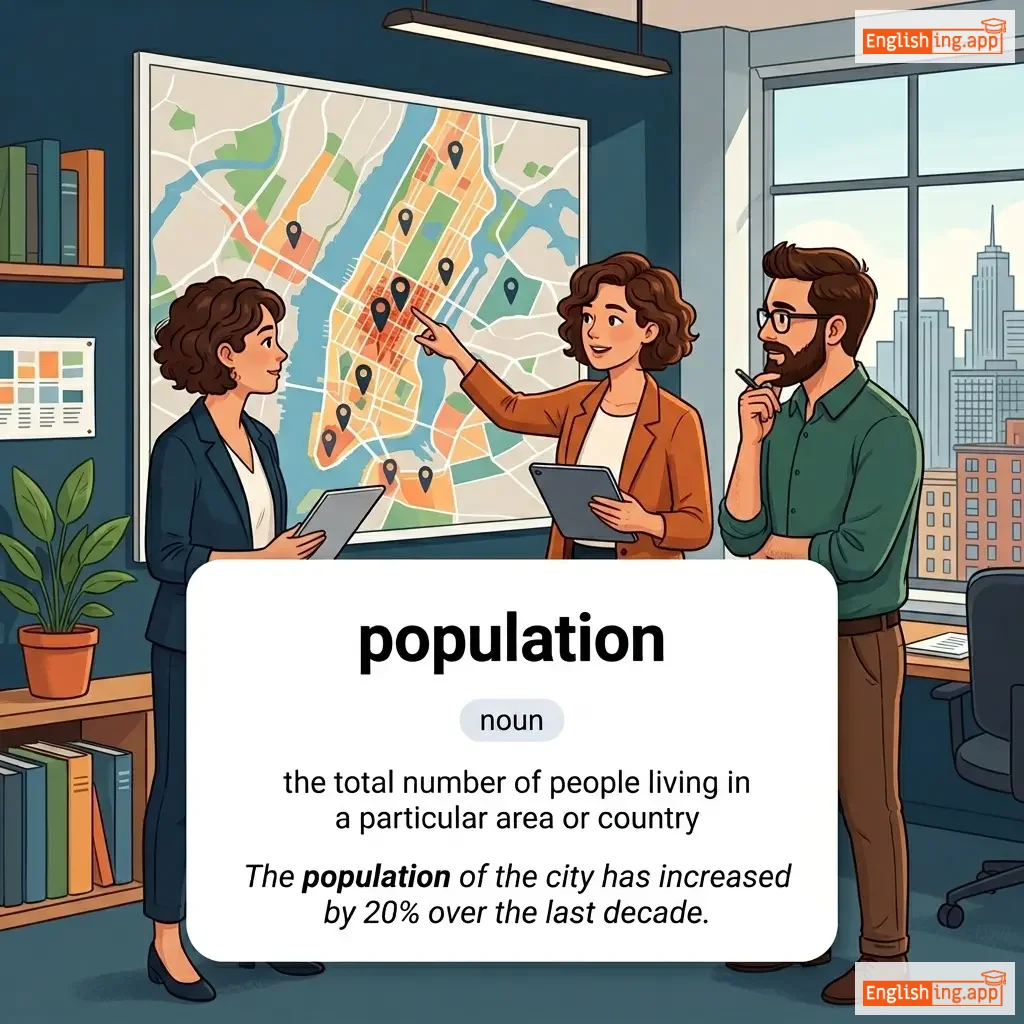
population definition card — visual illustration of the meaning
noun
/ˌpɒpjʊˈleɪʃən/
जनसंख्या (jansankhya)

the total number of people living in a particular area or country

"The population of the city has increased by 20% over the last decade."

"द सिटी की जनसंख्या पिछले दशक में 20% बढ़ी है।" (Da city ki jansankhya pichle dashak mein 20% badhi hai.)
noun
/ˈpɒpjʊlɪst/
जनप्रिय नेता (janpriya neta)

A politician or person who seeks to appeal to ordinary people who feel their concerns are ignored by elites.

"The populist leader promised to put the needs of common citizens first."

"जनप्रिय नेता ने सामान्य नागरिकों की जरूरतों को पहले रखने का वादा किया।" (janpriya neta ne sāmaṇya nāgariko ki jarurato ko pahle rakhne kā vādā kiyā.)
adjective
/ˈpɒpjələs/
जनसंख्यायुक्त (jansankhyayukt)

Having a large population; densely inhabited.

"Dhaka is one of the most populous cities in the world."

"दिल्ली दुनिया के सबसे अधिक जनसंख्यायुक्त शहरों में से एक है।" (Dilli duniya ke sabse adhik jansankhyayukt shahron mein se ek hai.)
noun
/ˈpɔːrsəlɪn/
पॉर्सलिन (porcelain)

A white, hard ceramic material often used for dishes and ornaments.

"The museum displayed ancient porcelain vases from China."

"म्यूज़ियम ने प्राचीन पॉर्सलिन के फूलदान चीन से प्रदर्शित किए।" (Miyujiyam ne prachin porcelain ke phooldan Cheen se pradarshit kiye.)
noun
/pɔːrtʃ/
बरामदा (baramda)

a covered area at the entrance of a building, often with a roof and open sides

"We sat on the porch and enjoyed the evening breeze."

"हम बरामदे में बैठकर शाम की हवा का आनंद ले रहे थे।" (Hum baramde mein baithkar shaam ki hawa ka anand le rahe the.)
noun
/ˈpɔːr.kjə.paɪn/
सजालू (sajalu)

a large rodent with defensive spines or quills on its body

"The porcupine raised its quills when threatened."

"सजालू ने धमकी मिलने पर अपने कांटे उठा लिए।" (sajalu ne dhamki milne par apne kate utha liye.)
noun
/ˈpɔːrɪdʒ/
पोरिज (porij)

A soft food made by boiling oats or other grains in milk or water.

"She had a bowl of porridge for breakfast."

"वह नाश्ते में एक कटोरी पोरिज खा रही थी।" (Vah nashtay mein ek katori porij khaa rahi thi.)
adjective
/pɔːrˈtɛntəs/
घातक, गंभीर (ghatak, gambhir)

Giving a sign or warning that something, often bad or serious, is going to happen; or overly solemn and pompous.

"His portentous tone made everyone nervous about the news."

"उसकी घातक आवाज ने सबको समाचार को लेकर नर्वस कर दिया।" (Uski ghatak awaaz ne sabko samachar ko lekar nervous kar diya.)
noun
/ˈpɔːrtɛnt/
पूर्व संकेत (purv sanket)

A sign or warning that something, especially something momentous or calamitous, is likely to happen.

"The sudden drop in stock prices was seen as a portent of economic trouble."

"शेयर बाजार में अचानक गिरावट को आर्थिक संकट का पूर्व संकेत माना गया।" (Sheyar bazar mein achanak girawat ko aarthik sankat ka purv sanket mana gaya.)
verb
/pɔːrˈtɛnd/
पूर्वसूचना देना (purvsuchna dena)

To be a sign or warning that something, especially something bad, is going to happen.

"Dark clouds portend a storm."

"अंधेरे बादल तूफान का संकेत देते हैं।" (Andhere baadal toofan ka sanket dete hain.)
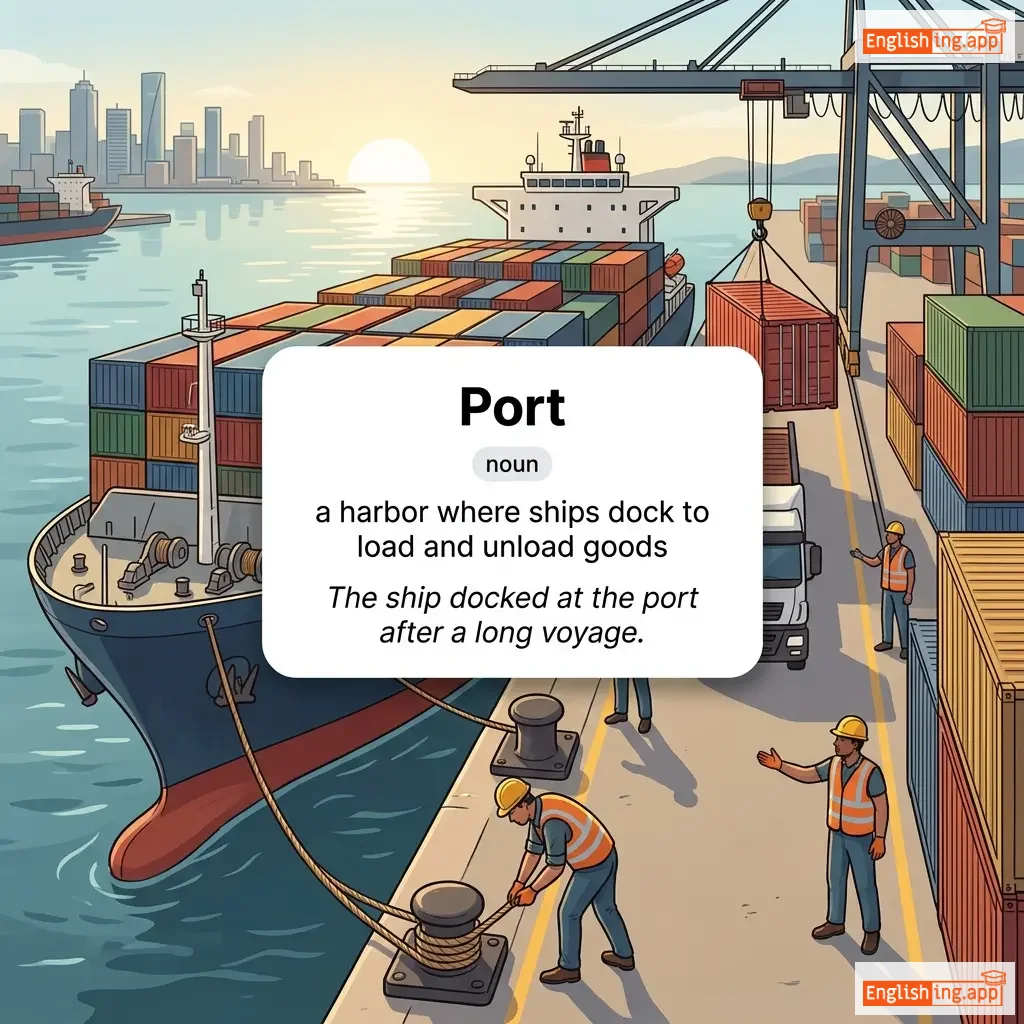
Port definition card — visual illustration of the meaning
noun
/pɔːrt/
बंदरगाह (bandargah)

a harbor where ships dock to load and unload goods

"The ship docked at the port after a long voyage."

"एक लंबी यात्रा के बाद जहाज बंदरगाह पर डॉक किया गया।" (ek lambi yatra ke baad jahaz bandargah par dock kiya gaya)
noun
/ˈpɔːrfəri/
एक प्रकार की अग्नि शिला (ek prakar ki agni shila)

A hard igneous rock containing crystals, often used for decorative or building purposes.

"The ancient Romans used porphyry to make columns and statues."

"प्राचीन रोमनों ने कॉलम्स और मूर्तियाँ बनाने के लिए पॉर्फिरी का इस्तेमाल किया।" (Prachin Romanon ne columns aur moortiyan banane ke liye porphiry ka istemal kiya.)
noun
/pɔːrk/
खुशी (khushi)

the flesh of a pig used as food

"He doesn't eat pork for religious reasons."

"जब उसने पुरस्कार प्राप्त किया, तो वह अपनी खुशी छिपा नहीं सकी।" (Jab usne puraskar prapt kiya, to wah apni khushi chhupa nahi saki.)