词汇表

英语词汇词典 | 单词含义、定义和示例

noun
/ˈprɑsɪˌkjuːtər/
检察官 (jiancha guan)

a lawyer who represents the government in criminal cases

"The prosecutor argued that the defendant was guilty of the crime."

"检察官辩称被告犯有罪。" (Jiancha guan bian cheng beigao fan you zui.)
noun
/ˌprɒsɪˈkjuːʃən/
起诉 (qǐsù)

The act of bringing a criminal charge against someone and pursuing legal action in court.

"The prosecution presented strong evidence against the defendant."

"起诉方提出了有力的证据反对被告。" (Qǐsù fāng tíchūle yǒulì de zhèngjù fǎnduì bèigào.)
prosecute definition card — visual illustration of the meaning
verb
/ˈprɒsɪkjuːt/
起诉 (qisu)

to institute legal proceedings against someone

"The lawyer decided to prosecute the case after gathering sufficient evidence."

"律师在收集到足够证据后决定起诉此案。" (Lushi zai shouji dao zugei zhengju hou jueding qisu ci an.)
noun
/proʊˈskrɪp.ʃən/
禁令 (jinling)

the act of forbidding something, especially by law

"The proscription of child labor is an important human rights achievement."
"禁止童工劳动是人权的重要成就。" (Jinzhi tonggong laodong shi renquan de zhongyao chengjiu.)
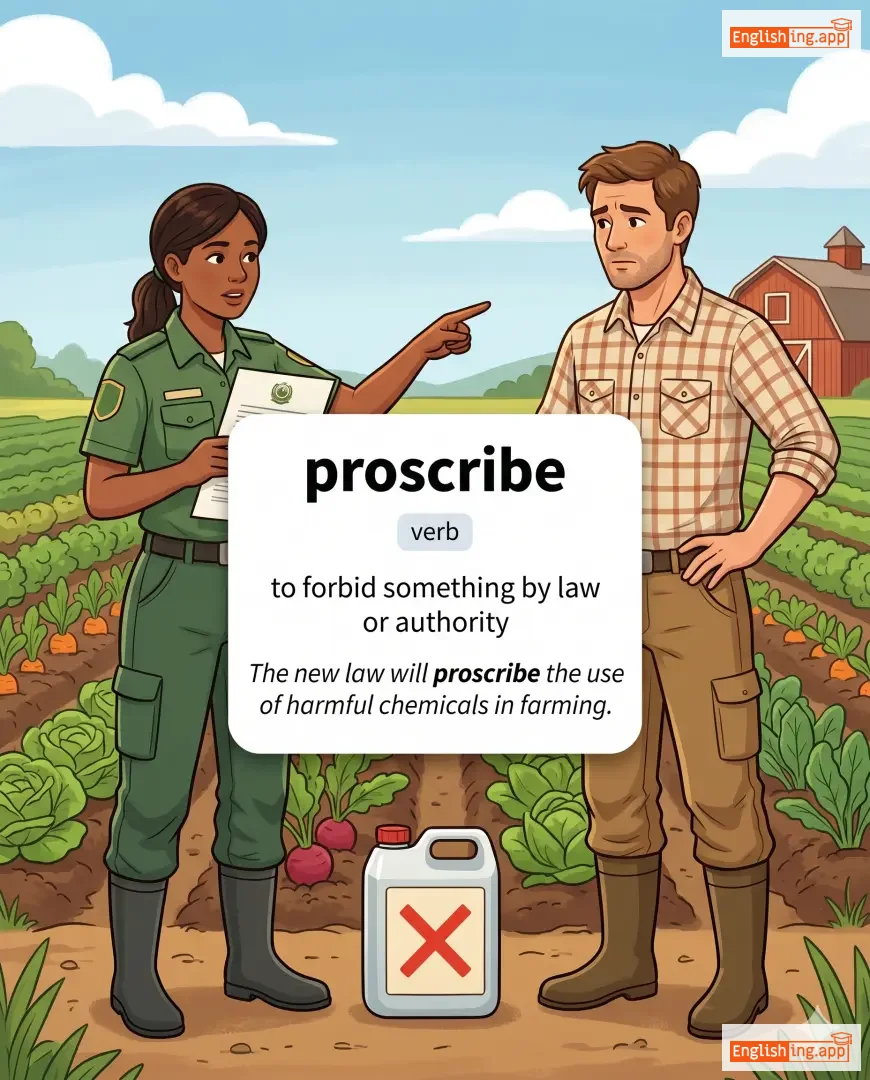
proscribe definition card — visual illustration of the meaning
verb
/proʊˈskraɪb/
禁止 (jìnzhǐ)

to forbid something by law or authority

"The new law will proscribe the use of harmful chemicals in farming."

"新法律将禁止在农业中使用有害化学品。" (Xīn fǎlǜ jiāng jìnzhǐ zài nóngyè zhōng shǐyòng yǒuhài huàxué pǐn.)
noun
/proʊˈsiː.ni.əm/
舞台前沿 (wǔtái qián yán)

the part of a theater stage in front of the curtain; the arch framing the stage

"The actors bowed at the proscenium before leaving the stage."

"演员在离开舞台之前向舞台前沿鞠躬。" (yǎnyuán zài líkāi wǔtái zhīqián xiàng wǔtái qián yán jūgōng.)
adjective
/proʊˈzeɪ.ɪk/
平凡的 (pingfan de)

ordinary, dull, or lacking imagination

"The teacher’s explanation was accurate but rather prosaic."

"老师的解释很准确,但相当平凡。" (Laoshi de jieshi hen zhunque, dan xiangdang pingfan.)
verb
/prəˈroʊɡ/
暂停会议 (zanting huiyi)

to discontinue a session of a parliament or assembly without dissolving it

"The president decided to prorogue parliament until the crisis was resolved."

"总统决定暂停议会,直到危机得到解决。" (Zongtong jueding zanting yihui, zhidao weiji dedao jieju.)
adjective
/prəˈpʌlsɪv/
推进的 (tuījìn de)

Having the power to drive or push something forward.

"The propulsive force of the rocket lifted it off the ground."
"火箭的推进力将它从地面抬起。" (Huǒjiàn de tuījìn lì jiāng tā cóng dìmiàn táiqǐ.)
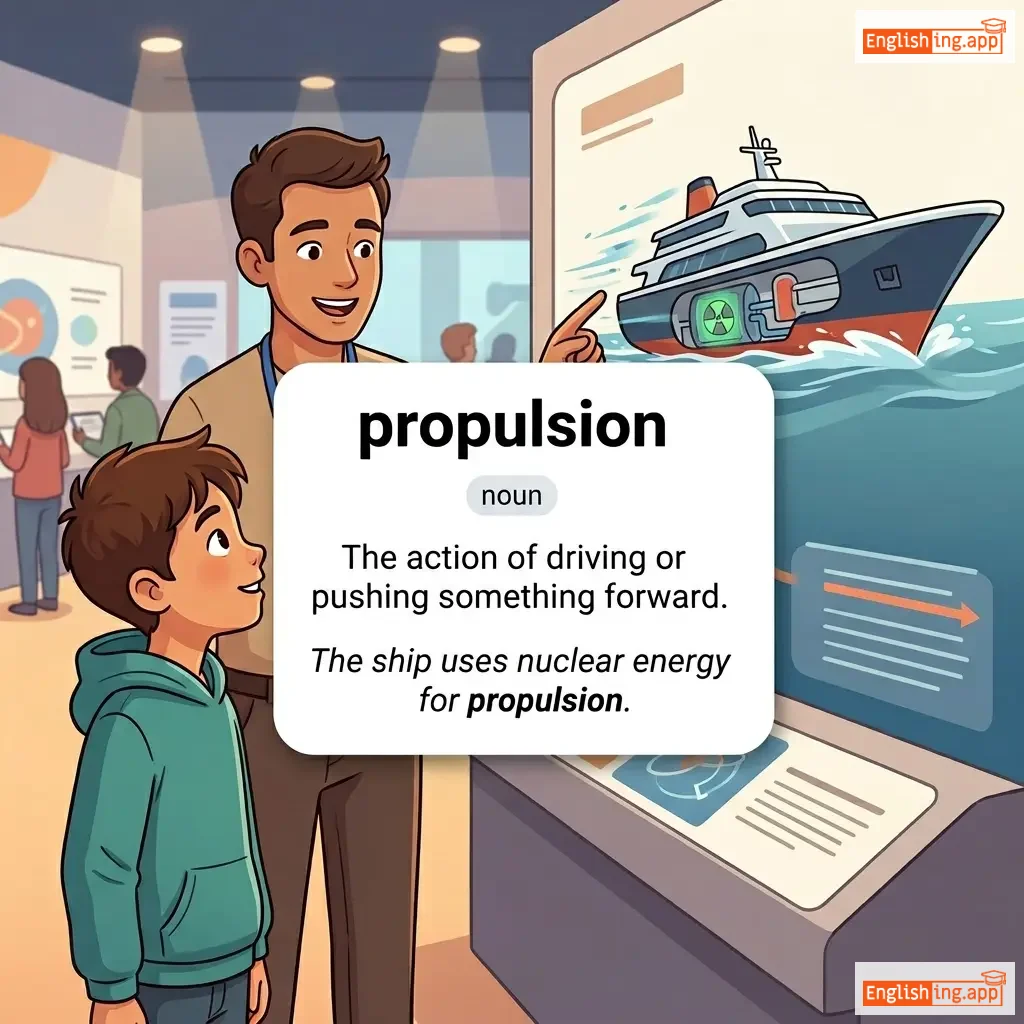
propulsion definition card — visual illustration of the meaning
noun
/prəˈpʌlʃən/
推进力 (tuī jìn lì)

The action of driving or pushing something forward.

"The ship uses nuclear energy for propulsion."

"这艘船使用核能推进。" (Zhè sōu chuán shǐyòng hé néng tuī jìn.)
propriety definition card — visual illustration of the meaning
noun
/prəˈpraɪəti/
得体 (deti)

Conformity to accepted standards of behavior or morality.

"He always behaved with the utmost propriety in public."

"他在公共场合总是表现得体。" (Ta zai gonggong changhe zong shi biaoxian deti.)
verb
/prəˈpaʊnd/
提出 (tichu)

To put forward an idea, theory, or point for consideration.

"The professor propounded a new theory on climate change."

"教授提出了关于气候变化的新理论。" (Jiaoshou tichu le guanyu qihou bianhua de xin lilun.)
noun
/ˌprɒpəˈzɪʃən/
提议, 计划 (tiyi, jihua)

A statement, idea, or plan put forward for consideration or discussion.

"The company made a business proposition to the investors."

"公司向投资者提出了商业提议。" (Gōngsī xiàng tóuzī zhě tíchūle shāngyè tíyì.)
adjective
/prəˈpoʊzd/
提议的 (tíyì de)

suggested or put forward for consideration or discussion

"The proposed changes will improve the system."

"提议的变更将改善系统。" (Tíyì de biàngē jiāng gǎishàn xìtǒng.)
propose definition card — visual illustration of the meaning
verb
/prəˈpoʊz/
提议 (tíyì)

to suggest a plan or idea for consideration or discussion

"I propose that we meet tomorrow to discuss the project."

"我提议我们明天见面讨论这个项目。" (Wǒ tíyì wǒmen míngtiān jiànmiàn tǎolùn zhège xiàngmù.)
adjective
/prəˈpɔːrʃənət/
成比例的 (cheng bi li de)

Corresponding in size, degree, or intensity; balanced in relation.

"The punishment should be proportionate to the crime."

"惩罚应该与犯罪成比例。" (Cheng fa ying gai yu fan zui cheng bi li.)
proposal definition card — visual illustration of the meaning
noun
/prəˈpəʊzəl/
提案 (tian4 an4)

a formal suggestion or plan put forward for consideration or discussion

"She submitted a proposal for the new project to the board."
"她向董事会提交了新的项目提案。" (Tā xiàng dǒngshìhuì tíjiāo le xīn de xiàngmù tí'àn.)
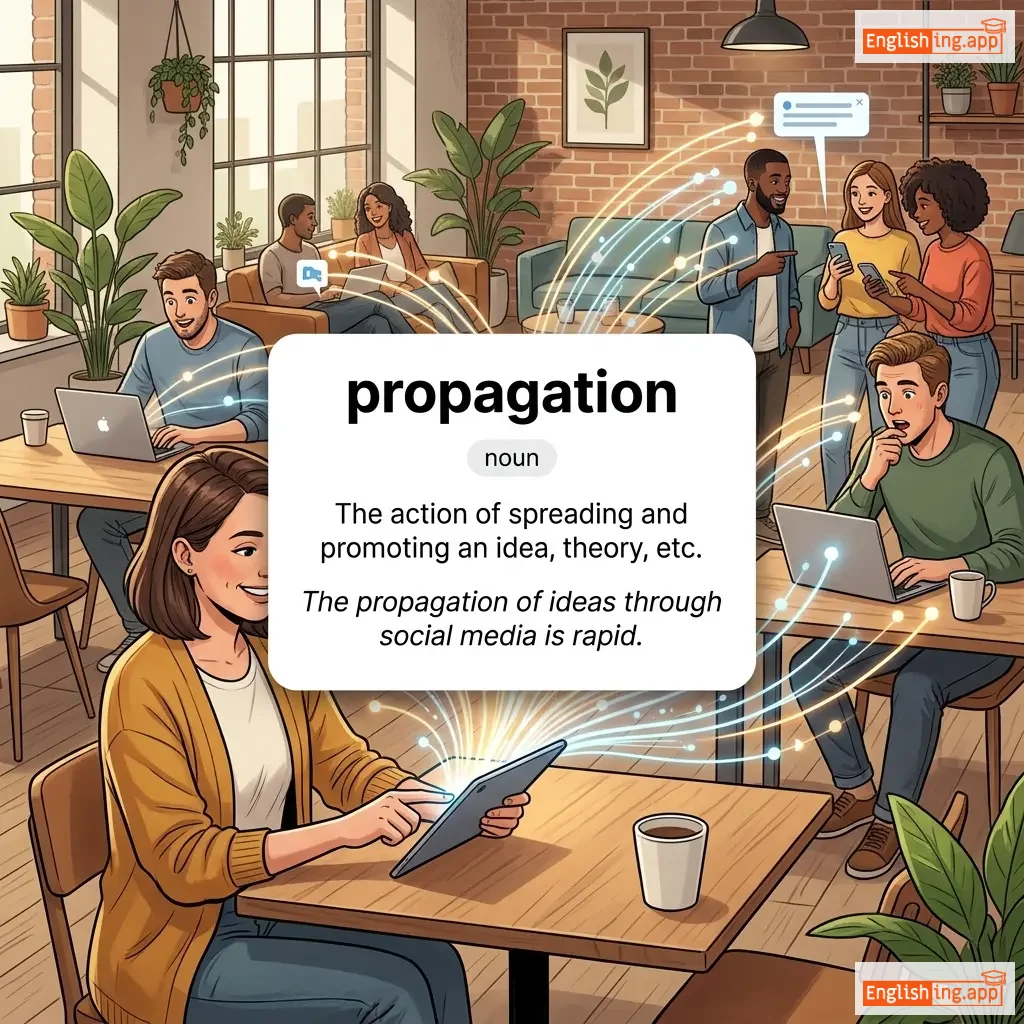
propagation definition card — visual illustration of the meaning
noun
/ˌprɒpəˈɡeɪʃən/
传播, 宣传 (chuánbō, xuānchuán)

The action of spreading and promoting an idea, theory, etc.

"The propagation of ideas through social media is rapid."

"通过社交媒体传播思想的速度非常快。" (Tongguo shejiao meiti chuanbo sixiang de sudu feichang kuai.)
propel definition card — visual illustration of the meaning
verb
/prəˈpɛl/
推动 (tuīdòng)

To drive or push something forward.

"The engine propels the boat through the water."

"发动机通过水推动船只。" (Fādòngjī tōngguò shuǐ tuīdòng chuánzhī.)
noun
/prəˈpɛlənt/
推进剂 (tuī jìn jì)

A substance that drives or pushes something forward, especially fuel in rockets or engines.

"The rocket uses a liquid propellant to launch into space."

"火箭使用液体推进剂发射进入太空。" (Huǒjiàn shǐyòng yètǐ tuījìn jì fāshè jìnrù tàikōng.)
noun
/prəˈpɛlər/
螺旋桨 (luóxuánjiǎng)

A mechanical device with blades that rotates to drive a ship, aircraft, or other vehicle forward.

"The airplane’s propeller cut through the air with great speed."

"飞机的螺旋桨以极快的速度切割空气。" (Fēijī de luóxuánjiǎng yǐ jí kuài de sùdù qiēgē kōngqì.)
propensity definition card — visual illustration of the meaning
noun
/prəˈpɛnsəti/
倾向 (qīngxiàng)

a natural tendency or inclination to behave in a particular way

"She has a propensity to trust people too easily."

"她有过于轻信他人的倾向。" (Tā yǒu guòyú qīngxìn tārén de qīngxiàng.)
adjective
/ˈprɒpər/
适当的 (shìdàng de)

conforming to accepted standards of behavior or morality

"He made sure to wear proper attire for the interview."

"他确保为面试穿上了适当的服装。" (Tā quèbǎo wèi miànshì chuān shàngle shìdàng de fúzhuāng.)
adverb
/ˈprɒpərli/
正确地 (zhèngquè de)

in the correct or suitable manner

"He performed the task properly to avoid mistakes."

"他为了避免错误,正确地完成了任务。" (Tā wèile bìmiǎn cuòwù, zhèngquè de wánchéngle rènwù.)
noun
/ˈprɒpərti/
财产 (cáichǎn)

a thing or things that belong to someone; possessions or real estate

"The old mansion is his family’s property."

"这座古老的豪宅是他家族的财产。" (Zhè zuò gǔlǎo de háozhái shì tā jiāzú de cáichǎn.)
verb
/ˈprɒfəsaɪ/
预言 (yù yán)

to state or predict that something will happen in the future, especially as if divinely inspired

"The monk prophesied that peace would return to the land."

"那位和尚预言和平将会回到这个国家。" (nà wèi hé shang yù yán hé píng jiāng huì huí dào zhè ge guó jiā.)
adjective
/prəˈfɛtɪk/
预言的 (yùyán de)

accurately predicting or describing what will happen in the future

"His prophetic words came true after many years."

"他的预言之言在多年后实现了。" (Tā de yùyán zhī yán zài duō nián hòu shíxiàn le.)
adjective
/ˌprɒfɪˈlæktɪk/
预防性 (yùfángxìng)

intended to prevent disease or an unwanted outcome; protective

"The doctor prescribed a prophylactic treatment to prevent infection."

"医生开了预防性治疗以防止感染。" (Yīshēng kāi le yùfángxìng zhìliáo yǐ fángzhǐ rùnhòu.)
noun
/prəˈpɪŋkwɪti/
亲近 (qīnjìn)

the state of being close to someone or something; proximity

"The propinquity of their houses made them close friends."

"他们房屋的亲近使他们成为了亲密的朋友。" (Tāmen fángwū de qīnjìn shǐ tāmen chéngwéi le qīnmì de péngyǒu.)
propitiate definition card — visual illustration of the meaning
verb
/prəˈpɪʃieɪt/
安抚 (ānfǔ)

to win or regain the favor of someone by doing something that pleases them

"He offered gifts to propitiate the angry gods."

"他提供礼物来安抚愤怒的神明。" (Tā tígōng lǐwù lái ānfǔ fènnù de shénmíng.)
adjective
/prəˈpɪʃəs/
有利的 (youli de)

giving or indicating a good chance of success; favorable

"The sunny weather was a propitious start to the picnic."

"阳光明媚的天气是野餐的有利开端。" (Yangguang mingmei de tianqi shi yecan de youli kaiduan.)
noun
/prəˈpoʊnənt/
支持者, 倡导者 (zhīchí zhě, chàngdǎo zhě)

a person who advocates for or supports a particular idea, cause, or plan

"She is a strong proponent of renewable energy."

"她是可再生能源的坚定支持者。" (Tā shì kě zàishēng néngyuán de jiāndìng zhīchí zhě.)
noun
/prəˈpɔːʃən/

a part, share, or number considered in comparative relation to a whole

"The proportion of students passing the exam was high."

noun
/ˈprɒfəsi/
预言 (yùyán)

a prediction or message about the future, often believed to be divinely inspired

"The prophecy foretold the rise of a great leader."

"预言预示着伟大领导者的崛起。" (Yùyán yùshì zhe wěidà lǐngdǎo zhě de juéqǐ.)
noun
/ˈpɒpjʊləs/
民众 (minzhong)

the general public; the ordinary people living in a country or area

"The new law was welcomed by the local populace."

"新法律受到了当地居民的欢迎。" (Xin falu shoudao le dangdi jumin de huanying.)
adjective
/ˈpɒpjʊlər/
受欢迎 (shou huanying)

liked or admired by many people

"She is a popular singer with a huge fan base."

"她是一位受欢迎的歌手,拥有庞大的粉丝群。" (Ta shi yi wei shou huanying de geshou, yongyou pangda de fensi qun.)
noun
/ˌpɒpjəˈlærəti/
受欢迎度 (shòu huānyíng dù)

the state of being liked, admired, or supported by many people

"The singer gained huge popularity after her new album release."
"歌手在发布新专辑后获得了巨大的受欢迎度。" (Gēshǒu zài fābù xīn zhuānjí hòu huòdé le jùdà de shòu huānyíng dù.)
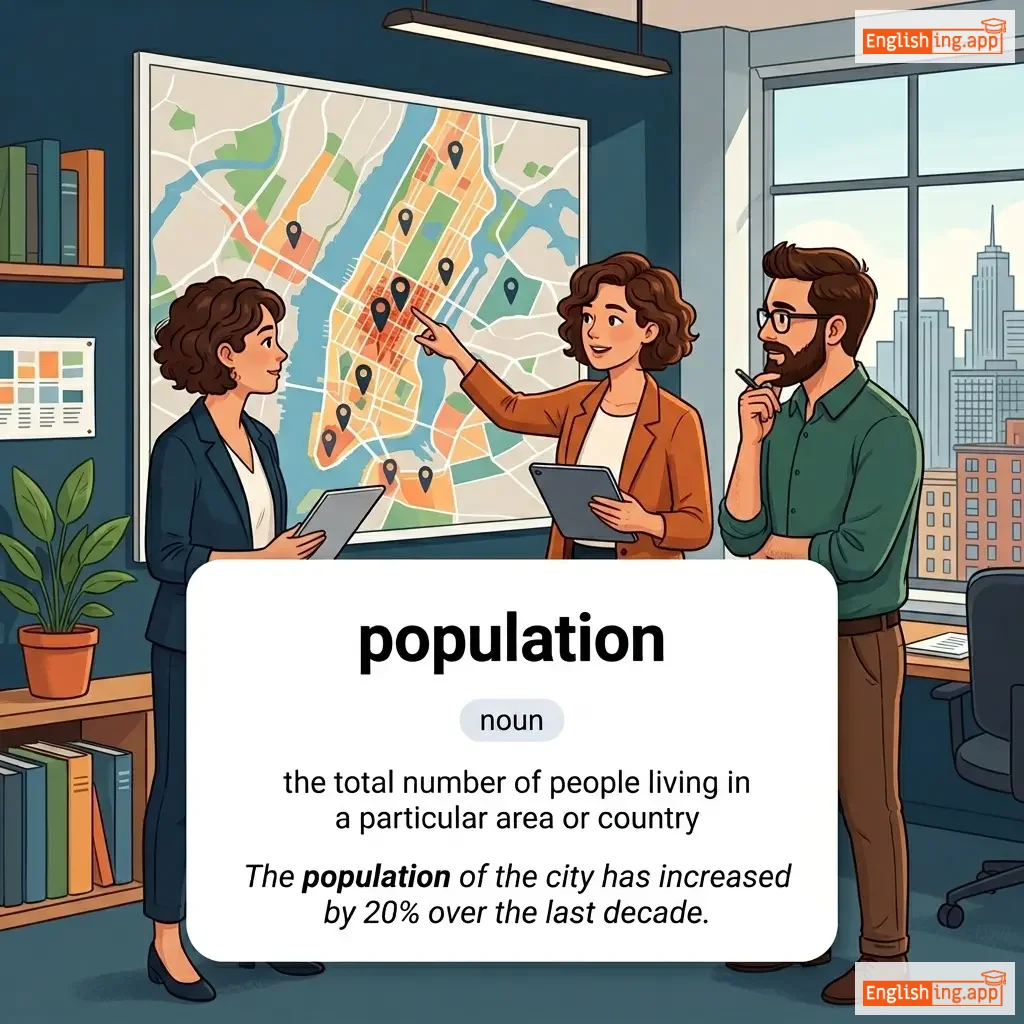
population definition card — visual illustration of the meaning
noun
/ˌpɒpjʊˈleɪʃən/
人口 (renkou)

the total number of people living in a particular area or country

"The population of the city has increased by 20% over the last decade."

"这座城市的人口在过去十年增加了20%。" (Zhe zuo chengshi de renkou zai guoqu shi nian zengjia le 20%.)
noun
/ˈpɒpjʊlɪst/
民粹主义领导人 (míncuì zhǔyì lǐngdǎo rén)

A politician or person who seeks to appeal to ordinary people who feel their concerns are ignored by elites.

"The populist leader promised to put the needs of common citizens first."

"民粹主义领导人承诺将普通公民的需求放在首位。" (Míncuì zhǔyì lǐngdǎo rén chéngnuò jiāng pǔtōng gōngmín de xūqiú fàng zài shǒuwèi.)
adjective
/ˈpɒpjələs/
人口密集 (rénkǒu mìjí)

Having a large population; densely inhabited.

"Dhaka is one of the most populous cities in the world."

"上海是世界上最人口密集的城市之一。" (Shànghǎi shì shìjiè shàng zuì rénkǒu mìjí de chéngshì zhī yī.)
noun
/ˈpɔːrsəlɪn/
瓷器 (cíqì)

A white, hard ceramic material often used for dishes and ornaments.

"The museum displayed ancient porcelain vases from China."

"博物馆展示了来自中国的古代瓷器花瓶。" (Bówùguǎn zhǎnshìle láizì zhōngguó de gǔdài cíqì huāpíng.)
noun
/pɔːrtʃ/
门廊 (menlang)

a covered area at the entrance of a building, often with a roof and open sides

"We sat on the porch and enjoyed the evening breeze."

"我们坐在门廊上,享受晚风。" (Wo men zuo zai menlang shang, xiangshou wanfeng.)
noun
/ˈpɔːr.kjə.paɪn/
豪猪 (háo zhū)

a large rodent with defensive spines or quills on its body

"The porcupine raised its quills when threatened."

"豪猪在受到威胁时竖起了它的刺。" (Háo zhū zài shòu dào wēixié shí shù qǐle tā de cì.)
noun
/ˈpɔːrɪdʒ/

A soft food made by boiling oats or other grains in milk or water.

"She had a bowl of porridge for breakfast."

adjective
/pɔːrˈtɛntəs/
不祥的,严肃的 (bùxiáng de, yánsù de)

Giving a sign or warning that something, often bad or serious, is going to happen; or overly solemn and pompous.

"His portentous tone made everyone nervous about the news."

"他那不祥的语气让大家因新闻感到紧张。" (Tā nà bùxiáng de yǔqì ràng dàjiā yīn xīnwén gǎndào jǐnzhāng.)
noun
/ˈpɔːrtɛnt/
前兆 (qián zhào)

A sign or warning that something, especially something momentous or calamitous, is likely to happen.

"The sudden drop in stock prices was seen as a portent of economic trouble."

"股票价格的突然下跌被视为经济问题的前兆。" (Gǔ piào jià gé de tú rán xià diē bèi shì wéi jīng jì wèn tí de qián zhào.)
verb
/pɔːrˈtɛnd/
预示 (yùshì)

To be a sign or warning that something, especially something bad, is going to happen.

"Dark clouds portend a storm."

"暗云预示着暴风雨。" (Àn yún yùshì zhe bàofēngyǔ.)
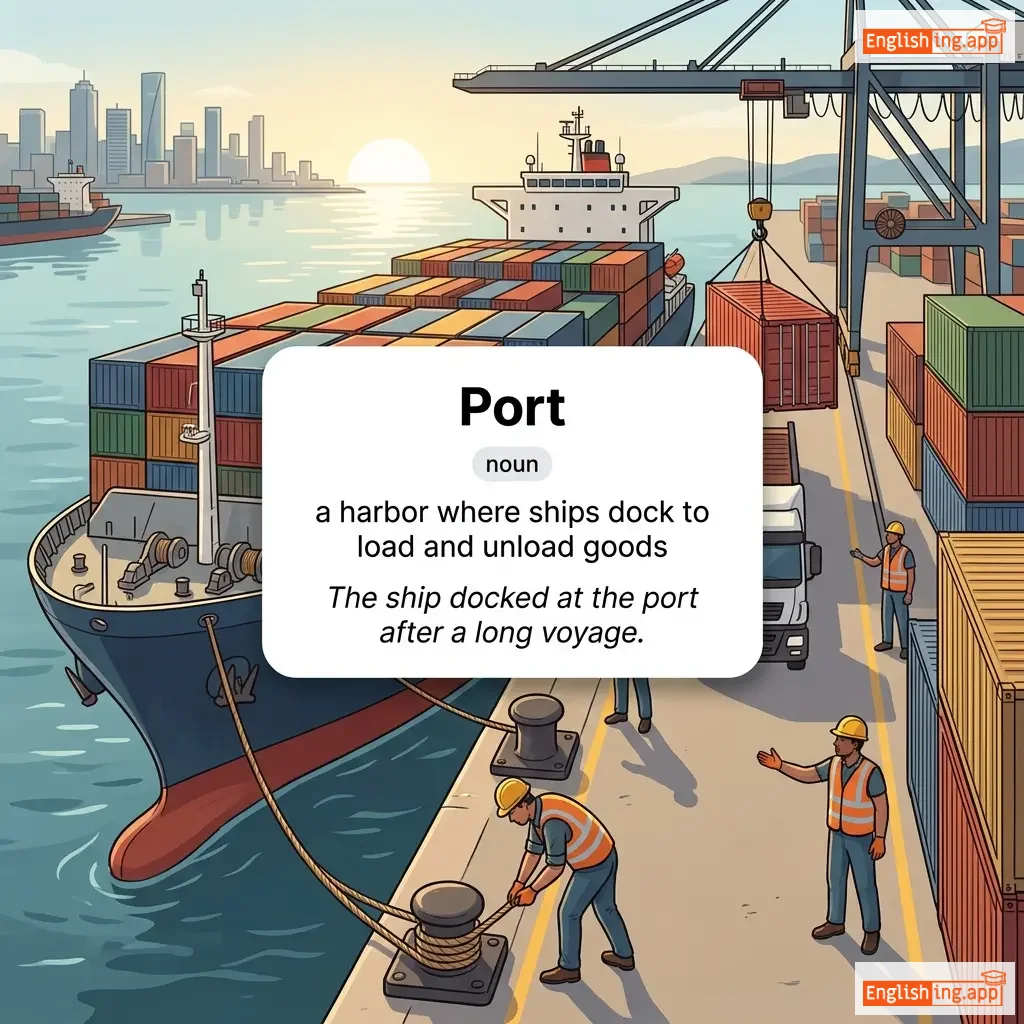
Port definition card — visual illustration of the meaning

Port

noun
/pɔːrt/

a harbor where ships dock to load and unload goods

"The ship docked at the port after a long voyage."

noun
/ˈpɔːrfəri/
一种硬的火成岩 (yī zhǒng yìng de huǒchéng yán)

A hard igneous rock containing crystals, often used for decorative or building purposes.

"The ancient Romans used porphyry to make columns and statues."

"古罗马人使用波斐里石制作柱子和雕像。" (Gǔ Luómǎ rén shǐyòng bō fěi lǐ shí zhìzuò zhùzi hé diāoxiàng.)
noun
/pɔːrk/
幸福 (xìng fú)

the flesh of a pig used as food

"He doesn't eat pork for religious reasons."

"当她收到奖项时,她无法掩饰自己的幸福。" (Dāng tā shōudào jiǎngxiàng shí, tā wúfǎ yǎnshì zìjǐ de xìngfú.)