词汇表

英语词汇词典 | 单词含义、定义和示例

adjective
/pʊr/ or /pɔːr/
贫穷的 (pínqióng de)

Lacking sufficient money, resources, or quality.

"The poor family struggled to buy food."

"贫困的家庭为购买食物而挣扎。" (Pínkùn de jiātíng wèi gòumǎi shíwù ér zhēngzhá.)
verb
/pɒp/
爆炸 (baozha)

to make a short, sharp sound, or to burst or break with such a sound

"The balloon popped when I accidentally pricked it with a pin."

"气球爆裂了,当我不小心用针戳它时。" (Qìqiú bàoliè le, dāng wǒ bù xiǎoxīn yòng zhēn chuō tā shí.)
noun
/ˈpɒp.i/
罂粟 (yīngsù)

a bright red flower with black seeds, often used as a symbol of remembrance

"The red poppy bloomed beautifully in the garden."

"红色的罂粟花在花园里美丽地绽放。" (hóngsè de yīngsù huā zài huāyuán lǐ měilì de zhànfàng)
noun
/ˈpɒp.i siːdz/
罂粟种子 (yīngsù zhǒngzi)

tiny round seeds from the poppy plant used as a spice or garnish in cooking

"Poppy seeds are sprinkled on top of breads and used in Bengali curries."

"罂粟种子撒在面包上,并用于孟加拉咖喱中。" (Yīngsù zhǒngzi sā zài miànbāo shàng, bìng yòng yú Mèngjiālā gālí zhōng.)
noun
/ˈpɒpjʊləs/
民众 (minzhong)

the general public; the ordinary people living in a country or area

"The new law was welcomed by the local populace."

"新法律受到了当地居民的欢迎。" (Xin falu shoudao le dangdi jumin de huanying.)
adjective
/ˈpɒpjʊlər/
受欢迎 (shou huanying)

liked or admired by many people

"She is a popular singer with a huge fan base."

"她是一位受欢迎的歌手,拥有庞大的粉丝群。" (Ta shi yi wei shou huanying de geshou, yongyou pangda de fensi qun.)
noun
/ˌpɒpjəˈlærəti/
受欢迎度 (shòu huānyíng dù)

the state of being liked, admired, or supported by many people

"The singer gained huge popularity after her new album release."
"歌手在发布新专辑后获得了巨大的受欢迎度。" (Gēshǒu zài fābù xīn zhuānjí hòu huòdé le jùdà de shòu huānyíng dù.)
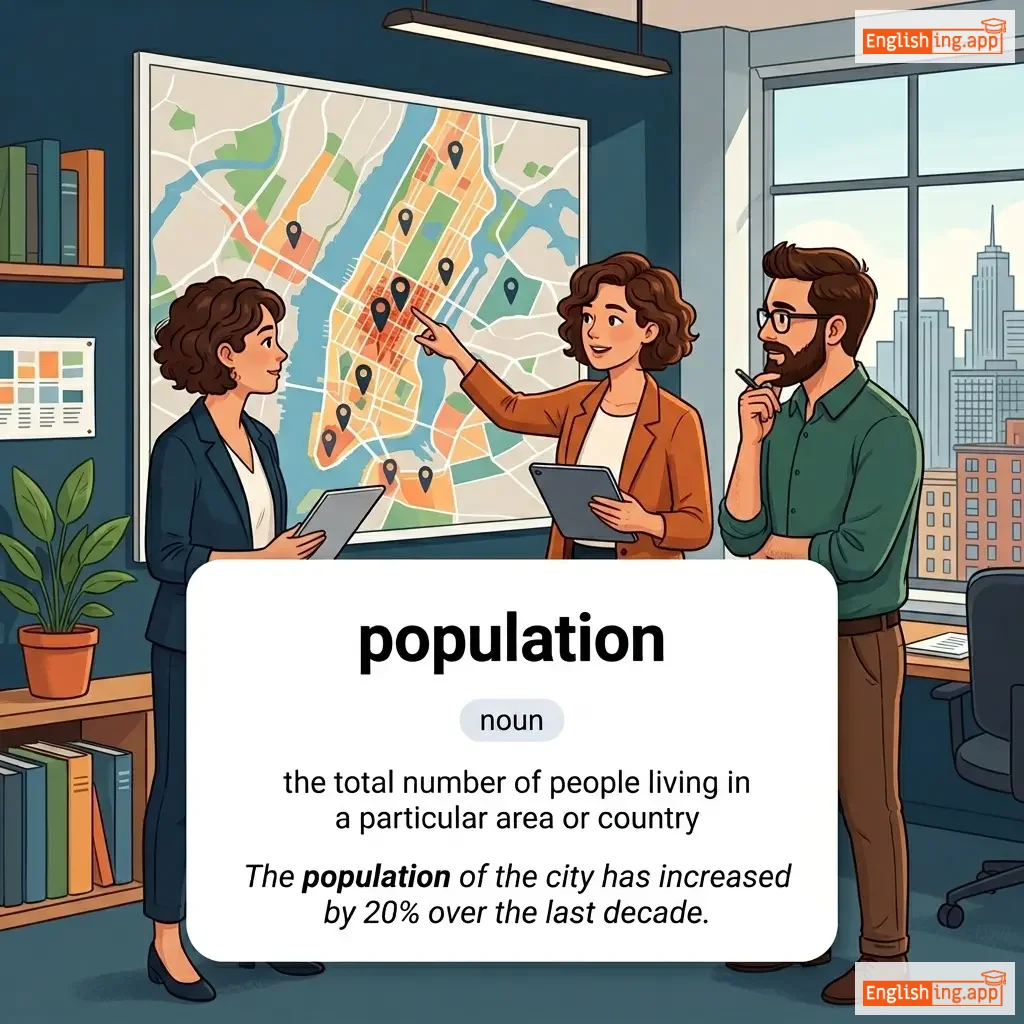
population definition card — visual illustration of the meaning
noun
/ˌpɒpjʊˈleɪʃən/
人口 (renkou)

the total number of people living in a particular area or country

"The population of the city has increased by 20% over the last decade."

"这座城市的人口在过去十年增加了20%。" (Zhe zuo chengshi de renkou zai guoqu shi nian zengjia le 20%.)
noun
/ˈpɒpjʊlɪst/
民粹主义领导人 (míncuì zhǔyì lǐngdǎo rén)

A politician or person who seeks to appeal to ordinary people who feel their concerns are ignored by elites.

"The populist leader promised to put the needs of common citizens first."

"民粹主义领导人承诺将普通公民的需求放在首位。" (Míncuì zhǔyì lǐngdǎo rén chéngnuò jiāng pǔtōng gōngmín de xūqiú fàng zài shǒuwèi.)
adjective
/ˈpɒpjələs/
人口密集 (rénkǒu mìjí)

Having a large population; densely inhabited.

"Dhaka is one of the most populous cities in the world."

"上海是世界上最人口密集的城市之一。" (Shànghǎi shì shìjiè shàng zuì rénkǒu mìjí de chéngshì zhī yī.)
noun
/ˈpɔːrsəlɪn/
瓷器 (cíqì)

A white, hard ceramic material often used for dishes and ornaments.

"The museum displayed ancient porcelain vases from China."

"博物馆展示了来自中国的古代瓷器花瓶。" (Bówùguǎn zhǎnshìle láizì zhōngguó de gǔdài cíqì huāpíng.)
noun
/pɔːrtʃ/
门廊 (menlang)

a covered area at the entrance of a building, often with a roof and open sides

"We sat on the porch and enjoyed the evening breeze."

"我们坐在门廊上,享受晚风。" (Wo men zuo zai menlang shang, xiangshou wanfeng.)
noun
/ˈpɔːr.kjə.paɪn/
豪猪 (háo zhū)

a large rodent with defensive spines or quills on its body

"The porcupine raised its quills when threatened."

"豪猪在受到威胁时竖起了它的刺。" (Háo zhū zài shòu dào wēixié shí shù qǐle tā de cì.)
noun/verb
/pɔːr/
毛孔 / 仔细研究 (máokǒng / zǐxì yánjiū)

As a noun: a tiny opening in the skin or surface. As a verb: to study something carefully.

"She pored over the documents for hours before making a decision."

"她在做出决定之前,花了几个小时仔细查看文件。" (Tā zài zuò chū juédìng zhīqián, huāle jǐ gè xiǎoshí zǐxì chákan wénjiàn.)
noun
/pɔːrk/
幸福 (xìng fú)

the flesh of a pig used as food

"He doesn't eat pork for religious reasons."
"当她收到奖项时,她无法掩饰自己的幸福。" (Dāng tā shōudào jiǎngxiàng shí, tā wúfǎ yǎnshì zìjǐ de xìngfú.)
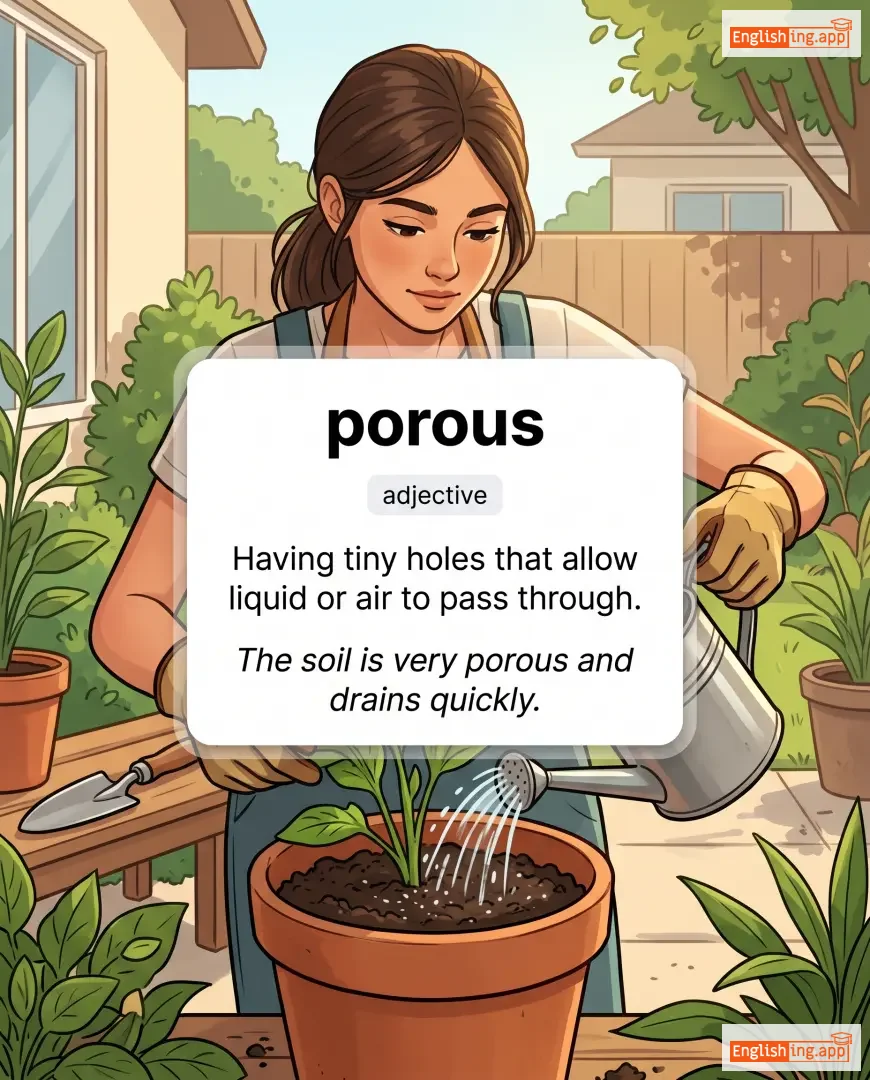
porous definition card — visual illustration of the meaning
adjective
/ˈpɔːrəs/
多孔的 (duō kǒng de)

Having tiny holes that allow liquid or air to pass through.

"The soil is very porous and drains quickly."

"土壤非常多孔,排水很快。" (Tǔrǎng fēicháng duōkǒng, páishuǐ hěn kuài.)
noun
/ˈpɔːrfəri/
一种硬的火成岩 (yī zhǒng yìng de huǒchéng yán)

A hard igneous rock containing crystals, often used for decorative or building purposes.

"The ancient Romans used porphyry to make columns and statues."

"古罗马人使用波斐里石制作柱子和雕像。" (Gǔ Luómǎ rén shǐyòng bō fěi lǐ shí zhìzuò zhùzi hé diāoxiàng.)
noun
/ˈpɔː.pəs/
海豚 (hǎi tún)

a small toothed whale with a low triangular dorsal fin and a blunt rounded snout

"The porpoise jumped gracefully out of the water."

"海豚优雅地跃出水面。" (Hǎi tún yōu yǎ de yuè chū shuǐ miàn.)
noun
/ˈpɔːrɪdʒ/

A soft food made by boiling oats or other grains in milk or water.

"She had a bowl of porridge for breakfast."

Port definition card — visual illustration of the meaning

Port

noun
/pɔːrt/

a harbor where ships dock to load and unload goods

"The ship docked at the port after a long voyage."

verb
/pɔːrˈtɛnd/
预示 (yùshì)

To be a sign or warning that something, especially something bad, is going to happen.

"Dark clouds portend a storm."

"暗云预示着暴风雨。" (Àn yún yùshì zhe bàofēngyǔ.)
noun
/ˈpɔːrtɛnt/
前兆 (qián zhào)

A sign or warning that something, especially something momentous or calamitous, is likely to happen.

"The sudden drop in stock prices was seen as a portent of economic trouble."

"股票价格的突然下跌被视为经济问题的前兆。" (Gǔ piào jià gé de tú rán xià diē bèi shì wéi jīng jì wèn tí de qián zhào.)
adjective
/pɔːrˈtɛntəs/
不祥的,严肃的 (bùxiáng de, yánsù de)

Giving a sign or warning that something, often bad or serious, is going to happen; or overly solemn and pompous.

"His portentous tone made everyone nervous about the news."

"他那不祥的语气让大家因新闻感到紧张。" (Tā nà bùxiáng de yǔqì ràng dàjiā yīn xīnwén gǎndào jǐnzhāng.)
adjective
/ˌpoʊstˈwɔːr/
战后 (zhanhou)

relating to the period after a war has ended

"The country experienced rapid economic growth in the post-war years."

"该国在战后时期经历了快速的经济增长。" (gai guo zai zhanhou shiqi jingli le kuaishu de jingji zengzhang)
adjective
/ˈpoʊtənt/
强效 (qiángxiào)

Having great power, influence, or effect.

"This is a very potent drug that should be used carefully."

"这是一种非常强效的药物,应该小心使用。" (Zhè shì yī zhǒng fēicháng qiángxiào de yàowù, yīnggāi xiǎoxīn shǐyòng.)
noun
/ˈpoʊtənsi/
效能 (xiaoneng)

The power or ability of something to affect or influence; strength or effectiveness.

"The potency of the new medicine amazed the doctors."

"新药的效能令医生们惊讶。" (Xin yao de xiaoneng ling yishengmen jingya.)
noun
/ˈpɒtˌbɔɪlə/
低级文学作品 (dijí wénxué zuòpǐn)

a book, play, or film produced quickly to make money rather than for artistic value

"The novel was dismissed by critics as a mere potboiler."

"这本小说被评论家视为仅仅是一本低级文学作品。" (Zhè běn xiǎoshuō bèi pínglùn jiā shì wéi jǐnjǐn shì yī běn dījí wénxué zuòpǐn.)
noun
/pəˈteɪtoʊ/
土豆 (tudou)

a starchy plant tuber that is a staple food around the world

"We had mashed potato with our dinner."

"我们晚餐吃了土豆泥。" (Wǒmen wǎncān chīle tǔdòu ní.)
adjective
/ˈpəʊtəbl/
可饮用的 (ke yin yong de)

safe to drink; drinkable

"The villagers did not have access to potable water."

"村民没有水源可以饮用。" (Cunmin meiyou shuiyuan keyi yin yong.)
noun
/pɒt/
(guo)

a container, typically round and deep, used for cooking or holding plants

"She put the soup in a pot and set it on the stove."

"她把汤放进锅里并把它放在炉子上。" (Tā bǎ tāng fàng jìn guō lǐ bìng bǎ tā fàng zài lúzi shàng.)
adjective
/ˈpəʊstwɔːr/
战后 (zhàn hòu)

occurring or existing after a war

"The postwar period saw significant economic growth."

"战后时期见证了显著的经济增长。" (Zhàn hòu shíqī jiànzhèng le xiǎnzhù de jīngjì zēngzhǎng.)
noun
/ˈpɒstʃə/
幸福 (xingfu)

the position in which someone holds their body; an attitude or approach

"Good posture helps prevent back pain."
"当她获得奖项时,她无法掩饰自己的幸福。" (Dāng tā huòdé jiǎngxiàng shí, tā wúfǎ yǎnshì zìjǐ de xìngfú.)
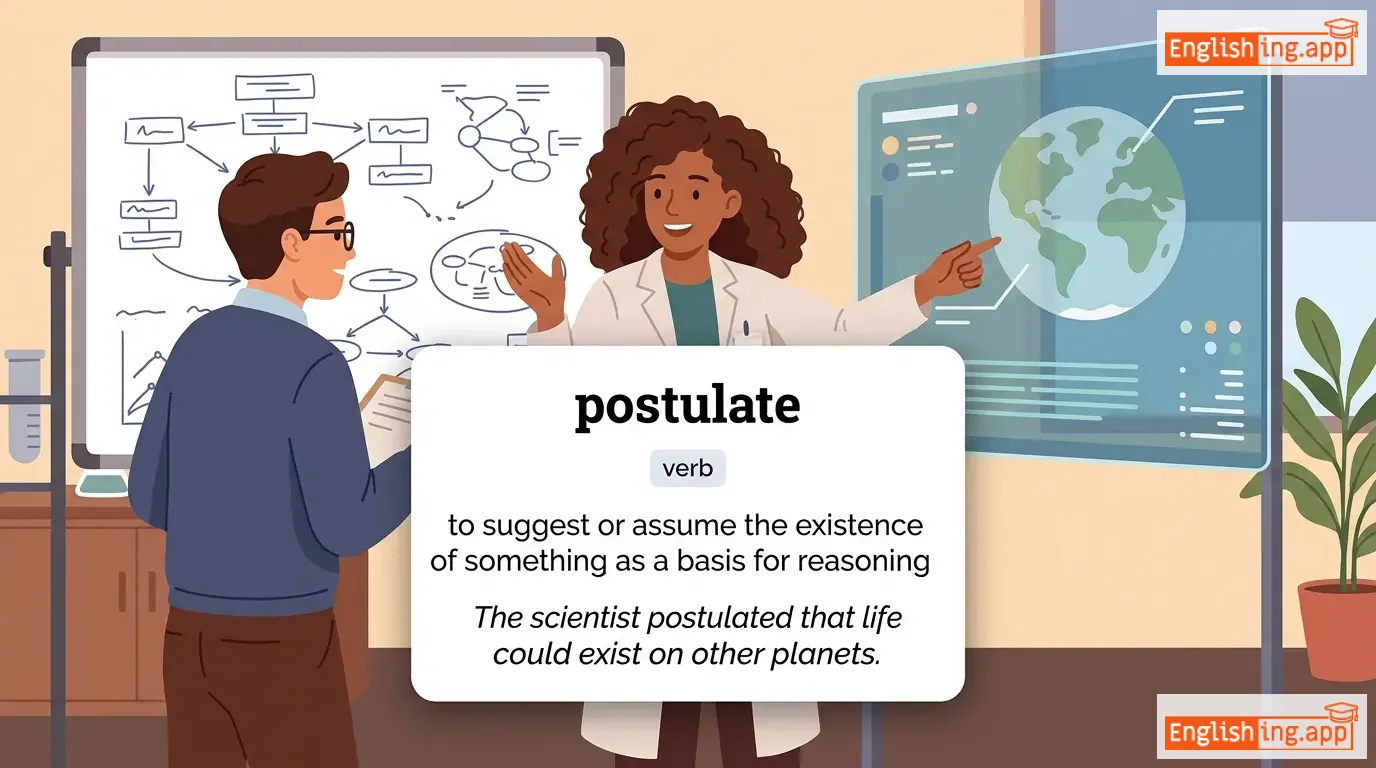
postulate definition card — visual illustration of the meaning
verb
/ˈpɒstjʊˌleɪt/
假设 (jiǎ shè)

to suggest or assume the existence of something as a basis for reasoning

"The scientist postulated that life could exist on other planets."

"科学家假设生命可能存在于其他星球。" (Kēxuéjiā jiǎ shè shēngmìng kěnéng cúnzài yú qítā xīngqiú.)
noun
/ˈpəʊstˌskrɪpt/
附言 (fù yán)

an additional remark at the end of a letter or text, after the signature

"She added a brief postscript to thank him again."

"她加了一句简短的附言,再次感谢他。" (Tā jiāle yī jù jiǎnduǎn de fù yán, zàicì gǎnxiè tā.)
adjective
/ˌpəʊstˈprændɪəl/
餐后 (cān hòu)

Occurring after a meal.

"He went for a postprandial walk after dinner."

"他在晚餐后去散步。" (Tā zài wǎncān hòu qù sànbù.)
verb
/pəʊs(t)ˈpəʊn/
推迟 (tuīchí)

to delay something to a later time

"The meeting was postponed until next week."

"会议被推迟到下周。" (Huìyì bèi tuīchí dào xià zhōu.)
noun, adjective
/ˌpəʊstˈmɔːtəm/
尸体解剖 (shī tǐ jiě pō)

An examination of a dead body to determine the cause of death.

"The doctor carried out a postmortem on the body."

"医生对尸体进行了尸体解剖。" (Yīshēng duì shītǐ jìnxíngle shītǐ jiě pō.)
adjective
/ˈpɒstjʊməs/
死后的 (sǐhòu de)

Occurring, awarded, or appearing after the death of the originator.

"He received a posthumous award for his bravery."

"他因勇敢获得了死后奖项。" (Tā yīn yǒnggǎn huòdéle sǐhòu jiǎngxiàng.)
noun, adjective
/ˌpəʊstˈɡrædʒuət/
研究生 (yan jiu sheng)

A student who has completed a first degree and is studying for a further degree.

"She is doing postgraduate research in physics."

"她正在做物理学的研究生研究。" (Ta zheng zai zuo wu li xue de yan jiu sheng yan jiu.)
noun
/pɒˈstɛrɪti/
后代 (hòudài)

All future generations of people.

"The monument was built for the benefit of posterity."

"这座纪念碑是为后代的利益而建造的。" (Zhè zuò jìniànbēi shì wèi hòudài de lìyì ér jiànzào de.)
adjective
/pɒˈstɪəriər/
后部 (hòubù)

Situated at or toward the back; later in time.

"The posterior part of the brain controls vision."

"大脑的后部控制视觉。" (Dànǎo de hòubù kòngzhì shìjué.)
poster definition card — visual illustration of the meaning
noun
/ˈpoʊstər/
海报 (haibao)

a large printed picture or notice that is put on a wall for decoration or to advertise something

"They put up a movie poster outside the theater."

"他们在电影院外面挂了一张电影海报。" (Tāmen zài diànyǐngyuàn wàimiàn guàle yī zhāng diànyǐng hǎibào.)
verb
/ˌpoʊstˈdeɪt/
后置日期 (hòuzhì rìqī)

To assign a date later than the actual date to a document or event.

"She postdated the check to next month."

"她把支票的日期改为下个月。" (Tā bǎ zhīpiào de rìqī gǎi wèi xià gè yuè.)
verb
/poʊz/
幸福 (xìng fú)

To assume a particular position, especially for a photograph or display; to present a problem or question.

"She posed for a picture in front of the monument."

"她在收到奖项时,无法隐藏她的幸福。" (Tā zài shōu dào jiǎngxiàng shí, wúfǎ yǐncáng tā de xìngfú.)
positive definition card — visual illustration of the meaning
adjective
/ˈpɒzɪtɪv/
积极的 (jī jí de)

Characterized by optimism, certainty, or something favorable.

"She always tries to maintain a positive attitude."

"她总是尽力保持积极的态度。" (Tā zǒng shì jìnlì bǎochí jījí de tàidù.)
position definition card — visual illustration of the meaning
noun
/pəˈzɪʃən/
职位 / 位置 (zhiwei / weizhi)

A place, job, or status; the way in which someone or something is placed or arranged.

"She applied for a teaching position at the university."

"她申请了大学的教学职位。" (Tā shēnqǐngle dàxué de jiàoxué zhíwèi.)
💡

posit

verb
/ˈpɑːzɪt/

To assume or suggest something as a fact or basis for reasoning.

"The scientist posited a new theory to explain the phenomenon."

noun
/poʊˈzɜːr/

A person who pretends to be something they are not, often to impress others.

"Many considered him a poseur because he exaggerated his accomplishments."

portrait definition card — visual illustration of the meaning
noun
/ˈpɔːtrət/
肖像 (xiàoxiàng)

a painting, drawing, photograph, or engraving of a person, especially one showing the face

"The artist painted a beautiful portrait of his wife."

"艺术家画了一幅他妻子的美丽肖像。" (Yìshùjiā huàle yī fú tā qīzǐ de měilì xiàoxiàng.)
portion definition card — visual illustration of the meaning
noun
/ˈpɔːrʃən/
部分 (bùfen)

A part or share of something.

"She ate only a small portion of the meal."

"她只吃了餐点的一小部分。" (Tā zhǐ chīle cāndiǎn de yī xiǎo bùfen.)