Vocabularios

Descubra, aprenda y domine el vocabulario en inglés

adjective
/pʊr/ or /pɔːr/
pobre (pobre)

Lacking sufficient money, resources, or quality.

"The poor family struggled to buy food."

"La familia pobre luchaba por comprar comida." (La familia pobre luchaba por comprar comida.)
verb
/pɒp/
estallar (estallar)

to make a short, sharp sound, or to burst or break with such a sound

"The balloon popped when I accidentally pricked it with a pin."

"El globo estalló cuando lo pinché accidentalmente con un alfiler." (El globo estallo cuando lo pinche accidentalmente con un alfiler.)
noun
/ˈpɒp.i/
amapola (amapola)

a bright red flower with black seeds, often used as a symbol of remembrance

"The red poppy bloomed beautifully in the garden."

"La amapola roja floreció hermosamente en el jardín." (la amapola roja floreció hermosamente en el jardín)
noun
/ˈpɒp.i siːdz/
semillas de amapola (semillas de amapola)

tiny round seeds from the poppy plant used as a spice or garnish in cooking

"Poppy seeds are sprinkled on top of breads and used in Bengali curries."

"Las semillas de amapola se espolvorean sobre el pan y se usan en curris bengalíes." (Las semillas de amapola se espolvorean sobre el pan y se usan en curris bengalíes.)
noun
/ˈpɒpjʊləs/
población (poblacion)

the general public; the ordinary people living in a country or area

"The new law was welcomed by the local populace."

"La nueva ley fue bienvenida por la población local." (La nueva ley fue bienvenida por la poblacion local.)
adjective
/ˈpɒpjʊlər/
popular (popular)

liked or admired by many people

"She is a popular singer with a huge fan base."

"Ella es una cantante popular con una gran base de fans." (Ella es una cantante popular con una gran base de fans.)
noun
/ˌpɒpjəˈlærəti/
popularidad (popularidad)

the state of being liked, admired, or supported by many people

"The singer gained huge popularity after her new album release."

"La cantante ganó gran popularidad después del lanzamiento de su nuevo álbum." (La cantante ganó gran popularidad después del lanzamiento de su nuevo álbum.)
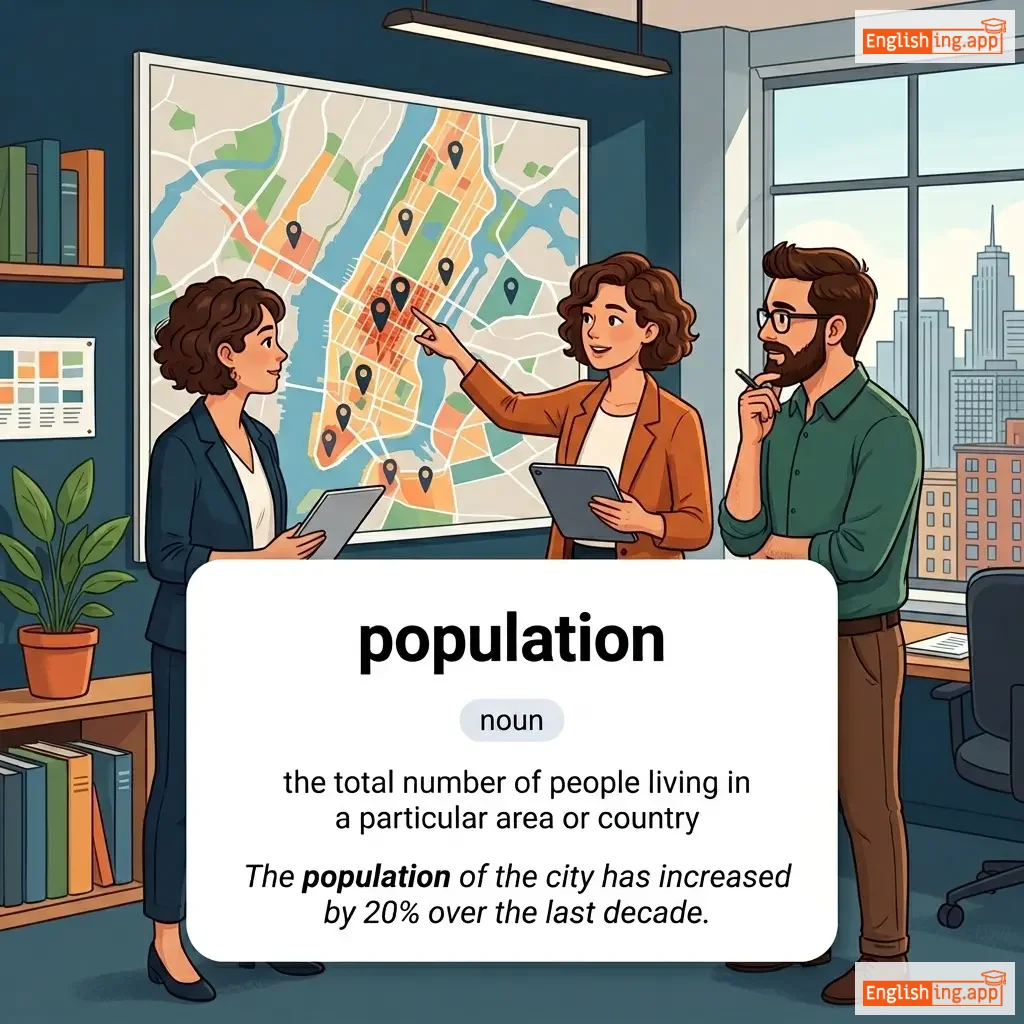
population definition card — visual illustration of the meaning
noun
/ˌpɒpjʊˈleɪʃən/
población (poblacion)

the total number of people living in a particular area or country

"The population of the city has increased by 20% over the last decade."

"La población de la ciudad ha aumentado un 20% en la última década." (La poblacion de la ciudad ha aumentado un 20% en la ultima decada.)
noun
/ˈpɒpjʊlɪst/
líder populista (líder populista)

A politician or person who seeks to appeal to ordinary people who feel their concerns are ignored by elites.

"The populist leader promised to put the needs of common citizens first."

"El líder populista prometió poner las necesidades de los ciudadanos comunes en primer lugar." (El líder populista prometió poner las necesidades de los ciudadanos comunes en primer lugar.)
adjective
/ˈpɒpjələs/
poblado (poblado)

Having a large population; densely inhabited.

"Dhaka is one of the most populous cities in the world."

"Madrid es una de las ciudades más pobladas del mundo." (Madrid es una de las ciudades más pobladas del mundo.)
noun
/ˈpɔːrsəlɪn/
porcelana (porcelana)

A white, hard ceramic material often used for dishes and ornaments.

"The museum displayed ancient porcelain vases from China."

"El museo exhibió antiguos jarrones de porcelana de China." (El museo exhibió antiguos jarrones de porcelana de China.)
noun
/pɔːrtʃ/
porche (porche)

a covered area at the entrance of a building, often with a roof and open sides

"We sat on the porch and enjoyed the evening breeze."

"Nos sentamos en el porche y disfrutamos de la brisa de la tarde." (Nos sentamos en el porche y disfrutamos de la brisa de la tarde.)
noun
/ˈpɔːr.kjə.paɪn/
Puerquito de espinas (Puerquito de espinas)

a large rodent with defensive spines or quills on its body

"The porcupine raised its quills when threatened."

"El puerquito de espinas levantó sus púas cuando se sintió amenazado." (El puerquito de espinas levantó sus púas cuando se sintió amenazado.)
noun/verb
/pɔːr/
poros / estudiar cuidadosamente (poros / estudiar cuidadosamente)

As a noun: a tiny opening in the skin or surface. As a verb: to study something carefully.

"She pored over the documents for hours before making a decision."

"Ella estudió los documentos durante horas antes de tomar una decisión." (Ella estudió los documentos durante horas antes de tomar una decisión.)
noun
/pɔːrk/
felicidad (felicidad)

the flesh of a pig used as food

"He doesn't eat pork for religious reasons."

"Ella no pudo esconder su felicidad cuando recibió el premio." (Ella no pudo esconder su felicidad cuando recibio el premio.)
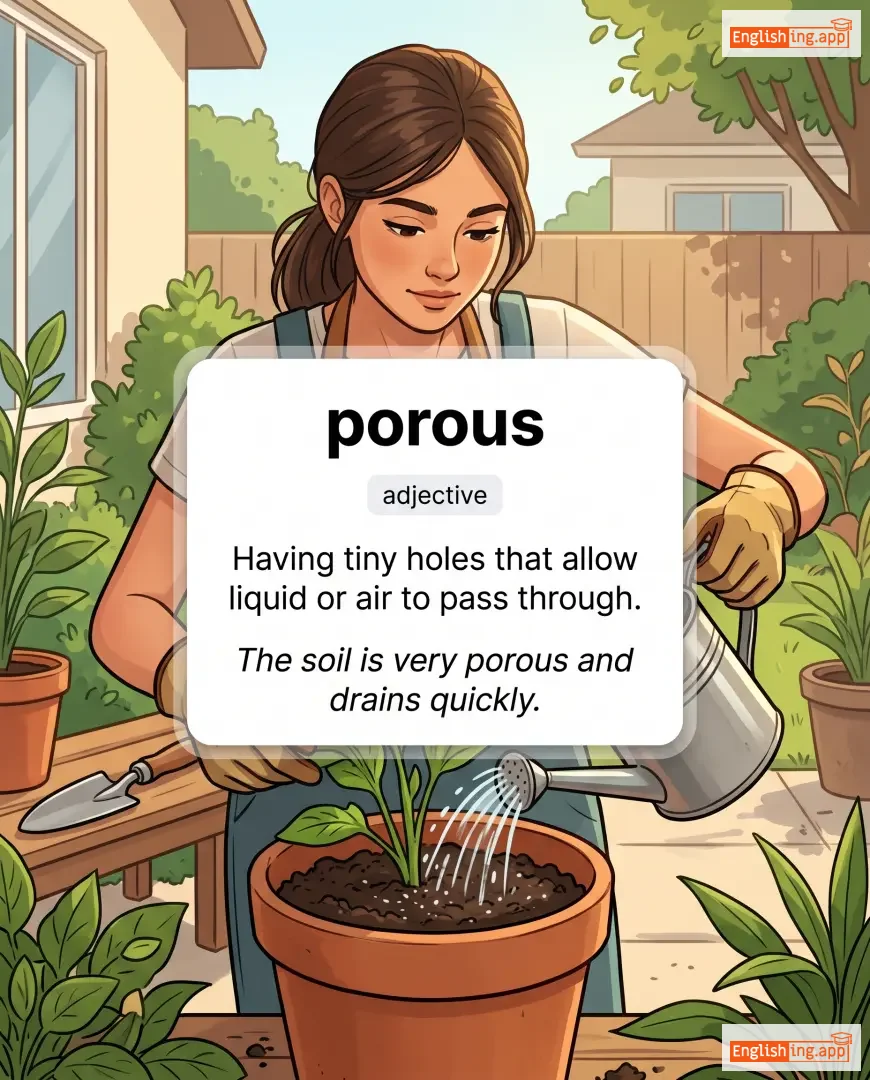
porous definition card — visual illustration of the meaning
adjective
/ˈpɔːrəs/
poroso (poroso)

Having tiny holes that allow liquid or air to pass through.

"The soil is very porous and drains quickly."

"El suelo es muy poroso y drena rápidamente." (El suelo es muy poroso y drena rapidamente.)
noun
/ˈpɔːrfəri/
una roca ígnea dura (una roca ignea dura)

A hard igneous rock containing crystals, often used for decorative or building purposes.

"The ancient Romans used porphyry to make columns and statues."

"Los antiguos romanos usaron pórfido para hacer columnas y estatuas." (Los antiguos romanos usaron pórfido para hacer columnas y estatuas.)
noun
/ˈpɔː.pəs/
delfín (delfin)

a small toothed whale with a low triangular dorsal fin and a blunt rounded snout

"The porpoise jumped gracefully out of the water."

"El delfín saltó grácilmente fuera del agua." (El delfín saltó grácilmente fuera del agua.)
noun
/ˈpɔːrɪdʒ/
gachas (gachas)

A soft food made by boiling oats or other grains in milk or water.

"She had a bowl of porridge for breakfast."

"Ella comió un tazón de gachas para el desayuno." (Ella comió un tazón de gachas para el desayuno.)
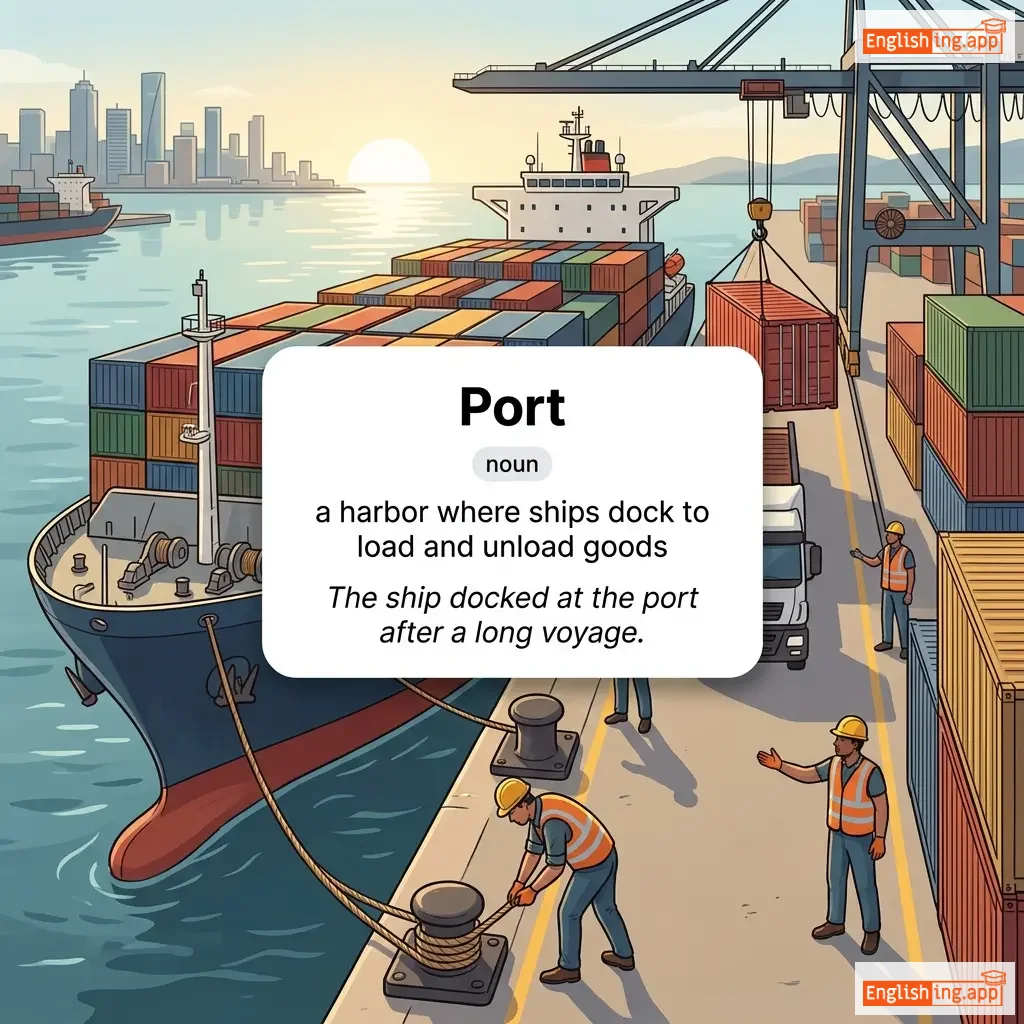
Port definition card — visual illustration of the meaning
noun
/pɔːrt/
puerto (pwerto)

a harbor where ships dock to load and unload goods

"The ship docked at the port after a long voyage."

"El barco atracó en el puerto después de un largo viaje." (El barco atraco en el puerto despues de un largo viaje.)
verb
/pɔːrˈtɛnd/
presagiar (presagiar)

To be a sign or warning that something, especially something bad, is going to happen.

"Dark clouds portend a storm."

"Las nubes oscuras presagian una tormenta." (Las nubes oscuras presagian una tormenta.)
noun
/ˈpɔːrtɛnt/
presagio (presagio)

A sign or warning that something, especially something momentous or calamitous, is likely to happen.

"The sudden drop in stock prices was seen as a portent of economic trouble."

"La repentina caída de los precios de las acciones fue vista como un presagio de problemas económicos." (La repentina caida de los precios de las acciones fue vista como un presagio de problemas economicos.)
adjective
/pɔːrˈtɛntəs/
portentoso, grave (portentoso, grave)

Giving a sign or warning that something, often bad or serious, is going to happen; or overly solemn and pompous.

"His portentous tone made everyone nervous about the news."

"Su tono portentoso hizo que todos se pusieran nerviosos por las noticias." (Su tono portentoso hizo que todos se pusieran nerviosos por las noticias.)
adjective
/ˌpoʊstˈwɔːr/
de posguerra (de posguerra)

relating to the period after a war has ended

"The country experienced rapid economic growth in the post-war years."

"El país experimentó un rápido crecimiento económico en los años de posguerra." (el pais experimento un rapido crecimiento economico en los anos de posguerra)
adjective
/ˈpoʊtənt/
potente (potente)

Having great power, influence, or effect.

"This is a very potent drug that should be used carefully."

"Este es un medicamento muy potente que debe usarse con cuidado." (Este es un medicamento muy potente que debe usarse con cuidado.)
noun
/ˈpoʊtənsi/
potencia (potencia)

The power or ability of something to affect or influence; strength or effectiveness.

"The potency of the new medicine amazed the doctors."

"La potencia de la nueva medicina sorprendió a los médicos." (La potencia de la nueva medicina sorprendió a los médicos.)
noun
/ˈpɒtˌbɔɪlə/
literatura barata (literatura barata)

a book, play, or film produced quickly to make money rather than for artistic value

"The novel was dismissed by critics as a mere potboiler."

"La novela fue rechazada por los críticos como una simple literatura barata." (La novela fue rechazada por los críticos como una simple literatura barata.)
noun
/pəˈteɪtoʊ/
papa (papa)

a starchy plant tuber that is a staple food around the world

"We had mashed potato with our dinner."

"Comimos puré de papa con la cena." (Comimos pure de papa con la cena.)
adjective
/ˈpəʊtəbl/
potable (potable)

safe to drink; drinkable

"The villagers did not have access to potable water."

"Los aldeanos no tenían acceso a agua potable." (Los aldeanos no tenían acceso a agua potable.)
noun
/pɒt/
olla (olla)

a container, typically round and deep, used for cooking or holding plants

"She put the soup in a pot and set it on the stove."

"Ella puso la sopa en una olla y la colocó en la estufa." (Ella puso la sopa en una olla y la coloco en la estufa.)
adjective
/ˈpəʊstwɔːr/
postguerra (postguerra)

occurring or existing after a war

"The postwar period saw significant economic growth."

"El periodo de postguerra vio un crecimiento económico significativo." (El periodo de postguerra vio un crecimiento económico significativo.)
noun
/ˈpɒstʃə/
felicidad (felicidad)

the position in which someone holds their body; an attitude or approach

"Good posture helps prevent back pain."

"Ella no pudo ocultar su felicidad cuando recibió el premio." (Ella no pudo ocultar su felicidad cuando recibió el premio.)
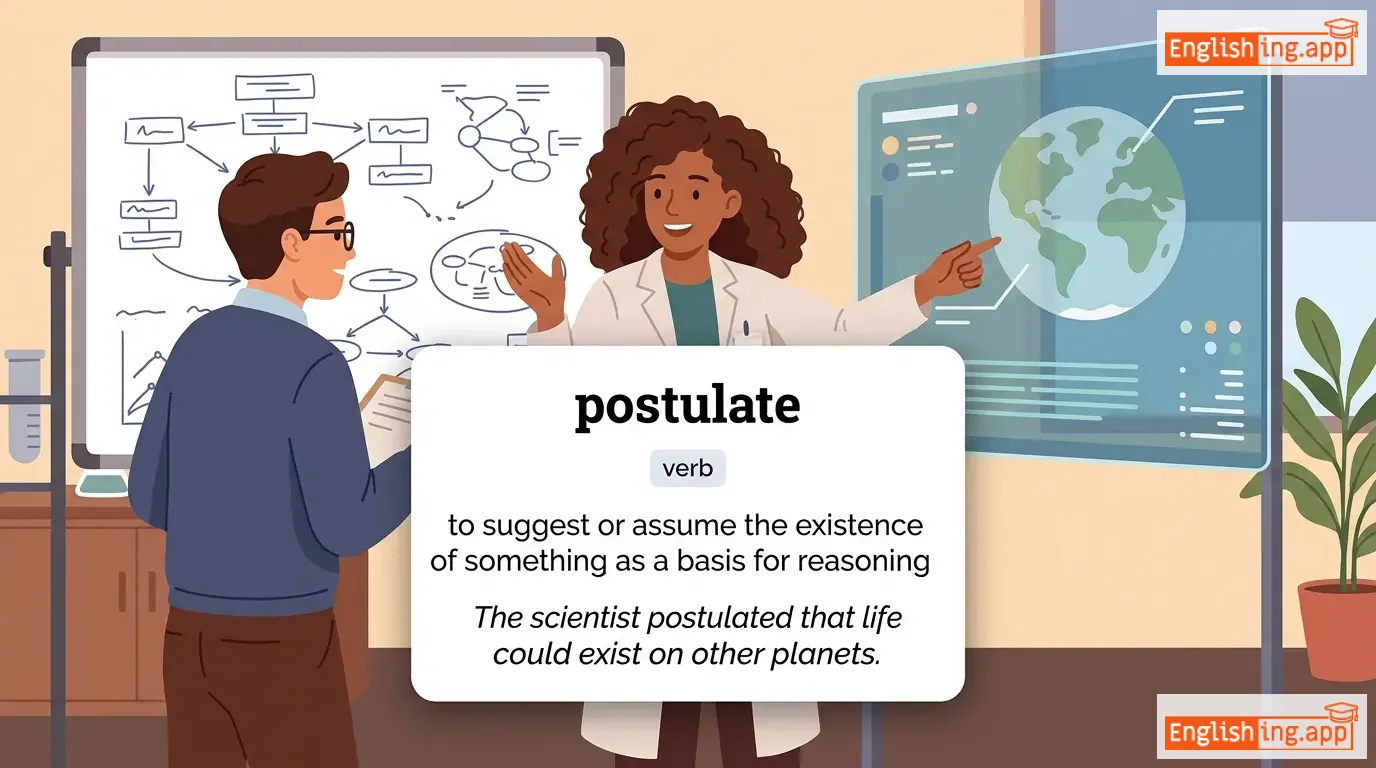
postulate definition card — visual illustration of the meaning
verb
/ˈpɒstjʊˌleɪt/
postular (postular)

to suggest or assume the existence of something as a basis for reasoning

"The scientist postulated that life could exist on other planets."

"El científico postuló que la vida podría existir en otros planetas." (El científico postuló que la vida podría existir en otros planetas.)
noun
/ˈpəʊstˌskrɪpt/
posdata (posdata)

an additional remark at the end of a letter or text, after the signature

"She added a brief postscript to thank him again."

"Ella añadió una breve posdata para darle las gracias nuevamente." (Ella anadio una breve posdata para darle las gracias nuevamente.)
adjective
/ˌpəʊstˈprændɪəl/
postprandial (postprandial)

Occurring after a meal.

"He went for a postprandial walk after dinner."

"Fue a caminar después de la cena postprandial." (Fue a caminar despues de la cena postprandial.)
verb
/pəʊs(t)ˈpəʊn/
posponer (posponer)

to delay something to a later time

"The meeting was postponed until next week."

"La reunión fue postpuesta hasta la próxima semana." (La reunion fue postpuesta hasta la proxima semana.)
noun, adjective
/ˌpəʊstˈmɔːtəm/
autopsia (autopsia)

An examination of a dead body to determine the cause of death.

"The doctor carried out a postmortem on the body."

"El doctor realizó una autopsia al cuerpo." (El doctor realizó una autopsia al cuerpo.)
adjective
/ˈpɒstjʊməs/
póstumo (postumo)

Occurring, awarded, or appearing after the death of the originator.

"He received a posthumous award for his bravery."

"Recibió un premio póstumo por su valentía." (Recibió un premio póstumo por su valentía.)
noun, adjective
/ˌpəʊstˈɡrædʒuət/
posgraduado (posgraduado)

A student who has completed a first degree and is studying for a further degree.

"She is doing postgraduate research in physics."

"Ella está haciendo una investigación de posgrado en física." (Ella está haciendo una investigación de posgrado en física.)
noun
/pɒˈstɛrɪti/
posteridad (posteridad)

All future generations of people.

"The monument was built for the benefit of posterity."

"El monumento fue construido para el beneficio de la posteridad." (El monumento fue construido para el beneficio de la posteridad.)
adjective
/pɒˈstɪəriər/
posterior (posterior)

Situated at or toward the back; later in time.

"The posterior part of the brain controls vision."

"La parte posterior del cerebro controla la visión." (La parte posterior del cerebro controla la visión.)
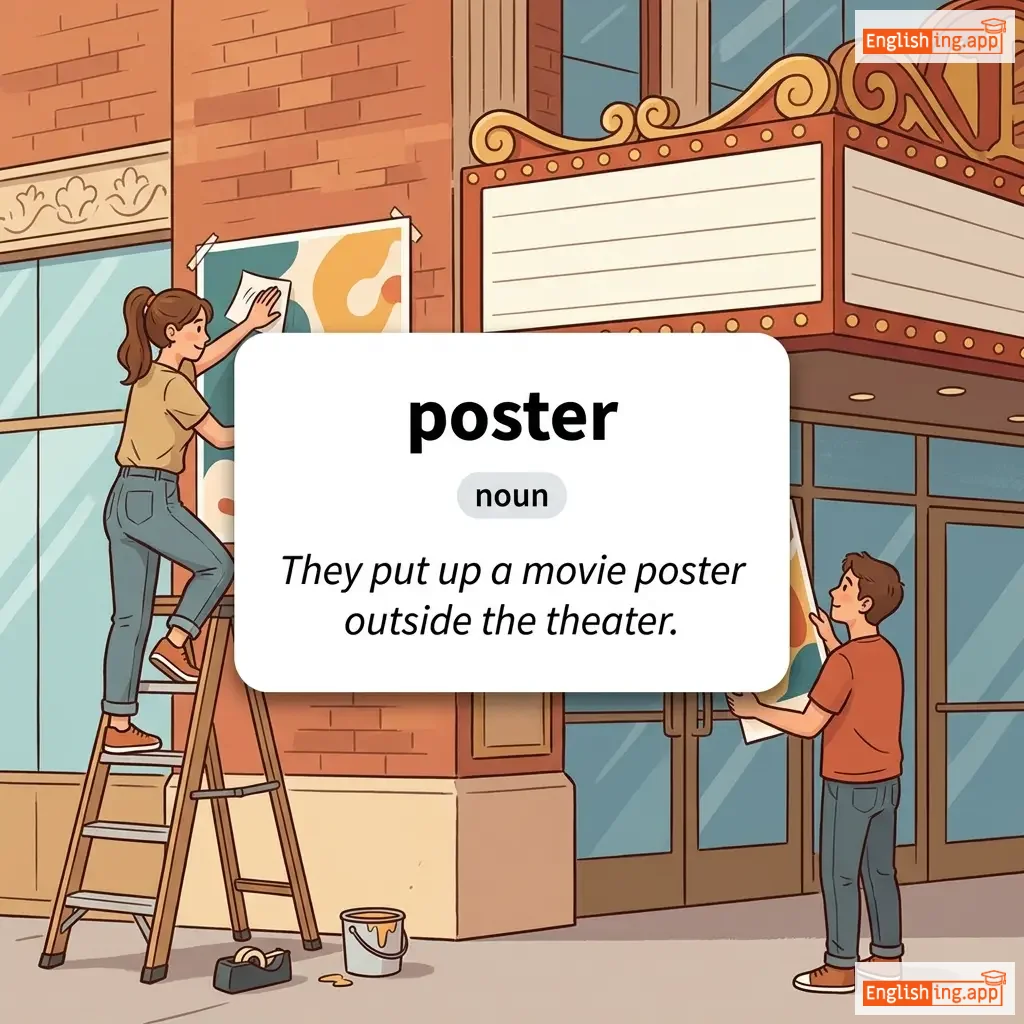
poster definition card — visual illustration of the meaning
noun
/ˈpoʊstər/
póster (poster)

a large printed picture or notice that is put on a wall for decoration or to advertise something

"They put up a movie poster outside the theater."

"Ellos pusieron un póster de película afuera del cine." (Ellos pusieron un póster de película afuera del cine.)
verb
/ˌpoʊstˈdeɪt/
poner una fecha posterior (poner una fecha posterior)

To assign a date later than the actual date to a document or event.

"She postdated the check to next month."

"Ella postdató el cheque para el próximo mes." (Ella postató el cheque para el próximo mes.)
verb
/poʊz/
felicidad (felicidad)

To assume a particular position, especially for a photograph or display; to present a problem or question.

"She posed for a picture in front of the monument."

"Ella no pudo ocultar su felicidad cuando recibió el premio." (Ella no pudo ocultar su felicidad cuando recibió el premio.)
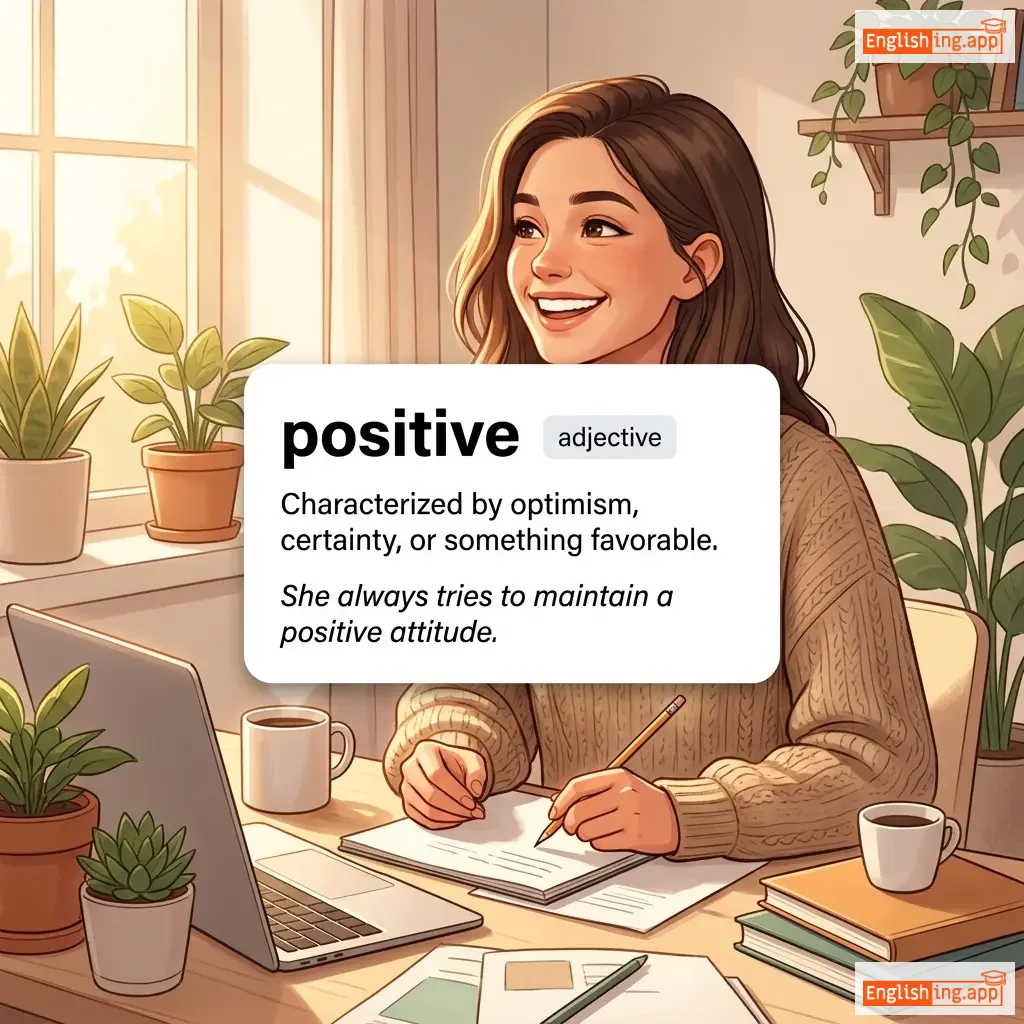
positive definition card — visual illustration of the meaning
adjective
/ˈpɒzɪtɪv/
positivo (positivo)

Characterized by optimism, certainty, or something favorable.

"She always tries to maintain a positive attitude."

"Ella siempre trata de mantener una actitud positiva." (Ella siempre trata de mantener una actitud positiva.)
position definition card — visual illustration of the meaning
noun
/pəˈzɪʃən/
puesto / posición (puesto / posicion)

A place, job, or status; the way in which someone or something is placed or arranged.

"She applied for a teaching position at the university."

"Ella solicitó un puesto de enseñanza en la universidad." (Ella solicitó un puesto de enseñanza en la universidad.)
verb
/ˈpɑːzɪt/
postular (positar)

To assume or suggest something as a fact or basis for reasoning.

"The scientist posited a new theory to explain the phenomenon."

"El científico postuló una nueva teoría para explicar el fenómeno." (El científico postuló una nueva teoría para explicar el fenómeno.)
noun
/poʊˈzɜːr/
farsante (farsante)

A person who pretends to be something they are not, often to impress others.

"Many considered him a poseur because he exaggerated his accomplishments."

"Muchos lo consideraban un farsante porque exageraba sus logros." (Muchos lo consideraban un farsante porque exageraba sus logros.)
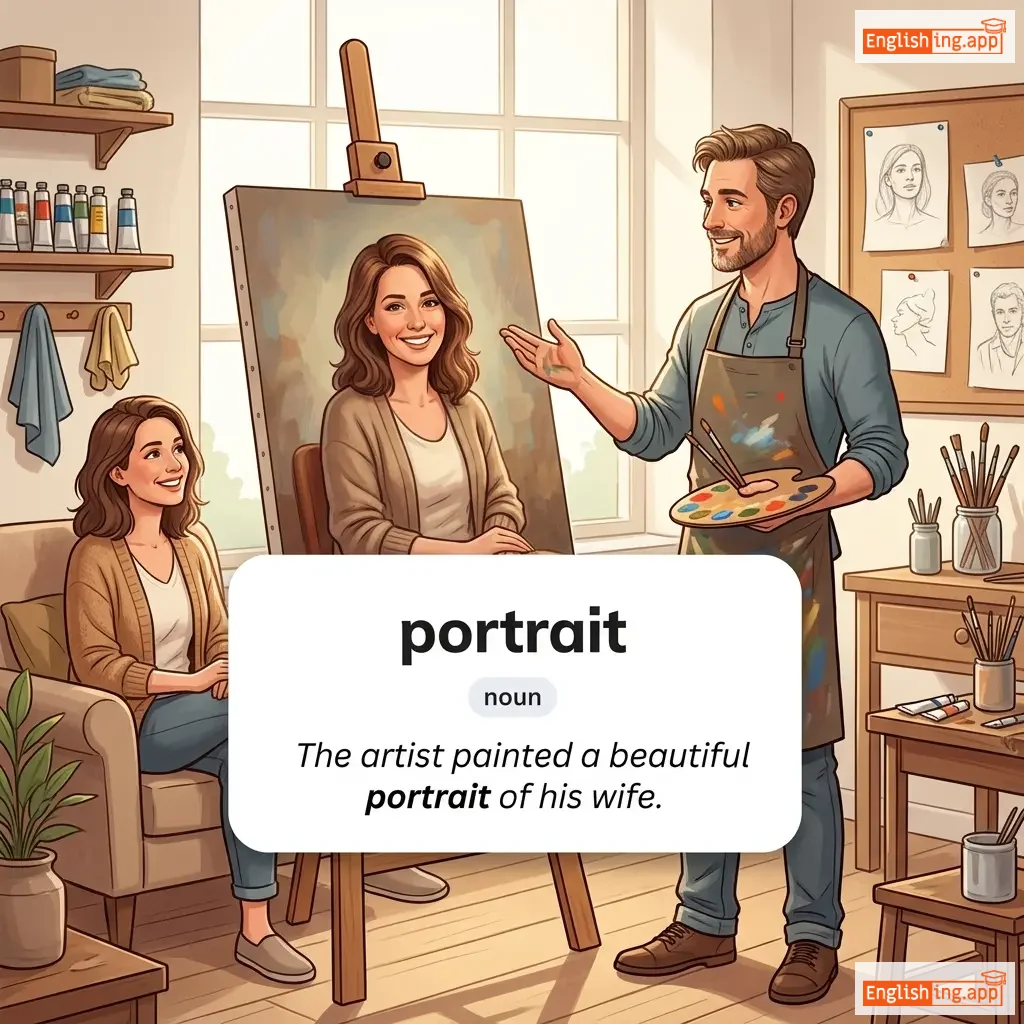
portrait definition card — visual illustration of the meaning
noun
/ˈpɔːtrət/
retrato (retrato)

a painting, drawing, photograph, or engraving of a person, especially one showing the face

"The artist painted a beautiful portrait of his wife."

"El artista pintó un hermoso retrato de su esposa." (El artista pintó un hermoso retrato de su esposa.)
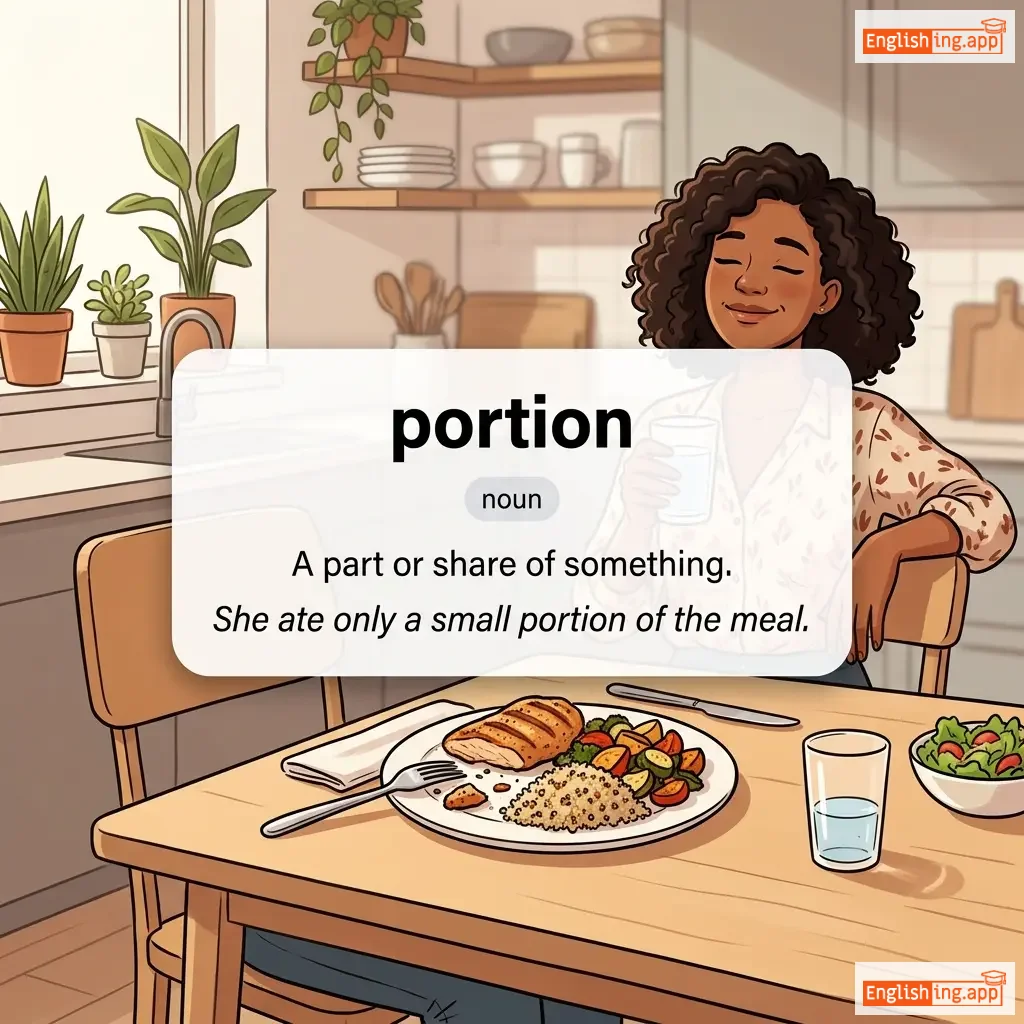
portion definition card — visual illustration of the meaning
noun
/ˈpɔːrʃən/
porción (porcion)

A part or share of something.

"She ate only a small portion of the meal."

"Ella comió solo una pequeña porción de la comida." (Ella comió solo una pequeña porción de la comida.)