वोकैबुलरीज

इंग्लिश वोकैबुलरी डिस्कवर, लर्न और मास्टर करें

adjective
/pʊr/ or /pɔːr/
गरीब (gareeb)

Lacking sufficient money, resources, or quality.

"The poor family struggled to buy food."

"गरीब परिवार भोजन खरीदने के लिए संघर्ष कर रहा था।" (gareeb parivaar bhojan kharidne ke liye sangharsh kar raha tha.)
verb
/pɒp/
फटना (phatna)

to make a short, sharp sound, or to burst or break with such a sound

"The balloon popped when I accidentally pricked it with a pin."

"गुब्बारा फट गया जब मैंने गलती से उसे पिन से चुभा दिया।" (Gubbaara phat gaya jab maine galti se use pin se chubha diya.)
noun
/ˈpɒp.i/
पॉपी (poppy)

a bright red flower with black seeds, often used as a symbol of remembrance

"The red poppy bloomed beautifully in the garden."

"लाल पॉपी बगीचे में सुंदरता से खिला।" (laal poppy bageeche mein sundarta se khila)
noun
/ˈpɒp.i siːdz/
पोपी बीज (popi beej)

tiny round seeds from the poppy plant used as a spice or garnish in cooking

"Poppy seeds are sprinkled on top of breads and used in Bengali curries."

"पॉपी बीज रोटियों के ऊपर डाले जाते हैं और बंगाली करी में उपयोग होते हैं।" (popi beej rotiyon ke upar daale jaate hain aur bangali kari mein upyog hote hain.)
noun
/ˈpɒpjʊləs/
जनसाधारण (janasadharans)

the general public; the ordinary people living in a country or area

"The new law was welcomed by the local populace."

"नया कानून स्थानीय जनसाधारण द्वारा स्वागत किया गया।" (Naya kanoon sthaniye janasadharan dwara swagat kiya gaya.)
adjective
/ˈpɒpjʊlər/
लोकप्रिय (lokpriya)

liked or admired by many people

"She is a popular singer with a huge fan base."

"वह एक लोकप्रिय गायिका है जिसकी बड़ी फैन बेस है।" (Wah ek lokpriya gaayika hai jiski badi fan base hai.)
noun
/ˌpɒpjəˈlærəti/
लोकप्रियता (lokpriyata)

the state of being liked, admired, or supported by many people

"The singer gained huge popularity after her new album release."

"गायिका ने अपने नए एल्बम की रिलीज़ के बाद बड़ी लोकप्रियता हासिल की।" (Gayika ne apne naye album ki release ke baad badi lokpriyata hasil ki.)
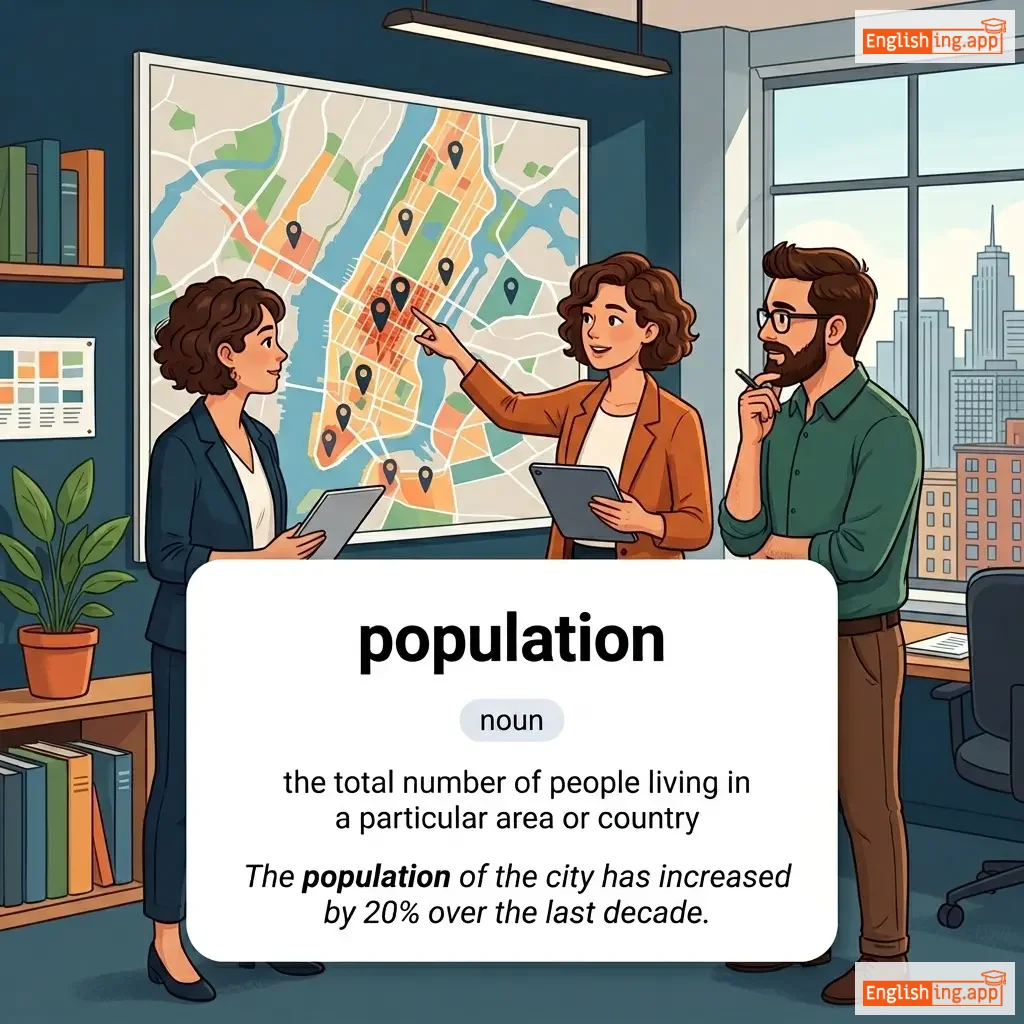
population definition card — visual illustration of the meaning
noun
/ˌpɒpjʊˈleɪʃən/
जनसंख्या (jansankhya)

the total number of people living in a particular area or country

"The population of the city has increased by 20% over the last decade."

"द सिटी की जनसंख्या पिछले दशक में 20% बढ़ी है।" (Da city ki jansankhya pichle dashak mein 20% badhi hai.)
noun
/ˈpɒpjʊlɪst/
जनप्रिय नेता (janpriya neta)

A politician or person who seeks to appeal to ordinary people who feel their concerns are ignored by elites.

"The populist leader promised to put the needs of common citizens first."

"जनप्रिय नेता ने सामान्य नागरिकों की जरूरतों को पहले रखने का वादा किया।" (janpriya neta ne sāmaṇya nāgariko ki jarurato ko pahle rakhne kā vādā kiyā.)
adjective
/ˈpɒpjələs/
जनसंख्यायुक्त (jansankhyayukt)

Having a large population; densely inhabited.

"Dhaka is one of the most populous cities in the world."

"दिल्ली दुनिया के सबसे अधिक जनसंख्यायुक्त शहरों में से एक है।" (Dilli duniya ke sabse adhik jansankhyayukt shahron mein se ek hai.)
noun
/ˈpɔːrsəlɪn/
पॉर्सलिन (porcelain)

A white, hard ceramic material often used for dishes and ornaments.

"The museum displayed ancient porcelain vases from China."

"म्यूज़ियम ने प्राचीन पॉर्सलिन के फूलदान चीन से प्रदर्शित किए।" (Miyujiyam ne prachin porcelain ke phooldan Cheen se pradarshit kiye.)
noun
/pɔːrtʃ/
बरामदा (baramda)

a covered area at the entrance of a building, often with a roof and open sides

"We sat on the porch and enjoyed the evening breeze."

"हम बरामदे में बैठकर शाम की हवा का आनंद ले रहे थे।" (Hum baramde mein baithkar shaam ki hawa ka anand le rahe the.)
noun
/ˈpɔːr.kjə.paɪn/
सजालू (sajalu)

a large rodent with defensive spines or quills on its body

"The porcupine raised its quills when threatened."

"सजालू ने धमकी मिलने पर अपने कांटे उठा लिए।" (sajalu ne dhamki milne par apne kate utha liye.)
noun/verb
/pɔːr/
छिद्र / गहन अध्ययन करना (chhidra / gahan adhyayan karna)

As a noun: a tiny opening in the skin or surface. As a verb: to study something carefully.

"She pored over the documents for hours before making a decision."

"वह निर्णय लेने से पहले घंटों तक दस्तावेजों को ध्यान से पढ़ रही थी।" (Vah nirnay lene se pehle ghanton tak dastavezon ko dhyan se padh rahi thi.)
noun
/pɔːrk/
खुशी (khushi)

the flesh of a pig used as food

"He doesn't eat pork for religious reasons."

"जब उसने पुरस्कार प्राप्त किया, तो वह अपनी खुशी छिपा नहीं सकी।" (Jab usne puraskar prapt kiya, to wah apni khushi chhupa nahi saki.)
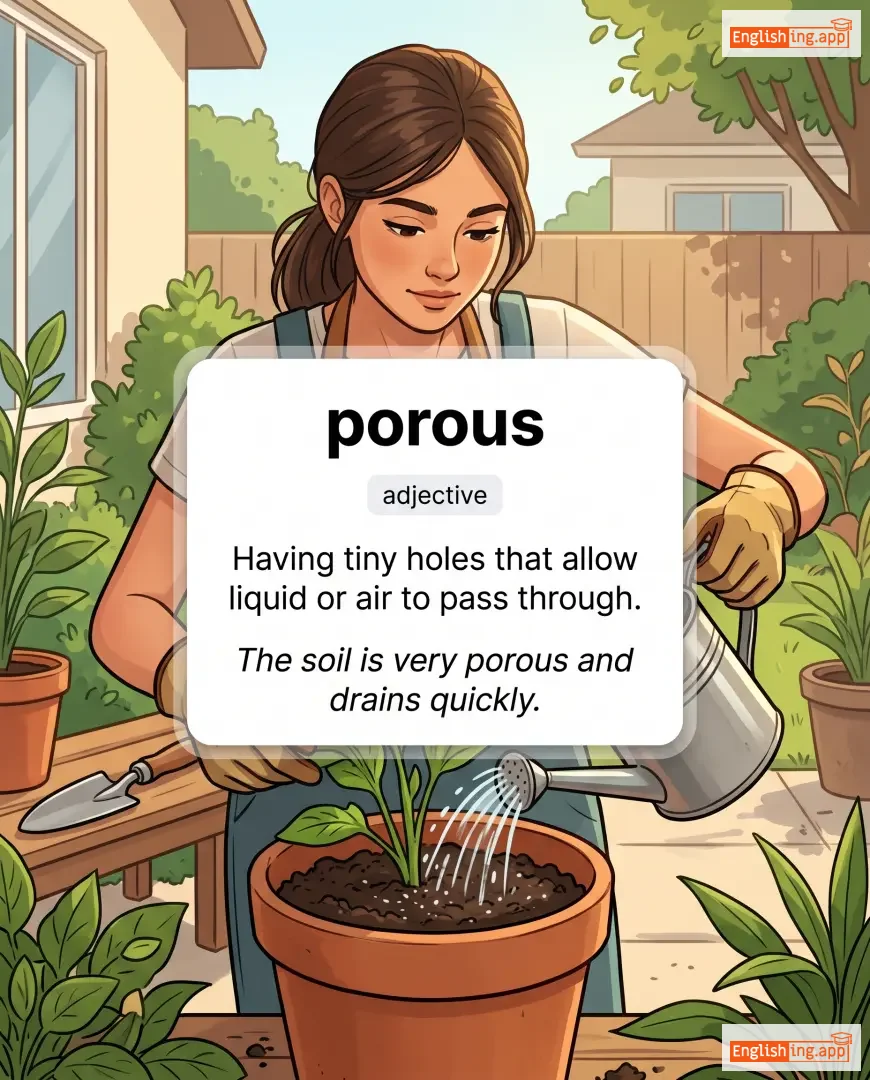
porous definition card — visual illustration of the meaning
adjective
/ˈpɔːrəs/
छिद्रपूर्ण (chhidrapurn)

Having tiny holes that allow liquid or air to pass through.

"The soil is very porous and drains quickly."

"मिट्टी बहुत छिद्रपूर्ण है और जल्दी पानी निकलता है।" (Mitti bahut chhidrapurn hai aur jaldi pani nikalta hai.)
noun
/ˈpɔːrfəri/
एक प्रकार की अग्नि शिला (ek prakar ki agni shila)

A hard igneous rock containing crystals, often used for decorative or building purposes.

"The ancient Romans used porphyry to make columns and statues."

"प्राचीन रोमनों ने कॉलम्स और मूर्तियाँ बनाने के लिए पॉर्फिरी का इस्तेमाल किया।" (Prachin Romanon ne columns aur moortiyan banane ke liye porphiry ka istemal kiya.)
noun
/ˈpɔː.pəs/
डॉल्फिन (dolphin)

a small toothed whale with a low triangular dorsal fin and a blunt rounded snout

"The porpoise jumped gracefully out of the water."

"डॉल्फिन पानी से gracefully कूद गई।" (dolphin paani se gracefully kood gayi.)
noun
/ˈpɔːrɪdʒ/
पोरिज (porij)

A soft food made by boiling oats or other grains in milk or water.

"She had a bowl of porridge for breakfast."

"वह नाश्ते में एक कटोरी पोरिज खा रही थी।" (Vah nashtay mein ek katori porij khaa rahi thi.)
Port definition card — visual illustration of the meaning
noun
/pɔːrt/
बंदरगाह (bandargah)

a harbor where ships dock to load and unload goods

"The ship docked at the port after a long voyage."

"एक लंबी यात्रा के बाद जहाज बंदरगाह पर डॉक किया गया।" (ek lambi yatra ke baad jahaz bandargah par dock kiya gaya)
verb
/pɔːrˈtɛnd/
पूर्वसूचना देना (purvsuchna dena)

To be a sign or warning that something, especially something bad, is going to happen.

"Dark clouds portend a storm."

"अंधेरे बादल तूफान का संकेत देते हैं।" (Andhere baadal toofan ka sanket dete hain.)
noun
/ˈpɔːrtɛnt/
पूर्व संकेत (purv sanket)

A sign or warning that something, especially something momentous or calamitous, is likely to happen.

"The sudden drop in stock prices was seen as a portent of economic trouble."

"शेयर बाजार में अचानक गिरावट को आर्थिक संकट का पूर्व संकेत माना गया।" (Sheyar bazar mein achanak girawat ko aarthik sankat ka purv sanket mana gaya.)
adjective
/pɔːrˈtɛntəs/
घातक, गंभीर (ghatak, gambhir)

Giving a sign or warning that something, often bad or serious, is going to happen; or overly solemn and pompous.

"His portentous tone made everyone nervous about the news."

"उसकी घातक आवाज ने सबको समाचार को लेकर नर्वस कर दिया।" (Uski ghatak awaaz ne sabko samachar ko lekar nervous kar diya.)
adjective
/ˌpoʊstˈwɔːr/
युद्धोत्तर (yuddhottar)

relating to the period after a war has ended

"The country experienced rapid economic growth in the post-war years."

"युद्धोत्तर वर्षों में देश ने तेज़ आर्थिक प्रगति की।" (yuddhottar varshon mein desh ne tez arthik pragati ki)
adjective
/ˈpoʊtənt/
शक्तिशाली (shaktishaalee)

Having great power, influence, or effect.

"This is a very potent drug that should be used carefully."

"यह एक बहुत शक्तिशाली दवा है जिसे सावधानी से उपयोग किया जाना चाहिए।" (Yeh ek bahut shaktishaalee dawa hai jise saavdhaanee se upayog kiya jaana chaahiye.)
noun
/ˈpoʊtənsi/
शक्ति (shakti)

The power or ability of something to affect or influence; strength or effectiveness.

"The potency of the new medicine amazed the doctors."

"नई दवाई की शक्ति ने डॉक्टरों को हैरान कर दिया।" (Nayi dawaai ki shakti ne dokton ko hairaan kar diya.)
noun
/ˈpɒtˌbɔɪlə/
सस्ता साहित्यकर्म (sasta sahityakarm)

a book, play, or film produced quickly to make money rather than for artistic value

"The novel was dismissed by critics as a mere potboiler."

"उपन्यास को आलोचकों ने एक साधारण सस्ता साहित्यकर्म के रूप में खारिज कर दिया।" (Upanyas ko alochako ne ek sadharan sasta sahityakarm ke roop mein kharij kar diya.)
noun
/pəˈteɪtoʊ/
आलू (aaloo)

a starchy plant tuber that is a staple food around the world

"We had mashed potato with our dinner."

"हमने अपने खाने में मसले हुए आलू खाए।" (Humne apne khane mein masle huye aaloo khaye.)
adjective
/ˈpəʊtəbl/
पेयजल (peyjal)

safe to drink; drinkable

"The villagers did not have access to potable water."

"गांववालों के पास पीने योग्य पानी तक पहुँच नहीं थी।" (Gaonwalon ke paas peene yogya paani tak pahuch nahi thi.)
noun
/pɒt/
पॉट (pot)

a container, typically round and deep, used for cooking or holding plants

"She put the soup in a pot and set it on the stove."

"उसने सूप को एक पॉट में डाला और उसे चूल्हे पर रख दिया।" (Usne soup ko ek pot mein daala aur use chulhe par rakh diya.)
adjective
/ˈpəʊstwɔːr/
युद्धोत्तर (yuddhotar)

occurring or existing after a war

"The postwar period saw significant economic growth."

"पोस्टवार अवधि में महत्वपूर्ण आर्थिक वृद्धि देखी गई।" (Postwar avdhi mein mahatvapurn arthik vruddhi dekhi gayi.)
noun
/ˈpɒstʃə/
सुख (sukh)

the position in which someone holds their body; an attitude or approach

"Good posture helps prevent back pain."

"जब उसने पुरस्कार प्राप्त किया तो वह अपनी खुशी छिपा नहीं पाई।" (Jab usne puraskar prapt kiya to vah apni khushi chhupa nahin pai.)
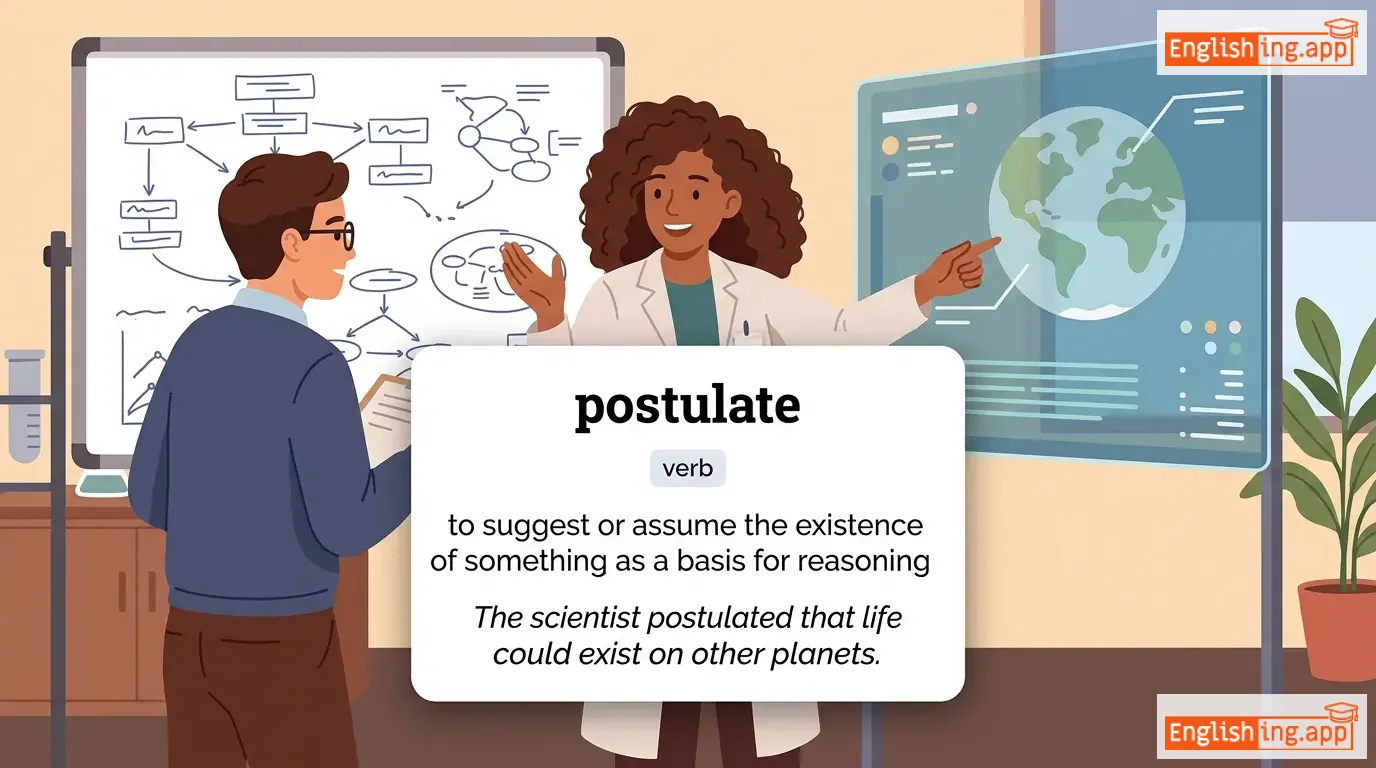
postulate definition card — visual illustration of the meaning
verb
/ˈpɒstjʊˌleɪt/
अनुमान करना (anumaan karna)

to suggest or assume the existence of something as a basis for reasoning

"The scientist postulated that life could exist on other planets."

"वैज्ञानिक ने अनुमान लगाया कि जीवन अन्य ग्रहों पर हो सकता है।" (Vaigyanik ne anuman lagaya ki jeevan anya grahon par ho sakta hai.)
noun
/ˈpəʊstˌskrɪpt/
पोस्ट्रिप्ट (postscript)

an additional remark at the end of a letter or text, after the signature

"She added a brief postscript to thank him again."

"उसने उसे फिर से धन्यवाद देने के लिए एक संक्षिप्त पोस्टस्क्रिप्ट जोड़ा।" (Usne use phir se dhanyavaad dene ke liye ek sankshipt postscript joda.)
adjective
/ˌpəʊstˈprændɪəl/
भोजन के बाद (bhojan ke baad)

Occurring after a meal.

"He went for a postprandial walk after dinner."

"वह रात के खाने के बाद एक पोस्टप्रांडीअल वॉक पर गए।" (Wah raat ke khane ke baad ek postprandial walk par gaye.)
verb
/pəʊs(t)ˈpəʊn/
पोस्टपोन करना (postpone karna)

to delay something to a later time

"The meeting was postponed until next week."

"बैठक को अगले सप्ताह तक पोस्टपोन कर दिया गया था।" (Baithak ko agle saptah tak postpone kar diya gaya tha.)
noun, adjective
/ˌpəʊstˈmɔːtəm/
पोस्टमॉर्टम (postmortem)

An examination of a dead body to determine the cause of death.

"The doctor carried out a postmortem on the body."

"डॉक्टर ने शव पर पोस्टमॉर्टम किया।" (Doktar ne shav par postmortem kiya.)
adjective
/ˈpɒstjʊməs/
मरणोत्तर (maranottar)

Occurring, awarded, or appearing after the death of the originator.

"He received a posthumous award for his bravery."

"उन्हें उनके साहस के लिए मरणोत्तर पुरस्कार मिला।" (Unhein unke sahas ke liye maranottar puraskar mila.)
noun, adjective
/ˌpəʊstˈɡrædʒuət/
स्नातकोत्तर छात्र (snatakkottar chhatr)

A student who has completed a first degree and is studying for a further degree.

"She is doing postgraduate research in physics."

"वह भौतिकी में स्नातकोत्तर शोध कर रहा है।" (Wah bhoutiki mein snatakottar shodh kar raha hai.)
noun
/pɒˈstɛrɪti/
भविष्य पीढ़ी (bhavishya pedhi)

All future generations of people.

"The monument was built for the benefit of posterity."

"स्मारक भविष्य पीढ़ियों के लाभ के लिए निर्मित किया गया था।" (Smarak bhavishya pedhiyon ke laabh ke liye nirmit kiya gaya tha.)
adjective
/pɒˈstɪəriər/
पश्चात (poschat)

Situated at or toward the back; later in time.

"The posterior part of the brain controls vision."

"मस्तिष्क का पिछला हिस्सा दृष्टि नियंत्रित करता है।" (mastisk ka pichla hissa drishti niyantrit karta hai.)
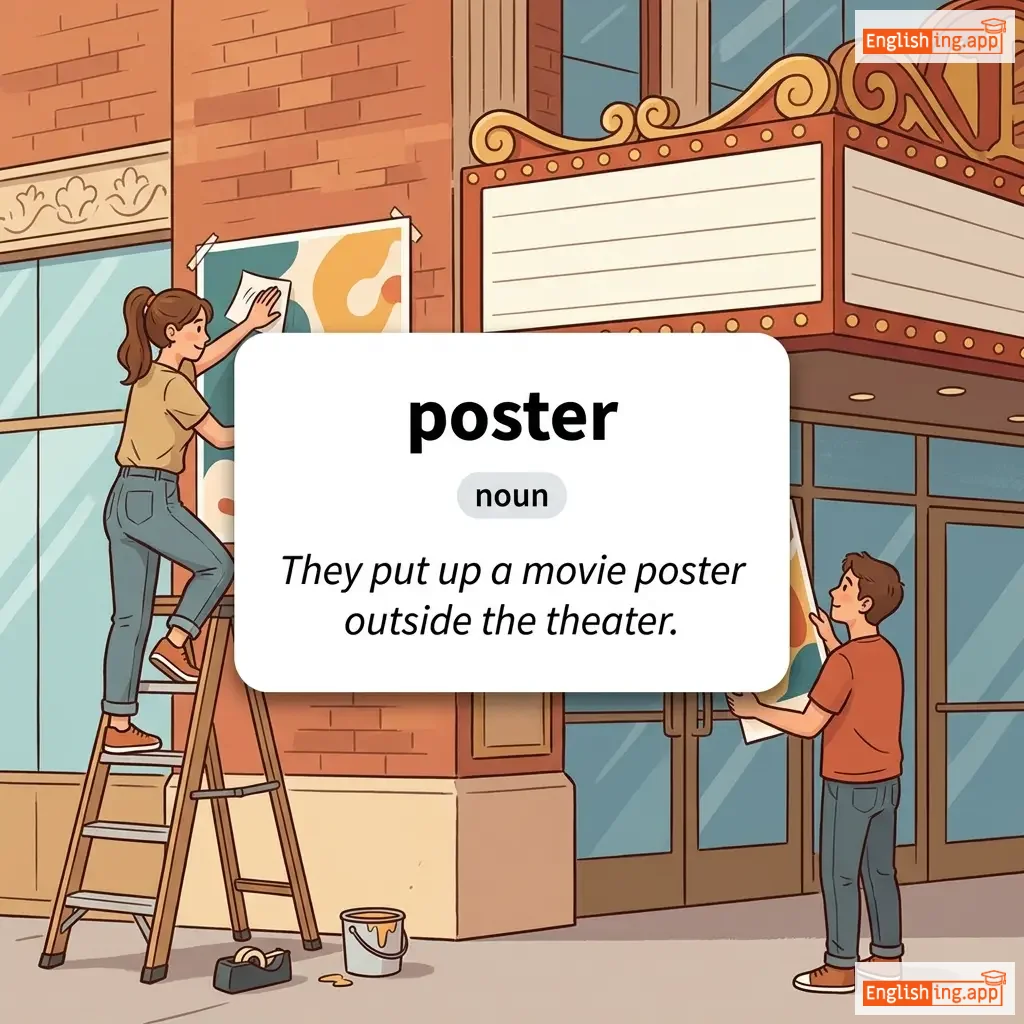
poster definition card — visual illustration of the meaning
noun
/ˈpoʊstər/
पोस्टर (poster)

a large printed picture or notice that is put on a wall for decoration or to advertise something

"They put up a movie poster outside the theater."

"वे थियेटर के बाहर एक मूवी पोस्टर लगा रहे थे।" (Ve theater ke baahar ek movie poster laga rahe the.)
verb
/ˌpoʊstˈdeɪt/
पोस्टडेट करना (postdate karna)

To assign a date later than the actual date to a document or event.

"She postdated the check to next month."

"उसने चेक को अगले महीने की तारीख डाल दी।" (Usne check ko agle mahine ki tareekh daal di.)
verb
/poʊz/
खुशी (khushi)

To assume a particular position, especially for a photograph or display; to present a problem or question.

"She posed for a picture in front of the monument."

"जब उसने पुरस्कार प्राप्त किया तो वह अपनी खुशी को छिपा नहीं पाई।" (Jab usne puraskaar prapt kiya to vah apni khushi ko chhupa nahin pai.)
positive definition card — visual illustration of the meaning
adjective
/ˈpɒzɪtɪv/
सकारात्मक (sakaratmak)

Characterized by optimism, certainty, or something favorable.

"She always tries to maintain a positive attitude."

"वह हमेशा सकारात्मक दृष्टिकोण बनाए रखने की कोशिश करती है।" (Wah hamesha sakaratmak drishtikon banaye rakhne ki koshish karti hai.)
position definition card — visual illustration of the meaning
noun
/pəˈzɪʃən/
पद / स्थिति (pad / sthiti)

A place, job, or status; the way in which someone or something is placed or arranged.

"She applied for a teaching position at the university."

"उसने विश्वविद्यालय में एक शिक्षक की स्थिति के लिए आवेदन किया।" (Usne vishwavidyalay mein ek shikshak ki sthiti ke liye aavedan kiya.)
verb
/ˈpɑːzɪt/
प्रस्तावित करना (posit)

To assume or suggest something as a fact or basis for reasoning.

"The scientist posited a new theory to explain the phenomenon."

"वैज्ञानिक ने घटना को समझाने के लिए एक नई थ्योरी प्रस्तुत की।" (Vaigyanik ne ghatna ko samjhane ke liye ek nai theory prastavit ki.)
noun
/poʊˈzɜːr/
दिखावा करने वाला व्यक्ति (pozur)

A person who pretends to be something they are not, often to impress others.

"Many considered him a poseur because he exaggerated his accomplishments."

"कई लोगों ने उसे पोज़ूर माना क्योंकि उसने अपनी उपलब्धियों को बढ़ा-चढ़ाकर दिखाया।" (kai log use pozur maante the kyunki usne apni uplabdhiyon ko badha chadhaakar dikhaya)
portrait definition card — visual illustration of the meaning
noun
/ˈpɔːtrət/
चित्रपट (chitrapat)

a painting, drawing, photograph, or engraving of a person, especially one showing the face

"The artist painted a beautiful portrait of his wife."

"कलाकार ने अपनी पत्नी का एक सुंदर चित्रपट बनाया।" (Kalakar ne apni patni ka ek sundar chitrapat banaya.)
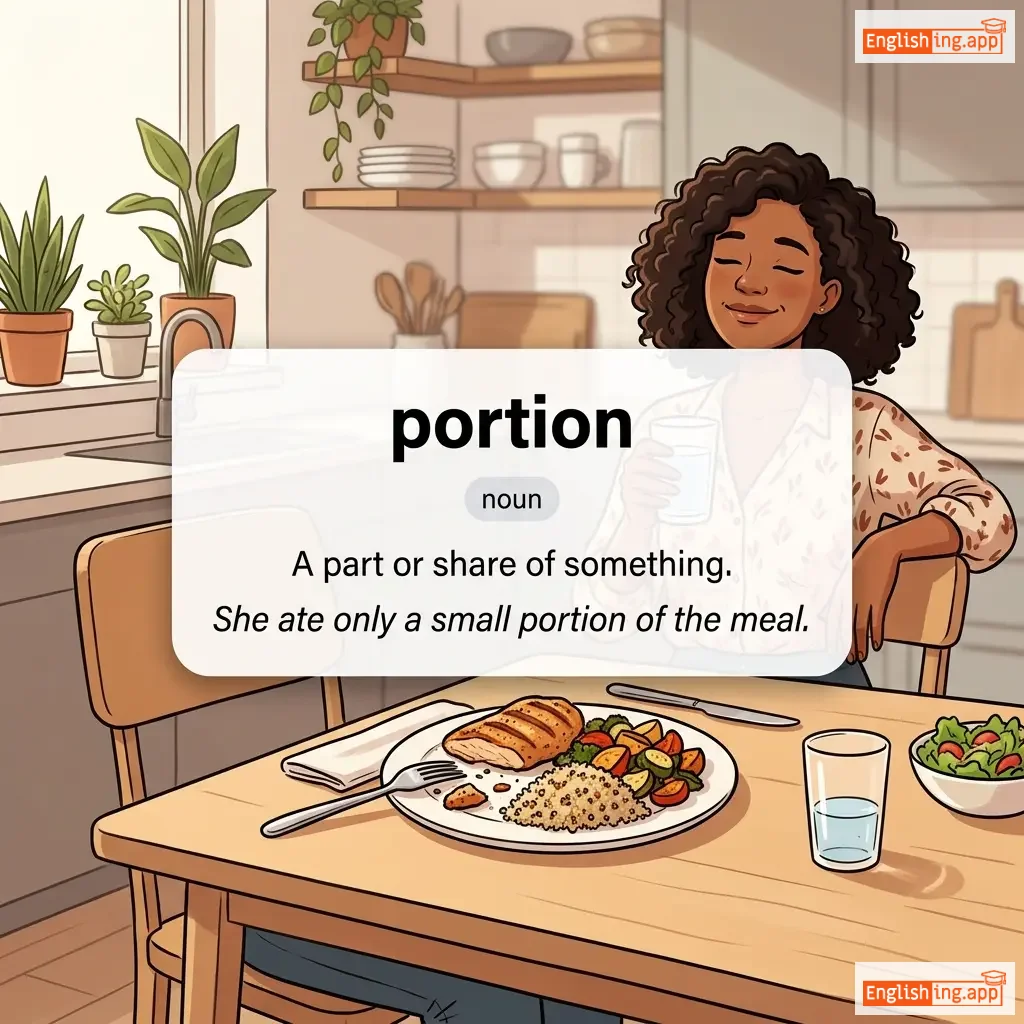
portion definition card — visual illustration of the meaning
noun
/ˈpɔːrʃən/
हिस्सा (hissa)

A part or share of something.

"She ate only a small portion of the meal."

"उसने भोजन का केवल एक छोटा हिस्सा खाया।" (Usne bhojan ka keval ek chhota hissa khaya.)