वोकैबुलरीज

इंग्लिश वोकैबुलरी डिस्कवर, लर्न और मास्टर करें

adjective
/priˈɛmptɪv/
प्रतिक्रियात्मक (pratikriyatmak)

Serving or intended to prevent something by taking action first.

"The government took preemptive measures to control inflation."

"सरकार ने मुद्रास्फीति को नियंत्रित करने के लिए प्रतिक्रियात्मक कदम उठाए।" (sarkar ne mudrasfiti ko niyantrit karne ke liye pratikriyatmak kadam uthaye.)
verb
/priːn/
स्वयं को संवारना (svayam ko sanwarna)

To groom or dress oneself with care; to show pride in one's appearance.

"She preened in front of the mirror before leaving for the party."

"वह पार्टी के लिए जाने से पहले आईने के सामने स्वयं को संवार रही थी।" (Vah party ke liye jane se pehle aaine ke samne svayam ko sanwar rahi thi.)
verb
/ˌpriːɪnˈɡeɪdʒ/
पूर्व निर्धारित करना (purv nirdharit karna)

To contract or engage beforehand; to arrange in advance.

"The workers were preengaged before the project officially started."

"प्रोजेक्ट शुरू होने से पहले श्रमिकों को पहले ही प्रि-एन्गेज किया गया था।" (Project shuru hone se pehle shramikon ko pehle hi pre-engage kiya gaya tha.)
verb
/ˌpriːɪˈstæblɪʃ/
पहले से स्थापित करना (pahle se sthapit karna)

To establish or set up beforehand.

"Certain rules were preestablished before the meeting."

"बैठक से पहले कुछ नियम पहले से स्थापित किए गए थे।" (Baithak se pehle kuch niyam pahle se sthapit kiye gaye the.)
verb
/ˌpriːɪɡˈzɪst/
पहले से अस्तित्व में होना (pehle se astitva mein hona)

to exist beforehand or before something else

"These customs preexist the arrival of modern technology."

"ये रिवाज आधुनिक तकनीक के आगमन से पहले अस्तित्व में थे।" (Ye rivaaj aadhunik takneek ke aagman se pehle astitva mein the.)
noun
/ˌpriːɪɡˈzɪstəns/
पूर्व अस्तित्व (purv astittv)

the state of existing before something else

"Philosophers often debated the preexistence of the soul."

"दार्शनिकों ने अक्सर आत्मा के पूर्व अस्तित्व पर बहस की।" (Darshanikon ne aksar atma ke purv astitv par bahas ki.)
noun
/ˈprɛfəs/
प्रस्तावना (prastavna)

an introduction to a book, speech, or other written work

"The author explained his motivation in the preface."

"लेखक ने अपनी प्रेरणा को प्रस्तावना में समझाया।" (Lekhak ne apni prerna ko prastavna mein samjhaya.)
adjective
/ˈprɛfətɔːri/
पूर्वकथनात्मक (purvakanthanatmak)

serving as an introduction or preface

"He made some prefatory remarks before the lecture began."

"उसने व्याख्यान शुरू होने से पहले कुछ पूर्वकथनात्मक टिप्पणी की।" (Usne vyakhyan shuru hone se pehle kuch purvakanthanatmak tippani ki.)
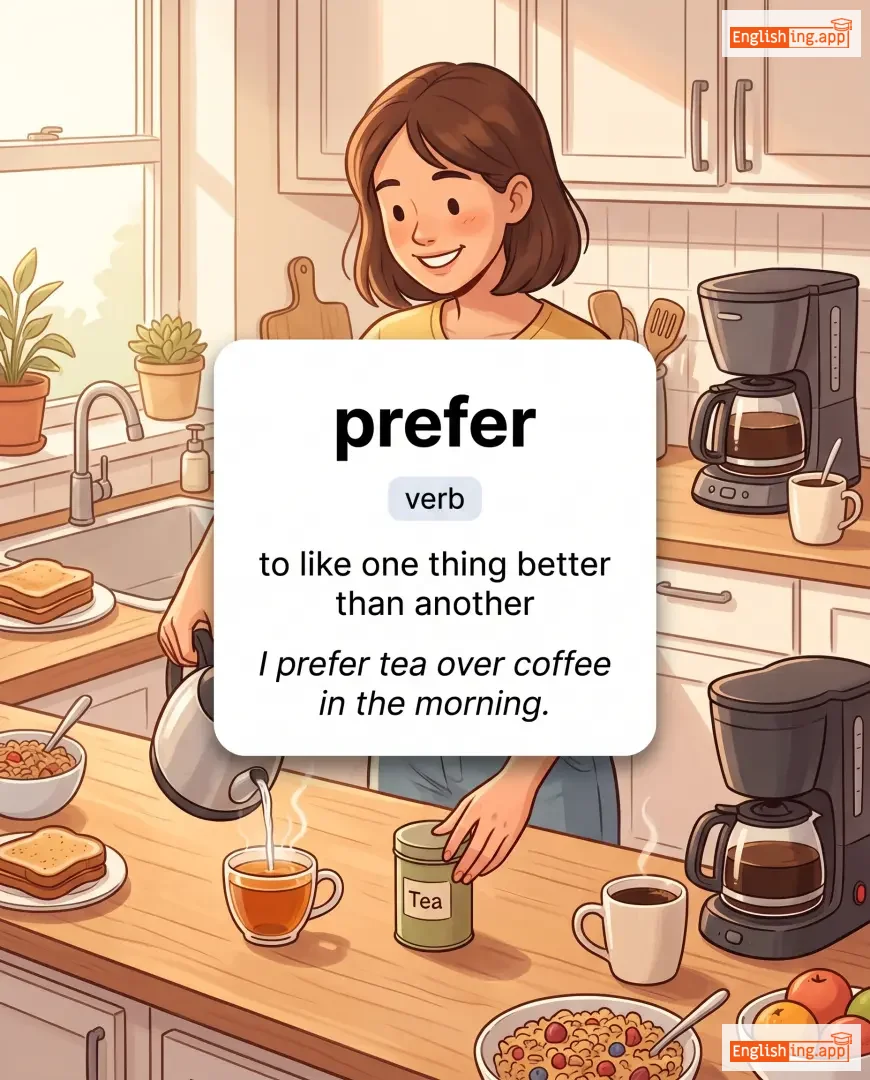
prefer definition card — visual illustration of the meaning
verb
/prɪˈfɜːr/
पसंद करना (pasand karna)

to like one thing better than another

"I prefer tea over coffee in the morning."

"मैं सुबह चाय को कॉफी पर प्राथमिकता देता हूँ।" (Main subah chai ko coffee par prathmikta deta hoon.)
adjective
/ˈprɛf(ə)rəb(ə)l/
बेहतर (behtar)

more desirable or suitable; better than something else

"It is preferable to take the train rather than drive in heavy traffic."

"यह भारी ट्रैफ़िक में गाड़ी चलाने की बजाय ट्रेन लेना बेहतर है।" (Yah bhaari traffic mein gaadi chalane ki bajay train lena behtar hai.)
noun
/ˈprɛf(ə)rəns/
पसंद (pasand)

a greater liking for one alternative over another

"She has a preference for tea over coffee."

"उसे चाय को कॉफी पर अधिक पसंद है।" (Use chai ko coffee par adhik pasand hai.)
adjective
/ˌprɛfəˈrɛnʃəl/
प्राथमिकता प्राप्त (prathmikta prapt)

showing or giving advantage to one over others

"Members receive preferential treatment at the club."

"सदस्यों को क्लब में प्राथमिकता प्राप्त व्यवहार मिलता है।" (Sadasyon ko klub mein prathmikta prapt vyavhaar milta hai.)
noun
/prɪˈfɜːrmənt/
पदोन्नति (podonnoti)

promotion or advancement in rank, position, or office

"He hoped for preferment in the government office."

"उसे सरकारी कार्यालय में पदोन्नति की उम्मीद थी।" (Use sarkari karyalaya mein podonnati ki ummid thi.)
verb
/priːˈfɪɡjər/
पूर्वसूचना देना (purvasoochna dena)

to represent, show, or foreshadow something in advance

"The economic reforms prefigure major social changes."

"आर्थिक सुधार बड़े सामाजिक परिवर्तनों की पूर्वसूचना देते हैं।" (Aarthik sudhaar bade samaajik parivartano ki purvasoochna dete hain.)
noun/verb
/ˈpriːfɪks/
उपसर्ग; पहले जोड़ना (upsarg; pehle jodna)

a word, letter, or number placed before another; as a verb, to add something in front of something else

"Developers often prefix variables with an underscore."

"डेवलपर्स अक्सर वेरिएबल्स के साथ अंडरस्कोर जोड़ते हैं।" (Developers aksar variables ke saath underscore jodte hain.)
noun
/ˈprɛɡnənsi/
गर्भावस्था (garbhavastha)

the condition of being pregnant; the period during which a woman carries a developing fetus

"Her pregnancy was carefully monitored by her doctor."

"उसकी गर्भावस्था को उसके डॉक्टर द्वारा सावधानीपूर्वक मॉनिटर किया जा रहा था।" (Uski garbhavastha ko uske doctor dwara saavdhani poorvak monitor kiya ja raha tha.)
adjective
/ˈprɛɡnənt/
गर्भवती; अर्थपूर्ण (garbhavati; arthapurn)

having a child developing in the womb; also, full of meaning or significance

"She announced that she was three months pregnant."

"उसने घोषणा की कि वह तीन महीने गर्भवती थी।" (Usne ghoshna ki ki wah teen mahine garbhavati thi.)
adjective
/prɪˈhɛnsɪbəl/
पकड़ने योग्य (pakadne yogya)

capable of being grasped or seized

"The tool has a prehensible handle that improves safety."

"उपकरण में एक पकड़ने योग्य हैंडल है जो सुरक्षा बढ़ाता है।" (Upkaran mein ek pakadne yogya handle hai jo suraksha badhata hai.)
adjective
/prɪˈhɛnsaɪl/
पकड़ने के लिए उपयुक्त (pakanne ke liye upyukt)

adapted for seizing or grasping, especially by wrapping around an object

"The monkey used its prehensile tail to hang from the branch."

"बंदर ने अपनी प्रिहेंसाइल पूंछ का इस्तेमाल डाल से लटकने के लिए किया।" (Bandar ne apni prehensile poonch ka istemal daal se latakne ke liye kiya.)
noun
/prɪˈhɛnʃən/
पकड़ने की क्रिया; कुछ पकड़ने की क्षमता (pakadne ki kriya; kuch pakadne ki kshamata)

the act of grasping or seizing; the ability to take hold of something

"Therapists assessed the patient's prehension during hand therapy."

"थेरेपिस्ट ने हाथ की थेरेपी के दौरान मरीज की पकड़ने की क्षमता का मूल्यांकन किया।" (Therapist ne hath ki therapy ke dauran mareez ki pakadne ki kshamata ka mulyankan kiya.)
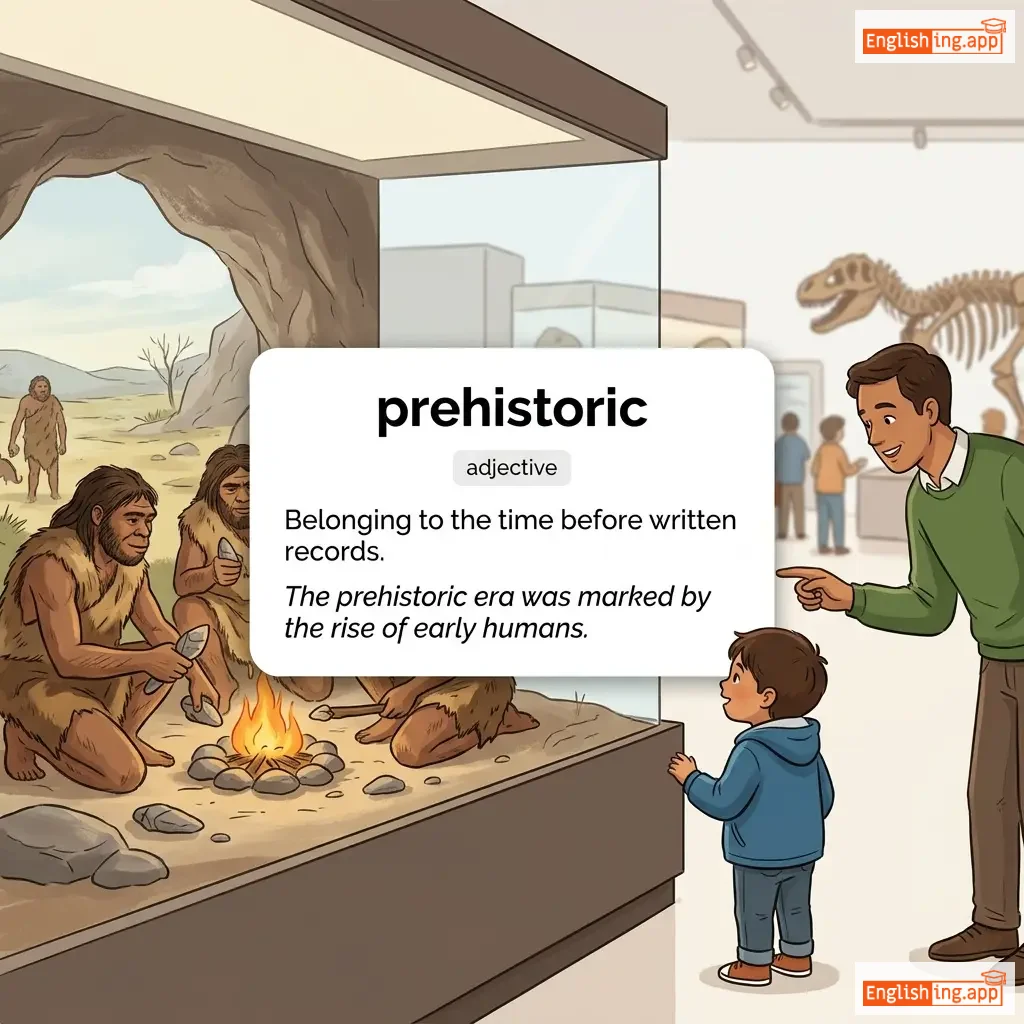
prehistoric definition card — visual illustration of the meaning
adjective
ˌpriːhɪˈstɒrɪk
प्रागैतिहासिक, इतिहास से पहले का समय (prāgaitihāsik, itihās se pahle kā samay)

Belonging to the time before written records.

"The prehistoric era was marked by the rise of early humans."

"प्रागैतिहासिक युग प्रारंभिक मानवों के उदय द्वारा चिह्नित था।" (prāgaitihāsik yug prārambhik mānavon ke uday dvārā chihnit thā.)
noun
/ˈprɛdʒədɪs/
पक्षपाती विचार (pakshapati vichar)

An unfair and unreasonable opinion or feeling, especially when formed without enough thought or knowledge.

"Prejudice often prevents people from seeing the truth about others."

"पक्षपाती विचार अक्सर लोगों को दूसरों के बारे में सत्य देखने से रोकते हैं।" (Pakshapati vichar aksar logon ko doosron ke baare mein satya dekhne se rokate hain.)
adjective
/ˈprɛdʒədɪst/
पक्षपाती (pakshapāti)

having or showing a dislike or bias against a person or group without proper reason

"He was prejudiced against people from other regions."

"वह दूसरे क्षेत्रों के लोगों के प्रति पक्षपाती था।" (vah dūsre kṣetrō ke logo ke prati pakshapāti thā.)
noun
/ˈprɛləsi/
पदवी (padvi)

The office, dignity, or system of church government by prelates.

"The medieval church was dominated by prelacy and its traditions."

"मध्यकालीन चर्च प्रेलेसी और इसके परंपराओं से शासित था।" (Madhyakalīn church prelasi aur iske paramparao se shasit tha.)
noun
/ˈprɛlət/
उच्चपदस्थ धर्मगुरु (uchchapodsth dharmguru)

A high-ranking member of the clergy, especially a bishop or abbot.

"The prelate delivered a sermon to the congregation."

"प्रेलेट ने सभा को उपदेश दिया।" (Prelet ne sabha ko updesh diya.)
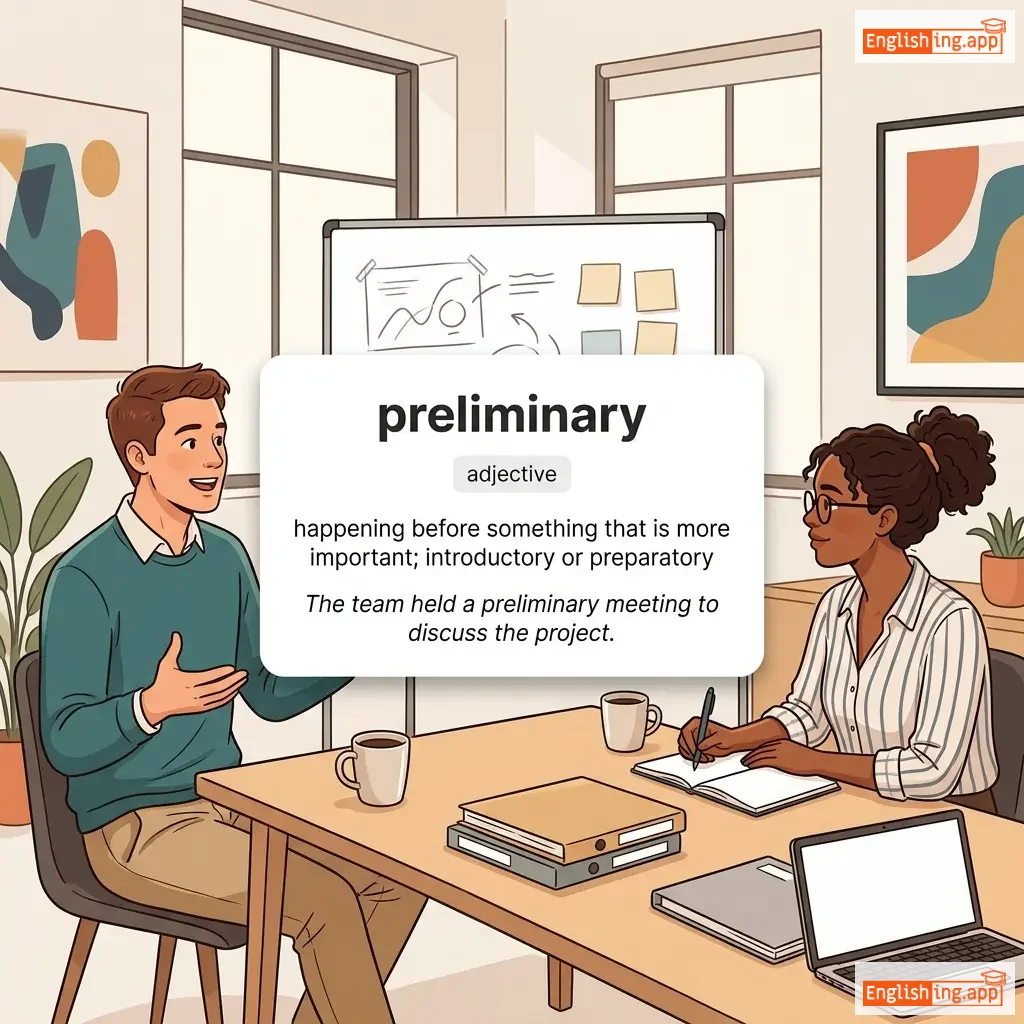
preliminary definition card — visual illustration of the meaning
adjective
/prɪˈlɪmɪˌneri/
प्रारंभिक (prarambhik)

happening before something that is more important; introductory or preparatory

"The team held a preliminary meeting to discuss the project."

"टीम ने परियोजना पर चर्चा करने के लिए एक प्रारंभिक बैठक की।" (Team ne pariyojana par charcha karne ke liye ek prarambhik baithak ki.)
noun
/ˈprɛljuːd/
प्रस्तावना (prastavna)

An action, event, or statement that serves as an introduction to something more important.

"The small fight was only a prelude to a bigger conflict."

"छोटी लड़ाई केवल एक बड़े संघर्ष की प्रस्तावना थी।" (Chhoti ladai keval ek bade sangharsh ki prastavna thi.)
adjective
/ˌpriːməˈtjʊər/
अकाल (akal)

Happening or done before the usual or proper time.

"His decision to quit the job was premature."

"उसका नौकरी छोड़ने का निर्णय अकाल था।" (Uska naukri chhodne ka nirnay akal tha.)
verb
/ˌpriːˈmɛdɪteɪt/
पूर्व-निर्धारित करना (purv-nirdharit karna)

to think about and plan something (especially a crime) beforehand

"The suspect was accused of premeditating the crime."

"आरोपी पर अपराध को पहले से योजना बनाने का आरोप लगाया गया था।" (Aropi par apradh ko pehle se yojana banane ka aarop lagaya gaya tha.)
adjective
/ˌpriːˈmɛdɪˌteɪtɪd/
पूर्वनिर्धारित (purv nirnirdharit)

planned in advance; done deliberately

"The crime was clearly premeditated."

"अपराध स्पष्ट रूप से पूर्वनिर्धारित था।" (Aparadh spasht roop se purv nirnirdharit tha.)
noun, adjective
/prɪˈmɪər/ or /ˈpriːmiər/
प्रधानमंत्री / प्रमुख (pradhanmantri / pramukh)

the head of government in some countries; first in importance or rank

"The French premier addressed the nation."

"फ्रांसीसी प्रधानमंत्री ने राष्ट्र को संबोधित किया।" (Francisi pradhanmantri ne rashtr ko sambodhit kiya.)
noun
/ˈprɛmɪs/
पूर्वधारणा / भवन (purvadharna / bhavan)

a statement or idea on which reasoning or an argument is based; also a building or property

"His argument was based on a false premise."

"उसका तर्क एक गलत पूर्वधारणा पर आधारित था।" (Uska tark ek galat purvadharna par aadharit tha.)
noun
/prɪˈsɛntɪmənt/
पूर्वाभास (purvabhas)

An intuitive feeling about the future, especially of something bad about to happen.

"He had a strong presentiment that the plan would fail."

"उसे यह मजबूत पूर्वाभास था कि योजना विफल हो जाएगी।" (Use yah majboot purvabhas tha ki yojna viphal ho jaayegi.)
verb
/prɪˈskrʌɪb/
निर्देशित करना (nirdeshit karna)

to recommend or authorize the use of something, especially medicine

"The doctor prescribed medication for my cold."

"डॉक्टर ने मेरी सर्दी के लिए दवाइयाँ प्रिस्क्राइब की।" (Doktar ne meri sardi ke liye davaiyan prescribe ki.)
noun
/ˈpriːskrɪpt/
निर्देश (nirdesh)

An authoritative rule or direction; something laid down as a command.

"The prescript of the organization required strict punctuality."

"संगठन के निर्देश ने कड़ी समयपालन की मांग की।" (Sangthan ke nirdesh ne kadi samayapan ki maang ki.)
adjective
/prɪˈskrɪptɪbəl/
निर्धारणीय (nirdharaniy)

Capable of being prescribed or laid down as a rule or directive.

"Certain regulations are prescriptible under the law."

"कुछ नियम कानून के तहत निर्धारित किए जा सकते हैं।" (Kuch niyam kanoon ke tahat nirdharit kiye ja sakte hain.)
prescription definition card — visual illustration of the meaning
noun
/prɪˈskrɪpʃən/
प्रिस्क्रिप्शन (prescription)

A written order from a doctor for the preparation and administration of a medicine; also, a recommendation or authoritative rule.

"The doctor gave her a prescription for antibiotics."

"डॉक्टर ने उसे एंटीबायोटिक्स के लिए एक प्रिस्क्रिप्शन दिया।" (Doctor ne use antibiotics ke liye ek prescription diya.)
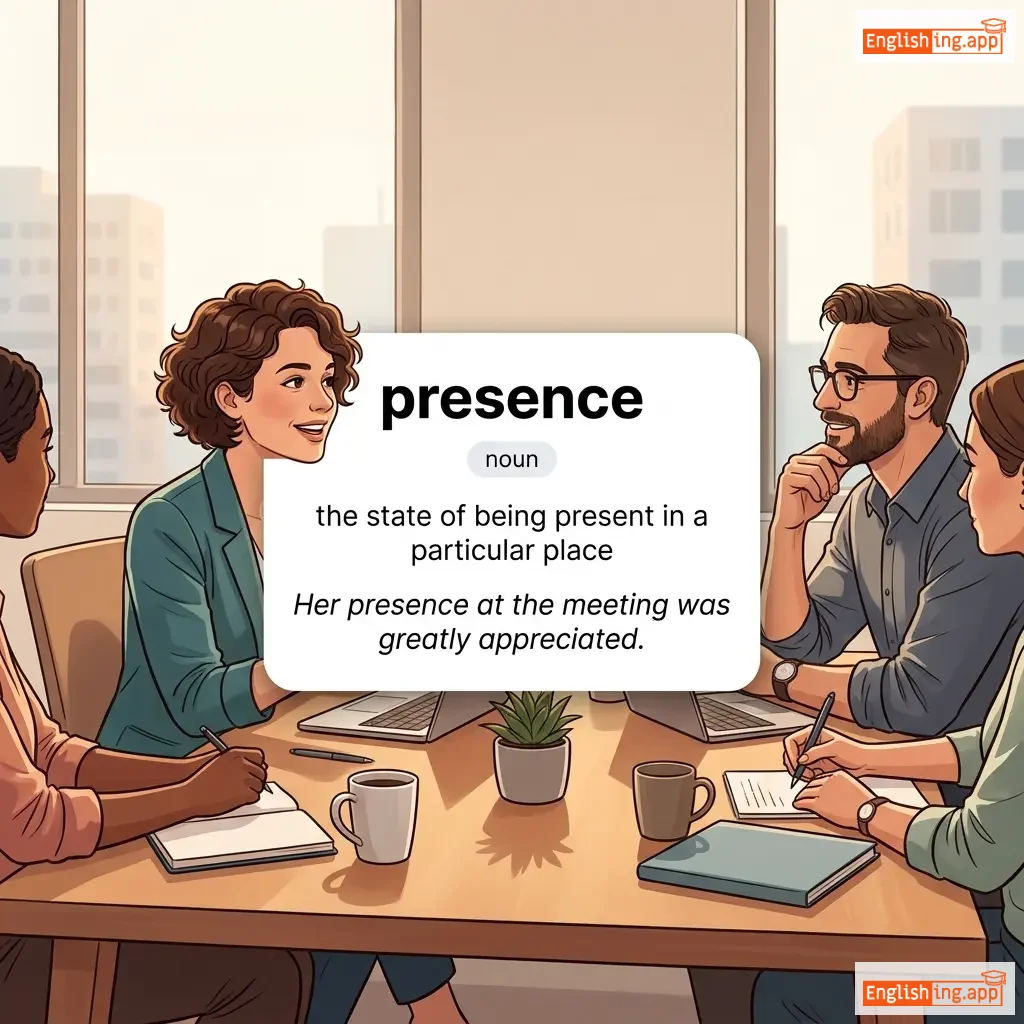
presence definition card — visual illustration of the meaning
noun
/ˈprɛzəns/
उपस्थिति (upasthiti)

the state of being present in a particular place

"Her presence at the meeting was greatly appreciated."

"उसकी उपस्थिति बैठक में बहुत सराही गई।" (Uski upasthiti baithak mein bahut sarahee gayi.)
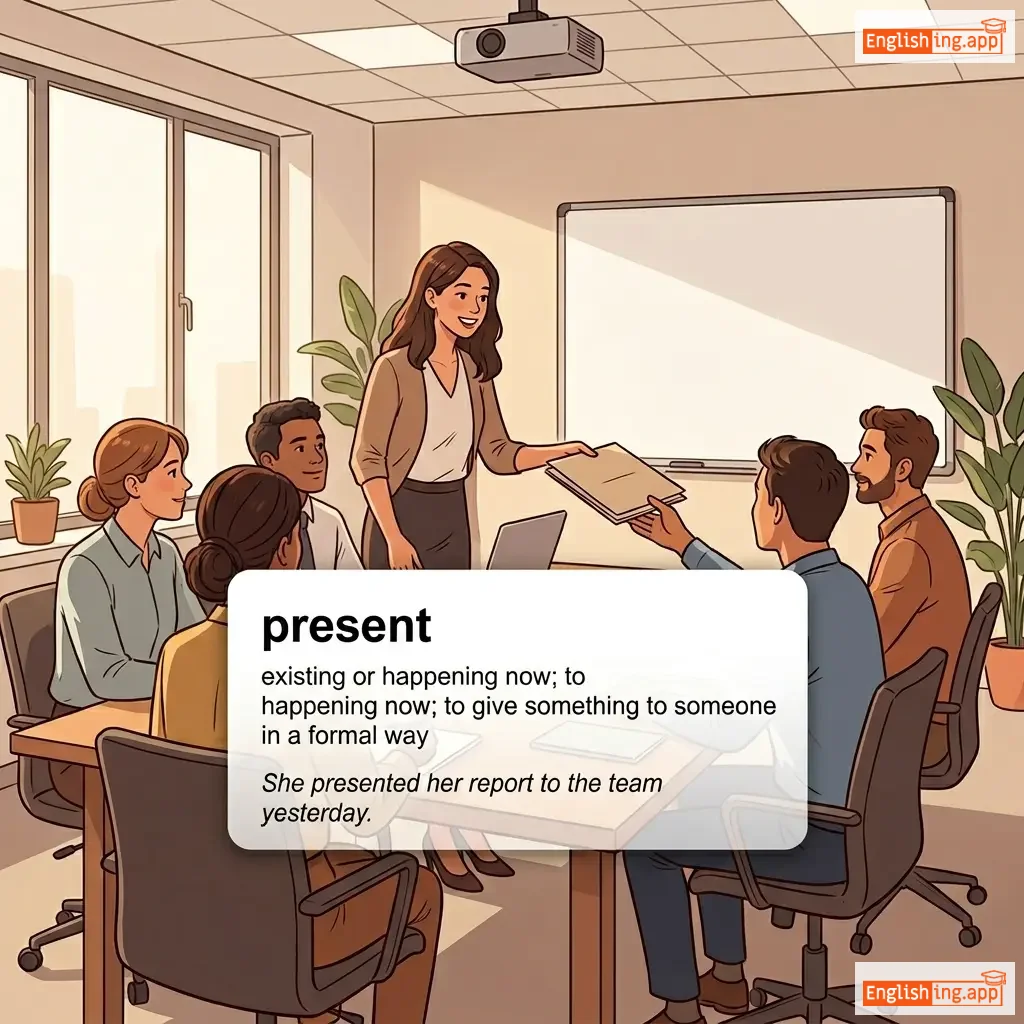
present definition card — visual illustration of the meaning
noun, verb, adjective
/ˈprɛzənt/
प्रस्तुत (prastut)

existing or happening now; to give something to someone in a formal way

"She presented her report to the team yesterday."

"उसने कल टीम को अपनी रिपोर्ट प्रस्तुत की।" (Usne kal team ko apni report prastut ki.)
adjective
/prɪˈzentəbl/
दिखने योग्य; स्वीकार्य; सार्वजनिक रूप से देखने के लिए उपयुक्त (dikhne yogya; svīkārya; sārbajanik rūp se dekhne ke liye upayukt)

neat and suitable for being seen in public; acceptable in appearance

"Make sure you look presentable for the job interview."

"यह सुनिश्चित करें कि आप नौकरी के साक्षात्कार के लिए दिखने योग्य दिखें।" (yah nishchit karein ki aap naukari ke sākṣātkār ke liye dikhne yogya dikhein)
presentation definition card — visual illustration of the meaning
noun
/ˌprɛzənˈteɪʃən/
प्रस्तुति (prastuti)

the act of presenting something to an audience, typically involving speaking or showing information

"The presentation on digital marketing was very informative."

"डिजिटल मार्केटिंग पर प्रस्तुति बहुत जानकारीपूर्ण थी।" (Digital marketing par prastuti bahut jankari-purn thi.)
adjective
/prɪˈsɛnʃənt/
पूर्वानुमान करने वाला (purvanuman karne wala)

Having a feeling or sense of something about to happen; predictive.

"She was presentient of the coming disaster."

"वह आने वाली आपदा का पूर्वानुमान लगा रही थी।" (Vah aane wali aapda ka purvanuman laga rahi thi.)
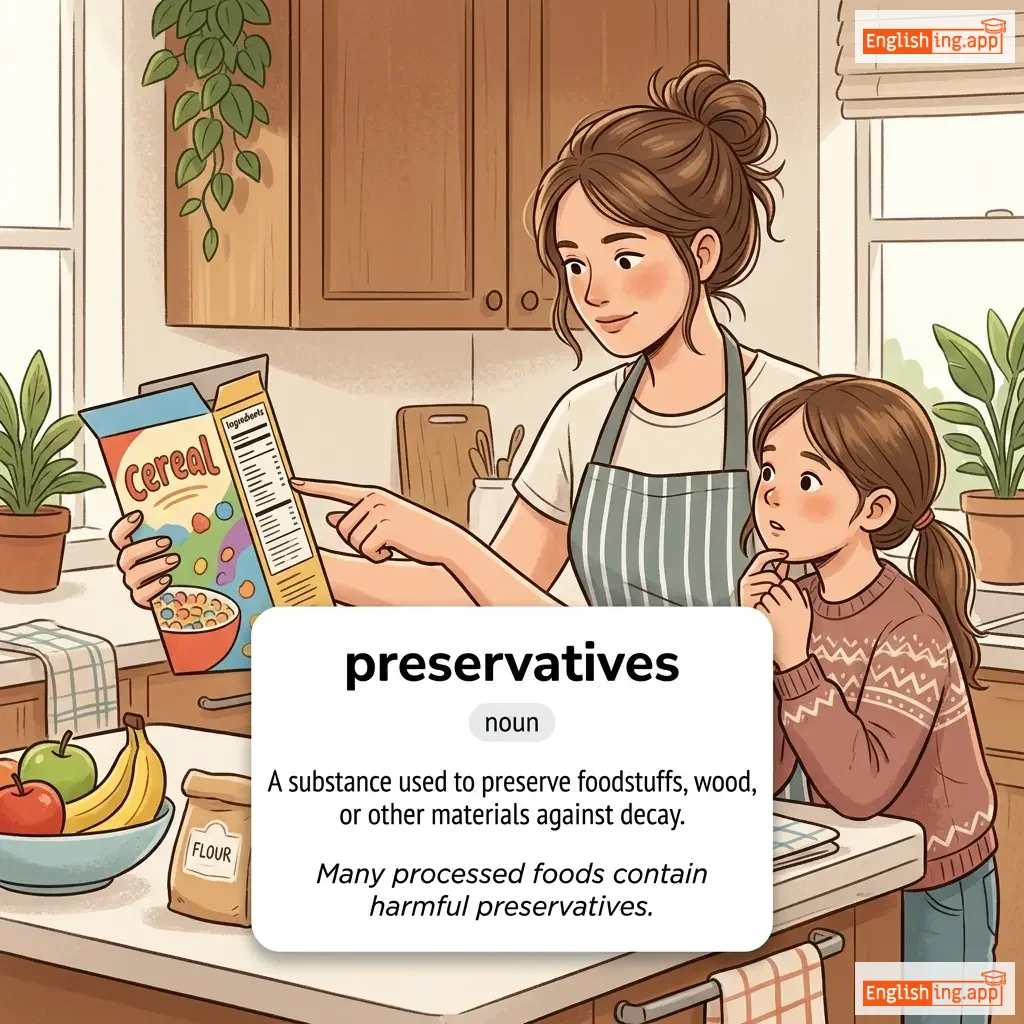
preservatives definition card — visual illustration of the meaning
noun
prɪˈzɜː.və.tɪvz
संरक्षणकारी पदार्थ (sanrakshankari padarth)

A substance used to preserve foodstuffs, wood, or other materials against decay.

"Many processed foods contain harmful preservatives."

"कई प्रसंस्कृत खाद्य पदार्थों में हानिकारक संरक्षक होते हैं।" (Kai prasanskrut khadya padarthon mein hanikarak sanrakshak hote hain.)
noun
/ˈpoʊtənˌteɪt/
शासक (shasak)

A monarch or ruler, especially one with absolute power.

"The ancient land was ruled by a powerful potentate."

"प्राचीन भूमि एक शक्तिशाली शासक द्वारा शासित थी।" (Prachin bhumi ek shaktishali shasak dvara shasit thi.)
noun
/ˈprɛzɪdənsi/
राष्ट्रपति पद (rashtrapati pad)

the office or position of being a president

"He was elected to the presidency in 2020."

"उन्हें 2020 में राष्ट्रपति पद के लिए चुना गया था।" (Unhein 2020 mein rashtrapati pad ke liye chuna gaya tha.)
verb
/prɪˈzaɪd/
अध्यक्षता करना (adhyakshata karna)

to be in charge of a meeting, event, or organization

"She will preside over the meeting tomorrow."

"वह कल बैठक की अध्यक्षता करेगी।" (Wah kal baithak ki adhyakshata karegi.)
preserve definition card — visual illustration of the meaning
verb
/prɪˈzɜːrv/
संरक्षित करना (sanrakshit karna)

to keep something safe from harm, decay, or loss

"We must preserve our cultural heritage."

"हमें अपनी सांस्कृतिक धरोहर को संरक्षित करना चाहिए।" (Humein apni sanskritik dharohar ko sanrakshit karna chahiye.)
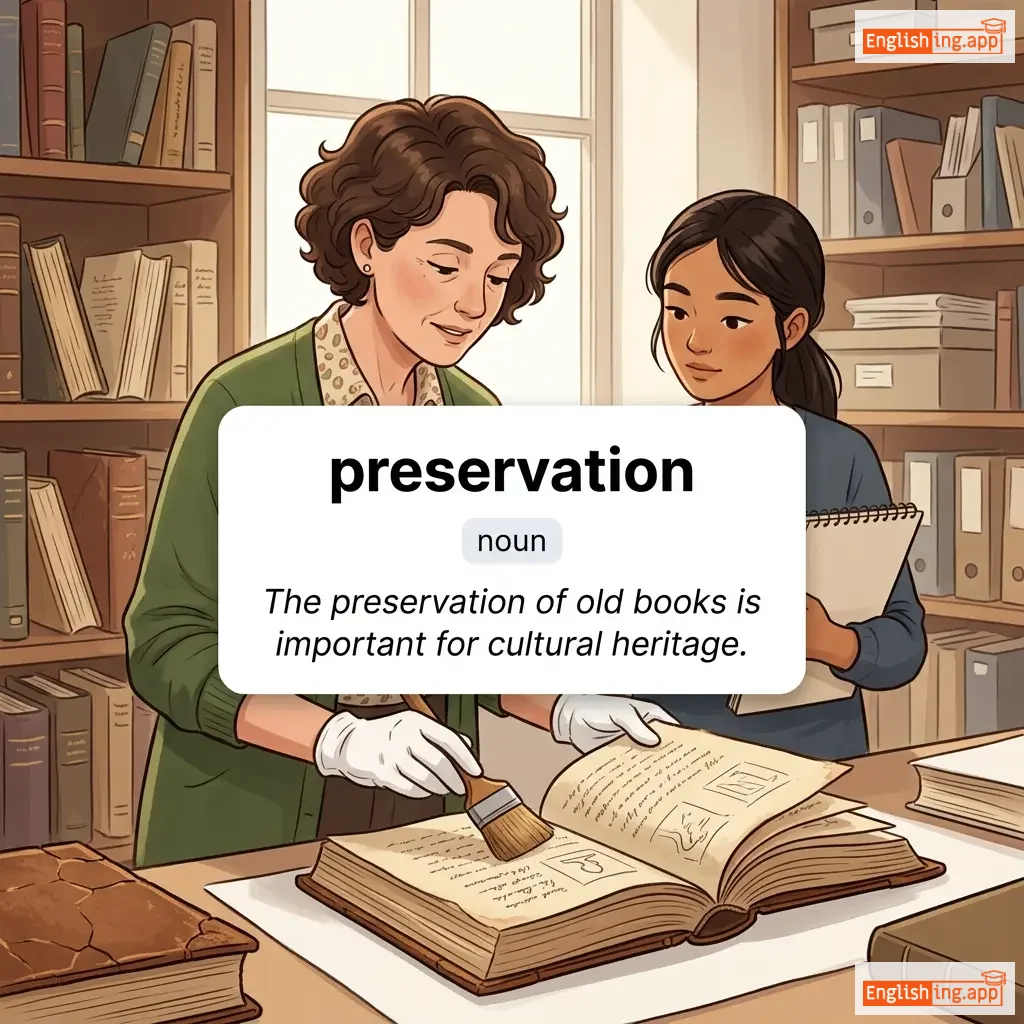
preservation definition card — visual illustration of the meaning
noun
/ˌprɛzəˈveɪʃən/
संरक्षण (sanrakshan)

The act of keeping something in its original state or protecting it from harm or decay.

"The preservation of old books is important for cultural heritage."

"पुरानी किताबों का संरक्षण सांस्कृतिक धरोहर के लिए महत्वपूर्ण है।" (Purani kitabon ka sanrakshan sanskritik dharohar ke liye mahatvapurn hai.)
adverb
/ˈprɛzntli/
अभी (abhi)

at the current moment; now

"Presently, I am working on a new project."

"अभी, मैं एक नए प्रोजेक्ट पर काम कर रहा हूँ।" (Abhi, main ek naye project par kaam kar raha hoon.)
noun
/prɪˈzɛntmənt/
प्रस्तुति (prastuti)

The act of presenting something formally or officially; a formal statement or document.

"The lawyer made a presentment of the evidence to the court."

"वकील ने अदालत में साक्ष्य की प्रस्तुति की।" (Vakil ne adalat mein sakshya ki prastuti ki.)